



A Review of Chitosan as a Coagulant of Health-Related Microorganisms in Water and Wastewater


Abstract
1. Introduction
2. Materials and Methods
3. Results
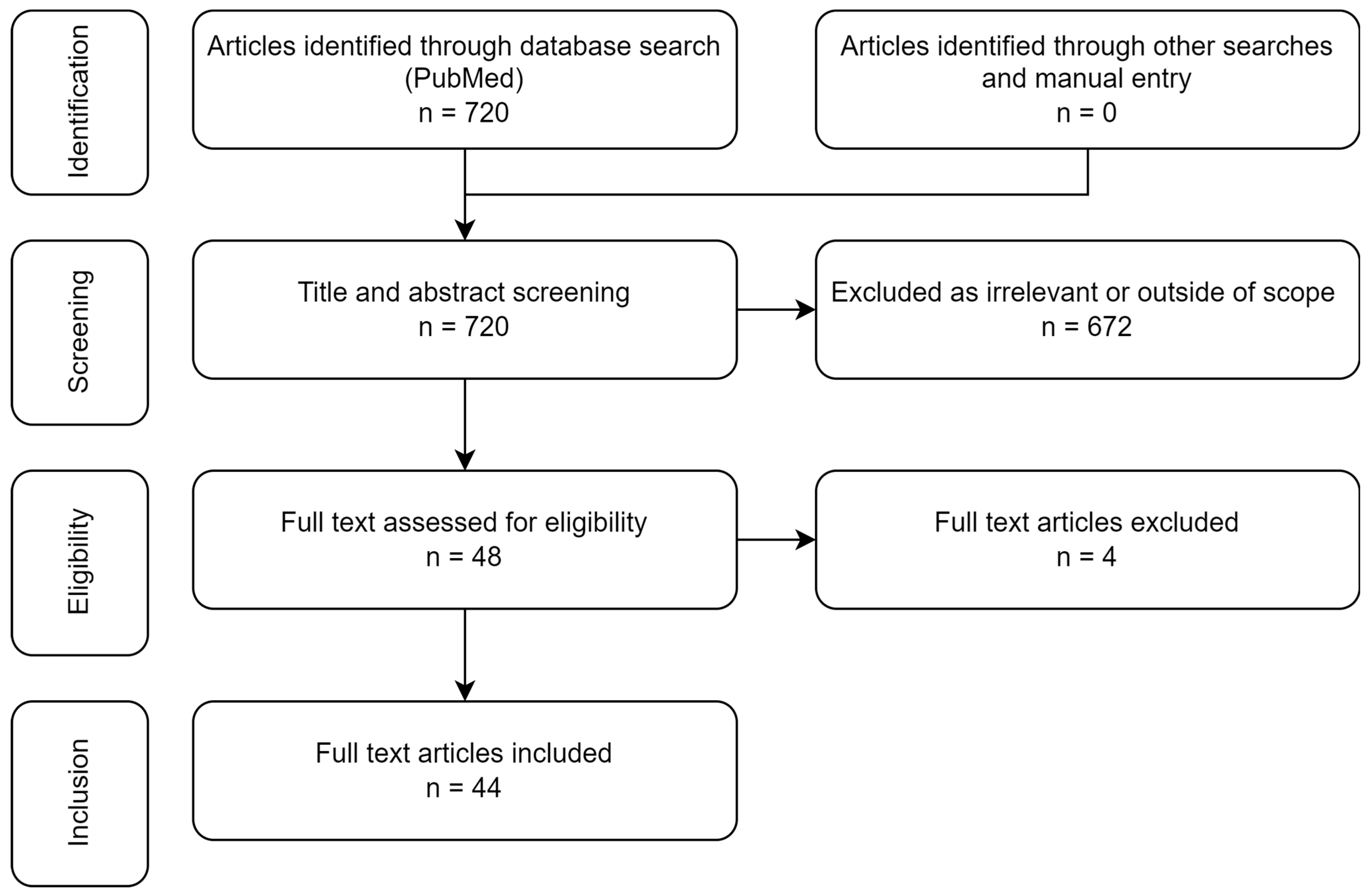
3.1. Search Results
3.2. Chitosan in Drinking Water Treatment
Advances in Chitosan Technology for Drinking Water
3.3. Surface and Recreational Water Treatment
3.4. Wastewater Treatment
4. Discussion
5. Conclusions
Author Contributions
Funding
Data Availability Statement
Conflicts of Interest
References
- Renault, F.; Sancey, B.; Badot, P.M.; Crini, G. Chitosan for coagulation/flocculation processes—An eco-friendly approach. Eur. Polym. J. 2009, 45, 1337–1348. [Google Scholar] [CrossRef]
- Kumar, M.N.V.R.; Muzzarelli, R.A.A.; Muzzarelli, C.; Sashiwa, H.; Domb, A.J. Chitosan Chemistry and Pharmaceutical Perspectives. Chem. Rev. 2004, 104, 6017–6084. [Google Scholar] [CrossRef] [PubMed]
- Strand, S.P.; Danielsen, S.; Christensen, B.E.; Vårum, K.M. Influence of chitosan structure on the formation and stability of DNA-chitosan polyelectrolyte complexes. Biomacromolecules 2005, 6, 3357–3366. [Google Scholar] [CrossRef] [PubMed]
- Florea, B.I.; Thanou, M.; Junginger, H.E.; Borchard, G. Enhancement of bronchial octreotide absorption by chitosan and N-trimethyl chitosan shows linear in vitro/in vivo correlation. J. Control. Release 2006, 110, 353–361. [Google Scholar] [CrossRef]
- Bielefeldt, A.R.; Kowalski, K.; Schilling, C.; Schreier, S.; Kohler, A.; Scott Summers, R. Removal of virus to protozoan sized particles in point-of-use ceramic water filters. Water Res. 2010, 44, 1482–1488. [Google Scholar] [CrossRef]
- Strand, S.P.; Vårum, K.M.; Østgaard, K. Interactions between chitosans and bacterial suspensions: Adsorption and flocculation. Colloids Surf. B Biointerfaces 2003, 27, 71–81. [Google Scholar] [CrossRef]
- Rinaudo, M. Chitin and chitosan: Properties and applications. Prog. Polym. Sci. 2006, 31, 603–632. [Google Scholar] [CrossRef]
- Zhang, L.; Zeng, Y.; Cheng, Z. Removal of heavy metal ions using chitosan and modified chitosan: A review. J. Mol. Liq. 2016, 214, 175–191. [Google Scholar] [CrossRef]
- Gerente, C.; Lee, V.K.C.; Cloirec, P.L.; McKay, G. Application of Chitosan for the Removal of Metals From Wastewaters by Adsorption—Mechanisms and Models Review. Crit. Rev. Environ. Sci. Technol. 2007, 37, 41–127. [Google Scholar] [CrossRef]
- Li, X.; Sun, J.; Che, Y.; Lv, Y.; Liu, F. Antibacterial properties of chitosan chloride-graphene oxide composites modified quartz sand filter media in water treatment. Int. J. Biol. Macromol. 2019, 121, 760–773. [Google Scholar] [CrossRef]
- Shukla, S.; Arora, V.; Jadaun, A.; Kumar, J.; Singh, N.; Jain, V.K. Magnetic removal of Entamoeba cysts from water using chitosan oligosaccharide-coated iron oxide nanoparticles. Int. J. Nanomed. 2015, 10, 4901–4917. [Google Scholar] [CrossRef] [PubMed]
- Soros, A.; Amburgey, J.E.; Stauber, C.E.; Sobsey, M.D.; Casanova, L.M. Turbidity reduction in drinking water by coagulation-flocculation with chitosan polymers. J. Water Health 2019, 17, 204–218. [Google Scholar] [CrossRef] [PubMed]
- Cooper, A.; Floreani, R.; Ma, H.; Bryers, J.D.; Zhang, M. Chitosan-based nanofibrous membranes for antibacterial filter applications. Carbohydr. Polym. 2013, 92, 254–259. [Google Scholar] [CrossRef] [PubMed]
- Morsi, R.E.; Alsabagh, A.M.; Nasr, S.A.; Zaki, M.M. Multifunctional nanocomposites of chitosan, silver nanoparticles, copper nanoparticles and carbon nanotubes for water treatment: Antimicrobial characteristics. Int. J. Biol. Macromol. 2017, 97, 264–269. [Google Scholar] [CrossRef]
- Holmes, E.B.; Oza, H.H.; Bailey, E.S.; Sobsey, M.D. Evaluation of Chitosans as Coagulants-Flocculants to Improve Sand Filtration for Drinking Water Treatment. Int. J. Mol. Sci. 2023, 24, 1295. [Google Scholar] [CrossRef]
- Christensen, E.; Myrmel, M. Coagulant residues’ influence on virus enumeration as shown in a study on virus removal using aluminium, zirconium and chitosan. J. Water Health 2018, 16, 600–613. [Google Scholar] [CrossRef]
- Ferrero, F.; Periolatto, M.; Vineis, C.; Varesano, A. Chitosan coated cotton gauze for antibacterial water filtration. Carbohydr. Polym. 2014, 103, 207–212. [Google Scholar] [CrossRef]
- Oza, H.H.; Holmes, E.B.; Bailey, E.S.; Coleman, C.K.; Sobsey, M.D. Microbial reductions and physical characterization of chitosan flocs when using chitosan acetate as a cloth filter aid in water treatment. PLoS ONE 2022, 17, e0262341. [Google Scholar] [CrossRef]
- Natarajan, S.; Bhuvaneshwari, M.; Lakshmi, D.S.; Mrudula, P.; Chandrasekaran, N.; Mukherjee, A. Antibacterial and antifouling activities of chitosan/TiO2/Ag NPs nanocomposite films against packaged drinking water bacterial isolates. Environ. Sci. Pollut. Res. 2016, 23, 19529–19540. [Google Scholar] [CrossRef]
- Brown, T.J.; Emelko, M.B. Chitosan and metal salt coagulant impacts on Cryptosporidium and microsphere removal by filtration. Water Res. 2009, 43, 331–338. [Google Scholar] [CrossRef]
- Fabris, R.; Chow, C.W.; Drikas, M. Evaluation of chitosan as a natural coagulant for drinking water treatment. Water Sci. Technol. 2010, 61, 2119–2128. [Google Scholar] [CrossRef] [PubMed]
- Christensen, E.; Nilsen, V.; Håkonsen, T.; Heistad, A.; Gantzer, C.; Robertson, L.J.; Myrmel, M. Removal of model viruses, E. coli and Cryptosporidium oocysts from surface water by zirconium and chitosan coagulants. J. Water Health 2017, 15, 695–705. [Google Scholar] [CrossRef] [PubMed]
- Correia, V.G.; Ferraria, A.M.; Pinho, M.G.; Aguiar-Ricardo, A. Antimicrobial Contact-Active Oligo(2-oxazoline)s-Grafted Surfaces for Fast Water Disinfection at the Point-of-Use. Biomacromolecules 2015, 16, 3904–3915. [Google Scholar] [CrossRef] [PubMed]
- Coleman, C.K.; Mai, E.; Miller, M.; Sharma, S.; Williamson, C.; Oza, H.; Holmes, E.; Lamer, M.; Ly, C.; Stewart, J.; et al. Chitosan Coagulation Pretreatment to Enhance Ceramic Water Filtration for Household Water Treatment. Int. J. Mol. Sci. 2021, 22, 9736. [Google Scholar] [CrossRef]
- Jin, Y.; Pei, H.; Hu, W.; Zhu, Y.; Xu, H.; Ma, C.; Sun, J.; Li, H. A promising application of chitosan quaternary ammonium salt to removal of Microcystis aeruginosa cells from drinking water. Sci. Total Environ. 2017, 583, 496–504. [Google Scholar] [CrossRef]
- Cao, C.; Wu, X.; Zheng, Y.; Chen, Y. Three-dimensional cubic ordered mesoporous carbon with chitosan for capacitive deionization disinfection of water. Environ. Sci. Pollut. Res. 2020, 27, 15001–15010. [Google Scholar] [CrossRef]
- Hu, Z.; Zhang, L.; Zhong, L.; Zhou, Y.; Xue, J.; Li, Y. Preparation of an antibacterial chitosan-coated biochar-nanosilver composite for drinking water purification. Carbohydr. Polym. 2019, 219, 290–297. [Google Scholar] [CrossRef]
- Abebe, L.S.; Chen, X.; Sobsey, M.D. Chitosan Coagulation to Improve Microbial and Turbidity Removal by Ceramic Water Filtration for Household Drinking Water Treatment. Int. J. Environ. Res. Public Health 2016, 13, 269. [Google Scholar] [CrossRef]
- Wang, Y.; El-Deen, A.G.; Li, P.; Oh, B.H.L.; Guo, Z.; Khin, M.M.; Vikhe, Y.S.; Wang, J.; Hu, R.G.; Boom, R.M.; et al. High-Performance Capacitive Deionization Disinfection of Water with Graphene Oxide-graft-Quaternized Chitosan Nanohybrid Electrode Coating. ACS Nano 2015, 9, 10142–10157. [Google Scholar] [CrossRef]
- Strand, S.P.; Nordengen, T.; Østgaard, K. Efficiency of chitosans applied for flocculation of different bacteria. Water Res. 2002, 36, 4745–4752. [Google Scholar] [CrossRef]
- Mi, X.; Vijayaragavan, K.S.; Heldt, C.L. Virus adsorption of water-stable quaternized chitosan nanofibers. Carbohydr. Res. 2014, 387, 24–29. [Google Scholar] [CrossRef] [PubMed]
- Lu, P.; Amburgey, J.E. A pilot-scale study of Cryptosporidium-sized microsphere removals from swimming pools via sand filtration. J. Water Health 2015, 14, 109–120. [Google Scholar] [CrossRef] [PubMed]
- Shao, J.; Wang, Z.; Liu, Y.; Liu, H.; Peng, L.; Wei, X.; Lei, M.; Li, R. Physiological responses of Microcystisaeruginosa NIES-843 (cyanobacterium) under the stress of chitosan modified kaolinite (CMK) loading. Ecotoxicology 2012, 21, 698–704. [Google Scholar] [CrossRef] [PubMed]
- Mandloi, M.; Chaudhari, S.; Folkard, G.K. Evaluation of Natural Coagulants for Direct Filtration. Environ. Technol. 2004, 25, 481–489. [Google Scholar] [CrossRef]
- Habtemariam, H.; Kifle, D.; Leta, S.; Mucci, M.; Lürling, M. Removal of cyanobacteria from a water supply reservoir by sedimentation using flocculants and suspended solids as ballast: Case of Legedadi Reservoir (Ethiopia). PLoS ONE 2021, 16, e0249720. [Google Scholar] [CrossRef]
- Du, B.; Tang, Q.; Chen, W.; Rong, X.; Zhang, K.; Ma, D.; Wei, Z.; Chen, W. Insight into the purification of algael water by a novel flocculant with enhanced branched nanochitosan structure. J. Environ. Manag. 2023, 331, 117283. [Google Scholar] [CrossRef]
- Chung, Y.-C.; Li, Y.-H.; Chen, C.-C. Pollutant Removal From Aquaculture Wastewater Using the Biopolymer Chitosan at Different Molecular Weights. J. Environ. Sci. Health Part A 2005, 40, 1775–1790. [Google Scholar] [CrossRef]
- Chen, W.; Rong, X.; Peng, J.; Tang, Q.; Luo, H.; Fan, L.; Feng, K.; Zheng, H. Assessment of a novel nanostructured flocculant with elevated flocculation and antimicrobial activity. Chemosphere 2020, 239, 124736. [Google Scholar] [CrossRef]
- Thongsamer, T.; Vinitnantharat, S.; Pinisakul, A.; Werner, D. Fixed-bed biofilter for polluted surface water treatment using chitosan impregnated-coconut husk biochar. Environ. Pollut. 2023, 334, 122137. [Google Scholar] [CrossRef]
- Zhang, Y.; Yin, M.; Li, L.; Fan, B.; Liu, Y.; Li, R.; Ren, X.; Huang, T.-S.; Kim, I.S. Construction of aerogels based on nanocrystalline cellulose and chitosan for high efficient oil/water separation and water disinfection. Carbohydr. Polym. 2020, 243, 116461. [Google Scholar] [CrossRef]
- Parkpian, P.; Leong, S.T.; Laortanakul, P.; Poonpolwatanaporn, P. Environmental applicability of chitosan and zeolite for amending sewage sludge. J. Environ. Sci. Health Part A 2002, 37, 1855–1870. [Google Scholar] [CrossRef] [PubMed]
- Sato, H.; Nagare, H.; Huynh, T.N.C.; Komatsu, H. Development of a new wastewater treatment process for resource recovery of carotenoids. Water Sci. Technol. 2015, 72, 1191–1197. [Google Scholar] [CrossRef] [PubMed][Green Version]
- Mohamed Hatta, N.S.; Lau, S.W.; Chua, H.B.; Takeo, M.; Sen, T.K.; Mubarak, N.M.; Khalid, M.; Zairin, D.A. Parametric and kinetic studies of activated sludge dewatering by cationic chitosan-like bioflocculant BF01314 produced from Citrobacter youngae. Environ. Res. 2023, 224, 115527. [Google Scholar] [CrossRef] [PubMed]
- Cainglet, A.; Tesfamariam, A.; Heiderscheidt, E. Organic polyelectrolytes as the sole precipitation agent in municipal wastewater treatment. J. Environ. Manag. 2020, 271, 111002. [Google Scholar] [CrossRef]
- Guo, J.; Chen, C.; Chen, W.; Jiang, J.; Chen, B.; Zheng, F. Effective immobilization of Bacillus subtilis in chitosan-sodium alginate composite carrier for ammonia removal from anaerobically digested swine wastewater. Chemosphere 2021, 284, 131266. [Google Scholar] [CrossRef]
- de Godos, I.; Guzman, H.O.; Soto, R.; García-Encina, P.A.; Becares, E.; Muñoz, R.; Vargas, V.A. Coagulation/flocculation-based removal of algal–bacterial biomass from piggery wastewater treatment. Bioresour. Technol. 2011, 102, 923–927. [Google Scholar] [CrossRef]
- Gani, P.; Mohamed Sunar, N.; Matias-Peralta, H.; Abdul Latiff, A.A.; Mohamad Fuzi, S.F.Z. Growth of microalgae Botryococcus sp. in domestic wastewater and application of statistical analysis for the optimization of flocculation using alum and chitosan. Prep. Biochem. Biotechnol. 2017, 47, 333–341. [Google Scholar] [CrossRef]
- Holder, S.L.; Lee, C.-H.; Popuri, S.R. Simultaneous wastewater treatment and bioelectricity production in microbial fuel cells using cross-linked chitosan-graphene oxide mixed-matrix membranes. Environ. Sci. Pollut. Res. 2017, 24, 13782–13796. [Google Scholar] [CrossRef]
- Shitu, A.; Zhang, Y.; Danhassan, U.A.; Li, H.; Tadda, M.A.; Ye, Z.; Zhu, S. Synergistic effect of chitosan-based sludge aggregates CS@NGS inoculum accelerated the start-up of biofilm reactor treating aquaculture effluent: Insights into performance, microbial characteristics, and functional genes. Chemosphere 2022, 303, 135097. [Google Scholar] [CrossRef]
- Zhang, J.; Hu, Q.; Lu, J.; Lin, S. Study on the effect of chitosan conditioning on sludge dewatering. Water Sci. Technol. 2019, 79, 501–509. [Google Scholar] [CrossRef]
- Cainglet, A.; Kujala, K.; Liimatainen, M.; Prokkola, H.; Piippo, S.; Postila, H.; Ronkanen, A.-K.; Heiderscheidt, E. The influence of coagulant type on the biological treatment of sewage sludge. Sci. Total Environ. 2023, 869, 161706. [Google Scholar] [CrossRef] [PubMed]
- Lin, F.; Qin, W.; Wei, J.; Lv, J.; Yang, P. Effect of chemical regulation combined with mechanical filtration on deep dewatering and consolidation characteristics of sludge. Environ. Sci. Pollut. Res. 2023, 30, 89088–89100. [Google Scholar] [CrossRef] [PubMed]
- Shafi, Q.I.; Ihsan, H.; Hao, Y.; Wu, X.; Ullah, N.; Younas, M.; He, B.; Rezakazemi, M. Multi-ionic electrolytes and E. coli removal from wastewater using chitosan-based in-situ mediated thin film composite nanofiltration membrane. J. Environ. Manag. 2021, 294, 112996. [Google Scholar] [CrossRef] [PubMed]
- World Health Organization. WHO International Scheme to Evaluate Household Water Treatment Technologies; WHO: Geneva, Switzerland, 2014. [Google Scholar]
- Rose, J.B.; Dickson, L.J.; Farrah, S.R.; Carnahan, R.P. Removal of pathogenic and indicator microorganisms by a full-scale water reclamation facility. Water Res. 1996, 30, 2785–2797. [Google Scholar] [CrossRef]
- George, I.; Crop, P.; Servais, P. Fecal coliform removal in wastewater treatment plants studied by plate counts and enzymatic methods. Water Res. 2002, 36, 2607–2617. [Google Scholar] [CrossRef]
- George, I.; Crop, P.; Servais, P. Use of beta-D-galactosidase and beta-D-glucuronidase activities for quantitative detection of total and fecal coliforms in wastewater. Can. J. Microbiol. 2001, 47, 670–675. [Google Scholar]
- U.S. Environmental Protection Agency. NPDES Inspection Manual. In CFR Part 503 Subpart D, EPA Method 1681; U.S. Environmental Protection Agency: Washington, DC, USA, 2017. [Google Scholar]
- World Health Organization. Guidelines for the Safe Use of Wastewater, Excreta and Greywater—Volume 4: Excreta and Greywater Use in Agriculture; World Health Organization, United Nations Environment Programme, Eds.; WHO: Geneva, Switzerland, 2013. [Google Scholar]
- Keeley, J.; Jarvis, P.; Judd, S.J. An economic assessment of coagulant recovery from water treatment residuals. Desalination 2012, 287, 132–137. [Google Scholar] [CrossRef]
- Hamawand, I.; Ghadouani, A.; Bundschuh, J.; Hamawand, S.; AAl Juboori, R.; Chakrabarty, S.; Yusaf, T. A Critical Review on Processes and Energy Profile of the Australian Meat Processing Industry. Energies 2017, 10, 731. [Google Scholar] [CrossRef]
- Kangama, A.; Zeng, D.; Tian, X.; Fang, J. Application of Chitosan Composite Flocculant in Tap Water Treatment. J. Chem. 2018, 2018, 2768474. [Google Scholar] [CrossRef]

| Inclusion and Exclusion Eligibility Criteria | |
|---|---|
| Include | Exclude |
|
|
| References | Treatment Topic | Treatment Mechanism | ||||
|---|---|---|---|---|---|---|
| Water Type | Microorganism | Other Contaminants | Type of Mechanism and Process | Type of Chitosan | Form of Chitosan | |
| Li et al., 2019 [10] | Drinking, Surface/Recreational | E. coli and S. aureus | - | Direct use in solution and with sand filtration as composites; evidence of protein leakage from bacteria | Chitosan chloride-graphene oxide composites alone or combined with quartz sand | Used in water and also combined with modified quartz sand filter media to treat 2° wastewater effluent |
| Shukla et al., 2015 [11] | Reagent water | Entamoeba invadens cysts | - | absorption, adsorption and magnetic capture | Chitosan (>90% deacetylation degree) oligosaccharide-coated iron oxide nanoparticles | Chitosan-iron oxide nanoparticles |
| Soros et al., 2019 [12] | Drinking water with added total organic carbon and total dissolved solids | Clay turbidity as a surrogate for microorganisms | Kaolinite and bentonite clays | Coagulation, flocculation and sedimentation | Chitosans (11 total) with and without chemically different functional groups, deacetylation degrees and molecular weights | Chitosan powder dissolved in test waters; dosed at 1–30 mg/L concentrations in jar test flocculators |
| Cooper et al., 2013 [13] | Drinking | S. aureus | Polystyrene particles of 0.1, 0.3, and 1 micrometer | Membrane filter composites containing chitosan | Chitosan (85% deacetylation degree)-polycaprolactone nanofibrous membranes as mats for disinfection and filtration | Nanofibrous membrane mats to disinfect and remove particles |
| Morsi et al., 2017 [14] | Bacteria suspensions with added yeast extract; also raw and effluent sewage and sludges | E. coli, S. aureus, A. flavus | - | Chitosan composites of nanoparticles to disinfect bacteria and fungi suspensions with yeast extract and also raw and treated sewage and sludges | Chitosan composites of Ag or Cu nanoparticles or carbon nanotubes tested individually and when used as combinations | Composites tested individually or combined to disinfect microbe-yeast extract suspensions and wastewaters at contact times up to 30 min |
| Holmes et al., 2023 [15] | Surface (reservoir) water | E. coli, coliphage MS2 | - | Coagulation, flocculation and sand filtration in columns | Chitosan acetate powder (85–95% deacetylation degree) | Dissolved in water at 2 g/L; dosed to test water at 3, 10 and 30 mg/L, then coagulated, flocculated, settled and sand filtered |
| Christensen and Myrmel., 2018 [16] | Untreated drinking water sources (surface water) | MS2 coliphage, Hepatitis A virus, Bovine norovirus, Bovine coronavirus | - | Coagulation, flocculation and filtration | KitoFlokk (commercial) (80% deacetylation degree); compared to polyaluminum chloride and zirconium oxychloride coagulants | Solution (2%) in 0.1 M HCl; dosed at 2–15 mg/L, coagulated, flocculated, centrifuged and filtered |
| Ferrero et al., 2014 [17] | Cultured bacteria diluted in water | E. coli, S. aureus and Klebsiella pneumophila; disinfection | - | Chitosan coated onto cotton gauze, UV irradiated and tested in suspensions and as filters to disinfect | Reagent chitosan (DD 75–85%) coated or cured onto cotton; tested as suspensions and by filtration | Chitosan coated or UV-cured onto cotton gauze fabric; used in suspension and as filters |
| Oza et al., 2022 [18] | Surface (reservoir) water only and with 10% pasteurized primary sewage | E. coli, MS2 | Turbidity | Coagulation, flocculation and gravity filtration through 12 layers of cotton cloth | Chitosan acetate (93% deacetylation degree) | Chitosan powder dissolved in water, dosed at 10 mg/L to test water, flocculated, settled and then cloth filtered |
| Natarajan et al., 2016 [19] | Water bacteria (3 strains), individually and combined in minimal M9 culture medium | - | Contact disinfection of bacteria with chitosan/TiO2 or Ag nanoparticles as thin film membranes | Chitosan (in 2% acetic acid) combined with TiO2 or Ag nanoparticles creating thin film nanocomposites as contact disinfectants for water | Nanocomposites in contact with 3 strains of water bacteria separately or combined for 24 h at 37 °C | |
| Brown and Emelko., 2009 [20] | Raw water (dechlorinated tap) with 2.5– 5.0 NTU kaolinite turbidity, 300–330 mg/L CaCO3 alkalinity, dissolved organic carbon (DOC) | Cryptosporidium | Microspheres | Chitosan compared to alum and ferric chloride for coagulation/ flocculation | Commercial chitosan polymer (Chitoclear® (Siglufjörður, Iceland) of unspecified chemical properties; powder dissolved in 0.1 M HCl and diluted in test water | Chitosan coagulant used alone and with granular media (sand and anthracite) filter columns, compared to alum and ferric chloride at 18–22 °C |
| Fabris et al., 2010 [21] | Drinking water sources | Not specified (none reported) | Turbidity, dissolved organic carbon, color and UV absorbance | Coagulation, flocculation, sedimentation and then filtration | Chitosan powder (85% deacetylation degree) dissolved at 1% in 1% HCl and dosed at 4 and 12 mg/L; compared to polyaluminum chloride (PACl) | Chitosan alone compared to PACl; also used combined with ion exchange resin and activated carbon |
| Christensen et al., 2017 [22] | Raw drinking water source (river water) | E. coli, Cryptosporidium, MS2, and S. typhimurium 28B bacteriophage | Turbidity, TOC (total organic carbon) and color | Coagulation and sand filtration | KitoFlokk (Kløfta, Norway) (80% deacetylation degree) | Chitosan dose of 1 mg/L, diluted from 0.5% stock in 0.1M HCl |
| Correia et al., 2015 [23] | Drinking | E. coli and S. aureus | No other analytes | Absorption and adsorption for contact disinfection of diluted bacteria on scaffold surfaces | Chitosan (75–85% deacetylated, Mw = 190–310 kDa mol−1) dissolved in 1% acetic acid (v/v) and then freeze-dried with other constituents to create 3D scaffold structures. | Oligo(2-methyl-2-oxazoline) quaternized with N,N-dimethyldodecylamine and grafted to a chitosan (CHT) scaffold (CHT-OMetOx-DDA) |
| Coleman et al., 2021 [24] | Raw surface water for drinking water, with or without added primary sewage at 1% volume | E.coli, C. perfringens, sewage derived E. coli and total coliforms, MS2, Qβ and ΦX174 coliphages, and sewage derived F+ and somatic coliphages | Turbidity | Filtration with ceramic filters preceded by coagulation and flocculation | Chitosan acetate (80–95% degree of deacetylation and molecular weight 30–200 kDa) or chitosan lactate (80–95% degree of deacetylation and molecular weight 30–500 kDa) in deionized water | Prepared from powder as 2% stocks and dosed to give 10 and 30 mg/L in test waters |
| Jin et al., 2017 [25] | Reservoir water, microfiltered | Microcystis aeruginosa | - | Coagulation and flocculation to capture and then storage to lyse cells | Chitosan quaternary ammonium salt, dissolved in distilled water to 1 mg/mL | Quaternary ammonium salt powder (20,000 g/mole molecular mass) |
| Cao et al., 2020 [26] | NaCl solution | E. coli | - | Electrochemical filtration and contact disinfection using composite membranes | 3D cubic ordered mesoporous carbon with chitosan (85% deacetylation degree and 50 kDa molecular weight) | Used as activated carbon electrode in a recirculating system to disinfect saline water |
| Hu et al., 2019 [27] | Bacteria culture diluted in water | E. coli | - | Absorption, adsorption and disinfection | Chitosan-biochar-nanosilver composite made by high temperature carbonization | Synthesized chitosan composite dosed at 0.4–0.8 g/L into E. coli in water for up to 9 h contact times |
| Abebe et al., 2016 [28] | Phosphate buffered saline (PBS) | E. coli, MS2 | Turbidity | Coagulation, flocculation, sedimentations and ceramic filtration | Chitosan acetate, HCl, and lactate (80–95% deacetylation degree) to treat water | Commercial chitosan sources, dissolved in PBS and tested for coagulation, flocculation and ceramic filtration |
| Wang et al., 2015 [29] | Reagent water with NaCl | E. coli, Staphylococcus aureus and Candida albacans | - | Absorption, adsorption and disinfection | Electrode of cationic nanohybrids of graphene oxide-graft-quaternized chitosan | Electrode in flowing water with NaCl to disinfect, followed by electrode regeneration |
| Strand et al., 2002 [30] | Reagent water with NaCl | E. coli, Enterobacter cloacae, Serratia marcescens, Microccocus luteus, Bacillus megaterium, Pseudomonas putida, and Pseudomonas Rhodococcus sp. 094 | - | Coagulation, flocculation and sedimentation | Chitosans with 3 different degrees of deacetylation (high) moderate and low), as hydrochlorie salts | Chitosans in water containing NaCl and bacteria; stirred then sedimented |
| Mi et al., 2014 [31] | Porcine parvovirus and Sindbis virus | - | Adsorption and filtration from test water | Quaternized chitosan N-[(2-hydroxyl-3-trimethylammonium) propyl] chitosan (HTCC) | Chitosan (75–85% deacetylated and 190–310 kDa molecular weight) as quaternized nanofibers electrospun as a thin mat filter | |
| Lu et al., 2015 [32] | Swimming pool water | Cryptosporidium-sized polystyrene microspheres | - | Coagulation and filtration | Chitosan coagulation followed by sand filtration | SeaKlear (Syracuse, NY, USA) commercial chitosan product (properties unspedified and original company acquired or repeatedly resold) |
| Shao et al., 2012 [33] | Natural water plus Microcystis aeruginosa culture | Microcystis aeruginosa (a cause of harmful algal blooms) | Cell damage parameters indicative of disinfection | Coagulation, flocculation and sedimentation | Chitosan modified kaolinite added to Microcystis aeruginosa in culture medium plus natural water | Chitosan-kaolinite clay flocculant |
| Mandloi et al., 2004 [34] | Surface water | Total coliforms | Turbidity | Coagulation, flocculation and rapid sand filtration with chitosan, or Moringa oleifera or maize polymers | Chitosan (unspecified) dissolved in acetic acid, then diluted in water and dosed at 0.05 to 0.2 mg/L | Coagulation, flocculation with chitosan or other coagulant then rapid sand filtration in mini-columns |
| Habtemariam et al., 2021 [35] | Reservoir water | Cyanobacteria | Turbidity | Coagulation, flocculation and sedimentation | Commercial chitosan source dissolved in acidified water at 1 g/L | 1–8 mg/L doses for coagulation–flocculation and sedimentation |
| Du et al., 2023 [36] | Chemically defined water representing surface water with algal blooms | Cultured cyanobacteria, green algae and diatoms | Extracellular organic material, turbidity and chlorophyl a | Coagulation, flocculation and dissolved air flotation of algae in bicarbonate buffered 1.8 mM NaCl | Nanochitosan grafted flocculant (PAD-g-MNC) | Branched chain chitin nanoparticles synthesized from chitin (deacetylation degree 80–95%) and high molecular weight |
| Chung et al., 2005 [37] | Eel aquaculture wastewater; biofiltered | HPC bacteria | Turbidity, suspended solids, BOD, COD, ammonia, phosphate | Coagulation, flocculation, sedimentation | Commercial chitosans (90% deacetylation degree) of high and low molecular weight (3.6 × 10⁵, 4.7 × 10⁴ & 6.2 × 10³) | Chitosans dissolved in 0.2 M acetic acid |
| Chen et al., 2020 [38] | Surface/recreational | Salmonella typhimurium | Turbidity, as kaolinite clay in water plus Salmonella in boiled tap water | Coagulation, flocculation and disinfection | Nanochitosan-grafted flocculant | Chitosan (95% deacetylation degree) grafted to quaternary ammonium polyacrylamide, creating flocculant-disinfectant |
| Thongsamer et al., 2023 [39] | Surface water (canal water) | E. coli, HPC bacteria and ammonium oxidizing, nitrite oxidizing, denitrifying, polyphosphate accumulating and denitrifying phosphate-accumulating bacteria | Nutrient and bacteria removal | Absorption, adsorption, filtration | Coconut husk biochar pellets modified with commercial chitosan in 1% acetic acid; rinsed in water and dried. | Biochar-chitin columns as filters |
| Zhang et al., 2020 [40] | Wastewater | Bacteria including Staphylococcus aureus and E. coli O157:H7 | Oily wastewater | Cellulose-chitin aerogel used to filter diluted bacteria cultures | Nanocrystalline cellulose and chitosan (50,000 MW and 90% deactylation degree) | Quaternized N-halamine siloxane polymer to form nanocrystalline cellulose and chitosan as aerogel |
| Parkpian et al., 2002 [41] | Wastewater | Fecal coliform bacteria | Heavy metals (Zn, Cu, Ni, Pb) | Absorption, adsorption, filtration and leaching | Chitosan and zeolite | Packed columns of sludge leached with tap water and sewage effluent |
| Sato et al., 2015 [42] | Primary effluent wastewater | Algae and H. pluvialis | Turbidity and suspended solids | Coagulation, Flocculation and sedimentation | Commercial chitosan, 1200 kDa molecular weight (Chitosan 500 from Wako Chemical (Richmond, VA, USA)) | Chitosan powder in HCl dosed at 2 and 3 mg/L into primary effluent wastewater |
| Mohamed Hatta et al., 2023 [43] | Activated sludge | Not specified | Activated sludge dewatering | Coagulation, flocculation and sedimentation | Chitosan-like bioflocculant BF01314, chemically resembling chitosan; compared to commercial chitosan and a cationic polymer | N-acetylglucosamine and glucosamine- like polymer from Citrobacter youngae GTC 01314 and high molecular weight chitosan (319–375 kDa) |
| Cainglet et al., 2020 [44] | Primary and secondary wastewater | Not specified | Turbidity, BOD, COD, suspended solids, nutrients | Coagulation, flocculation and sedimentation | Chitosan and 10 other coagulants | Low molecular weight chitosan in acetic acid and dosed at 7.5 mg/L |
| Guo et al., 2021 [45] | Anaerobically digested swine wastewater | Immobilized B. subtilis in chitosan-alginate composite as dried pellets | Ammonia removal from anaerobically digested swine wastewater | Biological treatment to reduce ammonia in batch reactors at 25 °C and optimum pH | Chitosan-sodium alginate composite with Bacillus subtilis as dried pellets to treat anaerobically digested swine wastewater | Immobilized bacteria pellets using chitosan-sodium alginate composites to decrease ammonia |
| de Godos et al., 2011 [46] | Algae and bacterial consortium from pig wastewater | Cultured green algae (3 species) and wastewater bacteria consortium | Removal efficiency of test algae and bacteria as percentages | Coagulation, flocculation and sedimentation | Commercial chitosan plus 6 other coagulants dosed at 5–250 mg/L in model algal-bacteria piggery wastewater | Commercial dry chitosan in 1% acetic acid to dose into model wastewater |
| Gani et al., 2017 [47] | Wastewater from treatment plant | Microalgae Botryococcus spp. | Algal biomass recovery | Coagulation, flocculation and sedimentation of test algae in wastewater | Chitosan source not specified | Chitosan (3% in acetic acid) dosed at 30–180 mg/L to determine optimum flocculation |
| Holder et al., 2017 [48] | Primary wastewater | Not specified because not studied | COD Removal | Filtration by composite membranes of chitosan-graphine oxide and phosphoric acid | Chitosan proton exchange membranes synthesized by crosslinking graphine oxide-phosphoric acid and chitosan (chitosan (200 kDa molecular weight and 67% deacetylation degree) | Commercial dry chitosan dissolved in 2% acetic acid and used to create composite membrane |
| Shitu et al., 2022 [49] | Synthetic aquaculture wastewater | Nitrogen metabolizing bacterial community of Blastocatellia, Actinobacteria, Alphaproteobacteria, Betaproteobacteria, Gammaproteobacteria, and Caldilineae | Nitrogen metabolism for ammonium removal from organic wastewater by nitrification, denitrification and ammonium oxidation | Enhancement of bioreactor performance to degrade nitrogenous aquaculture wastewater | Chitosan-based natural sludge aggregates to enhance biofilm reactor performance in treating aquaculture effluent | Chitosan-based natural sludge aggregates of chitosan (95% deacetylation degree), acetic acid and activated sludge |
| Zhang et al., 2019 [50] | Stabilization pond wastewater sludge | Not specified | Moisture reduction, settlement ratio, % transmittance, sludge particle size and extracellular polysaccharides | Coagulation, flocculation and sedimentation | Chitosan (>90% deacetylation degree) 1% in acetic acid to dose sludge as grams/grams sludge total solids | Chitosan dosed to sludge in jar tests for coagulation, flocculation and sedimentation |
| Cainglet et al., 2023 [51] | Wastewater sludge | Not specified | Biogas production (methane and CO2), nutrients (N and P) and inorganic metals removal | Anaerobic digestion and composting | Chitosan (low molecular weight), polyamine and polyaluminum chloride as coagulants/flocculants | Chitosan, polyamine and polyaluminum chloride dosed into sludge as treatments |
| Lin et al., 2023 [52] | Wastewater sludge (secondary) | Not specified | Sludge dewatering percentage, particle size, filtration resistance, compression, zeta potential and fractile dimension | Mechanical pressure filtration to dewater sludge | Chitosan (200,000 molec. wt.) and cationic polyacrylamide (10–12 million molecular wt.) | Mechanical pressure filtration of sludge pre-treated with chitosan or cationic polyacrylamide |
| Shafi et al., 2021 [53] | Model wastewater of inorganic salts and E. coli | E. coli | Inorganic salts | Nanofiltration by composite membrane | Nanofiltration membrane composed of chitosan (85% deacetylation degree and 120 Kda molec. wt.), acetic acid, piperazine, sodium polyphosphate, aqueous amine and trymesoyl | Chitosan-based thin film composite nanofiltration membrane |
Disclaimer/Publisher’s Note: The statements, opinions and data contained in all publications are solely those of the individual author(s) and contributor(s) and not of MDPI and/or the editor(s). MDPI and/or the editor(s) disclaim responsibility for any injury to people or property resulting from any ideas, methods, instructions or products referred to in the content. |
© 2024 by the authors. Licensee MDPI, Basel, Switzerland. This article is an open access article distributed under the terms and conditions of the Creative Commons Attribution (CC BY) license (https://creativecommons.org/licenses/by/4.0/).
Share and Cite
Coleman, C.K.; Oza, H.H.; Bailey, E.S.; Sobsey, M.D. A Review of Chitosan as a Coagulant of Health-Related Microorganisms in Water and Wastewater. Environments 2024, 11, 211. https://doi.org/10.3390/environments11100211
Coleman CK, Oza HH, Bailey ES, Sobsey MD. A Review of Chitosan as a Coagulant of Health-Related Microorganisms in Water and Wastewater. Environments. 2024; 11(10):211. https://doi.org/10.3390/environments11100211
Chicago/Turabian StyleColeman, Collin Knox, Hemali H. Oza, Emily S. Bailey, and Mark D. Sobsey. 2024. "A Review of Chitosan as a Coagulant of Health-Related Microorganisms in Water and Wastewater" Environments 11, no. 10: 211. https://doi.org/10.3390/environments11100211
APA StyleColeman, C. K., Oza, H. H., Bailey, E. S., & Sobsey, M. D. (2024). A Review of Chitosan as a Coagulant of Health-Related Microorganisms in Water and Wastewater. Environments, 11(10), 211. https://doi.org/10.3390/environments11100211

