Article

An EEG Study on Emotional Intelligence and Advertising Message Effectiveness


1
Department of Psychological Sciences, Centre for Mental Health, Swinburne University of Technology, Hawthorn Victoria 3122, Australia
2
Centre for Forensic Behavioural Science, Swinburne University of Technology, Hawthorn Victoria 3122, Australia
3
Business School, University of Notre Dame, Fremantle 6160, Australia
*
Author to whom correspondence should be addressed.
Behav. Sci. 2019, 9(8), 88; https://doi.org/10.3390/bs9080088
Submission received: 10 July 2019 / Revised: 2 August 2019 / Accepted: 12 August 2019 / Published: 15 August 2019

Abstract

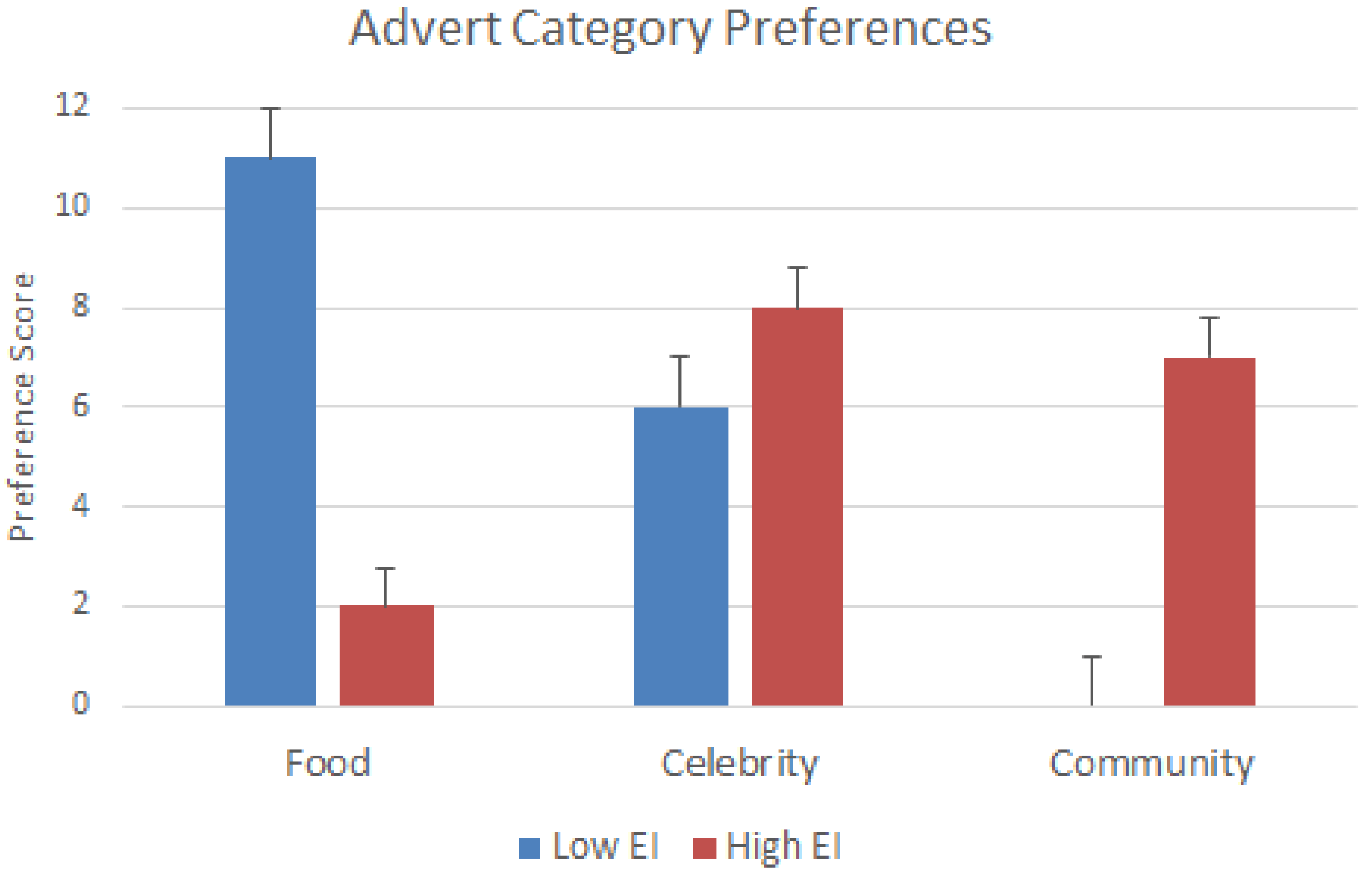
Some electroencephalography (EEG) studies have investigated emotional intelligence (EI), but none have examined the relationships between EI and commercial advertising messages and related consumer behaviors. This study combines brain (EEG) techniques with an EI psychometric to explore the brain responses associated with a range of advertisements. A group of 45 participants (23 females, 22 males) had their EEG recorded while watching a series of advertisements selected from various marketing categories such as community interests, celebrities, food/drink, and social issues. Participants were also categorized as high or low in emotional intelligence (n = 34). The EEG data analysis was centered on rating decision-making in order to measure brain responses associated with advertising information processing for both groups. The findings suggest that participants with high and low emotional intelligence (EI) were attentive to different types of advertising messages. The two EI groups demonstrated preferences for “people” or “object,” related advertising information. This suggests that differences in consumer perception and emotions may suggest why certain advertising material or marketing strategies are effective or not.
Keywords: EEG; emotional intelligence; consumer decision making; advertising EEG; emotional intelligence; consumer decision making; advertising