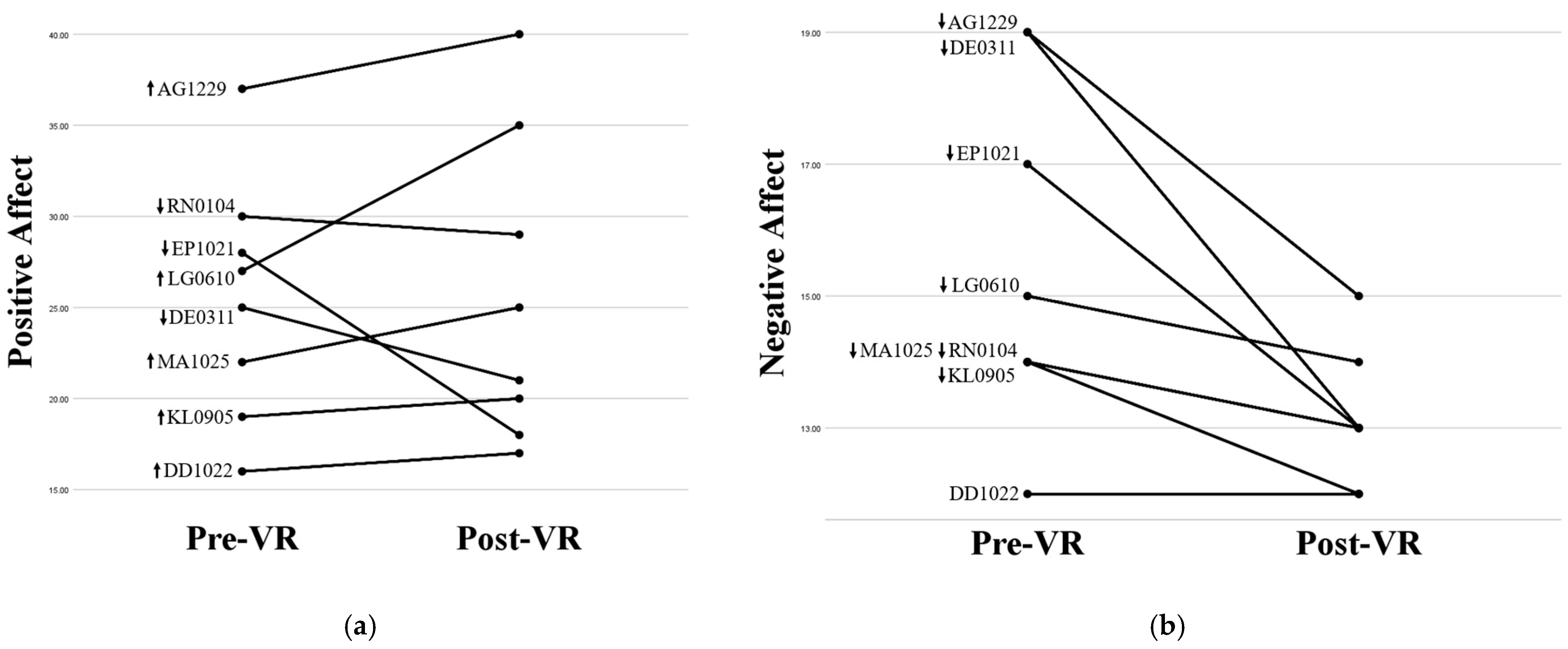
Virtual Reality Induced Awe in Chronic Low Back Pain: A Mixed-Methods Study

 , ,
, ,  , ,
, ,
Abstract
1. Introduction
2. Materials and Methods
2.1. Study Design
2.2. Participants and Recruitment
2.3. Procedures
2.4. VR Application and Stimulus
2.5. Pre-VR Exposure Measures
2.5.1. Demographics, Back Pain History, VR Experience
2.5.2. McGill Pain Questionnaire, Short Form: Pain Rating Index (SF-MPQ PRI)
2.5.3. Patient Health Questionnaire–9 (PHQ-9)
2.5.4. PROMIS Pain Interference–Short Form 6b (PROMIS-Interference)
2.5.5. Positive and Negative Affect Schedule (PANAS)
2.5.6. Pain Visual Analogue Scale (VAS)
2.6. Post-VR Exposure Measures
2.6.1. Differential Emotions Scale (mDES)
2.6.2. Awe Experience Scale (AWE-S)
2.6.3. Treatment Evaluation Inventory (TEI)
2.6.4. Simulation Sickness Questionnaire
2.6.5. Semi-Structured Qualitative Interview
2.7. Data Analysis
2.7.1. Quantitative Analysis
2.7.2. Qualitative Analysis
2.7.3. Data Integration and Synthesis
2.7.4. Assessing Feasibility
3. Results
3.1. Participant Demographics
3.2. Theme 1: Awe Experiences Contributing to a Shared Sense of Perceived Vastness, Connectedness, and Wonder
3.3. Theme 2: Positive Emotional Engagement, Enjoyment, and Varying Interpretations of the VR Environment
3.3.1. Overall Positive Reactions to the VR Stimulus
“I thought it was cool. I enjoyed it. I’m a really ‘big with nature’ person in general, so kind of being in what was in the VR space was really enjoyable for me.”(MA1025)
3.3.2. Interpretations of the Mountain Journey
“The birds flying over prompted a memory of my wedding because when we got married, two Mallards flew over us.”(DT0604)
3.4. Theme 3: Somatic Experiences and Reductions in Pain-Related Thoughts
3.4.1. Indications of Engagement, Captivation, and Presence
“Oh, I thought [that I] didn’t want [the VR] to stop.”(DE0311)
“I think there was some surprise when you got to go from being on the ground to being in the air, which was cool, like being at elevation. And so I know that those things do give you, you know, even a feeling of a lightness, which was neat. I like that.”(DD1022)
3.4.2. Overall Reduction in Pain-Related Thoughts
“I didn’t really think about [my pain].”(DD1022)
“And especially like when you stand up… it’s… there. It’s not horrible, but, you know, it’s there. You can feel it.”(AG1229)
“I’m having very little pain. I mean. I always have a slight discomfort, but never, but it’s not painful today, really.”(EP1021)
“It feels better to move around versus just standing.”(KL0905)
3.5. Theme 4: Attitudes Towards VR Interventions for Chronic Pain
3.5.1. Positivity and Enthusiasm for Pain-Related VR Interventions
“I think this is another avenue of being able to give comfort to those individuals who could just, you know, enjoy being where the virtual reality scenes take you.”(DE0311)
3.5.2. Criticisms and Areas for Improvement
“I’m not really sure what you’re doing. I’m having trouble understanding how the VR helps pain. But then I don’t have any pain right now, so I can’t say what it does.”(EP1021)
“[The other headset is] just a better experience, and you’d get more positive feedback from people with just a better headset. You’d get a better experience with the people that you’re working with.”(RE0704)
3.6. Feasibility
4. Discussion
5. Conclusions
Author Contributions
Funding
Institutional Review Board Statement
Informed Consent Statement
Data Availability Statement
Conflicts of Interest
Abbreviations
| AWE-S | Awe Experiences Scale |
| CLBP | chronic low back pain |
| HMD | head-mounted display |
| mDES | Modified Differential Emotions Scale |
| PANAS | Positive and Negative Affect Schedule |
| PHQ-9 | Patient Health Questionnaire–9 |
| PROMIS-Interference | PROMIS Pain Interference–Short Form 6b |
| SF-MPQ PRI | McGill Pain Questionnaire, Short Form: Pain Rating Index |
| TEI | Treatment Evaluation Inventory |
| VAS | Pain Visual Analogue Scale |
| VR | virtual reality |
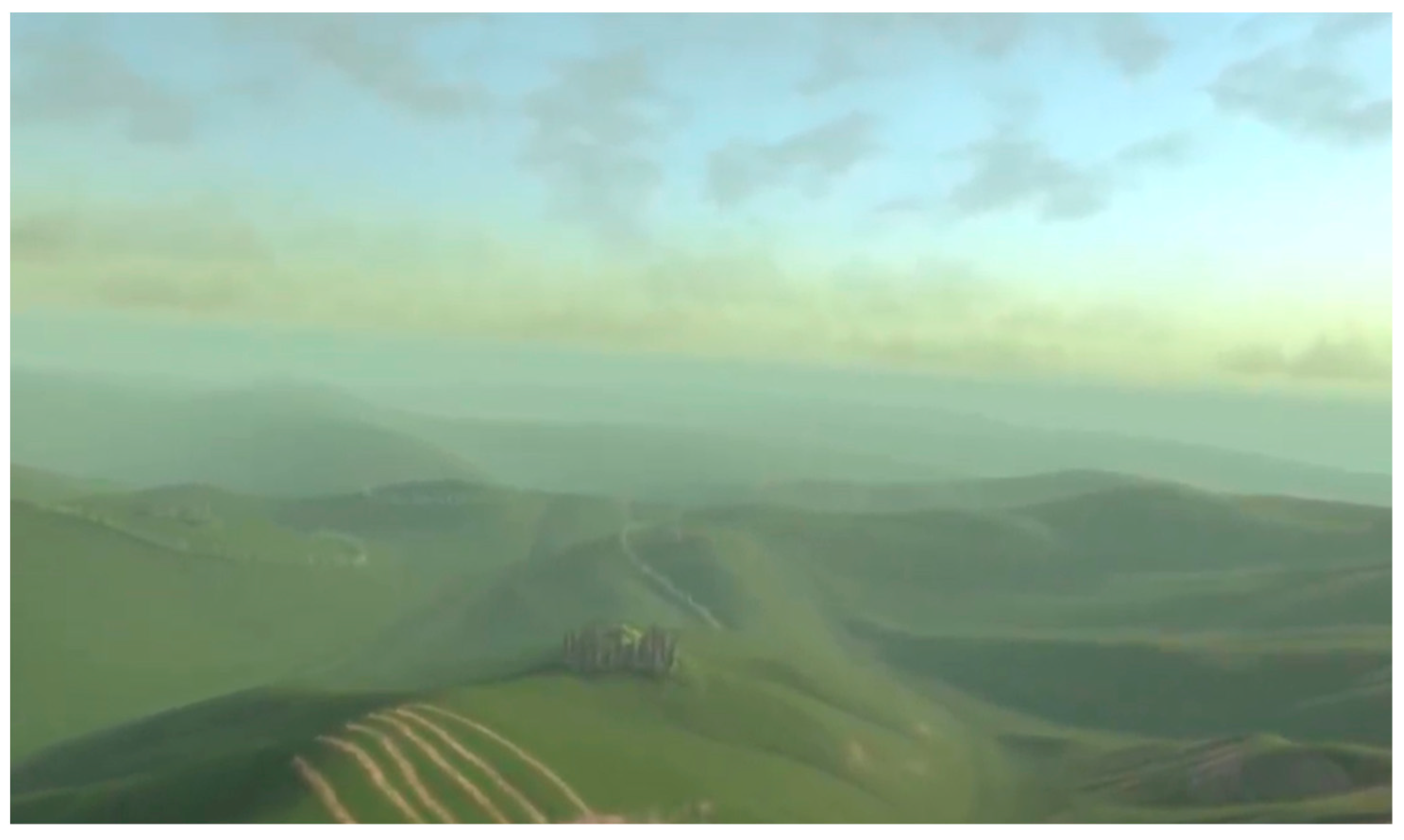
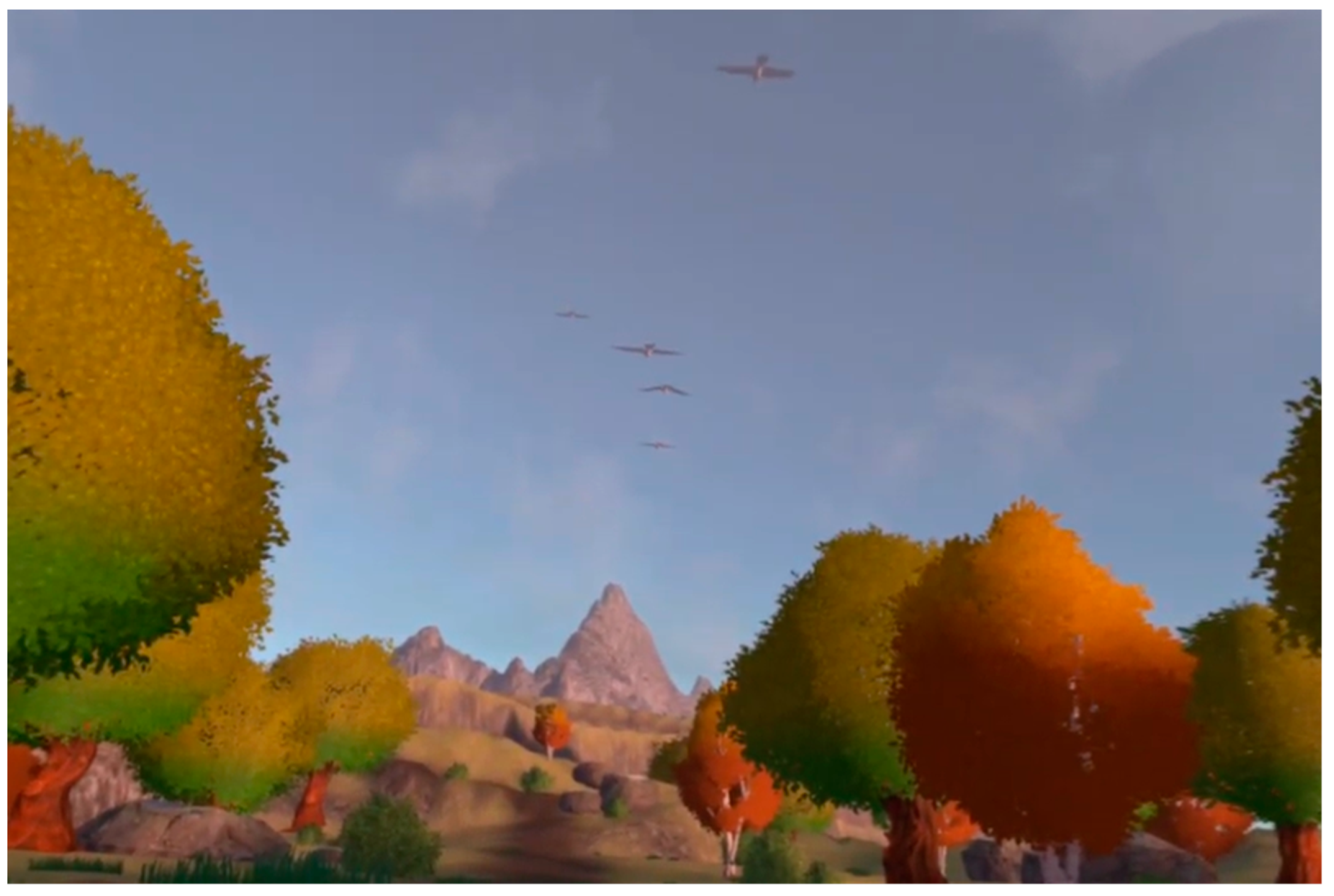
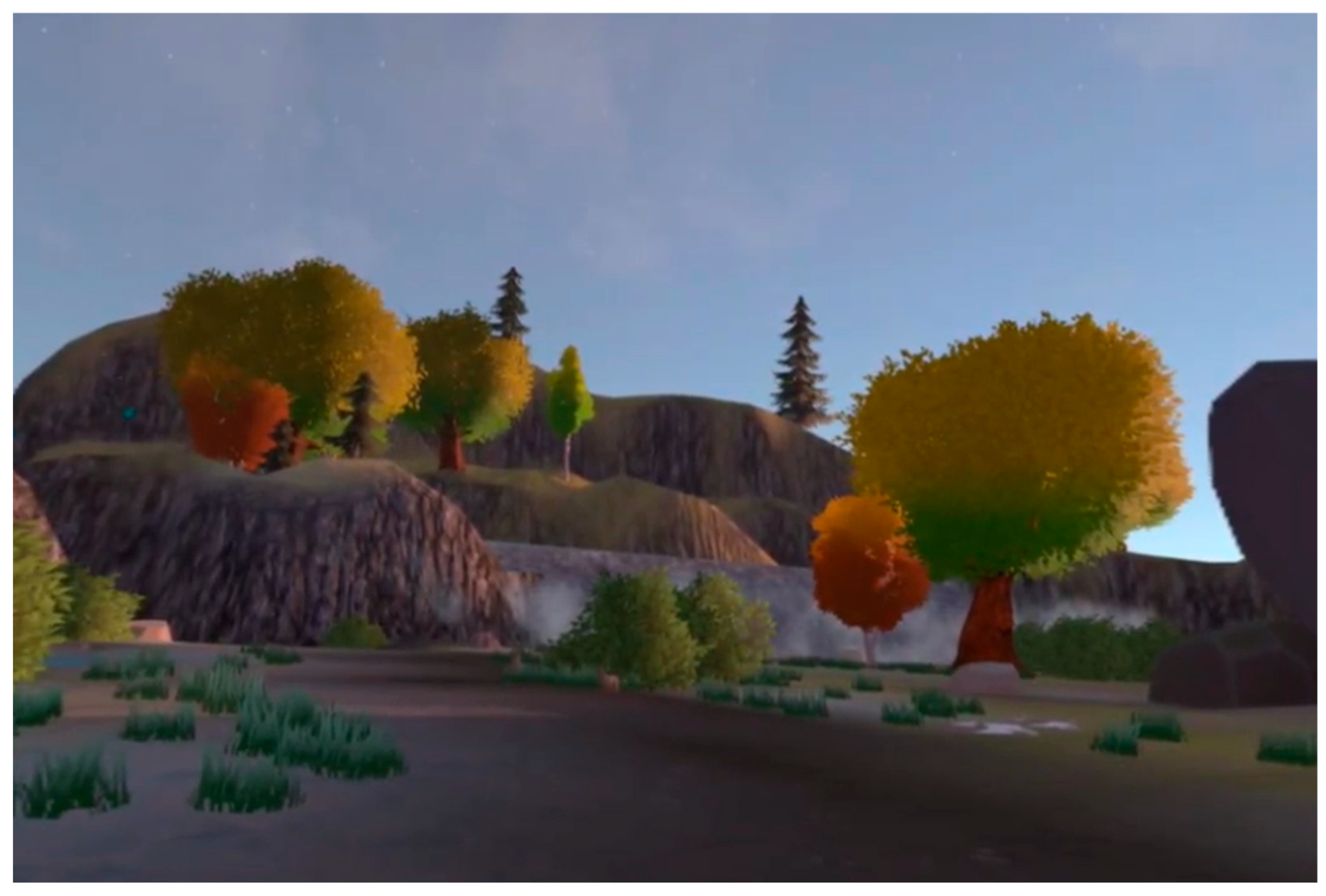
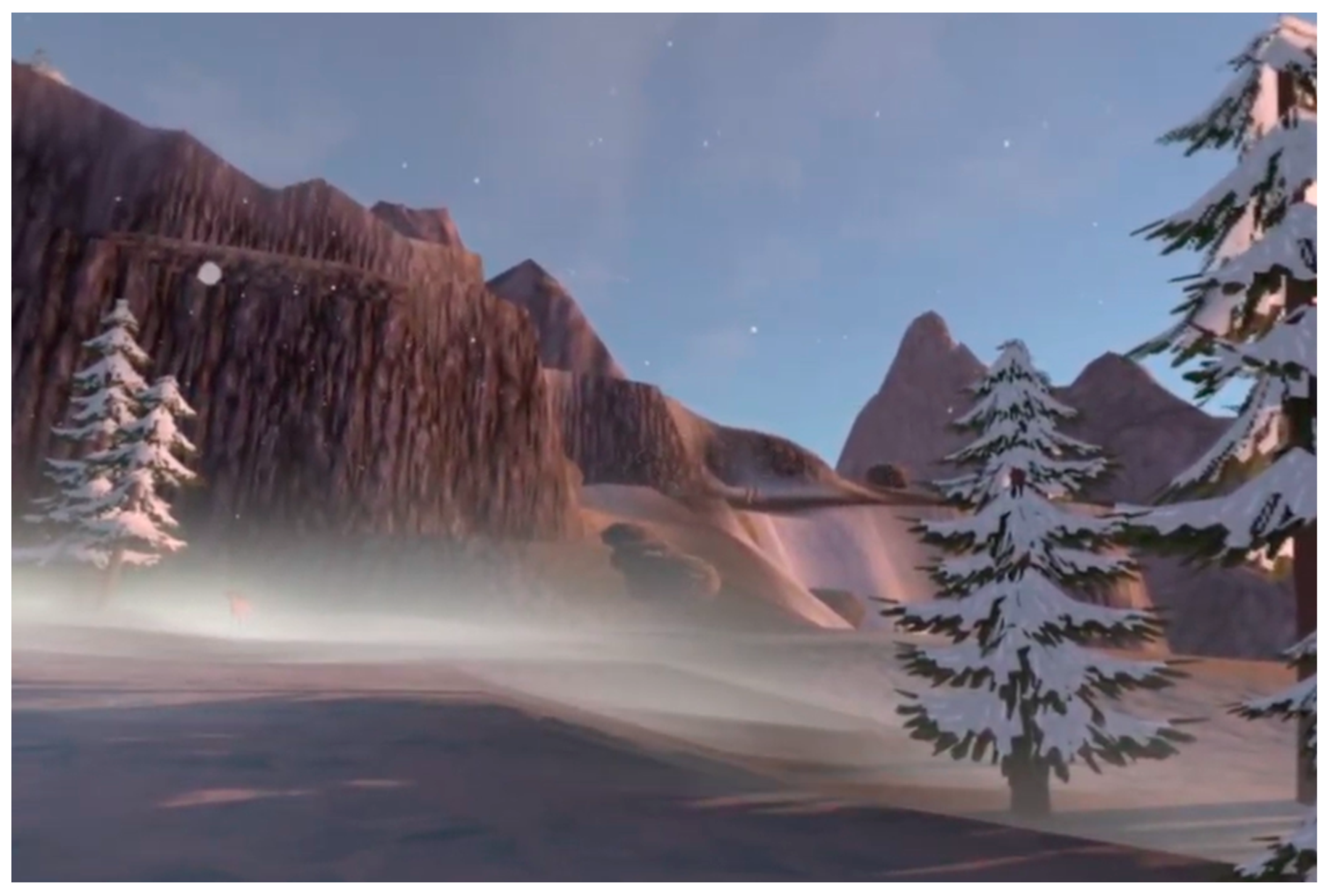
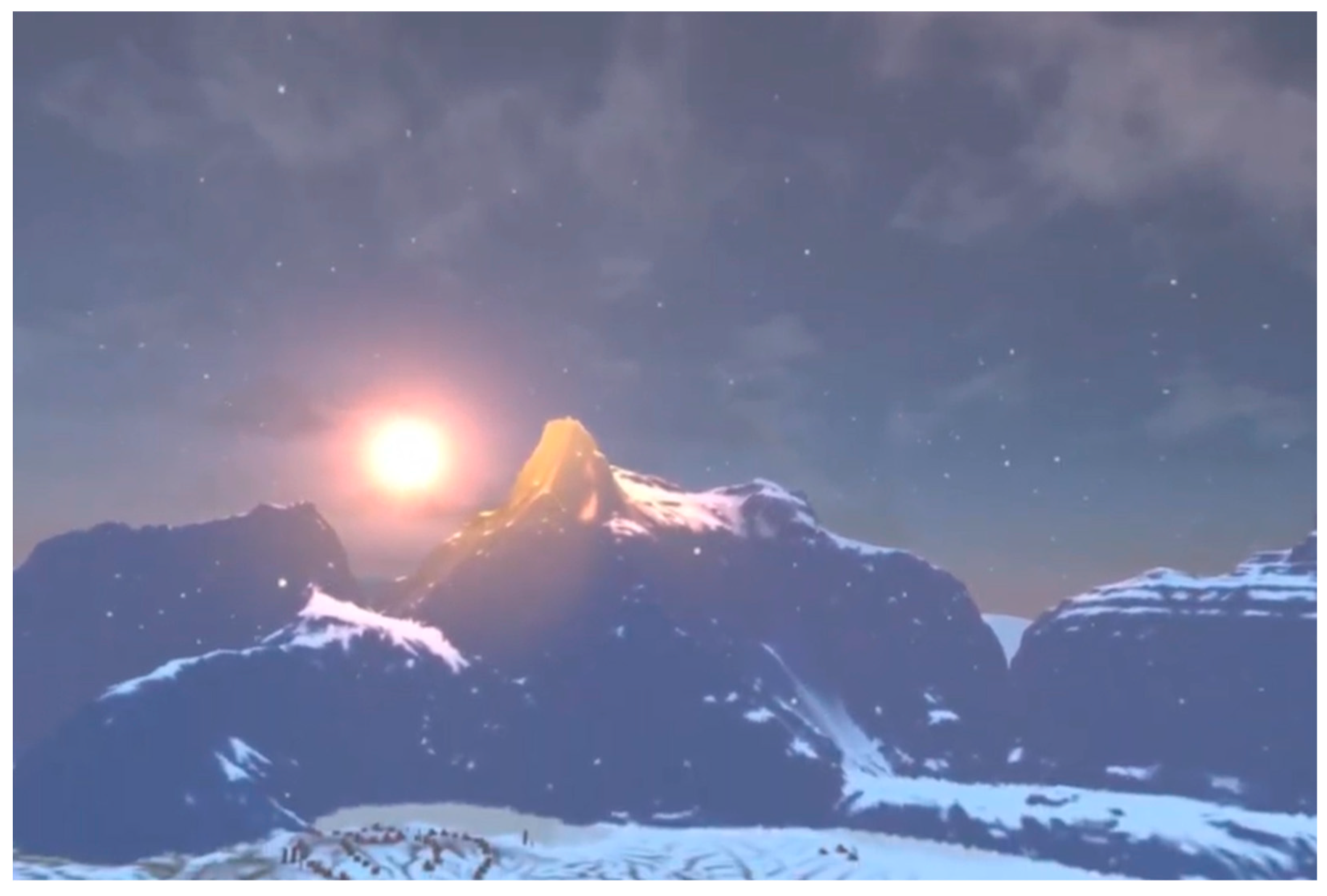
Appendix A. VR Mountain Journey


Appendix B. Interview Guide
- Can you describe your overall experience with virtual reality? What was it like for you?
- Did you notice any changes in how you felt, or what you were thinking?
- Did you notice any changes in your back pain?
- What was it like emotionally for you through the virtual reality experience? Did you notice if you felt a certain way?
- Did you notice any thoughts you had while you were in the VR? Or if your thoughts changed in any way?
- Did anything in the VR experience particularly affect you? Any scenes? How was the music?
- What would you have liked to see in virtual reality?
- Anything you didn’t like, or that felt weird?
- How was it coming out the virtual reality?
- As we mentioned, we are working to incorporate these kinds of VR experiences into larger treatments for folks who have pain; do you have any thoughts about this or feedback you want to provide us?
- If you had to rate your overall level of satisfaction regarding participating in the study, where 0 = extremely dissatisfied and 100 very satisfied, what rating would you provide?
- Would you be interested in participating in this or a similar study again?
- Is there anything else you want to tell us about your experiences in the study?
References
- Allen, S. (2018). The science of awe (White Paper). Greater Good Science Center at UC Berkeley. [Google Scholar]
- Amtmann, D., Cook, K. F., Jensen, M. P., Chen, W.-H., Choi, S., Revicki, D., Cella, D., Rothrock, N., Keefe, F., Callahan, L., & Lai, J.-S. (2010). Development of a PROMIS item bank to measure pain interference. Pain, 150(1), 173–182. [Google Scholar] [CrossRef] [Scilit] [PubMed]
- Ashar, Y. K., Gordon, A., Schubiner, H., Uipi, C., Knight, K., Anderson, Z., Carlisle, J., Polisky, L., Geuter, S., Flood, T. F., Kragel, P. A., Dimidjian, S., Lumley, M. A., & Wager, T. D. (2022). Effect of pain reprocessing therapy vs placebo and usual care for patients with chronic back pain. JAMA Psychiatry, 79(1), 12–23. [Google Scholar] [CrossRef] [Scilit] [PubMed]
- Bai, Y., Maruskin, L. A., Chen, S., Gordon, A. M., Stellar, J. E., McNeil, G. D., Peng, K., & Keltner, D. (2017). Awe, the diminished self, and collective engagement: Universals and cultural variations in the small self. Journal of Personality and Social Psychology, 113(2), 185–209. [Google Scholar] [CrossRef] [Scilit] [PubMed]
- Baker, N. A., Polhemus, A. H., Haan Ospina, E., Feller, H., Zenni, M., Deacon, M., DeGrado, G., Basnet, S., & Driscoll, M. (2022). The state of science in the use of virtual reality in the treatment of acute and chronic pain: A systematic scoping review. The Clinical Journal of Pain, 38(6), 424–441. [Google Scholar] [CrossRef] [Scilit] [PubMed]
- Bowen, D. J., Kreuter, M., Spring, B., Cofta-Woerpel, L., Linnan, L., Weiner, D., Bakken, S., Kaplan, C. P., Squiers, L., Fabrizio, C., & Fernandez, M. (2009). How we design feasibility studies. American Journal of Preventive Medicine, 36(5), 452–457. [Google Scholar] [CrossRef] [Scilit] [PubMed]
- Braun, V., & Clarke, V. (2006). Using thematic analysis in psychology. Qualitative Research in Psychology, 3(2), 77–101. [Google Scholar] [CrossRef] [Scilit]
- Braun, V., & Clarke, V. (2023). Toward good practice in thematic analysis: Avoiding common problems and be(com)ing a knowing researcher. International Journal of Transgender Health, 24(1), 1–6. [Google Scholar] [CrossRef] [Scilit] [PubMed]
- Burckhardt, C. S., & Jones, K. D. (2003). Adult measures of pain: The McGill Pain Questionnaire (MPQ), Rheumatoid Arthritis Pain Scale (RAPS), Short-Form McGill Pain Questionnaire (SF-MPQ), Verbal Descriptive Scale (VDS), Visual Analog Scale (VAS), and West Haven-Yale Multidisciplinary Pain Inventory (WHYMPI). Arthritis Care & Research, 49(S5), S96–S104. [Google Scholar] [CrossRef] [Scilit]
- Carl, E., Stein, A. T., Levihn-Coon, A., Pogue, J. R., Rothbaum, B., Emmelkamp, P., Asmundson, G. J. G., Carlbring, P., & Powers, M. B. (2019). Virtual reality exposure therapy for anxiety and related disorders: A meta-analysis of randomized controlled trials. Journal of Anxiety Disorders, 61, 27–36. [Google Scholar] [CrossRef] [Scilit] [PubMed]
- Cella, D., Choi, S. W., Condon, D. M., Schalet, B., Hays, R. D., Rothrock, N. E., Yount, S., Cook, K. F., Gershon, R. C., Amtmann, D., DeWalt, D. A., Pilkonis, P. A., Stone, A. A., Weinfurt, K., & Reeve, B. B. (2019). PROMIS® adult health profiles: Efficient short-form measures of seven health domains. Value in Health, 22(5), 537–544. [Google Scholar] [CrossRef] [Scilit] [PubMed]
- Chirico, A., Ferrise, F., Cordella, L., & Gaggioli, A. (2018). Designing awe in virtual reality: An experimental study. Frontiers in Psychology, 8, 2351. [Google Scholar] [CrossRef] [Scilit] [PubMed]
- Chirico, A., & Yaden, D. B. (2018). Awe: A self-transcendent and sometimes transformative emotion. In H. C. Lench (Ed.), The function of emotions: When and why emotions help us (pp. 221–233). Springer International Publishing. [Google Scholar] [CrossRef] [Scilit] [PubMed]
- Chirico, A., Yaden, D. B., Riva, G., & Gaggioli, A. (2016). The potential of virtual reality for the investigation of awe. Frontiers in Psychology, 7, 1766. [Google Scholar] [CrossRef] [Scilit] [PubMed]
- Crabtree, B. F., & Miller, W. L. (2023). Doing qualitative research (3rd ed.). Sage Publications. [Google Scholar]
- Deyo, R. A., Dworkin, S. F., Amtmann, D., Andersson, G., Borenstein, D., Carragee, E., Carrino, J., Chou, R., Cook, K., DeLitto, A., Goertz, C., Khalsa, P., Loeser, J., Mackey, S., Panagis, J., Rainville, J., Tosteson, T., Turk, D., Von Korff, M., & Weiner, D. K. (2014). Report of the NIH Task Force on research standards for chronic low back pain. The Journal of Pain, 15(6), 569–585. [Google Scholar] [CrossRef] [Scilit] [PubMed]
- Dreesmann, N. J., Su, H., & Thompson, H. J. (2022). A systematic review of virtual reality therapeutics for acute pain management. Pain Management Nursing: Official Journal of the American Society of Pain Management Nurses, 23(5), 672–681. [Google Scholar] [CrossRef] [Scilit] [PubMed]
- Eccleston, C. (1995). The attentional control of pain: Methodological and theoretical concerns. Pain, 63(1), 3–10. [Google Scholar] [CrossRef] [Scilit] [PubMed]
- Eccleston, C., & Crombez, G. (1999). Pain demands attention: A cognitive-affective model of the interruptive function of pain. Psychological Bulletin, 125(3), 356–366. [Google Scholar] [CrossRef] [Scilit] [PubMed]
- Fetters, M. D. (2020). The mixed methods research workbook: Activities for designing, implementing, and publishing projects. Sage. [Google Scholar]
- Gandhi, R. D., & Patel, D. S. (2018). Virtual reality—Opportunities and challenges. International Research Journal of Engineering and Technology, 5(1), 2714–2724. [Google Scholar]
- Gatchel, R. J., Bevers, K., Licciardone, J. C., Su, J., Du, Y., & Brotto, M. (2018). Transitioning from acute to chronic pain: An examination of different trajectories of low-back pain. Healthcare, 6(2), 48. [Google Scholar] [CrossRef] [Scilit] [PubMed]
- Gatchel, R. J., Peng, Y. B., Peters, M. L., Fuchs, P. N., & Turk, D. C. (2007). The biopsychosocial approach to chronic pain: Scientific advances and future directions. Psychological Bulletin, 133(4), 581–624. [Google Scholar] [CrossRef] [Scilit] [PubMed]
- Goodell, L. S., Stage, V. C., & Cooke, N. K. (2016). Practical qualitative research strategies: Training interviewers and coders. Journal of Nutrition Education and Behavior, 48(8), 578–585.e1. [Google Scholar] [CrossRef] [Scilit] [PubMed]
- Gopalan, R., Pande, H., Narayanan, S., & Chinnaswami, A. (2025). Virtual reality as a nonpharmacological tool for acute pain management: A scoping review. Innovations in Clinical Neuroscience, 22(1–3), 28–50. [Google Scholar] [PubMed] [PubMed Central]
- Gordon, A. M., Stellar, J. E., Anderson, C. L., McNeil, G. D., Loew, D., & Keltner, D. (2017). The dark side of the sublime: Distinguishing a threat-based variant of awe. Journal of Personality and Social Psychology, 113(2), 310–328. [Google Scholar] [CrossRef] [Scilit] [PubMed]
- Gordon, J. L., Johnson, J., Nau, S., Mechlin, B., & Girdler, S. S. (2017). The role of chronic psychosocial stress in explaining racial differences in stress reactivity and pain sensitivity. Psychosomatic Medicine, 79(2), 201–212. [Google Scholar] [CrossRef] [Scilit] [PubMed]
- Goudman, L., Jansen, J., Billot, M., Vets, N., De Smedt, A., Roulaud, M., Rigoard, P., & Moens, M. (2022). Virtual reality applications in chronic pain management: Systematic review and meta-analysis. JMIR Serious Games, 10(2), e34402. [Google Scholar] [CrossRef] [Scilit] [PubMed]
- Guetterman, T. C., Fàbregues, S., & Sakakibara, R. (2021). Visuals in joint displays to represent integration in mixed methods research: A methodological review. Methods in Psychology, 5, 100080. [Google Scholar] [CrossRef] [Scilit]
- Guetterman, T. C., Fetters, M. D., & Creswell, J. W. (2015). Integrating quantitative and qualitative results in health science mixed methods research through joint displays. Annals of Family Medicine, 13(6), 554–561. [Google Scholar] [CrossRef] [Scilit] [PubMed]
- Hawker, G. A., Mian, S., Kendzerska, T., & French, M. (2011). Measures of adult pain: Visual Analog Scale for Pain (VAS Pain), Numeric Rating Scale for Pain (NRS Pain), McGill Pain Questionnaire (MPQ), Short-Form McGill Pain Questionnaire (SF-MPQ), Chronic Pain Grade Scale (CPGS), Short Form-36 Bodily Pain Scale (SF-36 BPS), and Measure of Intermittent and Constant Osteoarthritis Pain (ICOAP). Arthritis Care & Research, 63(S11), S240–S252. [Google Scholar] [CrossRef] [Scilit] [PubMed]
- Hayes, S. C., Luoma, J. B., Bond, F. W., Masuda, A., & Lillis, J. (2006). Acceptance and commitment therapy: Model, processes and outcomes. Behaviour Research and Therapy, 44(1), 1–25. [Google Scholar] [CrossRef] [Scilit] [PubMed]
- HealthMeasures. (2023). PROMIS score cut points. Northwestern University. Available online: https://healthmeasures.net/select-measures/measure-library/ (accessed on 23 August 2026).
- Iqbal, A. I., Aamir, A., Hammad, A., Hafsa, H., Basit, A., Oduoye, M. O., Anis, M. W., Ahmed, S., Younus, M. I., & Jabeen, S. (2024). Immersive technologies in healthcare: An in-depth exploration of virtual reality and augmented reality in enhancing patient care, medical education, and training paradigms. Journal of Primary Care & Community Health, 15, 21501319241293311. [Google Scholar] [CrossRef] [Scilit] [PubMed]
- Joye, Y., & Dewitte, S. (2016). Up speeds you down. Awe-evoking monumental buildings trigger behavioral and perceived freezing. Journal of Environmental Psychology, 47, 112–125. [Google Scholar] [CrossRef] [Scilit]
- Kalyanaraman, S., & Bailenson, J. (2019). Virtual reality in media effects. In M. B. Oliver, A. A. Raney, & J. Bryant (Eds.), Media effects: Advances in theory and research (4th ed., pp. 404–418). Routledge. [Google Scholar] [CrossRef] [Scilit]
- Kelley, M. L., Heffer, R. W., Gresham, F. M., & Elliott, S. N. (1989). Development of a modified treatment evaluation inventory. Journal of Psychopathology and Behavioral Assessment, 11(3), 235–247. [Google Scholar] [CrossRef] [Scilit]
- Keltner, D., & Haidt, J. (2003). Approaching awe, a moral, spiritual, and aesthetic emotion. Cognition & Emotion, 17(2), 297–314. [Google Scholar] [CrossRef] [Scilit] [PubMed]
- Kennedy, R. S., Lane, N. E., Berbaum, K. S., & Lilienthal, M. G. (1993). Simulator sickness questionnaire: An enhanced method for quantifying simulator sickness. The International Journal of Aviation Psychology, 3(3), 203–220. [Google Scholar] [CrossRef] [Scilit] [PubMed]
- Kroenke, K., Spitzer, R. L., & Williams, J. B. (2001). The PHQ-9: Validity of a brief depression severity measure. Journal of General Internal Medicine, 16(9), 606–613. [Google Scholar] [CrossRef] [Scilit] [PubMed]
- Lambert, V., Boylan, P., Boran, L., Hicks, P., Kirubakaran, R., Devane, D., & Matthews, A. (2020). Virtual reality distraction for acute pain in children. The Cochrane Database of Systematic Reviews, 10(10), CD010686. [Google Scholar] [CrossRef] [Scilit] [PubMed]
- Laver, K. E., Lange, B., George, S., Deutsch, J. E., Saposnik, G., & Crotty, M. (2017). Virtual reality for stroke rehabilitation. Cochrane Database of Systematic Reviews, 2017(11), CD008349. [Google Scholar] [CrossRef] [Scilit] [PubMed]
- Lin, J.-H. T., Hsieh, J.-H. E., Wang, P.-C. P., & Lin, C.-W. D. (2025). Virtual Reality (VR) InducE well-being (VIEW): A scoping review of VR design, mechanisms, and well-being outcomes. Humanities and Social Sciences Communications, 12(1), 1766. [Google Scholar] [CrossRef] [Scilit]
- Lou, J., Xiang, Z., Li, J., Cui, S., Huang, N., Jin, G., Le, X., Fan, Y., & Sun, Q. (2025). The beneficial impact of virtual reality in the burn wound care of pediatric patients: An updated systematic review and meta-analysis. Burns: Journal of the International Society for Burn Injuries, 51(8), 107623. [Google Scholar] [CrossRef] [Scilit] [PubMed]
- Lumley, M. A., Cohen, J. L., Borszcz, G. S., Cano, A., Radcliffe, A. M., Porter, L. S., Schubiner, H., & Keefe, F. J. (2011). Pain and emotion: A biopsychosocial review of recent research. Journal of Clinical Psychology, 67(9), 942–968. [Google Scholar] [CrossRef] [Scilit] [PubMed]
- Mancuso, V., Borghesi, F., Chirico, A., Bruni, F., Sarcinella, E. D., Pedroli, E., & Cipresso, P. (2024). IAVRS—International Affective Virtual Reality System: Psychometric assessment of 360° images by using psychophysiological data. Sensors, 24(13), 4204. [Google Scholar] [CrossRef] [Scilit] [PubMed]
- Mancuso, V., Bruni, F., Stramba-Badiale, C., Riva, G., Cipresso, P., & Pedroli, E. (2023). How do emotions elicited in virtual reality affect our memory? A systematic review. Computers in Human Behavior, 146, 107812. [Google Scholar] [CrossRef] [Scilit]
- Martínez-Cano, F.-J., Lachman, R., & Canet, F. (2023). VR content and its prosocial impact: Predictors, moderators, and mediators of media effects. A systematic literature review. Frontiers in Communication, 8, 1203242. [Google Scholar] [CrossRef] [Scilit]
- McCracken, L. M., & Vowles, K. E. (2014). Acceptance and commitment therapy and mindfulness for chronic pain: Model, process, and progress. The American Psychologist, 69(2), 178–187. [Google Scholar] [CrossRef] [Scilit] [PubMed]
- Melzack, R. (1987). The short-form McGill pain questionnaire. Pain, 30(2), 191–197. [Google Scholar] [CrossRef] [Scilit] [PubMed]
- Merriam, S. B., & Tisdell, E. J. (2015). Qualitative research: A guide to design and implementation (4th ed.). John Wiley & Sons. [Google Scholar]
- Moreno-Martínez, M., Dalfó-Pibernat, A., & Vidal-Alaball, J. (2025). Virtual reality as a pain reduction method in burn and wound healing: A systematic review and meta-analysis. Burns & Trauma, 14, tkaf061. [Google Scholar] [CrossRef] [Scilit] [PubMed]
- Piff, P. K., Dietze, P., Feinberg, M., Stancato, D. M., & Keltner, D. (2015). Awe, the small self, and prosocial behavior. Journal of Personality and Social Psychology, 108(6), 883–899. [Google Scholar] [CrossRef] [Scilit] [PubMed]
- Possler, D., Klimmt, C., & Raney, A. A. (2018). Gaming is awesome! A theoretical model on cognitive demands and the elicitation of awe during video game play. In N. D. Bowman (Ed.), Video games: A medium that demands our attention (pp. 74–91). Routledge. [Google Scholar]
- Prade, C., & Saroglou, V. (2016). Awe’s effects on generosity and helping. The Journal of Positive Psychology, 11(5), 522–530. [Google Scholar] [CrossRef] [Scilit]
- Raja, S. N., Carr, D. B., Cohen, M., Finnerup, N. B., Flor, H., Gibson, S., Keefe, F., Mogil, J. S., Ringkamp, M., Sluka, K. A., Song, X.-J., Stevens, B., Sullivan, M., Tutelman, P., Ushida, T., & Vader, K. (2020). The revised IASP definition of pain: Concepts, challenges, and compromises. Pain, 161(9), 1976–1982. [Google Scholar] [CrossRef] [Scilit] [PubMed]
- Routledge, C., Arndt, J., Wildschut, T., Sedikides, C., Hart, C. M., Juhl, J., Vingerhoets, A. J. J. M., & Schlotz, W. (2011). The past makes the present meaningful: Nostalgia as an existential resource. Journal of Personality and Social Psychology, 101(3), 638–652. [Google Scholar] [CrossRef] [Scilit] [PubMed]
- Rudd, M., Vohs, K. D., & Aaker, J. (2012). Awe expands people’s perception of time, alters decision making, and enhances well-being. Psychological Science, 23(10), 1130–1136. [Google Scholar] [CrossRef] [Scilit] [PubMed]
- Saldana, D., Neureither, M., Schmiesing, A., Jahng, E., Kysh, L., Roll, S. C., & Liew, S.-L. (2020). Applications of head-mounted displays for virtual reality in adult physical rehabilitation: A scoping review. The American Journal of Occupational Therapy: Official Publication of the American Occupational Therapy Association, 74(5), 7405205060p1–7405205060p15. [Google Scholar] [CrossRef] [Scilit] [PubMed]
- Saroglou, V., Buxant, C., & Tilquin, J. (2008). Positive emotions as leading to religion and spirituality. The Journal of Positive Psychology, 3(3), 165–173. [Google Scholar] [CrossRef] [Scilit]
- Schöne, B., Wessels, M., & Gruber, T. (2019). Experiences in virtual reality: A window to autobiographical memory. Current Psychology, 38(3), 715–719. [Google Scholar] [CrossRef] [Scilit]
- Scott, J., & Huskisson, E. C. (1976). Graphic representation of pain. Pain, 2(2), 175–184. [Google Scholar] [CrossRef] [Scilit]
- Shiota, M. N., Keltner, D., & John, O. P. (2006). Positive emotion dispositions differentially associated with Big Five personality and attachment style. The Journal of Positive Psychology, 1(2), 61–71. [Google Scholar] [CrossRef] [Scilit]
- Silvia, P. J., Fayn, K., Nusbaum, E. C., & Beaty, R. E. (2015). Openness to experience and awe in response to nature and music: Personality and profound aesthetic experiences. Psychology of Aesthetics, Creativity, and the Arts, 9(4), 376–384. [Google Scholar] [CrossRef] [Scilit]
- Smith, V., Warty, R. R., Sursas, J. A., Payne, O., Nair, A., Krishnan, S., da Silva Costa, F., Wallace, E. M., & Vollenhoven, B. (2020). The effectiveness of virtual reality in managing acute pain and anxiety for medical inpatients: Systematic review. Journal of Medical Internet Research, 22(11), e17980. [Google Scholar] [CrossRef] [Scilit] [PubMed]
- Stellar, J. E., Gordon, A. M., Piff, P. K., Cordaro, D., Anderson, C. L., Bai, Y., Maruskin, L. A., & Keltner, D. (2017). Self-transcendent emotions and their social functions: Compassion, gratitude, and awe bind us to others through prosociality. Emotion Review, 9(3), 200–207. [Google Scholar] [CrossRef] [Scilit]
- Sullivan, M. J. L. (2008). Self-report of pain threshold is an act of communication: Comment on Kunz et al. “The relation between catastrophizing and facial responsiveness to pain” . Pain, 140(3), 521. [Google Scholar] [CrossRef] [Scilit] [PubMed]
- Sullivan, M. J. L., Bishop, S. R., & Pivik, J. (1995). The pain catastrophizing scale: Development and validation. Psychological Assessment, 7(4), 524–532. [Google Scholar] [CrossRef]
- Trost, Z., Anam, M., Seward, J., Shum, C., Rumble, D., Sturgeon, J., Mark, V., Chen, Y., Mitchell, L., Cowan, R., Perera, R., Richardson, E., Richards, S., & Gustin, S. (2022). Immersive interactive virtual walking reduces neuropathic pain in spinal cord injury: Findings from a preliminary investigation of feasibility and clinical efficacy. Pain, 163(2), 350–361. [Google Scholar] [CrossRef] [Scilit] [PubMed]
- Trost, Z., France, C., Anam, M., & Shum, C. (2021). Virtual reality approaches to pain: Toward a state of the science. Pain, 162(2), 325–331. [Google Scholar] [CrossRef] [Scilit] [PubMed]
- Trost, Z., Stevenson-Won, A., Boyapati, H., Davenport, J., D’Onofrio, G., Drager, L., Shum, C., Pierce, M., Fraenkel, L., & Soares, R. (2026). A virtual reality intervention to promote uptake of medications for opioid use disorder in the emergency department following opioid-involved overdose based on input from people with lived experience: Development study. JMIR XR and Spatial Computing (JMXR), 3, e84397. [Google Scholar] [CrossRef] [Scilit] [PubMed]
- Trost, Z., Zielke, M., Guck, A., Nowlin, L., Zakhidov, D., France, C. R., & Keefe, F. (2015). The promise and challenge of virtual gaming technologies for chronic pain: The case of graded exposure for low back pain. Pain Management, 5(3), 197–206. [Google Scholar] [CrossRef] [Scilit] [PubMed]
- Valdesolo, P., & Graham, J. (2014). Awe, uncertainty, and agency detection. Psychological Science, 25(1), 170–178. [Google Scholar] [CrossRef] [Scilit] [PubMed]
- Van Cappellen, P., & Saroglou, V. (2012). Awe activates religious and spiritual feelings and behavioral intentions. Psychology of Religion and Spirituality, 4(3), 223–236. [Google Scholar] [CrossRef] [Scilit]
- Vlaeyen, J. W. S., & Linton, S. J. (2000). Fear-avoidance and its consequences in chronic musculoskeletal pain: A state of the art. Pain, 85(3), 317–332. [Google Scholar] [CrossRef] [Scilit] [PubMed]
- Watson, D., Clark, L. A., & Tellegen, A. (1988). Development and validation of brief measures of positive and negative affect: The PANAS scales. Journal of Personality and Social Psychology, 54(6), 1063–1070. [Google Scholar] [CrossRef] [Scilit] [PubMed]
- Wender, C. L. A., & Trost, Z. (2025). Virtual reality in chronic pain management: How do we galvanize a stagnant field? Pain Management, 15(12), 885–887. [Google Scholar] [CrossRef] [Scilit] [PubMed]
- Wu, A., March, L., Zheng, X., Huang, J., Wang, X., Zhao, J., Blyth, F. M., Smith, E., Buchbinder, R., & Hoy, D. (2020). Global low back pain prevalence and years lived with disability from 1990 to 2017: Estimates from the Global Burden of Disease Study 2017. Annals of Translational Medicine, 8(6), 299. [Google Scholar] [CrossRef] [Scilit] [PubMed]
- Yaden, D. B., Haidt, J., Hood, R. W., Vago, D. R., & Newberg, A. B. (2017). The varieties of self-transcendent experience. Review of General Psychology, 21(2), 143–160. [Google Scholar] [CrossRef] [Scilit]
- Yaden, D. B., Kaufman, S. B., Hyde, E., Chirico, A., Gaggioli, A., Zhang, J. W., & Keltner, D. (2019). The development of the Awe Experience Scale (AWE-S): A multifactorial measure for a complex emotion. The Journal of Positive Psychology, 14(4), 474–488. [Google Scholar] [CrossRef] [Scilit]
- Yang, Y., Yang, Z., Bao, T., Liu, Y., & Passmore, H.-A. (2016). Elicited awe decreases aggression. Journal of Pacific Rim Psychology, 10, e11. [Google Scholar] [CrossRef] [Scilit]


| Participant ID | Gender | Age | Pain Duration | SF-MPQ PRI | PHQ-9 | PROMIS-Interference | Prior VR Use |
|---|---|---|---|---|---|---|---|
| AG1229 | Female | 78 | 1 | 3 | 2 | 14 | Y |
| DD1022 | Male | 43 | 14 | 4 | 2 | 14 | Y |
| DE0311 | Female | 79 | 3 | 20 | 19 | 29 | Y |
| DT0604 | Female | 25 | 16 | 27 | 15 | 29 | N |
| EP1021 | Male | 84 | 5 | 1 | 9 | 15 | N |
| KL0905 | Female | 39 | 10 | 4 | 3 | 11 | Y |
| LG0610 | Male | 54 | 30 | 6 | 14 | 19 | Y |
| MA1025 | Female | 22 | 5 | 10 | 9 | 14 | Y |
| RE0704 | Male | 54 | 28 | 10 | 12 | 28 | Y |
| RN0104 | Female | 68 | 10 | 16 | 8 | 13 | N |
| Subscale | Item | Agreement with: | |
|---|---|---|---|
| Item | Subscale | ||
| Time Perception | I had the sense that a moment lasted longer than usual. | 5/10 | 2/10 |
| I felt my sense of time change. | 3/10 | ||
| I experienced the passage of time differently. | 3/10 | ||
| I sensed things momentarily slow down. | 3/9 | ||
| I noticed time slowing. | 2/10 | ||
| Self-Loss | I felt that my sense of self diminished | 4/10 | 5/10 |
| I felt my sense of self shrink | 3/10 | ||
| I felt a reduced sense of self | 3/10 | ||
| I felt my sense of self become somehow smaller | 3/10 | ||
| I felt small compared to everything else | 2/10 | ||
| Connectedness | I felt a sense of communion with all living things | 6/10 | 3/10 |
| I had the sense of being connected to everything | 4/10 | ||
| I experienced a sense of oneness with all things | 4/10 | ||
| I had a sense of complete connectedness | 3/10 | ||
| I felt closely connected to humanity | 2/10 | ||
| Vastness | I felt that I was in the presence of something grand | 9/10 | 9/10 |
| I experienced something greater than myself | 8/10 | ||
| I felt in the presence of greatness | 8/10 | ||
| I perceived something that was much larger than me | 8/10 | ||
| I perceived vastness | 8/10 | ||
| Physiological Changes | I felt my eyes widen | 4/10 | 2/10 |
| I felt my jaw drop | 3/10 | ||
| I gasped | 1/10 | ||
| I had chills | 1/10 | ||
| I had goosebumps | 0/10 | ||
| Accommodation | I tried to understand the magnitude of what I was experiencing | 7/10 | 1/10 |
| I felt challenged to mentally process what I was experiencing | 5/10 | ||
| I found it hard to comprehend the experience in full | 2/10 | ||
| I felt challenged to understand the experience | 2/10 | ||
| I struggled to take in all that I was experiencing at once | 1/10 | ||
| Participant | Pre-VR | Post-VR | ∆VAS | mDES | AWE-S | Related Interview Quotes |
|---|---|---|---|---|---|---|
| RN0104 | 3.90 | 1.80 | −2.10 | Awe Amazement Wonder | Time Self-Loss Connectedness Vastness Physiological | Well, kind of like in some of your questions, then you realize the vastness of it, you know, and then you look down, and then you realize, “Oh!” Very awe inspiring. It was good. |
| DE0311 | 2.05 | 0.35 | −1.70 | Awe Amazement Wonder | Self-Loss Vastness | I suppose I was thinking less about myself and more about the creator and the beauty of the things that [God] created. |
| MA1025 | 2.04 | 0.48 | −1.56 | Awe Amazement Wonder | Connectedness Vastness | So it’s, like, it was almost motivating. |
| DT0604 | 7.55 | 6.45 | −1.10 | Awe Amazement Wonder | Time Self-Loss Vastness | I think maybe… where there was more like rolling fields, open. That one felt vast and comfortable. |
| LG0610 | 2.85 | 1.75 | −1.10 | Awe Amazement Wonder | Self-Loss Connectedness Vastness | Seeing these scenes as the resolution increased, the intensity of the wellness, I guess, the feelings of wellness are content, or just happy and joyful and reverent, since reverence to me is religious attachment. So, if you’re a God-fearing person, then you think God created the world, and that is a very beautiful thing. |
| DD1022 | 1.65 | 0.85 | −0.80 | - | Self-Loss Vastness | I think it’s… there’s rising scales and there’s all kinds of things in there that I think were a good choice, or whether they’re intentional or not, I think it was fitting and I think it, yeah, it draws out that sense of awe and the idea of not questioning… I don’t know, it puts at ease a questioning and wondering mind. |
| RE0704 | 2.40 | 2.35 | −0.05 | - | - | - |
| AG1229 | 0.50 | 0.55 | 0.05 | Amazement Wonder | Vastness | - |
| EP1021 | 1.00 | 1.10 | 0.10 | Amazement Wonder | Vastness Accommodation | It was very interesting. It was amazing that I could look all the way around me, basically, and see everything. |
| KL0905 | 2.65 | 3.10 | 0.45 | Awe | Vastness Physiological | - |
| Item | Not at All (1) | Moderate (2–4) | Strong (5–7) |
|---|---|---|---|
| Anger | 10/10 | - | - |
| Disgust | 10/10 | - | - |
| Pride | 1/10 | 9/10 | - |
| Sadness | 9/10 | 1/10 | - |
| Amusement | 2/10 | 1/10 | 7/10 |
| Nostalgia | 3/10 | 2/10 | 5/10 |
| Awe | 1/10 | 3/10 | 5/10 |
| Hope | 2/10 | 6/10 | 1/10 |
| Joy | 1/10 | 6/10 | 3/10 |
| Amazement | 1/10 | 2/10 | 7/10 |
| Wonder | 1/10 | 3/10 | 6/10 |
| Item | Participant Agreement |
|---|---|
| I would be willing to use this procedure if prescribed or recommended by a physician. | 10/10 |
| I would like this VR procedure if it were used as part of treatment. | 9/10 |
| Overall, I have a positive reaction to this VR experience. | 9/10 |
| I believe this VR procedure will help treatment be effective | 6/10 |
| I would find this VR experience to be an acceptable and appropriate part of a pain intervention. | 6/10 |
| I believe it would be acceptable to use this VR procedure with individuals who cannot choose treatments for themselves. | 5/10 |
| I believe that treatment including this VR procedure is likely to result in permanent improvement. | 4/10 |
| I believe that I will experience discomfort during this VR procedure. | 3/10 |
| I believe this VR procedure is likely to harm or injure my body. | 0/10 |
| Item | Rating > 0 |
|---|---|
| General discomfort | 5/10 |
| Fatigue | 1/10 |
| Headache | 1/10 |
| Eye strain | 2/10 |
| Difficulty focusing | 4/10 |
| Salivation increasing | 0/10 |
| Sweating | 0/10 |
| Nausea | 0/10 |
| Difficulty concentrating | 3/10 |
| Fullness of the head | 0/10 |
| Blurred vision | 1/10 |
| Dizziness with eyes open | 0/10 |
| Dizziness with eyes closed | 0/10 |
| Vertigo (experienced as loss of orientation with respect to vertical upright) | 1/10 |
| Stomach awareness (indicates a feeling of discomfort just short of nausea) | 1/10 |
| Burping | 0/10 |
| Participant | Summed Total Score |
|---|---|
| AG1229 | 0 |
| DD1022 | 4 |
| DE0311 | 0 |
| EP1021 | 2 |
| KL0905 | 3 |
| LG0610 | 2 |
| MA1025 | 5 |
| RN0104 | 0 |
Disclaimer/Publisher’s Note: The statements, opinions and data contained in all publications are solely those of the individual author(s) and contributor(s) and not of MDPI and/or the editor(s). MDPI and/or the editor(s) disclaim responsibility for any injury to people or property resulting from any ideas, methods, instructions or products referred to in the content. |
© 2026 by the authors. Licensee MDPI, Basel, Switzerland. This article is an open access article distributed under the terms and conditions of the Creative Commons Attribution (CC BY) license.
Share and Cite
Tillery, E.R.; Kang, L.C.; Shah, M.; Raney, A.A.; Won, A.S.; Mancuso, V.; Vorensky, M.; Shum, C.; Trost, Z. Virtual Reality Induced Awe in Chronic Low Back Pain: A Mixed-Methods Study. Behav. Sci. 2026, 16, 1524. https://doi.org/10.3390/bs16091524
Tillery ER, Kang LC, Shah M, Raney AA, Won AS, Mancuso V, Vorensky M, Shum C, Trost Z. Virtual Reality Induced Awe in Chronic Low Back Pain: A Mixed-Methods Study. Behavioral Sciences. 2026; 16(9):1524. https://doi.org/10.3390/bs16091524
Chicago/Turabian StyleTillery, Emma R., Lydia C. Kang, Misha Shah, Arthur A. Raney, Andrea Stevenson Won, Valentina Mancuso, Mark Vorensky, Corey Shum, and Zina Trost. 2026. "Virtual Reality Induced Awe in Chronic Low Back Pain: A Mixed-Methods Study" Behavioral Sciences 16, no. 9: 1524. https://doi.org/10.3390/bs16091524
APA StyleTillery, E. R., Kang, L. C., Shah, M., Raney, A. A., Won, A. S., Mancuso, V., Vorensky, M., Shum, C., & Trost, Z. (2026). Virtual Reality Induced Awe in Chronic Low Back Pain: A Mixed-Methods Study. Behavioral Sciences, 16(9), 1524. https://doi.org/10.3390/bs16091524