Article

Understanding Multilevel Correlates of Long-Term Physical Activity Trajectories Among Middle-Aged and Older Adults: A Machine-Learning Analysis
1
School of Psychology, Beijing Sport University, Beijing 100084, China
2
School of Sport and Art Education, Beijing Institute of Education, Beijing 100120, China
*
Author to whom correspondence should be addressed.
Behav. Sci. 2026, 16(7), 1210; https://doi.org/10.3390/bs16071210
Submission received: 15 May 2026 / Revised: 6 July 2026 / Accepted: 15 July 2026 / Published: 17 July 2026
(This article belongs to the Section Health Psychology)

Abstract

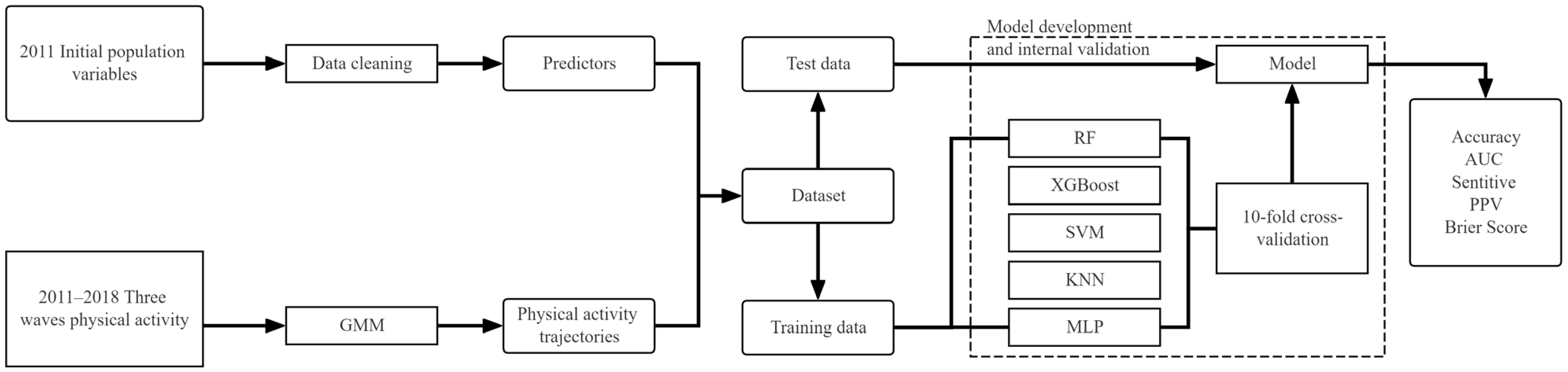
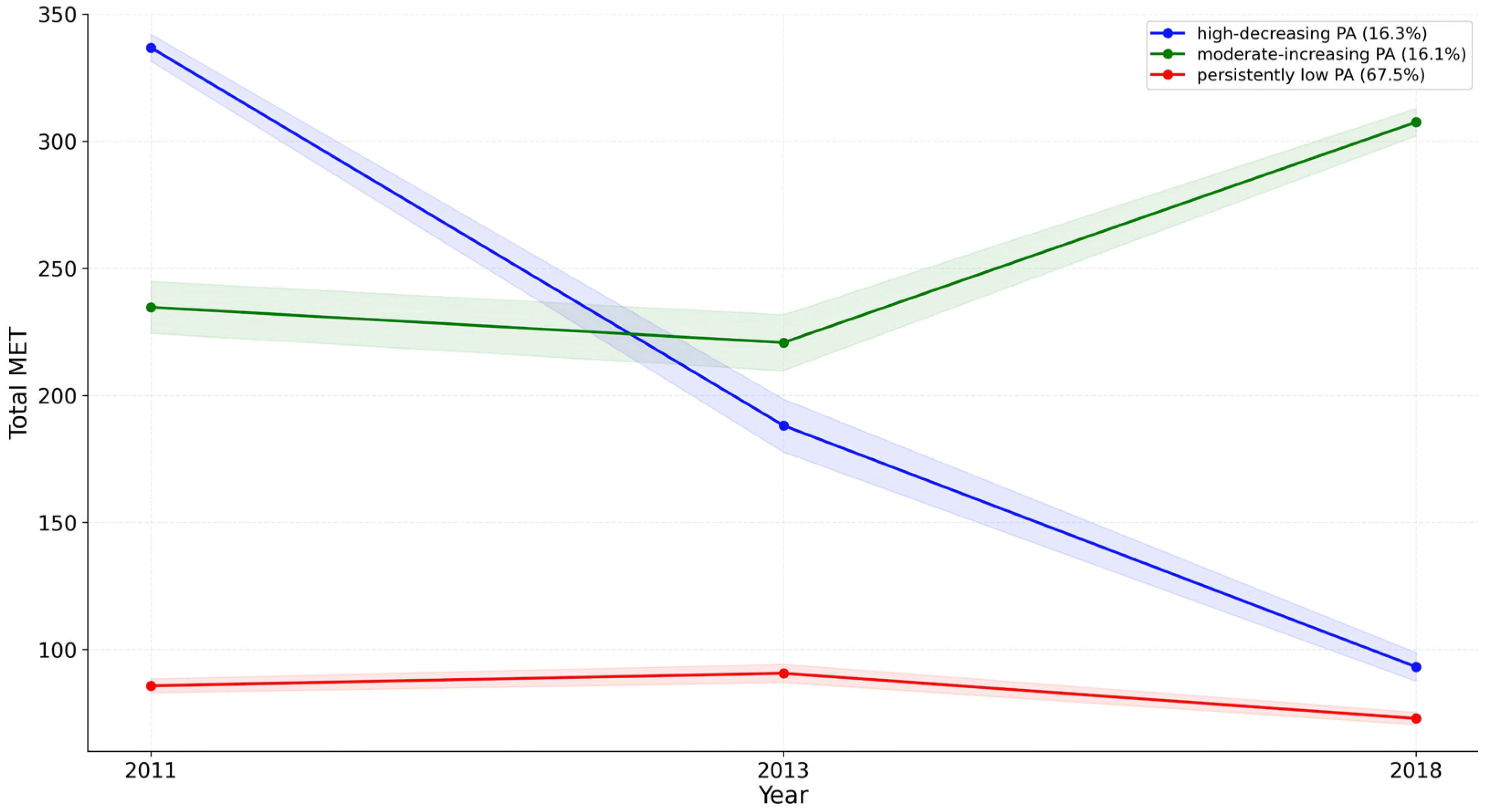
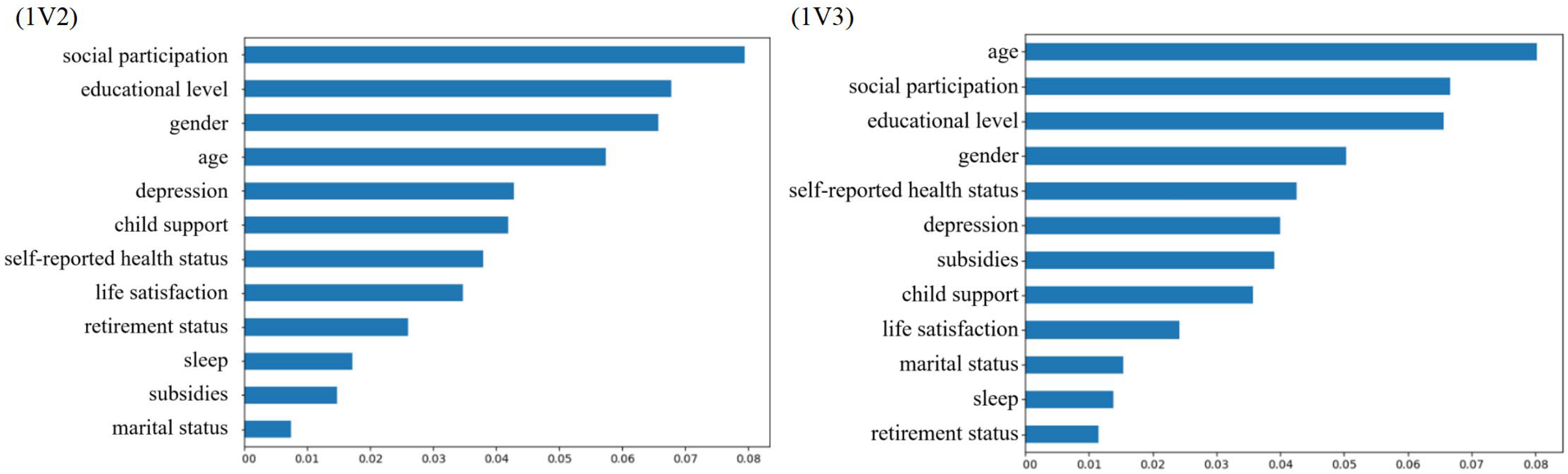
Background: Physical activity (PA) in later life is intertwined with complex, multilevel factors and represents an important behavioral science topic. This study examined heterogeneous long-term PA patterns among middle-aged and older adults and explored how multilevel baseline variables organized by the Social Ecological Model (SEM) contributed to trajectory classification. Methods: Longitudinal data were drawn from the China Health and Retirement Longitudinal Study (CHARLS). Repeated PA measures were modeled using latent class growth modeling and growth mixture modeling to identify distinct trajectory groups. The resulting trajectory membership was then used in exploratory machine-learning classification analyses, in which SEM-organized baseline variables were evaluated according to their relative contribution to classification. Results: Three PA trajectories were identified: persistently low PA, high-decreasing PA, and moderate-increasing PA. Among the evaluated classifiers, the random forest showed the highest internal classification performance, with AUC values ranging from 0.943 to 0.945. Social participation, age, educational level, and gender showed the most consistently high variable-importance rankings across the two random-forest classification tasks. Conclusions: The findings highlight that long-term PA patterns among middle-aged and older adults do not follow a single uniform trajectory but instead show substantial trajectory heterogeneity. Multilevel factors organized within the Social Ecological Model showed exploratory value for classifying distinct PA trajectories, suggesting that future PA research should move beyond overall activity levels and further consider individuals’ dynamic trajectory contexts and their corresponding classification-relevant features.
Keywords: physical activity; machine learning; trajectory analysis; social ecological model; middle-aged and older adults physical activity; machine learning; trajectory analysis; social ecological model; middle-aged and older adults