


Burnout in Embryologists from the Perspective of an International Expert Panel: A Qualitative Study


Abstract
1. Introduction
- What are the stressors that an expert panel of embryologists believe are affecting them?
- What are the preventive or mitigating strategies they consider the most useful for them?
- Is there any other theme related to burnout that affects them?
2. Materials and Methods
2.1. Design
2.2. Participants
2.3. Materials and Procedure
- (1)
- Identifying the prerequisites for the use of semi-structured interviews: in this study the semi-structured interview is adequate to capture embryologists’ perceptions and opinions, focusing on issues meaningful for them (burnout) allowing different perceptions due to the participants working in countries from four continents.
- (2)
- Retrieving and using previous knowledge: this phase is based on two elements; firstly, a comprehensive literature review centered on stressors and preventive tools against burnout, and secondly the information obtained by the first author when working as a psychologist in two Assisted Reproduction Clinics in Spain and Italy, recording both potential stressors perceived as contributing to or maintaining professional distress and preventive factors that might improve embryologists’ working conditions.
- (3)
- Formulating the preliminary semi-structured interview guide: the questions were formulated attending the research topics of stressors and preventive tools of burnout in a flexible and open-ended design to guarantee that participants could express their opinion and insight.
- (4)
- Pilot testing of the interview guide: three embryologists known by the first author answered the pilot interview suggesting changes in the order or wording of some questions.
- (5)
- The final interview with 15 questions is presented. Appendix A includes the English version of the interview.
2.4. Ethics
2.5. Data Analysis
3. Results
3.1. Stress-Related Factors
3.1.1. Qualitative Analysis of the Code: What Inherent Factors in Your Profession Generate the Highest Level of Stress?
- Responsibility and Potential for Errors: A significant source of stress stems from the high level of responsibility associated with the profession, particularly concerning the handling of patients’ embryos and gametes, “being responsible for the patients’ embryos and their gametes”. The fear of making errors that could impact a patient’s chance of having a child is a recurring concern. This is highlighted by the response “there is no room for error or failure”. The interviewees express anxiety about potential failures in fertilization and the difficulty of explaining these failures to patients. The burden of responsibility is further highlighted by the awareness that a mistake, such as dropping a dish containing an embryo, could have significant consequences. “Error management” is explicitly mentioned as a stressor.
- Workload and Work Pace: The demanding workload and fast pace of work contribute significantly to stress levels. This includes not only the volume of work but also the “work pace”, which can be erratic and poorly distributed. The lack of organization and the need to manage multiple tasks simultaneously exacerbate the problem. Embryologists often handle paperwork, work with liquid nitrogen, and perform procedures concurrently, leading to increased pressure and potential for errors. Interruptions, such as phone calls and requests for documents during procedures, further disrupt workflow and increase stress: “a phone call in the middle of a procedure. Somebody needs a particular document, somebody needs a report”.
- Team Management and Interpersonal Dynamics: Managing a team is another source of stress. This includes the “responsibility of leading a team” and ensuring a positive “work environment”. Understaffing and the need to train junior staff add stress to the workload of senior professionals.
- Emotional and Physical Demands: The profession takes a toll on both the emotional and physical well-being of embryologists. The long hours, artificial lighting, and awkward postures contribute to physical strain. The emotional burden of dealing with patients’ hopes and dreams, as well as the potential for negative outcomes, can be overwhelming, “and even though you know you’ve done everything correctly, you’re always left wondering: was it me?”. The inability to separate personal thoughts and feelings from work can also affect performance. The lack of time for personal life and social interactions further exacerbates stress levels. The interviewees emphasize that “we’re still human” and that this aspect is often overlooked.
- Competition and Private Sector Pressures: In the private sector, competition adds another layer of stress; the “private sector can be very competitive”. The pressure to achieve results and the competitive nature of the industry can create a high-pressure environment.
3.1.2. Qualitative Analysis of the Code: Physical and Organizational Stressors in the Lab
- Lighting: Inadequate lighting appears to be a significant stressor. One participant explicitly mentions “the complete lack of sunlight”. Conversely, a participant notes that the lighting issue was resolved upon moving to a new lab: “The lighting in the old workspace. Yes, since I changed lab, this problem hasn’t occurred anymore because we work with better artificial lighting”. Another participant mentions the need to go outside (“I need two sunbaths a day because you go outside and your eyes seem to appreciate it”), suggesting a need to compensate for the lack of natural light within the lab. This suggests that both insufficient and potentially harsh artificial lighting can contribute to stress and discomfort.
- Noise: Noise is another recurring concern. One participant mentions “It’s also tiring, although it’s true that equipment is becoming quieter”, indicating that noise from equipment can be a source of fatigue. Similarly, another participant refers to “equipment noise, for example the noise of hood”. While one participant seems to have adapted to the noise (“The noise from the booths, I think that’s gotten to the point that I can’t hear it”, “noise yes, but you get used to it”), the initial impact is still acknowledged as stressful.
- Ergonomics and Physical Strain: The physical demands of lab work, particularly concerning ergonomics, are highlighted as stressors. Participants mention “You sit in a particular position, and you cannot move, so it all affects your cervical vertebrae. It affects your lower back”; “microscopes where you have to bend your neck”; and “back pain from being in a non-natural position for so long”. The term “ergonomics” is directly mentioned by one participant, underscoring the importance of proper workstation design to mitigate physical strain. Prolonged microscope use is specifically identified as a source of stress.
- Temperature: Temperature control within the lab environment is also noted as a potential stressor, with participants mentioning “temperature” and “temperature management”. This suggests that maintaining a comfortable and consistent temperature is important for well-being.
- Isolation and Distractions: The theme of isolation emerges, with one participant mentioning “Isolation, too. You spend a lot of time alone with your thoughts”. Conversely, another participant mentions that “the worst bit about the environment was the distractions”, and that it was “really difficult to focus”. These contrasting viewpoints suggest that the lab environment can be both isolating and distracting, depending on the specific circumstances and individual experiences.
- Workload and Pressure: The comments also touch upon the impact of workload and high-pressure environments. One participant mentions “the disorganized and great workload”, while another refers to “working under incredibly, essentially high-pressure environment”. These factors contribute to the overall stress experienced in the lab.
- Prolonged Working Hours: Prolonged working hours, often under demanding conditions, are identified as a significant stressor: “prolonged working hours at the microscope”. This is compounded by factors such as limited breaks and repetitive tasks, further exacerbating physical and mental strain.
3.1.3. Qualitative Analysis of the Code: Stress Factors Related to Patients
- Unrealistic Expectations and Managing Expectations: This is the most frequently mentioned stressor. It involves patients having expectations that are too high or not aligned with the realities of treatment. This includes the expectation of guaranteed success, pregnancy at the first attempt, or an overestimation of what the clinic can achieve. Managing these expectations, especially when the outcome is negative, is a significant challenge. The stress arises from the pressure to meet these unrealistic expectations and the difficulty in communicating the limitations of the treatments. Interviewees feel the need to “lower expectations” and present a realistic view, which can be difficult when patients are not receptive; “they come to us with essentially unrealistic expectations”. The optimistic discourse sometimes used in consultations may contribute to these unrealistic expectations.
- Emotional Burden and Lack of Support for Patients: The emotional impact of patients’ experiences, particularly their sadness and lack of emotional support, is a major stressor. This includes feeling the patients’ pain, dealing with their anxiety and the emotional pressure of the process. Interviewees often take the emotional burden home, feeling responsible for the outcomes and remaining invested even after the procedures; “for me the hardest thing about patients is their sadness and the lack of support that they get for their emotional needs”. Giving bad news and managing the emotional fallout is particularly stressful. The lack of support for patients exacerbates these feelings, making it harder for professionals to cope with the emotional intensity.
- Difficult Patient Interactions and Communication Challenges: This involves challenges in communicating with patients, particularly when delivering bad news or managing difficult behaviors. It also includes dealing with patients who are not receptive, rude, or do not understand the information provided. The stress is compounded by the need to explain complex information and manage the patients’ emotional reactions, especially when they are unprepared for potential negative outcomes. Some interviewees expressed a need for training in how to communicate with patients effectively. “Bad manners are particularly difficult to tolerate”.
3.2. Preventive Factors
3.2.1. Qualitative Analysis of the Code: Physical Tools for Burnout Prevention
- Ergonomic Furniture: Several interviewees emphasized the importance of ergonomic furniture, particularly chairs. One person mentions the need for industry to work on more ergonomic furniture, specifically for microscope work: “Chairs specifically designed for working at the microscopes”. Another participant highlights the difficulty of finding chairs with adequate ergonomics. The consideration of the staff’s physical posture at the microscope when purchasing furniture is also mentioned as a key factor.
- Comfortable and Relaxing Spaces: Providing comfortable relaxation areas or break rooms is a recurring theme. This includes creating “a comfortable relaxation area/break room” and “comfortable spaces where people can gather”. The idea is to offer spaces where employees can take breaks and recover from prolonged microscope use.
- Natural Light and Ventilation: Access to natural light is considered important. One interviewee suggests trying to improve natural light conditions, while another mentions the benefit of having a place with natural light to sit, especially for those working in basements. The lack of sunlight and ventilation is noted as a negative aspect of the work environment. Ultraviolet filters for natural light are also mentioned
- Workspace Design and Size: The physical design and size of the workspace are also brought up. One interviewee contrasts cramped laboratories with the ideal of a larger space, while another simply mentions “the laboratory design”.
- Equipment: Some interviewees mention specific equipment that could improve the work environment, such as a radio or television in the break room.
3.2.2. Qualitative Analysis of the Code: Relational Tools for Prevention
- Importance of Open and Honest Communication: Several segments highlight the necessity of “sincere and clear communication” within teams. This involves creating a safe space for team members to express their feelings and concerns without fear of reprisals. For instance, one interviewee suggests weekly team sessions “to see what aspects could be improved about work without reprisals”. The goal is to foster a culture of honesty where individuals feel comfortable addressing challenges and working collaboratively towards solutions.
- Team Building and Group Cohesion: Team-building activities are frequently mentioned to strengthen bonds and improve relationships among colleagues. These activities can range from informal gatherings outside of work to more structured group meetings and therapy sessions. The benefits of group cohesion include increased support, improved communication, and a greater sense of belonging. For example, one interviewee mentions implementing “group meetings once a week” to foster a stronger sense of team unity. Another interviewee shares that their clinical manager “brought us all together for group therapy to improve the internal relationship between colleagues”. Also, having breakfast all together is mentioned as a relational tool.
- Training in Communication and Conflict Management: Several interviewees emphasize the need for training programs focused on communication skills and conflict management. This type of training can equip staff with the tools they need to navigate difficult conversations, resolve conflicts constructively, and communicate effectively with both colleagues and patients. One interviewee suggests “more training courses for people in every department, depending on what specific aspects they face. So, conflict management at the end of the day”. Another interviewee highlights the importance of training embryologists to communicate with patients, noting that “embryologists who are coming up should have training to actually communicate like they should; they should talk to patients and staff members”.
- Appreciation and Recognition: Showing appreciation for the work of embryologists and other staff is identified as an important relational tool. This can involve recognizing their contributions, acknowledging their expertise, and providing opportunities for professional development. One interviewee stresses the need for “an awareness of the head of the team, just say, hey, everyone here is important”.
- Empathy and Understanding: Several segments underscore the importance of empathy and understanding in fostering positive relationships. This involves being attentive to the needs and concerns of colleagues, and creating a supportive environment where individuals feel valued and respected. One interviewee suggests that “you cannot expect or force other people to think like you, but you can expect them to at least understand your needs”.
3.2.3. Qualitative Analysis of the Code: Organizational Tools for Prevention
- The Need for Improved Organization and Planning: Several interviewees highlight the necessity for better organization and planning to manage workload and reduce stress. This includes optimizing work schedules to avoid overburdening staff on certain days and ensuring adequate staffing levels to handle the workload. The sentiment is echoed by the need for someone in operations to oversee planning and improve processes. ‘Organization’ is mentioned as something to improve.
- Importance of Communication and Coordination: Effective communication and coordination among team members and different departments are crucial for preventing inefficiencies and improving patient care. The lack of communication can lead to frustration for both staff and patients, as highlighted by the example of patients having to contact multiple departments for a single answer.
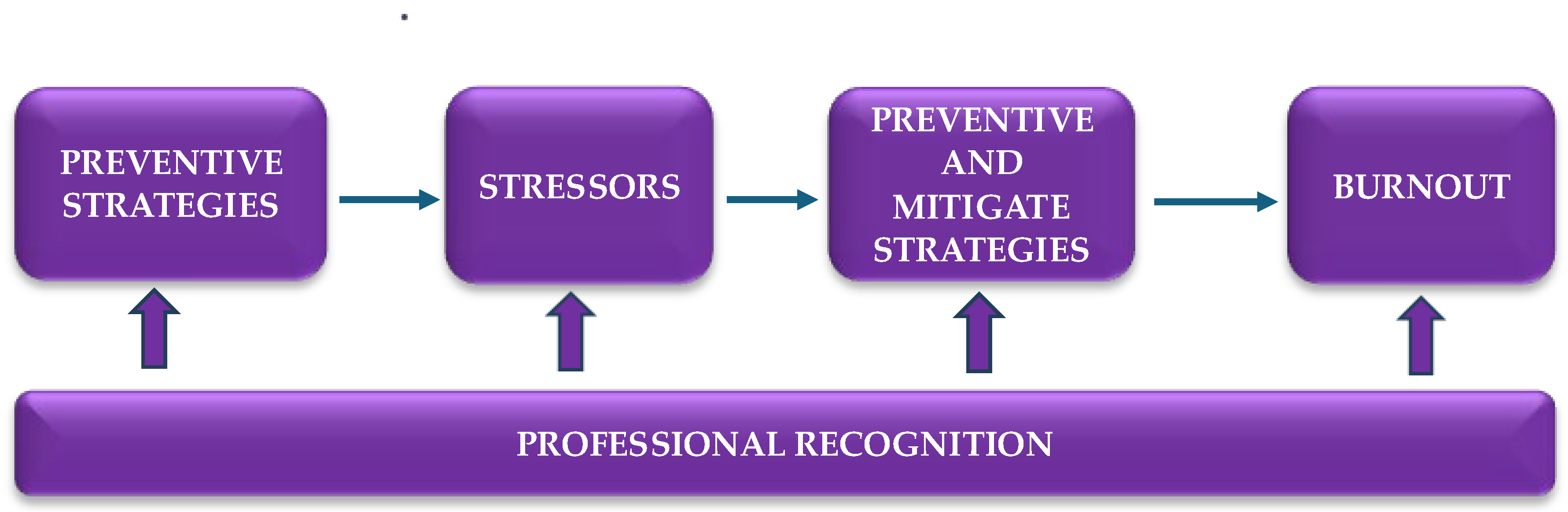
- Staff Recognition and Support: Recognition of staff efforts and providing adequate support are essential for preventing burnout and maintaining morale. This includes not only material appreciation, such as salary and resources, but also moral appreciation, as an interviewee said, “just proper recognition, I think that’s important”. Additionally, ensuring access to well-trained professionals and sharing the workload can alleviate the burden on individual team members.
- Management Responsiveness and Feedback: The need for management to be responsive to staff feedback is a recurring theme. Creating a safe environment where employees can voice their concerns (“we need our managers to listen to us without making us feel bad about it”) without fear of negative repercussions is crucial for identifying and addressing organizational issues.
- Resource Availability and Allocation: Adequate resources, including materials and equipment (“enough materials and equipment, are a necessity”), are necessary for efficient operation and preventing shortages that can lead to stress and burnout. This includes ensuring a sufficient stock of disposable items and media, as well as having enough incubators and microscopes.
- Work–Life Balance and Time Off: Respecting employees’ time off and ensuring they can take vacations is crucial for their well-being. The ability to take breaks during the year and proper scheduling of vacation time contributes to reducing stress and preventing burnout, “especially the organization of vacation days.”
- Resistance to Change: The interviews also reveal challenges associated with implementing organizational changes: “there are many things we are still doing in a very outdated way, and they need to be changed, but people find change difficult”. Resistance to change can hinder efforts to improve processes and adopt more efficient ways of working.
3.2.4. Qualitative Analysis of the Code: Psychological Tools for Prevention
- Recognition and Appreciation: The need for “proper recognition” and “moral appreciation” directly addresses the psychological well-being of employees. Feeling valued and acknowledged for their work can significantly reduce burnout and increase job satisfaction. This goes beyond mere financial compensation and includes acknowledging the importance and difficulty of their work.
- Reducing Stress and Burnout: Several segments implicitly address psychological well-being by focusing on factors that contribute to stress and burnout, such as “access to counselling or therapy sometimes”. These include heavy workloads, lack of support, and feeling overwhelmed. Addressing these issues through organizational changes can have a positive impact on employees’ mental health. One interviewee proposed “the presence of an on-site psychologist”.
- Open Communication and Feedback: Creating a safe space for employees to voice their concerns and providing feedback is crucial for addressing psychological stressors: “you need to have proper communication with your team”. When employees feel heard and understood, they are more likely to feel supported and less likely to experience burnout.
- Work–Life Balance and Respect for Time Off: Respecting employees’ holidays and ensuring they have opportunities for breaks and time off is essential to prevent burnout and promote psychological well-being. This allows employees to recover and maintain a healthy balance between work and personal life.
3.3. Professional Recognition
3.3.1. Lack of Professional Recognition
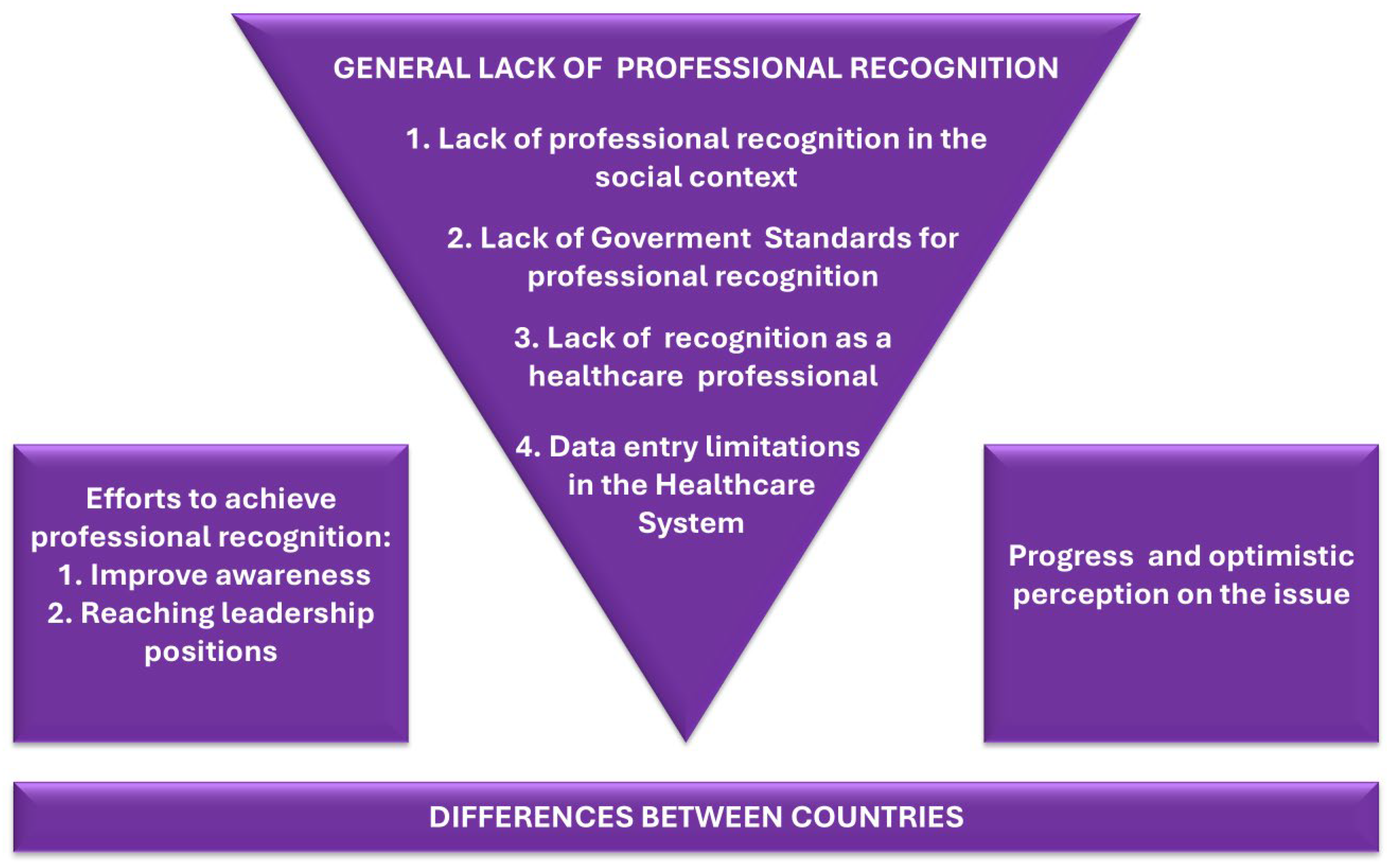
- General lack of recognition: Many interviewees express a sense of insufficient professional recognition. An embryologist from Spain said “There is no legal recognition, no salary recognition, no social recognition, and no recognition even within the very structure of a fertility clinic”. Another from Mexico added, “If you go to Mexico, for example, the embryologist simply does not exist”. This lack of recognition manifests in various forms: legal recognition, inadequate salaries, and a general undervaluing of the profession within the clinical setting.
- Lack of Recognition as Healthcare Professionals: Several segments highlight the fact that embryologists are not always recognized as healthcare professionals, which has implications for their roles and responsibilities. In Spain, for example, embryologists are not considered healthcare personnel (“if we feel recognized? not at all, we’re not even healthcare personnel”), yet they are tasked with responsibilities such as reviewing serologies and genetic counseling, which are typically reserved for those with healthcare credentials.
- Disparity in Recognition Compared to Clinicians: A recurring sentiment is that embryologists work “behind the scenes” and that most of the recognition goes to the clinicians: “there’s all these cards and chocolates from patients thanking their doctor and their nurse”. Patients often express gratitude to doctors and nurses but rarely acknowledge the embryologist’s crucial role in complex procedures like Intracytoplasmic Sperm Injection (ICSI).
- Lack of Social Recognition: There is a lack of social recognition, with many people unaware of the existence and importance of embryologists: “No recognition, because people still don’t understand what we do”; “there’s never a single mention of the person that sat there and did the ICSI for three hours”.
3.3.2. Geographic Variations in Recognition
- Variations Across Countries: The level of recognition varies significantly from country to country. While some European countries, like Italy, have officially recognized the profession of embryology (“it is well recognized, also because there was an official communication from our Ministry in 2018 that acknowledges the profession of embryologist as a healthcare profession. We are still one of the few countries in Europe where it is formally recognized”), others, like Mexico, do not even acknowledge the existence of embryologists (“The embryologist is highly undervalued in Mexico”), whereas Argentina is presented as a more favorable environment where embryologists are respected and sought after, but even there, there is room for improvement. In Egypt, embryologists are well regarded and often mistaken for doctors. In USA the embryologist’s professional recognition seems to be higher.
3.3.3. Factors Influencing Recognition
- Advocacy and Awareness Efforts: Some interviewees are actively working to change the lack of recognition: “I’ve done quite a lot of work in the social media space in the UK, think the work with the charity is really important”. These efforts aim to raise awareness about the embryologist’s role and contributions to ART.
- Professional Advancement: Achieving a leadership position can significantly impact individual recognition: “I am right now going to become the chair of The Embryology Society. So obviously things are going to be very different”.
- Clinic Structure: The structure of a clinic can influence recognition, with some clinics possibly undervaluing the embryologist’s role. As an interviewee said, “there is no recognition even within the very structure of a fertility clinic”.
3.3.4. Progress and Optimism
- Recent Progress: Some interviewees note that there has been progress in recent years, with people starting to recognize the importance of dedicated professionals working in the labs: “It’s only in the recent 4–5 years that people have started to sit back and take notice of the fact that, you know, there are these dedicated professionals that work inside the labs” or “definitely there’s progress”.
- Efforts to Change the Status Quo: There are active efforts to change the lack of recognition through advocacy and awareness campaigns. “I think I’m doing my hardest to change that. And I do think it’s working”.
3.3.5. Impact of Lack of Recognition
- Potential for Systemic Issues: One interviewee suggests that a strike by embryologists would cause the collapse of ART units (“the units would sink”), highlighting the critical role they play and the potential consequences of their lack of recognition.
- Data Entry Issues: Because embryologists are not always considered healthcare professionals, there can be issues with handling of data and compliance with regulations in the healthcare system, “because only healthcare personnel are allowed to do it. And interestingly, embryologists are an exception”.
4. Discussion
5. Conclusions
Author Contributions
Funding
Institutional Review Board Statement
Informed Consent Statement
Data Availability Statement
Acknowledgments
Conflicts of Interest
Abbreviations
| ICD | International Classification of Diseases |
| ART | Assisted Reproductive Technologies |
| AR | Assisted Reproduction |
| USA | United States of America |
| UK | United Kingdom |
| ESHRE | European Society of Human Reproduction and Embryology |
Appendix A. Semi-Structured Interview
References
- Adeoye-Olatunde, O. A., & Olenik, N. L. (2021). Research and scholarly methods: Semi-structured interviews. Journal of American College of Clinical Pharmacy, 4(10), 1358–1367. [Google Scholar] [CrossRef]
- Aderaldo, J. F., de Albuquerque, B. H. D., Cámara de Oliveira, M. T., de Medeiros García Torres, M., & Lanza, D. C. F. (2023). Main topics in assisted reproductive market: A scoping review. PLoS ONE, 18(8), e0284099. [Google Scholar] [CrossRef]
- Aitken, R. J. (2024). What is driving the global decline of human fertility? Need for a multidisciplinary approach to the underlying mechanisms. Frontiers in Reproductive Health, 6, 1364352. [Google Scholar] [CrossRef] [PubMed]
- Astro, G., Gatti, M., Costa, M., Cosmelli, A., Alteri, A., Anastasi, A., Cimadomo, D., de Santis, L., Klinger, F. G., Licata, E., Fernandez, L. S., Tomasi, G., Vegni, E., Sáiz, I. C., Prados, N., & Pisaturo, V. (2025). Perceived workplace stressors and professional experiences of clinical embryologists working in Italy and Spain: A pilot qualitative study. Frontiers in Public Health, 13, 1550715. [Google Scholar] [CrossRef]
- Balen, A. H., Cohlen, B., Huyser, C., Kissin, D., Mahajan, N., Mansour, R., Murage, A., Reindollar, R., Rizzo, R., Sembuya, R., Serour, G., Tarlatzis, B., Tatone, C., De Beer, M. L. W., Yali, C., Adamson, D. G., Benbella, A., Carneiro, M. M., Chain, J., & Kiarie, J. (2025). Recommendations from the WHO guideline for the prevention, diagnosis, and treatment of infertility. Human Reproduction, 41(1), 25. [Google Scholar] [CrossRef] [PubMed]
- Basar, M. (2023). The unseen crisis: Embryologist burnout and its impact on IVF success rates. American Journal of Biomedical Science & Research, 18(5), 499–500. [Google Scholar] [CrossRef]
- Basar, M., & Duzcu, T. (2025). The burnout: A silent saboteur in vitro fertilization laboratories. Journal of Assisted Reproduction and Genetics, 42, 2497–2513. [Google Scholar] [CrossRef]
- Boivin, J., Bunting, L., Koert, E., Ieng, U. C., & Verhaak, C. (2017). Perceived challenges of working in a fertility clinic: A qualitative analysis of work stressors and difficulties working with patients. Human Reproduction, 32(2), 403–408. [Google Scholar] [CrossRef]
- Boivin, J., Domar, A. D., Shapiro, D. B., Wischmann, T. H., Fauser, B. C. J. M., & Verhaak, C. (2012). Tackling burden in ART: An integrated approach for medical staff. Human Reproduction, 27(4), 941–950. [Google Scholar] [CrossRef]
- Boodoo, C., & Hosein, P. (2024, November 4–6). Global decline in fertility rates: Trends, influencing factors, and future projections [Paper presentation]. Sixth IEEE International Conference on Technology Management, Operations and Decisions (ICTMOD), Sharjah, United Arab Emirates. [Google Scholar] [CrossRef]
- Cohen, C., Pignata, S., Bezak, E., Tie, M., & Childs, J. (2023). Workplace interventions to improve well-being and reduce burnout for nurses, physicians and allied healthcare professionals: A systematic review. BMJ Open, 13(6), e071203. [Google Scholar] [CrossRef]
- Delaroche, L., Bazin, F., & Sermondade, N. (2025). Over one-third of professionals in French ART centers experience job strain. Scientific Reports, 15(1), 19703. [Google Scholar] [CrossRef]
- Dixit, V., & Ghosh, S. (2019). Analyze impact of occupational stress in healthcare professionals: A critical review. Invertis Journal of Management, 11(1), 30–37. [Google Scholar]
- Fedele, F., Caputo, A., Cordella, B., Muzii, L., Pietrangeli, D., Aragona, C., & Langher, V. (2020). What about fertility staff emotions? An explorative analysis of healthcare professionals’ subjective perspective. Europe’s Journal of Psychology, 16(4), 619–631. [Google Scholar] [CrossRef] [PubMed]
- Francis, J. J., Johnston, M., Robertson, C., Glidewell, L., Entwhistle, V., Eccles, M., & Grimshaw, J. M. (2010). What is an adequate sample size? Operationalising data saturation for theory-driven interview studies. Psychology & Health, 25(10), 1229–1245. [Google Scholar] [CrossRef]
- Freudenberger, H. J. (1974). Staff burn-out. Journal of Social Issues, 30(1), 159–165. [Google Scholar] [CrossRef]
- Gameiro, S., Boivin, J., Peronace, L., & Verhaak, C. M. (2012). Why do patients discontinue fertility treatment? A systematic review of reasons and predictors of discontinuation in fertility treatment. Human Reproduction Update, 18(6), 652–669. [Google Scholar] [CrossRef]
- Gerrits, T., Whittaker, A., & Manderson, L. (2024). Fertility care in low and middle income countries: Embryologists practices of care in IVF-clinics in sub-Saharan Africa. Bioscientifica, 6(1), e240025. [Google Scholar] [CrossRef]
- Govardhan, L. M., Pinelli, V., & Schnatz, P. F. (2012). Burnout, depression and job satisfaction in obstetrics and gynecology residents. Connecticut Medicine, 76(7), 389–395. [Google Scholar] [PubMed]
- Hanevik, H. I., & Hessen, D. O. (2022). IVF and human evolution. Human Reproduction Update, 28(4), 457–479. [Google Scholar] [CrossRef]
- Hariton, E., Alvero, R., Hill, M. J., Mersereau, J., Perman, S., Sable, D., Wang, F., Adamson, G., Coutifaris, C., Craig, L., Hosseinzadeh, P., Imudia, A. N., Johnstone, E. B., Lathi, R. B., Lin, P. C., Marsh, E. E., Munch, M., Richard-Davis, G., Roth, L. W., & Devine, K. (2023). Meeting the demand for fertility services: The present and future of reproductive endocrinology and infertility in the United States. Fertility and Sterility, 120(4), 755–766. [Google Scholar] [CrossRef]
- Honneth, A. (1995). The struggle for recognition: The moral grammar of social conflicts. Polity Press–Blackwell. [Google Scholar]
- Kakiashvili, T., Leszek, J., & Rutkowski, K. (2013). The medical perspective on burnout. International Journal of Occupational Medicine and Environmental Health, 26, 401–412. [Google Scholar] [CrossRef]
- Kallio, H., Pietilä, A. M., Johnson, M., & Kangasniemi, M. (2016). Systematic methodological review: Developing a framework for a qualitative semi-structured interview guide. Journal of Advanced Nursing, 72, 2954–2965. [Google Scholar] [CrossRef]
- Kellerhuis, B. E., Jenniskens, K., Kusters, M. P. T., Schuit, E., Hooft, L., Moons, K. G. M., & Reitsma, J. B. (2025). Expert panel as reference standard procedure in diagnostic accuracy studies: A systematic scoping review and methodological guidance. Diagnostic and Prognostic Research, 13, 9–12. [Google Scholar] [CrossRef]
- Kocourková, J., Burcin, B., & Kucera, T. (2014). Demographic relevancy of increased use of assisted reproduction in European countries. Reproductive Health, 11(1), 37. [Google Scholar] [CrossRef]
- Kocourková, J., Šťastná, A., & Burcin, B. (2023). The influence of the increasing use of assisted reproduction technologies on the recent growth in fertility in Czechia. Scientific Reports, 13(1), 10854. [Google Scholar] [CrossRef]
- Laurent, E. (2017). Burnout symptoms: Depressive manifestations under psychosocial labels? Asia-Pacific Psychiatry, 9, e12280. [Google Scholar] [CrossRef]
- Lazarus, R. S., & Folkman, S. (1987). Transactional theory and research on emotions and coping. European Journal of Personality, 1(3), 141–169. [Google Scholar] [CrossRef]
- López-Lería, B., Jimena, P., Clavero, A., Gonzalvo, M. C., Carrillo, S., Serrano, M., López-Regalado, M. L., Olvera, C., Martinez, L., & Castilla, J. A. (2014). Embryologists’ health: A nationwide online questionnaire. Journal of Assisted Reproduction and Genetics, 31, 1587–1597. [Google Scholar] [CrossRef]
- Maslach, C., & Leiter, M. P. (1976). Burnout. Human Behavior, 5, 16–22. [Google Scholar]
- Murphy, A., Lapczynski, M. S., Proctor, G. J., Glynn, T. R., Domar, A. D., Gameiro, S., Palmer, G. A., & Collins, M. G. (2024). Comparison of embryologist stress, somatization, and burnout reported by embryologists working in UK HFEA-licensed ART/IVF clinics and USA ART/IVF clinics. Human Reproduction, 39(10), 2297–2304. [Google Scholar] [CrossRef] [PubMed]
- Rausch, D. T., & Braverman, A. M. (2000). Burnout rates among reproductive endocrinology nurses: The role of personality and infertility attitudes. Fertility and Sterility, 74, S7. [Google Scholar] [CrossRef]
- Renger, D., Miché, M., & Casini, A. (2020). Professional recognition at work: The protective role of esteem, respect, and care for burnout among employees. Journal of Occupational and Environmental Medicine, 62(3), 202–209. [Google Scholar] [CrossRef]
- Renger, D., Renger, S., & Miché, M. (2017). A social recognition approach to autonomy: The role of equality-based respect. Personality and Social Psychology Bulletin, 43, 479–492. [Google Scholar] [CrossRef] [PubMed]
- Saunders, B., Sim, J., Kingstone, T., Baker, S., Waterfield, J., Bartlam, B., Burroughs, H., & Jinks, C. (2018). Saturation in qualitative research. Exploring its conceptualization and operationalization. Quality & Quantity, 52(4), 1893–1907. [Google Scholar] [CrossRef]
- Sax, M. R., & Lawson, A. K. (2022). Emotional support for infertility patients: Integrating mental health professionals in the fertility care team. Women, 2, 68–75. [Google Scholar] [CrossRef]
- Scarica, C., Woodward, B. J., de Santis, L., & Kovacic, B. (2023). Training and competency assessment of clinical embryologists and licensing of the profession in European countries. Human Reproduction Open, 2023(1), hoad001. [Google Scholar] [CrossRef]
- Scheepers, R. A., Lases, L. S., Arah, O. A., Heineman, M. J., & Lombarts, K. M. (2017). Job resources, physician work engagement, and patient care experience in an academic medical setting. Academic Medicine, 92(10), 1472–1479. [Google Scholar] [CrossRef]
- Stenius, K., Mäkelä, K., Miovsky, M., & Gabrhelik, R. (2008). How to write publishable qualitative research. In T. F. Babor, K. Stenius, S. Savva, & J. O’Reilly (Eds.), Publishing addiction science: A guide for the perplexed (2nd ed., pp. 82–97). Ubiquity Press. [Google Scholar] [CrossRef]
- Suarez, C., del Moral Arroyo, G., & González, M. T. (2013). Consejos prácticos para escribir un artículo cualitativo publicable en Psicología [Practical tips for writing a publishable qualitative article in psychology]. Psychosocial Intervention, 22(1), 71–79. [Google Scholar] [CrossRef][Green Version]
- Tavella, G., Hadzi-Pavlovic, D., & Parker, G. (2021). Burnout: Redefining its key symptoms. Psychiatry Research, 302, 114023. [Google Scholar] [CrossRef]
- Urteaga, R., & Díaz, A. (2024). Burnout in assisted reproduction professionals: The influence of stressors in the workplace. Healthcare, 12(21), 2136. [Google Scholar] [CrossRef]
- Urteaga, R., & Díaz, A. (2026). The effect of workplace pressure and experience on burnout in embryologists working in assisted reproduction in Spain. International Journal of Environmental Research and Public Health, 23(3), 369. [Google Scholar] [CrossRef]
- VERBI Software. (2026). MAXQDA 2026 online manual. Available online: https://maxqda.com/help-max20/welcome (accessed on 26 February 2026).
- Vélez-Muentes, M. I., & Torres-Jerves, J. A. (2025). Salud mental del personal médico en clínicas de fertilidad humana frente a fracasos de embarazo de pacientes [Mental health of medical staff in human fertility clinics facing pregnancy failures in patients]. MQR Investigar, 9(1), e311. [Google Scholar] [CrossRef]
- Williams, I. M., & Lewis, W. G. (2020). Stress in the workplace for healthcare professionals. Physiological Reports, 8(13), e14496. [Google Scholar] [CrossRef]
- World Health Organization. (2003). Adherence to long-term therapies: Evidence for action. World Health Organization. [Google Scholar]
- World Health Organization. (2019a). Burn-out an “occupational phenomenon”: International classification of diseases. Available online: https://www.who.int/news/item/28-05-2019-burn-out-an-occupational-phenomenon-international-classification-of-diseases (accessed on 10 December 2025).
- World Health Organization. (2019b). World health assembly update, 25 May 2019: International statistical classification of diseases and related health problems (ICD-11). Available online: https://www.who.int/news-room/detail/25-05-2019-world-health-assembly-update (accessed on 10 December 2025).
- World Health Organization. (2023). Infertility prevalence estimates, 1990–2021. Available online: https://www.who.int/publications/i/item/978920068315 (accessed on 10 December 2025).

| Profession-Inherent | Physical and Organizational | Patient-Related |
|---|---|---|
| 1. Responsibility and potential for errors | 1. Lighting | 1. Unrealistic expectations and managing expectations |
| 2. Workload and work pace | 2. Noise | 2. Emotional burden and lack of support for patients |
| 3. Team management and interpersonal dynamics | 3. Ergonomics and physical strain | 3. Difficult patient interactions and communication challenges |
| 4. Emotional and physical demands | 4. Temperature | |
| 5. Competition and private sector pressures | 5. Isolation and distractions | |
| 6. Workload and pressure | ||
| 7. Prolonged working hours |
| Physical Tools | Relational Tools | Organizational Tools | Psychological Tools |
|---|---|---|---|
| 1. Ergonomic furniture | 1. Importance of open and honest communication | 1. The need for improved organization and planning | 1. Recognition and appreciation |
| 2. Comfortable and relaxing spaces | 2. Team building and group cohesion | 2. Importance of communication and coordination | 2. Reducing stress and burnout |
| 3. Natural light and ventilation | 3. Training in communication and conflict management | 3. Staff recognition and support | 3. Open communication and feedback |
| 4. Workspace design and size | 4. Appreciation and recognition | 4. Management responsiveness and feedback | 4. Work–life balance and respect for time off |
| 5. Equipment | 5. Empathy and understanding | 5. Resource availability and allocation | 5. Addressing resistance to change |
| 6. Work–Life balance and time off | |||
| 7. Resistance to change |
Disclaimer/Publisher’s Note: The statements, opinions and data contained in all publications are solely those of the individual author(s) and contributor(s) and not of MDPI and/or the editor(s). MDPI and/or the editor(s) disclaim responsibility for any injury to people or property resulting from any ideas, methods, instructions or products referred to in the content. |
© 2026 by the authors. Licensee MDPI, Basel, Switzerland. This article is an open access article distributed under the terms and conditions of the Creative Commons Attribution (CC BY) license.
Share and Cite
Urteaga, R.; Díaz, A. Burnout in Embryologists from the Perspective of an International Expert Panel: A Qualitative Study. Behav. Sci. 2026, 16, 861. https://doi.org/10.3390/bs16060861
Urteaga R, Díaz A. Burnout in Embryologists from the Perspective of an International Expert Panel: A Qualitative Study. Behavioral Sciences. 2026; 16(6):861. https://doi.org/10.3390/bs16060861
Chicago/Turabian StyleUrteaga, Raquel, and Amelia Díaz. 2026. "Burnout in Embryologists from the Perspective of an International Expert Panel: A Qualitative Study" Behavioral Sciences 16, no. 6: 861. https://doi.org/10.3390/bs16060861
APA StyleUrteaga, R., & Díaz, A. (2026). Burnout in Embryologists from the Perspective of an International Expert Panel: A Qualitative Study. Behavioral Sciences, 16(6), 861. https://doi.org/10.3390/bs16060861

