


Digital Acceptance and Commitment Therapy for Lifestyle Change in Overweight Pregnant Women: A Feasibility Pilot Study

Abstract
1. Background
1.1. An Acceptance and Commitment Therapy Intervention to Promote Healthier Behaviors and Lifestyles in Overweight Pregnant Women
1.2. Present Research
2. Materials and Methods
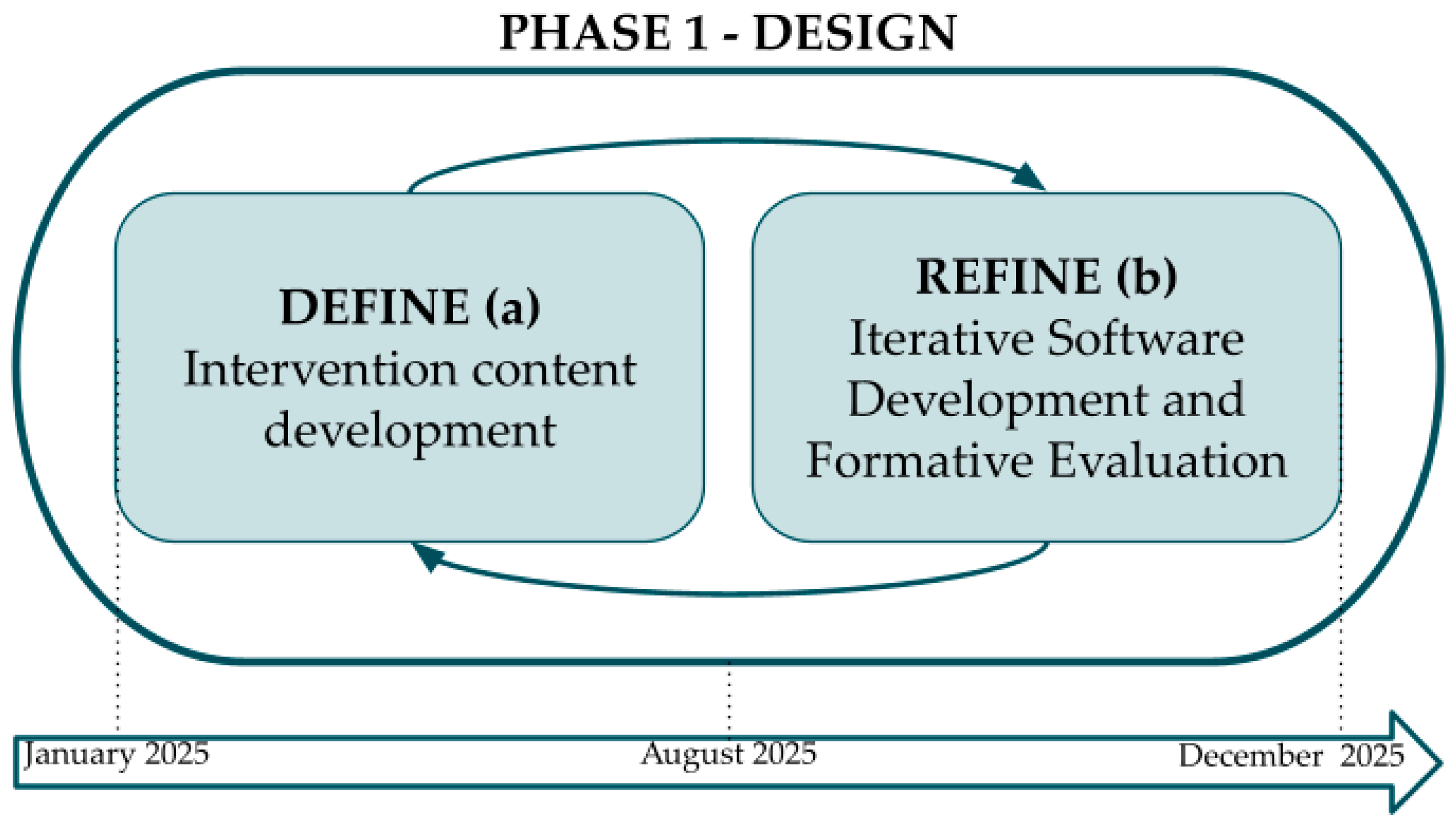
2.1. Intervention Content Development
2.2. Iterative Software Development and Formative Evaluation
2.2.1. Study Aims: Quantitative and Qualitative Components
2.2.2. Variables Identification
2.2.3. Procedure
2.2.4. Data Analysis
3. Results
3.1. Quantitative Results
3.2. Qualitative Results
3.2.1. Set 1: Communication
3.2.2. Set 2: Module Structure
3.2.3. Set 3: Materials
3.2.4. Set 4: Content
3.2.5. Insights into the Effectiveness of the Intervention
3.2.6. Overall Assessment
4. Discussion
Strengths, Limitations, and Future Directions
5. Conclusions
Supplementary Materials
Author Contributions
Funding
Institutional Review Board Statement
Informed Consent Statement
Data Availability Statement
Acknowledgments
Conflicts of Interest
Abbreviations
| ACT | Acceptance and Commitment Therapy |
| NICE | National Institute for Health and Care Excellence |
| ORBIT | Obesity-Related Behavioral Intervention Trials |
| uMARS | User Version of the Mobile Application Rating Scale |
| BUS-11 | Chatbot Usability Scale |
| SD | Standard Deviation |
Appendix A

| Variable | Subvariables | Items |
|---|---|---|
| Communication | empathy and listening skills | judgmental—welcoming, passive listening—active listening, alarming—reassuring, indifferent—sensitive, cold—warm |
| fluency and fluidity | non-sliding—sliding | |
| chatbot interaction | boring—engaging, inefficient—efficient, slow—fast, heavy—adequate | |
| vocabulary | abstruse—understandable, technical—common | |
| Module structure | interaction duration | long—short, challenging—easy |
| Material | videos | unpleasant—pleasant, stressful—relaxing, hindering—helpful, useless—functional |
| infographics | unimaginative—creative, hindering—supportive, unpleasant—pleasant | |
| Content | content evaluation | boring—interesting, soporific—stimulating, of little value—of great value |
| clarity of content | confused—clear, abstruse—understandable |
Appendix B
| Topic Investigated | Questions |
|---|---|
| Interaction | 1.1 How did you feel about the interaction with DEMETRA? Were there enough alternatives among the replies to DEMETRA? 1.2 What was the feature of the interaction that you liked the most? And the one you liked the least? 1.3 Have you ever made the mistake of clicking the answer button on a question? Have you wished you could have gone back? |
| Contents | 2.1 If something was not clear to you at first, do you find there is then a way to investigate the topic further? 2.2 Is the mode of communication (length of sentences, terms used, etcetera) appropriate for the content? |
| Engagement | 3.1 Was the communication with the chatbot engaging? Did it entice you to get involved and be consistent in the activities it recommended? |
| General | 4.1 Do you have any concerns? Do you have any criticism? 4.2 When would be the ideal time to take this intervention for a pregnant woman? 4.3 Overall, was the intervention personalized for you? Give a level of personalization from 0 to 10. |
References
- Adler, J., & Van Brunt, D. (2025). It is time to realize the promise of the digital mental health transformation: Application for population mental health. Journal of Medical Internet Research, 27, e63791. [Google Scholar] [CrossRef] [PubMed]
- Ahmad, A., Kaur, R., Singh, R., Jangra, S., Mehta, S., & Kumari, P. (2025). Strategies for reducing obesity-related complications during pregnancy. In A. Sharma, & T. G. Singh (Eds.), Maternal and child health, and nutrition. Springer Nature. [Google Scholar] [CrossRef]
- Almutairi, F. S., Alsaykhan, A. M., & Almatrood, A. (2024). Obesity prevalence and its impact on maternal and neonatal outcomes in pregnant women: A systematic review. Cureus, 16(12), e75262. [Google Scholar] [CrossRef]
- Apolinário-Hagen, J., Drüge, M., Guthardt, L., & Haller, E. (2024). Acceptance and commitment therapy for major depressive disorder: Navigating depression treatment in traditional and digital settings with insights from current research. In Y.-K. Kim (Ed.), Recent advances and challenges in the treatment of major depressive disorder (Vol. 1456). Advances in Experimental Medicine and Biology. Springer Nature. [Google Scholar] [CrossRef]
- Ashton, A. A., Wilson, J., & Slade, P. (2025). Feasibility and acceptability of a brief online acceptance and commitment therapy intervention to reduce fear of childbirth: A novel application of a third-wave cognitive behavioral therapy focused on psychological flexibility and acceptance. Acta Obstetricia et Gynecologica Scandinavica, 104(10), 1939–1948. [Google Scholar] [CrossRef]
- Borsci, S., Prati, E., Malizia, A., Schmettow, M., Chamberlain, A., & Federici, S. (2023). Ciao AI: The Italian adaptation and validation of the Chatbot Usability Scale. Personal and Ubiquitous Computing, 27(6), 2161–2170. [Google Scholar] [CrossRef]
- Bowden, E. R., Chang, A. B., & McCallum, G. B. (2023). Interventions to improve enablers and/or overcome barriers to seeking care during pregnancy, birthing and postnatal period for women living with vulnerabilities in high-income countries: A systematic review and meta-analysis. Midwifery, 121, 103674. [Google Scholar] [CrossRef]
- Brunner, K., Linder, T., Klaritsch, P., Tura, A., Windsperger, K., & Göbl, C. (2025). The impact of overweight and obesity on pregnancy: A narrative review of physiological consequences, risks and challenges in prenatal care, and early intervention strategies. Current Diabetes Reports, 25(1), 30. [Google Scholar] [CrossRef]
- Catalano, P. M., & Shankar, K. (2017). Obesity and pregnancy: Mechanisms of short term and long term adverse consequences for mother and child. BMJ, 356, j1. [Google Scholar] [CrossRef]
- Chew, H. S. J., Chng, S., Rajasegaran, N. N., Choy, K. H., & Chong, Y. Y. (2023). Effectiveness of acceptance and commitment therapy on weight, eating behaviours and psychological outcomes: A systematic review and meta-analysis. Eating and Weight Disorders Studies on Anorexia, Bulimia and Obesity, 28(1), 6. [Google Scholar] [CrossRef] [PubMed]
- Conrad, J. A. (2024). Digitization and its discontents: The promise and limitations of digital mental health interventions. Journal of Contemporary Psychotherapy, 54(3), 209–215. [Google Scholar] [CrossRef]
- Czajkowski, S. M., Powell, L. H., Adler, N., Naar-King, S., Reynolds, K. D., Hunter, C. M., Laraia, B., Olster, D. H., Perna, F. M., Peterson, J. C., Epel, E., Boyington, J. E., & Charlson, M. E. (2015). From ideas to efficacy: The ORBIT model for developing behavioral treatments for chronic diseases. Health Psychology, 34(10), 971. [Google Scholar] [CrossRef]
- Dencker, A., Premberg, Å., Olander, E. K., McCourt, C., Haby, K., Dencker, S., Glantz, A., & Berg, M. (2016). Adopting a healthy lifestyle when pregnant and obese—An interview study three years after childbirth. BMC Pregnancy and Childbirth, 16(1), 201. [Google Scholar] [CrossRef]
- Dindo, L., Van Liew, J. R., & Arch, J. J. (2017). Acceptance and commitment therapy: A transdiagnostic behavioral intervention for mental health and medical conditions. Neurotherapeutics, 14(3), 546–553. [Google Scholar] [CrossRef]
- Ernst, K., Dasilva, G., Srivastav, M., Campson, A., Soto, P., Puvvala, A., Knopf, E., Lobaina, D., Okwaraji, G., Mendonca, J., Frishman, M. B., Knecht, M. K., & Sacca, L. (2025). Challenges in accessing mental health services in underserved pregnant and postpartum women: A scoping review. Women, 5(3), 31. [Google Scholar] [CrossRef]
- Fietta, V., Rizzi, S., De Luca, C., Gios, L., Pavesi, M. C., Gabrielli, S., Monaro, M., & Forti, S. (2024). A chatbot-based version of the World Health Organization–validated self-help plus intervention for stress management: Co-design and usability testing. JMIR Human Factors, 11(1), e64614. [Google Scholar] [CrossRef]
- Gale, N. K., Heath, G., Cameron, E., Rashid, S., & Redwood, S. (2013). Using the framework method for the analysis of qualitative data in multi-disciplinary health research. BMC Medical Research Methodology, 13(1), 117. [Google Scholar] [CrossRef]
- Gentili, C., Zetterqvist, V., Rickardsson, J., Holmström, L., E Simons, L., & Wicksell, R. K. (2021). ACTsmart: Guided smartphone-delivered acceptance and commitment therapy for chronic pain—A pilot trial. Pain Medicine, 22(2), 315–328. [Google Scholar] [CrossRef] [PubMed]
- Hayes, S. C., Levin, M. E., Plumb-Vilardaga, J., Villatte, J. L., & Pistorello, J. (2013). Acceptance and commitment therapy and contextual behavioral science: Examining the progress of a distinctive model of behavioral and cognitive therapy. Behavior Therapy, 44(2), 180–198. [Google Scholar] [CrossRef]
- Herbert, M. S., Dochat, C., Wooldridge, J. S., Materna, K., Blanco, B. H., Tynan, M., Lee, M. W., Gasperi, M., Camodeca, A., Harris, D., & Afari, N. (2022). Technology-supported Acceptance and Commitment Therapy for chronic health conditions: A systematic review and meta-analysis. Behaviour Research and Therapy, 148, 103995. [Google Scholar] [CrossRef] [PubMed]
- Hoffmann, T. C., Glasziou, P. P., Boutron, I., Milne, R., Perera, R., Moher, D., Altman, D. G., Barbour, V., Macdonald, H., Johnston, M., Lamb, S. E., Dixon-Woods, M., McCulloch, P., Wyatt, J. C., Chan, A., & Michie, S. (2014). Better reporting of interventions: Template for intervention description and replication (TIDieR) checklist and guide. BMJ, 348, g1687. [Google Scholar] [CrossRef] [PubMed]
- Howard, S., Houghton, C. M. G., White, R., Fallon, V., & Slade, P. (2023). The feasibility and acceptability of a single-session Acceptance and Commitment Therapy (ACT) intervention to support women self-reporting fear of childbirth in a first pregnancy. Psychology & Health, 38(11), 1460–1481. [Google Scholar] [CrossRef]
- Iturbe, I., Echeburúa, E., & Maiz, E. (2022). The effectiveness of acceptance and commitment therapy upon weight management and psychological well-being of adults with overweight or obesity: A systematic review. Clinical Psychology & Psychotherapy, 29(3), 837–856. [Google Scholar] [CrossRef]
- Jangra, S., Vani, C., Sharma, A., Singh, T. G., Dharmani, B., Shaima, K. A., & Bhyan, B. (2025). Guidelines for healthy weight management in expecting mothers. In A. Sharma, & T. G. Singh (Eds.), Maternal and child health, and nutrition. Springer Nature. [Google Scholar] [CrossRef]
- Jelsma, J. G. M., van Leeuwen, K. M., Oostdam, N., Bunn, C., Simmons, D., Desoye, G., Corcoy, R., Adelantado, J. M., Kautzky-Willer, A., Harreiter, J., van Assche, F. A., Devlieger, R., Timmerman, D., Hill, D., Damm, P., Mathiesen, E. R., Wender-Ozegowska, E., Zawiejska, A., Rebollo, P., … van Poppel, M. N. M. (2016). Beliefs, barriers, and preferences of European overweight women to adopt a healthier lifestyle in pregnancy to minimize risk of developing gestational diabetes mellitus: An explorative study. Journal of Pregnancy, 2016, 3435791. [Google Scholar] [CrossRef]
- Kelson, J., Rollin, A., Ridout, B., & Campbell, A. (2019). Internet-delivered acceptance and commitment therapy for anxiety treatment: Systematic review. Journal of Medical Internet Research, 21(1), e12530. [Google Scholar] [CrossRef]
- Kent, L., McGirr, M., & Eastwood, K. (2024). Global trends in prevalence of maternal overweight and obesity: A systematic review and meta-analysis of routinely collected data retrospective cohorts. International Journal of Population Data Science, 9(2), 2401. [Google Scholar] [CrossRef] [PubMed]
- Kessler, R. S., Purcell, E. P., Glasgow, R. E., Klesges, L. M., Benkeser, R. M., & Peek, C. J. (2013). What does it mean to “employ” the RE-AIM model? Evaluation & the Health Professions, 36(1), 44–66. [Google Scholar] [CrossRef]
- King, A. P., & Eckersley, R. (2019). Statistics for biomedical engineers and scientists: How to visualize and analyze data. Academic Press. [Google Scholar]
- Klimczak, K. S., Miguel, G. G. S., Mukasa, M. N., Twohig, M. P., & Levin, M. E. (2023). A systematic review and meta-analysis of self-guided online acceptance and commitment therapy as a transdiagnostic self-help intervention. Cognitive Behaviour Therapy, 52(3), 269–294. [Google Scholar] [CrossRef]
- Krafft, J., Potts, S., Schoendorff, B., & Levin, M. E. (2019). A randomized controlled trial of multiple versions of an acceptance and commitment therapy matrix app for well-being. Behavior Modification, 43(2), 246–272. [Google Scholar] [CrossRef] [PubMed]
- Kurnaz, D., & Karaçam, Z. (2025). The effect of methods used in the management of maternal obesity on pregnancy and birth outcomes: A systematic review with meta-analysis. International Journal of Obesity, 49(6), 1013–1023. [Google Scholar] [CrossRef]
- Lappalainen, P., Langrial, S., Oinas-Kukkonen, H., Tolvanen, A., & Lappalainen, R. (2015). Web-based acceptance and commitment therapy for depressive symptoms with minimal support. Behavior Modification, 39(6), 805–834. [Google Scholar] [CrossRef]
- Lee-Baggley, D. (2019). Healthy habits suck: How to get off the couch and live a healthy life… Even if you don’t want to. With Russ Harris. New Harbinger Publications. [Google Scholar]
- Lelorain, S., Deruelle, P., Béhal, H., Machet, E., Thiblet, M., Lengagne-Piedbois, C., Deken-Delannoy, V., & Pigeyre, M. (2024). Factors influencing participation and regular attendance in a program combining physical activity and nutritional advice for overweight and obese pregnant women. BMC Pregnancy and Childbirth, 24(1), 449. [Google Scholar] [CrossRef]
- Levin, M. E., Aller, T. B., Klimczak, K. S., Donahue, M. L., & Knudsen, F. M. (2025). Digital acceptance and commitment therapy for adults with chronic health conditions: Results from a waitlist-controlled trial. Behaviour Research and Therapy, 188, 104729. [Google Scholar] [CrossRef] [PubMed]
- Levin, M. E., Krafft, J., Hicks, E. T., Pierce, B., & Twohig, M. P. (2020). A randomized dismantling trial of the open and engaged components of acceptance and commitment therapy in an online intervention for distressed college students. Behaviour Research and Therapy, 126, 103557. [Google Scholar] [CrossRef] [PubMed]
- Levin, M. E., Petersen, J. M., Durward, C., Bingeman, B., Davis, E., Nelson, C., & Cromwell, S. (2021). A randomized controlled trial of online acceptance and commitment therapy to improve diet and physical activity among adults who are overweight/obese. Translational Behavioral Medicine, 11(6), 1216–1225. [Google Scholar] [CrossRef]
- Levin, M. E., Pierce, B., & Schoendorff, B. (2017). The acceptance and commitment therapy matrix mobile app: A pilot randomized trial on health behaviors. Journal of Contextual Behavioral Science, 6(3), 268–275. [Google Scholar] [CrossRef]
- Lillis, J., Dahl, J., & Weineland, S. M. (2014). The diet trap: Feed your psychological needs and end the weight loss struggle using acceptance and commitment therapy. New Harbinger Publications. [Google Scholar]
- Morselli, S., Sebastianelli, A., Domnich, A., Bucchi, C., Spatafora, P., Liaci, A., Gemma, L., Gravas, S., Panatto, D., Stoyanov, S., Serni, S., & Gacci, M. (2021). Translation and validation of the Italian version of the user version of the mobile application rating scale (uMARS). Journal of Preventive Medicine and Hygiene, 62(1), E243–E248. [Google Scholar] [CrossRef]
- National Institute for Health and Care Excellence. (2025). Benefits of implementing NICE guidance. Available online: https://www.nice.org.uk/about/what-we-do/into-practice/benefits-of-implementing-niceguidance (accessed on 1 February 2026).
- Nicoletti, A. E., Rizzi, S., Fait, S., & Mayora-Ibarra, O. (2025). Prevention of postpartum depression via a digital ACT-based intervention: Evaluation of a prototype using multiple case studies. Behavioral Sciences, 15(12), 1723. [Google Scholar] [CrossRef]
- Osgood, C. E., Suci, G. J., & Tannenbaum, P. H. (1957). The measurement of meaning. University of Illinois Press. [Google Scholar]
- Pitil, P. P., & Ghazali, S. R. (2024). Acceptance and commitment therapy and weight-related difficulties in overweight and obese adults: A systematic review. Psychological Reports, 127(6), 2873–2897. [Google Scholar] [CrossRef]
- Polk, K. L., & Prevedini, A. B. (2017). La matrice ACT: Guida all’utilizzo nella pratica clinica. F. Angeli. [Google Scholar]
- Potts, S., Krafft, J., & Levin, M. E. (2022). A pilot randomized controlled trial of acceptance and commitment therapy guided self-help for overweight and obese adults high in weight self-stigma. Behavior Modification, 46(1), 178–201. [Google Scholar] [CrossRef]
- Proctor, E., Silmere, H., Raghavan, R., Hovmand, P., Aarons, G., Bunger, A., Griffey, R., & Hensley, M. (2011). Outcomes for implementation research: Conceptual distinctions, measurement challenges, and research agenda. Administration and Policy in Mental Health and Mental Health Services Research, 38(2), 65–76. [Google Scholar] [CrossRef]
- Sari, Y. P., Herman, H., Fajria, L., Herien, Y., Susanti, E., & Lin, C. (2025). The impact of m-health interventions on gestational weight gain and physical activity among pregnant women with overweight and obesity: A meta-analysis of randomized controlled trials. Midwifery, 146, 104399. [Google Scholar] [CrossRef]
- Schoendorff, B., Webster, M., & Polk, K. (2014). Under the hood: Basic processes underlying the matrix. In The ACT matrix: A new approach to building psychological flexibility across settings and populations (pp. 15–40). New Harbinger. [Google Scholar]
- Schumacher, L. M., Miller, N., Jennings, E. L., Chabria, R., & Butryn, M. L. (2025). Acceptance and commitment therapy for obesity. Current Obesity Reports, 14(1), 41. [Google Scholar] [CrossRef]
- Sekhon, M., Cartwright, M., & Francis, J. J. (2017). Acceptability of healthcare interventions: An overview of reviews and development of a theoretical framework. BMC Health Services Research, 17(1), 88. [Google Scholar] [CrossRef] [PubMed]
- Shieh, C., Cullen, D. L., Pike, C., & Pressler, S. J. (2018). Intervention strategies for preventing excessive gestational weight gain: Systematic review and meta-analysis. Obesity Reviews, 19(8), 1093–1109. [Google Scholar] [CrossRef]
- Stoyanov, S. R., Hides, L., Kavanagh, D. J., & Wilson, H. (2016). Development and validation of the user version of the mobile application rating scale (uMARS). JMIR mHealth and uHealth, 4(2), e72. [Google Scholar] [CrossRef]
- Tobias, M. R., Landy, L. N., Levin, M. E., & Arch, J. J. (2022). A randomized trial of brief online interventions to facilitate treatment seeking for social anxiety. Behavior Modification, 46(5), 1137–1166. [Google Scholar] [CrossRef]
- Tomczak, M., & Tomczak-Łukaszewska, E. (2014). The need to report effect size estimates revisited. An overview of some recommended measures of effect size. TRENDS in Sport Sciences, 21, 19–25. [Google Scholar]
- Torous, J., Linardon, J., Goldberg, S. B., Sun, S., Bell, I., Nicholas, J., Hassan, L., Hua, Y., Milton, A., & Firth, J. (2025). The evolving field of digital mental health: Current evidence and implementation issues for smartphone apps, generative artificial intelligence, and virtual reality. World Psychiatry, 24(2), 156–174. [Google Scholar] [CrossRef] [PubMed]
- van Gemert-Pijnen, J. E., Nijland, N., van Limburg, M., Ossebaard, H. C., Kelders, S. M., Eysenbach, G., & Seydel, E. R. (2011). A holistic framework to improve the uptake and impact of eHealth technologies. Journal of Medical Internet Research, 13(4), e111. [Google Scholar] [CrossRef]
- Waters, C. S., Annear, B., Flockhart, G., Jones, I., Simmonds, J. R., Smith, S., Traylor, C., & Williams, J. F. (2020). Acceptance and commitment therapy for perinatal mood and anxiety disorders: A feasibility and proof of concept study. British Journal of Clinical Psychology, 59(4), 461–479. [Google Scholar] [CrossRef]
- Yıldız, E. (2020). The effects of acceptance and commitment therapy on lifestyle and behavioral changes: A systematic review of randomized controlled trials. Perspectives in Psychiatric Care, 56(3), 657–690. [Google Scholar] [CrossRef] [PubMed]
| Week | Topics |
|---|---|
| Week 0 | Brief introduction to DEMETRA and how the chatbot works |
| Week 1 | Biological drivers of unhealthy behaviors; values; factors influencing body weight. |
| Week 2 | The “Fix me-trap” and controlling thoughts and emotions as sources of suffering. |
| Week 3 | Fusion and obedience to thoughts and feelings, cognitive defusion; introduction to the ACT Matrix for value clarification; internal and external obstacles; behavioral avoidance; thoughts and feelings as unavoidable. |
| Week 4 | Recognizing avoidant behaviors and valued actions using the ACT matrix; the myth of the perfect goal-weight. |
| Week 5 | Emotional eating; mindful eating exercise; |
| Week 6 | Using the matrix in daily life; self-compassion vs. self-critique; nine steps to stay on track when pursuing values. |
| Participants, n (%) | Values, Mean (SD) | Values, Median (Range) | W | p Value | r | |
|---|---|---|---|---|---|---|
| Empathy and listening | 15 (100) | 3.68 (0.52) | 3.80 (0.14) | 103.5 | 0.001 | 0.971 |
| Smoothness and fluidity | 15 (100) | 3.87 (0.99) | 4.00 (0.26) | 79.5 | 0.015 | 0.747 |
| Chatbot interaction | 15 (100) | 3.72 (0.78) | 3.75 (0.20) | 93.5 | 0.011 | 0.781 |
| Lexicon | 15 (100) | 4.20 (0.59) | 4.00 (0.15) | 105.0 | <0.001 | 1.000 |
| Session duration | 15 (100) | 3.23 (0.75) | 3.00 (0.19) | 31.0 | 0.328 | 0.378 |
| Videos | 15 (100) | 4.02 (0.59) | 4.00 (0.15) | 105.0 | 0.001 | 1.000 |
| Infographics | 15 (100) | 3.76 (0.61) | 3.67 (0.16) | 89.0 | 0.003 | 0.956 |
| Content evaluation | 15 (100) | 3.89 (0.64) | 4.00 (0.17) | 115.5 | 0.002 | 0.925 |
| Content clarity | 15 (100) | 4.30 (0.70) | 4.00 (0.18) | 91.0 | 0.001 | 1.000 |
| Participants, n (%) | Values, Mean (SD) | Values, Median (Range) | W | p Value | r | |
|---|---|---|---|---|---|---|
| Accessibility | 15 (100) | 4.20 (0.78) | 4.00 (0.20) | 115.0 | 0.002 | 0.917 |
| Quality of features | 15 (100) | 4.04 (0.67) | 4.00 (0.17) | 116.5 | 0.001 | 0.942 |
| Conversation quality | 15 (100) | 3.45 (0.66) | 3.50 (0.17) | 97.0 | 0.037 | 0.617 |
| Privacy and security | 15 (100) | 3.80 (0.82) | 4.00 (0.22) | 61.5 | 0.009 | 0.864 |
| Response time | 15 (100) | 4.33 (0.62) | 4.00 (0.16) | 105.0 | <0.001 | 1.000 |
| Participants, n (%) | Values, Mean (SD) | Values, Median (Range) | W | p Value | r | |
|---|---|---|---|---|---|---|
| Engagement | 15 (100) | 3.35 (0.80) | 3.60 (0.21) | 66.0 | 0.160 | 0.451 |
| Information | 13 (86.67) | 4.23 (0.48) | 4.25 (0.13) | 91.0 | 0.002 | 1.000 |
| Subjective items | 15 (100) | 3.30 (0.61) | 3.50 (0.16) | 52.5 | 0.089 | 0.591 |
| Perceived impact | 15 (100) | 3.47 (0.81) | 3.67 (0.21) | 90.0 | 0.093 | 0.500 |
| Communication Style and Tone | Module Structure | Personalization | Perceived Usefulness/Effectiveness | |
|---|---|---|---|---|
| Positive | “It gave you time. In several moments it explicitly said things like ‘take all the time you need’ or ‘ I know this takes time’… I really appreciated this, because it didn’t pressure you to respond or rush through the session.” —midwife | “I appreciated when the chatbot included exercises within the session, rather than leaving them to be done independently, because it made it easier to stay engaged throughout the interaction.” —usability expert | “I found it useful to be able to choose whether to repeat or skip certain parts, such as the myths. Having the option to decide based on my needs made the interaction feel more adaptive.”—psychologist | “I really appreciated the aim and overall meaning of the intervention. I think this kind of support can be very useful, especially in helping women see things from a different perspective and find more strength in facing this period.”—expecting mother |
| Negative | “I believe the ‘warmth’ of the intervention could be ameliorated—it really felt like you were talking with a chatbot sometimes… I noticed it repeated some answers—things like ‘Sad moments happen to everyone”—which were fine, even correct you might say, but after reading it once again it felt empty.” —psychologist | “Some sessions felt too long, and at times I interrupted them and continued later, or even forgot to resume them completely.” —usability expert | “Even if you could give different answers, the interaction always brought you back to the same path, so it didn’t really feel personalized.”—expecting mother | “Some of the messages felt quite theoretical and didn’t really push me to put things into practice.”—expecting mother |
Disclaimer/Publisher’s Note: The statements, opinions and data contained in all publications are solely those of the individual author(s) and contributor(s) and not of MDPI and/or the editor(s). MDPI and/or the editor(s) disclaim responsibility for any injury to people or property resulting from any ideas, methods, instructions or products referred to in the content. |
© 2026 by the authors. Licensee MDPI, Basel, Switzerland. This article is an open access article distributed under the terms and conditions of the Creative Commons Attribution (CC BY) license.
Share and Cite
Nicoletti, A.E.; Tonelli, M.; Purin, B.; Rizzi, S. Digital Acceptance and Commitment Therapy for Lifestyle Change in Overweight Pregnant Women: A Feasibility Pilot Study. Behav. Sci. 2026, 16, 585. https://doi.org/10.3390/bs16040585
Nicoletti AE, Tonelli M, Purin B, Rizzi S. Digital Acceptance and Commitment Therapy for Lifestyle Change in Overweight Pregnant Women: A Feasibility Pilot Study. Behavioral Sciences. 2026; 16(4):585. https://doi.org/10.3390/bs16040585
Chicago/Turabian StyleNicoletti, Anna Elena, Michele Tonelli, Barbara Purin, and Silvia Rizzi. 2026. "Digital Acceptance and Commitment Therapy for Lifestyle Change in Overweight Pregnant Women: A Feasibility Pilot Study" Behavioral Sciences 16, no. 4: 585. https://doi.org/10.3390/bs16040585
APA StyleNicoletti, A. E., Tonelli, M., Purin, B., & Rizzi, S. (2026). Digital Acceptance and Commitment Therapy for Lifestyle Change in Overweight Pregnant Women: A Feasibility Pilot Study. Behavioral Sciences, 16(4), 585. https://doi.org/10.3390/bs16040585

