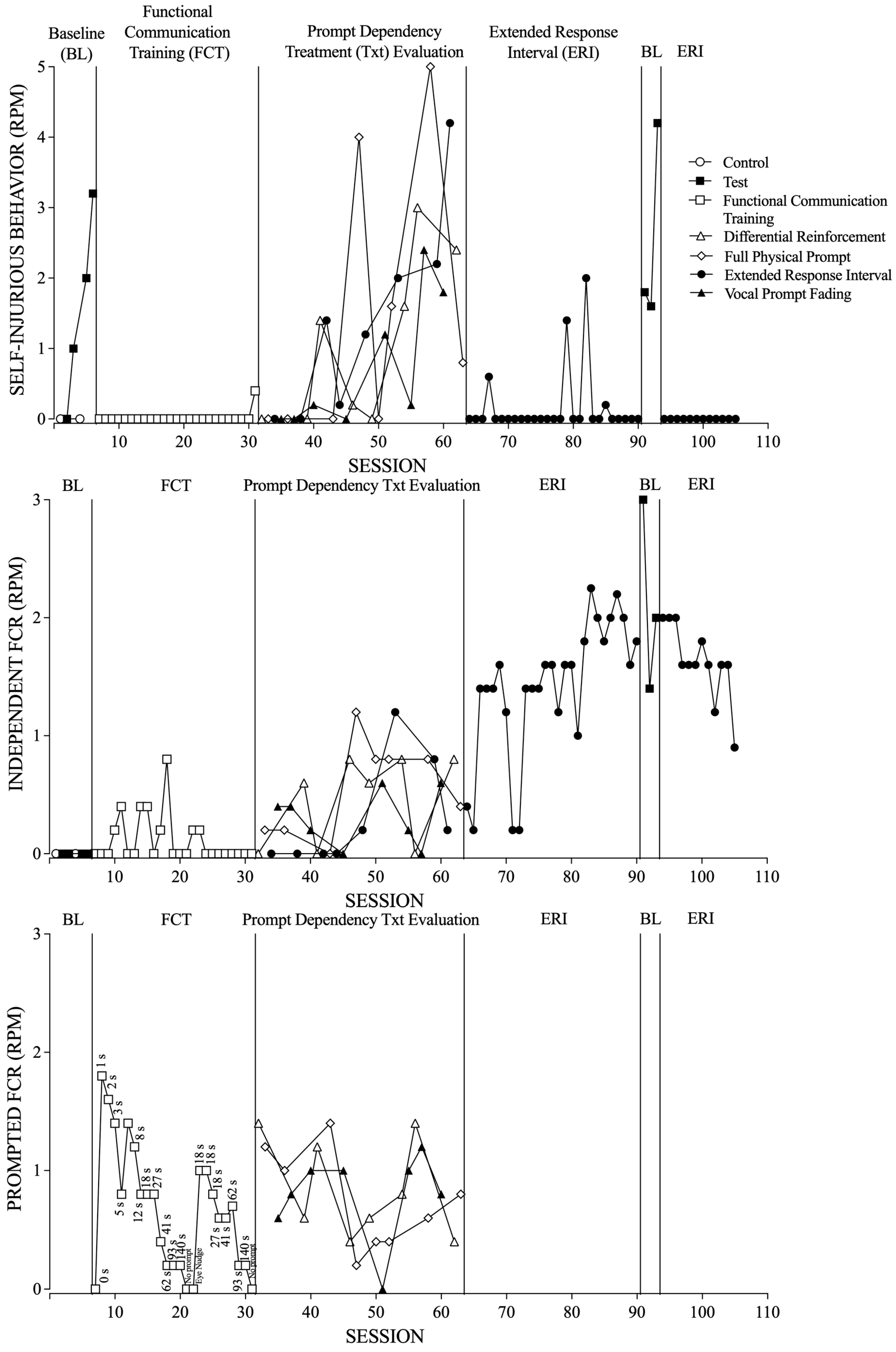
Addressing Prompt Dependency in the Treatment of Challenging Behavior Maintained by Access to Tangible Items
Abstract
Share and Cite
Weyman, J.R.; Imler, M.; Kelly, D.A. Addressing Prompt Dependency in the Treatment of Challenging Behavior Maintained by Access to Tangible Items. Behav. Sci. 2024, 14, 828. https://doi.org/10.3390/bs14090828
Weyman JR, Imler M, Kelly DA. Addressing Prompt Dependency in the Treatment of Challenging Behavior Maintained by Access to Tangible Items. Behavioral Sciences. 2024; 14(9):828. https://doi.org/10.3390/bs14090828
Chicago/Turabian StyleWeyman, Jennifer R., Madison Imler, and Danielle A. Kelly. 2024. "Addressing Prompt Dependency in the Treatment of Challenging Behavior Maintained by Access to Tangible Items" Behavioral Sciences 14, no. 9: 828. https://doi.org/10.3390/bs14090828
APA StyleWeyman, J. R., Imler, M., & Kelly, D. A. (2024). Addressing Prompt Dependency in the Treatment of Challenging Behavior Maintained by Access to Tangible Items. Behavioral Sciences, 14(9), 828. https://doi.org/10.3390/bs14090828