Article

Habitual Mask Wearing as Part of COVID-19 Control in Japan: An Assessment Using the Self-Report Habit Index


Graduate School of Medicine, Kyoto University, Yoshida-Konoe-cho, Sakyo-ku, Kyoto 606-8501, Japan
*
Author to whom correspondence should be addressed.
Behav. Sci. 2023, 13(11), 951; https://doi.org/10.3390/bs13110951
Submission received: 11 October 2023 / Revised: 10 November 2023 / Accepted: 16 November 2023 / Published: 19 November 2023
(This article belongs to the Special Issue Health Psychology and Behaviors during COVID-19)

Abstract

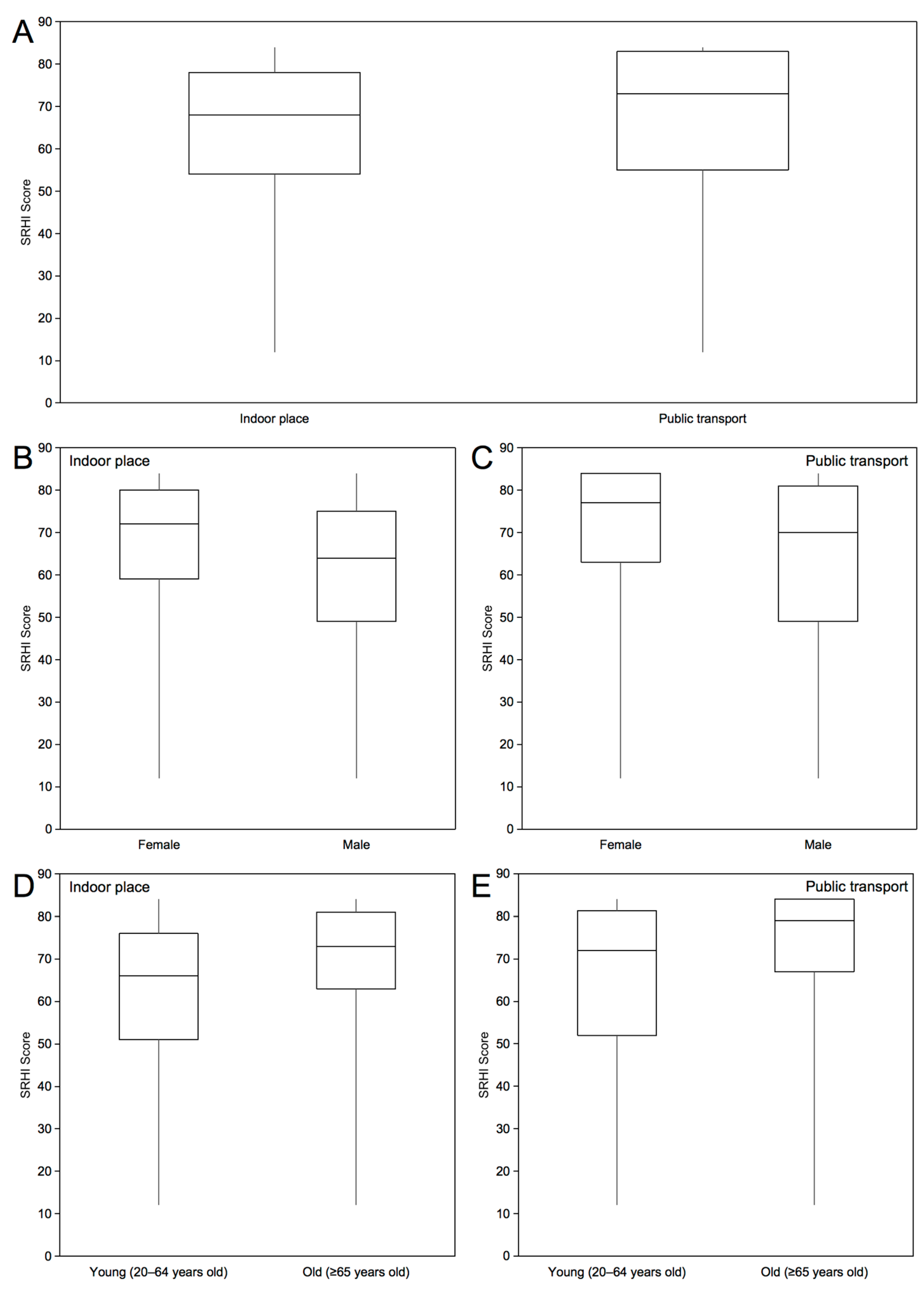
Although the Japanese government removed mask-wearing requirements in 2023, relatively high rates of mask wearing have continued in Japan. We aimed to assess psychological reasons and the strength of habitual mask wearing in Japan. An Internet-based cross-sectional survey was conducted with non-random participant recruitment. We explored the frequency of mask usage, investigating psychological reasons for wearing masks. A regression analysis examined the association between psychological reasons and the frequency of mask wearing. The habitual use of masks was assessed in the participant’s most frequently visited indoor space and public transport using the self-report habit index. The principal component analysis with varimax rotation revealed distinct habitual characteristics. Among the 2640 participants surveyed from 6 to 9 February 2023, only 4.9% reported not wearing masks at all. Conformity to social norms was the most important reason for masks. Participants exhibited a slightly higher degree of habituation towards mask wearing on public transport compared to indoor spaces. The mask-wearing rate was higher in females than in males, and no significant difference was identified by age group. Daily mask wearing in indoor spaces was characterized by two traits (automaticity and behavioral frequency). A high mask-wearing frequency has been maintained in Japan during the social reopening transition period. Mask wearing has become a part of daily habit, especially on public transport, largely driven by automatic and frequent practice.
Keywords: cultural tightness; behavior; precaution; social norms; cross sectional study; epidemiology cultural tightness; behavior; precaution; social norms; cross sectional study; epidemiology