
Article

Treating the Collapsible Behavior of a Lateritic Tropical Soil Using Rice Husk Ash

by
Jhaber Dahsan Yacoub
1,
Breno Padovezi Rocha
2,*,
José Augusto di Lollo
2 and
Mauro Mitsuuchi Tashima
3
1
Department of Civil Engineering, Federal University of São Carlos (UFSCar), São Carlos 13565-905, Brazil
2
Department of Civil Engineering, School of Engineering, São Paulo State University, Ilha Solteira 15385-007, Brazil
3
Department of Mining and Civil Engineering, Technical University of Cartagena, Member of European University of Technology EUT+, 30203 Cartegena, Spain
*
Author to whom correspondence should be addressed.
Geosciences 2026, 16(6), 213; https://doi.org/10.3390/geosciences16060213
Submission received: 1 April 2026 / Revised: 18 May 2026 / Accepted: 25 May 2026 / Published: 28 May 2026

Abstract

The rapid advance of urbanization and social development has intensified the complexity of engineering projects, especially where geotechnical constraints play a decisive role. Expanding cities increasingly occupy areas with challenging soil conditions, such as collapsible soils, which demand careful investigation and innovative design solutions. These geotechnical factors directly influence the safety, durability, and cost-effectiveness of infrastructure, making integrated analysis essential from the earliest stages of project planning. An experimental study with lateritic sandy soil was performed to investigate the effect of rice husk ash (RHA) on collapsible soil behavior. Collapsible soils occur worldwide in diverse geological and geotechnical conditions and can result in costly structural damage. Due to intense leaching during tropical weathering, lateritic soil structures and textures show high collapse potential, with substantial volume reduction under constant stress when wetted. The investigated soil was collected in a tropical area of the Paraná Basin (Brazil) and is considered representative of large regions with similar geological conditions. Soil samples and mixtures (2, 4, 6, 8, 10, 12, and 14 wt.% RHA) were tested using standard geotechnical procedures such as grain size distribution and compaction tests. Collapsibility behavior (i.e., collapse potential, CP) was measured using oedometer tests. Tests were conducted with realistic compaction degrees (~80%), representing conditions found in nature and in civil works involving collapsible soils. The results show that RHA can considerably reduce the collapse potential of lateritic fine sandy soils, mainly due to its packing effect, which reduces volumetric changes with increased moisture. The CP was significantly reduced from 9.83% to 1.93% in the mixture containing 14% RHA.

1. Introduction

Collapsible behavior is a typical geotechnical problem associated with the reduction in soil volume under constant stress when subjected to increased moisture [1,2,3]. Collapsible soils have high void ratios and a metastable structure, which is maintained by cementation from iron and aluminum oxides and hydroxides, as well as by soil suction, since they are unsaturated soils [1,3,4,5,6,7,8,9]. Damage in civil structures has been reported in several countries worldwide, demonstrating that this type of soil behavior can occur in different soil types [2,10,11].
Collapsible soils and the problems associated with their occurrence have been reported in several countries, such as South Africa, Angola, Argentina, Australia, Brazil, Spain, United States, Kenya, and Romania [1,7,12,13,14]. Despite extensive knowledge concerning the characterization, description, and understanding of collapsible soils, technical solutions to avoid damage in civil structures remain limited. In most cases, compaction control of soils is sufficient to mitigate soil collapse. Nevertheless, achieving a high compaction degree (DC) in situ is not always easy [15,16]. Similarly, the reliability of this technical solution is limited due to varying soil characteristics and climate conditions, especially for embankments, channels, roads, and pipelines.
An alternative for reducing soil collapse is the use of additives to improve mechanical behavior [17,18,19,20]. Iranpour and Haddad [21] presented an interesting study on treating collapsible soils using nanomaterials. These authors concluded that the combination of soil and nanomaterials is highly sensitive and largely depends on the amount and type of nanomaterial used.
Physical soil stabilization plays a fundamental role in geotechnical engineering by improving the strength, stiffness, and durability of soils to ensure the safety and serviceability of civil infrastructure. Classical studies by Terzaghi, Peck and Mesri [22], and Mitchell [23] established the theoretical basis for soil improvement techniques and their influence on mechanical behavior. Techniques such as compaction, reinforcement, and granular mixing have long been applied to control settlement and enhance bearing capacity [24]. More recent research highlights the importance of physical stabilization as a sustainable alternative or complement to chemical methods, particularly in environmentally sensitive projects [25]. Advances in geosynthetics and fiber reinforcement have further expanded the applicability of physical stabilization to soft and problematic soils [26,27]. Consequently, physical soil stability remains a critical and evolving field, bridging classical soil mechanical principles with modern engineering demands.
Rice husk ash (RHA) is an agro-industrial waste product generated from the burning of rice husks during energy production. Reuse of RHA helps reduce environmental problems associated with its disposal. Several studies have reported the application of RHA as a mineral additive in blended Portland cement [28,29], and others have reported improvements in soil mechanical behavior using soil–cement–RHA mixtures [30,31,32]. According to the results obtained by Yin et al. [30], the partial replacement of Ordinary Portland Cement (OPC) by RHA in soil–cement systems reduces Unconfined Compressive Strength (UCS); nevertheless, all samples using RHA presented compressive strengths higher than 20 N/mm2. Fattah et al. [31] studied the influence of RHA on the physical and mechanical properties of three different clayey soils. Percentages between 6–8% showed very interesting results for UCS, yielding up to 50% relative to the soil sample without RHA. In agreement with [31], Rahgozar et al. [33] investigated clayey sand stabilization and demonstrated that a mixture containing 8% cement and 6% rice husk ash (RHA) achieved a UCS of 2900 kPa after 28 days of curing, which was about 25 times that of the untreated soil (114 kPa). Regarding collapsible clay soils, the incorporation of Sarooj mortar together with eco-friendly additives reduced the collapse potential by approximately 88% and increased the UCS by more than five times over a 28-day period [34]. Additionally, the synthesis of 12% lime-mixed geopolymerized rice husk ash (LGR) successfully stabilized severely collapsible loess by reducing the collapse potential from 11.8% to 0.11% while significantly improving the soil bearing capacity [35]. Finally, comparative results for agricultural waste treatments showed that bagasse ash (BA) provided superior mechanical improvements for soft soils compared to RHA, increasing the California Bearing Ratio (CBR) by up to 630% [36].
The literature demonstrates that RHA and its geopolymers, bagasse ash, cement kiln dust (CKD), fly ash (FA), slag and iron powder can effectively improve the mechanical behavior of several problematic soils, including silty, clayey, expansive, organic, peat, marine, alluvial, and sand–clay soils [37,38,39,40,41]. However, few studies [35] have effectively used only RHA for the stabilization of collapsible soils.
In this context, the present study evaluates the effect of rice husk ash (RHA) on the collapsible behavior of a lateritic fine sandy soil from Ilha Solteira, São Paulo State, Brazil. The influence of RHA contents (2, 4, 6, 8, 10, 12, and 14%) on the collapse potential (CP) was assessed through oedometer tests, along with compaction characterization. In addition, the soil microstructure was examined using scanning electron microscopy (SEM) and grain size distribution analyses. It is important to highlight that the reuse of agro-industrial waste, such as rice husk ash, in civil engineering is a key strategy to promote sustainable development, in line with Sustainable Development Goal 12 (SDG 12). By incorporating these materials into soil stabilization and/or infrastructure works, environmental impacts associated with improper waste disposal are minimized, while also strengthening technological innovation and socio-environmental responsibility.

2. Materials and Methods

2.1. Materials

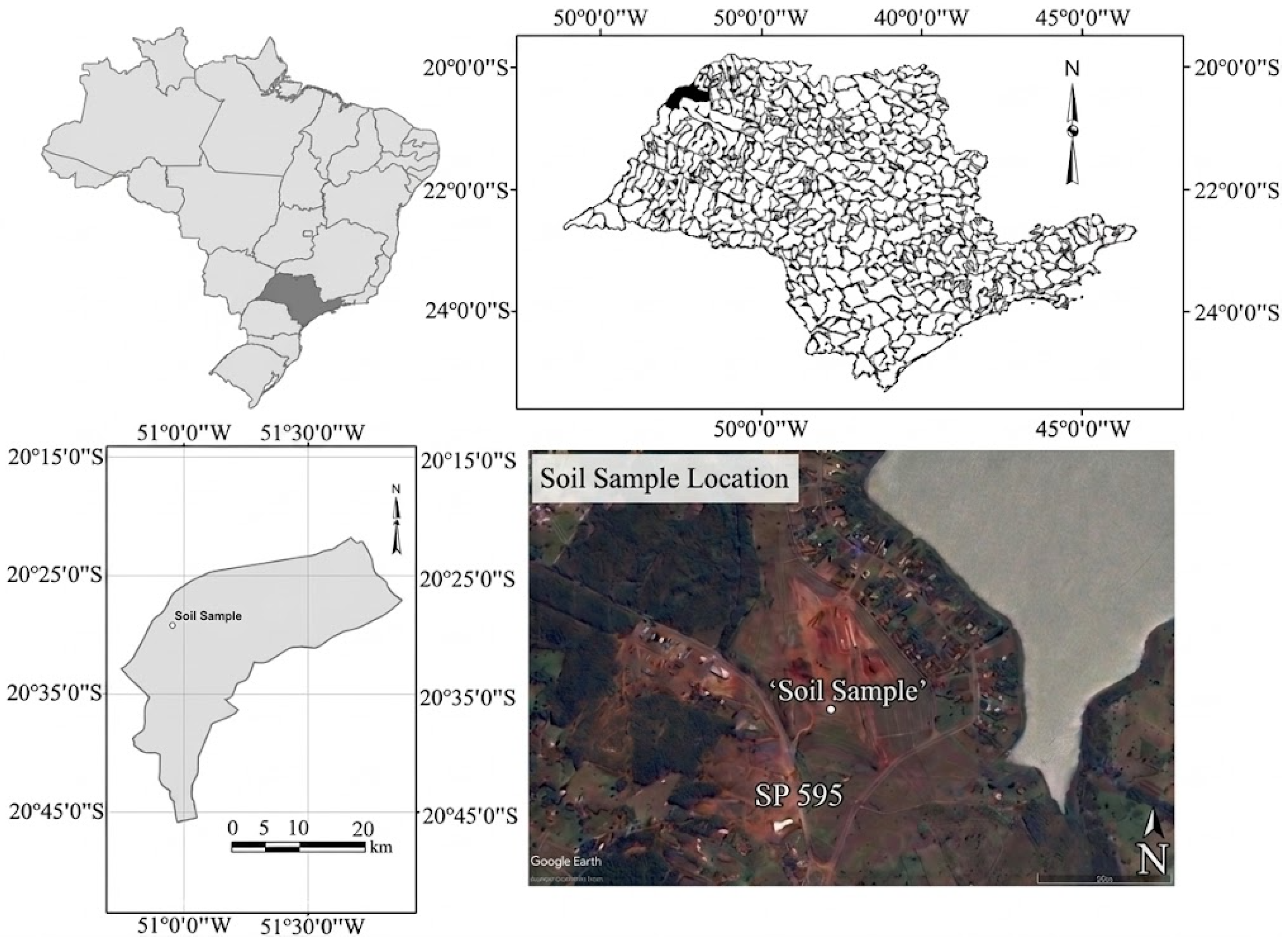
The samples consist of a typical lateritic fine sandy soil collected near Ilha Solteira, located in the northwest region of the state of São Paulo in the Paraná Basin (Brazil). The sampling location is shown in Figure 1. Soil characteristics indicate large areas of collapsible soils throughout Brazil (~0.39 million km2), including most of São Paulo state and large portions of Minas Gerais, Paraná, Goiás, Mato Grosso do Sul, and Pernambuco, presenting characteristics similar to other extensive collapsible soil regions in Brazil and other countries.
The sampling process involved excavating a 1.5-m-deep pit; samples were obtained between 0.5 m and 1.5 m depth. Table 1 summarizes the main physical properties of the assessed soil.
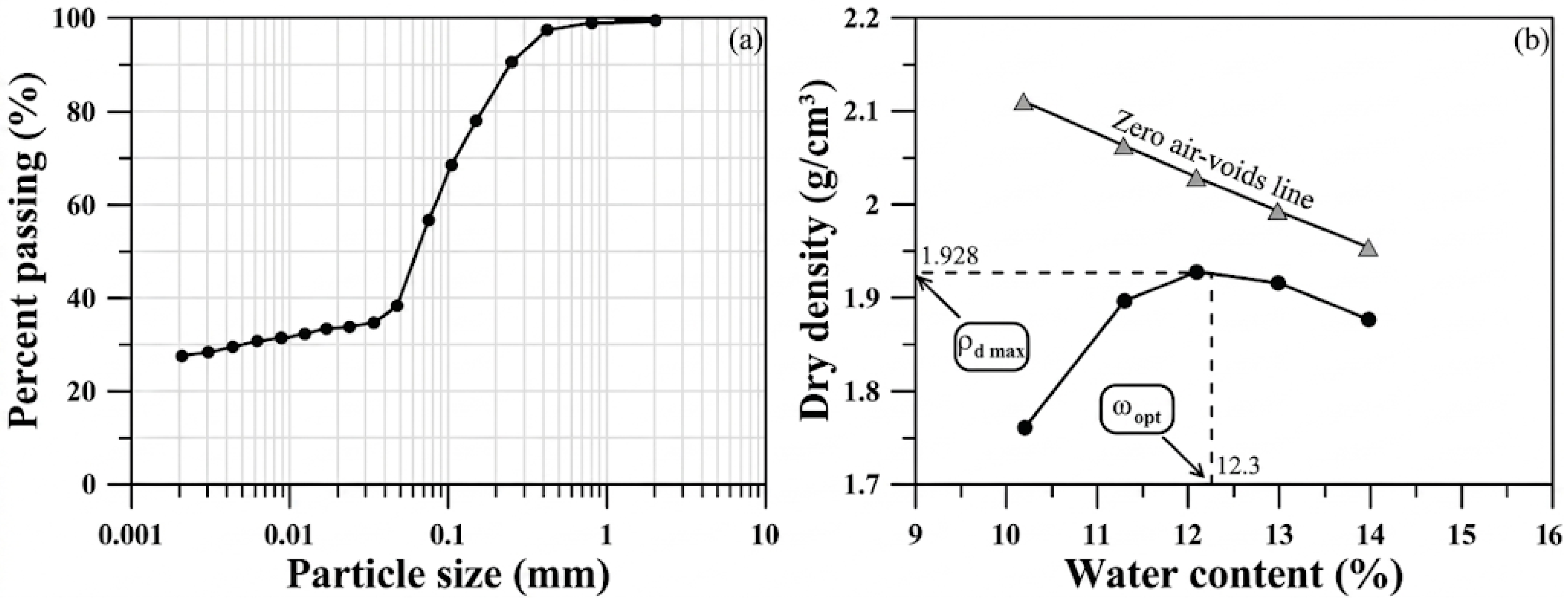
According to the Unified Soil Classification System (USCS) and the American Association of State Highway and Transportation Officials (AASHTO) classifications, the soil is classified as a fine clayey sand. The MCT Classification System (Mini, Compacted, Tropical) proposed by Nogami & Villibor [42] to classify the investigated soil with respect to their lateritic behavior. Figure 2a shows the grain size distribution curve of the soil, indicating a high presence of fine sand (about 41% of particles within 0.425–0.075 mm). Additionally, to determine the engineering properties of the soil, a standard Proctor test was performed (Figure 2b).
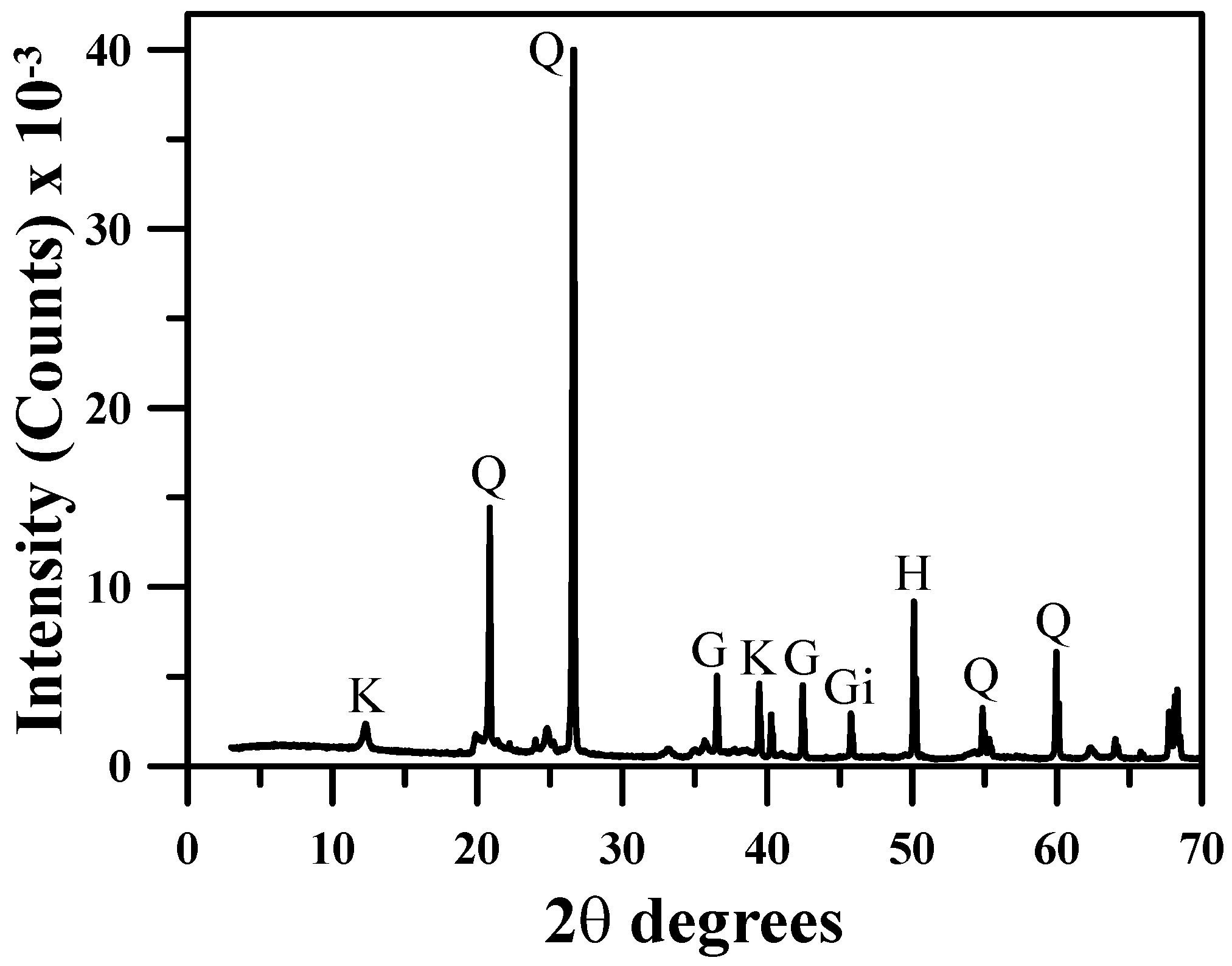
Soil mineralogy was analyzed using X-ray diffraction (XRD) at the Physics Laboratory of the Unesp Ilha Solteira campus (Diffractometer Rigaku Ultima IV, Cu Kα radiation and Ni filter, operating at 40 kV and 20 mA). A scan was performed in the 2θ range of 3–70° with a step size of 0.02°/s. Figure 3 shows the XRD pattern of the soil sample. Lateritic soils formed in humid tropical climates, such as the one studied, are leached soils characterized by mineral compositions dominated mainly by quartz, kaolinite, and the sesquioxide group (i.e., gibbsite, goethite, and hematite) [42,43]. Moreover, the chemical composition (XRF) of the lateritic soil used, determined by the Technological Characterization Laboratory of the Polytechnic School of the University of São Paulo (EPUSP) using a Malvern Panalytical Zetium model instrument, is summarized in Table 2.
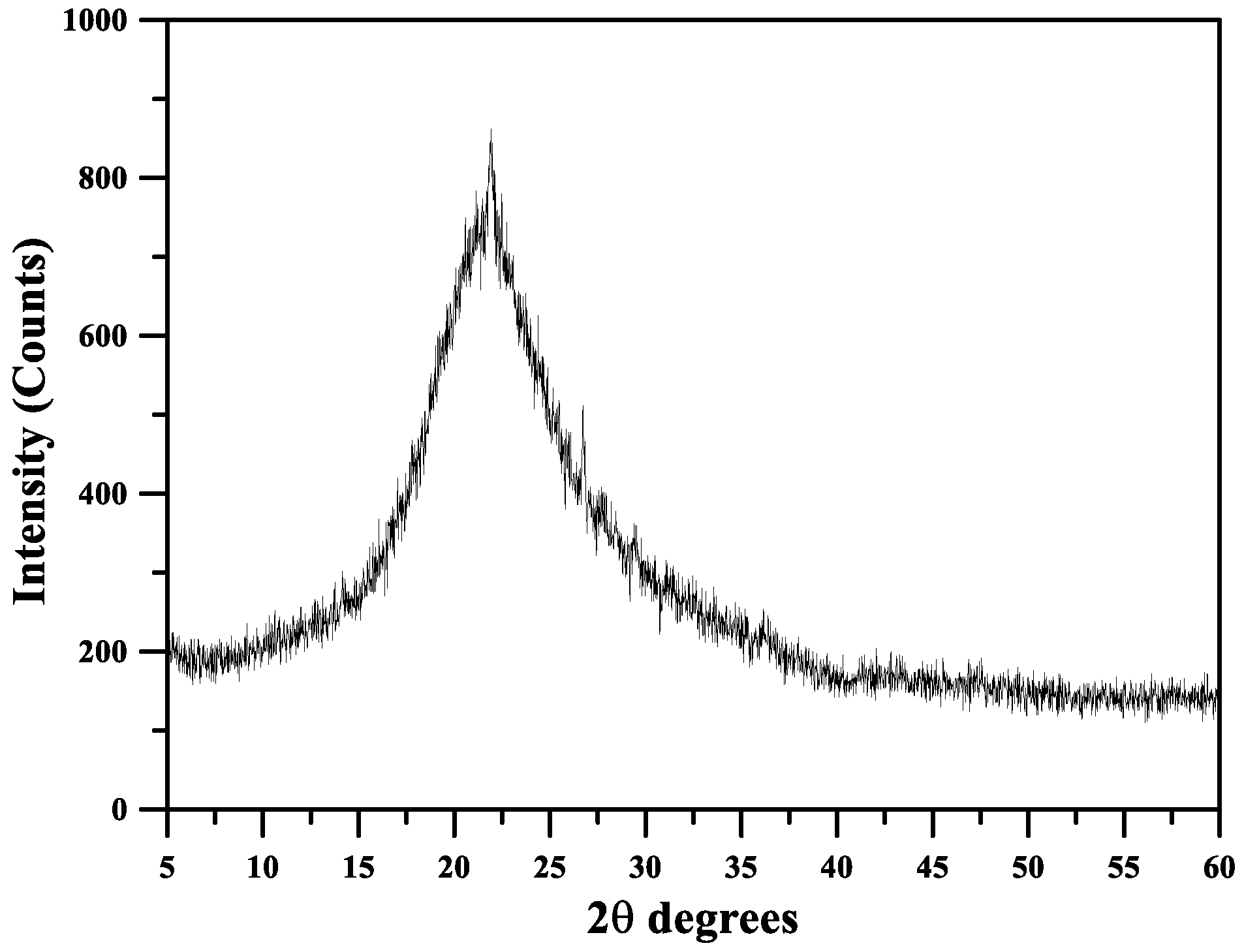
RHA is an agro-industrial waste product composed primarily of amorphous SiO2 (approximately 90%) [29]. Figure 4 presents the X-ray diffractogram of the RHA. It exhibits an amorphous structure, as evidenced by a poorly defined baseline between 15° and 30°, without diffraction peaks and, consequently, without a crystalline phase.
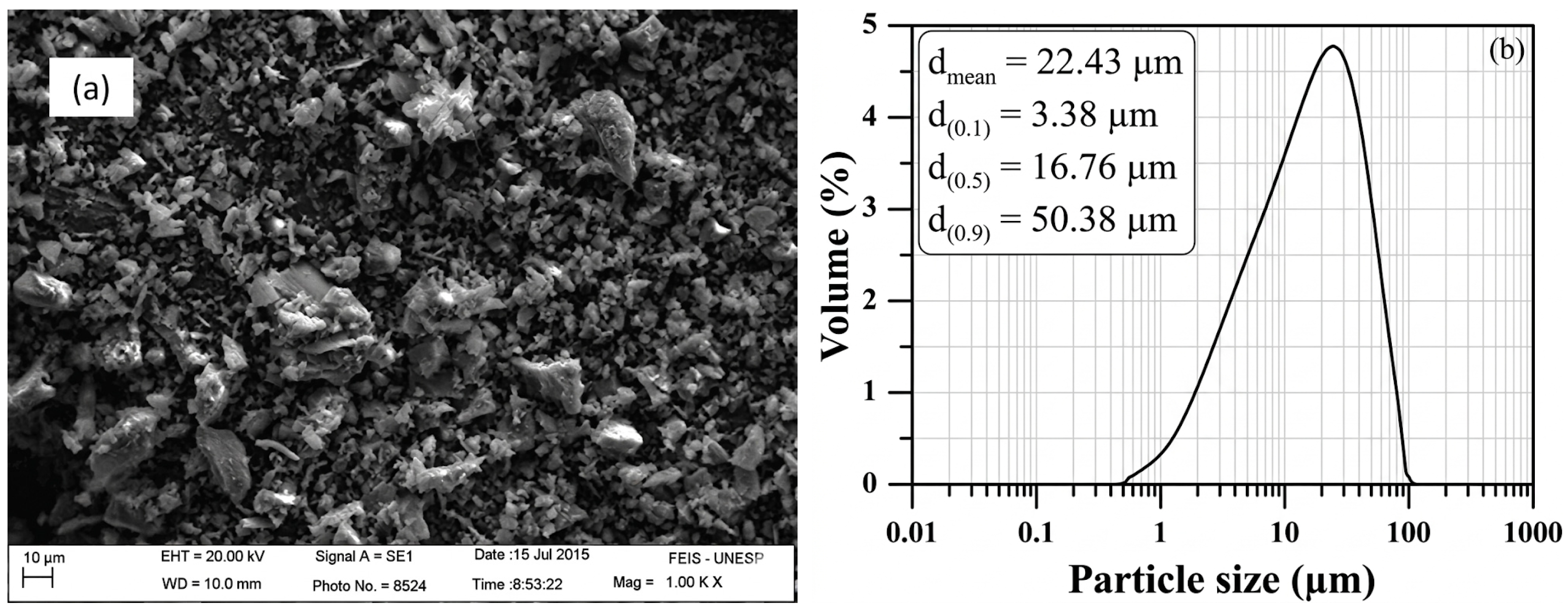
The chemical compositions (XRF) of the RHA are summarized in Table 3. Figure 5a shows the morphology of the RHA particles used in this study. Irregular and porous particles with a wide range of diameters can be observed. The grain size distribution curve of the RHA, test conducted by ICITECH (Science and Technology of Concrete University Research Institute at the Polytechnic University of Valencia) using a laser granulometric analyzer (Mastersizer 2000, Malvern Instruments), is shown in Figure 5b. According to this curve, approximately 16.8% of the particles are smaller than 50 µm. Furthermore, Figure 5b presents the values of dmean, d(0.1), d(0.5) and d(0.9), which correspond to the mean particle diameter and the particle diameters associated with 10%, 50%, and 90%, by weight, on the grain-size distribution curve. The particle size distribution analysis for RHA found that most particles were between 1 µm and 100 µm (Figure 5b). The dmean values were 22.43 µm.

2.2. Methods

A standard Proctor test, defined by ASTM D698 [44], was used to compact all the specimens. The test was used to determine both the maximum dry density (ρdmax) and optimal water content (wopt) at different RHA contents.
Oedometer tests were carried out at the Soil Mechanics Laboratory of the Unesp Ilha Solteira campus using an apparatus (S1.055.200 Bishop’s type, Solotest™) with a 1:10 loading ratio, in which specimens were subjected to successive loads according to ASTM D2435 [45]. Collapse potential was determined using confined compression tests following ASTM D5333 [46]. Specimens were molded at the Soil Mechanics Laboratory of the Unesp Ilha Solteira campus into a rigid metallic ring (87 mm in diameter and 20 mm in height) by static compaction using California Bearing Ratio (CBR) equipment, with a moisture content of 12.3% (optimum moisture content determined by the standard Proctor test). Static compaction was performed at a displacement rate of 0.1 mm/min to avoid internal collapse of the samples during preparation [18].
Collapse potentials were determined from one-dimensional tests conducted under a vertical stress of 200 kPa. The collapse potential (CP) is expressed as:
CP   = ec 1 +   e ic × 100 % ,
where ec represents the change in void ratio resulting from wetting, such that ec   =   eic − efc, eic is the initial void ratio in a 200 kPa stress stage and efc is the final void ratio resulting from wetting in the 200-kPa stress stage. According to ASTM D 5333 [46], CP is classified in terms of the severity of problem as: none (CP < 1%); slight (1 < CP ≤ 2%); moderate (2 < CP ≤ 6%); moderately severe (6 < CP ≤ 10%); and severe (CP > 10%).
The influence of RHA content (0, 2, 4, 6, 8, 10, 12, and 14%) on collapsible behavior was evaluated using oedometer tests. A compaction degree of 80% was adopted for all specimens, consistent with typical in situ conditions (natural state), which often present severe collapsibility issues, as documented previously [12,47]. Specimens were tested in a standard oedometer cell and subjected to successive loads of 1, 6.25, 12, 25, 50, 100, 200, 400, and 800 kPa. Specimen deformation was monitored until stabilization, which typically occurred after two hours for loads between 1 and 25 kPa and after eight hours for loads of 50 and 100 kPa. For the 200-kPa stage, the stopping criterion was a difference of less than 10−2 mm between the last three measurements.
After deformation stabilized at 200 kPa, specimens were wetted, and deformation was recorded under this new condition for up to 24 h to determine collapse potential [46]. The unloading process was performed in 15-min intervals for each stage. SEM micrographs of fractured samples with varying RHA contents were obtained before and after oedometer testing using a Zeiss EVO LS15 scanning electron microscope at the Physics Laboratory of the Unesp Ilha Solteira campus to investigate sample microstructures.

3. Results and Discussion

3.1. Grain Size Distribution

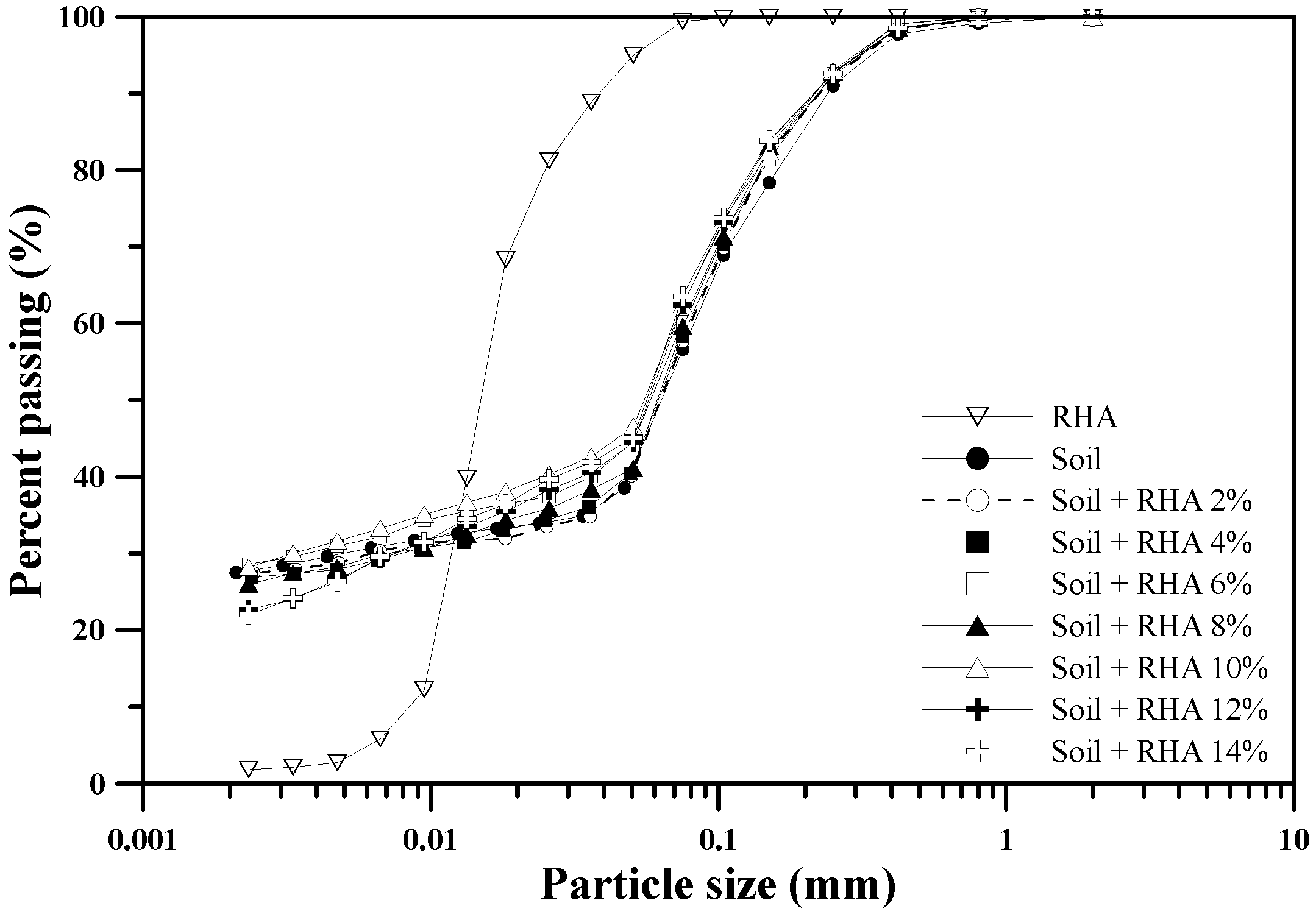
Figure 6 presents the grain size distribution curves for the soil and soil–RHA mixtures. Increasing the RHA content shifts the grain size distribution curve toward lower values. As a result, the mixtures tend to show a more continuous grain size distribution, since the original soil exhibits a discontinuity in the silt-size fraction.
The packing effect caused by the addition of RHA—due to the high proportion of particles in the silt fraction—contributes to reducing air voids in the samples and, consequently, to improving mechanical behavior. Although the compaction degree adopted in the tests was relatively low (80%), a considerable reduction in volumetric variation was observed even for small RHA percentages. The variation in soil fractions as a function of RHA content is summarized in Table 4.

3.2. Soil Compaction

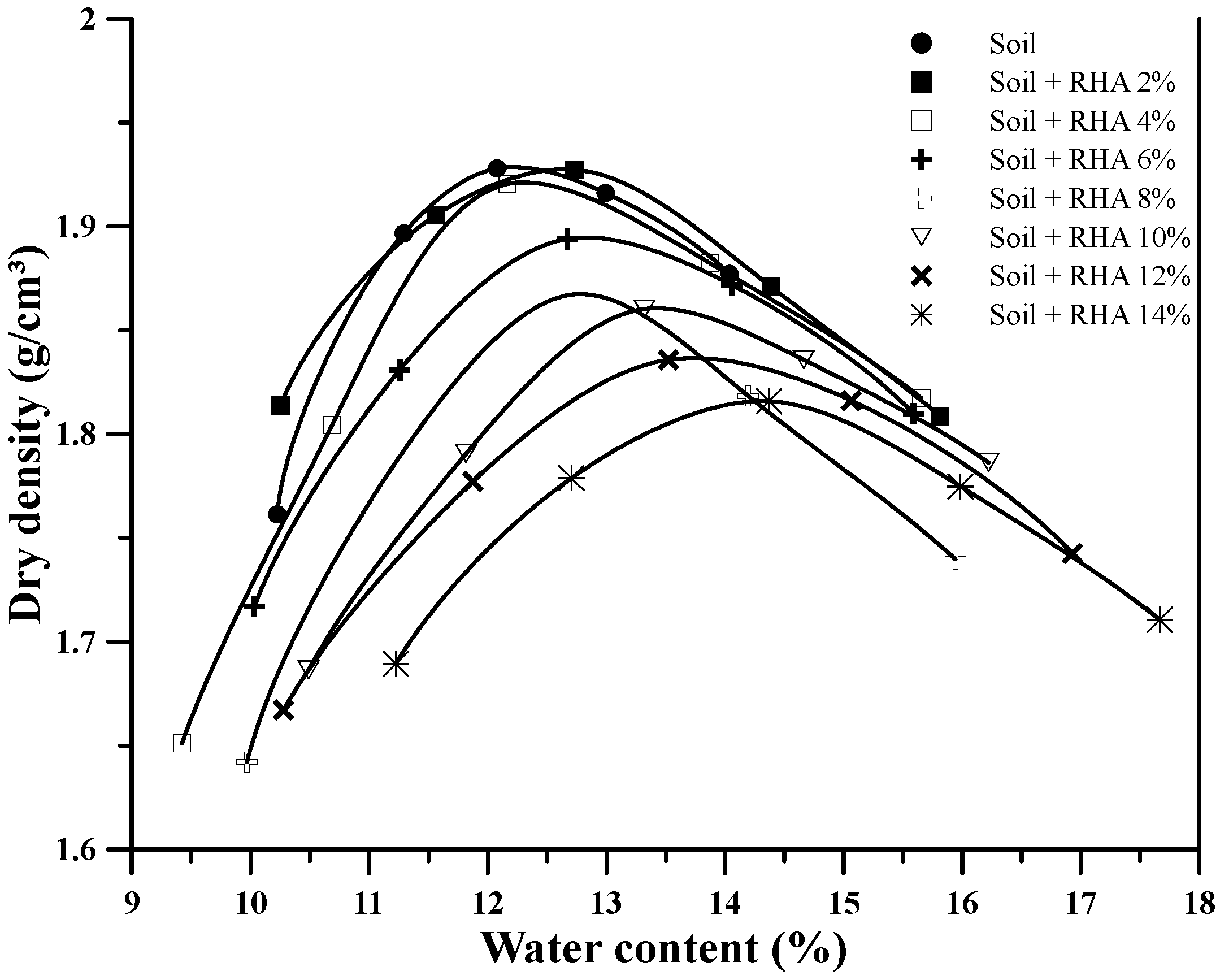
The soil dry density and compaction procedure have a significant effect on soil behavior and mechanical properties. Figure 7 shows the effect of changing the RHA content on both the maximum dry density (ρdmax) and the optimal water content (OWC). The values of maximum dry density and optimum moisture content are presented in Table 5.
Compared to the natural soil (RHA = 0%), the optimal water content increased, while the maximum dry density decreased. This indicates that the addition of rice husk ash increased water demand and likely reduced interparticle friction within the soil, leading to a reduction in the maximum dry density. Alternatively, the higher water content required to reach the optimum condition may have caused voids previously occupied by soil particles to be filled with water, making the mixture more “rubber-like” and resulting in a further decrease in the maximum dry density. The maximum dry density decreased from 1.928 g/cm3 for the natural soil to 1.816 g/cm3 with 14% rice husk ash (a reduction of 5.81%), while the optimum moisture content increased from 12.3% without rice husk ash to 14.3% with 14% RHA (an increase of 2%). These variations indicate that RHA particles, due to their size and shape characteristics, exhibit behavior similar to the fine fraction of the soil, requiring higher moisture content for compaction and resulting in lower compactness. This behavior is consistent with literature [48,49,50]. Maithili et al. [50] reported that, for clayey sands from Mysore district, India, the OMC increased from 10.56 to 20.59%, while the MDD decreased from 1.9 g/cm3 to 1.5 g/cm3 as the RHA content increased from 0% to 20%.

3.3. Oedometer Tests with Different RHA Percentages

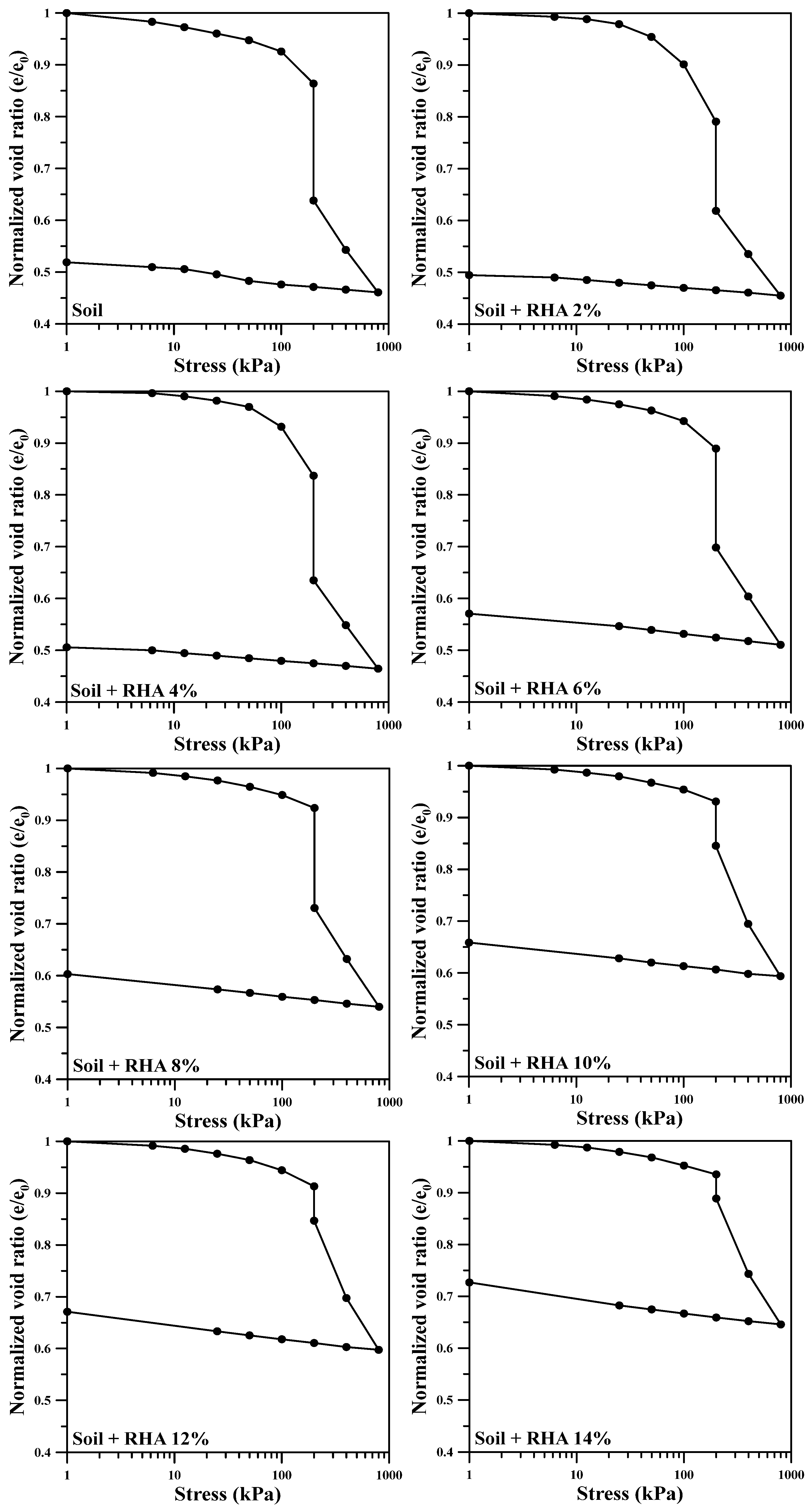
Confined compression curves (log σ vs. e/e0) obtained from oedometer tests are shown in Figure 8. Before wetting, samples with low RHA contents (2–6%) exhibited similar deformation behavior to the natural soil. In contrast, mixtures containing 10%, 12%, and 14% RHA showed lower deformation than the soil under the same loading conditions, likely due to the modified grain size distribution caused by RHA addition.
Table 6 lists the soil properties for samples with different RHA percentages. Variations in void ratio confirm the effect of RHA in reducing consolidation of the mixtures. Samples with 14% RHA presented the smallest void ratio variation (ei − ef = 0.19) compared to the initial (ei, before the oedometer test) and final void ratios (ef, after the test). This finding indicates that RHA significantly enhances the packing effect in the mixtures and thus reduces the collapse potential associated with volumetric variation.
According to Table 6, the final moisture content (wf) of samples containing RHA is consistently higher than that of the natural soil. This is likely due to the high specific surface area of RHA, which increases water absorption. The collapse potential for mixtures with high RHA content is reduced, reaching 1.93% for the sample containing 14% RHA. This demonstrates the effectiveness of RHA in reducing collapse potential.
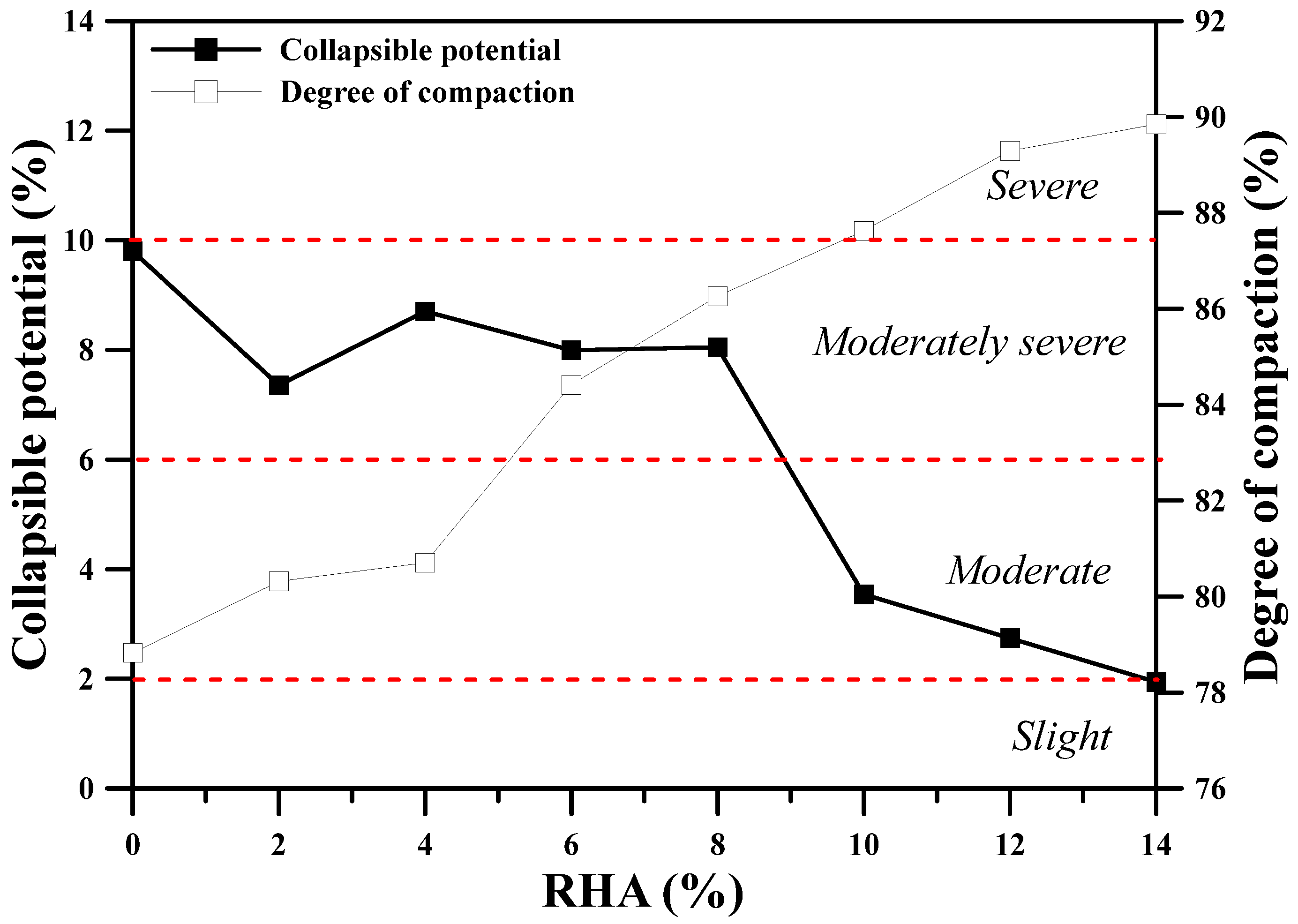
Figure 9 shows the collapse potentials measured in this study as a function of RHA content, following ASTM D5333 [46]. The natural soil presents a collapse potential of 9.82%, classified between “severe” and “moderately severe.” Figure 9 clearly illustrates the reduction in collapse potential for mixtures containing more than approximately 8% RHA. Improvement continues from 8% to 14% RHA, with collapse severity decreasing from “moderately severe” (<8% RHA) to “moderate” (10–12% RHA) and from “moderate” to “slight” (14% RHA).
It is emphasized that the observed behavior (reduction in collapse potential) is directly related to the increase in the compaction degree (Equation (2)) due to the higher contents of rice husk ash, as shown in Figure 9. It was observed that, with 14% RHA, the compaction degree is approximately 90%. As demonstrated by the compaction tests, the addition of rice husk ash promotes a progressive reduction in ρdmax, decreasing from 1.928 g/cm3 for the pure soil to 1.816 g/cm3 for the mixture containing 14% ash. Due to this reduction in the ρdmax, the same molding dry mass results in a higher DC for the mixtures. This increase in material densification, reaching approximately 90% at 14% RHA content, is one of the main factors explaining the reduction in collapsibility. Several authors [51,52] report that soils in a compacted state or under natural conditions with a compaction degree close to 90% tend not to exhibit significant collapse potential values.
DC ( % ) = ρ d ρ dmax × 100 % ,
where:
  • ρd: in situ dry density (g/cm3).
  • ρdmax: maximum dry density from Proctor tests (g/cm3) (obtained from Figure 7).
These results demonstrate that replacing soil partially with RHA reduces collapse potential, aligning with previous studies on various additives [5,21,32,53,54]. El-Kasaby and El-Saadany [53] demonstrated that the collapsibility potential of loessial brownish-yellow calcareous clayey silt and sand, initially measured at 14.4%, was eliminated with the addition of 15% RHA. Shah and Li [35] investigated the use of RHA in contents varying from 4% to 16%, under different curing periods, to evaluate the reduction in collapse potential (CP). The addition of RHA to remolded soil, which has an initial collapse potential (CP) of 7.3%, promotes a progressive reduction in this index as the dosage and curing time increase. For a dosage of 8% RHA, the CP decreases from 6.47% after 1 day of curing to 3.39% at 28 days. With the inclusion of 12% RHA, the values range from 6.23% on the first day to 2.61% by the end of the curing period. The maximum effectiveness of the additive alone is observed with 16% RHA, where the collapse potential is reduced from 6.11% to 1.13% after 28 days.
However, these improvements cannot be explained solely by mechanical testing, as even minor increments in RHA content can trigger significant behavioral shifts. Consequently, the microstructure of the soil, RHA, and their mixtures were analyzed using SEM to provide a deeper interpretation of the observed phenomena.
It should be noted that the preparation, mixing, and compaction processes adopted in this study altered the original metastable structure of the natural collapsible soil. Therefore, the reduction in collapse potential observed in the treated specimens should not be interpreted solely as a physical stabilization effect of RHA, but rather as the combined result of structural rearrangement and densification. Similar considerations have been discussed in previous studies involving remolded and stabilized collapsible soils [35,55].

3.4. Scanning Electron Microscopy

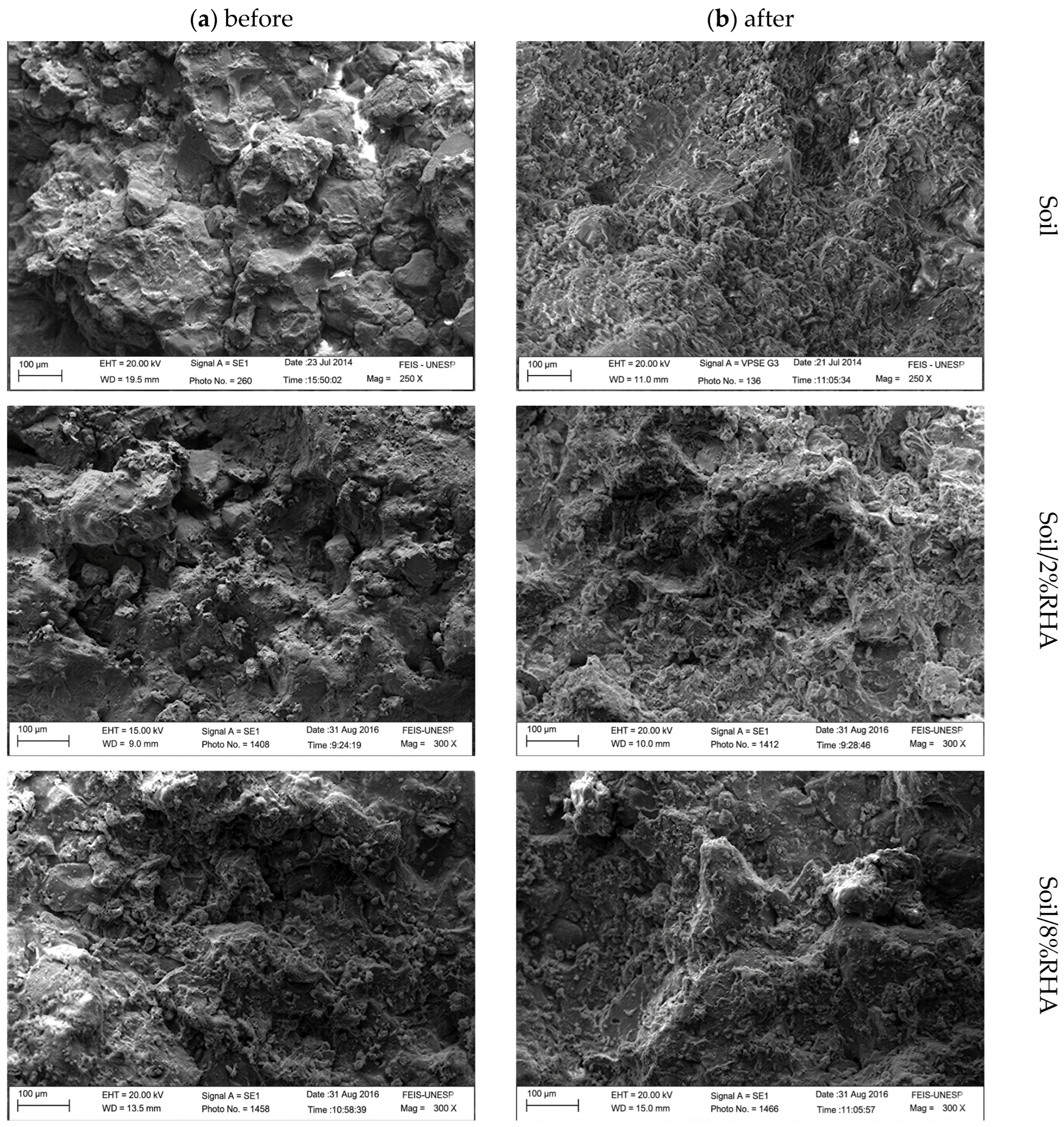
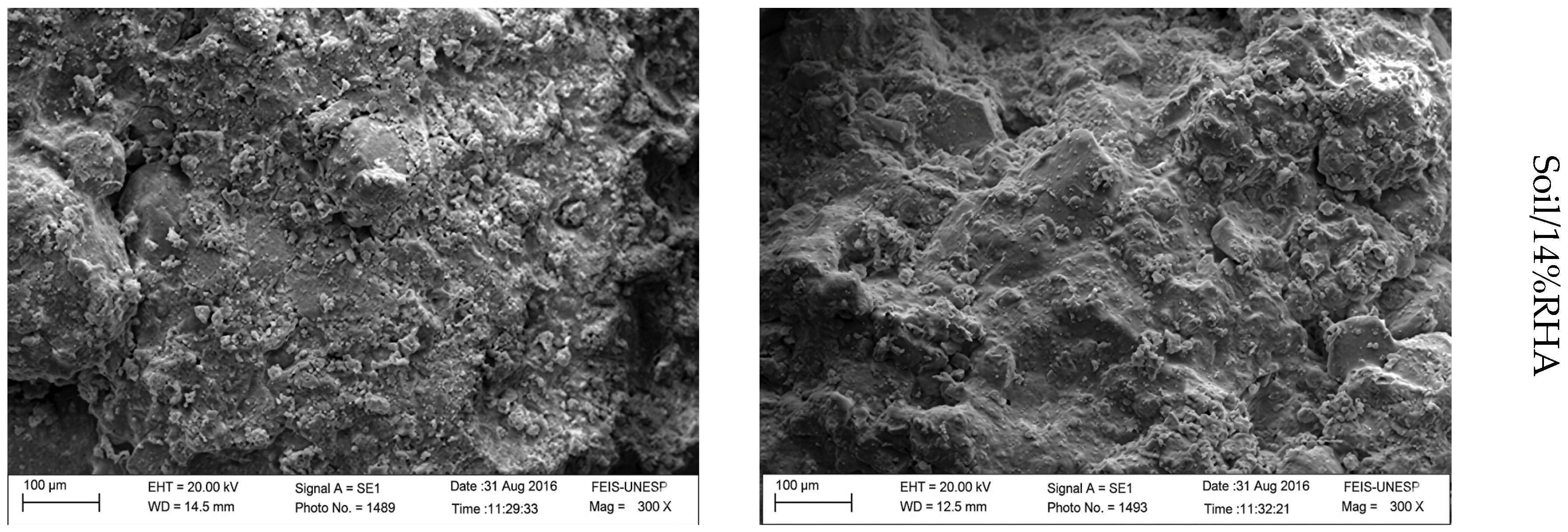
Microstructures of the samples before and after oedometer testing were examined using SEM images (Figure 10). Soil samples exhibit the expected microstructural changes when subjected to confined compression, consistent with typical behavior of Brazilian lateritic sandy soils, where consolidation leads to less porous structures [13,54].
For soil–RHA mixtures, the microstructures before consolidation tests are denser, even for the lowest RHA percentage (2%). This effect becomes more pronounced at higher RHA contents, as illustrated in Figure 10. After the consolidation tests, the reduction in void ratio in the soil–RHA mixtures become even more marked, particularly for mixtures with 8–14% RHA. This behavior aligns with the one-dimensional consolidation test results discussed earlier. As no chemical reaction was observed between the soil and RHA, the improvement in mechanical behavior is likely attributable to the packing effect provided by RHA, which significantly reduces air voids in the samples.

3.5. Engineering Applications and Limitations of the Study

The present study contributes to a practical problem frequently observed in geotechnical engineering design: the collapsible behavior. In this sense, the collapsible soil investigated was stabilized using an agro-industrial waste material, RHA, which is an environmentally friendly material. It contributes to sustainable engineering practices by reducing disposal problems and decreasing the consumption of traditional stabilizing agents such as cement and lime. Furthermore, decrease lowers the risk of abrupt settlements, improving the safety and reliability of structures constructed on collapsible soils. Additionally, the RHA’ implementation in the field of geotechnical engineering can contribute to achieving the Sustainable Development Goals (SDGs), such as goal 9 (industry, innovation and infrastructure) and goal 11 (sustainable).
Nevertheless, some limitations must be considered for large-scale implementation [37,38,49]. The availability of RHA may vary depending on regional rice production, while differences in burning conditions can significantly influence its chemical composition, fineness, and pozzolanic activity, affecting stabilization efficiency [56]. Field applications may also face challenges related to achieving uniform mixing and moisture control during construction, particularly in deep stabilization works. Moreover, the long-term durability of RHA-treated soils under cyclic wetting–drying, leaching, and environmental exposure conditions still requires further investigation. Therefore, future research should focus on evaluating the long-term performance of RHA-stabilized collapsible soils under field conditions, establishing standardized procedures for RHA production and quality control, and assessing the combined use of RHA with other binders to optimize engineering applicability and durability.

4. Conclusions

This study evaluated the effect of rice husk ash (RHA) on the collapsible behavior of a lateritic fine sandy soil. The influence of RHA contents (2, 4, 6, 8, 10, 12, and 14%) on the collapse potential (CP) was assessed through oedometer tests, along with grain size analysis, compaction characterization and scanning electron microscopy (SEM). Based on the available results, the following conclusions can be drawn.
(1)
The addition of RHA promoted more continuous grain size distribution, reducing the discontinuity observed in the natural soil. The packing effect provided by the fine RHA particles contributed to decreasing voids and improving the mechanical behavior of the mixtures.
(2)
The incorporation of RHA increased the optimum moisture content and reduced the maximum dry density of the mixtures, indicating higher water demand and lower compactness. This behavior is associated with the fine particle characteristics of RHA, which modify the soil structure and interparticle interaction during compaction.
(3)
Mixtures containing more than 8% RHA showed a considerable reduction in collapse potential. Mixtures containing 10% and 12% present collapse potentials of 3.55% and 2.74%, respectively. For mixtures containing 14% RHA, the collapse potential was 1.93%.
(4)
SEM analyses showed that the addition of RHA produced denser soil microstructures, with the effect becoming more evident as the RHA content increased. Since no chemical reaction was identified, the enhanced mechanical behavior is mainly associated with the packing effect promoted by RHA particles, which reduce voids within the soil structure.
In conclusion, this study demonstrates the effectiveness of RHA in decreasing collapse potential even at low compaction degrees. RHA promotes a packing effect within the mixtures and contributes to reducing voids due to more continuous grain size distribution. Future studies may expand the database by including collapsible soils from different regions in order to assess the broader applicability of the results. In addition, the long-term durability and performance of RHA-treated collapsible soils under varying environmental conditions should be further investigated. The development of more advanced numerical models may also contribute to improving the accuracy of predictions regarding the behavior of stabilized collapsible soils.

Author Contributions

Conceptualization, J.D.Y. and J.A.d.L.; methodology, J.D.Y., B.P.R., J.A.d.L. and M.M.T.; formal analysis, J.D.Y., B.P.R. and J.A.d.L.; data curation, J.D.Y., B.P.R. and J.A.d.L.; writing—original draft preparation, J.D.Y. and B.P.R.; writing—review and editing, J.D.Y., B.P.R., J.A.d.L. and M.M.T.; supervision, J.A.d.L. and M.M.T.; project administration, J.A.d.L. All authors have read and agreed to the published version of the manuscript.

Funding

This research was funded by National Council for Scientific and Technological Development—CNPq (Grant number 407662/2025-1).

Data Availability Statement

The datasets generated and analyzed in the course of the current study are available from the corresponding author upon request.

Acknowledgments

The authors are grateful to the National Council for Scientific and Technological Development—CNPq (grant number 407662/2025-1) for supporting this research. M.M. Tashima wishes to thank the Ramón y Cajal grant RYC2023-045079-I, funded by MCIU/AEI/10.13039/501100011033 and by FSE+. The authors also thank CAPES, the Coordination for the Improvement of Higher Education Personnel, for the scholarship granted to the first author.

Conflicts of Interest

The authors declare no conflicts of interest.

Abbreviations

The following abbreviations are used in this manuscript:
CPCollapse potential
DCDegree of compaction
RHARice husk ash
UCSUnconfined compressive strength
OPCOrdinary Portland Cement
SEM Scanning electron microscopy
USCSUnified soil classification system
AASTHOAmerican Association of State Highway and Transportation Officials
SDGsSustainable Development Goals
SCClayey sand
MCTMini, compacted, tropical classification system
XRDX-ray diffraction
CBRCalifornia bearing ratio
OWCOptimal water content
ρdmaxMaximum dry density

References

  1. Vilar, O.M.; Rodrigues, R.A. Revisiting Classical Methods to Identify Collapsible Soils. Soils Rocks 2015, 38, 265–278. [Google Scholar] [CrossRef]
  2. Opukumo, A.W.; Davie, C.T.; Glendinning, S.; Oborie, E. A Review of the Identification Methods and Types of Collapsible Soils. J. Eng. Appl. Sci. 2022, 69, 17. [Google Scholar] [CrossRef]
  3. Rocha, B.P.; de Carvalho Rodrigues, A.L.; Rodrigues, R.A.; Giacheti, H.L. Using a Seismic Dilatometer to Identify Collapsible Soils. Int. J. Civ. Eng. 2022, 20, 857–867. [Google Scholar] [CrossRef]
  4. Ayadat, T. Assessement of Soil Collapse Prediction Methods. Int. J. Eng. 2012, 25, 17–24. [Google Scholar] [CrossRef]
  5. Jiang, M.; Hu, H.; Liu, F. Summary of Collapsible Behaviour of Artificially Structured Loess in Oedometer and Triaxial Wetting Tests. Can. Geotech. J. 2012, 49, 1147–1157. [Google Scholar] [CrossRef]
  6. Li, P.; Vanapalli, S.; Li, T. Review of Collapse Triggering Mechanism of Collapsible Soils Due to Wetting. J. Rock Mech. Geotech. Eng. 2016, 8, 256–274. [Google Scholar] [CrossRef]
  7. Rocha, B.P.; Silveira, I.A.; Rodrigues, R.A.; Lodi, P.C.; Giacheti, H.L. Identifying Collapsible Soils from Seismic Cone (SCPT): A Qualitative Approach. Buildings 2023, 13, 830. [Google Scholar] [CrossRef]
  8. Rocha, B.P.; Herrera, L.P.R.; Giacheti, H.L. Discussion of “A Study of Geophysical Techniques for Identifying Collapsible Soil Strata” [International Journal of Geotechnical Engineering https://doi.org/10.1080/19386362.2025.2483740]. Int. J. Geotech. Eng. 2025, 19, 722–725. [Google Scholar] [CrossRef]
  9. da Silva, N.M.; Rocha, B.P.; Giacheti, H.L. Prediction of Load-Settlement Curves by the DMT in an Unsaturated Tropical Soil Site. Soils Rocks 2019, 42, 351–361. [Google Scholar] [CrossRef]
  10. Adeyemi, G.O.; Wahab, K.A. Variability in the Geotechnical Properties of a Lateritic Soil from South Western Nigeria. Bull. Eng. Geol. Environ. 2008, 67, 579–584. [Google Scholar] [CrossRef]
  11. Phanikumar, B.R.; Raghav, R.; Bhargav, K. Collapse Behaviour of a Lateritic Soil. Geomech. Geoengin. 2016, 11, 119–124. [Google Scholar] [CrossRef]
  12. Rodrigues, R.A.; de Lollo, J.A. Influence of Domestic Sewage Leakage on the Collapse of Tropical Soils. Bull. Eng. Geol. Environ. 2007, 66, 215–223. [Google Scholar] [CrossRef]
  13. Benatti, J.C.B.; Miguel, M.G. A Proposal of Structural Models for Colluvial and Lateritic Soil Profile from Southwestern Brazil on the Basis of Their Collapsible Behavior. Eng. Geol. 2013, 153, 1–11. [Google Scholar] [CrossRef]
  14. Zanin, R.F.B.; Kondo, A.M.; Pelaquim, F.G.P.; de Oliveira, A.D.; Machado, S.L.; Andrello, A.C.; Teixeira, R.S. The Impact of Gradual Increase in Moisture on the Collapse of Brazilian Clayey Sand Soil. Bull. Eng. Geol. Environ. 2024, 83, 36. [Google Scholar] [CrossRef]
  15. Feng, S.-J.; Du, F.-L.; Shi, Z.-M.; Shui, W.-H.; Tan, K. Field Study on the Reinforcement of Collapsible Loess Using Dynamic Compaction. Eng. Geol. 2015, 185, 105–115. [Google Scholar] [CrossRef]
  16. Liang, Y.-H.; Shui, W.-H.; Lu, S.-F. Field Practice and Ground Settlement Behaviors of a Land Creation Case in Loess Area of China. Bull. Eng. Geol. Environ. 2022, 81, 462. [Google Scholar] [CrossRef]
  17. Yang, J.; Wei, L.M. Collapse of Loose Sand with the Addition of Fines: The Role of Particle Shape. Géotechnique 2012, 62, 1111–1125. [Google Scholar] [CrossRef]
  18. Bahmyari, H.; Ajdari, M.; Vakili, A.; Ahmadi, M.H. The Role of the Cement, Lime, and Natural Pozzolan Stabilizations on the Mechanical Response of a Collapsible Soil. Transp. Infrastruct. Geotechnol. 2021, 8, 452–472. [Google Scholar] [CrossRef]
  19. Feitosa, M.C.A.; Ferreira, S.R.M.; Delgado, J.M.P.Q.; Silva, F.A.N.; Oliveira, J.T.R.; Oliveira, P.E.S.; Azevedo, A.C. Sewage Sludge Valorization for Collapsible Soil Improvement. Buildings 2023, 13, 338. [Google Scholar] [CrossRef]
  20. Habib, M.S.; Elsawwaf, M.A.; Shahien, M.M.; Nasr, A.M. Studying the Behavior of Collapsible Soil Treated with Biopolymer—Numerical Study. Indian Geotech. J. 2026, 56, 868–897. [Google Scholar] [CrossRef]
  21. Iranpour, B.; Haddad, A. The Influence of Nanomaterials on Collapsible Soil Treatment. Eng. Geol. 2016, 205, 40–53. [Google Scholar] [CrossRef]
  22. Terzaghi, K.; Peck, R.B.; Mesri, G. Soil Mechanics in Engineering Practice, 3rd ed.; John Wiley & Sons: New York, NY, USA, 1996. [Google Scholar]
  23. Mitchell, J.K. Fundamentals of Soil Behavior, 2nd ed.; John Wiley & Sons: New York, NY, USA, 1993. [Google Scholar]
  24. Ingles, O.G.; Metcalf, J.B. Soil Stabilization: Principles and Practice; Wiley: Hoboken, NJ, USA, 1972. [Google Scholar]
  25. Indraratna, B.; Chu, J.; Rujikiatkamjorn, C. Ground Improvement Case Histories; Elsevier: Amsterdam, The Netherlands, 2015; ISBN 9780081001929. [Google Scholar]
  26. Li, J.; Tang, C.; Wang, D.; Pei, X.; Shi, B. Effect of Discrete Fibre Reinforcement on Soil Tensile Strength. J. Rock Mech. Geotech. Eng. 2014, 6, 133–137. [Google Scholar] [CrossRef]
  27. Evangelou, E.D.; Markou, I.N.; Verykaki, S.E.; Bantralexis, K.E. Mechanical Behavior of Fiber-Reinforced Soils under Undrained Triaxial Loading Conditions. Geotechnics 2023, 3, 874–893. [Google Scholar] [CrossRef]
  28. Khan, M.I.; Abbas, Y.M.; Fares, G. Review of High and Ultrahigh Performance Cementitious Composites Incorporating Various Combinations of Fibers and Ultrafines. J. King Saud. Univ. Eng. Sci. 2017, 29, 339–347. [Google Scholar] [CrossRef]
  29. Sani, J.E.; Yohanna, P.; Chukwujama, I.A. Effect of Rice Husk Ash Admixed with Treated Sisal Fibre on Properties of Lateritic Soil as a Road Construction Material. J. King Saud. Univ. Eng. Sci. 2020, 32, 11–18. [Google Scholar] [CrossRef]
  30. Yin, C.-Y.; Mahmud, H.B.; Shaaban, M.G. Stabilization/Solidification of Lead-Contaminated Soil Using Cement and Rice Husk Ash. J. Hazard. Mater. 2006, 137, 1758–1764. [Google Scholar] [CrossRef] [PubMed]
  31. Fattah, M.Y.; Rahil, F.H.; Al-Soudany, K.Y.H. Improvement of Clayey Soil Characteristics Using Rice Husk Ash. J. Civ. Eng. Urban. 2013, 3, 12–18. [Google Scholar]
  32. Aziz, M.; Saleem, M.; Irfan, M. Engineering Behavior of Expansive Soils Treated with Rice Husk Ash. Geomech. Eng. 2015, 8, 173–186. [Google Scholar] [CrossRef]
  33. Rahgozar, M.A.; Saberian, M.; Li, J. Soil Stabilization with Non-Conventional Eco-Friendly Agricultural Waste Materials: An Experimental Study. Transp. Geotech. 2018, 14, 52–60. [Google Scholar] [CrossRef]
  34. Mostafaei, Y.; Arjomand, M.A.; Asgari, A.; Soltani, A.; Ramezanpour, M.A. Sustainable Stabilization of Collapsible Clay Soils Using Eco-Friendly Additives and Sarooj Mortar: Experimental Assessment of Strength and Collapse Behavior. Buildings 2026, 16, 1561. [Google Scholar] [CrossRef]
  35. Shah, M.M.; Li, H. Utilization of Lime-Mixed Geopolymerized Rice Husk Ash (LGR) for Balanced Amelioration of Collapsible Soil. J. Rock Mech. Geotech. Eng. 2025, 17, 3925–3949. [Google Scholar] [CrossRef]
  36. Vincent, A.C.; Ikebude, C.F. A Comparative Study on the Stabilization of Soft Soil Using Agricultural Wastes (Baggase Ash (BA) And Rice Husk Ash (RHA). Int. J. Civ. Eng. Constr. Estate Manag. 2023, 11, 39–69. [Google Scholar] [CrossRef]
  37. Choobbasti, A.J.; Ghodrat, H.; Vahdatirad, M.J.; Firouzian, S.; Barari, A.; Torabi, M.; Bagherian, A. Influence of Using Rice Husk Ash in Soil Stabilization Method with Lime. Front. Earth Sci. China 2010, 4, 471–480. [Google Scholar] [CrossRef]
  38. Kumar, B.S.; Preethi, T.V. Behavior of Clayey Soil Stabilized with Rice Husk Ash & Lime. Int. J. Eng. Trends Technol. 2014, 11, 44–48. [Google Scholar] [CrossRef]
  39. Nasiri, M.; Lotfalian, M.; Modarres, A.; Wu, W. Optimum Utilization of Rice Husk Ash for Stabilization of Sub-Base Materials in Construction and Repair Projects of Forest Roads. Croat. J. For. Eng. 2016, 37, 333–343. [Google Scholar]
  40. Liu, Y.; Su, Y.; Namdar, A.; Zhou, G.; She, Y.; Yang, Q. Utilization of Cementitious Material from Residual Rice Husk Ash and Lime in Stabilization of Expansive Soil. Adv. Civ. Eng. 2019, 2019, 5205276. [Google Scholar] [CrossRef]
  41. Brahmachary, T.K.; Ahsan, M.K.; Rokonuzzaman, M. Impact of Rice Husk Ash (RHA) and Nylon Fiber on the Bearing Capacity of Organic Soil. SN Appl. Sci. 2019, 1, 273. [Google Scholar] [CrossRef]
  42. Nogami, J.S.; Villibor, D.F. Pavimentação de Baixo Custo Com Solos Lateríticos; Editora Vilibor: São Paulo, Brazil, 1995. [Google Scholar]
  43. Gidigasu, M.D. Laterite Soil Engineering—Pedogenesis and Engineering Principles; Elsevier Scientific Publishing Company: Amsterdam, The Netherlands, 1976. [Google Scholar]
  44. ASTM D698; Test Methods for Laboratory Compaction Characteristics of Soil Using Standard Effort (12,400 Ft-Lbf/Ft3 (600 KN-m/M3)). ASTM International: West Conshohocken, PA, USA, 2021.
  45. ASTM D2435; Test Methods for One-Dimensional Consolidation Properties of Soils Using Incremental Loading. ASTM International: West Conshohocken, PA, USA, 2011; Volume 10.
  46. ASTM D5333; Test Method for Measurement of Collapse Potential of Soils. ASTM International: West Conshohocken, PA, USA, 1996; Volume 3.
  47. Machado, S.L. Estudo Da Compressão Confinada e Do Colapso de Um Solo Arenoso Compactado Em Edômetro Com Sucção Controlada; Universidade de São Paulo: São Carlos, Brazil, 1995. [Google Scholar]
  48. Eberemu, A.O.; Sada, H. Compressibility Characteristics of Compacted Black Cotton Soil Treated with Rice Husk Ash. Niger. J. Technol. 2013, 32, 507–521. [Google Scholar]
  49. Basha, E.A.; Hashim, R.; Mahmud, H.B.; Muntohar, A.S. Stabilization of Residual Soil with Rice Husk Ash and Cement. Constr. Build. Mater. 2005, 19, 448–453. [Google Scholar] [CrossRef]
  50. Maithili, K.L.; Nagakumar, M.S.; Shashishankar, A. Laboratory Assessment of the Effectiveness of Rice Husk Ash, Rice Husk, and Groundnut Shells in Soil Improvement. Indian Geotech. J. 2024, 54, 2143–2157. [Google Scholar] [CrossRef]
  51. Silveira, I.A.; Rodrigues, R.A. Collapsible Behavior of Lateritic Soil Due to Compacting Conditions. Int. J. Civ. Eng. 2020, 18, 1157–1166. [Google Scholar] [CrossRef]
  52. Sun, D.; Sheng, D.; Xu, Y. Collapse Behaviour of Unsaturated Compacted Soil with Different Initial Densities. Can. Geotech. J. 2007, 44, 673–686. [Google Scholar] [CrossRef]
  53. El-Kasaby, E.A.A.; El-saadany, M.M. Effect of Addition of Rice Husk Ash on Geotechnical Properties of Collapsing Soils. In Proceedings of the Al-Azhar Engineering Third International Conference—AEIC’93, NASR, Cairo, Egypt, 18–21 December 1993; pp. 120–130. [Google Scholar]
  54. Gutierrez, N.H.M.; de Nóbrega, M.T.; Vilar, O.M. Influence of the Microstructure in the Collapse of a Residual Clayey Tropical Soil. Bull. Eng. Geol. Environ. 2009, 68, 107–116. [Google Scholar] [CrossRef]
  55. Basma, A.A.; Tuncer, E.R. Evaluation and Control of Collapsible Soils. J. Geotech. Eng. 1992, 118, 1491–1504. [Google Scholar] [CrossRef]
  56. Hwang, C.L.; Chandra, S. The Use of Rice Husk Ash in Concrete. In Waste Materials Used in Concrete Manufacturing; Elsevier: Amsterdam, The Netherlands, 1996; pp. 184–234. [Google Scholar]
Figure 1. Soil sampling location.
Geosciences 16 00213 g001
Figure 2. Soil characteristics: grain size distribution (a) and compaction curve (b) of the collapsible soil studied.
Geosciences 16 00213 g002
Figure 3. X-ray diffraction pattern. Q—quartz; K—kaolinite; H—hematite; G—goethite; Gi—gibbsite.
Geosciences 16 00213 g003
Figure 4. X-ray diffractogram of RHA.
Geosciences 16 00213 g004
Figure 5. RHA characteristics: (a) SEM image; (b) grain size distribution obtained from a laser granulometric analyzer.
Geosciences 16 00213 g005
Figure 6. Grain size distribution curves of soil and RHA.
Geosciences 16 00213 g006
Figure 7. Standard energy compaction curves.
Geosciences 16 00213 g007
Figure 8. Confined compression curves for mixtures with different RHA substitution percentages.
Geosciences 16 00213 g008
Figure 9. Soil collapses potential, severity degrees and degree of compaction obtained from mixtures with variable RHA contents according to ASTM D5333 [46].
Geosciences 16 00213 g009
Figure 10. Soil and RHA mixture micrographs before (a) and after (b) the oedometer test.
Geosciences 16 00213 g010aGeosciences 16 00213 g010b
Table 1. Physical properties and soil classification of the investigated soil.
Properties
ColorRed brown
Natural moisture (%)4.6
Specific weight (kN/m3)17
Liquid limit (%)22.4
Plastic limit (%)15.4
Plasticity index (%)7
Passing #200 sieve (%)37
Optimum moisture content (%)12.3
Maximum dry density1.928
AASHTO ClassificationA-4
USCS ClassificationSC
Table 2. Chemical composition of lateritic soil (wt%).
SiO2Al2O3Fe2O3MnOMgOCaONa2OK2OTiO2P2O5LOI *
81.408.834.11<0.10<0.101.03<0.10<0.101.20<0.104.20
* Loss on ignition.
Table 3. Chemical composition of RHA (wt%).
SiO2Al2O3Fe2O3SO3MgOCaONa2OK2OLOI *
92.990.180.43<0.100.351.03<0.100.722.36
* Loss on ignition.
Table 4. Variation in soil fractions as a function of RHA content.
RHA PercentagesSand (%)Silt (%)Clay (%)
0.059.010.031.0
2.060.011.228.8
4.059.012.828.2
6.055.413.631.0
8.058.712.828.5
10.053.414.532.0
12.055.517.826.7
14.054.918.826.3
100.05.192.42.5
Table 5. Effect of RHA content on optimum moisture content and maximum dry density.
RHA
Percentages
ρdmax
(g/cm3)
wopt
(%)
0.01.92812.3
2.01.92812.4
4.01.92212.4
6.01.89412.9
8.01.86712.8
10.01.86213.5
12.01.83813.8
14.01.81614.3
Table 6. Data from unidimensional consolidation tests with different percentages of RHA.
RHA (%)wi (%)wf (%)eiefeicefcCP (%)
012.4414.560.770.400.6650.4919.82
211.2313.730.750.370.6170.4648.72
412.0514.100.760.380.6360.4908.31
612.2714.260.720.410.6650.5268.08
812.3215.300.720.430.6400.5027.99
1012.2716.080.710.470.6610.6003.55
1212.3617.570.700.470.6390.5922.74
1412.2917.760.710.520.6640.6311.93
Disclaimer/Publisher’s Note: The statements, opinions and data contained in all publications are solely those of the individual author(s) and contributor(s) and not of MDPI and/or the editor(s). MDPI and/or the editor(s) disclaim responsibility for any injury to people or property resulting from any ideas, methods, instructions or products referred to in the content.