Article

Land Subsidence Identification in Gas Exploitation Area in Sidoarjo, East Java Using Integrated Geodetic Methods


1
Doctoral Study Program in Geomatic Engineering, Department of Geodetic Engineering, Universitas Gadjah Mada, Yogyakarta 55281, Indonesia
2
Department of Geomatics Engineering, Institut Teknologi Sepuluh Nopember, Surabaya 60117, Indonesia
3
Department of Geodetic Engineering, Universitas Gadjah Mada, Yogyakarta 55281, Indonesia
*
Author to whom correspondence should be addressed.
Geosciences 2026, 16(5), 204; https://doi.org/10.3390/geosciences16050204
Submission received: 25 February 2026 / Revised: 9 May 2026 / Accepted: 13 May 2026 / Published: 21 May 2026

Abstract

Land subsidence around the gas exploitation area in Sidoarjo Regency, East Java Province, Indonesia, located in the northeastern part of Java Island, has been detected since 2006. This subsidence occurs not only in the vicinity of the Sidoarjo mud eruption but also extends to the Wunut and Tanggulangin areas, where several gas production wells are located. This study identifies land subsidence using integrated geodetic methods, including InSAR (PS-InSAR and SBAS), GNSS, and levelling observations. InSAR provides spatially continuous measurements from satellite radar imagery, while GNSS and levelling observations at control points are used to evaluate and interpret the detected deformation. GNSS provides point-based three-dimensional displacement, whereas levelling offers high-accuracy vertical displacement information. The results show notable differences between the InSAR approaches. PS-InSAR indicates a maximum subsidence of −249.4 mm, with a velocity of −41.01 mm/year, whereas SBAS yields a maximum subsidence of −510.43 mm and a velocity of −86.08 mm/year. GNSS observations indicate an average subsidence rate of −52.2 mm/year during 2020–2022, while levelling results show an average subsidence rate of −205.4 mm/year during 2022–2023. These differences are primarily attributed to variations in spatial sampling, temporal coverage, and the measurement characteristics of each method, particularly under rural and wetland conditions with limited persistent scatterers. Overall, the integration of InSAR, GNSS, and levelling data provides a more comprehensive interpretation of land subsidence and highlights the importance of considering method-dependent uncertainties when comparing deformation results from different geodetic techniques.

1. Introduction

Land subsidence is the vertical displacement of the ground surface, generally caused by a lack of soil capacity and the influence of excessive loads on the ground [1]. This condition refers to the gradual sinking of Earth’s surface caused by the movement of material beneath it [2]. Other activities that can cause land subsidence include compression, compaction, consolidation, shrinkage, oxidation, tectonic events, and excessive groundwater use [3,4], as well as hydrocarbon exploitation activities [1,5,6,7,8]. Regarding land subsidence in the Sidoarjo gas exploitation area, several case studies of land subsidence caused by hydrocarbon exploitation can serve as references. These include those in Groningen [9,10,11], Louisiana [12], and Kazakhstan [13].
Land subsidence can be identified using geodetic methods, namely, terrestrial and extraterrestrial methods. Geodetic methods for land subsidence identification include GNSS observations, Interferometry Synthetic Aperture Radar (InSAR), and levelling measurements. GNSS observations provide information on 3D position changes at existing monitoring points [14]. Levelling measurements also provide information on elevation changes at monitoring points [15,16]. InSAR can provide an overview of topographic changes over a wider area [17]. Identification of land subsidence using multiple methods certainly provides a more comprehensive picture than a single method alone. The methods used include a combination of GNSS and levelling observations [18], a combination of GNSS and InSAR [3,19,20,21,22], and a combination of levelling and InSAR measurements [23,24,25,26].
In the InSAR method, decorrelation and atmospheric noise are the main factors influencing InSAR results [27,28]. Temporal decorrelation occurs due to the loss of coherence in the interferometric process caused by changes in reflectance due to land cover. Spatial decorrelation is caused by variations in SAR image geometry, namely, baseline distance and incidence angle. The study can overcome the InSAR decorrelation problem with multi-temporal InSAR [29,30]. One of these techniques is Permanent Scatterers (PS) Interferometry, which identifies stable scattering over long intervals. The focus is on showing highly coherent pixels in artificial structures. However, this limits the application to urban and non-vegetated study areas because the estimation requires a statistically homogeneous set of pixels. The reasons for decorrelation in the interferograms are differences in angle or geometry at the observed resolution cell between the two acquisitions, object scattering at the resolution cell moving inconsistently in time between the two acquisitions, and errors in processing, especially at the co-registration step [31,32,33,34,35].
The use of PS evolved over several decades. The condition illustrates the use of multiple SAR images to separate the phase displacement of unwanted phase components [36]. The PS approach is Permanent Scatterer InSAR (PS-InSAR) [31], Interferometric Point Target Analysis (IPTA) [37], Stanford Method for Persistent Scatterers (StaMPS) [32,33], Delft Persistent Scatterer Interferometry (DePSI) [38], SBAS [39,40], Coherent Pixels Technique (CPT) [41], Persistent Scatterer Pairs (PSP) [42,43], Stable Points Network (SPN) [44], SqueeSAR [45,46], and Quasi Persistent Scatterers (QPS) [47].
Even though the algorithms developed differ, they share similarities in the objects identified, namely in selecting PS points. There are three methods for selecting PS candidates: the amplitude threshold, the signal-to-clutter ratio, and the amplitude dispersion index [38,48]. This method can accurately solve temporal and geometric decorrelation problems in DInSAR in urban areas [31].The study initially developed the SBAS multitemporal InSAR algorithm [39] to monitor large-scale spatial displacement using low-pass-filtered (multi-look) DInSAR interferograms [40]. The data pairs, particularly the spatial and temporal baselines, are selected adequately to mitigate decorrelation. The effect of the residual phase due to uncompensated topography is mitigated by exploiting the vector of perpendicular spatial baselines in the interferogram sequence relative to the Line-of-Sight (LOS) radar.
The atmospheric phase signals are then filtered from the interferometric phase, assuming they are highly correlated in space but poorly correlated in time [39]. In recent years, many Small Baseline Interferometry (SBI) approaches, besides the conventional SBAS algorithm, have been developed, e.g., the New Small Baseline Subset (NSBAS) approach [49], the multiscale InSAR time series (MInTS) method [50], and the multi-temporal InSAR (MTI) approach, which is well known as the SB-Slowly Decorrelating Filter Phase (SDFP) algorithm [51].
The main point of SBAS analysis is properly selected as the interferometric pairs with short temporal and geometry (perpendicular) baselines [39,52,53]. The data stack must include redundant interferograms to reduce systematic errors that propagate through the network. Identifying Distributed Scatters (DS) in SBAS employs enhanced temporal coherence and amplitude-difference dispersion analysis, whereas NSBAS and MInTS use spatial coherence thresholding schemes. Therefore, the application involving the natural environment is recommended to use the SB-SDFP approach, since NSBAS and MInTS will include decorrelated pixels, leading to noisy results [54].
However, despite the increasing use of multi-sensor approaches, integrating InSAR, GNSS, and levelling data remains challenging, particularly in rural and wetland environments. In such areas, the limited availability of persistent scatterers reduces the reliability of PS-InSAR, while SBAS approaches, although providing wider spatial coverage, may introduce smoothing effects that influence the deformation magnitude. Consequently, the consistency and comparability between different InSAR techniques and ground-based observations remain uncertain.
A key unresolved issue is how differences in spatial resolution, temporal sampling, and processing strategies affect land subsidence estimates when multiple geodetic methods are used. This study addresses this issue by systematically comparing PS-InSAR and SBAS results and integrating them with GNSS and levelling observations. Unlike previous studies, this research examines the discrepancies between methods in a complex rural–wetland environment.
This study aims to provide a comprehensive assessment of land subsidence in the Sidoarjo gas exploitation area by integrating PS-InSAR, SBAS, GNSS, and levelling observations. It evaluates the consistency across methods and investigates how environmental conditions and data characteristics influence observed deformation patterns. The study area presents significant challenges for geodetic analysis, as persistent scatterers are sparsely and irregularly distributed due to the dominance of wetlands and vegetated surfaces, limiting signal coherence and increasing uncertainty in InSAR-derived measurements.

2. Materials and Methods

2.1. Study Area

The Sidoarjo mud eruption began on 29 May 2006. The eruption occurred during gas-drilling operations at the Banjarpanji-1 (BJP-1) well [55]. The condition causes mud to be released below the surface in varying volumes [55,56]. The release of large amounts of mud from below the surface caused land subsidence around the Sidoarjo mud eruption. Land subsidence at this location is continuing to occur over an expanding area [19,57,58,59,60,61].
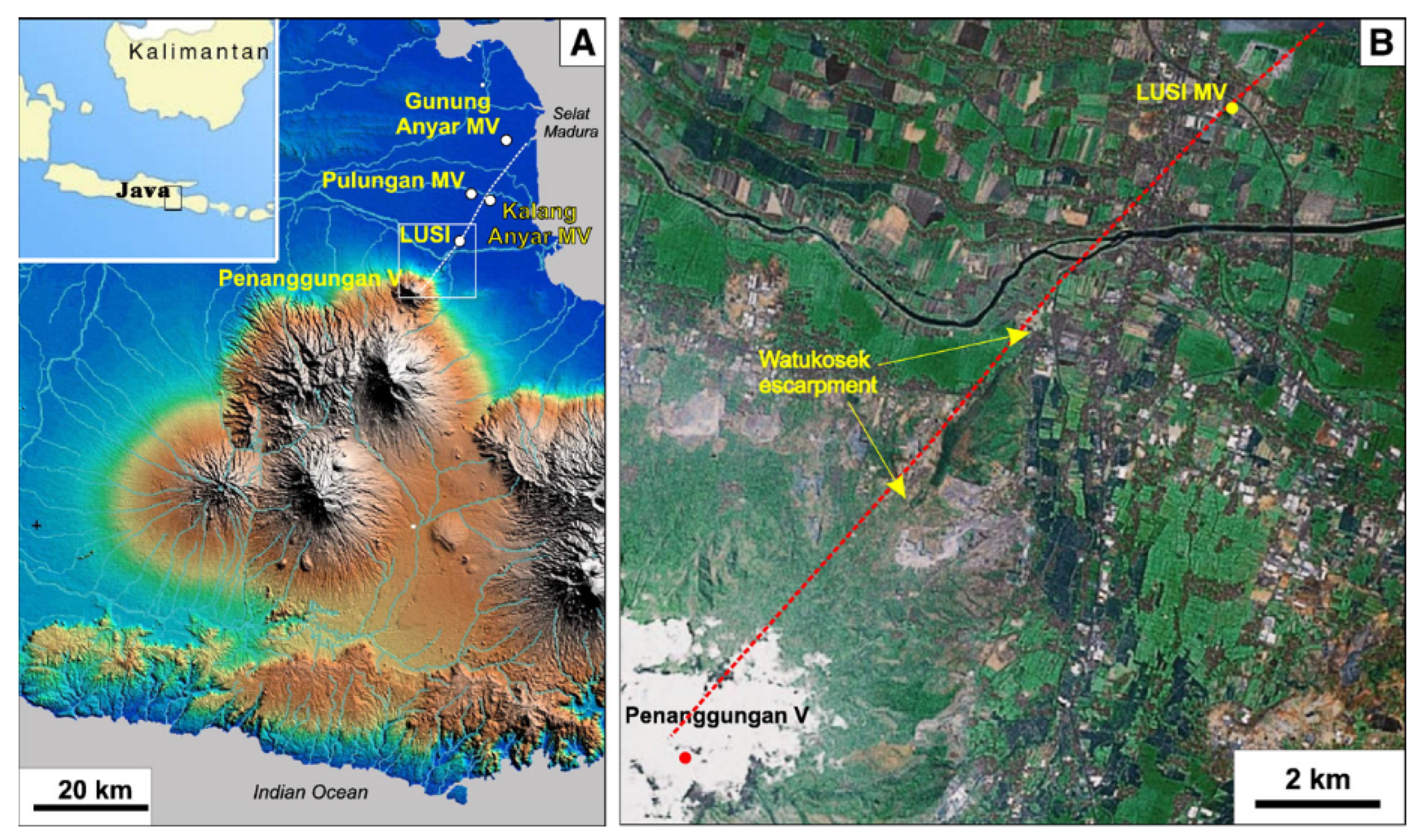
Research [55] shows that the Sidoarjo mud eruption was near the Watukosek Fault, which passes through the BJP-1 drilling point. The mud eruption also caused the emergence of mud volcanoes and land subsidence. The location of the mud eruption that occurred at this location and the direction of the Watukosek Fault were illustrated in Figure 1.
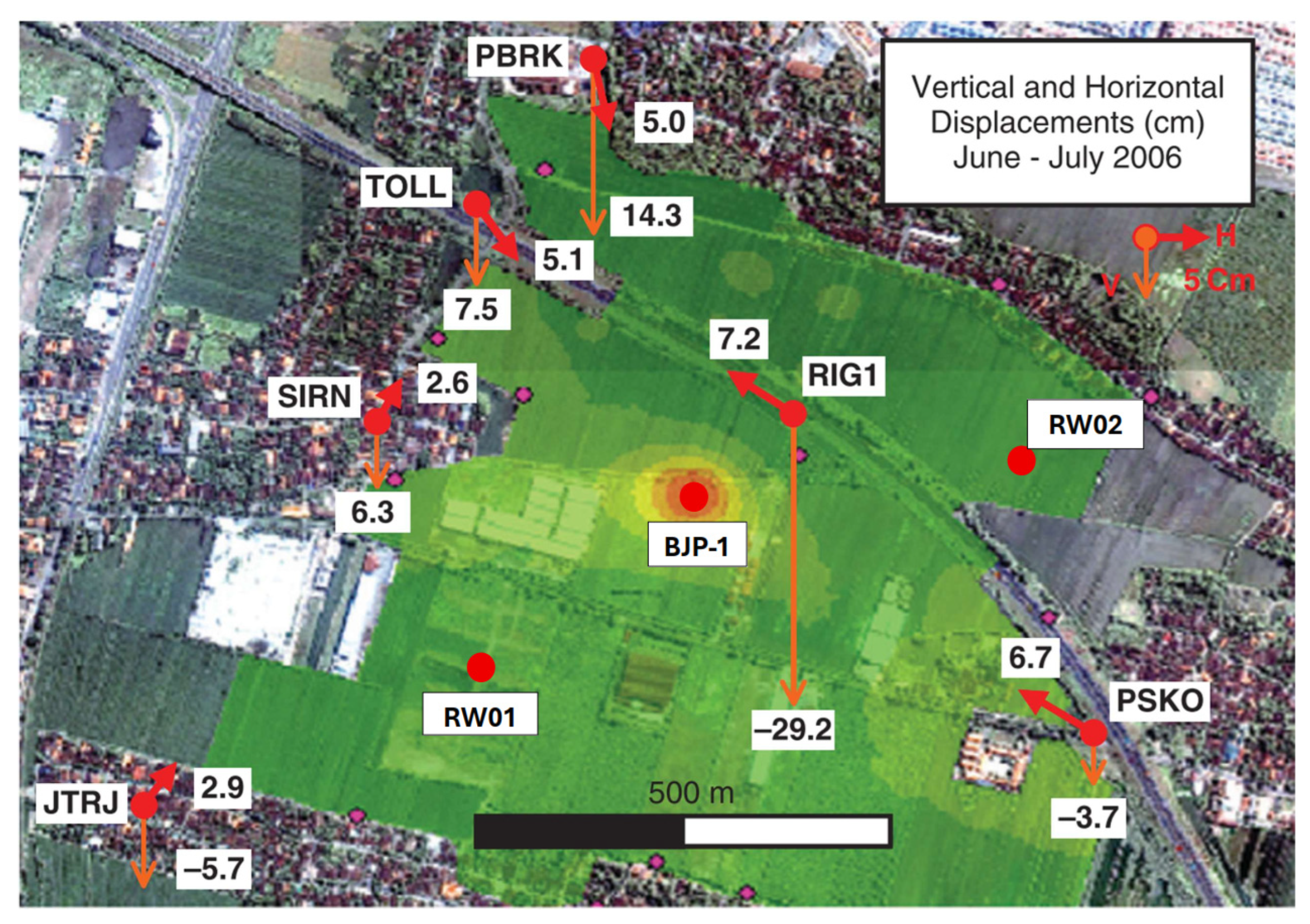
Land subsidence observations around the Sidoarjo mud eruption have been conducted using several geodetic methods, such as Interferometric Synthetic Aperture Radar (InSAR), Global Navigation Satellite System (GNSS), and levelling. Monitoring of land subsidence due to the Sidoarjo mud eruption using the GNSS observation method was conducted during the initial period of the eruption, from June 2006 to June 2007 [56]. This research shows horizontal and vertical displacement vectors and the velocity of land subsidence from the GNSS observation point. Figure 2 illustrates the area affected by mudflow (shown in green) from June to July 2006, with the main eruption centre (mud vent) indicated by a red point at the centre of the figure. The research conducted GNSS observations at several distributed benchmarks (BMs) surrounding the affected area, named PBRK, TOLL, SIRN, JTRJ, PSKO, RIG1, RW01, and RW02. The vertical and horizontal displacement vectors are also presented in Figure 2. Based on the displacement values shown in Figure 2, the area most affected is located to the northwest of the eruption centre. The horizontal displacement at station RIG1 is directed toward the northwest, while at station TOLL it is directed toward the southeast, indicating a pattern of radiating displacement from the central vent.
Figure 1. (A) The Watukosek Fault shown on Java’s Island elevation map. A fault line runs northeast from the Penanggungan Volcano; (B) satellite image shows the region surrounding the mud eruption (Lusi MV). The area is intersected by a trending fault (red dashed line) identified in previous research and visualised by Mazzini et al. [57].
Geosciences 16 00204 g001
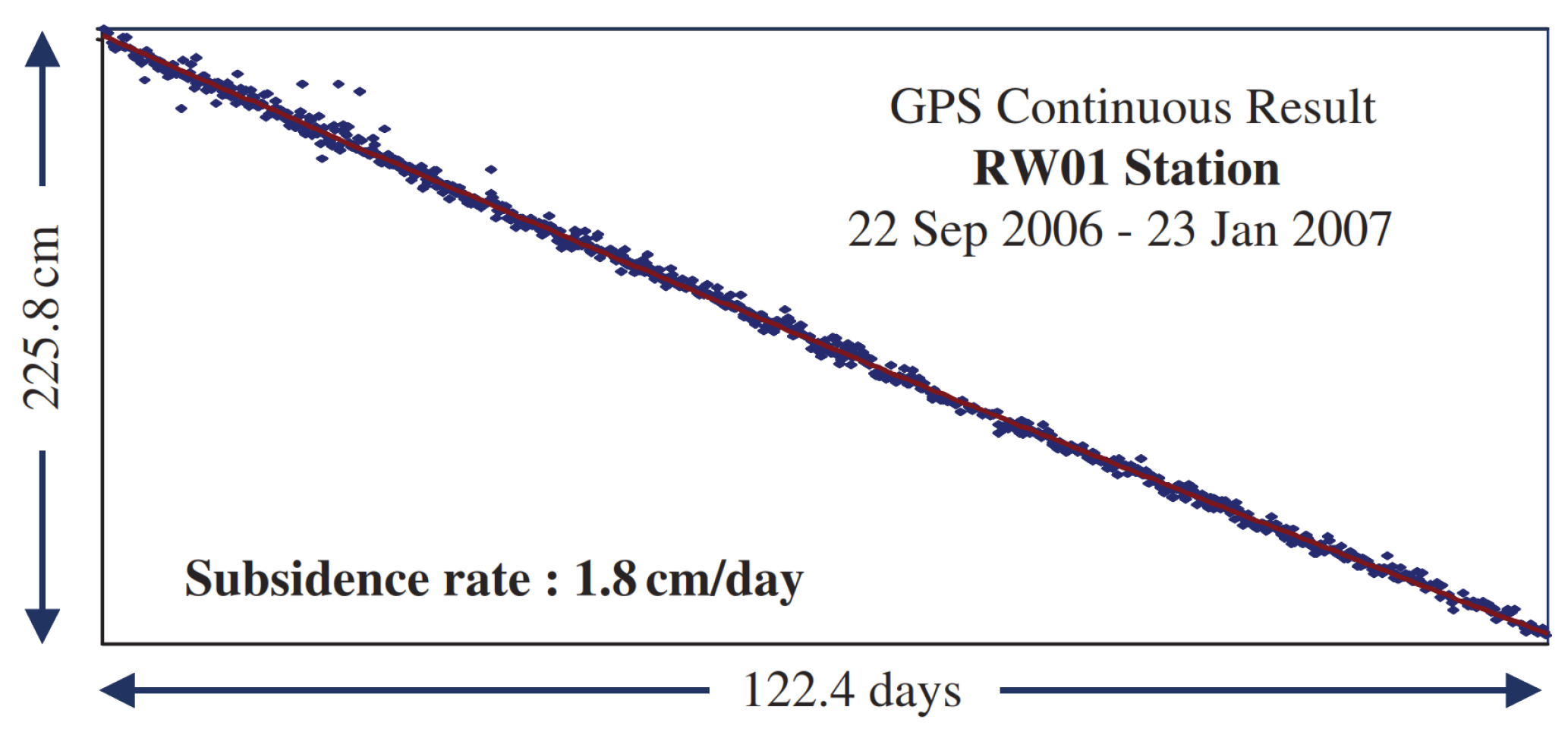
Figure 2. Coverage area of the mud eruption in June–July 2006. Vertical and horizontal displacements are shown by arrows, where red arrows indicate horizontal displacement and orange arrows indicate vertical displacement. The length of each arrow is proportional to the magnitude of displacement. The vertical and horizontal deformations are in mm units; imagery was taken and modified from Abidin et al. [56]. Moreover, from the article [56] we can see the results of a single GNSS observation from 22 September 2006 to 23 January 2007. The subsidence rate at GNSS point RW01 is shown in Figure 3.
Geosciences 16 00204 g002
Another study used the InSAR method to identify land subsidence in the eruption area. The research used 10 ALOS PALSAR images from May 2006 to May 2007 [58]. The research identified areas in the interferogram that showed deformation and LOS displacement. This research presents the initial phase of the deformation event caused by the mud eruption in Sidoarjo using the Differential InSAR (DInSAR) method. The results of this research show the extent of the deformed area. Another study used the PS-InSAR method on 93 ALOS PALSAR images from 2006 to 2011 [59]. This research presents a land subsidence model obtained from the PS-InSAR method, indicating an exponential decay in the land subsidence rate after mid 2008 or 2 years after the first eruption. Other research using ALOS-2 satellite imagery showed that land subsidence rates were 0.2 m/year between 2014 and 2018 [60].
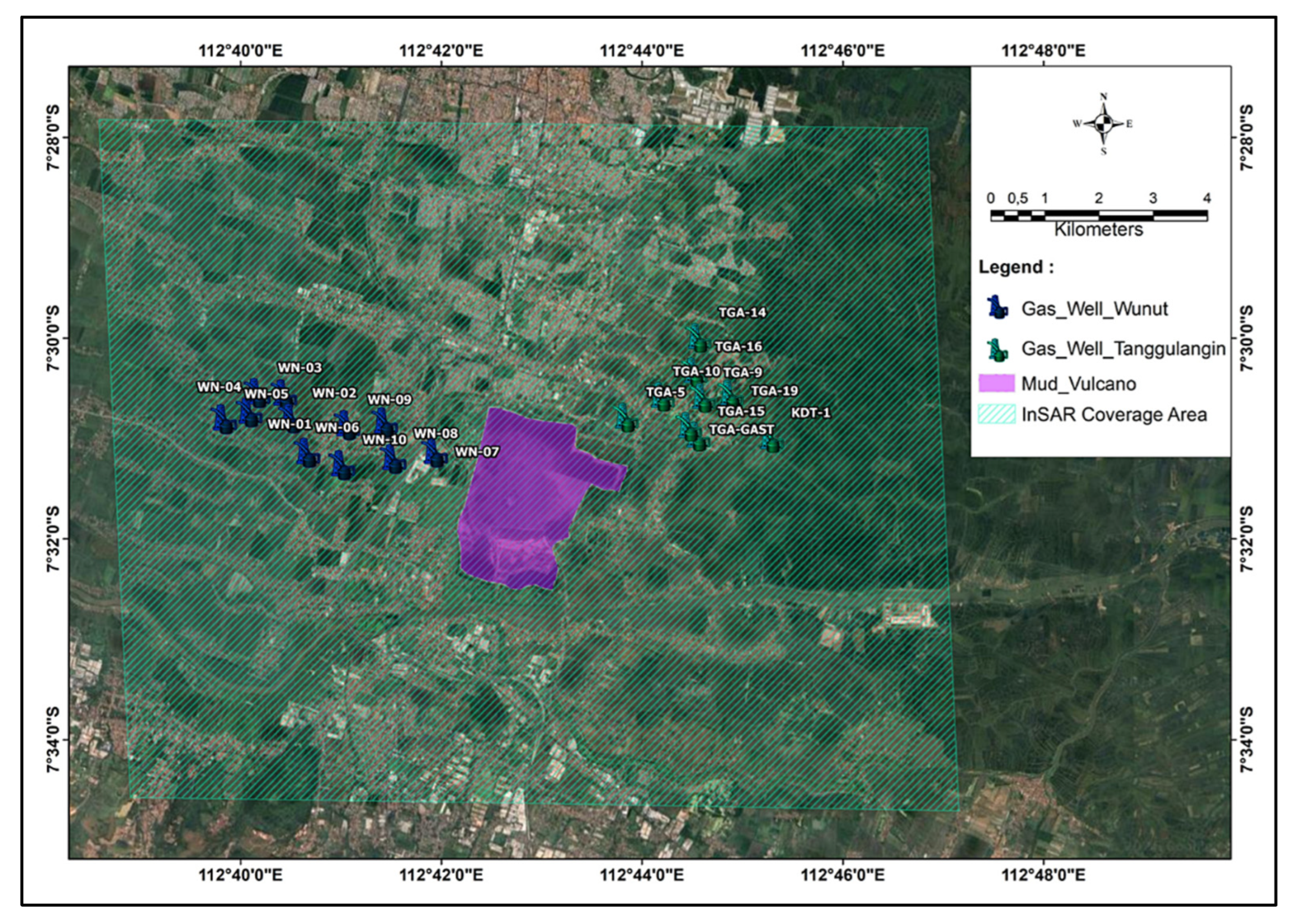
Furthermore, research conducted using the PS-InSAR method identified land subsidence on the east and west sides of the mud embankment [61]. The research used Sentinel-1 satellite imagery from 2017 to 2019, with a subsidence rate of 0.19–0.24 m/year. The following research was also conducted using the Small Baseline Subset (SBAS)-DInSAR method. The research used 27 Sentinel-1A satellite images from January 2019 to April 2020 [62] to identify land subsidence outside the mud eruption area, specifically in the Tanggulangin and Wunut areas (See Figure 4). Another study using the consecutive DInSAR method [63] used ALOS PALSAR-1 and ALOS PALSAR-2 satellite images. The study then validated the deformation values from Synthetic Aperture Radar (SAR) with GNSS observation data. Another study used the SBAS method to identify land subsidence in the Tanggulangin area from January 2018 to March 2021, with an average subsidence velocity of 0.13 m/year and a maximum of 0.2 m/year [64].
From research conducted from 2006 to 2022, various methods have been used, including InSAR, GNSS, and levelling. However, these methods were carried out independently, so the land subsidence that occurs cannot be properly validated. It is necessary to integrate geodetic methods [34,65,66,67,68,69,70,71,72].

2.2. InSAR Material and Method

The research uses SAR data from the Sentinel-1 satellite, downloaded from https://asf.alaska.edu (accessed on 13 March 2023). The data used are 168 ascending images from 15 March 2017 to 26 December 2022 and 155 descending images from 4 April 2016 to 10 December 2022. The Sentinel-1 SAR data format is shown in Table 1.
The chosen location is an area that has experienced rapid deformation since 2006, currently driven by natural gas exploration and exploitation activities (See Figure 4).
Figure 4. InSAR coverage area with the mud eruption, Wunut, and Tanggulangin gas well.
Geosciences 16 00204 g004
The SAR data were processed using two methods, PS-InSAR and SBAS. This processing determines the effectiveness of the two methods in areas experiencing rapid deformation, where the research area is mostly flooded due to land subsidence, rice fields, and swamps. The deformation value obtained by integrating the ascending and descending LOS was used to calculate the vertical displacement. The parameter comparison between PS-InSAR and SBAS is shown in Table 2.
Two parameters can influence the increase in coherence level: the perpendicular and temporal baselines. Perpendicular baseline is the perpendicular distance between two observation points or SAR acquisitions used to produce interferometric data, which refers to the difference in position between two observation points that affects the ability to identify and analyse the deformation of the Earth’s surface. The temporal baseline is the time difference between two SAR image captures used in the interferometric analysis [31]. The selection of temporal and perpendicular baseline thresholds does not need to be identical between PS-InSAR and SBAS processing, as the two methods rely on fundamentally different principles. PS-InSAR focuses on identifying stable, persistent scatterers that maintain phase coherence over long temporal spans, enabling more flexible baseline configurations. In contrast, SBAS constructs an interferometric network using short temporal and perpendicular baselines to minimise decorrelation and produce high-quality interferograms. Therefore, the baseline selection criteria are inherently method-dependent and are optimised according to the characteristics and requirements of each approach [31,39,74].
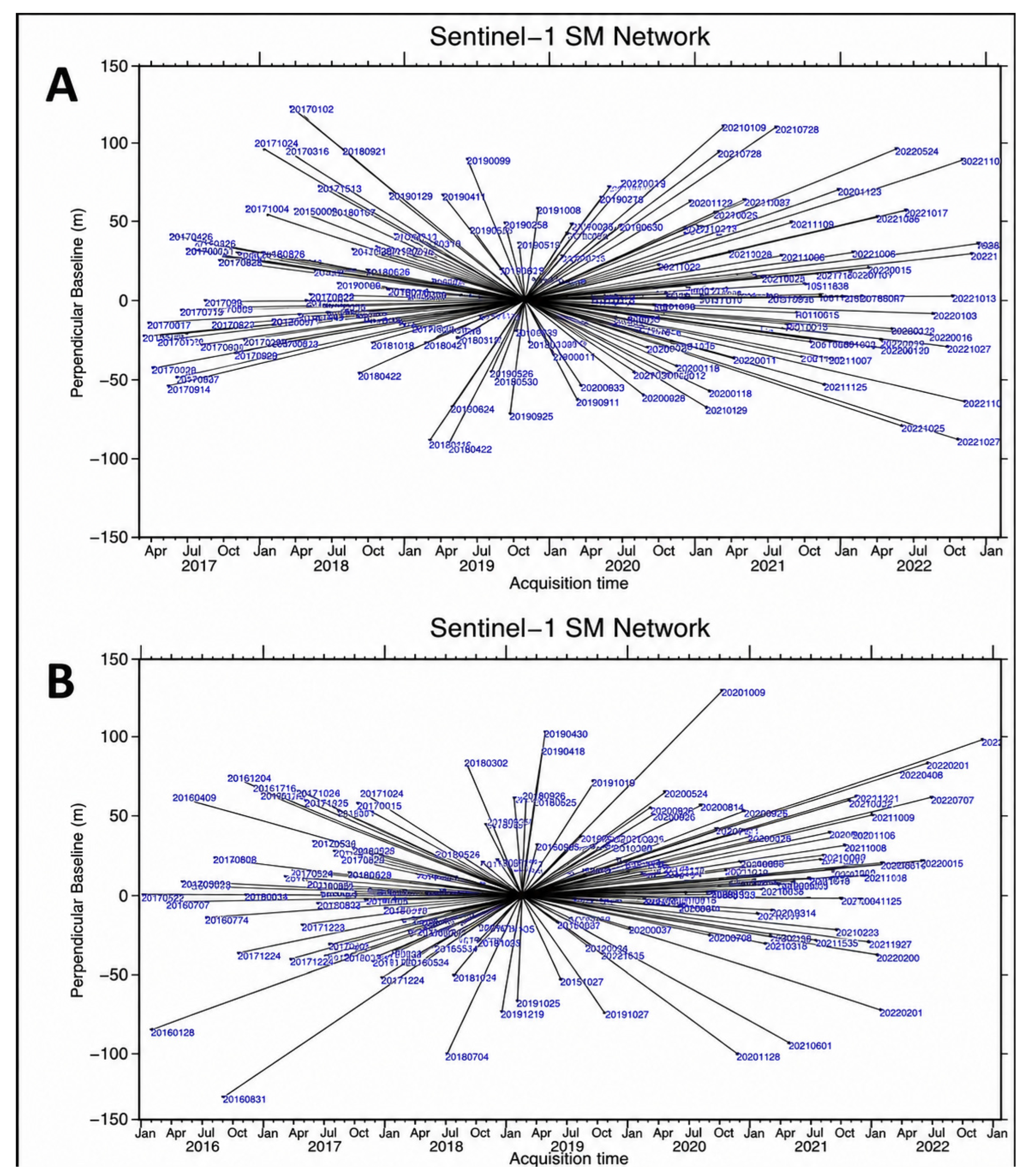
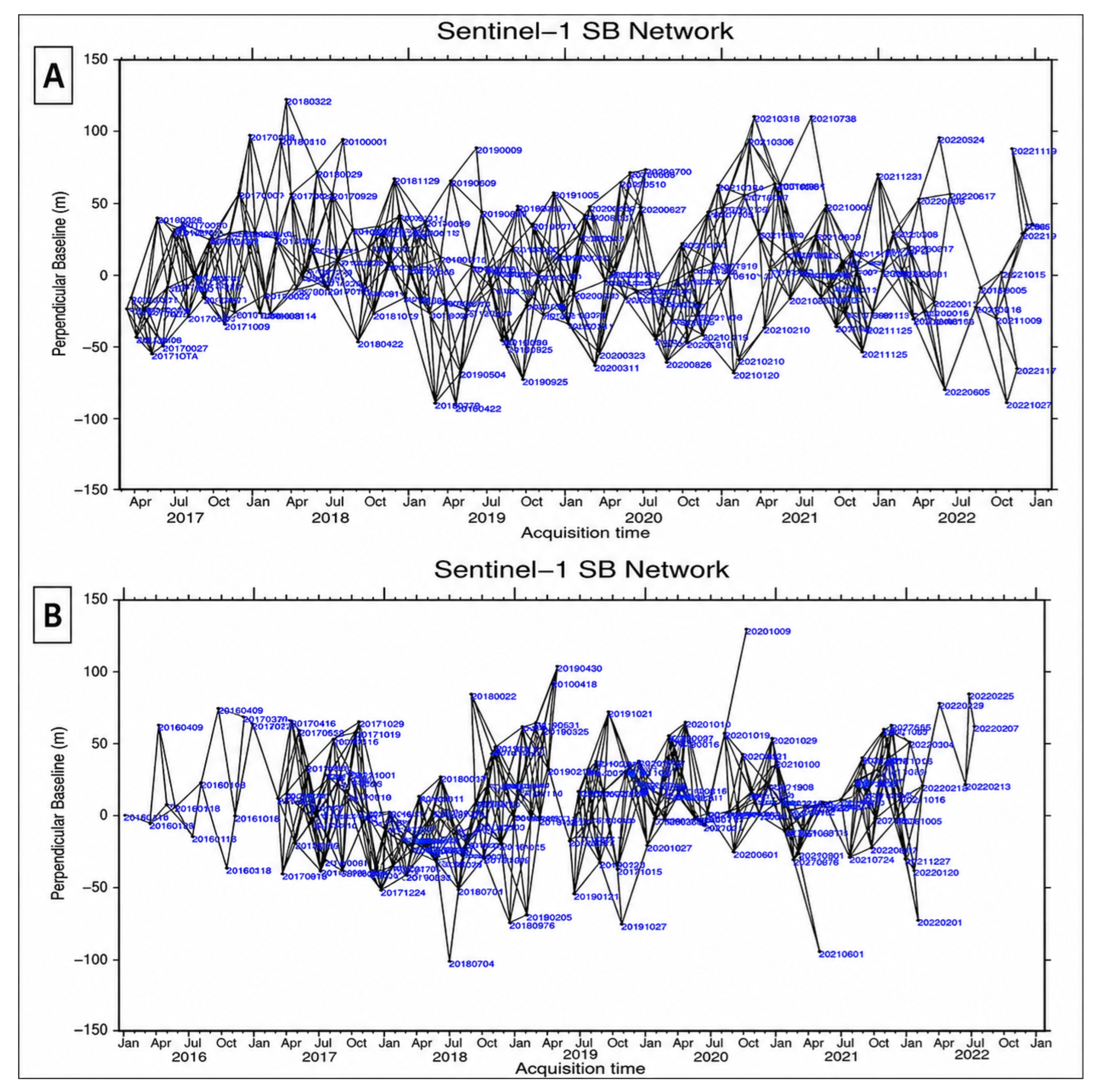
In the InSAR process, two SAR images are acquired at different times to create an interferogram. This image depicts the phase difference between the two images [75]. A larger perpendicular baseline value results in worse coherence because changes in viewing angle led to differences in backscattering and spatial decorrelation, thereby affecting image geometry. Meanwhile, the temporal baseline is important in InSAR because it affects the temporal resolution and surface change detection capabilities. The larger the temporal baseline, the greater the temporal decorrelation (mismatch between master and slave images), and the lower the coherence. The perpendicular and temporal baselines for PS-InSAR and SBAS operations are shown in Figure 5 and Figure 6.
The main sources of noise in radar interferometry are phase decorrelation and atmospheric effects. In addition, geometric and temporal decorrelation issues affect the interferogram results for vegetated and non-urban areas. The influence of the atmosphere appears quite significant, especially in tropical areas, where temperature changes [49] and year-round high humidity [76] are common. A previous study [77] showed two types of atmospheric signals based on their physical origin. The first is turbulent mixing, driven by atmospheric turbulence. A turbulent delay could affect both flat and mountain terrain. It creates phase artefacts on the interferogram due to spatial heterogeneity in the refractivity. Second, vertical stratification is mostly correlated with topography and affects only mountainous terrain [78]. This vertical stratification is caused by differences in vertical refractivity profiles between master–slave SAR acquisitions, which are assumed to have no horizontal heterogeneities. No atmospheric correction was applied in the weather model because the study area was not located in a mountainous region, which is prone to tropospheric delay [64].
In interferometry processing, the priority is to obtain high coherence values for artificial structures as radar targets; however, this is limited to forest and non-vegetated areas, due to the need to estimate homogeneous pixels and isolated points, which are difficult to identify in a single interferogram. PS-InSAR is intended to estimate the signal-to-noise ratio (SNR) of low-coherence object features.
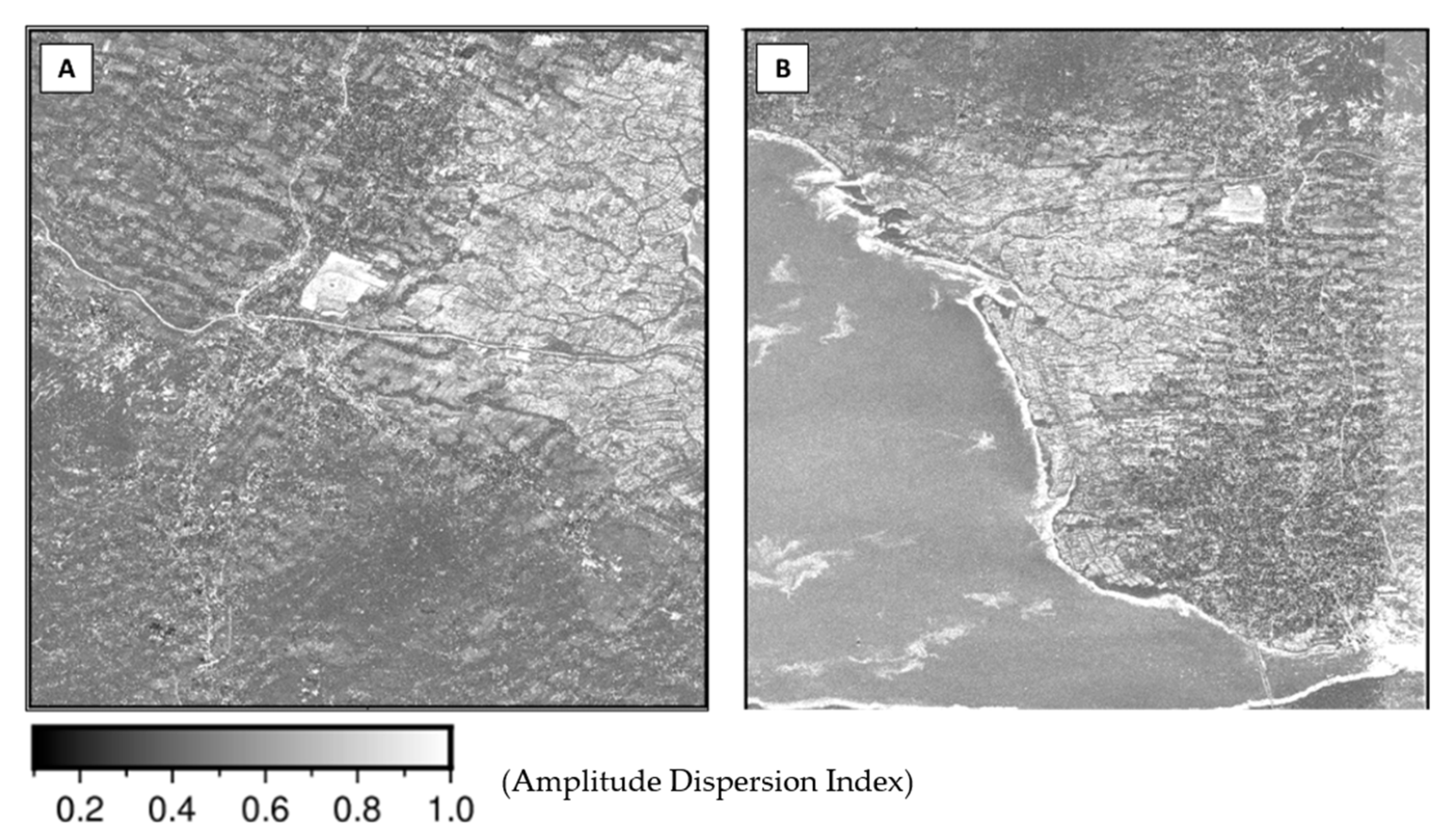
The Amplitude Dispersion Index (ADI) is the ratio between the standard deviation and the average amplitude value of a pixel. In the PS-InSAR technique, the Dispersion Index (DI) is a useful indicator for selecting the initial set of Point Scatterer Candidates (PSC). A small DI value indicates the possibility of stable targets, referred to as PSC. PSC is identified using the ADI. Pixels with low ADI in all acquisitions are selected as PS. A small DI value leads to a high average coherence [31].
Figure 5. Temporal and perpendicular baseline pair for PS-InSAR track ascending (A) and descending (B).
Geosciences 16 00204 g005
Figure 6. Temporal and perpendicular baseline pair for SBAS track ascending (A) and descending (B).
Geosciences 16 00204 g006
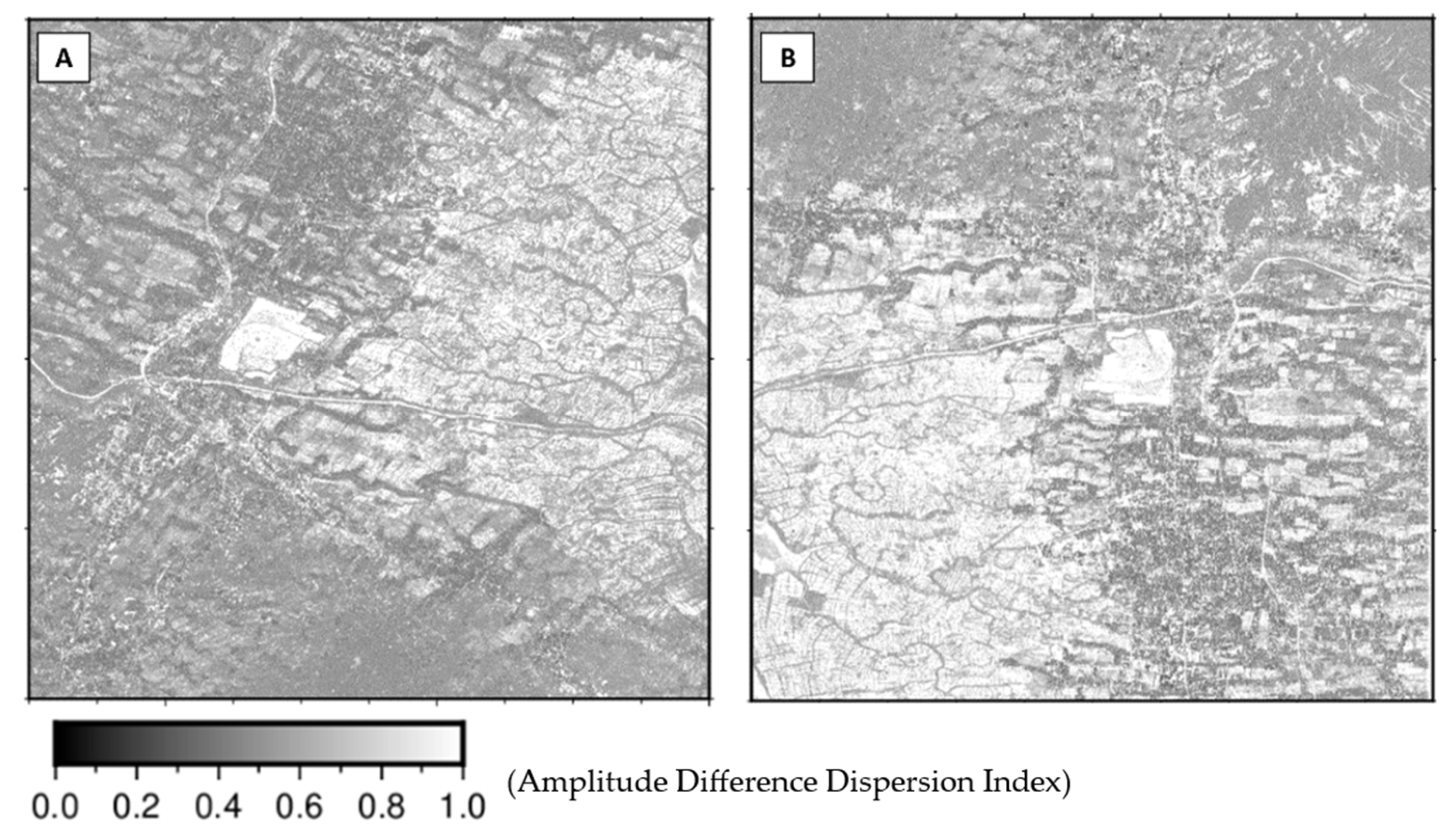
To select PS candidates, pixels are chosen based on amplitude stability, a high Amplitude Stability Index (ASI) value, and predetermined threshold values; these pixels will form the initial set of PSCs. The ADI for PS-InSAR and the ADI SBAS are important criteria for selecting PS pixels. The ADI is a value that a pixel must have to be considered a PS candidate. At this stage, pixels that have an index value of less than the specified threshold will be selected as PSC, while pixels that have a value of more than the threshold will be eliminated (masked out). The ADIs for PS-InSAR and SBAS are shown in Figure 7 and Figure 8, respectively.
In this study, ADI thresholds of 0.3 for PS-InSAR and ADD 0.6 for SBAS were used. Where pixels with coherence below the threshold value will be eliminated (masked out), this value allows the selected PS point to have a low ADI, ensuring that its ASI is high and that the PS point with low decorrelation noise is selected [79]. From the amplitude dispersion results, we get a fairly sparse distribution of point scatterers. This result occurs because the research location is a rural area, where the building objects are scattered randomly and surrounded by wetlands and vegetation.
The ADI threshold value of 0.3 for PS-InSAR processing, implemented using StaMPS, was selected to retain a sufficient number of PSCs in the study area. ADI represents the temporal stability of signal amplitude, where lower values indicate more stable scatterers. In PS-InSAR, PSC selection primarily relies on amplitude stability rather than interferometric coherence, and ADI is therefore the primary criterion for identifying reliable scatterers [31,74].
Therefore, It allows more candidate pixels to be initially included, which are subsequently refined through phase stability and ADI filtering to ensure reliable PS points with low decorrelation noise. In contrast, a higher ADI threshold (0.6) was applied in the SBAS method to retain only pixels with relatively high interferometric quality. This value is necessary because SBAS relies directly on distributed scatterers, which are more sensitive to temporal and environmental decorrelation, particularly in vegetated and wetland areas [32,33,39,52,80].
Furthermore, the research tailored the selection of temporal and perpendicular baseline thresholds to each method’s characteristics. For the PS-InSAR approach, the processing used temporal baselines of 50 days and perpendicular baselines of 150 m (ascending) and 100 m (descending). These relatively flexible thresholds increase the redundancy of interferograms and improve the identification of stable scatterers over time. Meanwhile, the SBAS method employed stricter, uniform baseline thresholds (75 days and 75 m for both ascending and descending datasets) to minimise temporal and geometric decorrelation and ensure a well-connected interferometric network suitable for time series inversion [31,77].
The differences in baseline thresholds between the ascending and descending datasets in the PS-InSAR method are attributed to variations in acquisition geometry, baseline distribution, and dataset coherence characteristics. In contrast, uniform thresholds were applied in SBAS to maintain consistency in network construction. The relatively sparse distribution of point scatterers observed in this study is consistent with the characteristics of the study area, which is predominantly rural, where stable reflectors such as buildings are limited and unevenly distributed. At the same time, vegetation and wetlands contribute to lower coherence and increased temporal decorrelation.
Overall, parameter selection was determined empirically based on data characteristics and a baseline-coherence distribution analysis, ensuring that each method operates under optimal conditions consistent with its theoretical framework.
During processing, we use the INSAR_G2S platform to automatically perform time series analysis by combining GMTSAR and StaMPS [35,54]. GMTSAR is used for co-registration and produces interferograms. In contrast, StaMPS is used to analyse persistent scatterers from both ascending and descending tracks. From the existing data processing, the ascending track produces 167 interferogram pairs, while the descending track produces 154 interferogram pairs. The interferogram is produced with a short spatial and temporal baseline to reduce decorrelation noise.
To reduce noise decorrelation, interferogram processing includes standard noise-reduction steps, such as multi-looking and phase filtering, as implemented in GMTSAR. These processes are designed to improve phase quality and coherence, although they may slightly reduce spatial resolution [28].
This study set the temporal baseline to 50 days and the spatial baseline to 150 m. Meanwhile, the descending track baseline is 50 days for the temporal baseline and 100 m for the spatial baseline. The availability of existing image data creates a temporal baseline difference between ascending and descending passes.
In this research, the same image data is used for SBAS processing for both ascending- and descending-track images. The temporal baseline used is 75 days, and the spatial baseline is 75 m, for both ascending and descending tracks. From data processing, we obtained 739 pairs of interferograms for the ascending track and 631 pairs of interferograms for the descending track. In this research, differences in the temporal and perpendicular baselines between PS-InSAR and SBAS are due to the availability of SAR data from both ascending and descending orbits, as shown in Figure 4 and Figure 5. From Figure 4 and Figure 5, we can see differences in the temporal and perpendicular distributions between ascending and descending orbits.
The InSAR technique measures the phase difference in its LOS. It is an insensitive tool for measuring changing displacement along the north–south direction, since most satellite SAR sensors operate in near-polar orbits, which means the angle between the flight direction and the north–south axis is relatively small (<12°) [76]. The combination of different orbits can particularly retrieve vertical and east–west motion. However, it is not possible to generate full displacement from only two slant-range SAR-looking images (ascending and descending orbits). The LOS projection (dLOS) to dU for the vertical component, dE for the west–east component, and dN for the north–south component [28] is described by Equation (1).
D l o s = d U C o s θ i n c S i n θ i n c d N C o s α h 3 π / 2 + d E S i n α h 3 π / 2 C o s θ i n c _ a s c S i n θ i n c _ a s c d N C o s α h _ a s c 3 π / 2 + d E S i n α h 3 π / 2 C o s θ i n c _ d s c S i n θ i n c _ d s c d N C o s α h _ d s c 3 π / 2 + d E S i n α h 3 π / 2 d U d E = d l o s _ a s c d l o s _ d s c
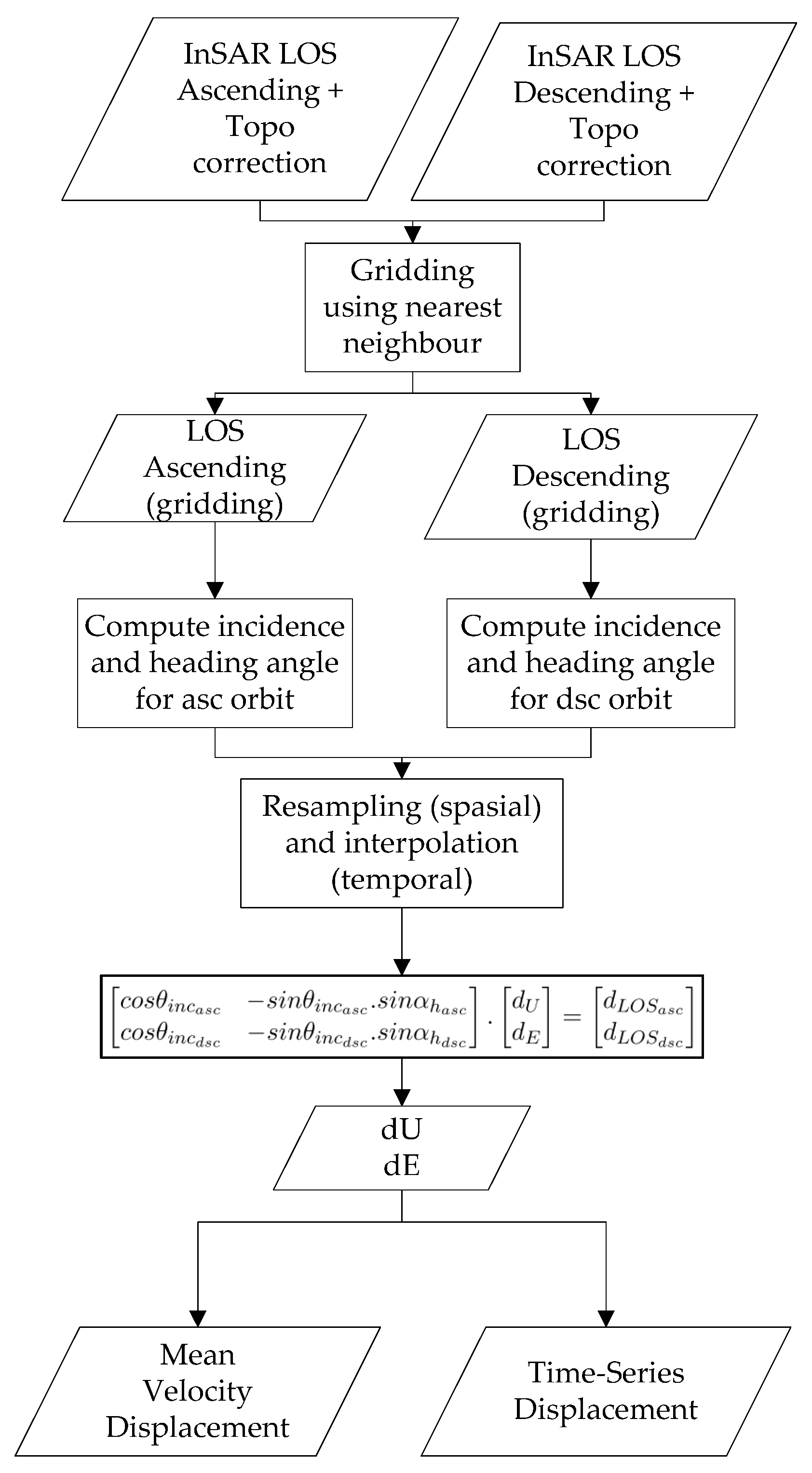
where θ i n c is the incidence angle, and ( α h 3 π 2 ) is the angle to the azimuth look direction that is perpendicular to the satellite platform heading angles, respectively. This research used the incidence angle rather than the look angle because the study area was flat terrain. The vertical component was decomposed since the study area was mainly affected by land subsidence. Equation (1) generates the vertical and east–west vector, while the north–south zero (0) was neglected. The processing used an automated script to compute the geometric model of SAR in different look angles [69,81], as shown in Figure 9.
The workflow decomposes ascending and descending InSAR LOS displacement data to retrieve two-dimensional surface deformation using a LOS decomposition framework. Initially, topography-corrected LOS measurements from both viewing geometries are resampled onto a common grid using a nearest neighbour approach to ensure spatial consistency. The corresponding radar acquisition geometry, including incidence and heading angles, is then computed for each orbit. To ensure comparability, spatial resampling and temporal interpolation are applied to the datasets. The combined LOS observations are subsequently calculated through a geometric projection model, enabling the decomposition of LOS displacement into vertical (dU) and horizontal east–west (dE) components. This formulation addresses the inherent limitation of single-orbit InSAR measurements, which are restricted to one-dimensional LOS displacement [34,82,83]. The integration of multi-geometry observations for deformation decomposition has been widely demonstrated to improve the reliability of surface motion estimates [54,81]. Finally, the decomposed displacement components are used to derive mean velocity fields and time series deformation.

2.3. GNSS Material and Method

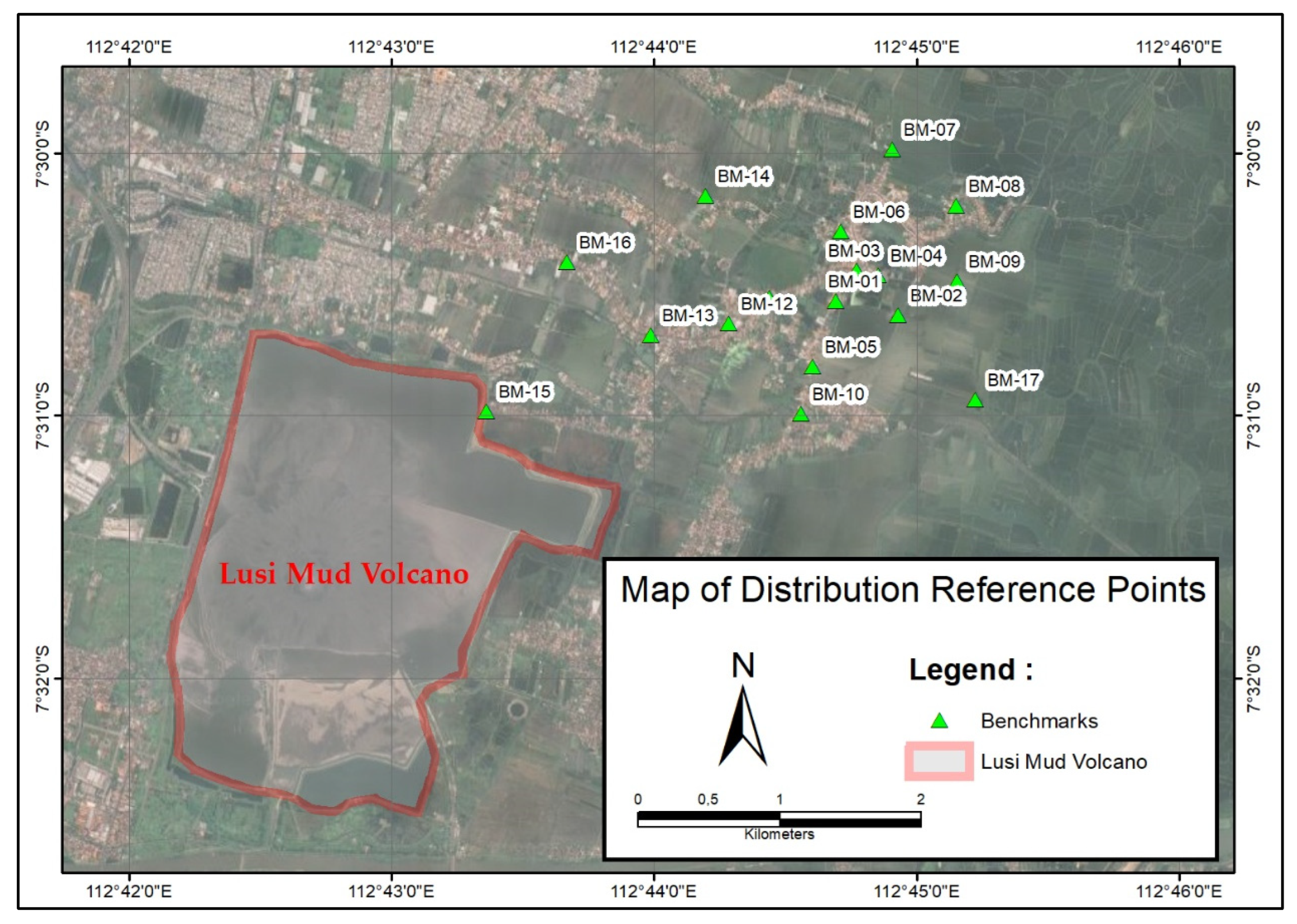
The research conducted GNSS survey campaigns at 7 epochs, October 2020, November 2020, March 2021, May 2021, September 2021, March 2022, and July 2022, covering 17 BMs. Observations were performed with dual-frequency geodetic receivers (Topcon Hiper Pro and HiTarget V30), with each campaign consisting of 24 h of continuous measurements. The initial survey involved five control points at the end of 2020, and the network was subsequently expanded to 17 points in mid-2021 to improve spatial coverage and enable a more comprehensive assessment of land subsidence. The distribution of the BM is shown in Figure 20.
The GNSS observation data, provided in RINEX format, were organised into directory structures following the GAMIT/GLOBK 10.7 standards. The processing selected reference stations from the International GNSS Service Continuously Operating Reference Stations (IGS-CORS) and the Indonesian Continuously Operating Reference Stations (Ina-CORS). The research used a total of 13 IGS-CORS stations (ALIC, COCO, DARW, DGAR, GUAM, HYDE, IISC, KARR, LHAZ, PIMO, PNGM, TOW2, and XMIS) and seven Ina-CORS stations (BAKO, CLMG, CMJT, CNMR, CPAS, CSID, and CSBY) for processing and network adjustment. Supporting data included broadcast navigation ephemerides, precise orbit ephemerides, and ionospheric products obtained from the Scripps Orbit and Permanent Array Center (SOPAC) and the Crustal Dynamics Data Information System (CDDIS).

2.4. Levelling Material and Method

Levelling surveys were conducted in January 2022, July 2022, November 2022, January 2023, July 2023, and November 2023 using a Leica Sprinter 250 (Leica Geosystem-Swiss, Heerbrugg, Switzerland) digital level. The acquired data were processed using a least-squares adjustment method. TTG 1304 was selected as a stable reference point, located approximately 10 km outside the subsidence zone, to ensure that the reference measurements are not influenced by ongoing ground deformation within the study area.
To describe the temporal behaviour of deformation recorded by the GNSS and levelling observations, several candidate models, including linear, logarithmic, and polynomial functions, were examined. Among these, the logarithmic model was selected as the primary representation because it generally provided a physically meaningful description of subsidence, characterised by relatively rapid initial deformation followed by a gradual reduction in rate, and yielded comparatively low fitting errors for the majority of benchmarks. This behaviour is consistent with compaction-related deformation processes commonly observed in soft and compressible sediments [84,85,86]. Nevertheless, for benchmarks with relatively short or incomplete time series, the fitted model was interpreted cautiously, as it is more appropriate for capturing the initial deformation tendency than for representing the full long-term subsidence behaviour. Therefore, the logarithmic model was adopted not only on the basis of its fitting performance, but also because of its consistency with the expected physical process of ground compaction [84,85,86,87].

2.5. Cross-Comparison and Validation

To ensure a consistent cross-method comparison, only benchmarks with both spatial correspondence and temporal overlap among the InSAR, GNSS, and levelling datasets were included in the analysis. InSAR-derived deformation values were extracted at the BM locations using the nearest corresponding grid cell after spatial resampling onto a common reference grid. The comparison with GNSS observations primarily focused on deformation velocity and temporal trend, since GNSS provides point-based measurements of ground displacement over time. In contrast, levelling observations were mainly compared with the vertical displacement component derived from the ascending–descending InSAR decomposition, as levelling directly represents elevation change at discrete benchmarks with high vertical precision.
The interpretation of consistency and discrepancy among the datasets was carried out by accounting for inherent differences in measurement characteristics, particularly the contrast between point-based ground observations and spatially continuous area-based deformation estimates from InSAR. The uncertainty in this study arises from the characteristics and limitations of each geodetic method. InSAR-derived deformation may be affected by temporal and geometric decorrelation, orbit geometry, residual atmospheric effects, the sparse distribution of stable scatterers, and uncertainty introduced during LOS decomposition [29,30,77,88].
GNSS uncertainty is mainly associated with campaign-based observations and the unequal length of the time series at different benchmarks, which may affect the consistency of velocity estimation and trend interpretation. Levelling uncertainty is related to benchmark availability in the field and the assumed stability of the reference point used in the adjustment. In addition, the vertical deformation derived from ascending and descending InSAR data is estimated under the assumption that the north–south displacement component is negligible [54,77,89,90]. Therefore, the resulting vertical component should be interpreted as an approximation subject to this assumption and the limitations of the observation geometry.

3. Results

This chapter describes the LOS displacement and vertical displacement results for multi-temporal SAR datasets from the area, GNSS, and levelling data from the validation BM. The SAR data are processed using the PS-InSAR and SBAS algorithms implemented in STaMPS 3.2, an open-source software package for InSAR time series analysis. The Sentinel-1-derived displacement is analysed to evaluate deformation during the 2016–2022 period. The comparison of velocity rates between PS-InSAR and SBAS, for both ascending and descending orbits, also shows significant differences in behaviour. InSAR analysis was integrated with GNSS and levelling measurements, as GNSS overlapped data with SAR observations for approximately seven months during 2020–2022, while levelling data were available for about three months in 2022.

3.1. InSAR

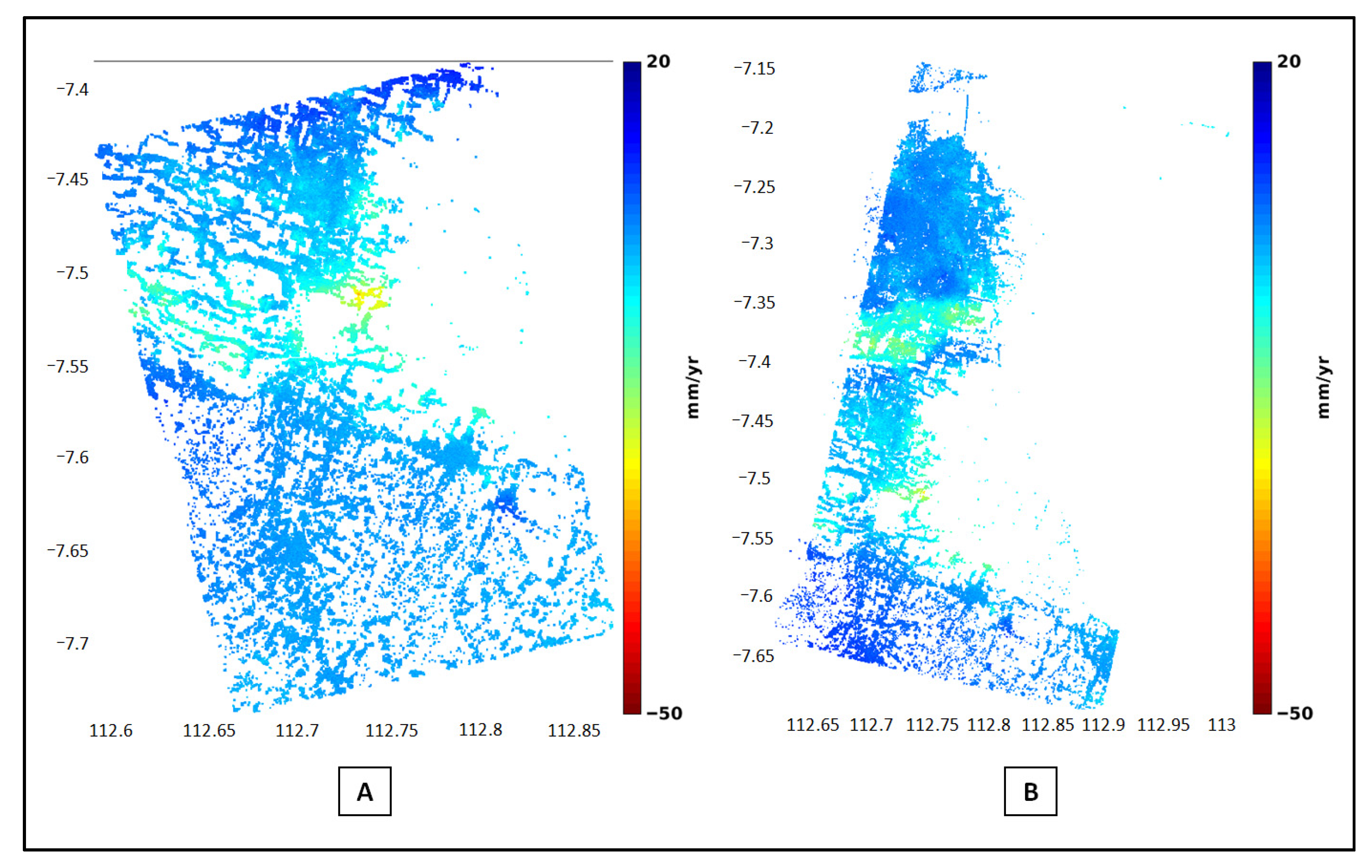
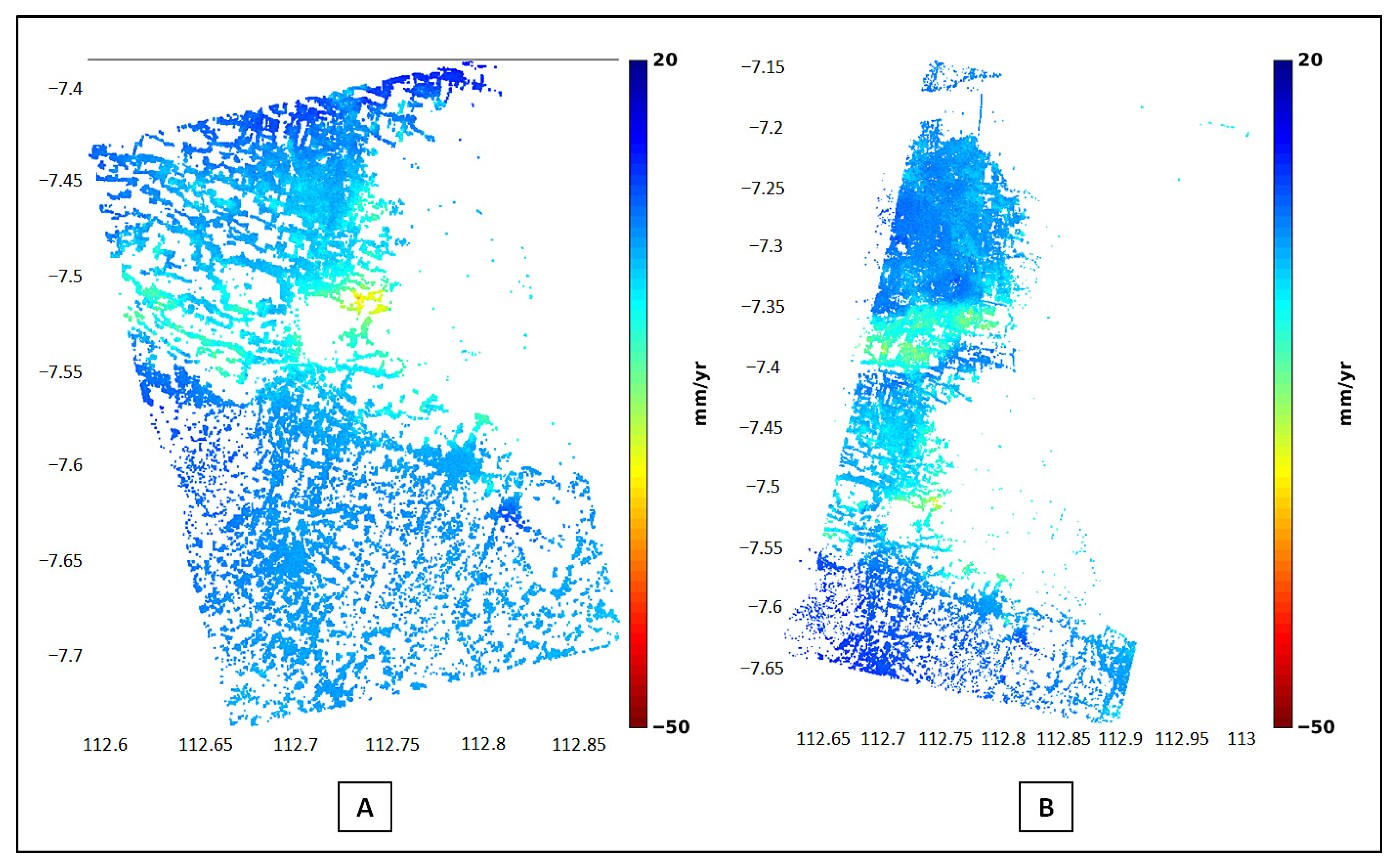
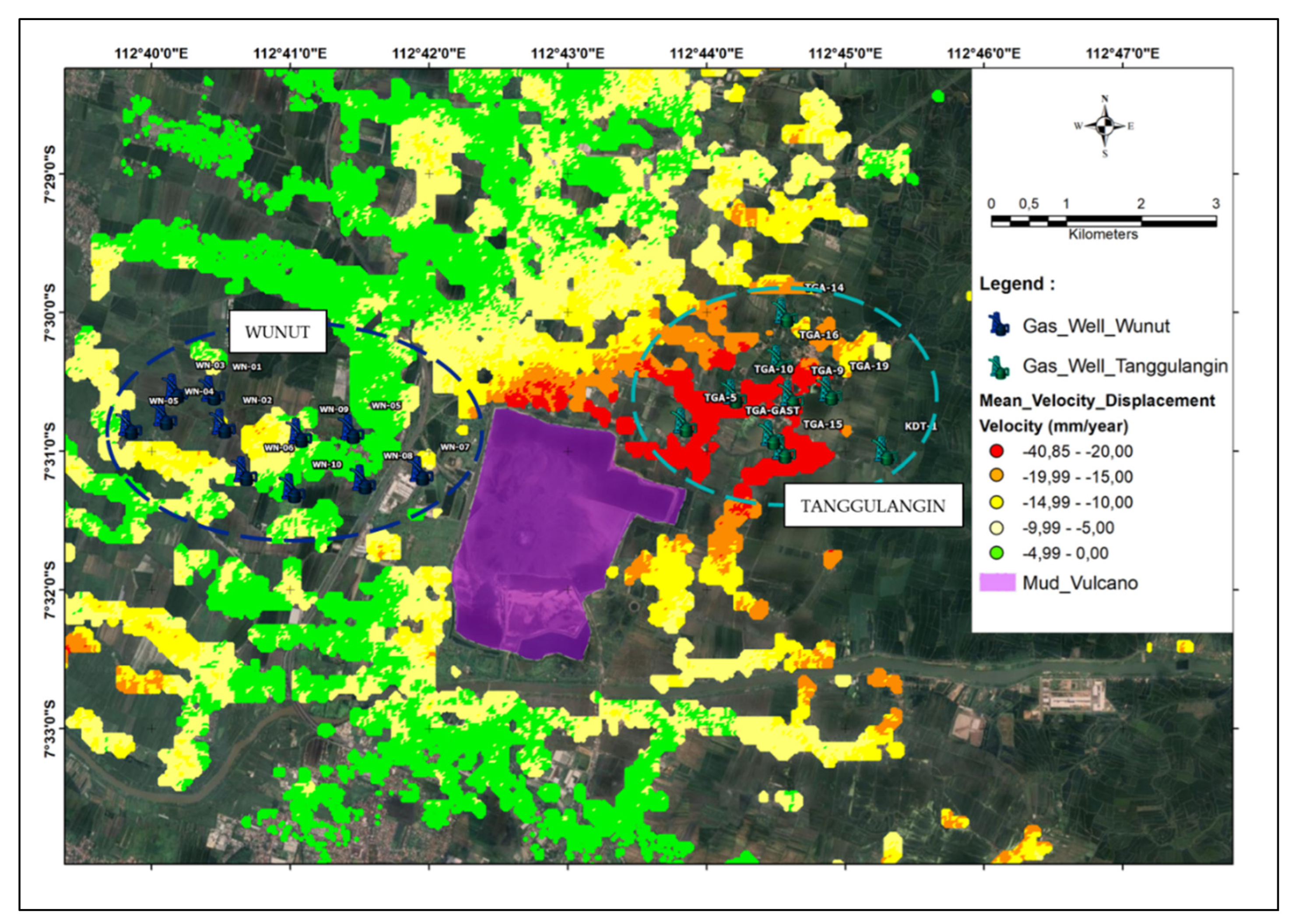
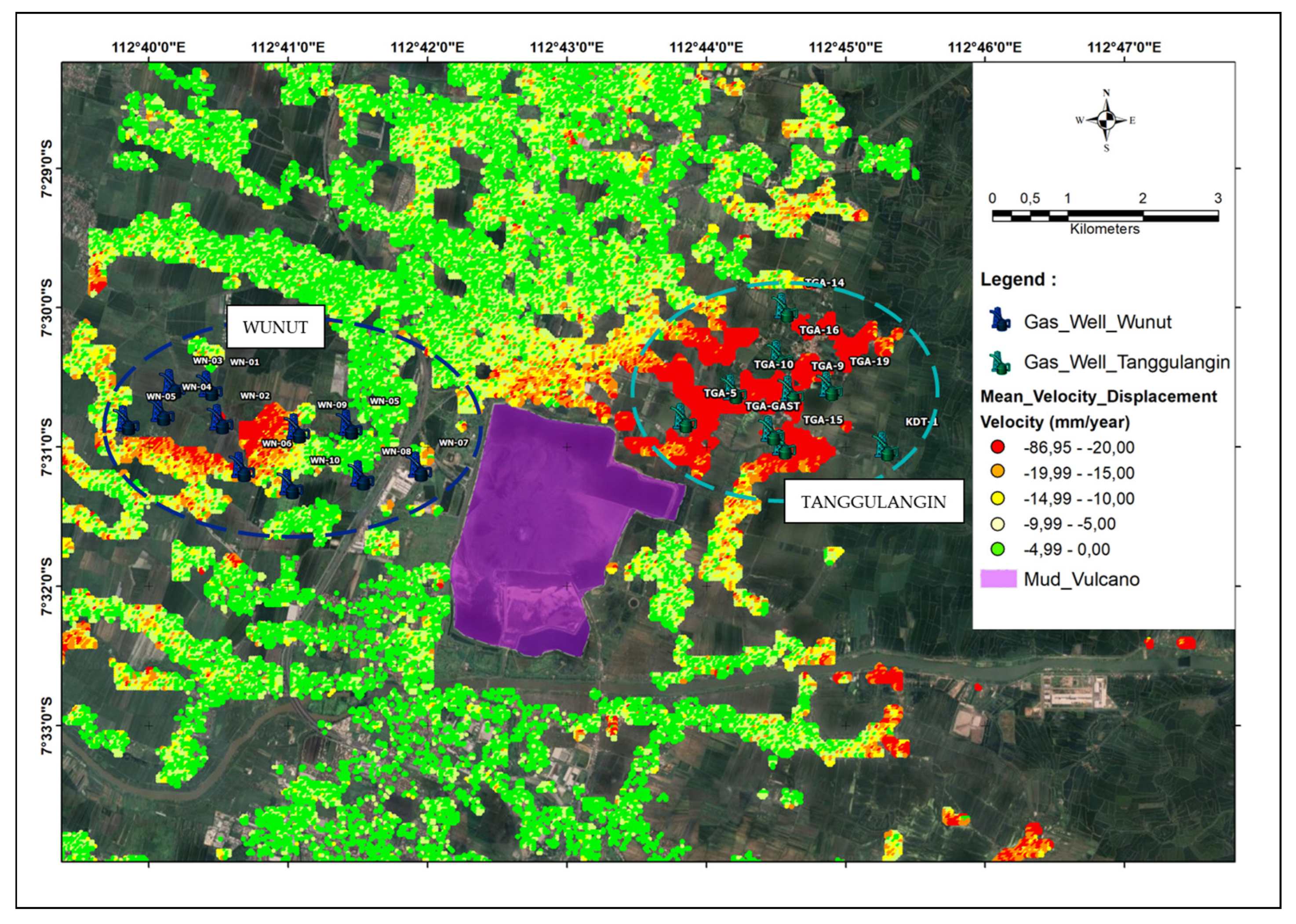
The results of SAR image processing in both ascending and descending modes indicate that subsidence has occurred in several areas around the Tanggulangin and Wunut gas production sites, the area around the mudflow, and other nearby locations (See Figure 23 and Figure 24). The mean velocity displacement from PS-InSAR and SBAS is shown in Figure 10 and Figure 11, respectively. The PS-InSAR method shows a maximum land subsidence velocity of −22.7 mm/year for the LOS-ascending mode and −16.6 mm/year for the LOS-descending mode (see Figure 12). Meanwhile, SBAS yielded quite different results, with a maximum descent velocity of −36.4 mm/year for LOS-ascending and −34.6 mm/year for LOS-descending (see Figure 13).
The two methods show quite significant differences in results, with the velocity of land subsidence resulting from SBAS being more than twice that of PS-InSAR. However, the spatial correlation between PS-InSAR and SBAS from the StaMPS results does not show a significant difference; both show the same subsidence area: around Tanggulangin, the Wunut gas production well locations, and the Sidoarjo mudflow, although at different levels of distribution and velocity.

3.1.1. LOS Displacement

Figure 10 and Figure 11 present the LOS displacement for ascending and descending orbits derived from PS-InSAR and SBAS, respectively, for the 2017–2022 period. The image scale and colour scheme for the PS-InSAR and SBAS results were standardised to facilitate a direct comparison and highlight differences between the two processing methods.
Figure 10. Mean velocity displacement of PS-InSAR during 2017–2022 for (A) LOS-ascending and (B) LOS-descending from Sentinel-1 SAR imagery.
Geosciences 16 00204 g010
Figure 11. Mean velocity displacement of SBAS during 2017–2022 for (A) LOS-ascending and (B) LOS-descending from Sentinel-1 SAR imagery.
Geosciences 16 00204 g011
From the data, the PS-InSAR method yields maximum mean velocities of −22.7 mm/year for the LOS-ascending mode and of −16.6 mm/year for the LOS-descending mode, as shown in Figure 10. Meanwhile, SBAS gave quite different results, where the maximum mean velocity was −36.4 mm/year for LOS-ascending and −34.6 mm/year for LOS-descending, as shown in Figure 11.
The LOS displacement derived from the PS-InSAR method demonstrates strong agreement between ascending and descending orbits, with consistent identification of subsiding areas and comparable deformation magnitudes. In contrast, the SBAS-derived results reveal discrepancies between the two orbital geometries, particularly in the spatial distribution of detected subsidence. These differences suggest the varying sensitivity of the SBAS approach to viewing geometry and coherence conditions. The detailed displacement values from PS-InSAR are presented in Figure 12, and those from SBAS in Figure 13.
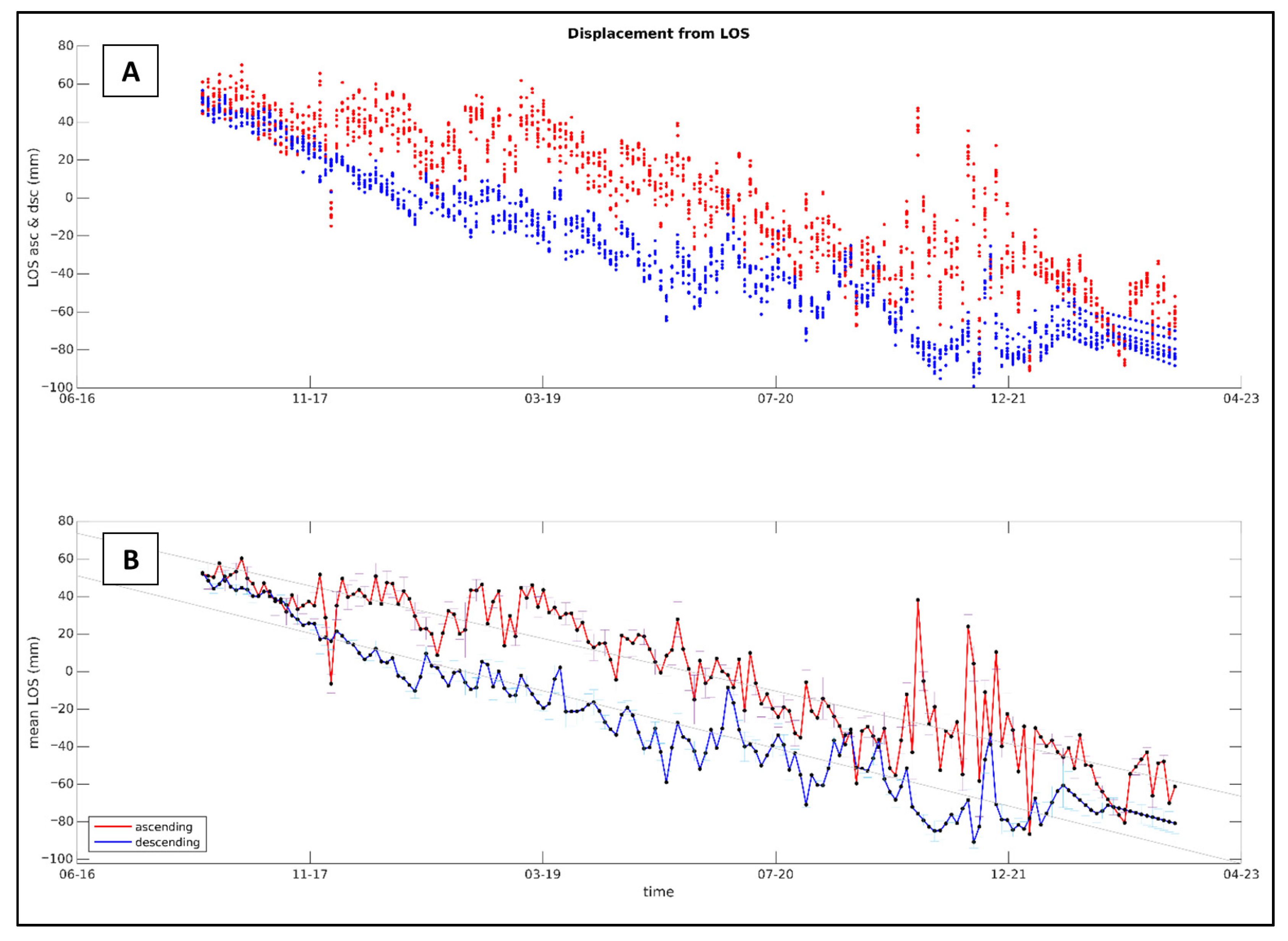
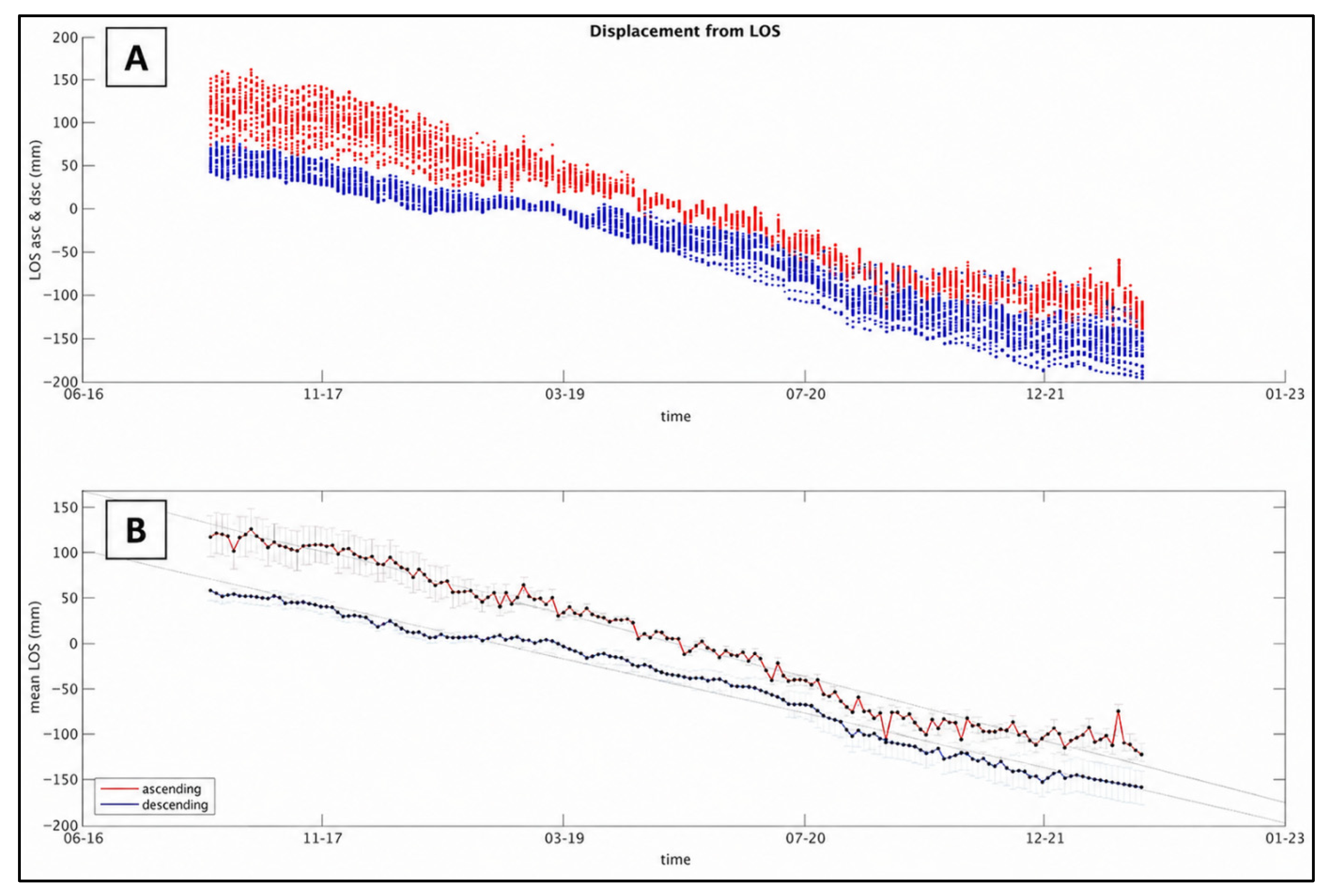
To investigate differences in LOS displacement between ascending and descending orbits from PS-InSAR, a representative sample point is located between 112°44′36.21″–112°44′40.88″ E and 7°30′42.94″–7°30′35.60″ S. The time series analysis reveals average subsidence rates of −18.6 mm/year for the ascending orbit and −15.71 mm/year for the descending orbit. The discrepancy between the two measurements highlights the effect of orbital geometry and directional sensitivity of the LOS observations. The corresponding time series is illustrated in Figure 12.
Meanwhile, the SBAS-derived results at the same location indicate an average subsidence of LOS −30.8 mm/year for the ascending orbit and of LOS −33.5 mm/year for the descending orbit. The slightly higher deformation values relative to the PS-InSAR results suggest differences in sensitivity to temporal decorrelation and in the spatial averaging inherent to the SBAS approach. The corresponding time series is shown in Figure 13.
Figure 12. Time series of PS-InSAR displacement during 2016−2022 for ascending and descending. (A) The LOS displacement for an individual point within the study area, shown for ascending (red) and descending (blue) orbits. (B) Mean LOS displacement time series averaged over the selected points, including linear trend lines for ascending and descending data.
Geosciences 16 00204 g012
Figure 13. Time series of displacement of SBAS during 2016−2022 for ascending and descending. (A) The LOS displacement for an individual point within the study area, shown for ascending (red) and descending (blue) orbits. (B) Mean LOS displacement time series averaged over the selected points, including linear trend lines for ascending and descending data.
Geosciences 16 00204 g013
The PS-InSAR results exhibit greater variability than the SBAS results, suggesting higher noise levels in certain areas. This behaviour is evident in Figure 12, where the PS-InSAR deformation time series shows a random, irregular distribution of displacement, with noticeable local variations that are not spatially consistent with the surrounding areas.
This phenomenon is likely related to the characteristics of the study area, which is predominantly wetlands, rural, and contains a limited number of stable reflectors. As a result, PS-InSAR results are more susceptible to decorrelation. This result is further supported by the time series displacement shown in Figure 12, which exhibits fluctuating or non-linear patterns that may indicate residual phase noise.
In contrast, the SBAS results (Figure 13) show a more continuous, smoother pattern, indicating improved stability in areas dominated by rural and wetland areas. This result is because the SBAS approach uses multiple interferograms with small temporal and perpendicular baselines, enabling it to exploit distributed scatterers better and reduce decorrelation.
Therefore, the observed differences between the PS-InSAR and SBAS results are primarily due to the suitability of each method to the study area’s conditions rather than to inherent methodological limitations. These findings are consistent with previous studies [31,36,39], which highlights that PS-InSAR performs optimally in urban environments. In contrast, SBAS is better suited to non-urban or vegetated regions.

3.1.2. Vertical Displacement

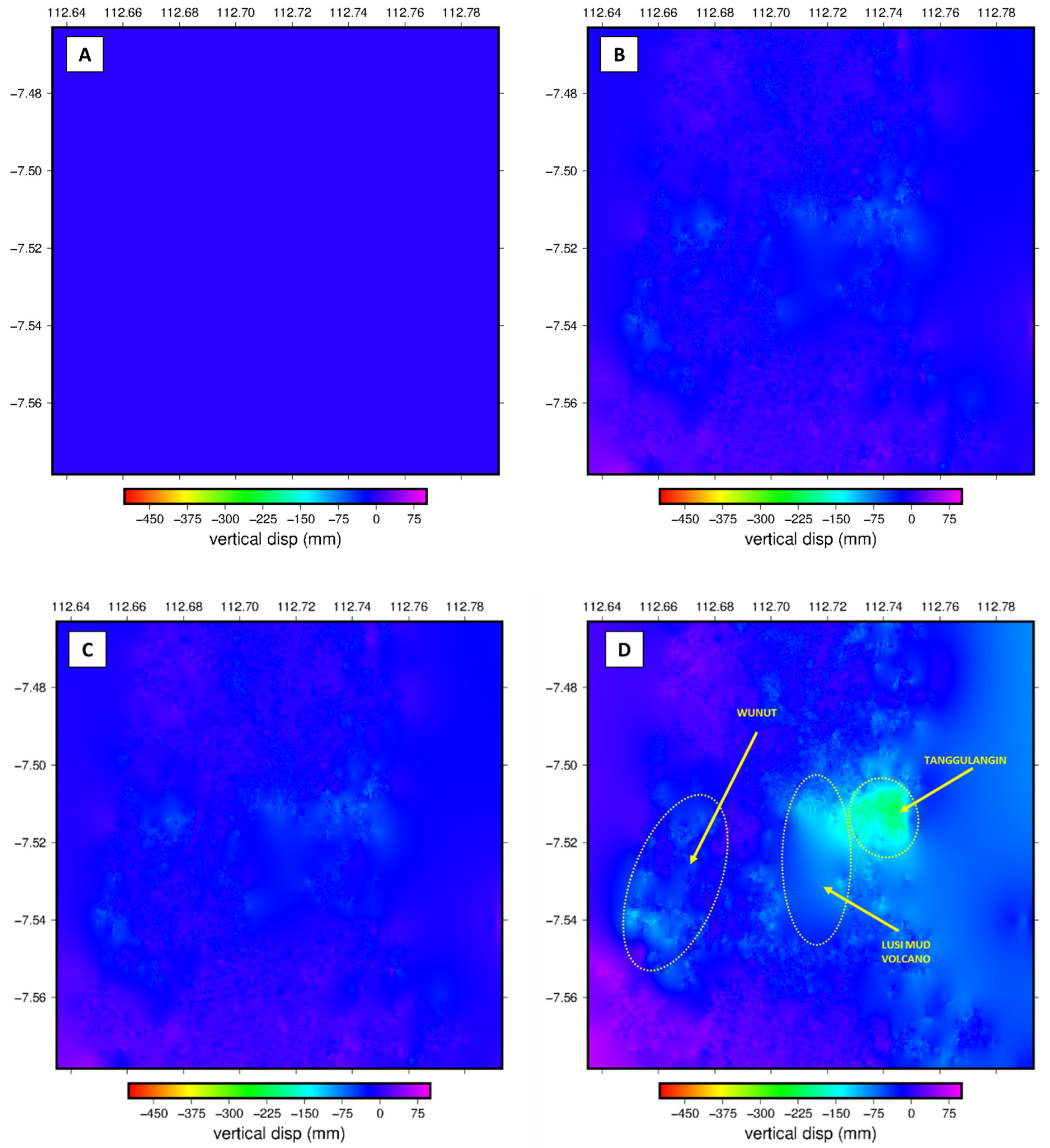
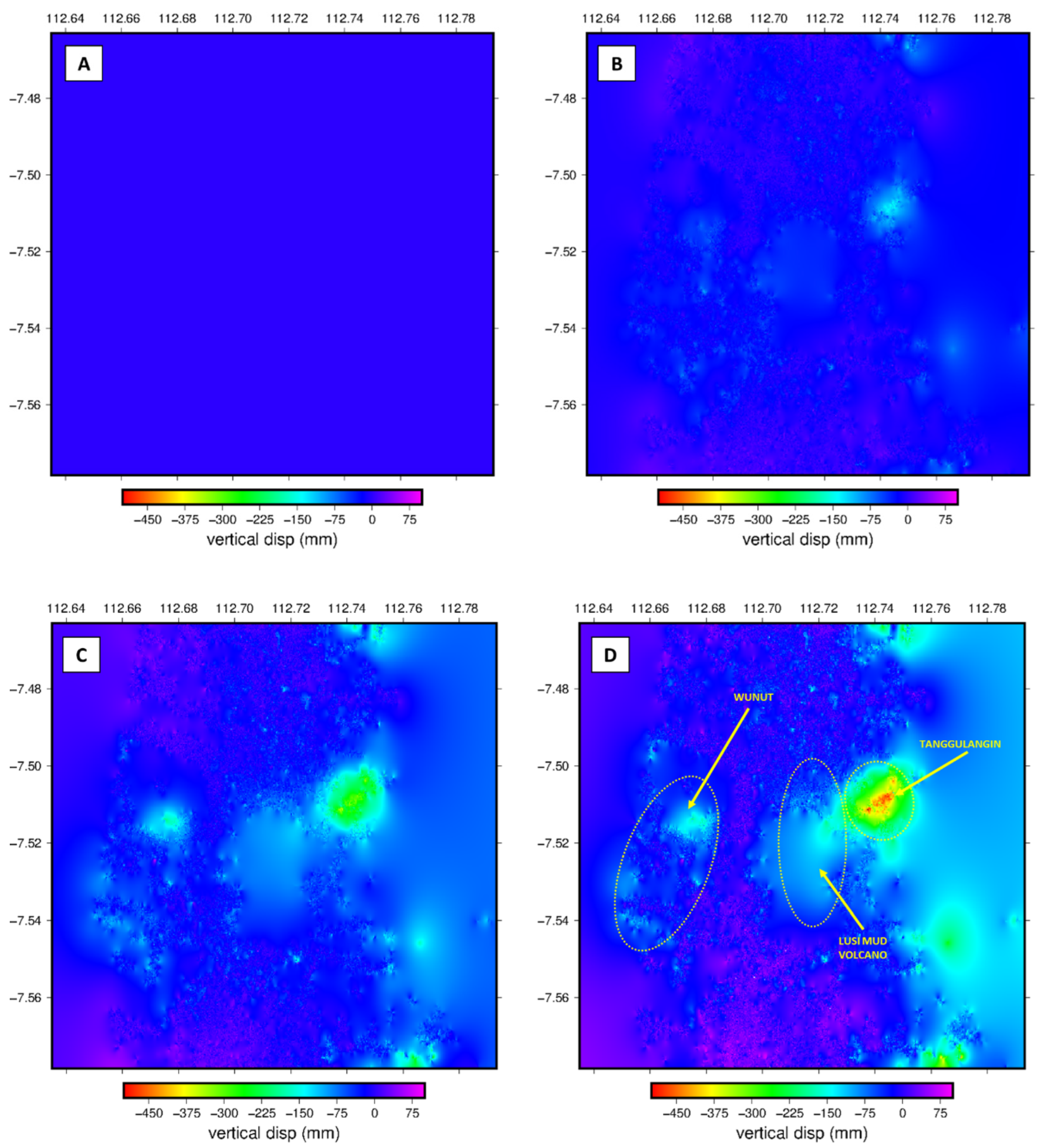
The vertical decomposition of PS-InSAR data for LOS-ascending and LOS-descending provides comprehensive results. The time series data show the consistency of land subsidence; this is evident from the visible vertical displacement at epochs 60, 120, and 175 in Figure 14B, Figure 14C, and Figure 14D, respectively, as shown in the vertical decomposition of the PS-InSAR data. The results showed that the largest vertical displacement was −249.4 mm during the period 2017−2022.
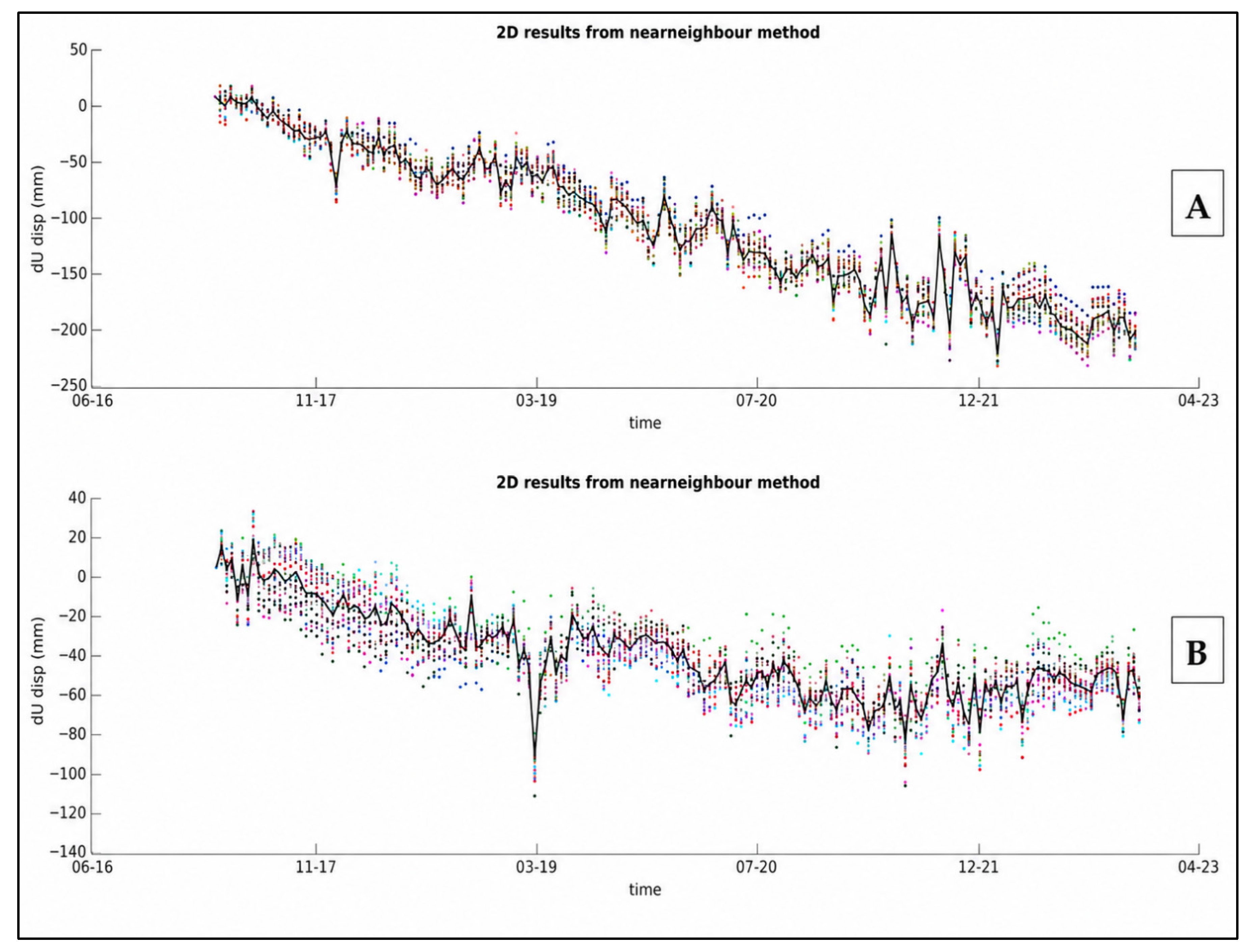
Epoch selection was conducted to examine the temporal progression of deformation throughout the dataset. Differences observed across epochs reflect the development of vertical displacement over time. The results indicate that vertical deformation becomes detectable around epoch 60 (Figure 14B), increases in magnitude by epoch 120 (Figure 14C), and is distinctly evident by epoch 175 (Figure 14D). This trend suggests a gradual but continuous deformation process, reflecting the cumulative nature of ground subsidence. Figure 14A illustrates the initial epoch, where the deformation signal is not yet evident. Figure 14D shows vertical displacement at Tanggulangin, Wunut, and Lusi mud volcano areas. The time series vertical deformation at Tanggulangin (A) and Wunut (B) is shown in Figure 15.
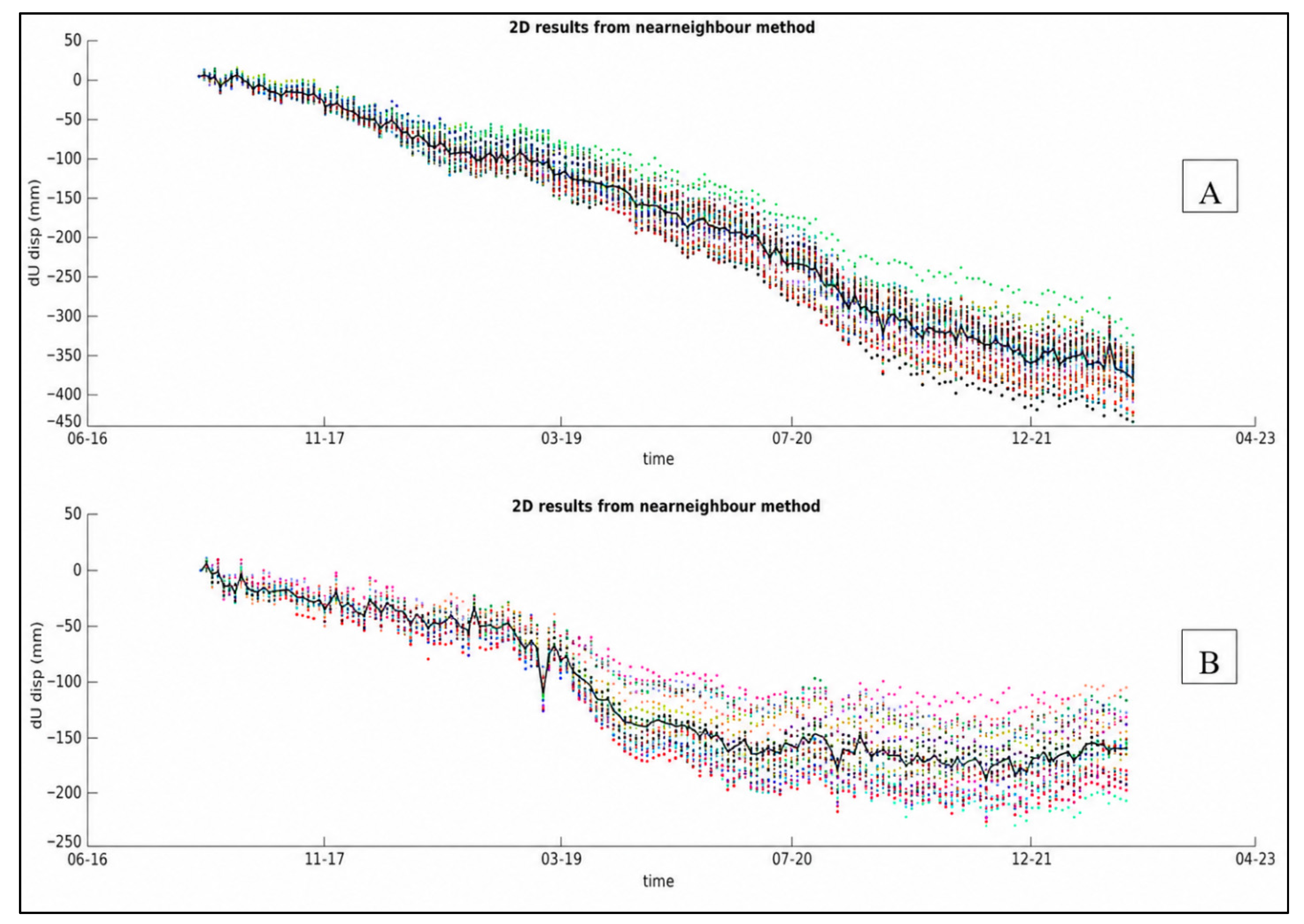
Statistical results of mean vertical velocity displacement for Tanggulangin (A) with mean vertical velocity displacement (dU): −32.16 mm/year, standard deviation std_dU: 2.12 mm/year. Location B (Wunut) mean vertical velocity displacement (dU): −12.70 mm/year, standard deviation std_dU: 2.84 mm/year.
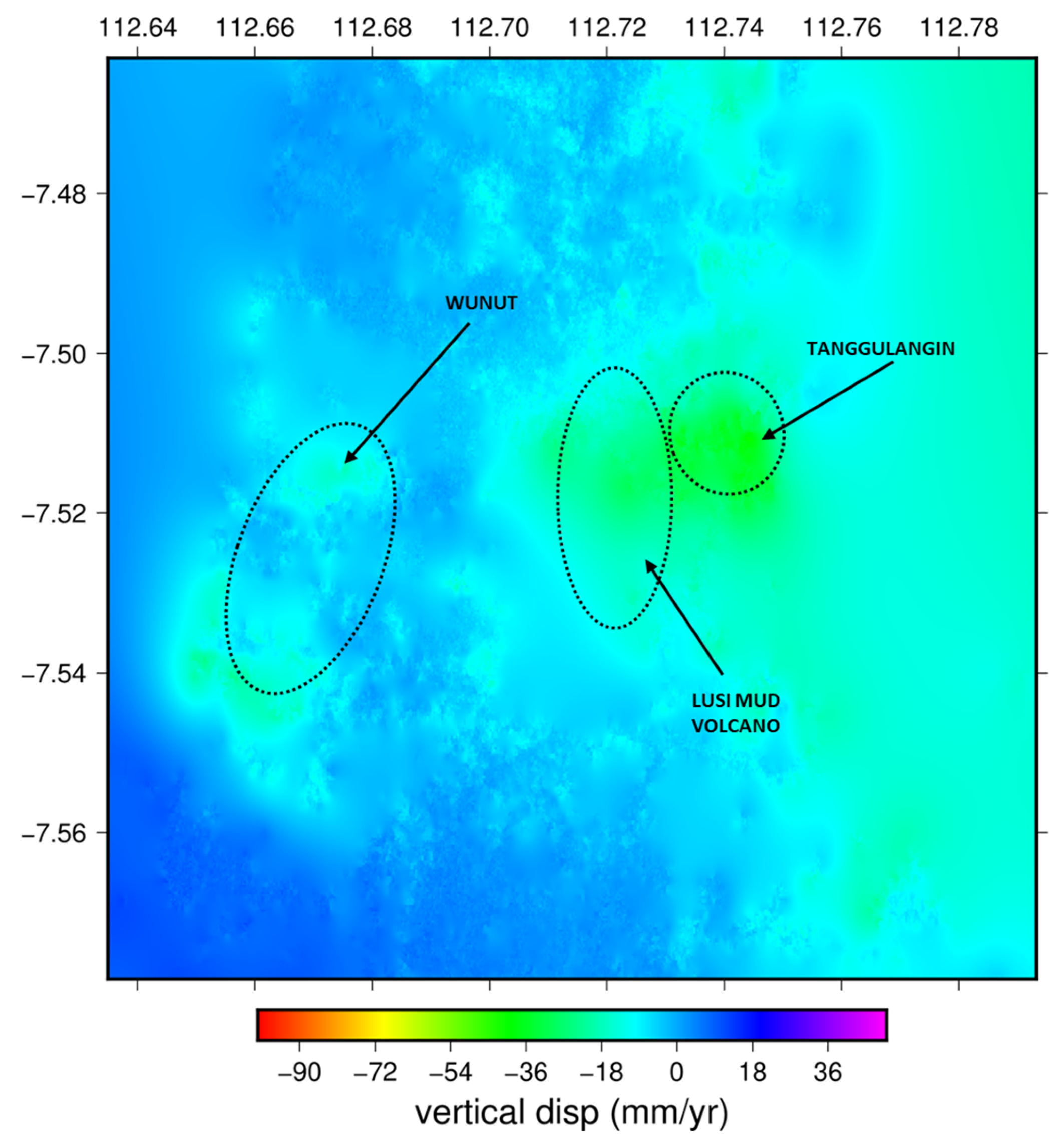
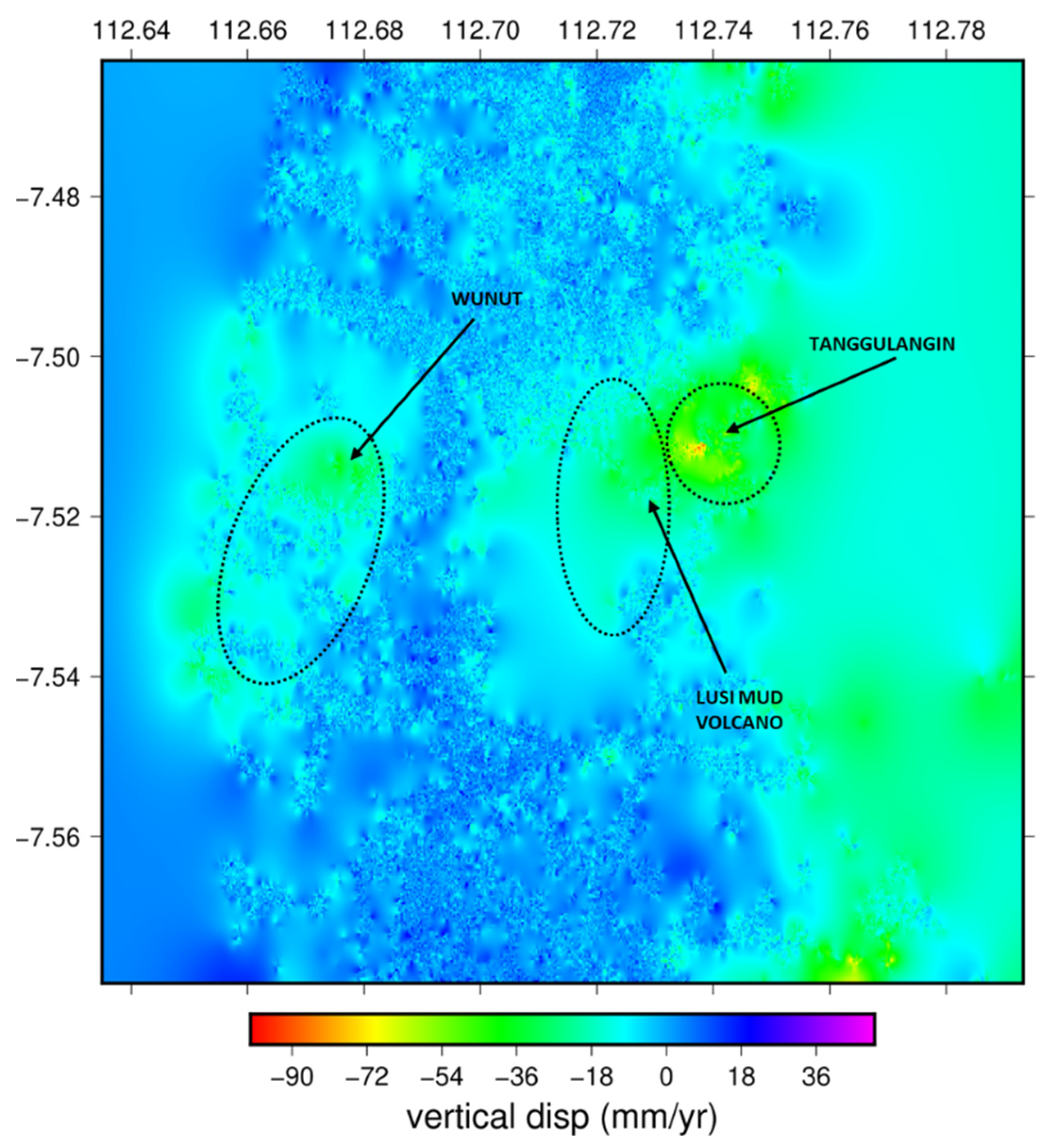
The vertical displacement obtained from the ascending–descending decomposition reveals the highest subsidence rate, with a mean value of −41.01 mm/year. This result highlights the effectiveness of the decomposition approach in estimating the vertical component of ground deformation. The corresponding result is presented in Figure 16.
Figure 15. Time series of vertical displacement of PS-InSAR during 2016−2022 (A) Tanggulangin and (B) Wunut.
Geosciences 16 00204 g015
Figure 16. Mean vertical velocity displacement of PS-InSAR during 2016−2022 from Sentinel-1 SAR imagery.
Geosciences 16 00204 g016
The results of the vertical decomposition of SBAS data for LOS-ascending and LOS-descending are shown in Figure 17, yielding quite different results compared to PS-InSAR data. The time series data shows the consistency of land subsidence; this is evident from the visible vertical displacement at epochs 50, 100, and 161 in Figure 17B, Figure 17C, and Figure 17D, respectively. From the vertical decomposition of SBAS data, the largest vertical displacement was −510.43 mm for the period 2017–2022.
Figure 17 shows the vertical deformation that occurred at Tanggulangin, Wunut, and Lusi mud volcano areas. The time series vertical deformation at Tanggulangin (A) and Wunut (B) is shown in Figure 18.
Statistical results of mean vertical velocity displacement for Tanggulangin: mean vertical velocity displacement (dU): −58.84 mm/year, standard deviation std_dU: 9.80 mm/year. Wunut: mean vertical velocity displacement (dU): −30.49 mm/year, standard deviation std_dU: 6.84 mm/year.
For the mean vertical velocity displacement obtained from the SBAS ascending–descending decomposition process, the largest velocity is −86.08 mm/year, as shown in Figure 19.
Table 3 provides a quantitative and qualitative comparison between the two methods, highlighting their respective strengths and limitations under the study area conditions.
Figure 19. Mean vertical velocity displacement of SBAS during 2017−2022 from Sentinel-1 SAR imagery.
Geosciences 16 00204 g019

3.2. GNSS

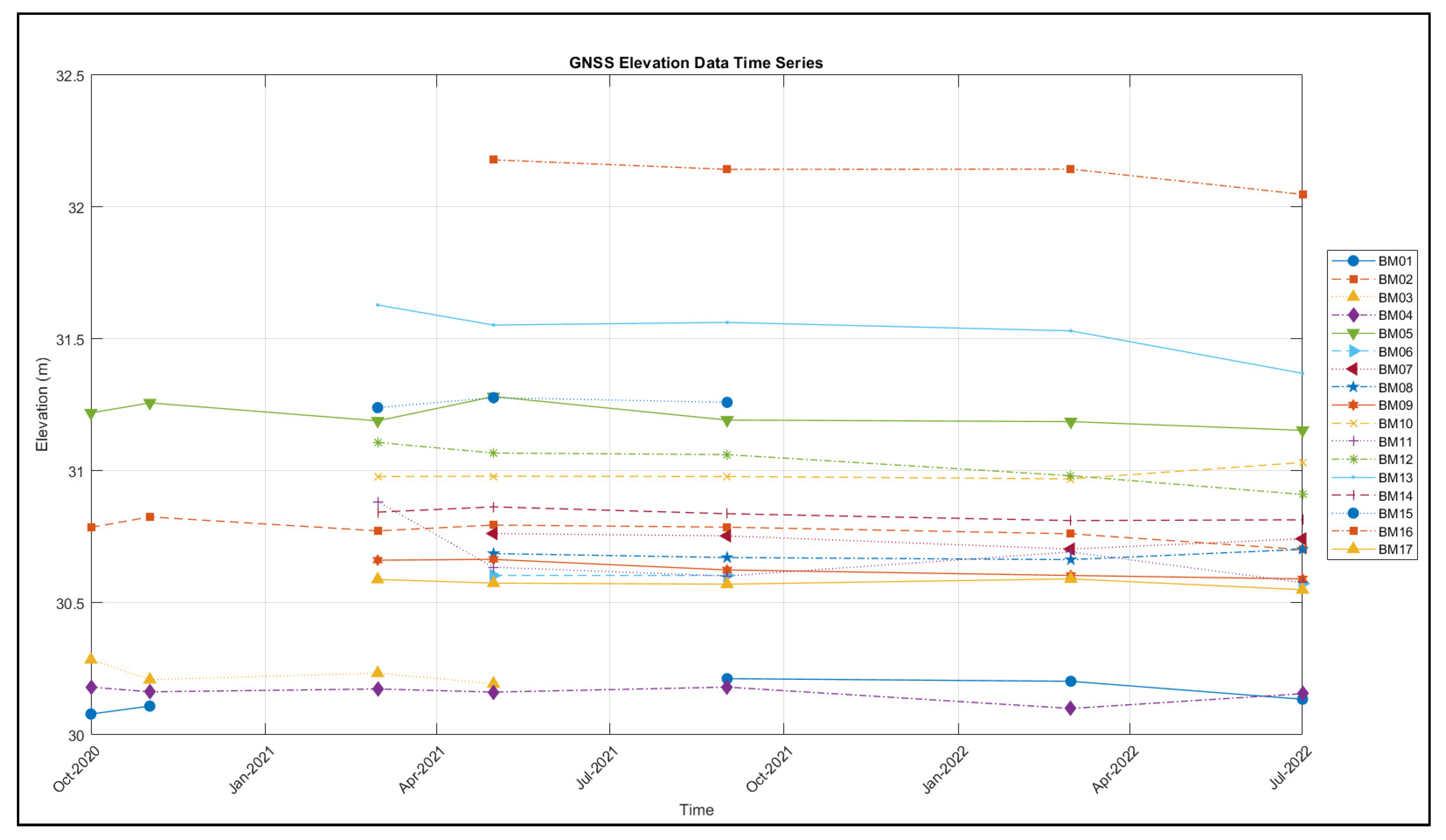
Table 4 presents elevation data collected over multiple periods (October 2020–July 2022) at 17 BMs (BM01–BM17). These measurements are intended to monitor the land subsidence movement by observing changes in elevation over time. The BM for this study was observed over a full 24 h period. This duration was implemented to achieve high precision and reliable vertical positioning. The 13 IGS CORS and 7 InaCORS stations, as previously stated in the material and methods, are used as reference control points. The GNSS BM distribution is shown in Figure 21.
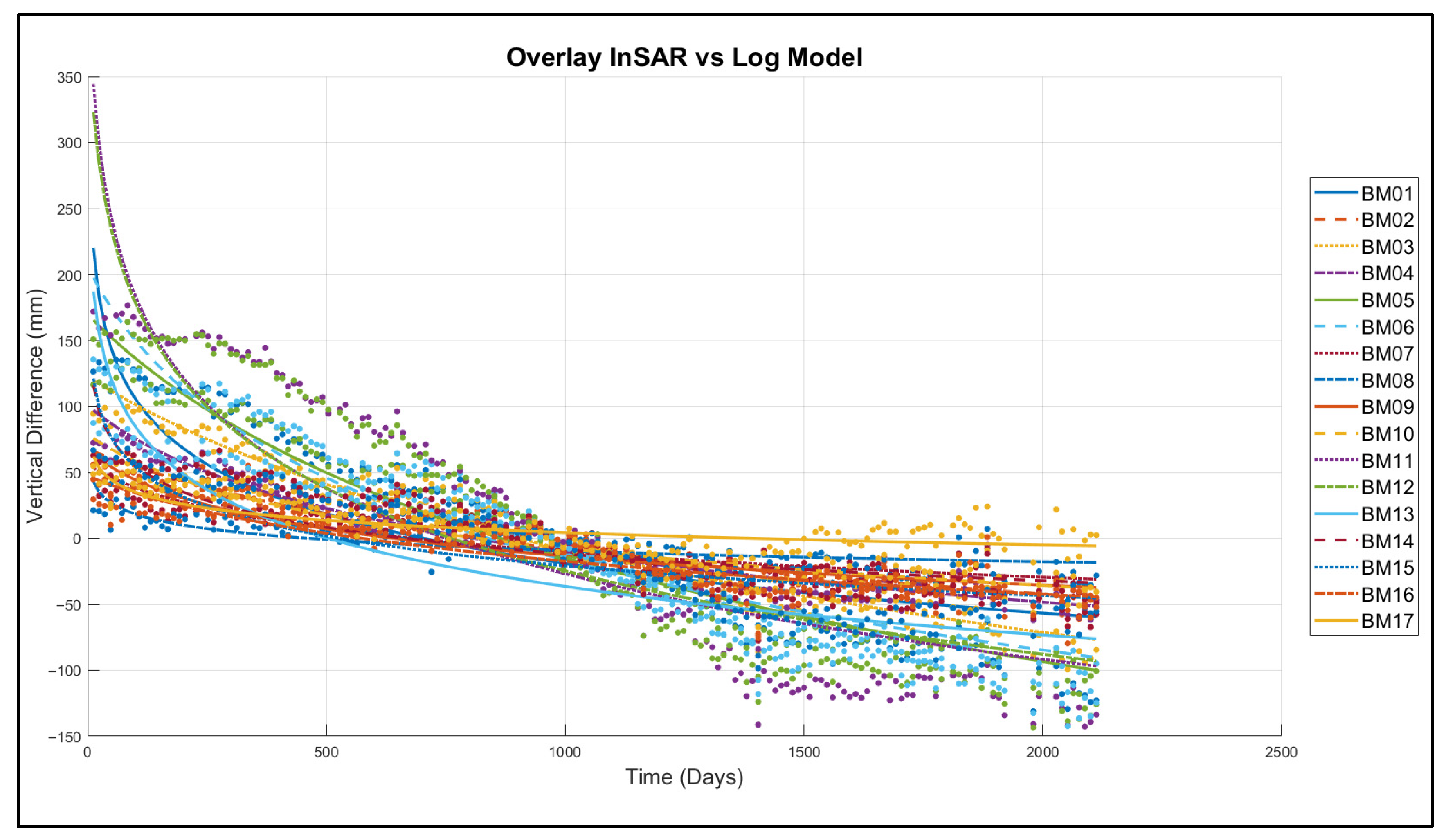
Figure 20. Time series plotting of GNSS elevation data results.
Geosciences 16 00204 g020
Figure 21. The BM distribution for land subsidence validation (image source: Google Earth).
Geosciences 16 00204 g021
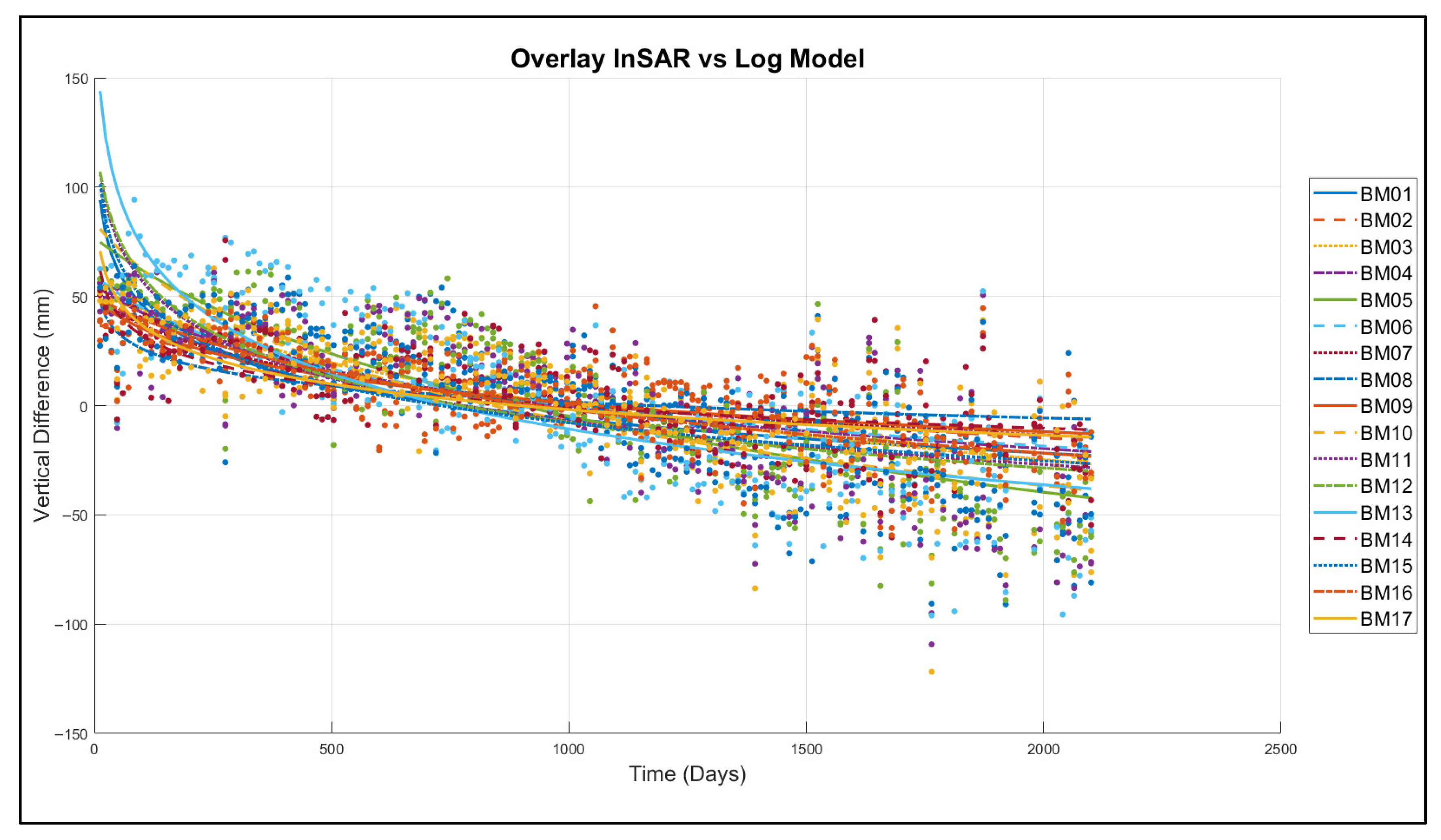
The model of the land subsidence rate derived from GNSS measurements during 2020–2022 is shown in Table 5.
The GNSS average land subsidence rate for linear and logarithmic models is −52.2 mm/year and −47.9 mm/year, respectively. Some GNSS datasets in this study have relatively short observation periods, which may affect the reliability of model parameter estimation. Despite this limitation, a logarithmic model was adopted consistently, as it provides a physically meaningful representation of subsidence processes that commonly exhibit rapid initial deformation followed by a progressive reduction in deformation rate, particularly in areas associated with fluid extraction. While shorter time series may not fully constrain the long-term behaviour of ground deformation, they are still capable of capturing the early-stage response, which can be reasonably approximated by a logarithmic function [84,85,86]. The use of a uniform modelling approach across all stations also ensures consistency and facilitates comparison of subsidence characteristics, although interpretations derived from shorter datasets are made with appropriate caution. The results of the best-fitting GNSS model and PS-InSAR data set are shown discussion chapter. Although the GNSS observations generally indicate subsidence across the study area, several benchmarks show temporal patterns that differ from the dominant trend. Such variations may reflect local instability, relatively short observation periods, or incomplete time series records at specific points. Despite these local deviations, the majority of benchmarks exhibit a decreasing elevation trend over time, confirming that land subsidence remains the predominant deformation pattern in the monitored area.

3.3. Levelling

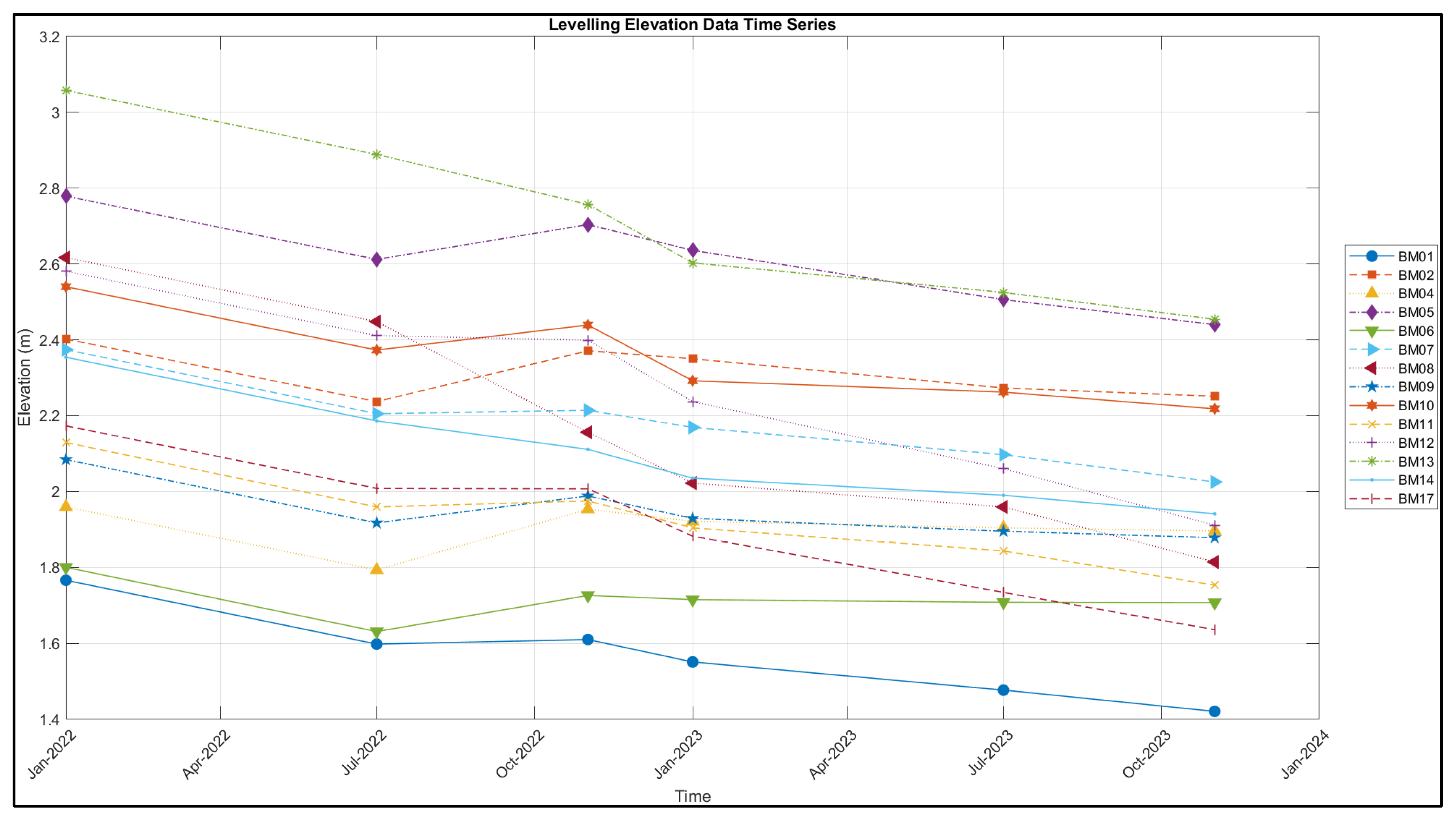
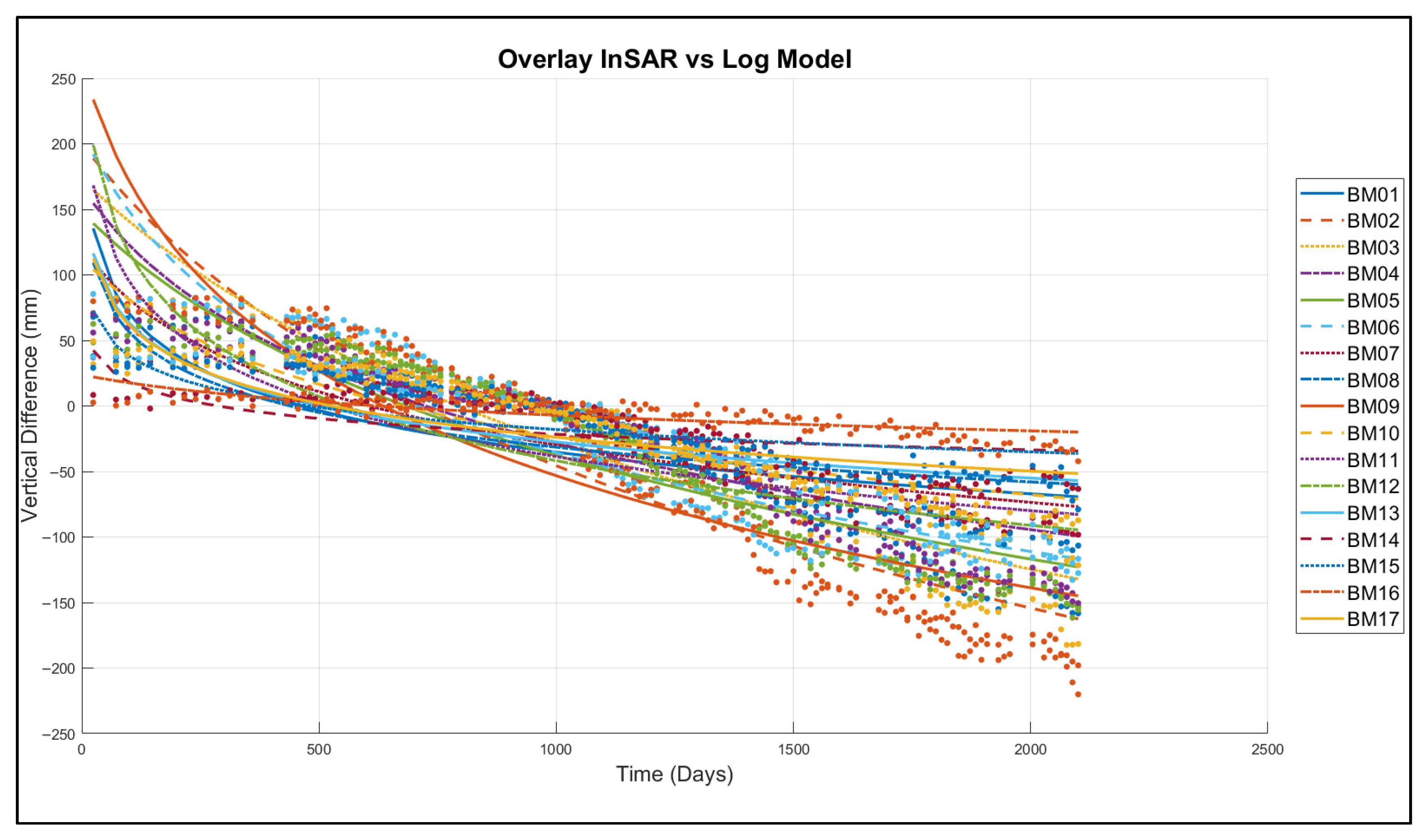
Table 6 presents elevation data collected over multiple periods (January 2022–November 2023) at 17 BMs (BM01–BM17). These measurements are intended to monitor the land subsidence by observing elevation over time through levelling. The distribution of BM points can be seen in Figure 21, where the levelling measurement points coincide with the GNSS points. Based on the data presented in Table 4 and Table 5, some BMs are missing or show inconsistencies with the GNSS data due to physical damage or marker loss in the field. As a result, these BMs could not be re-measured using the levelling method. This limitation is unavoidable given the site conditions. However, the remaining BMs still provide sufficient spatial coverage to support a reliable assessment of subsidence.
From Figure 22, the levelling data reveal a clear and continuous subsidence pattern across all benchmarks throughout the observation period from January 2022 to November 2023. In general, the elevation values show a decreasing trend over time, indicating ongoing land subsidence, though minor variations occur at several points. Subsidence varies spatially, with relatively stable areas experiencing less than 10 cm of displacement. This data, when compared with the vertical deformation from InSAR (Figure 15 and Figure 18), shows a broadly similar trend with vertical deformation results from SBAS.
Table 7 presents the elevation difference data between epochs from levelling data; the results still show land subsidence at each measured point.
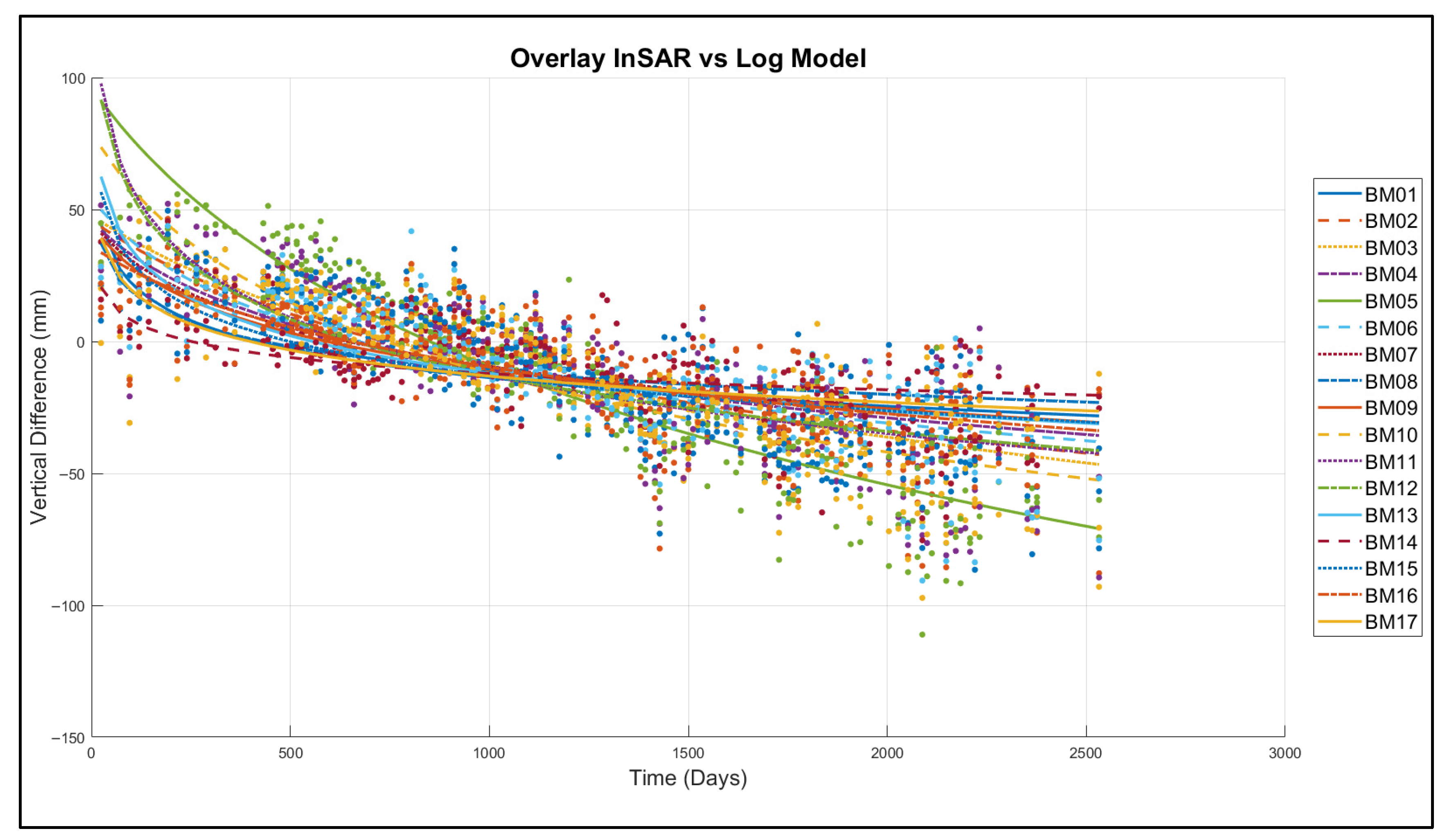
The model of the land subsidence rate derived from levelling measurements during 2022–2023 is shown in Table 8. Table 8 also presents the Root Mean Square Error (RMSE) of the logarithmic model, which quantifies the average deviation between the observed levelling data and model prediction.
The levelling land subsidence rate for the linear and logarithmic models is −205.4 mm/year and −201.8 mm/year, respectively. The results of GNSS and levelling measurements are modelled using a logarithmic model. The model typically shows rapid development and initial settlement that slows over time, representing the compaction process. Unlike exponential models, which can shoot to infinity, or polynomials, which may not detect the limiting behaviour of soil compaction, logarithmic models better model the physical consolidation of soft, compressible, or clay-rich sediments [84,85,86].

4. Discussion

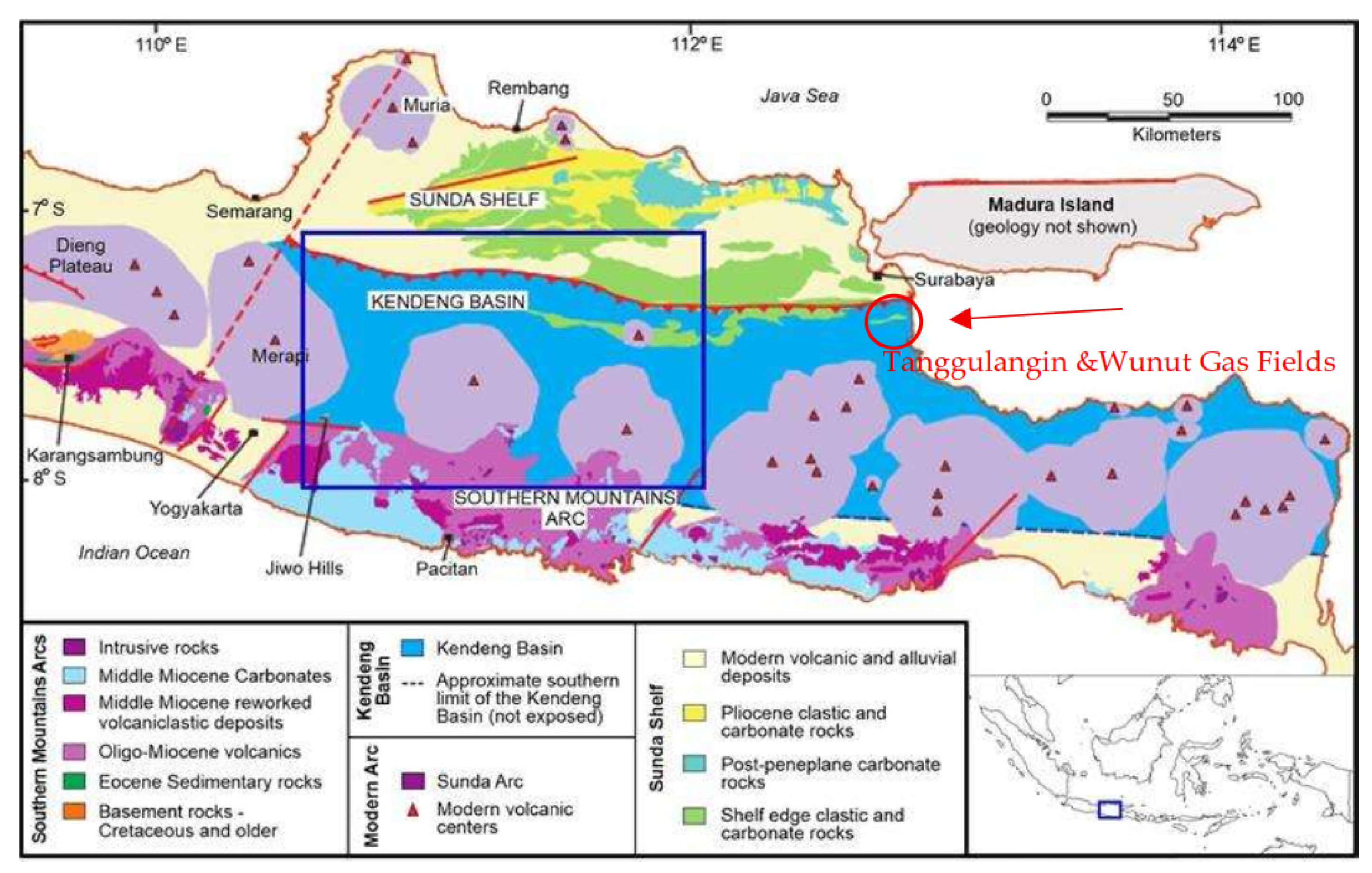
The Tanggulangin and Wunut Gas Fields are located in the Kendeng Basin [91,92]. The stratigraphy of the Kendeng zone consists of seven rock formations, namely the Alluvial layer, Notopuro Formation, Kabuh Formation, Pucangan Formation, Kalibeng Formation, Kujung Formation, and Ngimbang Formation [93,94]. The geological history of the Kendeng Basin is recorded through a series of distinct lithological units that trace its evolution from a deep-sea trough to a terrestrial volcanic area. The oldest known unit is the Pelang Formation, dating back to the Early Miocene. It is characterised primarily by massive marls and calcarenites rich in planktonic foraminifera, suggesting a very deep marine environment at the onset of basin formation. During the Middle to Late Miocene, the Kerek Formation emerged, consisting of a complex sequence of turbidites in which volcanic sandstones alternate with claystones and marls. This formation is a hallmark of the basin, reflecting high-energy sediment flows and increasing volcanic influence from the nearby arc.
As the basin progressed into the Late Miocene and Pliocene, the Kalibeng Formation was deposited. This unit is dominated by thick, uniform globigerina marls, often containing tuffaceous material, which indicates a period of relative tectonic stability before the major folding events. Toward the end of the Pliocene and into the Early Pleistocene, the Sonde Formation shows a clear shallowing of the basin, with a transition into sandy marls and reefal limestones. Finally, the Notopuro Formation marks the end of marine deposition during the Pleistocene era. It consists of coarse volcanic breccias, conglomerates, and tuffs, signifying that the basin had been uplifted and was being covered by lava and debris from the emerging modern volcanoes.
The alluvial layers within the Kendeng Basin possess unique characteristics that significantly influence ground stability. Regarding characteristics and composition, these layers are dominated by unconsolidated sedimentary materials consisting of alternating sequences of clay, silt, and sand. These materials originate from the erosion of older sedimentary ridges and reworked volcanic debris. Because these deposits are geologically recent (Holocene), they exhibit low density, high porosity, and are often saturated with water, particularly in floodplain areas.
These compositional factors are the primary drivers of land subsidence in the region. The alluvial clays have high compressibility, meaning the soil easily undergoes consolidation or volume shrinkage when subjected to structural loads or due to a significant drop in groundwater levels. Furthermore, because the deeper subsurface of the Kendeng Zone is composed of soft deep-sea sediments, the presence of thick alluvial layers atop them can exacerbate regional subsidence rates. For surveying and construction professionals, this necessitates high precision in monitoring land deformation and careful foundation planning to mitigate the risk of structural failure caused by uneven ground settlement. The illustration of the Kendeng Basin is shown in Figure 24.
Figure 23. Location of Tanggulangin and Wunut Gas Fields, marked with a circle [95].
Geosciences 16 00204 g023
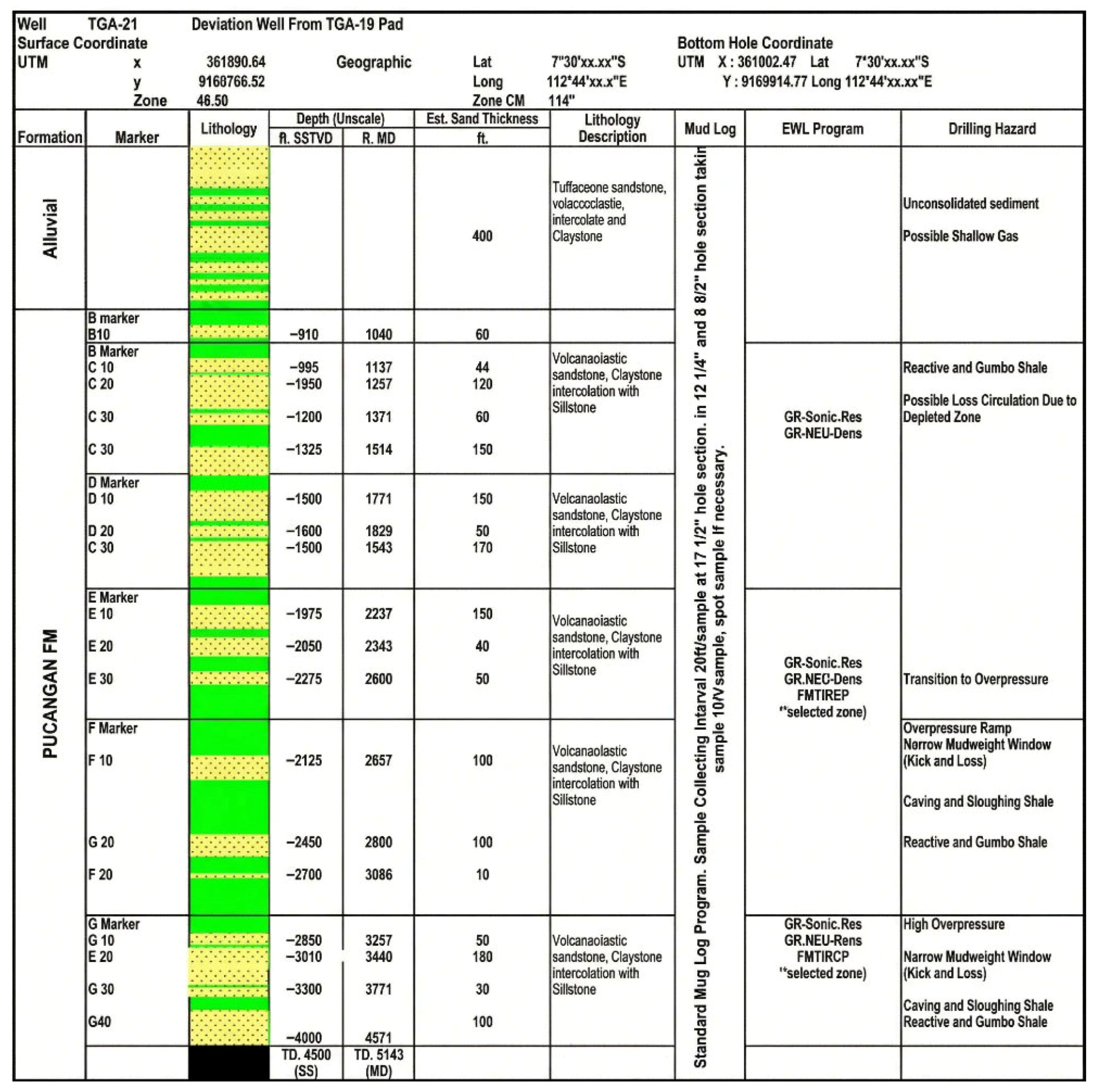
From the well prognosis results from one of the gas well drilling locations in Tanggulangin, the subsurface soil layer consists of an alluvial layer at depths of 0–400 feet and a Pucangan formation at depths of 400–4500 feet. A detailed well prognosis from one of the drilling points is shown in Figure 24 [96].
The subsurface condition, as indicated by the well log, shows that the study area is dominated by unconsolidated alluvial deposits overlying the Pucangan Formation. The shallow alluvial layer, composed of loosely consolidated sediments, is highly susceptible to compaction and is considered the main contributor to the observed surface subsidence.
In addition, the Pucangan Formation consists of interbedded volcanoclastic sandstone, claystone, and siltstone, which may also contribute to long-term deformation due to its compressible nature. The presence of overpressure zones and reactive shale further indicates that subsurface mechanical instability may enhance subsidence. This study focuses only on the general subsurface characteristics relevant to the observed deformation. A detailed geological interpretation of all stratigraphic units is beyond the scope of this study, and only the formations directly related to the deformation process are discussed.
The concern is that land subsidence is significant and occurs around gas production wells within a radius of less than 1 km. This result is a question mark because the drilling pipe reaches a depth of more than 4500 feet, yet it affects the soil layer above it.
From Figure 25 and Figure 26, the vertical deformation map shows a heterogeneous pattern of ground subsidence across the study area. Moderate to high deformation values are concentrated in the Tanggulangin area, indicating that subsidence does not occur uniformly but varies with local ground conditions. The observed deformation may be associated with subsurface sediment compaction and may also be influenced by hydrocarbon extraction activities.
Figure 24. Well prognosis from one of the drilling points at the Tanggulangin gas fields, based on the previous project feasibility study by Minarak Brantas Inc. [96].
Geosciences 16 00204 g024
However, the deformation pattern cannot be attributed solely to gas extraction based on geodetic observations alone, because the measured subsidence may also reflect the combined effects of shallow alluvial compaction, local geological conditions, and other site-specific factors. The presence of clustered subsidence zones indicates areas where deformation is more intense than in the surrounding region, whereas other parts of the study area show relatively low deformation, suggesting comparatively more stable ground conditions.
Figure 25. Location of Tanggulangin and Wunut gas wells in areas affected by land subsidence based on PS-InSAR during 2017–2022 (image source: Google Earth).
Geosciences 16 00204 g025
Figure 26. Location of Tanggulangin and Wunut gas wells in areas affected by land subsidence based on SBAS during 2017–2022 (image source: Google Earth).
Geosciences 16 00204 g026
To support these findings, GNSS was used as the primary dataset for validating the InSAR results, as GNSS-derived displacement and velocity are more directly comparable with InSAR-derived deformation rates. Moreover, the GNSS observation period was relatively longer than that of the levelling measurements, making GNSS more suitable for comparison with the longer-term deformation trends detected by InSAR. Levelling measurements were used as complementary data to support the interpretation of vertical deformation. Although levelling provides high vertical accuracy, the levelling-derived subsidence values at several benchmarks were higher than those obtained from PS-InSAR and GNSS, despite the shorter observation period. Therefore, direct comparison between levelling and InSAR-derived deformation rates should be interpreted with caution.
To compare the results of the GNSS subsidence model with PS-InSAR and SBAS, see Figure 27, Figure 28, Figure 29 and Figure 30, respectively.
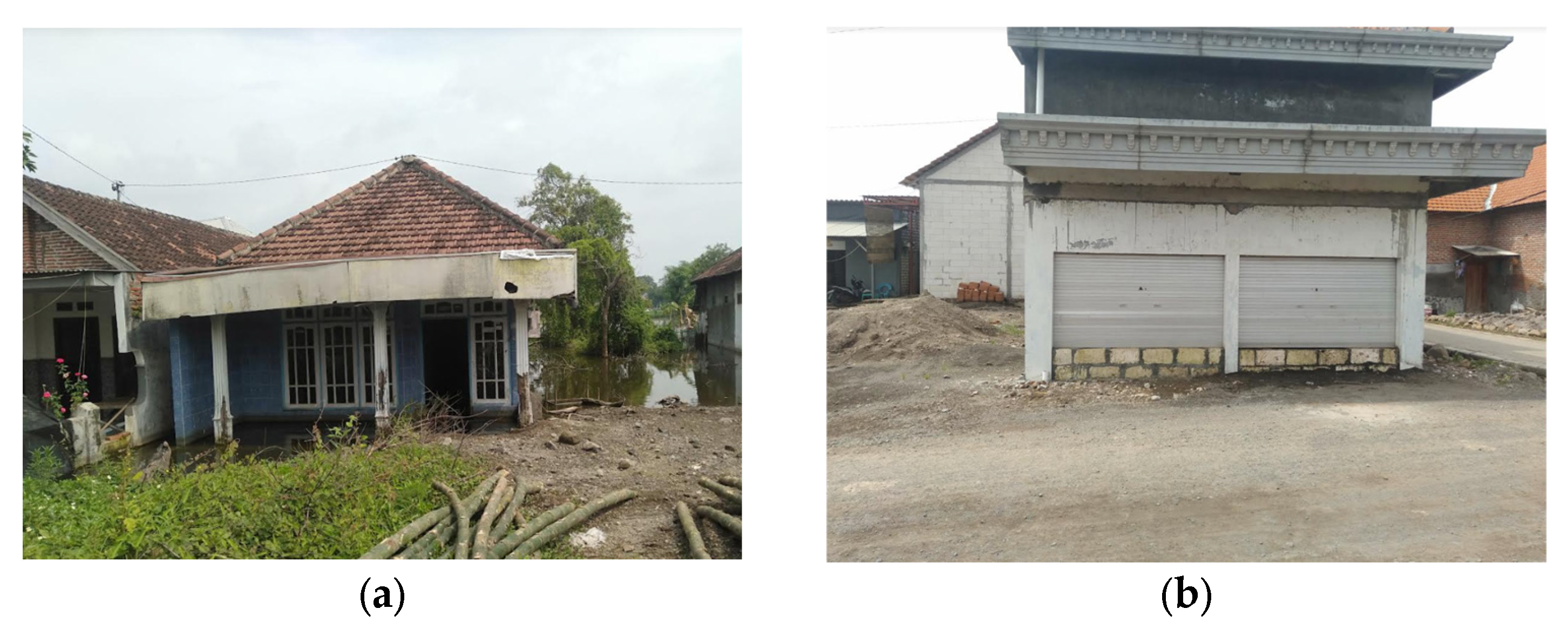
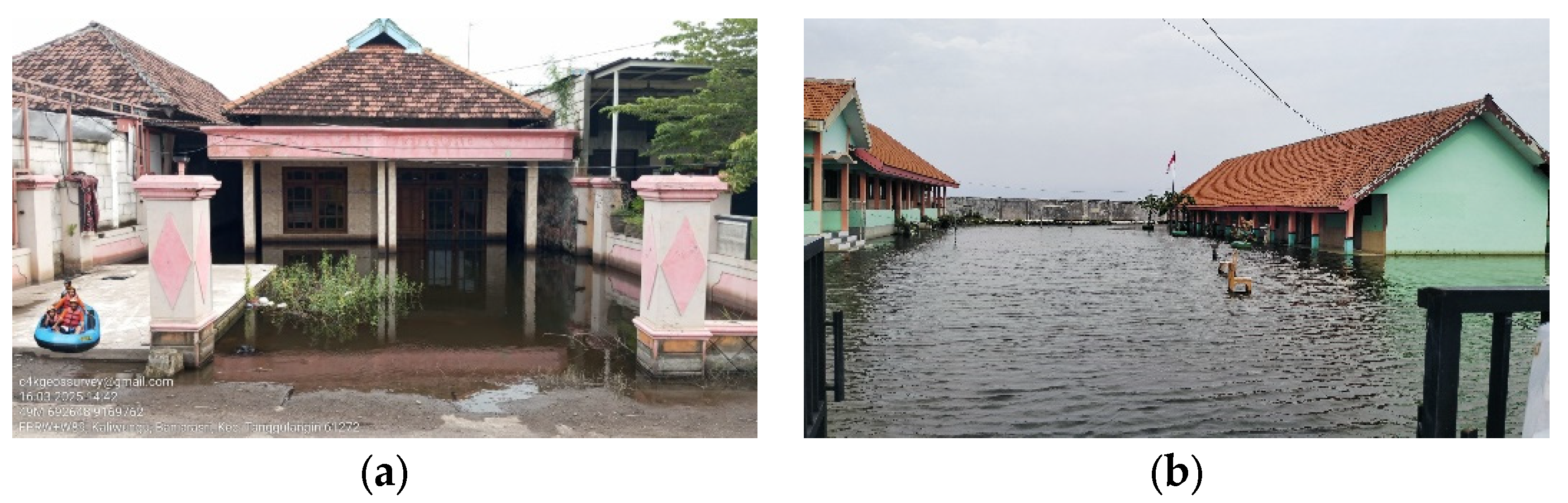
The effect of land subsidence at the location is evident in several documents from 2022 and 2025. From photos taken in the field shown in Figure 30. The figure shows that residents’ houses have been submerged in water and are uninhabitable. In contrast, other houses had to be filled with soil to prevent submersion. From field investigations, several houses had to be filled with more than 75 cm of material to prevent water from entering. The effect of land subsidence in 2022 is shown in Figure 31.
The coordinates of Figure 31a are 7°30′15.50” S, 112°44′43.25” E, and 31B is 7°30′17.21” S, 112°44′40.73” E, close to BM06. The land subsidence effect continues in 2025; it appears to be worsening, with several buildings, including houses and schools, becoming unusable due to flooding. The flooded buildings are shown in Figure 31. (Image source: author’s documentation).
The coordinates of Figure 32a are 7°30′26.79” S, 112°44′46.17” E, close to BM03, and of Figure 32b are 7°30′33.69” S, 112°44′41.54” E, close to BM01.

5. Conclusions

This study shows that the integration of PS-InSAR, SBAS, GNSS, and levelling observations provides a more comprehensive understanding of land subsidence in the gas exploitation area of Sidoarjo, East Java. Both PS-InSAR and SBAS successfully identified the main subsiding zones in the Tanggulangin, Wunut, and surrounding Lusi mud volcano areas, although the estimated deformation magnitudes differed between the two approaches. The PS-InSAR results show a maximum vertical displacement of −249.4 mm and a maximum vertical velocity of −41.01 mm/year, whereas SBAS yields a maximum vertical displacement of −510.43 mm and a maximum vertical velocity of −86.08 mm/year. These differences reflect the influence of processing strategy, scatterer characteristics, and spatial sampling under rural–wetland conditions.
Ground-based observations further confirm the presence of ongoing subsidence in the study area. GNSS measurements indicate an average linear subsidence rate of −52.2 mm/year during 2020–2022, while levelling observations show an average linear subsidence rate of −205.4 mm/year during 2022–2023. Although the magnitudes differ, the combined results consistently indicate active deformation across the monitored area. Overall, the integration of spatially continuous InSAR observations with point-based GNSS and levelling measurements improves the interpretation of subsidence patterns and highlights the importance of considering differences in observation scale, temporal coverage, and measurement characteristics when comparing multi-source geodetic datasets.

Author Contributions

Conceptualization, A.K., N.W. and H.; formal analysis, A.K., N.W. and H.; investigation, A.K. and N.W.; data curation, A.K., N.W. and H.; writing—original draft preparation, A.K.; writing—review and editing, A.K., N.W. and H.; visualisation, A.K. All authors have read and agreed to the published version of the manuscript.

Funding

This research is partly funded by the Rekognisi Tugas Akhir (RTA) Program from Universitas Gadjah Mada.

Data Availability Statement

Data available on request due to restrictions.

Acknowledgments

The authors would like to express their gratitude to the anonymous reviewers for their insightful feedback and constructive suggestions, which have greatly contributed to the improvement of this study. Special thanks go to the developers and contributors of the Generic Mapping Tools (GMT) [97], GMTSAR [98], STAMPS [80,99], InSAR G2S [54], GAMIT/GLOBK [100,101], and QGIS [102] applications, whose tools have been invaluable for data processing and analysis in this study.

Conflicts of Interest

The authors declare no conflict of interest.

References

  1. Marker, B.R. Land Subsidence. In Encyclopedia of Natural Hazards; Encyclopedia of Earth Sciences Series; Springer: Dordrecht, The Netherlands, 2013; pp. 583–590. [Google Scholar] [CrossRef]
  2. Galloway, D.L.; Baum, B.R.L.; Harp, E.L. Landslide and Land Subsidence Hazards to Pipelines; U.S. Geological Survey (USGS): Reston, VI, USA, 2008.
  3. Ng, A.H.M.; Ge, L.; Li, X.; Abidin, H.Z.; Andreas, H.; Zhang, K. Mapping Land Subsidence in Jakarta, Indonesia Using Persistent Scatterer Interferometry (PSI) Technique with ALOS PALSAR. Int. J. Appl. Earth Obs. Geoinf. 2012, 18, 232–242. [Google Scholar] [CrossRef]
  4. Yastika, P.E.; Shimizu, N.; Abidin, H.Z. Monitoring of Long-Term Land Subsidence from 2003 to 2017 in Coastal Area of Semarang, Indonesia by SBAS DInSAR Analyses Using Envisat-ASAR, ALOS-PALSAR, and Sentinel-1A SAR Data. Adv. Space Res. 2019, 63, 1719–1736. [Google Scholar] [CrossRef]
  5. Allen, A.S. Part II Case Histories of Land Subsidence Due to Ground-Water Withdrawal. In Guidebook to Studies of Land Subsidence Due to Ground-Water Withdrawal; UNESCO: Paris, France, 1984. [Google Scholar]
  6. Nagel, N.B. Compaction and Subsidence Issues within the Petroleum Industry: From Wilmington to Ekofisk and Beyond. Phys. Chem. Earth Part A Solid Earth Geod. 2001, 26, 3–14. [Google Scholar] [CrossRef]
  7. Chen, Z.R. Poroelastic Model for Induced Stresses and Deformations in Hydrocarbon and Geothermal Reservoirs. J. Pet. Sci. Eng. 2011, 80, 41–52. [Google Scholar] [CrossRef]
  8. Chaussard, E.; Amelung, F.; Abidin, H.; Hong, S.H. Sinking Cities in Indonesia: ALOS PALSAR Detects Rapid Subsidence Due to Groundwater and Gas Extraction. Remote Sens. Environ. 2013, 128, 150–161. [Google Scholar] [CrossRef]
  9. Verhoef, H.M.E.; de Heus, H.M. On the Estimation of Polynomial Breakpoints in the Subsidence of the Groningen Gasfield. Surv. Rev. 1995, 33, 17–30. [Google Scholar] [CrossRef]
  10. Van Thienen-Visser, K.; Pruiksma, J.P.; Breunese, J.N. Compaction and Subsidence of the Groningen Gas Field in the Netherlands. Proc. Int. Assoc. Hydrol. Sci. 2015, 372, 367–373. [Google Scholar] [CrossRef]
  11. Fokker, P.A.; Van Thienen-Visser, K. Inversion of Double-Difference Measurements from Optical Leveling for the Groningen Gas Field. Int. J. Appl. Earth Obs. Geoinf. 2016, 49, 1–9. [Google Scholar] [CrossRef]
  12. Voyiadjis, G.Z.; Zhou, Y. Time-Dependent Modeling of Subsidence Due to Drainage in Bounding Shales: Application to a Depleted Gas Field in Louisiana. J. Pet. Sci. Eng. 2018, 166, 175–187. [Google Scholar] [CrossRef]
  13. Grebby, S.; Orynbassarova, E.; Sowter, A.; Gee, D.; Athab, A. Delineating Ground Deformation over the Tengiz Oil Field, Kazakhstan, Using the Intermittent SBAS (ISBAS) DInSAR Algorithm. Int. J. Appl. Earth Obs. Geoinf. 2019, 81, 37–46. [Google Scholar] [CrossRef]
  14. Dodson, A.H. GPS for Height Determination. Surv. Rev. 1995, 33, 66–76. [Google Scholar] [CrossRef]
  15. Woo, K.S.; Eberhardt, E.; Rabus, B.; Stead, D.; Vyazmensky, A. Integration of Field Characterisation, Mine Production and InSAR Monitoring Data to Constrain and Calibrate 3-D Numerical Modelling of Block Caving-Induced Subsidence. Int. J. Rock Mech. Min. Sci. 2012, 53, 166–178. [Google Scholar] [CrossRef]
  16. Zhang, B.; Wang, R.; Deng, Y.; Ma, P.; Lin, H.; Wang, J. Mapping the Yellow River Delta Land Subsidence with Multitemporal SAR Interferometry by Exploiting Both Persistent and Distributed Scatterers. ISPRS J. Photogramm. Remote Sens. 2019, 148, 157–173. [Google Scholar] [CrossRef]
  17. Gabriel, A.K.; Goldstein, R.M.; Zebker, H.A. Mapping Small Elevation Changes over Large Areas: Differential Radar Interferometry. J. Geophys. Res. 1989, 94, 9183–9191. [Google Scholar] [CrossRef]
  18. Bitelli, G.; Bonsignore, F.; Unguendoli, M. Levelling and GPS Networks to Monitor Ground Subsidence in the Southern Po Valley. J. Geodyn. 2000, 30, 355–369. [Google Scholar] [CrossRef]
  19. Gumilar, I.; Abidin, H.; Hutasoit, L.; Hakin, D.M.; Andreas, H.; Sidiq, T.; Gamal, M. Mapping of Land Subsidence Characteristic Using Geodetic Methods and Its Impacts Due to Wider Expansion of Flooding in Bandung Basin. Maj. Ilm. Gkobe 2012, 14, 17–27. [Google Scholar]
  20. ElGharbawi, T.; Tamura, M. Measuring Deformations Using SAR Interferometry and GPS Observables with Geodetic Accuracy: Application to Tokyo, Japan. ISPRS J. Photogramm. Remote Sens. 2014, 88, 156–165. [Google Scholar] [CrossRef]
  21. Liu, Y.; Zhao, C.; Zhang, Q.; Yang, C. Complex Surface Deformation Monitoring and Mechanism Inversion over Qingxu-Jiaocheng, China with Multi-Sensor SAR Images. J. Geodyn. 2018, 114, 41–52. [Google Scholar] [CrossRef]
  22. Femi Emmanuel, I.; Vitalis Chidi, O. Characterisation and Mapping of Land Subsidence Based on Geodetic Observations in Lagos, Nigeria. Geod. Geodyn. 2020, 11, 151–162. [Google Scholar] [CrossRef]
  23. Van Leijen, F.J.; Ketelaar, V.B.H.; Marinkovic, P.; Hanssen, R.F. Persistent Scatterer Interferometry: Precision, Reliability and Integration. In Proceedings of the ISPRS Hannover Workshop High Resolution Earth Imaging for Geospatial Information, Hannover, Germany, 17–20 May 2005. [Google Scholar]
  24. Ketelaar, V.B.H. Monitoring Surface Deformation Induced by Hydrocarbon Production Using Satellite Radar Interferometry. Doctoral Dissertation, Delft University of Technology, Delft, The Netherlands, 2008. [Google Scholar]
  25. Fan, H.; Wang, L.; Wen, B.; Du, S. A New Model for Three-Dimensional Deformation Extraction with Single-Track InSAR Based on Mining Subsidence Characteristics. Int. J. Appl. Earth Obs. Geoinf. 2021, 94, 102223. [Google Scholar] [CrossRef]
  26. Su, G.; Wu, Y.; Zhan, W.; Zheng, Z.; Chang, L.; Wang, J. Spatiotemporal Evolution Characteristics of Land Subsidence Caused by Groundwater Depletion in the North China Plain during the Past Six Decades. J. Hydrol. 2021, 600, 126678. [Google Scholar] [CrossRef]
  27. Hanssen, R. Atmospheric Heterogeneities in ERS Tandem SAR Interferometry; Delft University Press: Delft, The Netherlands, 1998. [Google Scholar]
  28. Hanssen, R.F. Radar Interferometry Data Interpretation and Error Analysis; Springer: Dordrecht, The Netherlands, 2001. [Google Scholar]
  29. Sousa, J.J.; Hooper, A.J.; Hanssen, R.F.; Bastos, L.C.; Ruiz, A.M. Persistent Scatterer InSAR: A Comparison of Methodologies Based on a Model of Temporal Deformation vs. Spatial Correlation Selection Criteria. Remote Sens. Environ. 2011, 115, 2652–2663. [Google Scholar] [CrossRef]
  30. Sousa, J.J.; Ruiz, A.M.; Hanssen, R.F.; Bastos, L.; Gil, A.J.; Galindo-Zaldívar, J.; Sanz de Galdeano, C. PS-InSAR Processing Methodologies in the Detection of Field Surface Deformation-Study of the Granada Basin (Central Betic Cordilleras, Southern Spain). J. Geodyn. 2010, 49, 181–189. [Google Scholar] [CrossRef]
  31. Ferretti, A.; Prati, C.; Rocca, F. Permanent Scatterers in SAR Interferometry. IEEE Trans. Geosci. Remote Sens. 2001, 39, 8–20. [Google Scholar] [CrossRef]
  32. Hooper, A.; Zebker, H.; Segall, P.; Kampes, B. A New Method for Measuring Deformation on Volcanoes and Other Natural Terrains Using InSAR Persistent Scatterers. Geophys. Res. Lett. 2004, 31, L23611. [Google Scholar] [CrossRef]
  33. Hooper, A.J. A Multi-Temporal InSAR Method Incorporating Both Persistent Scatterer and Small Baseline Approaches. Geophys. Res. Lett. 2008, 35, L16302. [Google Scholar] [CrossRef]
  34. Caro Cuenca, M.; Hanssen, R.F.; Hooper, A.J.; Arikan, M. Surface Deformation of the Whole Netherlands after PSI Analysis. In Proceedings of the FRINGE Workshop Proceedings, Nürtingen, Germany, 8–11 September 2013; pp. 1–27. [Google Scholar]
  35. Hayati, N. Slope Movement Monitoring of The Ciloto Landslides Area Using InSAR Techniques. Doctoral Dissertation, Technische Universität Braunschweig, Braunschweig, Germany, 2020. [Google Scholar]
  36. Crosetto, M.; Monserrat, O.; Cuevas-González, M.; Devanthéry, N.; Crippa, B. Persistent Scatterer Interferometry: A Review. ISPRS J. Photogramm. Remote Sens. 2016, 115, 78–89. [Google Scholar] [CrossRef]
  37. Werner, C.; Wegmüller, U.; Strozzi, T.; Wiesmann, A. Interferometric Point Target Analysis for Deformation Mapping. In Proceedings of the 2003 IEEE International Geoscience and Remote Sensing Symposium, Toulouse, France, 21–25 July 2003; Volume 7, pp. 4362–4364. [Google Scholar] [CrossRef]
  38. Kampes, M. Displacement Parameter Estimation Using Permanent Scatterer Interferometry. Doctoral Dissertation, Delft University of Technology, Delft, The Netherlands, 2005. [Google Scholar]
  39. Mora, O.; Lanari, R.; Mallorquí, J.J.; Berardino, P.; Sansosti, E. A New Algorithm for Monitoring Localized Deformation Phenomena Based on Small Baseline Differential SAR Interferograms. In Proceedings of the IEEE International Geoscience and Remote Sensing Symposium, Toronto, ON, Canada, 24–28 June 2002; Volume 2, pp. 1237–1239. [Google Scholar] [CrossRef]
  40. Lanari, R.; Casu, F.; Manzo, M.; Zeni, G.; Berardino, P.; Manunta, M.; Pepe, A. An Overview of the Small BAseline Subset Algorithm: A DInSAR Technique for Surface Deformation Analysis. Pure Appl. Geophys 2007, 164, 637–661. [Google Scholar] [CrossRef]
  41. Blanco-Sánchez, P.; Mallorquí, J.J.; Duque, S.; Monells, D. The Coherent Pixels Technique (CPT): An Advanced DInSAR Technique for Nonlinear Deformation Monitoring. Pure Appl. Geophys. 2008, 165, 1167–1193. [Google Scholar] [CrossRef]
  42. Costantini, M.; Falco, S.; Malvarosa, F.; Minati, F.; Telespazio, S.; Tiburtina, A.V. Identification and Analysis of Persistent Scatterers in Series of Sar Images. Int. Geosci. Remote Sens. Symp. 2008, 449–452. [Google Scholar]
  43. Costantini, M.; Ferretti, A.; Minati, F.; Falco, S.; Trillo, F.; Colombo, D.; Novali, F.; Malvarosa, F.; Mammone, C.; Vecchioli, F.; et al. Analysis of Surface Deformations over the Whole Italian Territory by Interferometric Processing of ERS, Envisat and COSMO-SkyMed Radar Data. Remote Sens. Environ. 2017, 202, 250–275. [Google Scholar] [CrossRef]
  44. Crosetto, M.; Biescas, E.; Dura, J.; Closa, J.; Arnaud, A. Generation of Advanced ERS and Envisat Interferometric SAR Products Using the Stable Point Network Technique. Photogramm. Eng. Remote Sens. 2008, 74, 443–450. [Google Scholar] [CrossRef]
  45. Ferretti, A.; Fumagalli, A.; Novali, F.; Prati, C.; Rocca, F.; Rucci, A. A New Algorithm for Processing Interferometric Data-Stacks: SqueeSAR. IEEE Trans. Geosci. Remote Sens. 2011, 49, 3460–3470. [Google Scholar] [CrossRef]
  46. Lagios, E.; Sakkas, V.; Novali, F.; Bellotti, F.; Ferretti, A.; Vlachou, K.; Dietrich, V. SqueeSARTM and GPS Ground Deformation Monitoring of Santorini Volcano (1992–2012): Tectonic Implications. Tectonophysics 2013, 594, 38–59. [Google Scholar] [CrossRef]
  47. Perissin, D.; Wang, T. Repeat-Pass SAR Interferometry with Partially Coherent Targets. IEEE Trans. Geosci. Remote Sens. 2012, 50, 271–280. [Google Scholar] [CrossRef]
  48. Osmanoğlu, B.; Sunar, F.; Wdowinski, S.; Cabral-Cano, E. Time Series Analysis of InSAR Data: Methods and Trends. ISPRS J. Photogramm. Remote Sens. 2016, 115, 90–102. [Google Scholar] [CrossRef]
  49. Doin, M.P.; Lasserre, C.; Peltzer, G.; Cavalié, O.; Doubre, C. Corrections of Stratified Tropospheric Delays in SAR Interferometry: Validation with Global Atmospheric Models. J. Appl. Geophys. 2009, 69, 35–50. [Google Scholar] [CrossRef]
  50. Hetland, E.A.; Musé, P.; Simons, M.; Lin, Y.N.; Agram, P.S.; Dicaprio, C.J. Multiscale InSAR Time Series (MInTS) Analysis of Surface Deformation. J. Geophys. Res. Solid Earth 2012, 117, B02404. [Google Scholar] [CrossRef]
  51. Hooper, A.; Bekaert, D.; Spaans, K.; Arikan, M. Recent Advances in SAR Interferometry Time Series Analysis for Measureng Crustal Deformation. Technophysics 2012, 514, 1–13. [Google Scholar] [CrossRef]
  52. Casu, F.; De Luca, C.; Lanari, R.; Manunta, M.; Zinno, I. The SBAS Sentinel-1 Surveillance service for automatic and systematic generation of Earth surface displacement within the GEP platform. In Proceedings of the 19th EGU General Assembly, EGU2017, Vienna, Austria, 23–28 April 2017. [Google Scholar]
  53. Lanari, R.; Lundgren, P.; Manzo, M.; Casu, F. Satellite radar interferometry time series analysis of surface deformation for Los Angeles, California. Geophys. Res. Lett. 2004, 31, 1237–1239. [Google Scholar] [CrossRef]
  54. Hayati, N.; Niemeier, W.; Sadarviana, V. Ground Deformation in the Ciloto Landslides Area Revealed by Multi-Temporal InSAR. Geosciences 2020, 10, 156. [Google Scholar] [CrossRef]
  55. Davies, R.J.; Brumm, M.; Manga, M.; Rubiandini, R.; Swarbrick, R.; Tingay, M. The East Java Mud Volcano (2006 to Present): An Earthquake or Drilling Trigger? Earth Planet. Sci. Lett. 2008, 272, 627–638. [Google Scholar] [CrossRef]
  56. Mazzini, A.; Svensen, H.; Akhmanov, G.G.; Aloisi, G.; Planke, S.; Malthe-Sørenssen, A.; Istadi, B. Triggering and Dynamic Evolution of the LUSI Mud Volcano, Indonesia. Earth Planet. Sci. Lett. 2007, 261, 375–388. [Google Scholar] [CrossRef]
  57. Abidin, H.Z.; Kusuma, M.A.; Andreas, H.; Gamal, M.; Sumintadireja, P. GPS-Based Monitoring of Surface Displacements in the Mud Volcano Area, Sidoarjo, East Java. In Proceedings of the International Association of Geodesy Symposia; Springer: Berlin/Heidelberg, Germany, 2009; Volume 133, pp. 595–603. [Google Scholar] [CrossRef]
  58. Fukushima, Y.; Mori, J.; Hashimoto, M.; Kano, Y. Subsidence Associated with the LUSI Mud Eruption, East Java, Investigated by SAR Interferometry. Mar. Pet. Geol. 2009, 26, 1740–1750. [Google Scholar] [CrossRef]
  59. Aoki, Y.; Sidiq, T.P. Ground Deformation Associated with the Eruption of Lumpur Sidoarjo Mud Volcano, East Java, Indonesia. J. Volcanol. Geotherm. Res. 2014, 278–279, 96–102. [Google Scholar] [CrossRef]
  60. Sidiq, T.P.; Gumilar, I.; Alkadri, F.; Abidin, H.Z. Analisis Time series Insar (Interferometric Synthetic Aperture Radar) Untuk Pemantauan Deformasi Di Porong, Sidoarjo Tahun 2014–2018. Bull. Vulkanol. Bencana Geol. 2018, 15, 41–51. [Google Scholar]
  61. Fikri, S.; Anjasmara, I.M.; Taufik, M. Application of Different Coherence Threshold on PS-InSAR Technique for Monitoring Deformation on the LUSI Affected Area during 2017 and 2019. IOP Conf. Ser. Earth Environ. Sci. 2021, 731, 012036. [Google Scholar] [CrossRef]
  62. Arifianto, I.; Wibowo, R.C. Analysis of the Surface Subsidence of Porong and Surrounding Area, East Java, Indonesia Based on Interferometric Satellite Aperture Radar (InSAR) Data. J. Geosci. Eng. Environ. Technol. 2020, 5, 199–205. [Google Scholar] [CrossRef]
  63. Sumantyo, J.T.S.; Perissin, D.; Widodo, J.; Andreas, H.; Wikantika, K.; Darminto, M.R.; Kurniawan, A.; Cahyadi, M.N.; Hariyanto, T. Bridging Consecutive DInSAR Method for Long Term Land Deformation Observation. In Proceedings of the 2021 7th Asia-Pacific Conference on Synthetic Aperture Radar, APSAR, Bali, Indonesia, 1–3 November 2021; pp. 1–4. [Google Scholar] [CrossRef]
  64. Hayati, N.; Widodo, A.; Kurniawan, A.; Sanjiwani, I.D.M.A.; Darminto, M.R.; Yudha, I.S.; Sumantyo, J.T.S. Small Baselines Techniques of Time Series InSAR to Monitor and Predict Land Subsidence Causing Flood Vulnerability in Sidoarjo, Indonesia. Geomat. Nat. Hazards Risk 2022, 13, 2124–2150. [Google Scholar] [CrossRef]
  65. Serrano-Juan, A.; Pujades, E.; Vázquez-Suñè, E.; Crosetto, M.; Cuevas-González, M. Leveling vs. InSAR in Urban Underground Construction Monitoring: Pros and Cons. Case of La Sagrera Railway Station (Barcelona, Spain). Eng. Geol. 2017, 218, 1–11. [Google Scholar] [CrossRef]
  66. Odijk, D.; Kenselaar, F.; Hanssen, R. Integration of Leveling and InSAR Data for Land Subsidence Monitoring. In Proceedings of the 11th FIG International Symposium on Deformation Measurements, Santorini, Greece, 23–28 May 2003. [Google Scholar]
  67. Ketelaar, V.B.H. Satellite Radar Interferometry; Springer: Dordrecht, The Netherlands, 2009. [Google Scholar] [CrossRef]
  68. El Gharbawi, T.; Tamura, M. Surface deformation monitoring using SAR interferograms and GPS observables: Application to Tokyo, Japan. In Proceedings of the IEEE Geoscience and Remote Sensing Symposium, Québec, Canada, 13–18 July 2014. [Google Scholar] [CrossRef]
  69. Fuhrmann, T.; Caro Cuenca, M.; Knöpfler, A.; van Leijen, F.J.; Mayer, M.; Westerhaus, M.; Hanssen, R.F.; Heck, B. Estimation of Small Surface Displacements in the Upper Rhine Graben Area from a Combined Analysis of PS-InSAR, Levelling and GNSS Data. Geophys. J. Int. 2015, 203, 614–631. [Google Scholar] [CrossRef]
  70. Ketelaar, G.; Bähr, H.; Liu, S.; Piening, H.; Van Der Veen, W.; Hanssen, R.; Van Leijen, F.; Van Der Marel, H.; Samiei-Esfahany, S. Integrated Monitoring of Subsidence Due to Hydrocarbon Production: Consolidating the Foundation. Proc. Int. Assoc. Hydrol. Sci. 2020, 382, 117–123. [Google Scholar] [CrossRef]
  71. Fabris, M.; Battaglia, M.; Chen, X.; Menin, A.; Monego, M.; Floris, M. An Integrated InSAR and GNSS Approach to Monitor Land Subsidence in the Po River Delta (Italy). Remote Sens. 2022, 14, 5578. [Google Scholar] [CrossRef]
  72. Puglisi, G.; Bonaccorso, A.; Mattia, M.; Aloisi, M.; Bontoforte, A.; Campisi, O.; Cantarero, M.; Falzone, G.; Puglisi, B.; Rossi, M. New Integrated Geodetic Monitoring System at Stromboli Volcano (Italy). Eng. Geol. 2005, 79, 13–31. [Google Scholar] [CrossRef]
  73. Hooper, A. Small Baseline InSAR and StaMPS. In Unavco InSAR Course; University of Leeds: Leeds, UK, 2016; Available online: https://cometarchive.leeds.ac.uk/publications-archive/ (accessed on 12 May 2026).
  74. Canaslan, F.; Ustun, A. Impact of Perpendicular and Temporal Baseline Characteristics on InSAR Coherence Maps Impact of Perpendicular and Temporal Baseline Characteristics on InSAR Coherence Maps. In Proceedings of the FIG Working Week 2012—Knowing to Manage the Territory, Protect the Environment, Evaluate the Cultural Heritage, Rome, Italy, 6–10 May 2012; pp. 1–11. [Google Scholar]
  75. Pepin, K.; Zebker, H. Aliasing in Insar and Sbas Time Series. In Proceedings of the 2021 IEEE International Geoscience and Remote Sensing Symposium IGARSS, Brussels, Belgium, 11–16 July 2021; pp. 2663–2666. [Google Scholar] [CrossRef]
  76. Ferretti, A. Satellite InSAR Data—Reservoir Monitoring from Space; IEEE: Piscataway, NJ, USA, 2014. [Google Scholar]
  77. Hanssen, R.F. Stochastic Model for Radar Interferometry. Radar Interferometry. Data Interpretation and Error Analysis. Remote Sens. Digit. Image Process. 2001, 2, 96–98. [Google Scholar]
  78. Massonnet, D.; Feigl, K.L. Radar Interferometry and Its Application to Changes in the Earth’s Surface. Rev. Geophys. 1998, 36, 441–500. [Google Scholar] [CrossRef]
  79. Fárová, K.; Jelének, J.; Kopačková-Strnadová, V.; Kycl, P. Comparing DInSAR and PSI Techniques Employed to Sentinel-1 Data to Monitor Highway Stability: A Case Study of a Massive Dobkovičky Landslide, Czech Republic. Remote Sens. 2019, 11, 2670. [Google Scholar] [CrossRef]
  80. Hooper, A. Persistent Scatterer InSAR and StaMPS. In Unavco InSAR Course; University of Leeds: Leeds, UK, 2016; Available online: https://cometarchive.leeds.ac.uk/publications-archive/ (accessed on 12 May 2026).
  81. Isya, N.H.; Niemeier, W.; Gerke, M. 3D Estimation of Slow Ground Motion Using Insar and the Slope Aspect Assumption, A Case Study: The Puncak Pass Landslide, Indonesia. ISPRS Ann. Photogramm. Remote Sens. Spat. Inf. Sci. 2019, 4, 623–630. [Google Scholar] [CrossRef]
  82. Fuhrmann, T.; Garthwaite, M.C. Resolving Three-Dimensional Surface Motion with InSAR: Constraints from Multi-Geometry Data Fusion. Remote Sens. 2019, 11, 241. [Google Scholar] [CrossRef]
  83. Fuhrmann, T.; Mayer, M.; Westerhaus, M.; Zippelt, K.; Heck, B. Kombinierte Analyse von SAR-Interferometrie, Nievellement un GNSS zur Bestimmung von 3D-Oberflachenbewegungen im Oberrheingrabenbiet. In Geomonitoring-TU Braunschweig; 2016; pp. 139–160. [Google Scholar]
  84. Ahmed, A.W.; Kalkan, E.; Guzy, A.; Alacali, M.; Malinowska, A. Modeling of Land Subsidence Caused by Groundwater Withdrawal in Konya Closed Basin, Turkey. Proc. Int. Assoc. Hydrol. Sci. 2020, 382, 397–401. [Google Scholar] [CrossRef]
  85. Sarah, D.; Soebowo, E.; Satriyo, N.A.; Zulfahmi; Wahyudin. Predictive Modelling of Land Subsidence Due to Groundwater Level Decline in Gedebage District, Bandung, Indonesia. IOP Conf. Ser. Earth Environ. Sci. 2023, 1227, 012016. [Google Scholar] [CrossRef]
  86. Baù, D. Semi-Analytical Solutions for Land Subsidence Due to Groundwater Withdrawal. J. Hydrol. 2024, 642, 131813. [Google Scholar] [CrossRef]
  87. Feng, L.; Hill, E.M.; Banerjee, P.; Hermawan, I.; Tsang, L.L.H.; Natawidjaja, D.H.; Suwargadi, B.W.; Sieh, K. A Unified GPS-Based Earthquake Catalog for the Sumatran Plate Boundary between 2002 and 2013. J. Geophys. Res. Solid Earth 2015, 120, 3566–3598. [Google Scholar] [CrossRef]
  88. Ferreti, A.; Guarnieri, A.M.; Prati, C.; Rocca, F. Part C InSAR p Rocessing: A m Athematical a Pproach. In InSAR Principles: Guidelines for SAR Interferometry Procs. and Interpretation; ESA Publications: Noordwijk, The Netherlands, 2007; Volume 115. [Google Scholar]
  89. Fuhrmann, T. Surface Displacements from Fusion of Geodetic Measurement Techniques Applied to the Upper Rhine Graben Area; Deutsche Geodätische Kommission: München, Germany, 2016. [Google Scholar]
  90. Fuhrmann, T.; Cuenca, M.C.; Knöpfler, A.; Van Leijen, F.J.; Mayer, M.; Westerhaus, M.; Hanssen, R.F.; Heck, B. Combining Insar, Levelling and Gnss for the Estimation of 3D Surface Displacements. In Proceedings of the Fringe 2015 Workshop, Frascati, Italy, 23–27 March 2015. [Google Scholar]
  91. Davies, R.; Manga, M.; Tingay, M.; Lusianga, S.; Swarbrick, R. Sawolo et al. (2009) the Lusi Mud Volcano Controversy: Was It Caused by Drilling? Mar. Pet. Geol. 2010, 27, 1651–1657. [Google Scholar] [CrossRef]
  92. Istadi, B.P.; Wibowo, H.T.; Sunardi, E.; Hadi, S.; Sawolo, N. Mud Volcano and Its Evolution. In Earth Sciences; IntechOpen: London, UK, 2012. [Google Scholar] [CrossRef]
  93. Bemmelen, R.W. Van The Geology of Indonesia; Goverment Printing Office: Washington, DC, USA, 1949; Volume 1A.
  94. De Genevraye, P.; Samuel, L. Geology of the Kendeng Zone (Central & East Java). In Proceedings of the Indonesian Petrolium Association—1st Annual Convention Proceedings; Datapages, Inc.: Tulsa, OK, USA, 1972; pp. 17–30. [Google Scholar]
  95. Novianto, A.; Sutanto; Suharsono; Prasetyadi, C.; Setiawan, T. Structural Model of Kendeng Basin: A New Concept of Oil and Gas Exploration. Open J. Yangtze Oil Gas 2020, 5, 199–214. [Google Scholar] [CrossRef]
  96. Minarak Brantas Gas, Inc. Formulir UKL Dan UPL Peningkatan Fasilitas Produksi Gas Bumi Dan Pengoperasian Fasilitas Pengolahan Minyak Bumi Di Lapangan Tanggulangin Kabupaten Sidoarjo Provinsi Jawa Timur; Minarak Brantas Gas, Inc.: Jakarta, Indonesia, 2020. [Google Scholar]
  97. Wessel, P.; Luis, J.F.; Uieda, L.; Scharroo, R.; Wobbe, F.; Smith, W.H.F.; Tian, D. The Generic Mapping Tools Version 6. Geochem. Geophys. Geosyst. 2019, 20, 5556–5564. [Google Scholar] [CrossRef]
  98. Sandwell, D.; Mellors, R.; Tong, X.; Wei, M.; Wessel, P. Open Radar Interferometry Software for Mapping Surface Deformation. Eos Trans. Am. Geophys. Union 2011, 92, 234. [Google Scholar] [CrossRef]
  99. Hooper, A.; Bekaert, D.; Hussain, E.; Spaans, K. StaMPS/MTI Manual: Version 4.1 B; School of Earth & Environment; University of Leeds: West Yorkshire, UK, 2018; Volume 15, p. 2019. [Google Scholar]
  100. Herring, T.A.; King, R.W.; Floyd, M.A.; Mcclusky, S.C. GAMIT Reference Manual Release 10.7; Massachusetts Institute of Technological: Cambridge, MA, USA, 2018; pp. 1–168. [Google Scholar]
  101. Herring, T.A.; King, R.W.; Floyd, M.A.; McClusky, S.C. GLOBK Reference Manual; Massachusetts Institute of Technology: Cambridge, MA, USA, 2015; pp. 1–95. [Google Scholar]
  102. Moyroud, N.; Portet, F. QGIS and Generic Tools; John Wiley & Sons: Hoboken, NJ, USA, 2018. [Google Scholar]
Figure 3. Subsidence rate of point RW01 stations’ imagery taken from Abidin et al. [56].
Geosciences 16 00204 g003
Figure 7. ADI maps derived from PS-InSAR processing of Sentinel-1 SAR imagery for descending (A) and ascending (B) orbits. The colour scale represents the ADI values. The mud volcano area appears as a white region, distinct from the surrounding areas, at the centre of the figure.
Geosciences 16 00204 g007
Figure 8. ADD maps derived from SBAS processing of Sentinel-1 SAR imagery for descending (A) and ascending (B) orbits. The colour scale represents the ADD values. The mud volcano area appears as a white region, distinct from the surrounding areas, at the centre of the figure.
Geosciences 16 00204 g008
Figure 9. Methodology analysis for vertical displacement computation, mean velocity displacement, and time series displacement from 2017 to 2022.
Geosciences 16 00204 g009
Figure 14. Time series vertical displacement maps derived from ascending–descending PS-InSAR decomposition using Sentinel-1 SAR imagery for the 2017–2022 observation period. Panels (AD) show the temporal development of vertical deformation at different epochs. Panel (A) represents the initial stage at epoch 0, when deformation is not yet clearly visible, whereas panels (B,C) show the progressive emergence of subsidence patterns at epochs 60 and 120. Panel (D) presents the final stage at epoch 175, highlighting the main deformation zones in the Wunut, Tanggulangin, and Lusi mud volcano areas.
Geosciences 16 00204 g014
Figure 17. Time series vertical displacement map of SBAS during 2016−2022 from Sentinel-1 SAR imagery. Panels (AD) show the temporal development of vertical deformation at different epochs. Panel (A) represents the initial stage at epoch 0, when deformation is not yet clearly visible, whereas panels (B,C) show the progressive emergence of subsidence patterns at epochs 50 and 100. Panel (D) presents the final stage at epoch 161, highlighting the main deformation zones in the Wunut, Tanggulangin, and Lusi mud volcano areas.
Geosciences 16 00204 g017
Figure 18. Time series of vertical deformation from SBAS during 2016–2022 (A) Tanggulangin and (B) Wunut.
Geosciences 16 00204 g018
Figure 22. Time series of levelling data results.
Geosciences 16 00204 g022
Figure 27. GNSS model displacement from each BM with PS-InSAR LOS-ascending displacement.
Geosciences 16 00204 g027
Figure 28. GNSS model displacement from each BM with PS-InSAR LOS-descending displacement.
Geosciences 16 00204 g028
Figure 29. GNSS model displacement from each BM with SBAS LOS-ascending displacement.
Geosciences 16 00204 g029
Figure 30. GNSS model displacement from each BM with SBAS LOS-descending displacement.
Geosciences 16 00204 g030
Figure 31. Effect of land subsidence on settlement in the nearby location in 2020 (a) house that sink and submerged in water (b)shops that cannot operate due to land subsidence (image source: author’s documentation).
Geosciences 16 00204 g031
Figure 32. Effect of land subsidence on settlement in the nearby location in 2025 (a) house that submerged in water and (b) schools that cannot be used because they are submerged in water (image source: author’s documentation).
Geosciences 16 00204 g032
Table 1. Sentinel-1 SAR imagery parameter.
ParameterType
Data ImageryInterferometric Wide Swath (IW)
OrbitAscending and Descending
PolarisationHH + HV, VV + VH
Azimuth Resolution20 m
Ground Range Resolution5 m
Swath25 km
Radiometric Stability0.5 db
Radiometric Accuracy1 db
Table 2. Characteristic of the PS-InSAR and SBAS approach [28,36,39,73].
MethodBaseline ConfigurationPixel Selection CriterionDeformation Model
PS-InSARSingle Master (SM)Amplitude DispersionLinear Deformation in Time
SBASSmall Baseline (SB)Amplitude Difference DispersionSpatial Correlation
Table 3. Comparison results between PS-InSAR and SBAS in the study area.
ParameterPS-InSARSBAS
LOS-AscendingLOS-DescendingVertical DisplacementLOS-AscendingLOS-DescendingVertical Displacement
Number of Points430.094902.15762.775607.507661.78962.190
Spatial CoverageSparseSparseDenseSparseDenseDense
Max Vertical Velocity−22.7 mm/year−16.6 mm/year−41
mm/year
−36.4 mm/year−34.6 mm/year−86.08 mm/year
Spatial Pattern in Time SeriesRandom and IrregularRandom and Irregular Smooth and ContinuousSmooth and Continuous
Suitable for Rural and Wetlands AreaLess Suitable Less SuitableMore Suitable under the Study ConditionsMore Suitable under the Study ConditionsMore Suitable under the Study Conditions More Suitable under the Study Conditions
Table 4. GNSS elevation result.
BMOct-20 (m)Nov-20 (m)Mar-21 (m)May-21
(m)
Sep-21
(m)
Mar-22 (m)Jul-22
(m)
BM0130.07930.109-30.21330.20330.135-
BM0230.78630.82630.77330.79530.78730.76230.702
BM0330.28530.20930.23430.194---
BM0430.18130.16330.17430.16230.18130.10030.156
BM0531.22031.25831.19031.28231.19331.18731.154
BM06---30.60430.60430.573-
BM07---30.76330.75430.70430.743
BM08---30.68730.67230.66430.703
BM09---30.66230.66530.62530.591
BM10---30.97930.98030.97931.032
BM11---30.88430.63530.60230.577
BM12---31.10831.06831.06230.911
BM13---31.62931.55331.56331.370
BM14---30.84430.86430.83830.815
BM15---31.24031.27831.260-
BM16---32.17932.14332.14432.048
BM17---30.58930.57530.59130.550
Table 5. The land subsidence model derived from GNSS measurements.
BMLogarithmic ModelRMSELinear (mm/Year)Logarithmic (mm/Year)
BM01y = 0.0214log(t + 0.1899) + 30.11340.025019.238.3
BM02y = −0.9412log(t + 431.8518) + 36.52560.0233−28.8−25.1
BM03y = −5.6437log(t + 552.3683) + 65.93530.0689−140.9−118.9
BM04y = −0.2152log(t + 198.1901) + 31.31620.0226−8.6−12.0
BM05y = −1.1606log(t + 386.7791) + 38.17960.0342−22.6−34.5
BM06y = −0.1082log(t + 149.5977) + 31.15100.0082−10.6−7.8
BM07y = −0.2685log(t + 125.6730) + 32.09200.0138−16.6−22.6
BM08y = −0.0182log(t + 1.4205) + 30.74350.0123−10.8−20.3
BM09y = −0.1275log(t + 102.1911) + 31.24200.0215−15.6−12.9
BM10y = 0.1806log(t + 177.9355) + 30.02990.016621.111.1
BM11y = −0.3327log(t + 7.5143) + 31.83340.0719−196.5−197.7
BM12y = −0.3639log(t + 11.1378) + 32.32980.0201−184.1−177.3
BM13y = −0.3506log(t + 3.1044) + 32.69580.0455−310.3−301.4
BM14y = 0.0447log(t + 0.6240) + 30.68710.027648.362.0
BM15y = 0.1045log(t + 0.9372) + 30.90710.0374107.3130.6
BM16y = −1.8849log(t + 293.1841) + 43.00340.0196−84.0−72.9
BM17y = −0.0519log(t + 1.8688) + 30.74590.0126−54.2−53.0
Table 6. Levelling elevation result.
BMJan-22 (m)Jul-22 (m)Nov-22 (m)Jan-23 (m)Jul-23 (m)Nov-23 (m)
BM011.7661.5981.6101.5511.4771.421
BM022.4022.2372.3712.3502.2732.251
BM041.9591.7931.9531.9211.9041.896
BM052.7792.6122.7042.6362.5062.440
BM061.8001.6311.7261.7151.7081.707
BM072.3742.2052.2142.1692.0972.025
BM082.6172.4482.1562.0221.9591.814
BM092.0841.9171.9881.9291.8951.878
BM102.5402.3732.4392.2922.2622.218
BM112.1291.9591.9751.9041.8431.753
BM122.5812.4112.3992.2372.0601.911
BM133.0582.8892.7572.6032.5252.454
BM142.3542.1862.1112.0351.9901.941
BM172.1732.0082.0071.8821.7341.636
Table 7. The elevation difference from levelling measurements.
BMElevation Difference (m)
Jan22–Jul22 Jul22–Nov22Nov22–Jan23Jan23–Jul23Jul23–Nov23
BM01−0.1680.012−0.059−0.074−0.056
BM02−0.1660.135−0.021−0.078−0.022
BM04−0.1670.161−0.033−0.017−0.008
BM05−0.1670.092−0.068−0.129−0.066
BM06−0.1690.095−0.011−0.007−0.001
BM07−0.1690.009−0.045−0.072−0.071
BM08−0.168−0.293−0.133−0.063−0.145
BM09−0.1670.071−0.059−0.034−0.017
BM10−0.1670.066−0.147−0.03−0.044
BM11−0.170.017−0.071−0.061−0.09
BM12−0.17−0.012−0.161−0.177−0.149
BM13−0.169−0.132−0.154−0.078−0.071
BM14−0.168−0.076−0.075−0.046−0.049
BM17−0.165−0.001−0.125−0.147−0.098
Table 8. The land subsidence model derived from levelling measurements.
BMModel LogarithmicRMSELinear (mm/Year)Logarithmic (mm/Year)
BM01y = −0.3841log(t + 16.3902) + 2.83230.0225−188.4−178.3
BM02y = −0.0101log(t + 0.0003) + 2.32160.0494−82.7−61.1
BM04y = −0.0043log(t + 0.0000) + 1.90490.0503−34.5−34.1
BM05y = −3.3337log(t + 222.6336) + 20.79730.0465−184.8−171.4
BM06y = −0.0073log(t + 0.0000) + 1.71650.0329−51.0−58.0
BM07y = −0.3957log(t + 17.4906) + 3.49700.0233−190.4−175.8
BM08y = −1.1324log(t + 20.2893) + 6.04840.0602−437.8−453.6
BM09y = −0.0479log(t + 0.4303) + 2.04360.0288−112.3−103.2
BM10y = −0.3612log(t + 16.0902) + 3.53630.0413−175.5−169.8
BM11y = −0.7045log(t + 34.7892) + 4.61720.0269−204.9−188.3
BM12y = −7.3306log(t + 229.5150) + 42.46500.0443−365.2−366.0
BM13y = −0.9159log(t + 22.1527) + 5.90710.0357−329.5−344.5
BM14y = −0.3068log(t + 7.5690) + 2.97740.0140−225.5−228.0
BM17y = −4.8061log(t + 186.3583) + 27.31150.0325−292.6−292.5
Disclaimer/Publisher’s Note: The statements, opinions and data contained in all publications are solely those of the individual author(s) and contributor(s) and not of MDPI and/or the editor(s). MDPI and/or the editor(s) disclaim responsibility for any injury to people or property resulting from any ideas, methods, instructions or products referred to in the content.