Article

Mineralogy of Fossil Wood from the Miocene Goderdzi Formation, Republic of Georgia

by
Miriani Makadze
1 and
George E. Mustoe
2,*
1
Faculty of Exact and Natural Sciences, Tbilisi State University, Tbilisi 0179, Georgia
2
Geology Department, Western Washington University, Bellingham, WA 98225, USA
*
Author to whom correspondence should be addressed.
Geosciences 2026, 16(3), 127; https://doi.org/10.3390/geosciences16030127
Submission received: 13 February 2026 / Revised: 10 March 2026 / Accepted: 15 March 2026 / Published: 18 March 2026
(This article belongs to the Section Sedimentology, Stratigraphy and Palaeontology)

Abstract

The widespread abundance of silicified wood and fossil leaves in southwestern Georgia is associated with the upper Miocene-lower Pliocene volcanic deposits of the Goderdzi Formation. Neogene volcanic terrains frequently preserve exceptionally detailed fossil records, providing valuable insights into ancient environments, climate regimes, and vegetational dynamics. Extensive upper Miocene volcanic activity produced thick pyroclastic deposits, lahar flows, and localized sedimentary basins that facilitated the rapid burial and preservation of diverse plant remains, including silicified wood and well-preserved fossil leaves. The mineralogy of Goderdzi Formation fossil woods is surprisingly complex, with compositions that include opal-A, opal-Ct, chalcedony, and microcrystalline quartz. These minerals are evidence of variations in hydrothermal fluid circulation that led to episodes of mineral precipitation that typically occurred in several discrete steps.

1. Introduction

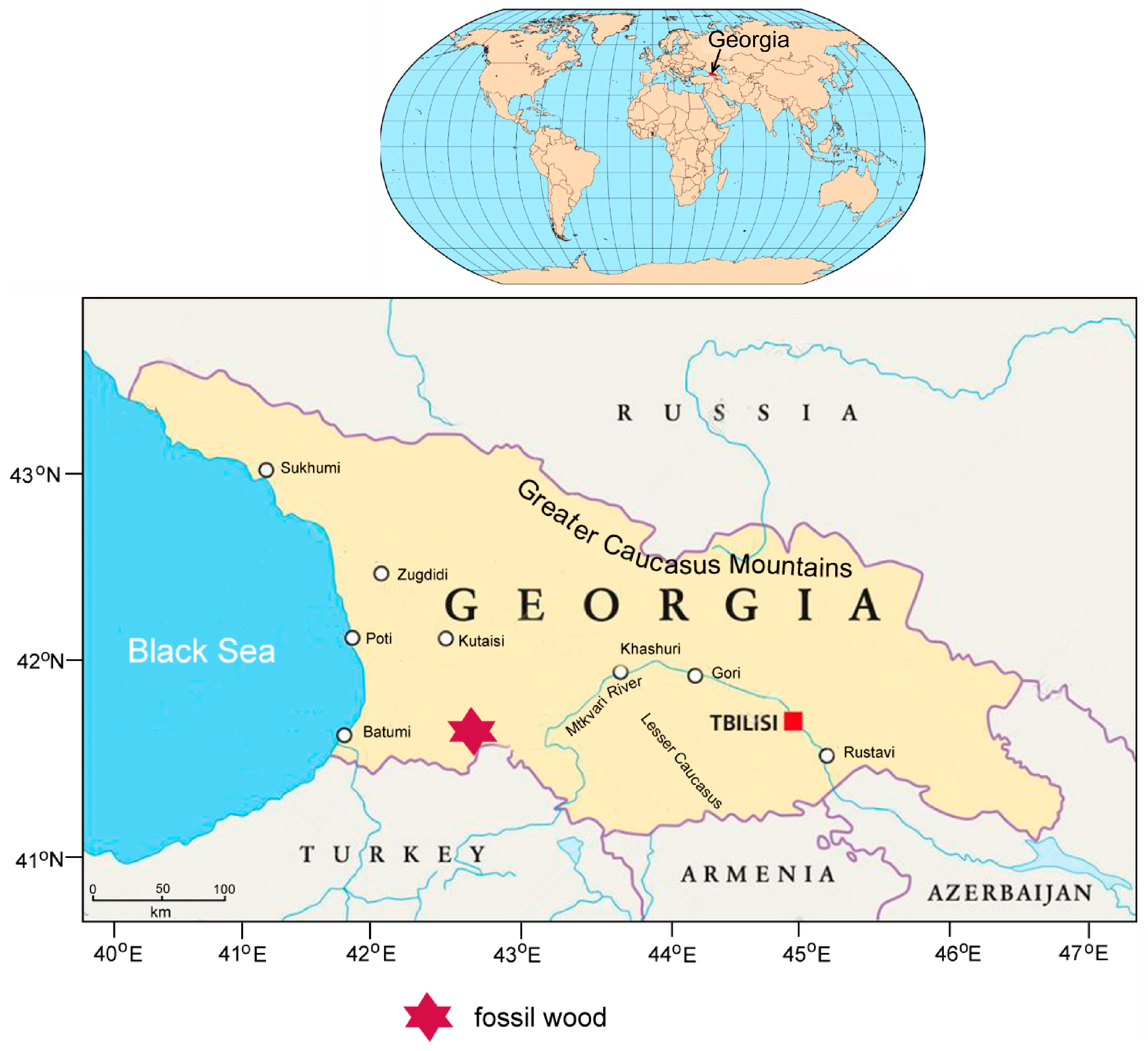
Georgia Republic is a small independent nation located west of the Black Sea (Figure 1). The Goderdzi Volcanic Formation of southwestern Georgia hosts one of the richest upper Miocene paleofloras in the Caucasus, where abundant silicified wood and fossil leaves occur in laharic, tuffaceous, and fine-grained laminated deposits preserved within thick dacitic–andesitic pyroclastics and overlying lava flows. These fossiliferous strata represent varied depositional settings including small lacustrine basins. Leaf fossils preserved in volcanogenic sedimentary strata include flora from warm temperate and subtropical mixed evergreen and deciduous forest communities. Modern analogs of the Goderzi flora can be found in Southeast Asia, northeastern India, North America, the Antilles, the Canary Islands, the Mediterranean, and the Caucasus.
The abundant presence of fossil wood supplements the information from leaf fossils, and the taphonomy of these fossils provides important clues for interpreting their origin.
Together, the geological, paleobotanical, and mineralogical records of the Goderdzi Formation form an essential foundation for reconstructing environmental evolution in the Lesser Caucasus region during the Late Miocene.

2. Geological Setting

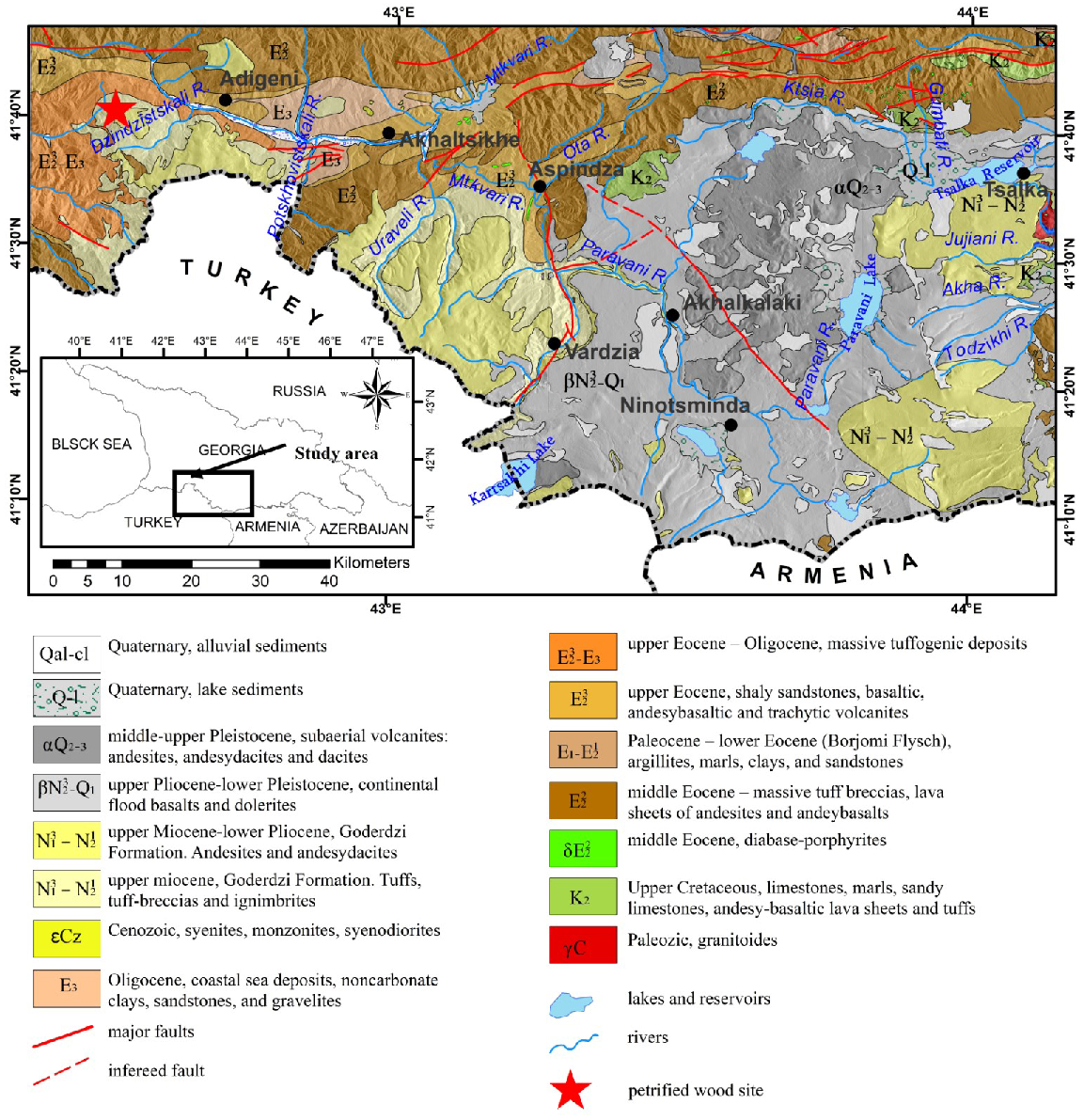
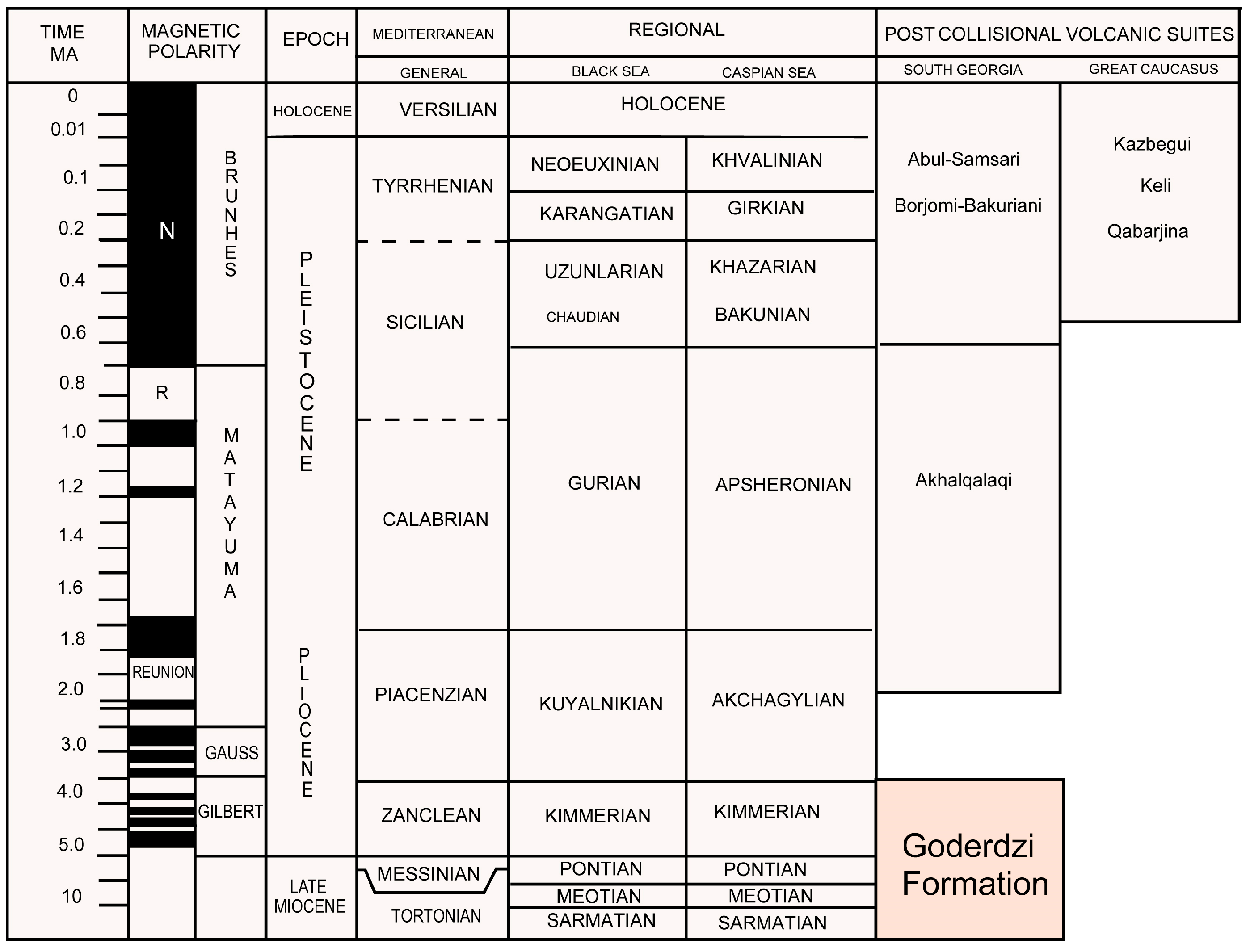
Silicified wood and fossil leaves in southwestern Georgia are associated with the upper Miocene volcaniclastic deposits of the Goderdzi Formation [1,2]. The Goderdzi Formation represents a post-collisional, subaerial volcanic succession characterized predominantly by andesitic and dacitic compositions [3]. Classic exposures are located in the Goderdzi Pass area, particularly in the headwaters of the Dzindze and Adjaristskali rivers, where the Goderdzi Formation unconformably overlies middle Eocene volcanic units. The regional geology and stratigraphy are shown in Figure 2 and Figure 3.
The Goderdzi Formation is divided into two major units: a lower pyroclastic sequence and an upper lava sequence. The lower unit, with a thickness range of approximately 500–800 m, is dominated by volcaniclastic rocks of dacitic and andesitic composition, locally containing intraformational basaltic lava sheets in its basal levels [1]. These pyroclastic units locally contain fossil wood and fossil leaves. This thick pyroclastic succession is not uniform; rather, it consists of alternating pyroclastic sequences displaying various types of grading that are commonly associated with lahar flow processes. In addition, in some areas, the fossil leaves occur within laminated, fine-grained pyroclastic deposits, which may reflect sedimentation in small lacustrine basins developed within the volcanic landscape. This substantial pyroclastic succession is overlain by the upper unit, which comprises laminated to massive andesite and dacite lavas. The occurrence of petrified tree trunks within the massive pyroclastic lahar sequences indicates that catastrophic volcanic events played a key role in the rapid burial and preservation of ancient trees. Commonly, fossil logs occur within beds of volcaniclastic conglomerate, evidence of high-energy fluvial deposition.

Age

Radiometric K–Ar dating of these lavas yields ages ranging from ~7 Ma [6] to 9.4–9.8 Ma [7], (placing most of the Goderdzi Formation within the upper Miocene. Analogs of the Goderdzi Formation, the Mtkvari Ignimbrites, and the andesitic lava flows of the Niala caldera structure have been dated using zircon U–Pb geochronology, yielding ages of ~7.1 Ma for ignimbrites and 6.4 Ma for andesitic lava flows [8,9]. These results confirm an upper Miocene age for most of the Goderdzi Formation, but younger undated strata possibly extend into the early Pliocene.

3. Materials and Methods

This investigation is based on 34 specimens that were collected circa 2019 during PhD research by M. Makadze. Laboratory studies were performed by G. Mustoe, using facilities at Western Washington University, Bellingham, WA, USA. Petrographic thin sections were prepared using Wards-Ingram high precision cutting and grinding equipment (Wards Science, Rochester, NY, USA). Thin sections were photographed using a Zeiss petro graphic microscope (Carl Zeiss Microscopy, White Plains, NY, USA) equipped with a 5-megapixel CMOS microscope camera (Shenzen Hayear Electronics, Ltd., Shenzen, China). SEM images came from a Tescan Vega III instrument (Tescan, Brno, Czech Republic), equipped with an Oxford silicon drift X-ray detector running Aztec 4.0 software (Oxford Instruments, Abindon, UK) at the W.W.U. University Instrument Center. X-ray diffraction patterns were obtained from packed powders using a Rigaku Miniflex 6G diffractometer operated with SmartlabStudio II software (Rigaku Corp., Tokyo, Japan) at W.W.U. Advanced Materials Science and Engineering Center. Density measurements were made using a Sartorius R160P analytical lab balance equipped with a hydrostatic weighing accessory (Sartorius, Göttingen, Germany).
Analytical methods are discussed in more detail in the following section.

3.1. X-Ray Diffraction

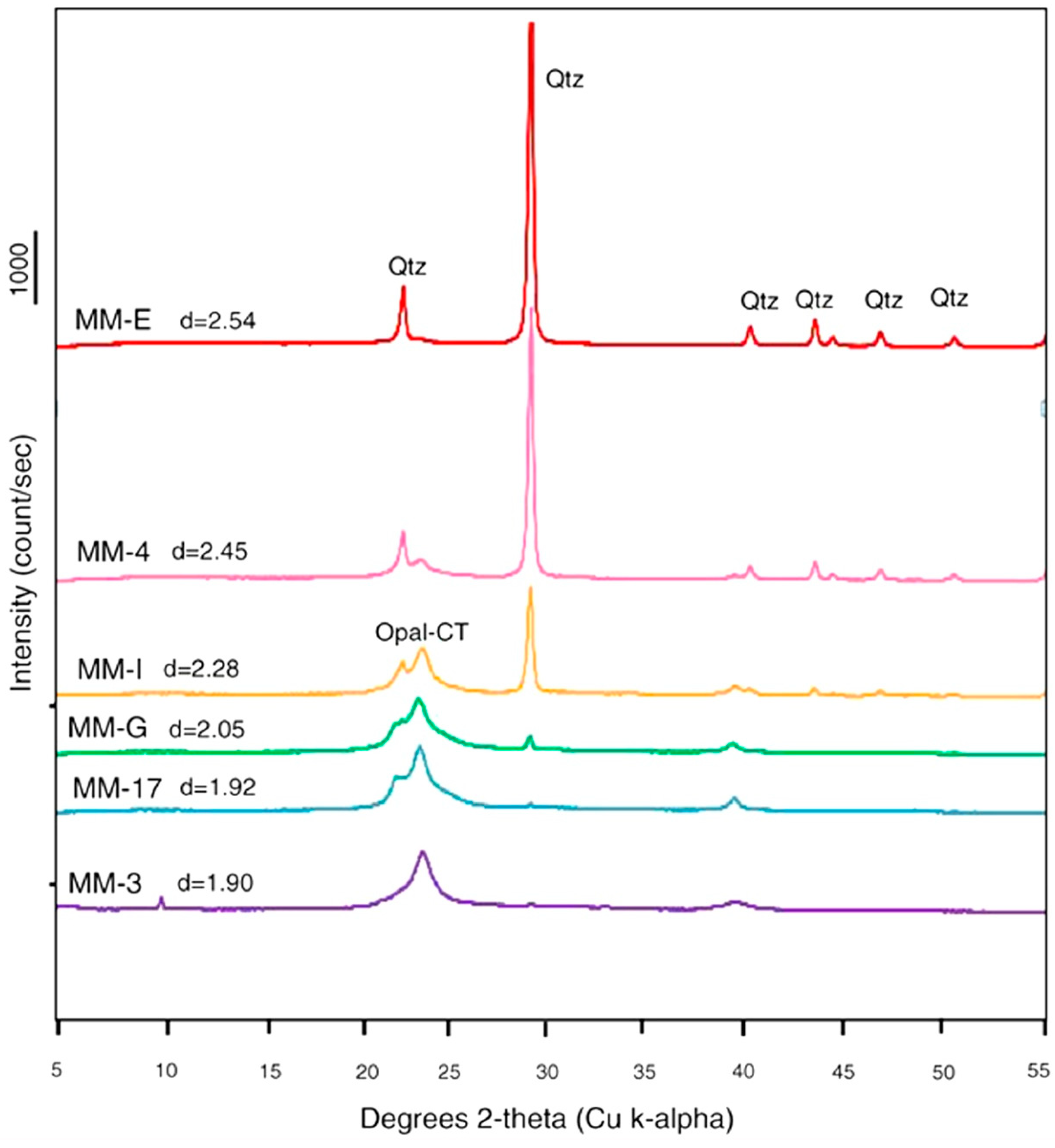
X-ray diffraction patterns reveal that fossil woods in the Goderdzi Formation have diverse compositions, as evidenced by X-ray diffraction patterns (Figure 4). Optical microscopy indicates that amorphous opal (opal-A) is the most abundant constituent in Goderdzi Formation fossil wood, but the absence of crystallinity makes this mineral undetectable in XRD patterns of specimens that also contain other minerals. Opal-CT, a variety that has developed incipient crystallinity, can be recognized by XRD, though the characteristic diffraction peaks are low in intensity compared to well-crystallized forms of silica, e.g., quartz and chalcedony (Figure 4). XRD patterns of Goderdzi Formation wood samples commonly show opal-CT peaks, and some specimens show the additional presence of quartz.
A limitation of X-ray diffraction is that the results show major constituent compositions, commonly failing to detect phases that are present in small amounts. Also, the diffraction patterns of packed powders do not reveal how various minerals are distributed within the specimen, but optical microscopy and SEM can often provide this information.

3.2. Density Determinations

The densities of fossil wood can be used to estimate mineral composition [10]. Densities of 2.45–2.60 g/cm3 are typical of woods that have been replaced by quartz; densities in the range of 2.0–2.4 g/cm3 are likely to be composed primarily of opal. A limitation of the method is that measured densities may be affected by porosity of the petrified wood (e.g., the presence of unmineralized spaces) and in specimens where multiple minerals are present.

3.3. Optical Microscopy of Thin Sections

Polarized light views of thin sections are of great value for studying silicified wood because opal-A, opal-CT, and chalcedony/quartz can be recognized because of their distinctive optical properties. In addition, magnified images reveal the distribution of minerals and their relation to the original wood anatomy.
A diagnostic characteristic of opal-A is that, because of its amorphous composition, the mineral will not transmit polarized light, a phenomenon that is described as isotropy.
The incipient crystallinity of opal-CT allows weak transmission of polarized light, producing dim interference colors. In contrast, quartz/chalcedony has brighter birefringence, with a maximum color of warm white in specimens of 30-micron thickness, and vivid colors in thicker layers.

3.4. Scanning Electron Microscopy (SEM)

SEM provides another method for identifying minerals based on morphological details. For SEMs that are equipped with X-ray detectors, elemental differences can be determined from X-ray fluorescence spectra, but images obtained from backscattered electrons (BSE images) can show qualitative differences in mineral composition. Secondary electron SEM images can allow characterization of minerals based on particle shapes, e.g., the microspheres typical of opal-A versus the incipient crystallinity of opal-CT, the fibrous structure of chalcedony, and the hexagonal crystal habit of quartz.

4. Paleobotany: Evidence from Leaf Fossils

Fossilized plant remains include well-preserved leaves with detailed venation, found in diverse lithological settings that suggest varied depositional environments. According to [11], four primary burial types have been distinguished: (1) massive, unstratified microbreccias containing tough-leaved plants, palms, and Osmanthus; (2) sandy, poorly stratified tuffs, rich in Magnolia dzundzeana and ferns; (3) fine-grained, laminated tuffs, preserving abundant Castanopsis adjarica leaves in leaf-fall deposits; and (4) clay-rich tuffs dominated by Myrica lignitum and Populus populina, indicative of a riparian environment.
The Goderdzi fossil flora represents one of the most significant and varied paleobotanical assemblages in the Caucasus, including more than 200 identified fossil plant species from 120 genera and 60 families [2]. However, the number of known taxa increased with the discovery of additional fossil leaf species in 2019 [1]. These newly identified species further reinforce previous interpretations that the Goderdzi fossil flora represents a distinctly subtropical vegetation assemblage. Based on the numerous studies [1,12,13,14], the fossil flora consists of three ecological groups: (1) subtropical flora—the dominant group with Lauraceae, Myrtaceae, Apocynaceae, Sapindaceae, and Verbenaceae, indicating a warm and humid climate; (2) warm-temperate flora with Platanaceae and Fagaceae, suggesting seasonal temperature variations; and (3) temperate flora with Betulaceae and additional Platanaceae members, indicative of moderate climate conditions. The Goderdzi Formation lacks boreal elements but contains numerous warm-temperate deciduous and subtropical species. The co-occurrence of evergreen and deciduous species in the Goderdzi formation suggests a diverse and dynamic forest ecosystem influenced by volcanic activity.
The modern counterparts of the plants represented in the Goderdzi fossil flora are presently distributed across a wide geographic range, including Southeast Asia, northeastern India, North America, the Antilles, the Canary Islands, the Mediterranean region, and the Caucasus [13].

5. Fossil Wood

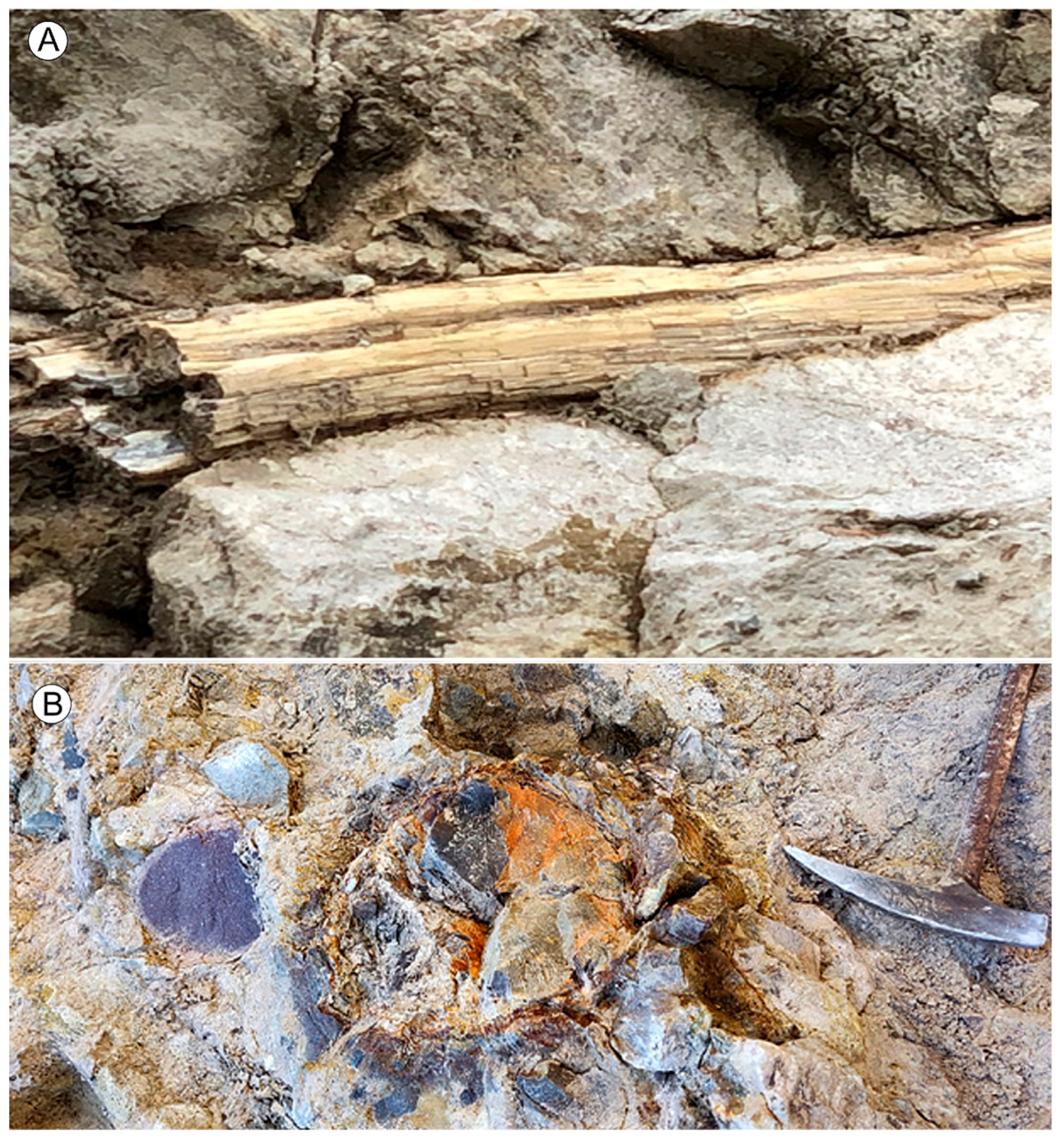
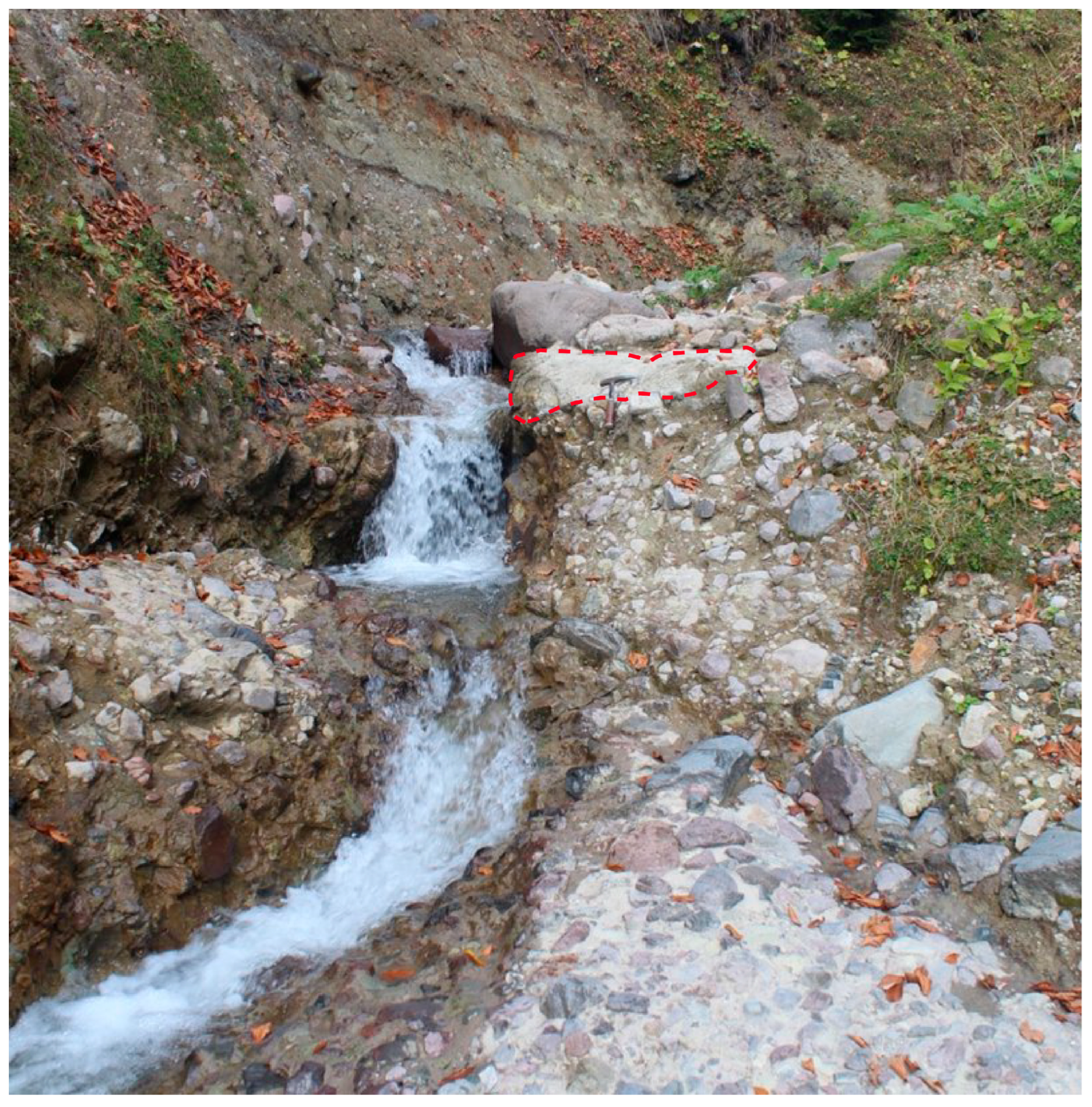
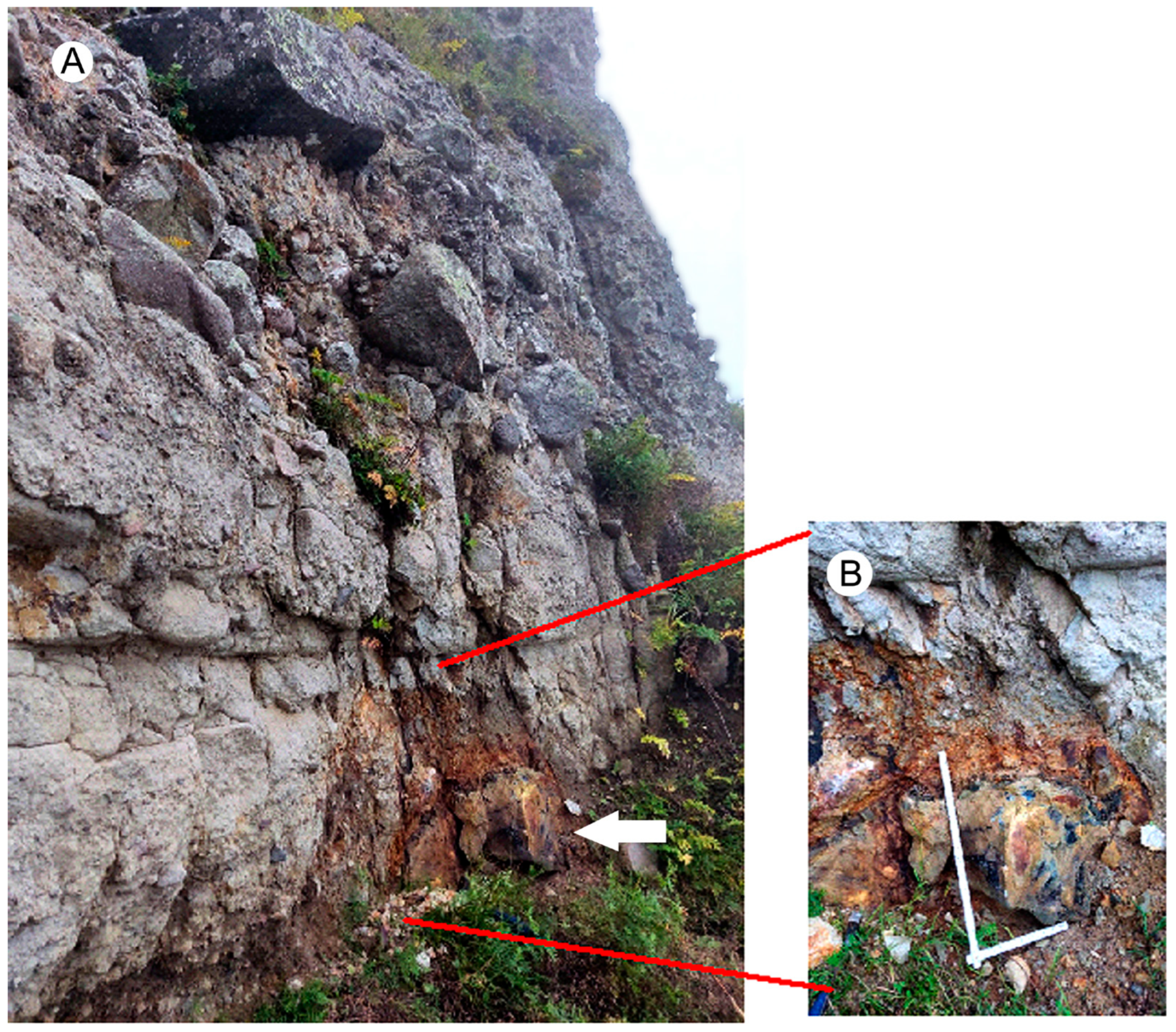
Fossil wood occurs in the Goderdzi Formation in two modes. Logs and wood fragments preserved in horizontal orientations represent tree remains that were transported prior to fossilization (Figure 5, Figure 6 and Figure 7). The volcaniclastic matrix for these specimens suggests that these wood specimens were commonly carried down-valley by lahar flows rather than ordinary stream transport.
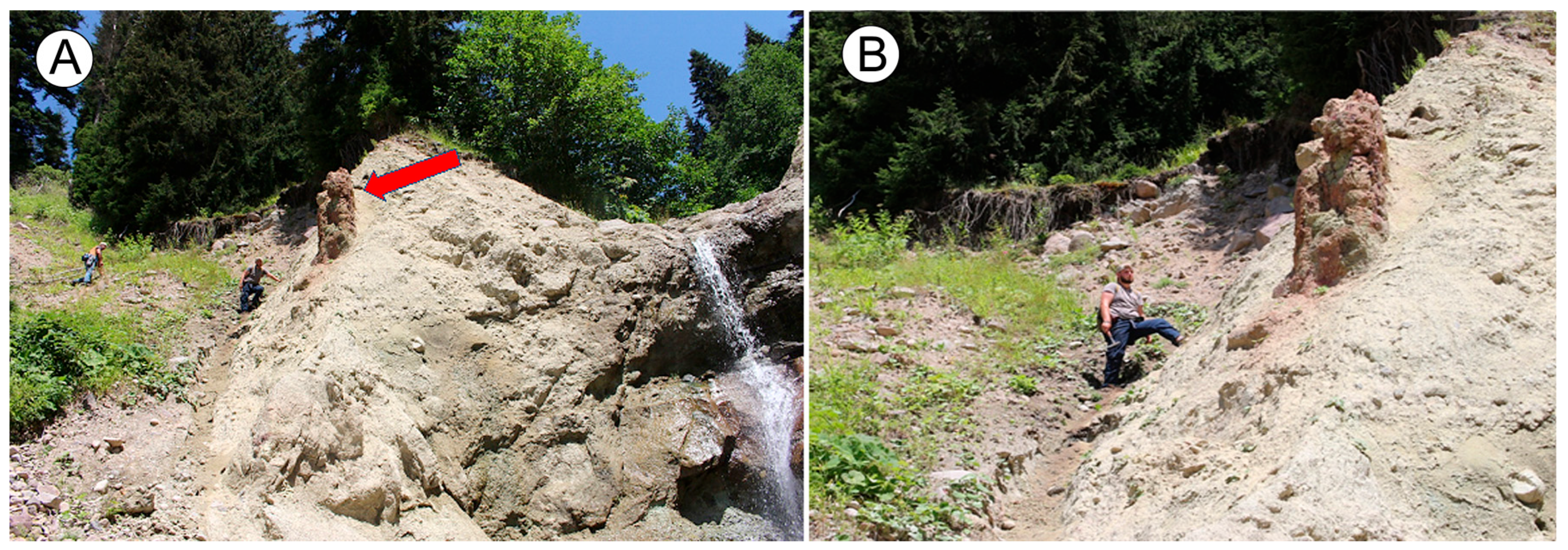
Less commonly, fossilized tree trunks have vertical orientation, representing standing trees that were inundated by volcaniclastic sediments during a lahar event. The pebbly composition of the clastic sediment suggests that the trees were not buried by airfall tephra (Figure 8).

6. Mineralogy of Silicified Fossil Wood in the Goderdzi Formation

The mineral compositions of fossil woods were studied using a variety of methods, as described above. The Goderdzi Formation woods have diverse mineral compositions.

6.1. Charcoalified Wood

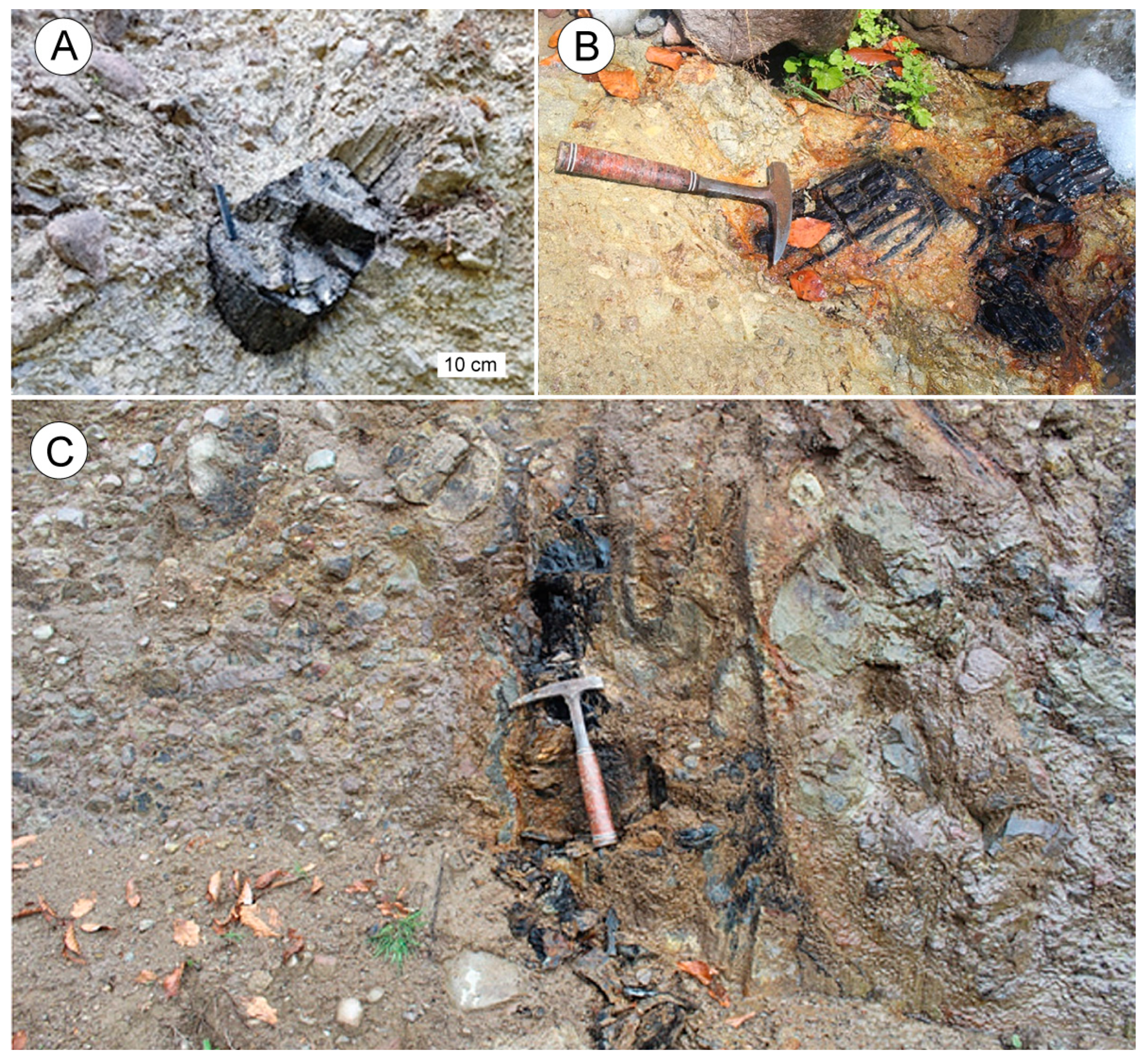
Most fossil wood in the Goderdzi Formation is silicified, but some specimens contain black carbonaceous material as a major constituent (Figure 9). There are three possible modes of origin for this material. Heat from the volcaniclastic matrix may have caused charring of wood, an effect that would most likely occur for tree trunks that were inundated by hot pyroclastics rather than by lahar transport. Alternatively, the carbonization of the tissue may have resulted from forest fires that were ignited as a result of volcanism. The fires associated with eruptions of Kilauhea volcano in Hawaii, USA, are a modern analog. The third possibility is that the carbon-rich wood represents coalification of the organic tissue after prolonged burial.
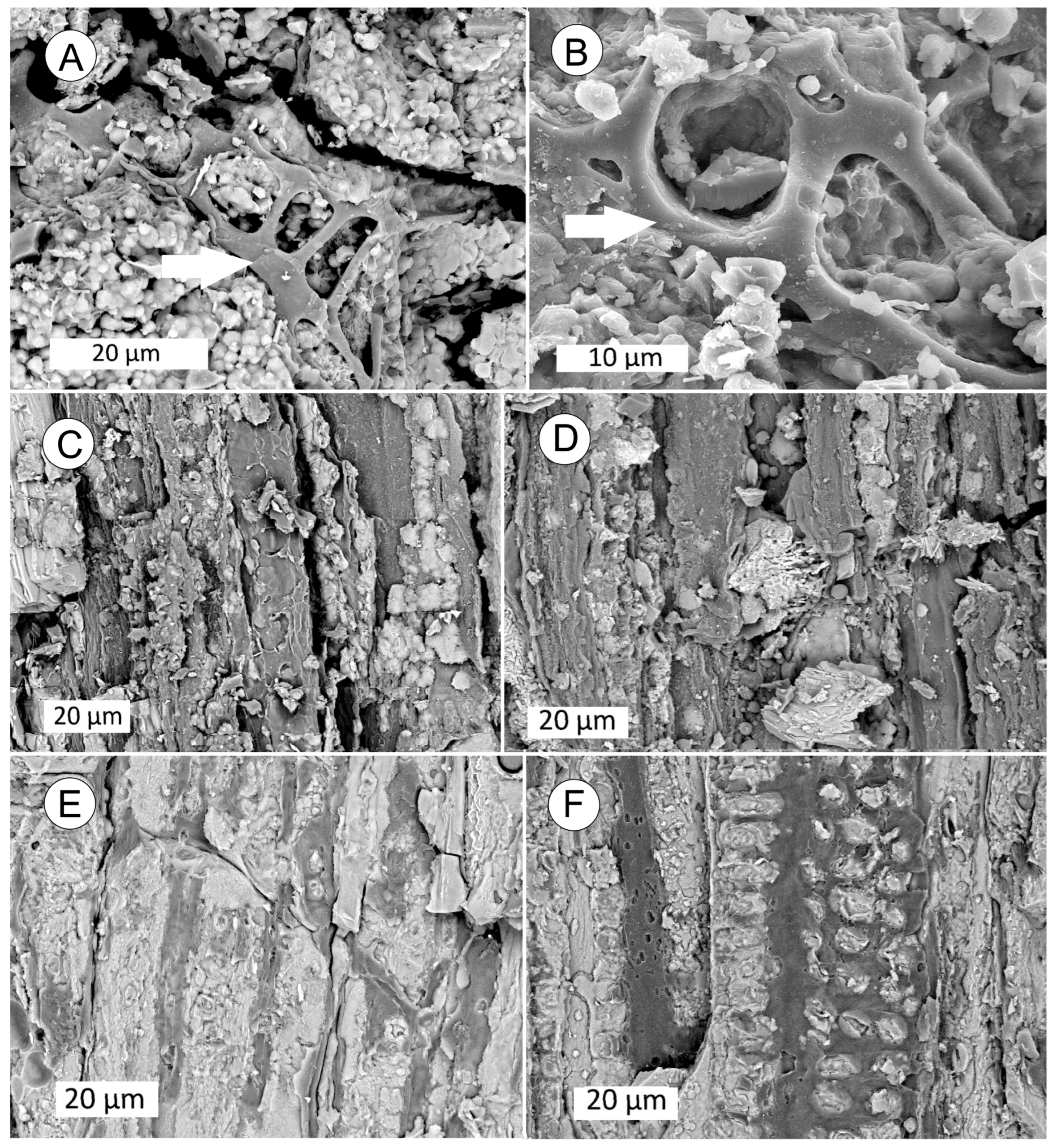
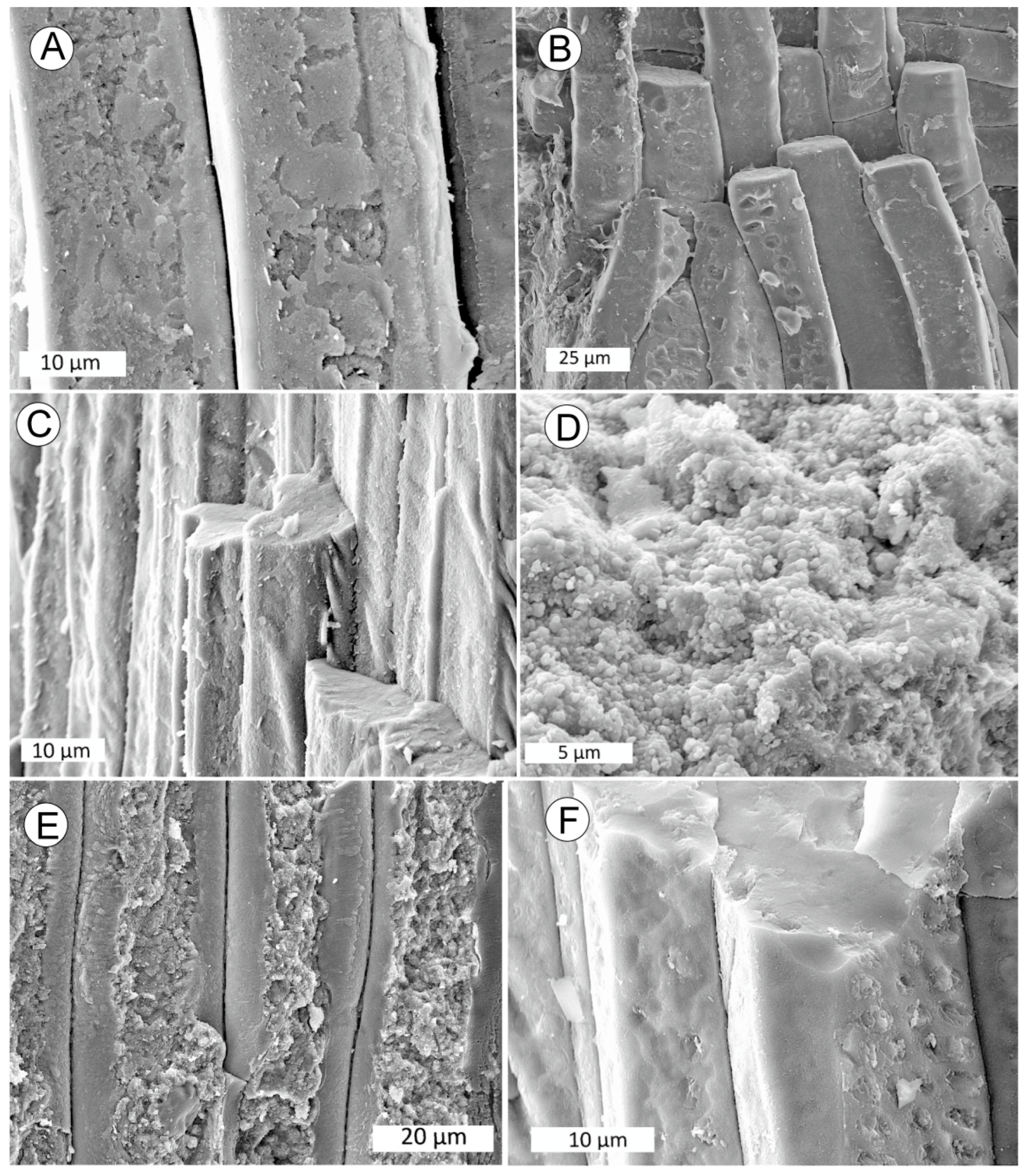
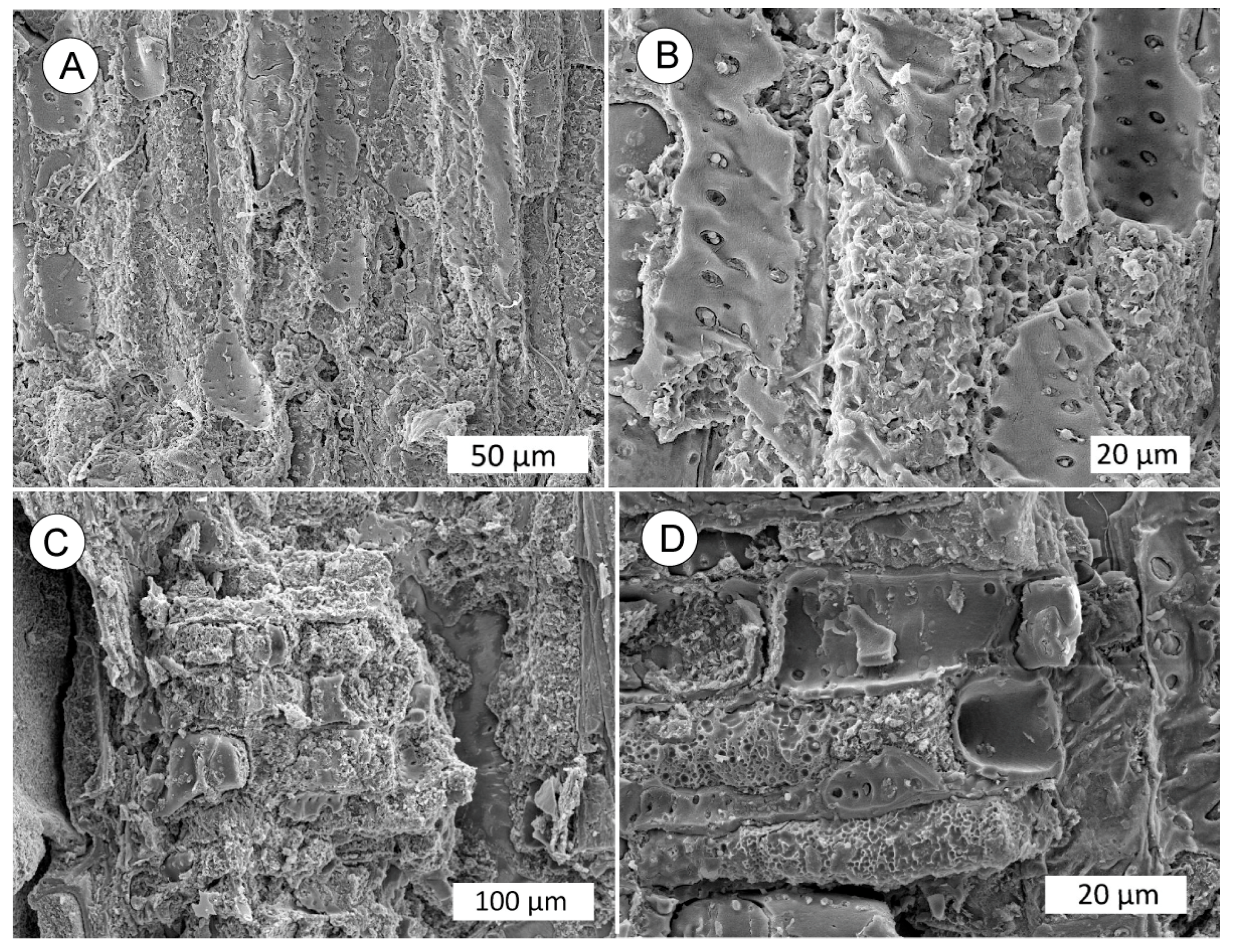
SEM images (Figure 10) support the interpretation that carbonaceous wood in the Goderdzi Formation originated as charcoal from wildfires. Wood fragments show well-preserved cellular anatomy, but multi-layered cell walls have been fused to a single layer. This characteristic is diagnostic of charcoal [15,16,17,18,19]. Experiments with modern wood show that cell wall homogenization requires a minimum temperature of 230 °C [17].

6.2. Silicified Wood

The transformation of organic wood into petrified material sometimes follows a complex, multi-stage silicification process [20,21]. The Goderdzi Formation fossil woods commonly contain opal-A as a major mineral component, an unusual occurrence for this silica polymorph. Opal-A has only been found in fossil woods of young geologic age, i.e., Miocene and younger [22,23,24]. This limited temporal range is caused by the structural instability of this amorphous form of silica, which transforms to opal-CT, a weakly crystalline form of opal that contains interlayers of cristobalite and tridymite.
In addition to opal-A, other silica minerals that occur in Goderdzi Formation fossil woods include opal-CT, chalcedony, and microcrystalline quartz; these minerals are commonly present as intermixtures. Various examples are described later in this report.

6.3. Fossilization Processes

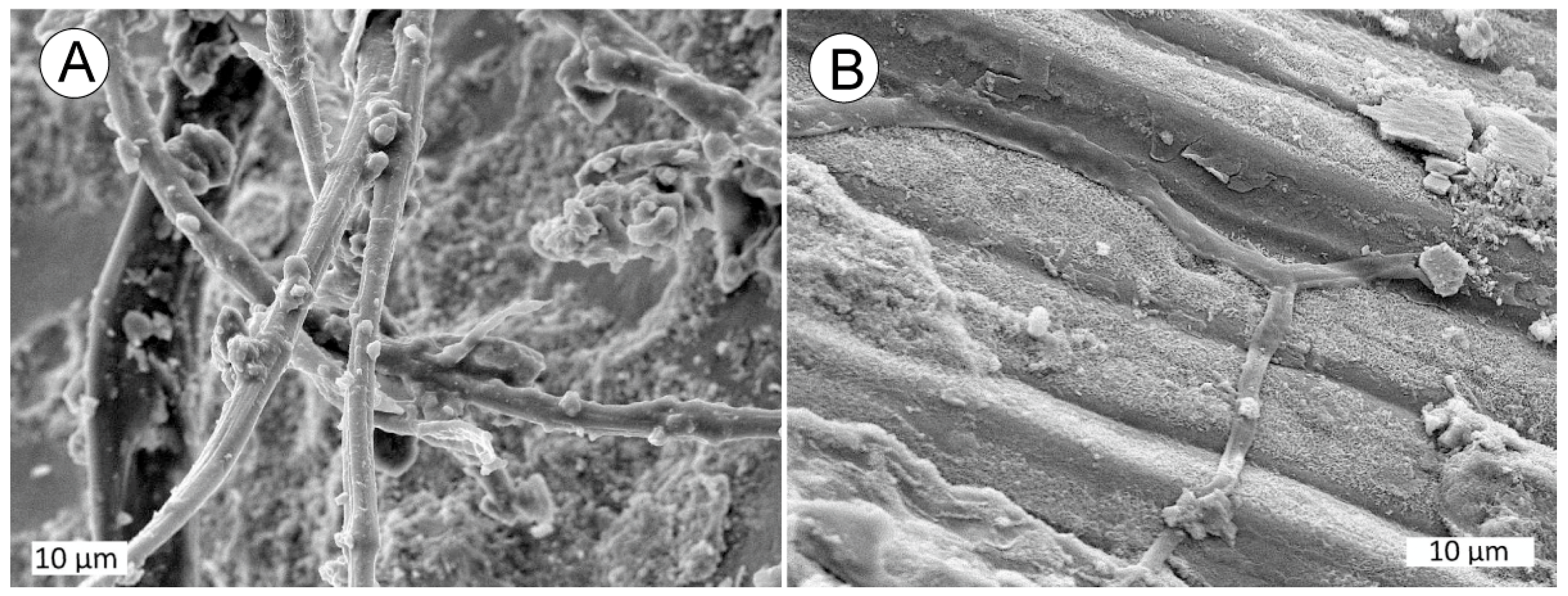
Silicified woods commonly preserve only a small percentage of the original organic matter, contrary to the long-accepted belief that the fossilization process involves permineralization, where wood tissue becomes entombed within mineral matter [23]. Instead, wood petrifaction requires a balance between tissue degradation and mineral deposition. Progressive degradation of the original organic matter, accompanied by mineral precipitation, may result in fossil wood that has anatomical features that are preserved in great detail. The cellular characteristics remain visible because of the colors and textures of the minerals that replaced the tissue. Evidence of microbial-induced degradation can be observed in some Goderdzi Formation woods that preserve silicified fungal hyphae (Figure 11).
Petrified woods from the Goderdzi Formation commonly reveal a complex multi-phase silicification sequence: initial opal-A permineralization was followed by opal-CT formation, and in some samples, opal may have recrystallized to quartz. More commonly, quartz formed as a primary precipitate in spaces that remained open during initial mineralization. These spaces include conductive vessels in angiosperms and open fractures in woods of all species.
As a generalization for wood silicification, the initial mineralization typically begins with the incorporation of amorphous silica into and within cell walls, caused by the chemical affinity of cellulose molecules for dissolved silica delivered by groundwater. Precipitation of silica in lumina, intercellular spaces, and vessels may occur later, during episodes when groundwater composition and geochemical conditions (e.g., pH, Eh, temperature) have changed. Abundances of dissolved silica may be a key factor, with high Si concentrations favoring rapid deposition of opal, and lower Si concentrations producing quartz, at a precipitation rate that allows sufficient time for development of a well-ordered lattice. Multiple precipitation episodes can explain why a single specimen can contain multiple minerals. However, mineralogic diversity may also result from diagentic transformations, e.g., the transformation of opal-A to opal-CT, which in turn may be converted to microcrystalline quartz. For any locality, interpreting the fossilization history can be a challenge.
For diagentic silica transformations, opal-A begins to dissolve, releasing silica that reprecipitates as opal-CT. Opal-A to opal-CT transformation is well-documented as a diagentic process for siliceous sinter and for biogenic siliceous sediments (e.g., diatomite and radiolarian ooze), but the transformation is less well-documented for silicified wood. The conversion of opal-CT to quartz is a final step in silica diagenesis, and again, the best evidence comes from studies of siliceous sinter and biogenic sediments. For petrified wood, the evidence is largely circumstantial, e.g., the abundance of opalized wood in Cenozoic strata, and its absence in older formations, which contain only quartz-mineralized wood.

7. Examples of Goderdzi Formation Fossil Wood

The Goderdzi Formation fossil woods have compositional diversity, and they provide insights into the fossilization process. In general, mineralization appears to have resulted from successive episodes of silica precipitation, not from diagentic transformations.

7.1. Opal-A and Opal-C as Major Constituents

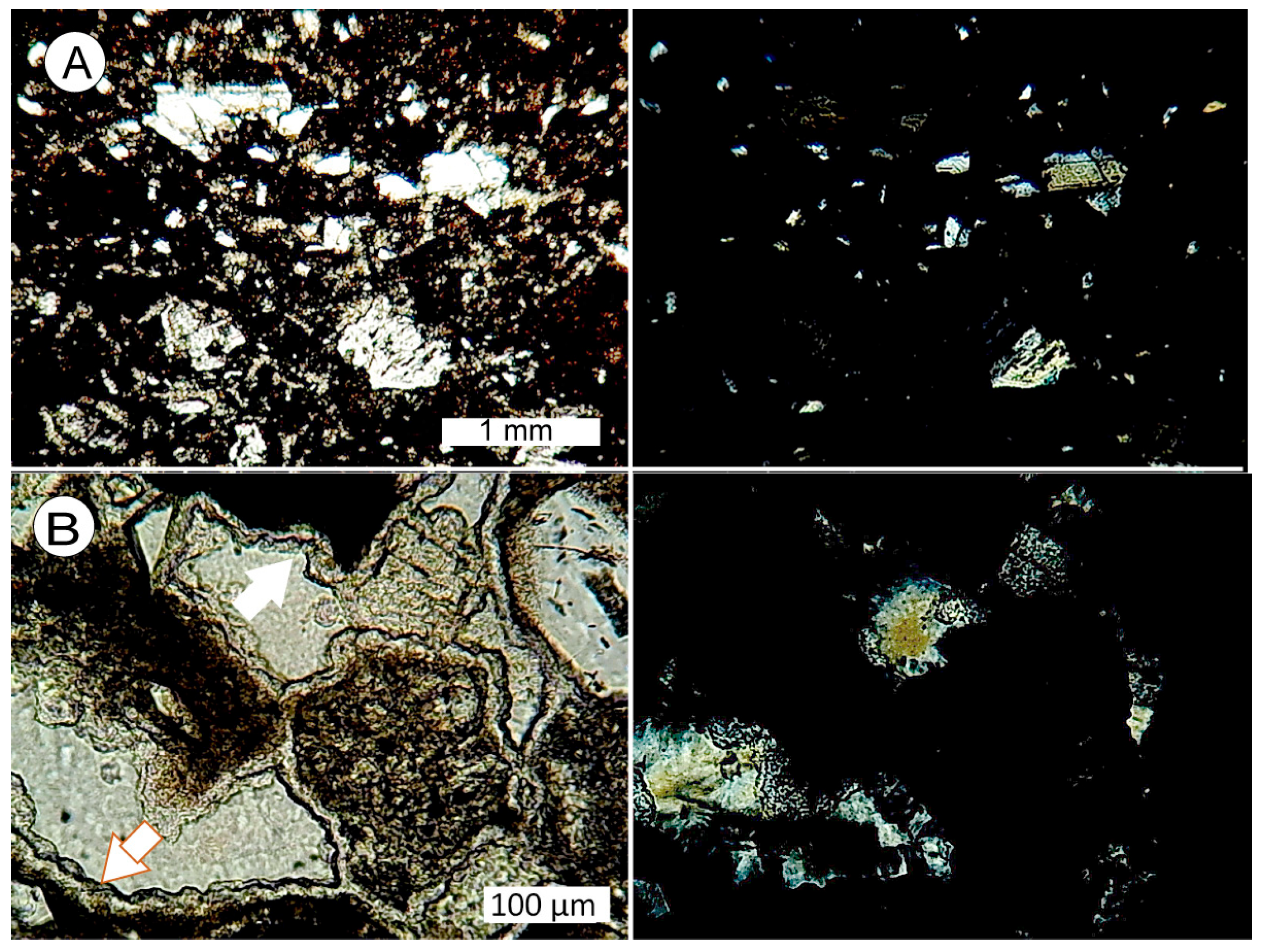
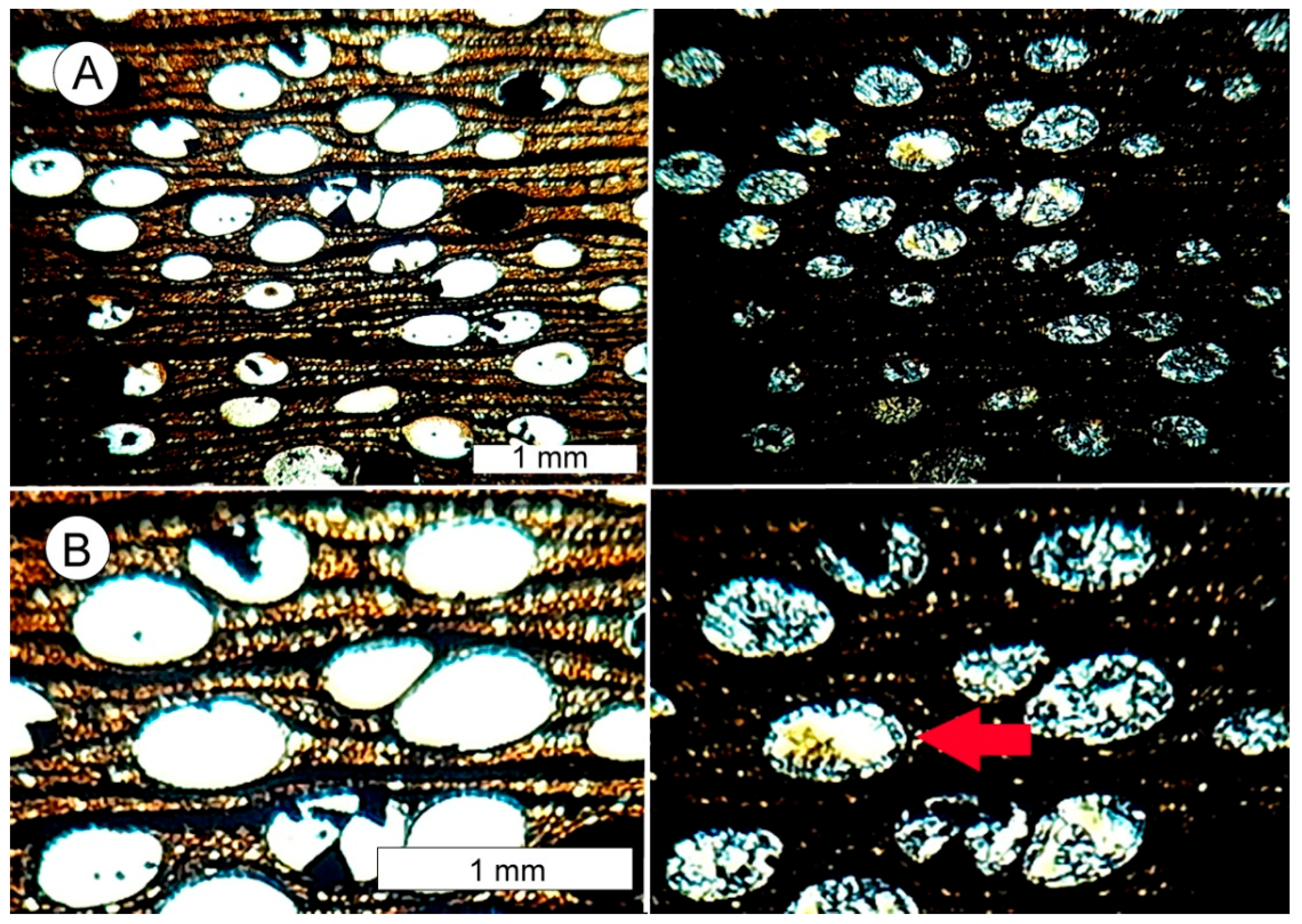
Many of the Goderdzi Formation specimens contain a mixture of opal-A and opal-CT. A. Some specimens have opal-A as the only constituent. The isotropic appearance of amorphous opal under polarized light microscopy is a key characteristic for recognizing the presence of this mineral (Figure 12). Relatively low density (~2.0 mg/cm3) is confirming evidence.

7.2. Opal-A in Combination with Other Silica Polymorphs

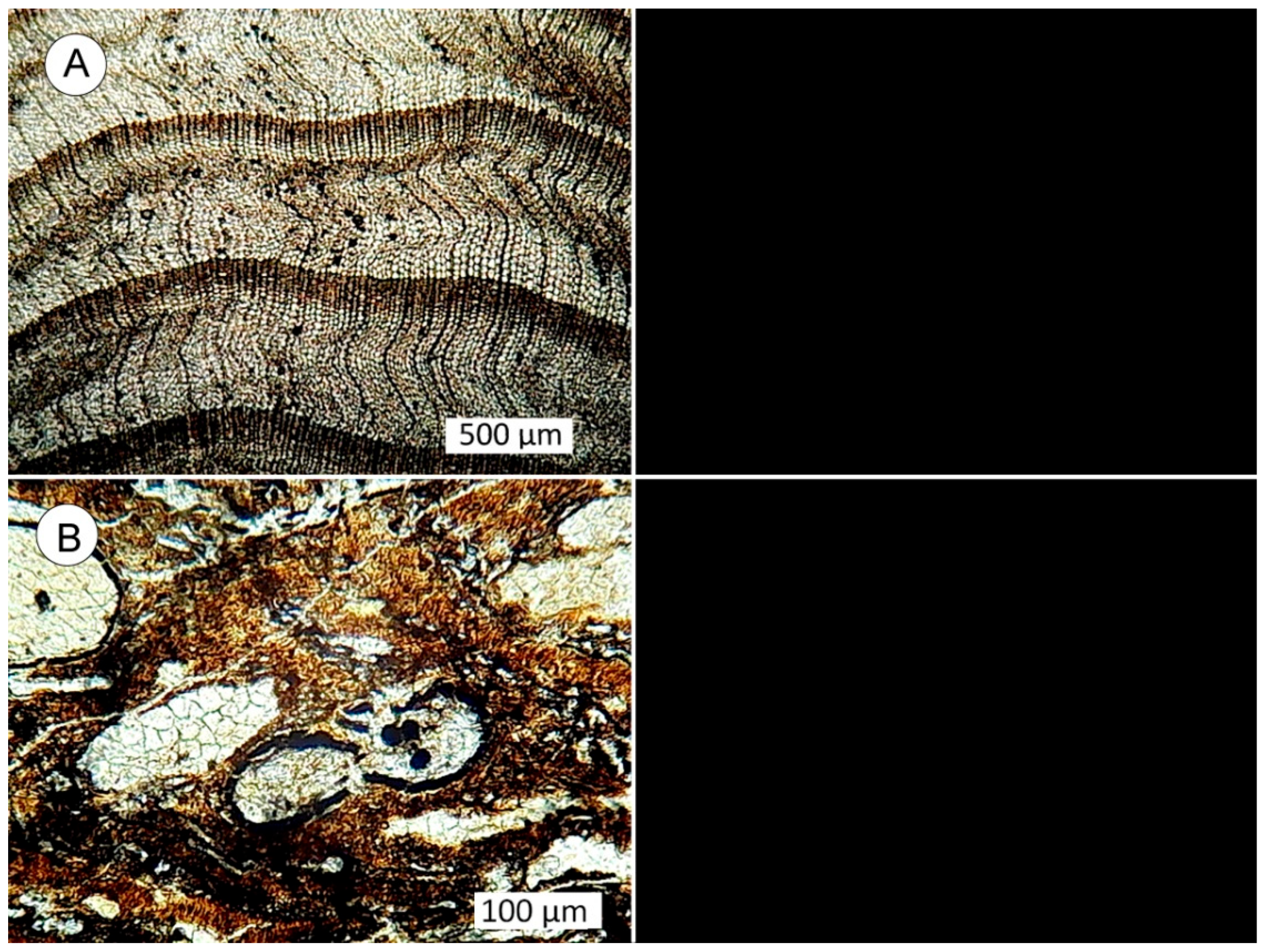
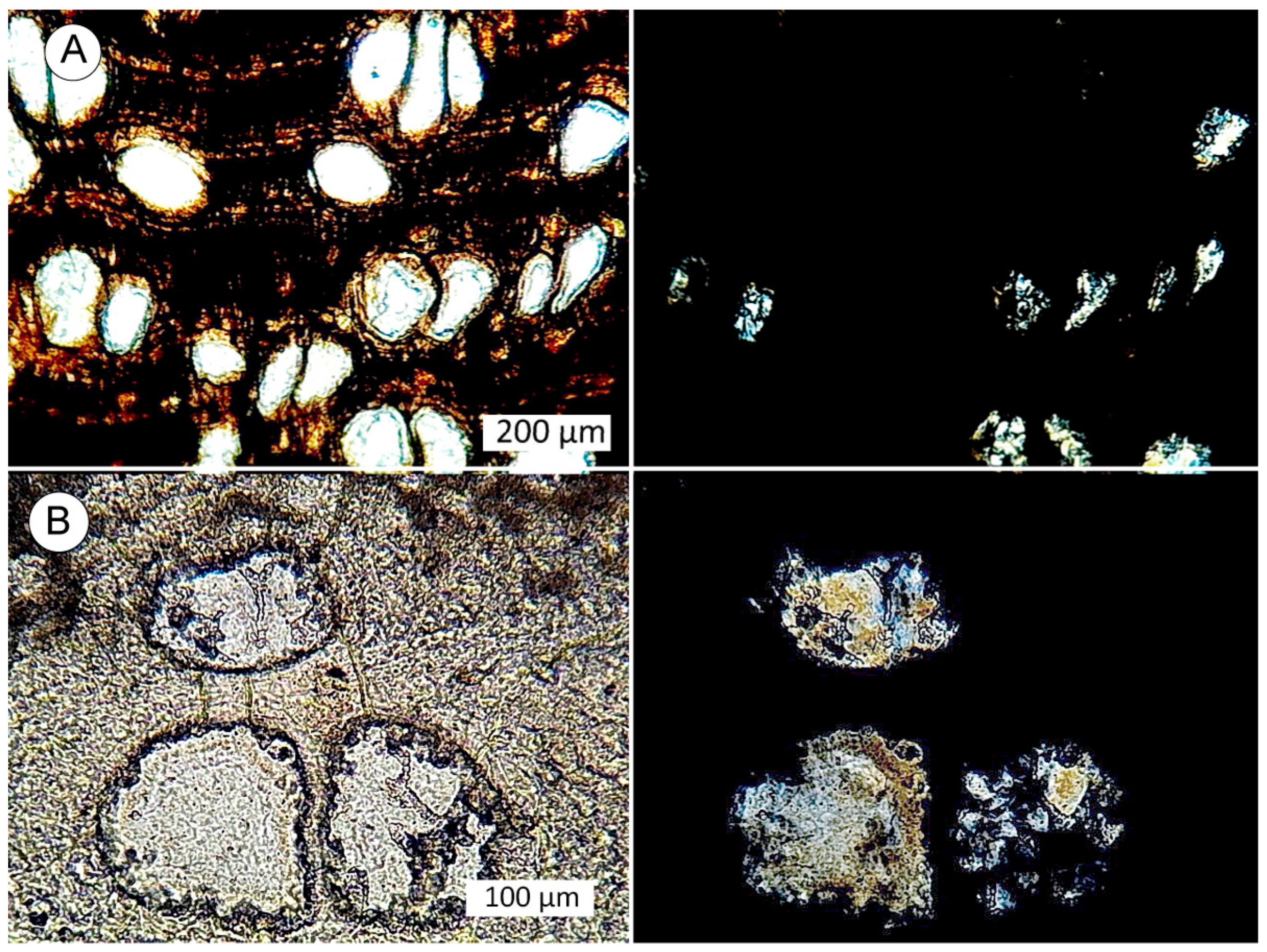
One compositional possibility is for woods to contain a combination of opal-A and opal-CT (Figure 13). The observation that opal-CT tends to be present only in cell lumina or vessels suggests that the two forms of opal were precipitated independently during successive stages of mineralization, rather than diagentic transformation. For these specimens, density is likely to be elevated to ~2.2–2.3 gm/cm3.
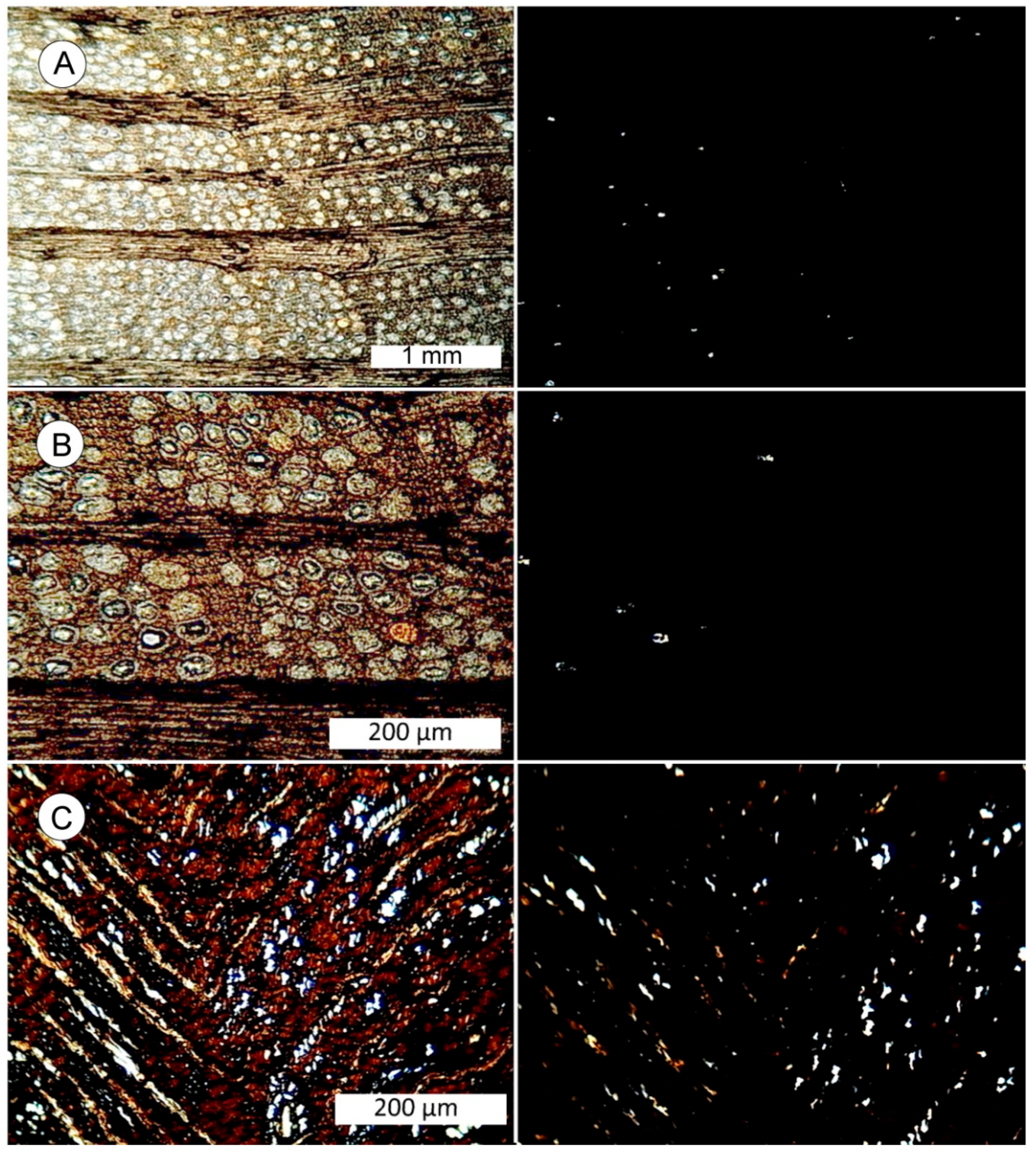
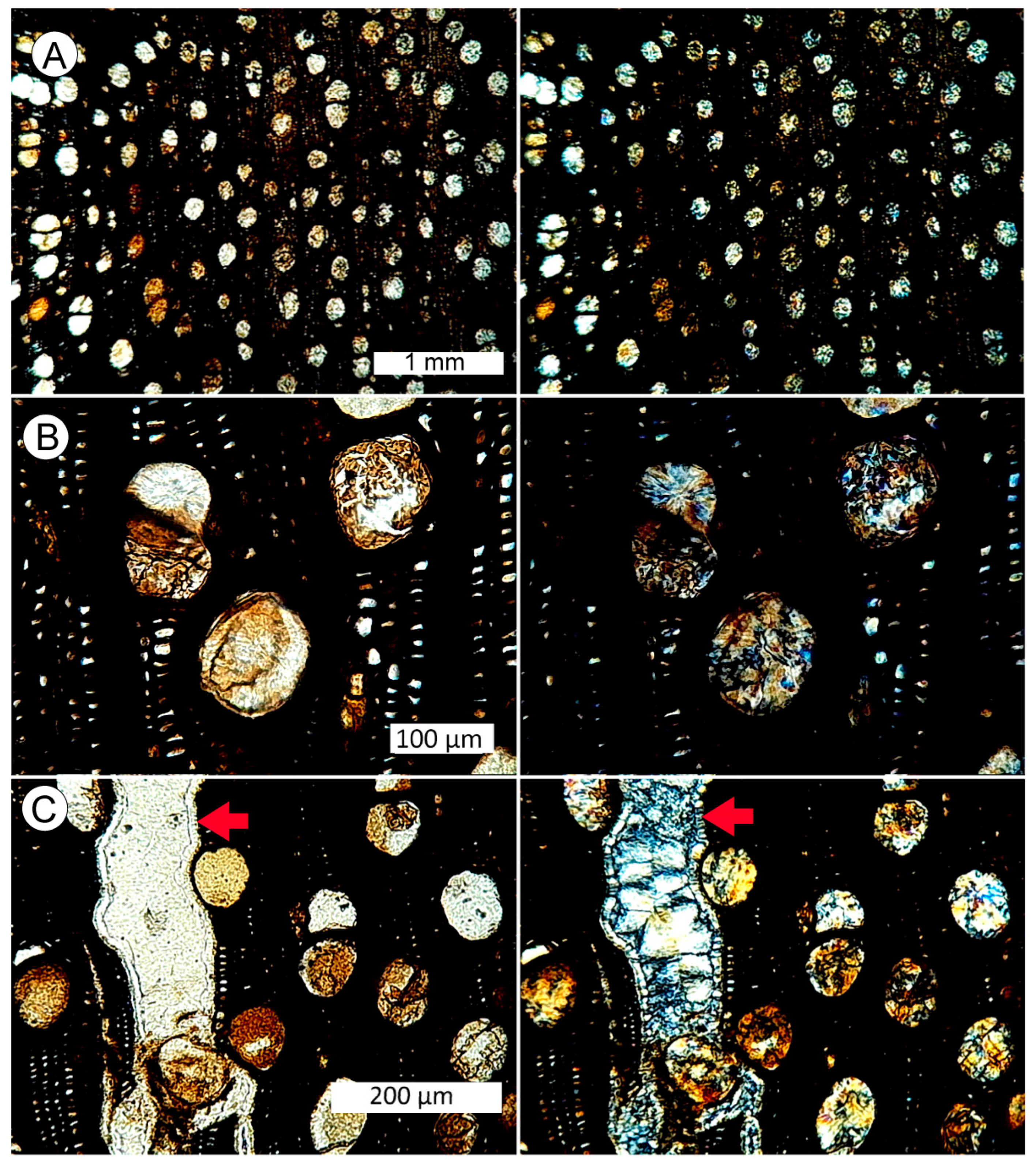
Figure 14 and Figure 15 illustrate Goderdzi Formation fossil angiosperm woods that contain opal-A as the main constituent, with scattered vessels that contain crystalline forms of silica, either opal-CT or quartz, or sometimes both.
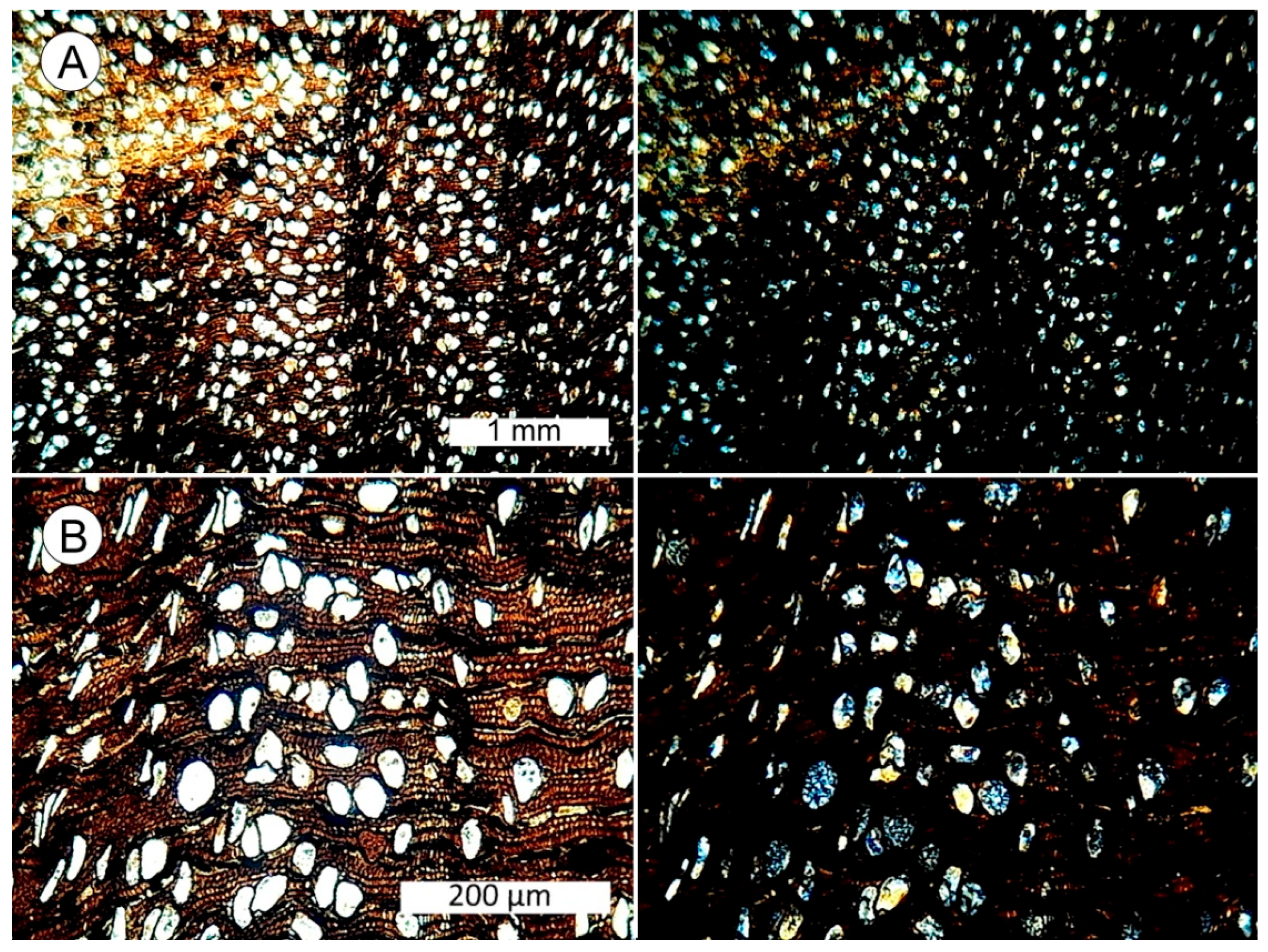
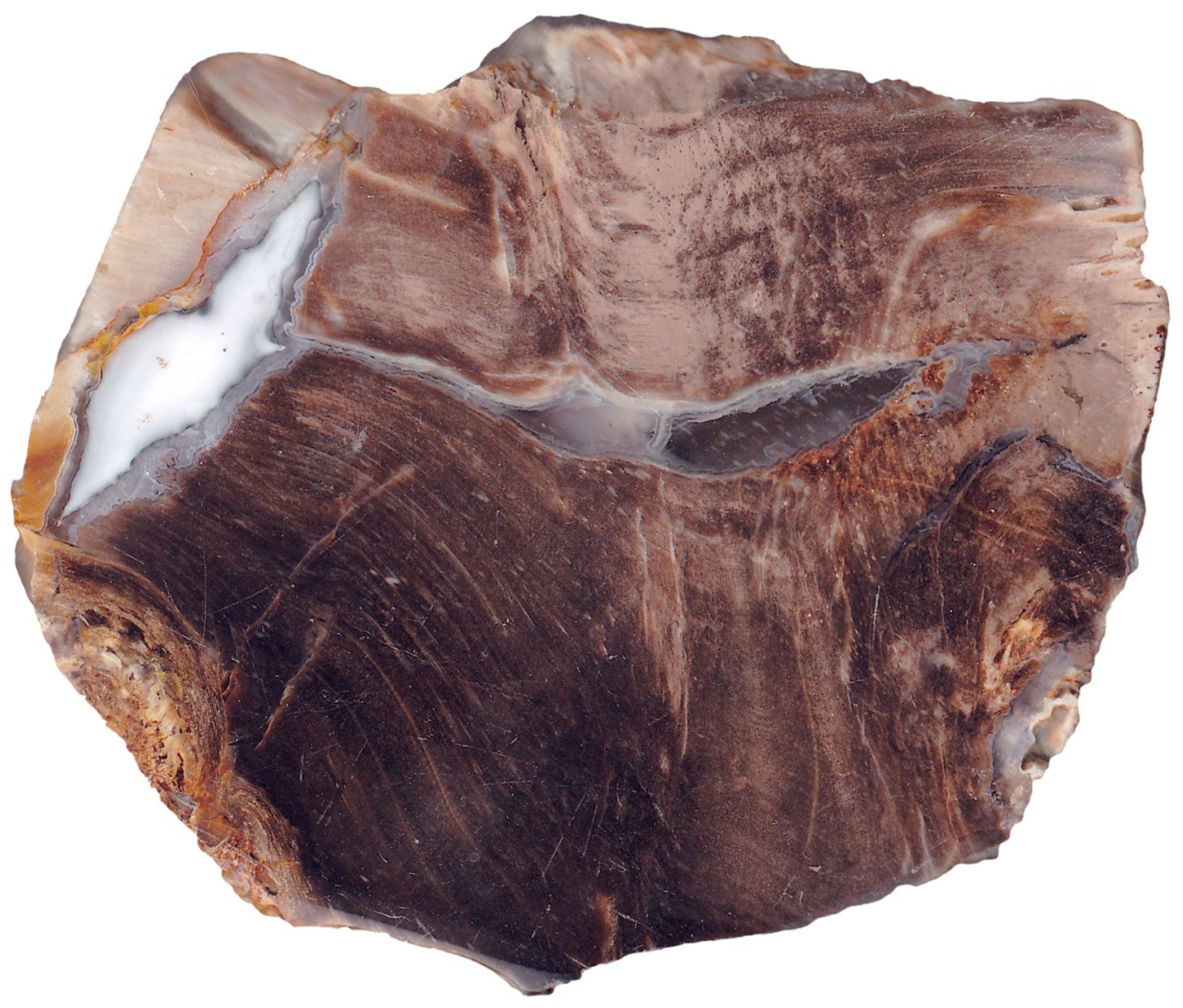
The presence of well-crystallized silica can be in the form of chalcedony or microcrystalline quartz. One of the most common modes of occurrence is in angiosperm wood, where conductive vessels are filled with chalcedony or quartz, with cellular tissue mineralized with opal (Figure 16 and Figure 17).
Quartz and chalcedony are commonly found filling large spaces, e.g., fractures and rotted zones. In some instances, these infillings have a layered structure that is indicative of multiple mineralization episodes. The complexity of silica precipitation is evidenced by individual vessels that contain both opal-CT and chalcedony/quartz. The clear boundaries between these polymorphs suggest that the mineral association was not caused by diagentic transformation (Figure 18).
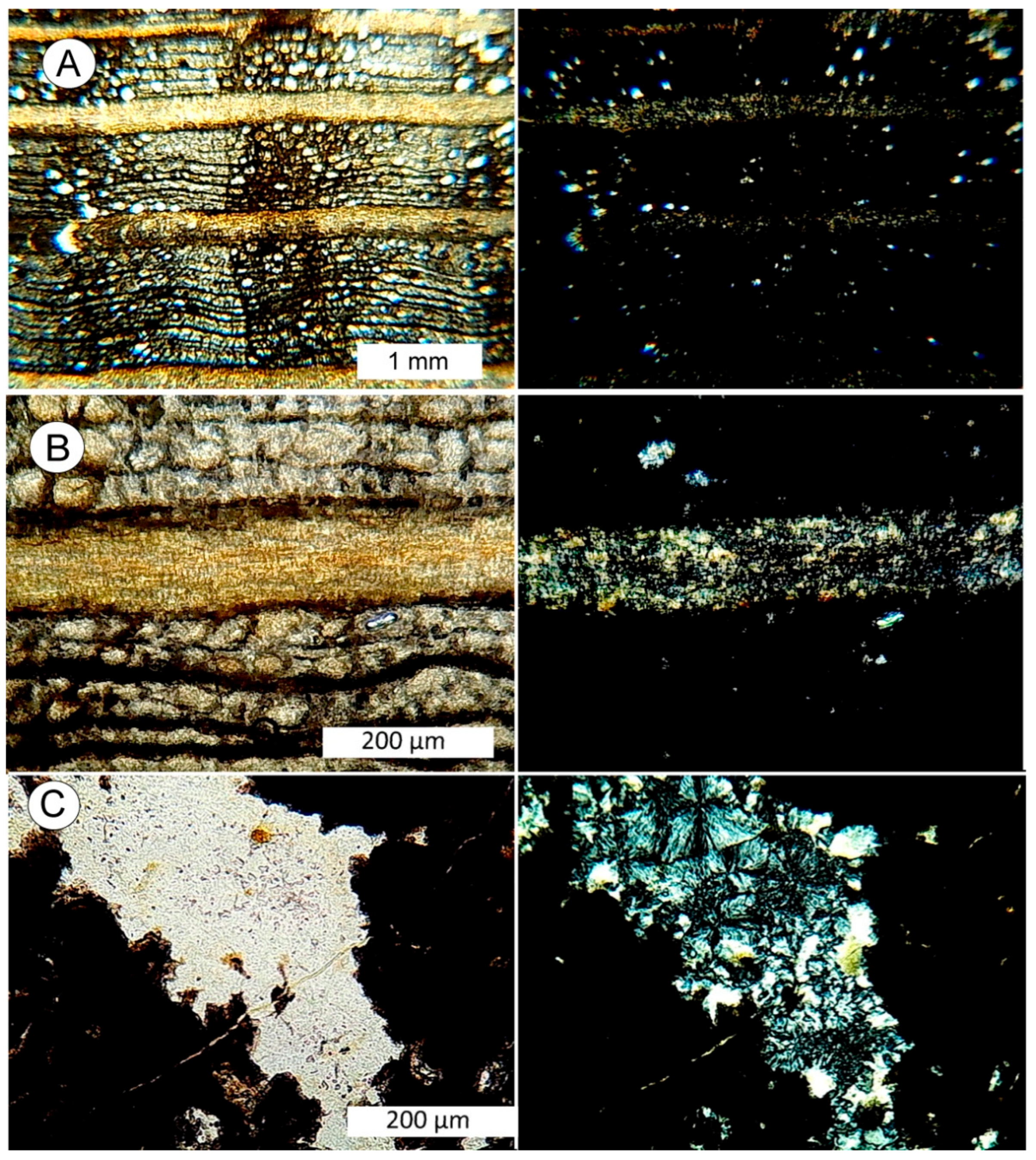
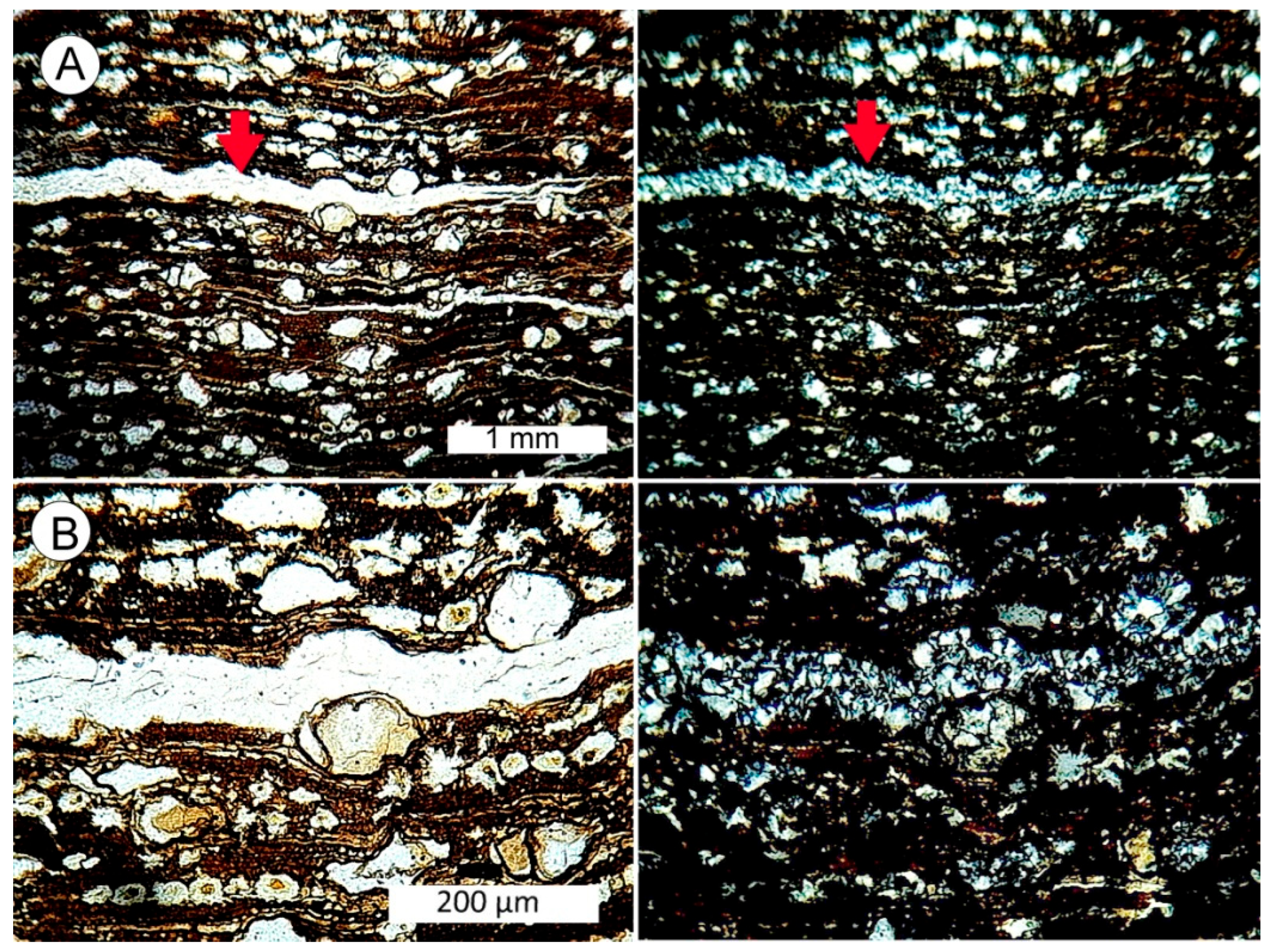
The complexity of mineralization is evidenced by specimen MM-9 (Figure 19) Transverse views show that most of the tissue has been replaced by opal-A, but opal-CT bands are present. Their relation to original tissue anatomy is uncertain. Most cell lumina contain opal-A, but a few lumina contain opal-CT. The 2.35 g/cm3 density is caused by the overall abundance of opal-CT. Figure 19C shows a specimen where the wood is replaced by opal-A, but a small, rotted area contains radial masses of chalcedony. The 1.09 g/cm3 density is evidence that chalcedony is a minor constituent.
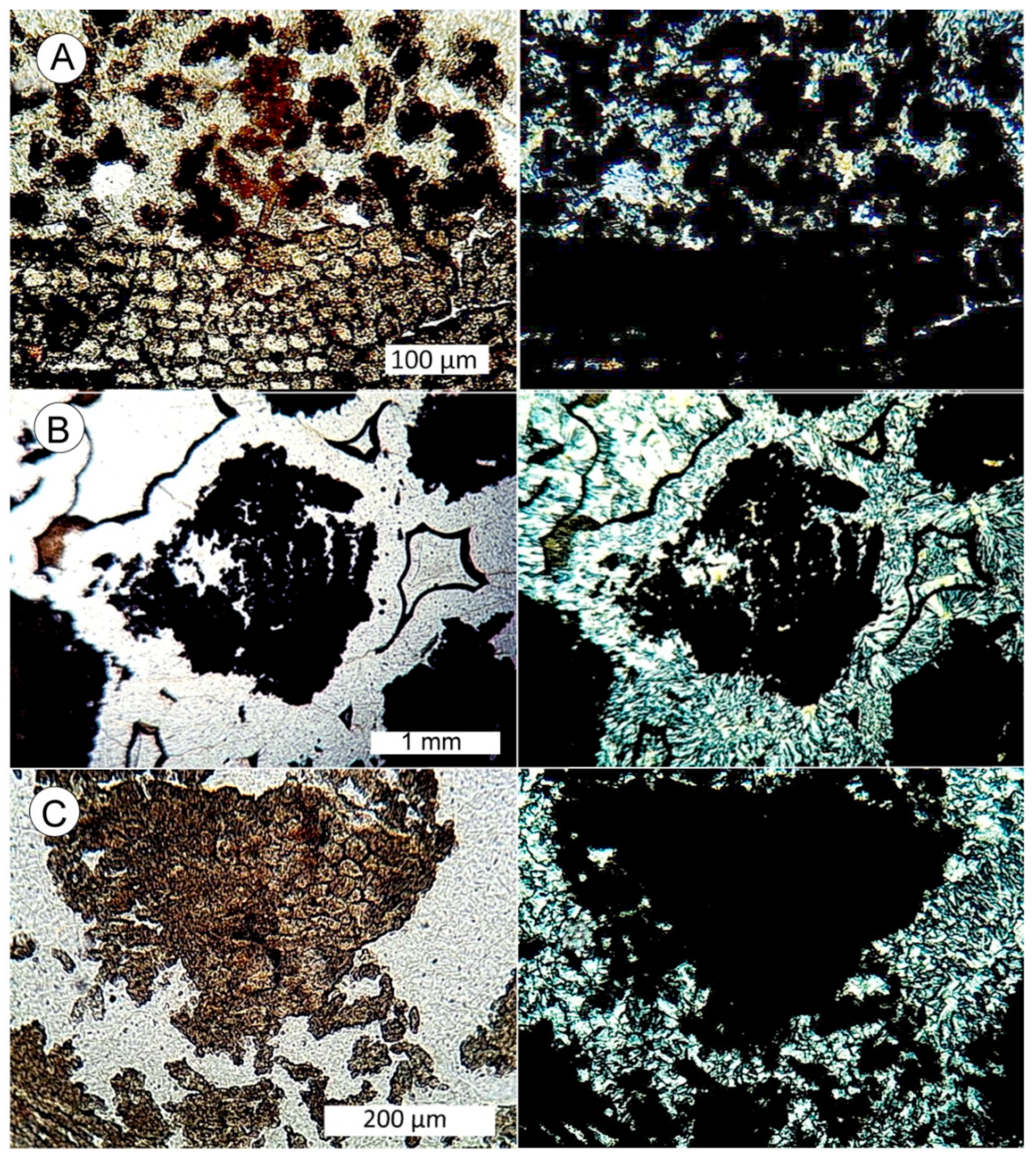
Some other Goderdzi Formation wood specimens have other types of complex mineralogies. Figure 20 shows opal-A wood that has been fragmented, with many spaces filled with microcrystalline quartz. The expansive growth of this quartz has resulted in isolated “islands” of opalized tissue. The density of 2.24 g/cm3 is evidence that much of the specimen is opalized, with crystalline silica being dominant only in small local areas.
Specimen MM-6 has a particularly complex mineralogy (Figure 21). Smaller cells have been replaced by opal-A, but microcrystalline quartz occurs in some intercellular spaces and in most cell lumina. Higher magnification shows that some cell lumina contain both opal-CT and quartz (Figure 21B). Fractures parallel to the wood ring structure are filled with microcrystalline quartz. The 2.41 g/cm3 density is evidence of the intermixture of chalcedony/quartz and opal.
In some specimens, the occurrence of chalcedony or quartz as a late-stage fracture filling can clearly be seen without magnification (Figure 22).

7.3. Quartz-Mineralized Woods

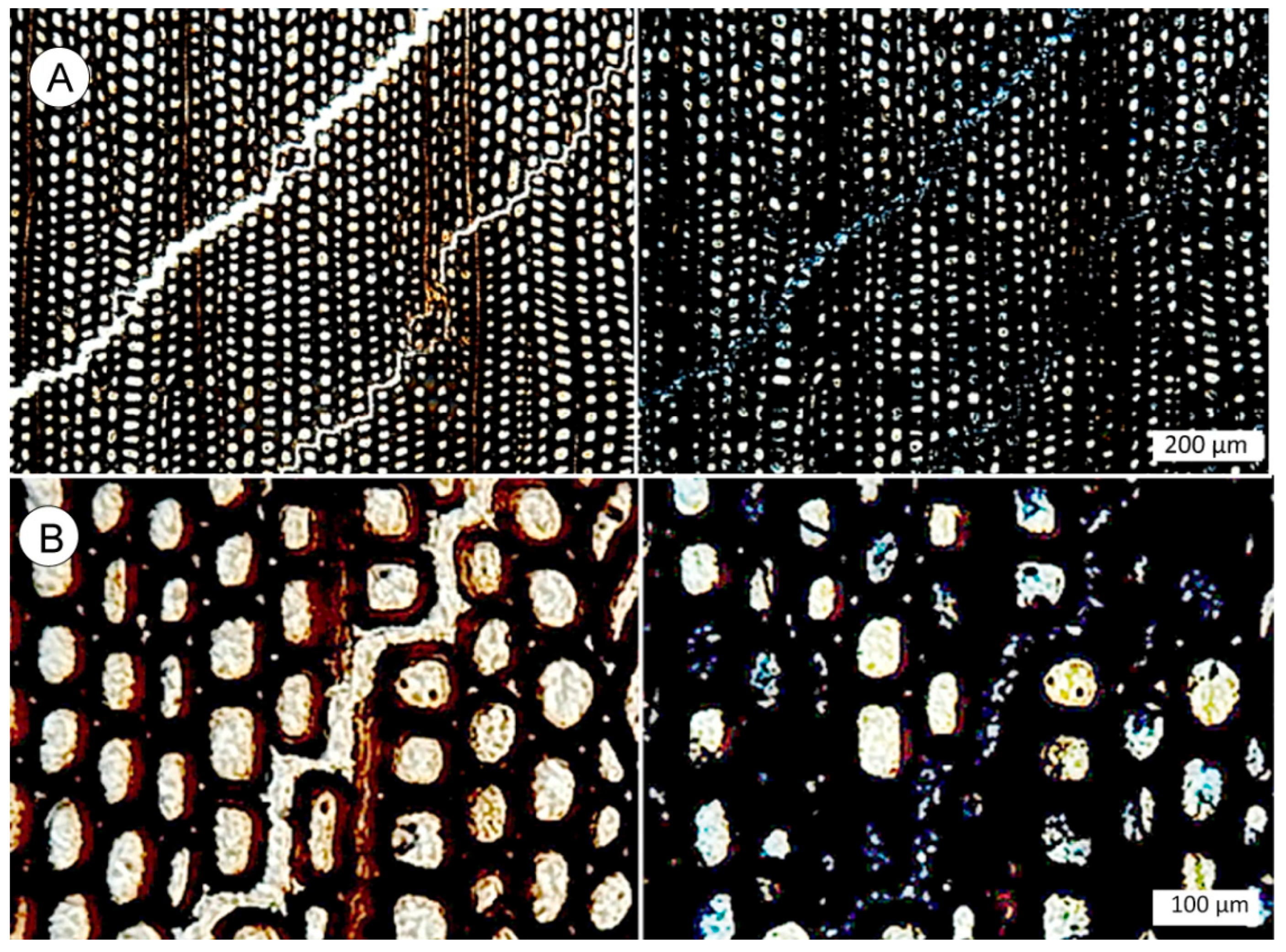
Very few Goderdzi Formation woods contain quartz as the major constituent (Figure 23).

7.4. Accessory Minerals

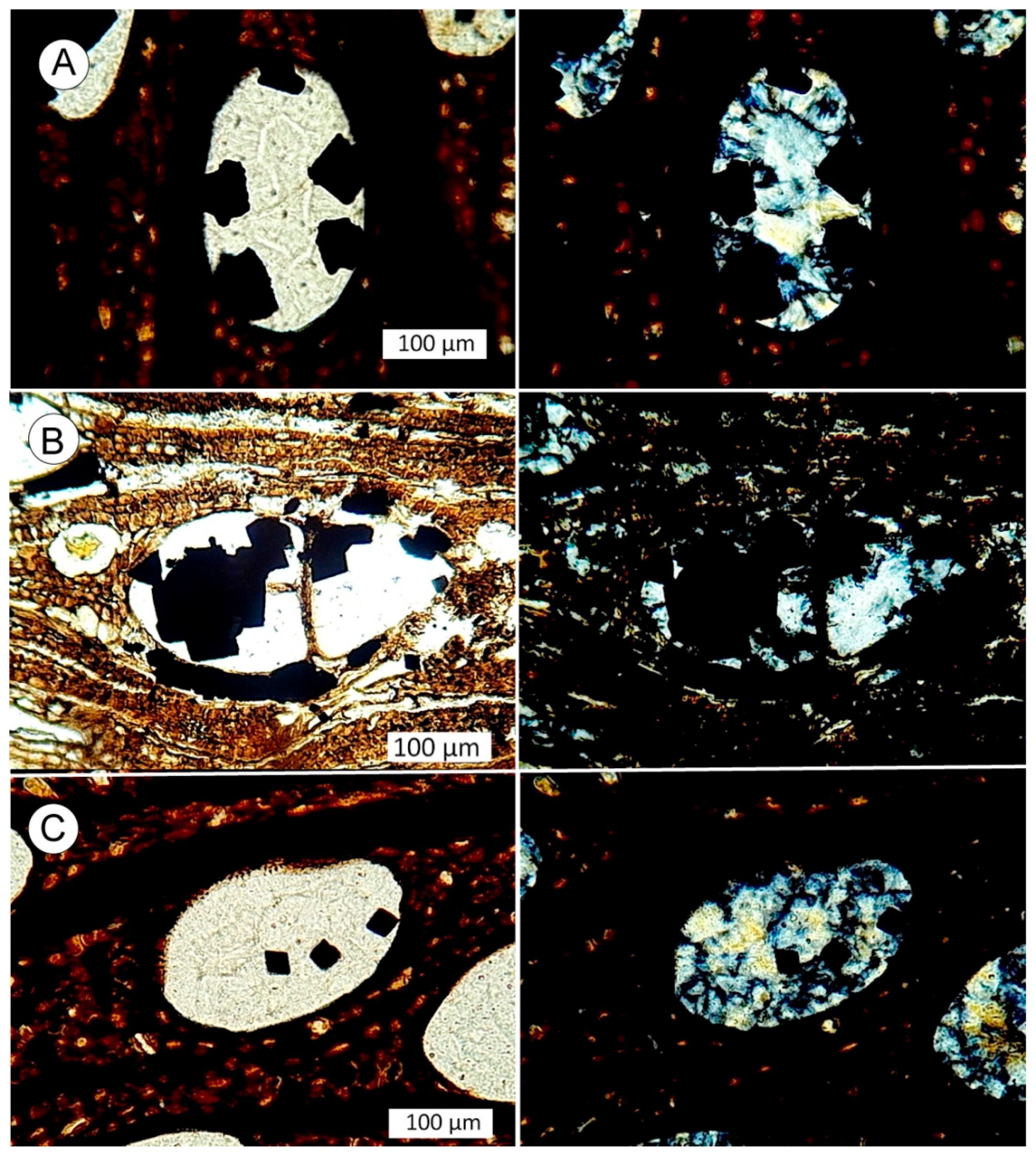
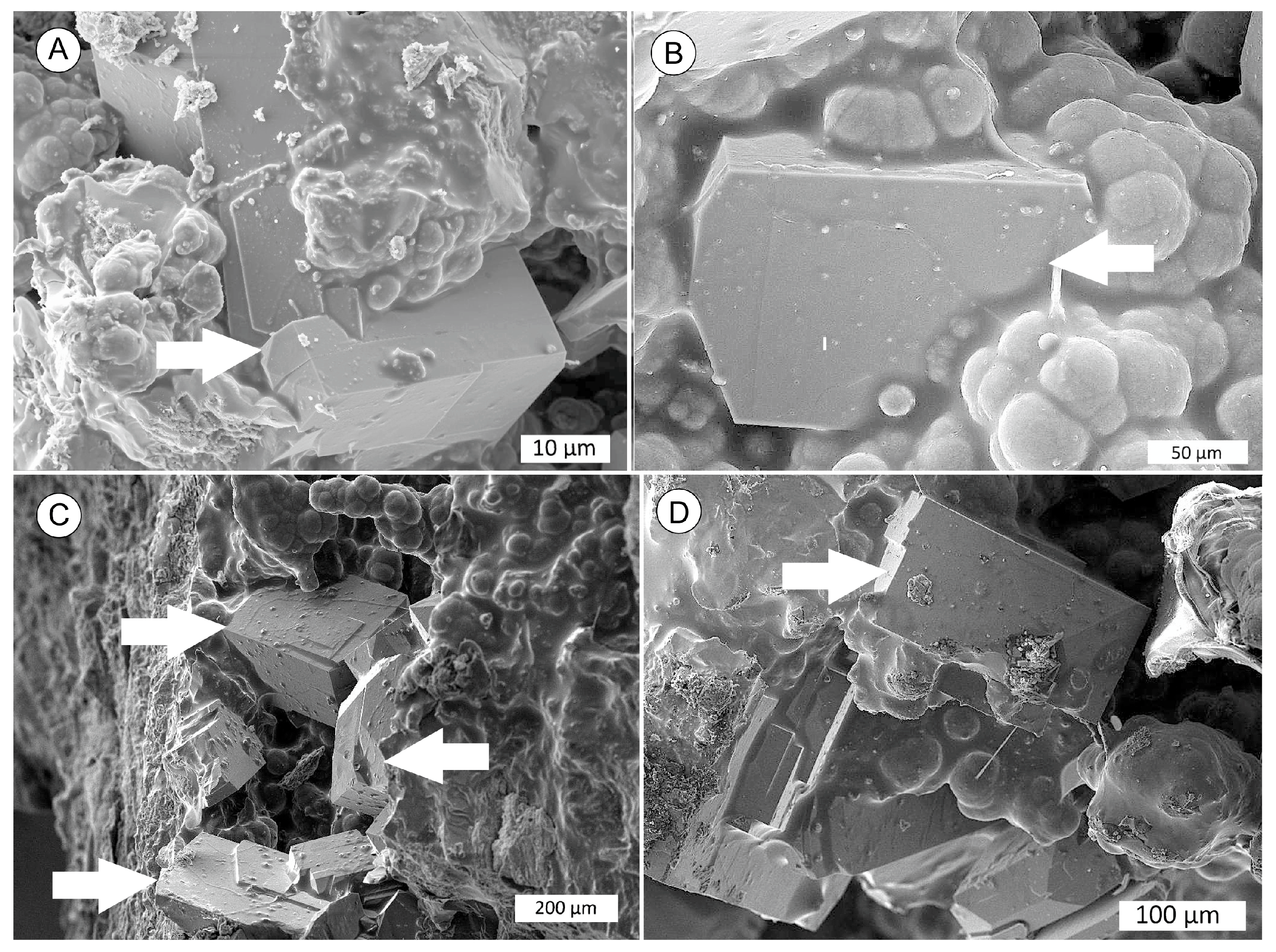
A few Goderdzi Formation fossil woods contain trace amounts of accessory minerals that are visible by optical microscopy or SEM. The most common of these minerals is iron pyrite (Figure 24). Tiny pyrite crystals occur in quartz-filled cell lumina, evidence that the pyrite formed during a late stage of mineralization when cell interior regions became sites for silica precipitation. The two-dimensional views provided by thin section do not provide three-dimensional information, but Figure 24A clearly shows that the pyrite cells are attached to the lumen cell wall. This morphology is evidence that the pyrite crystallized on the vessel’s walls prior to the precipitation of quartz. These euhedral crystals presumably resulted from hydrothermal activity during diagenesis, when groundwater contained both dissolved iron and sulfur under pH and Eh conditions conducive to pyrite genesis.
In a few specimens, zeolite crystals occur in peripheral areas, probably representing the permeation of dissolved elements derived from the tuffaceous matrix (Figure 25). Zeolites formed from a combination of Si, Al, Ca, and K. These hydrous aluminosilicates are commonly the result of hydrothermal alteration of feldspars in basic volcanic rocks at relatively low temperatures [25,26]. In these SEM photos, the fossil wood has botryoidal textures that are typical of opal, but the ~2.44 and 2.54 g/cm3 densities are suggestive of chalcedony/quartz as a major constituent. Thin sections (Figure 23) show that specimen MM-E contains abundant quartz. The botryoidal textures visible in Figure 25 are perhaps evidence of diagentic transformation of opal to quartz. As discussed later in this report, SEM images of specimen MM-D appear to show opal-CT textures, but again, this may be evidence of diagentic transformation. However, the features observed in the zeolite photos do not provide definitive evidence for the mineralization history of these two specimens.

8. SEM Evidence

SEM images provide a means for recognizing the anatomical and mineralogic characteristics of fossil wood.

8.1. Opal Mineralized Wood

As observed in optical microscope images and XRD patterns, opal-A is a common constituent of the Goderedzi Formation fossil woods. The opal replacement of wood cells is evident in many specimens (Figure 26).
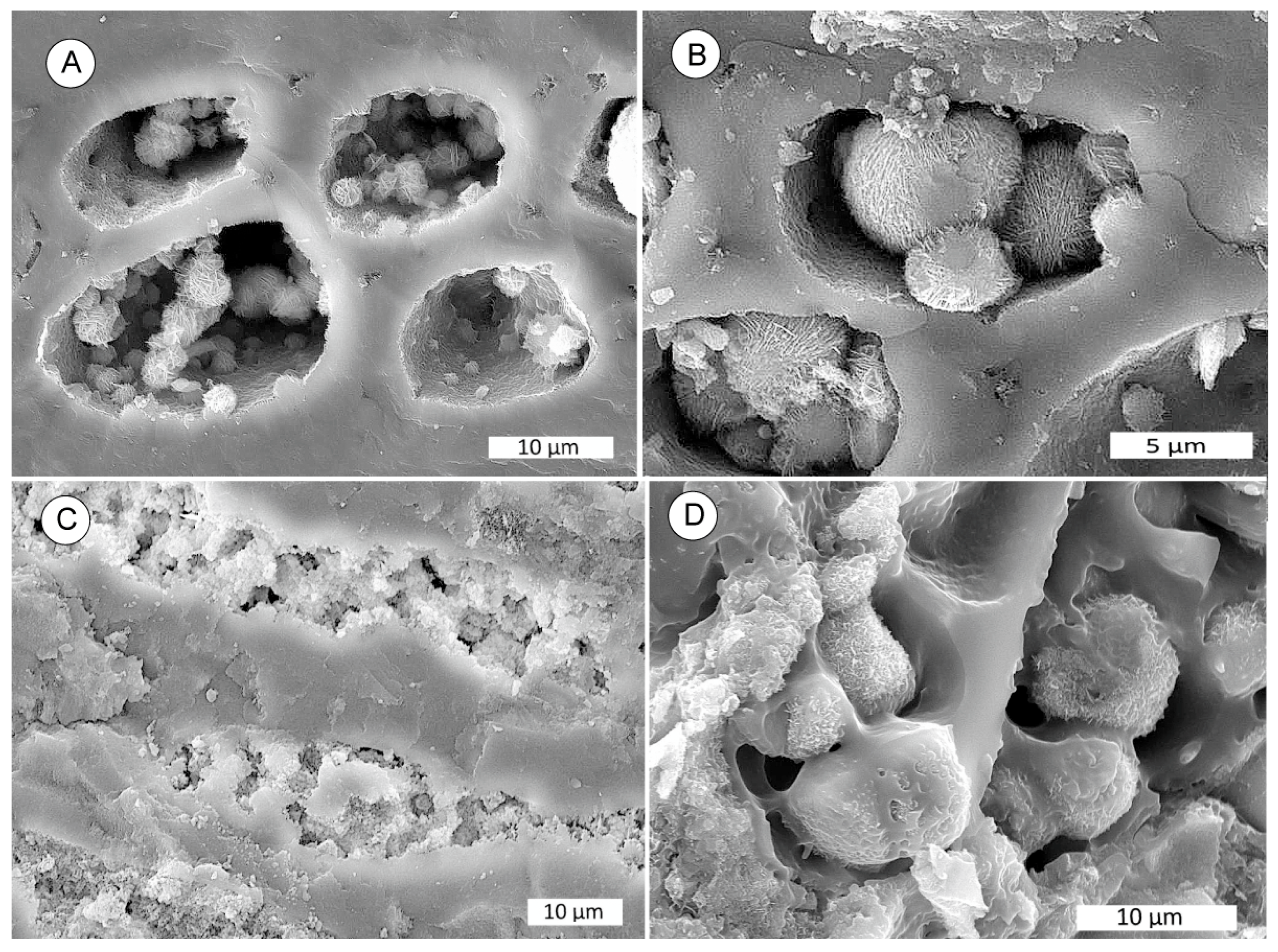
Opal-CT occurs in many Goderdzi Formation fossil wood specimens, as evidenced by XRD data (Figure 4). No specimens were observed to contain opal-CT as the dominant constituent. For example, thin-section images show that specimen MM-9 contains zones of opal-CT in wood that are primarily mineralized with opal-A (Figure 19). Smaller fields of view in SEM images show the characteristic crystallinity of opal-T (Figure 27).
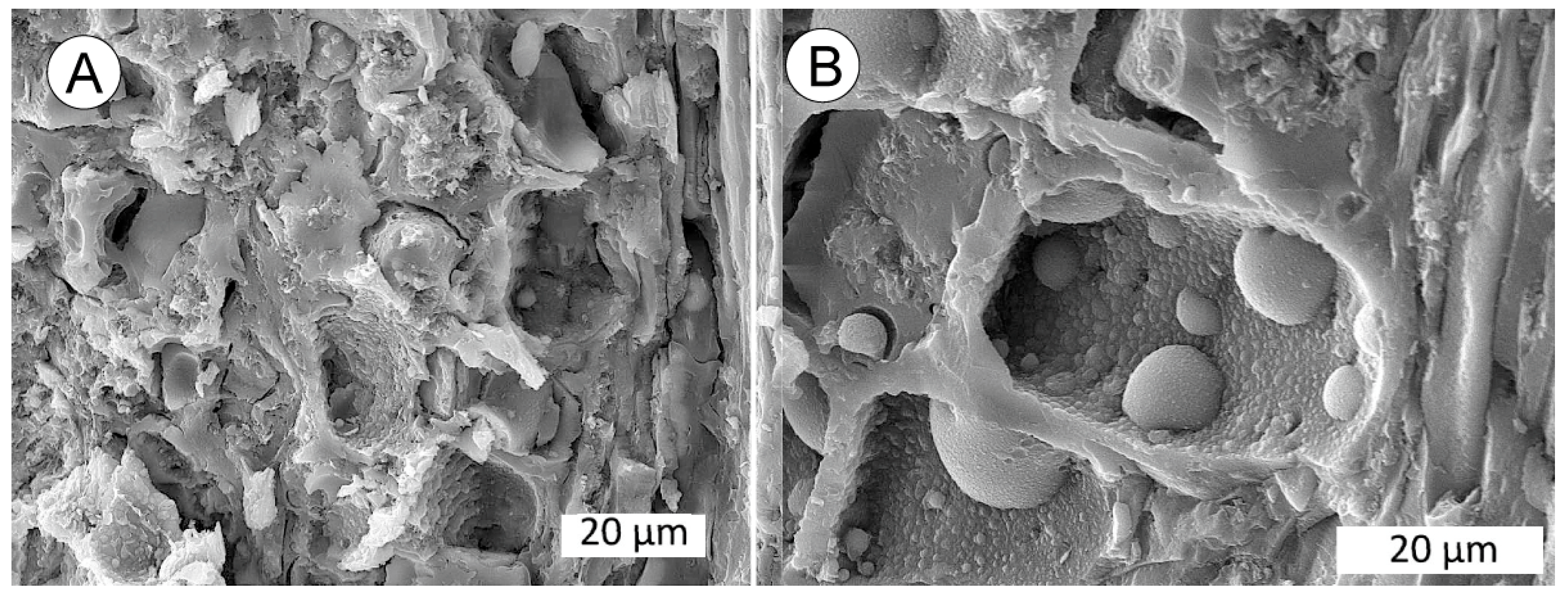
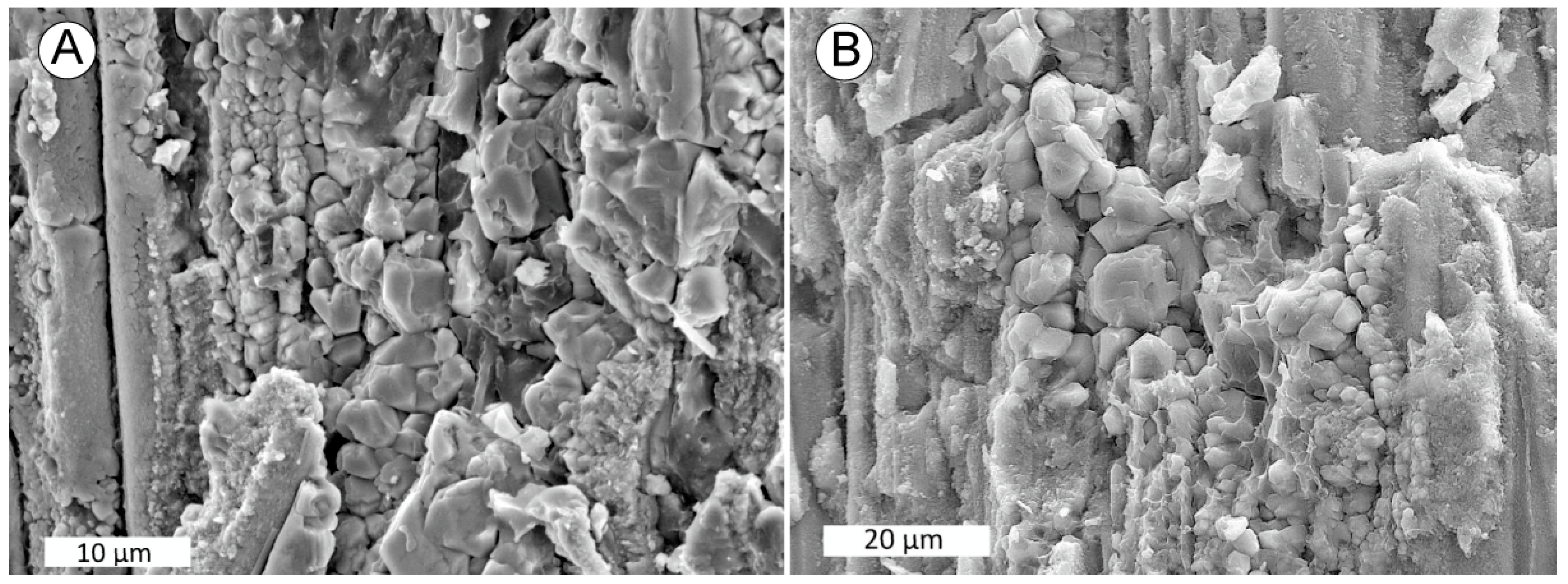
The origin of opal CT is uncertain. The presence of individual lepispheres of this mineral in cell lumina (Figure 27) suggests that the mineral may be a primary precipitate that formed in a precipitation episode that followed the original opal-A precipitation. However, the complex mineralization of some specimens defies easy interpretation. For example, SEM images of specimen MM-B show a region where cell walls have been replaced by opal-A, with many cell lumina remaining partially open (Figure 28). Relatively large hemispherical masses on the inner cell walls have smooth surfaces that are reminiscent of opal-A, but it is possible that they represent incipient development of opal-CT. To add to the complexity, thin-section images of this specimen (Figure 17) show large areas where cell lumina contain quartz. In another small area on the same slide, some quartz-filled lumina contain pyrite crystals (Figure 24C). This polymineralogic composition is evidence that fossilization involved multiple episodes of paragenesis, but the relationships between successive steps are enigmatic.

8.2. Quartz-Mineralized Wood

Some Goderdzi Formation woods contain quartz or chalcedony as fillings in cell lumina or fractures (Figure 3, Figure 15, Figure 16, Figure 17 and Figure 18), but few specimens contain crystalline silica as the major constituent. The reason may be that felsic pyroclastics provided an available source for dissolved silica, and high Si concentrations in groundwater favored the rapid precipitation of opal. Well-crystallized silica typically forms when Si levels are relatively low, allowing time for well-ordered lattices to develop. These phenomena explain why quartz and chalcedony typically occur during late stages of mineralization, when silica availability has decreased. Only two specimens, MM-E and MM-6, were observed to contain quartz as the dominant constituent (Figure 29 and Figure 30).

9. Discussion

Studies of petrified wood samples and wood petrification processes from around the world provide insights into the interaction between biological materials and geochemical environments (e.g., [20,21,22,27,28]). Fossilized woods from the Goderdzi Formation offer an opportunity to investigate silicification processes in a volcanogenic setting, where geological, mineralogical, and paleobotanical data can be used to reconstruct the variability in silica mineralization, the stages of silicification, and the paleoenvironmental conditions that facilitated preservation. Intense late Miocene volcanic activity in the Goderdzi Pass area produced thick pyroclastic deposits, lahars, and localized ash-derived basins that rapidly buried vegetation. These volcanic events created ideal conditions for preserving and silicifying wood, making the Goderdzi Formation one of the most significant petrified wood localities in the Lesser Caucasus region. Silicified trunks and branches, horizontal logs, and wood fragments that occur in breccia/conglomerate layers are associated with lahar deposits. indicating rapid burial. Upright fossil tree stumps, sometimes preserved with root systems, suggest in situ preservation, implying rapid burial, while sub-horizontal logs are evidence of fluvial transport. Charcoalified wood specimens indicate exposure of trees to fires associated with volcanic eruptions.
The unique nature of Miocene fossil woods in the Goderdzi Formation is evident when these fossils are compared to studies that have been done on other fossil forests. In making these comparisons, it is important to consider geologic age. For example, extensive investigations have been conducted on silicified wood from Paleozoic sites. These include the Permian wood at Chemnitz, Germany [29,30,31], Permo-Carboniferous silicified trunks in the Czech Republic [32,33], and Permian fossil wood in Brazil [34]. The old geological ages of these deposits increase the likelihood that the original mineral compositions have changed as a result of diagenesis or later hydrothermal alteration. Even Mesozoic fossil wood localities are likely to provide poor evidence for making mineralogical comparisons to Cenozoic occurrences. This interpretation is demonstrated by the abundance of opalized wood in Cenozoic formations and the paucity of opal in older deposits. One example is the Triassic wood at Petrified Forest National Monument in Arizona, USA, where a multitude of fossil logs are mineralized only with quartz [35]. These compositions provide circumstantial evidence for diagentic transformation.
Mineralogic comparisons are also limited by many reports of fossil woods that focus on anatomy and taxonomy, with little if any attention made to mineral composition or fossilization processes. For some localities, reports provide conflicting information. For example, Miocene wood from Banten Province, Indonesia, has been described as having quartz composition [36], but an earlier report described specimens from the same location as being composed of opal [37].
The most useful possibilities for comparing the Goderdzi Formation fossil woods with other localities where fossilization was related to episodes of volcanic activity. There are many examples, but the availability of mineralogic information is variable. For example, an Oligocene site in Bulgaria preserves abundant fossil wood, including upright trees preserved in pyroclastic deposits, including air-fall tephra that buried a forest of giant trees, some having trunk diameters of more than 4 m [38]. Unfortunately, the mineralogy of these specimens has not been reported. Likewise, Miocene fossil logs in eastern Poland, near the Ukraine border, have been investigated in regard to anatomy and tree ring growth as indicators of paleoenvironment, with an absence of mineral analysis [39].
The Lesvos Petrified Forest (Sigri Petrified Forest) on western Lesbos Island, Greece, is protected as an international geopark. The locality contains approximately 150 upright tree trunks that were buried in pyroclastic material during early Miocene volcanic eruptions that covered a large area of Lesbos Island with lava and ash. The process of fossilization may have possible similarities to the origin of the Georgia fossil wood. However, Lesvos-related publications have focused on the conservation issues [40,41]. A detailed study of the host rocks contained scant information in regard to the fossil wood [42].
A report on lower Miocene wood from the Hukatere Peninsula, New Zealand, described fossil woods that originated when pyroclastic flows carried wood from a broadleaf podocarp forest into an estuarine mangrove forest [43]. This fossil wood has some compositional similarities to the Goderdzi Formation wood. Samples collected from New Zealand came from specimens that ranged from small splinters to large logs. Of 30 analyzed samples, 4 contained a mixture of opal-CT and quartz. Opal-CT was the dominant component in 9 samples. Crystalline quartz occurred in some cell lumina, and as open-space fillings and surface encrustations. No sample contained chalcedony as a major constituent, the mineral typically being found as vessel fillings and in fractures. Unlike the Goderdzi woods, no opal-A was observed. A limitation for the New Zealand research is that mineralogy was largely determined by X-ray diffraction, not microscopy. Carbonized wood was found in pumiceous horizons at the New Zealand sites, in specimens that were believed to have been transported by hot pyroclastic flows. Some logs showed charred exterior surfaces. This charcoalified tissue is similar to features observed in Goderdzi Formation specimens.
Striking characteristics of the Georgia fossil wood are the abundance of specimens containing opal-A and the coexistence of other silica polymorphs. The best-known comparative localities are from North America. Occurrences of volcaniclastic deposits that preserve fossil woods in both prone and standing positions have been reported from Eocene localities that include the Clarno Formation at Hancock Canyon, Oregon, USA, the fossil forests at Yellowstone National Park, Wyoming, and Montana, USA, and Florissant Fossil Beds National Monument, Colorado, USA. Miocene localities are known to occur in Nevada and Washington State, USA.
Fossil logs in the Eocene Clarno Formation, central Oregon, USA [44] are mineralized with quartz, though no studies have been made to determine whether quartz was a primary constituent or a result of diagenesis of an opaline precursor. Fossil forests in Yellowstone National Park and the correlative Tom Miner Basin just north of the park contain only quartz-mineralized wood, commonly in the form of upright trunks that represent trees that were buried by tephra [45,46]. The mineralization history is unknown.
Late Eocene fossil trees at Florissant Fossil Beds National Monument perhaps provide a better comparison with Georgia specimens. The Florissant logs are preserved in a single 5 m-thick volcaniclastic debris flow (lahar) within the 70 m thick Florissant Formation. The formation is composed of lacustrine, fluvial, and lahar deposits that were deposited in a paleovalley on a high-elevation, low-to-moderate relief erosion surface. The fossil woods are commonly in the form of in situ stumps. The mineralogy of silicified trees within a single lahar deposit is surprisingly complex. Individual specimens range from pure quartz to nearly pure opal-CT, with some stumps containing intermixtures of both minerals [20]. Unlike the Goderdzi Formation woods, opal-A is not present, perhaps because of the Paleogene age of the Florissant specimens; opal-A is typically found only in Neogene fossil woods.
Well-studied Neogene silicified woods associated with pyroclastic deposits occur in Nevada and Washington State, USA. Volcaniclastic sediments of the late Miocene Virgin Valley Formation in the precious opal mining district in northern Nevada contain abundant fossil wood specimens. These fossils originated when driftwood accumulated along the shorelines of lakes that developed in collapsed calderas. Felsic volcanics provided a source of dissolved silica. Unlike the Goderdzi Formation, trees were not buried in an upright position by airfall tephra. Opal-A is a dominant constituent in some of the youngest strata, but most petrified wood primarily contains opal-CT [21].
Petrified wood localities occur at many other Nevada localities [21], typically associated with calderas that were created by the migration of the hot spot that presently underlies Yellowstone National Park, Wyoming, USA. The Nevada calderas have temporal distributions that reflect the northeastern movement of the heat source, with fossil wood deposits in central Nevada. having lower Miocene ages, decreasing to middle or late Miocene for localities in northwestern Nevada. Several Oligocene locations in northeastern Nevada predate the hot-spot phenomenon. The ages are suggestive of the importance of diagentic transformations for determining fossil wood mineralogy. Oligocene woods are mineralized with chalcedony/quartz, and middle Miocene woods typically contain opal-CT as the dominant constituent. The youngest Miocene beds are likely to have wood that includes opal-A. Indeed, Pliocene wood in Lyon County, Nevada, contains opal-A as the primary constituent. This mineralization history is relevant to the Goderdzi Formation because the late Miocene age is consistent with the abundance of opal-A in fossil wood.
In Washington State and Oregon, USA, middle Miocene fossil woods are abundant in the Columbia River Basalt Group (CRBG), volcanic flows that cover much of central Washington and north-central Oregon, USA. These woods include large horizontal logs, but upright trunks occur in some localities. Unlike the Goderdzi Formation woods, fossils typically originated when logs were inundated by basalt flows, not airfall tephra or lahar deposits. The mineralogies of Washington State specimens have been studied in detail [47]. Silica minerals include opal-A, opal-CT, chalcedony, and microcrystalline quartz. Some specimens contain only a single form of silica, but specimens commonly contain multiple phases. Opal-A and opal-CT commonly coexist, but chalcedony and quartz are commonly present as minor constituents in opalized wood. Some specimens contain only chalcedony/quartz. Diagentic transformation of opal-A to opal-CT has long been an accepted hypothesis, but in opaline CRBG woods, the two polymorphs appear to have formed independently, e.g., in woods that have opal-A as a replacement for cell walls, but with lumina that contain opal-CT. Likewise, opal-CT is known to sometimes transform to chalcedony, but in CRBG specimens, these minerals commonly appear to have resulted from multiple episodes of mineralization. The flood basalt flow character of the CRBG wood deposits is very different from the pyroclastic setting of the Goderdzi Formation, but the complex mineral assemblages found in both locations are suggestive of the importance of multiple stages of mineral precipitation during the petrifaction process.
The presence of charcoalified wood in the Goderdzi Formation can be considered in the light of previous investigations. Non-mineralized ancient wood may consist of tree remains that have been buried in sediments that are impermeable to the penetration of mineral-laden groundwater. In Europe, notable examples include the late Miocene Ipolytarnóc Fossil Forest in Hungary [48], the Pliocene Dunarobba Fossil Forest in central Italy, and the Pliocene Fossano Fossil Forest in northwest Italy [49,50,51]. Coalified wood occurs in many locations; one example is the extensive lignite deposits in Germany [52]. These occurrences are rather different from deposits that contain wood that have been charcoalified from exposure to high temperature under anaerobic conditions. Although forest fires may be a cause of charcoal formation, blackened Goderdzi Formation woods probably resulted from woods that were charred from contact with hot pyroclastics. This phenomenon has been described from other locations [53,54]. A notable characteristic of the Goderdzi Formation woods is the occurrence of both charcoalified and silicified specimens in the same strata.

10. Conclusions

The complex mineralogy is a notable characteristic of Goderdzi Formation fossil woods. Our investigation is an analysis of multiple specimens, preceded by an earlier study that was based on a single sample [33]. The discovery of samples that contain opal-A, opal-CT, and quartz has important implications. First, the relative instability of opal-A limits the occurrence of the silica polymorph to Neogene deposits, explaining the absence of opal-A in older fossil forests. Second, the presence of multiple silica minerals in specimens from a single formation supports the hypothesis that wood petrifaction may result from successive episodes of mineralization. This interpretation is consistent with earlier reports of petrified woods from other locations where mineralization appears to have developed in multiple episodes [20,21,34]. Taxonomy of the Goderdzi Formation fossil woods remains enigmatic, but the presence of fossil leaf assemblages of correlative age in the same region provides possibilities for future paleobotanical research.

Author Contributions

Conceptualization, M.M.; Investigation, M.M.; Writing—Review and Editing, M.M.; Formal Analysis, G.E.M.; Writing—Original Draft Preparation, G.E.M.; Data Curation, G.E.M. All authors have read and agreed to the published version of the manuscript.

Funding

This research received no external funding.

Data Availability Statement

Specimens described in this investigation are part of Mustoe’s active research collection at the Geology Department, Western Washington University, Bellingham, WA, USA. Website: https://geology.wwu.edu. For access, please contact mustoeg@wwu.edu.

Acknowledgments

Access to analytical facilities was provided by the following W.W.U. divisions: Advanced Materials Science and Engineering Center (XRD), Scientific Technical Services (SEM), and the Geology Department (thin-section lab). We thank Kyle Mikkelson, Michael Kraft, and Ben Paulson for providing technical support.

Conflicts of Interest

The authors declare no conflicts of interest.

References

  1. Makadze, M.; Tutberidze, B.; Akhalkatsishvili, M.; Kobakhidze, N.; Makadze, D. New species of the fossil flora in the tuffs of the Goderdzi Suite (Goderdzi Pass area). Bull. Georgian Natl. Acad. Sci. 2019, 13, 103–109. [Google Scholar]
  2. Djigauri, D.; Petrosov, N. Compilation and Correlation of Lithological-Stratigraphic Maps of Continental Effusion Formations in Southern Georgia. In Report of the Mapping Team on the Results of Thematic Work Conducted in 1981–1985; Al. Tvalchrelidze Caucasian Institute of Mineral Resources: Tbilisi, Georgia, 1989. (In Russian) [Google Scholar]
  3. Tutberidze, B. Geology and Petrology of Alpine Late Orogenic Magmatism of the Central Part of Caucasian Segment; Tbilisi University Publisher: Tbilisi, Georgia, 2004; p. 362. (In Russian) [Google Scholar]
  4. Adamia, S.; Sadradze, N.; Alania, V.; Talakhadze, G.; Khmaladze, K.; Sadradze, G. Geology and Geodynamics of the Lithosphere of Georgia: 1:200,000-Scale Digital Geological Map and Explanatory Note of Georgia, 2020; Publishing House Ltd. Vesta: Tbilisi, Georgia, 2022; Available online: https://openlibrary.ge/handle/123456789/10292 (accessed on 1 March 2026).
  5. Sadradze, N. Geodynamics of the Continental Collision Zone on the Example of Post-Collisional Volcanism Evolution in Southern Georgia (Javakheti and Adjacent Area). Ph.D. Thesis, St. Andrew the First-Called Georgian University of the Patriarchate of Georgia, Tbilisi, Georgia, 2015; pp. 1–36. [Google Scholar]
  6. Lebedev, V.; Chernyshev, I.; Dudauri, O.; Arakelyants, M.; Chugaev, A.; Goltsman, Y.; Vashakidze, G. Geochronology of Neogene-Quaternary dacitic volcanism of the Javakheti Highland (Lesser Caucasus, Southern Georgia). Proc. Geol. Inst. Georgian Acad. Sci. New Ser. 2004, 119, 535–544. (In Russian) [Google Scholar]
  7. Aslanyan, A.; Baghdasaryan, G.; Gabunia, L.; Rubinstein, M.; Skhirtladze, N. Radiometric age of Neogene volcanic formations of the Georgian SSR and Nakhchevan ASSR. Bull. Acad. Sci. Armen. SSR Sci. Earth 1984, 35, 3–24. (In Russian) [Google Scholar]
  8. Okrostsvaridze, A.; Chung, S.L.; Chang, Y.H.; Skhirtladze, I. Geology and zircon U-Pb geochronology of the Mtkvariyroclastic flow and evaluation of destructive processes affecting Vardzia rock-cut city. Quat. Geol. 2020, 540, 137–145. [Google Scholar]
  9. Okrostsvaridze, A.; Gamkrelidze, I.; Yuan, H.L.; Keskin, M.; Tormey, D.; Boichenko, D.; Gogoladze, S.; Makadze, M. U–Pb geochronology and geochemistry of volcanic ash layers in the Eastern Caucasus intermountain Neogene Basin: Implications for their sources. Arab. J. Geosci. 2024, 17, 129. [Google Scholar] [CrossRef]
  10. Mustoe, G.E. Density and loss on ignition as indicators of the fossilization of silicified wood. IAWA J. 2016, 37, 98–111. [Google Scholar] [CrossRef]
  11. Uznadze, M.; Tsagareli, A. The Sarmatian Flora of Gorge of River Dzindza; “Metsniereba” Publ. House: Tbilisi, Georgia, 1979; p. 112. (In Russian) [Google Scholar]
  12. Uznadze, M. Flora of the Goderdzi Suite. Bull. Acad. Sci. Georgian SSR 1946, 7, 427–434. (In Russian) [Google Scholar]
  13. Uznadze, M. Description of the Goderdzi Suite Flora; Proceedings of the Geological and Mineralogical Institute of the Academy of Sciences of the GSSR, Geological Series, Vol. V (X); Geological and Mineralogical Institute of the Academy of Sciences of the GSSR: Tbilisi, Georgia, 1949; pp. 1–164. (In Georgian) [Google Scholar]
  14. Uznadze, M. The Neogene Flora of Georgia; “Metsniereba” Publ. House: Tbilisi, Georgia, 1965; p. 180. (In Russian) [Google Scholar]
  15. Jones, T.P.; Chaloner, W.H. Fossil charcoal, its recognition and paleoatmospheric significance. Palaeogr. Palaeoclimatol. Palaeoecol. 1991, 97, 39–50. [Google Scholar] [CrossRef]
  16. Mustoe, G.E. Non-mineralized fossil wood. Geosciences 2018, 8, 223. [Google Scholar] [CrossRef]
  17. Scott, A.C.; Jones, T.P. Fossil charcoal: A plant-fossil record preserved by fire. Geol. Today 1991, 7, 214–216. [Google Scholar]
  18. Sander, P.M.; Gee, C.T. Fossil charcoal: Techniques and applications. Rev. Palaeobot. Palynlogy 1990, 63, 269–279. [Google Scholar]
  19. Zhang, F.Q.; Chen, H.L.; Batt, G.E.; Li, Z.X.; Yang, S.F. Early Cretaceous Aptian charcoal from Nanchang Petrified Wood National Geopark of Zhejiang Province, eastern south China. Palaios 2014, 29, 325–337. [Google Scholar] [CrossRef]
  20. Mustoe, G.E. Mineralogy and geochemistry of late Eocene silicified wood from Florissant Fossil Beds National Monument, Colorado. In Paleontology of the Upper Eocene Florissant Formation, Colorado; Meyer, H.W., Smith, D.M., Eds.; Special Paper 435; Geological Society of America: Golden, CO, USA, 2008; pp. 127–140. [Google Scholar]
  21. Mustoe, G.E. Late Tertiary petrified wood from Nevada, USA: Evidence of multiple silicification pathways. Geosciences 2001, 5, 286–309. [Google Scholar] [CrossRef]
  22. Mustoe, G.E. Silicification of wood: An overview. Minerals 2023, 13, 206. [Google Scholar] [CrossRef]
  23. Mustoe, G.E.; Smth, E.T. Timing of opalization at Lightning Ridge, Australia: New evidence from opalized fossils. Minerals 2023, 13, 1471. [Google Scholar] [CrossRef]
  24. Mustoe, G.E. Wood petrifaction: A new view of permineralization and replacement. Geosciences 2017, 7, 119. [Google Scholar] [CrossRef]
  25. Mumpton, F.A. Mineralogy and Geology of Zeolites; Reviews in Mineralogy 4; Walter DeGruyter GmbH: Berlin, Germany, 2018; 233p. [Google Scholar]
  26. Diego Gatta, G.; Lotti, P.; Comboni, D. Natural zeolites: Crystal chemistry, occurrence, properties and utilizations. In Zeolites: From Fundamentals to Emerging Applications; Serrano, D.P., Ĉejka, J., Eds.; Royal Society of Chemistry: Cambridge, UK, 2005; pp. 85–122. [Google Scholar]
  27. Scurfield, G.; Segnit, E.R. Petrifaction of wood by silica minerals. Sediment. Geol. 1984, 39, 149–167. [Google Scholar] [CrossRef]
  28. Stein, C.L. Silica recrystallization of petrified wood. J. Sediment. Petrol. 1982, 52, 1277–1282. [Google Scholar]
  29. Röβler, R.; Zierold, T.; Feng, Z.; Kretzschmar, R.; Merbitz, M.; Annacker, V.; Schneider, J.W. A snapshot of an early Permian ecosystem preserved by explosive volcanism: New results from the Chemnitz Petrified Forest, Germany. Palaios 2012, 27, 814–834. [Google Scholar]
  30. Deitrich, D.; Lampke, T.; Röβler, R. Microstructure study on silicified wood from the Permian Petrified Forest of Chemnitz. Paläontol. Z. 2013, 87, 397–407. [Google Scholar] [CrossRef]
  31. Trümper, S.; Röβler, R.; Göte, J. Decipering silicification pathways of fossil forests: Case studies from the Late Paleozoic of Central Europe. Minerals 2018, 8, 432. [Google Scholar] [CrossRef]
  32. Matysová, P.; Leichmann, J.; Grygra, T.; Rössler, R. Cathodoluminescence of silicified trunks fom the Permo-Carboniferous basins in eastern Bohemia, Czech Republic. Eur. J. Mineral. 2008, 20, 217–231. [Google Scholar] [CrossRef]
  33. Mencl, V.; Matsyová, P.; Sakala, J. Silicified wood from the Czech part of the Intra Sudetic Basin (Late Pennsylvanian, Bohemian Massif, Czech Repubic): Systematic, silicification, and paleoenvironment. Neues Jahrb. Geol. Paläontologie-Abh. 2009, 252, 269–288. [Google Scholar] [CrossRef]
  34. Trümper, S.; Götze, J.; Röβler, R. Siliceous petrifactions in the Permian of the Parnaiba Basin, central-north Brazil: Sedimentary environments and fossilization pathways. In Brazilian Paleofloras—From Paleozoic to Holocene; Iannuzzi, R., Röβler, R., Kunzeman, L., Eds.; Springer: Berlin, Germany, 2024; pp. 1–45. [Google Scholar]
  35. Sigleo, A.C. Geochemistry of silicified wood and associated sediments, Petrified Forest National Monument, Arizona. Chem. Geol. 1979, 26, 151–163. [Google Scholar] [CrossRef]
  36. Oktariana, H.; Winantris; Fauzielly, L.; Hamzah, A. Dryobalanoxylon sp.: Silicified wood from the Lebal Regency, Banten Province, Indonesia. J. Geol. Miner. Resour. 2019, 20, 93–99. [Google Scholar]
  37. Ansori, C. Model mineralisasi pembentukan Opal Banten. J. Geol. Indones. 2010, 5, 150–170. [Google Scholar]
  38. Iamandei, S.; Imandi, E.; Bozukoc, V.; Tsenov, B. New Oligocene fossil woods from Rhodopes, Bulgaria. In Proceedings of the 10th Romanian Symposium on Paleontology, Cluj-Napoca, Romania, 16–17 October 2015; p. 35. [Google Scholar]
  39. Klusek, M. Fossil wood from the Roztocze region (Miocene, SE Poland)—A tool for palaeoenvironmental reconstruction. Geol. Q. 2006, 50, 465–474. [Google Scholar]
  40. Zouros, N.C. Geoconservation, geotourism, and local development. Georg. Wright Forum 2010, 27, 19–28. [Google Scholar]
  41. Mao, L.; Zouros, N.; Zhang, J.; He, X.; Xing, L. Petrological analysis of petrified wood from Lesvos Island (Greece) and Yanquing (China) Geoparks: Sample conservation implications. Hist. Biol. 2021, 33, 1281–1291. [Google Scholar] [CrossRef]
  42. Piper, D.; David, J.W.; Zouros, N.C.; Anastaskis, G. Nature of the hydrothermal alteration of the Miocene Sigri Petrified Forest and host pyroclastic rocks, western Lesos, Greeece. J. Volcanol. Geotherm. Res. 2019, 269, 172–187. [Google Scholar] [CrossRef]
  43. Sutherland, J.I. Some aspects of petrifaction of Miocene wood from Kaipara Harbour, New Zealand. Geosci. Repts. Shizoka Univ. 1994, 20, 143–151. [Google Scholar]
  44. Wheeler, E.A.; Manchester, S.R. Middle Eocene trees of the Clarno petrified forest, John Day Fossil Beds National Monument, Oregon. PaleoBios 2014, 30, 105–114. [Google Scholar] [CrossRef]
  45. Yuretich, R.F. Yellowstone fossil forests: New evidence for burial inplace. Geology 1984, 12, 159–162. [Google Scholar] [CrossRef]
  46. Chadwick, A.; Yamamoto, T. A paleoecological analysis of petrified trees in the Specimen Creek area, Yellowstone National Park, Montana, USA. Palaeogeogr. Palaeoclimatol. Palaeoecol. 1984, 45, 39–48. [Google Scholar] [CrossRef]
  47. Mustoe, G.E.; Dillhoff, T.A. Mineralogy of Miocene petrified wood from central Washington Sttae, USA. Minerals 2022, 12, 131. [Google Scholar] [CrossRef]
  48. Erdei, B.; Dolezych, M.; Hably, L. The buried Miocene forest at Bükkábrány, Hungary. Rev. Palaeobot. Palynol. 2019, 15, 69–79. [Google Scholar] [CrossRef]
  49. Baldanza, A.; Sabatino, G.; Triscari, M.; De Angeles, M.C. The Dunarobba Fossil Forest (Umbria, Italy): Mineralogical transformations evidences as possible decay effects. Per. Mineral. 2009, 78, 52–60. [Google Scholar]
  50. Staccioli, G.; Fratini, F.; Meli, A.; Lazzeri, S. Mineralization processes in some samples from the fossil forest at Dunarobba (Umbria, Central Italy). Wood Sci. Technol. 2001, 35, 353–362. [Google Scholar] [CrossRef]
  51. Martinetto, E.; Bertini, A.; Basilica, G.; Baldanza, A.; Bizzarri, R.; Cherin, M.; Gentili, S.; Pontini, M.R. The plant record of the Dunarobba and Pietrafitta sites in the Plio-Pleistocene paleoenvironmental context of central Italy. Alp. Mediter. Quart. 2014, 27, 29–72. [Google Scholar]
  52. Kus, J.; Dolezych, M.; Schneider, W.; Hofmann, T.; Rajczi, E. Coal petrological and xylotomical characterization of Miocene lignites and in-situ fossil tree stumps and trunks from Lusatia region, Germany: Palaoenvironment and taphonomy assessment. Int. J. Coal Petrol. 2019, 217, 103283. [Google Scholar] [CrossRef]
  53. Scott, A.C. The preservation of woods in volcaniclastic flows and surges. In Proceedings of the Geological Society of America Annual Meeting, Boston, MA, USA, 5–8 November 2001; p. 68. [Google Scholar]
  54. Hudspeth, V.A.; Scott, A.C.; Wilson, C.J.N.; Collinson, M.E. Charring of wood by volcanic processes: An example from the Taupo ignibrite, New Zealand. Palaeogeogr. Palaeoclimatol. Palaeoecol. 2010, 291, 40–51. [Google Scholar] [CrossRef]
Figure 1. Location maps.
Geosciences 16 00127 g001
Figure 2. Geologic map of the study area. Modified from the 1:200,000-scale geological map of Georgia [4].
Geosciences 16 00127 g002
Figure 3. Regional stratigraphy and magnetostratigraphy. Adapted from [5].
Geosciences 16 00127 g003
Figure 4. X-ray diffraction patterns of selected Goderdzi Formation fossil woods.
Geosciences 16 00127 g004
Figure 5. Taphonomy of Goderdzi Formation fossil logs. (A) Transported log embedded within sediment layers, indicating deposition by a lahar flow or a flood event. (B) End view of a horizontal log buried in a conglomerate. Photo by Avtandil Okrostsvaridze.
Geosciences 16 00127 g005
Figure 6. Horizontal fossil log (marked with dashed line) in a volcaniclastic conglomerate.
Geosciences 16 00127 g006
Figure 7. Silicified log near the base of a tuffaceous conglomerate bed that presumably originated as a lahar deposit. (A) General view of stratigrapphy, with transported log marked with an arrow, (B) Close view of fossil log.
Geosciences 16 00127 g007
Figure 8. Upright petrified tree trunks preserved in their original growth position. (A,B) Tree trunk (marked with arrow in (A)) buried in a thick bed of fine sediment. The sediment thickness suggests rapid burial, which promoted favorable conditions for fossilization. Photo by Mirian Makadze.
Geosciences 16 00127 g008
Figure 9. Charcoalified wood in conglomerate appears to represent the transported remains of trees that had previously been burned in a forest fire that was caused by a volcanic eruption. (A) Transverse view of a single log. (B,C) Longitudinal views of other specimens.
Geosciences 16 00127 g009
Figure 10. SEM BSE images of charcoalified wood fragments enclosed in tuffaceous matrix. (A,B) Two views of a small wood fragment that preserves cellular anatomy. The fusion of the multi-layered cell walls to form a single layer (marked with arrows) is a key diagnostic characteristic of charcoal. Specimen MM-N20. (C,D) Longitudinal view of charcoalified wood in the same specimen. Light-colored areas have an aluminum silicate composition, as evidenced by EDS spectra. The elemental composition and physical form support the interpretation that it is a tuffaceous material that serves as a matrix for the charcoal fragments. (E,F) Charcoalified wood fragments, Specimen MM-23–67.
Geosciences 16 00127 g010
Figure 11. SEM SE images of fossilized fungal hyphae on silicified wood cell surfaces. (A) Specimen MM-B. (B) Specimen MM-13.
Geosciences 16 00127 g011
Figure 12. Transverse thin sections of fossil wood that contain opal-A as the main constituent. Left images are ordinary transmitted light, right images are polarized light. (A) Specimen MM-17, conifer wood, density = 1.92 g/cm3. (B) Specimen MM-3, angiosperm wood, density = 1.90 g/cm3.
Geosciences 16 00127 g012
Figure 13. Thin section views of specimen MM-16, an angiosperm wood that contains both opal-A and opal-CT. Density = 2.29 g/cm3. (A) Low magnification transverse image showing opal-CT filling a small proportion of cell lumina and vessels. (B) A rotted area containing an irregular mass of opal-CT and opal-A. Note the layered walls (marked with arrows) that are evidence that the opal-CT cavity filling occurred in multiple stages.
Geosciences 16 00127 g013
Figure 14. Thin section photos showing transverse views of specimen MM-I. (A,B) This angiosperm wood is mostly composed of opal-A, but some of the conductive vessels are filled with opal-CT. D = 2.28 g/cm3.
Geosciences 16 00127 g014
Figure 15. Angiosperm woods that contain opal-A as the main constituent, with some vessels mineralized with crystalline silica. (A,B) Specimen MM-G, transverse view, with sparse vessels containing opal-CT. Density = 2.05 g/cm3. (C) Specimen MM-H, longitudinal view of wood that had chevron deformation prior to fossilization. Vessels contain both opal-CT (yellowish in ordinary light) and quartz (white). D = 2.26 g/cm3.
Geosciences 16 00127 g015
Figure 16. Transverse thin section images of angiosperm wood, specimen MM-4, D = 2.45 g/cm3. (A,B). Most vessels are filled with microcrystalline quartz, with a few containing opal-CT. Surrounding tissue is mineralized with opal-A.
Geosciences 16 00127 g016
Figure 17. Thin section images of angiosperm wood, specimen MM-B. (A) Opal-A wood contains vessels that are filled with microcrystalline quartz. (B) Higher magnification shows that the vessels have a two-stage mineralization history, evidenced by a thin lining layer (marked with an arrow) as the initial precipitate. The abundance of these quartz-filled vessels accounts for a density of 2.44 g/cm3.
Geosciences 16 00127 g017
Figure 18. Transverse thin-section images of specimen MM-A. Density = 2.47 g/cm3. (A,B) This angiosperm wood contains abundant vessels that are filled with opal-CT, which also occurs in many cell lumina. The surrounding tissue has been replaced by opal-A. (C) Fractures contain chalcedony that was deposited in two episodes, beginning with precipitation of a thin lining layer (marked by arrows), with additional chalcedony subsequently filling the fracture.
Geosciences 16 00127 g018
Figure 19. (A,B) Specimen MM-9, density = 2.35 g/cm3. (A) The transverse view shows repeating layers of opal-CT in tissue that is mineralized with opal-A. (B) Higher magnification reveals that a few small spaces contain microcrystalline quartz or chalcedony. (C) Specimen MM-3 is predominantly opal-A, with an irregular rot area filled with chalcedony. The 1.90 g/cm3 density is evidence that the wood has been replaced by opal.
Geosciences 16 00127 g019
Figure 20. Thin section images of specimen MM-F, d = 2.24 g/cm3. (AC) The wood tissue has been replaced by opal-A, but expansive growth of microcrystalline quartz has brecciated the tissue to produce an unusual texture.
Geosciences 16 00127 g020
Figure 21. Specimen MM-6 has a complex composition as a result of multiple episodes of mineralization. (A) The transverse view shows angiosperm wood that contains opal-A as a major constituent, with many vessels that are filled with quartz or chalcedony. Some cellular spaces contain opal-CT. An arrow-marked fracture parallel to tree rings is filled with microcrystalline silica. (B) Higher magnification shows mineralogic detail. The combination of opal and quartz/chalcedony accounts for the d = 2.41 g/cm3 density.
Geosciences 16 00127 g021
Figure 22. MM-25-1, opal wood with chalcedony-filled fractures. Density = 2.12 g/cm3.
Geosciences 16 00127 g022
Figure 23. Specimen MM-E contains quartz as the major constituent. (A) The transverse view shows the presence of two veins that each have a stair-stepped structure, suggesting that brittle fracturing occurred in wood that had previously been at least partially mineralized. (B) Higher magnification shows that many cell lumina contain clear quartz, while other vessels and the fracture contain microcrystalline silica. The dark color of cell walls is perhaps an indication of relic organic matter. However, the 2.54 g/cm3 density is evidence that the fossil wood contains quartz/chalcedony as the dominant constituent.
Geosciences 16 00127 g023
Figure 24. Cubic pyrite crystals may occur in quartz-filled cell lumina in woods that are otherwise mineralized with opal. (A,B) Specimen MM-6, density = 2.41 g/cm3. (C) Specimen MM-B, d = 2.44 g/cm3.
Geosciences 16 00127 g024
Figure 25. Zeolite crystals (marked with arrows) occur in peripheral areas of some fossil wood as a result of elements released from adjacent volcaniclastic sediment. The adjacent wood shows hemispherical textures indicative of an opaline composition. (A,B) Specimen MM-D, density = 2.44 g/cm3. (C,D) Specimen MM-E d = 2.54 g/cm3.
Geosciences 16 00127 g025
Figure 26. Longitudinal views of woods mineralized with opal-A. (A) Specimen MM-3, density = 1.90 g/cm3. (B) Specimen MM-16, density = 2.29 g/cm3. (C) Specimen MM-A, density = 2.47 g/cm3. (D) Specimen MM-F, showing disordered microspheres, density = 2.24 g/cm3. (E) Specimen MM-H, density = 2.26 g/cm3. (F) Specimen MM-G, density = 2.05 g/cm3.
Geosciences 16 00127 g026
Figure 27. Woods containing opal-CT as spherical masses in cell lumina, with cell walls mineralized with opal-A. (A,B) Specimen MM-9, density = 2.35 g/cm3. (C,D). Specimen MM-D, density = 2.44 g/cm3.
Geosciences 16 00127 g027
Figure 28. SEM images of specimen MM-B, density = 2.44 g/cm3. (A) The oblique transverse view shows cell walls replaced by opal-A, with some cell lumina remaining empty. (B) Lumen walls show surface textures on two size scales, a continuous botryoidal lining on a micro scale, locally with larger hemispherical encrustations.
Geosciences 16 00127 g028
Figure 29. Quartz-mineralized wood, Specimen MM-E, d = 2.54 g/cm3. (A,B) Radial views showing cells that were replaced by quartz. (C) A single vessel containing quartz filling. (D) Longitudinal view showing ray cells.
Geosciences 16 00127 g029
Figure 30. Specimen MM-6. (A,B) Radial views of cells that contain subhedral quartz crystals. The presence of unmineralized spaces explains the 2.41 g/cm3 density, compared to the ~2.6 g/cm3 density typical of quartz-mineralized wood.
Geosciences 16 00127 g030
Disclaimer/Publisher’s Note: The statements, opinions and data contained in all publications are solely those of the individual author(s) and contributor(s) and not of MDPI and/or the editor(s). MDPI and/or the editor(s) disclaim responsibility for any injury to people or property resulting from any ideas, methods, instructions or products referred to in the content.