


Abstract
Detailed geochemical modelling of the potential groundwater impacts of CO2 geo-sequestration requires site-specific knowledge of how mobile elements are hosted within rocks. We present a simple sequential extraction procedure analogous to pH conditions produced by different partial pressures of carbon dioxide (CO2) in contact with water. The procedure consists of three sequential steps: water at pH 7; acetic acid–ammonium acetate at pH 5 and then at pH 3, with the amounts of specific elements extracted by each step considered with respect to the whole rock total element abundance. Our purpose in developing this procedure is three-fold: (1) identify readily mobilized suites of elements for groundwater baseline and monitor bore studies; (2) provide insights regarding the mode/s of occurrence of easily extracted elements within rock samples; and (3) suggest possible mechanisms for the mobilization of rock-sourced elements into groundwater under neutral to moderately acidic pH that can inform the reactive transport modelling of carbon storage sites. In our case study, the second step extracted most of the main mobile elements of interest.
1. Introduction
The atmospheric emission of greenhouse gases can potentially have a profound effect on the global climate, and the geological storage of CO2 emissions is one method of mitigating this [1,2,3]. CO2 dissolved in groundwater initially forms carbonic acid, and the gradational pH reduction radiating out away from the CO2 plume may induce element mobilization via desorption/cation exchange and mineral dissolution reactions. One way to explore such reactions is via benchtop experiments involving CO2, water, and rock at in situ temperature and pressure conditions [4,5,6,7,8], with changes in water chemistry over time curve-fitted by modelling software such as The Geochemist’s Workbench© [4,5,7,8,9,10] that is then fed into reactive transport models such as TOUGHREACT [9,10,11]. However, this requires specialist equipment and is time consuming. Supplementing resource-intensive CO2 batch reactor experiments with quicker and cheaper ‘test tube’ type extractions using an analogous weak acid is a way to increase the scale of the investigation of relevant fluid–rock interactions, as well as to help identify which mobile elements are likely worth labour-intensive computer modelling. Dilute acetic acid is a roughly analogous weak acid more suitable than carbonic acid for pH-controlled benchtop experiments. Being weak acids, both carbonic and acetic acids only partly dissociate rather than completely like strong acids such as nitric or hydrochloric, and, when buffered, acetic acid can have a similar pH range to that produced by different partial pressures of CO2 in contact with water.
Sequential extraction experiments utilizing reagents with a progressively more acidic pH is one way of evaluating how mobile elements are hosted within reservoir rocks. Both single- and multiple-step extractions are commonly used to investigate the bio- or environmental-availability of elements and their modes of occurrence within substrates such as soils, sediments, and mine wastes [12,13]. Experiments using powdered and homogenized substrate materials produce more consistent and comparable results than extractions of ’as received’ samples, and multiple-step ‘sequential extractions’ provide more useful element behaviour/occurrence data than single-step extractions.
The pH range of the initial steps of several sequential extraction procedures (neutral to moderately acidic) is applicable to impacted groundwater during CO2 geo-sequestration. For example, the first step of the Community Bureau of Reference (BCR) three-step sequential extraction procedure (and variants) reacts acetic acid with 1 g of soil or sediment [14,15], at an initial pH of 3 that is relevant to CO2 sequestration. A similar common reagent for the extraction of metals from carbonates is the 1 M sodium acetate–acetic acid buffer at pH 5 [16,17], which also promotes the extraction of adsorbed elements [12]. The acetate anion may extract some metals via complexation [17], or at least help to keep them in solution once extracted from host materials, as do exchangeable cations of reagents that may limit the sorption of metals to ‘active’ sites that may be present within sedimentary materials [18].
The broad range of potential hosts from which buffered weak acids may extract elements present in substrates can make the interpretation of extraction results challenging. Elements hosted in water-soluble chemical species, adsorption and exchange sites, weak acid reactive minerals (including carbonates and some aluminosilicates), as well as some amorphous compounds of manganese and iron (that may also have provided adsorption sites for other elements/compounds) are all dilute acetic acid-extractable [16,17,18,19,20]. Thus, whilst broadly following the initial step of BCR-style procedures and utilizing acetic acid buffered with ammonium acetate, we have added an additional two steps: a water-soluble and weakly exchangeable fraction at pH 7, and weak acid extraction at pH 5 prior to extraction at pH 3, to further discriminate element behaviour under neutral to moderately acidic conditions.
The later steps of other sequential extraction procedures such as BCR that employ harsher reagents at a lower pH than would be experienced during geo-sequestration are not considered by our work. Instead, fractions of the same powders used for sequential extractions have undergone separate fusion, loss on ignition, and multi-acid total digestion procedures to obtain quantitative total rock concentration data for up to 52 elements plus the adsorbed moisture content of the samples. This enables a more accurate assessment of the proportions of elements extracted during each sequential step than could be obtained by attempting to recover and assay the solid residues that remain after this sequential extraction procedure.
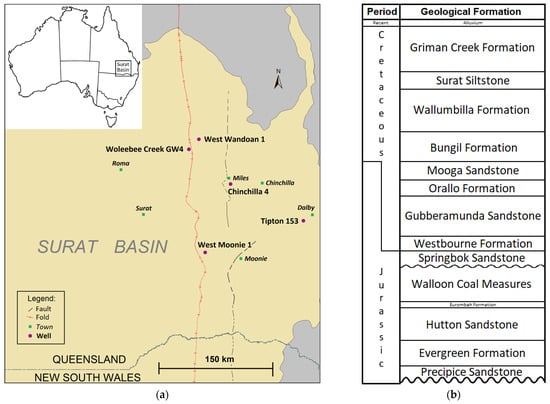
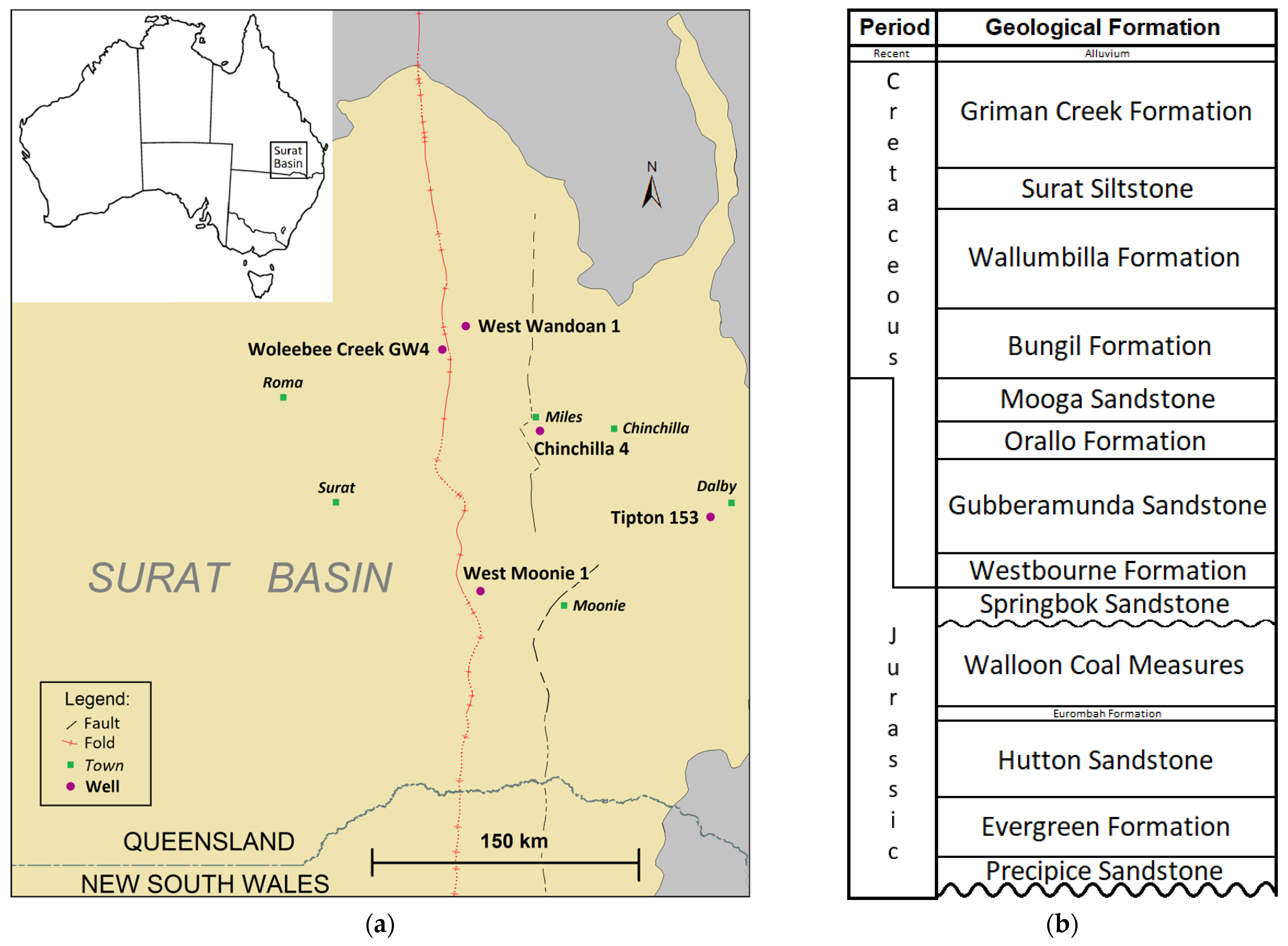
The current work considers data from curated Precipice Sandstone core samples (n = 36) from five wells drilled in the Surat Basin, Queensland, Australia (Figure 1): Chinchilla 4, Tipton 153, West Moonie 1, West Wandoan 1, and Woleebee Creek GW4 [21,22,23,24,25]. Most of the samples are sandstones but six are siltstone with varying proportions and thicknesses of sandstone interbeds. The Precipice Sandstone was chosen as a target for the potential demonstration of CO2 injection for a variety of reasons [23,24]. It is the deepest unit of the Surat Basin (Figure 1), has good porosity and permeability, and is isolated from both shallower coal seam gas units and aquifers more commonly accessed by farmers and industry. Additionally, the Moonie Oil Field adjacent to the West Moonie 1 site extracts oil from both the Precipice Sandstone and a unit called the Boxvale Sandstone within the overlying Evergreen Formation.
Figure 1.
(a) The locations of the five sampled cored wells in the Surat Basin, Queensland, Australia: Chinchilla 4, Tipton 153, West Moonie 1, West Wandoan 1, and Woleebee Creek GW4 [21,22,23,24,25]. NB: Only approximate positions of major structures are shown. Inset map modified after [26]. (b) Stratigraphic column of common geological formations of the Surat Basin. The vertical scale of the geological formations is representative of the approximate relative thickness [23] rather than age which is more uncertain [27,28], and not all formations are present at the site of each well that has been drilled.
2. Materials and Methods
Several samples (n = 22) had thin sections prepared for SEM–EDS element analyses utilized by automated mineral assay tools such as MLA ([29] JKMRC/FEI Company, Brisbane, QLD, Australia) and QEMSCAN ([30] CSIRO/FEI Company, Brisbane, QLD, Australia). Representative rock powders of all core samples were prepared via clean crushing techniques using agate to limit contamination and reduce element concentration backgrounds. Splits of the same homogenized rock powders of given samples were utilized in parallel for XRD mineralogy, total element assays, and sequential extractions via a combination of methods.
Semi-quantitative XRD analysis of all rock powders (n = 36) was performed utilizing a Bruker D8 Advance powder XRD (Bruker, Karlsruhe, Germany) at the UQ Centre for Microscopy and Microanalysis (CMM). The copper radiation source was set to 40 kV and 40 mA, with 15 rpm rotation continuous scanning using a 0.06°/sec step size from 2° to 70° (2Θ) scanning angle. The raw data were manually processed using DIFFRAC.EVA V5.1 with the ICDD PDF-2 2025 reference database.
Standard gravimetric analytical techniques (Inductively Coupled Plasma Optical Emission Spectroscopy (ICP-OES) and Inductively Coupled Plasma Mass Spectrometry (ICP-MS)) were utilized at the Centre for Geoanalytical Mass Spectrometry (CGMS) within the UQ School of the Environment. Concentration data were obtained for fifty-two elements including rare earth elements (REEs) within splits of the rock sample powders. Lithium metaborate fusion 5% v/v nitric acid digest ICP-OES, coupled with weighing powdered rock samples before and after both oven drying and furnace ignition (loss on ignition—LOI), determined major elements, moisture, and other volatile contents of the samples. An in-house Teflon beaker acid digestion method involving sequential hydrofluoric acid, hydrochloric acid, aqua regia, and nitric acid reactions was used to determine predominately minor and trace elements via ICP-OES and ICP-MS assays of aliquots diluted to 2% v/v nitric acid. Some major element assays were cross-comparable between the fusions and hotplate digestion techniques; however, silicon could only be assayed via fusions and elements such as sulfur are more accurately determined via capped Teflon beaker digests. Data QC involved checks of element recoveries for certified reference materials subjected to the same treatment and procedures as our samples, and for fusions the total mass of major and minor elements (as oxides) plus moisture and LOI needed to equal 100% w/w.
We have attempted to separate the fractions of elements that are as follows: (1) water-soluble (e.g., salts), weakly adsorbed, and exchangeable at pH 7; (2) strongly adsorbed or bound to minerals that dissolve at pH 5; and (3) bound to or hosted in minerals that continue (or begin) to react with weak acids at pH 3. To do this, we have generally followed the overall methodology of a modified BCR procedure [15] in terms of sample powder mass, extraction fluid volume and hence fluid–rock ratio, reaction time, tube rotation rate, laboratory temperature, centrifugation/filtering, and inter-step cleaning procedures. Each of the sequential extraction steps utilized generally the same methodology with only the extraction solution composition varying. Sediment resuspension following centrifugation compaction is essential at the commencement of each subsequent extraction step, to ensure comparable reactive surface areas [31]. Washing of well-shaken sample powders within tubes with 20 mL of pure water took place between each sequential extraction step, with this being discarded via pipetting following centrifugation.
In detail, experiments extracting elements from 1 g of rock sample powder took place in 50 mL falcon tubes. Each tube (plus powder) had 40 mL of reagent solution added to it. In sequence, these were water with trace ammonium acetate (0.11 M) at pH 7, acetic acid (1 M) buffered with ammonium acetate at pH 5 and again at pH 3. For the acid steps (2 and 3), tubes were initially left uncapped for about 30 min. This was to allow for escape of any CO2 gas generated by reaction with carbonate minerals that (if abundant) may otherwise cause over-pressure leakage from tube lid threads. Once any visible bubbling had ceased, tubes were tightly capped and then wrapped with paraffin film to further limit the potential for leakage during experiments. Tubes were rotated end-over-end at 30 rpm for 16 h. After gentle internal washing and tapping to remove fine solids stuck to the sides or the inside of the lid, tubes underwent centrifugation at ~4000 rpm for 40 min to help settle fine solids floating in the fluid. Clean 5 mL pipette tips were then used to carefully remove as much fluid as practical (without disturbing solids) from each tube. Aliquots were immediately syringe filtered (0.11 μm) and 10:1 diluted with 2% v/v nitric acid prior to analyses of major, minor, and trace elements via ICP-OES and ICP-MS.
3. Results
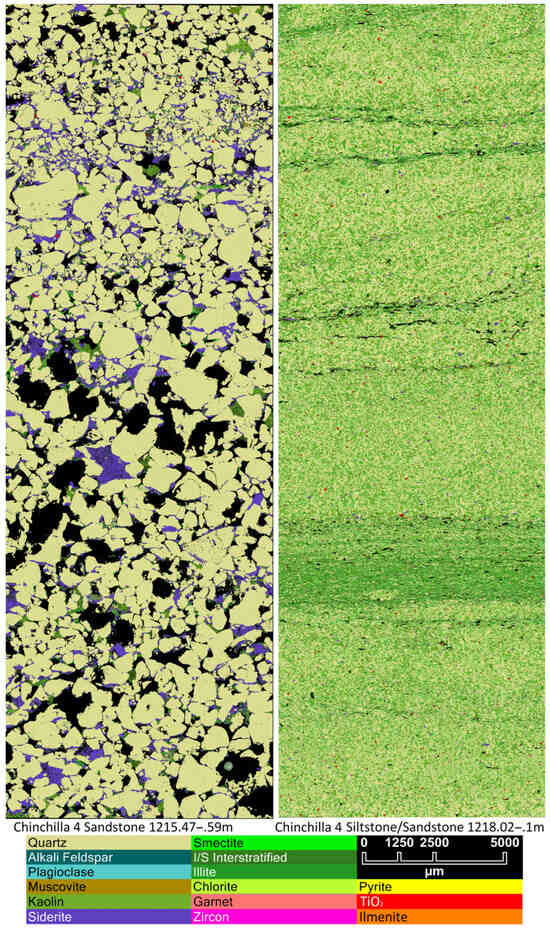
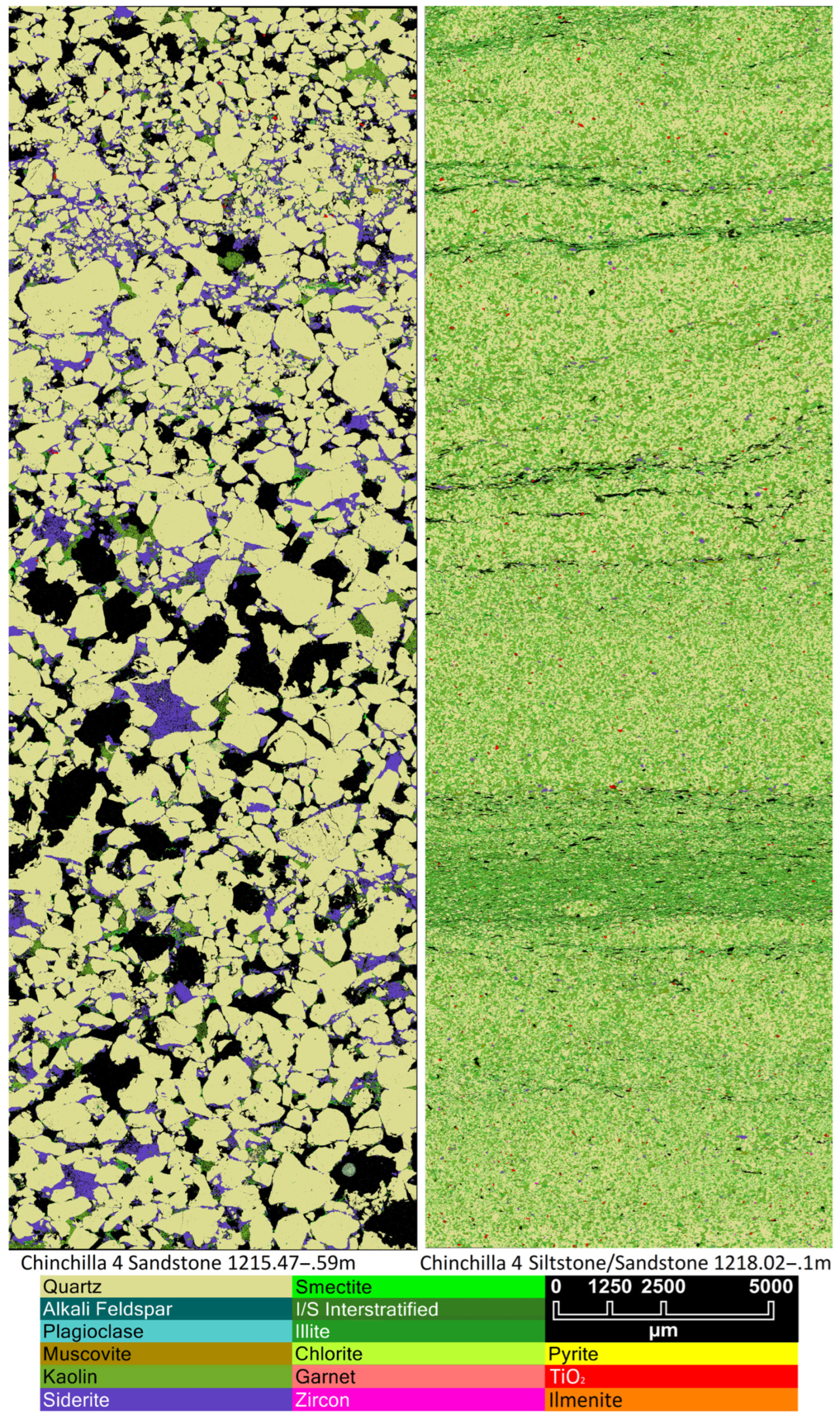
We have investigated the relationships between elements and their mobility at laboratory temperature and pressure and neutral to moderately acidic pH, with inferences made about the rock sample hosts of mobile elements. Because our intention is to demonstrate the utility of the procedure rather than focus on individual sample element behaviours, and for ease of reading, this section considers average rock mineralogy (Table 1) and median element data (Table 2 and Table 3) for the total chosen sample set (n = 36). In Table 1, SEM refers to a combination of QEMSCAN and MLA of petrographic thin sections, whereas XRD assayed rock powders. Averaging the mineralogy (Table 1) causes the perception of some minerals, particularly carbonates, to be significantly less abundant than they were in some samples (Figure 2), and the different mineral assay techniques are complementary rather than directly comparable. Full data tables are available in Appendix A and Appendix B.
Table 1.
Average mineralogy (%) of Precipice Sandstone samples.
Table 2.
Median whole rock and element extraction data (mg element per kg rock, n = 36).
Table 3.
Median element extraction (%) relative to whole rock element abundance, n = 36.
Figure 2.
Examples of QEMSCAN false color mineral maps of thin sections of core from Chinchilla 4: sandstone interval 1215.47–1215.59 m (left) and interbedded siltstone/sandstone interval 1218.02–1218.10 m (right). The black areas in 1215.47–1215.59 m are intergranular porosity, whereas the dark linear areas in 1218.02–1218.10 m are coalified organic matter. The legend details which map colors correspond with minerals detected in one or both thin sections.
The amounts of elements mobilized from samples have been normalized to the mass of powder used for the extractions, with median element extraction expressed as mass of element (mg) per mass of powder (kg) in Table 2, which also lists the whole rock total element concentrations in the same units of measurement (rock ppm) for ease of reference. Dividing the mass of element extracted per total mass of element in the rock and multiplying ×100 gives the percentage element extraction from samples; the median proportions of elements extracted are presented in Table 3. Please note that the entire sample set (Appendix B.1 and Appendix B.2) was used to calculate the data in Table 3 rather than just the medians of Table 2. Elements with median extraction greater than 1 mg per kg of rock or exceeding 5% of the median total originally present within the homogenized rock powders are highlighted, as well as summarized in Table 4, which details the most significantly extracted elements in terms of mass extracted (>1 mg element per kg rock) and/or proportion mobilized (>5%).
Table 4.
Median most significantly extracted elements from all samples (n = 36).
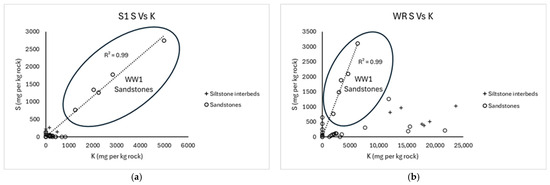
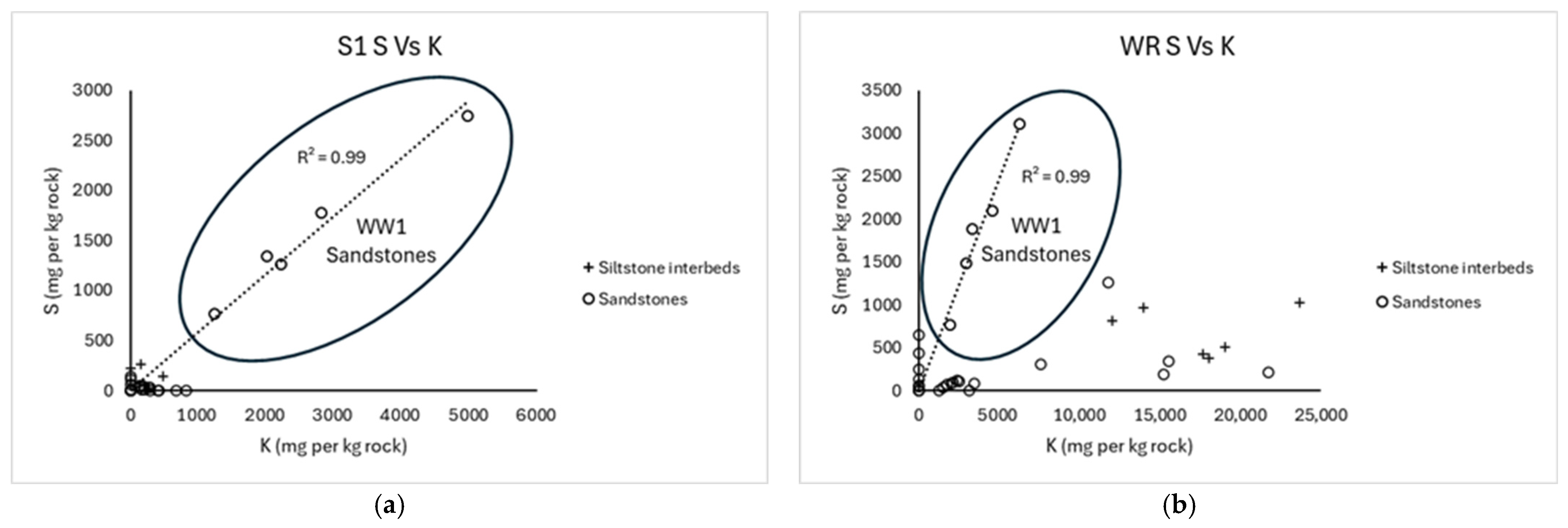
Alkali and alkaline earth metals, mainly potassium, sodium, calcium, and magnesium, plus sulfur contribute most to the bulk water chemistry changes during the Step 1 ‘water leach’ at pH 7. What is extracted during Step 1 is most likely water-soluble salts plus some weakly adsorbed and potentially cation exchangeable ions. Most of the potassium and sulfur water extracted from West Wandoan 1 sandstones (Figure 3) was probably drilling salt contamination, given that a substantial amount of potassium sulfate was added to the drilling mud whilst penetrating parts of the Precipice Sandstone at that site [24] and there is a near-perfect linear correlation (R2 = 0.99) for both water extracted sulfur versus potassium and the whole rock elemental abundances of them. At least some of the extracted barium, calcium, magnesium, sodium, and strontium could have come from cation exchange sites within trace smectite (Table 1, Figure 2) [32]. The cobalt, nickel, and thallium may have been desorbed from clay surfaces, with thallium known to be mobile at neutral pH [33,34,35].
Figure 3.
(a) The linear relationship (R2 = 0.99) between water extracted sulfur (S) and potassium (K) for West Wandoan 1 (WW1) sandstones during the first step (S1) likely indicates contamination from concentrated drilling salts such as potassium sulfate used during coring in that well [24]; (b) whole rock (WR) sulfur and potassium data also show a linear trend (R2 = 0.99) for WW1 sandstones but not for other samples.
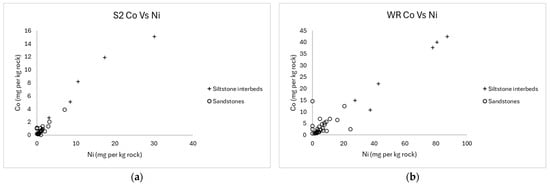
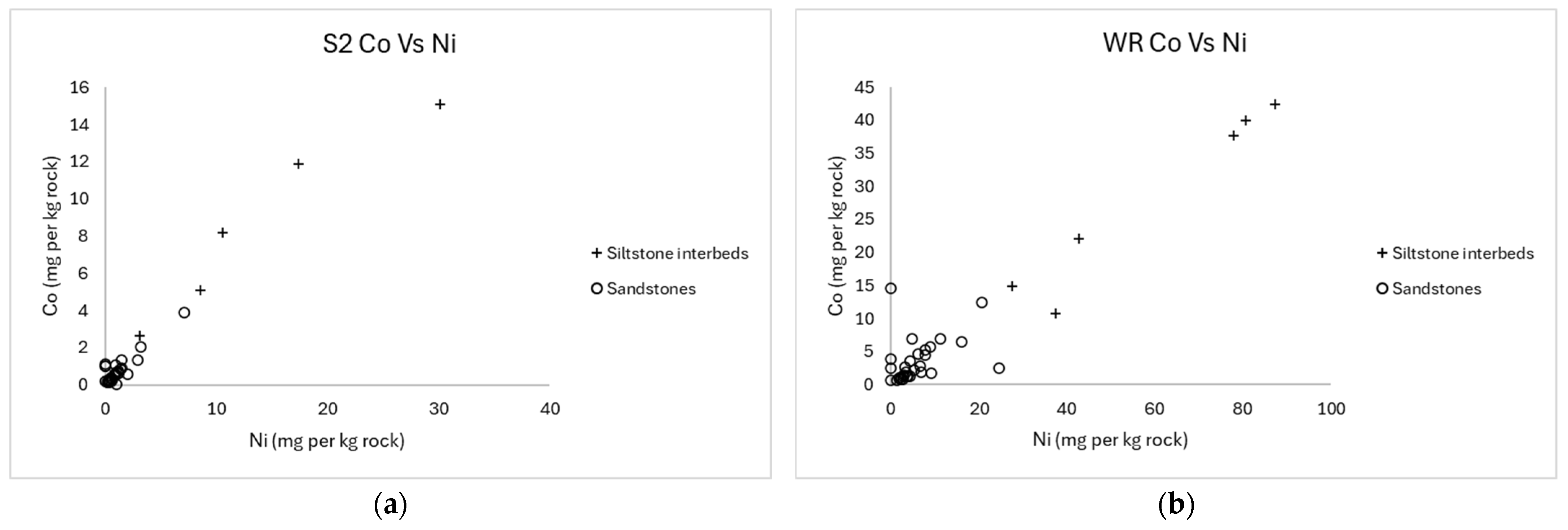
Aluminum, iron, and magnesium had the highest median extraction during the pH 5 acid step (Table 1), with silicon extraction tracking these for individual samples (Appendix B.1). The below detection median silicon extraction is likely an artefact of the relatively high detection limits for silicon during ICP-OES analysis compared with most other assayed elements. The dissolution of an iron-rich chlorite is a likely major source of these elements, based on the SEM–EDS observations and geochemical model history matching of the incrementally sampled CO2 batch reactor experiments with a subset of the same rocks used for this study as well as related rocks [5,8,9,10], although some of the iron and magnesium possibly came from trace carbonates that probably also reacted (Table 1, Figure 2). Additional elements with relatively high median extraction include barium, calcium, copper, lead, and zinc, with much of this likely associated with carbonate mineral dissolution given the related history-matched modelling for CO2 batch reactor experiments [8,9,10]. Other mobile metals and metalloids include antimony, arsenic, beryllium, bismuth, cobalt, and nickel (Table 2). Whilst several of the extracted metals could have been hosted within carbonates [36,37], it is conceivable that at least some of the base metals and metalloids, particularly arsenic [38], may have been desorbed from mineral surfaces or been hosted within weak acid reactive sulfides and other minerals. Notably, the concentrations of acid extracted as well as whole rock cobalt and nickel appear correlated (Figure 4), with sampled intervals containing siltstone interbeds having the most abundant and mobile fractions of these elements.
Figure 4.
A linear trend between cobalt (Co) and nickel (Ni) for both (a) extraction at pH 5 during the second step (S2); (b) total abundance within Precipice Sandstone whole rock (WR) samples.
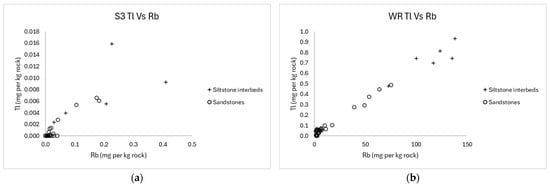
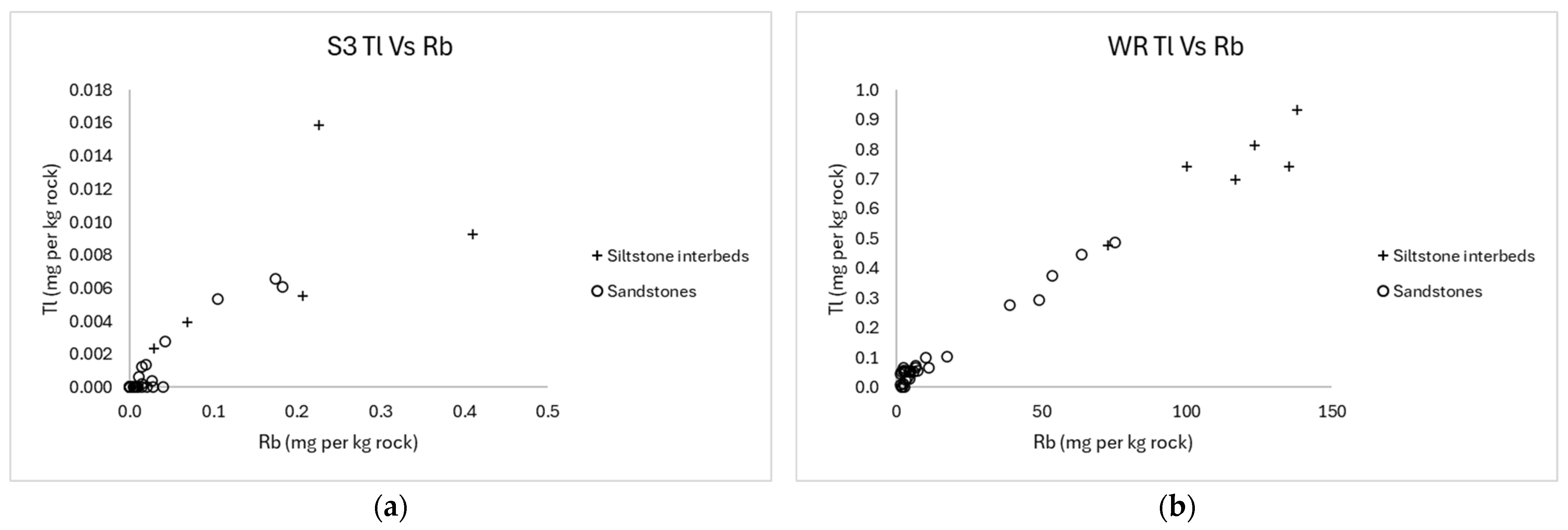
Weak acid reactive aluminosilicate minerals probably continued to react at pH 3, and magnesian- and iron-rich trace carbonates, unlikely to have fully reacted (if at all) at pH 5, may have continued to slowly react during the third step (Table 1). However, no element experienced more than 3% median extraction relative to whole rock concentrations at pH 3. It is possible that trace amounts of potassium-bearing aluminosilicate/s did react given the linear relationship between thallium and rubidium [39] for both this step and the whole rock element data (Figure 5). This is despite acid extracted potassium generally being below detection which may have been an artefact of the very high detection limits for ICP-OES analysis of potassium relative to most assayed elements.
Figure 5.
A linear trend between thallium (Tl) and rubidium (Rb) for (a) extraction at pH 3 during the third step (S3); (b) total abundance within Precipice Sandstone whole rock (WR) samples.
4. Discussion
The purpose for developing and utilizing this procedure was to identify which elements were readily mobilized over a pH range of 7 to 3 and use that data in combination with sample mineralogy to suggest the modes of occurrence of those elements within the rocks, and the mechanisms by which they may have been released from the rocks into the solution. The majority of the acid mobilization of elements occurred at pH 5 rather than pH 3, and the water step extracted significant amounts of some elements as well (Table 2, Table 3 and Table 4). This is significant, given that similar sequential extraction procedures tend to jump straight to pH 3 and may not include a water leach step at all [14,15]. The water step should always remain part of a sequential extraction procedure for soils and sediments, even if only to act as a baseline for the subsequent extraction step/s. Geochemical modelling of CO2 geo-sequestration should focus upon potential water–rock interactions at pH 5 rather than pH 3 given the sequential extraction results of this study. This would also be more representative of CO2 plume-impacted groundwater anyway, given that previous reaction transport modelling has shown that a low pH (<5) is only likely to occur close to the point of injection into the subsurface [9,10,40,41,42].
When considering the results, it is important to remember that powdered samples have a significantly greater mineral surface area exposed to fluid than would generally occur in nature, and the fluid–rock ratios of the experiments are very high, which results in the faster and more complete mass transfer of susceptible elements into the fluid phase. Nonetheless, the modelling of potential Precipice Sandstone groundwater impacts should focus upon the potential sources and mobility of copper, lead, and zinc. This is due to their relatively high median extraction both in terms of proportions and absolute amounts at pH 5 (Table 4), particularly copper and lead which had 40% and 31% median extraction from the rocks, respectively, during the second step. The history-matched modelling of these for CO2 batch reactor experiments with related rock samples suggests carbonate minerals as being a major source of these [8,9,10]. Other elements with appreciable proportions mobilized included the potentially problematic arsenic, cobalt, and nickel, so although the median extracted mass of these elements was significantly less than that of copper and lead, they should be considered by geochemical modellers too. In this context, the water chemistry during batch reactor experiments with Precipice Sandstone core at in situ temperature and pressure conditions demonstrated that metals and metalloids were released [5,6,9,10], which confirms the value of sequential extraction experiments for identifying elements likely readily mobilized by the water–CO2–rock interaction in carbon storage reservoirs.
Potentially, the reaction time of the third extraction step (pH 3) may need to be significantly extended to allow for a more complete dissolution of slowly reacting minerals to occur and thus be detectable. Minerals that may gradually yet completely react at pH 5 over long timescales could conceivably react much faster at pH 3, but perhaps still not significantly during the present 16 h of tube rotation. An assessment of the minerals present within a specific sample set coupled with published reaction rate constants and likely powdered mineral surface areas could inform how long to extend the final step of the experiment (if warranted).
Sequential extractions, whilst useful, do not replace the need for CO2 batch reactor experiments with representative intact rock samples and simulated groundwater chemistry, at in situ pressure and temperature conditions, that can be iteratively history-matched by geochemical modelling software such as The Geochemist’s Workbench [4,5,7,8,9,10]. They do, however, help to provide context such as which mobile elements are most representative of overall rock formation behaviour under CO2 geo-sequestration conditions, provided that sufficient rock samples have been taken from throughout the vertical extent of the target formation. Sequential extraction data should not be used for standalone assessments of the potential environmental impacts upon groundwater quality, particularly given the high surface areas of rock powders and high fluid–rock ratio involved in the experiments which were designed to accelerate mass transfer. Therefore, the sequential extractions probably show the maximum possible mobilization of metals, whereas the CO2 batch reaction experiments at in situ temperatures and pressures take account of the geochemical processes that may immobilize the metals in precipitates or by adsorption to the Fe-oxide surfaces [6]. Thus, the sequential extraction data act as a useful screening tool for assessing the potential longer-term groundwater impacts of geologic carbon storage as well as the input to geochemical models with realistic rock and fluid properties [9,10].
Author Contributions
Conceptualization, D.K., G.K.W.D., and S.D.G.; methodology, D.K. and G.K.W.D.; validation, G.K.W.D.; formal analysis, G.K.W.D.; investigation, G.K.W.D.; resources, S.D.G.; writing—original draft preparation, G.K.W.D.; writing—review and editing, D.K., J.K.P., and S.D.G.; visualization, G.K.W.D. and J.K.P.; supervision, S.D.G.; project administration, G.K.W.D. and S.D.G.; funding acquisition, S.D.G. All authors have read and agreed to the published version of the manuscript.
Funding
This research was funded by Australian National Low Emissions Coal Research and Development (ANLEC R&D), grant numbers 7-1115-0236 and 7-0320-C323.
Data Availability Statement
The original contributions presented in this study are included in the article. Further inquiries can be directed to the corresponding author.
Acknowledgments
The authors acknowledge the facilities, and the scientific and technical assistance, of the Microscopy Australia Facility at the Centre for Microscopy and Microanalysis, as well as the Centre for Geoanalytical Mass Spectrometry in the School of the Environment at The University of Queensland. We also thank the Centre for Advanced Microscopy at Australian National University for assistance with QEMSCAN. CTSCo Pty Ltd. are thanked for access to the core and data.
Conflicts of Interest
The authors declare no conflicts of interest. The funders had no role in the design of the study; in the collection, analyses, or interpretation of data; in the writing of the manuscript; or in the decision to publish the results.
Abbreviations
The following abbreviations are used in this manuscript:
| ANLEC R&D | Australian National Low Emissions Coal Research and Development |
| BCR | Community Bureau of Reference |
| CGMS | Centre for Geoanalytical Mass Spectrometry |
| CO2 | Carbon Dioxide |
| ICP-MS | Inductively Coupled Plasma Mass Spectrometry |
| ICDD | International Centre for Diffraction Data |
| ICP-OES | Inductively Coupled Plasma Optical Emission Spectroscopy |
| LOI | Loss on Ignition |
| MLA | Mineral Liberation Analysis |
| Powder Diffraction File TM | |
| QC | Quality Control |
| QEMSCAN | Quantitative Evaluation of Materials by Scanning Electron Microscopy |
| REE | Rare Earth Element |
| SEM–EDS | Scanning Electron Microscope Energy Dispersive Spectrometry |
| UQ | The University of Queensland |
| WR | Whole Rock |
| WW1 | West Wandoan 1 |
| XRD | X-ray Diffraction |
Appendix A
Appendix A.1. Rock Samples Lithology
Table A1.
Geological descriptions of sampled rock core intervals.
Appendix A.2. Rock Samples Mineralogy
Table A2.
Semi-quantitative XRD mineral content (%) of sampled rock core intervals.
Table A3.
Semi-quantitative QEMSCAN and MLA mineral content (%) of sampled rock core intervals.
Appendix B
Appendix B.1. Element Concentration Data
Table A4.
Elements Al–Ni assayed concentrations within sampled rock core intervals (mg element per kg rock).
Table A5.
Elements P–Zr assayed concentrations, plus adsorbed water and LOI of sampled rock core intervals (mg element per kg rock).
Table A6.
Step 1: pH 7 extracted concentrations of elements Al–Ni (mg element per kg rock).
Table A7.
Step 1: pH 7 extracted concentrations of elements Al–Ni (mg element per kg rock).
Table A8.
Step 2: pH 5 extracted concentrations of elements Al–Ni (mg element per kg rock).
Table A9.
Step 2: pH 5 extracted concentrations of elements P–Zr (mg element per kg rock).
Table A10.
Step 3: pH 3 extracted concentrations of elements Al–Ni (mg element per kg rock).
Table A11.
Step 3: pH 3 extracted concentrations of elements P–Zr (mg element per kg rock).
Table A12.
Sum of acid steps extracted concentrations of elements Al–Ni (mg element per kg rock).
Table A13.
Sum of acid steps extracted concentrations of elements P–Zr (mg element per kg rock).
Table A14.
Sum of all three steps extracted concentrations of elements Al–Ni (mg element per kg rock).
Table A15.
Sum of all three steps extracted concentrations of elements P–Zr (mg element per kg rock).
Appendix B.2. Proportions of Elements Extracted from Rocks
Table A16.
Step 1: pH 7 extraction of elements Al–Ni (%) relative to whole rock element abundance.
Table A17.
Step 1: pH 7 extraction of elements P–Zr (%) relative to whole rock element abundance.
Table A18.
Step 2: pH 5 extraction of elements Al–Ni (%) relative to whole rock element abundance.
Table A19.
Step 2: pH 5 extraction of elements P–Zr (%) relative to whole rock element abundance.
Table A20.
Step 3: pH 3 extraction of elements Al–Ni (%) relative to whole rock element abundance.
Table A21.
Step 3: pH 3 extraction of elements P–Zr (%) relative to whole rock element abundance.
Table A22.
Sum of acid steps extraction of elements Al–Ni (%) relative to whole rock element abundance.
Table A23.
Sum of acid steps extraction of elements P–Zr (%) relative to whole rock element abundance.
Table A24.
Sum of all three steps extraction of elements Al–Ni (%) relative to whole rock element abundance.
Table A25.
Sum of all three steps extraction of elements P–Zr (%) relative to whole rock element abundance.
References
- Working Group III of the Intergovernmental Panel on Climate Change (IPCC). Special Report on Carbon Dioxide Capture and Storage; Metz, B., Davidson, O., de Coninck, H., Loos, M., Meyer, L., Eds.; Cambridge University Press: New York, NY, USA, 2005; 442p. [Google Scholar]
- Bachu, S. CO2 storage in geological media: Role, means, status and barriers to deployment. Prog. Energy Combust. Sci. 2008, 34, 254–273. [Google Scholar] [CrossRef] [Scilit]
- IEA. Energy Technology Perspectives 2012: Pathways to a Clean Energy System; International Energy Agency: Paris, France, 2012; 686p, ISBN 978-92-64-17488-7. [Google Scholar]
- Dawson, G.K.W.; Pearce, J.K.; Biddle, D.; Golding, S.D. Experimental mineral dissolution in Berea Sandstone reacted with CO2 or SO2–CO2 in NaCl brine under CO2 sequestration conditions. Chem. Geol. 2015, 399, 87–97. [Google Scholar] [CrossRef] [Scilit]
- Pearce, J.K.; Kirste, D.; Dawson, G.K.W.; Farquhar, S.M.; Biddle, D.; Golding, S.D.; Rudolph, V. SO2 impurity impacts on experimental and simulated CO2–water–reservoir rock reactions at carbon storage conditions. Chem. Geol. 2015, 399, 65–86. [Google Scholar] [CrossRef] [Scilit]
- Pearce, J.K.; Dawson, G.W.; Brink, F.; Southam, G.; Paterson, D.; Hall, N.; Heath, R.; Greer, D.; Kirste, D.; Golding, S.D. Impure CO2 storage reactions of sandstone, mudstone and carbonate cemented cores: Experimental CO2SO2NOxO2 reaction metal mobilization and fate. Int. J. Coal Geol. 2023, 277, 104352. [Google Scholar] [CrossRef] [Scilit]
- Licbinska, M.; Labus, K.; Klempa, M.; Matysek, D.; Vasek, M. Laboratory experiments and geochemical modeling of gas–water–rock interactions for a CO2 storage pilot project in a carbonate reservoir in the Czech Republic. Minerals 2024, 14, 602. [Google Scholar] [CrossRef] [Scilit]
- Pearce, J.K.; Kirste, D.; Dawson, G.K.W.; Rudolph, V.; Southam, G.; Brink, F.; Paterson, D.J.; Hall, N.; Sommacal, S.; Golding, S.D. Pure CO2 and impure CO2-SO2-NO-O2 reactions with carbon storage site underlying seals: Coaly mudstones and carbonate cemented sandstones. Sci. Total Environ. 2025, 963, 178391. [Google Scholar] [CrossRef] [Scilit]
- Golding, S.D.; Pearce, J.K.; Dawson, G.K.W.; Kirste, D.M. Mobilisation and Fate of Heavy Metals Released by the GHG Stream: ANLEC Project 7-1115-0236 Final Report; ANLEC R&D: Canberra, ACT, Australia, 2019; 160p, Available online: https://espace.library.uq.edu.au/view/UQ:f6e01dd (accessed on 12 January 2026).
- Dawson, G.K.W.; Kirste, D.M.; Pearce, J.K.; Golding, S.D. South Surat Metal Mobilisation and Fate of Heavy Metals Released: ANLEC Project 7-0320-C323 Final Report; ANLEC R&D: Canberra, ACT, Australia, 2023; 158p, Available online: https://espace.library.uq.edu.au/view/UQ:003c0d2 (accessed on 12 January 2026).
- Dai, Z.; Viswanathan, V.; Xiao, T.; Hakala, A.; Lopano, C.; Guthrie, G.; McPherson, B. Chapter 5—Reactive transport modeling of geological carbon storage associated with CO2 and brine leakage. In Science of Carbon Storage in Deep Saline Formations: Process Coupling Across Time and Spatial Scales; Newell, P., Ilgen, A.G., Eds.; Elsevier: Amsterdam, The Netherlands, 2019; pp. 89–116. ISBN 978-0-12-812752-0. [Google Scholar] [CrossRef] [Scilit]
- Filgueiras, A.V.; Lavilla, I.; Bendicho, C. Chemical sequential extraction for metal partitioning in environmental solid samples. J. Environ. Monit. 2002, 4, 823–857. [Google Scholar] [CrossRef] [Scilit] [PubMed]
- Rao, C.R.M.; Sahuquillo, A.; Lopez Sanchez, J.F. A review of the different methods applied in environmental geochemistry for single and sequential extraction of trace elements in soils and related materials. Water Air Soil Pollut. 2008, 189, 291–333. [Google Scholar] [CrossRef] [Scilit]
- Sahuquillo, A.; López-Sánchez, J.F.; Rubio, R.; Rauret, G.; Thomas, R.P.; Davidson, C.M.; Ure, A.M. Use of a certified reference material for extractable trace metals to assess sources of uncertainty in the BCR three-stage sequential extraction procedure. Anal. Chim. Acta 1999, 382, 317–327. [Google Scholar] [CrossRef] [Scilit]
- Pueyo, M.; Mateu, J.; Rigol, A.; Vidal, M.; López-Sánchez, J.F.; Rauret, G. Use of the modified BCR three-step sequential extraction procedure for the study of trace element dynamics in contaminated soils. Environ. Pollut. 2008, 152, 330–341. [Google Scholar] [CrossRef] [Scilit]
- Xiangdong, L.; Coles, B.J.; Ramsey, M.H.; Thronton, L. Sequential extraction of soils for multielement analysis by ICP-AES. Chem. Geol. 1995, 124, 109–123. [Google Scholar] [CrossRef] [Scilit]
- Tessier, A.; Campbell, P.G.C.; Bisson, M. Sequential extraction procedure for the speciation of particulate trace metals. Anal. Chem. 1979, 51, 844–851. [Google Scholar] [CrossRef] [Scilit]
- Gupta, S.K.; Chen, K.Y. Partitioning of trace metals in selective chemical fractions of nearshore sediments. Environ. Lett. 1975, 10, 129–158. [Google Scholar] [CrossRef] [Scilit] [PubMed]
- Rapin, F.; Förstner, U. Sequential leaching techniques for particulate metal speciation: The selectivity of various extractants. In Proceedings of the 4th International Conference on Heavy Metals in the Environment, Heidelberg, Germany, 6–9 September 1983; CEP Consultants Ltd.: Edinburgh, UK, 1983; pp. 1074–1077. [Google Scholar]
- Ahnstrom, Z.S.; Parker, D.R. Development and assessment of a sequential extraction procedure for the fractionation of soil cadmium. Soil Sci. Soc. Am. J. 1999, 63, 1650–1658. [Google Scholar] [CrossRef] [Scilit]
- Almond, C.A. GSQ Record 1985/34: GSQ Chinchilla 4, Preliminary Lithological Log and Composite Log, CR041858; GSQ Open Data Portal, Queensland Government: Brisbane, QLD, Australia, 1985. Available online: https://geoscience.data.qld.gov.au/data/report/cr041858 (accessed on 12 January 2026).
- Nightingale, J. PL 198, AEL Tipton 153, Well Completion Report, CR070191; GSQ Open Data Portal, Queensland Government: Brisbane, QLD, Australia, 2012. Available online: https://geoscience.data.qld.gov.au/data/report/cr070191 (accessed on 12 January 2026).
- Heath, R.; Hall, N. EPQ10—West Moonie-1 Well Completion Report, CR121956; GSQ Open Data Portal, Queensland Government: Brisbane, QLD, Australia, 2020. Available online: https://geoscience.data.qld.gov.au/data/report/cr121956 (accessed on 12 January 2026).
- CTSCo. EPQ 7—West Wandoan-1 Well Completion Report, CR098874; GSQ Open Data Portal, Queensland Government: Brisbane, QLD, Australia, 2020. Available online: https://geoscience.data.qld.gov.au/data/report/cr098874 (accessed on 12 January 2026).
- Mountford, A. PL 276, QGC Woleebee Creek GW 4, Well Completion Report, CR103564; GSQ Open Data Portal, Queensland Government: Brisbane, QLD, Australia, 2017. Available online: https://geoscience.data.qld.gov.au/data/report/cr103564 (accessed on 12 January 2026).
- File: Australia States Blank.png. Available online: https://commons.wikimedia.org/wiki/File:Australia_states_blank.png (accessed on 12 November 2025).
- Australian Stratigraphic Units Database. Geoscience Australia. Available online: https://www.ga.gov.au/data-pubs/datastandards/stratigraphic-units (accessed on 12 January 2026).
- Wainman, C.C.; McCabe, P.J.; Crowley, J.L.; Nicoll, R.S. U-Pb zircon age of the Walloon Coal Measures in the Surat Basin, southeast Queensland: Implications for paleogeography and basin subsidence. Aust. J. Earth Sci 2015, 62, 807–816. [Google Scholar] [CrossRef] [Scilit]
- Gu, Y. Automated scanning electron microscope based mineral liberation analysis – an introduction to JKMRC/FEI mineral liberation analyser. JMMCE 2003, 2, 33–41. [Google Scholar] [CrossRef]
- Miller, P.R.; Reid, A.F.; Zuiderwyk, M.A. QEM*SEM image analysis in the determination of modal assays, mineral association and mineral liberation. In Proceedings of the XIV International Mineral Processing Congress, Toronto, ON, Canada, 17–23 October 1982; CIM: Montreal, QC, Canada, 1983; pp. VIII.3.1–VIII.3.20. [Google Scholar]
- Quevauviller, P.; Rauret, G.; Griepink, B. Single and sequential extraction in sediments and soils. Int. J. Anal. Chem. 1992, 51, 231–235. [Google Scholar] [CrossRef] [Scilit]
- Zeyen, N.; Wang, B.; Wilson, S.; Paulo, C.; Stubbs, A.R.; Power, I.M.; Steele-MacInnis, M.; Lanzirotti, A.; Newville, M.; Paterson, D.J.; et al. Cation exchange in smectites as a new approach to mineral carbonation. Front. Clim. 2022, 4, 913632. [Google Scholar] [CrossRef] [Scilit]
- Davies, M.; Figueroa, L.; Wildeman, T.; Bucknam, C. The oxidative precipitation of thallium at alkaline pH for treatment of mining influenced water. Mine Water Environ. 2016, 35, 77–85. [Google Scholar] [CrossRef] [Scilit]
- Migaszewski, Z.M.; Gałuszka, A. Abundance and fate of thallium and its stable isotopes in the environment. Rev. Environ. Sci. Biotechnol. 2021, 20, 5–30. [Google Scholar] [CrossRef] [Scilit]
- Xu, H.; Luo, Y.; Wang, P.; Zhu, J.; Yang, Z.; Liu, Z. Removal of thallium in water/wastewater: A review. Water Res. 2019, 165, 114981. [Google Scholar] [CrossRef] [Scilit]
- Medlin, W.L. Thermoluminescent properties of calcite. J. Chem. Phys. 1959, 30, 451–458. [Google Scholar] [CrossRef] [Scilit]
- Deer, W.A.; Howie, R.A.; Zussman, J. Carbonates. In Rock-Forming Minerals. Vol. 5 Non-Silicates, 5th ed.; Longmans, Green and Co., Ltd.: London, UK, 1967; pp. 226–227. [Google Scholar]
- Shaw, D. Mobility of arsenic in saturated, laboratory test sediments under varying pH conditions. Eng. Geol. 2006, 85, 158–164. [Google Scholar] [CrossRef] [Scilit]
- Ahrens, L.H. The unique association of thallium and rubidium in minerals. J. Geol. 1948, 56, 578–590. Available online: https://www.jstor.org/stable/30080849 (accessed on 12 January 2026). [CrossRef] [Scilit]
- Ellis, B.R.; Crandell, L.E.; Peters, C.A. Limitations for brine acidification due to SO2 co-injection in geologic carbon sequestration. Int. J. Greenh. Gas Control 2010, 40, 575–582. [Google Scholar] [CrossRef] [Scilit]
- Spycher, N.F.; Llanos, E.M.; Vu, H.P.; Haese, R.R. Reservoir scale reactive-transport modeling of a buoyancy-controlled CO2 plume with impurities (SO2, NO2, O2). Int. J. Greenh. Gas Control 2019, 89, 40–51. [Google Scholar] [CrossRef] [Scilit]
- Crandell, L.E.; Ellis, B.R.; Peters, C.A. Dissolution potential of SO2 Co-injected with CO2 in geologic sequestration. Environ. Sci. Technol. 2010, 44, 349–355. [Google Scholar] [CrossRef] [Scilit]

Disclaimer/Publisher’s Note: The statements, opinions and data contained in all publications are solely those of the individual author(s) and contributor(s) and not of MDPI and/or the editor(s). MDPI and/or the editor(s) disclaim responsibility for any injury to people or property resulting from any ideas, methods, instructions or products referred to in the content. |
© 2026 by the authors. Licensee MDPI, Basel, Switzerland. This article is an open access article distributed under the terms and conditions of the Creative Commons Attribution (CC BY) license.