Responsiveness Expressions of Bitter Taste Receptors Against Denatonium Benzoate and Genistein in the Heart, Spleen, Lung, Kidney, and Bursa Fabricius of Chinese Fast Yellow Chicken
by
 , ,
, ,
Enayatullah Hamdard
 ,
,
Zengpeng Lv
,
Jingle Jiang
,
Quanwei Wei
,
Zhicheng Shi
,
Rahmani Mohammad Malyar
,
Debing Yu
and
Fangxiong Shi
*
College of Animal Science and Technology, Nanjing Agricultural University, Nanjing 210095, China
*
Author to whom correspondence should be addressed.
Animals 2019, 9(8), 532; https://doi.org/10.3390/ani9080532
Submission received: 2 July 2019
/
Revised: 28 July 2019
/
Accepted: 29 July 2019
/
Published: 6 August 2019
(This article belongs to the Special Issue Poultry Nutrition)
Simple Summary
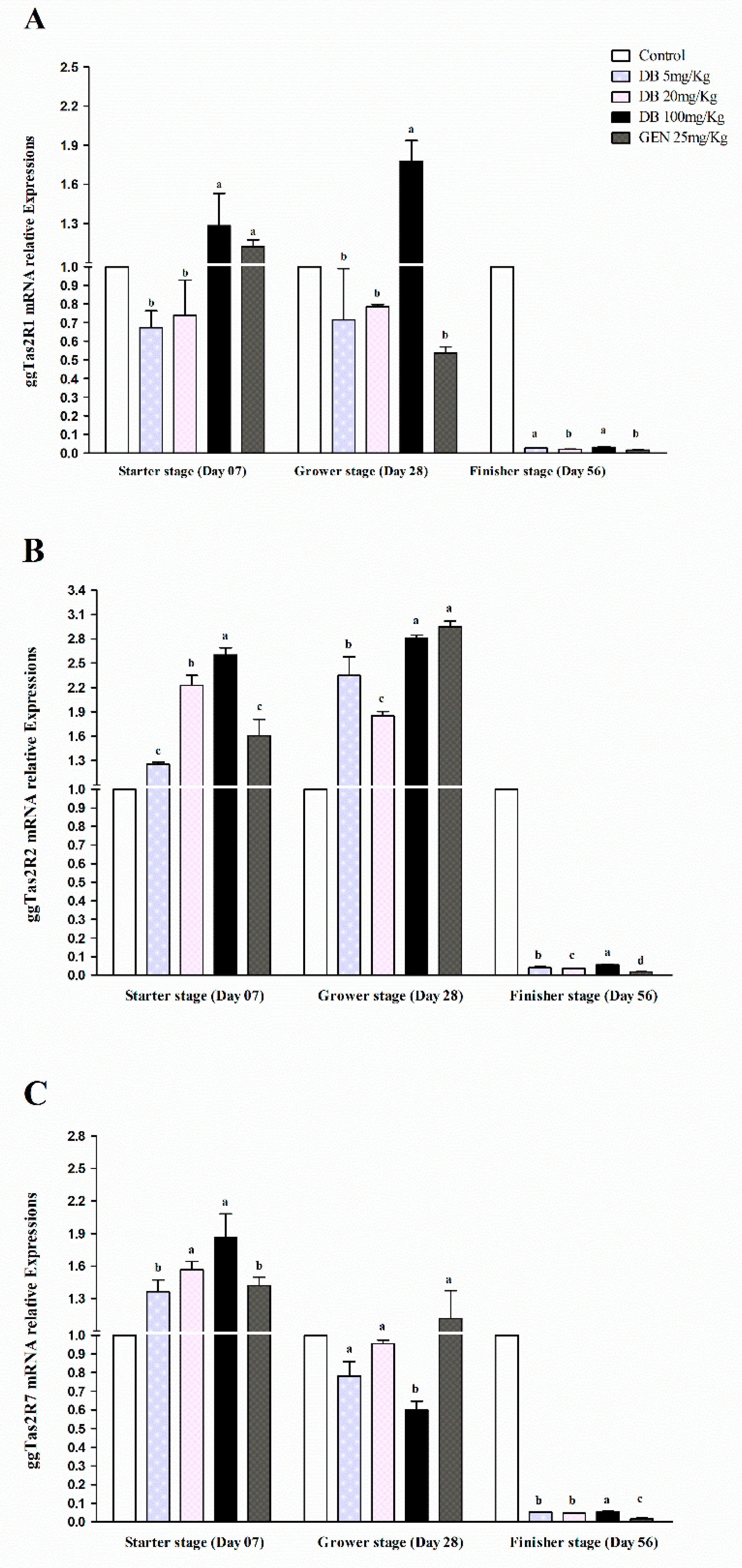
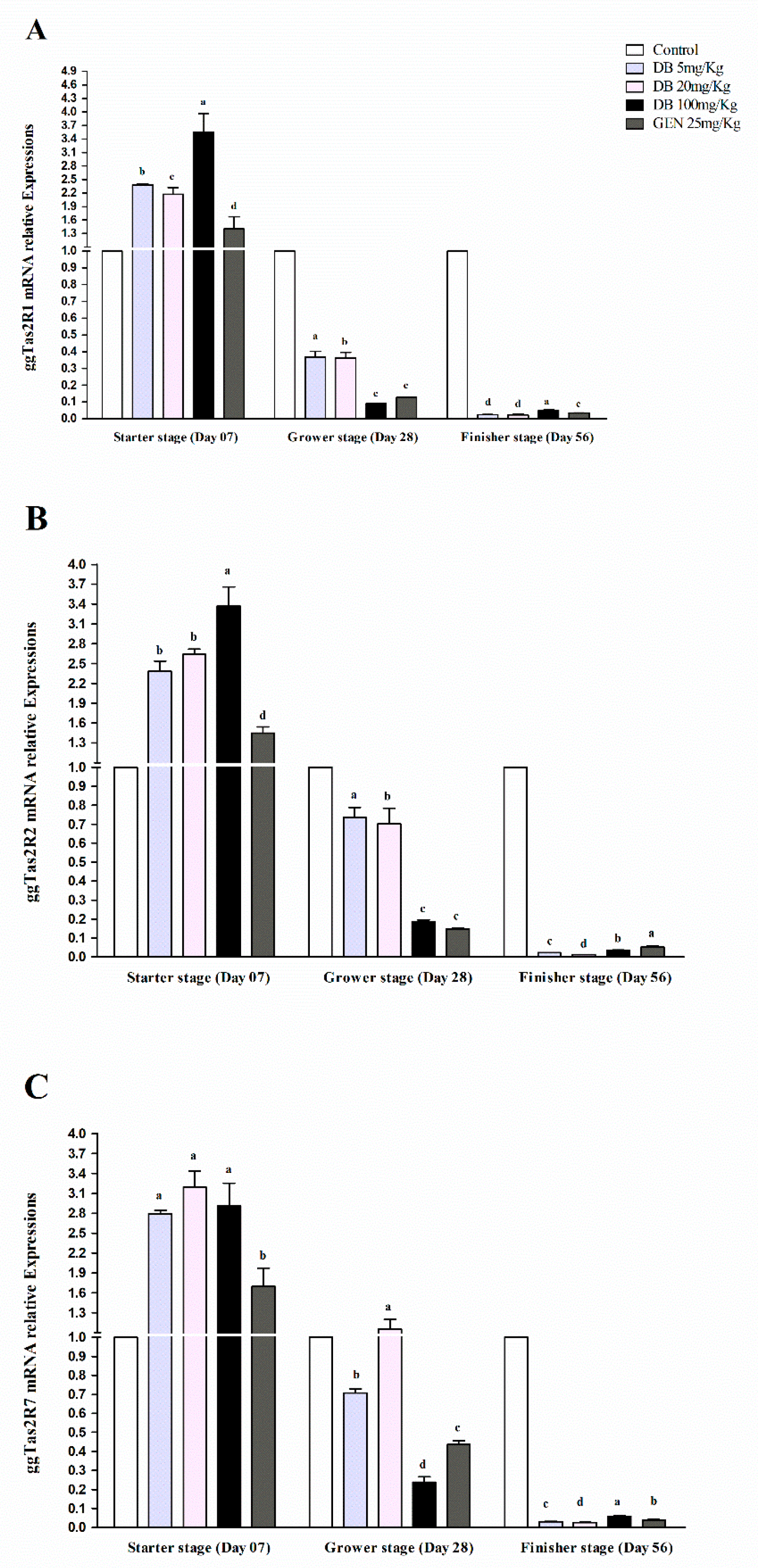
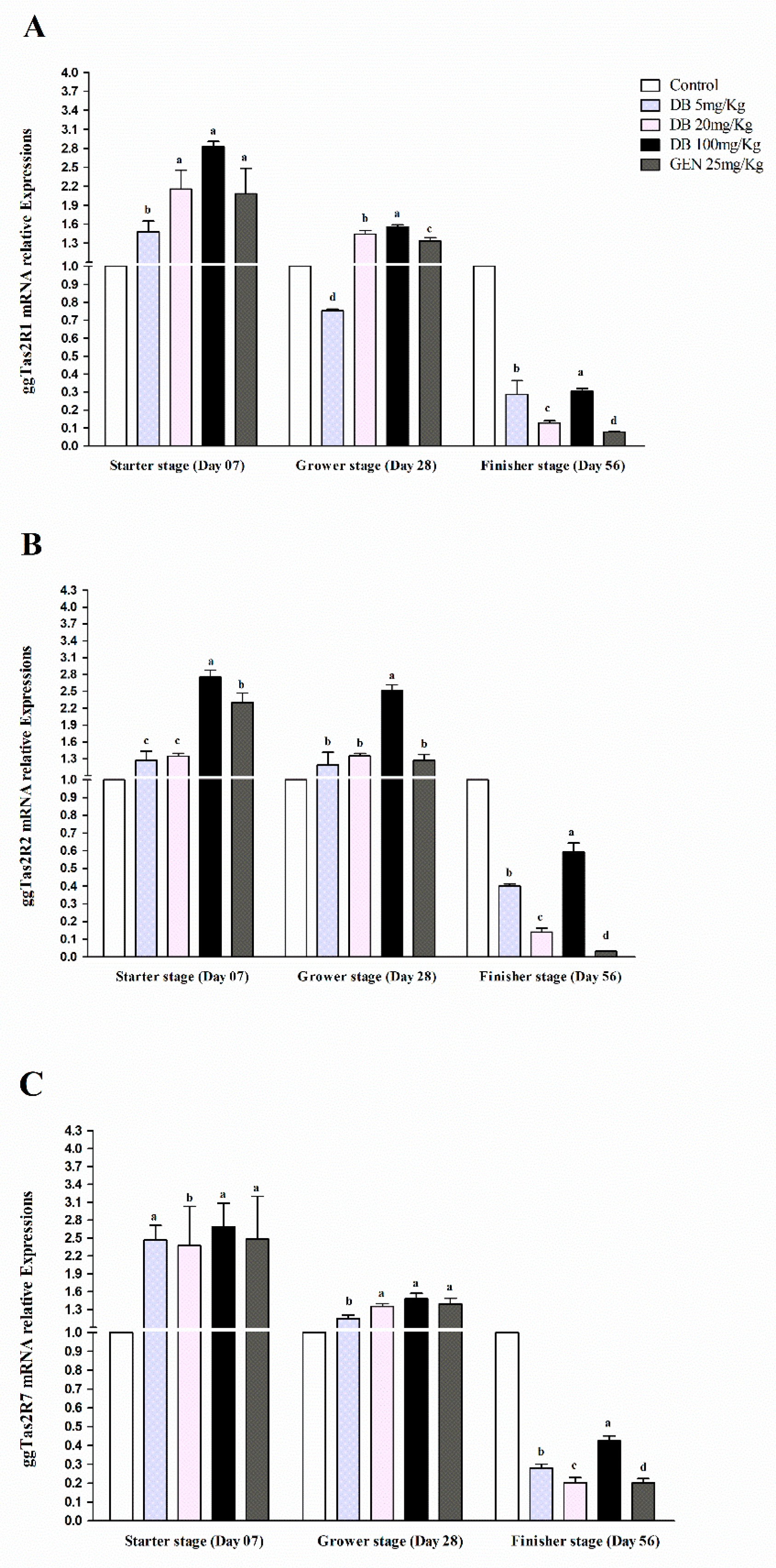
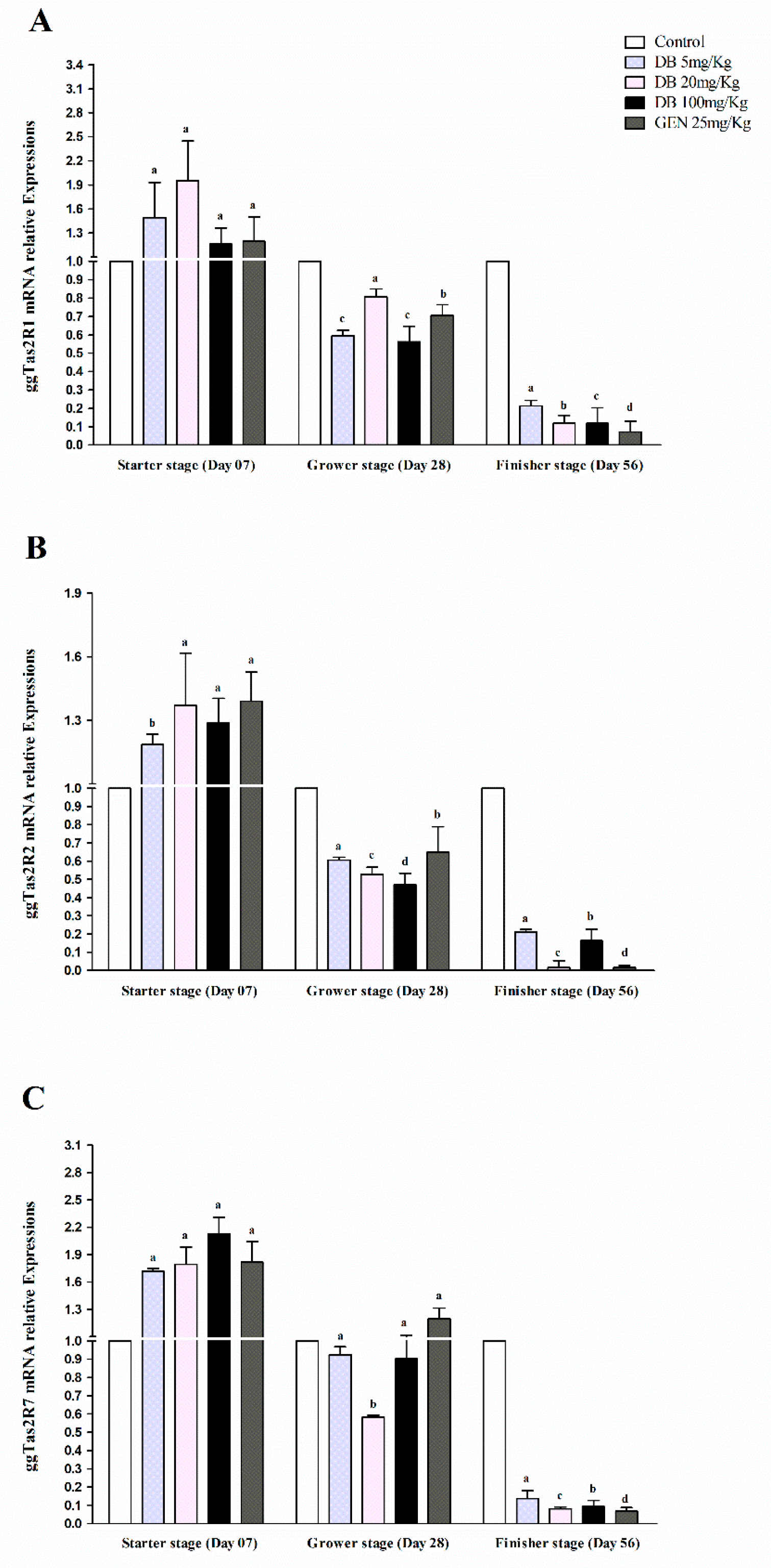
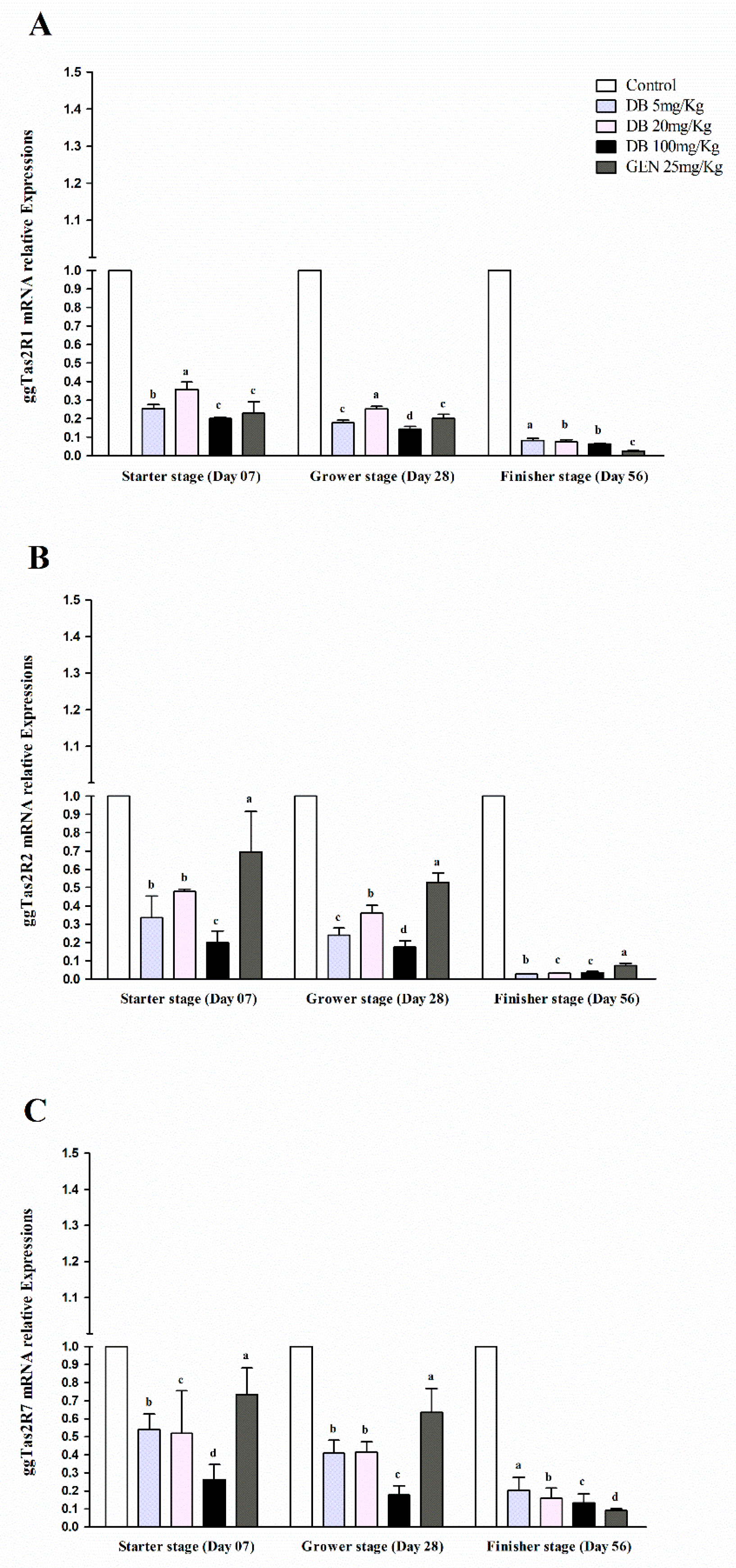
In chickens, bitter taste is the most significant biological taste disrupter; it is believed to protect chickens against consuming poisonous/toxic materials and considered a warning signal prior to ingestion. The bitter taste receptors’ extraoral expression information is deficient in chicken, and denatonium benzoate is extensively used as a bitter taste receptor agonist in different cells. Our results found that qRT-PCR showed a high level of dose-dependent expressions of ggTas2Rs in the starter and grower stages in the heart, spleen, lungs, and kidneys, while the dose-dependent expressions were lower in the bursa Fabricius. The growth performance of the selected organs significantly (and unexpectedly) improved upon the administration of denatonium benzoate 5 mg/kg and genistein 25 mg/kg treatments, while the gains in organ weights were impaired in the groups given denatonium benzoate 20 mg/kg and 100 mg/kg, respectively.
Abstract
The present study was conducted to investigate the responsiveness expressions of ggTas2Rs against denatonium benzoate (DB) and genistein (GEN) in several organs of the Chinese Fast Yellow Chicken. A total of 300 one-day-old chicks that weighed an average of 32 g were randomly allocated into five groups with five replicates for 56 consecutive days. The dietary treatments consisted of basal diet, denatonium benzoate (5 mg/kg, 20 mg/kg, and 100 mg/kg), and genistein 25 mg/kg. The results of qRT-PCR indicated significantly (p < 0.05) high-level expressions in the heart, spleen, and lungs in the starter and grower stages except for in bursa Fabricius. The responsiveness expressions of ggTas2Rs against DB 100 mg/kg and GEN 25 mg/kg were highly dose-dependent in the heart, spleen, lungs, and kidneys in the starter and grower stages, but dose-independent in the bursa Fabricius in the finisher stage. The ggTas2Rs were highly expressed in lungs and the spleen, but lower in the bursa Fabricius among the organs. However, the organ growth performance significantly (p < 0.05) increased in the groups administered DB 5 mg/kg and GEN 25 mg/kg; meanwhile, the DB 20 mg/kg and DB 100 mg/kg treatments significantly reduced the growth of all the organs, respectively. These findings indicate that responsiveness expressions are dose-dependent, and bitterness sensitivity consequently decreases in aged chickens. Therefore, these findings may improve the production of new feedstuffs for chickens according to their growing stages.
Keywords:
denatonium benzoate; genistein; chicken; ggTas2Rs; bitter taste receptors