Horses Categorize Human Emotions Cross-Modally Based on Facial Expression and Non-Verbal Vocalizations

INRA, PRC, CNRS, IFCE, Université de Tours, 37380 Nouzilly, France
*
Author to whom correspondence should be addressed.
Animals 2019, 9(11), 862; https://doi.org/10.3390/ani9110862
Submission received: 20 September 2019
/
Revised: 13 October 2019
/
Accepted: 22 October 2019
/
Published: 24 October 2019
(This article belongs to the Special Issue Mutual Recognition of Emotions in the Human-Animal Relationship)
Simple Summary
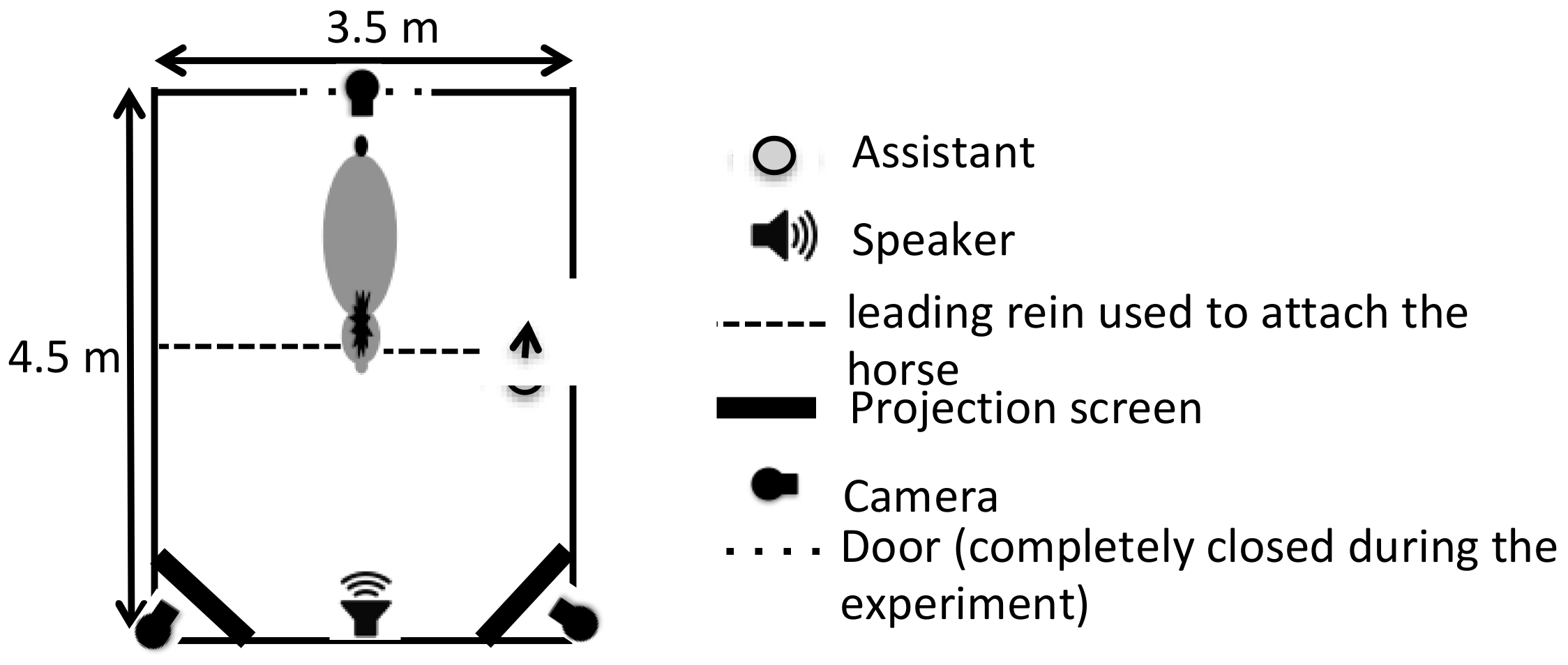
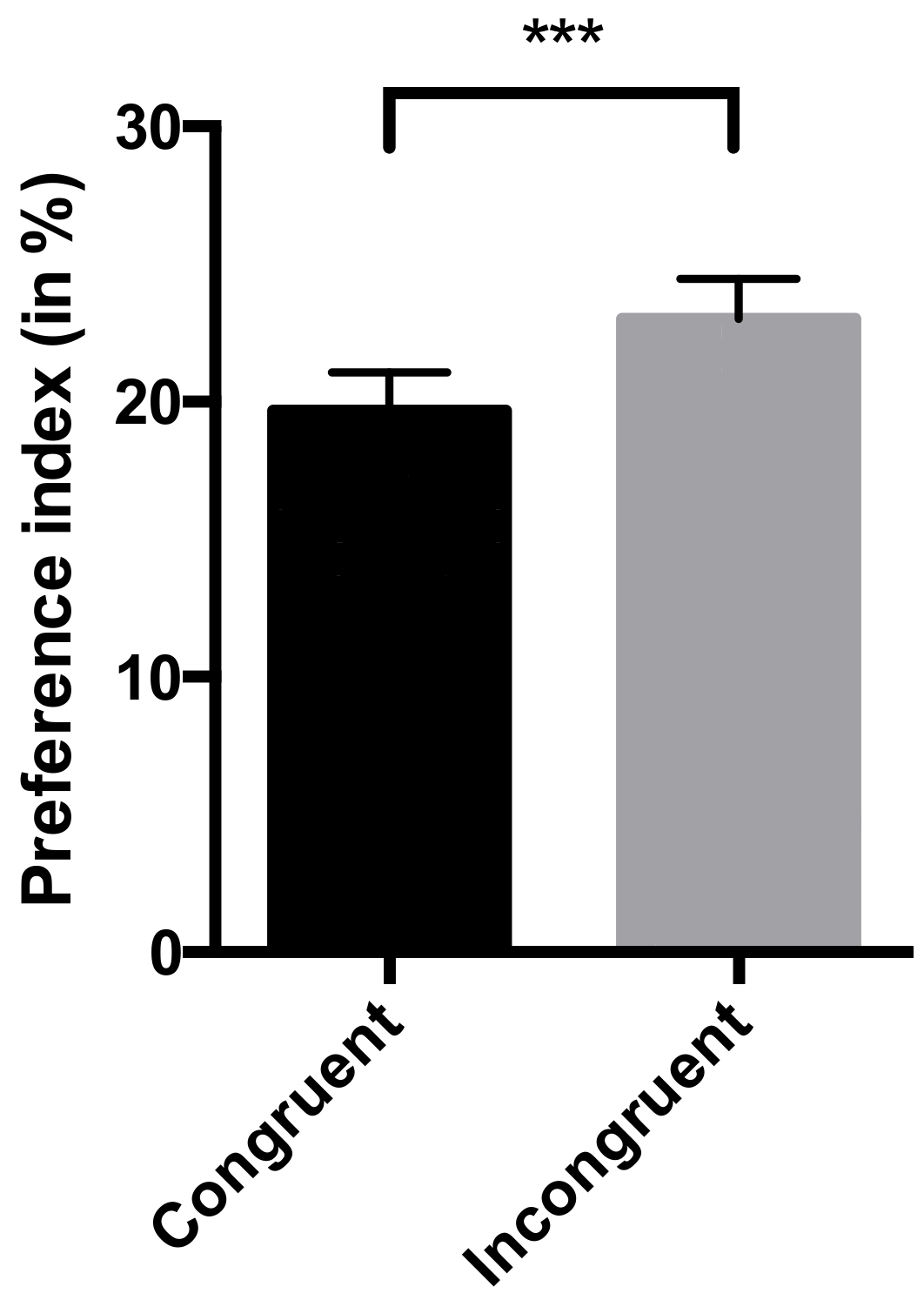
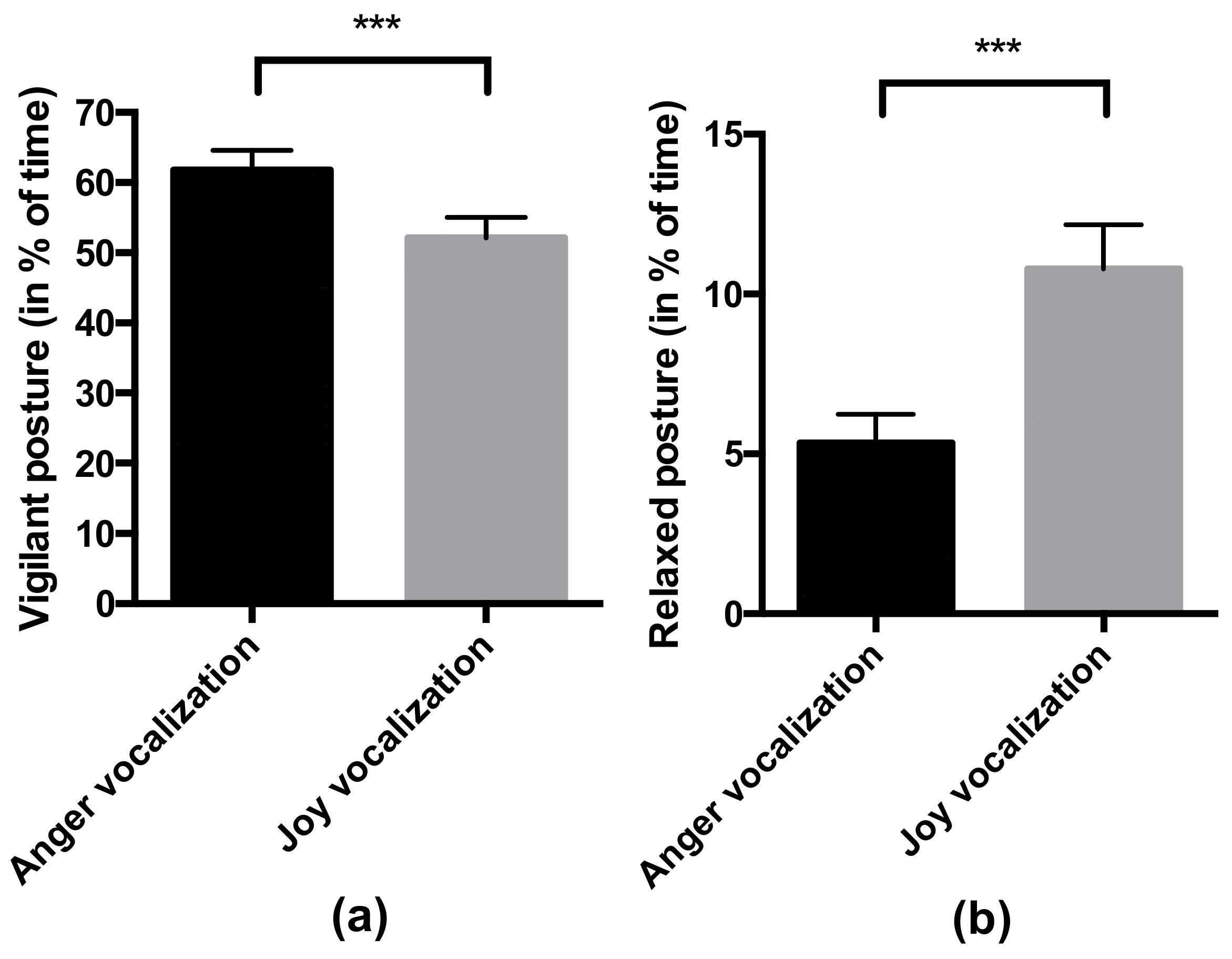
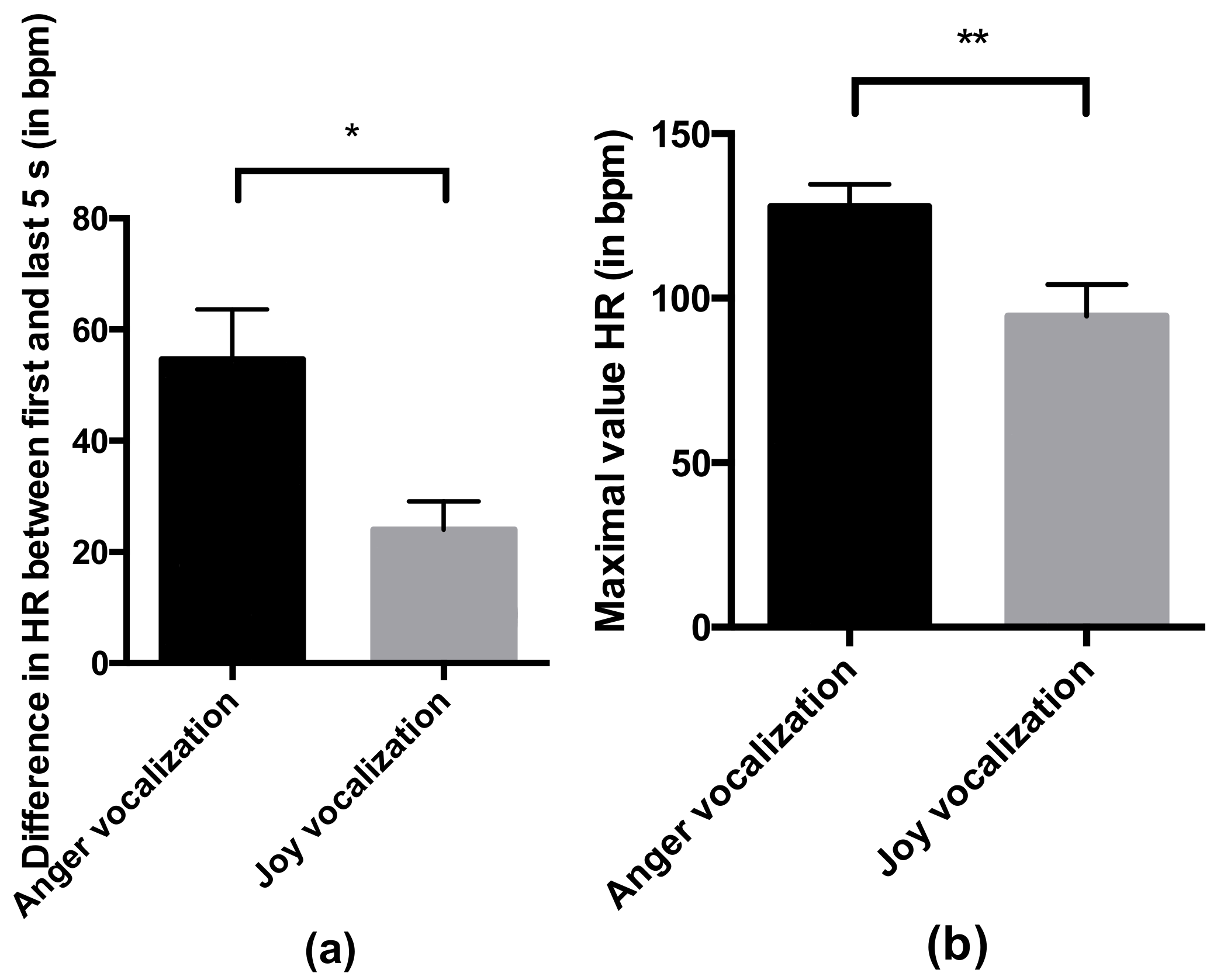
Recently, an increasing number of studies have investigated the expression and perception of emotions by non-human animals. In particular, it is of interest to determine whether animals can link emotion stimuli of different modalities (e.g., visual and oral) based on the emotions that are expressed (i.e., to recognize emotions cross-modally). For domestic species that share a close relationship with humans, we might even wonder whether this ability extends to human emotions. Here, we investigated whether domestic horses recognize human emotions cross-modally. We simultaneously presented two animated pictures of human facial expressions, one typical of joy and the other of anger; simultaneously, a speaker played a human non-verbal vocalization expressing joy or anger. Horses looked at the picture that did not match the emotion of the vocalization more (probably because they were intrigued by the paradoxical combination). Moreover, their behavior and heart rate differed depending on the vocalization: they reacted more negatively to the anger vocalization and more positively to the joy vocalization. These results suggest that horses can match visual and vocal cues for the same emotion and can perceive the emotional valence of human non-verbal vocalizations.
Abstract
Over the last few years, an increasing number of studies have aimed to gain more insight into the field of animal emotions. In particular, it is of interest to determine whether animals can cross-modally categorize the emotions of others. For domestic animals that share a close relationship with humans, we might wonder whether this cross-modal recognition of emotions extends to humans, as well. In this study, we tested whether horses could recognize human emotions and attribute the emotional valence of visual (facial expression) and vocal (non-verbal vocalization) stimuli to the same perceptual category. Two animated pictures of different facial expressions (anger and joy) were simultaneously presented to the horses, while a speaker played an emotional human non-verbal vocalization matching one of the two facial expressions. Horses looked at the picture that was incongruent with the vocalization more, probably because they were intrigued by the paradoxical combination. Moreover, horses reacted in accordance with the valence of the vocalization, both behaviorally and physiologically (heart rate). These results show that horses can cross-modally recognize human emotions and react emotionally to the emotional states of humans, assessed by non-verbal vocalizations.
Keywords:
Equus caballus; social cognition; human-animal relationship; emotions