The Effect of Substitution of Palm Fat with Linseed Oil on the Lipid Peroxidation, Antioxidative Capacity and Intestinal Morphology in Rabbits (Oryctolagus cuniculus)



1
Department of Animal Science, Biotechnical Faculty, University of Ljubljana, Groblje 3, 1230 Domžale, Slovenia
2
Institute of Preclinical Sciences, Veterinary Faculty, University of Ljubljana, Gerbičeva 60, 1000 Ljubljana, Slovenia
*
Author to whom correspondence should be addressed.
Animals 2019, 9(10), 830; https://doi.org/10.3390/ani9100830
Submission received: 5 September 2019
/
Revised: 15 October 2019
/
Accepted: 16 October 2019
/
Published: 19 October 2019
(This article belongs to the Special Issue Advances in Rearing Strategies for Health and Welfare Improvement in Rabbit)
Simple Summary
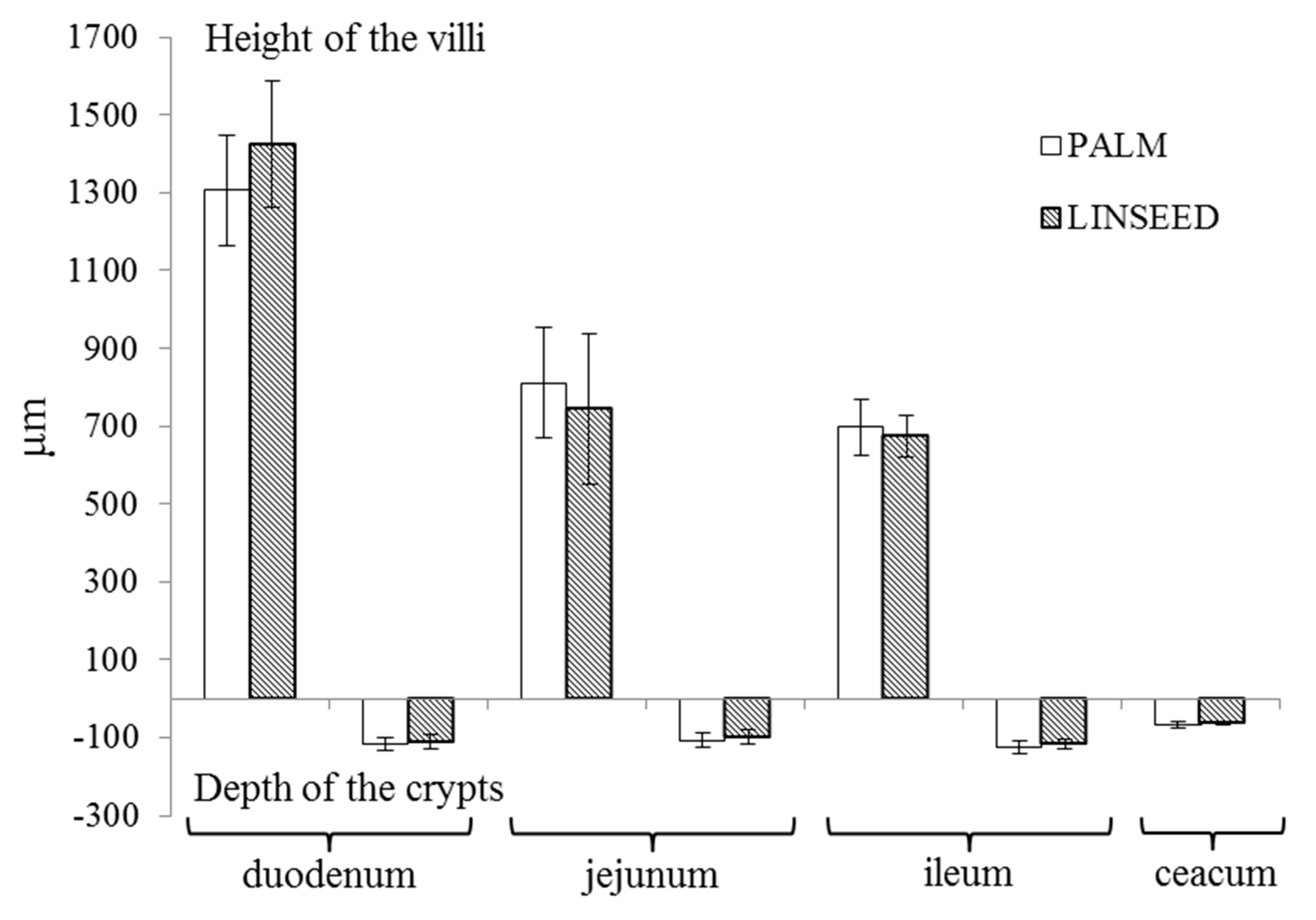
By changing the source of fat in the diet of animals, the fat content of animal products, such as meat, could be improved. The addition of linseed oil, with a high proportion of polyunsaturated fatty acids, especially n-3 α-linolenic acid, is often used in animal nutrition. Rabbit diet manipulation is effective in increasing or changing the level of fatty acids such that meat could become a functional food for humans. Since polyunsaturated fatty acids are susceptible on oxidation, an effect on animal health could arise. Therefore, we conducted a trial replacing palm fat (saturated fatty acids) with linseed oil (polyunsaturated fatty acids) in the rabbit diet to compere the oxidative status and histology of intestinal tissues. There was no significant effect in the substitution of linseed oil on the malondialdehyde concentration in urine and plasma, antioxidative capacity of water soluble or lipid soluble antioxidants, or intestinal morphology. Therefore, with an appropriate dietary strategy, the content of rabbit meat can be improved without reducing animal welfare.
Abstract
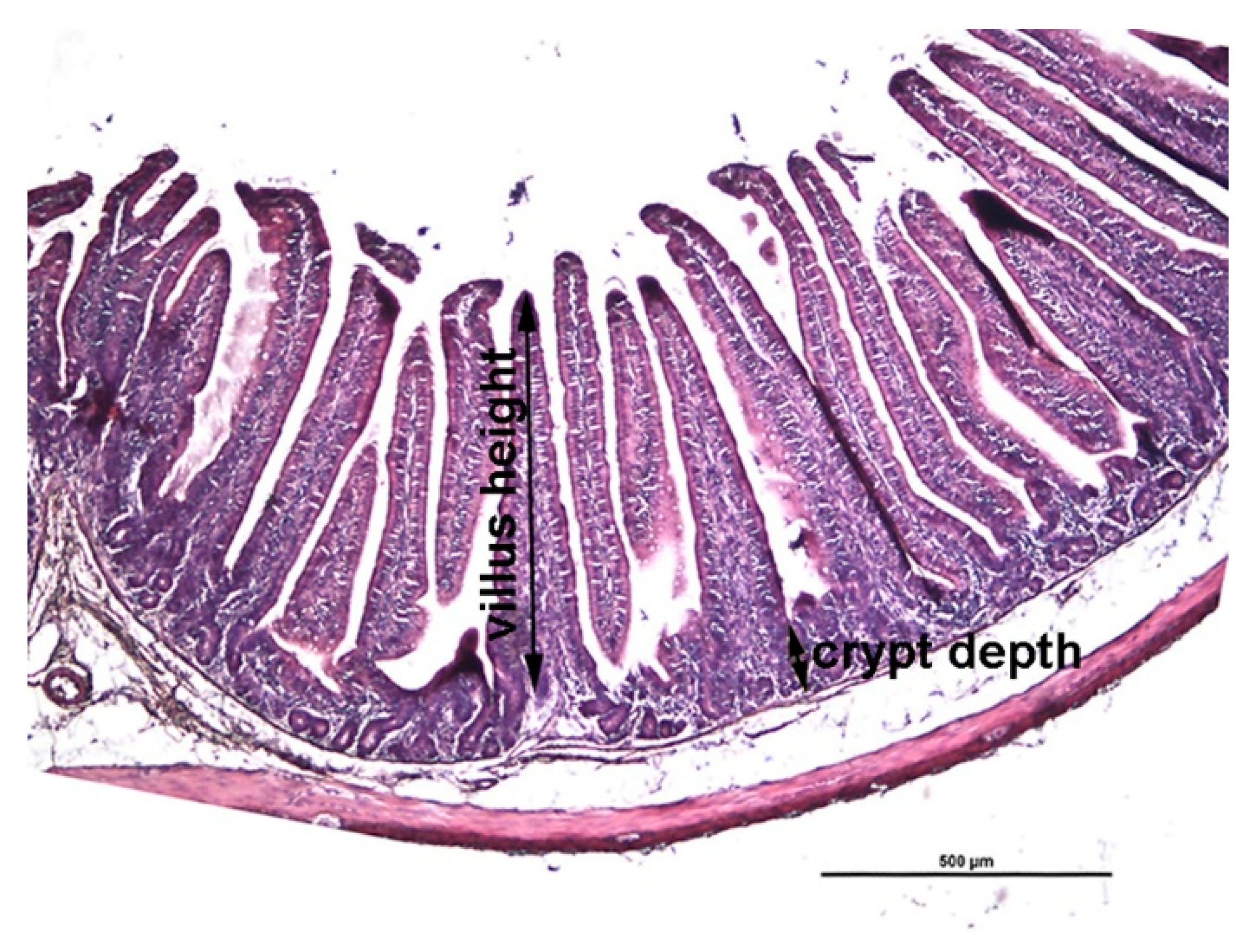
This experiment was conducted to investigate the effect of different dietary fatty acids (saturated or polyunsaturated fatty acids) supplementation on the oxidative status and intestinal morphology of adult rabbits (Oryctolagus cuniculus). Twenty-four “slovenska kunka” rabbits were randomly assigned to two different dietary treatments (12 rabbits per treatment) and fed the experimental diets between 80 and 102 days of age. The palm fat (PALM) diet with 6% palm fat and linseed (LINSEED) diets with 6% linseed oil were used. To evaluate the oxidative status of rabbits, the malondialdehyde concentration in urine and plasma and concentration of water and lipid soluble antioxidants in plasma were measured. The antioxidative capacity of the gastrointestinal tract was evaluated by measuring concentration of water and lipid soluble antioxidants in tissues and contents of the intestine. The histological structure of the small intestine and caecum was analyzed via histomorphometric analysis. No significant differences were found in either of those parameters. In summary, rabbits were exposed to high levels of polyunsaturated fatty acids with a high predisposition to oxidation, but their health and welfare were not endangered.