Extracellular Vesicle-Associated miR-222-3p and miR-186-5p as Potential Hypoxic Markers in Canine Osteosarcoma: A Preliminary In Vitro Study

 , , , , and
Simple Summary
Abstract
1. Introduction
2. Materials and Methods
2.1. Cell Culture Conditions
2.2. Hypoxia Induction
2.3. Extracellular Vesicle Isolation and Characterization
2.4. miRNA Extraction and Quantification
2.5. miRNA Library Preparation and Sequencing
2.6. Filtering, Normalization, and Differential Expression Analysis
2.7. Selection of Condition-Associated microRNAs
2.8. Hierarchical Clustering and Heatmap Visualization
2.9. Real Time PCR Quantification
2.10. Pathway Enrichment Analysis
3. Results
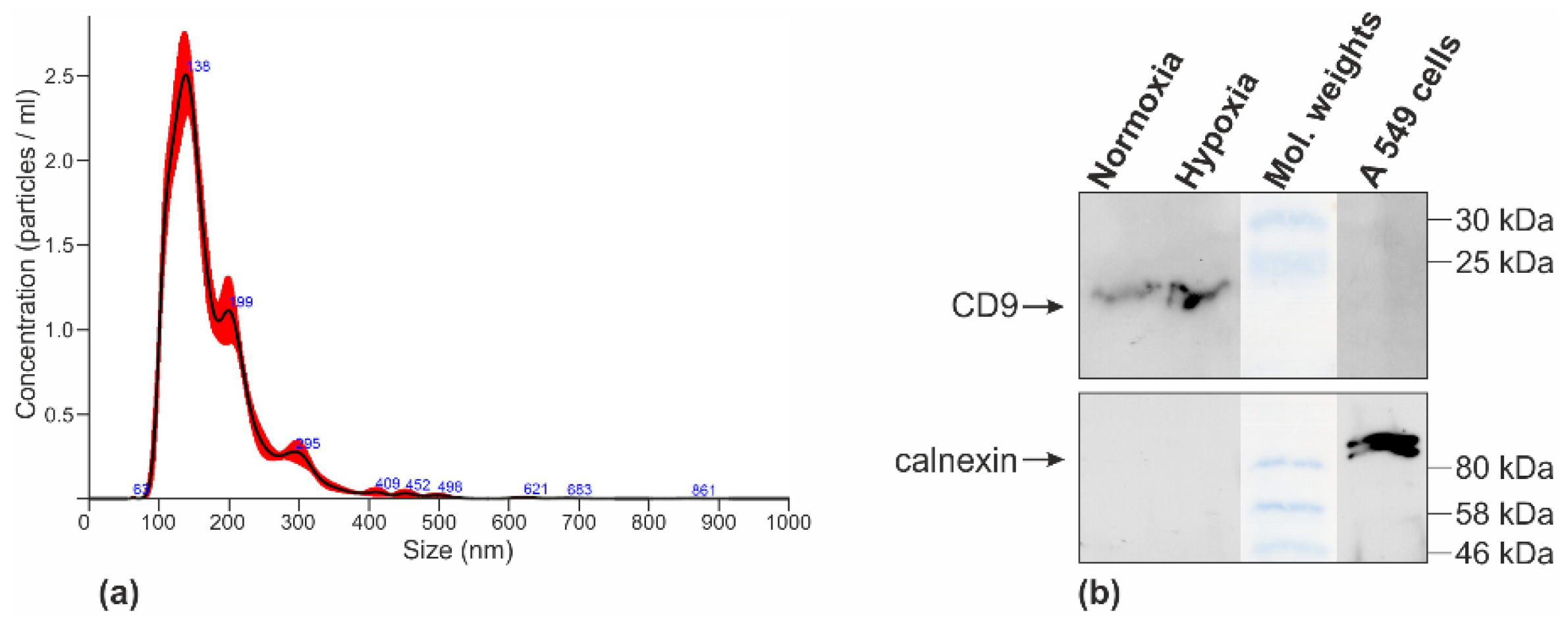
3.1. Extracellular Vesicle Characterization
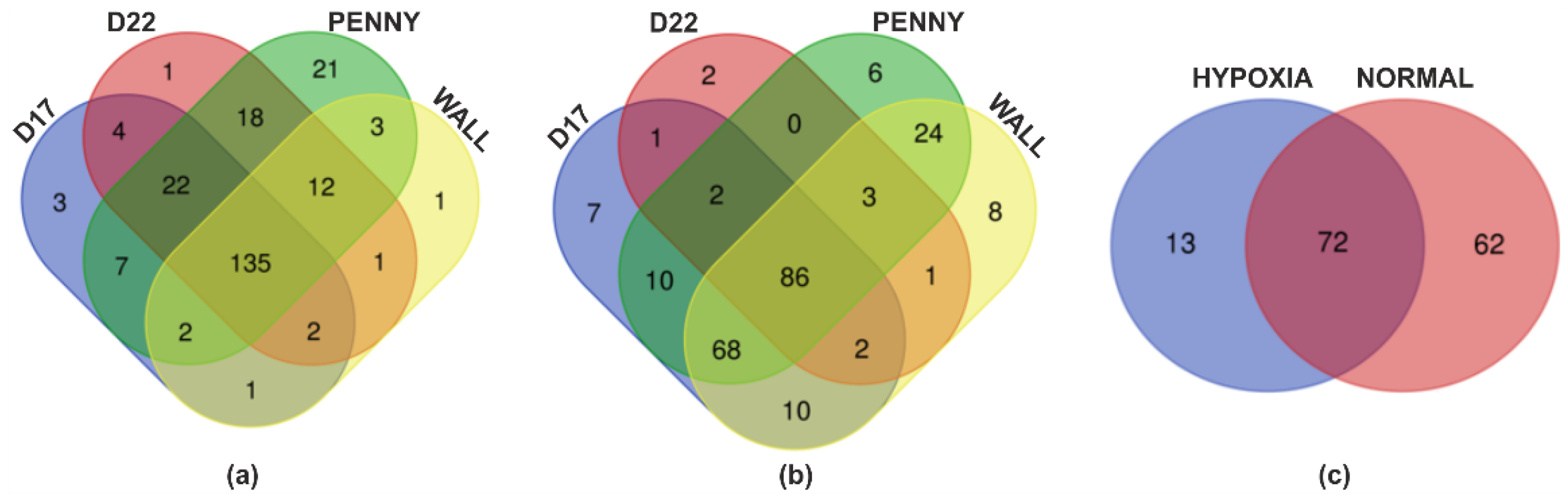
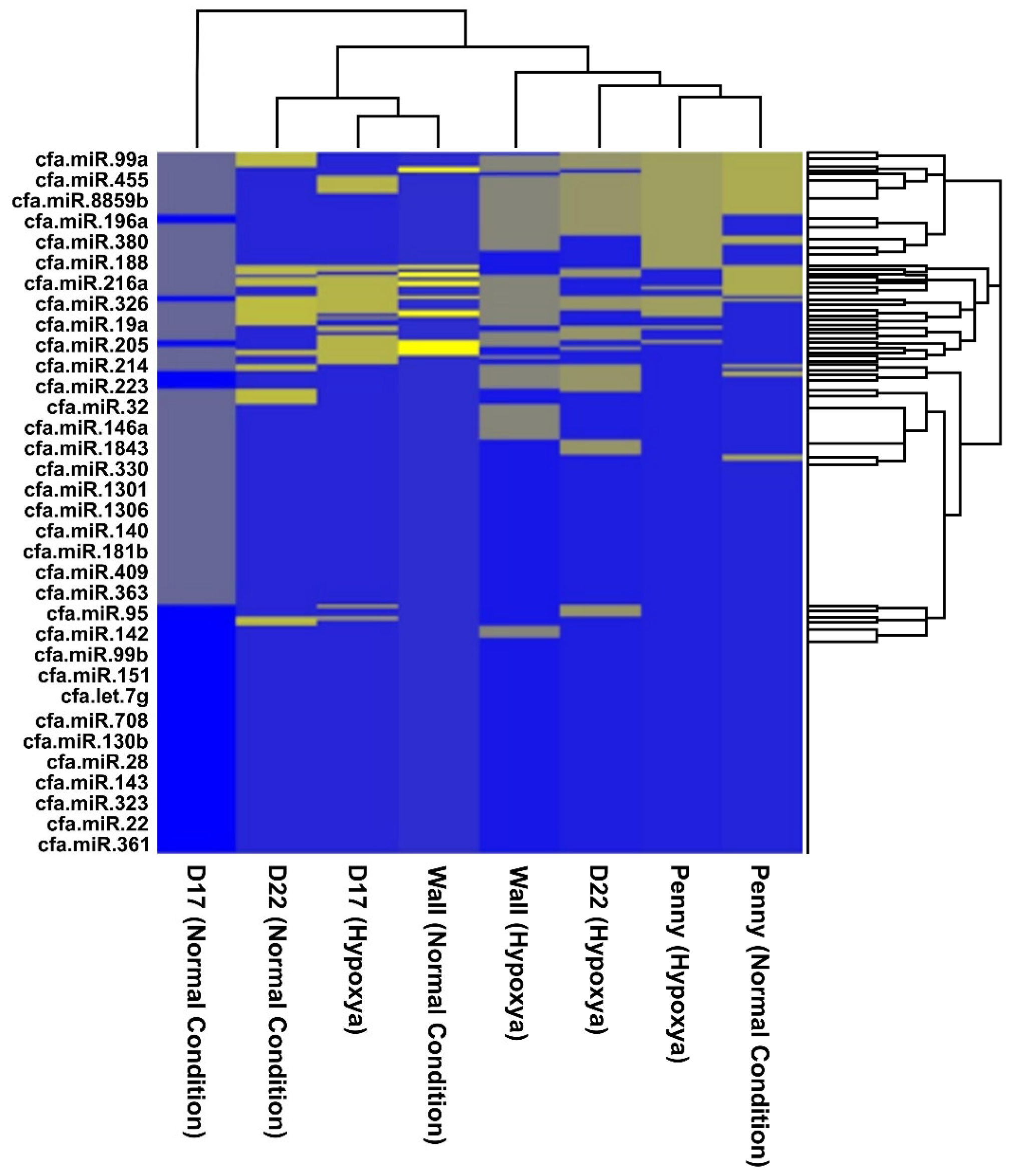
3.2. miRNome Profiling by RNA-Seq Analysis
3.3. Validation of Selected miRNAs
3.4. Functional Assay and Pathway Analysis of miR-222-3p and miR-186-5p
4. Discussion
5. Conclusions
Supplementary Materials
Author Contributions
Funding
Institutional Review Board Statement
Informed Consent Statement
Data Availability Statement
Conflicts of Interest
References
- Simpson, S.; Rizvanov, A.A.; Jeyapalan, J.N.; de Brot, S.; Rutland, C.S. Canine Osteosarcoma in Comparative Oncology: Molecular Mechanisms through to Treatment Discovery. Front. Vet. Sci. 2022, 9, 965391. [Google Scholar] [CrossRef] [PubMed]
- Fenger, J.M.; London, C.A.; Kisseberth, W.C. Canine Osteosarcoma: A Naturally Occurring Disease to Inform Pediatric Oncology. ILAR J. 2014, 55, 69–85. [Google Scholar] [CrossRef] [PubMed]
- Longhi, A.; Pasini, A.; Cicognani, A.; Baronio, F.; Pellacani, A.; Baldini, N.; Bacci, G. Height as a Risk Factor for Osteosarcoma. J. Pediatr. Hematol./Oncol. 2005, 27, 314–318. [Google Scholar] [CrossRef] [PubMed]
- Khanna, C.; Lindblad-Toh, K.; Vail, D.; London, C.; Bergman, P.; Barber, L.; Breen, M.; Kitchell, B.; McNeil, E.; Modiano, J.F.; et al. The Dog as a Cancer Model. Nat. Biotechnol. 2006, 24, 1065–1066. [Google Scholar] [CrossRef]
- Diener, C.; Keller, A.; Meese, E. Emerging Concepts of miRNA Therapeutics: From Cells to Clinic. Trends Genet. 2022, 38, 613–626. [Google Scholar] [CrossRef]
- Jerez, S.; Araya, H.; Hevia, D.; Irarrázaval, C.E.; Thaler, R.; van Wijnen, A.J.; Galindo, M. Extracellular Vesicles from Osteosarcoma Cell Lines Contain miRNAs Associated with Cell Adhesion and Apoptosis. Gene 2019, 710, 246–257. [Google Scholar] [CrossRef]
- Luu, A.K.; Wood, G.A.; Viloria-Petit, A.M. Recent Advances in the Discovery of Biomarkers for Canine Osteosarcoma. Front. Vet. Sci. 2021, 8, 734965. [Google Scholar] [CrossRef]
- Leonardi, L.; Scotlandi, K.; Pettinari, I.; Benassi, M.S.; Porcellato, I.; Pazzaglia, L. MiRNAs in Canine and Human Osteosarcoma: A Highlight Review on Comparative Biomolecular Aspects. Cells 2021, 10, 428. [Google Scholar] [CrossRef]
- Makielski, K.M.; Donnelly, A.J.; Khammanivong, A.; Scott, M.C.; Ortiz, A.R.; Galvan, D.C.; Tomiyasu, H.; Amaya, C.; Ward, K.A.; Montoya, A.; et al. Development of an Exosomal Gene Signature to Detect Residual Disease in Dogs with Osteosarcoma Using a Novel Xenograft Platform and Machine Learning. Lab. Investig. 2021, 101, 1585–1596. [Google Scholar] [CrossRef]
- Zhang, Z.; Zhang, W.; Mao, J.; Xu, Z.; Fan, M. miR-186-5p Functions as a Tumor Suppressor in Human Osteosarcoma by Targeting FOXK1. Cell Physiol. Biochem. 2019, 52, 553–564. [Google Scholar] [CrossRef]
- Guo, J.; Liu, Q.; Li, Z.; Guo, H.; Bai, C.; Wang, F. miR-222-3p Promotes Osteosarcoma Cell Migration and Invasion through Targeting TIMP3. Onco Targets Ther. 2018, 11, 8643–8653. [Google Scholar] [CrossRef] [PubMed]
- Capuano, C.; Moccia, V.; Molinari, A.; Torrigiani, F.; Ferro, L.; Ferraresso, S.; Bonsembiante, F.; Leo, C.; Zappulli, V. Free Circulating versus Extracellular Vesicle-Associated microRNA Expression in Canine T-Cell Lymphoma. Front. Vet. Sci. 2024, 11, 1461506. [Google Scholar] [CrossRef]
- Todosenko, N.; Khlusov, I.; Yurova, K.; Khaziakhmatova, O.; Litvinova, L. Signal Pathways and microRNAs in Osteosarcoma Growth and the Dual Role of Mesenchymal Stem Cells in Oncogenesis. Int. J. Mol. Sci. 2023, 24, 8993. [Google Scholar] [CrossRef]
- Gola, C.; Massimini, M.; Morello, E.; Maniscalco, L.; Conti, L.C.; Romanucci, M.; Olimpo, M.; Della Salda, L.; De Maria, R. Prognostic Significance of Microvessel Density and Hypoxic Markers in Canine Osteosarcoma: Insights into Angiogenesis and Tumor Aggressiveness. Animals 2024, 14, 3181. [Google Scholar] [CrossRef] [PubMed]
- Wang, R.; Jin, F.; Zhong, H. A Novel Experimental Hypoxia Chamber for Cell Culture. Am. J. Cancer Res. 2014, 4, 53–60. [Google Scholar] [PubMed]
- Muñoz-Sánchez, J.; Chánez-Cárdenas, M.E. The Use of Cobalt Chloride as a Chemical Hypoxia Model. J. Appl. Toxicol. 2019, 39, 556–570. [Google Scholar] [CrossRef]
- Gola, C.; Iussich, S.; Noury, S.; Martano, M.; Gattino, F.; Morello, E.; Martignani, E.; Maniscalco, L.; Accornero, P.; Buracco, P.; et al. Clinical Significance and in Vitro Cellular Regulation of Hypoxia Mimicry on HIF-1α and Downstream Genes in Canine Appendicular Osteosarcoma. Vet. J. 2020, 264, 105538. [Google Scholar] [CrossRef]
- Maniscalco, L.; Iussich, S.; Morello, E.; Martano, M.; Biolatti, B.; Riondato, F.; Della Salda, L.; Romanucci, M.; Malatesta, D.; Bongiovanni, L.; et al. PDGFs and PDGFRs in Canine Osteosarcoma: New Targets for Innovative Therapeutic Strategies in Comparative Oncology. Vet. J. 2013, 195, 41–47. [Google Scholar] [CrossRef]
- Babraham Bioinformatics—FastQC A Quality Control Tool for High Throughput Sequence Data. Available online: https://www.bioinformatics.babraham.ac.uk/projects/fastqc/ (accessed on 27 February 2026).
- Ewels, P.; Magnusson, M.; Lundin, S.; Käller, M. MultiQC: Summarize Analysis Results for Multiple Tools and Samples in a Single Report. Bioinformatics 2016, 32, 3047–3048. [Google Scholar] [CrossRef]
- Martin, M. Cutadapt Removes Adapter Sequences from High-Throughput Sequencing Reads. EMBnet. J. 2011, 17, 10–12. [Google Scholar] [CrossRef]
- Dobin, A.; Davis, C.A.; Schlesinger, F.; Drenkow, J.; Zaleski, C.; Jha, S.; Batut, P.; Chaisson, M.; Gingeras, T.R. STAR: Ultrafast Universal RNA-Seq Aligner. Bioinformatics 2013, 29, 15–21. [Google Scholar] [CrossRef] [PubMed]
- Kozomara, A.; Birgaoanu, M.; Griffiths-Jones, S. miRBase: From microRNA Sequences to Function. Nucleic Acids Res. 2019, 47, D155–D162. [Google Scholar] [CrossRef] [PubMed]
- Agarwal, V.; Bell, G.W.; Nam, J.-W.; Bartel, D.P. Predicting Effective microRNA Target Sites in Mammalian mRNAs. eLife 2015, 4, e05005. [Google Scholar] [CrossRef] [PubMed]
- Robinson, M.D.; McCarthy, D.J.; Smyth, G.K. edgeR: A Bioconductor Package for Differential Expression Analysis of Digital Gene Expression Data. Bioinformatics 2010, 26, 139–140. [Google Scholar] [CrossRef]
- Ritchie, M.E.; Phipson, B.; Wu, D.; Hu, Y.; Law, C.W.; Shi, W.; Smyth, G.K. Limma Powers Differential Expression Analyses for RNA-Sequencing and Microarray Studies. Nucleic Acids Res. 2015, 43, e47. [Google Scholar] [CrossRef]
- Liu, W.; Wang, X. Prediction of Functional microRNA Targets by Integrative Modeling of microRNA Binding and Target Expression Data. Genome Biol. 2019, 20, 18. [Google Scholar] [CrossRef]
- Clancy, J.W.; D’Souza-Schorey, C. Tumor-Derived Extracellular Vesicles: Multifunctional Entities in the Tumor Microenvironment. Annu. Rev. Pathol. 2023, 18, 205–229. [Google Scholar] [CrossRef]
- Duijvesz, D.; Luider, T.; Bangma, C.H.; Jenster, G. Exosomes as Biomarker Treasure Chests for Prostate Cancer. Eur. Urol. 2011, 59, 823–831. [Google Scholar] [CrossRef]
- Viaud, S.; Théry, C.; Ploix, S.; Tursz, T.; Lapierre, V.; Lantz, O.; Zitvogel, L.; Chaput, N. Dendritic Cell-Derived Exosomes for Cancer Immunotherapy: What’s Next? Cancer Res. 2010, 70, 1281–1285. [Google Scholar] [CrossRef]
- Hu, G.; Drescher, K.M.; Chen, X. Exosomal miRNAs: Biological Properties and Therapeutic Potential. Front. Genet. 2012, 3, 56. [Google Scholar] [CrossRef]
- Aigner, A. MicroRNAs (miRNAs) in Cancer Invasion and Metastasis: Therapeutic Approaches Based on Metastasis-Related miRNAs. J. Mol. Med. 2011, 89, 445–457. [Google Scholar] [CrossRef] [PubMed]
- Al-Nedawi, K.; Meehan, B.; Kerbel, R.S.; Allison, A.C.; Rak, J. Endothelial Expression of Autocrine VEGF upon the Uptake of Tumor-Derived Microvesicles Containing Oncogenic EGFR. Proc. Natl. Acad. Sci. USA 2009, 106, 3794–3799. [Google Scholar] [CrossRef] [PubMed]
- Muz, B.; de la Puente, P.; Azab, F.; Azab, A.K. The Role of Hypoxia in Cancer Progression, Angiogenesis, Metastasis, and Resistance to Therapy. Hypoxia 2015, 3, 83–92. [Google Scholar] [CrossRef] [PubMed]
- Guduric-Fuchs, J.; O’Connor, A.; Camp, B.; O’Neill, C.L.; Medina, R.J.; Simpson, D.A. Selective Extracellular Vesicle-Mediated Export of an Overlapping Set of microRNAs from Multiple Cell Types. BMC Genom. 2012, 13, 357. [Google Scholar] [CrossRef]
- Lin, L.; Sun, J.; Wu, D.; Lin, D.; Sun, D.; Li, Q.; Chen, J.; Niu, H.; He, P.; Ding, Y. MicroRNA-186 Is Associated with Hypoxia-Inducible Factor-1α Expression in Chronic Obstructive Pulmonary Disease. Mol. Genet. Genom. Med. 2019, 7, e531. [Google Scholar] [CrossRef]
- Becker, V.; Yuan, X.; Boewe, A.S.; Ampofo, E.; Ebert, E.; Hohneck, J.; Bohle, R.M.; Meese, E.; Zhao, Y.; Menger, M.D.; et al. Hypoxia-Induced Downregulation of microRNA-186-5p in Endothelial Cells Promotes Non-Small Cell Lung Cancer Angiogenesis by Upregulating Protein Kinase C Alpha. Mol. Ther. Nucleic Acids 2023, 31, 421–436. [Google Scholar] [CrossRef]
- Diao, Z.-B.; Sun, T.-X.; Zong, Y.; Lin, B.-C.; Xia, Y.-S. Identification of Plasma microRNA-22 as a Marker for the Diagnosis, Prognosis, and Chemosensitivity Prediction of Osteosarcoma. J. Int. Med. Res. 2020, 48, 300060520967818. [Google Scholar] [CrossRef]
- Dailey, D.D.; Hess, A.M.; Bouma, G.J.; Duval, D.L. MicroRNA Expression Changes and Integrated Pathways Associated with Poor Outcome in Canine Osteosarcoma. Front. Vet. Sci. 2021, 8, 637622. [Google Scholar] [CrossRef]
- Ludwig, L.; Edson, M.; Treleaven, H.; Viloria-Petit, A.M.; Mutsaers, A.J.; Moorehead, R.; Foster, R.A.; Ali, A.; Wood, R.D.; Wood, G.A. Plasma microRNA Signatures Predict Prognosis in Canine Osteosarcoma Patients. PLoS ONE 2024, 19, e0311104. [Google Scholar] [CrossRef]



| Venn n = 12 | Hierarchical n= 10 | Literature n = 21 |
|---|---|---|
| Cfa-miR-150 | Cfa-miR-330 | Cfa-miR-125a |
| Cfa-miR-486 | Cfa-miR-455 | Cfa-miR-31 |
| Cfa-miR-138a | Cfa-miR-223 | Cfa-miR-148a |
| Cfa-miR-95 | Cfa-miR-8859b | Cfa-miR-210 |
| Cfa-miR-145 | Cfa-miR-326 | Cfa-miR-8859a |
| Cfa-miR-137 | Cfa-miR-146a | Cfa-miR-8858 |
| Cfa-miR-127 | Cfa-miR-205 | Cfa-miR-17 |
| Cfa-miR-432 | Cfa-miR-214 | Cfa-miR-149 |
| Cfa-miR-338 | Cfa-miR-380 | Cfa-miR-1306 |
| Cfa-miR-142 | Cfa-miR-223 | Cfa-miR-196a |
| Cfa-miR-454 | Cfa-miR-143 | |
| Cfa-miR-451 | Cfa-miR-497 | |
| Cfa-miR-590 | ||
| Cfa-miR-186 | ||
| Cfa-miR-493 | ||
| Cfa-miR-193a | ||
| Cfa-miR-222 | ||
| Cfa-miR-362 | ||
| Cfa-miR-505 | ||
| Cfa-miR-34a | ||
| Cfa-miR-196b |
| miRNA ID | Fold Regulation (Hypoxia vs. Normoxia) | p-Value |
|---|---|---|
| Cfa-miR-222-3p | −2.29 | 0.0289 |
| Cfa-miR-186-5p | −1.93 | 0.0411 |
| Category | Term | Count | % | p-Value | FDR |
|---|---|---|---|---|---|
| GOTERM_MF_DIRECT | protein serine/threonine kinase activity | 28 | 5.19 | 0.00000359 | 0.00231 |
| GOTERM_BP_DIRECT | intracellular signal transduction | 27 | 5.01 | 0.00000972 | 0.01 |
| GOTERM_BP_DIRECT | protein phosphorylation | 28 | 5.19 | 0.0000189 | 0.013 |
| GOTERM_MF_DIRECT | zinc ion binding | 82 | 15.21 | 0.0000519 | 0.0167 |
| SMART | S_TKc | 28 | 5.19 | 0.0000649 | 0.0163 |
| INTERPRO | Kinase-like_dom_sf | 33 | 6.12 | 0.0000121 | 0.0105 |
| INTERPRO | Ser/Thr_kinase_AS | 22 | 4.08 | 0.0000707 | 0.0397 |
| INTERPRO | Prot_kinase_dom | 29 | 5.38 | 0.0000915 | 0.0397 |
| INTERPRO | Znf_RING/FYVE/PHD | 30 | 5.57 | 0.00000407 | 0.00706 |
| UP_KW_MOLECULAR_FUNCTION | Serine/threonine-protein kinase | 24 | 4.45 | 0.000089 | 0.00289 |
| UP_KW_MOLECULAR_FUNCTION | Kinase | 38 | 7.05 | 0.000149 | 0.00324 |
| UP_SEQ_FEATURE | DOMAIN:Protein kinase | 29 | 5.38 | 0.000196 | 0.018 |
| UP_KW_DOMAIN | Zinc-finger | 63 | 11.69 | 0.0000124 | 0.000285 |
Disclaimer/Publisher’s Note: The statements, opinions and data contained in all publications are solely those of the individual author(s) and contributor(s) and not of MDPI and/or the editor(s). MDPI and/or the editor(s) disclaim responsibility for any injury to people or property resulting from any ideas, methods, instructions or products referred to in the content. |
© 2026 by the authors. Licensee MDPI, Basel, Switzerland. This article is an open access article distributed under the terms and conditions of the Creative Commons Attribution (CC BY) license.
Share and Cite
De Maria, R.; Poncina, M.; Divari, S.; Parisi, L.; Capellero, S.; Cesar Conti, L.; Mazzone, E.; Fratini, F.; Aresu, L.; Maniscalco, L. Extracellular Vesicle-Associated miR-222-3p and miR-186-5p as Potential Hypoxic Markers in Canine Osteosarcoma: A Preliminary In Vitro Study. Animals 2026, 16, 1265. https://doi.org/10.3390/ani16081265
De Maria R, Poncina M, Divari S, Parisi L, Capellero S, Cesar Conti L, Mazzone E, Fratini F, Aresu L, Maniscalco L. Extracellular Vesicle-Associated miR-222-3p and miR-186-5p as Potential Hypoxic Markers in Canine Osteosarcoma: A Preliminary In Vitro Study. Animals. 2026; 16(8):1265. https://doi.org/10.3390/ani16081265
Chicago/Turabian StyleDe Maria, Raffaella, Manuela Poncina, Sara Divari, Lorenza Parisi, Sonia Capellero, Luiza Cesar Conti, Eugenio Mazzone, Federica Fratini, Luca Aresu, and Lorella Maniscalco. 2026. "Extracellular Vesicle-Associated miR-222-3p and miR-186-5p as Potential Hypoxic Markers in Canine Osteosarcoma: A Preliminary In Vitro Study" Animals 16, no. 8: 1265. https://doi.org/10.3390/ani16081265
APA StyleDe Maria, R., Poncina, M., Divari, S., Parisi, L., Capellero, S., Cesar Conti, L., Mazzone, E., Fratini, F., Aresu, L., & Maniscalco, L. (2026). Extracellular Vesicle-Associated miR-222-3p and miR-186-5p as Potential Hypoxic Markers in Canine Osteosarcoma: A Preliminary In Vitro Study. Animals, 16(8), 1265. https://doi.org/10.3390/ani16081265