Transcriptional and Alternative Splicing Regulation of Autophagy and Vesicle Transport Pathways in Large Yellow Croaker Cells During Megalocytivirus Infection
 , , ,
, , ,
Simple Summary
Abstract
1. Introduction
2. Materials and Methods
2.1. Virus Titration and Cell Infection
2.2. Sample Preparation
2.3. Electron Microscopy
2.4. Temporal Viral Load Measurement via qPCR Assay
2.5. High-Throughput Sequencing and Data Assembly
2.6. Temporal Analysis of the Differentially Expressed Genes (DEGs) and the Differential Alternative Splicing (DAS) Genes
2.7. Functional Enrichment and Clustering
2.8. Validation of Post-Infection Expression Patterns of the DEGs Using Quantitative Reverse Transcription-PCR (qRT-PCR)
2.9. Weighted Gene Coexpression Network Analysis (WGCNA)
2.10. Expression Trend Analysis
3. Results
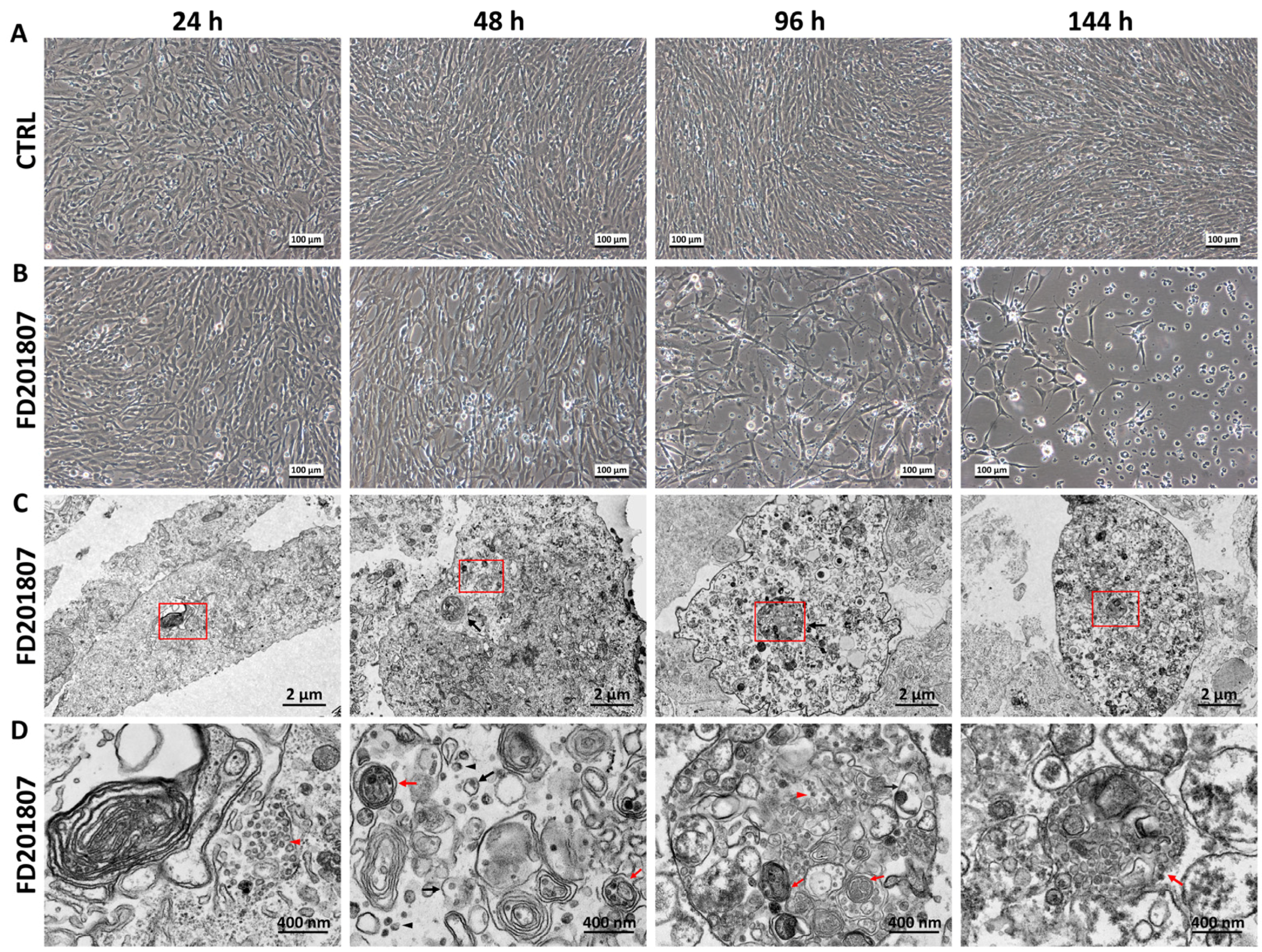
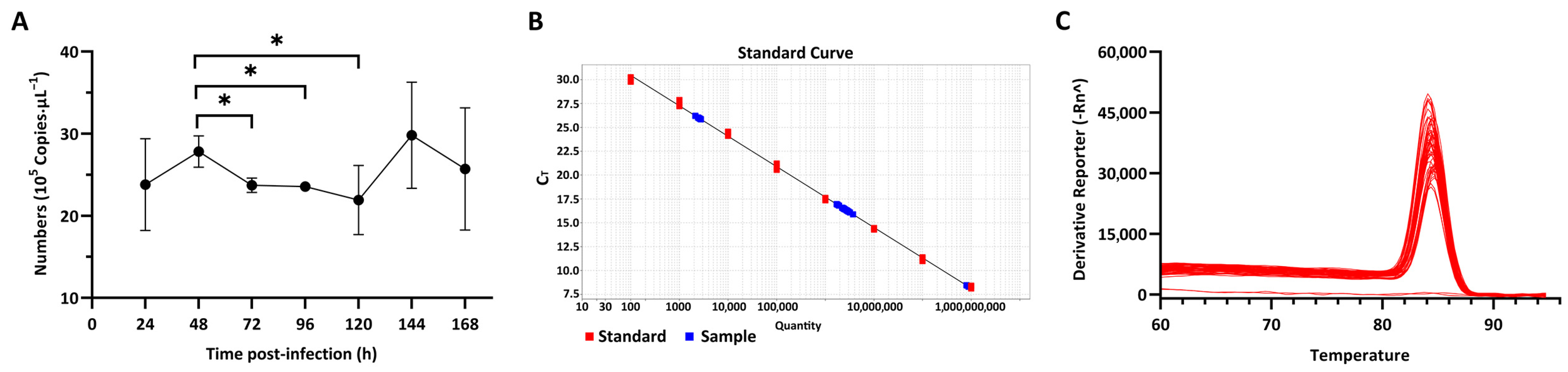
3.1. Megalocytivirus Titration and Cell Infection
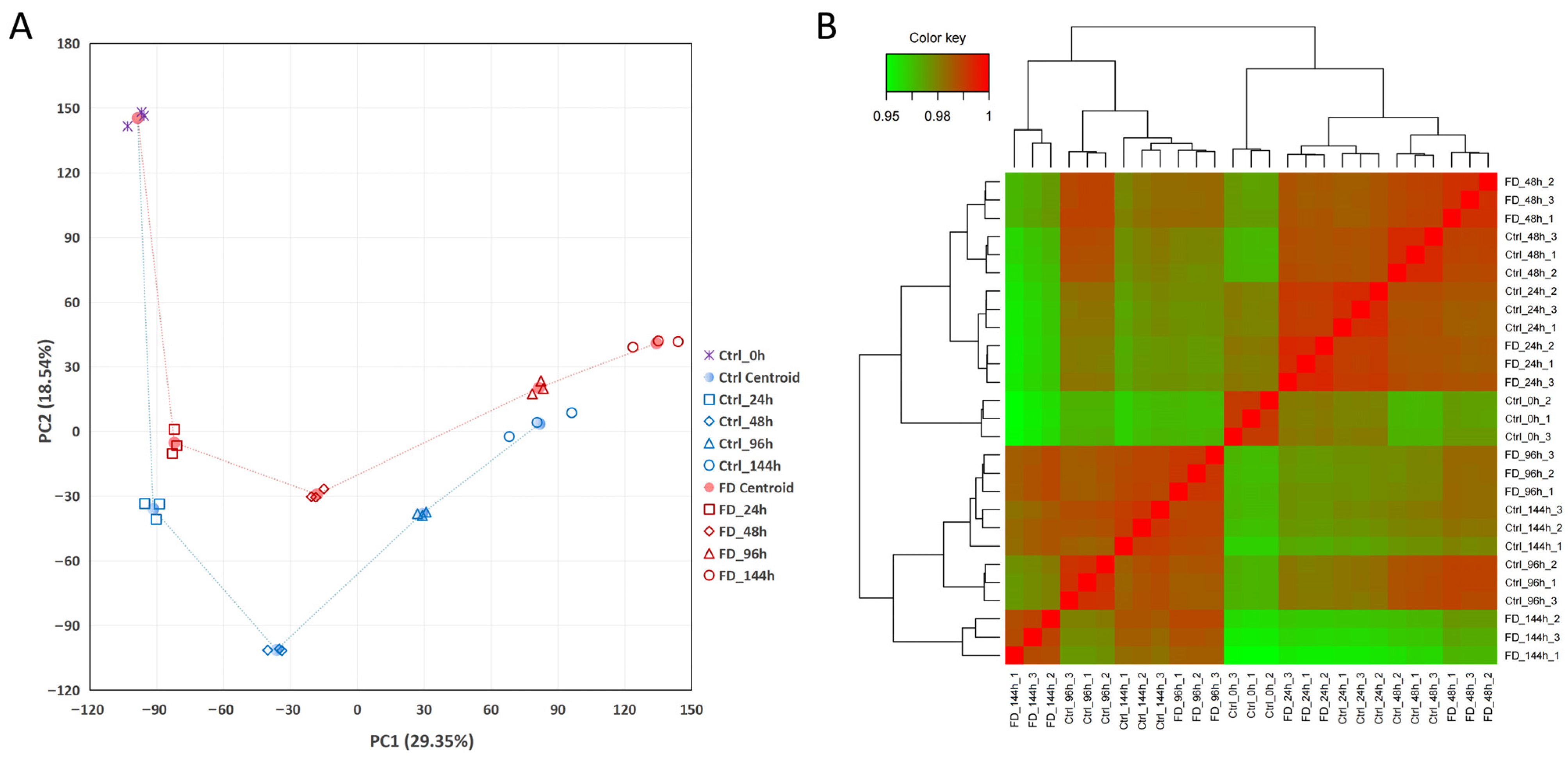
3.2. High-Throughput Sequencing and Data Qualification
3.3. Validation of the RNA-Seq Using qRT-PCR
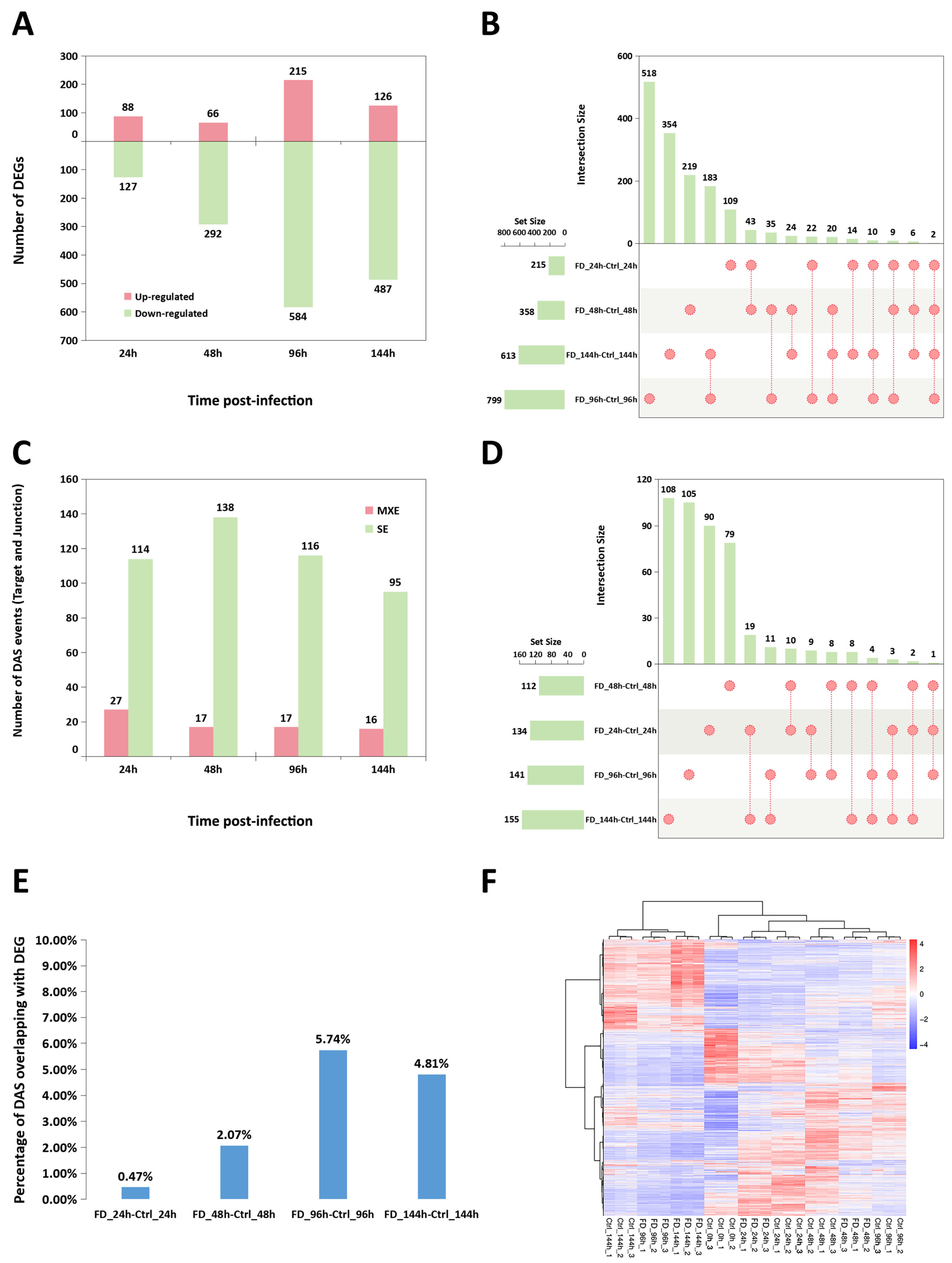
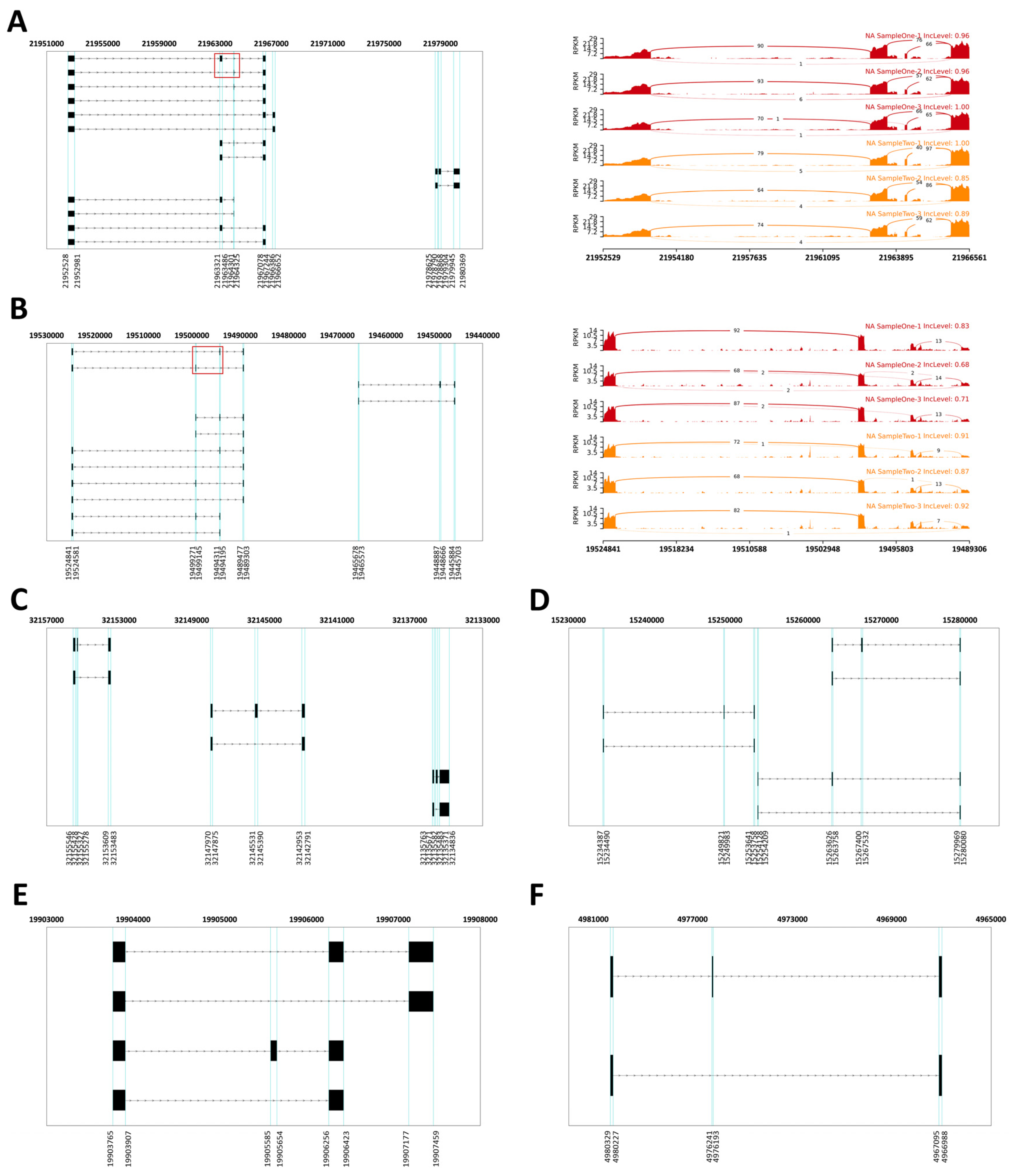
3.4. The Temporal Pattern of Differentially Expressed Genes (DEGs) and Differentially Alternative Splicing (DAS) Events Induced by FD201807 Infection
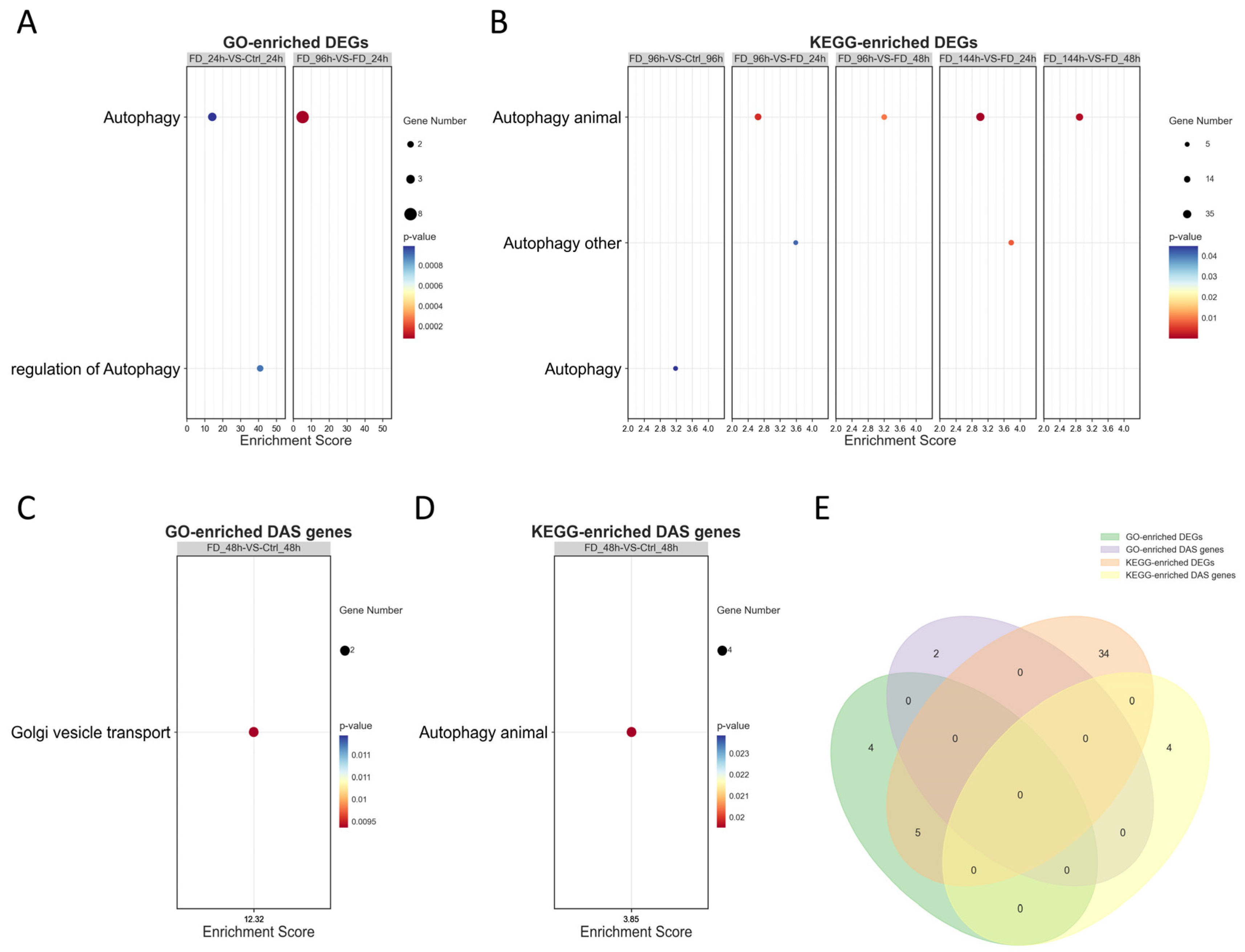
3.5. GO and KEGG Enrichment Analysis for the DEGs and the DAS Genes
3.6. STEM Analysis
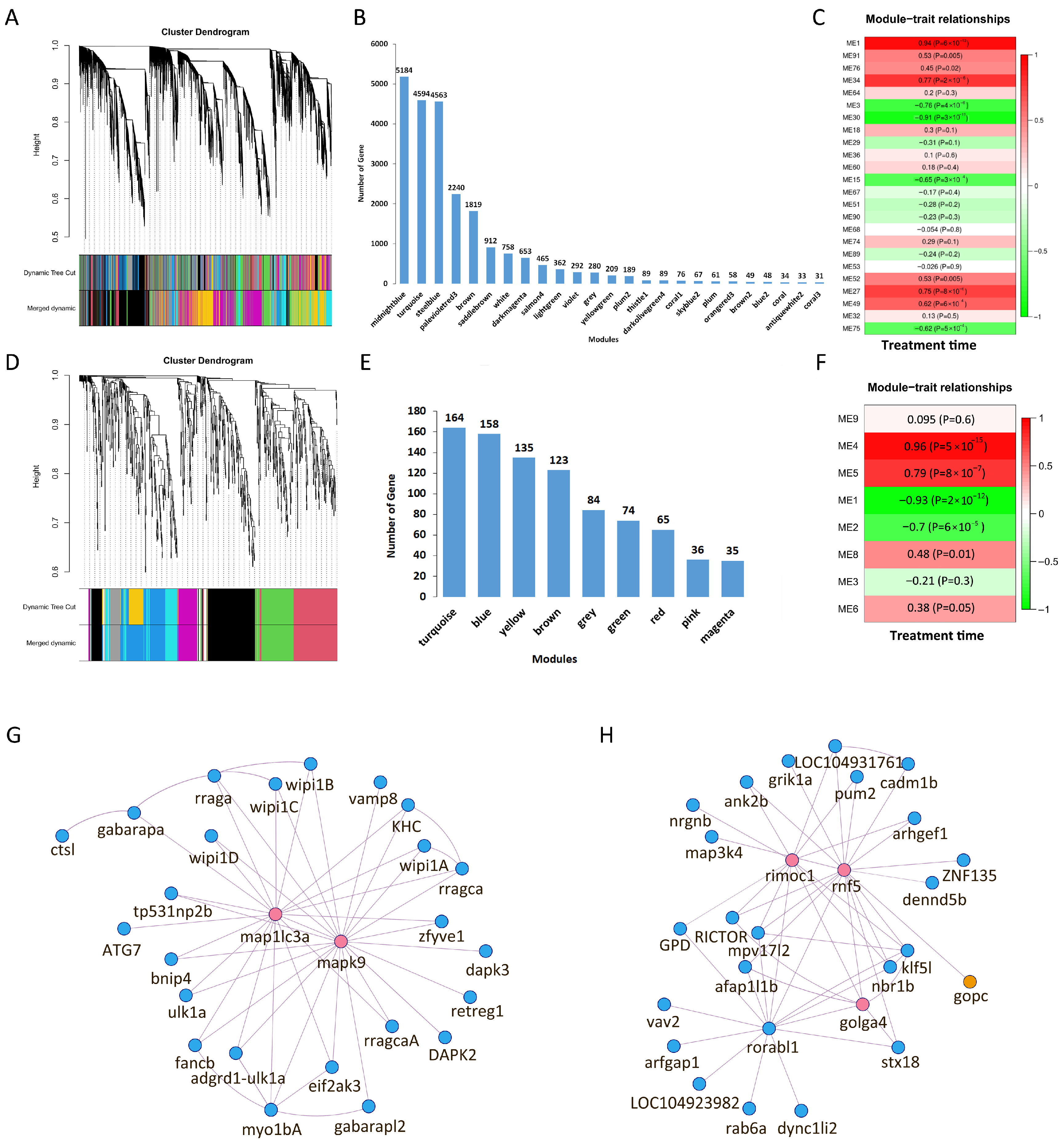
3.7. WGCNA
3.8. Co-Expression Network Construction
4. Discussion
5. Conclusions
Supplementary Materials
Author Contributions
Funding
Institutional Review Board Statement
Informed Consent Statement
Data Availability Statement
Conflicts of Interest
Abbreviations
| CPEs | cytopathic effects |
| CSFV | Classical Swine Fever Virus |
| DAS | differential alternative splicing |
| ISKNV | infectious spleen and kidney necrosis virus |
| MCP | major capsid protein |
| MXE | mutually exclusive exon |
| MVB | multivesicular bodies |
| RGNNV | red-spotted grouper nervous necrosis virus |
| RPKM | Reads per Kilobase per Million Reads |
| rMATS | replicate Multivariate Analysis of Transcript Splicing |
| RSIV | red seabream iridovirus |
| SNARE | Soluble NSF Attachment Protein Receptor |
| SE | skipped exon |
| SGIV | Singapore grouper iridovirus |
| STEM | short time-series expression miner |
| YCE1 | Yellow Croaker Embryonic type-I cell line |
References
- Guo, C.-J.; He, J.; Xu, X.-P.; Weng, S.-P.; He, J.-G. Megalocytivirus: A review of epidemiology, pathogenicity, immune evasion, and prevention strategies. Rev. Aquac. 2025, 17, e70025. [Google Scholar] [CrossRef]
- Kurita, J.; Nakajima, K. Megalocytiviruses. Viruses 2012, 4, 521–538. [Google Scholar] [CrossRef] [PubMed]
- Chen, X.-H.; Lin, K.-B.; Wang, X.-W. Outbreaks of an iridovirus disease in maricultured large yellow croaker, Larimichthys crocea (Richardson), in China. J. Fish. Dis. 2003, 26, 615–619. [Google Scholar] [CrossRef]
- Liu, X.-D.; Chi, H.-S.; Yang, X.-X.; Zheng, Z.-Y.; Zhu, C.-H.; Wu, Y.-K.; Chang, W.-J.; Gong, H. A comprehensive analysis of the genomic and proteomic profiles of a megalocytivirus isolated from Larimichthys crocea. Front. Microbiol. 2025, 16, 1528930. [Google Scholar] [CrossRef]
- Wang, G.-S.; Luan, Y.-J.; Wei, J.-P.; Li, Y.-F.; Shi, H.; Cheng, H.-X.; Bai, A.-X.; Xie, J.-J.; Xu, W.-J.; Qin, P. Genetic and Pathogenic Characterization of a New Iridovirus Isolated from Cage-Cultured Large Yellow Croaker (Larimichthys crocea) in China. Viruses 2022, 14, 208. [Google Scholar] [CrossRef] [PubMed]
- Yang, X.-X.; Chi, H.-S.; Zheng, Z.-Y.; Luo, P.-P.; Liu, X.-D.; Xu, B.-F.; Chen, X.-X.; Gong, H. Cell culture and major capsid protein (MCP) gene analysis of Megalocytivirus isolates from large yellow croaker (Larimichthys crocea). J. Fish. China 2023, 47, 99412. [Google Scholar] [CrossRef]
- Kerviel, A.; Zhang, M.; Altan-Bonnet, N. A new infectious unit: Extracellular vesicles carrying virus populations. Annu. Rev. Cell Dev. Biol. 2021, 37, 171–197. [Google Scholar] [CrossRef]
- Santiana, M.; Ghosh, S.; Ho, B.-A.; Rajasekaran, V.; Du, W.-L.; Mutsafi, Y.; De Jésus-Diaz, D.A.; Sosnovtsev, S.V.; Levenson, E.A.; Parra, G.I.; et al. Vesicle-Cloaked virus clusters are optimal units for inter-organismal viral transmission. Cell Host Microbe 2018, 24, 208–220. [Google Scholar] [CrossRef]
- Moulin, C.; Crupi, M.J.F.; Ilkow, C.S.; Bell, J.C.; Boulton, S. Extracellular vesicles and viruses: Two intertwined entities. Int. J. Mol. Sci. 2023, 24, 1036. [Google Scholar] [CrossRef]
- Andino, R.; Domingo, E. Viral quasispecies. Virology 2015, 479–480, 46–51. [Google Scholar] [CrossRef]
- Durgan, J.; Lystad, A.H.; Sloan, K.; Carlsson, S.R.; Wilson, M.I.; Marcassa, E.; Ulferts, R.; Webster, J.; Lopez-Clavijo, A.F.; Wakelam, M.J.; et al. Non-canonical autophagy drives alternative ATG8 conjugation to phosphatidylserine. Mol. Cell 2021, 81, 2031–2040. [Google Scholar] [CrossRef] [PubMed]
- Chen, K.-W.; Huang, C.-F.; Wu, J.-L.; Hong, J.-R. DHA affects ISKNV-induced autophagy flux via the AMPK/mTOR/ULK1 and BECN1/SQSTM1 axes, limiting viral replication in fish cells. Fish Shellfish Immun. 2026, 169, 111004. [Google Scholar] [CrossRef]
- Matsui, T.; Jiang, P.-D.; Nakano, S.; Sakamaki, Y.; Yamamoto, H.; Mizushima, N. Autophagosomal YKT6 is required for fusion with lysosomes independently of syntaxin 17. J. Cell Biol. 2018, 217, 2633–2645. [Google Scholar] [CrossRef] [PubMed]
- Li, M.-Y.; Naik, T.S.; Siu, L.Y.L.; Acuto, O.; Spooner, E.; Wang, P.-G.; Yang, X.-H.; Lin, Y.-P.; Bruzzone, R.; Ashour, J.; et al. Lyn kinase regulates egress of flaviviruses in autophagosome-derived organelles. Nat. Commun. 2020, 11, 5189. [Google Scholar] [CrossRef] [PubMed]
- Reggiori, F.; Monastyrska, I.; Verheije, M.H.; Calì, T.; Ulasli, M.; Bianchi, S.; Bernasconi, R.; de Haan, C.A.M.; Molinari, M. Coronaviruses Hijack the LC3-I-positive EDEMosomes, ER-derived vesicles exporting short-lived ERAD regulators, for replication. Cell Host Microbe 2010, 7, 500–508. [Google Scholar] [CrossRef]
- Xu, G.-G.; Yan, H.; Zhu, Y.-L.; Xie, Z.-J.; Zhang, R.-H.; Jiang, S.-J. Duck hepatitis A virus type 1 transmission by exosomes establishes a productive infection in vivo and in vitro. Vet. Microbiol. 2023, 277, 109621. [Google Scholar] [CrossRef]
- Nakatogawa, H.; Suzuki, K.; Kamada, Y.; Ohsumi, Y. Dynamics and diversity in autophagy mechanisms: Lessons from yeast. Nat. Rev. Mol. Cell Biol. 2009, 10, 458–467. [Google Scholar] [CrossRef]
- Feng, Z.-D.; Hensley, L.; McKnight, K.-L.; Hu, F.-Y.; Madden, V.; Ping, L.-F.; Jeong, S.; Walker, C.; Lanford, R.E.; Lemon, S.M. A pathogenic picornavirus acquires an envelope by hijacking cellular membranes. Nature 2013, 496, 367–371. [Google Scholar] [CrossRef]
- Fu, Y.-X.; Xiong, S.-D. Exosomes mediate Coxsackievirus B3 transmission and expand the viral tropism. PLoS Pathog. 2023, 19, e1011090. [Google Scholar] [CrossRef]
- York, S.B.; Sun, L.; Cone, A.S.; Duke, L.C.; Cheerathodi, M.R.; Meckes, D.G.J. Zika virus hijacks extracellular vesicle tetraspanin pathways for cell-to-cell transmission. mSphere 2021, 6, 10–1128. [Google Scholar] [CrossRef]
- Reyes-Ruiz, J.M.; Osuna-Ramos, J.F.; De Jesús-González, L.A.; Palacios-Rápalo, S.N.; Cordero-Rivera, C.D.; Farfan-Morales, C.N.; Hurtado-Monzón, A.M.; Gallardo-Flores, C.E.; Alcaraz-Estrada, S.L.; Salas-Benito, J.S.; et al. The regulation of flavivirus infection by hijacking exosome-mediated cell-cell communication: New insights on virus-host Interactions. Viruses 2020, 12, 765. [Google Scholar] [CrossRef] [PubMed]
- Wang, X.-W.; Ao, J.-Q.; Li, Q.-G.; Chen, X.-H. Quantitative detection of a marine fish iridovirus isolated from large yellow croaker, Pseudosciaena crocea, using a molecular beacon. J. Virol. Methods 2006, 133, 76–81. [Google Scholar] [CrossRef] [PubMed]
- Caobi, A.; Nair, M.; Raymond, A.D. Extracellular vesicles in the pathogenesis of viral infections in humans. Viruses 2020, 12, 1200. [Google Scholar] [CrossRef] [PubMed]
- Johnson, K.A.; Budicini, M.R.; Bhattarai, N.; Sharma, T.; Urata, S.; Gerstman, B.S.; Chapagain, P.P.; Li, S.; Stahelin, R.V. PI(4,5)P(2) binding sites in the Ebola virus matrix protein VP40 modulate assembly and budding. J. Lipid Res. 2024, 65, 100512. [Google Scholar] [CrossRef]
- Chen, Y.; Du, W.; Hagemeijer, M.C.; Takvorian, P.M.; Pau, C.; Cali, A.; Brantner, C.A.; Stempinski, E.S.; Connelly, P.S.; Ma, H.; et al. Phosphatidylserine vesicles enable efficient en bloc transmission of enteroviruses. Cell 2015, 160, 619–630. [Google Scholar] [CrossRef]
- Labadie, T.; Sullivan, E.; Roy, P. Multiple routes of bluetongue virus egress. Microorganisms 2020, 8, 965. [Google Scholar] [CrossRef]
- Roingeard, P.; Eymieux, S.; Burlaud-Gaillard, J.; Hourioux, C.; Patient, R.; Blanchard, E. The double-membrane vesicle (DMV): A virus-induced organelle dedicated to the replication of SARS-CoV-2 and other positive-sense single-stranded RNA viruses. Cell. Mol. Life Sci. 2022, 79, 425. [Google Scholar] [CrossRef]
- Netanyah, E.; Calafatti, M.; Arvastsson, J.; Cabrera-Rode, E.; Cilio, C.M.; Sarmiento, L. Extracellular vesicles released by Enterovirus-Infected EndoC-βH1 cells mediate non-lytic viral spread. Microorganisms 2020, 8, 1753. [Google Scholar] [CrossRef]
- Wang, L.Q.; Zhang, X.Y.; Zhang, Z.H.; Qin, Q.W.; Wang, S.W. Rab32, a novel Rab small GTPase from orange-spotted grouper, Epinephelus coioides involved in SGIV infection. Fish Shellfish Immun. 2023, 143, 109229. [Google Scholar] [CrossRef]
- Wang, L.-Q.; Li, Q.; Wen, X.-Z.; Zhang, X.-Y.; Wang, S.-W.; Qin, Q.-W. Dissecting the early and late endosomal pathways of Singapore grouper iridovirus by single-particle tracking in living cells. Int. J. Biol. Macromol. 2024, 256, 128336. [Google Scholar] [CrossRef]
- Zheng, Z.-Y.; Chi, H.-S.; Liu, X.-D.; Yang, X.-X.; Chen, X.-X.; Pan, Y.; Gong, H. A new embryonic cell line YCE1 from large yellow croaker (Larimichthys crocea) and its susceptibility to large yellow croaker iridovirus. Aquaculture 2023, 565, 739079. [Google Scholar] [CrossRef]
- Qiu, Y.; Nemeroff, M.; Krug, R.M. The influenza virus NS1 protein binds to a specific region in human U6 snRNA and inhibits U6-U2 and U6-U4 snRNA interactions during splicing. RNA 1995, 1, 304–316. [Google Scholar]
- Banerjee, A.K.; Blanco, M.R.; Bruce, E.A.; Honson, D.D.; Chen, L.-M.; Chow, A.; Bhat, P.; Ollikainen, N.; Quinodoz, S.A.; Loney, C.; et al. SARS-CoV-2 disrupts splicing, translation, and protein trafficking to suppress host defenses. Cell 2020, 183, 1325–1339. [Google Scholar] [CrossRef] [PubMed]
- Verma, D.; Bais, S.; Gaillard, M.; Swaminathan, S. Epstein-Barr Virus SM protein utilizes cellular splicing factor SRp20 to mediate alternative splicing. J. Virol. 2010, 84, 11781–11789. [Google Scholar] [CrossRef] [PubMed]
- Verma, D.; Swaminathan, S. Epstein-Barr virus SM protein functions as an alternative splicing factor. J. Virol. 2008, 82, 7180–7188. [Google Scholar] [CrossRef] [PubMed]
- Liu, W.; Lin, Y.-T.; Yan, X.-L.; Ding, Y.-L.; Wu, Y.-L.; Chen, W.-N.; Lin, X. Hepatitis B virus core protein inhibits Fas-mediated apoptosis of hepatoma cells via regulation of mFas/FasL and sFas expression. FASEB J. 2015, 29, 1113–1123. [Google Scholar] [CrossRef]
- Langfelder, P.; Horvath, S. WGCNA: An R package for weighted correlation network analysis. BMC Bioinform. 2008, 9, 559. [Google Scholar] [CrossRef]
- Reed, L.J.; Muench, H. A simple method of estimating fifty percent endpoints. Am. J. Hyg. 1938, 27, 493–497. [Google Scholar] [CrossRef]
- Chen, S.-F.; Zhou, Y.-Q.; Chen, Y.-R.; Gu, J. Fastp: An ultra-fast all-in-one FASTQ preprocessor. Bioinformatics 2018, 34, i884–i890. [Google Scholar] [CrossRef]
- Mortazavi, A.; Williams, B.A.; McCue, K.; Schaeffer, L.; Wold, B. Mapping and quantifying mammalian transcriptomes by RNA-Seq. Nat. Methods 2008, 5, 621–628. [Google Scholar] [CrossRef]
- Love, M.I.; Huber, W.; Anders, S. Moderated estimation of fold change and dispersion for RNA-seq data with DESeq2. Genome Biol. 2014, 15, 550. [Google Scholar] [CrossRef] [PubMed]
- Shen, S.-H.; Park, J.W.; Lu, Z.-X.; Lin, L.; Henry, M.D.; Wu, Y.-N.; Zhou, Q.; Xing, Y. RMATS: Robust and flexible detection of differential alternative splicing from replicate RNA-Seq data. Proc. Natl. Acad. Sci. USA 2014, 111, E5593–E5601. [Google Scholar] [CrossRef] [PubMed]
- Ashburner, M.; Ball, C.A.; Blake, J.A.; Botstein, D.; Butler, H.; Cherry, J.M.; Davis, A.P.; Dolinski, K.; Dwight, S.S.; Eppig, J.T.; et al. Gene ontology: Tool for the unification of biology. The Gene Ontology Consortium. Nat. Genet. 2000, 25, 25–29. [Google Scholar] [CrossRef] [PubMed]
- Kanehisa, M.; Goto, S. KEGG: Kyoto encyclopedia of genes and genomes. Nucleic Acids Res. 2000, 28, 27–30. [Google Scholar] [CrossRef]
- Mu, H.-Y.; Chen, J.-Z.; Huang, W.-J.; Huang, G.; Deng, M.-Y.; Hong, S.-M.; Ai, P.; Gao, C.; Zhou, H.-K. OmicShare tools: A zero-code interactive online platform for biological data analysis and visualization. iMeta 2024, 3, e228. [Google Scholar] [CrossRef]
- Ernst, J.; Bar-Joseph, Z. STEM: A tool for the analysis of short time series gene expression data. BMC Bioinform. 2006, 7, 191. [Google Scholar] [CrossRef]
- Owusu, I.A.; Quaye, O.; Passalacqua, K.D.; Wobus, C.E. Egress of non-enveloped enteric RNA viruses. J. Gen. Virol. 2021, 102, 1557. [Google Scholar] [CrossRef]
- Robinson, S.M.; Tsueng, G.; Sin, J.; Mangale, V.; Rahawi, S.; McIntyre, L.L.; Williams, W.; Kha, N.; Cruz, C.; Hancock, B.M.; et al. Coxsackievirus B exits the host cell in shed microvesicles displaying autophagosomal markers. PLoS Pathog. 2014, 10, e1004045. [Google Scholar] [CrossRef]
- Altan-Bonnet, N.; Panigrahi, M. Nonlytic egress and transmission in the virus world. Annu. Rev. Biochem. 2025, 94, 531–560. [Google Scholar] [CrossRef]
- Mankouri, J.; Walter, C.; Stewart, H.; Bentham, M.; Park, W.S.; Heo, W.-D.; Fukuda, M.; Griffin, S.; Harris, M. Release of infectious Hepatitis C virus from huh7 cells occurs via a trans-Golgi network-to-endosome pathway independent of very-low-density lipoprotein secretion. J. Virol. 2016, 90, 7159–7170. [Google Scholar] [CrossRef]
- Turcotte, S.; Letellier, J.; Lippé, R. Herpes simplex virus type 1 capsids transit by the trans-Golgi network, where viral glycoproteins accumulate independently of capsid egress. J. Virol. 2005, 79, 8847–8860. [Google Scholar] [CrossRef]
- Willett, R.; Ungar, D.; Lupashin, V. The Golgi puppet master: COG complex at center stage of membrane trafficking interactions. Histochem. Cell Biol. 2013, 140, 271–283. [Google Scholar] [CrossRef] [PubMed]
- Husby, M.L.; Amiar, S.; Prugar, L.I.; David, E.A.; Plescia, C.B.; Huie, K.E.; Brannan, J.M.; Dye, J.M.; Pienaar, E.; Stahelin, R.V. Phosphatidylserine clustering by the Ebola virus matrix protein is a critical step in viral budding. EMBO Rep. 2022, 23, e51709. [Google Scholar] [CrossRef] [PubMed]
- Zhu, Z.-M.; Duan, C.; Li, Y.; Huang, C.-L.; Weng, S.-P.; He, J.-G.; Dong, C.-F. Pathogenicity and histopathology of infectious spleen and kidney necrosis virus genotype II (ISKNV-II) recovering from mass mortality of farmed Asian seabass, Lates calcarifer, in Southern China. Aquaculture 2021, 534, 736326. [Google Scholar] [CrossRef]
- Imajoh, M.; Sugiura, H.; Oshima, S. Morphological changes contribute to apoptotic cell death and are affected by caspase-3 and caspase-6 inhibitors during red sea bream iridovirus permissive replication. Virology 2004, 322, 220–230. [Google Scholar] [CrossRef] [PubMed]
- Imajoh, M.; Ikawa, T.; Oshima, S. Characterization of a new fibroblast cell line from a tail fin of red sea bream, Pagrus major, and phylogenetic relationships of a recent RSIV isolate in Japan. Virus Res. 2007, 126, 45–52. [Google Scholar] [CrossRef]
- Dong, C.-F.; Weng, S.-P.; Shi, X.-J.; Xu, X.-P.; Shi, N.; He, J.-G. Development of a mandarin fish Siniperca chuatsi fry cell line suitable for the study of infectious spleen and kidney necrosis virus (ISKNV). Virus Res. 2008, 135, 273–281. [Google Scholar] [CrossRef]
- Dong, C.-F.; Weng, S.-P.; Luo, Y.-W.; Huang, M.-M.; Ai, H.-S.; Yin, Z.-X.; He, J.-G. A new marine megalocytivirus from spotted knifejaw, Oplegnathus punctatus, and its pathogenicity to freshwater mandarinfish, Siniperca chuatsi. Virus Res. 2010, 147, 98–106. [Google Scholar] [CrossRef]
- Gong, J.; Huang, Y.-H.; Huang, X.-H.; Ouyang, Z.-L.; Guo, M.; Qin, Q.-W. Establishment and characterization of a new cell line derived from kidney of grouper, Epinephelus akaara (Temminck & Schlegel), susceptible to Singapore grouper iridovirus (SGIV). J. Fish Dis. 2011, 34, 677–686. [Google Scholar] [CrossRef]
- Guo, X.-X.; Wang, W.-J.; Zheng, Q.; Qin, Q.-W.; Huang, Y.-H.; Huang, X.-H. Comparative transcriptomic analysis reveals different host cell responses to Singapore grouper iridovirus and red-spotted grouper nervous necrosis virus. Fish Shellfish Immun. 2022, 128, 136–147. [Google Scholar] [CrossRef]
- Cai, J.; Huang, Y.-H.; Wei, S.-N.; Huang, X.-H.; Ye, F.-Z.; Fu, J.; Qin, Q.-W. Characterization of p38 MAPKs from orange-spotted grouper, Epinephelus coioides involved in SGIV infection. Fish Shellfish Immun. 2011, 31, 1129–1136. [Google Scholar] [CrossRef] [PubMed]
- Huang, X.H.; Huang, Y.H.; Ouyang, Z.L.; Xu, L.X.; Yan, Y.; Cui, H.C.; Han, X.; Qin, Q.W. Singapore grouper iridovirus, a large DNA virus, induces nonapoptotic cell death by a cell type dependent fashion and evokes ERK signaling. Apoptosis 2011, 16, 831–845. [Google Scholar] [CrossRef] [PubMed]
- Wei, Z.-Y.; Mu, Y.-N.; Ai, C.-X.; Chen, X.-H. Molecular and functional identification of a LC3C homolog in large yellow croaker (Larimichthys crocea). Fish Shellfish Immun. 2025, 162, 110327. [Google Scholar] [CrossRef] [PubMed]
- Wong, S.; Sil, P.; Martinez, J. Rubicon: LC3-associated phagocytosis and beyond. FEBS J. 2018, 285, 1379–1388. [Google Scholar] [CrossRef]
- Hou, P.-L.; Wang, X.-F.; Wang, H.-M.; Wang, T.-C.; Yu, Z.-P.; Xu, C.-Q.; Zhao, Y.-D.; Wang, W.-Q.; Zhao, Y.; Chu, F.-Y.; et al. The ORF7a protein of SARS-CoV-2 initiates autophagy and limits autophagosome-lysosome fusion via degradation of SNAP29 to promote virus replication. Autophagy 2023, 19, 551–569. [Google Scholar] [CrossRef]
- Zhou, P.; Zhang, Q.-X.; Yang, Y.-S.; Wu, W.-R.; Chen, D.; Zheng, Z.-H.; Jongkaewwattana, A.; Jin, H.; Zhou, H.-B.; Luo, R. Cleavage of SQSTM1/p62 by the Zika virus protease NS2B3 prevents autophagic degradation of viral NS3 and NS5 proteins. Autophagy 2024, 20, 2769–2784. [Google Scholar] [CrossRef]
- Wang, R.-F.; Zhu, Y.-X.; Lin, X.; Ren, C.-W.; Zhao, J.-C.; Wang, F.-F.; Gao, X.-C.; Xiao, R.; Zhao, L.-Z.; Chen, H.-C.; et al. Influenza M2 protein regulates MAVS-mediated signaling pathway through interacting with MAVS and increasing ROS production. Autophagy 2019, 15, 1163–1181. [Google Scholar] [CrossRef]
- Münz, C.; Campbell, G.R.; Esclatine, A.; Faure, M.; Labonte, P.; Lussignol, M.; Orvedahl, A.; Altan-Bonnet, N.; Bartenschlager, R.; Beale, R.; et al. Autophagy machinery as exploited by viruses. Autophagy Rep. 2025, 4, 2464986. [Google Scholar] [CrossRef]
- Zimina, A.; Viktorova, E.G.; Moghimi, S.; Nchoutmboube, J.; Belov, G.A. Interaction of poliovirus capsid proteins with the cellular autophagy pathway. Viruses 2021, 13, 1587. [Google Scholar] [CrossRef]
- Reyes-Ruiz, J.M.; Osuna-Ramos, J.F.; De Jesús-González, L.A.; Hurtado-Monzón, A.M.; Farfan-Morales, C.N.; Cervantes-Salazar, M.; Bola Os, J.; Cigarroa-Mayorga, O.E.; Martín-Martínez, E.S.; Medina, F.; et al. Isolation and characterization of exosomes released from mosquito cells infected with dengue virus. Virus Res. 2019, 266, 1–14. [Google Scholar] [CrossRef]
- Martínez-Rojas, P.P.; Quiroz-García, E.; Monroy-Martínez, V.; Agredano-Moreno, L.T.; Jiménez-García, L.F.; Ruiz-Ordaz, B.H. Participation of extracellular vesicles from Zika-Virus-Infected mosquito cells in the modification of naïve cells’ behavior by mediating cell-to-cell transmission of viral elements. Cells 2020, 9, 123. [Google Scholar] [CrossRef] [PubMed]
- Arantes, T.S.; Rodrigues, R.A.L.; Dos Santos Silva, L.K.; Oliveira, G.P.; de Souza, H.L.; Khalil, J.Y.B.; de Oliveira, D.B.; Torres, A.A.; Da Silva, L.L.; Colson, P.; et al. The large marseillevirus explores different entry pathways by forming giant infectious vesicles. J. Virol. 2016, 90, 5246–5255, Correction in J. Virol. 2021, 95, e107121. https://doi.org/10.1128/JVI.01071-21. [Google Scholar] [CrossRef] [PubMed]
- Flomm, F.J.; Soh, T.K.; Schneider, C.; Wedemann, L.; Britt, H.M.; Thalassinos, K.; Pfitzner, S.R.; Reimer, R.; Grünewald, K.; Bosse, J.B. Intermittent bulk release of human cytomegalovirus through multivesicular bodies. PLoS Pathog. 2022, 18, e1010575. [Google Scholar] [CrossRef] [PubMed]
- Hsueh, T.C.; Chen, P.-H.; Hong, J.-R. ISKNV triggers AMPK/mTOR-Mediated autophagy signaling through oxidative stress, inducing antioxidant enzyme expression and enhancing viral replication in GF-1 cells. Viruses 2024, 16, 914. [Google Scholar] [CrossRef]
- Hu, Z.; Sankar, D.S.; Vu, B.; Leytens, A.; Vionnet, C.; Wu, W.; Stumpe, M.; Martínez-Martínez, E.; Stork, B.R.; Dengjel, J.R. ULK1 phosphorylation of striatin activates protein phosphatase 2A and autophagy. Cell Rep. 2021, 36, 109762. [Google Scholar] [CrossRef]
- Begg, B.E.; Ferretti, M.B.; Tracey, M.A.; Lynch, K.W. Viral modulation of host splicing. Annu. Rev. Virol. 2025, 12, 203–222. [Google Scholar] [CrossRef]
- Pollack, R.A.; Jones, R.B.; Pertea, M.; Bruner, K.M.; Martin, A.R.; Thomas, A.S.; Capoferri, A.A.; Beg, S.A.; Huang, S.-H.; Karandish, S.; et al. Defective HIV-1 proviruses are expressed and can be recognized by cytotoxic t lymphocytes, which shape the proviral landscape. Cell Host Microbe 2017, 21, 494–506. [Google Scholar] [CrossRef]
- Lin, D.-D.; Dong, X.-J.; Xiao, X.; Xiang, Z.-C.; Lei, X.-B.; Wang, J.-W. Proteomic and phosphoproteomic analysis of responses to enterovirus A71 infection reveals novel targets for antiviral and viral replication. Antivir. Res. 2023, 220, 105761. [Google Scholar] [CrossRef]
- Smith, N.A.; Chan, G.-C.; O’Connor, C.M. Modulation of host cell signaling during cytomegalovirus latency and reactivation. Virol. J. 2021, 18, 207. [Google Scholar] [CrossRef]
- Ku, C.-C.; Che, X.-B.; Reichelt, M.; Rajamani, J.; Schaap-Nutt, A.; Huang, K.J.; Sommer, M.H.; Chen, Y.-S.; Chen, Y.-Y.; Arvin, A.M. Herpes simplex virus-1 induces expression of a novel MxA isoform that enhances viral replication. Immunol. Cell Biol. 2011, 89, 173–182. [Google Scholar] [CrossRef]
- Bonenfant, G.; Meng, R.; Shotwell, C.; Badu, P.; Payne, A.F.; Ciota, A.T.; Sammons, M.A.; Berglund, J.A.; Pager, C.T. Asian Zika virus isolate significantly changes the transcriptional profile and alternative RNA splicing events in a neuroblastoma cell line. Viruses 2020, 12, 510. [Google Scholar] [CrossRef]
- Byun, S.; Han, S.-G.; Zheng, Y.; Planelles, V.; Lee, Y.-H. The landscape of alternative splicing in HIV-1 infected CD4 T-cells. BMC Med. Genom. 2020, 13, 38. [Google Scholar] [CrossRef]
- Berglund, G.; Lennon, C.D.; Badu, P.; Berglund, J.A.; Pager, C.T. Transcriptomic signatures of Zika virus infection in patients and a cell culture model. Microorganisms 2024, 12, 1499. [Google Scholar] [CrossRef]
- Dias, T.L.; Mamede, I.; de Toledo, N.E.; Queiroz, L.R.; Castro, Í; Polidoro, R.; Del-Bem, L.E.; Nakaya, H.; Franco, G.R. SARS-CoV-2 selectively induces the expression of unproductive splicing isoforms of interferon, class I MHC, and splicing machinery genes. Int. J. Mol. Sci. 2024, 25, 5671. [Google Scholar] [CrossRef] [PubMed]
- Huang, Y.-Y.; Abdelgawad, A.; Gololobova, O.; Liao, Z.-H.; Cong, X.-Y.; Batish, M.; Zheng, L.; Witwer, K.W. Enhanced packaging of U6 small nuclear RNA and splicing-related proteins into extracellular vesicles during HIV infection. Sci. Adv. 2025, 11, q6557. [Google Scholar] [CrossRef] [PubMed]
- Karlebach, G.; Aronow, B.; Baylin, S.B.; Butler, D.; Foox, J.; Levy, S.; Meydan, C.; Mozsary, C.; Saravia-Butler, A.M.; Taylor, D.M.; et al. Betacoronavirus-specific alternate splicing. Genomics 2022, 114, 110270. [Google Scholar] [CrossRef]
- Sessions, O.M.; Tan, Y.; Goh, K.C.; Liu, Y.-J.; Tan, P.; Rozen, S.; Ooi, E.E. Host cell transcriptome profile during wild-type and attenuated dengue virus infection. PLoS Neglect. Trop. Dis. 2013, 7, e2107. [Google Scholar] [CrossRef] [PubMed]
- Wang, C.; Chen, L.; Chen, Y.-B.; Jia, W.-W.; Cai, X.-H.; Liu, Y.-F.; Ji, F.-H.; Xiong, P.; Liang, A.-Y.; Liu, R.; et al. Abnormal global alternative RNA splicing in COVID-19 patients. PLoS Genet. 2022, 18, e1010137. [Google Scholar] [CrossRef]
- Lin, C.-H.; Zeng, M.; Song, J.; Li, H.; Feng, Z.; Li, K.; Pei, Y.-L. PRRSV alters m6A methylation and alternative splicing to regulate immune, extracellular matrix-associated function. Int. J. Biol. Macromol. 2023, 253, 126741. [Google Scholar] [CrossRef]
- Didier, C.; Broday, L.; Bhoumik, A.; Israeli, S.; Takahashi, S.; Nakayama, K.; Thomas, S.M.; Turner, C.E.; Henderson, S.; Sabe, H.; et al. RNF5, a RING finger protein that regulates cell motility by targeting paxillin ubiquitination and altered localization. Mol. Cell. Biol. 2003, 23, 5331–5345. [Google Scholar] [CrossRef]
- Bromberg, K.D.; Kluger, H.M.; Delaunay, A.; Abbas, S.; DiVito, K.A.; Krajewski, S.; Ronai, Z. Increased expression of the E3 ubiquitin ligase RNF5 is associated with decreased survival in breast cancer. Cancer Res. 2007, 67, 8172–8179. [Google Scholar] [CrossRef] [PubMed]
- Zhong, B.; Zhang, L.; Lei, C.-Q.; Li, Y.; Mao, A.-P.; Yang, Y.; Wang, Y.-Y.; Zhang, X.-L.; Shu, H.-B. The ubiquitin ligase RNF5 regulates antiviral responses by mediating degradation of the adaptor protein MITA. Immunity 2009, 30, 397–407. [Google Scholar] [CrossRef] [PubMed]
- Jeon, Y.J.; Khelifa, S.; Ratnikov, B.; Scott, D.A.; Feng, Y.-M.; Parisi, F.; Ruller, C.; Lau, E.; Kim, H.-S.; Brill, L.M.; et al. Regulation of glutamine carrier proteins by RNF5 determines breast cancer response to ER stress-inducing chemotherapies. Cancer Cell 2015, 27, 354–369. [Google Scholar] [CrossRef] [PubMed]
- Pohl, M.; Bortfeldt, R.H.; Grützmann, K.; Schuster, S. Alternative splicing of mutually exclusive exons—A review. BioSystems 2013, 114, 31–38. [Google Scholar] [CrossRef]
- Odronitz, F.; Kollmar, M. Comparative genomic analysis of the arthropod muscle myosin heavy chain genes allows ancestral gene reconstruction and reveals a new type of ‘partially’ processed pseudogene. BMC Mol. Biol. 2008, 9, 21. [Google Scholar] [CrossRef]
- NCBI. Gopc Golgi Associated PDZ and Coiled-Coil Motif Containing (Homo sapiens) (Gene ID: 57120). NCBI Gene. Available online: https://www.ncbi.nlm.nih.gov/gene/57120 (accessed on 6 February 2026).
- NCBI. Gopc Golgi-Associated PDZ and Coiled-Coil Motif Containing (Larimichthys crocea) (Gene ID: 104939532). NCBI Gene. Available online: https://www.ncbi.nlm.nih.gov/gene/104939532 (accessed on 6 February 2026).
- NCBI. Rint1 RAD50 Interactor 1 (Homo sapiens) (Gene ID: 60561). NCBI Gene. Available online: https://www.ncbi.nlm.nih.gov/gene/60561 (accessed on 6 February 2026).
- NCBI. Rint1 RAD50 Interactor 1 (Larimichthys crocea) (Gene ID: 104939500). NCBI Gene. Available online: https://www.ncbi.nlm.nih.gov/gene/104939500 (accessed on 6 February 2026).
- NCBI. Gopc Golgi Associated PDZ and Coiled-Coil Motif Containing (Danio rerio) (Gene ID: 326887). NCBI Gene. Available online: https://www.ncbi.nlm.nih.gov/gene/326887 (accessed on 2 March 2026).
- NCBI. Rint1 RAD50 Interactor 1 (Danio rerio) (Gene ID: 562894). NCBI Gene. Available online: https://www.ncbi.nlm.nih.gov/gene/562894 (accessed on 2 March 2026).
- Soh, T.K.; Davies, C.T.R.; Muenzner, J.; Hunter, L.M.; Barrow, H.G.; Connor, V.; Bouton, C.R.; Smith, C.; Emmott, E.; Antrobus, R.; et al. Temporal proteomic analysis of herpes simplex virus 1 infection reveals cell-surface remodeling via pUL56-mediated GOPC degradation. Cell Rep. 2020, 33, 108235. [Google Scholar] [CrossRef]
- Loo, M.-A.; Jensen, T.J.; Cui, L.-Y.; Hou, Y.-X.; Chang, X.-B.; Riordan, J.R. Perturbation of Hsp90 interaction with nascent CFTR prevents its maturation and accelerates its degradation by the proteasome. EMBO J. 1998, 17, 6879–6887. [Google Scholar] [CrossRef]
- Luo, W.-Y.; Xing, S.-Q.; Zhu, P.; Zhang, C.-G.; Yang, H.-M.; Van Halm-Lutterodt, N.; Gu, L.; Zhang, H. PDZ scaffold protein CAL couples with metabotropic glutamate receptor 5 to protect against cell apoptosis and is a potential target in the treatment of parkinson’s disease. Neurotherapeutics 2019, 16, 761–783. [Google Scholar] [CrossRef]
- Yao, R.; Maeda, T.; Takada, S.; Noda, T. Identification of a PDZ domain containing Golgi protein, GOPC, as an interaction partner of frizzled. Biochem. Biophys. Res. Commun. 2001, 286, 771–778. [Google Scholar] [CrossRef]
- Yue, Z.-Y.; Horton, A.; Bravin, M.; DeJager, P.L.; Selimi, F.; Heintz, N. A novel protein complex linking the delta 2 glutamate receptor and autophagy: Implications for neurodegeneration in lurcher mice. Neuron 2002, 35, 921–933. [Google Scholar] [CrossRef]
- El Zawily, A.; Vizeacoumar, F.S.; Dahiya, R.; Banerjee, S.L.; Bhanumathy, K.K.; Elhasasna, H.; Hanover, G.; Sharpe, J.C.; Sanchez, M.G.; Greidanus, P.; et al. A multipronged unbiased strategy guides the development of an Anti-EGFR/EPHA2-Bispecific antibody for combination cancer therapy. Clin. Cancer Res. 2023, 29, 2686–2701. [Google Scholar] [CrossRef]
- Hassel, B.; Schreff, M.; Stube, E.; Blaich, U.; Schumacher, S. CALEB/NGC interacts with the Golgi-associated protein PIST. J. Biol. Chem. 2003, 278, 40136–40143. [Google Scholar] [CrossRef]
- Meiffren, G.; Joubert, P.; Grégoire, I.P.; Codogno, P.; Rabourdin-Combe, C.; Faure, M. Pathogen recognition by the cell surface receptor CD46 induces autophagy. Autophagy 2010, 6, 299–300. [Google Scholar] [CrossRef]
- Shahnazari, S.; Brumell, J.H. Eating twice for the sake of immunity: A phagocytic receptor that activates autophagy. Cell Host Microbe 2009, 6, 297–298. [Google Scholar] [CrossRef] [PubMed][Green Version]
- He, J.-Y.; Song, M.-Z.; Ji, T.-T.; Luo, Y.; Deng, W. Effect of GOPC knock down on CSFV proliferation in a PK-15 cell line. Prog. Vet. Med. 2025, 46, 1–5. [Google Scholar] [CrossRef]
- Aoki, T.; Inui, A.; Ogata, Y.; Igarashi, A.; Yanagi, K.; Yamamori, M.; Iida, T.; Inoue, Y.H.; Matsubara, Y.; Kaname, T. Functional analysis of novel and recurrent RINT1 variants in patients with infantile liver dysfunction. J. Hum. Genet. 2026, 71, 23–34. [Google Scholar] [CrossRef] [PubMed]
- Shen, S.-M.; Ji, Y.; Zhang, C.; Dong, S.-S.; Yang, S.; Xiong, Z.; Ge, M.-K.; Yu, Y.; Xia, L.; Guo, M.; et al. Nuclear PTEN safeguards pre-mRNA splicing to link Golgi apparatus for its tumor suppressive role. Nat. Commun. 2018, 9, 2392. [Google Scholar] [CrossRef]
- Shen, S.-M.; Zhang, C.; Ge, M.-K.; Dong, S.-S.; Xia, L.; He, P.; Zhang, N.; Ji, Y.; Yang, S.; Yu, Y.; et al. PTENα and PTENβ promote carcinogenesis through WDR5 and H3K4 trimethylation. Nat. Cell Biol. 2019, 21, 1436–1448. [Google Scholar] [CrossRef]
- Qian, Q.-Y.; Zhou, H.; Chen, Y.; Shen, C.-L.; He, S.-B.; Zhao, H.; Wang, L.; Wan, D.-W.; Gu, W. VMP1 related autophagy and apoptosis in colorectal cancer cells: VMP1 regulates cell death. Biochem. Biophys. Res. Commun. 2014, 443, 1041–1047. [Google Scholar] [CrossRef]
- Inoki, K.; Ouyang, H.-J.; Zhu, T.-Q.; Lindvall, C.; Wang, Y.-A.; Zhang, X.-J.; Yang, Q.; Bennett, C.; Harada, Y.; Stankunas, K.; et al. TSC2 integrates Wnt and energy signals via a coordinated phosphorylation by AMPK and GSK3 to regulate cell growth. Cell 2006, 126, 955–968. [Google Scholar] [CrossRef]
- Pang, Y.-Q.; Wu, L.-X.; Tang, C.; Wang, H.-N.; Wei, Y.-J. Autophagy-Inflammation interplay during infection: Balancing pathogen clearance and host inflammation. Front. Pharmacol. 2022, 13, 832750. [Google Scholar] [CrossRef]
- Wu, W.-X.; Luo, X.-M.; Ren, M.-Z. Clearance or hijack: Universal interplay mechanisms between viruses and host autophagy from plants to animals. Front. Cell. Infect. Microbiol. 2022, 11, 786348. [Google Scholar] [CrossRef]





| Sampling Time [hpi] 1 | EM 2 | MC 3 | TR 4 |
|---|---|---|---|
| 24 | + | + | + |
| 48 | + | + | + |
| 72 | + | ||
| 96 | + | + | + |
| 120 | + | ||
| 144 | + | + | + |
| 168 | + |
| Primer Name | Forward Sequence (5′-3′) | Reverse Sequence (5′-3′) | Amplicon Size [bp] | Accession Number | Purpose |
|---|---|---|---|---|---|
| Q-MCP F/R | CGGTATCACCAACGGTCAGACTATG | GGCAGAGACACGGTAGGCAATG | 105 | KY765672.1 | Megalocytivirus mcp gene quantification |
| β-actin-F/R | GACCTGACAGACTACCTCATG | AGTTGAAGGTGGTCTCGTGGA | 292 | XM_027284923.1 | Internal control |
| psap-F/R | GTGCCATCTGCGAGTTTGTG | GGTCCTTACACTGGCCCTTC | 135 | XM_027276328.1 | Validation of transcriptomic temporal profiles |
| rpl18a-F/R | CTCGTGCTCACTCCATCCAG | GTGTTCGGTCTCTTGGTGGT | 111 | XM_027272485.1 | Validation of transcriptomic temporal profiles |
| LOC104920700-F/R | ATCTGGAGGAGGATCACGCT | CTCTGCCAAGCCATCTTCCA | 168 | XM_010733046.3 | Validation of transcriptomic temporal profiles |
| map1lc3a-F/R | GTCCGACAGACCCTTCAAACAG | CTCTCCCTTATACCGCTCAATGATG | 151 | XM_027279266.1 | Validation of transcriptomic temporal profiles |
Disclaimer/Publisher’s Note: The statements, opinions and data contained in all publications are solely those of the individual author(s) and contributor(s) and not of MDPI and/or the editor(s). MDPI and/or the editor(s) disclaim responsibility for any injury to people or property resulting from any ideas, methods, instructions or products referred to in the content. |
© 2026 by the authors. Licensee MDPI, Basel, Switzerland. This article is an open access article distributed under the terms and conditions of the Creative Commons Attribution (CC BY) license.
Share and Cite
Zheng, Z.; Chi, H.; Liu, X.; Chen, X.; Pan, Y.; Gong, H. Transcriptional and Alternative Splicing Regulation of Autophagy and Vesicle Transport Pathways in Large Yellow Croaker Cells During Megalocytivirus Infection. Animals 2026, 16, 1259. https://doi.org/10.3390/ani16081259
Zheng Z, Chi H, Liu X, Chen X, Pan Y, Gong H. Transcriptional and Alternative Splicing Regulation of Autophagy and Vesicle Transport Pathways in Large Yellow Croaker Cells During Megalocytivirus Infection. Animals. 2026; 16(8):1259. https://doi.org/10.3390/ani16081259
Chicago/Turabian StyleZheng, Zaiyu, Hongshu Chi, Xiaodong Liu, Xiuxia Chen, Ying Pan, and Hui Gong. 2026. "Transcriptional and Alternative Splicing Regulation of Autophagy and Vesicle Transport Pathways in Large Yellow Croaker Cells During Megalocytivirus Infection" Animals 16, no. 8: 1259. https://doi.org/10.3390/ani16081259
APA StyleZheng, Z., Chi, H., Liu, X., Chen, X., Pan, Y., & Gong, H. (2026). Transcriptional and Alternative Splicing Regulation of Autophagy and Vesicle Transport Pathways in Large Yellow Croaker Cells During Megalocytivirus Infection. Animals, 16(8), 1259. https://doi.org/10.3390/ani16081259