Review

Curcumin as a Green Antibiotic Substitute: Mechanisms and Applications in Poultry Production and Health Promotion

State Engineering Technology Institute for Karst Desertfication Control, School of Karst Science, Guizhou Normal University, Guiyang 550025, China
*
Author to whom correspondence should be addressed.
Animals 2026, 16(8), 1242; https://doi.org/10.3390/ani16081242
Submission received: 30 March 2026 / Revised: 14 April 2026 / Accepted: 16 April 2026 / Published: 17 April 2026
(This article belongs to the Section Poultry)

Simple Summary

With the implementation of antibiotic and zinc restriction policies in poultry farming, curcumin, a natural polyphenol from turmeric, has become a promising antibiotic substitute for its diverse biological activities. This paper explores how curcumin acts on key signaling pathways to exert antioxidant, anti-inflammatory and antibacterial effects, and details its positive role in improving production performance, product quality and disease resistance of poultry. It also points out the practical limitations of curcumin in applications such as low bioavailability and poor stability, and puts forward targeted research and improvement directions for its large-scale use in the poultry industry.

Abstract

Against the backdrop of the full implementation of “antibiotic ban” and “zinc restriction” policies in livestock and poultry breeding, and the growing consumer demand for safe livestock and poultry products, the development of natural and efficient green feed additives has become crucial for the sustainable development of the animal husbandry industry. Curcumin, a natural polyphenolic compound extracted from the rhizome of Curcuma longa L., has attracted extensive attention in poultry production due to its various biological activities and safety. This paper thoroughly reviews the chemical structure and physicochemical properties of curcumin, and elaborates on its core molecular mechanisms of action, which mainly involve the regulation of nuclear factor erythroid 2-related factor 2 (Nrf2)/antioxidant response element (ARE), nuclear factor-κB (NF-κB), peroxisome proliferator-activated receptor γ (PPAR-γ), and mitogen-activated protein kinase (MAPK) pathways to exert antioxidant, anti-inflammatory, antibacterial, immunomodulatory and lipid metabolism regulatory effects. It further clarifies the practical application value of curcumin in major poultry species including broilers, laying hens, ducks and quails, showing that curcumin can significantly improve poultry production performance, optimize meat and egg quality, protect intestinal health, and enhance the ability of poultry to resist stress and diseases. Meanwhile, the review notes curcumin’s current application limitations (low bioavailability, poor stability, unclear standardized dosage, and high industrialization cost) and proposes targeted future research directions to address these issues. In conclusion, curcumin is a promising green feed additive alternative to antibiotics, and its large-scale and standardized application in poultry production will effectively promote the green, healthy and sustainable development of the poultry industry.

1. Introduction

Curcumin is a natural polyphenolic compound extracted from the rhizome of Curcuma longa, a plant in the Zingiberaceae family [1]. As a plant active ingredient with a long history of application, curcumin has been widely used in traditional Chinese medicine for anti-inflammatory, antioxidant, wound healing and other therapeutic purposes [2]. With the development of analytical and molecular biological techniques, the diverse biological functions of curcumin have been clarified, extending its applications to food, cosmetics and animal production [2,3,4].
During animal husbandry development, the issues of bacterial resistance and drug residues resulting from excessive antibiotic use have become increasingly severe, making the search for safe and effective antibiotic alternatives an urgent industry need [5]. To address these challenges, natural plant-derived feed additives with multiple biological functions and high biosafety have become the focus of current research. Among them, curcumin shows unique advantages and broad application potential. Curcumin, with its broad-spectrum biological activities, good safety, environmental friendliness, and significant antioxidant, anti-inflammatory, antibacterial, immunomodulatory, and growth-promoting functions, is considered a promising candidate for antibiotic replacement that can effectively improve animal health and production performance [3,6]. Especially under the current policy background of “zinc restriction” and “antibiotic ban”, particularly regarding their use in agriculture and animal feed, the application prospect of this natural plant extract is broader.
However, curcumin has poor water solubility, low bioavailability, and is sensitive to light, heat, and alkaline environments, making it prone to degradation during feed processing and storage [7,8]. These disadvantages have significantly restricted the practical application of curcumin in feed production. To overcome these problems, researchers have developed new preparation technologies such as nanoparticles, metal complexes and cyclodextrin inclusion complexes [8,9,10]. These strategies can enhance water solubility, reduce degradation caused by light, heat and alkaline conditions, promote intestinal absorption, and extend its effective duration in vivo, thus significantly improving the stability and oral bioavailability of curcumin. This paper thoroughly reviews the chemical structure characteristics and biological functions of curcumin and its research progress in poultry production, focusing on its mechanism of action, application limitations and future directions to provide a theoretical basis and practical guidance for the scientific application of curcumin in animal production.

2. Chemical Structure and Physicochemical Properties of Curcumin

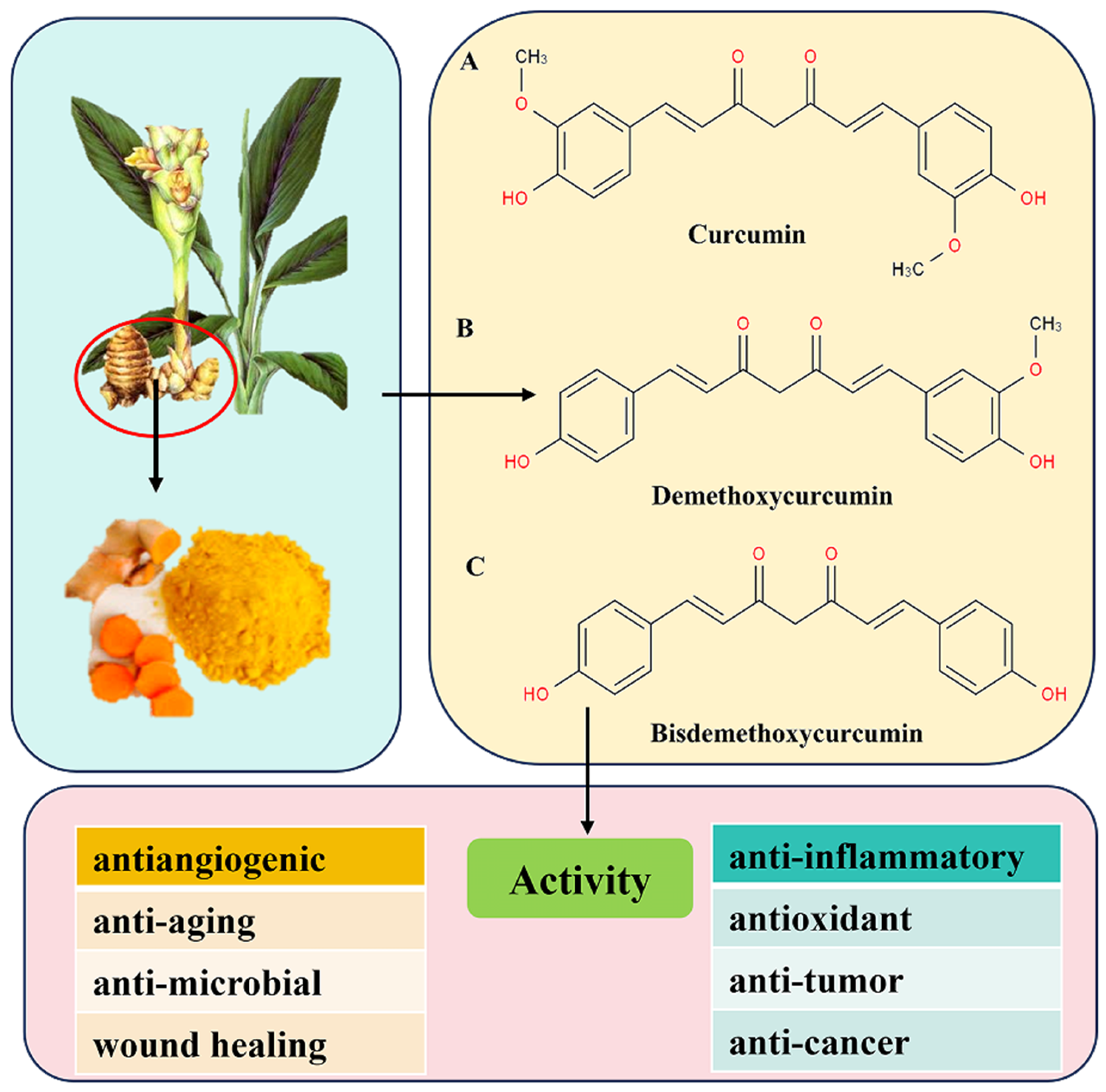
Curcumin is a hydrophobic polyphenolic compound extracted from the rhizome of Curcuma longa, with the chemical name 1,7-bis(4-hydroxy-3-methoxyphenyl)-1,6-heptadiene-3,5-dione (molecular formula C21H20O6, molecular weight 368.37 g/mol), belonging to the diarylheptanoid class of compounds [6]. Its core structure consists of two aromatic rings (benzene rings) connected by a heptane chain, with hydroxyl (-OH), methoxy (-OCH3) and β-diketone groups. Among them, the β-diketone group is an important active center, which enables it to undergo tautomerism, affecting its chemical properties and biological activities [11]. The keto-enol tautomerism of curcumin depends on the acidity of the solution. It mainly exists in the keto form in acidic and neutral media and the enol form in alkaline media [7]. Natural Curcuma longa extracts usually contain three main curcuminoids: curcumin, demethoxycurcumin, and bisdemethoxycurcumin (Figure 1).
Curcumin is an orange-yellow crystalline powder with low water solubility but good solubility in organic solvents such as ethanol, ether and acetone [7,12]. It possesses poor chemical stability and is sensitive to light and heat, leading to gradual degradation under long-term exposure; meanwhile, it is prone to isomerization under alkaline conditions [13,14,15]. Furthermore, curcumin is hardly absorbed by intestinal epithelial cells, rapidly metabolized in the liver, and quickly eliminated from the systemic circulation [16]. Collectively, these physicochemical and metabolic characteristics result in its low bioavailability, which has become a major limiting factor for its application in animal production.

3. Biological Functions of Curcumin

3.1. Mechanism of Antioxidant Action of Curcumin

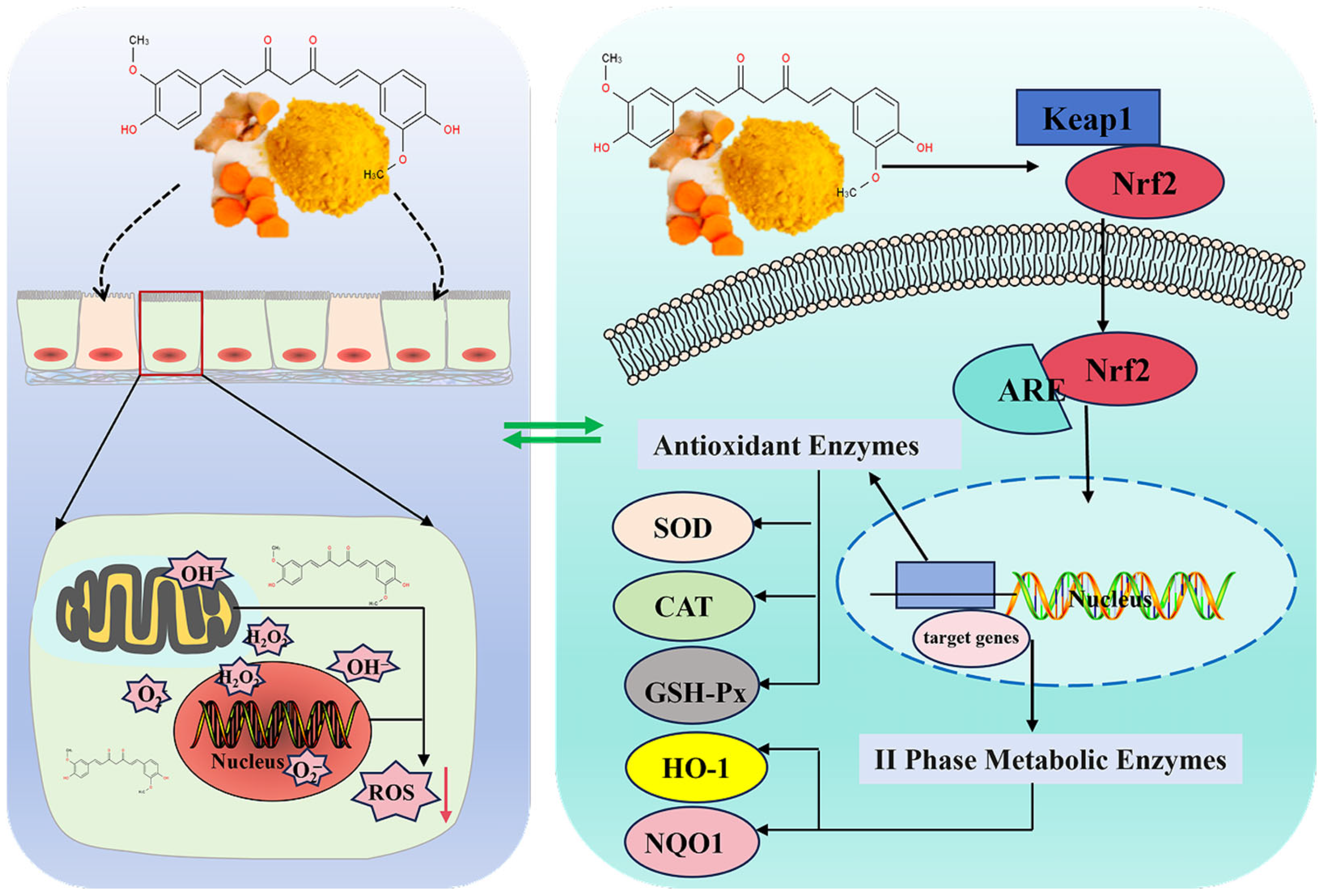
Curcumin, a highly effective natural antioxidant, functions through multiple molecular targets and signaling pathways, primarily via two major mechanisms (Figure 2). Firstly, it directly scavenges reactive oxygen species (ROS). Excessive ROS accumulation often leads to mitochondrial dysfunction and further oxidative stress injury [6]. The phenolic hydroxyl and β-diketone structures within its molecular framework endow curcumin with remarkable electron-donating capacity, enabling it to react directly with free radicals and mitigate oxidative damage [17]. Meanwhile, curcumin can maintain mitochondrial structural integrity, reduce mitochondrial ROS production, and regulate mitophagy to remove damaged mitochondria, thereby further enhancing its antioxidant and cytoprotective effects [18].
Second, curcumin activates the endogenous antioxidant system by regulating the nuclear factor erythroid 2-related factor 2 (Nrf2)/antioxidant response element (ARE) signaling pathway [6,18]. It inhibits the Kelch-like ECH-associated protein 1 (Keap1)-Nrf2 interaction, promotes Nrf2 nuclear translocation, and enhances ARE activation, which subsequently upregulates the expression of phase II metabolic enzyme genes, including heme oxygenase (HO-1) and NADP(H):quinone oxidoreductase (NQO1), as well as antioxidant enzyme genes such as superoxide dismutase (SOD), glutathione peroxidase (GSH-Px) and catalase (CAT), thereby enhancing the cellular antioxidant defense capacity [3,18,19].

3.2. Anti-Inflammatory Effects and Molecular Mechanisms of Curcumin

3.2.1. Curcumin Inhibits the Nuclear Factor-κB (NF-κB) Signaling Pathway

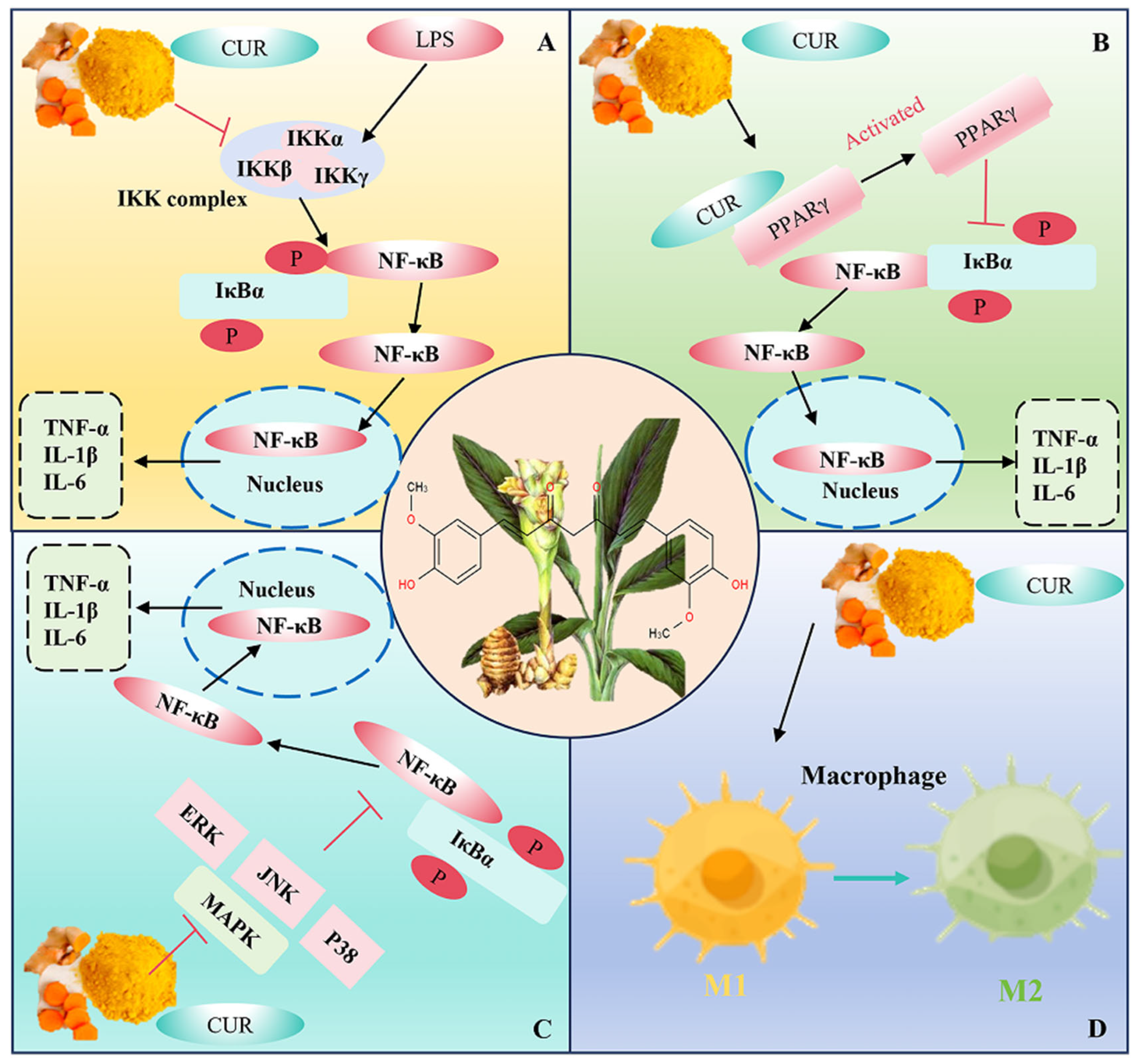
NF-κB, a key transcription factor, plays a central role in mediating the inflammatory response. Extrinsic stimuli such as lipopolysaccharide (LPS) and mycotoxins can activate the NF-κB pathway and promote the expression of pro-inflammatory genes [20,21]. Toll-like receptor 4 (TLR4) is a critical upstream regulator of the NF-κB pathway, serving as the primary sensor for pathogen-associated molecular patterns (PAMPs) and damage-associated molecular patterns (DAMPs) released by damaged mitochondria [5,6]. Curcumin exerts its anti-inflammatory effects by directly inhibiting TLR4 activation, thereby blocking the TLR4/NF-κB inflammatory cascade at the source [22,23]. Specifically, curcumin inhibits the activity of IκB kinase (IKK), preventing the phosphorylation and degradation of nuclear factor of kappa light polypeptide gene enhancer in B-cells inhibitor α (IκBα). As a result, NF-κB remains bound to IκBα and is retained in the cytoplasm, which inhibits its translocation to the nucleus and the subsequent activation of downstream inflammatory genes. This mechanism effectively reduces the production of pro-inflammatory cytokines such as interleukin (IL)-1β, IL-6 and tumor necrosis factor-α (TNF-α) (Figure 3A) [24,25,26]. This inhibition not only suppresses pro-inflammatory cytokine expression but also interrupts the positive feedback loop between inflammation, ROS production, and mitochondrial dysfunction, synergistically enhancing curcumin’s cytoprotective effects.
The antioxidant Nrf2 pathway and the pro-inflammatory NF-κB pathway exhibit extensive crosstalk, which is tightly linked to mitochondrial function and mitophagy. Curcumin acts as a dual regulator of this network: it activates Nrf2 to upregulate antioxidant enzymes, reducing ROS levels and mitochondrial damage [3,18,19]; simultaneously, it inhibits TLR4/NF-κB signaling, suppressing inflammatory responses [22,23,24,25,26]. Additionally, curcumin promotes mitophagy to clear damaged mitochondria, eliminating the source of excess ROS and pro-inflammatory DAMPs [17,18,23], which interrupts the positive feedback loop between inflammation, oxidative stress, and mitochondrial damage.

3.2.2. Curcumin Activates Peroxisome Proliferator-Activated Receptor γ (PPAR-γ)

PPAR-γ is a nuclear receptor that plays an important role in regulating inflammatory responses and metabolic processes [27]. As a natural PPARγ agonist, curcumin can effectively activate this receptor, thereby exerting anti-inflammatory, metabolic regulatory, and tissue-protective effects [28]. Notably, PPAR-γ signaling is closely intertwined with the NF-κB pathway (the core inflammatory signaling pathway previously discussed), and their interaction is a key link in curcumin’s anti-inflammatory mechanism [28,29,30,31]. Specifically, activated PPAR-γ can directly bind to the NF-κB subunits (such as p65), inhibiting its nuclear translocation and subsequent binding to the promoter regions of pro-inflammatory genes (such as IL-1β, IL-6, and TNF-α), thereby suppressing the transcription and expression of these genes [29] (Figure 3B). For instance, in a rat model of Alzheimer’s disease (AD), curcumin directly binds to and activates PPARγ, which suppresses the NF-κB signaling pathway, reduces β-amyloid-induced neuroinflammation, and improves neuronal function and memory deficits in AD [28]. In an asthma model, curcumin alleviates airway inflammation and mucus secretion via the PPARγ-dependent NF-κB signaling pathway [30]. Additionally, curcumin inhibits cigarette smoke-induced inflammation by regulating the PPARγ-NF-κB signaling pathway [31].

3.2.3. Curcumin Regulates the Mitogen-Activated Protein Kinase (MAPK) Pathway

The MAPK pathway is a core inflammatory signal transduction cascade that regulates multiple physiological processes, including cell growth, differentiation, apoptosis, and inflammatory responses [32]. This pathway consists of three primary branches, c-Jun N-terminal kinase (JNK), extracellular regulated protein kinases (ERK), and p38, all of which play critical roles in mediating pro-inflammatory gene expression [33]. Notably, the MAPK pathway exhibits extensive crosstalk with the NF-κB signaling pathway. Stress-activated MAPKs such as p38 and JNK, often via shared upstream activated mitogen-activated protein kinase kinase kinases (MAP3Ks) and adaptor proteins, such as transforming growth factor-activated kinase 1 (TAK1), contribute to the activation of the IκB kinase (IKK) complex, thereby promoting IκBα degradation and NF-κB nuclear translocation (e.g., p38 and JNK), forming a synergistic inflammatory amplification loop [34].
Curcumin exerts potent anti-inflammatory effects by targeting and inhibiting the activation of key MAPKs, including JNK, ERK, and p38 [35,36,37] (Figure 3C). This inhibition not only blocks MAPK-mediated inflammatory signaling but also disrupts the synergistic activation of NF-κB, thereby comprehensively suppressing the production of pro-inflammatory cytokines such as IL-1β, IL-6, and TNF-α [35,36,37]. For instance, in vascular smooth muscle cells, curcumin attenuates LPS-induced inflammation via NF-κB and JNK inhibition, with decreased p-JNK, p-c-Jun, p-p65, and p-IκBα and reduced inflammatory cytokines [38].

3.2.4. Curcumin Regulates Macrophage Polarization

Macrophages are highly plastic immune cells that polarize into two distinct functional phenotypes in response to microenvironmental signals: the classically activated M1 (pro-inflammatory) phenotype, which secretes high levels of pro-inflammatory cytokines (e.g., IL-1β, IL-6, TNF-α) and chemokines to amplify inflammatory responses, and the alternatively activated M2 (anti-inflammatory, reparative) phenotype, which produces anti-inflammatory mediators and growth factors to promote tissue repair and immune homeostasis [39,40]. The balance between M1/M2 polarization is a critical determinant of inflammatory progression and disease outcome [40].
Curcumin exerts potent anti-inflammatory and tissue-protective effects by reprogramming macrophage polarization, primarily by suppressing M1 pro-inflammatory activation and promoting the switch toward the M2 anti-inflammatory phenotype [41,42] (Figure 3D). For instance, during malaria infection, curcumin decreases parasitemia and improves survival in infected mice by inhibiting M1 macrophage activation, thereby decreasing the production of pro-inflammatory cytokines that mediate immunopathology [41]. Additionally, in a mouse model of myocardial infarction, curcumin mitigates late ventricular remodeling by suppressing the inflammatory response in the early stages of the disease [42].
Figure 3. Multi-pathway mechanisms of curcumin’s anti-inflammatory effects in poultry. Curcumin exerts anti-inflammatory effects through four main pathways: (A) Curcumin inhibits the IKK complex, preventing the phosphorylation (P) and degradation of IκBα. This keeps NF-κB bound to IκBα in the cytoplasm, blocking its nuclear translocation and subsequent transcription of pro-inflammatory cytokines (TNF-α, IL-1β, IL-6) [24,25,26]. (B) Curcumin activates PPARγ, which then inhibits the nuclear translocation of NF-κB, thereby reducing the expression of pro-inflammatory factors [28,29,30,31]. (C) Curcumin interferes with the activation of MAPK pathway components (JNK, ERK, p38), inhibiting their phosphorylation and subsequent downstream signaling that promotes inflammation [35,36,37,38]. (D) Curcumin regulates macrophage polarization, shifting the balance from pro-inflammatory M1 macrophages to anti-inflammatory M2 macrophages, thereby reducing the production of pro-inflammatory cytokines and enhancing anti-inflammatory effects [41,42].
Animals 16 01242 g003

3.3. Antibacterial Effects of Curcumin

As a polyphenolic active substance, curcumin exhibits broad-spectrum antibacterial activity against various bacterial pathogens, including methicillin-resistant Staphylococcus aureus, Escherichia coli, Pseudomonas aeruginosa, Enterococcus faecalis, and Porphyromonas gingivalis [43,44,45]. Its antibacterial mechanisms involve damaging the integrity of bacterial cell walls and membranes, inhibiting the expression of virulence factors, biofilm formation, and bacterial adhesion to host receptors via the bacterial quorum sensing regulatory system. Additionally, curcumin acts as a photosensitizer, inducing phototoxicity under blue light irradiation. Its photolysis products, such as benzaldehyde and cinnamaldehyde, can disrupt bacterial gene expression, damage cell membranes, and inhibit dehydrogenase activity and ion gradient balance [46,47].
The biological functions of curcumin are closely linked to its chemical structure and are significantly influenced by external factors, including preparation form and concentration [48]. These multi-target and multi-pathway biological effects provide a robust theoretical foundation for its application in animal production.

4. Research Progress on the Application of Curcumin in Poultry Production

In the context of searching for natural feed additives to replace antibiotics, the application of curcumin in poultry production has emerged as a significant area of research. Numerous studies have demonstrated that curcumin possesses considerable potential for enhancing growth performance, meat quality, antioxidant capacity, immune function, and intestinal health in poultry [49,50,51].

4.1. Application Research in Broiler Production

As a natural feed additive, curcumin exerts positive effects on the production performance and intestinal health of broilers [49,51,52]. Studies have shown that the appropriate addition of curcumin can significantly improve the growth performance and feed utilization efficiency of broilers, enhance the intestinal morphological structure (reduce crypt depth (CD) and increase villus height (VH)), and promote nutrient absorption by regulating the intestinal microbial community (specifically, by promoting the proliferation of beneficial bacteria and inhibiting the growth of harmful bacteria), as well as enhancing intestinal barrier function and anti-inflammatory capacity [49,52,53,54,55,56,57,58]. In terms of meat quality, curcumin supplementation has been shown to improve carcass yield, improve meat color (with increased a* and b* values), enhance water-holding capacity, tenderness and juiciness, reduce cooking loss, fat content and lipid peroxide (MDA) levels, and ultimately boost the antioxidant capacity and oxidative stability of meat products [54,56,58,59,60]. Furthermore, curcumin can mitigate muscle fat deposition, optimize the fatty acid profile, and improve protein content and sensory quality by downregulating the expression of key genes associated with lipogenesis, including PPARγ and fatty acid synthase (FASN) [56,59,60,61].
Under stress or disease conditions such as heat stress [55,59,62,63,64,65], oxidative stress [66,67,68], high-density feeding [49], coccidiosis infection [57,69], and pesticide exposure [56], curcumin can preserve intestinal barrier integrity by enhancing the activity of antioxidant enzymes (e.g., SOD, CAT, and GSH-Px), downregulating the expression of pro-inflammatory cytokines (e.g., IL-1β and TNF-α), and upregulating the expression of anti-inflammatory cytokines (e.g., IL-10) as well as genes encoding intestinal tight junction proteins (e.g., Zonula occludens-1 (ZO-1), Occludin, and Claudin-1). These regulatory effects collectively contribute to improved growth performance and survival rates in broilers. A meta-analysis conducted by Hernández-Garcí et al. [70] shows that under conventional conditions, dietary supplementation with 100–200 mg/kg curcumin exerts significant beneficial effects on broiler growth performance, antioxidant capacity, intestinal morphology, and meat quality. For nano-curcumin, the recommended supplementation range is 100–400 mg/kg, with 300 mg/kg being the optimal dosage for maximizing improvements in growth performance, antioxidant capacity, and intestinal health according to Abdel-Moneim et al. [59]. In response to specific stressors or disease challenges (e.g., heat stress, coccidiosis infection), the supplementation level can be moderately increased, though an upper limit of 400 mg/kg is advised to avoid adverse effects [55,57,59,66,69]. Notably, high-dose supplementation (1000 mg/kg and above) has been shown to exert inhibitory effects on broiler growth performance suggested by Xie et al. [71]. However, according to Gharibet al. [47], under heat stress, supplementation at 1000 mg/kg has been reported to alleviate heat stress damage, enhance immunity, and improve antioxidant capacity in broilers [55].
Collectively, curcumin exerts comprehensive, multi-pathway beneficial effects in broiler production, making it a promising natural feed additive. As summarized in Table 1, dietary curcumin supplementation improves growth performance and feed efficiency [49,52], enhances intestinal health by optimizing gut microbiota and barrier function [54,55], boosts systemic antioxidant capacity [62,68], modulates immune function [57,72], mitigates stress and disease challenges [55,56,57,69], improves meat quality [58,70], and regulates lipid metabolism [61,71]. Nevertheless, some inconsistent results regarding its effective dosage have been reported in the literature [55,71], which may be associated with differences in experimental conditions and curcumin preparations. These synergistic effects are particularly pronounced under stress and disease conditions, highlighting its great application potential in broiler farming.

4.2. Application Research in Laying Hen Production

The application of curcumin in laying hen production has been extensively investigated [78,79,80,81,82,83]. Studies have demonstrated that dietary supplementation with an appropriate dose of curcumin can significantly improve the laying rate and egg weight of laying hens while reducing the feed–egg ratio, especially under adverse environments such as heat stress [79]. Additionally, curcumin can enhance key egg quality parameters, including eggshell thickness, eggshell strength, albumen height, and yolk color, thereby increasing the overall commercial value of eggs [78,79,80,81,83,84,85]. It can also improve the yolk color score and indirectly optimize yolk composition by regulating liver lipid metabolism-related genes [e.g., downregulating FASN and sterol regulatory element-binding protein-1(SREBP-1)] [78,80].
Intestinal health is critical for the production performance and overall well-being of laying hens. Curcumin exerts beneficial effects on intestinal health by enhancing intestinal barrier function, modulating the gut microbial community, and increasing digestive enzyme activity [82,85]. For instance, Xu et al. [82] showed that dietary curcumin supplementation can significantly improve intestinal morphology [e.g., increasing the villus height/crypt depth ratio (V/C)], promote the gene expression of digestive enzymes, and upregulate the expression of tight junction proteins (e.g., ZO-1, Claudin-1, and Occludin). Furthermore, Xu et al. [82] and Da Rosa et al. [85] showed that curcumin can increase the relative abundance of beneficial gut bacteria (e.g., Bacteroidetes and Bifidobacterium) and reduce the levels of potential pathogenic bacteria (e.g., Escherichia coli), thereby maintaining intestinal microecological balance. At the same time, curcumin can elevate the level of immunoglobulin in the intestines and serum, enhance the intestinal immune barrier, and thus promote nutrient absorption and overall health of hens as reported by Xu et al. [82] and Gu et al. [86].
In terms of lipid metabolism regulation, curcumin is reported to reduce the content of triglycerides and cholesterol in the liver and plasma of laying hens, reduce liver fat deposition, and inhibit fat synthesis by downregulating the expression of fatty acid synthesis-related genes [e.g., SREBP-1, FASN, and Acetyl-CoA carboxylase (ACC)] [78,80,87,88]. These effects facilitate the maintenance of lipid metabolic balance and reduce the risk of metabolic disorders such as fatty liver disease.
Oxidative stress is one of the key factors impairing the health and production performance of poultry. Particularly under high-temperature environments or chemical toxin exposure, excessive accumulation of ROS in the body can induce lipid peroxidation of cell membranes, protein denaturation, and DNA damage, thereby triggering inflammatory responses and immunosuppression [6,89]. As a potent antioxidant, curcumin is reported to significantly increase the activity of antioxidant enzymes such as SOD, GSH-Px and total antioxidant capacity (T-AOC) in laying hens, and reduce the level of oxidative damage products such as MDA [79,85,90]. This antioxidant activity is closely associated with the phenolic hydroxyl and β-diketone structures in curcumin molecules, which enable ROS neutralization through electron transfer and hydrogen atom transfer mechanisms [56]. The enhanced antioxidant capacity helps laying hens resist oxidative damage induced by heat stress, cold stress, and environmental toxins, thereby preserving bodily homeostasis.
Regarding immune regulation, numerous studies have demonstrated that curcumin can downregulate the expression of pro-inflammatory factors like pro-inflammatory cytokines (e.g., IL-1β, IL-6, and TNF-α) in the liver by inhibiting inflammatory signaling pathways such as toll-like receptor 4 (TLR4)/NF-κB, thereby alleviating heat stress-induced hepatic inflammation and DNA damage in laying hens [91]. Research has also shown that curcumin can reduce serum corticosterone concentration and heterophil/lymphocyte ratio (H/L ratio), target and ameliorate T-cell dysfunction by regulating the expression profile of serum exosomal miRNAs, decrease liver enzyme activities [e.g., alanine transaminase (ALT)], improve white blood cell counts, and restore immune homeostasis in laying hens under heat stress [92,93]. Collectively, findings from existing studies indicate that curcumin significantly promotes the health and production efficiency of laying hens through multiple synergistic mechanisms, including improving production performance and egg quality, regulating hepatic lipid metabolism, enhancing antioxidant capacity, and optimizing immune function and intestinal health (Table 2).

4.3. Application Research in Duck Production

As an important part of animal husbandry, the duck industry has significant economic value. However, in actual production, mycotoxins [such as aflatoxin B1 (AFB1) [94,95], ochratoxin A (OTA)] [96,97], endotoxins (such as LPS) [98,99], and heavy metals [such as arsenic trioxide (ATO)] [100,101,102] and other exogenous and endogenous harmful factors often threaten duck health, leading to reduced growth performance, immunosuppression, and multi-organ damage. With excellent antioxidant and anti-inflammatory activities, curcumin exhibits great potential in regulating duck growth, protecting intestinal function, alleviating stress damage, improving meat quality, modulating lipid metabolism and enhancing immunity [94,95,96,97,98,99,100,101,102,103,104,105].
Studies by Jin et al. [50] and Wan et al. [105] have shown that dietary supplementation with 300–500 mg/kg curcumin can significantly increase the final body weight and average daily gain (ADG), while reducing the feed-to-weight ratio (F/G) of ducks. This beneficial effect is primarily attributed to improved nutrient digestion and absorption, as well as the mitigation of growth inhibition resulting from toxins and environmental stressors [94,95,96,97,102,104,105]. In terms of meat quality, Jin et al. [50] showed that curcumin can effectively improve the T-AOC and the activities of SOD and GSH-Px, and reduce the content of MDA in duck meat, thereby inhibiting lipid and protein oxidation, and improving meat color (a* value), water-holding capacity and tenderness; at the same time, curcumin can improve the ultrastructure of muscle tissue and reduce myofiber damage by regulating mitochondrial function and energy metabolism, providing a structural basis for improving meat quality.
Curcumin has a good protective effect on organ damage caused by various stress factors. For example, LPS, a component of Gram-negative bacterial cell walls that induces acute inflammation [106], can be counteracted by curcumin through the simultaneous activation of the Nrf2-ARE antioxidant pathway and inhibition of the NF-κB pro-inflammatory pathway, thereby alleviating LPS-induced acute lung injury in ducks according to Liu et al. [99]. Additionally, Yang et al. [98] showed that curcumin mitigates LPS-induced intestinal morphological damage and barrier dysfunction by inhibiting the TLR4/NF-κB pathway.
AFB1 is recognized as one of the most toxic mycotoxins [107]. Curcumin can enhance the antioxidant capacity of the liver by activating the Nrf2/ARE pathway and inhibit the NF-κB/NLR family pyrin domain containing 3 (NLRP3) pathways to alleviate the inflammation and pyroptosis induced by AFB1 [94,103,108]. A recent mechanistic study by Su et al. [109] has revealed that curcumin can also inhibit ferroptosis through upregulation of glutathione peroxidase 4 (GPX4) and alleviate endoplasmic reticulum stress (ERS) to ameliorate hepatic lipid metabolism disorders caused by AFB1. In the intestine, Jin et al. [3], Pan et al. [95], and Jiang et al. [110] showed that curcumin can upregulate the expression of tight junction proteins (e.g., ZO-1, Occludin) and mucins (e.g., MUC2), and alleviate inflammation and pyroptosis by inhibiting the NF-κB/NLRP3 pathway, thereby repairing intestinal barrier function and regulating flora balance in AFB1-exposed ducks. Regarding renal health, Liu et al. [111] showed that curcumin can alleviate AFB1-induced nephrotoxicity in ducks by inhibiting mitochondria-mediated oxidative stress, ferritinophagy, and ferroptosis. In the spleen, curcumin can activate the Nrf2 signaling pathway, upregulate the expression of related antioxidant enzymes, and inhibit the NF-κB signaling pathway, ultimately reducing AFB1-induced inflammation in the spleen of ducklings, as demonstrated by Wan et al. [105].
OTA is a fungal toxin widely distributed in food and feed, and its multi-organ toxic effects are a major focus of toxicological research [112,113]. A previous study by Ruan et al. [97] demonstrated that dietary supplementation with 400 mg/kg curcumin can enhance the mRNA and protein expression of tight junction proteins (i.e., Occludin and tight junction protein 1 (TJP1)) while downregulating the expression of Rho-associated protein kinase 1 (ROCK1), thereby restoring intestinal barrier integrity, alleviating intestinal villus atrophy and epithelial shedding, and suppressing the release of pro-inflammatory cytokines including IL-1β and TNF-α. Furthermore, curcumin can modulate the composition of the intestinal microbiota, restore OTA-induced reductions in the abundance of butyrate-producing bacteria (e.g., Blautia, Butyricicoccus, and Butyricimonas), improve the balance of intestinal microbial metabolism, and thereby further sustain intestinal homeostasis according to Zhai et al. [96].
ATO, a prevalent environmental contaminant, exhibits prominent multi-organ toxicity [100,101,102]. Accumulating evidence indicates that curcumin mitigates ATO-induced nephrotoxicity [100], skeletal muscle damage [102], spleen injury [114], and neurotoxicity [101,115] by regulating the PTEN-induced kinase 1 (PINK1)/Parkin pathway and activating the Nrf2 signaling pathway. These mechanisms subsequently inhibit excessive autophagy and apoptosis, as well as ameliorate oxidative stress and metabolic disorders.
Overall, current research highlights the substantial application potential of curcumin in duck production. As demonstrated in Table 3, curcumin not only effectively improves production performance and meat quality but also broadly exerts protective effects against the toxicity induced by various common hazardous factors, including AFB1, OTA, ATO, and LPS, through multi-pathway synergistic actions.

4.4. Application Research in Quail Production

Quails are characterized by a short growth cycle, high reproductive efficiency, and their meat and egg products exhibit high nutritional value [116]. However, in intensive breeding processes, quails often face challenges such as heat stress [117], cold stress [118], and disease infection [119], which affect their production performance and product quality. As a natural plant-derived extract, curcumin has garnered increasing attention for its application potential in quail production, owing to its diverse biological activities such as antioxidant, anti-inflammatory, immunomodulatory, and growth-promoting properties [120,121,122]. Curcumin exerts comprehensive beneficial effects on quail production performance, stress resistance, intestinal health, lipid metabolism and immune function, and the specific regulatory effects and mechanisms are summarized in Table 4.
In terms of improving production performance, Liu et al. [120] reported that dietary supplementation with 200 mg/kg curcumin in late-laying quails can reduce mortality, increase eggshell thickness and strength, decrease crude fat content in eggs, and elevate the proportions of crude protein and ash. Under cold stress conditions, Marchiori et al. [123] showed that supplementation with 30 mg/kg free curcumin or 10 mg/kg nanoencapsulated curcumin can improve laying rate, optimize feed conversion rate (FCR), enhance yolk brightness and yellow intensity, and reduce lipid peroxidation level of quails. Saraswati [124] demonstrated that curcumin supplementation in combination with the hepatitis B vaccine (12 mg/bird/day) can increase egg weight, albumen content and Haugh unit, while reducing cholesterol and fat content in quail eggs [124].
Curcumin can improve the stress resistance and antioxidant capacity of quails. For instance, Reda et al. [121] showed that a diet supplemented with nano-curcumin (0.2 g/kg) can significantly increase SOD and glutathione (GSH) activities, reduce MDA levels, as well as increase serum immunoglobulin (IgG, IgM) levels and complement activity, thereby improving the disease resistance of quails. Sahin et al. [122] showed that dietary curcumin at 200–400 mg/kg under heat stress conditions can reduce MDA content in serum, muscle and liver, increase the activity of antioxidant enzymes such as SOD and CAT, inhibit the expression of NF-κB and heat shock protein 70 (HSP70), and alleviate oxidative damage by regulating the Nrf2/HO-1 pathway [122].
Curcumin can modulate the intestinal flora structure of quails. For instance, Liu et al. [120] and Reda et al. [121] showed that a diet supplemented with curcumin can increase the Shannon diversity index, regulate the abundance of phyla such as Actinobacteria and Firmicutes, promote the proliferation of beneficial bacteria (e.g., Lactobacillus), and suppress pathogenic bacteria (e.g., Salmonella).
In addition, has a certain regulatory effect on lipid metabolism in quails [120,121]. For instance, Liu et al. [112] demonstrated that curcumin can reduce liver fat accumulation by regulating the expression of acyl-CoA oxidase 2 (ACOX2) and stearoyl-CoA desaturase 1 (SCD1) proteins, and reduce serum triglyceride (TG), total cholesterol (TC) and low-density lipoprotein (LDL) levels in quails; Reda et al. [121] demonstrated that nano-curcumin can further increase high-density lipoprotein (HDL) levels and optimize lipid metabolism in quails, and its regulation of lipid metabolism is closely associated with the improvement of quail body health and product quality.

5. Limiting Factors and Future Research Directions of Curcumin Application

5.1. Application Limiting Factors

Despite the considerable potential of curcumin in poultry production, its large-scale implementation is hindered by multiple practical limitations, as widely documented in recent studies, primarily stemming from mismatches between its intrinsic properties and field application scenarios.
(1) Low bioavailability is a core scientific problem restricting the efficacy of curcumin [6]. According to previous investigations, due to its hydrophobic structure, curcumin exhibits poor solubility in the aqueous intestinal environment, is susceptible to degradation by intestinal microbiota, and undergoes rapid hepatic biotransformation and elimination, resulting in significantly lower bioavailability in animals compared to conventional antibiotic additives [7,16]. It has been documented that although novel formulations (e.g., nanoemulsions, cyclodextrin inclusions, and metal complexes) can moderately enhance solubility and stability [8,9,10,125], targeted delivery and sustained release remain challenging. Consequently, high dosages are required to achieve desired biological effects, increasing application costs and potentially inducing physiological stress in poultry.
(2) Insufficient chemical stability poses a critical technical barrier to industrial application. As reported by previous researchers, the β-diketone moiety in curcumin is highly sensitive to light, heat, and alkaline conditions, leading to isomerization and degradation during high-temperature feed pelleting and long-term storage [7,8,13,14,15]. This compromises active ingredient retention and efficacy.
(3) Complex dose–effect relationships and inadequate safety evaluations impede precise application. According to available reports, optimal curcumin dosages exhibit marked species specificity, breed differences, and dependence on rearing conditions. Optimal ranges for different poultry species (e.g., broilers, layers, ducks, quails) remain unelucidated, with a paucity of systematic data supporting dose adjustments under stress or disease conditions [55,59,70,82]. It has been reported that high-dose curcumin (≥1000 mg/kg) may inhibit poultry growth [71]. Long-term supplementation effects on reproductive performance, metabolic organ function, and offspring health are poorly characterized, restricting precise application and risk management across breeding scenarios.
(4) Immature industrialization and cost challenges hinder market penetration. Curcumin extraction is complex, with high costs for high-purity raw materials. Large-scale production of advanced formulations (e.g., nanoencapsulation, metal complexation) remains suboptimal, characterized by low efficiency and high costs [8,9,10]. Moreover, the lack of standardized preparation and quality control standards also contributes to inconsistent outcomes in practical applications, which is an important gap for future industrial development. This renders curcumin-containing feeds significantly more expensive than conventional alternatives, lacking market competitiveness and limiting adoption by small-to-medium breeding enterprises.

5.2. Future Research Directions

To overcome the above limitations, primarily stemming from curcumin’s intrinsic physicochemical properties, future research should focus on formulation innovation, mechanism clarification, standard establishment and industrial optimization, so as to promote the transformation of curcumin from laboratory research to large-scale industrial application.
First, innovation in preparation technology will improve inherent bioavailability defects. To enhance market acceptance, develop intestinal-specific responsive coating preparations according to poultry intestinal characteristics to achieve targeted and sustained release; explore the synergistic application of curcumin with plant essential oils, probiotics, etc., to reduce the dosage of single components; and develop low-cost carriers derived from agricultural wastes to lower production costs, thereby improving economic viability.
Second, deepen mechanistic research to support precise applications. Study the action mechanisms of curcumin in different poultry breeds, physiological stages and stress states, focusing on the regulatory pathways of intestinal microbial metabolites and differential actions in stress signaling pathways. Clarifying the key targets to improve production performance will provide a solid theoretical basis for its targeted application in the market.
Third, establish a standardized application system to ensure quality and stability. Conduct multi-center and large-sample field experiments to determine the optimal dosage, application cycles and withdrawal periods of curcumin for different poultry under different conditions. Formulate strict quality control standards for curcumin feed additives and build a full-chain traceability system. These measures are essential for ensuring product consistency and gaining regulatory recognition and market trust.
Fourth, optimize the industrialization process to reduce costs and enhance competitiveness. Improve the yield and purity of curcumin by optimizing green extraction technologies such as ultrasonic-assisted extraction and microwave extraction; promote continuous and automated large-scale preparation processes to reduce energy consumption; and carry out comprehensive economic and environmental benefit evaluations to provide data support for market promotion.
In addition, strengthen safety and environmental impact assessment. Systematically study the effects of long-term high-dose addition on poultry health and the ecological environment, and ensure food safety and ecological security during the large-scale application of curcumin.

6. Conclusions

Curcumin is a promising antibiotic alternative for poultry production, exerting antioxidant, anti-inflammatory and metabolic regulatory effects via the Nrf2/ARE and NF-κB pathways. It improves production performance, product quality and stress/disease resistance in broilers, laying hens, ducks and quails, with nano-formulations boosting its efficacy. Limited by low bioavailability, poor stability, non-standardized dosages and high industrial costs, future research should focus on preparation innovation, mechanism clarification, standardized application and industrial process optimization. As a green feed additive, curcumin has broad prospects for poultry industry sustainability under antibiotic-free and zinc restriction policies.

Author Contributions

Conceptualization, X.T., B.Z. and J.Y.; methodology, X.T.; software, X.T.; validation, X.T., J.Y., Y.X. and K.X.; formal analysis, X.T.; investigation, X.T.; resources, X.T.; data curation, X.T.; writing—original draft preparation, X.T.; writing—review and editing, X.T., B.Z., J.Y., Y.X. and K.X.; visualization, X.T.; supervision, X.T.; project administration, X.T.; funding acquisition, X.T. All authors have read and agreed to the published version of the manuscript.

Funding

This research was supported by grants from the Guizhou Provincial Science and Technology Foundation (Qiankehe Jichu-ZK [2023] Yiban 267).

Institutional Review Board Statement

Not applicable.

Informed Consent Statement

Not applicable.

Data Availability Statement

No new data were created or analyzed in this study. Data sharing is not applicable to this article.

Conflicts of Interest

The authors declare no conflicts of interest.

Abbreviations

The following abbreviations are used in this manuscript:
ACCAcetyl-CoA carboxylase
ACOX2Acyl-CoA oxidase 2
ADAlzheimer’s disease
ADGAverage daily gain
AFB1Aflatoxin B1
ALTAlanine transaminase
AREAntioxidant response element
ATOArsenic trioxide
CATCatalase
CDCrypt depth
DAMPsDamage-associated molecular patterns
ERSEndoplasmic reticulum stress
ERKExtracellular regulated protein kinases
FASNFatty acid synthase
FCRFeed conversion ratio
F/GFeed-to-weight ratio
GSHGlutathione
GSH-PxGlutathione peroxidase
GPX4Glutathione peroxidase 4
HDLHigh-density lipoprotein
H/L ratioHeterophil/lymphocyte ratio
HO-1Heme oxygenase
HSP70Heat shock protein 70
IκBαNuclear factor of kappa light polypeptide gene enhancer in B-cells inhibitor α
IgGImmunoglobulin G
IgMImmunoglobulin M
IKKIκB kinase
IL-1βInterleukin 1β
IL-6Interleukin 6
JNKc-Jun N-terminal kinase
Keap1Kelch-like ECH-associated protein 1
LDLLow-density lipoprotein
LPSLipopolysaccharide
MAP3KsMitogen-activated protein kinase kinase kinases
MAPKMitogen-activated protein kinase
MDAMalondialdehyde
MGAMMaltase-glucoamylase
MUC2Mucin 2
NF-κBNuclear factor-κB
NLRP3NLR family pyrin domain containing 3
NQO1NADP(H): quinone oxidoreductase
Nrf2Nuclear factor erythroid 2-related factor 2
OTAOchratoxin A
PAMPsPathogen-associated molecular patterns
PPAR-γPeroxisome proliferator-activated receptor γ
PINK1PTEN-induced kinase 1
ROSReactive oxygen species
ROCK1Rho-associated protein kinase 1
SCD1Stearoyl-CoA desaturase 1
SISucrase-isomaltase
SODSuperoxide dismutase
SREBP-1Sterol regulatory element-binding protein-1
TAK1Transforming growth factor-activated kinase
TCTotal cholesterol
TGTriglycerides
T-AOCTotal antioxidant capacity
TLR4Toll-like receptor 4
TNF-αTumor necrosis factor-α
TJP1Tight junction protein 1
UAEUltrasonic-assisted extraction
VHVillus height
ZO-1Zonula occludens-1

References

  1. Scazzocchio, B.; Minghetti, L.; D’Archivio, M. Interaction between gut microbiota and curcumin: A new key of understanding for the health effects of curcumin. Nutrients 2020, 12, 2499. [Google Scholar] [CrossRef] [PubMed]
  2. Ayati, Z.; Ramezani, M.; Amiri, M.S.; Moghadam, A.T.; Rahimi, H.; Abdollahzade, A.; Sahebkar, A.; Emami, S.A. Ethnobotany, phytochemistry and traditional uses of Curcuma spp. and pharmacological profile of two important species (C. longa and C. zedoaria): A Review. Curr. Pharm. Des. 2019, 25, 871–935. [Google Scholar] [CrossRef] [PubMed]
  3. Jin, S.; Yang, H.; Jiao, Y.; Pang, Q.; Wang, Y.; Wang, M.; Shan, A.; Feng, X. Dietary curcumin alleviated acute ileum damage of ducks (Anas platyrhynchos) induced by AFB1 through regulating Nrf2-ARE and NF-κB signaling pathways. Foods 2021, 10, 1370. [Google Scholar] [CrossRef] [PubMed]
  4. Jiang, Q.; Liu, X.; Yuan, J.; Zhang, S.; Zhang, Y.; Kan, Z.; Niu, Z.; Zhang, L.; Hu, X.; Zhou, Y.; et al. Curcumin activates the JAK-STAT signaling pathway to enhance the innate immune response against porcine epidemic diarrhea virus infection in vivo and in vitro. Vet. Microbiol. 2025, 305, 110535. [Google Scholar] [CrossRef]
  5. Tang, X.; Xiong, K.; Zeng, Y.; Fang, R. The Mechanism of Zinc Oxide in Alleviating Diarrhea in Piglets after Weaning: A Review from the Perspective of Intestinal Barrier Function. Int. J. Mol. Sci. 2024, 25, 10040. [Google Scholar] [CrossRef]
  6. Tang, X.; Xiong, K.; Wassie, T.; Wu, X. Curcumin and Intestinal Oxidative Stress of Pigs with Intrauterine Growth Retardation: A Review. Front. Nutr. 2022, 9, 847673. [Google Scholar] [CrossRef]
  7. Tsuda, T. Curcumin as a functional food-derived factor: Degradation products, metabolites, bioactivity, and future perspectives. Food Funct. 2018, 9, 705–714. [Google Scholar] [CrossRef]
  8. Adsare, S.R.; Annapure, U.S. Microencapsulation of curcumin using coconut milk whey and Gum Arabic. J. Food Eng. 2021, 298, 110502. [Google Scholar] [CrossRef]
  9. Alallam, B.; Doolaanea, A.A.; Alfatama, M.; Lim, V. Phytofabrication and Characterisation of Zinc Oxide Nanoparticles Using Pure Curcumin. Pharmaceuticals 2023, 16, 269. [Google Scholar] [CrossRef]
  10. Chen, L.H.; Chen, T.; Zhao, R.N.; Wu, D.; Du, Y.N.; Hu, J.N. Physical properties and antioxidant activity of curcumin–zinc metal–organic frameworks. Food Chem. 2024, 460, 140449. [Google Scholar] [CrossRef]
  11. Elbadawy, Z.A.; Mostafa, A.; Ragab, G.M.; Abo Shama, N.M.; El-Dek, S.I.; El-Shahawy, A.A.G. Preparation, Characterization and Antiviral Evaluation of Nano-formulations Comprising Curcumin-PLGA and Curcumin-metal Oxide Nanocomposite against SARS-CoV-2. Chem. Afr. 2024, 7, 3809–3819. [Google Scholar] [CrossRef]
  12. Zhang, B.; Guo, W.; Chen, Z.; Chen, Y.; Zhang, R.; Liu, M.; Yang, J.; Zhang, J. Physicochemical Characterization and Oral Bioavailability of Curcumin–Phospholipid Complex Nanosuspensions Prepared Based on Microfluidic System. Pharmaceutics 2025, 17, 395. [Google Scholar] [CrossRef] [PubMed]
  13. Rachmawati, H.; Shaal, L.A.; Müller, R.H.; Keck, C.M. Development of Curcumin Nanocrystal: Physical Aspects. J. Pharm. Sci. 2013, 102, 204–214. [Google Scholar] [CrossRef] [PubMed]
  14. DePasquale, J.A. Visible light potentiates rapid cell destruction and death by curcumin in vitro. Photochem. Photobiol. Sci. 2024, 23, 1893–1914. [Google Scholar] [CrossRef]
  15. Paramera, E.I.; Konteles, S.J.; Karathanos, V.T. Stability and release properties of curcumin encapsulated in Saccharomyces cerevisiae, β-cyclodextrin and modified starch. Food Chem. 2011, 125, 913–922. [Google Scholar] [CrossRef]
  16. Bielak-Zmijewska, A.; Grabowska, W.; Ciolko, A.; Bojko, A.; Mosieniak, G.; Bijoch, Ł.; Sikora, E. The Role of curcumin in the modulation of ageing. Int. J. Mol. Sci. 2019, 20, 1239. [Google Scholar] [CrossRef]
  17. Borra, S.K.; Gurumurthy, P.; Mahendra, J.; Jayamathi, K.M.; Cherian, C.N.; Chand, R. Antioxidant and free radical scavenging activity of curcumin determined by using different in vitro and ex vivo models. J. Med. Plants Res. 2013, 7, 2680–2690. [Google Scholar]
  18. Avendaño-Briseño, K.A.; Escutia-Martínez, J.; Hernández-Cruz, E.Y.; Pedraza-Chaverri, J. Antioxidant Effect of Curcumin and Its Impact on Mitochondria: Evidence from Biological Models. J. Xenobiot. 2025, 15, 139. [Google Scholar] [CrossRef]
  19. Leon-Icaza, S.A.; Frétaud, M.; Cornélie, S.; Bureau, C.; Yatime, L.; Floto, R.A.; Renshaw, S.A.; Herrmann, J.L.; Langevin, C.; Cougoule, C.; et al. Curcumin-mediated NRF2 induction limits inflammatory damage in, preclin-ical models of cystic fibrosis. Biomed. Pharmacother. 2025, 186, 117957. [Google Scholar] [CrossRef]
  20. Yao, X.; Liu, M.; Wang, P. Sitagliptin regulates the AMPK/NF-κB signaling pathway to alleviate lipopolysaccharide-induced inflammatory responses and promote osteogenic differentiation in rat bone marrow mesenchymal stem cells. Arch. Oral Biol. 2025, 175, 106253. [Google Scholar] [CrossRef]
  21. Kang, R.; Li, R.; Dai, P.; Li, Z.; Li, Y.; Li, C. Deoxynivalenol induced apoptosis and inflammation of IPEC-J2 cells by promoting ROS production. Environ. Pollut. 2019, 251, 689–698. [Google Scholar] [CrossRef]
  22. Wu, Z.; Zhao, Y.; Wang, Y.; Li, H.; Xu, F.; Zhang, W.; Fu, H.; Yin, L.; Amevor, F.K.; Lin, J.; et al. Investigating Protective Effect of Suspension of Paeoniflorin in Combination with Curcumin Against Acute Liver Injury Based on Inhibition of TLR4/NF-κB/NLRP3 Inflammatory Pathway. Int. J. Mol. Sci. 2025, 26, 6324. [Google Scholar] [CrossRef]
  23. Li, S.; Lu, S.; Xiong, J.; Chen, L.; Lin, Y.; Chen, X.; Wang, X.; Lin, L.; Cai, X.; Yang, X. Hydroxyethyl starch-curcumin nanoparticles ameliorate DSS-induced ulcerative colitis in mice via synergistic TLR4/NF-κB suppression, Nrf2 activation, intestinal barrier restoration, and gut microbiota modulation. Front. Pharmacol. 2025, 16, 1610711. [Google Scholar] [CrossRef] [PubMed]
  24. Zamanian, M.Y.; Alsaab, H.O.; Golmohammadi, M.; Yumashev, A.; Jabba, A.M.; Abid, M.K.; Joshi, A.; Alawadi, A.H.; Jafer, N.S.; Kianifar, F.; et al. NF-κB pathway as a molecular target for curcumin in diabetes mellitus treatment: Focusing on oxidative stress and inflammation. Cell Biochem. Funct. 2024, 42, e4030. [Google Scholar] [CrossRef] [PubMed]
  25. Jobin, C.; Bradham, C.A.; Russo, M.P.; Juma, B.; Narula, A.S.; Brenner, D.A.; Sartor, R.B. Curcumin Blocks Cytokine-Mediated NF-κB Activation and Proinflammatory Gene Expression by Inhibiting Inhibitory Factor I-κB Kinase Activity. J. Immunol. 1999, 163, 3474–3483. [Google Scholar] [CrossRef]
  26. Xu, W.; Ou, D.; Zhao, Y.; Liu, Y.; Yan, P.; Li, S.; Sun, Q.; Zhang, X.; Liu, H.; Huang, J.; et al. Curcumin alleviates lipopolysaccharide-induced alveolar epithelial Glycocalyx damage by modulating the Rac1/NF-κB/HPSE pathway. Cell. Signal. 2025, 134, 111909. [Google Scholar] [CrossRef] [PubMed]
  27. Nicchio, I.G.; Cirelli, T.; Quil, L.C.D.C.; Camilli, A.C.; Scarel-Caminaga, R.M.; Leite, F.R.M. Understanding the peroxisome proliferator-activated receptor gamma (PPAR-γ) role in periodontitis and diabetes mellitus: A molecular perspective. Biochem. Pharmacol. 2025, 237, 116908. [Google Scholar] [CrossRef]
  28. Liu, Z.J.; Li, Z.H.; Liu, L.; Tang, W.X.; Wang, Y.; Dong, M.R.; Xiao, C. Curcumin Attenuates Beta-Amyloid-Induced Neuroinflammation via Activation of Peroxisome Proliferator-Activated Receptor-Gamma Function in a Rat Model of Alzheimer’s Disease. Front. Pharmacol. 2016, 7, 261. [Google Scholar] [CrossRef]
  29. Ju, Z.; Su, M.; Li, D.; Hong, J.; Im, D.S.; Kim, S.; Kim, E.L.; Jung, J.H. An Algal Metabolite-Based PPAR-γ Agonist Displayed Anti-Inflammatory Effect via Inhibition of the NF-κB Pathway. Mar. Drugs 2019, 17, 321. [Google Scholar] [CrossRef]
  30. Zhu, T.; Chen, Z.; Chen, G.; Wang, D.; Tang, S.; Deng, H.; Wang, J.; Li, S.; Lan, J.; Tong, J.; et al. Curcumin Attenuates Asthmatic Airway Inflammation and Mucus Hypersecretion Involving a PPARγ-Dependent NF-κB Signaling Pathway In Vivo and In Vitro. Mediat. Inflamm. 2019, 2019, 4927430. [Google Scholar] [CrossRef]
  31. Li, Q.; Sun, J.; Mohammadtursun, N.; Wu, J.; Dong, J.; Li, L. Curcumin inhibits cigarette smoke-induced inflammation via modulating the PPARγ-NF-κB signaling pathway. Food Funct. 2019, 10, 7983–7994. [Google Scholar] [CrossRef] [PubMed]
  32. Manzoor, Z.; Koh, Y. Mitogen-activated Protein Kinases in Inflammation. J. Bacteriol. Virol. 2012, 42, 189–195. [Google Scholar] [CrossRef]
  33. Islam, F.; Roy, S.; Zehravi, M.; Paul, S.; Sutradhar, H.; Yaidikar, L.; Kumar, B.R.; Dogiparthi, L.K.; Prema, S.; Nainu, F.; et al. Polyphenols Targeting MAP Kinase Signaling Pathway in Neurological Diseases: Understanding Molecular Mechanisms and Therapeutic Targets. Mol. Neurobiol. 2023, 61, 2686–2706. [Google Scholar] [CrossRef] [PubMed]
  34. Park, H.J.; Jang, T.W.; Han, S.Y.; Oh, S.S.; Lee, J.B.; Myoung, S.M.; Park, J.H. Anti-inflammatory effects of Nypa fruticans Wurmb via NF-κB and MAPK signaling pathways in macrophages. Exp. Ther. Med. 2022, 24, 755. [Google Scholar] [CrossRef]
  35. Li, C.; Miao, X.; Li, F.; Adhikari, B.K.; Liu, Y.; Sun, J.; Zhang, R.; Cai, L.; Liu, Q.; Wang, Y. Curcuminoids: Implication for inflammation and oxidative stress in cardiovascular diseases. Phytother. Res. 2019, 33, 1302–1317. [Google Scholar] [CrossRef]
  36. Geng, S.; Wang, S.; Zhu, W.; Xie, C.; Li, X.; Wu, J.; Zhu, J.; Jiang, Y.; Yang, X.; Li, Y.; et al. Curcumin suppresses JNK pathway to attenuate BPA-induced insulin resistance in LO2 cells. Biomed. Pharmacother. 2018, 97, 1538–1543. [Google Scholar] [CrossRef]
  37. Wang, Y.; Xu, S.; Han, C.; Huang, Y.; Wei, J.; Wei, S.; Qin, Q. Modulatory effects of curcumin on Singapore grouper iridovirus infection-associated apoptosis and autophagy in vitro. Fish Shellfish Immunol. 2022, 131, 84–94. [Google Scholar] [CrossRef]
  38. Ruan, H.; Huang, Q.; Wan, B.; Yang, M. Curcumin alleviates lipopolysaccharides-induced inflammation and apoptosis in vascular smooth muscle cells via inhibition of the NF-κB and JNK signaling pathways. Inflammopharmacology 2022, 30, 517–525. [Google Scholar] [CrossRef]
  39. Yang, S.; Li, Y.; Zheng, X.; Zheng, X.; Lin, Y.; Guo, S.; Liu, C. Effects of folate-chicory acid liposome on macrophage polarization and TLR4/NF-κB signaling pathway in ulcerative colitis mouse. Phytomedicine 2024, 128, 155415. [Google Scholar] [CrossRef]
  40. Luo, M.; Zhao, F.; Cheng, H.; Su, M.; Wang, Y. Macrophage polarization: An important role in inflammatory diseases. Front. Immunol. 2024, 15, 1352946. [Google Scholar] [CrossRef]
  41. Cordeiro, M.C.C.; Tomé, F.D.; Arruda, F.S.; da Fonseca, S.G.; Nagib, P.R.A.; Celes, M.R.N. Curcumin as a Stabilizer of Macrophage Polarization during Plasmodium Infection. Pharmaceutics 2023, 15, 2505. [Google Scholar] [CrossRef] [PubMed]
  42. Yan, S.; Zhou, M.; Zheng, X.; Xing, Y.; Dong, J.; Yan, M.; Li, R. Anti-Inflammatory Effect of Curcumin on the Mouse Model of Myocardial Infarction through Regulating Macrophage Polarization. Mediat. Inflamm. 2021, 2021, 9976912. [Google Scholar] [CrossRef] [PubMed]
  43. Batista de Andrade Neto, J.; Pessoa de Farias Cabral, V.; Brito Nogueira, L.F.; Rocha da Silva, C.; Gurgel do Amaral Valente Sá, L.; Ramos da Silva, A.; Barbosa da Silva, W.M.; Silva, J.; Marinho, E.S.; Cavalcanti, B.C.; et al. Anti-MRSA activity of curcumin in planktonic cells and biofilms and determination of possible action mechanisms. Microb. Pathog. 2021, 155, 104892. [Google Scholar] [CrossRef] [PubMed]
  44. Dai, C.; Lin, J.; Li, H.; Shen, Z.; Wang, Y.; Velkov, T.; Shen, J. The Natural Product Curcumin as an Antibacterial Agent: Current Achievements and Problems. Antioxidants 2022, 11, 459. [Google Scholar] [CrossRef]
  45. Kumbar, V.M.; Peram, M.R.; Kugaji, M.S.; Shah, T.; Patil, S.P.; Muddapur, U.M.; Bhat, K.G. Effect of curcumin on growth, biofilm formation and virulence factor gene expression of Porphyromonas gingivalis. Odontology 2020, 109, 18–28. [Google Scholar] [CrossRef]
  46. Heng, D.; Huang, C.; Huang, H.; Zhao, Y.; Khan, M.R.U.; Zhao, H.; Huang, L. Antibacterial Mechanism of Curcumin: A Review. Chem. Biodivers. 2020, 17, e2000171. [Google Scholar] [CrossRef]
  47. Wang, Z.; Yang, H.; Li, Z.; Liu, J. Non-Thermal Treatment Mediated by Curcumin for Enhancing Food Product Quality. Foods 2024, 13, 3980. [Google Scholar] [CrossRef]
  48. Jamil, S.N.H.; Ali, A.H.; Feroz, S.R.; Lam, S.D.; Agustar, H.K.; Mohd Abd Razak, M.R.; Latip, J. Curcumin and Its Derivatives as Potential Antimalarial and Anti-Inflammatory Agents: A Review on Structure–Activity Relationship and Mechanism of Action. Pharmaceuticals 2023, 16, 609. [Google Scholar] [CrossRef]
  49. Hafez, M.H.; El-Kazaz, S.E.; Alharthi, B.; Ghamry, H.I.; Alshehri, M.A.; Sayed, S.; Shukry, M.; El-Sayed, Y. The Impact of Curcumin on Growth Performance, Growth-Related Gene Expression, Oxidative Stress, and Immunological Biomarkers in Broiler Chickens at Different Stocking Densities. Animals 2022, 12, 958. [Google Scholar] [CrossRef]
  50. Jin, S.; Yang, H.; Liu, F.; Pang, Q.; Shan, A.; Feng, X. Effect of Dietary Curcumin Supplementation on Duck Growth Performance, Antioxidant Capacity and Breast Meat Quality. Foods 2021, 10, 2981. [Google Scholar] [CrossRef]
  51. Wang, S.; Chen, H.; Wang, X.; Yin, Z.; Yu, H.; Zhang, R.; Feng, X. Dietary curcumin alleviates aflatoxin B1-induced liver injury and improves growth performance in broilers via Nrf2 activation and NLRP3 inflammasome inhibition. J. Sci. Food Agric. 2026, 106, 2280–2288. [Google Scholar] [CrossRef]
  52. Fathi, M.; Rezaee, V.; Zarrinkavyani, K.; Mardani, P. The impact of curcumin nanoparticles (CurNPs) on growth performance, antioxidant indices, blood biochemistry, gut morphology and cecal microbial profile of broiler chickens. Acta Agric. Scand. Sect. A Anim. Sci. 2024, 73, 10–21. [Google Scholar] [CrossRef]
  53. Al-Zuhairi, S. Effect of Adding Different Levels of Silver-Curcumin Nanoparticles on Some Productive Traits, Blood Parameters and Antioxidant Status of Broiler Chickens. Muthanna J. Agric. Sci. 2023, 10, 1–9. [Google Scholar] [CrossRef]
  54. Chen, X.; Li, F.; Xu, X.; Wang, L.; Yu, Y.; Yan, J.; Shan, X.; Zhang, R.; Xing, H.; Zhang, T.; et al. Dietary curcumin supplementation enhances growth performance and Anti-inflammatory functions by modulating gut microbiota, microbiota-derived metabolites, and expression of inflammation-related genes in Broilers. J. Anim. Sci. 2024, 102, skae296. [Google Scholar] [CrossRef] [PubMed]
  55. Gharib, H.; Abdelaty, A.; Gomaa, W.; Gouda, A.; Amer, H.; Mohamed, S.; Hassan, R. Using curcumin (Curcuma longa) as a dietary supplement modulates performance, behavior, blood metabolites, antioxidant status, and histomorphological changes in heat-stressed broiler chickens. J. Therm. Biol. 2025, 130, 104144. [Google Scholar] [CrossRef]
  56. Eleiwa, N.; El-Shabrawi, A.; Ibrahim, D.; Abdelwarith, A.; Younis, E.; Davies, S.; Metwally, M.; Abu-Zeid, E. Dietary Curcumin Modulating Effect on Performance, Antioxidant Status, and Immune-Related Response of Broiler Chickens Exposed to Imidacloprid Insecticide. Animals 2023, 13, 3650. [Google Scholar] [CrossRef]
  57. Chen, Y.; Liu, L.; Yu, L.; Li, S.; Zhu, N.; You, J. Curcumin Supplementation Improves Growth Performance and Anticoccidial Index by Improving the Antioxidant Capacity, Inhibiting Inflammatory Responses, and Maintaining Intestinal Barrier Function in Eimeria tenella-Infected Broilers. Animals 2024, 14, 1223. [Google Scholar] [CrossRef] [PubMed]
  58. Zhang, J.; Hu, Z.; Lu, C.; Bai, K.; Zhang, L.; Wang, T. Effect of various levels of dietary curcumin on meat quality and antioxidant profile of breast muscle in broilers. J. Agric. Food Chem. 2015, 63, 3880–3886. [Google Scholar] [CrossRef]
  59. Abdel-Moneim, A.; Mesalam, N.; Yang, B.; Elsadek, M. Dietary incorporation of biological curcumin nanoparticles improved growth performance, ileal architecture, antioxidative status, serum lipid profile, and humoral immune response of heat-stressed broiler chickens. Poult. Sci. 2024, 104, 104740. [Google Scholar] [CrossRef]
  60. El-Hack, M.E.A.; Alaidaroos, B.A.; Farsi, R.M.; Abou-Kassem, D.A.; El-Saadony, M.T.; Saad, A.S.; Shafi, M.E.; Albaqami, N.A.; Taha, A.E.; Ashour, E.A. Impacts of Supplementing Broiler Diets with Biological Curcumin, Zinc Nanoparticles and Bacillus licheniformis on Growth, Carcass Traits, Blood Indices, Meat Quality and Cecal Microbial Load. Animals 2021, 11, 1878. [Google Scholar] [CrossRef]
  61. Galli, G.; Gerbet, R.; Griss, L.; Fortuoso, B.; Petrolli, T.; Boiago, M.M.; Souza, C.F.; Baldissera, M.D.; Mesadri, J.; Wagner, R.; et al. Combination of herbal components (curcumin, carvacrol, thymol, cinnamaldehyde) in broiler chicken feed: Impacts on response parameters, performance, fatty acid profiles, meat quality and control of coccidia and bacteria. Microb. Pathog. 2019, 136, 103916. [Google Scholar] [CrossRef]
  62. Zhang, J.; Bai, K.; Su, W.; Wang, A.; Zhang, L.; Huang, K.; Wang, T. Curcumin attenuates heat-stress-induced oxidant damage by simultaneous activation of GSH-related antioxidant enzymes and Nrf2-mediated phase II detoxifying enzyme systems in broiler chickens. Poult. Sci. 2018, 97, 1209–1219. [Google Scholar] [CrossRef]
  63. Zhang, J.; Bai, K.; He, J.; Niu, Y.; Lu, Y.; Zhang, L.; Wang, T. Curcumin attenuates hepatic mitochondrial dysfunction through the maintenance of thiol pool, inhibition of mtDNA damage, and stimulation of the mitochondrial thioredoxin system in heat-stressed broilers. J. Anim. Sci. 2018, 96, 867–879. [Google Scholar] [CrossRef]
  64. Salah, A.; Ahmed-Farid, O.; Nassan, M.M.; El-Tarabany, M.S. Dietary Curcumin Improves Energy Metabolism, Brain Monoamines, Carcass Traits, Muscle Oxidative Stability and Fatty Acid Profile in Heat-Stressed Broiler Chickens. Antioxidants 2021, 10, 1265. [Google Scholar] [CrossRef] [PubMed]
  65. Salah, A.; Mahmoud, M.A.; Ahmed-Farid, O.; El-Tarabany, M.S. Effects of dietary curcumin and acetylsalicylic acid supplements on performance, muscle amino acid and fatty acid profiles, antioxidant biomarkers and blood chemistry of heat-stressed broiler chickens. J. Therm. Biol. 2019, 84, 259–265. [Google Scholar] [CrossRef]
  66. Wu, F.; Yang, X.; Wang, F.; Liu, Y.; Han, S.; Liu, S.; Zhang, Z.; Chen, B. Dietary curcumin supplementation alleviates diquat-induced oxidative stress in the liver of broilers. Poult. Sci. 2023, 102, 103132. [Google Scholar] [CrossRef] [PubMed]
  67. Zhang, J.; Sun, X.; Chai, X.; Jiao, Y.; Sun, J.; Wang, S.; Yu, H.; Feng, X. Curcumin Mitigates Oxidative Damage in Broiler Liver and Ileum Caused by Aflatoxin B1-Contaminated Feed through Nrf2 Signaling Pathway. Animals 2024, 14, 409. [Google Scholar] [CrossRef] [PubMed]
  68. Damiano, S.; Jarriyawattanachaikul, W.; Girolami, F.; Longobardi, C.; Nebbia, C.; Andretta, E.; Lauritano, C.; Dabbou, S.; Avantaggiato, G.; Schiavone, A.; et al. Curcumin Supplementation Protects Broiler Chickens Against the Renal Oxidative Stress Induced by the Dietary Exposure to Low Levels of Aflatoxin B1. Front. Vet. Sci. 2022, 8, 822227. [Google Scholar] [CrossRef]
  69. Yadav, S.; Teng, P.; Santos, T.; Gould, R.; Craig, S.; Fuller, L.; Pazdro, R.; Kim, W.K. The effects of different doses of curcumin compound on growth performance, antioxidant status, and gut health of broiler chickens challenged with Eimeria species. Poult. Sci. 2020, 99, 5936–5945. [Google Scholar] [CrossRef]
  70. Hernández-García, P.; Granados-Rivera, L.; Orzuna-Orzuna, J.; Vázquez-Silva, G.; Díaz-Galván, C.; Razo-Ortíz, P. Meta-Analysis of Dietary Curcumin Supplementation in Broiler Chickens: Growth Performance, Antioxidant Status, Intestinal Morphology, and Meat Quality. Antioxidants 2025, 14, 460. [Google Scholar] [CrossRef]
  71. Xie, Z.; Shen, G.; Wang, Y.; Wu, C. Curcumin supplementation regulates lipid metabolism in broiler chickens. Poult. Sci. 2019, 98, 422–429. [Google Scholar] [CrossRef]
  72. Badran, A. Effect of dietary curcumin and curcumin nanoparticles supplementation on growth performance, immune response and antioxidant of broilers chickens. Egypt. Poult. Sci. J. 2020, 40, 325–343. [Google Scholar] [CrossRef]
  73. Rajput, N.; Muhammad, N.; Yan, R.; Zhong, X.; Wang, T. Effect of Dietary Supplementation of Curcumin on Growth Performance, Intestinal Morphology and Nutrients Utilization of Broiler Chickens. J. Poult. Sci. 2013, 50, 44–52. [Google Scholar] [CrossRef]
  74. Zhang, J.; Hu, Z.; Lu, C.; Yang, M.; Zhang, L.; Wang, T. Dietary curcumin supplementation protects against heat-stress-impaired growth performance of broilers possibly through a mitochondrial pathway. J. Anim. Sci. 2015, 93, 1656–1665. [Google Scholar] [CrossRef] [PubMed]
  75. Rahmani, M.; Golian, A.; Kermanshahi, H.; Bassami, M. Effects of curcumin and nanocurcumin on growth performance, blood gas indices and ascites mortalities of broiler chickens reared under normal and cold stress conditions. Ital. J. Anim. Sci. 2017, 16, 438–446. [Google Scholar] [CrossRef]
  76. Guo, S.; Hu, J.; Ai, S.; Li, L.; Ding, B.; Zhao, D.; Wang, L.; Hou, Y. Effects of Pueraria Extract and Curcumin on Growth Performance, Antioxidant Status and Intestinal Integrity of Broiler Chickens. Animals 2023, 13, 1276. [Google Scholar] [CrossRef] [PubMed]
  77. Shu, Y.; Wu, F.; Yang, W.; Qi, W.; Li, R.; Zhang, Z. Dietary Effect of Curcumin on Amino Acid, Fatty Acid, and Volatile Compound Profiles of Chicken Meat. Foods 2024, 13, 2230. [Google Scholar] [CrossRef]
  78. Zou, C.; Jiang, H.; Wu, X.; Gao, J.; Wang, W. Integrative analysis of metabolomics and transcriptomics reveals alterations in egg quality and hepatic lipid metabolism in hens supplemented with curcumin. Anim. Nutr. 2025, 21, 302–314. [Google Scholar] [CrossRef]
  79. Liu, M.; Lu, Y.; Gao, P.; Xie, X.; Li, D.; Yu, D.; Yu, M. Effect of curcumin on laying performance, egg quality, endocrine hormones, and immune activity in heat-stressed hens. Poult. Sci. 2020, 99, 2196–2202. [Google Scholar] [CrossRef]
  80. Li, C.; Gao, J.; Guo, S.; He, B.; Wang, W. Effects of Curcumin on the Egg Quality and Hepatic Lipid Metabolism of Laying Hens. Animals 2023, 14, 138. [Google Scholar] [CrossRef]
  81. Galli, G.; Da Silva, A.S.; Biazus, A.; Reis, J.H.; Boiago, M.M.; Topazio, J.G.; Migliorini, M.R.; Guarda, N.C.; Moresco, R.N.; Ourique, A.F.; et al. Feed addition of curcumin to laying hens showed anticoccidial effect, and improved egg quality and animal health. Res. Vet. Sci. 2018, 118, 101–106. [Google Scholar] [CrossRef] [PubMed]
  82. Xu, Z.; Zhu, W.; Xu, D.; Amevor, F.; Wu, Y.; Ma, D.; Cao, X.; Wei, S.; Shu, G.; Zhao, X. Supplementation of curcumin promotes the intestinal structure, immune barrier function and cecal microbiota composition of laying hens in early laying period. Poult. Sci. 2024, 103, 104355. [Google Scholar] [CrossRef] [PubMed]
  83. Daliri, R.; Kermanshahi, H.; Gholiyan, A.; Jafari, M.; Afshari, J. Effect of Different Levels of Nanoparticle Curcumin on Egg Quality, Blood Parameters, Immune Response and Digestibility in Laying Hens. Res. Anim. Prod. 2018, 9, 26–34. [Google Scholar] [CrossRef]
  84. Kong, L.; Zhang, Q.; Wang, Z.; Okasha, H.; Song, Z. Research note: Dietary curcumin cocrystals enhance egg quality and lipid metabolism in laying hens. Poult. Sci. 2025, 104, 105540. [Google Scholar] [CrossRef]
  85. Da Rosa, G.S.; Dazuk, V.; Alba, D.; Galli, G.; Molosse, V.; Boiago, M.M.; Souza, C.F.; Abbad, L.S.; Baldissera, M.D.; Stefani, L.M.; et al. Curcumin addition in diet of laying hens under cold stress has antioxidant and antimicrobial effects and improves bird health and egg quality. J. Therm. Biol. 2020, 91, 102618. [Google Scholar] [CrossRef]
  86. Gu, Y.; Chen, Y.; Jin, R.; Wang, C.; Wen, C.; Zhou, Y. Protective effects of curcumin on laying hens fed soybean meal with heat-induced protein oxidation. Ital. J. Anim. Sci. 2021, 20, 1069–1078. [Google Scholar] [CrossRef]
  87. Cui, Y.; Yu, S.; Gao, W.; Zhao, Z.; Wu, J.; Xiao, M.; An, L. Dietary curcumin supplementation regulates the lipid metabolism in laying hens. Ital. J. Anim. Sci. 2022, 21, 1106–1116. [Google Scholar] [CrossRef]
  88. Muhshi, H.; Mutia, R.; Sumiati, S.; Wardani, W.; Akbar, I.; Putri, N. The Combination of Attapulgite, Betaine, and Chromium with Curcumin on Lipid Metabolism in Laying Hens under Tropical Conditions. J. World’s Poult. Res. 2024, 14, 331–342. [Google Scholar] [CrossRef]
  89. Tang, X.; Zeng, Y.; Li, M. Clostridium butyricum: A promising approach to enhancing intestinal health in poultry. Front. Vet. Sci. 2025, 12, 1544519. [Google Scholar] [CrossRef]
  90. Nawab, A.; Li, G.; Liu, W.; Lan, R.; Wu, J.; Zhao, Y.; Kang, K.; Kieser, B.; Sun, C.; Tang, S.; et al. Effect of dietary curcumin on the antioxidant status of laying hens under high- temperature condition. J. Therm. Biol. 2019, 86, 102449. [Google Scholar] [CrossRef]
  91. Nawab, A.; Li, G.; An, L.; Wu, J.; Chao, L.; Xiao, M.; Zhao, Y.; Birmani, M.; Ghani, M. Effect of curcumin supplementation on TLR4 mediated non-specific immune responses in liver of laying hens under high-temperature conditions. J. Therm. Biol. 2019, 84, 384–397. [Google Scholar] [CrossRef]
  92. Nawab, A.; Tang, S.; Li, G.; An, L.; Wu, J.; Liu, W.; Xiao, M. Dietary curcumin supplementation effects on blood immunological profile and liver enzymatic activity of laying hens after exposure to high temperature conditions. J. Therm. Biol. 2020, 90, 102573. [Google Scholar] [CrossRef]
  93. Kang, K.; Gao, W.; Cui, Y.; Xiao, M.; An, L.; Wu, J. Curcumin Changed the Number, Particle Size, and miRNA Profile of Serum Exosomes in Roman Laying Hens under Heat Stress. Genes 2024, 15, 217. [Google Scholar] [CrossRef] [PubMed]
  94. Qiao, B.; He, Y.; Gao, X.; Liu, H.; Rao, G.; Su, Q.; Ruan, Z.; Tang, Z.; Hu, L. Curcumin attenuates AFB1-induced duck liver injury by inhibiting oxidative stress and lysosomal damage. Food Chem. Toxicol. 2023, 172, 113593. [Google Scholar] [CrossRef] [PubMed]
  95. Pan, H.; Hu, T.; He, Y.; Zhong, G.; Wu, S.; Jiang, X.; Rao, G.; You, Y.; Ruan, Z.; Tang, Z.; et al. Curcumin attenuates aflatoxin B1-induced ileum injury in ducks by inhibiting NLRP3 inflammasome and regulating TLR4/NF-κB signaling pathway. Mycotoxin Res. 2024, 40, 255–268. [Google Scholar] [CrossRef] [PubMed]
  96. Zhai, S.S.; Ruan, D.; Zhu, Y.W.; Li, M.C.; Ye, H.; Wang, W.C.; Yang, L. Protective effect of curcumin on ochratoxin A-induced liver oxidative injury in duck is mediated by modulating lipid metabolism and the intestinal microbiota. Poult. Sci. 2020, 99, 1124–1134. [Google Scholar] [CrossRef]
  97. Ruan, D.; Wang, W.C.; Lin, C.X.; Fouad, A.M.; Chen, W.; Xia, W.G.; Wang, S.; Luo, X.; Zhang, W.H.; Yan, S.J.; et al. Effects of curcumin on performance, antioxidation, intestinal barrier and mitochondrial function in ducks fed corn contaminated with ochratoxin A. Animal 2019, 13, 42–52. [Google Scholar] [CrossRef]
  98. Yang, H.; Yu, C.; Yin, Z.; Guan, P.; Jin, S.; Wang, Y.; Feng, X. Curcumin: A potential exogenous additive for the prevention of LPS-induced duck ileitis by the alleviation of inflammation and oxidative stress. J. Sci. Food Agric. 2023, 103, 1550–1560. [Google Scholar] [CrossRef]
  99. Liu, X.; Guan, P.Y.; Yu, C.T.; Yang, H.; Shan, A.S.; Feng, X.J. Curcumin alleviated lipopolysaccharide-induced lung injury via regulating the Nrf2-ARE and NF-κB signaling pathways in ducks. J. Sci. Food Agric. 2022, 102, 6603–6611. [Google Scholar] [CrossRef]
  100. Wu, S.; Yu, W.; Jiang, X.; Huang, R.; Zhang, X.; Lan, J.; Zhong, G.; Wan, F.; Tang, Z.; Hu, L. Protective effects of curcumin on ATO-induced nephrotoxicity in ducks in relation to suppressed autophagy, apoptosis and dyslipidemia by regulating oxidative stress. Ecotoxicol. Environ. Saf. 2021, 219, 112350. [Google Scholar] [CrossRef]
  101. Wu, S.; Rao, G.; Wang, R.; Pang, Q.; Zhang, X.; Huang, R.; Li, T.; Tang, Z.; Hu, L. The neuroprotective effect of curcumin against ATO triggered neurotoxicity through Nrf2 and NF-κB signaling pathway in the brain of ducks. Ecotoxicol. Environ. Saf. 2021, 228, 112965. [Google Scholar] [CrossRef]
  102. Lan, J.; Tang, L.; Wu, S.; Huang, R.; Zhong, G.; Jiang, X.; Tang, Z.; Hu, L. Curcumin alleviates arsenic-induced injury in duck skeletal muscle via regulating the PINK1/Parkin pathway and protecting mitochondrial function. Toxicol. Appl. Pharmacol. 2022, 434, 115820. [Google Scholar] [CrossRef] [PubMed]
  103. Jin, S.; Yang, H.; Wang, Y.; Pang, Q.; Jiao, Y.; Shan, A.; Feng, X. Dietary Curcumin Alleviated Aflatoxin B1-Induced Acute Liver Damage in Ducks by Regulating NLRP3-Caspase-1 Signaling Pathways. Foods 2021, 10, 3086. [Google Scholar] [CrossRef] [PubMed]
  104. Ruan, D.; Zhu, Y.W.; Fouad, A.M.; Yan, S.J.; Chen, W.; Zhang, Y.N.; Xia, W.G.; Wang, S.; Jiang, S.Q.; Yang, L.; et al. Dietary curcumin enhances intestinal antioxidant capacity in ducklings via altering gene expression of antioxidant and key detoxifying enzymes. Poult. Sci. 2019, 98, 3705–3714. [Google Scholar] [CrossRef] [PubMed]
  105. Wan, F.; Tang, L.; Rao, G.; Zhong, G.; Jiang, X.; Wu, S.; Huang, R.; Tang, Z.; Ruan, Z.; Chen, Z.; et al. Curcumin activates the Nrf2 Pathway to alleviate AFB1-induced immunosuppression in the spleen of ducklings. Toxicon 2022, 209, 18–27. [Google Scholar] [CrossRef]
  106. Tang, X.; Xiong, K.; Liu, J.; Li, M. Lipopolysaccharide promotes apoptosis and oxidative injury of porcine small intestinal epithelial cells by down-regulating the expression of glutamine transporter ASCT2. J. Anim. Sci. 2023, 101, skad229. [Google Scholar] [CrossRef]
  107. Che, L.; Huang, J.; Lin, J.X.; Xu, C.Y.; Wu, X.M.; Du, Z.B.; Wu, J.S.; Lin, Z.N.; Lin, Y.C. Aflatoxin B1 exposure triggers hepatic lipotoxicity via p53 and perilipin 2 interaction-mediated mitochondria-lipid droplet contacts: An in vitro and in vivo assessment. J. Hazard. Mater. 2023, 445, 130584. [Google Scholar] [CrossRef]
  108. Cui, Y.; Wang, Q.; Zhang, X.; Yang, X.; Shi, Y.; Li, Y.; Song, M. Curcumin Alleviates Aflatoxin B1-Induced Liver Pyroptosis and Fibrosis by Regulating the JAK2/NLRP3 Signaling Pathway in Ducks. Foods 2023, 12, 1006. [Google Scholar] [CrossRef]
  109. Su, Q.; Pan, H.; Hong, P.; You, Y.; Wu, Y.; Zou, J.; Sun, J.; Rao, G.; Liao, J.; Tang, Z.; et al. Protective effect of curcumin against endoplasmic reticulum stress and lipid metabolism disorders in AFB1-intoxicated duck liver. Mycotoxin Res. 2025, 41, 359–372. [Google Scholar] [CrossRef]
  110. Jiang, X.; Liu, H.; You, Y.; Zhong, G.; Ruan, Z.; Liao, J.; Zhang, H.; Pan, J.; Tang, Z.; Hu, L. Multi-omics reveals the protective effects of curcumin against AFB1-induced oxidative stress and inflammatory damage in duckling intestines. Comp. Biochem. Physiol. C Toxicol. Pharmacol. 2024, 276, 109815. [Google Scholar] [CrossRef]
  111. Liu, H.; He, Y.; Gao, X.; Li, T.; Qiao, B.; Tang, L.; Lan, J.; Su, Q.; Ruan, Z.; Tang, Z.; et al. Curcumin alleviates AFB1-induced nephrotoxicity in ducks: Regulating mitochondrial oxidative stress, ferritinophagy, and ferroptosis. Mycotoxin Res. 2023, 39, 437–451. [Google Scholar] [CrossRef] [PubMed]
  112. Yang, X.; Gao, Y.; Yan, Q.; Bao, X.; Zhao, S.; Wang, J.; Zheng, N. Transcriptome Analysis of Ochratoxin A-Induced Apoptosis in Differentiated Caco-2 Cells. Toxins 2019, 12, 23. [Google Scholar] [CrossRef] [PubMed]
  113. Liu, J.; Jiang, X.; Peng, X.; Yuan, Y.; Shen, Y.; Li, Y.; Yan, Z.; Yuan, X.; Yang, Y.; Zhai, S. Effects of embryo injected with ochratoxins A on hatching quality and jejunum antioxidant capacity of ducks at hatching. Front. Vet. Sci. 2022, 9, 944891. [Google Scholar] [CrossRef] [PubMed]
  114. Tang, L.; Lan, J.; Jiang, X.; Huang, R.; Zhong, G.; Jiang, X.; Tang, Z.; Hu, L. Curcumin antagonizes inflammation and autophagy induced by arsenic trioxide through immune protection in duck spleen. Environ. Sci. Pollut. Res. Int. 2022, 29, 75344–75355. [Google Scholar] [CrossRef]
  115. Gan, R.; Liu, H.; Wu, S.; Huang, R.; Tang, Z.; Zhang, N.; Hu, L. Curcumin Alleviates Arsenic Trioxide-Induced Inflammation and Pyroptosis via the NF-κB/NLRP3 Signaling Pathway in the Hypothalamus of Ducks. Biol. Trace Elem. Res. 2023, 201, 2503–2511. [Google Scholar] [CrossRef]
  116. Lima, H.J.D.; Morais, M.V.M.; Pereira, I.D.B. Updates in research on quail nutrition and feeding: A review. World’s Poult. Sci. J. 2023, 79, 69–93. [Google Scholar] [CrossRef]
  117. Egbuniwe, I.C.; Akogwu, M.S.; Obetta, T.U. Mechanisms underlying reproductive responses of Japanese quails to heat stress conditions. Int. J. Biometeorol. 2024, 68, 2173–2184. [Google Scholar] [CrossRef]
  118. Liu, C.; Chaudhry, M.T.; Zhao, D.; Lin, T.; Tian, Y.; Fu, J. Heat shock protein 70 protects the quail cecum against oxidant stress, inflammatory injury, and microbiota imbalance induced by cold stress. Poult. Sci. 2019, 98, 5432–5445. [Google Scholar] [CrossRef]
  119. Rebollada-Merino, A.; Koehler, J.W.; Pumarola, M.; Beingesser, J.; González, J.; Navarro, M.A.; Uzal, F.A. Pathology of Clostridium colinum infection in quail. Vet. Pathol. 2025, 62, 793–801. [Google Scholar] [CrossRef]
  120. Liu, Y.; Song, M.; Bai, H.; Wang, C.; Wang, F.; Yuan, Q. Curcumin improves the egg quality, antioxidant activity, and intestinal microbiota of quails during the late laying period. Poult. Sci. 2024, 103, 103233. [Google Scholar] [CrossRef]
  121. Reda, F.M.; El-Saadony, M.T.; Elnesr, S.S.; Alagawany, M.; Tufarelli, V. Effect of Dietary Supplementation of Biological Curcumin Nanoparticles on Growth and Carcass Traits, Antioxidant Status, Immunity and Caecal Microbiota of Japanese Quails. Animals 2020, 10, 754. [Google Scholar] [CrossRef]
  122. Sahin, K.; Orhan, C.; Tuzcu, Z.; Tuzcu, M.; Sahin, N. Curcumin ameloriates heat stress via inhibition of oxidative stress and modulation of Nrf2/HO-1 pathway in quail. Food Chem. Toxicol. 2012, 50, 4035–4041. [Google Scholar] [CrossRef]
  123. Marchiori, M.S.; Oliveira, R.C.; Souza, C.F.; Baldissera, M.D.; Ribeiro, Q.M.; Wagner, R.; Boiago, M.M.; Ourique, A.F.; Kirinusa, J.K.; Stefani, L.M.; et al. Curcumin in the diet of quail in cold stress improves performance and egg quality. Anim. Feed Sci. Technol. 2019, 254, 114192. [Google Scholar] [CrossRef]
  124. Saraswati, T.R.; Tana, S. Improved Quality of Quail’s Egg after the Induction of Hepatitis B Vaccine and Curcumin. J. World’s Poult. Res. 2021, 11, 223–229. [Google Scholar] [CrossRef]
  125. Tang, X.; Zeng, Y.; Li, M. Protective effects of Curcumin-Zinc complex on inflammatory damage of IPEC-J2 cells induced by bacterial lipopolysaccharide. AMB Express 2026, 16, 13. [Google Scholar] [CrossRef]
Figure 1. Chemical structures and biological activities of main curcuminoids. The structures include curcumin, demethoxycurcumin, and bisdemethoxycurcumin. The phenolic hydroxyl (-OH), methoxy (-OCH3) on the benzene rings, and β-diketone group in the heptane chain are core functional groups responsible for their biological activities, including anti-inflammatory, anti-angiogenic, antioxidant, anti-aging, anti-tumor, anti-microbial, anti-cancer and wound healing effects [6,7,11].
Animals 16 01242 g001
Figure 2. Schematic diagram of curcumin regulating the Nrf2/ARE antioxidant signaling pathway. Curcumin enters the cell and interacts with Keap1, dissociating Nrf2 from the Keap1-Nrf2 complex. The free Nrf2 translocates into the nucleus and binds to the ARE in the promoter region of target genes. This binding activates the transcription and expression of downstream antioxidant enzyme genes (SOD, CAT, and GSH-Px) and phase II metabolic enzyme genes (HO-1 and NQO1), thereby enhancing the cell’s ability to scavenge reactive oxygen species (ROS) and reducing oxidative damage [6,17,18,19].
Animals 16 01242 g002
Table 1. Overview of the main biological effects of curcumin in broiler chickens.
Main EffectSpecific Outcomes/MechanismsReferences
Improved Growth PerformanceIncreased daily weight gain, better FCR, higher carcass yield[49,51,52,54,55,56,57,59,69,70,72,73,74,75,76]
Enhanced Intestinal HealthIncreased villus height, reduced crypt depth, improved intestinal barrier, modulated gut microbiota[54,55,57,59,60,69,70,73,76]
Antioxidant ActivityIncreased SOD, CAT, GSH-Px, T-AOC; reduced MDA; improved oxidative stability in tissues[49,51,52,53,55,56,57,59,62,65,66,67,68,69,70,72,76]
Immune ModulationElevated immunoglobulins (IgG, IgM, IgA), improved immune organ development, reduced inflammatory cytokines[49,51,54,56,57,59,72]
Stress/Disease ResistanceMitigated effects of heat stress, coccidiosis, pesticide and mycotoxin exposure[51,55,56,57,59,62,63,64,65,66,67,68,69]
Improved Meat QualityEnhanced meat color (L*, a*, b*), water-holding capacity, tenderness, reduced fat and MDA, better amino acid, fatty acid, and volatile compound profiles[58,60,61,64,65,70,77]
Lipid Metabolism RegulationLowered serum cholesterol, LDL, triglycerides, reduced abdominal fat, downregulated lipogenesis genes[59,60,71]
a*: redness; b*: yellowness; CAT: Catalase; FCR: feed conversion ratio; GSH-Px: glutathione peroxidase; IgA: immunoglobulin A; IgG: immunoglobulin G; IgM: immunoglobulin M; L*: lightness; LDL: low-density lipoprotein; MDA: Malondialdehyde; SOD: superoxide dismutase; T-AOC: total antioxidant capacity.
Table 2. Overview of the main biological effects of curcumin in laying hens.
Main EffectSpecific Outcomes/MechanismsReferences
Growth Performance/Egg QualityImprove egg production rate, egg weight, eggshell strength, and egg quality; improve the egg yolk color score[78,79,80,81,83,84,85]
Intestinal healthImprove intestinal structure, enhance barrier function, optimize gut microbiota, and strengthen absorption and immunity[82,85,86]
Antioxidant activityIncrease the activity of enzymes such as SOD and GSH-Px, and reduce MDA[79,85,90]
Immune modulationEnhance immunoglobulins, inhibit inflammatory factors, and regulate immune signaling pathways[79,82,83,91,92,93]
Lipid Metabolism RegulationLower TG/cholesterol, inhibit the expression of genes involved in fat synthesis, and reduce fat deposition[78,80,84,87,88]
GSH-Px: glutathione peroxidase; MDA: Malondialdehyde; SOD: superoxide dismutase; TG: triglycerides.
Table 3. Overview of the main biological effects of curcumin in ducks.
Main EffectSpecific Outcomes/MechanismsReferences
Improved Production PerformanceIncreased final BW, WG, and FI[50]
Prevented the decrease in BW and ADG induced by OTA[97]
Alleviated growth retardation induced by AFB1[95,105,110,111]
Attenuated ATO-induced body weight loss[100,101,102,114,115]
Enhanced Intestinal HealthImproved intestinal morphology (VH↑, CD↓, V/C↑), decreased permeability serological index (DAO and D-LA)[95,98,110]
Strengthened intestinal barrier (ZO-1, Occludin, Claudin-1)[95,97,98]
Regulated gut microbiota (increased diversity, beneficial bacteria)[96,110]
Increased mucin secretion (MUC2) and goblet cell count[95]
Antioxidant EffectsActivated Nrf2-ARE signaling pathway, increased antioxidant enzyme activities (SOD, CAT, GSH-Px, HO-1), decreased oxidative stress markers (MDA, H2O2)[3,50,94,97,98,99,100,101,102,105,110,111]
Immune regulationModulated TLR4/NF-κB signaling pathway, inhibited NLRP3 inflammasome activation and pyroptosis, reduced pro-inflammatory cytokines (TNF-α, IL-1β, IL-6, IFN-γ), increased serum immunoglobulins (IgA, IgG, IgM)[3,95,98,99,101,103,105,108,110,114,115]
Improved Meat QualityImproved meat color (increased a*), enhanced water-holding capacity (reduced drip/cooking loss), inhibited lipid and protein oxidation (reduced TBARS, carbonyls), improved tenderness (reduced shear force)[50]
Regulation of Lipid MetabolismActivated LKB1-AMPK signaling pathway, reduced liver triglyceride (TG) and total cholesterol (T-CHO), inhibited SREBP1c expression, alleviating hepatic steatosis[96,109,110]
Alleviation of Endoplasmic Reticulum StressReduced expression of ER stress markers (GRP78, CHOP), modulated UPR signaling (PERK, IRE1α, ATF6)[109]
Anti-stress EffectsMitigated oxidative, inflammatory, and cellular damage from various stressors (mycotoxins, heavy metals, LPS)[94,95,96,97,98,99,100,101,102,105,108,109,110,111,114,115]
a*: redness; ADG: Average daily gain; AFB1: aflatoxin B1; AMPK: adenosine monophosphate-activated protein kinase; ATO: arsenic trioxide; ARE: antioxidant response element; BW: body weight; CAT: catalase; CD: crypt depth; CHOP: C/EBP homologous protein; Claudin-1: Claudin-1; DAO: Diamine Oxidase; D-LA: D-Lactic Acid; FI: feed intake; GSH-Px: glutathione peroxidase; GRP78: Glucose-Regulated Protein 78; HO-1: Heme Oxygenase-1; H2O2: Hydrogen Peroxide; IFN-γ: Interferon-γ; IL-1β: interleukin-1β; IL-6: interleukin-6; IRE1α: Inositol-Requiring Enzyme 1α; LPS: lipopolysaccharide; LKB1: Liver Kinase B1; MUC2: mucin 2; MDA: Malondialdehyde; NF-κB: nuclear factor-κB; NLRP3: NLR Family Pyrin Domain Containing 3; Nrf2: nuclear factor erythroid 2-related factor 2; Occludin: Occludin; OTA: Ochratoxin A; PERK: Protein Kinase R-Like Endoplasmic Reticulum Kinase; SOD: superoxide dismutase; SREBP1c: sterol regulatory element-binding protein 1c; TBARS: Thiobarbituric Acid Reactive Substances; TNF-α: tumor necrosis factor-α; T-CHO: total cholesterol; TG: triglycerides; TLR4: toll-like receptor 4; UPR: Unfolded Protein Response; VH: villus height; V/C: villus height/crypt depth ratio; ZO-1: zonula occludens-1.
Table 4. Summary of curcumin’s main effects in quails.
Main EffectSpecific Outcomes/MechanismsReferences
Growth Performance/Egg QualityReduced mortality; decreased egg fat/cholesterol; increased eggshell strength/thickness, egg weight, albumen content, Haugh unit and yolk color; elevated egg crude protein/ash; improved FCR[120,121,122,123,124]
Intestinal healthIncreased intestinal flora Shannon index; regulated Actinobacteria/Firmicutes abundance; promoted Lactobacillus, suppressed Salmonella[120,121]
Antioxidant CapacityReduced serum, muscle and liver MDA; increased SOD, CAT and GSH-Px activities; inhibited NF-κB and HSP70[120,121,122,123]
Immune modulationIncreased serum IgG/IgM and complement activity[121]
Lipid Metabolism RegulationReduced liver fat deposition; regulated ACOX2, SCD1; decreased serum TG, TC, LDL; nano-curcumin elevated serum HDL[120,121]
Stress/Disease ResistanceMitigated effects of heat stress and cold stress; improved overall disease resistance in quails[121,122,123]
ACOX2: Acyl-CoA oxidase 2; CAT: catalase; FCR: feed conversion rate; GSH-Px: glutathione peroxidase; HDL: high-density lipoprotein; HSP70: heat shock protein 70; IgG: immunoglobulin G; IgM: immunoglobulin M; LDL: low-density lipoprotein; MDA: Malondialdehyde; NF-κB: nuclear factor-κB; SCD1: stearoyl-CoA desaturase 1; SOD: superoxide dismutase; TC: total cholesterol; TG: triglycerides.
Disclaimer/Publisher’s Note: The statements, opinions and data contained in all publications are solely those of the individual author(s) and contributor(s) and not of MDPI and/or the editor(s). MDPI and/or the editor(s) disclaim responsibility for any injury to people or property resulting from any ideas, methods, instructions or products referred to in the content.