Wild Boar (Sus scrofa) as Reservoir of Pathogenic and Intermediate Leptospira
by

Alice Stagnoli
1,2,
Robert Valerio House
1,
Karen Dohmann
1,
Tomke Friederike Prüser
3,
Anne-Catrin Geuthner
3,
Catrin Albrecht
1,* and
Martin Pfeffer
2
1
Department of Veterinary Medicine, State Office for Consumer Protection Saxony-Anhalt, 39576 Stendal, Germany
2
Centre of Veterinary Public Health, Institute of Animal Hygiene and Veterinary Public Health, University of Leipzig, 04103 Leipzig, Germany
3
Department of Food Safety, State Office for Consumer Protection Saxony-Anhalt, 06112 Halle (Saale), Germany
*
Author to whom correspondence should be addressed.
Animals 2026, 16(7), 1025; https://doi.org/10.3390/ani16071025
Submission received: 25 February 2026
/
Revised: 21 March 2026
/
Accepted: 24 March 2026
/
Published: 27 March 2026
(This article belongs to the Section Wildlife)
Simple Summary
Leptospirosis is a disease affecting both animals and humans, caused by bacteria that can persist in water and soil contaminated by animal urine. Wild animals, such as wild boar, can carry these bacteria in their kidneys and, in most cases, release them into the environment without showing any signs of illness, thereby contributing to the spread of the disease. In Europe, and particularly in Germany, most previous studies on leptospirosis in wild boar were based on blood antibody tests indicating past exposure but not current bacteria presence in the examined animal. In this study, kidney samples from wild boar collected in Saxony-Anhalt, a federal state in Germany, were examined to detect the bacterial genetic material using polymerase chain reaction (PCR). The results showed that a small but relevant proportion of wild boar harbored leptospires DNA in their kidneys, with higher detection rates in certain regions, in sub-adult animals, and during autumn. In addition, this study provides the first direct evidence in Germany of so-called intermediate leptospires in wild boar kidneys by reporting the presence of a specific genotype, Leptospira fainei (L. fainei). These findings improve our understanding of how leptospires circulate in the environment and highlight the importance of monitoring wildlife to protect animal as well as human health, and ecosystems within a One Health framework.
Abstract
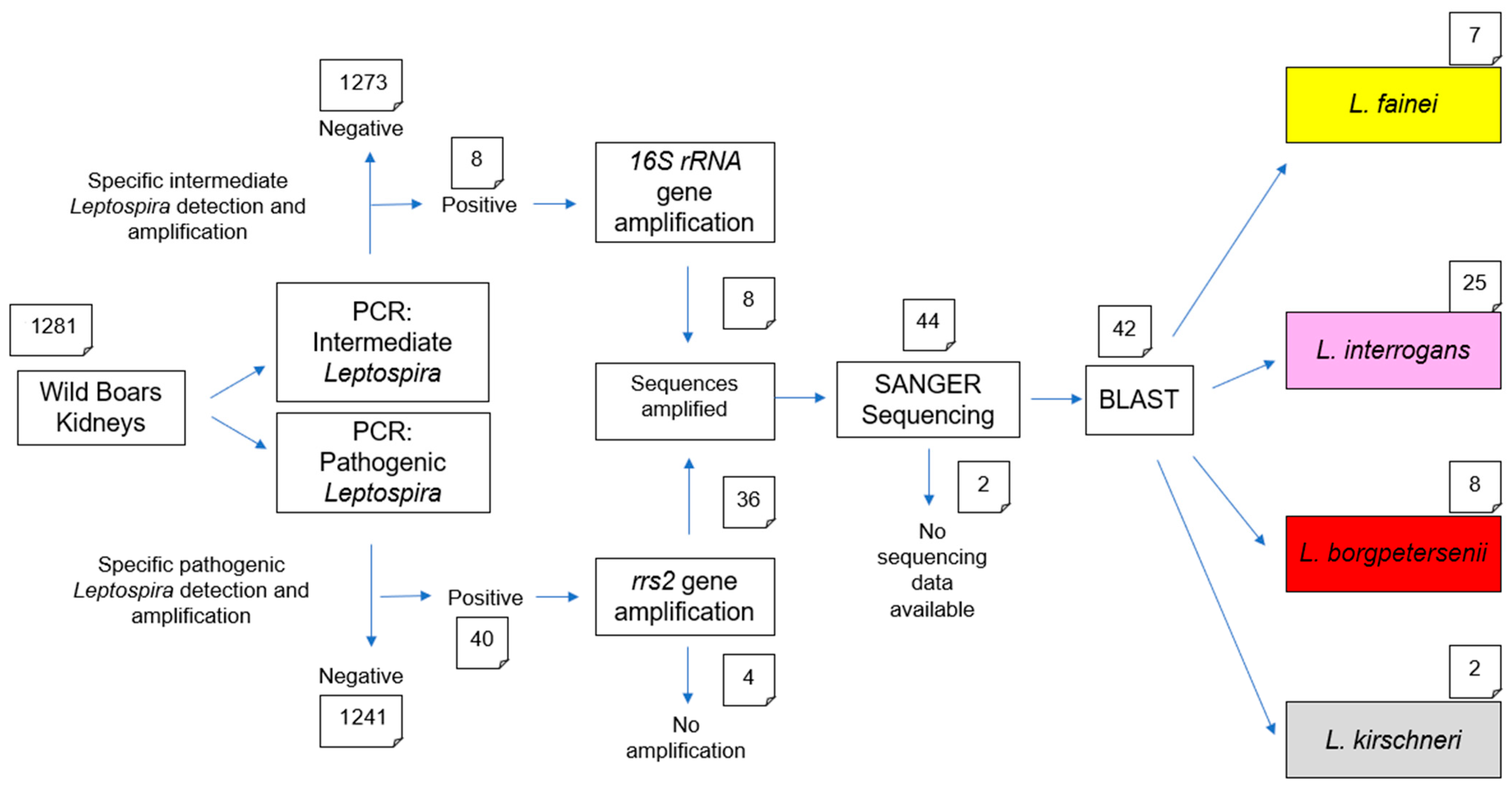
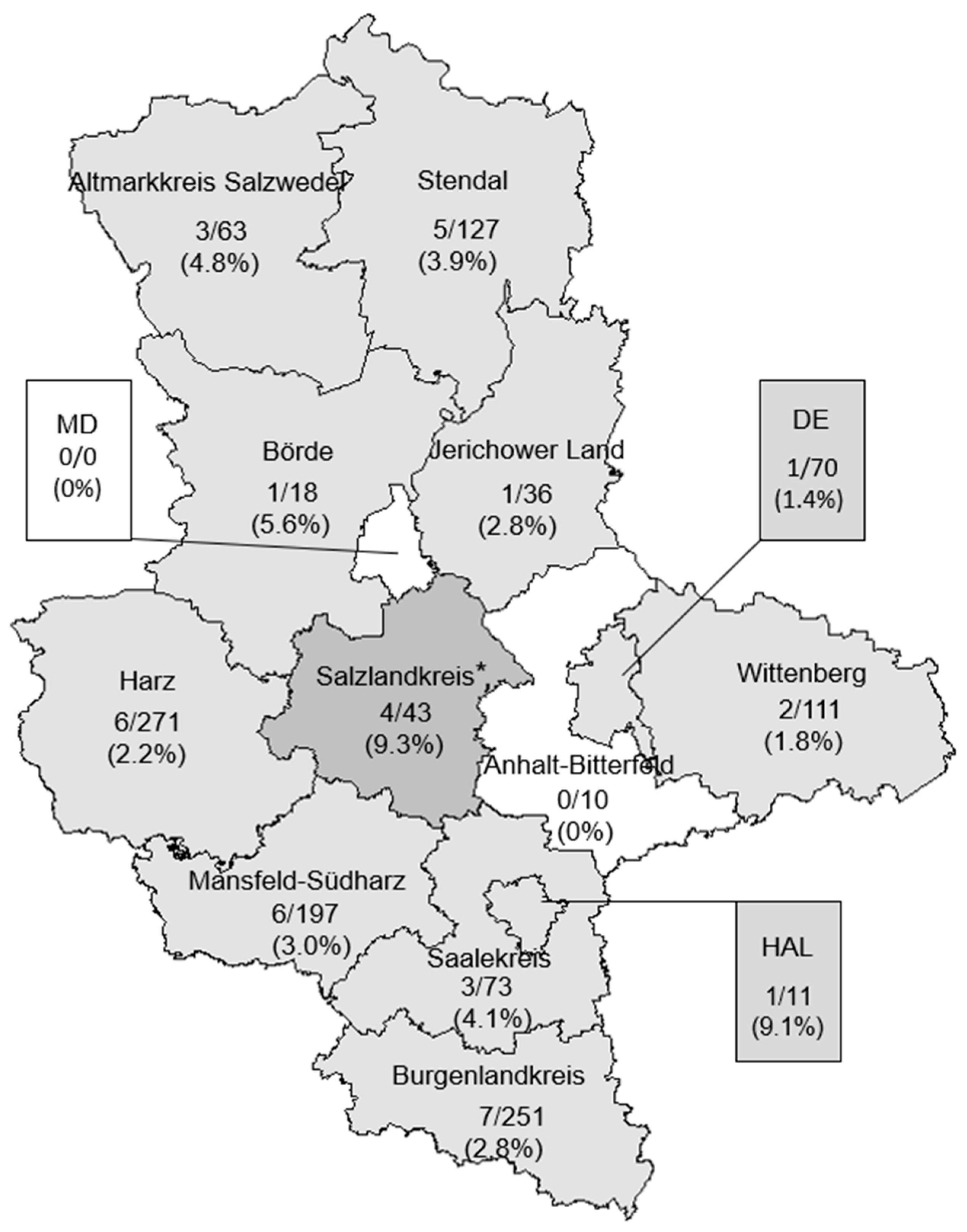
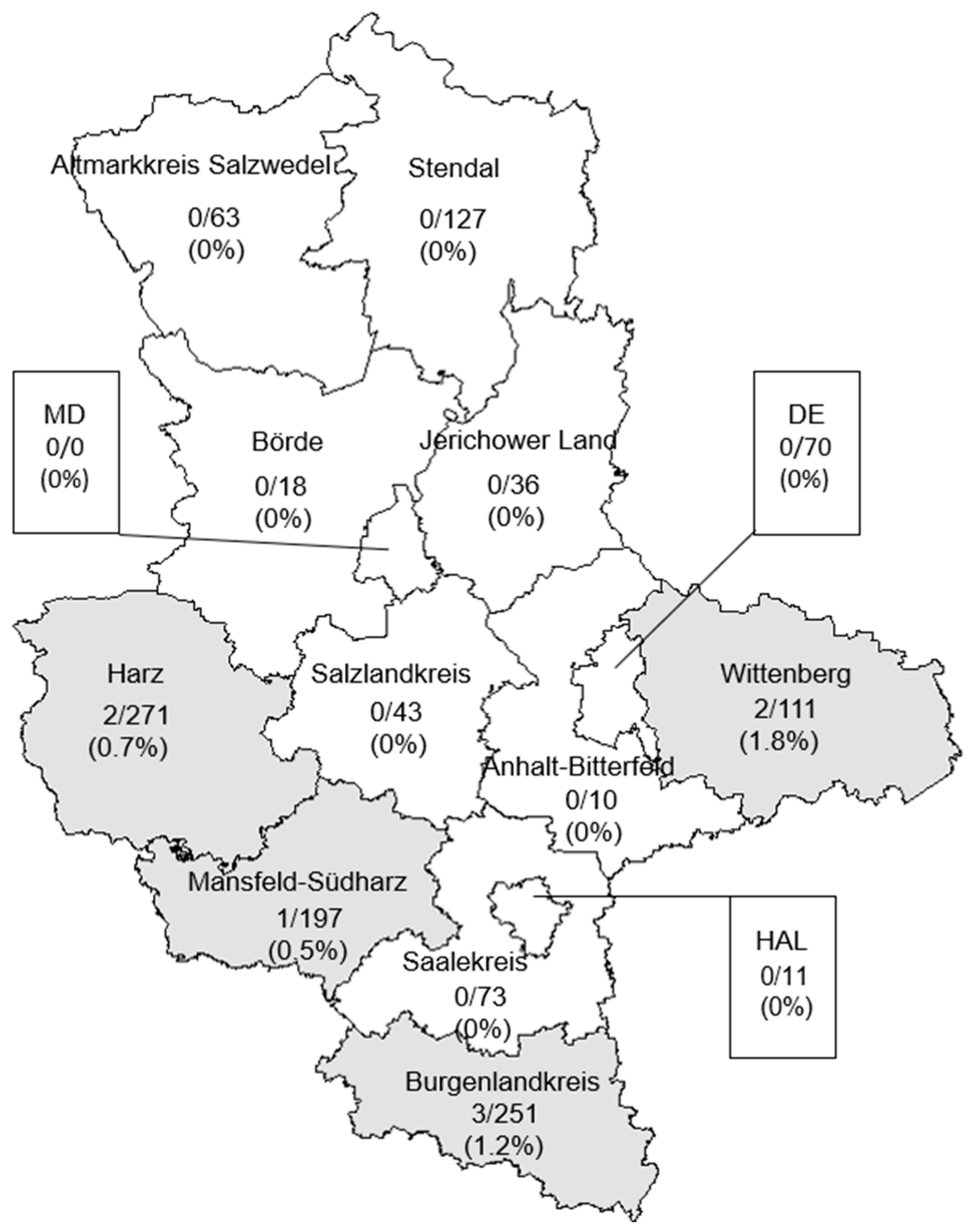
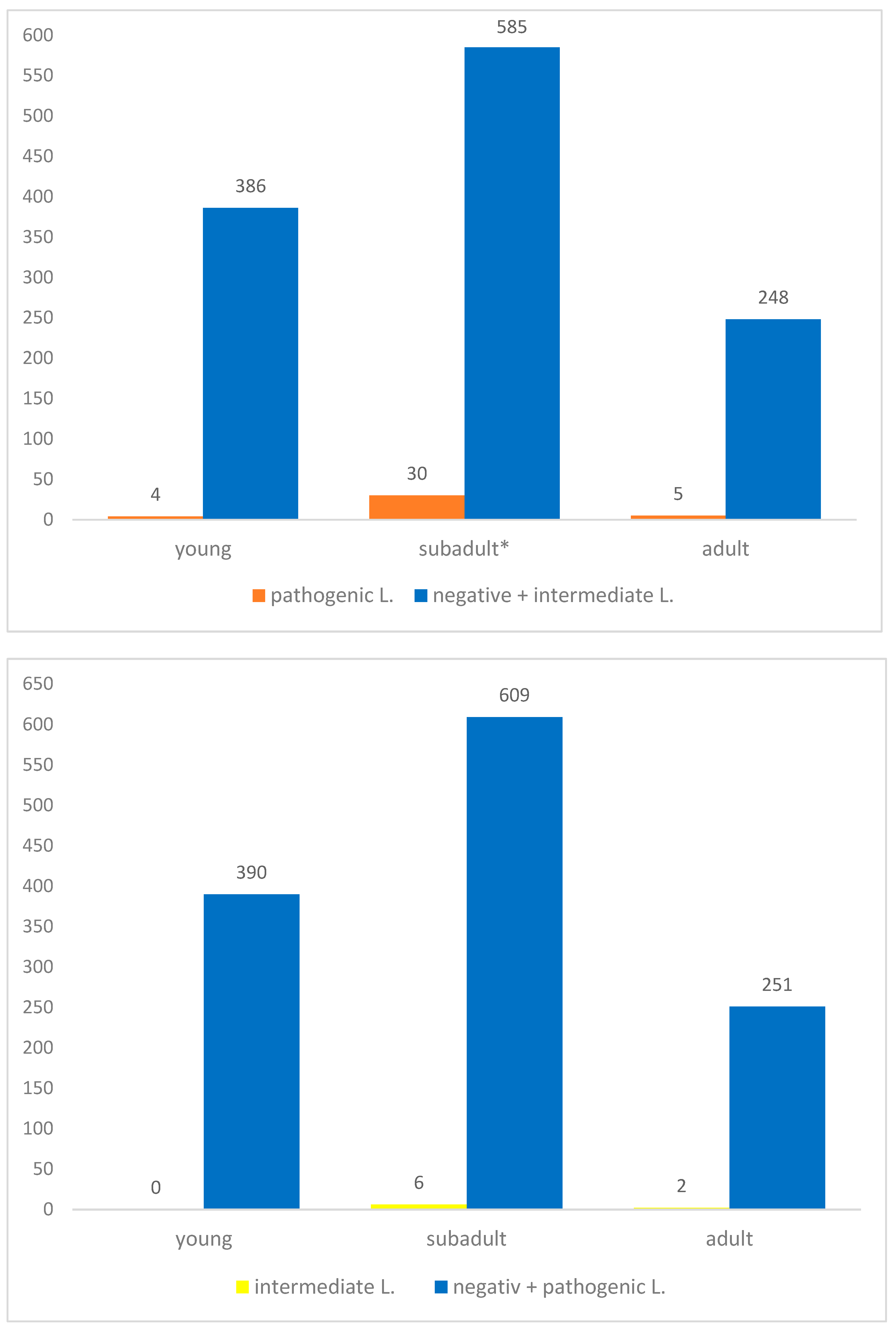
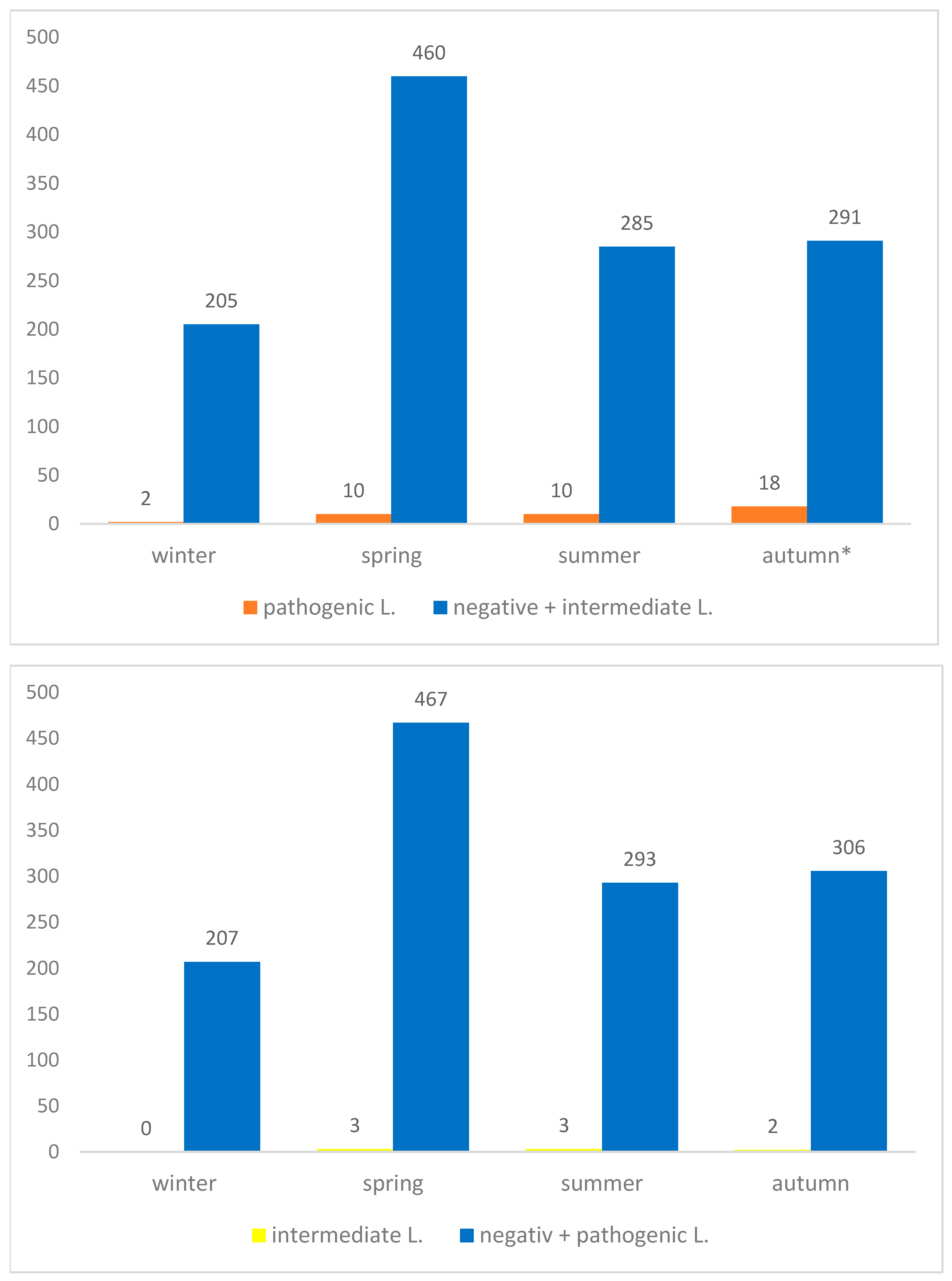
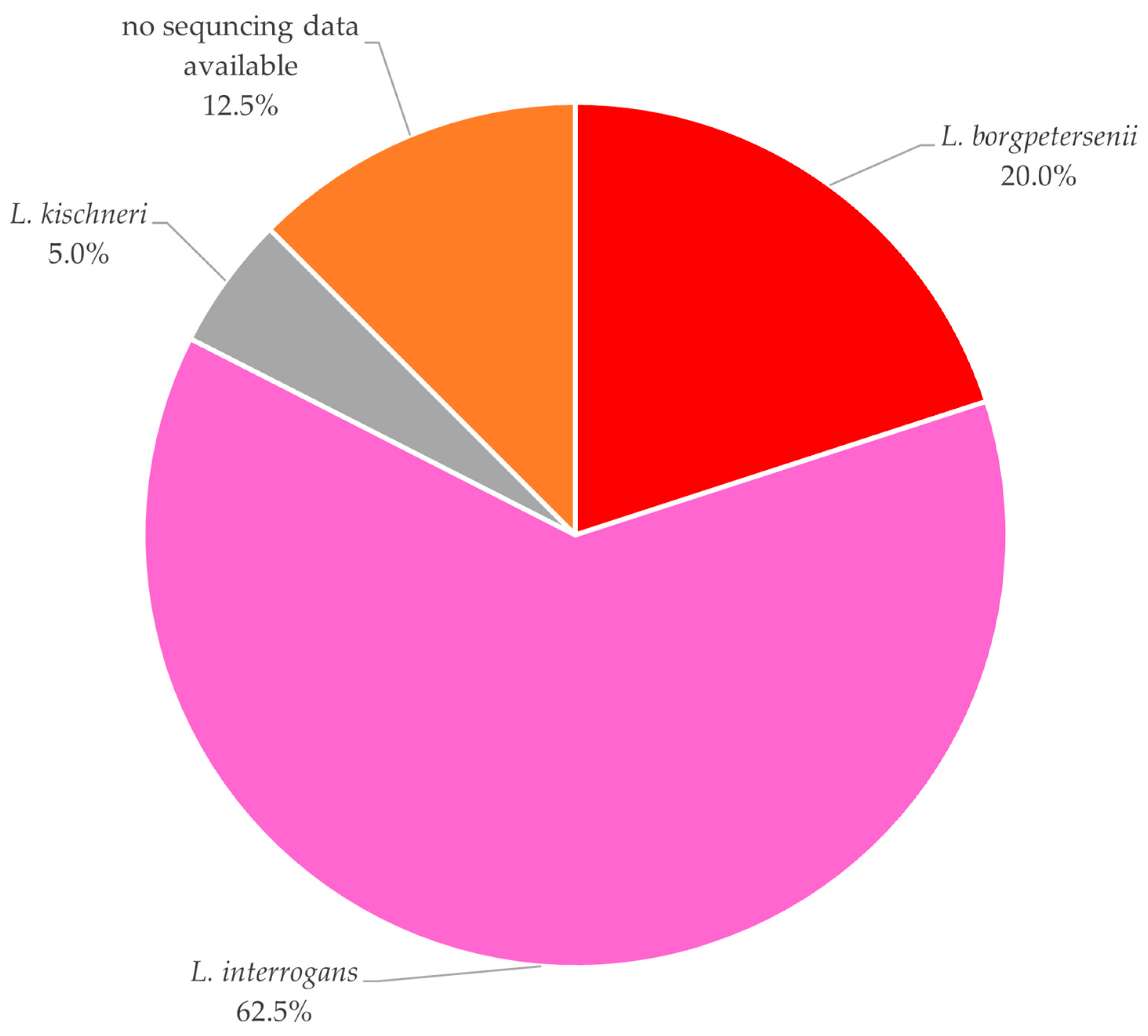
Leptospirosis is a globally widespread zoonosis, with wildlife species playing a key role in the maintenance and environmental dissemination of Leptospira spp. Wild boar (Sus scrofa) are increasingly recognized as potential reservoir; however, molecular data on renal carriage of Leptospira spp. in Europe and particularly in Germany, remain scarce. In this study, 1281 wild boar kidney samples collected in the federal state of Saxony-Anhalt were analyzed by real-time PCR to investigate the presence of pathogenic and intermediate Leptospira DNA. Pathogenic Leptospira DNA was detected in 3.1% (95% CI = 2.3–4.2) of the samples, whereas intermediate Leptospira DNA was identified in 0.6% (95% CI = 0.3–1.2). Pathogenic Leptospira showed a widespread distribution across the study area, with a significantly higher prevalence in the district of Salzlandkreis (p = 0.04, OR = 3.4, CI = 0.8–10.3). Evaluation of host-related and environmental factors revealed a significant association between pathogenic Leptospira DNA detection and both sub-adult age class (χ2 = 13.1, df = 2, p = 0.0014) and autumn season (χ2 = 12.3, df = 3, p = 0.0066), whereas no significant association was observed for sex. Neither of these factors showed a significant relation with intermediate Leptospira spp. Sequence analyses of rrs and 16S rRNA genes predominantly identified as L. interrogans (62.5%), followed by L. borgpetersenii (20.0%) and L. kirschneri (5.0%). All intermediate Leptospira sequences were identified as L. fainei. Notably, this study provides the first molecular evidence of intermediate L. fainei DNA in wild boar kidneys in Germany. Overall, these findings suggest that wild boar may act as renal carriers of Leptospira spp. and support their potential relevance in the epidemiology of leptospirosis within wildlife populations in Saxony-Anhalt.
Keywords:
leptospirosis; wildlife; Leptospira fainei; intermediate Leptospira; Sus scrofa; Germany; zoonosis