Effect of Omega-3 Fatty Acid Supplementation on Broilers’ Health and Meat Quality—Systematic Review




Simple Summary
Abstract
1. Introduction
2. Materials and Methods
2.1. Study Design and Protocol
2.2. Data Sources and Search Strategy
2.3. Eligibility Criteria, Screening, and Data Management
2.4. Risk of Bias and Quality Assessment
3. Results and Discussion
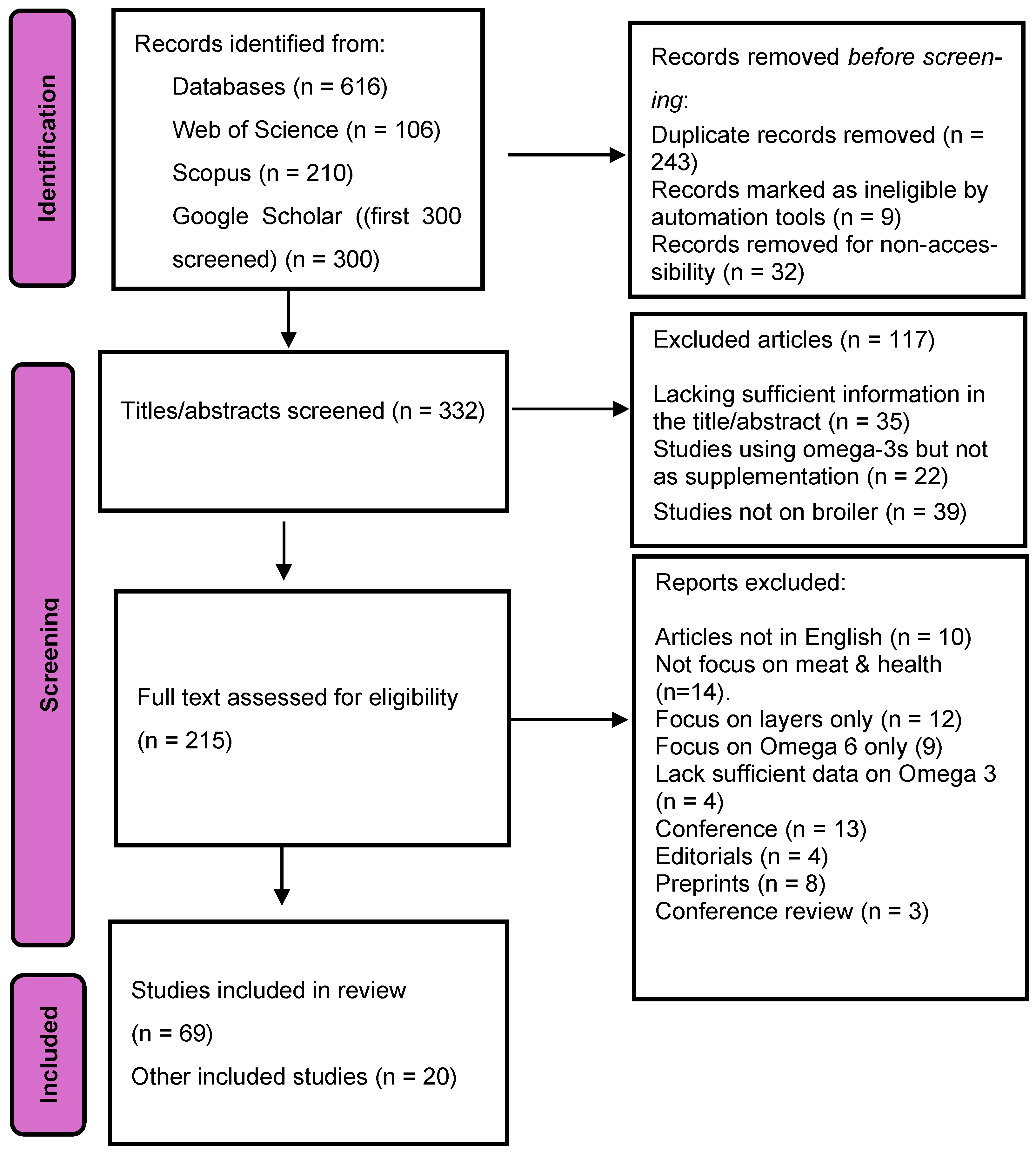
3.1. Overview of Literature Search and Study Characteristics
3.2. Sources and Chemistry of Omega-3 Fatty Acids

| References | Fatty Acid | Chemical Formula | Common Name | Natural Sources | Biological Significance |
|---|---|---|---|---|---|
| [27] | (ALA; 18:3n-3) | C18H30O2 | Essential omega-3 precursor | Flaxseed, chia, perilla, canola, soybean, walnut | Precursor for long-chain PUFA synthesis |
| [40] | Stearidonic acid (SDA; 18:4n-3) | C18H28O2 | Intermediate omega-3 PUFA | Echium, Buglossoides arvensis, Primula, hemp | Bypasses Δ6-desaturase step and efficient EPA precursor |
| [41] | Eicosapentaenoic acid (EPA; 20:5n-3) | C20H30O2 | Long-chain PUFA | Fish oil, krill oil, microalgae (Schizochytrium, Nannochloropsis) | Anti-inflammatory and cardiovascular benefits |
| [42] | Docosapentaenoic acid (DPA; 22:5n-3) | C22H34O2 | Intermediate between EPA and DHA | Marine fish, seal oil, microalgae | Modulates inflammation and vascular function |
| [43] | Docosahexaenoic acid (DHA; 22:6n-3) | C22H32O2 | Long-chain PUFA | Fish oil, algal oil, krill | Neural development, membrane integrity and cognitive health |
3.3. Omega-3 Supplementation Strategies in Broiler Diets
3.4. Growth Performance and Feed Efficiency
3.5. Immune and Antioxidant Responses
3.6. Meat Quality and Fatty Acid Composition
3.7. Gut Morphology, Nutrient Digestibility, and Metabolic Responses
| References | Broiler Strain | Sample Size (Birds) | Duration (Days) | Omega-3 Source | Inclusion Level | Key Findings |
|---|---|---|---|---|---|---|
| [56] | Cobb 500 | 100 | 28 | Flaxseed meal | 4% | ↑ Villus height; ↑ digestive enzymes; ↑ Lactobacilli; ↓ pathogenic bacteria. |
| [56] | Ross 308 | 480 | 42 | Extruded linseed + pea ± probiotic | 30% | ↑ PUFA; ↓ SFA; ↑ cholesterol metabolism; ↑ gut microbial balance. |
| [95] | Ross 708 (breeders) | 588 | 154 | Microalgae vs. flax–pulse mixture | 1–2.5% | Microalgae (DHA) ↑ villus height & crypt depth; ↑ nutrient absorption surface. |
| [28] | Ross 308 | 420 | 40 | Salmon oil blend (Persia Fat) | 0.50% | ↑ Nutrient digestibility; ↑ gut integrity under stress. |
| [90] | Arbor Acres | 192 | 42 | Myristic acid (FA analog) | 0.04% | ↑ Lipid-transport gene expression; ↓ cholesterol synthesis; improved metabolic efficiency. |
| [96] | Ross 308 | 48 | 14–24 | Fish oil (EPA + DHA) | Oral dosing | ↓ IL-6 & triglycerides; ↑ HSP-70; improved heat tolerance and metabolic resilience. |
4. Conclusions
Future Consideration
Author Contributions
Funding
Institutional Review Board Statement
Informed Consent Statement
Data Availability Statement
Conflicts of Interest
Abbreviations
| ALA | Alpha-Linolenic Acid |
| AI | Atherogenic Index |
| AME | Apparent Metabolizable Energy |
| BW | Body Weight |
| BWG | Body Weight Gain |
| CAT | Catalase |
| DHA | Docosahexaenoic Acid |
| EPA | Eicosapentaenoic Acid |
| ET-1 | Endothelin-1 |
| FA | Fatty Acid |
| FADS1 | Fatty Acid Desaturase 1 |
| FADS2 | Fatty Acid Desaturase 2 |
| FCR | Feed Conversion Ratio |
| GSH | Reduced Glutathione |
| GPx | Glutathione Peroxidase |
| H/L ratio | Heterophil-to-Lymphocyte Ratio |
| HSP-70 | Heat Shock Protein 70 |
| IgA/IgG | Immunoglobulin A/Immunoglobulin G |
| IL-6 | Interleukin-6 |
| LC-PUFA | Long Chain Polyunsaturated Fatty Acid |
| L-FABP | Liver Fatty Acid Binding Protein |
| MDA | Malondialdehyde |
| NO | Nitric Oxide |
| NPY | Neuropeptide Y |
| PUFA | Polyunsaturated Fatty Acid |
| PPARα | Peroxisome Proliferator-Activated Receptor Alpha |
| RCB | Randomized Complete Block (design) |
| RBO | Rice Bran Oil |
| SFA | Saturated Fatty Acid |
| SOD | Superoxide Dismutase |
| TBARS | Thiobarbituric Acid Reactive Substances |
| TG | Triglycerides |
| TI | Thrombogenic Index |
| Vit E/VE | Vitamin E |
| ω-3/n-3 | Omega-3 Fatty Acids |
References
- Untea, A.E.; Vlaicu, P.A.; Varzaru, I.; Oancea, A.G.; Saracila, M. Mitigation of Oxidized Oil Effects on Production Performances and Meat Quality of Broilers by Dietary Supplementation of Allicin. Life 2024, 14, 1432. [Google Scholar] [CrossRef] [Scilit]
- Liu, S.Y.; Macelline, S.P.; Chrystal, P.V.; Selle, P.H. Progress towards reduced-crude protein diets for broiler chickens and sustainable chicken-meat production. J. Anim. Sci. Biotechnol. 2021, 12, 20. [Google Scholar] [CrossRef] [Scilit]
- Wilcox, C.H.; Sandilands, V.; Mayasari, N.; Asmara, I.Y.; Anang, A. A literature review of broiler chicken welfare, husbandry, and assessment. World’s Poult. Sci. J. 2024, 80, 3–32. [Google Scholar] [CrossRef] [Scilit]
- Mpofu, T.J.; Masia, K.S.; Idowu, A.P. Correlation between hatchability traits, moisture loss, and embryonic mortality in commercial Lohmann Brown Lite breeder birds in South Africa. J. Sain Peternak. Indones. 2025, 20, 142–150. [Google Scholar] [CrossRef] [Scilit]
- Pérez, J.A.; Castro, A.; Rolo, C.; Torres, A.; Dorta-Guerra, R.; Acosta, N.G.; Rodríguez, C. Fatty acid profiles and omega-3 long-chain polyunsaturated fatty acids (LC-PUFA) biosynthesis capacity of three dual purpose chicken breeds. J. Food Compos. Anal. 2021, 102, 104005. [Google Scholar] [CrossRef] [Scilit]
- Arulnathan, N.; Karunakaran, R.; Balakrishnan, V.; Chellapandian, M.; Selvam, S. Effect of different dietary oil sources of omega- 3 poly unsaturated fatty acids on the meat quality characteristics in Japanese quail. J. Entomol. Zool. Stud. 2020, 8, 1643–1648. [Google Scholar] [CrossRef] [Scilit]
- Idowu, A.P.; Egbu, C.F.; Maina, A.N.; Mnisi, C.M. Technologies for omega-3-enriched eggs production. In Designer Poultry Eggs; Elsevier: Amsterdam, The Netherlands, 2025; pp. 27–50. [Google Scholar] [CrossRef] [Scilit]
- Kartikasari, L.; Hertanto, B.; Nuhriawangsa, A. Omega-3 profiles and chemical substances of chicken meat fed diets containing purslane (Portulaca oleraceae) meal rich in omega-3 fats. Food Res. 2023, 7, 35–41. [Google Scholar] [CrossRef] [Scilit]
- Salari, H.; Ahangari, Y.J.; Pirsaraei, Z.A. The Effects of Dietary Omega-3 and/or Coenzyme Q10 on Semen Quality and Re-productive Function of Aged Broiler Breeder Roosters. 2020. Available online: https://www.ijas.ir (accessed on 5 October 2025).
- Wang, J.; Clark, D.L.; Jacobi, S.K.; Velleman, S.G. Supplementation of vitamin E and omega-3 fatty acids during the early posthatch period on intestinal morphology and gene expression differentiation in broilers. Poult. Sci. 2021, 100, 100954. [Google Scholar] [CrossRef] [Scilit] [PubMed]
- El-Zenary, A.S.; Gaafar, K.; Adou Elkhair, R.; Elkin, R.; Boney, J.; Harvatine, K. Effect of feeding high-alpha linolenic acid flaxseed oil to broilers and layers on liver biosynthesis of total very long chain omega-3 fatty acids. J. Curr. Vet. Res. 2022, 4, 1–7. [Google Scholar] [CrossRef] [Scilit]
- Wang, J.; Clark, D.L.; Jacobi, S.K.; Velleman, S.G. Effect of early posthatch supplementation of vitamin E and omega-3 fatty acids on the severity of wooden breast, breast muscle morphological structure, and gene expression in the broiler breast muscle. Poult. Sci. 2020, 99, 5925–5935. [Google Scholar] [CrossRef] [Scilit]
- Fernández, H.T.; Echevarría, G.; Saadoun, A.; Cabrera, M.C. Impact of chia meal and hydroxytyrosol on the nutritional quality of broiler chicken meat. Arch. Zootec. 2022, 71, 250–260. [Google Scholar] [CrossRef] [Scilit]
- Abbas, A.O.; Nassar, F.S.; Al Ali, A.M. Challenges of Ensuring Sustainable Poultry Meat Production and Economic Resilience under Climate Change for Achieving Sustainable Food Security. Res. World Agric. Econ. 2025, 6, 159–171. [Google Scholar] [CrossRef] [Scilit]
- Dinalli, V.P.; Soares, A.; Carvalho, R.; Dornellas, T.; Brene, R.; Cunha, L.; Almeida, M.; Silva, C.; Oba, A. Carcass Characteristics and Meat Quality of Broiler Chickens Fed Diets with Chlorella Vulgaris and Probiotic. Rev. Bras. Cienc. Avic. Braz. J. Poult. Sci. 2024, 26, eRBCA-2024. [Google Scholar] [CrossRef] [Scilit]
- Amer, S.A.; Abdel-Wareth, A.A.A.; Gouda, A.; Saleh, G.K.; Nassar, A.H.; Sherief, W.R.I.A.; Albogami, S.; Shalaby, S.I.; Abdelazim, A.M.; Abomughaid, M.M. Impact of Dietary Lavender Essential Oil on the Growth and Fatty Acid Profile of Breast Muscles, Antioxidant Activity, and Inflammatory Responses in Broiler Chickens. Antioxidants 2022, 11, 1798. [Google Scholar] [CrossRef] [Scilit] [PubMed]
- Sierżant, K.; Korzeniowska, M.; Orda, J.; Wojdyło, A.; Gondret, F.; Półbrat, T. The effect of rosemary (Rosmarinus officinalis) and blackcurrant extracts (Ribes nigrum) supplementation on performance indices and oxidative stability of chicken broiler meat. Animals 2021, 11, 1155. [Google Scholar] [CrossRef] [Scilit] [PubMed]
- Tufarelli, V.; Losacco, C.; Tedone, L.; Passantino, L.; Tarricone, S.; Laudadio, V.; Colonna, M.A. Hemp seed (Cannabis sativa L.) cake as sustainable dietary additive in slow-growing broilers: Effects on performance, meat quality, oxidative stability and gut health. Vet. Q. 2023, 43, 1–12. [Google Scholar] [CrossRef] [Scilit]
- Abbaspour, B.; Sharifi, S.D.; Ghazanfari, S.; Mohammadi-Sangcheshmeh, A.; Honarbakhsh, S. Effect of dietary supplementation of whole flaxseed on sperm traits and sperm fatty acid profile in aged broiler breeder roosters. Reprod. Domest. Anim. 2020, 55, 594–603. [Google Scholar] [CrossRef] [Scilit]
- Avi, A.C.; Islam, T.; Bari, S.; Khandoker, R.S.S.; Das, G.B. Effects of Fish Oil on Growth Performance, Carcass Characteristics, Blood Parameter, and Cost Efficiency of Broiler Chicken. Adv. Anim. Vet. Sci. 2023, 11, 1083–1089. [Google Scholar] [CrossRef] [Scilit]
- Elbasuni, S.S.; Edris, S.N.; El Daous, H.; Abaza, M.A.; Farid, O.A.; Alsharif, A.; Soliman, M.M.; Gaber, A.; Alotaibi, K.S.; Albattal, S.B.; et al. Comprehensive impacts of black elderberry (Sambucus nigra L.) extract on mitigating acute heat stress, augmenting antioxidant defenses, and enhancing broiler chicken health and meat quality. J. Appl. Anim. Res. 2025, 53, 2555245. [Google Scholar] [CrossRef] [Scilit]
- Kishawy, A.T.; El-Wahab, R.A.A.; Eldemery, F.; Rahman, M.M.I.A.; Altuwaijri, S.; Ezz-Eldin, R.M.; Abd-Allah, E.M.; Zayed, S.; Mulla, Z.S.; El Sharkawy, R.B.; et al. Insights of early feeding regime supplemented with glutamine and various levels of omega-3 in broiler chickens: Growth performance, muscle building, antioxidant capacity, intestinal barriers health and defense against mixed Eimeria spp. infection. Vet. Q. 2024, 44, 1–20. [Google Scholar] [CrossRef] [Scilit]
- Yalçın, S.; Ramay, M.S.; Yalçınkaya, H.; Kardoğan, Ö.; Erkurt, A.; Kılınç, B.; Gebeş, E.S.; Bundur, A.; Onbaşılar, E.E.; Yalçın, S.; et al. Evaluation of high levels of solvent extracted Camelina sativa meal in diets on performance, blood indices, cecal microorganisms, and nutrient digestibility in broilers. Trop. Anim. Health Prod. 2025, 57, 100. [Google Scholar] [CrossRef] [Scilit]
- Rethlefsen, M.L.; Page, M.J. PRISMA 2020 and PRISMA-S: Common questions on tracking records and the flow diagram. J. Med. Libr. Assoc. 2022, 110, 253. [Google Scholar] [CrossRef] [Scilit] [PubMed]
- Gusenbauer, M.; Haddaway, N.R. Which academic search systems are suitable for systematic reviews or meta-analyses? Evaluating retrieval qualities of Google Scholar, PubMed, and 26 other resources. Res. Synth. Methods 2020, 11, 181–217. [Google Scholar] [CrossRef] [Scilit] [PubMed]
- Ibrahim, D.; El-Sayed, R.; Khater, S.I.; Said, E.N.; El-Mandrawy, S.A. Changing dietary n-6:n-3 ratio using different oil sources affects performance, behavior, cytokines mRNA expression and meat fatty acid profile of broiler chickens. Anim. Nutr. 2018, 4, 44–51. [Google Scholar] [CrossRef] [Scilit]
- Palomar, M.; Soler, M.D.; Roura, E.; Sala, R.; Piquer, O.; Garcés-Narro, C. Degree of Saturation and Free Fatty Acid Content of Fats Determine Dietary Preferences in Laying Hens. Animals 2020, 10, 2437. [Google Scholar] [CrossRef] [Scilit] [PubMed]
- Rahbari, S.; Salehi, A.; Sharifi, S.D.; Honarbakhsh, S. Dietary omega-3 fatty acids affect the growth performance of broiler chickens reared at high stocking density. Poult. Sci. 2025, 104, 104468. [Google Scholar] [CrossRef] [Scilit]
- De Carvalho, C.C.C.R.; Caramujo, M.J. The Various Roles of Fatty Acids. Molecules 2018, 23, 2583. [Google Scholar] [CrossRef] [Scilit]
- Prasad, P.; Anjali, P.; Sreedhar, R.V. Plant-based stearidonic acid as sustainable source of omega-3 fatty acid with functional outcomes on human health. Crit. Rev. Food Sci. Nutr. 2021, 61, 1725–1737. [Google Scholar] [CrossRef] [Scilit]
- Konieczka, P.; Czauderna, M.; Smulikowska, S. The enrichment of chicken meat with omega-3 fatty acids by dietary fish oil or its mixture with rapeseed or flaxseed—Effect of feeding duration: Dietary fish oil, flaxseed, and rapeseed and n-3 enriched broiler meat. Anim. Feed. Sci. Technol. 2017, 223, 42–52. [Google Scholar] [CrossRef] [Scilit]
- Adeyemi, K.D.; Abdulrahman, A.; Ibrahim, S.O.; Zubair, M.F.; Atolani, O.; Badmos, A.A. Dietary Supplementation of Tetracarpidium conophorum (African Walnut) Seed Enhances Muscle n-3 Fatty Acids in Broiler Chickens. Eur. J. Lipid Sci. Technol. 2020, 122, 1900418. [Google Scholar] [CrossRef] [Scilit]
- Popescu, R.G.; Voicu, S.N.; Pircalabioru, G.G.; Gharbia, S.; Hermenean, A.; Georgescu, S.E.; Panaite, T.D.; Turcu, R.P.; Dinischiotu, A. Impact of dietary supplementation of flaxseed meal on intestinal morphology, specific enzymatic activity, and cecal microbiome in broiler chickens. Appl. Sci. 2021, 11, 6714. [Google Scholar] [CrossRef] [Scilit]
- Barta, D.G.; Coman, V.; Vodnar, D.C. Microalgae as sources of omega-3 polyunsaturated fatty acids: Biotechnological aspects. Algal Res. 2021, 58, 102410. [Google Scholar] [CrossRef] [Scilit]
- Oliver, L.; Dietrich, T.; Marañón, I.; Villarán, M.C.; Barrio, R.J. Producing omega-3 polyunsaturated fatty acids: A review of sustainable sources and future trends for the EPA and DHA market. Resources 2020, 9, 148. [Google Scholar] [CrossRef] [Scilit]
- El-Zenary, A.S.A.; Elkin, R.G.; Harvatine, K.J. Comparison of Ahiflower oil containing stearidonic acid to a high-alpha-linolenic acid flaxseed oil at two dietary levels on omega-3 enrichment of egg yolk and tissues in laying hens. Lipids 2023, 58, 139–155. [Google Scholar] [CrossRef] [Scilit]
- El-Zenary, A.S.A.; Gaafar, K.M.; Abou-Elkhair, R.; Elkin, R.G.; Boney, J.W.; Harvatine, K.J. Comparison of Ahiflower oil containing stearidonic acid to a high-alpha-linolenic acid flaxseed oil at two levels on tissue omega-3 enrichment in broilers. Lipids 2022, 57, 57–68. [Google Scholar] [CrossRef] [Scilit]
- Kumari, A.; Pabbi, S.; Tyagi, A. Recent advances in enhancing the production of long chain omega-3 fatty acids in microalgae. Crit. Rev. Food Sci. Nutr. 2024, 64, 10564–10582. [Google Scholar] [CrossRef] [Scilit]
- Maltsev, Y.; Maltseva, K. Fatty acids of microalgae: Diversity and applications. Rev. Environ. Sci. Bio./Technol. 2021, 20, 515–547. [Google Scholar] [CrossRef] [Scilit]
- Seidel, U.; Eberhardt, K.; Wiebel, M.; Luersen, K.; Ipharraguerre, I.R.; Haegele, F.A.; Rimbach, G. Stearidonic acid improves eicosapentaenoic acid status: Studies in humans and cultured hepatocytes. Front. Nutr. 2024, 11, 1359958. [Google Scholar] [CrossRef] [Scilit] [PubMed]
- Remize, M.; Brunel, Y.; Silva, J.L.; Berthon, J.-Y.; Filaire, E. Microalgae n-3 PUFAs Production and Use in Food and Feed Industries. Mar. Drugs 2021, 19, 113. [Google Scholar] [CrossRef] [Scilit]
- Lokuruka, M.N.I. Fish Lipids Functionality in Health and Disease. Asian Food Sci. J. 2022, 21, 48–62. [Google Scholar] [CrossRef] [Scilit]
- Dyall, S.C. Long-chain omega-3 fatty acids and the brain: A review of the independent and shared effects of EPA, DPA and DHA. Front. Aging Neurosci. 2015, 7, 52. [Google Scholar] [CrossRef] [Scilit]
- Yulianto, A.B.; Lokapirnasari, W.P.; Najwan, R.; Wardhani, H.C.P.; Rahman, N.F.N.; Huda, K.; Ulfah, N. Influence of Lactobacillus casei WB 315 and crude fish oil (CFO) on growth performance, EPA, DHA, HDL, LDL, cholesterol of meat broiler chickens. Iran J. Microbiol. 2020, 12, 148–155. [Google Scholar] [CrossRef] [Scilit]
- Sumiati, S.; Darmawan, A.; Hermana, W. Performance, Carcass Traits, and Meat Composition of Broiler Chickens Fed Diet Containing Fish Oil and Vitamin E. Trop. Anim. Sci. J. 2022, 45, 195–201. [Google Scholar] [CrossRef] [Scilit]
- Kartikasari, L.R.; Hughes, R.J.; Geier, M.S.; A Gibson, R. Omega-3 fatty acid composition of chicken plasma fed diets varying in LA to ALA ratio. IOP Conf. Ser. Earth Environ. Sci. 2021, 902, 012012. [Google Scholar] [CrossRef] [Scilit]
- Qaid, M.M.; Al-Mufarrej, S.I.; Al-Garadi, M.A.; Al-Abdullatif, A.A.; Alqhtani, A.H.; Alhotan, R.A.; Alharthi, A.S.; BaZeyad, A.Y. Meat fatty acids profile including metabolic, qualitative, nutritional indices, and organoleptic evaluation as affected by Rumex nervosus leaves meal fortified broiler diets. Ital. J. Anim. Sci. 2023, 22, 1050–1066. [Google Scholar] [CrossRef] [Scilit]
- Miraeez, S.F.; Abbasi, F.; Ansari, M.; Samadi, F. Nano-encapsulated flaxseed oil has the potential to enhance omega-3 fatty acid profile and modulate hepatic fatty acid–related gene expression in broiler chickens. Eur. J. Lipid Sci. Technol. 2024, 126, 2400028. [Google Scholar] [CrossRef] [Scilit]
- Cholewski, M.; Tomczykowa, M.; Tomczyk, M. A Comprehensive Review of Chemistry, Sources and Bioavailability of Omega-3 Fatty Acids. Nutrients 2018, 10, 1662. [Google Scholar] [CrossRef] [Scilit]
- Cong, O.N.; Viet, D.N.; Kim, D.P.; Hornick, J.-L. Effects of dietary sacha inchi (Plukenetia volubilis L.) oil and medicinal plant powder supplementation on growth performance, carcass traits, and breast meat quality of colored broiler chickens raised in Vietnam. Trop. Anim. Health Prod. 2022, 54, 87. [Google Scholar] [CrossRef] [Scilit]
- Al-Abdullatif, A.; Hussein, E.; Suliman, G.; Akasha, M.; Al-Badwi, M.; Ali, H.; Azzam, M. Evaluating Rice Bran Oil as a Dietary Energy Source on Production Performance, Nutritional Properties and Fatty Acid Deposition of Breast Meat in Broiler Chickens. Foods 2023, 12, 366. [Google Scholar] [CrossRef] [Scilit]
- Wu, T.; Yang, F.; Jiao, T.; Zhao, S. Effects of Dietary Oregano Essential Oil on Cecal Microorganisms and Muscle Fatty Acids of Luhua Chickens. Animals 2022, 12, 3215. [Google Scholar] [CrossRef] [Scilit]
- Khosinklang, W.; Kubota, S.; Riou, C.; Kaewsatuan, P.; Molee, A.; Molee, W. Omega-3 meat enrichment and L-FABP, PPARA, and LPL genes expression are modified by the level and period of tuna oil supplementation in slow-growing chickens. J. Anim. Sci. 2023, 101, skad267. [Google Scholar] [CrossRef] [Scilit]
- Keegan, J.D.; Fusconi, G.; Morlacchini, M.; Moran, C.A. Comparing docosahexaenoic acid supplementation strategies in terms of broiler tissue enrichment, productivity, and cost. J. Appl. Poult. Res. 2020, 29, 636–652. [Google Scholar] [CrossRef] [Scilit]
- Sjofjan, O.; Adli, D.N.; Febrianingrum, N.; Ghozi, H.M.; A Yudatama, M.F.; Faalah, M.; Natsir, M.H.; Nuningtyas, Y.F. Increasing linseed (Linum usitatissimum) meal potential as feed ingredients and source of omega-3 and -6 fatty acids for broilers through processing technology. IOP Conf. Ser. Earth Environ. Sci. 2022, 1001, 012004. [Google Scholar] [CrossRef] [Scilit]
- Gheorghe, A.; Habeanu, M.; Ciurescu, G.; Lefter, N.A.; Ropota, M.; Custura, I.; Tudorache, M. Effects of Dietary Mixture Enriched in Polyunsaturated Fatty Acids and Probiotic on Performance, Biochemical Response, Breast Meat Fatty Acids, and Lipid Indices in Broiler Chickens. Agriculture 2022, 12, 1120. [Google Scholar] [CrossRef] [Scilit]
- Elnajjar, K.A. Effects of Omega-3 and Probiotic-Supplemented on Growth Performance and Carcass Characteristics of Broiler Chicks. Egypt. Poult. Sci. J. 2021, 41, 461–471. [Google Scholar] [CrossRef] [Scilit]
- Sierżant, K.; Korzeniowska, M.; Półbrat, T.; Rybarczyk, A.; Smoliński, J. The use of an optimised concentration of quercetin limits peroxidation of lipids in the meat of broiler chickens fed a diet containing flaxseed oil rich in omega-3. Animal 2022, 16, 100603. [Google Scholar] [CrossRef] [Scilit]
- Ürüşan, H.; Bölükbaşi, C. The Influence of Turmeric Powder (Curcuma longa) on Fatty Acid Composition and Shelf Life of Broiler Chicken Meat. Alinteri J. Agric. Sci. 2020, 35, 29–35. [Google Scholar] [CrossRef] [Scilit]
- Al-Khalaifah, H.; Al-Nasser, A. Dietary source of polyunsaturated fatty acids influences cell cytotoxicity in broiler chickens. Sci. Rep. 2021, 11, 10113. [Google Scholar] [CrossRef] [Scilit]
- Al-Baadani, H.H.; Alhidary, I.A.; Alharthi, A.S.; Azzam, M.M.; Suliman, G.M.; Ahmed, M.A.; Qasem, A.A. Evaluation of Carcass Attributes and Physical, Chemical, and Qualitative Characteristics of Breast Meat of Broiler Chickens Fed on Pulicaria jaubertii Powder. Life 2023, 13, 1780. [Google Scholar] [CrossRef] [Scilit] [PubMed]
- Hassan, F.U.; Liu, C.; Mehboob, M.; Bilal, R.M.; Arain, M.A.; Siddique, F.; Chen, F.; Li, Y.; Zhang, J.; Shi, P.; et al. Potential of dietary hemp and cannabinoids to modulate immune response to enhance health and performance in animals: Opportunities and challenges. Front. Immunol. 2023, 14, 1285052. [Google Scholar] [CrossRef] [Scilit]
- Wahid, S.T.; Lee, B.G.; Kim, I.H. Effect of purified fish oil supplementation on growth performance, meat quality and blood profile in broilers. J. Anim. Physiol. Anim. Nutr. 2023, 107, 723–732. [Google Scholar] [CrossRef] [Scilit]
- Rahbari, S.; Sharifi, S.D.; Salehi, A.; Pahlavan, S.; Honarbakhsh, S. Omega-3 fatty acids mitigate histological changes and modulate the expression of ACACA, PFK1 and ET-1 genes in broiler chickens under environmental stress: A pulmonary artery, cardiomyocyte and liver study. Poult. Sci. 2024, 103, 104387. [Google Scholar] [CrossRef] [Scilit]
- Al-Baadani, H.H.; Alharthi, A.S.; Alhotan, R.A.; Aboragah, A.A.; Al-Abdullatif, A.A. Influence of Pulicaria jaubertii addition as medicinal plant on growth indicators, antibody titers, immune-related gene expression, microbiota activity and intestinal histomorphology of male broilers. J. Appl. Anim. Res. 2025, 53, 2467130. [Google Scholar] [CrossRef] [Scilit]
- Shirani, V.; Jazi, V.; Toghyani, M.; Ashayerizadeh, A.; Sharifi, F.; Barekatain, R. Pulicaria gnaphalodes powder in broiler diets: Consequences for performance, gut health, antioxidant enzyme activity, and fatty acid profile. Poult. Sci. 2019, 98, 2577–2587. [Google Scholar] [CrossRef] [Scilit]
- Lee, J.Y.; Yoon, J.H.; An, S.H.; Cho, I.H.; Lee, C.W.; Jeon, Y.J.; Joo, S.S.; Ban, B.C.; Lee, J.-Y.; Jung, H.J.; et al. Intestinal Immune Cell Populations, Barrier Function, and Microbiomes in Broilers Fed a Diet Supplemented with Chlorella vulgaris. Animals 2023, 13, 2380. [Google Scholar] [CrossRef] [Scilit] [PubMed]
- Al-Khalaifah, H.; Al-Nasser, A.; Givens, D.; Rymer, C.; Yaqoob, P. Comparison of different dietary sources of n-3 polyunsaturated fatty acids on immune response in broiler chickens. Heliyon 2020, 6, e03326. [Google Scholar] [CrossRef] [Scilit] [PubMed]
- Abd El-Samee, L.D.; El-Wardany, I.; Abdel-Fattah, S.A.; Abd El-Azeem, N.A.; Elsharkawy, M.S. Dietary omega-3 and antioxidants improve long-chain omega-3 and lipid oxidation of broiler meat. Bull. Natl. Res. Cent. 2019, 43, 45. [Google Scholar] [CrossRef] [Scilit]
- Al-Kalo, O.A.; Al-Aalim, A.M. The Effect of Oils Additive on Some Immunological Cytokines Newcastle Disease-Vaccinated Broiler Chickens. Egypt. J. Vet. Sci. 2025, 56, 1761–1767. [Google Scholar] [CrossRef] [Scilit]
- Liu, S.; Wang, K.; Lin, S.; Zhang, Z.; Cheng, M.; Hu, S.; Hu, H.; Xiang, J.; Chen, F.; Li, G.; et al. Comparison of the Effects between Tannins Extracted from Different Natural Plants on Growth Performance, Antioxidant Capacity, Immunity, and Intestinal Flora of Broiler Chickens. Antioxidants 2023, 12, 441. [Google Scholar] [CrossRef] [Scilit]
- Chen, J.; Chen, F.; Peng, S.; Ou, Y.; He, B.; Li, Y.; Lin, Q. Effects of Artemisia argyi Powder on Egg Quality, Antioxidant Capacity, and Intestinal Development of Roman Laying Hens. Front. Physiol. 2022, 13, 902568. [Google Scholar] [CrossRef] [Scilit]
- Waliaula, P.K.; Yin, X.; Lepp, D.; Clairmont, L.; Kiarie, E.G.; Diarra, M.S. Cecal bacterial communities and lung immunity in layers fed omega-3 fatty acids or yeast bioactives under different space allowance. Poult. Sci. 2025, 104, 105866. [Google Scholar] [CrossRef] [Scilit]
- Cartolano, F.D.C.; Dias, G.D.; Miyamoto, S.; Damasceno, N.R.T. Omega-3 Fatty Acids Improve Functionality of High-Density Lipoprotein in Individuals with High Cardiovascular Risk: A Randomized, Parallel, Controlled and Double-Blind Clinical Trial. Front. Nutr. 2022, 8, 767535. [Google Scholar] [CrossRef] [Scilit]
- Méndez, L.; Dasilva, G.; Taltavull, N.; Romeu, M.; Medina, I. Marine Lipids on Cardiovascular Diseases and Other Chronic Diseases Induced by Diet: An Insight Provided by Proteomics and Lipidomics. Mar. Drugs 2017, 15, 258. [Google Scholar] [CrossRef] [Scilit]
- Mueller, P.A.; Bergstrom, P.; Rosario, S.; Heard, M.; Pamir, N. Fish Oil Supplementation Modifies the Proteome, Lipidome, and Function of High-Density Lipoprotein: Findings from a Trial in Young Healthy Adults. J. Nutr. 2024, 154, 1130–1140. [Google Scholar] [CrossRef] [Scilit]
- Chen, F.; Wang, Y.; Wang, K.; Chen, J.; Jin, K.; Peng, K.; Chen, X.; Liu, Z.; Ouyang, J.; Wang, Y.; et al. Effects of Litsea cubeba essential oil on growth performance, blood antioxidation, immune function, apparent digestibility of nutrients, and fecal microflora of pigs. Front. Pharmacol. 2023, 14, 1166022. [Google Scholar] [CrossRef] [Scilit]
- Al-Khalaifah, H.; Al-Nasser, A. Dietary Supplementation with Various Fat Oils Affect Phytohemagglutinin Skin Test in Broiler Chickens. Front. Immunol. 2020, 11, 1735. [Google Scholar] [CrossRef] [Scilit]
- Abdul-Rahman, D.I.; Hassan, M.F.; Khalil, W.F.; Ahmed, E.A.; Youssef, F.M. Application of chitosan and omega-3 supplementation on blood constituents, immunity, and antioxidant enzymes in broiler chicks. J. Adv. Vet. Res. 2023, 13, 1063–1069. [Google Scholar]
- Ewais, O.; Abdel-Tawab, H.; El-Fayoumi, H.; Aboelhadid, S.M.; Al-Quraishy, S.; Falkowski, P.; Abdel-Baki, A.-A.S. Administration of Ethanolic Extract of Spinacia oleracea Rich in Omega-3 Improves Oxidative Stress and Goblet Cells in Broiler Chickens Infected with Eimeria tenella. Molecules 2023, 28, 6621. [Google Scholar] [CrossRef] [Scilit]
- El-Zenary, A.S.A.; Ying, Y.; Hulet, R.M.; Harvatine, K.J.; Elkin, R.G. Effect of lowering the amount of dietary linoleic acid on tissue omega-3 fatty acid contents of broilers fed supplemental flaxseed oil from 18 to 35 days of age. J. Appl. Poult. Res. 2020, 29, 730–743. [Google Scholar] [CrossRef] [Scilit]
- Zhaleh, S.; Golian, A.; Zerehdaran, S. Effects of one week feeding finisher diets containing rolled and extruded flaxseed on performance, lipid peroxidation and omega-3 fatty acids in breast and thigh meat of broiler chickens. Poult. Sci. J. 2020, 8, 83–94. [Google Scholar] [CrossRef] [Scilit]
- Kartikasari, L.R.; Hertanto, B.S.; Nuhriawangsa, A.M.P. Nutritional value of chicken meat fed diet supplemented with purslane rich in omega-3 fats. IOP Conf. Ser. Earth Environ. Sci. 2021, 828, 012039. [Google Scholar] [CrossRef] [Scilit]
- Untea, A.E.; Turcu, R.P.; Saracila, M.; Vlaicu, P.A.; Panaite, T.D.; Oancea, A.G. Broiler meat fatty acids composition, lipid metabolism, and oxidative stability parameters as affected by cranberry leaves and walnut meal supplemented diets. Sci. Rep. 2022, 12, 21618. [Google Scholar] [CrossRef] [Scilit]
- Danek-Majewska, A.; Kwiecień, M.; Winiarska-Mieczan, A.; Haliniarz, M.; Bielak, A. Raw chickpea (Cicer arietinum L.) as a substitute of soybean meal in compound feed for broiler chickens: Effects on growth performance, lipid metabolism, fatty acid profile, antioxidant status, and dietary value of muscles. Animals 2021, 11, 3367. [Google Scholar] [CrossRef] [Scilit]
- Alagbe, O.J. Sensory evaluation and fatty acid composition of broiler chickens fed diets containing with Prosopis africana essential oil. J. Healthc. Biomed. Sci. 2023, 1, 35–45. [Google Scholar] [CrossRef] [Scilit]
- Sun, W.; Jia, J.; Liu, G.; Liang, S.; Huang, Y.; Xin, M.; Chang, Z.; Liu, X.; Ma, C.; Song, X.; et al. Polysaccharides Extracted from Old Stalks of Asparagus officinalis L. Improve Nonalcoholic Fatty Liver by Increasing the Gut Butyric Acid Content and Improving Gut Barrier Function. J. Agric. Food Chem. 2025, 73, 6632–6645. [Google Scholar] [CrossRef] [Scilit]
- Ghanbari, M.; Mousavi, S.N.; Chamani, M. Effects of different lipid sources on performance, blood lipid parameters, immune system activity, and expression of TNFα and TLR4 genes in broiler chickens. Prostaglandins Other Lipid Mediat. 2024, 174, 106873. [Google Scholar] [CrossRef] [Scilit]
- Thanabalan, A.; Kiarie, E.G. Influence of Feeding Omega-3 Polyunsaturated Fatty Acids to Broiler Breeders on Indices of Immunocompetence, Gastrointestinal, and Skeletal Development in Broiler Chickens. Front. Vet. Sci. 2021, 8, 653152. [Google Scholar] [CrossRef] [Scilit]
- Liu, L.; Liu, X.; Cui, H.; Liu, R.; Zhao, G.; Wen, J. Transcriptional insights into key genes and pathways controlling muscle lipid metabolism in broiler chickens. BMC Genom. 2019, 20, 863. [Google Scholar] [CrossRef] [Scilit]
- Menni, C.; Zierer, J.; Pallister, T.; Jackson, M.A.; Long, T.; Mohney, R.P.; Steves, C.J.; Spector, T.D.; Valdes, A.M. Omega-3 fatty acids correlate with gut microbiome diversity and production of N-carbamylglutamate in middle aged and elderly women. Sci. Rep. 2017, 7, 11079. [Google Scholar] [CrossRef] [Scilit]
- Kaliannan, K.; Li, X.-Y.; Wang, B.; Pan, Q.; Chen, C.-Y.; Hao, L.; Xie, S.; Kang, J.X. Multi-omic analysis in transgenic mice implicates omega-6/omega-3 fatty acid imbalance as a risk factor for chronic disease. Commun. Biol. 2019, 2, 276. [Google Scholar] [CrossRef] [Scilit]
- Rushing, B.R.; Wiggs, A.; Molina, S.; Schroder, M.; Sumner, S. Metabolomics Analysis Reveals Novel Targets of Chemosensitizing Polyphenols and Omega-3 Polyunsaturated Fatty Acids in Triple Negative Breast Cancer Cells. Int. J. Mol. Sci. 2023, 24, 4406. [Google Scholar] [CrossRef] [Scilit]
- Xu, R.; Molenaar, A.J.; Chen, Z.; Yuan, Y. Mode and Mechanism of Action of Omega-3 and Omega-6 Unsaturated Fatty Acids in Chronic Diseases. Nutrients 2025, 17, 1540. [Google Scholar] [CrossRef] [Scilit]
- Thanabalan, A.; Kiarie, E.G. Body weight, organ development and jejunal histomorphology in broiler breeder pullets fed n-3 fatty acids enriched diets from hatch through to 22 weeks of age. Poult. Sci. 2022, 101, 101514. [Google Scholar] [CrossRef] [Scilit]
- Lim, C.I.; Alhimaidi, A.R.; Ammari, A.A.; Cho, S.; Kim, I.H.; El-Tahan, H.M. Fish oil a source of omega-3 fatty acids affects hypothalamus heat resistance genes expressions and fatty acid composition in heat-stressed chicks. Domest. Anim. Endocrinol. 2025, 91, 106915. [Google Scholar] [CrossRef] [Scilit] [PubMed]

| Database | Search Field/Operators Used | Search String | Filters and Limits Applied |
|---|---|---|---|
| Web of Science (Core Collection) | Topic (TS)—searches title, abstract, author keywords | TS = ((“omega-3 fatty acids” OR “n-3 polyunsaturated fatty acids” OR “EPA” OR “DHA” OR “alpha-linolenic acid” OR “fish oil” OR “flaxseed oil” OR “linseed oil” OR “microalgae” OR “algal oil”) AND (“broiler*” OR “chicken*” OR “poultry”) AND (“growth performance” OR “immune response” OR “health status” OR “oxidative stability” OR “fatty acid composition” OR “carcass quality” OR “meat quality”)) | Years: 2020–2025; Language: English; Document type: Article |
| Scopus | TITLE-ABS-KEY (Title, Abstract, Keywords) | TITLE-ABS-KEY ((“omega-3” OR “n-3 PUFAs” OR “polyunsaturated fatty acids” OR “fish oil” OR “flaxseed oil” OR “linseed oil” OR “microalgae” OR “algal oil” OR “alpha-linolenic acid”) AND (“broiler*” OR “chicken*” OR “poultry”) AND (“growth performance” OR “immune response” OR “health status” OR “meat quality” OR “oxidative stability” OR “fatty acid composition” OR “carcass traits”)) | Years: 2020–2025; Language: English; Document type: Article |
| References | Broiler Strain | Sample Size (Birds) | Duration (days) | Omega-3 Source | Inclusion Level | Key Findings |
|---|---|---|---|---|---|---|
| [63] | Ross 308 | 1600 (20 birds × 20 pens × 4 treatments) | 35 | Purified fish oil | 0%, 0.05%, 0.10%, 0.15% | ↑ body weight (higher BW at Day 21, ↑ body weight gain across all phases (Days 7–21, 22–35, 7–35). |
| [64] | Ross 308 | 420 | 40 | Salmon oil blend (Persia Fat) | 0.057% vs. 0.5% | 0.5% ω-3 ↑ AME, ↑ digestibility, and ↑ BWG under stress. |
| [26] | Ross 308 | 420 | 42 | Fish + linseed oil | 1.5–4% (n-6:n-3 = 1.5–4.1) | Narrower n-6:n-3 ratios ↑ BWG and ↑ FCR; ↑ EPA/DHA in meat. |
| [22] | Cobb 500 | 600 | 42 | ω-3 (0.25–1%) ± glutamine | 0.25–1% | ω-3 + glutamine ↑ BWG by 25%; ↑ FCR efficiency. |
| [65] | Not specified | 240 | 36 | Pulicaria jaubertii powder | 0–9 g/kg | 3 g/kg ↑ BWG and ↑ FCR; ↓ ω-6:ω-3. |
| [66] | Ross 308 (male) | 576 | 42 | Pulicaria gnaphalodes powder (PGP) | 0.1%, 0.2%, 0.3% | 0.3% PGP ↑ BWG and ↓ FCR (grower, finisher & overall); performance comparable to AGP; 0.1% ineffective. |
| [57] | Hubbard | 144 | 16–35 | Omega-3 feed additive | 5 & 10 kg/ton | ↑ Growth rate and ↑ feed efficiency. |
| [51] | Ross 308 | 108 | 38 | Rice bran oil (vs. palm oil) | 5% | RBO ↑ ALA & ω-3; improved FCR; ↓ n-6:ω-3 ratio. |
| [48] | Ross 308 | 180 | 42 | Nano-encapsulated flax oil | 1 mL/kg BW | ↑ BW, ↓ FCR; ↑ EPA/DHA. |
| [50] | Ho × Luong Phuong | 288 | 70 | Sacha inchi oil ± herbs | 2% ± 1% | No effect on BWG or FCR |
| References | Broiler Strain | Sample Size | Duration (Days) | Omega-3 Source/Additive | Inclusion Level | Key Immune & Antioxidant Outcomes |
|---|---|---|---|---|---|---|
| [78] | Ross 308 | 340 | 42 | Linseed, Echium oil, Fish oil, Algal biomass | 15–50 g/kg | Linseed & algae ↑ NK cell activity; fish oil ↓ immune indices (dose-dependent). |
| [60] | Cobb 500 | 255 | 35 | Fish oil vs. flaxseed oil | 1.9–5% | Flax oil ↑ cytotoxic cell activity and ↑ n-3 PUFA in immune tissues. |
| [22] | Cobb 500 | 600 | 42 | ω-3 (0.25–1%) ± glutamine | 0.25–1% | ω-3 + glutamine ↑ GPx & SOD, ↓ MDA, and ↓ Eimeria lesions. |
| [79] | Broilers | 80 | 42 | CHI, Omega-3, CHI+Omega-3 | G2: CHI 100 mg/kg; G3: Ω-3 0.2 mg/kg; G4: Ω-3 0.2 mg/kg on CHI | ↑ WBC, ↑ lymphocytes, ↓ H:L ratio; ↑ serum proteins & immunoglobulins; ↑ ND & AI antibody titers; ↑ bursa, spleen & thymus indices; ↑ SOD & ↑ GSH |
| [80] | Ross 308 | 160 | 42 | Spinacia oleracea extract ± Vitamin E | 50 mg/kg | ↑ SOD, ↑ CAT, ↓ MDA; ↑ n-3 PUFA deposition in meat. |
| [59] | Ross 308 | 350 | 42 | Turmeric powder | 0–10 g/kg | 4 g/kg increased DHA & ω-3 in tissues; ↓ TBARS; ↑ oxidative stability. |
| [17] | Hubbard Flex | 120 | 35 | Rosemary + blackcurrant extracts | 2.5–5 g/kg | ↓ MDA in frozen meat; ↑ total antioxidant capacity. |
| [81] | Ross 308 | 240 | 42 | Flax oil + Se + Vitamin E | 1.5% + 0.3 mg Se + 200 IU Vit E | ↑ SOD, CAT, GPx, ↓ MDA; strong antioxidant synergy. |
| [80] | Broilers (Trial 2) | 100 | 18 | Spinacia oleracea extract | 50 mg/kg | ↑ SOD, CAT, GPx, ↓ NO, ↓ lesion scores; ↑ goblet cell density. |
| Reference | Broiler Strain | Sample Size | Duration (Days) | Omega-3 Source | Inclusion Level | Key Findings |
|---|---|---|---|---|---|---|
| [54] | Ross 308 | _ | 21–42 | Aurantiochytrium limacinum (microalgae) | 0–2% | ↑ DHA (97–156 mg/100 g meat); no negative effect on growth. |
| [67] | Ross 308 | 240 | 35 | Algal oil ± Vitamin E | 1.5% + 200 IU VE | 3× ↑ DHA, ↑ SOD & CAT, ↓ MDA/TBARS; improved oxidative stability. |
| [81] | Ross 708 | 144 | 18–35 | Flaxseed vs. fish oil | 50 g/kg | Fish oil ↑ DHA; flax |
| [37] | Cobb 500 | 55 | 35 | Ahiflower (SDA) vs. flaxseed | 7.5–22.5 g/kg | SDA ↑ EPA/DHA conversion; 7.5 g/kg most efficient for n-3 enrichment. |
| [84] | Ross 308 | 240 | 42 | Walnut meal + cranberry leaves | 6% + 1–2% | ↑ Long-chain n-3 PUFA; ↓ oxidative stress; ↑ meat oxidative stability. |
| [85] | Ross 308 | 200 | 42 | Chickpea replacing soybean meal | 50% protein replacement | ↑ PUFA; ↓ Atherogenic (AI) & Thrombogenic (TI) indices. |
| [53] | Slow-growing Korat | 700 | 42 (3–9 weeks) | Tuna oil replacing rice bran oil | 1.5–4.5% | ↑ EPA, ↑ DHA, ↑ total n-3 PUFA; ↓ n-6 PUFA & ↓ n-6:n-3 ratio; no change in growth or meat quality. |
| [23] | Ross 308 | 270 | 42 | Camelina sativa meal (solvent extracted) | 0–25% | High inclusion (≥10%) ↓ growth, FCR & carcass yield; not suitable for broilers due to anti-nutritional effects. |
| [58] | Ross 308 | 96 | 35 | Flax oil ± quercetin | 50% ω-3 source | ↑ ALA deposition; ↓ MDA; ↑ oxidative stability in meat. |
| [86] | Arbor Acres | 540 | 56 | Prosopis africana oil | 0–800 mg/kg | ↑ PUFA, ↓ SFA; improved flavour and consumer acceptability. |
Disclaimer/Publisher’s Note: The statements, opinions and data contained in all publications are solely those of the individual author(s) and contributor(s) and not of MDPI and/or the editor(s). MDPI and/or the editor(s) disclaim responsibility for any injury to people or property resulting from any ideas, methods, instructions or products referred to in the content. |
© 2026 by the authors. Licensee MDPI, Basel, Switzerland. This article is an open access article distributed under the terms and conditions of the Creative Commons Attribution (CC BY) license.
Share and Cite
Idowu, P.A.; Negogogo, T.C.; Mpofu, T.J. Effect of Omega-3 Fatty Acid Supplementation on Broilers’ Health and Meat Quality—Systematic Review. Animals 2026, 16, 846. https://doi.org/10.3390/ani16050846
Idowu PA, Negogogo TC, Mpofu TJ. Effect of Omega-3 Fatty Acid Supplementation on Broilers’ Health and Meat Quality—Systematic Review. Animals. 2026; 16(5):846. https://doi.org/10.3390/ani16050846
Chicago/Turabian StyleIdowu, Peter Ayodeji, Tshilidzi Cynthia Negogogo, and Takalani J. Mpofu. 2026. "Effect of Omega-3 Fatty Acid Supplementation on Broilers’ Health and Meat Quality—Systematic Review" Animals 16, no. 5: 846. https://doi.org/10.3390/ani16050846
APA StyleIdowu, P. A., Negogogo, T. C., & Mpofu, T. J. (2026). Effect of Omega-3 Fatty Acid Supplementation on Broilers’ Health and Meat Quality—Systematic Review. Animals, 16(5), 846. https://doi.org/10.3390/ani16050846