Olfactory Cues in the Odour Plume of Predatory Fish Reduce Foraging and Elicit Anti-Predator Behaviour in the European Green Crab Carcinus maenas
 , ,
, ,  and
and
Simple Summary
Abstract
1. Introduction
2. Materials and Methods
2.1. Specimens for Study
2.2. Cues and Conditions Tested
2.3. Y-Shaped Olfactometer and Experimental Design
2.4. Statistical Analysis
3. Results
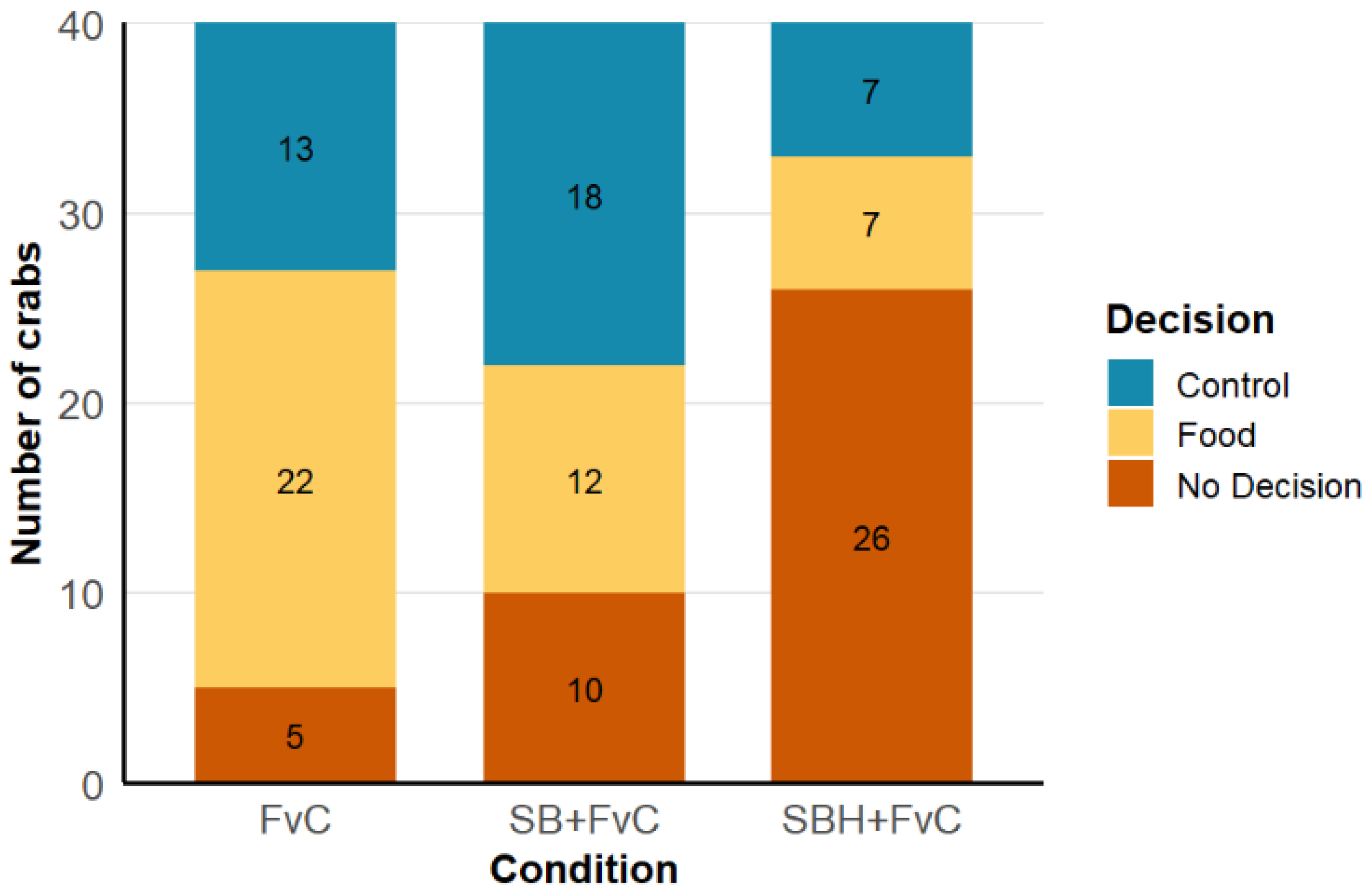
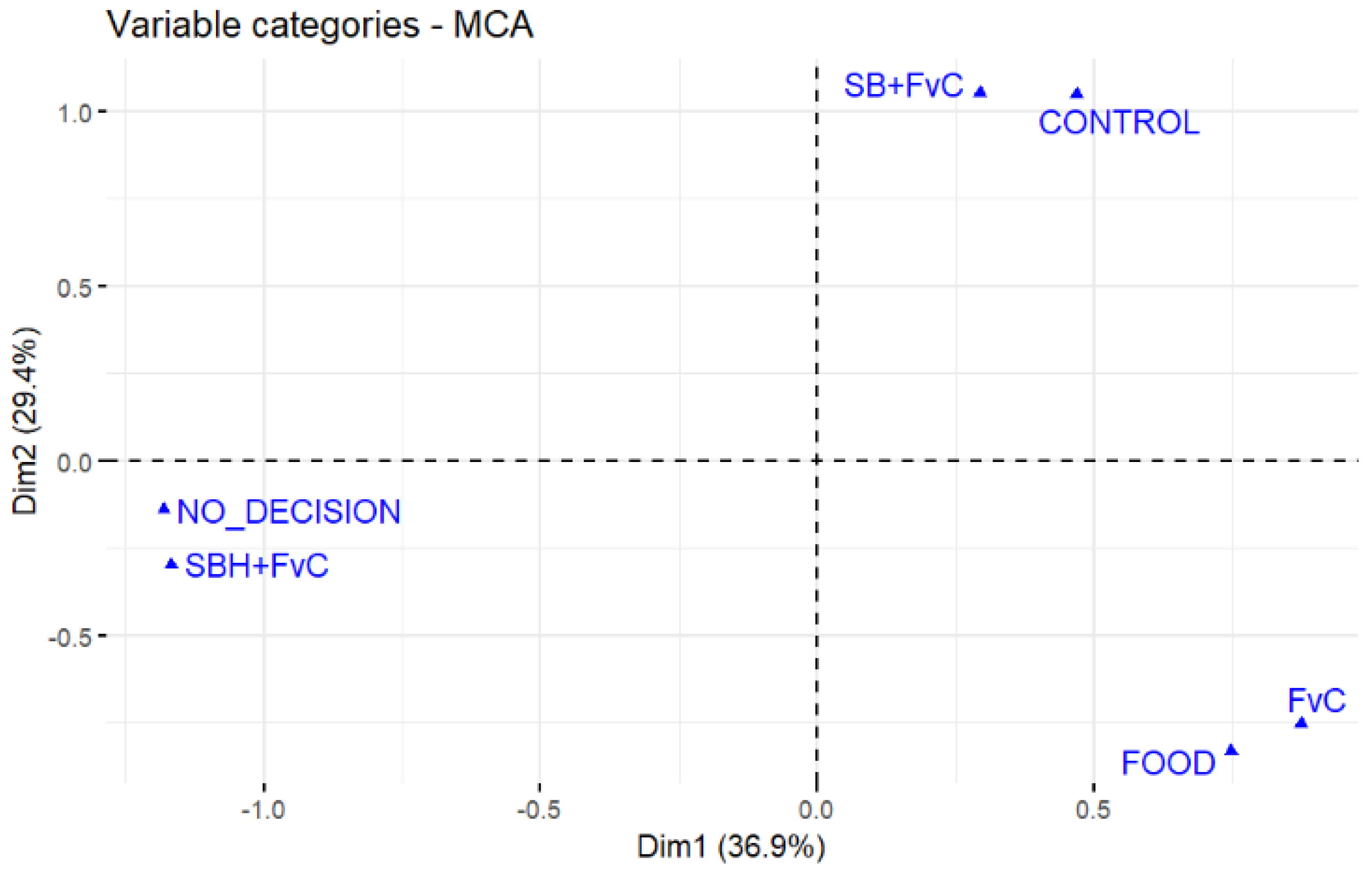
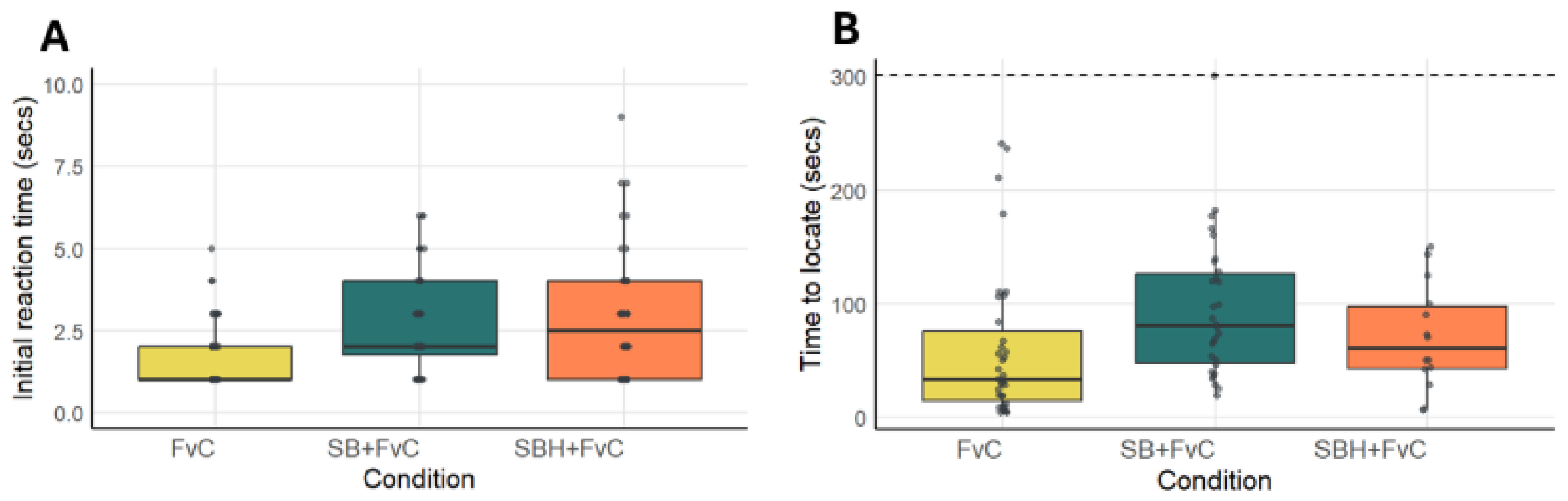
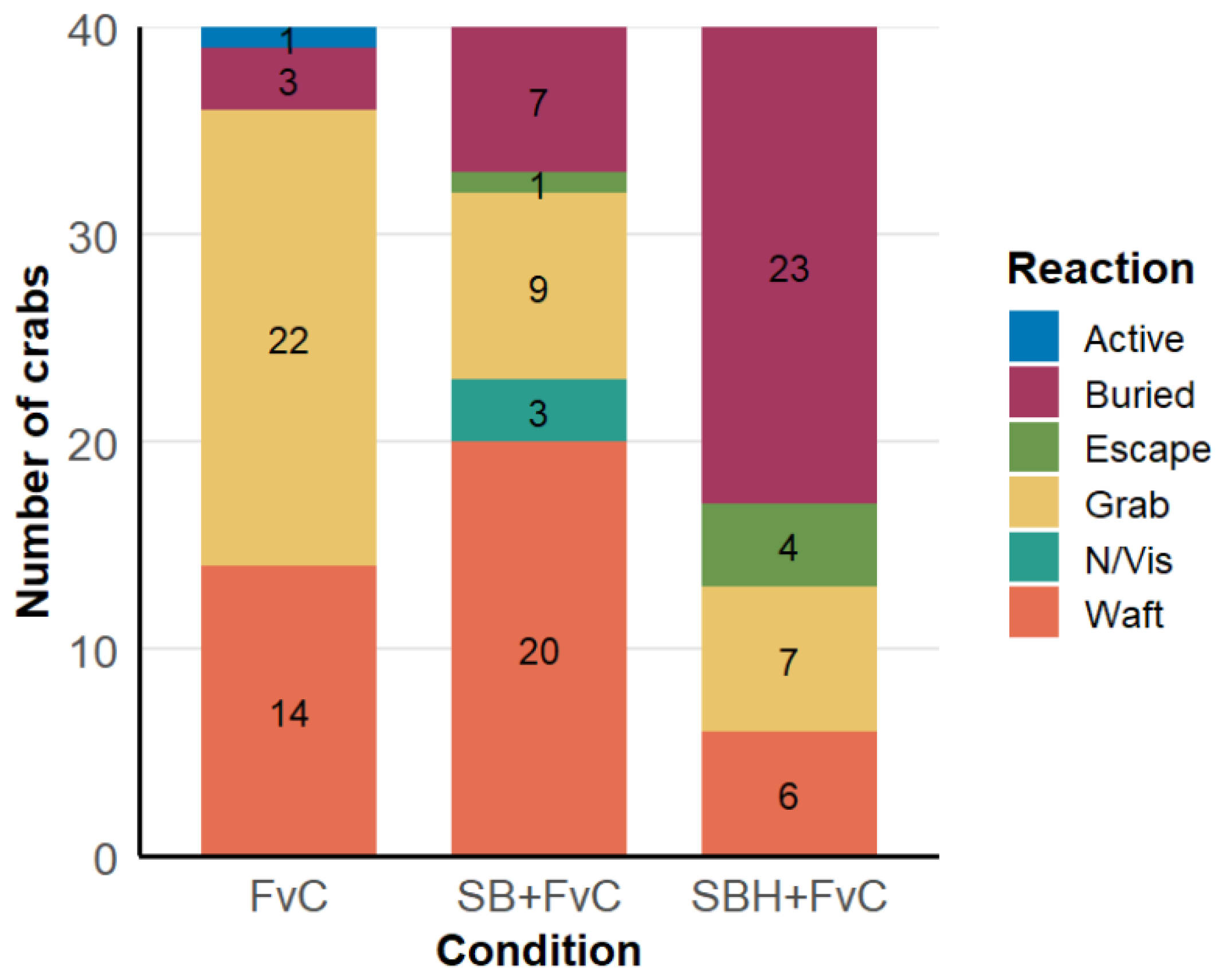
Feeding and Foraging Activity
4. Discussion
5. Conclusions
Supplementary Materials
Author Contributions
Funding
Institutional Review Board Statement
Informed Consent Statement
Data Availability Statement
Acknowledgments
Conflicts of Interest
References
- Guy, C.S.; Brown, M.L. Analysis and Interpretation of Freshwater Fisheries Data; American Fisheries Society: Bethesda, MD, USA, 2007; pp. 765–842. ISBN 9781888569773. [Google Scholar]
- Lima, S.L.; Dill, L.M. Behavioral decisions made under the risk of predation: A review and prospectus. Can. J. Zool. 1990, 68, 619–640. Available online: https://cdnsciencepub.com/doi/10.1139/z90-092 (accessed on 1 March 2026). [CrossRef]
- Mittlebach, G.G.; Persson, L. The ontogeny of piscivory and its ecological consequences. Can. J. Fish. Aquat. Sci. 1998, 55, 1454–1465. [Google Scholar] [CrossRef]
- Ferner, M.C.; Smee, D.L.; Weissburg, M.J. Habitat complexity alters lethal and non-lethal olfactory interactions between predators and prey. Mar. Ecol. Prog. Ser. 2009, 374, 13–22. [Google Scholar] [CrossRef]
- Kavaliers, M.; Choleris, E. Antipredator responses and defensive behavior: Ecological and ethological approaches for the neurosciences. Neurosci. Biobehav. Rev. 2001, 25, 577–586. Available online: https://www.sciencedirect.com/science/article/abs/pii/S0149763401000422?via%3Dihub (accessed on 1 March 2026). [CrossRef] [PubMed]
- Harrison, N.D.; Steven, R.; Phillips, B.L.; Hemmi, J.M.; Wayne, A.F.; Mitchell, N.J. Identifying the most effective behavioural assays and predator cues for quantifying anti-predator responses in mammals: A systematic review. Environ. Evid. 2023, 12, 5. [Google Scholar] [CrossRef]
- Martin, C.W.; Fodrie, F.J.; Heck, K.L.; Mattila, J. Differential habitat use and antipredator response of juvenile roach (Rutilus rutilus) to olfactory and visual cues from multiple predators. Oecologia 2010, 162, 893–902. [Google Scholar] [CrossRef]
- Stevens, M.; Lown, A.E.; Wood, L.E. Camouflage and individual variation in shore crabs (Carcinus maenas) from different habitats. PLoS ONE 2014, 9, e115586. [Google Scholar] [CrossRef]
- Hanlon, R.T.; Messenger, J.B. Cephalopod Behaviour; Cambridge University Press: Cambridge, UK, 1996; Available online: https://books.google.co.uk/books?id=Nxfv6xZZ6WYC&printsec=frontcover&source=gbs_ge_summary_r&cad=0#v=onepage&q&f=false (accessed on 1 March 2026).
- Caldwell, R.L.; Dingle, H. Ecology and evolution of agonistic behavior in stomatopods. Naturwissenschaften 1975, 62, 214–222. [Google Scholar] [CrossRef]
- Ruxton, G.D.; Allen, W.L.; Sherratt, T.N.; Speed, M.P. Avoiding Attack: The Evolutionary Ecology of Crypsis, Aposematism, and Mimicry; Oxford University Press: Oxford, UK, 2019. [Google Scholar] [CrossRef]
- Lohrer, A.M.; Whitlatch, R.B. Interactions among aliens: Apparent replacement of one exotic species by another. Ecology 2002, 83, 719–732. [Google Scholar] [CrossRef]
- Stevens, M.; Merilaita, S. Animal camouflage: Current issues and new perspectives. Philos. Trans. R. Soc. B Biol. Sci. 2011, 364, 423–427. [Google Scholar] [CrossRef]
- Sih, A. Predators and prey lifestyles: An Evolutionary and Ecological Overview. In Predation: Direct and Indirect Impacts on Aquatic Communities; Kerfoot, W.C., Sih, A., Eds.; University Press of New England: Lebanon, NH, USA, 1987; pp. 203–224. [Google Scholar]
- Smith, I.P.; Collins, K.J.; Jensen, A.C. Movement and activity patterns of the European lobster, Homarus gammarus, revealed by electromagnetic telemetry. Mar. Biol. 1998, 132, 611–623. [Google Scholar] [CrossRef]
- Gotceitas, V.; Brown, J.A. Substrate selection by juvenile Atlantic cod (Gadus morhua): Effects of predation risk. Oecologia 1993, 93, 31–37. [Google Scholar] [CrossRef] [PubMed]
- Morosinotto, C.; Thomson, R.L.; Korpimäki, E. Habitat selection as an antipredator behaviour in a multi-predator landscape: All enemies are not equal. J. Anim. Ecol. 2010, 79, 327–333. [Google Scholar] [CrossRef] [PubMed]
- Bertelsen, R.D.; Hornbeck, J.R. Using acoustic telemetry to evaluate the spatial behavior of adult spiny lobsters (Panulirus argus) in the Dry Tortugas, Florida, USA. N. Z. J. Mar. Freshw. Res. 2009, 43, 35–46. [Google Scholar] [CrossRef]
- Kats, L.B.; Dill, L.M. The scent of death: Chemosensory assessment of predation risk by prey animals. Ecoscience 1998, 5, 361–394. [Google Scholar] [CrossRef]
- Connolly, L.E. Effect of Predator Diet on Foraging Behavior of Panopeus herbstii in Response to Predator Urine Cues 2013. Ph.D. Thesis, Georgia Institute of Technology, Atlanta, GA, USA, 2013. Available online: http://hdl.handle.net/1853/53392 (accessed on 1 March 2026).
- Hazlett, B.A. Information use by an Invading Species: Do Invaders Respond More to Alarm Odors than Native Species? Biol. Invasions 2000, 2, 289–294. [Google Scholar] [CrossRef]
- Chabenat, A.; Bellanger, C.; Jozet-Alves, C.; Knigge, T. Hidden in the sand: Alteration of burying behaviour in shore crabs and cuttlefish by antidepressant exposure Ecotoxicol. Environ. Saf. 2019, 186, 109738. [Google Scholar] [CrossRef]
- Peckarsky, B.L.; Abrams, P.A.; Bolnick, D.I.; Dill, L.M.; Grabowski, J.H.; Luttbeg, B.; Orrock, J.L.; Peacor, S.D.; Preisser, E.L.; Schmitz, O.J.; et al. Revisiting the classics: Considering nonconsumptive effects in textbook examples of predator–prey interactions. Ecology 2008, 89, 2416–2425. [Google Scholar] [CrossRef]
- Chivers, D.P.; Smith, R.J.F. Chemical alarm signalling in aquatic predator-prey systems: A review and prospectus. Ecoscience 1998, 5, 338–352. [Google Scholar] [CrossRef]
- Lima, S.L. Stress and decision making under the risk of predation: Recent developments from behavioral, reproductive, and ecological perspectives. Adv. Study Behav. 1998, 27, 215–290. [Google Scholar] [CrossRef]
- Kovalenko, K.E.; Dibble, E.D.; Agostinho, A.A.; Pelicice, F.M. Recognition of non-native peacock bass, Cichla kelberi by native prey: Testing the naiveté hypothesis. Biol. Invasions 2010, 12, 3071–3080. [Google Scholar] [CrossRef]
- Martin, C.W. Naïve prey exhibit reduced antipredator behavior and survivorship. PeerJ 2014, 2, e665. [Google Scholar] [CrossRef]
- Yli-Renko, M.; Pettay, J.E.; Rothäusler, E.; Vesakoski, O. Lack of anti-predator recognition in a marine isopod under the threat of an invasive predatory crab. Biol. Invasions 2022, 24, 3189–3198. [Google Scholar] [CrossRef]
- Sax, D.F.; Gaines, S.D. Species invasions and extinction: The future of native biodiversity on islands. Proc. Natl. Acad. Sci. USA 2008, 105, 11490–11497. [Google Scholar] [CrossRef]
- Albins, M.A.; Hixon, M.A. Invasive Indo-Pacific lionfish Pterois volitans reduce recruitment of Atlantic coral-reef fishes. Mar. Ecol. Prog. Ser. 2008, 367, 233–238. [Google Scholar] [CrossRef]
- Grosholz, E.D.; Ruiz, G.M. Predicting the impact of introduced marine species: Lessons from the multiple invasions of the European green crab Carcinus maenas. Biol. Conserv. 1996, 78, 59–66. [Google Scholar] [CrossRef]
- Chiesa, S.; Petochi, T.; Brusà, R.B.; Raicevich, S.; Cacciatore, F.; Franceschini, G.; Antonini, C.; Vallini, C.; Bernarello, V.; Oselladore, F.; et al. Impacts of the blue crab invasion on Manila clam aquaculture in Po Delta coastal lagoons (Northern Adriatic Sea, Italy). Estuar. Coast. Shelf Sci. 2025, 312, 109037. [Google Scholar] [CrossRef]
- Brown, G.E. Learning about danger: Chemical alarm cues and local risk assessment in prey fishes. Fish Fish. 2003, 4, 227–234. [Google Scholar] [CrossRef]
- Shave, C.R.; Townsend, C.R.; Crowl, T.A. Anti-predator behaviours of a freshwater crayfish (Paranephrops zealandicus) to a native and an introduced predator. N. Z. J. Ecol. 1994, 18, 1–10. Available online: https://www.jstor.org/stable/24053650 (accessed on 1 March 2026).
- Epp, K.J.; Gabor, C.R. Innate and learned predator recognition mediated by chemical signals in Eurycea nana. Ethology 2008, 114, 607–615. [Google Scholar] [CrossRef]
- Hegab, I.M.; Kong, S.; Yang, S.; Mohamaden, W.I.; Wei, W. The ethological relevance of predator odors to induce changes in prey species. Acta Ethol. 2015, 18, 1–9. [Google Scholar] [CrossRef]
- Griffin, A.S.; Evans, C.S.; Blumstein, D.T. Learning specificity in acquired predator recognition. Anim. Behav. 2001, 62, 577–589. [Google Scholar] [CrossRef]
- Global Invasive Species Database 2025. Available online: http://www.iucngisd.org/gisd/search.php (accessed on 1 March 2026).
- Cohen, A.N.; Carlton, J.T.; Fountain, M.C. Introduction, dispersal and potential impacts of the green crab Carcinus maenas in San Francisco Bay, California. Mar. Biol. 1995, 122, 225–237. [Google Scholar] [CrossRef]
- Sordo, L.; Santos, R.; Reis, J.; Shulika, A.; Silva, J. A direct CO2 control system for ocean acidification experiments: Testing effects on the coralline red algae Phymatolithon lusitanicum. PeerJ 2016, 4, e2503. [Google Scholar] [CrossRef] [PubMed]
- Lyons, L.J.; O’Riordan, R.M.; Cross, T.F.; Culloty, S.C. Reproductive biology of the shore crab Carcinus maenas (Decapoda, Portunidae): A macroscopic and histological view. Invertebr. Reprod. Dev. 2011, 56, 144–156. [Google Scholar] [CrossRef]
- Richardson, B.; Martin, H.; Bartels-Hardege, H.; Fletcher, N.; Hardege, J.D. The role of changing pH on olfactory success of predator–prey interactions in green shore crabs, Carcinus maenas. Aquat. Ecol. 2021, 56, 409–418. [Google Scholar] [CrossRef]
- Ohnstad, H.; Jones, A.M.; Howard, B.; Schirrmacher, P.; Bartels-Hardege, H.D.; Hardege, J.D. Effects of pH on Olfactory Behaviours in Male Shore Crabs, Carcinus maenas. Animals 2024, 14, 948. [Google Scholar] [CrossRef]
- Hardege, J.D.; Fletcher, N.; Burnett, J.W.; Ohnstad, H.; Bartels-Hardege, H.D. Bioassay complexities—Exploring challenges in aquatic chemosensory research. Front. Ecol. Evol. 2024, 3, 1293585. [Google Scholar] [CrossRef]
- Monteiro, J.N.; Ovelheiro, A.; Maia, F.; Teodósio, M.A.; Leitão, F. Biological traits and population dynamics for sustainable harvesting of Carcinus maenas. Fish. Res. 2025, 281, 107243. [Google Scholar] [CrossRef]
- RStudio Team. RStudio: Integrated Development for R; RStudio, PBC: Boston, MA, USA, 2020; Available online: http://www.rstudio.com (accessed on 1 March 2026).
- Shapiro, S.S.; Wilk, M.B. An analysis of variance test for normality (complete samples). Biometrika 1965, 52, 591–611. [Google Scholar] [CrossRef]
- McHugh, M.L. The chi-square test of independence. Biochem. Med. 2013, 23, 143–149. [Google Scholar] [CrossRef]
- Pinheiro, J.; Bates, D.; R Core Team. nlme: Linear and Nonlinear Mixed Effects Models, Version 3.1-168; Comprehensive R Archive Network: Vienna, Austria, 2025. Available online: https://CRAN.R-project.org/package=nlme (accessed on 1 March 2026).
- Wickham, H. ggplot2: Elegant Graphics for Data Analysis; Springer: New York, NY, USA, 2016; ISBN 978-3-319-24277-4. Available online: https://ggplot2.tidyverse.org (accessed on 1 March 2026).
- Wassersug, R.J.; Sperry, D.G. The relationships of locomotion to differential predation on Pseudacris triseriata (Anura: Hylidae). Ecology 1977, 58, 830–839. [Google Scholar] [CrossRef]
- Sneddon, L.U.; Huntingford, F.A.; Taylor, A.C.; Orr, J.F. Weapon strength and competitive success in the fights of shore crabs (Carcinus maenas). J. Zool. 2000, 250, 397–403. [Google Scholar] [CrossRef]
- Kaczer, L.; Pedetta, S.; Maldonado, H. Aggressiveness and memory: Subordinate crabs present higher memory ability than dominants after an agonistic experience. Neurobiol. Learn. Mem. 2007, 87, 140–148. [Google Scholar] [CrossRef]
- Davies, R.; Gagen, M.H.; Bull, J.C.; Pope, E.C. Maze learning and memory in a decapod crustacean. Biol. Lett. 2019, 15, 20190407. [Google Scholar] [CrossRef] [PubMed]
- Hughes, R.N.; Seed, R. Behavioural mechanisms of prey selection in crabs. J. Exp. Mar. Biol. Ecol. 1995, 193, 225–238. [Google Scholar] [CrossRef]
- Dimant, B.; Maldonado, H. Habituation and associative learning during exploratory behavior of the crab Chasmagnathus. J. Comp. Physiol. A 1992, 170, 749–759. [Google Scholar] [CrossRef]
- Roudez, R.J.; Glover, T.; Weis, J.S. Learning in an invasive and a native predatory crab. Biol. Invasions 2008, 10, 1191–1196. [Google Scholar] [CrossRef]
- Magurran, A.E. The adaptive significance of schooling as an anti-predator defence in fish. Ann. Zool. Fennici 1990, 27, 51–66. Available online: https://www.jstor.org/stable/23736019 (accessed on 1 March 2026).
- Lohrengel, K.; Afeltra, C.M.; Evans, P.G. Bubble Bursts, a Potential Foraging Strategy for Bottlenose Dolphins (Tursiops truncatus) in Cardigan Bay. Aquat. Mamm. 2022, 48, 733–736. [Google Scholar] [CrossRef]
- Ferrari, M.C.; Wisenden, B.D.; Chivers, D.P. Chemical ecology of predator–prey interactions in aquatic ecosystems: A review and prospectus. Can. J. Zool. 2010, 88, 698–724. [Google Scholar] [CrossRef]
- Hill, J.M.; Weissburg, M.J. Habitat complexity and predator size mediate interactions between intraguild blue crab predators and mud crab prey in oyster reefs. Mar. Ecol. Prog. Ser. 2013, 488, 209–219. [Google Scholar] [CrossRef]
- Maldonado, H. Crustaceans as models to investigate memory illustrated by extensive behavioral and physiological studies in Chasmagnathus. In The Crustacean Nervous System; Springer: Berlin/Heidelberg, Germany, 2002; Available online: https://link.springer.com/chapter/10.1007/978-3-662-04843-6_24 (accessed on 1 March 2026).
- Orlosk, J.L.; Walker, J.M.; Morrison, A.L.; Atema, J. Conditioning the crab Carcinus maenas against instinctive light avoidance. Mar. Freshw. Behav. Physiol. 2011, 44, 375–381. [Google Scholar] [CrossRef]
- Roggatz, C.C.; Hardege, J.D.; Lorch, M.; Benoit, D. Ocean acidification will alter the structure and function of peptide signalling molecules. Glob. Change Biol. 2016, 22, 3914–3926. [Google Scholar] [CrossRef]
- Mancinelli, G.; Chainho, P.; Cilenti, L.; Falco, S.; Kapiris, K.; Katselis, G.; Ribeiro, F. The Atlantic blue crab Callinectes sapidus in southern European coastal waters: Distribution, impact and prospective invasion management strategies. Mar. Pollut. Bull. 2017, 119, 5–11. [Google Scholar] [CrossRef]
- Grosholz, E.; Ashton, G.; Bradley, M.; Brown, C.; Ceballos-Osuna, L.; Chang, A.; de Rivera, C.; Gonzalez, J.; Heineke, M.; Marraffini, M.; et al. Stage-specific overcompensation, the hydra effect, and the failure to eradicate an invasive predator. Proc. Natl. Acad. Sci. USA 2021, 118, e2003955118. [Google Scholar] [CrossRef] [PubMed]
- Poulin, R.X.; Lavoie, S.; Siegel, K.; Gaul, D.A.; Weissburg, M.; Kubanek, J. Chemical encoding of risk perception and predator detection among estuarine invertebrates. Proc. Natl. Acad. Sci. USA 2018, 115, 662–667. [Google Scholar] [CrossRef] [PubMed]
- Weissburg, M.; Poulin, R.X.; Kubanek, J. You are what you eat: A metabolomics approach to understanding prey responses to diet-dependent chemical cues released by predators. J. Chem. Ecol. 2016, 42, 1037–1046. [Google Scholar] [CrossRef] [PubMed]
- Hardege, J.D.; Terschak, J.A. Identification of crustacean pheromones. In Chemical Communication in Crustaceans; Breithaupt, T., Thiel, M., Eds.; Springer: New York, NY, USA, 2010. [Google Scholar] [CrossRef]


Disclaimer/Publisher’s Note: The statements, opinions and data contained in all publications are solely those of the individual author(s) and contributor(s) and not of MDPI and/or the editor(s). MDPI and/or the editor(s) disclaim responsibility for any injury to people or property resulting from any ideas, methods, instructions or products referred to in the content. |
© 2026 by the authors. Licensee MDPI, Basel, Switzerland. This article is an open access article distributed under the terms and conditions of the Creative Commons Attribution (CC BY) license.
Share and Cite
Burnett, J.W.; Ohnstad, H.; Jones, A.M.; Hardege, J.D.; Bartels-Hardege, H.D. Olfactory Cues in the Odour Plume of Predatory Fish Reduce Foraging and Elicit Anti-Predator Behaviour in the European Green Crab Carcinus maenas. Animals 2026, 16, 828. https://doi.org/10.3390/ani16050828
Burnett JW, Ohnstad H, Jones AM, Hardege JD, Bartels-Hardege HD. Olfactory Cues in the Odour Plume of Predatory Fish Reduce Foraging and Elicit Anti-Predator Behaviour in the European Green Crab Carcinus maenas. Animals. 2026; 16(5):828. https://doi.org/10.3390/ani16050828
Chicago/Turabian StyleBurnett, Jonathan W., Hannah Ohnstad, Amber M. Jones, Jörg D. Hardege, and Helga D. Bartels-Hardege. 2026. "Olfactory Cues in the Odour Plume of Predatory Fish Reduce Foraging and Elicit Anti-Predator Behaviour in the European Green Crab Carcinus maenas" Animals 16, no. 5: 828. https://doi.org/10.3390/ani16050828
APA StyleBurnett, J. W., Ohnstad, H., Jones, A. M., Hardege, J. D., & Bartels-Hardege, H. D. (2026). Olfactory Cues in the Odour Plume of Predatory Fish Reduce Foraging and Elicit Anti-Predator Behaviour in the European Green Crab Carcinus maenas. Animals, 16(5), 828. https://doi.org/10.3390/ani16050828