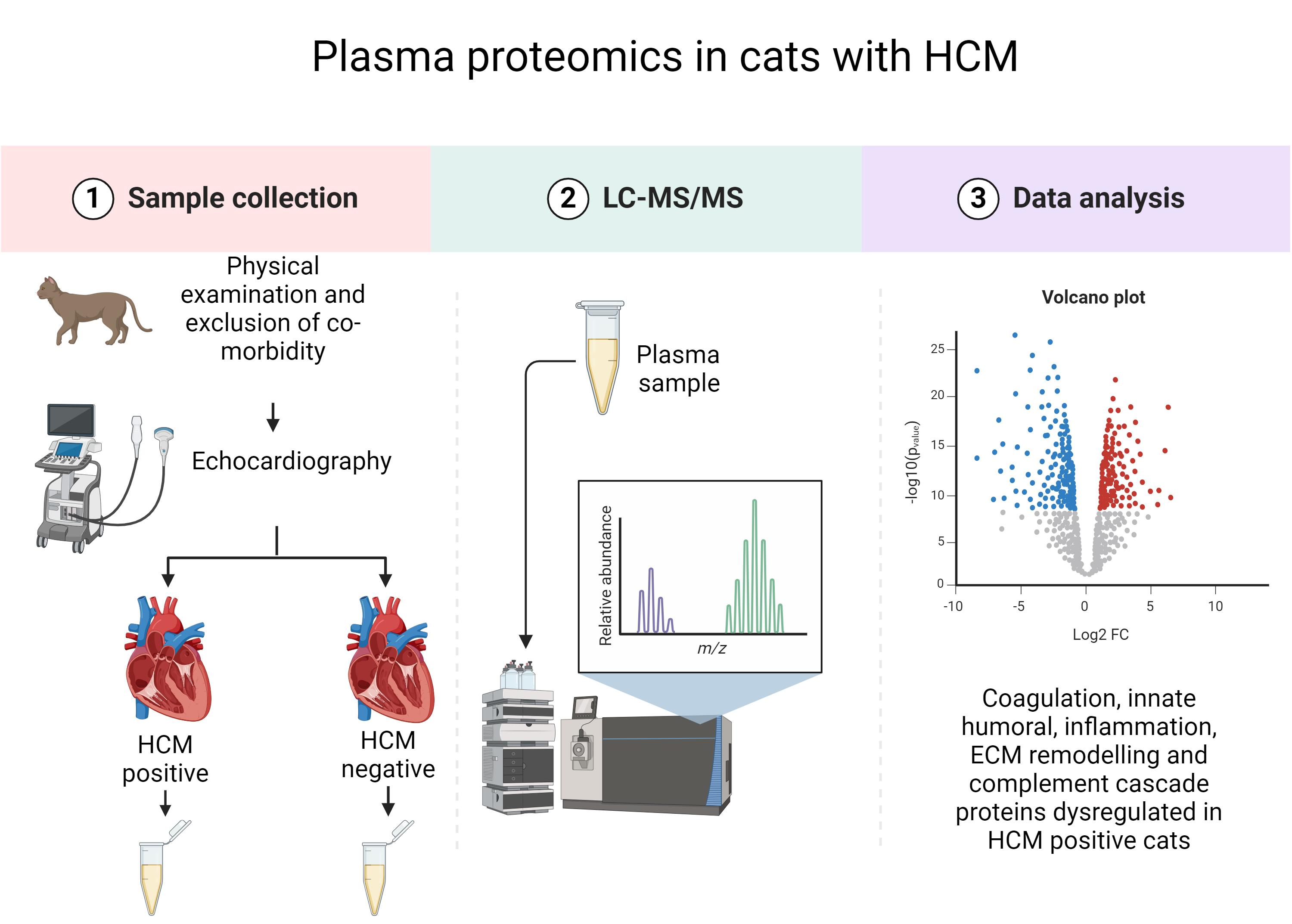
Understanding Pathophysiological Complexity of Feline Hypertrophic Cardiomyopathy Using SWATH-MS Plasma Proteomics


Simple Summary
Abstract
1. Introduction
2. Materials and Methods
2.1. Animal Cohorts and Ethical Approval
2.2. Clinical Diagnosis of HCM in Cats
2.3. Echocardiography Analysis
2.4. Sample Collection and Storage
2.5. Proteomic Analysis of the Clinical Plasma Samples
2.6. Data-Independent Acquisition (DIA) Analysis of the Plasma Samples
2.7. Quantitative Data Processing
3. Results
3.1. Clinical Diagnosis of HCM Positive Cats
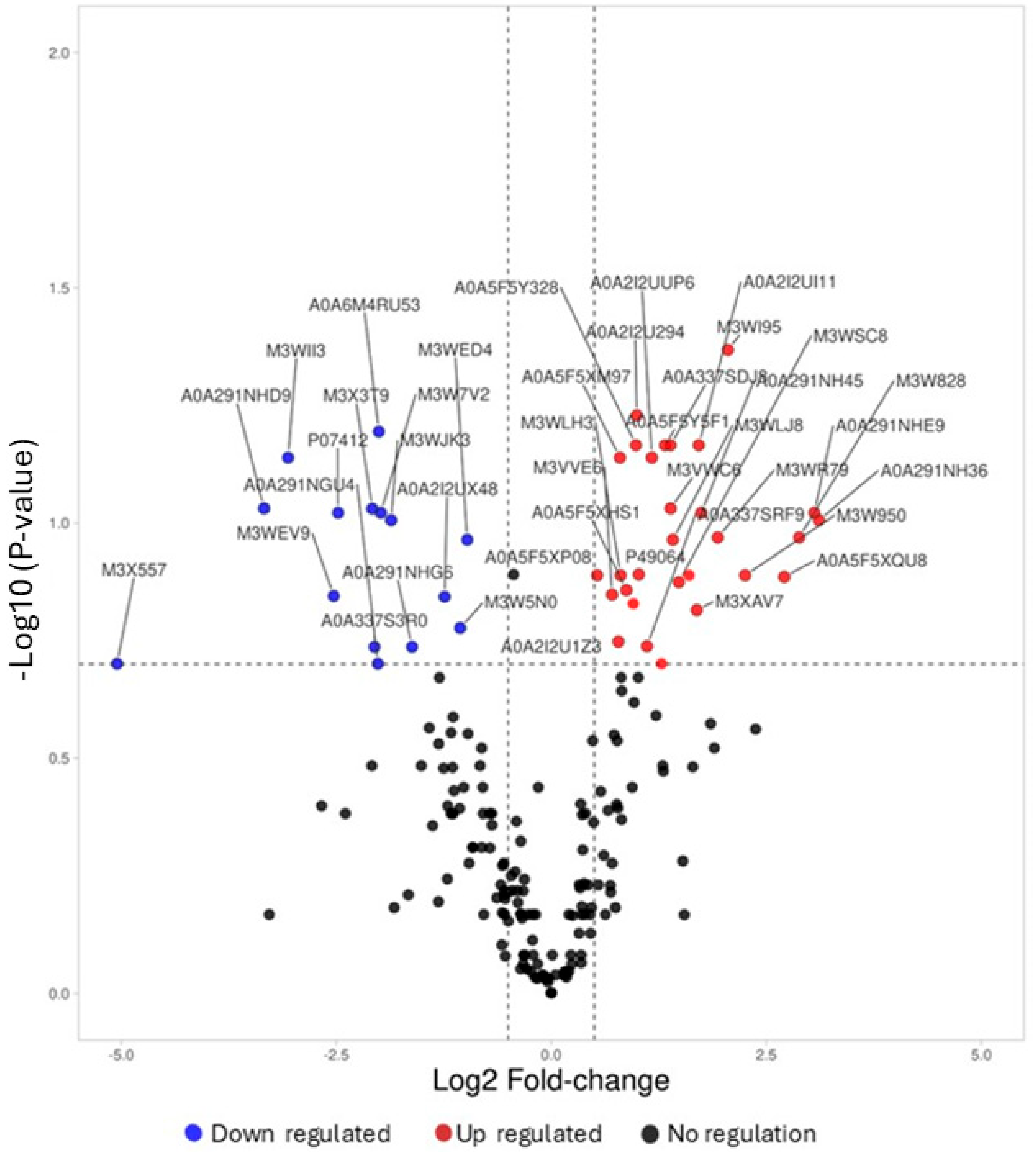
3.2. Proteomic Analysis
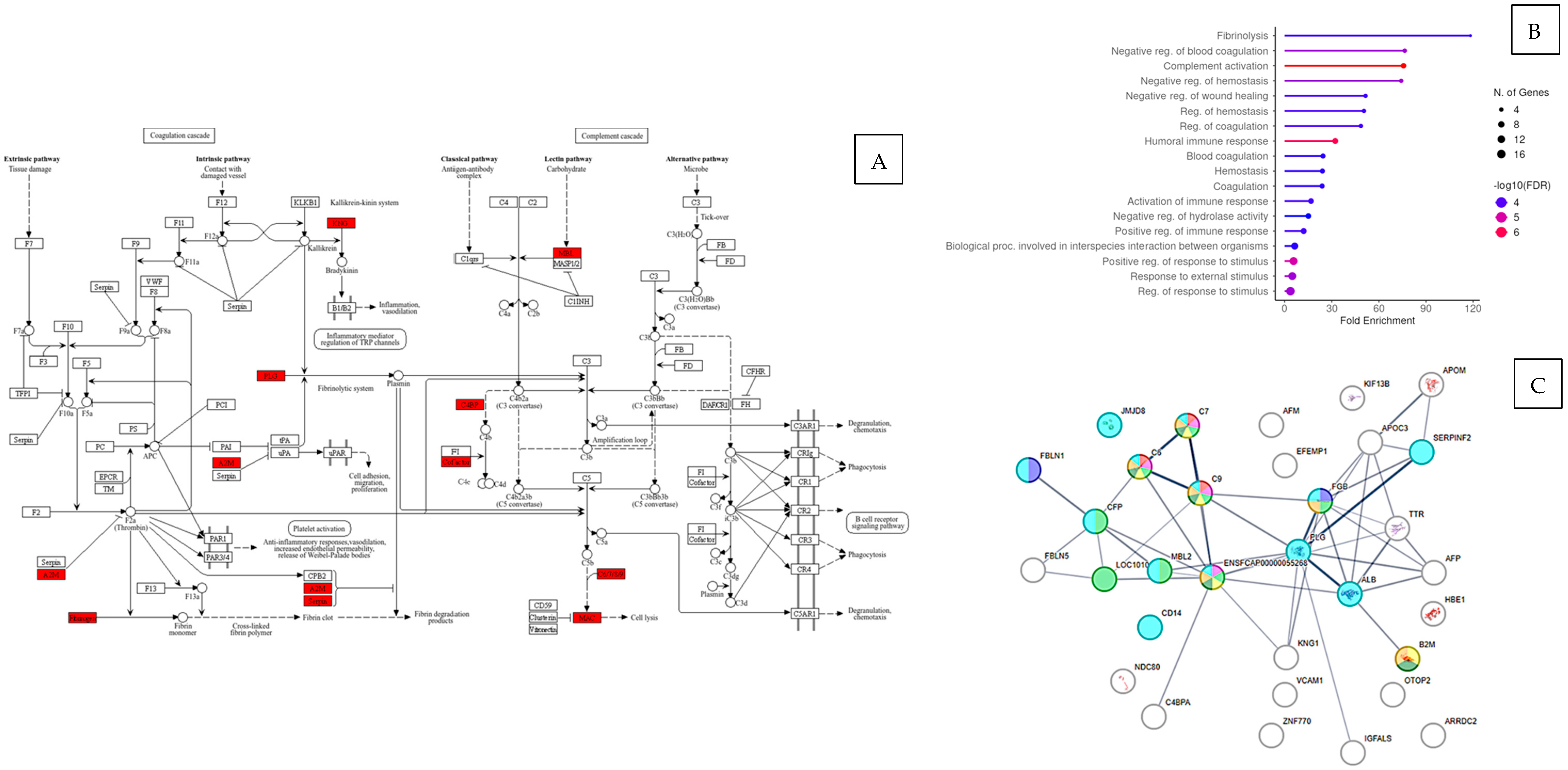
3.3. Gene Ontology and Protein Pathway Analysis
4. Discussion
5. Limitations
6. Conclusions
Supplementary Materials
Author Contributions
Funding
Institutional Review Board Statement
Informed Consent Statement
Data Availability Statement
Acknowledgments
Conflicts of Interest
Abbreviations
| DIA | data-independent acquisition |
| DIA-NN | data-independent acquisition–neural networks |
| FASP | filter-aided sample preparation |
| FATE | feline arterial thromboembolism |
| fHCM | feline hypertrophic cardiomyopathy |
| hHCM | human hypertrophic cardiomyopathy |
| HCL | hydrochloric acid |
| IAM | iodoacetamide |
| MS/MS | tandem mass spectrometry |
| RT | retention time |
| SWATH-MS | sequential window acquisition of all theoretical fragment ion spectra and mass spectrometry |
References
- Paige, C.E.; Abbott, J.A.; Elvinger, F.; Pyle, R.L. Prevalence of cardiomyopathy in apparently healthy cats. J. Am. Vet. Med. Assoc. 2009, 234, 1398–1403. [Google Scholar] [CrossRef]
- Payne, J.R.; Brodbelt, D.C.; Luis Fuentes, V. Cardiomyopathy prevalence in 780 apparently healthy cats in rehoming centres (the CatScan study). J. Vet. Cardiol. 2015, 17, S244–S257. [Google Scholar] [CrossRef] [PubMed]
- Freeman, L.M.; Rush, J.E.; Stern, J.A.; Huggins, G.S.; Maron, M.S. Feline hypertrophic cardiomyopathy: A spontaneous large animal model of human HCM. Cardiol. Res. 2017, 8, 139–142. [Google Scholar] [CrossRef]
- Stern, J.A.; Rivas, V.N.; Kaplan, J.L.; Ueda, Y.; Oldach, M.S.; Ontiveros, E.S.; Kooiker, K.B.; van Dijk, S.J.; Harris, S.P. Hypertrophic cardiomyopathy in purpose-bred cats with the A31P mutation in cardiac myosin binding protein-C. Sci. Rep. 2023, 13, 10319. [Google Scholar] [CrossRef]
- Payne, J.; Luis Fuentes, V.; Boswood, A.; Connolly, D.; Koffas, H.; Brodbelt, D. Population characteristics and survival in 127 referred cats with hypertrophic cardiomyopathy (1997 to 2005). J. Small Anim. Pract. 2010, 51, 540–547. [Google Scholar] [CrossRef]
- Meurs, K.M.; Norgard, M.M.; Kuan, M.; Häggström, J.; Kittleson, M. Analysis of 8 sarcomeric candidate genes for feline hypertrophic cardiomyopathy mutations in cats with hypertrophic cardiomyopathy. J. Vet. Intern. Med. 2009, 23, 840–843. [Google Scholar] [CrossRef]
- Godiksen, M.T.N.; Christiansen, M.; Pipper, C.B.; Willesen, J.T.; Koch, J. Prevalence of hypertrophic cardiomyopathy in a cohort of British Shorthair cats in Denmark. J. Vet. Intern. Med. 2011, 25, 866–871. [Google Scholar]
- Häggström, J.; Luis Fuentes, V.; Wess, G. Screening for hypertrophic cardiomyopathy in cats. J. Vet. Cardiol. 2015, 17, S134–S149. [Google Scholar] [CrossRef] [PubMed]
- Maron, B.J.; Fox, P.R. Hypertrophic cardiomyopathy in man and cats. J. Vet. Cardiol. 2015, 17, S6–S9. [Google Scholar] [CrossRef]
- Luis Fuentes, V.; Wilkie, L.J. Asymptomatic hypertrophic cardiomyopathy: Diagnosis and therapy. Vet. Clin. N. Am. Small Anim. Pract. 2017, 47, 1041–1054. [Google Scholar] [CrossRef]
- Messer, A.E.; Chan, J.; Daley, A.; Copeland, O.; Marston, S.B.; Connolly, D.J. Investigations into the sarcomeric protein and Ca2+-regulation abnormalities underlying hypertrophic cardiomyopathy in cats (Felis catus). Front. Physiol. 2017, 8, 348. [Google Scholar] [CrossRef]
- Novo Matos, J.; Payne, J.R.; Seo, J.; Luis Fuentes, V. Natural history of hypertrophic cardiomyopathy in cats from rehoming centers: The CatScan II study. J. Vet. Intern. Med. 2022, 36, 1900–1912. [Google Scholar] [CrossRef]
- Kuusisto, J.; Kärjä, V.; Sipola, P.; Kholová, I.; Peuhkurinen, K.; Jääskeläinen, P.; Naukkarinen, A.; Ylä-Herttuala, S.; Punnonen, K.; Laakso, M. Low-grade inflammation and the phenotypic expression of myocardial fibrosis in hypertrophic cardiomyopathy. Heart 2012, 98, 1007–1013. [Google Scholar] [CrossRef]
- Lillo, R.; Graziani, F.; Franceschi, F.; Iannaccone, G.; Massetti, M.; Olivotto, I.; Crea, F.; Liuzzo, G. Inflammation across the spectrum of hypertrophic cardiac phenotypes. Heart Fail. Rev. 2023, 28, 1065–1075. [Google Scholar] [CrossRef]
- Becker, R.C.; Owens, A.P.; Sadayappan, S. Tissue-level inflammation and ventricular remodeling in hypertrophic cardiomyopathy. J. Thromb. Thrombolysis 2020, 49, 177–183. [Google Scholar] [CrossRef]
- Thomas, T.P.; Grisanti, L.A. The dynamic interplay between cardiac inflammation and fibrosis. Front. Physiol. 2020, 11, 529075. [Google Scholar] [CrossRef]
- Forte, E.; Furtado, M.B.; Rosenthal, N. The interstitium in cardiac repair: Role of the immune–stromal cell interplay. Nat. Rev. Cardiol. 2018, 15, 601–616. [Google Scholar] [CrossRef] [PubMed]
- Monda, E.; Palmiero, G.; Rubino, M.; Verrillo, F.; Amodio, F.; Di Fraia, F.; Pacileo, R.; Fimiani, F.; Esposito, A.; Cirillo, A.; et al. Molecular basis of inflammation in the pathogenesis of cardiomyopathies. Int. J. Mol. Sci. 2020, 21, 6462. [Google Scholar] [CrossRef]
- Cesta, M.F.; Baty, C.J.; Keene, B.W.; Smoak, I.W.; Malarkey, D.E. Pathology of end-stage remodeling in a family of cats with hypertrophic cardiomyopathy. Vet. Pathol. 2005, 42, 458–467. [Google Scholar] [CrossRef] [PubMed]
- Khor, K.H.; Campbell, F.E.; Owen, H.; Shiels, I.A.; Mills, P.C. Myocardial collagen deposition and inflammatory cell infiltration in cats with pre-clinical hypertrophic cardiomyopathy. Vet. J. 2015, 203, 161–168. [Google Scholar] [CrossRef] [PubMed]
- Kitz, S.; Fonfara, S.; Hahn, S.; Hetzel, U.; Kipar, A. Feline hypertrophic cardiomyopathy: The consequence of cardiomyocyte-initiated and macrophage-driven remodeling processes? Vet. Pathol. 2019, 56, 565–575. [Google Scholar] [CrossRef]
- Rodríguez, J.M.M.; Fonfara, S.; Hetzel, U.; Kipar, A. Feline hypertrophic cardiomyopathy: Reduced microvascular density and involvement of CD34+ interstitial cells. Vet. Pathol. 2022, 59, 269–283. [Google Scholar] [CrossRef] [PubMed]
- Lo, M.W.; Woodruff, T.M. Complement: Bridging the innate and adaptive immune systems in sterile inflammation. J. Leukoc. Biol. 2020, 108, 339–351. [Google Scholar] [CrossRef]
- Rehulkova, H.; Rehulka, P.; Myslivcova Fucikova, A.; Stulik, J.; Pudil, R. Identification of novel biomarker candidates for hypertrophic cardiomyopathy and other cardiovascular diseases leading to heart failure. Physiol. Res. 2016, 65, 751–762. [Google Scholar] [CrossRef]
- Ghose, S.; Varshney, S.; Adlakha, K.; Bhat, A.; Naushin, S.; Seth, S.; Sengupta, S. Quantitative proteomics study reveals differential proteomic signature in dilated, restrictive, and hypertrophic cardiomyopathies. J. Proteins Proteom. 2019, 10, 33–44. [Google Scholar] [CrossRef]
- Captur, G.; Heywood, W.E.; Coats, C.; Rosmini, S.; Patel, V.; Lopes, L.R.; Collis, R.; Patel, N.; Syrris, P.; Bassett, P.; et al. Identification of a multiplex biomarker panel for hypertrophic cardiomyopathy using quantitative proteomics and machine learning. Mol. Cell. Proteom. 2020, 19, 114–127. [Google Scholar] [CrossRef] [PubMed]
- Shimada, Y.J.; Raita, Y.; Liang, L.W.; Maurer, M.S.; Hasegawa, K.; Fifer, M.A.; Reilly, M.P. Comprehensive proteomics profiling reveals circulating biomarkers of hypertrophic cardiomyopathy. Circ. Heart Fail. 2021, 14, e007849. [Google Scholar] [CrossRef] [PubMed]
- Liu, M.; Eckersall, P.D.; Mrljak, V.; Horvatić, A.; Guillemin, N.; Galan, A.; Köster, L.; French, A. Novel biomarkers in cats with congestive heart failure due to primary cardiomyopathy. J. Proteom. 2020, 226, 103896. [Google Scholar] [CrossRef]
- Rivas, V.N.; Kaplan, J.L.; Kennedy, S.A.; Fitzgerald, S.; Crofton, A.E.; Farrell, A.; Grubb, L.; Jauregui, C.E.; Grigorean, G.; Choi, E.; et al. Multi-omic, histopathologic, and clinicopathologic effects of once-weekly oral rapamycin in a naturally occurring feline model of hypertrophic cardiomyopathy: A pilot study. Animals 2023, 13, 3184. [Google Scholar] [CrossRef]
- Dimitrow, P.P.; Undas, A.; Bober, M.; Tracz, W.; Dubiel, J.S. Obstructive hypertrophic cardiomyopathy is associated with enhanced thrombin generation and platelet activation. Heart 2008, 94, e21. [Google Scholar] [CrossRef] [PubMed]
- Tsuda, T.; Hayashi, K.; Fujino, N.; Konno, T.; Tada, H.; Nomura, A.; Tanaka, Y.; Sakata, K.; Furusho, H.; Takamura, M.; et al. Effect of hypertrophic cardiomyopathy on the prediction of thromboembolism in patients with nonvalvular atrial fibrillation. Heart Rhythm. 2018, 16, 829–837. [Google Scholar] [CrossRef] [PubMed]
- Burczak, D.R.; Scott, C.G.; Julakanti, R.R.; Kara Balla, A.; Swain, W.H.; Ismail, K.; Geske, J.B.; Killu, A.M.; Deshmukh, A.J.; MacIntyre, C.J.; et al. Persistence of left atrial thrombus in patients with hypertrophic cardiomyopathy and atrial fibrillation. J. Interv. Card. Electrophysiol. 2024, 67, 731–738. [Google Scholar] [CrossRef] [PubMed]
- Bédard, C.; Lanevschi-Pietersma, A.; Dunn, M. Evaluation of coagulation markers in the plasma of healthy cats and cats with asymptomatic hypertrophic cardiomyopathy. Vet. Clin. Pathol. 2007, 36, 167–172. [Google Scholar] [CrossRef] [PubMed]
- Tablin, F.; Schumacher, T.; Pombo, M.; Marion, C.T.; Huang, K.; Norris, J.W.; Jandrey, K.E.; Kittleson, M.D. Platelet activation in cats with hypertrophic cardiomyopathy. J. Vet. Intern. Med. 2014, 28, 411–418. [Google Scholar] [CrossRef]
- Shaverdian, M.; Li, R.H.L. Preventing cardiogenic thromboembolism in cats: Literature gaps, rational recommendations, and future therapies. Vet. Clin. N. Am. Small Anim. Pract. 2023, 53, 1309–1323. [Google Scholar] [CrossRef]
- Stokol, T.; Brooks, M.; Rush, J.E.; Rishniw, M.; Erb, H.; Rozanski, E.; Kraus, M.S.; Gelzer, A.L. Hypercoagulability in cats with cardiomyopathy. J. Vet. Intern. Med. 2008, 22, 546–552. [Google Scholar] [CrossRef]
- Levi, M.; van der Poll, T.; Büller, H.R. Bidirectional relation between inflammation and coagulation. Circulation 2004, 109, 2698–2704. [Google Scholar] [CrossRef] [PubMed]
- Markiewski, M.M.; Nilsson, B.; Ekdahl, K.N.; Mollnes, T.E.; Lambris, J.D. Complement and coagulation: Strangers or partners in crime? Trends Immunol. 2007, 28, 184–192. [Google Scholar] [CrossRef]
- Heurich, M.; McCluskey, G. Complement and coagulation crosstalk—Factor H in the spotlight. Immunobiology 2023, 228, 152707. [Google Scholar] [CrossRef]
- Liang, L.W.; Raita, Y.; Hasegawa, K.; Fifer, M.A.; Maurer, M.S.; Reilly, M.P.; Shimada, Y.J. Proteomics profiling reveals a distinct high-risk molecular subtype of hypertrophic cardiomyopathy. Heart 2022, 108, 1807–1814. [Google Scholar] [CrossRef]
- Donahue, M.P.; Rose, K.; Hochstrasser, D.; Vonderscher, J.; Grass, P.; Chibout, S.D.; Nelson, C.L.; Sinnaeve, P.; Goldschmidt, P.; Granger, C.B. Discovery of proteins related to coronary artery disease using industrial-scale proteomics analysis of pooled plasma. Am. Heart J. 2006, 152, 478–485. [Google Scholar] [CrossRef]
- Ghodasara, P.; Satake, N.; Sadowski, P.; Kopp, S.; Mills, P.C. Investigation of cattle plasma proteome in response to pain and inflammation using next generation proteomics technique, SWATH-MS. Mol. Omics 2022, 18, 133–142. [Google Scholar] [CrossRef]
- Noor, Z.; Paramasivan, S.; Ghodasara, P.; Chemonges, S.; Gupta, R.; Kopp, S.; Mills, P.C.; Ranganathan, S.; Satake, N.; Sadowski, P. Leveraging homologies for cross-species plasma proteomics in ungulates using data-independent acquisition. J. Proteom. 2022, 250, 104384. [Google Scholar] [CrossRef] [PubMed]
- Ravuri, H.G.; Sadowski, P.; Noor, Z.; Satake, N.; Mills, P.C. Plasma proteomic changes in response to surgical trauma and a novel transdermal analgesic treatment in dogs. J. Proteom. 2022, 265, 104648. [Google Scholar] [CrossRef]
- Paramasivan, S.; Morrison, J.L.; Lock, M.C.; Darby, J.R.T.; Barrero, R.A.; Mills, P.C.; Sadowski, P. Automated proteomics workflows for high-throughput library generation and biomarker detection using data-independent acquisition. J. Proteome Res. 2023, 22, 2018–2029. [Google Scholar] [CrossRef] [PubMed]
- Ware, W.A. Cardiovascular Disease in Small Animal Medicine; CRC Press: Boca Raton, FL, USA, 2011. [Google Scholar]
- Kittleson, M.D.; Kienle, R.D. Small Animal Cardiovascular Medicine; Mosby: St. Louis, MO, USA, 1998. [Google Scholar]
- Korobova, V.; Kruglova, Y. Influence of clinical aspects and genetic factors on feline HCM severity and development. Vet. Sci. 2024, 11, 214. [Google Scholar] [CrossRef] [PubMed]
- Wiśniewski, J.R.; Zougman, A.; Nagaraj, N.; Mann, M. Universal sample preparation method for proteome analysis. Nat. Methods 2009, 6, 359–362. [Google Scholar] [CrossRef]
- Kulak, N.A.; Pichler, G.; Paron, I.; Nagaraj, N.; Mann, M. Minimal, encapsulated proteomic-sample processing applied to copy-number estimation in eukaryotic cells. Nat. Methods 2014, 11, 319–324. [Google Scholar] [CrossRef]
- Ravuri, H.G.; Noor, Z.; Mills, P.C.; Satake, N.; Sadowski, P. Data-independent acquisition enables robust quantification of 400 proteins in non-depleted canine plasma. Proteomes 2022, 10, 9. [Google Scholar] [CrossRef]
- Demichev, V.; Messner, C.B.; Vernardis, S.I.; Lilley, K.S.; Ralser, M. DIA-NN: Neural networks and interference correction enable deep proteome coverage in high throughput. Nat. Methods 2020, 17, 41–44. [Google Scholar] [CrossRef]
- Goedhart, J.; Luijsterburg, M.S. VolcaNoseR is a web app for creating, exploring, labeling and sharing volcano plots. Sci. Rep. 2020, 10, 20560. [Google Scholar] [CrossRef]
- Ge, S.X.; Jung, D.; Yao, R. ShinyGO: A graphical gene-set enrichment tool for animals and plants. Bioinformatics 2020, 36, 2628–2629. [Google Scholar] [CrossRef] [PubMed]
- Jensen, L.J.; Kuhn, M.; Stark, M.; Chaffron, S.; Creevey, C.; Muller, J.; Doerks, T.; Julien, P.; Roth, A.; Simonovic, M.; et al. STRING 8—A global view on proteins and their functional interactions in 630 organisms. Nucleic Acids Res. 2009, 37, 412–416. [Google Scholar] [CrossRef] [PubMed]
- Welles, E.G. Antithrombotic and fibrinolytic factors. Vet. Clin. N. Am. Small Anim. Pract. 1996, 26, 1111–1127. [Google Scholar] [CrossRef]
- DeLeon-Pennell, K.Y.; Ero, O.K.; Ma, Y.; Padmanabhan Iyer, R.; Flynn, E.R.; Espinoza, I.; Musani, S.K.; Vasan, R.S.; Hall, M.E.; Fox, E.R.; et al. Glycoproteomic profiling provides candidate myocardial infarction predictors of later progression to heart failure. ACS Omega 2019, 4, 1272–1280. [Google Scholar] [CrossRef] [PubMed]
- Jasra, S.K.; Badian, C.; Macri, I.; Ra, P. Recognition of early myocardial infarction by immunohistochemical staining with cardiac troponin-I and complement C9. J. Forensic Sci. 2012, 57, 1595–1600. [Google Scholar] [CrossRef]
- Shah, A.M.; Myhre, P.L.; Arthur, V.; Dorbala, P.; Rasheed, H.; Buckley, L.F.; Claggett, B.; Liu, G.; Ma, J.; Nguyen, N.Q.; et al. Large-scale plasma proteomics identifies novel proteins and protein networks associated with heart failure development. Nat. Commun. 2024, 15, 528. [Google Scholar] [CrossRef]
- Egerstedt, A.; Berntsson, J.; Smith, M.L.; Gidlöf, O.; Nilsson, R.; Benson, M.; Wells, Q.S.; Celik, S.; Lejonberg, C.; Farrell, L.; et al. Profiling of the plasma proteome across different stages of human heart failure. Nat. Commun. 2019, 10, 5830. [Google Scholar] [CrossRef]
- Vacik Díaz, R.; Munsch, G.; Iglesias, M.J.; Pallares Robles, A.; Ibrahim-Kosta, M.; Nourse, J.; Khan, E.; Castoldi, E.; Saut, N.; Boland, A.; et al. Plasma levels of complement components C5 and C9 are associated with thrombin generation. J. Thromb. Haemost. 2024, 22, 2531–2542. [Google Scholar] [CrossRef]
- Somani, R.; Richardson, V.R.; Standeven, K.F.; Grant, P.J.; Carter, A.M. Elevated properdin and enhanced complement activation in first-degree relatives of South Asian subjects with type 2 diabetes. Diabetes Care 2012, 35, 894–899. [Google Scholar] [CrossRef][Green Version]
- Michels, M.A.H.M.; Volokhina, E.B.; van de Kar, N.C.A.J.; van den Heuvel, L.P.W.J. The role of properdin in complement-mediated renal diseases: A new player in complement-inhibiting therapy? Pediatr. Nephrol. 2019, 34, 1349–1367. [Google Scholar] [CrossRef]
- Chen, J.Y.; Cortes, C.; Ferreira, V.P. Properdin: A multifaceted molecule involved in inflammation and diseases. Mol. Immunol. 2018, 102, 58–72. [Google Scholar] [CrossRef] [PubMed]
- Blatt, A.Z.; Pathan, S.; Ferreira, V.P. Properdin: A tightly regulated critical inflammatory modulator. Immunol. Rev. 2016, 274, 172–190. [Google Scholar] [CrossRef] [PubMed]
- Bongrazio, M.; Pries, A.R.; Zakrzewicz, A. The endothelium as a physiological source of properdin: Role of wall shear stress. Mol. Immunol. 2003, 39, 669–675. [Google Scholar] [CrossRef] [PubMed]
- Hertle, E.; Arts, I.C.W.; van der Kallen, C.J.H.; Feskens, E.J.M.; Schalkwijk, C.G.; Stehouwer, C.D.A.; van Greevenbroek, M.M.J. The alternative complement pathway is longitudinally associated with adverse cardiovascular outcomes: The CODAM study. Thromb. Haemost. 2014, 111, 446–457. [Google Scholar] [CrossRef]
- Westermann, D. Does inflammation trigger fibrosis in hypertrophic cardiomyopathy: A burning question? Heart 2012, 98, 965–966. [Google Scholar] [CrossRef]
- Coleman, J.A.; Doste, R.; Ashkir, Z.; Coppini, R.; Sachetto, R.; Watkins, H.; Raman, B.; Bueno-Orovio, A. Mechanisms of ischaemia-induced arrhythmias in hypertrophic cardiomyopathy: A large-scale computational study. Cardiovasc. Res. 2024, 120, 914–926. [Google Scholar] [CrossRef]
- Walsh, M.C.; Bourcier, T.; Takahashi, K.; Shi, L.; Busche, M.N.; Rother, R.P.; Solomon, S.D.; Ezekowitz, A.B.; Stahl, G.L.; Ezekowitz, R.A.B. Mannose-binding lectin is a regulator of inflammation that accompanies myocardial ischemia and reperfusion injury. J. Immunol. 2005, 175, 541–546. [Google Scholar] [CrossRef]
- Takahashi, K. Mannose-binding lectin and the balance between immune protection and complication. Expert Rev. Anti-Infect. Ther. 2011, 9, 1179–1190. [Google Scholar] [CrossRef]
- Klos, A.; Wende, E.; Wareham, K.J.; Monk, P.N. International Union of Basic and Clinical Pharmacology: C3a and C5a Receptors. Pharmacol. Rev. 2013, 65, 500–543. [Google Scholar] [CrossRef]
- Captur, G.; Doykov, I.; Chung, S.C.; Field, E.; Barnes, A.; Zhang, E.; Heenan, I.; Norrish, G.; Moon, J.C.; Elliott, P.M.; et al. Novel multiplexed plasma biomarker panel has diagnostic and prognostic potential in children with hypertrophic cardiomyopathy. Circ. Genom. Precis. Med. 2024, 17, e004448. [Google Scholar] [CrossRef]
- Morales, R.; Zhang, L.; Wu, Y.; Wilcox, J.; Engelman, T.; Ni, Y.; Lin, F.; Tang, W.H.W. C3a, C4a, and C5a complement anaphylatoxins are paradoxically decreased in acute and chronic heart failure. J. Card. Fail. 2020, 26, S19–S20. [Google Scholar] [CrossRef]
- Gombos, T.; Förhécz, Z.; Pozsonyi, Z.; Széplaki, G.; Kunde, J.; Füst, G.; Jánoskuti, L.; Karádi, I.; Prohászka, Z. Complement anaphylatoxin C3a as a novel independent prognostic marker in heart failure. Clin. Res. Cardiol. 2012, 101, 607–615. [Google Scholar] [CrossRef] [PubMed]
- Fox, P.R.; Keene, B.W.; Lamb, K.; Schober, K.A.; Chetboul, V.; Luis, V.; Gerhard, F.; Jessie, W.; Payne, R.; Hogan, D.F.; et al. International collaborative study to assess cardiovascular risk and evaluate long-term health in cats with preclinical hypertrophic cardiomyopathy and apparently healthy cats: The REVEAL study. J. Vet. Intern. Med. 2018, 32, 930–943. [Google Scholar] [CrossRef]
- Kattula, S.; Byrnes, J.R.; Wolberg, A.S. Fibrinogen and fibrin in hemostasis and thrombosis. Arterioscler. Thromb. Vasc. Biol. 2017, 37, e13–e21. [Google Scholar] [CrossRef] [PubMed]
- Vilar, R.; Fish, R.J.; Casini, A.; Neerman-Arbez, M. Fibrin(ogen) in human disease: Both friend and foe. Haematologica 2020, 105, 284–296. [Google Scholar] [CrossRef]
- Kamath, S.; Lip, G.Y.H. Fibrinogen: Biochemistry, epidemiology and determinants. QJM Int. J. Med. 2003, 96, 711–729. [Google Scholar] [CrossRef]
- Chapin, J.C.; Hajjar, K.A. Fibrinolysis and the control of blood coagulation. Blood Rev. 2015, 29, 17–24. [Google Scholar] [CrossRef]
- Ekert, H.; Muntz, R.H. Plasmin lysis of fibrinogen and fibrin and the antigenic properties of their degradation products. Br. J. Haematol. 1972, 22, 103–110. [Google Scholar] [CrossRef]
- Miles, L.A.; Parmer, R.J. Plasminogen receptors: The first quarter century. Semin. Thromb. Hemost. 2013, 39, 329–337. [Google Scholar] [CrossRef]
- Baker, S.K.; Strickland, S. A critical role for plasminogen in inflammation. J. Exp. Med. 2020, 217, e20191865. [Google Scholar] [CrossRef]
- Barthel, D.; Schindler, S.; Zipfel, P.F. Plasminogen is a complement inhibitor. J. Biol. Chem. 2012, 287, 18831–18842. [Google Scholar] [CrossRef] [PubMed]
- Foley, J.H. Examining coagulation-complement crosstalk: Complement activation and thrombosis. Thromb. Res. 2016, 141, S50–S54. [Google Scholar] [CrossRef] [PubMed]
- Noris, M.; Galbusera, M. The complement alternative pathway and hemostasis. Immunol. Rev. 2023, 313, 139–161. [Google Scholar] [CrossRef]
- Lijnen, H.R.; Holmes, W.E.; van Hoef, B.A.; Wiman, B.; Rodriguez, H.; Collen, D. Amino acid sequence of human α2-antiplasmin. Eur. J. Biochem. 1987, 166, 565–574. [Google Scholar] [CrossRef]
- Turk, V.; Stoka, V.; Vasiljeva, O.; Renko, M.; Sun, T.; Turk, B.; Turk, D. Cysteine cathepsins: From structure, function and regulation to new frontiers. Biochim. Biophys. Acta Proteins Proteom. 2012, 1824, 68–88. [Google Scholar] [CrossRef]
- Andō, H.; Ukena, K.; Nagata, S. Handbook of Hormones: Comparative Endocrinology for Basic and Clinical Research, 2nd ed.; Elsevier: Amsterdam, The Netherlands, 2021. [Google Scholar]
- Lalmanach, G.; Naudin, C.; Lecaille, F.; Fritz, H. Kininogens: More than cysteine protease inhibitors and kinin precursors. Biochimie 2010, 92, 1568–1579. [Google Scholar] [CrossRef] [PubMed]
- Heissig, B.; Salama, Y.; Takahashi, S.; Osada, T.; Hattori, K. The multifaceted role of plasminogen in inflammation. Cell. Signal. 2020, 75, 109761. [Google Scholar] [CrossRef]
- Li, R.H.L.; Fabella, A.; Nguyen, N.; Kaplan, J.L.; Ontiveros, E.; Stern, J.A. Circulating neutrophil extracellular traps in cats with hypertrophic cardiomyopathy and cardiogenic arterial thromboembolism. J. Vet. Intern. Med. 2023, 37, 490–502. [Google Scholar] [CrossRef]
- Tran, H.; Tanaka, A.; Litvinovich, S.V.; Medved, L.V.; Haudenschild, C.C.; Argraves, W.S. The interaction of fibulin-1 with fibrinogen: A potential role in hemostasis and thrombosis. J. Biol. Chem. 1995, 270, 19458–19464. [Google Scholar] [CrossRef]
- Argraves, W.S.; Tanaka, A.; Smith, E.P.; Twal, W.O.; Argraves, K.M.; Fan, D.; Haudenschild, C.C. Fibulin-1 and fibrinogen in human atherosclerotic lesions. Histochem. Cell Biol. 2009, 132, 559–565. [Google Scholar] [CrossRef]
- Redfern, C.H.; Degtyarev, M.Y.; Kwa, A.T.; Salomonis, N.; Cotte, N.; Nanevicz, T.; Fidelman, N.; Desai, K.; Vranizan, K.; Lee, E.K.; et al. Conditional expression of a Gi-coupled receptor causes ventricular conduction delay and a lethal cardiomyopathy. Proc. Natl. Acad. Sci. USA 2000, 97, 4826–4831. [Google Scholar] [CrossRef]
- Kruger, R.; Schutte, R.; Huisman, H.W.; Argraves, W.S.; Rasmussen, L.M.; Olsen, M.H.; Schutte, A.E. NT-proBNP is associated with fibulin-1 in Africans: The SAfrEIC study. Atherosclerosis 2012, 222, 216–221. [Google Scholar] [CrossRef]
- Scholze, A.; Bladbjerg, E.M.; Sidelmann, J.J.; Diederichsen, A.C.P.; Mickley, H.; Nybo, M.; Argraves, W.S.; Marckmann, P.; Rasmussen, L.M. Plasma concentrations of extracellular matrix protein fibulin-1 are related to cardiovascular risk markers in chronic kidney disease and diabetes. Cardiovasc. Diabetol. 2013, 12, 6. [Google Scholar] [CrossRef]
- Yanagisawa, H.; Schluterman, M.K.; Brekken, R.A. Fibulin-5, an integrin-binding matricellular protein: Its function in development and disease. J. Cell Commun. Signal. 2009, 3, 337–347. [Google Scholar] [CrossRef]
- Nijenkamp, L.L.A.M.; Bollen, I.A.E.; Niessen, H.W.M.; dos Remedios, C.G.; Michels, M.; Poggesi, C.; Ho, C.Y.; Kuster, D.W.D.; van der Velden, J. Sex-specific cardiac remodeling in early and advanced stages of hypertrophic cardiomyopathy. PLoS ONE 2020, 15, e0232427. [Google Scholar] [CrossRef]
- Johansson, B.; Mörner, S.; Waldenström, A.; Stål, P. Myocardial capillary supply is limited in hypertrophic cardiomyopathy: A morphological analysis. Int. J. Cardiol. 2008, 126, 252–257. [Google Scholar] [CrossRef] [PubMed]
- Ramchand, J.; Burrell, L.M. Circulating ACE2: A novel biomarker of cardiovascular risk. Lancet 2020, 396, 937–939. [Google Scholar] [CrossRef] [PubMed]
- Ames, M.K.; Atkins, C.E.; Pitt, B. The renin–angiotensin–aldosterone system and its suppression. J. Vet. Intern. Med. 2019, 33, 363–382. [Google Scholar] [CrossRef] [PubMed]
- Chirinos, J.A.; Cohen, J.B.; Zhao, L.; Hanff, T.; Sweitzer, N.; Fang, J.; Corrales-Medina, V.; Ammar, R.; Morley, M.; Zamani, P.; et al. Clinical and proteomic correlates of plasma ACE2 (angiotensin-converting enzyme 2) in human heart failure. Hypertension 2020, 76, 1526–1536. [Google Scholar] [CrossRef]
- Ward, J.L.; Guillot, E.; Domenig, O.; Ware, W.A.; Yuan, L.; Mochel, J.P. Circulating renin–angiotensin–aldosterone system activity in cats with systemic hypertension or cardiomyopathy. J. Vet. Intern. Med. 2022, 36, 897–909. [Google Scholar] [CrossRef]
- Huh, T.; Larouche-Lebel, É.; Loughran, K.A.; Oyama, M.A. Effect of angiotensin receptor blockers and angiotensin-converting enzyme 2 on plasma equilibrium angiotensin peptide concentrations in cats with heart disease. J. Vet. Intern. Med. 2020, 35, 33–42. [Google Scholar] [CrossRef]
- Kahlon, T.; Carlisle, S.; Otero Mostacero, D.; Williams, N.; Trainor, P.; DeFilippis, A.P. Angiotensinogen. JACC Heart Fail. 2022, 10, 699–713. [Google Scholar] [CrossRef]
- Dandona, P.; Dhindsa, S.; Ghanim, H.; Chaudhuri, A. Angiotensin II and inflammation: The effect of angiotensin-converting enzyme inhibition and angiotensin II receptor blockade. J. Hum. Hypertens. 2007, 21, 20–27. [Google Scholar] [CrossRef]
- Manolis, A.A.; Manolis, T.A.; Manolis, A.S. Neurohumoral activation in heart failure. Int. J. Mol. Sci. 2023, 24, 15472. [Google Scholar] [CrossRef]
- Wiese, O.; Zemlin, A.E.; Pillay, T. Molecules in pathogenesis: Angiotensin-converting enzyme 2 (ACE2). J. Clin. Pathol. 2021, 74, 285–290. [Google Scholar] [CrossRef] [PubMed]
- Luo, D.; Bai, M.; Zhang, W.; Wang, J. The possible mechanism and research progress of ACE2 involved in cardiovascular injury caused by COVID-19: A review. Front. Cardiovasc. Med. 2024, 11, 1409723. [Google Scholar] [CrossRef] [PubMed]
- Oudit, G.Y.; Crackower, M.A.; Backx, P.H.; Penninger, J.M. The role of ACE2 in cardiovascular physiology. Trends Cardiovasc. Med. 2003, 13, 93–101. [Google Scholar] [CrossRef]
- Wysocki, J.; Batlle, D. Reduced plasma ACE2 activity in dialysis patients: Another piece in the conundrum of factors involved in hypertension and cardiovascular morbidity? Nephrol. Dial. Transplant. 2013, 28, 2200–2202. [Google Scholar] [CrossRef] [PubMed][Green Version]
- Lean, F.Z.X.; Priestnall, S.L.; Vitores, A.G.; Suárez-Bonnet, A.; Brookes, S.M.; Núñez, A. Elevated angiotensin-converting enzyme 2 (ACE2) expression in cats with hypertrophic cardiomyopathy. Res. Vet. Sci. 2022, 152, 564–568. [Google Scholar] [CrossRef]
- Narula, S.; Yusuf, S.; Chong, M.; Ramasundarahettige, C.; Rangarajan, S.; Bangdiwala, S.I.; van Eikels, M.; Leineweber, K.; Wu, A.; Pigeyre, M.; et al. Plasma ACE2 and risk of death or cardiometabolic diseases: A case-cohort analysis. Lancet 2020, 396, 968–976. [Google Scholar] [CrossRef]
- Fraga-Silva, R.A.; Sorg, B.S.; Wankhede, M.; deDeugd, C.; Jun, J.Y.; Baker, M.B.; Li, Y.; Castellano, R.K.; Katovich, M.J.; Raizada, M.K.; et al. ACE2 activation promotes antithrombotic activity. Mol. Med. 2010, 16, 210–215. [Google Scholar] [CrossRef] [PubMed]
- Hall, D.J.; Freeman, L.M.; Rush, J.E.; Cunningham, S.M. Comparison of serum fatty acid concentrations in cats with hypertrophic cardiomyopathy and healthy controls. J. Feline Med. Surg. 2014, 16, 631–636. [Google Scholar] [CrossRef] [PubMed]
- Ren, K.; Tang, Z.L.; Jiang, Y.; Tan, Y.M.; Yi, G.H. Apolipoprotein M. Clin. Chim. Acta 2015, 446, 21–29. [Google Scholar] [CrossRef]
- Aroner, S.A.; Furtado, J.D.; Sacks, F.M.; Tsai, M.Y.; Mukamal, K.J.; McClelland, R.L.; Jensen, M.K. Apolipoprotein C-III and its defined lipoprotein subspecies in relation to incident diabetes: The Multi-Ethnic Study of Atherosclerosis. Diabetologia 2019, 62, 981–992. [Google Scholar] [CrossRef]
- D’Erasmo, L.; Di Costanzo, A.; Gallo, A.; Bruckert, E.; Arca, M. ApoCIII: A multifaceted protein in cardiometabolic disease. Metabolism 2020, 113, 154395. [Google Scholar] [CrossRef]
- Pak, V.N. The use of alpha-fetoprotein for the treatment of autoimmune diseases and cancer. Ther. Deliv. 2018, 9, 37–46. [Google Scholar] [CrossRef]
- Raz, A.; Goodman, D.S. The interaction of thyroxine with human plasma prealbumin and with the prealbumin–retinol-binding protein complex. J. Biol. Chem. 1969, 244, 3230–3237. [Google Scholar] [CrossRef]
- Tooley, J.; Stukenberg, P.T. The Ndc80 complex: Integrating the kinetochore’s many movements. Chromosome Res. 2011, 19, 377–391. [Google Scholar] [CrossRef]
- Ferasin, L.; Sturgess, C.P.; Cannon, M.J.; Caney, S.M.A.; Gruffydd-Jones, T.J.; Wotton, P.R. Feline idiopathic cardiomyopathy: A retrospective study of 106 cats (1994–2001). J. Feline Med. Surg. 2003, 5, 151–159. [Google Scholar] [CrossRef] [PubMed]
- Joshua, J.; Caswell, J.; O’Sullivan, M.L.; Wood, G.; Fonfara, S. Feline myocardial transcriptome in health and in hypertrophic cardiomyopathy: A translational animal model for human disease. PLoS ONE 2023, 18, e0283244. [Google Scholar] [CrossRef]
- Garmany, R.; Bos, J.M.; Tester, D.J.; Giudicessi, J.R.; Dos Remedios, C.G.; Dasari, S.; Nagaraj, N.K.; Nair, A.A.; Johnson, K.L.; Ryan, Z.C.; et al. Multi-omic architecture of obstructive hypertrophic cardiomyopathy. Circ. Genom. Precis. Med. 2023, 16, e003756. [Google Scholar] [CrossRef]
- Laird, J.; Perera, G.; Batorsky, R.; Wang, H.; Arkun, K.; Chin, M.T. Spatial transcriptomic analysis of focal and normal areas of myocyte disarray in human hypertrophic cardiomyopathy. Int. J. Mol. Sci. 2023, 24, 12625. [Google Scholar] [CrossRef]
- You, H.; Dong, M. Prediction of diagnostic gene biomarkers for hypertrophic cardiomyopathy by integrated machine learning. J. Int. Med. Res. 2023, 51, 3000605231213781. [Google Scholar] [CrossRef] [PubMed]
- Zhang, X.Z.; Zhang, S.; Tang, T.T.; Cheng, X. Bioinformatics and immune infiltration analyses reveal the key pathway and immune cells in the pathogenesis of hypertrophic cardiomyopathy. Front. Cardiovasc. Med. 2021, 8, 696321. [Google Scholar] [CrossRef]
- Zheng, X.; Liu, G.; Huang, R. Identification and verification of feature immune-related genes in patients with hypertrophic cardiomyopathy based on bioinformatics analyses. Front. Cardiovasc. Med. 2021, 8, 752559. [Google Scholar] [CrossRef] [PubMed]
- Fonfara, S.; Hetzel, U.; Hahn, S.; Kipar, A. Age- and gender-dependent myocardial transcription patterns of cytokines and extracellular matrix remodelling enzymes in cats with non-cardiac diseases. Exp. Gerontol. 2015, 72, 117–123. [Google Scholar] [CrossRef] [PubMed]
- Colpitts, M.E.; Caswell, J.L.; Monteith, G.; Joshua, J.; O’Sullivan, M.L.; Raheb, S.; Fonfara, S. Cardiac gene activation varies between young and adult cats and in the presence of hypertrophic cardiomyopathy. Res. Vet. Sci. 2022, 152, 38–47. [Google Scholar] [CrossRef]
- Barefield, D.Y.; Alvarez-Arce, A.; Araujo, K.N. Mechanisms of sarcomere protein mutation-induced cardiomyopathies. Curr. Cardiol. Rep. 2013, 25, 473–484. [Google Scholar] [CrossRef]
- Soni, R.K. Frontiers in plasma proteome profiling platforms: Innovations and applications. Clin. Proteom. 2024, 21, 43. [Google Scholar] [CrossRef]
- Paramasivan, S.; Lock, M.C.; Barrero, R.A.; Mills, P.C.; Morrison, J.L.; Sadowski, P. Mitochondrial metabolic remodeling and multi-omics profiling identify plasma biomarkers of myocardial infarction. J. Mol. Cell. Cardiol. Plus 2025, 14, 100827. [Google Scholar] [CrossRef] [PubMed]
- Malmström, E.; Malmström, L.; Hauri, S.; Mohanty, T.; Scott, A.; Karlsson, C.; Gueto-Tettay, C.; Ahrman, E.; Nozohoor, S.; Tingstedt, B.; et al. Human proteome distribution atlas for tissue-specific plasma proteome dynamics. Cell 2025, 188, 2810–2822.e16. [Google Scholar] [CrossRef]
- Konstandin, M.H.; Volkers, M.; Collins, B.; Quijada, P.; Quintana, M.; De La Torre, A.; Ormachea, L.; Din, S.; Gude, N.; Toko, H.; et al. Fibronectin contributes to pathological cardiac hypertrophy but not physiological growth. Basic Res. Cardiol. 2013, 108, 375. [Google Scholar] [CrossRef] [PubMed]
- Kirk, J.A.; Cingolani, O.H. Thrombospondins in the transition from myocardial infarction to heart failure. J. Mol. Cell. Cardiol. 2016, 90, 102–110. [Google Scholar] [CrossRef]
- Wu, Y.; Zhang, Y.; Zhang, J.; Zhai, T.; Hu, J.; Luo, H.; Zhou, H.; Zhang, Q.; Zhou, Z.; Liu, F. Cathelicidin aggravates myocardial ischemia/reperfusion injury via activating TLR4 signaling and P2X7R/NLRP3 inflammasome. J. Mol. Cell. Cardiol. 2020, 139, 75–86. [Google Scholar] [CrossRef]
- Duan, Y.; Tang, H.; Mitchell-Silbaugh, K.; Fang, X.; Han, Z.; Ouyang, K. Heat shock protein 60 in cardiovascular physiology and diseases. Front. Mol. Biosci. 2020, 7, 73. [Google Scholar] [CrossRef]
- Zhao, D.; Liu, Y.; Xu, Z.; Shen, H.; Chen, S.; Zhang, S.; Li, Y.; Zhang, H.; Zou, C.; Ma, X. Integrative bioinformatics analysis revealed mitochondrial defects underlying hypoplastic left heart syndrome. Int. J. Gen. Med. 2021, 14, 9747–9760. [Google Scholar] [CrossRef]
- Lippolis, J.D.; Reinhardt, T.A. Utility, limitations, and promise of proteomics in animal science. Vet. Immunol. Immunopathol. 2010, 138, 241–251. [Google Scholar] [CrossRef] [PubMed]
- Ghodasara, P.; Sadowski, P.; Satake, N.; Kopp, S.; Mills, P.C. Clinical veterinary proteomics: Techniques and approaches to decipher the animal plasma proteome. Vet. J. 2017, 230, 6–12. [Google Scholar] [CrossRef] [PubMed]
- Nabeta, R.; Katselis, G.S.; Chumala, P.; Dickinson, R.; Fernandez, N.J.; Meachem, M.D. Identification of potential plasma protein biomarkers for feline pancreatic carcinoma by liquid chromatography tandem mass spectrometry. Vet. Comp. Oncol. 2022, 20, 720–731. [Google Scholar] [CrossRef]
- Perez-Riverol, Y.; Bai, J.; Bandla, C.; García-Seisdedos, D.; Hewapathirana, S.; Kamatchinathan, S.; Kundu, D.J.; Prakash, A.; Frericks-Zipper, A.; Eisenacher, M.; et al. The PRIDE database resources in 2022: A hub for mass spectrometry-based proteomics evidence. Nucleic Acids Res. 2022, 50, D543–D552. [Google Scholar] [CrossRef] [PubMed]
- Luo, W.; Brouwer, C. Pathview: An R/Bioconductor package for pathway-based data integration and visualization. Bioinformatics 2013, 29, 1830–1831. [Google Scholar] [CrossRef] [PubMed]
- Kanehisa, M.; Furumichi, M.; Sato, Y.; Ishiguro-Watanabe, M.; Tanabe, M. KEGG: Integrating viruses and cellular organisms. Nucleic Acids Res. 2021, 49, D545–D551. [Google Scholar] [CrossRef] [PubMed]



| Cat # | HR | LA/Ao | IVSd (mm) | LVIDd (mm) | LVPWd (mm) | IVSs (mm) | LVIDs (mm) | LVPWs (mm) | %FS | HCM Severity | SAM | DLVOTO |
|---|---|---|---|---|---|---|---|---|---|---|---|---|
| 1 | 234 | 1.19 | 6.25 | 16.53 | 6.11 | 9.03 | 7.08 | 9.44 | 57 | mild | present | present, moderate, dynamic |
| 2 | 174 | 1.16 | 3.94 | 19.79 | 3.59 | 5.9 | 9.84 | 5.09 | 50 | mild, focal, apical hypertrophy | present | present, mild, dynamic |
| 3 | N/R | N/R | 5.7 | 18.3 | 5 | N/R | 9.4 | N/R | N/R | mild | N/R | N/R |
| 4 | 146 | 1.6 | 7.52 | 12.6 | 6.82 | 8.44 | 7.05 | 7.86 | 44 | moderate | present | present, moderate, dynamic |
| 5 | 240 | 1.49 | 7.5 | 14.03 | 7.08 | 8.33 | 8.06 | 8.61 | 43 | severe | present | present, mild, dynamic |
| 6 | 240 | 1.34 | 7.18 | 11.46 | 6.13 | 8.1 | 4.86 | 7.64 | 58 | moderate | present | present, mild, dynamic |
| 7 | 168 | 1.31 | 7.29 | 11.69 | 7.41 | 8.45 | 5.44 | 8.1 | 53 | severe | present | present, intermittent, mild, dynamic |
| 8 | N/R | N/R | 6.7 | 20.7 | 6.8 | N/R | 9.2 | N/R | 55 | moderate | present | present, mild, dynamic |
| 9 | 200 | 1.48 | 6.02 | 15.63 | 4.4 | 6.25 | 7.06 | 5.79 | 55 | mild | present | present, mild, dynamic |
| 10 | 178 | 2.55 | 6.83 | 18.52 | 6.25 | 7.41 | 10.3 | 7.52 | 44 | moderate | present | present, mild, dynamic |
| Group | Avg No. of Proteins Identified | Avg No. of Peptides Identified |
|---|---|---|
| Control (healthy) | 218 | 1188 |
| HCM positive | 174 | 927 |
| Sl. No | Protein Name | Accession Code | p-Value | Fold Change | Regulation |
|---|---|---|---|---|---|
| 1. | Alpha fetoprotein | M3X557 | 0.0472 | −5.0482 | Downregulated |
| 2. | IgG constant region | A0A291NHG6 | 0.0057 | −3.3388 | Downregulated |
| 3. | Fibrinogen beta chain | M3WII3 | 0.0036 | −3.0598 | Downregulated |
| 4. | Transthyretin | M3WEV9 | 0.0256 | −2.5288 | Downregulated |
| 5. | Haemoglobin subunit beta A/B | P07412 | 0.0080 | −2.4789 | Downregulated |
| 6. | Plasminogen | M3X3T9 | 0.0064 | −2.0809 | Downregulated |
| 7. | Sushi domain-containing protein | A0A337S3R0 | 0.0401 | −2.0564 | Downregulated |
| 8. | IgH variable region | A0A291NGU4 | 0.0459 | −2.0158 | Downregulated |
| 9. | Angiotensin-converting enzyme | A0A6M4RU53 | 0.0010 | −2.0041 | Downregulated |
| 10. | Arrestin domain containing 2 | M3W7V2 | 0.0078 | −1.9810 | Downregulated |
| 11. | IgG constant region | A0A291NHE10 | 0.0406 | −1.6192 | Downregulated |
| 12. | WD repeat domain 24 | A0A2I2UX48 | 0.0264 | −1.2396 | Downregulated |
| 13. | Serpin family F member 2 | M3W5N0 | 0.0335 | −1.0576 | Downregulated |
| 14. | Vascular cell adhesion molecule 1 | M3WED4 | 0.0130 | −0.9766 | Downregulated |
| 15. | Kinesin family member 13B | A0A5F5XP08 | 0.0185 | 0.5326 | Upregulated |
| 16. | EGF fibulin extracellular matrix protein 1 | M3VVE6 | 0.0247 | 0.7063 | Upregulated |
| 17. | Afamin | A0A2I2U1Z3 | 0.0367 | 0.7805 | Upregulated |
| 18. | Anaphylatoxin containing protein | A0A5F5XM97 | 0.0031 | 0.7981 | Upregulated |
| 19. | Complement component C6 | M3WLH3 | 0.0194 | 0.8061 | Upregulated |
| 20. | Zinc finger protein 770 | A0A5F5XHS1 | 0.0234 | 0.8733 | Upregulated |
| 21. | Alpha-2-macroglobulin | A0A5F5Y328 | 0.0025 | 0.9845 | Upregulated |
| 22. | Kininogen 1 | A0A2I2U294 | 0.0006 | 0.9950 | Upregulated |
| 23. | Albumin | P49064 | 0.0163 | 1.0177 | Upregulated |
| 24. | Fibulin-1 | A0A337SRF9 | 0.0385 | 1.1123 | Upregulated |
| 25. | Angiotensinogen | A0A2I2UUP6 | 0.0038 | 1.1697 | Upregulated |
| 26. | IgG constant region | A0A291NHD9 | 0.0470 | 1.2814 | Upregulated |
| 27. | Insulin like growth factor binding protein | A0A337SDJ8 | 0.0025 | 1.3860 | Upregulated |
| 28. | Monocyte differentiation antigen CD14 | M3VWC6 | 0.0059 | 1.3870 | Upregulated |
| 29. | Otopetrin 2 | M3WLJ8 | 0.0131 | 1.4134 | Upregulated |
| 30. | Apolipoprotein C-III | M3WSC8 | 0.0218 | 1.4822 | Upregulated |
| 31. | Complement C7 | M3XAV7 | 0.0298 | 1.6910 | Upregulated |
| 32. | Mannose binding lectin 1 | A0A2I2UI11 | 0.0018 | 1.7146 | Upregulated |
| 33. | IgG lambda chain constant region | A0A291NH45 | 0.0082 | 1.7452 | Upregulated |
| 34. | Kinetochore protein NDC80 | M3WR79 | 0.0118 | 1.9355 | Upregulated |
| 35. | Complement component C9 | M3WI95 | 0.0002 | 2.0533 | Upregulated |
| 36. | Complement factor properdin | M3W950 | 0.0179 | 2.2536 | Upregulated |
| 37. | Fibulin-5 | A0A5F5XQU8 | 0.0206 | 2.7087 | Upregulated |
| 38. | Apolipoprotein M | M3W828 | 0.0119 | 2.8828 | Upregulated |
| 39. | IgG constant region | A0A291NHE9 | 0.0085 | 3.0572 | Upregulated |
| 40. | IgG lambda chain constant region | A0A291NH36 | 0.0099 | 3.1130 | Upregulated |
| Colour Code | Pathway Description | Proteins Identified in the Network |
|---|---|---|
 | Humoral immune response | Complement factor properdin, complement 9, fibrinogen beta chain, complement 6, complement 7, C-type lectin domain-containing protein., anaphylatoxin-like domain-containing protein |
 | Complement activation, classical pathway | Complement C9, complement C6, complement C7, anaphylatoxin-like domain-containing protein |
 | Lymphocyte mediated immunity | Beta-2-microglobulin, complements C9, C6, and C7, anaphylatoxin-like domain-containing protein |
 | Adaptive immune response | Beta-2-microglobulin, fibrinogen beta chain, complement C9, complement C6, complement C7 |
 | Cytolysis | Complement C9, complement C6, complement C7 |
 | Adaptive immune response built from immunoglobulin superfamily domains | Beta-2-microglobulin, complement C9, complement C6, complement C7 |
 | Response to stress | Monocyte differentiation antigen CD14, serpin family F member 2, complement factor properdin, complement C9, fibrinogen beta chain, C6, C7, serum albumin, C-type lectin domain-containing protein, WD repeat domain 24, fibulin 1, anaphylatoxin-like domain-containing protein |
 | Blood coagulation, fibrin clot formation | fibrinogen, fibulin 1 |
Disclaimer/Publisher’s Note: The statements, opinions and data contained in all publications are solely those of the individual author(s) and contributor(s) and not of MDPI and/or the editor(s). MDPI and/or the editor(s) disclaim responsibility for any injury to people or property resulting from any ideas, methods, instructions or products referred to in the content. |
© 2026 by the authors. Licensee MDPI, Basel, Switzerland. This article is an open access article distributed under the terms and conditions of the Creative Commons Attribution (CC BY) license.
Share and Cite
Ravuri, H.G.; Daniels, A.L.; Sadowski, P.; Mills, P.C. Understanding Pathophysiological Complexity of Feline Hypertrophic Cardiomyopathy Using SWATH-MS Plasma Proteomics. Animals 2026, 16, 781. https://doi.org/10.3390/ani16050781
Ravuri HG, Daniels AL, Sadowski P, Mills PC. Understanding Pathophysiological Complexity of Feline Hypertrophic Cardiomyopathy Using SWATH-MS Plasma Proteomics. Animals. 2026; 16(5):781. https://doi.org/10.3390/ani16050781
Chicago/Turabian StyleRavuri, Halley Gora, Andrea L. Daniels, Pawel Sadowski, and Paul C. Mills. 2026. "Understanding Pathophysiological Complexity of Feline Hypertrophic Cardiomyopathy Using SWATH-MS Plasma Proteomics" Animals 16, no. 5: 781. https://doi.org/10.3390/ani16050781
APA StyleRavuri, H. G., Daniels, A. L., Sadowski, P., & Mills, P. C. (2026). Understanding Pathophysiological Complexity of Feline Hypertrophic Cardiomyopathy Using SWATH-MS Plasma Proteomics. Animals, 16(5), 781. https://doi.org/10.3390/ani16050781