Article

Effects of Dietary 25-Hydroxycholecalciferol Alone or in Combination with Vitamin D3 on Growth Performance, Blood Vitamin D Status, Immune Response, Bone Integrity, and Antioxidant Capacity of Nursery Pigs

1
Department of Animal and Dairy Science, University of Georgia, Athens, GA 30602, USA
2
Nutribins LLC, Covina, CA 91723, USA
*
Author to whom correspondence should be addressed.
Animals 2026, 16(5), 771; https://doi.org/10.3390/ani16050771
Submission received: 2 February 2026 / Revised: 23 February 2026 / Accepted: 27 February 2026 / Published: 1 March 2026

Simple Summary

Vitamin D is commonly added to nursery pig diets, and 25-hydroxycholecalciferol (25-OHD3) is a form that is more bioavailable than vitamin D3 (VD3). In this study, we evaluated the effects of replacing VD3 with 25-OHD3 in diets for nursery pigs on growth, vitamin D status, bone integrity, and antioxidant capacity. Pigs fed diets containing 25-OHD3, either alone or combined with VD3, consumed more feed than those fed VD3 alone. In addition, higher circulating vitamin D levels and lower oxidative stress were observed in pigs fed diets supplemented with 25-OHD3, suggesting improved health status after weaning. However, immune measurements and bone integrity were not affected by the supplementation of 25-OHD3. Overall, supplementing 25-OHD3 in nursery diets enhanced vitamin D status and helped alleviate postweaning oxidative stress.

Abstract

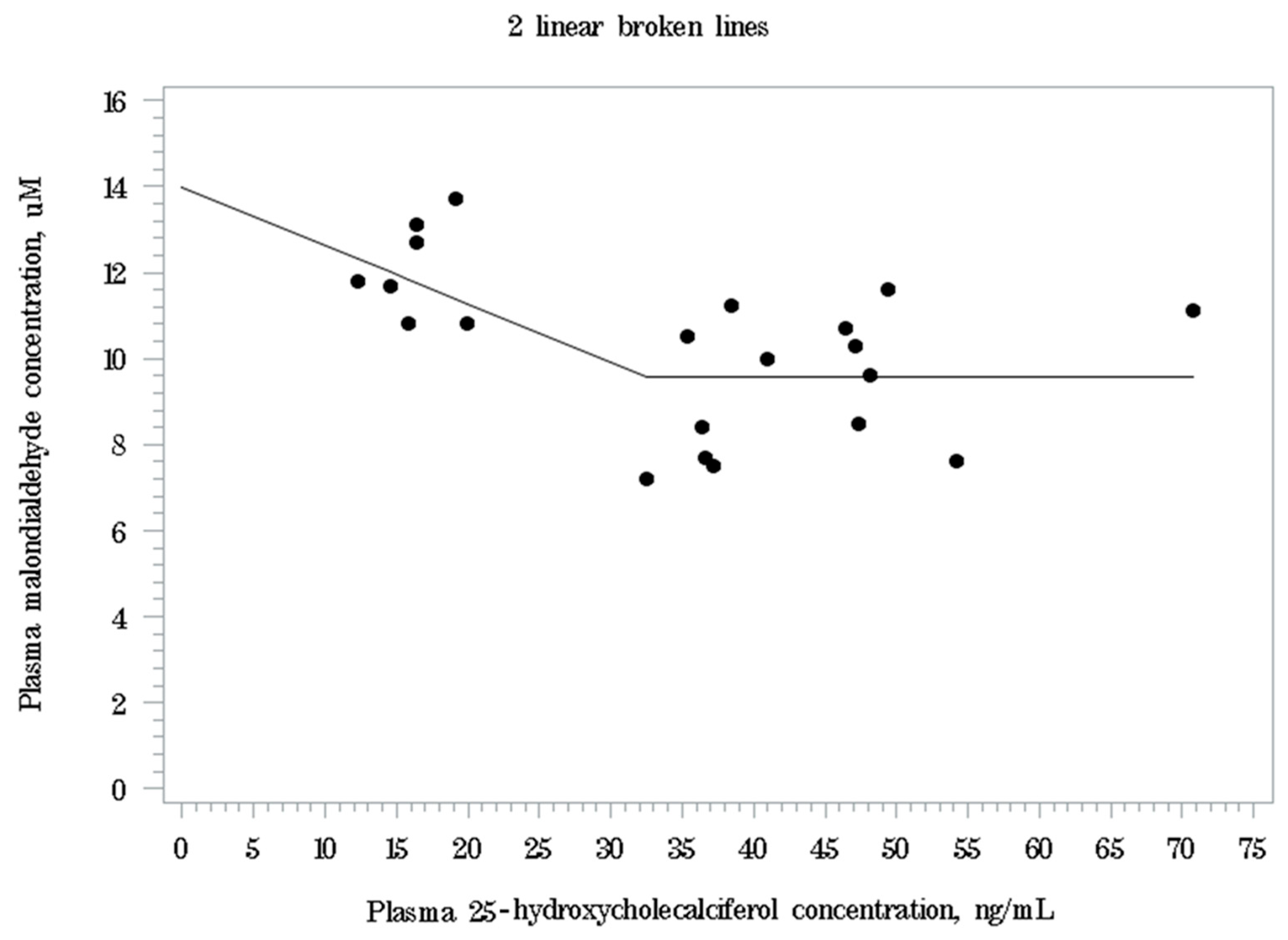
This study evaluated the effects of dietary 25-hydroxycholecalciferol alone or in combination with vitamin D3 (VD3) on growth performance, vitamin D status, immune parameters, bone integrity, and antioxidant capacity in nursery pigs. Sixty weanling piglets (5.63 ± 0.98 kg initial body weight) were assigned to three treatments for a 28 d feeding trial. The treatments were a basal diet supplemented with 2000 IU/kg VD3, a combination of 1000 IU/kg VD3 and 1000 IU/kg 25-hydroxycholecalciferol (25-OHD3), and 2000 IU/kg 25-OHD3. Pigs fed diets containing 25-OHD3 tended to have greater feed intake during d 14–28 (p = 0.06). Plasma 25-OHD3 concentrations were greater in pigs fed diets containing 25-OHD3 than in those fed VD3 alone on d 14 and 28 (p < 0.05), with greater values observed in pigs fed 2000 IU/kg 25-OHD3 than in those fed a combination of 1000 IU/kg VD3 and 1000 IU/kg 25-OHD3 on d 14 (p < 0.05). Pigs fed diets supplemented with 25-OHD3 had lower plasma malondialdehyde concentrations at d 28 (p < 0.05), while immune parameters and bone mineralization indicators were unaffected. In the broken-line analysis, the estimated plasma 25-OHD3 concentration for plasma malondialdehyde concentrations to reach the minimum level was 32.5 ng/mL (p < 0.05). In conclusion, supplementing 25-OHD3 in nursery diets improved blood vitamin D status and could help reduce oxidative stress during the late nursery period.

1. Introduction

Vitamin D plays essential roles in skeletal development, mineral homeostasis, immune function, and antioxidant defense in pigs [1,2,3,4]. Traditionally, vitamin D has been supplemented in swine diets in the form of vitamin D3 (VD3), whereas 25-hydroxycholecalciferol (25-OHD3) has been recently introduced and commercially adopted as an alternative vitamin D source [2]. Compared with VD3, 25-OHD3 is known to have higher bioavailability due to its ability to bypass hepatic conversion, greater absorption efficiency, and reduced metabolic degradation [5,6,7]. In previous studies, it has been reported that 25-OHD3 supplementation in nursery diets improved the postweaning growth rate, feed intake, and antioxidant defense system and reduced oxidative stress in pigs [7,8,9,10], indicating that 25-OHD3 supplementation could alleviate weaning stress in pigs. However, these studies used diets in which 25-OHD3 completely replaced VD3 [8] or added 25-OHD3 to control diets formulated to contain 1600–2000 IU/kg of VD3 [7,9,10], resulting in total vitamin D supplementation levels that exceeded typical industry standards (1600–2500 IU/kg) [11]. Thus, it is important to evaluate the efficacy of 25-OHD3 as a partial or complete replacement for VD3 while maintaining the total vitamin D equivalent level at 2000 IU/kg to avoid confounding effects of elevated total vitamin D levels and unnecessary over-supplementation in weaning pigs. In addition, 25-OHD3 supplementation in nursery diets has been reported to improve immune function and bone integrity under Ca- and P-deficient conditions [12,13], whereas studies using adequate Ca and P levels have reported limited or no effect on immunoglobulin (Ig) production or skeletal traits [14,15]. Thus, it is important to understand the physiological role of 25-OHD3 under nutritionally adequate conditions when used as a replacement for VD3 in nursery diets. Therefore, the objective of the present study was to evaluate the effects of dietary 25-OHD3, used to partially or completely replace VD3, at an equivalent total vitamin D level (2000 IU/kg) on growth performance, blood vitamin D status, antioxidant capacity, immune responses, and bone mineralization in weaned pigs fed diets containing normal Ca and P levels.

2. Materials and Methods

2.1. Animals, Experimental Design, and Housing

At weaning, a total of 60 newly weaned pigs (Camborough × PIC337 and [Camborough × Berkshire] × PIC337; 5.63 ± 0.98 kg initial body weight; weaned at 17.9 ± 1.59 d of age) were allotted to 1 of 3 dietary treatments in 5 replicates with 4 pigs (2 barrows and 2 gilts) per pen based on body weight, breed, sex, and littermate in a randomized complete block design for a 28 d feeding trial. The treatments were (1) VD: basal diet with 2000 IU/kg VD3 supplementation; (2) MIX: basal diet with 1000 IU/kg VD3 + 1000 IU/kg 25-OHD3 supplementation; and (3) 25OHD: basal diet with 2000 IU/kg 25-OHD3 supplementation. In this study, VD3 was partially (1000 IU/kg) or completely (2000 IU/kg) replaced with 25-OHD3 to evaluate its efficacy as an alternative source of vitamin D. All the pigs were housed in nursery pens (1.0 m × 2.0 m) with woven-wire flooring, fed ad libitum, and had free access to water in an environmentally controlled nursery facility at the University of Georgia Large Animal Research Unit. No creep feed was provided during the lactation period. The pigs were fed the same treatment diets with two diet phases, including d 0–14 postweaning (Phase 1), and d 14–28 postweaning (Phase 2). The 25-OHD3 product (SmartD) was obtained from Nutribins LLC (Covina, CA, USA).

2.2. Experimental Diets

All the pigs were fed corn–soybean meal-based diets in mash form that were formulated to meet or exceed nutrient requirement estimates of NRC [16] for 7–11 kg (Phase 1) and 11–25 kg (Phase 2) pigs (Table 1). The VD3 supplementation level (2000 IU/kg) in the VD diet was consistent with the average level commonly used in U.S. nursery pig diets as the control diet [11]. The 25OHD diet was supplemented with dietary 25-OHD3 at a level equivalent to 2000 IU VD3/kg. For the MIX diet, both VD3 and 25-OHD3 were supplemented at 1000 IU/kg each, providing a total VD level equivalent to 2000 IU VD3/kg. To minimize differences in the non-treatment components of the diets, a basal diet was first mixed with a VD3-free vitamin premix without the inclusion of corn starch. The basal diet was divided into 3 equal fractions. The treatment diets were mixed by adding a premix containing either VD3 or 25-OHD3 prepared by blending the respective vitamin D source with corn starch.

2.3. Data and Sample Collection

The pigs were individually weighed at the start of the trial (d 0), d 7, 14, 21, and 28 postweaning. The pen-based feed disappearance was measured when the pigs were weighed. The average daily gain (ADG), average daily feed intake (ADFI), and gain-to-feed (G:F) ratio were calculated. Blood samples (10 mL) were collected from eight pigs per treatment (2 pigs per pen from the first 4 replicates; 1 barrow and 1 gilt) selected based on average body weight in each pen on d 14 and 28 postweaning via jugular venipuncture in disposable vacutainer tubes containing the anticoagulant K3 EDTA (Becton Dickinson, Franklin, NJ, USA). Plasma samples were obtained by centrifugation at 2500× g for 30 min at 4 °C and stored at −80 °C until analysis. At d 28 postweaning, 6 pigs per treatment (3 barrows and 3 gilts) were selected based on average body weight from first 3 replicates, with 1 barrow and 1 gilt per pen to reduce potential variations from the pigs with small body size in the last 2 replicates. These pigs were euthanized by the captive bolt method to collect femur samples that were analyzed for bone mineral content (BMC) and bone mineral density (BMD) using dual energy X-ray absorptiometry (GE Healthcare, Chicago, IL, USA).

2.4. Chemical Analysis

The plasma 25-OHD3 concentrations were analyzed by Heartland Assays (Ames, IA, USA). The plasma IgG and IgA concentrations were determined using commercial ELISA kits (Bethyl Laboratories, Montgomery, TX, USA), and antioxidant parameters, including superoxide dismutase activity (SOD), total antioxidant capacity (T-AOC), and malondialdehyde (MDA) concentrations, were measured using colorimetric assay kits (Cayman Chemical Company, Ann Arbor, MI, USA), all following the manufacturer’s instructions, with absorbance measured using a spectrophotometer (Thermo Fisher Scientific, Waltham, MA, USA).

2.5. Statistical Analysis

All the data obtained in the current study were analyzed in accordance with a randomized complete block design using the PROC MIXED procedure of SAS (ver. 9.4; SAS Inst. Inc., Cary, NC, USA). A pen was used as an experimental unit for the analysis of growth performance data. An individual pig was used as an experimental unit for blood and bone analyses. The models included the treatment as a fixed effect and the replicate as a random effect for growth performance and the replicate within pen and the pen as a random effect for blood and bone parameters. A single degree of freedom contrast was performed to make a comparison between VD3 treatment vs. combined 25-OHD3 treatments (MIX and 25OHD treatments). The least square means were separated using the PDIFF option of SAS. PROC REG in SAS was used to analyze the relationships between plasma 25-OHD3 concentrations and antioxidant (T-AOC, SOD, and MDA), immunological (IgG and IgA), and bone mineralization parameters (BMD and BMC) within each sampling day. When significant quadratic correlations were observed, the linear broken-line regression analysis was performed using PROC NLIN to estimate the plasma 25-OHD3 concentrations to reach the minimum or maximum blood or bone parameters as described by Robbins et al. [17]. Statistical differences were established at p < 0.05 and tendencies were established at 0.05 ≤ p < 0.10.

3. Results and Discussion

3.1. Growth Performance

There were no significant differences observed in the overall growth performance among the dietary treatments. When the two 25-OHD3 treatments were combined, the pigs fed diets supplemented with 25-OHD3 tended to have greater ADFI in d 14–21 (p = 0.09), d 21–28 (p = 0.06), and d 14–28 (p = 0.06) and lower G:F ratio in d 21–28 (p = 0.08) postweaning than those fed diets supplemented with only VD3 (Table 2). The increasing ADFI trend observed in the current study aligns with our previous study [8], which reported that pigs fed a diet containing 25-OHD3 had an increased ADFI compared to those fed VD3 during late nursery period. One potential reason for the increased feed intake is the reduction in plasma MDA levels at d 28 postweaning, indicating that 25-OHD3 may help alleviate postweaning oxidative stress, which is associated with reduced feed intake and impaired growth in piglets [18]. Although it was not examined in the present study, Menendez et al. [19] reported that VD3 can directly suppress leptin secretion from adipose tissue in an in vitro study, and lower circulating leptin concentrations are generally associated with increased appetite. Therefore, the result of the current study suggests that dietary 25-OHD3 supplementation may enhance postweaning feed intake in pigs during the nursery period.
In the current study, although pigs fed 25-OHD3 supplemented diets tended to have greater postweaning feed intake during the late nursery period, ADG was not affected, resulting in a tendency toward a lower G:F ratio. Similarly, previous studies have reported that dietary 25-OHD3 supplementation had no effect in enhancing growth rate during the nursery period, although dietary 25-OHD3 supplementation levels were over 2000 IU/kg [9,10,20]. However, our previous study [8] reported increased feed intake and growth rate in the late nursery period by feeding pigs with diets supplemented with 25-OHD3 at 2000 IU/kg compared to VD3 supplementation at the same level. Although both studies observed increased feed intake with dietary 25-OHD3 supplementation, the current study did not show an increase in the growth rate during the late nursery period. Interestingly, the plasma 25-OHD3 concentrations at d 28 postweaning in the current study were greater than those observed in our previous study, despite the same supplementation level and source of 25-OHD3. The reason for the discrepancy in growth responses between the studies remains unclear; however, it may suggest that once an adequate vitamin D status is achieved, further increases in plasma 25-OHD3 concentrations may not elicit additional growth responses. Similarly, Witschi et al. [20] reported no difference in the growth rate between pigs supplemented with VD3 or 25-OHD3 at 2000 IU/kg, whereas pigs receiving a low level of VD3 (200 IU/kg) exhibited reduced growth performance. Therefore, the growth response to vitamin D supplementation may be more pronounced under inadequate vitamin D conditions, with limited additional benefits beyond a certain threshold of vitamin D status. In addition, greater feed intake alone in this study may not be sufficient to enhance growth rate, as increased feed intake in nursery pigs undergoing postweaning gastrointestinal development may not always proportionally translate into body weight gain [21]. Taken together, further studies are needed to clearly demonstrate the relationship between growth performance and blood vitamin D status in nursery pigs.

3.2. Plasma 25-OHD3 Concentrations

Pigs receiving dietary 25-OHD3 showed greater plasma 25-OHD3 concentrations than those fed VD3 at both d 14 and 28 postweaning (p < 0.05; Table 3), regardless of the levels. However, pigs in the 25OHD group exhibited 1.38- and 1.20-fold greater concentrations than those in the MIX group at these respective time points, with significantly greater values observed in the 25OHD group than the MIX group at d 14 postweaning. These findings align with previous studies showing that dietary 25-OHD3 supplementation increases plasma 25-OHD3 concentrations in a dose-dependent manner [8,20,22]. Moreover, the current results indicate that supplementation with 25-OHD3 alone is more effective at elevating blood vitamin D levels than VD3 alone or combined supplementation of VD3 and 25-OHD3 at the same VD level, which agrees with previous studies [8,9,20,22,23]. Interestingly, despite equivalent total dietary vitamin D inclusion (2000 IU/kg) across vitamin D sources, the pigs in the present study had greater plasma 25-OHD3 concentrations than those observed in our previous experiment [8]. This result suggests that circulating vitamin D status may be affected by multiple factors, including dietary vitamin D inclusion levels. One possible reason can be that the pigs in the current study had 10–13% greater overall feed intake compared to our previous study [8], resulting in increased 25-OHD3 intake, which may have contributed to increased plasma 25-OHD3 concentrations. In addition, Madson et al. [24] reported that diarrheic pigs could have lower vitamin D status due to vitamin D malabsorption, indicating that the health status of pigs might influence circulating 25-OHD3 levels. Although the underlying mechanism remains unclear, these findings indicate that multiple factors may influence plasma 25-OHD3 concentrations, although the source and level are the major factors in increasing circulating 25-OHD3 levels.

3.3. Immunological Responses

In the present study, dietary 25-OHD3 supplementation did not affect plasma IgG or IgA concentrations at d 14 or 28 postweaning (Table 4). Plasma IgG and IgA are key B-cell-derived indicators of humoral immune status in pigs and have been linked to enhanced immune function and resilience to weaning stress when their plasma concentrations are elevated [14]. Thus, the results of the current study indicate that dietary 25-OHD3 supplementation had no significant effects on systemic humoral immune status of the pigs in the nursery period. Consistent with the present findings, no differences in serum IgG concentrations were observed between pigs fed a basal diet containing 2500 IU/kg of VD3 and those fed the same diet supplemented with 2000 IU/kg of 25-OHD3 [25] when graded 25-OHD3 was supplemented from 0 to 4000 IU/kg [14] or when 25-OHD3 inclusion increased from 220 to 6220 IU/kg under porcine epidemic diarrhea virus challenge conditions [15]. Similarly, Zhou et al. [7] reported no differences in serum IgA concentrations between pigs fed a basal diet containing 2000 IU/kg of VD3 and a diet with an additional 2000 IU/kg of VD3 or 25-OHD3. In contrast, Zhang et al. [12] reported that dietary 25-OHD3 supplementation increased serum IgG concentrations under calcium- and phosphorus-deficient conditions, suggesting that dietary 25-OHD3 supplementation may support humoral immunity primarily under nutritionally compromised conditions. These findings indicate that dietary 25-OHD3 may not have an influence on humoral immunity under nutritionally adequate conditions.

3.4. Bone Mineralization Parameters

In the current study, no significant differences in BMD or BMC were observed among the dietary treatments (Table 5), indicating that dietary 25-OHD3 supplementation did not affect bone mineralization during the nursery period. Consistent with the present findings, Becker et al. [10] reported no effects of supplementing 2000 IU/kg of 25-OHD3 on bone density or bone ash content in nursery pigs fed a basal diet providing 1653 IU/kg of VD3, and von Rosenberg et al. [9] similarly observed no differences in bone ash, calcium, or phosphorus contents when comparing VD3 (2000 IU/kg) with increasing levels of 25-OHD3 supplementation ranging from 2000 to 20,000 IU/kg. However, Zhang et al. [12] demonstrated that supplementation with 2000 IU/kg of 25-OHD3 in low-calcium and -phosphorus diets increased serum calcium concentrations, as well as bone biochemical markers, including bone-specific alkaline phosphatase and osteocalcin, indicating enhanced bone metabolism under mineral-deficient conditions. These findings suggest that dietary 25-OHD3 supplementation may not enhance bone mineralization under nutritionally adequate conditions.

3.5. Plasma Antioxidant Parameters and Correlation Analysis

In the plasma antioxidant parameters, there were no significant differences among dietary treatments in SOD activity and T-AOC (Table 6). The plasma MDA levels of pigs decreased by dietary 25-OHD3 supplementation (MIX or 25OHD treatment) compared with the VD3 treatment (p < 0.05) at d 28 postweaning. These results indicate that increasing 25-OHD3 supplementation level could reduce oxidative stress of weaning pigs in late nursery period, which agrees with previous studies [7,8]. A quadratic correlation was observed only between the plasma 25-OHD3 and MDA levels at d 28 postweaning (quadratic: p < 0.05, R2 = 0.486) among the antioxidant status parameters. Based on linear broken-line analysis, the estimated plasma 25-OHD3 concentration for the plasma MDA level to reach the minimum level was 32.5 ng/mL (p < 0.05; Figure 1). The estimated regression equation for the plasma MDA levels (µM) is MDA = 9.57 + 0.136 × (32.5 − plasma 25-OHD3) when the plasma 25-OHD3 level is less than 32.5 ng/mL. When the plasma 25-OHD3 level is greater than or equal to 32.5 ng/mL, the plasma MDA level reaches its minimum at 9.57 µM. These results indicate that increasing plasma 25-OHD3 concentrations are associated with a reduction in oxidative stress up to a threshold of 32.5 ng/mL, beyond which no further decrease in plasma MDA levels is observed. This result agrees with our previous study [8] reporting that plasma MDA levels reached the minimum values when the plasma 25-OHD3 levels reached 23.7 ng/mL. Interestingly, this estimated breakpoint of plasma 25-OHD3 levels was greater in the current study compared to our previous study (32.5 vs. 23.7 ng/mL) [8], although both studies used the same source of dietary 25-OHD3 at levels up to 2000 IU/kg. The reason for this discrepancy remains unclear; however, differences in the plasma 25-OHD3 levels between the current and previous studies, despite pigs being fed the same VD3 or 25-OHD3 supplementation levels, may partially explain these results. Although there are differences in the estimated breakpoint values, both studies consistently indicate that supplementation with VD3 alone, even at an inclusion level of 2000 IU/kg, could not achieve plasma 25-OHD3 concentrations corresponding to the lowest plasma MDA levels. Although further studies are necessary to precisely define the plasma 25-OHD3 threshold required to minimize oxidative stress in weaning pigs, dietary supplementation with 25-OHD3, either alone or in combination with VD3, is necessary to achieve plasma 25-OHD3 concentrations associated with minimal oxidative stress.

4. Conclusions

At an equivalent total vitamin D level (2000 IU/kg), partial or complete replacement of VD3 with 25-OHD3 resulted in greater plasma 25-OHD3 concentrations compared with VD3 alone. Although the growth rate, blood immunoglobin levels, and bone mineralization were not affected, supplementing 25-OHD3 in nursery diets could reduce oxidative stress, as indicated by lower plasma MDA levels. The plasma MDA level was correlated with plasma 25-OHD3 concentrations and minimized when the plasma 25-OHD3 concentrations reached 32.5 ng/mL. Supplementation with VD3 alone, even at a high inclusion level, was insufficient to achieve plasma 25-OHD3 concentrations associated with minimal oxidative stress. Collectively, these findings provide clear insight into the biological efficacy of 25-OHD3 replacing VD3 in nursery diets under conditions where total vitamin D levels are maintained at constant levels. Therefore, dietary inclusion of 25-OHD3 can be considered to optimize vitamin D status and antioxidant capacity in nursery pigs.

Author Contributions

Conceptualization, Z.Y., X.C. and Y.D.J.; methodology, Y.D.J.; software, C.H.K. and Y.D.J.; validation, C.H.K. and Y.D.J.; formal analysis, C.H.K. and Y.D.J.; investigation, C.H.K., E.S.S., J.A.T. and Y.D.J.; resources, C.H.K. and Y.D.J.; data curation, C.H.K. and Y.D.J.; writing—original draft preparation, C.H.K. and Y.D.J.; writing—review and editing, C.H.K., Z.Y., X.C., P.X. and Y.D.J.; visualization, C.H.K. and Y.D.J.; supervision, Y.D.J.; project administration, Y.D.J.; funding acquisition, Y.D.J. All authors have read and agreed to the published version of the manuscript.

Funding

This work is partially supported by Nutribins LLC and the Hatch Project (#7007665) from the U.S. Department of Agriculture’s National Institute of Food and Agriculture and the Georgia Research Foundation.

Institutional Review Board Statement

This experiment was conducted under protocols (#A2023 09-002-Y1-A4) approved on 21 September 2023, by the Institutional Animal Care and Use Committee of the University of Georgia.

Informed Consent Statement

Not applicable.

Data Availability Statement

The raw data supporting the conclusions of this article will be made available by the authors on request.

Acknowledgments

Appreciation is expressed to Savannah Cheek, Mariah Yori, and Russell Utley for the care of pigs.

Conflicts of Interest

The authors declare that this study received funding from Nutribins LLC and that they were involved in the study conceptualization and provided the 25-OHD3 used in this study. Zhaohui Yang, Xi Chen, and Pengcheng Xue are employees of Nutribins and contributed to conceptualization. The remaining authors have no real or potential conflicts of interest. All the authors have read and approved the manuscript for submission.

Abbreviations

The following abbreviations are used in this manuscript:
25-OHD325-hydroxycholecalciferol
ADFIAverage daily feed intake
ADGAverage daily gain
BMCBone mineral content
BMDBone mineral density
G:FGain to feed ratio
IgImmunoglobulin
MDAMalondialdehyde
SODSuperoxide dismutase
T-AOCTotal antioxidant capacity
VD3Vitamin D3

References

  1. McCue, M.; Reichert, J.L.; Crenshaw, T.D. Impact of dietary vitamin D3 supplements in nursery diets on subsequent growth and bone responses of pigs during an immune challenge. J. Anim. Sci. 2019, 97, 4895–4903. [Google Scholar] [CrossRef] [Scilit]
  2. Yang, P.; Ma, Y. Recent advances of vitamin D in immune, reproduction, performance for pig: A review. Anim. Health Res. Rev. 2021, 22, 85–95. [Google Scholar] [CrossRef] [Scilit]
  3. Plum, L.A.; DeLuca, H.F. Vitamin D, disease and therapeutic opportunities. Nutr. Rev. Drug. Discov. 2010, 9, 941–955. [Google Scholar] [CrossRef] [Scilit]
  4. Nuszkiewicz, J.; Woźniak, A.; Szewczyk-Golec, K. Ionizing radiation as a source of oxidative stress: The protective role of melatonin and vitamin D. Int. J. Mol. Sci. 2020, 21, 5804. [Google Scholar] [CrossRef] [Scilit]
  5. Coffey, J.D.; Hines, E.A.; Starkey, J.D.; Starkey, C.W.; Chung, T.-K. Feeding 25-hydroxycholecalciferol improves gilt reproductive performance and fetal vitamin D status. J. Anim. Sci. 2012, 90, 3783–3788. [Google Scholar] [CrossRef] [Scilit]
  6. Chou, S.-H.; Chung, T.-K.; Yu, B. Effects of supplemental 25-hydroxycholecalciferol on growth performance, small intestinal morphology, and immune response of broiler chickens. Poult. Sci. 2009, 88, 2333–2341. [Google Scholar] [CrossRef] [Scilit]
  7. Zhou, X.; Zou, Y.; Xu, Y.; Zhang, Z.; Wu, Y.; Cao, J.; Qiu, B.; Qin, X.; Han, D.; Piao, X.; et al. Dietary supplementation of 25-hydroxyvitamin D3 improves growth performance, antioxidant capacity and immune function in weaned piglets. Antioxidants 2022, 11, 1750. [Google Scholar] [CrossRef] [Scilit] [PubMed]
  8. Kwon, C.H.; Safaie, E.S.; Locke, S.L.; Torres, J.A.; Yang, Z.; Chen, X.; Jang, Y.D. Effects of dietary 25-hydroxycholecalciferol supplementation on growth performance, blood vitamin D and antioxidant status in nursery pigs. Anim. Biosci. 2025, 38, 1943–1952. [Google Scholar] [CrossRef] [Scilit]
  9. von Rosenberg, S.J.; Weber, G.M.; Erhardt, A.; Höller, U.; Wehr, U.A.; Rambeck, W.A. Tolerance evaluation of overdosed dietary levels of 25-hydroxyvitamin D3 in growing piglets. J. Anim. Physiol. Anim. Nutr. 2016, 100, 371–380. [Google Scholar] [CrossRef] [Scilit] [PubMed]
  10. Becker, L.L.; Gebhardt, J.T.; Tokach, M.D.; Woodworth, J.C.; Goodband, R.D.; DeRouchey, J.M.; Bergstrom, J.R.; Siepker, C.L. Effects of added 25(OH)D3 with varying standardized total tract digestible phosphorus concentrations on nursery pig performance, bone characteristics, and serum vitamin D status. J. Anim. Sci. 2024, 102, skae254. [Google Scholar] [CrossRef] [Scilit] [PubMed]
  11. Faccin, J.E.G.; Tokach, M.D.; Goodband, R.D.; DeRouchey, J.M.; Woodworth, J.C.; Gebhardt, J.T. Industry survey of added vitamins and trace minerals in U.S. swine diets. Transl. Anim. Sci. 2023, 7, txad035. [Google Scholar] [CrossRef] [Scilit]
  12. Zhang, L.; Yang, M.; Piao, X. Effects of 25-hydroxyvitamin D3 on growth performance, serum parameters, fecal microbiota, and metabolites in weaned piglets fed diets with low calcium and phosphorus. J. Sci. Food Agric. 2021, 101, 11388–11396. [Google Scholar] [CrossRef] [Scilit] [PubMed]
  13. Pérez-Calvo, E.; McCormack, U.M.; Muns, R.; Mulvenna, C.; Payling, L.; Romero, L.; Roger, L.; Walsh, M.C. A sustainable nutritional solution for fattening pigs based on 25-hydroxycholecalciferol and triterpenoids added to a low Ca diet containing phytase improves growth performance via the activation of muscle protein synthesis without compromising bone mineralization. Transl. Anim. Sci. 2024, 8, txae152. [Google Scholar] [CrossRef] [Scilit]
  14. Zhang, L.; Liu, S.; Piao, X. Dietary 25-hydroxycholecalciferol supplementation improves performance, immunity, antioxidant status, intestinal morphology, and bone quality in weaned piglets. J. Sci. Food Agric. 2020, 100, 10889–10898. [Google Scholar] [CrossRef] [Scilit] [PubMed]
  15. Yang, J.; Tian, G.; Chen, D.; Zheng, P.; Yu, J.; Mao, X.; He, J.; Luo, Y.; Luo, J.; Huang, Z.; et al. Dietary 25-hydroxyvitamin D3 supplementation alleviates porcine epidemic diarrhea virus infection by improving intestinal structure and immune response in weaned pigs. Animals 2019, 9, 627. [Google Scholar] [CrossRef] [Scilit]
  16. NRC. Nutrient Requirements of Swine, 11th ed.; National Academy Press: Washington, DC, USA, 2012. [Google Scholar]
  17. Robbins, K.R.; Saxton, A.M.; Southern, L.L. Estimation of nutrient requirements using broken-line regression analysis. J. Anim. Sci. 2006, 84, E155–E165. [Google Scholar] [CrossRef] [Scilit] [PubMed]
  18. Hao, Y.; Xing, M.; Gu, X. Research progress on oxidative stress and its nutritional regulation strategies in pigs. Animals 2021, 11, 1384. [Google Scholar] [CrossRef] [Scilit]
  19. Menendez, C.; Lage, M.; Peino, R.; Baldelli, R.; Concheiro, P.; Diéguez, C.; Casanueva, F.F. Retinoic acid and vitamin D3 powerfully inhibit in vitro leptin secretion by human adipose tissue. J. Endocrinol. 2001, 170, 425–431. [Google Scholar] [CrossRef] [Scilit]
  20. Witschi, A.K.M.; Liesegang, A.; Gebert, S.; Wenk, C. Effect of source and quantity of dietary vitamin D in maternal and creep diets on bone metabolism and growth in piglets. J. Anim. Sci. 2011, 89, 1844–1852. [Google Scholar] [CrossRef] [Scilit]
  21. Pluske, J.R.; Hampson, D.J.; Williams, I.H. Factors influencing the structure and function of the small intestine in the weaned pigs: A review. Livest. Prod. Sci. 1997, 51, 215–236. [Google Scholar] [CrossRef] [Scilit]
  22. Sandoval, J.L.; Ventura, D.E.; Fiallos, O.B.; Anderson, B.L.; Sparks, J.C.; Starkey, J.D.; Starkey, C.W. Efficacy and safety of a novel source of dietary 25-hydroxycholecalciferol in growing pigs. J. Anim. Sci. 2022, 100, skac260. [Google Scholar] [CrossRef] [Scilit] [PubMed]
  23. Kwon, C.H.; Safaie, E.S.; Torres, J.A.; Jang, Y.D. Effects of dietary vitamin D3 supplementation on growth performance, blood vitamin D status, and antioxidant capacity in nursery pigs. Anim. Biosci. 2026, 39, 250525. [Google Scholar] [CrossRef] [Scilit] [PubMed]
  24. Madson, D.M.; Ensley, S.M.; Gauger, P.C.; Schwartz, K.J.; Stevenson, G.W.; Cooper, V.L.; Janke, B.H.; Burrough, E.R.; Goff, J.P.; Horst, R.L. Rickets: Case series and diagnostic review of hypovitaminosis D in swine. J. Vet. Diagn. Investig. 2011, 24, 1137–1144. [Google Scholar] [CrossRef] [Scilit]
  25. Upadhaya, S.D.; Jung, Y.J.; Kim, Y.M.; Chung, T.K.; Kim, H. Effects of dietary supplementation with 25-OH-D3 during gestation and lactation on reproduction, sow characteristics and piglet performance to weaning: 25-hydroxyvitamin D3 in sows. Anim. Feed Sci. Technol. 2021, 271, 114732. [Google Scholar] [CrossRef] [Scilit]
Figure 1. Broken-line analysis of plasma malondialdehyde (MDA) level by plasma 25-hydroxycholecalciferol (25-OHD3) concentrations at d 28 postweaning. The breakpoint was estimated at 32.5 ng/mL (p < 0.05). The estimated regression equation was plasma MDA levels, µM = 9.57 + 0.136 × (32.5 − 25-OHD3) if plasma 25-OHD3 < 32.5 ng/mL and plasma MDA level, µM = 9.57 if plasma 25-OHD3 ≥ 32.5 ng/mL.
Animals 16 00771 g001
Table 1. Diet formulation and calculated chemical composition 1.
Ingredients, %d 0–14
Postweaning
d 14–28
Postweaning
Corn34.2943.39
Soybean meal (48% crude protein)26.3031.20
Whey, dried10.007.50
Oats2.502.50
HP300 25.002.00
Lactose10.005.00
Fish meal3.001.50
Animal plasma3.001.50
Soybean oil2.402.00
Corn starch1.001.00
L-Lysine-HCl0.110.12
DL-Methionine0.160.13
L-Threonine0.080.08
Dicalcium phosphate0.580.50
Limestone0.980.98
Salt0.250.25
Trace mineral mix 30.150.15
Vitamin mix 4 (vitamin D free) 0.200.20
Total100.00100.00
Calculated chemical composition
Metabolizable energy, kcal/kg34473405
Crude protein, %24.2123.17
SID 5 lysine, %1.391.28
SID methionine + cysteine, %0.840.77
Total Ca, %0.800.70
Total P, %0.630.57
STTD 5 P, %0.400.33
1 VD3 and 25-OHD3 were added to formulate experimental diets according to treatment by replacing an equal amount of corn starch. The vitamin D3 product provided 30,000 IU/g. The 25-OHD3 product contained 137.75 µg/g; 1 µg of 25-OHD3 was considered equivalent to 40 IU of VD3. The inclusion rates of each product were as follows: (1) 0.0067% vitamin D3 product; (2) 0.0033% vitamin D3 product + 0.0181% 25-OHD3 product; and (3) 0.0363% 25-OHD3 product. 2 Hamlet Protein, Findlay, OH. 3 The trace mineral premix supplied the following per kilogram of diet: 33 mg of Mn as manganous oxide, 110 mg of Fe as ferrous sulfate, 110 mg of Zn as zinc sulfate, 16.5 mg of Cu as copper sulfate, 0.3 mg of I as Ca iodate, 0.3 mg of Se as sodium selenite. 4 The vitamin premix supplied the following per kilogram of diet: 11,000 IU of vitamin A, 99 IU of vitamin E, 4.4 mg of vitamin K, 55 µg of vitamin B12, 9.9 mg of riboflavin, 31.9 mg of pantothenic acid, 55 mg of niacin, 0.9 mg of folic acid, 3.9 mg of vitamin B6, 3.1 mg of thiamin, and 0.3 mg of biotin, 600 mg of choline chloride. 5 SID = standardized ileal digestible; STTD = standardized total tract digestible.
Table 2. Postweaning growth performance of pigs fed diets supplemented with 25-hydroxycholecalciferol (25-OHD3) in nursery period 1.
Treatment 2SEMp-Value
Vitamin D3, IU/kg:200010000
25-OHD3, IU/kg:010002000TreatmentVD vs. 25-OHD 3
Body weight, kg
d 0 5.715.745.710.490.580.69
d 7 6.586.506.510.560.740.46
d 14 8.668.558.580.670.960.79
d 21 11.6111.8811.780.880.930.72
d 28 15.9016.4016.161.120.810.58
ADG, kg/d
d 0–7 0.1240.1080.1150.020.680.44
d 7–14 0.2960.2930.2950.031.000.95
d 14–21 0.4220.4750.4580.040.570.33
d 21–28 0.6130.6470.6260.040.430.30
d 0–14 (Phase I)0.2100.2000.2050.020.940.77
d 14–28 (Phase II)0.5170.5610.5420.030.410.24
d 0–28 (overall)0.3640.3810.3730.030.830.60
ADFI, kg/d
d 0–7 0.2380.2290.2270.020.880.63
d 7–14 0.4580.4430.4370.040.910.69
d 14–21 0.7070.7920.7820.050.220.09
d 21–28 0.9441.0491.0210.060.140.06
d 0–14 (Phase I)0.3480.3360.3320.030.880.64
d 14–28 (Phase II)0.8260.9200.9020.050.150.06
d 0–28 (overall)0.5870.6280.6170.040.540.30
G:F
d 0–7 0.5250.4650.4990.040.500.34
d 7–14 0.6350.6640.6750.030.680.41
d 14–21 0.5890.6010.5830.020.840.90
d 21–28 0.6470.6170.6150.020.200.08
d 0–14 (Phase I)0.5980.5960.6160.030.860.82
d 14–28 (Phase II)0.6240.6100.6010.010.340.19
d 0–28 (overall)0.6170.6060.6060.010.820.55
SEM, standard error of the means. 1 n = 5 replicate pens per treatment. 2 Treatments: (1) basal diet with 2000 IU/kg vitamin D3 supplementation, (2) basal diet with 1000 IU/kg vitamin D3 + 1000 IU/kg 25-OHD3 supplementation, and (3) basal diet with 2000 IU/kg 25-OHD3 supplementation. 3 Single degree of freedom contrast (2000 IU/kg vitamin D3 supplementation vs. 1000 IU/kg vitamin D3 + 1000 IU/kg 25-OHD3 and 2000 IU/kg 25-OHD3 supplementation) was conducted to evaluate the effect of partially or completely replacing vitamin D3 with 25-OHD3 while maintaining a total vitamin D level of 2000 IU/kg.
Table 3. Plasma 25-hydroxycholecalciferol (25-OHD3) concentrations (ng/mL) in pigs fed diets supplemented with 25-OHD3 in nursery period 1.
Treatment 2SEMp-Value
Vitamin D3, IU/kg:200010000
25-OHD3, IU/kg:010002000TreatmentVD vs. 25-OHD 3
d 14 postweaning13.59 c35.28 b48.76 a2.610.010.01
d 28 postweaning16.55 b41.80 a50.25 a1.330.010.01
SEM, standard error of the means. a–c Different superscripts within a row mean significantly different (p < 0.05). 1 n = 8 replicates per treatment. 2 Treatments: (1) basal diet with 2000 IU/kg vitamin D3 supplementation, (2) basal diet with 1000 IU/kg vitamin D3 + 1000 IU/kg 25-OHD3 supplementation, and (3) basal diet with 2000 IU/kg 25-OHD3 supplementation. 3 Single degree of freedom contrast (2000 IU/kg vitamin D3 supplementation vs. 1000 IU/kg vitamin D3 + 1000 IU/kg 25-OHD3 and 2000 IU/kg 25-OHD3 supplementation) was conducted to evaluate the effect of partially or completely replacing vitamin D3 with 25-OHD3 while maintaining a total vitamin D level of 2000 IU/kg.
Table 4. Plasma immune response parameters in pigs fed diets supplemented with 25-hydroxycholecalciferol (25-OHD3) in nursery period 1.
Treatment 2SEMp-Value
Vitamin D3, IU/kg:200010000
25-OHD3, IU/kg:010002000TreatmentVD vs. 25-OHD 3
Plasma IgG, mg/mL
d 14 postweaning4.745.194.290.620.420.99
d 28 postweaning2.602.602.740.170.760.72
Plasma IgA, mg/mL
d 14 postweaning0.240.230.220.020.690.41
d 28 postweaning0.700.720.600.080.600.72
SEM, standard error of the means. 1 n = 8 replicates per treatment. 2 Treatments: (1) basal diet with 2000 IU/kg vitamin D3 supplementation, (2) basal diet with 1000 IU/kg vitamin D3 + 1000 IU/kg 25-OHD3 supplementation, and (3) basal diet with 2000 IU/kg 25-OHD3 supplementation. 3 Single degree of freedom contrast (2000 IU/kg vitamin D3 supplementation vs. 1000 IU/kg vitamin D3 + 1000 IU/kg 25-OHD3 and 2000 IU/kg 25-OHD3 supplementation) was conducted to evaluate the effect of partially or completely replacing vitamin D3 with 25-OHD3 while maintaining a total vitamin D level of 2000 IU/kg.
Table 5. Bone mineralization parameters in pigs fed diets supplemented with 25-hydroxycholecalciferol (25-OHD3) in nursery period 1.
Treatment 2SEMp-Value
Vitamin D3, IU/kg:200010000
25-OHD3, IU/kg:010002000TreatmentVD vs. 25-OHD 3
Bone mineral content, g9.659.609.020.680.610.58
Bone mineral density, g/cm30.370.360.360.010.910.67
SEM, standard error of the means. 1 n = 6 replicates per treatment. 2 Treatments: (1) basal diet with 2000 IU/kg vitamin D3 supplementation, (2) basal diet with 1000 IU/kg vitamin D3 + 1000 IU/kg 25-OHD3 supplementation, and (3) basal diet with 2000 IU/kg 25-OHD3 supplementation. 3 Single degree of freedom contrast (2000 IU/kg vitamin D3 supplementation vs. 1000 IU/kg vitamin D3 + 1000 IU/kg 25-OHD3 and 2000 IU/kg 25-OHD3 supplementation) was conducted to evaluate the effect of partially or completely replacing vitamin D3 with 25-OHD3 while maintaining a total vitamin D level of 2000 IU/kg.
Table 6. Plasma superoxide dismutase activity, total antioxidant capacity, and malondialdehyde level in pigs fed diets supplemented with 25-hydroxycholecalciferol (25-OHD3) in nursery period 1.
Treatment 2SEMp-Value
Vitamin D3, IU/kg:200010000
25-OHD3, IU/kg:010002000TreatmentVD vs. 25-OHD 3
Superoxide dismutase, U/mL
d 14 postweaning3.533.413.530.420.970.91
d 28 postweaning4.503.704.390.620.480.47
Total antioxidant capacity, mM trolox equivalents
d 14 postweaning5.094.934.350.260.110.15
d 28 postweaning4.254.024.210.310.670.58
Malondialdehyde, µM
d 14 postweaning11.7511.9710.420.520.110.40
d 28 postweaning12.15 a9.62 b10.02 b0.690.050.02
SEM, standard error of the means. ab Different superscripts within a row means significantly different (p < 0.05). 1 n = 8 replicates per treatment. 2 Treatments: (1) basal diet with 2000 IU/kg vitamin D3 supplementation, (2) basal diet with 1000 IU/kg vitamin D3 + 1000 IU/kg 25-OHD3 supplementation, and (3) basal diet with 2000 IU/kg 25-OHD3 supplementation. 3 Single degree of freedom contrast (2000 IU/kg vitamin D3 supplementation vs. 1000 IU/kg vitamin D3 + 1000 IU/kg 25-OHD3 and 2000 IU/kg 25-OHD3 supplementation) was conducted to evaluate the effect of partially or completely replacing vitamin D3 with 25-OHD3 while maintaining a total vitamin D level of 2000 IU/kg.
Disclaimer/Publisher’s Note: The statements, opinions and data contained in all publications are solely those of the individual author(s) and contributor(s) and not of MDPI and/or the editor(s). MDPI and/or the editor(s) disclaim responsibility for any injury to people or property resulting from any ideas, methods, instructions or products referred to in the content.