Birth Season and Breed Effects on Newborn Longissimus Thoracis and Semimembranosus Muscles: Insights from the Nero Di Lomellina Piglets
by
 , , , , , , , , , and
Margherita Pallaoro
1,*,† ,
,
Giorgio Mirra
1,†,
Lucia Aidos
2,
Mirko Sergio
2,
Mauro Di Giancamillo
2,
Raffaella Rossi
2,
Annamaria Costa
2 ,
,
Eleonora Buoio
2 ,
,
Silvia Michela Mazzola
2,
Silvia Clotilde Modina
2 and
Alessia Di Giancamillo
1,* 1
Department of Biomedical Sciences for Health (SCIBIS), University of Milan (UNIMI), Via Mangiagalli 31, 20133 Milano, MI, Italy
2
Department of Veterinary Medicine and Animal Sciences (DIVAS), University of Milan (UNIMI), Via dell’Università 6, 26900 Lodi, LO, Italy
*
Authors to whom correspondence should be addressed.
†
These authors contributed equally to this work.
Animals 2026, 16(4), 655; https://doi.org/10.3390/ani16040655
Submission received: 11 December 2025
/
Revised: 11 February 2026
/
Accepted: 12 February 2026
/
Published: 18 February 2026
(This article belongs to the Special Issue Animal Breeds and Muscle Growth Potential: Opportunities for Sustainable Farming)
Simple Summary
Muscle development and growth can be influenced by several factors. This study investigated how the season of birth (winter or summer) and the breed affect muscle development in newborn piglets. We compared a local Italian pig breed, Nero di Lomellina, with a widely used commercial crossbreed. We considered the muscles Longissimus thoracis and Semimembranosus and assessed their morphology and the expression of genes related to muscle growth and stress response. Piglets born in summer showed more developed muscle tissue, especially in the local breed. These findings suggest that muscle development at birth may vary between seasons of birth and breeds. This information could be useful to promote and improve local pig breeds; besides, understanding how early muscle growth is affected by season can support more sustainable and effective breeding strategies in traditional farming systems.
Abstract
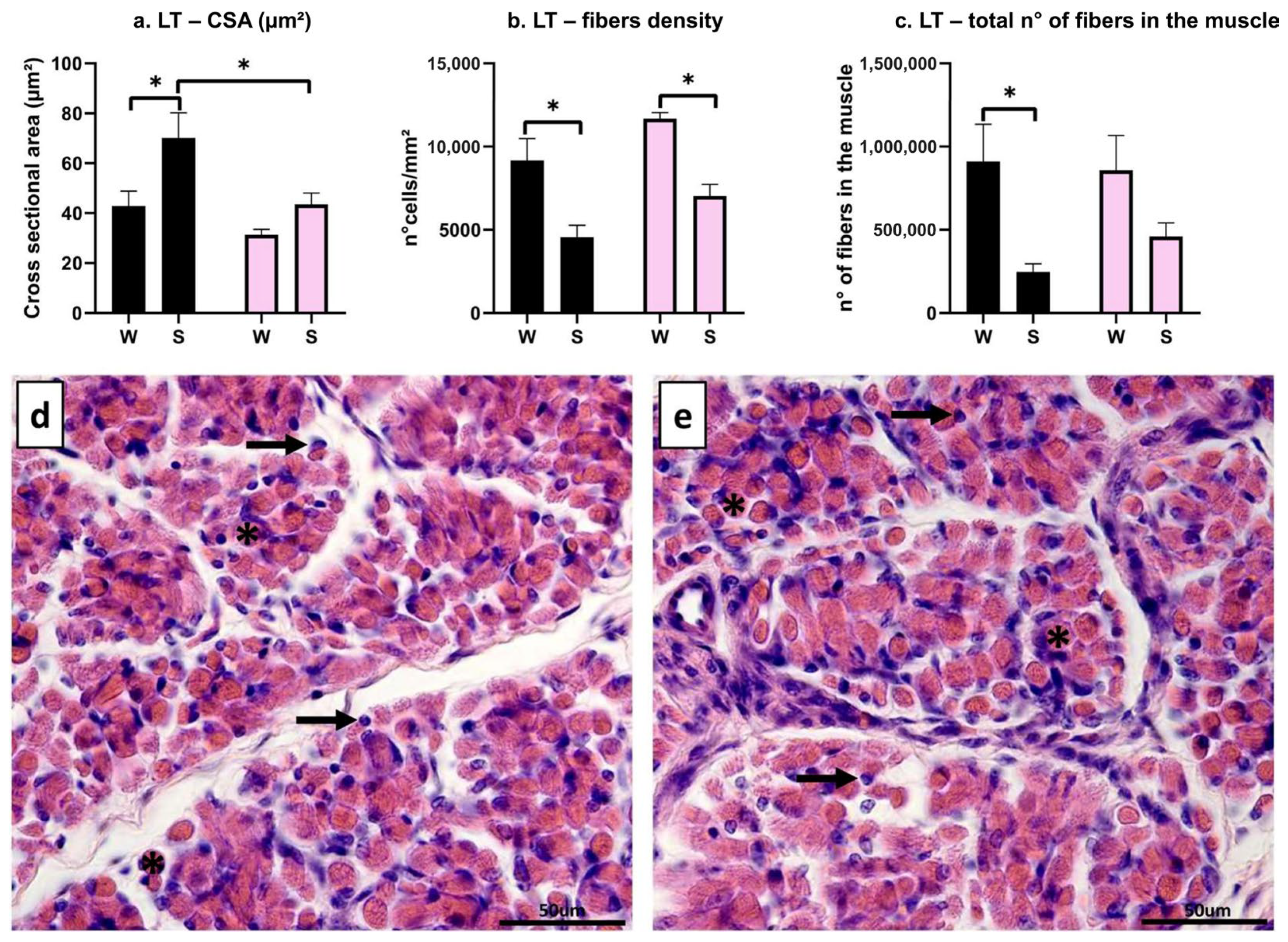
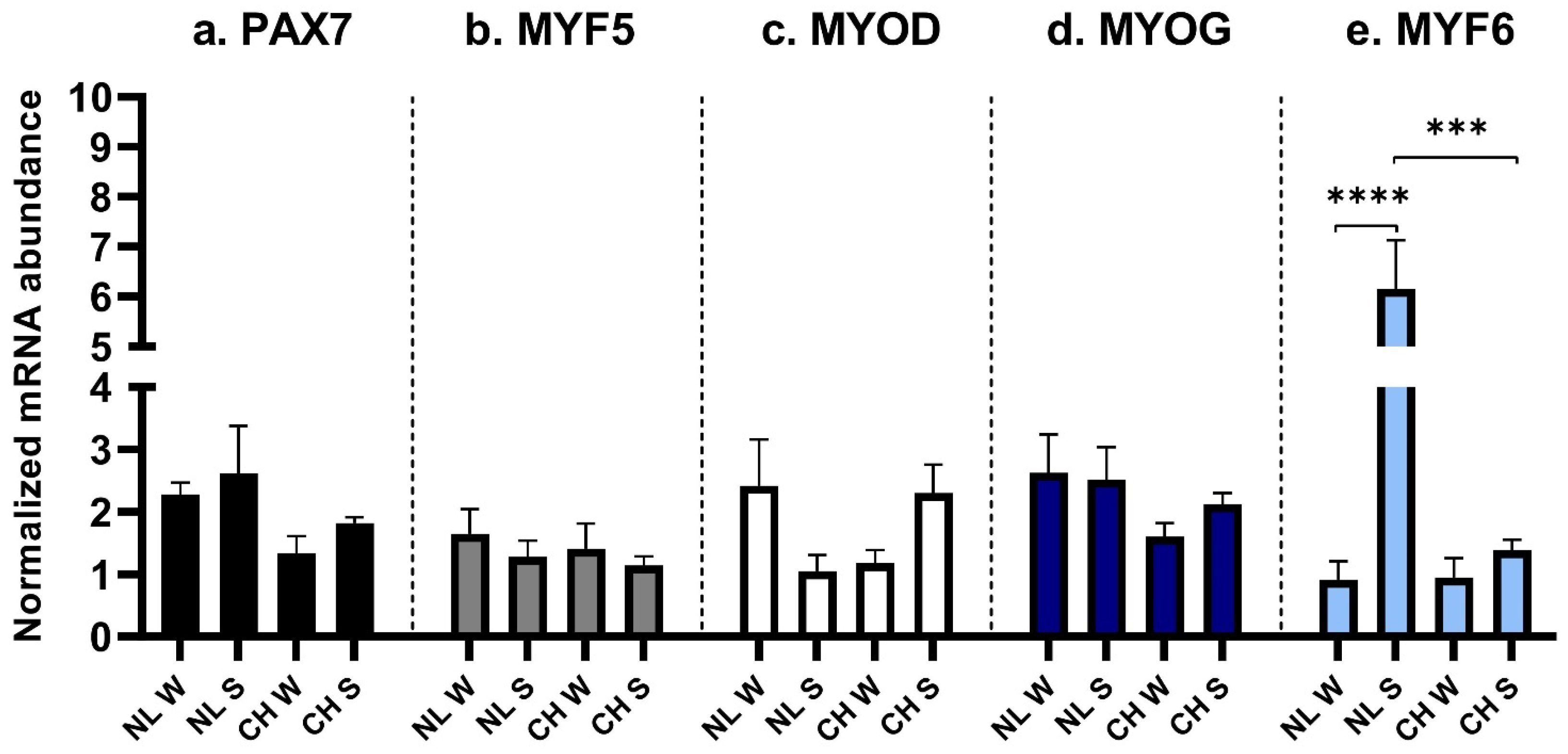
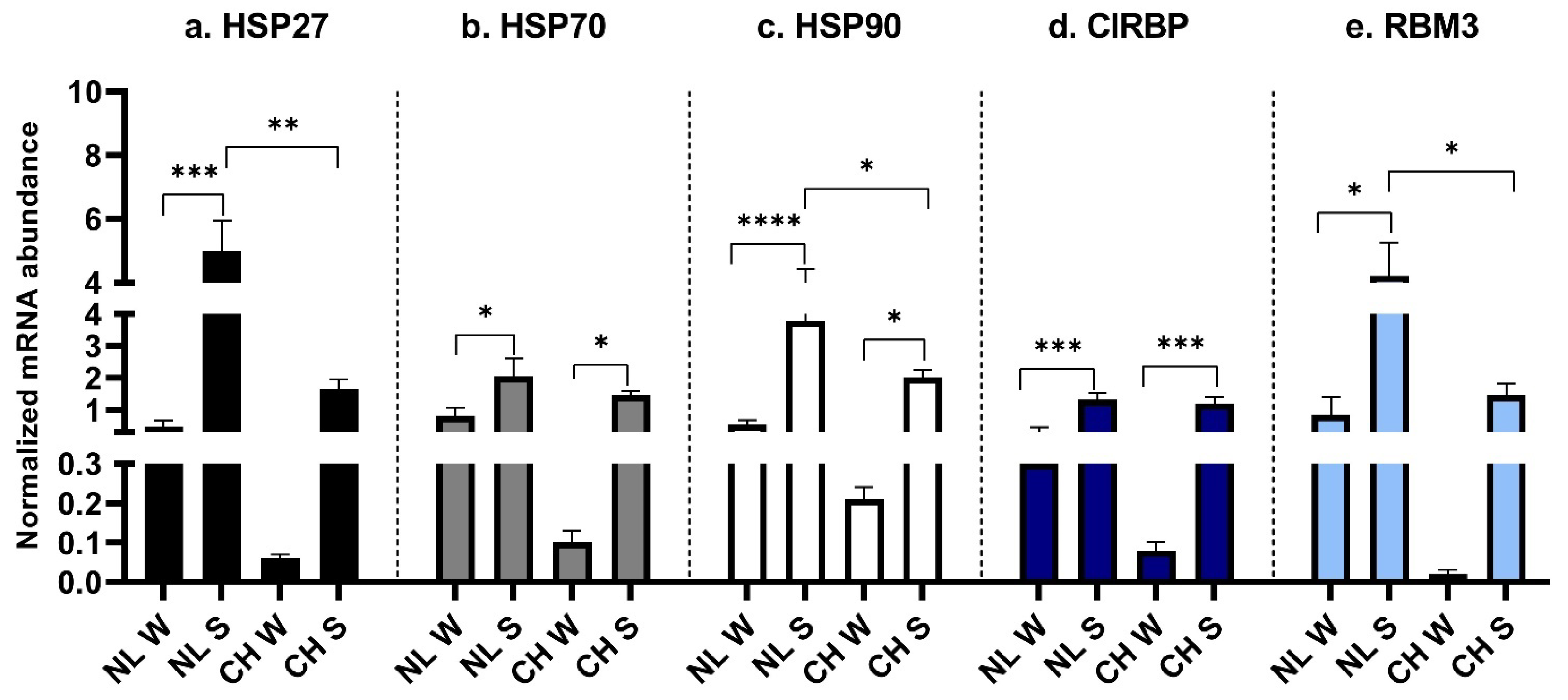
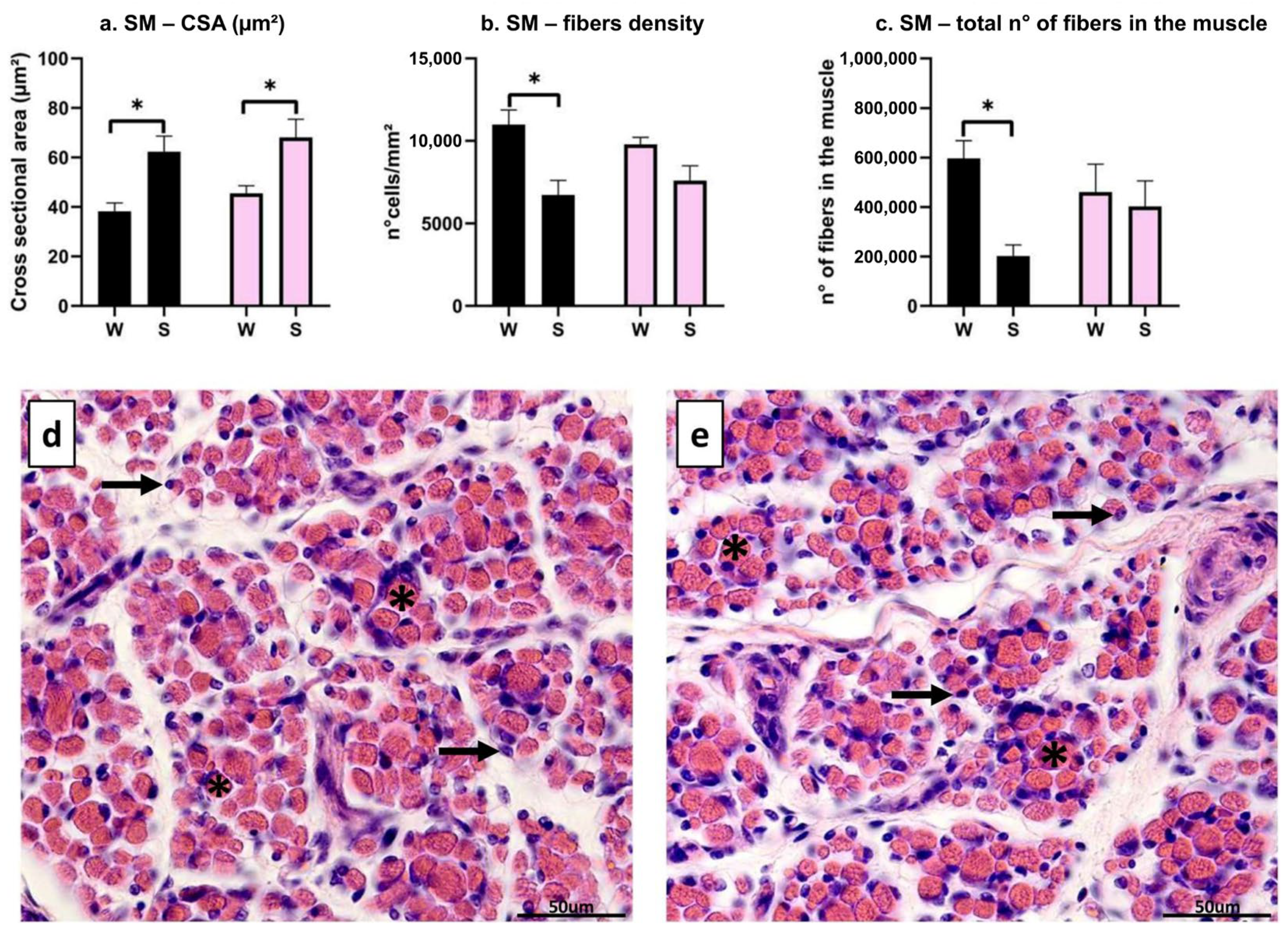
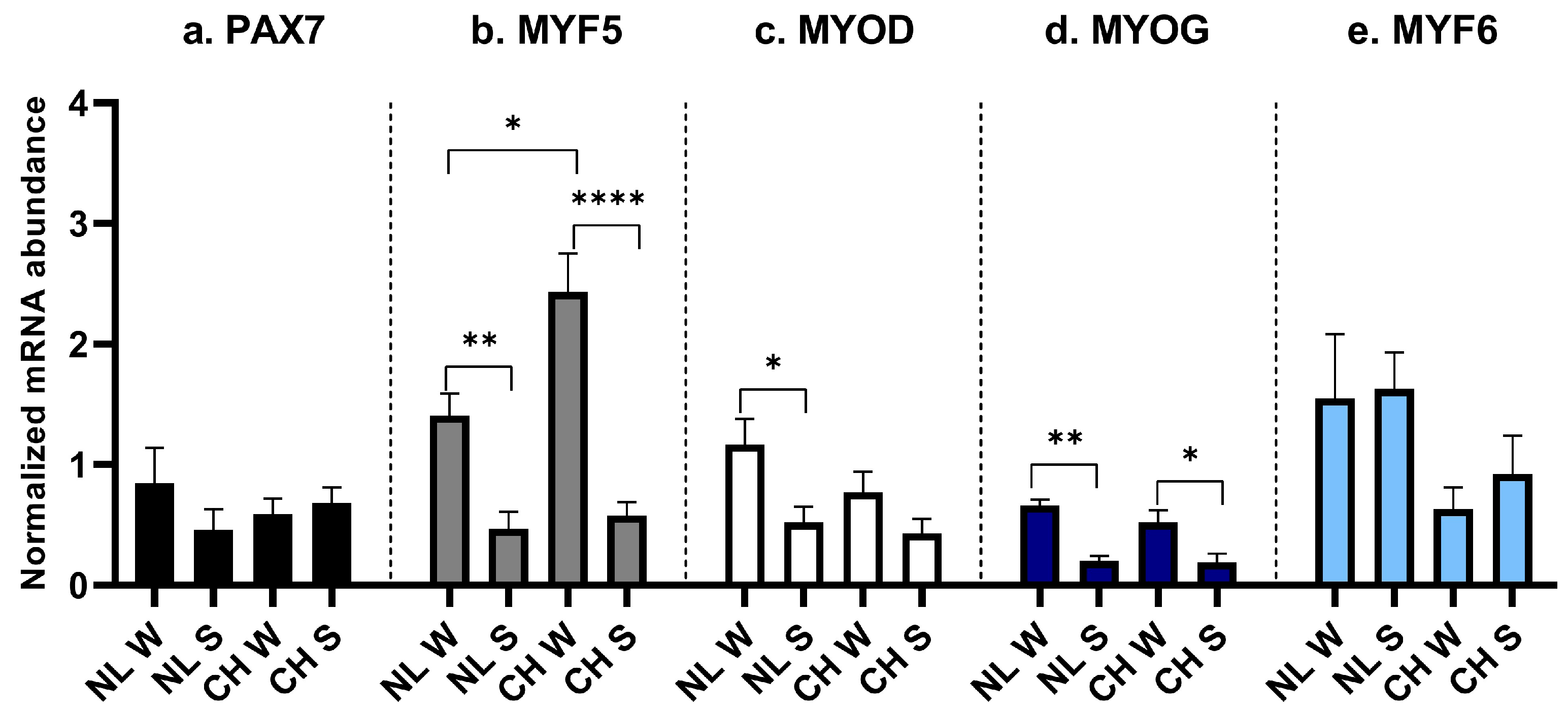
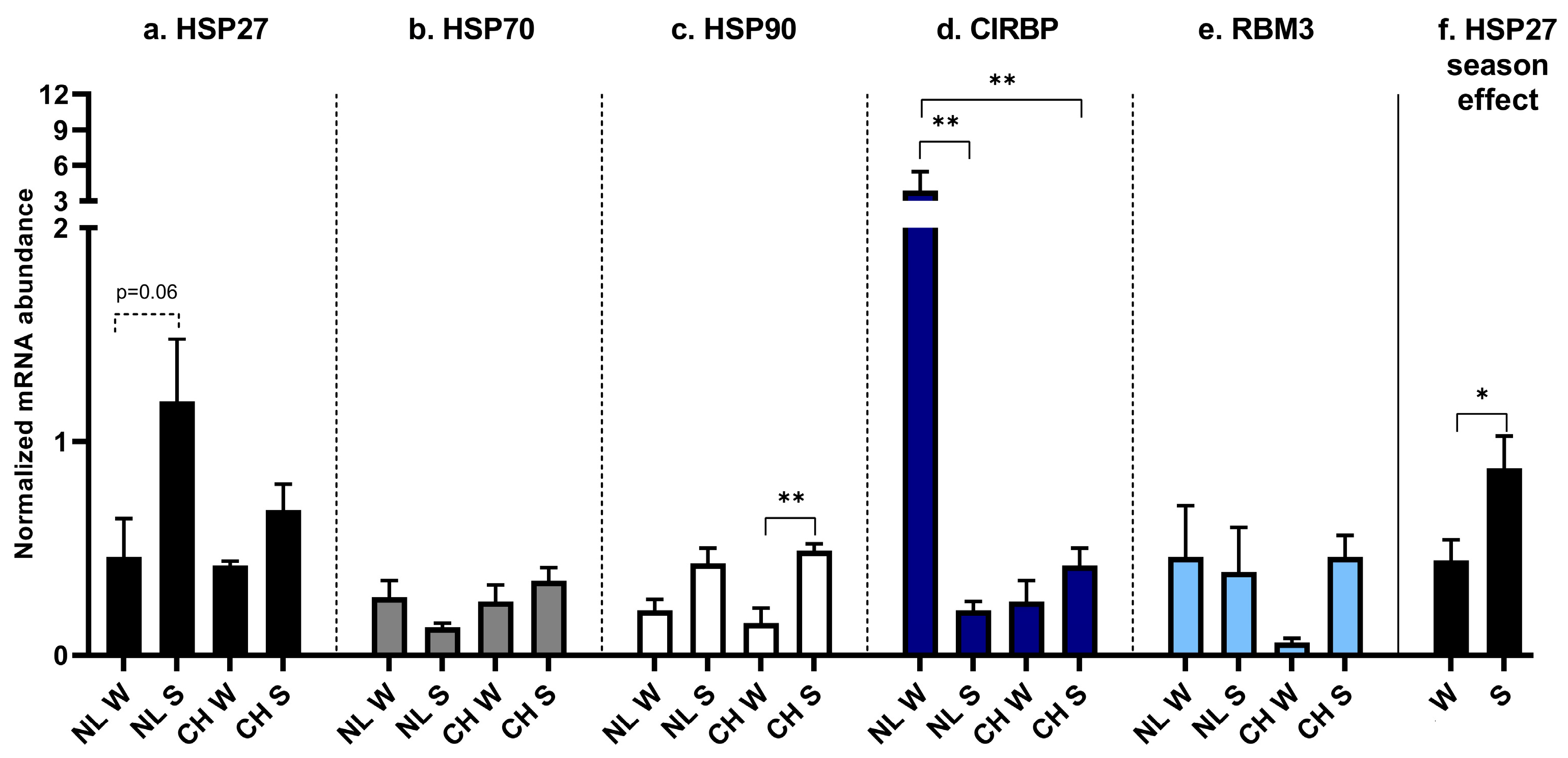
Background: Understanding the factors influencing muscle development is essential for the livestock industry. This study aims to evaluate the effect of birth season and breed on the muscles Longissimus thoracis (LT) and Semimembranosus (SM) from newborn piglets of the local Italian breed Nero di Lomellina (NL) and the Commercial Hybrid Large WhitexDuroc (CH), born in winter (W) and summer (S). Methods: Muscles’ morphological features were evaluated, and the expression of Myogenic Regulatory Factors (MRFs: MYF5, MYOD, MYOG, MYF6) and heat and cold shock proteins (HSP27, HSP70, HSP90, CIRBP, RMB3) was assessed by quantitative PCR. Results: Both muscles showed a larger fiber cross-sectional area (LT: NL/S > NL/W, p = 0.035. SM: NL/S > NL/W, p = 0.035; CH/S > CH/W, p = 0.05) and a lower total number of fibers in summer piglets (LT: NL/S < NL/W, p = 0.05. SM: NL/S < NL/W, p = 0.033). In LT, MYF6 was higher, mainly in NL, in S (NL/S > NL/W, p < 0.0001; NL/S > CH/S, p = 0.0002), as well as HSP27 (NL/S > NL/W, p = 0.0001; NL/S > CH/S, p = 0.0018), HSP70 (NL/S > NL/W, p = 0.044. CH/S > CH/W, p = 0.0018), HSP90 (NL/S > NL/W, p < 0.0001; NL/S > CH/S, p = 0.023; CH/S > CH/W, p = 0.027), CIRBP NL/S > NL/W, p = 0.003; CH/S > CH/W, p = 0.0008), and RBM3 (NL/S > NL/W, p = 0.01; NL/S > CH/S, p = 0.036). In SM, MYF5 was higher in W in both breeds (NL/W > NL/S, p = 0.008; CH/W > CH/S, p < 0.0001; CH/W > NL/S, p = 0.012). Similarly, MYOD (NL/W > NL/S, p = 0.045), MYOG (NL/W > NL/S, p = 0.002; CH/W > CH/S, p = 0.025), and CIRBP (NL/W > NL/S, p = 0.003; NL/W > CH/W, p = 0.004) were mainly expressed in winter, while HSP90 was expressed in summer in CH. Conclusions: Our results demonstrate that muscle development in piglets at birth can vary between breeds and along different birth seasons, with an enhanced development observed mainly in summer newborns. These results could be helpful for improvement programs for NL and other local breeds by linking muscle development at birth to seasonal adaptation.