Adiposity and Muscularity Evaluation Using New Objective Morphological Methods Available in Clinical Veterinary Practice: Feline Body Mass Index and Ultrasonography †

Simple Summary
Abstract
1. Introduction
2. Previous Approaches
2.1. Simple Evaluation Technique for Adiposity
2.1.1. Body Condition Score
2.1.2. Body Mass Index
2.1.3. Feline Body Mass Index
2.2. Evaluation Methods for Fat Accumulation
2.2.1. Impedance Method
2.2.2. Fat Accumulation via the FBMI
2.3. Simple Evaluation Method for Muscularity
Muscle Condition Score
2.4. Assessment of Direct Body Composition
DEXA, CT, and MRI
3. Development of a New Nutritional Assessment Method
4. Materials and Methods
Statistical Analysis
5. Results
6. Discussion

| BCS | fBMI | 13th BF | 13th EM | FM | FP | LBM | |
|---|---|---|---|---|---|---|---|
| (/9) | (kg/m) | (cm) | (cm) | (g) | (%) | (g) | |
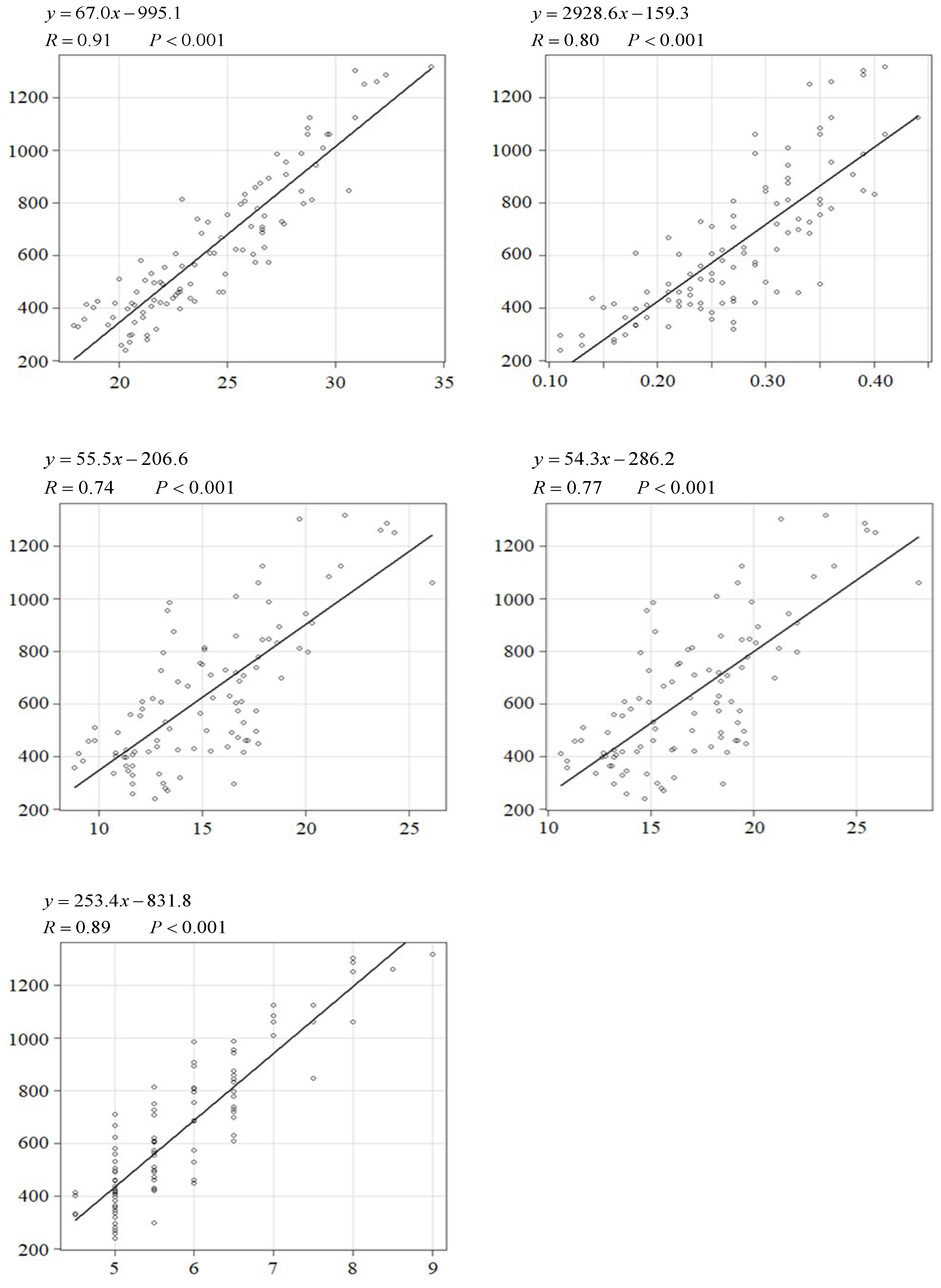
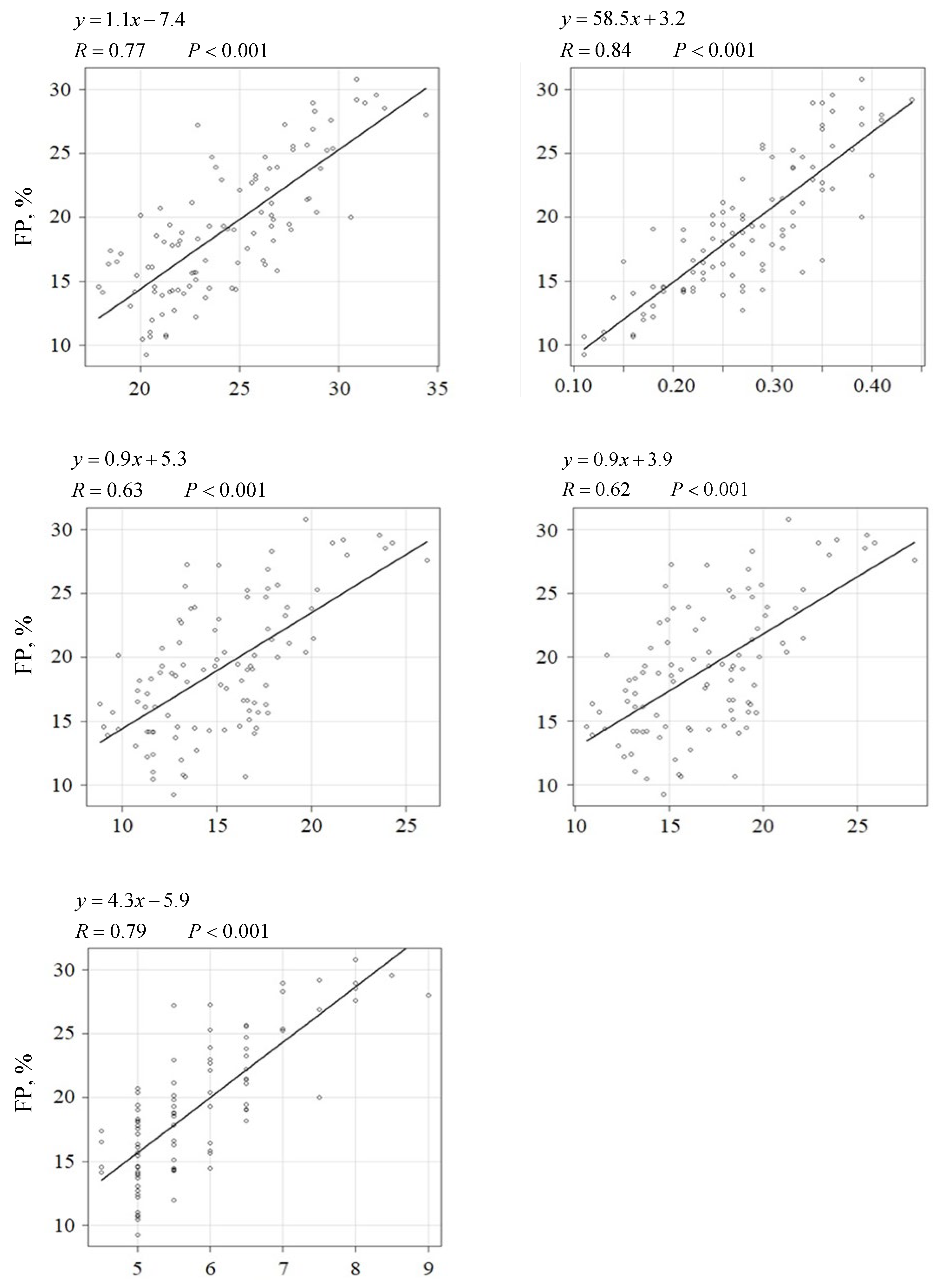
| Moderate lean | ≤4 | ≤22.9 | ≤0.16 | ≤1.24 | ≤545.8 | ≤12.9 | ≤1999 |
| Ideal | 5–6 | 23.0–27.9 | 0.17–0.42 | 1.25–2.00 | 545.9–880.9 | 13–27.9 | 2000–3100 |
| Overweight | 7–8 | 28.0–33.9 | 0.43≤ | - | 881.0–1282.8 | 28.0≤ | - |
| Obese | 9≤ | 34.0≤ | - | - | 1282.9≤ | - | - |
7. Key Points for Measurement as per the New Nutritional Status Assessment Method
7.1. Key Points for fBMI Measurement
- (1)
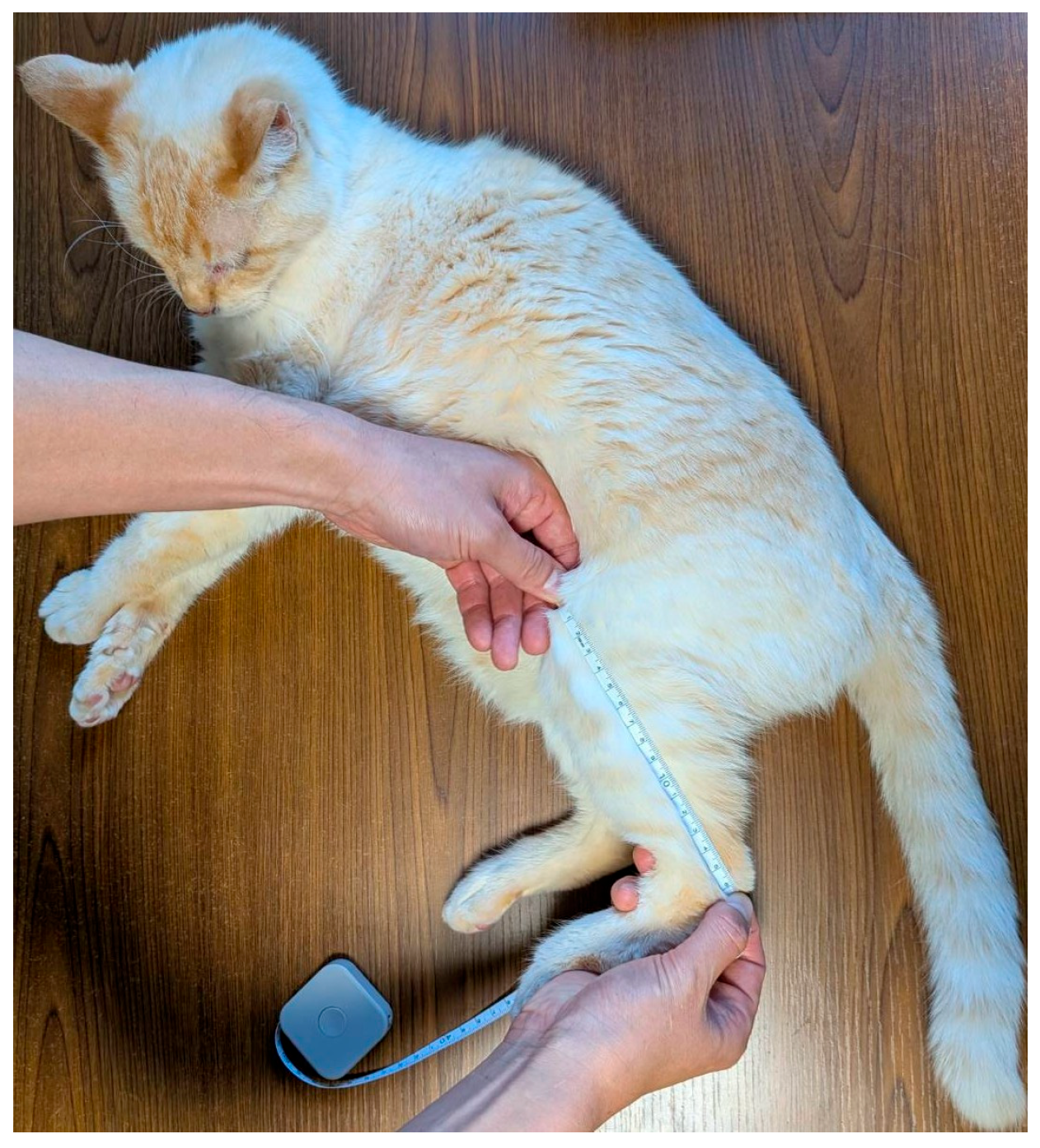
- The cat was placed in the right lateral recumbent position.
- (2)
- To prevent the patella from moving owing to changes in the knee angle, the knee was bent at approximately 90°. At this point, the patella should be located on the tibial extension.
- (3)
- The distance from the patella to the calcaneus was measured using a caliper or measuring tape. An extended caliper was placed against the patella, and the movable part of the caliper was gradually shortened for optimal measurement, given that applying pressure may cause discomfort (Figure 5).
7.2. Key Points for Echo Measurement
- (1)
- The cat was placed in a right lateral recumbent position.
- (2)
- To the dorsal side of the 13th rib, 70% ethanol was applied, hair in the measurement area was combed, and a horizontal division line parallel to the rib was created.
- (3)
- A linear probe was attached to the ultrasound device and set to 8–10 MHz.
- (4)
- As a couplant, 70% ethanol was used and applied sufficiently to the division line. The probe was positioned on the hair division line so that it was horizontal to the ribs. When performing ultrasonography without shaving, ultrasound gel requires time to penetrate the fur and tends to trap bubbles within. Ethanol was applied because it rapidly penetrates the fur and thus reduces the time required for ultrasonography and decreases stress on the animal.
- (5)
- The position was adjusted such that the longissimus dorsi muscle was fully visible on the screen, after which the adjustment was stopped.
- (6)
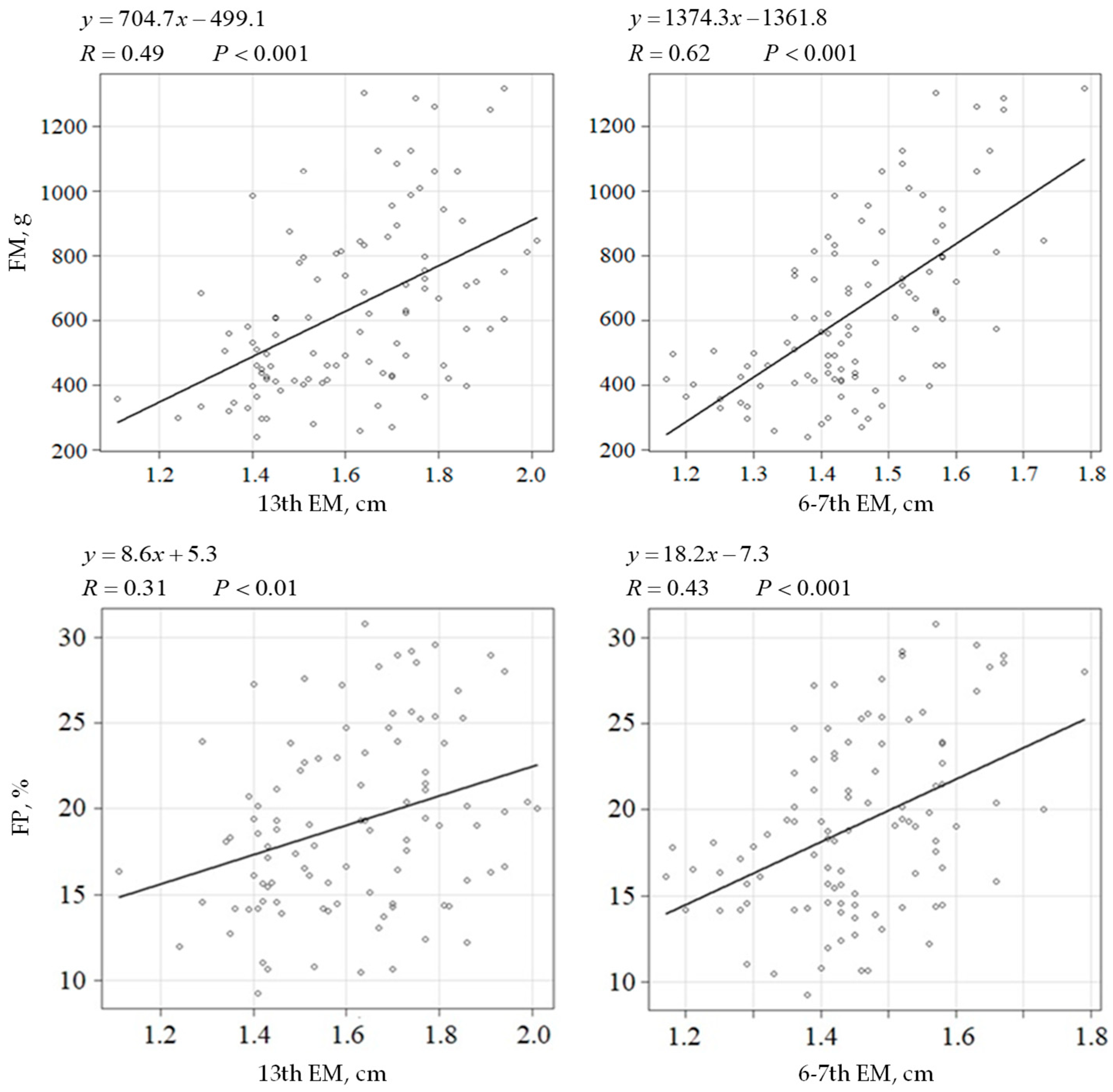
- Subcutaneous fat and muscle thicknesses were then measured using the built-in ruler of the ultrasound device or image measurement software.
- (7)
- Subcutaneous fat thickness was measured as the maximum diameter between the dermis and upper fascia of the posterior serratus muscle.
- (8)
- The thickness of the longissimus dorsi muscle was measured as the maximum diameter at the border between the dorsal and ventral sides.
8. Conclusions
9. Patents
Author Contributions
Funding
Institutional Review Board Statement
Informed Consent Statement
Data Availability Statement
Acknowledgments
Conflicts of Interest
Abbreviations
| BMI | Body Mass Index |
| BCS | Body Condition Score |
| CT | Computed Tomography |
| DEXA | Dual-energy X-ray absorptiometry |
| FBMI | Feline Body Fat Index |
| MCS | Muscle Condition Score |
| NCDs | Non-Communicable Diseases |
| NEFA | Non-Esterified Fatty Acid |
References
- Cline, M.G.; Burns, K.M.; Coe, J.B.; Downing, R.; Durzi, T.; Murphy, M.; Parker, V. 2021 AAHA nutrition and weight management guidelines for dogs and cats. J. Am. Anim. Hosp. Assoc. 2021, 57, 153–178. [Google Scholar] [CrossRef]
- Freeman, L.; Becvarova, I.; Cave, N.; MacKay, C.; Nguyen, P.; Rama, B.; Takashima, G.; Tiffin, R.; van Beukelen, P.; Yathiraj, S. WSAVA nutritional assessment guidelines. J. Feline Med. Surg. 2011, 13, 516–525. [Google Scholar] [CrossRef] [PubMed]
- Colliard, L.; Paragon, B.M.; Lemuet, B.; Bénet, J.J.; Blanchard, G. Prevalence and risk factors of obesity in an urban population of healthy cats. J. Feline Med. Surg. 2009, 11, 135–140. [Google Scholar] [CrossRef] [PubMed]
- Courcier, E.A.; O’Higgins, R.; Mellor, D.J.; Yam, P.S. Prevalence and risk factors for feline obesity in a first opinion practice in Glasgow, Scotland. J. Feline Med. Surg. 2010, 12, 746–753. [Google Scholar] [CrossRef]
- Cave, N.J.; Allan, F.J.; Schokkenbroek, S.L.; Metekohy, C.A.; Pfeiffer, D.U. A cross-sectional study to compare changes in the prevalence and risk factors for feline obesity between 1993 and 2007 in New Zealand. Prev. Vet. Med. 2012, 107, 121–133. [Google Scholar] [CrossRef]
- Association for Pet Obesity Prevention. 2014 National Pet Obesity Survey Results. 2016. Available online: https://petobesityprevention.org/2014/ (accessed on 12 January 2026).
- Montoya, M.; Péron, F.; Hookey, T.; Morrison, J.; German, A.J.; Gaillard, V.; Flanagan, J. Overweight and obese body condition in ~4.9 million dogs and ~1.3 million cats seen at primary practices across the USA: Prevalences by life stage from early growth to senior. Prev. Vet. Med. 2025, 235, 106398. [Google Scholar] [CrossRef]
- Arai, T.; Ishikawa, S.; Mori, N.; Yamamoto, I.; Kawasumi, K. Obesity and lipotoxicity in dogs and cats. Jpn. J. Prophyl. Vet. Med. 2012, 4, 1–12. [Google Scholar]
- Swarbrick, M.M.; Stanhope, K.L.; Austrheim-Smith, I.T.; Van Loan, M.D.; Ali, M.R.; Wolfe, B.M.; Havel, P.J. Longitudinal changes in pancreatic and adipocyte hormones following Roux-en-Y gastric bypass surgery. Diabetologia 2008, 51, 1901–1911. [Google Scholar] [CrossRef]
- Mori, N.; Lee, P.; Kondo, K.; Kido, T.; Saito, T.; Arai, T. Potential use of cholesterol lipoprotein profile to confirm obesity status in dogs. Vet. Res. Commun. 2011, 35, 223–235. [Google Scholar] [CrossRef]
- Mori, N.; Lee, P.; Muranaka, S.; Sagara, F.; Takemitsu, H.; Nishiyama, Y.; Yamamoto, I.; Yagishita, M.; Arai, T. Predisposition for primary hyperlipidemia in Miniature Schnauzers and Shetland sheepdogs as compared to other canine breeds. Res. Vet. Sci. 2010, 88, 394–399. [Google Scholar] [CrossRef] [PubMed]
- DeFronzo, R.A. Insulin resistance, lipotoxicity, type 2 diabetes and atherosclerosis: The missing links. The Claude Bernard Lecture 2009. Diabetologia 2010, 53, 1270–1287. [Google Scholar] [CrossRef]
- Gehrmann, W.; Elsner, M.; Lenzen, S. Role of metabolically generated reactive oxygen species for lipotoxicity in pancreatic β-cells. Diabetes Obes. Metab. 2010, 12, 149–158. [Google Scholar] [CrossRef]
- Giacca, A.; Xiao, C.; Oprescu, A.I.; Carpentier, A.C.; Lewis, G.F. Lipid-induced pancreatic β-cell dysfunction: Focus on in vivo studies. Am. J. Physiol. Endocrinol. Metab. 2011, 300, E255–E262. [Google Scholar] [CrossRef] [PubMed]
- Yeon, K.-D.; Kim, S.-M.; Kim, J.-H. Association between Gut Microbiota and Metabolic Health and Obesity Status in Cats. Animals 2024, 14, 2524. [Google Scholar] [CrossRef]
- Colleran, E.J.; Delgado, M.M.; Ren, Y.; German, A.J.; Gruen, M.E.; Gunn-Moore, D.A.; Romanowski, K.; Simpson, W.; Kirnos, C.; Keefe Ternes, K.; et al. A non-randomized pilot study to test the feasibility of developing a frailty scale for pet cats. Front. Vet. Sci. 2025, 12, 1549566. [Google Scholar] [CrossRef] [PubMed]
- Pye, C.R.; Dowgray, N.J.; Eyre, K.; Pinchbeck, G.; Biourge, V.; Moniot, D.; Comerford, E.; German, A.J. Longitudinal changes in bodyweight, body condition, and muscle condition in ageing pet cats: Findings from the Cat Prospective Ageing and Welfare Study. Front. Vet. Sci. 2025, 12, 1654002. [Google Scholar] [CrossRef] [PubMed]
- German, A.J.; Holden, S.; Bissot, T.; Morris, P.J.; Biourge, V. Changes in body composition during weight loss in obese client-owned cats: Loss of lean tissue mass correlates with overall percentage of weight lost. J. Feline Med. Surg. 2008, 10, 452–459. [Google Scholar] [CrossRef]
- Laflamme, D.P.; Hannah, S.S. Increased dietary protein promotes fat loss and reduces loss of lean body mass during weight loss in cats. Int. J. Appl. Res. Vet. Med. 2005, 3, 62–68. [Google Scholar]
- LaFlamme, D. Development and validation of a body condition score system for cats: A clinical tool. Feline Pract. 1997, 25, 13–18. [Google Scholar]
- Michel, K.E.; Anderson, W.; Cupp, C.; Laflamme, D.P. Correlation of a feline muscle mass score with body composition determined by dual-energy x-ray absorptiometry. Br. J. Nutr. 2011, 106, S57–S59. [Google Scholar] [CrossRef]
- Gallagher, D.; Visser, M.; Sepúlveda, D.; Pierson, R.N.; Harris, T.; Heymsfield, S.B. How useful is body mass index for comparison of body fatness across age, sex, and ethnic groups? Am. J. Epidemiol. 1996, 143, 228–239. [Google Scholar] [CrossRef]
- Goulding, A.; Gold, E.; Cannan, R.; Taylor, R.W.; Williams, S.; Lewis-Barned, N.J. DEXA supports the use of BMI as a measure of fatness in young girls. Int. J. Obes. Relat. Metab. Disord. 1996, 20, 1014–1021. [Google Scholar]
- Pischon, T.; Boeing, H.; Hoffmann, K.; Bergmann, M.; Schulze, M.B.; Overvad, K.; van der Schouw, Y.T.; Spencer, E.; Moons, K.G.; Tjønneland, A.; et al. General and abdominal adiposity and risk of death in Europe. N. Engl. J. Med. 2008, 359, 2105–2120. [Google Scholar] [CrossRef]
- Chandra, A.; Neeland, I.J.; Berry, J.D.; Ayers, C.R.; Rohatgi, A.; Das, S.R.; Khera, A.; McGuire, D.K.; de Lemos, J.A.; Turer, A.T. The relationship of body mass and fat distribution with incident hypertension: Observations from the Dallas Heart Study. J. Am. Coll. Cardiol. 2014, 64, 997–1002. [Google Scholar] [CrossRef] [PubMed]
- Du, T.; Yuan, G.; Zhang, M.; Zhou, X.; Sun, X.; Yu, X. Clinical usefulness of lipid ratios, visceral adiposity indicators, and the triglycerides and glucose index as risk markers of insulin resistance. Cardiovasc. Diabetol. 2014, 13, 146. [Google Scholar] [CrossRef]
- Chan, D.C.; Watts, G.F.; Barrett, P.H.; Burke, V. Waist circumference, waist-to-hip ratio and body mass index as predictors of adipose tissue compartments in men. QJM Int. J. Med. 2003, 96, 441–447. [Google Scholar] [CrossRef]
- Appleton, D.J.; Rand, J.S.; Sunvold, G.D. Insulin sensitivity decreases with obesity, and lean cats with low insulin sensitivity are at greatest risk of glucose intolerance with weight gain. J. Feline Med. Surg. 2001, 3, 211–228. [Google Scholar] [CrossRef]
- Butterwick, R. How fat is that cat? J. Feline Med. Surg. 2000, 2, 91–94. [Google Scholar] [CrossRef] [PubMed]
- Hawthorne, A.J.; Butterwick, R.F. The feline body mass index—A simple measure of body fat content in cats. Walth. Focus 2000, 10, 32–33. [Google Scholar]
- Hoenig, M.; Jordan, E.T.; Glushka, J.; Kley, S.; Patil, A.; Waldron, M.; Prestegard, J.H.; Ferguson, D.C.; Wu, S.; Olson, D.E. Effect of macronutrients, age, and obesity on 6- and 24-h postprandial glucose metabolism in cats. Am. J. Physiol. Regul. Integr. Comp. Physiol. 2011, 301, R1798–R1807. [Google Scholar] [CrossRef] [PubMed]
- Hoenig, M.; Wilkins, C.; Holson, J.C.; Ferguson, D.C. Effects of obesity on lipid profiles in neutered male and female cats. Am. J. Vet. Res. 2003, 64, 299–303. [Google Scholar] [CrossRef] [PubMed]
- Nelson, R.W.; Himsel, C.A.; Feldman, E.C.; Bottoms, G.D. Glucose tolerance and insulin response in normal-weight and obese cats. Am. J. Vet. Res. 1990, 51, 1357–1362. [Google Scholar] [CrossRef]
- Teixeira, F.A.; Queiroz, M.R.; Oba, P.M.; Olivindo, R.F.G.; Ernandes, M.C.; Duarte, C.N.; Rentas, M.F.; Brunetto, M.A. Brazilian owners perception of the body condition score of dogs and cats. BMC Vet. Res. 2020, 16, 463. [Google Scholar] [CrossRef]
- Teng, K.T.; McGreevy, P.D.; Toribio, J.L.M.L.; Dhand, N.K. Positive attitudes towards feline obesity are strongly associated with ownership of obese cats. PLoS ONE 2020, 15, e0234190. [Google Scholar] [CrossRef]
- Graff, E.C.; Lea, C.R.; Delmain, D.; Chamorro, E.D.; Ma, X.; Zheng, J.; Zhang, Y.; Brinker, E.; Kittell, K.; Hicks, M.; et al. Inter-evaluator bias and applicability of feline body condition score from visual assessment. Front. Vet. Sci. 2025, 12, 1604557. [Google Scholar] [CrossRef]
- Matsuzawa, Y.; Tokunaga, K.; Kotani, K.; Keno, Y.; Kobayashi, T.; Tarui, S. Simple estimation of ideal body weight from body mass index with the lowest morbidity. Diabetes Res. Clin. Pract. 1990, 10, S159–S164. [Google Scholar] [CrossRef]
- Yamada, T.; Kimura-Koyanagi, M.; Sakaguchi, K.; Ogawa, W.; Tamori, Y. Obesity and risk for its comorbidities diabetes, hypertension, and dyslipidemia in Japanese individuals aged 65 years. Sci. Rep. 2023, 13, 2346. [Google Scholar] [CrossRef] [PubMed]
- Lim, Y.; Boster, J. Obesity and Comorbid Conditions; StatPearls Publishing: Treasure Island, FL, USA, 2024. [Google Scholar]
- Padasdao, B.; Shahhaidar, E.; Boric-Lubecke, O. Measuring chest circumference change during respiration with an electromagnetic biosensor. In Proceedings of the 2013 35th Annual International Conference of the IEEE Engineering in Medicine and Biology Society (EMBC), Osaka, Japan, 3–7 July 2013; pp. 1936–1939. [Google Scholar] [CrossRef]
- German, A.; Martin, L. Feline obesity. In Encyclopedia of Feline Clinical Nutrition; Pibot, P., Biourge, V., Elliott, D., Eds.; Royal Canin: Aimargues, France, 2010. [Google Scholar]
- Booth, R.A.; Goddard, B.A.; Paton, A. Measurement of fat thickness in man: A comparison of ultrasound, Harpenden calipers and electrical conductivity. Br. J. Nutr. 1966, 20, 719–725. [Google Scholar] [CrossRef]
- Stanton, C.A.; Hamar, D.W.; Johnson, D.E.; Fettman, M.J. Bioelectrical impedance and zoometry for body composition analysis in domestic cats. Am. J. Vet. Res. 1992, 53, 251–257. [Google Scholar] [CrossRef] [PubMed]
- Baldwin, K.; Bartges, J.; Buffington, T.; Freeman, L.M.; Grabow, M.; Legred, J.; Ostwald, D., Jr. AAHA nutritional assessment guidelines for dogs and cats. J. Am. Anim. Hosp. Assoc. 2010, 46, 285–296. [Google Scholar] [CrossRef]
- Speakman, J.R.; Booles, D.; Butterwick, R. Validation of dual energy X-ray absorptiometry (DXA) by comparison with chemical analysis of dogs and cats. Int. J. Obes. Relat. Metab. Disord. 2001, 25, 439–447. [Google Scholar] [CrossRef] [PubMed]
- Bjørnvad, C.R.; Nielsen, M.E.; Hansen, S.E.M.; Nielsen, D.H. The effect of position on the precision of dual-energy X-ray absorptiometry and correlation with body condition score in dogs and cats. J. Nutr. Sci. 2017, 6, e20. [Google Scholar] [CrossRef]
- Iwazaki, E.; Lee, A.H.; Kruis, A.M.; Phungviwatnikul, T.; Valentine, H.; Arend, L.S.; Knox, R.V.; de Godoy, M.R.C.; Swanson, K.S. Effects of a high-protein, high-fiber diet rich in antioxidants and l-carnitine on body weight, body composition, metabolic status, and physical activity levels of cats after spay surgery. J. Anim. Sci. 2022, 100, skac104. [Google Scholar] [CrossRef] [PubMed]
- Iwazaki, E.; Hirai, M.; Tatsuta, Y.; Nade, T. The relationship among ultrasound measurements, body fat ratio, and feline body mass index in aging cats. Jpn. J. Vet. Res. 2018, 66, 273–279. [Google Scholar] [CrossRef]
- Iwazaki, E.; Nade, T. Evaluation of ultrasound assessments of subcutaneous adiposity and epaxial muscularity in cats: A preliminary study. Jpn. J. Vet. Res. 2020, 68, 35–45. [Google Scholar] [CrossRef]
- Iwazaki, E. Changes in Diagnostic Markers and Their Clinical Application to Obese Cats. 2016. Available online: https://nvlu.repo.nii.ac.jp/records/80 (accessed on 12 January 2026).
- Iwazaki, E.; Kimura, N.; Kawasumi, K.; Tatsuta, Y.; Arai, T. Development of new feline body mass index and its clinical application. J. Vet. Sci. 2015, 1, 61–69. [Google Scholar]
- Bjornvad, C.R.; Nielsen, D.H.; Armstrong, P.J.; McEvoy, F.; Hoelmkjaer, K.M.; Jensen, K.S.; Pedersen, G.F.; Kristensen, A.T. Evaluation of a nine-point body condition scoring system in physically inactive pet cats. Am. J. Vet. Res. 2011, 72, 433–437. [Google Scholar] [CrossRef]
- Stouffer, J.R. History of ultrasound in animal science. J. Ultrasound Med. 2004, 23, 577–584. [Google Scholar] [CrossRef]
- Yamka, R.M.; Friesen, K.G.; Stiers, C.A.; Stone, B.A. Using ultrasound as an alternative method for determining body fat content in beagles. J. Anim. Sci. 2007, 85, 266. [Google Scholar]
- Hutchinson, D.; Sutherland-Smith, J.; Watson, A.L.; Freeman, L.M. Assessment of methods of evaluating sarcopenia in old dogs. Am. J. Vet. Res. 2012, 73, 1794–1800. [Google Scholar] [CrossRef]
- Japan Meat Grading Association. Beef Carcass Grading Standard; Japan Meat Grading Association: Tokyo, Japan, 2000. [Google Scholar]
- USDA. United States Standards for Grades of Carcass Beef; United States Department of Agriculture: Washington, DC, USA, 2016. [Google Scholar]
- Iwazaki, E.; Lee, A.H.; Kruis, A.M.; Phungviwatnikul, T.; Valentine, H.; Arend, L.S.; Knox, R.V.; de Godoy, M.R.C.; Swanson, K.S. Correlation of Ultrasound Backfat Measurement with fBMI Calculations, BCS, and DEXA-Based Body Composition in Cats. In Proceedings of the 19th Annual AAVN Clinical Nutrition and Research Symposium, Phoenix, AZ, USA, 5 June 2019. [Google Scholar]




Disclaimer/Publisher’s Note: The statements, opinions and data contained in all publications are solely those of the individual author(s) and contributor(s) and not of MDPI and/or the editor(s). MDPI and/or the editor(s) disclaim responsibility for any injury to people or property resulting from any ideas, methods, instructions or products referred to in the content. |
© 2026 by the authors. Licensee MDPI, Basel, Switzerland. This article is an open access article distributed under the terms and conditions of the Creative Commons Attribution (CC BY) license.
Share and Cite
Iwazaki, E.; Mori, A. Adiposity and Muscularity Evaluation Using New Objective Morphological Methods Available in Clinical Veterinary Practice: Feline Body Mass Index and Ultrasonography. Animals 2026, 16, 528. https://doi.org/10.3390/ani16040528
Iwazaki E, Mori A. Adiposity and Muscularity Evaluation Using New Objective Morphological Methods Available in Clinical Veterinary Practice: Feline Body Mass Index and Ultrasonography. Animals. 2026; 16(4):528. https://doi.org/10.3390/ani16040528
Chicago/Turabian StyleIwazaki, Eiji, and Akihiro Mori. 2026. "Adiposity and Muscularity Evaluation Using New Objective Morphological Methods Available in Clinical Veterinary Practice: Feline Body Mass Index and Ultrasonography" Animals 16, no. 4: 528. https://doi.org/10.3390/ani16040528
APA StyleIwazaki, E., & Mori, A. (2026). Adiposity and Muscularity Evaluation Using New Objective Morphological Methods Available in Clinical Veterinary Practice: Feline Body Mass Index and Ultrasonography. Animals, 16(4), 528. https://doi.org/10.3390/ani16040528