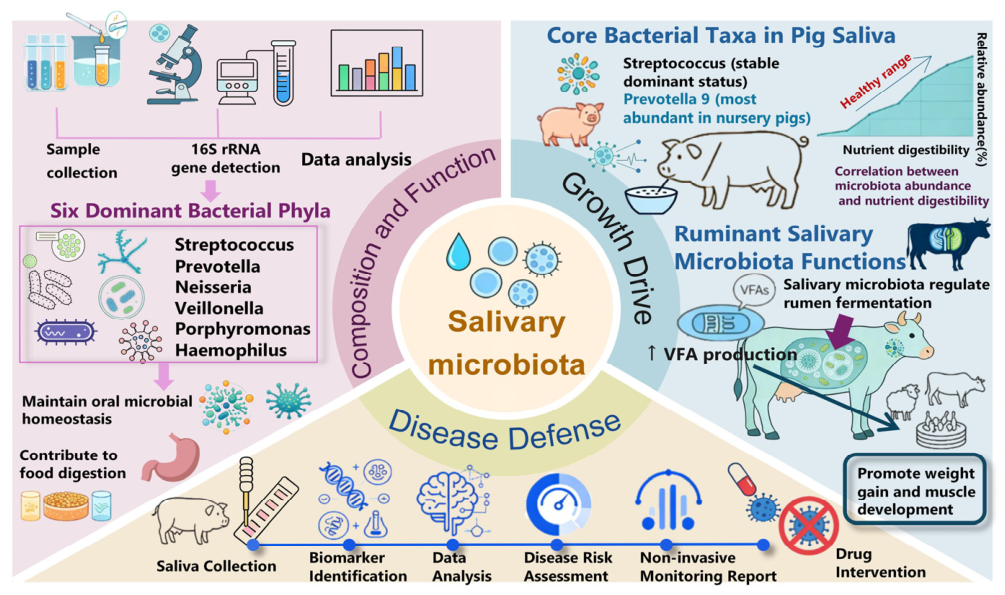
The Salivary Microbiota–Host Nexus: Unraveling Opportunities for Non-Invasive Monitoring of Health and Productivity in Farm Animals


Simple Summary
Abstract
1. Introduction
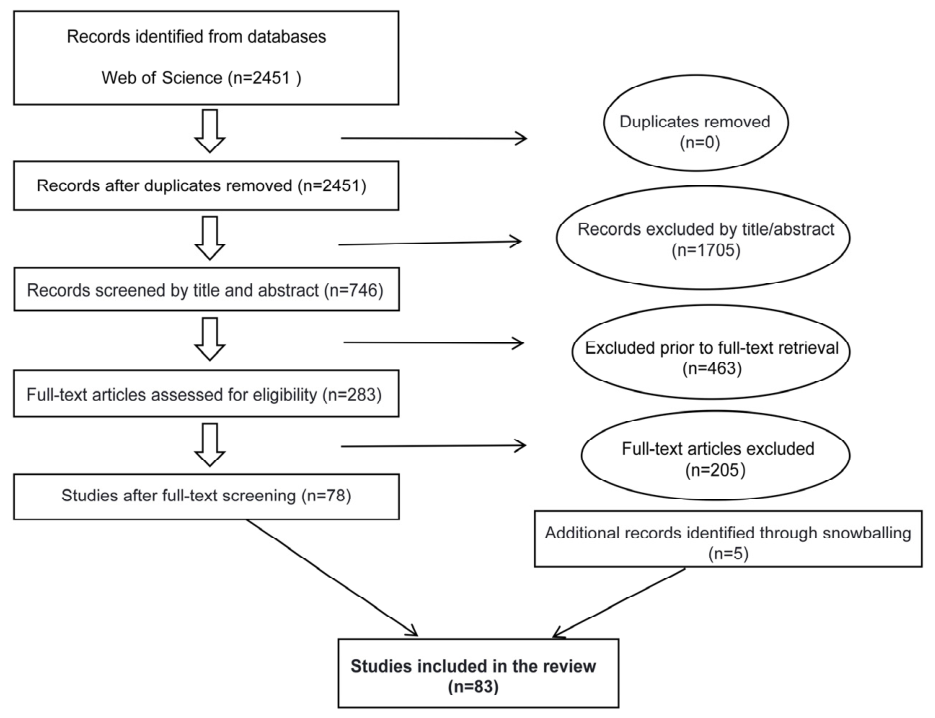
2. Literature Search Strategy
3. Salivary Characteristics and Diagnostic Potential
3.1. Composition and Physiological Functions of Saliva
3.2. Methods of Saliva Collection and Detection
3.3. Classical Salivary Diagnostic Indicators and Applications
4. Association Between Salivary Microbiota and Host
4.1. Basic Composition of Salivary Microbiota
4.2. Direct Driving Effect of Salivary Microbiota on Animal Growth Performance
4.3. The Critical Role of Salivary Microbiota in Animal Disease Prevention and Control
5. Discussion and Future Perspectives
6. Conclusions
Author Contributions
Funding
Institutional Review Board Statement
Informed Consent Statement
Data Availability Statement
Conflicts of Interest
Abbreviations
| sIgA | Secretory immunoglobulin A |
| SARA | Subacute ruminal acidosis |
| CARDS | Community-acquired respiratory distress syndrome |
| TLR2 | Toll-like receptor 2 |
| TLR4 | Toll-like receptor 4 |
| TNF-α | Tumor necrosis factor-alpha |
| IL-6 | Interleukin-6 |
| VFAs | Volatile fatty acids |
References
- Humphrey, S.P.; Williamson, R.T. A review of saliva: Normal composition, flow, and function. J. Prosthet. Dent. 2001, 85, 162–169. [Google Scholar] [CrossRef] [PubMed]
- Yoshizawa, J.M.; Schafer, C.A.; Schafer, J.J.; Farrell, J.J.; Paster, B.J.; Wong, D.T. Salivary biomarkers: Toward future clinical and diagnostic utilities. Clin. Microbiol. Rev. 2013, 26, 781–791. [Google Scholar] [CrossRef] [PubMed]
- Aas, J.A.; Paster, B.J.; Stokes, L.N.; Olsen, I.; Dewhirst, F.E. Defining the normal bacterial flora of the oral cavity. J. Clin. Microbiol. 2005, 43, 5721–5732. [Google Scholar] [CrossRef] [PubMed]
- Bonne, N.J.; Wong, D.T. Salivary biomarker development using genomic, proteomic and metabolomic approaches. Genome Med. 2012, 4, 82. [Google Scholar] [CrossRef]
- Hu, S.; Loo, J.A.; Wong, D.T. Human saliva proteome analysis. Ann. N. Y. Acad. Sci. 2007, 1098, 323–329. [Google Scholar] [CrossRef]
- Park, N.J.; Li, Y.; Yu, T.; Brinkman, B.M.; Wong, D.T. Characterization of RNA in saliva. Clin. Chem. 2006, 52, 988–994. [Google Scholar] [CrossRef]
- Liu, S.; Chen, Y.; Li, J.; Yang, M. Editorial: Unlocking the power of gut microbiota to improving health and welfare in non-ruminant livestock. Front. Vet. Sci. 2025, 12, 1674586. [Google Scholar] [CrossRef]
- Edwards, J.E.; Kim, E.J.; Davies, D.R.; Hanafy, R.; Kingston-Smith, A.H. Ruminant salivary microbes: Passenger or player in the rumen? Microorganisms 2023, 11, 2390. [Google Scholar] [CrossRef]
- Palma-Hidalgo, J.M.; Belanche, A.; Jiménez, E.; Martín-García, A.I.; Newbold, C.J.; Yáñez-Ruiz, D.R. Short communication: Saliva and salivary components affect goat rumen fermentation in short-term batch incubations. Animal 2021, 15, 100267. [Google Scholar] [CrossRef]
- Fábián, T.K.; Fejérdy, P.; Csermely, P. Salivary genomics, transcriptomics and proteomics: The emerging concept of the oral ecosystem and their use in the early diagnosis of cancer and other diseases. Curr. Genom. 2008, 9, 11–21. [Google Scholar] [CrossRef]
- Pedersen, A.M.; Bardow, A.; Jensen, S.B.; Nauntofte, B. Saliva and gastrointestinal functions of taste, mastication, swallowing and digestion. Oral Dis. 2002, 8, 117–129. [Google Scholar] [CrossRef] [PubMed]
- Kaufman, E.; Lamster, I.B. The diagnostic applications of saliva—A review. Crit. Rev. Oral Biol. Med. 2002, 13, 197–212. [Google Scholar] [CrossRef] [PubMed]
- Lamy, E.; Mau, M. Saliva proteomics as an emerging, non-invasive tool to study livestock physiology, nutrition and diseases. J. Proteom. 2012, 75, 4251–4258. [Google Scholar] [CrossRef] [PubMed]
- Edgar, W.M. Saliva: Its secretion, composition and functions. Br. Dent. J. 1992, 172, 305–312. [Google Scholar] [CrossRef]
- Rehak, N.N.; Cecco, S.A.; Csako, G. Biochemical composition and electrolyte balance of “unstimulated” whole human saliva. Clin. Chem. Lab. Med. 2000, 38, 335–343. [Google Scholar] [CrossRef] [PubMed]
- Samaranayake, L. Saliva as a diagnostic fluid. Int. Dent. J. 2007, 57, 295–299. [Google Scholar] [CrossRef]
- Hegde, M.N.; Sajnani, A.R. Salivary proteins—A barrier on enamel demineralization: An in vitro study. Int. J. Clin. Pediatr. Dent. 2017, 10, 10–13. [Google Scholar] [CrossRef]
- Abdul, N.S.; AlGhannam, S.M.; Almughaiseeb, A.A.; Bindawoad, F.A.; Alduraibi, S.M.; Shenoy, M. A review on salivary constituents and their role in diagnostics. Bioinformation 2022, 18, 1021–1028. [Google Scholar] [CrossRef]
- Robyt, J.F.; French, D. The action pattern of porcine pancreatic alpha-amylase in relationship to the substrate binding site of the enzyme. J. Biol. Chem. 1970, 245, 3917–3927. [Google Scholar] [CrossRef]
- Lai, W.Y.W.; Chua, J.W.M.; Gill, S.; Brownlee, I.A. Analysis of the lipolytic activity of whole-saliva and site-specific secretions from the oral cavity of healthy adults. Nutrients 2019, 11, 191. [Google Scholar] [CrossRef]
- Buiatte, V.; Fonseca, A.; Alonso Madureira, P.; Nakashima Vaz, A.C.; Tizioto, P.C.; Centola Vidal, A.M.; Ganda, E.; de Azevedo Ruiz, V.L. A comparative study of the bacterial diversity and composition of nursery piglets’ oral fluid, feces, and housing environment. Sci. Rep. 2024, 14, 4119. [Google Scholar] [CrossRef]
- Murase, K.; Watanabe, T.; Arai, S.; Kim, H.; Tohya, M.; Ishida-Kuroki, K.; Võ, T.H.; Nguyễn, T.P.B.; Nakagawa, I.; Osawa, R.; et al. Characterization of pig saliva as the major natural habitat of Streptococcus suis by analyzing oral, fecal, vaginal, and environmental microbiota. PLoS ONE 2019, 14, e0215983. [Google Scholar] [CrossRef]
- Heller, D.; Nery, G.B.; Bachi, A.L.L.; Al-Hashimi, I. Positive role of saliva in the oral microbiome. In Oral Microbiome: Symbiosis, Dysbiosis and Microbiome Interventions for Maintaining Oral and Systemic Health; Dame-Teixeira, N., Deng, D., Do, T., Eds.; Springer Nature Switzerland: Cham, Switzerland, 2025; pp. 103–118. [Google Scholar]
- Brandtzaeg, P. Secretory IgA: Designed for anti-microbial defense. Front. Immunol. 2013, 4, 222. [Google Scholar] [CrossRef]
- Nagakubo, D.; Kaibori, Y. Oral microbiota: The influences and interactions of saliva, IgA, and dietary factors in health and disease. Microorganisms 2023, 11, 2307. [Google Scholar] [CrossRef]
- Calice-Silva, V.; Raimann, J.G.; Wu, W.; Pecoits-Filho, R.; Kotanko, P.; Levin, N. Salivary urea nitrogen as a biomarker for renal dysfunction. In Biomarkers in Kidney Disease; Patel, V.B., Ed.; Springer: Dordrecht, The Netherlands, 2015; pp. 1–19. [Google Scholar]
- Pfaffe, T.; Cooper-White, J.; Beyerlein, P.; Kostner, K.; Punyadeera, C. Diagnostic potential of saliva: Current state and future applications. Clin. Chem. 2011, 57, 675–687. [Google Scholar] [CrossRef]
- Zhang, X.; Li, Y.; Terranova, M.; Ortmann, S.; Kehraus, S.; Gerspach, C.; Kreuzer, M.; Clauss, M.; Hummel, J. A pilot investigation on the effect of induced saliva flow on digestive parameters in sheep, and a comparison with cattle. J. Anim. Physiol. Anim. Nutr. 2023, 107, 1176–1186. [Google Scholar] [CrossRef]
- Beauchemin, K.A. Ingestion and mastication of feed by dairy cattle. Vet. Clin. N. Am. Food Anim. Pract. 1991, 7, 439–463. [Google Scholar] [CrossRef]
- Bailey, C.B.; Balch, C.C. Saliva secretion and its relation to feeding in cattle: 2. The composition and rate of secretion of mixed saliva in the cow during rest. Br. J. Nutr. 1961, 15, 383–402. [Google Scholar] [CrossRef]
- Sánchez, J.; Matas, M.; Ibáñez-López, F.; Hernández, I.; Sotillo, J.; Gutiérrez, A. The connection between stress and immune status in pigs: A first salivary analytical panel for disease differentiation. Front. Vet. Sci. 2022, 9, 881435. [Google Scholar] [CrossRef]
- Rubio, C.; Mainau, E.; Cerón, J.; Contreras Aguilar, M.D.; Martinez-Subiela, S.; Navarro, E.; Tecles, F.; Manteca, X.; Escribano, D. Biomarkers of oxidative stress in saliva in pigs: Analytical validation and changes in lactation. BMC Vet. Res. 2019, 15, 144. [Google Scholar] [CrossRef]
- Kittelmann, S.; Kirk, M.; Jonker, A.; McCulloch, A.; Janssen, P. Buccal swabbing as a noninvasive method to determine bacterial, archaeal, and eukaryotic microbial community structures in the rumen. Appl. Environ. Microbiol. 2015, 81, 7470–7483. [Google Scholar] [CrossRef] [PubMed]
- Ortolani, E. A simple and rapid method for collecting saliva to assess sodium status in sheep. Cienc. Rural 1997, 27, 245–248. [Google Scholar] [CrossRef]
- Skarlupka, J.; Cox, M.; Steinberger, A.; Sbardellati, D.; McClure, J.; Bickhart, D.; Scheftgen, A.; Zuniga-Chaves, I.; Wolfe, L.; Paget, E.; et al. Oral swabs as a proxy for direct ruminal microbiome sampling in Holstein dairy cows is correlated with sample color. Front. Microbiol. 2024, 15, 1466375. [Google Scholar] [CrossRef]
- Zheng, L.; Shi, L.; Wu, X.; Hu, P.; Zhang, B.; Han, X.; Wang, K.; Li, X.; Yang, F.; Wang, Y.; et al. Advances in research on pig salivary analytes: A window to reveal pig health and physiological status. Animals 2024, 14, 374. [Google Scholar] [CrossRef]
- Amin, N.; Schwarzkopf, S.; Kinoshita, A.; Tröscher-Mußotter, J.; Dänicke, S.; Camarinha-Silva, A.; Huber, K.; Frahm, J.; Seifert, J. Evolution of rumen and oral microbiota in calves is influenced by age and time of weaning. Anim. Microbiome 2021, 3, 31. [Google Scholar] [CrossRef]
- Rosenbaum, J.; Usyk, M.; Chen, Z.; Zolnik, C.; Jones, H.; Waldron, L.; Dowd, J.; Thorpe, L.; Burk, R. Evaluation of oral cavity DNA extraction methods on bacterial and fungal microbiota. Sci. Rep. 2019, 9, 1531. [Google Scholar] [CrossRef]
- Cerón, J.J.; Contreras-Aguilar, M.D.; Escribano, D.; Martínez-Miró, S.; López-Martínez, M.J.; Ortín-Bustillo, A.; Franco-Martínez, L.; Rubio, C.P.; Muñoz-Prieto, A.; Tvarijonaviciute, A.; et al. Basics for the potential use of saliva to evaluate stress, inflammation, immune system, and redox homeostasis in pigs. BMC Vet. Res. 2022, 18, 81. [Google Scholar] [CrossRef]
- Olazabal-Loaiza, J.; Gomez-Puerta, L.A.; Martín, F.S.; Gómez-Bravo, C.A. Circadian rhythm of salivary and serum urea concentration in alpacas and sheep receiving diets with different levels of protein. Vet. Res. Commun. 2024, 48, 2761–2766. [Google Scholar] [CrossRef]
- Papatsiros, V.G.; Maragkakis, G.; Papakonstantinou, G.I. Stress biomarkers in pigs: Current insights and clinical application. Vet. Sci. 2024, 11, 640. [Google Scholar] [CrossRef] [PubMed]
- Botía, M.; Llamas-Amor, E.; Cerón, J.J.; Ramis-Vidal, G.; López-Juan, A.L.; Benedé, J.L.; Escribano, D.; Martínez-Subiela, S.; López-Arjona, M. Cortisone in saliva of pigs: Validation of a new assay and changes after thermal stress. BMC Vet. Res. 2024, 20, 370. [Google Scholar] [CrossRef] [PubMed]
- López-Martínez, M.J.; Escribano, D.; Ortín-Bustillo, A.; Franco-Martínez, L.; González-Arostegui, L.G.; Cerón, J.J.; Rubio, C.P. Changes in biomarkers of redox status in saliva of pigs after an experimental sepsis induction. Antioxidants 2022, 11, 1380. [Google Scholar] [CrossRef]
- Contreras-Aguilar, M.D.; Tvarijonaviciute, A.; Monkeviciene, I.; Martín-Cuervo, M.; González-Arostegui, L.G.; Franco-Martínez, L.; Cerón, J.J.; Tecles, F.; Escribano, D. Characterization of total adenosine deaminase activity (ADA) and its isoenzymes in saliva and serum in health and inflammatory conditions in four different species: An analytical and clinical validation pilot study. BMC Vet. Res. 2020, 16, 384. [Google Scholar] [CrossRef]
- Gutiérrez, A.M.; De La Cruz-Sánchez, E.; Montes, A.; Sotillo, J.; Gutiérrez-Panizo, C.; Fuentes, P.; Tornel, P.L.; Cabezas-Herrera, J. Easy and non-invasive disease detection in pigs by adenosine deaminase activity determinations in saliva. PLoS ONE 2017, 12, e0179299. [Google Scholar] [CrossRef]
- Piirainen, V.; Gutiérrez, A.M.; Heinonen, M.; König, E.; Valros, A.; Junnikkala, S. Salivary and serum haptoglobin, adenosine deaminase, and immunoglobulin G in growing pigs. Porc. Health Manag. 2024, 10, 21. [Google Scholar] [CrossRef]
- Henao Diaz, A.; Gimenez Lirola, L.; Baum, D.; Zimmerman, J. Guidelines for oral fluid-based surveillance of viral pathogens in swine. Porc. Health Manag. 2020, 6, 40. [Google Scholar] [CrossRef]
- Huttenhower, C.; Gevers, D.; Knight, R.; Abubucker, S.; Badger, J.H.; Chinwalla, A.T.; Creasy, H.H.; Earl, A.M.; FitzGerald, M.G.; Fulton, R.S.; et al. Structure, function and diversity of the healthy human microbiome. Nature 2012, 486, 207–214. [Google Scholar] [CrossRef]
- Zaura, E.; Keijser, B.J.; Huse, S.M.; Crielaard, W. Defining the healthy “core microbiome” of oral microbial communities. BMC Microbiol. 2009, 9, 259. [Google Scholar] [CrossRef]
- Liu, J.; Ahmad, A.A.; Yang, C.; Zhang, J.; Zheng, J.; Liang, Z.; Wang, F.; Zhai, H.; Qin, S.; Yang, F.; et al. Modulations in gastrointestinal microbiota during postpartum period fulfill energy requirements and maintain health of lactating Tibetan cattle. Front. Microbiol. 2024, 15, 1369173. [Google Scholar] [CrossRef]
- Freitas, A.; Gan, F.; David, D.; Roesch, L. The microbiome shifts throughout the gastrointestinal tract of Bradford cattle in the Pampa biome. PLoS ONE 2022, 17, e0279386. [Google Scholar] [CrossRef] [PubMed]
- Shinde, D.B.; Mahore, J.G.; Giram, P.S.; Singh, S.L.; Sharda, A.; Choyan, D.; Musale, S. Microbiota of saliva: A non-invasive diagnostic tool. Indian J. Microbiol. 2024, 64, 328–342. [Google Scholar] [CrossRef]
- Young, J.; Skarlupka, J.; Resende, R.; Fischer, A.; Kalscheur, K.; McClure, J.; Cole, J.; Suen, G.; Bickhart, D. Validating the use of bovine buccal sampling as a proxy for the rumen microbiota using a time course and random forest classification approach. Appl. Environ. Microbiol. 2020, 86, e00861-20. [Google Scholar] [CrossRef]
- Qiao, C.; He, M.; Wang, S.; Jiang, X.; Wang, F.; Li, X.; Tan, S.; Chao, Z.; Xin, W.; Gao, S.; et al. Multi-omics analysis reveals substantial linkages between the oral-gut microbiomes and inflamm-aging molecules in elderly pigs. Front. Microbiol. 2023, 14, 1250891. [Google Scholar] [CrossRef]
- Ugochukwu, I.C.I.; Samuel, F.; Orakpoghenor, O.; Nwobi, O.C.; Anyaoha, C.O.; Majesty-Alukagberie, L.O.; Ugochukwu, M.O.; Ugochukwu, E.I. Erysipelas, the opportunistic zoonotic disease: History, epidemiology, pathology, and diagnosis—A review. Comp. Clin. Pathol. 2019, 28, 853–859. [Google Scholar] [CrossRef]
- Vigors, S.; Flores-Villalva, S.; Meade, K.G. The impact of vitamin D3 supplementation on the faecal and oral microbiome of dairy calves indoors or at pasture. Sci. Rep. 2023, 13, 9111. [Google Scholar] [CrossRef]
- Hameed, H.; Mohiuddin, M.; Younas, S.; Luqman, M.; Sarwar, M.; Farukh, S.; Noor, H.; Aziz, M.; Hussain, R. Actinobacillosis: Wooden tongue disease, pathogenic mechanism and clinical management in livestock. In Pathways of Infection: Zoonoses and Environmental Disease Transmission; Unique Scientific Publishers: Faisalabad, Pakistan, 2025. [Google Scholar] [CrossRef]
- Sassu, E.L.; Bossé, J.; Tobias, T.; Gottschalk, M.; Langford, P.; Hennig-Pauka, I. Update on Actinobacillus pleuropneumoniae—Knowledge, gaps and challenges. Transbound. Emerg. Dis. 2017, 65, 72–90. [Google Scholar] [CrossRef]
- Wang, Y.; Liu, R.; Lv, W.; Xia, K.; Lu, X.; Gao, X.; Miao, S.; Zhang, A. The conserved transcription factor PrlP modulates colonization and pathogenicity of Streptococcus suis in response to environmental stress. PLoS Pathog. 2025, 21, e1013314. [Google Scholar] [CrossRef]
- Gutiérrez, A.M.; Miller, I.; Hummel, K.; Nöbauer, K.; Martínez-Subiela, S.; Razzazi-Fazeli, E.; Gemeiner, M.; Cerón, J.J. Proteomic analysis of porcine saliva. Vet. J. 2011, 187, 356–362. [Google Scholar] [CrossRef]
- Marcos, C.N.; Bach, A.; Gutiérrez-Rivas, M.; González-Recio, O. The oral microbiome as a proxy for feed intake in dairy cattle. J. Dairy Sci. 2024, 107, 5881–5896. [Google Scholar] [CrossRef]
- Wang, Q.; Cai, R.; Huang, A.; Wang, X.; Qu, W.; Shi, L.; Li, C.; Yan, H. Comparison of oropharyngeal microbiota in healthy piglets and piglets with respiratory disease. Front. Microbiol. 2018, 9, 3218. [Google Scholar] [CrossRef]
- Jiang, F.; Lin, X.; Yan, Z.; Hu, Z.; Wang, Y.; Wang, Z. Effects of forage source and particle size on chewing activity, ruminal pH, and saliva secretion in lactating Holstein cows. Anim. Sci. J. 2019, 90, 382–392. [Google Scholar] [CrossRef]
- Palma-Hidalgo, J.M.; Belanche, A.; Jiménez, E.; Newbold, C.J.; Denman, S.E.; Yáñez-Ruiz, D.R. Multi-omics in vitro study of the salivary modulation of the goat rumen microbiome. Animal 2023, 17, 100895. [Google Scholar] [CrossRef] [PubMed]
- Su, X.; Liao, D.; Li, C.; Chen, L.; Wang, J.; Gan, T.; Luo, H.; Wu, N.; He, J. Protective effect of Streptococcus salivarius K12 against Mycoplasma pneumoniae infection in mice. J. South. Med. Univ. 2024, 44, 2300–2307. [Google Scholar] [CrossRef]
- Carter, R.R.; Grovum, W.L. A review of the physiological significance of hypertonic body fluids on feed intake and ruminal function: Salivation, motility and microbes. J. Anim. Sci. 1990, 68, 2811–2832. [Google Scholar] [CrossRef]
- Storm, A.C.; Kristensen, N.B.; Røjen, B.A.; Larsen, M. Technical note: A method for quantification of saliva secretion and salivary flux of metabolites in dairy cows. J. Anim. Sci. 2013, 91, 5769–5774. [Google Scholar] [CrossRef] [PubMed]
- Mao, J.; Wang, L. Rumen acidosis in ruminants: A review of the effects of high-concentrate diets and the potential modulatory role of rumen foam. Front. Vet. Sci. 2025, 12, 1595615. [Google Scholar] [CrossRef]
- Liu, T.; Xu, J.; Chen, X.; Ren, J.; He, J.; Wang, Y.; Cao, Y.; Guan, L.L.; Yao, J.; Wu, S. Ruminal-buccal microbiota transmission and their diagnostic roles in subacute rumen acidosis in dairy goats. J. Anim. Sci. Biotechnol. 2025, 16, 32. [Google Scholar] [CrossRef]
- López-Martínez, M.J.; Ornelas, M.A.S.; Amarie, R.E.; Manzanilla, E.G.; Martínez-Subiela, S.; Tecles, F.; Tvarijonaviciute, A.; Escribano, D.; González-Bulnes, A.; Cerón, J.J.; et al. Changes in salivary biomarkers of stress, inflammation, redox status, and muscle damage due to Streptococcus suis infection in pigs. BMC Vet. Res. 2023, 19, 100. [Google Scholar] [CrossRef]
- Nomoto, R.; Ishida-Kuroki, K.; Nakagawa, I.; Sekizaki, T. Complete genome sequences of four Streptococcus parasuis strains obtained from saliva of domestic pigs in Japan. Microbiol. Resour. Announc. 2022, 11, e0124521. [Google Scholar] [CrossRef] [PubMed]
- Baumann, S.; Euring, B.; Harzer, M.; Eibisch, M.; Lindner, A.; Vahlenkamp, T.W.; Heenemann, K. Development of a novel, non-invasive saliva sampling method for the detection of bovine respiratory viruses. Vet. Sci. 2025, 12, 637. [Google Scholar] [CrossRef]
- De Lucia, A.; Cawthraw, S.; Davies, R.; Smith, R.P.; Bianco, C.; Ostanello, F.; Martelli, F. Correlation of anti-Salmonella antibodies between serum and saliva samples collected from finisher pigs. Front. Vet. Sci. 2019, 6, 489. [Google Scholar] [CrossRef]
- Yang, H.; Heirbaut, S.; Jeyanathan, J.; Jing, X.P.; De Neve, N.; Vandaele, L.; Fievez, V. Subacute ruminal acidosis phenotypes in periparturient dairy cows differ in ruminal and salivary bacteria and in the in vitro fermentative activity of their ruminal microbiota. J. Dairy Sci. 2022, 105, 3969–3987. [Google Scholar] [CrossRef] [PubMed]
- Liu, J.; Wang, L.; Wang, D.; Bonser, S.P.; Sun, F.; Zhou, Y.; Gao, Y.; Teng, X. Plants can benefit from herbivory: Stimulatory effects of sheep saliva on growth of Leymus chinensis. PLoS ONE 2012, 7, e29259. [Google Scholar] [CrossRef] [PubMed]
- Li, E.; Liu, J.; Li, X.; Xiang, H.; Yu, J.; Wang, D. Animal saliva has stronger effects on plant growth than salivary components. Grass Forage Sci. 2014, 69, 153–159. [Google Scholar] [CrossRef]
- Lürzel, S.; Bückendorf, L.; Waiblinger, S.; Rault, J.L. Salivary oxytocin in pigs, cattle, and goats during positive human-animal interactions. Psychoneuroendocrinology 2020, 115, 104636. [Google Scholar] [CrossRef]
- Gilmutdinov, R.; Spiridonov, G.; Shalamova, G.; Pokrovskaya, E. Biotic and abiotic factors of bactericidal properties variability of ruminant saliva. BIO Web Conf. 2020, 27, 00051. [Google Scholar] [CrossRef]
- He, X.M.; Tianyin, C. Tick saliva microbiomes isolated from engorged and partially fed adults of Haemaphysalis flava tick females. J. Appl. Entomol. 2017, 142, 173–180. [Google Scholar] [CrossRef]
- Onyango, M.G.; Payne, A.F.; Stout, J.; Dieme, C.; Kuo, L.; Kramer, L.D.; Ciota, A.T. Aedes albopictus saliva contains a richer microbial community than the midgut. Parasit. Vectors. 2024, 17, 267. [Google Scholar] [CrossRef]
- Henderson, G.; Cox, F.; Ganesh, S.; Jonker, A.; Young, W.; Janssen, P.H. Rumen microbial community composition varies with diet and host, but a core microbiome is found across a wide geographical range. Sci. Rep. 2015, 5, 14567. [Google Scholar] [CrossRef]
- Castillo-Lopez, E.; Petri, R.M.; Ricci, S.; Rivera-Chacon, R.; Sener-Aydemir, A.; Sharma, S.; Reisinger, N.; Zebeli, Q. Dynamic changes in salivation, salivary composition, and rumen fermentation associated with duration of high-grain feeding in cows. J. Dairy Sci. 2021, 104, 4875–4892. [Google Scholar] [CrossRef] [PubMed]
- Seidi, S.; Rezazadeh, M.; Alizadeh, R. Miniaturized sample preparation methods for saliva analysis. Bioanalysis 2019, 11, 119–148. [Google Scholar] [CrossRef] [PubMed]


| Animal Species | Dominant Salivary Taxa | Associated Production Traits | Related Diseases | Biomarker Application | References |
|---|---|---|---|---|---|
| Growing and nursery pigs | Streptococcus; Prevotella 9; Actinobacillus; Erysipelothrix | Improved nutrient digestibility and feed conversion; Promoted average daily gain; Enhanced oral polysaccharide degradation | Porcine respiratory disease; Streptococcus suis infection; Stress-induced growth retardation | Herd growth assessment; Early warning of bacterial infection and subclinical stress | [21,22,31,60,62] |
| Dairy and beef cattle | Streptococcus; Actinomyces; Fusobacterium; Prevotella | Increased roughage digestibility; Optimized rumen VFA composition; Improved milk yield and body weight gain | Subacute ruminal acidosis; Bovine respiratory disease; Rumen fermentation disorder | Non-invasive SARA diagnosis; Lactation and growth performance prediction | [8,35,64,69,74] |
| Sheep and goats | Lachnospiraceae; Fibrobacter; Prevotellaceae UCG-003; Succinivibrio; Ruminococcus; Treponema | High forage utilization and nutrient retention; Balanced rumen fermentation; Strong adaptability to coarse feed | Subacute ruminal acidosis; Rumen microecological imbalance; Nutritional metabolic disorders; Stress-restricted growth | Early SARA screening; Evaluation of rumen function and nutritional regulation | [28,64,69,75,76] |
Disclaimer/Publisher’s Note: The statements, opinions and data contained in all publications are solely those of the individual author(s) and contributor(s) and not of MDPI and/or the editor(s). MDPI and/or the editor(s) disclaim responsibility for any injury to people or property resulting from any ideas, methods, instructions or products referred to in the content. |
© 2026 by the authors. Licensee MDPI, Basel, Switzerland. This article is an open access article distributed under the terms and conditions of the Creative Commons Attribution (CC BY) license.
Share and Cite
Ge, J.; Ouyang, K.; Qu, M.; Qiu, Q. The Salivary Microbiota–Host Nexus: Unraveling Opportunities for Non-Invasive Monitoring of Health and Productivity in Farm Animals. Animals 2026, 16, 1840. https://doi.org/10.3390/ani16121840
Ge J, Ouyang K, Qu M, Qiu Q. The Salivary Microbiota–Host Nexus: Unraveling Opportunities for Non-Invasive Monitoring of Health and Productivity in Farm Animals. Animals. 2026; 16(12):1840. https://doi.org/10.3390/ani16121840
Chicago/Turabian StyleGe, Jing, Kehui Ouyang, Mingren Qu, and Qinghua Qiu. 2026. "The Salivary Microbiota–Host Nexus: Unraveling Opportunities for Non-Invasive Monitoring of Health and Productivity in Farm Animals" Animals 16, no. 12: 1840. https://doi.org/10.3390/ani16121840
APA StyleGe, J., Ouyang, K., Qu, M., & Qiu, Q. (2026). The Salivary Microbiota–Host Nexus: Unraveling Opportunities for Non-Invasive Monitoring of Health and Productivity in Farm Animals. Animals, 16(12), 1840. https://doi.org/10.3390/ani16121840