Enzymatically Hydrolyzed Porcine Blood Meal as a Potential Iron Source in Canine Diets: Effects on Digestibility and Antioxidant Properties
 , , ,
, , ,  , ,
, ,  ,
,  ,
,  and
and
Simple Summary
Abstract
1. Introduction
2. Materials and Methods
2.1. Sample Preparation
2.1.1. Raw Material
2.1.2. Enzymatic Hydrolysis
2.2. Analysis of PBM Hydrolysates
2.2.1. Degree of Hydrolysis (DH) and O-Phthaldialdehyde (OPA) Assay
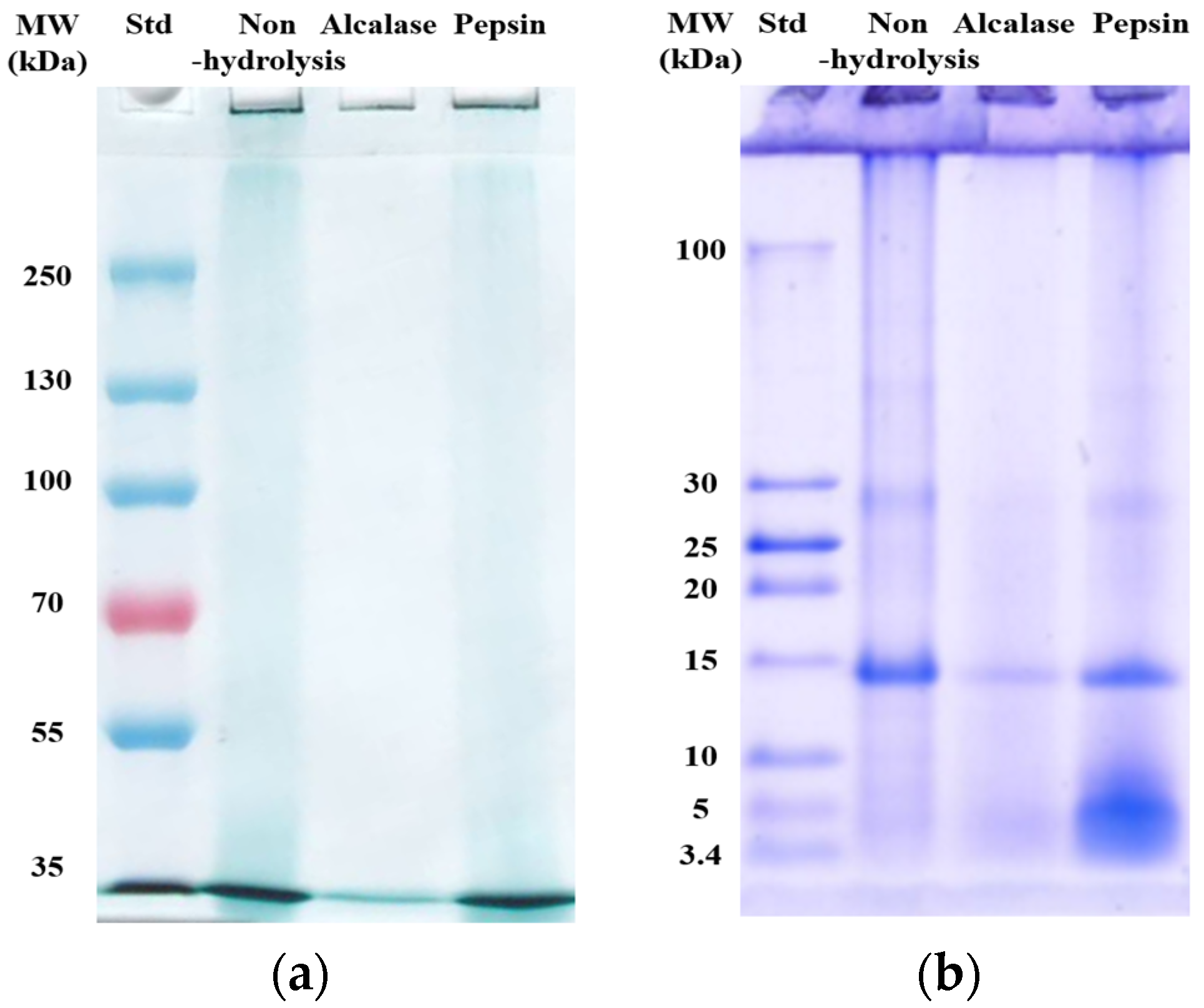
2.2.2. Protein Electrophoresis
2.2.3. In Vitro Apparent Digestibility
2.2.4. Heme and Ferrozine-Reactive Non-Heme Iron Determination
2.2.5. Techno-Functional Properties
2.2.6. Antioxidant Capacity
2.3. Statistical Analysis
3. Results and Discussion
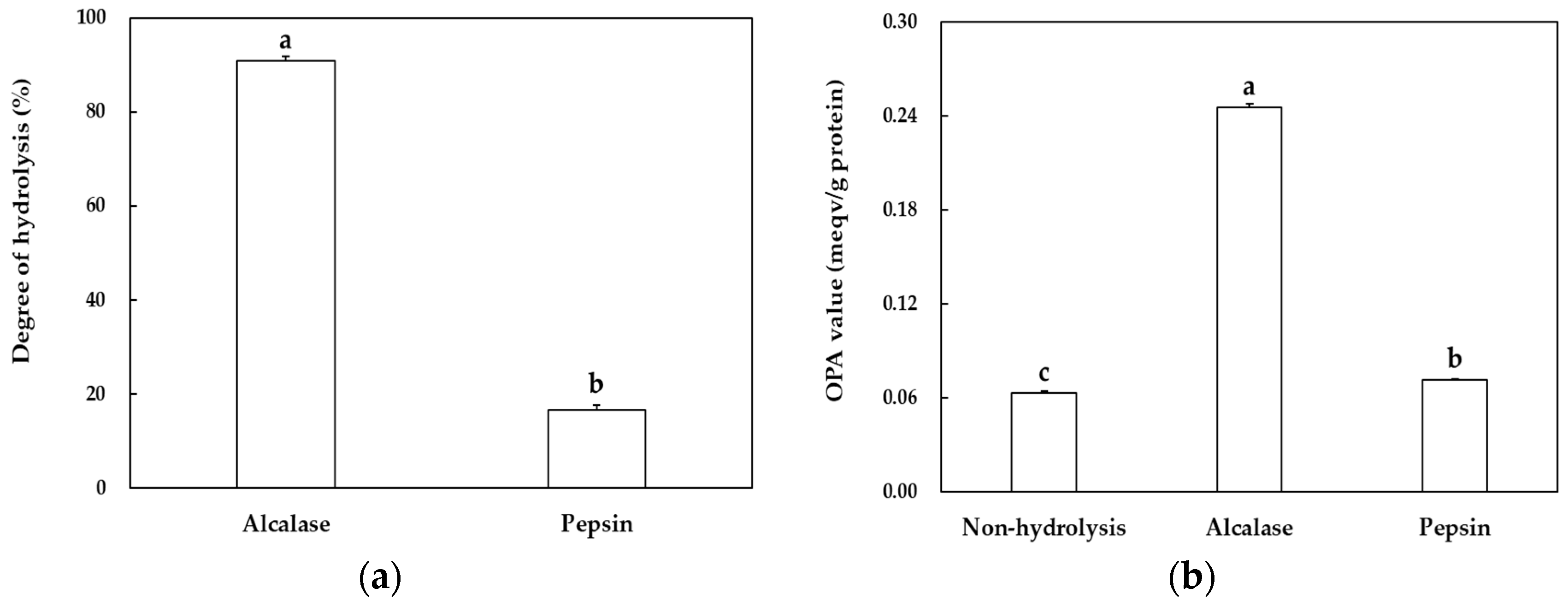
3.1. Hydrolysis Characteristic
3.1.1. DH and OPA Value
3.1.2. Protein Electrophoresis
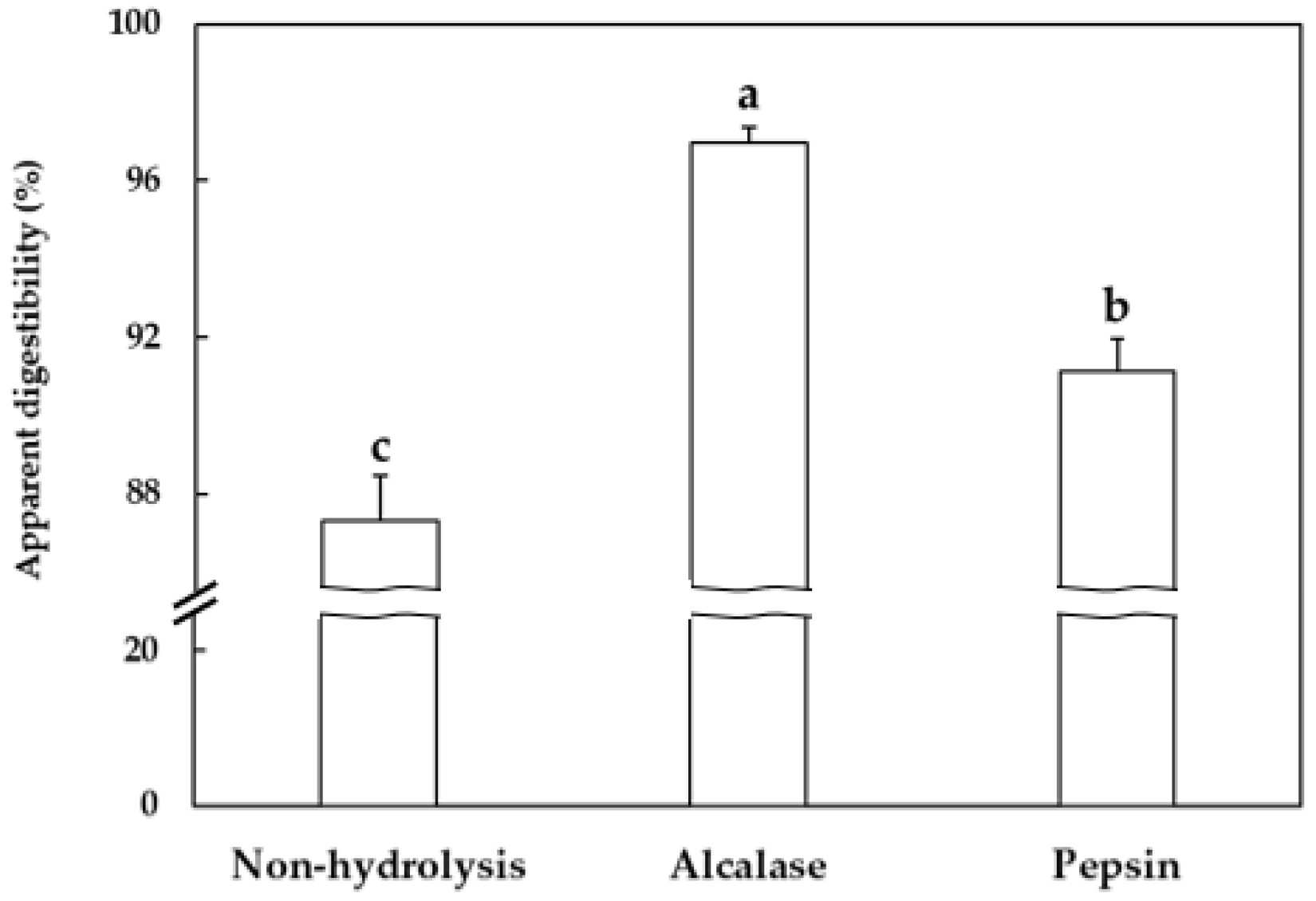
3.2. In Vitro Apparent Digestibility
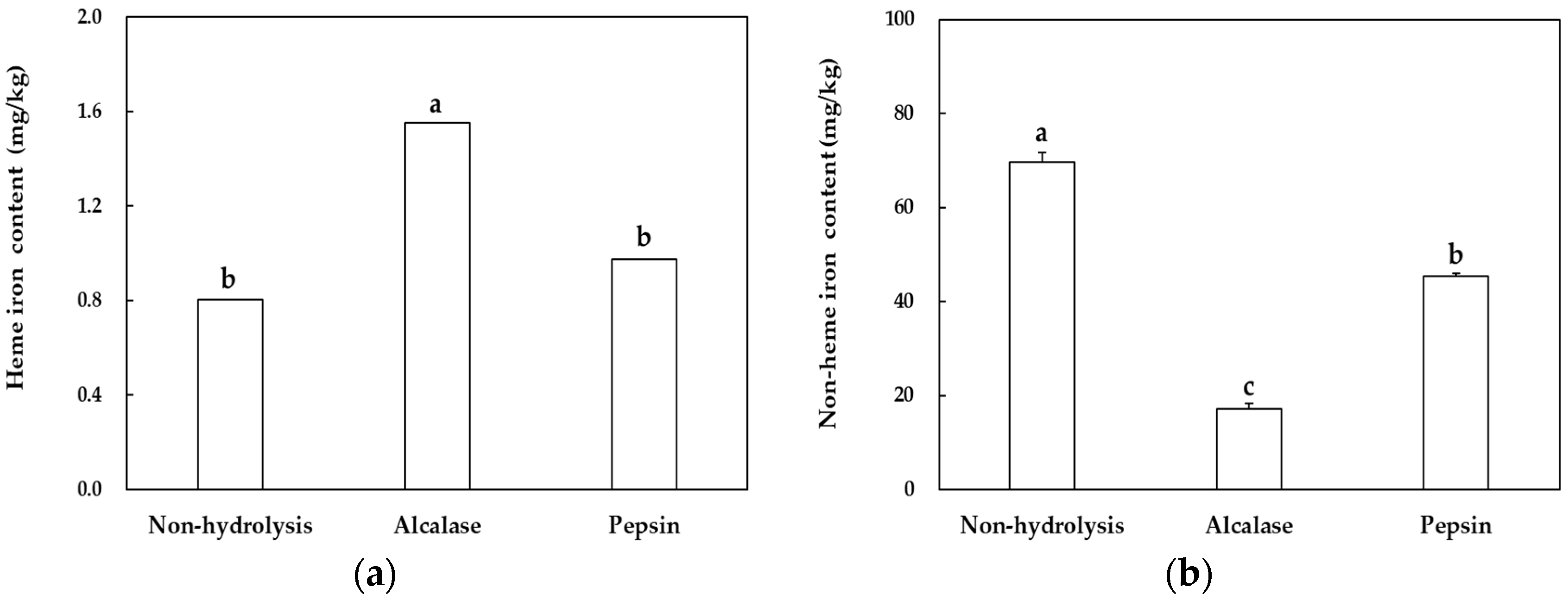
3.3. Heme and Ferrozine-Reactive Non-Heme Iron Fractions
3.4. Techno-Functional Properties
3.4.1. Water-Holding Capacity (WHC) and Oil-Absorption Capacity (OAC)
3.4.2. Emulsifying Activity Index (EAI) and Emulsifying Stability Index (ESI)
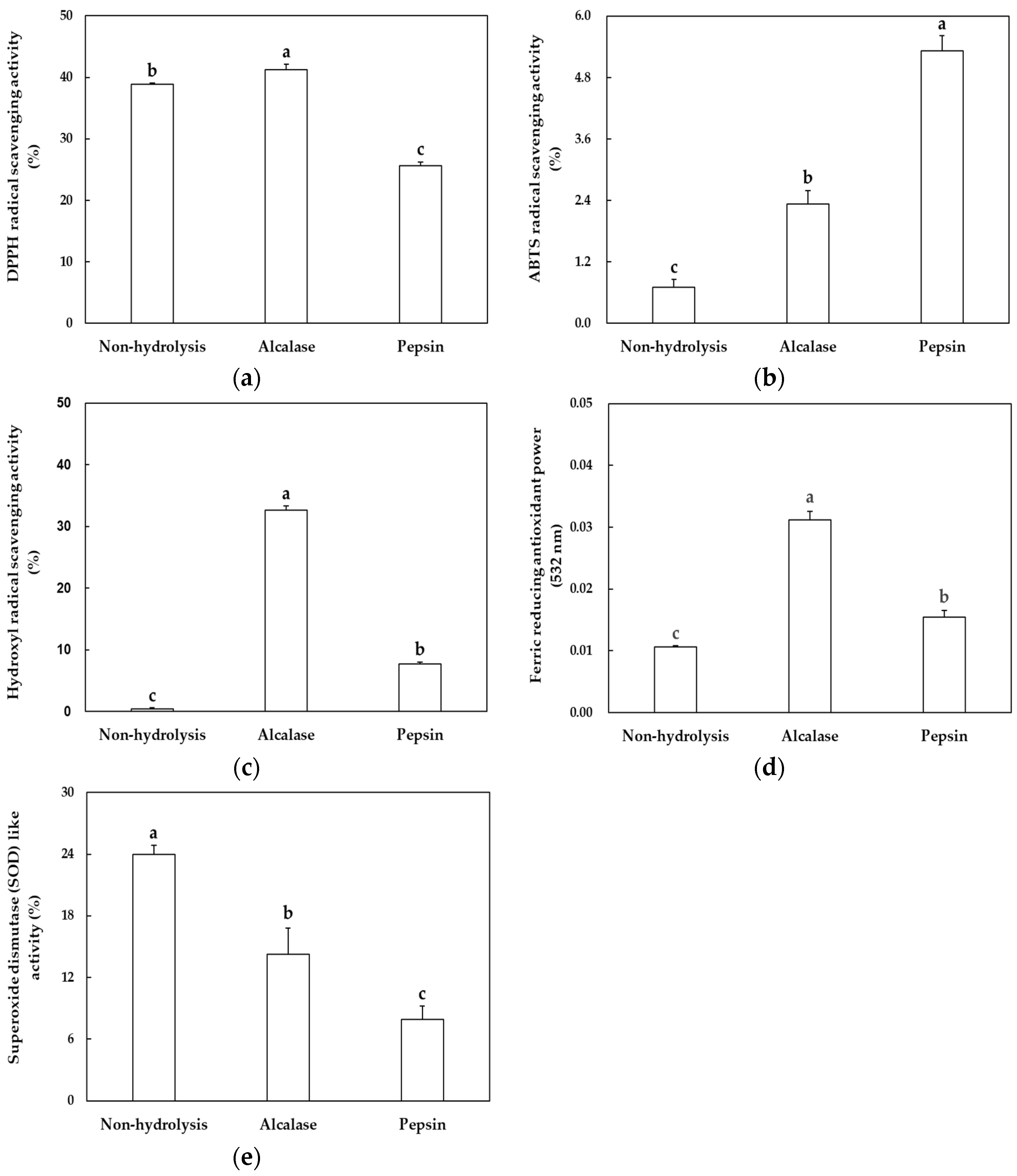
3.5. Antioxidant Capacity
3.5.1. Radical Scavenging Activity
3.5.2. Ferric-Reducing Antioxidant Power (FRAP)
3.5.3. Superoxide Dismutase (SOD)-like Activity
4. Conclusions
Author Contributions
Funding
Institutional Review Board Statement
Informed Consent Statement
Data Availability Statement
Conflicts of Interest
References
- Beard, J.L. Iron biology in immune function, muscle metabolism and neuronal functioning. J. Nutr. 2001, 131, 568S–580S. [Google Scholar] [CrossRef]
- Abbaspour, N.; Hurrell, R.; Kelishadi, R. Review on iron and its importance for human health. J. Res. Med. Sci. 2014, 19, 164. [Google Scholar]
- National Research Council. Nutrient Requirements of Dogs and Cats; National Academies Press: Washington, DC, USA, 2006. [Google Scholar]
- Association of American Feed Control Officials (AAFCO). Proposed Revisions to AAFCO Nutrient Profiles; Attachment A; Model Bills and Regulations Committee Agenda: Champaign, IL, USA, 2015; Available online: https://www.aafco.org/wp-content/uploads/2023/01/Model_Bills_and_Regulations_Agenda_Midyear_2015_Final_Attachment_A.__Proposed_revisions_to_AAFCO_Nutrient_Profiles_PFC_Final_070214.pdf (accessed on 27 February 2026).
- Pedrinelli, V.; Zafalon, R.V.A.; Rodrigues, R.B.A.; Perini, M.P.; Conti, R.M.C.; Vendramini, T.H.A.; Brunetto, M.A. Concentrations of macronutrients, minerals and heavy metals in home-prepared diets for adult dogs and cats. Sci. Rep. 2019, 9, 13058. [Google Scholar] [CrossRef]
- McDowell, L.R. Minerals in Animal and Human Nutrition; Academic Press: San Diego, CA, USA, 1992. [Google Scholar]
- Case, L.P.; Daristotle, L.; Hayek, M.G.; Raasch, M.F. Canine and Feline Nutrition: A Resource for Companion Animal Professionals, 3rd ed.; Elsevier Health Sciences: St. Louis, MO, USA, 2010. [Google Scholar]
- Qi, X.; Zhang, Y.; Guo, H.; Hai, Y.; Luo, Y.; Yue, T. Mechanism and intervention measures of iron side effects on the intestine. Crit. Rev. Food Sci. Nutr. 2020, 60, 2113–2125. [Google Scholar] [CrossRef] [PubMed]
- Okam, M.M.; Mandell, E.; Hevelone, N.; Wentz, R.; Ross, A.; Abel, G.A. Comparative rates of adverse events with different formulations of intravenous iron. Am. J. Hematol. 2012, 87, E123–E124. [Google Scholar] [CrossRef]
- Swanson, K.S.; Carter, R.A.; Yount, T.P.; Aretz, J.; Buff, P.R. Nutritional sustainability of pet foods. Adv. Nutr. 2013, 4, 141–150. [Google Scholar] [CrossRef] [PubMed]
- Hurrell, R.; Egli, I. Iron bioavailability and dietary reference values. Am. J. Clin. Nutr. 2010, 91, 1461S–1467S. [Google Scholar] [CrossRef]
- Sorapukdee, S.; Narunatsopanon, S. Comparative study on compositions and functional properties of porcine, chicken and duck blood. Korean J. Food Sci. Anim. Resour. 2017, 37, 228–241. [Google Scholar] [CrossRef] [PubMed]
- Dust, J.M.; Grieshop, C.M.; Parsons, C.M.; Karr-Lilienthal, L.K.; Schasteen, C.S.; Quigley, J.D., III; Fahey, G.C., Jr. Chemical composition, protein quality, palatability, and digestibility of alternative protein sources for dogs. J. Anim. Sci. 2005, 83, 2414–2422. [Google Scholar] [CrossRef]
- López, M.A.; Martos, F.C. Iron availability: An updated review. Int. J. Food Sci. Nutr. 2004, 55, 597–606. [Google Scholar] [CrossRef]
- Walters, M.E.; Esfandi, R.; Tsopmo, A. Potential of food hydrolyzed proteins and peptides to chelate iron or calcium and enhance their absorption. Foods 2018, 7, 172. [Google Scholar] [CrossRef]
- Wongngam, W.; Mitani, T.; Katayama, S.; Nakamura, S.; Yongsawatdigul, J. Production and characterization of chicken blood hydrolysate with antihypertensive properties. Poult. Sci. 2020, 99, 5163–5174. [Google Scholar] [CrossRef]
- Xue, D.; Jiang, S.; He, H.; Lametsch, R.; Zhang, M.; Li, C. Hemoglobin hydrolyzate promotes iron absorption in the small intestine through iron binding peptides. J. Agric. Food Chem. 2024, 72, 15237–15247. [Google Scholar] [CrossRef]
- Tacias-Pascacio, V.G.; Morellon-Sterling, R.; Siar, E.H.; Tavano, O.; Berenguer-Murcia, A.; Fernandez-Lafuente, R. Use of Alcalase in the production of bioactive peptides: A review. Int. J. Biol. Macromol. 2020, 165, 2143–2196. [Google Scholar] [CrossRef] [PubMed]
- Palashoff, M.H. Determining the Specificity of Pepsin for Proteolytic Digestion. Master’s Thesis, Northeastern University, Boston, MA, USA, 2008. [Google Scholar]
- Smith, P.E.; Krohn, R.I.; Hermanson, G.T.; Mallia, A.K.; Gartner, F.H.; Provenzano, M.; Klenk, D.C. Measurement of protein using bicinchoninic acid. Anal. Biochem. 1985, 150, 76–85. [Google Scholar] [CrossRef]
- Nielsen, P.M.; Petersen, D.; Dambmann, C.J.J.O.F.S. Improved method for determining food protein degree of hydrolysis. J. Food Sci. 2001, 66, 642–646. [Google Scholar] [CrossRef]
- Laemmli, U.K. Cleavage of structural proteins during the assembly of the head of bacteriophage T4. Nature 1970, 227, 680–685. [Google Scholar] [CrossRef]
- Schägger, H.; Von Jagow, G. Tricine-sodium dodecyl sulfate-polyacrylamide gel electrophoresis for the separation of proteins in the range from 1 to 100 kDa. Anal. Biochem. 1987, 166, 368–379. [Google Scholar] [CrossRef] [PubMed]
- Biagi, G.; Cipollini, I.; Grandi, M.; Pinna, C.; Vecchiato, C.G.; Zaghini, G. A new in vitro method to evaluate digestibility of commercial diets for dogs. Ital. J. Anim. Sci. 2016, 15, 617–625. [Google Scholar] [CrossRef]
- Shang, X.; Yan, X.; Li, Q.; Liu, Z.; Teng, A. Effect of multiple freeze-thaw cycles on myoglobin and lipid oxidations of grass carp (Ctenopharyngodon idella) surimi with different pork back fat content. Food Sci. Anim. Resour. 2020, 40, 969. [Google Scholar] [CrossRef]
- Acosta-Domínguez, L.; Cocotle-Ronzón, Y.; Alamilla-Beltrán, L.; Hernandez-Martinez, E. Effect of a cryogenic treatment in the microstructure, functional and flow properties of soy protein isolate. Food Hydrocoll. 2021, 119, 106871. [Google Scholar] [CrossRef]
- Jamdar, S.N.; Rajalakshmi, V.; Pednekar, M.D.; Juan, F.; Yardi, V.; Sharma, A. Influence of degree of hydrolysis on functional properties, antioxidant activity and ACE inhibitory activity of peanut protein hydrolysate. Food Chem. 2010, 121, 178–184. [Google Scholar] [CrossRef]
- Cui, Q.; Sun, Y.; Cheng, J.; Guo, M. Effect of Two-Step Enzymatic Hydrolysis on the Antioxidant Properties and Proteomics of Milk Protein Concentrate. Food Chem. 2022, 366, 130711. [Google Scholar] [CrossRef]
- Chen, N.; Yang, H.; Sun, Y.; Niu, J.; Liu, S. Purification and identification of antoxidant peptides from walnut (Juglans regia L.) protein hydrolysates. Peptides 2012, 38, 344–349. [Google Scholar] [CrossRef]
- Othman, A.; Ismail, A.; Ghani, N.A.; Adenan, I. Antioxidant capacity and phenolic content of cocoa beans. Food Chem. 2007, 100, 1523–1530. [Google Scholar] [CrossRef]
- Di, J.; Li, Y.; Zhang, Y.; Goh, K.L.; Zheng, M. Enzymatic synthesis of antioxidant peptides with controllable and adjustable molecular weights using magnetically recyclable immobilized Alcalase. Int. J. Biol. Macromol. 2025, 306, 141473. [Google Scholar] [CrossRef]
- Suwareh, O.; Causeur, D.; Jardin, J.; Briard-Bion, V.; Le Feunteun, S.; Pezennec, S.; Nau, F. Statistical modeling of in vitro pepsin specificity. Food Chem. 2021, 362, 130098. [Google Scholar] [CrossRef]
- Han, R.; Álvarez, A.J.H.; Maycock, J.; Murray, B.S.; Boesch, C. Comparison of alcalase-and pepsin-treated oilseed protein hydrolysates–Experimental validation of predicted antioxidant, antihypertensive and antidiabetic properties. Curr. Res. Food Sci. 2021, 4, 141–149. [Google Scholar] [CrossRef]
- Nyo, M.K.; Nguyen, L.T. Value-addition of defatted peanut cake by proteolysis: Effects of proteases and degree of hydrolysis on functional properties and antioxidant capacity of peptides. Waste Biomass Valorization 2019, 10, 1251–1259. [Google Scholar] [CrossRef]
- Nagakubo, T.; Kumano, T.; Hashimoto, Y.; Kobayashi, M. Hemoglobin catalyzes CoA degradation and thiol addition to flavonoids. Sci. Rep. 2018, 8, 1282. [Google Scholar] [CrossRef] [PubMed]
- Adachi, K.; Zhao, Y.; Surrey, S. Assembly of human hemoglobin (Hb) β-and γ-globin chains expressed in a cell-free system with α-globin chains to form Hb A and Hb F. J. Biol. Chem. 2002, 277, 13415–13420. [Google Scholar] [CrossRef]
- Toldrà, M.; Parés, D.; Saguer, E.; Carretero, C. Hemoglobin hydrolysates from porcine blood obtained through enzymatic hydrolysis assisted by high hydrostatic pressure processing. Innov. Food Sci. Emerg. Technol. 2011, 12, 435–442. [Google Scholar] [CrossRef]
- Verma, A.K.; Chatli, M.K.; Kumar, P.; Mehta, N. Antioxidant and antimicrobial efficacy of peptidic hydrolysate obtained from porcine blood. Agric. Res. 2019, 8, 116–124. [Google Scholar] [CrossRef]
- Murray, S.M.; Patil, A.R.; Fahey, G.C., Jr.; Merchen, N.R.; Hughes, D.M. Raw and rendered animal by-products as ingredients in dog diets. J. Anim. Sci. 1997, 75, 2497–2505. [Google Scholar] [CrossRef]
- Clapper, G.M.; Grieshop, C.M.; Merchen, N.R.; Russett, J.C.; Brent, J.L., Jr.; Fahey, G.C., Jr. Ileal and total tract nutrient digestibilities and fecal characteristics of dogs as affected by soybean protein inclusion in dry, extruded diets. J. Anim. Sci. 2001, 79, 1523–1532. [Google Scholar] [CrossRef]
- Li-Chan, E.C. Bioactive peptides and protein hydrolysates: Research trends and challenges for application as nutraceuticals and functional food ingredients. Curr. Opin. Food Sci. 2015, 1, 28–37. [Google Scholar] [CrossRef]
- In, M.J.; Chae, H.J.; Oh, N.S. Process development for heme-enriched peptide by enzymatic hydrolysis of hemoglobin. Bioresour. Technol. 2002, 84, 63–68. [Google Scholar] [CrossRef] [PubMed]
- Tansukkasem, S.; Kaewpathomsri, P.; Jonjaroen, V.; Payongsri, P.; Lertsiri, S.; Niamsiri, N. Production and Characterization of Heme Iron Polypeptide from the Blood of Skipjack Tuna (Katsuwonus pelamis) Using Enzymatic Hydrolysis for Food Supplement Application. Foods 2023, 12, 3249. [Google Scholar] [CrossRef] [PubMed]
- Riemer, J.; Hoepken, H.H.; Czerwinska, H.; Robinson, S.R.; Dringen, R. Colorimetric ferrozine-based assay for the quantitation of iron in cultured cells. Anal. Biochem. 2004, 331, 370–375. [Google Scholar] [CrossRef]
- Damodaran, S. Functional properties. In Food Proteins: Properties and Characterization; John Wiley & Sons: Hoboken, NJ, USA, 1996; pp. 167–234. [Google Scholar]
- Kristinsson, H.G.; Rasco, B.A. Fish protein hydrolysates: Production, biochemical, and functional properties. Crit. Rev. Food Sci. Nutr. 2000, 40, 43–81. [Google Scholar] [CrossRef]
- Acquah, C.; Di Stefano, E.; Udenigwe, C.C. Role of hydrophobicity in food peptide functionality and bioactivity. J. Food Bioact. 2018, 4, 88–98. [Google Scholar] [CrossRef]
- Panyam, D.; Kilara, A. Enhancing the functionality of food proteins by enzymatic modification. Trends Food Sci. Tech. 1996, 7, 120–125. [Google Scholar] [CrossRef]
- Dickinson, E. Interfacial structure and stability of food emulsions as affected by protein–polysaccharide interactions. Soft Matter 2008, 4, 932–942. [Google Scholar] [CrossRef]
- Kristinsson, H.G.; Rasco, B.A. Biochemical and functional properties of Atlantic salmon (Salmo salar) muscle proteins hydrolyzed with various alkaline proteases. J. Agric. Food Chem. 2000, 48, 657–666. [Google Scholar] [CrossRef]
- Dickinson, E.; Walstra, P. (Eds.) Food Colloids and Polymers: Stability and Mechanical Properties; Elsevier: Amsterdam, The Netherlands, 1993; No. 113. [Google Scholar]
- Saiga, A.I.; Tanabe, S.; Nishimura, T. Antioxidant activity of peptides obtained from porcine myofibrillar proteins by protease treatment. J. Agric. Food Chem. 2003, 51, 3661–3667. [Google Scholar] [CrossRef]
- Elias, R.J.; Kellerby, S.S.; Decker, E.A. Antioxidant activity of proteins and peptides. Crit. Rev. Food Sci. Nutr. 2008, 48, 430–441. [Google Scholar] [CrossRef] [PubMed]
- Xie, Z.; Huang, J.; Xu, X.; Jin, Z. Antioxidant activity of peptides isolated from alfalfa leaf protein hydrolysate. Food Chem. 2008, 111, 370–376. [Google Scholar] [CrossRef]
- Sarmadi, B.H.; Ismail, A. Antioxidative peptides from food proteins: A review. Peptides 2010, 31, 1949–1956. [Google Scholar] [CrossRef]
- Salo, D.C.; Pacifici, R.E.; Lin, S.W.; Giulivi, C.; Davies, K.J. Superoxide dismutase undergoes proteolysis and fragmentation following oxidative modification and inactivation. J. Biol. Chem. 1990, 265, 11919–11927. [Google Scholar] [CrossRef] [PubMed]
- Ferrall-Fairbanks, M.C.; Kieslich, C.A.; Platt, M.O. Reassessing enzyme kinetics: Considering protease-as-substrate interactions in proteolytic networks. Proc. Natl. Acad. Sci. USA 2020, 117, 3307–3318. [Google Scholar] [CrossRef] [PubMed]




| Treatment | WHC (g/g) | OAC (g/g) | EAI (m2/g) | ESI (min) |
|---|---|---|---|---|
| Non-hydrolysis | 1.59 ± 0.78 a | 1.65 ± 0.17 b | 0.01 ± 0.00 c | 159.22 ± 23.58 a |
| Alcalase | 0.28 ± 0.12 c | 1.77 ± 0.18 b | 0.11 ± 0.00 a | 48.18 ± 2.65 b |
| Pepsin | 0.99 ± 0.75 b | 2.32 ± 0.05 a | 0.07 ± 0.01 b | 63.34 ± 0.77 b |
Disclaimer/Publisher’s Note: The statements, opinions and data contained in all publications are solely those of the individual author(s) and contributor(s) and not of MDPI and/or the editor(s). MDPI and/or the editor(s) disclaim responsibility for any injury to people or property resulting from any ideas, methods, instructions or products referred to in the content. |
© 2026 by the authors. Licensee MDPI, Basel, Switzerland. This article is an open access article distributed under the terms and conditions of the Creative Commons Attribution (CC BY) license.
Share and Cite
Na, Y.-J.; Hwang, J.; Son, W.-Y.; Jeong, E.J.; Shin, E.-C.; Kim, K.S.; Park, K.I.; Chun, J.L.; Sringarm, K.; Arjin, C.; et al. Enzymatically Hydrolyzed Porcine Blood Meal as a Potential Iron Source in Canine Diets: Effects on Digestibility and Antioxidant Properties. Animals 2026, 16, 1837. https://doi.org/10.3390/ani16121837
Na Y-J, Hwang J, Son W-Y, Jeong EJ, Shin E-C, Kim KS, Park KI, Chun JL, Sringarm K, Arjin C, et al. Enzymatically Hydrolyzed Porcine Blood Meal as a Potential Iron Source in Canine Diets: Effects on Digestibility and Antioxidant Properties. Animals. 2026; 16(12):1837. https://doi.org/10.3390/ani16121837
Chicago/Turabian StyleNa, Yu-Jeong, Jun Hwang, Woo-Young Son, Eun Ju Jeong, Eui-Cheol Shin, Kyeong Soo Kim, Kwang Il Park, Ju Lan Chun, Korawan Sringarm, Chaiwat Arjin, and et al. 2026. "Enzymatically Hydrolyzed Porcine Blood Meal as a Potential Iron Source in Canine Diets: Effects on Digestibility and Antioxidant Properties" Animals 16, no. 12: 1837. https://doi.org/10.3390/ani16121837
APA StyleNa, Y.-J., Hwang, J., Son, W.-Y., Jeong, E. J., Shin, E.-C., Kim, K. S., Park, K. I., Chun, J. L., Sringarm, K., Arjin, C., Srinual, O., & Kim, H.-W. (2026). Enzymatically Hydrolyzed Porcine Blood Meal as a Potential Iron Source in Canine Diets: Effects on Digestibility and Antioxidant Properties. Animals, 16(12), 1837. https://doi.org/10.3390/ani16121837