Neuroimmune Mechanisms in Equine Asthma: Primary Inflammatory Triggers, Neuroimmune Modulation and Chronic Airway Remodelling

Simple Summary
Abstract
1. Introduction
2. Materials and Methods
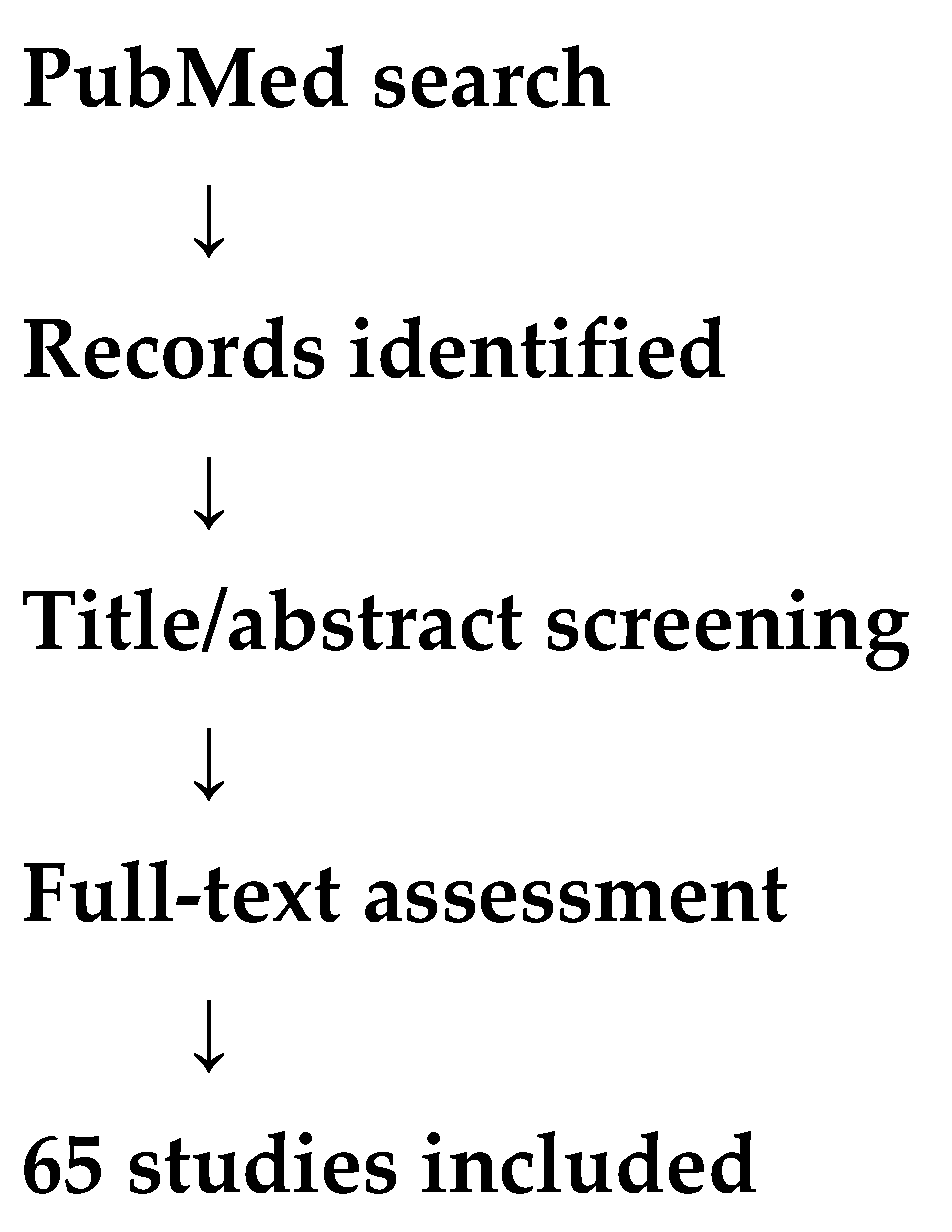
- Literature Search Strategy
- Search Terms
- equine asthma AND neuroimmune
- equine asthma AND nervous system
- equine asthma AND substance P
- equine asthma AND neurokinin
- equine asthma AND CGRP
- equine asthma AND airway innervation
- recurrent airway obstruction AND neuropeptides
- horse asthma AND TRPV1
- airway neurogenic inflammation AND asthma
- sensory nerves AND asthma
- tachykinins AND asthma
- substance P AND airway inflammation
- TRPV1 AND asthma
- neuroimmune interactions AND asthma
- neuronal remodelling AND asthma
- BDNF AND airway smooth muscle
- NGF AND asthma
- pulmonary neuroendocrine cells AND asthma
- Search Results and Study Selection
- 1 record for equine asthma AND neuroimmune
- 2 records for equine asthma AND substance P
- 3 records for equine asthma AND neurokinin
- 3 records for equine asthma AND airway innervation
- 366 records for substance P AND airway inflammation
- 208 records for TRPV1 AND asthma
- 190 records for neuroimmune interactions AND asthma
- 86 records for neuronal remodelling AND asthma
- 94 records for pulmonary neuroendocrine cells AND asthma
- Investigated neuroimmune or neurogenic mechanisms underlying asthma or chronic airway inflammation;
- Examined neuropeptides, airway innervation, autonomic signalling, TRP channels, or neuronal remodelling;
- Included equine, human or rodent asthma models relevant to comparative respiratory pathophysiology;
- Were original research articles, consensus statements or high-quality review papers.
- Were unrelated to respiratory disease or asthma;
- Focused exclusively on non-respiratory neurological disorders;
- Were conference abstracts without full peer-reviewed publication.
- Limitations of the Available Evidence
3. Primary Initiating Mechanisms of Equine Asthma
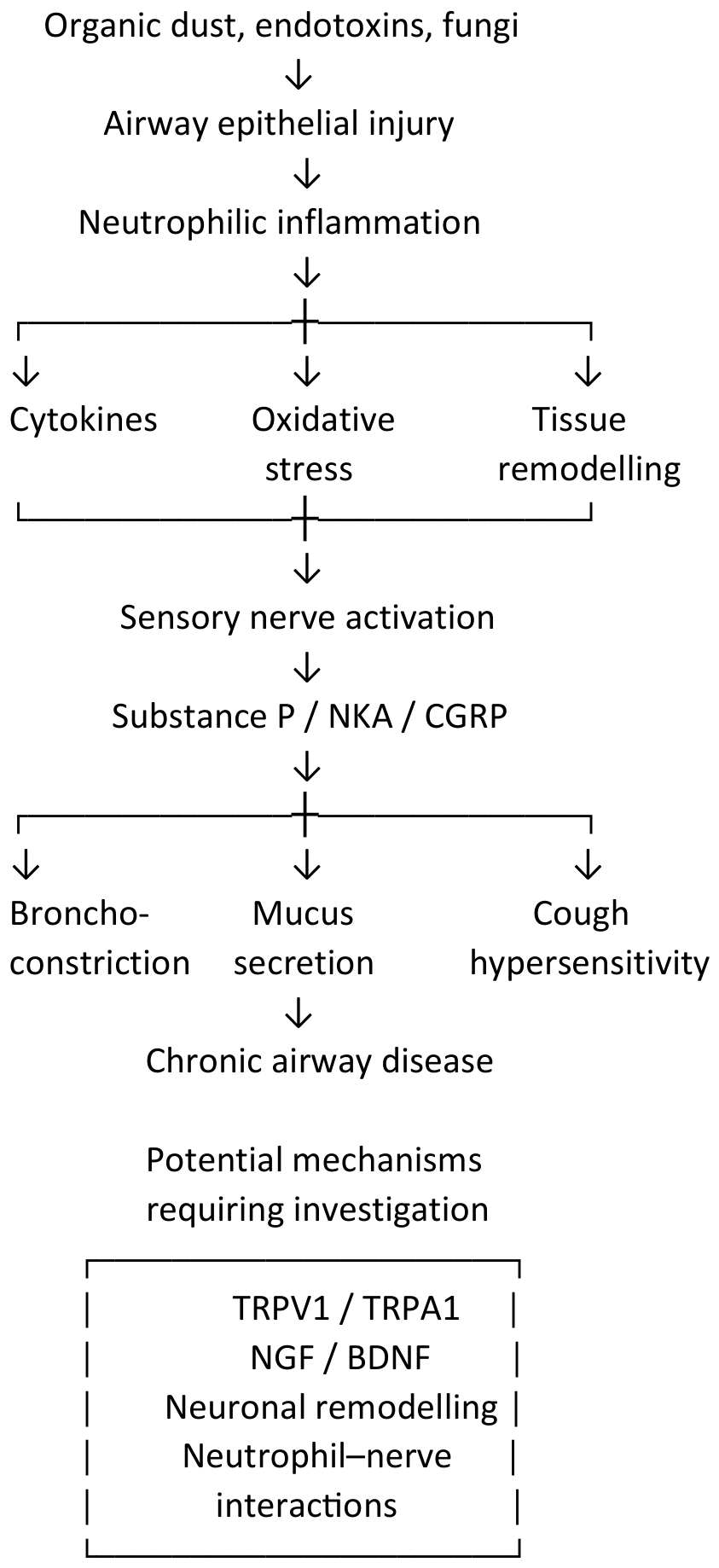
4. Neuroimmune Signalling as a Secondary Modulator of Airway Dysfunction
- Confirmed Neuroimmune Mechanisms in Horses
- Neuroimmune Mechanisms Inferred from Human and Rodent Studies
5. Neuronal Remodelling and Chronic Disease Progression

| Mechanism | Humans | Rodent Models | Horses | Main Functional Consequence | Key References |
|---|---|---|---|---|---|
| Activation of sensory C-fibre afferents | Confirmed | Confirmed | Indirect evidence | Bronchoconstriction, cough, mucus secretion | [11,36] |
| Substance P-mediated neurogenic inflammation | Confirmed | Confirmed | Confirmed anatomical evidence | Vasodilation, plasma extravasation, leukocyte recruitment | [44,62] |
| Neurokinin A (NKA)-induced bronchoconstriction | Confirmed | Confirmed | Confirmed | Airway smooth muscle contraction and airway hyperresponsiveness | [17,40] |
| NK-1 receptor expression in airways | Confirmed | Confirmed | Confirmed | Regulation of vascular permeability and airway secretion | [16,62] |
| NK-2 receptor upregulation in asthma | Confirmed | Confirmed | Confirmed in severe equine asthma | Enhanced bronchoconstriction | [17] |
| CGRP-positive airway innervation | Confirmed | Confirmed | Confirmed anatomical evidence | Neurogenic vasoregulation and inflammatory signalling | [62] |
| Neuroendocrine cell activation | Confirmed | Confirmed | Not investigated | Initiation of immune responses through neuropeptide signalling | [12] |
| Vagal/autonomic dysregulation | Confirmed | Confirmed | Suspected | Reflex bronchoconstriction and airway hyperreactivity | [14,48] |
| TRPV1 upregulation and hypersensitivity | Confirmed | Confirmed | Not investigated | Cough hypersensitivity and bronchoconstriction | [59,60,61] |
| Neuronal remodelling/increased airway innervation | Confirmed | Confirmed | Confirmed | Persistent airway hyperresponsiveness and chronic disease progression | [13,18] |
| Eosinophil-driven sensory nerve plasticity | Confirmed | Confirmed | Not demonstrated | Increased airway sensory nerve density | [13] |
| Neurotrophin involvement (NGF/BDNF) | Confirmed | Confirmed | Hypothetical/indirect | Neuronal survival, branching and airway remodelling | [15,56] |
| Substance P production by immune cells | Confirmed | Confirmed | Presumed but unstudied | Amplification of inflammatory signalling | [43,52,64] |
| Neuroimmune interaction contributing to airway remodelling | Confirmed | Confirmed | Suspected | Fibrosis, smooth muscle proliferation and chronic airflow limitation | [15,55,65] |
| Predominant inflammatory phenotype associated with neuroimmune pathways | Usually eosinophilic/type 2 | Usually eosinophilic/type 2 | Predominantly neutrophilic | Species-specific inflammatory response profile | [4,22,64] |
| Neuroimmune Component | Humans | Rodent Models | Horses | Current Level of Evidence in Horses | Research Gap in Equine Asthma | Key References |
|---|---|---|---|---|---|---|
| Substance P expression | Well documented | Well documented | Anatomical evidence only | Low | Lack of BALF/tissue quantification studies | [16,62] |
| Neurokinin A signalling | Well-documented | Well-documented | Increased bronchial responsiveness demonstrated | Moderate | No mechanistic molecular studies | [17,40] |
| NK-1/NK-2 receptor expression | Confirmed | Confirmed | Partially confirmed | Moderate | Limited receptor distribution studies | [17,62] |
| CGRP-positive nerve fibres | Confirmed | Confirmed | Confirmed anatomically | Low | Unknown functional significance | [62] |
| Sensory C-fibre activation | Well-documented | Well-documented | Suspected | Low | No functional electrophysiological studies | [11,36] |
| TRPV1 involvement | Extensive evidence | Extensive evidence | Not investigated | Very low | Complete absence of equine studies | [59,60,61] |
| TRPA1/TRPM8 pathways | Increasing evidence | Increasing evidence | Not investigated | Very low | Complete absence of data | [35,61] |
| Neurotrophins (NGF/BDNF) | Well-documented | Well-documented | Hypothetical only | Very low | No equine biomarker studies | [15,56] |
| Neurogenic inflammation | Extensive evidence | Extensive evidence | Suggested indirectly | Low | Lack of direct mechanistic evidence | [11,44] |
| Autonomic dysregulation | Well-documented | Well-documented | Suspected | Low | No autonomic function studies | [14,48] |
| Neuronal remodelling | Confirmed | Confirmed | Recently demonstrated | Moderate | Mechanisms remain unknown | [13,18] |
| Immune cell–nerve interactions | Extensive evidence | Extensive evidence | Unknown | Very low | Virtually unexplored | [42,43] |
| Eosinophil–nerve interactions | Confirmed | Confirmed | Unclear due to neutrophilic phenotype | Very low | Unknown relevance in horses | [13] |
| Neutrophil–nerve interactions | Limited evidence | Limited evidence | Potentially important | Very low | Major unexplored field | [23,64] |
| Neuroimmune therapeutic targets | Emerging therapies | Experimental therapies | Not investigated | Very low | No translational equine studies | [14,61] |
6. Future Directions
7. Conclusions
Author Contributions
Funding
Institutional Review Board Statement
Informed Consent Statement
Data Availability Statement
Conflicts of Interest
Abbreviations
| MEA | Mild-to-moderate equine asthma |
| SEA | Severe equine asthma |
| IAD | Inflammatory airways disease |
| RAO | Recurrent airway obstruction |
| CGRP | Calcitonin gene-related peptide |
| TLR | Toll-like receptor |
| NKA | Neurokinin A |
| NGF | Nerve growth factor |
| BDNF | Brain-derived neurotrophic factor |
| SP | Substance P |
References
- Christley, R.M.; Hodgson, D.R.; Rose, R.J.; Hodgson, J.L.; Wood, J.L.; Reid, S.W.J. Coughing in Thoroughbred racehorses: Risk factors and tracheal endoscopic and cytological findings. Vet. Rec. 2001, 148, 99–104. [Google Scholar] [CrossRef] [PubMed]
- Holcombe, S.J.; Robinson, N.E.; Derksen, F.J.; Bertold, B.; Genovese, R.; Miller, R.; de Feiter Rupp, H.; Carr, E.A.; Eberhart, S.W.; Boruta, D.; et al. Effect of tracheal mucus and tracheal cytology on racing performance in Thoroughbred racehorses. Equine Vet. J. 2006, 38, 300–304. [Google Scholar] [CrossRef]
- Bedenice, D.; Mazan, M.R.; Hoffman, A.M. Association between cough and cytology of bronchoalveolar lavage fluid and pulmonary function in horses diagnosed with inflammatory airway disease. J. Vet. Intern. Med. 2008, 22, 1022–1028. [Google Scholar] [CrossRef]
- Couëtil, L.L.; Cardwell, J.M.; Gerber, V.; Lavoie, J.-P.; Léguillette, R.; Richard, E.A. Inflammatory airway disease of horses—Revised consensus statement. J. Vet. Intern. Med. 2016, 30, 503–515. [Google Scholar] [CrossRef]
- Pirie, R.S.; Dixon, P.M.; McGorum, B.C. Endotoxin contamination contributes to the pulmonary inflammatory and functional response to Aspergillus fumigatus extract inhalation in heaves horses. Clin. Exp. Allergy 2003, 33, 1289–1296. [Google Scholar] [CrossRef]
- Ivester, K.M.; Couëtil, L.L.; Zimmerman, N.J.; Raskin, R.E. Environmental exposures and airway inflammation in young Thoroughbred horses. J. Vet. Intern. Med. 2014, 28, 918–924. [Google Scholar] [CrossRef]
- Ivester, K.M.; Couëtil, L.L.; Moore, G.E. An observational study of environmental exposures, airway cytology. J. Vet. Intern. Med. 2018, 32, 1754–1762. [Google Scholar] [CrossRef]
- Herszberg, B.; Ramos-Barbón, D.; Tamaoka, M.; Martin, J.G.; Lavoie, J.-P. Heaves, an asthma-like equine disease, involves airway smooth muscle remodeling. J. Allergy Clin. Immunol. 2006, 118, 382–388. [Google Scholar] [CrossRef]
- Leclere, M.; Lavoie-Lamoureux, A.; Gélinas-Lymburner, É.; David, F.; Martin, J.G.; Lavoie, J.-P. Effect of antigenic exposure on airway smooth muscle remodeling in an equine model of chronic asthma. Am. J. Respir. Cell Mol. Biol. 2011, 45, 181–187. [Google Scholar] [CrossRef] [PubMed]
- Bullone, M.; Lavoie, J.-P. Asthma “of horses and men”—How can equine heaves help us better understand human asthma immunopathology and its functional consequences? Mol. Immunol. 2015, 66, 97–105. [Google Scholar] [CrossRef] [PubMed]
- Undem, B.J.; Carr, M.J. The role of nerves in asthma. Curr. Allergy Asthma Rep. 2002, 2, 159–165. [Google Scholar] [CrossRef]
- Branchfield, K.; Nantie, L.; Verheyden, J.M.; Sui, P.; Wienhold, M.D.; Sun, X. Pulmonary neuroendocrine cells function as airway sensors to control lung immune response. Science 2016, 351, 707–710. [Google Scholar] [CrossRef]
- Drake, M.G.; Scott, G.D.; Blum, E.D.; Lebold, K.M.; Nie, Z.; Lee, J.J.; Fryer, A.D.; Costello, R.W.; Jacoby, D.B. Eosinophils increase airway sensory nerve density in mice and in human asthma. Sci. Transl. Med. 2018, 10, eaar8477. [Google Scholar] [CrossRef] [PubMed]
- Kistemaker, L.E.M.; Prakash, Y.S. Airway innervation and its plasticity in asthma. Physiology 2019, 34, 283–298. [Google Scholar] [CrossRef] [PubMed]
- Freeman, M.R.; Sathish, V.; Manlove, L.; Wang, S.; Britt, R.D.; Thompson, M.A.; Pabelick, C.M.; Prakash, Y.S. Brain-derived neurotrophic factor and airway fibrosis in asthma. Am. J. Physiol. Lung Cell. Mol. Physiol. 2017, 313, L360–L370. [Google Scholar] [CrossRef]
- Chu, H.W.; Kraft, M.; Krause, J.E.; Rex, M.D.; Martin, R.J. Substance P and its receptor neurokinin 1 expression in asthmatic airways. J. Allergy Clin. Immunol. 2000, 106, 713–722. [Google Scholar] [CrossRef] [PubMed]
- Venugopal, C.S.; Holmes, E.P.; Polikepahad, S.; Laborde, S.; Kearney, M.; Moore, R.M. Neurokinin receptors in recurrent airway obstruction: A comparative study of affected and unaffected horses. Can. J. Vet. Res. 2009, 73, 25–33. [Google Scholar]
- Leduc, L.; Leclère, M.; Gauthier, L.G.; Marcil, O.; Lavoie, J.-P. Severe asthma in horses is associated with increased airway innervation. J. Vet. Intern. Med. 2024, 38, 485–494. [Google Scholar] [CrossRef]
- Tränkner, D.; Hahne, N.; Sugino, K.; Hoon, M.A.; Zuker, C. Population of sensory neurons essential for asthmatic hyperreactivity of inflamed airways. Proc. Natl. Acad. Sci. USA 2014, 111, 11515–11520. [Google Scholar] [CrossRef]
- Robinson, N.E.; Karmaus, W.; Holcombe, S.J.; Carr, E.A.; Derksen, F.J. Airway inflammation in Michigan pleasure horses: Prevalence and risk factors. Equine Vet. J. 2006, 38, 293–299. [Google Scholar] [CrossRef]
- Hotchkiss, J.W.; Reid, S.W.; Christley, R.M. A survey of horse owners in Great Britain regarding horses in their care. Part 1: Horse demographic characteristics and management. Equine Vet. J. 2007, 39, 294–300. [Google Scholar] [CrossRef]
- Lavoie, J.-P.; Maghni, K.; Desnoyers, M.; Taha, R.; Martin, J.G.; Hamid, Q.A. Neutrophilic airway inflammation in horses with heaves is characterized by a Th2-type cytokine profile. Am. J. Respir. Crit. Care Med. 2001, 164, 1410–1413. [Google Scholar] [CrossRef]
- Brazil, T.J.; Dagleish, M.P.; McGorum, B.C.; Dixon, P.M.; Haslett, C.; Chilvers, E.R. Kinetics of pulmonary neutrophil recruitment and clearance in a natural and spontaneously resolving model of airway inflammation. Clin. Exp. Allergy 2005, 35, 854–865. [Google Scholar] [CrossRef]
- Berndt, A.; Derksen, F.J.; Venta, P.J.; Ewart, S.; Yuzbasiyan-Gurkan, V.; Robinson, N.E. Elevated amount of Toll-like receptor 4 mRNA in bronchial epithelial cells is associated with airway inflammation in horses with recurrent airway obstruction. Am. J. Physiol. Lung Cell. Mol. Physiol. 2007, 292, L936–L943. [Google Scholar] [CrossRef]
- Hansen, S.; Otten, N.D.; Birch, K.; Skovgaard, K.; Hopster-Iversen, C.; Fjeldborg, J. Bronchoalveolar lavage fluid cytokine, cytology and IgE allergen in horses with equine asthma. Vet. Immunol. Immunopathol. 2020, 220, 109976. [Google Scholar] [CrossRef]
- Wilson, M.E.; McCandless, E.E.; Olszewski, M.A.; Robinson, N.E. Alveolar macrophage phenotypes in severe equine asthma. Vet. J. 2020, 256, 105436. [Google Scholar] [CrossRef] [PubMed]
- Ying, S.; O’Connor, B.; Ratoff, J.; Meng, Q.; Mallett, K.; Cousins, D.; Robinson, D.; Zhang, G.; Zhao, J.; Lee, T.H.; et al. Thymic stromal lymphopoietin expression is increased in asthmatic airways and correlates with expression of Th2-attracting chemokines and disease severity. J. Immunol. 2005, 174, 8183–8190. [Google Scholar] [CrossRef] [PubMed]
- Prefontaine, D.; Nadigel, J.; Chouiali, F.; Audusseau, S.; Semlali, A.; Chakir, J.; Hamid, Q. Increased IL-33 expression by epithelial cells in bronchial asthma. J. Allergy Clin. Immunol. 2010, 125, 752–754. [Google Scholar] [CrossRef] [PubMed]
- Franchini, M.; Gill, U.; von Fellenberg, R.; Bracher, V.D. Interleukin-8 concentration and neutrophil chemotactic activity in bronchoalveolar lavage fluid of horses with chronic obstructive pulmonary disease following exposure to hay. Am. J. Vet. Res. 2000, 61, 1369–1374. [Google Scholar] [CrossRef]
- Ainsworth, D.M.; Grünig, G.; Matychak, M.B.; Young, J.; Wagner, B.; Erb, H.N.; Antczak, D.F. Recurrent airway obstruction (RAO) in horses is characterized by IFN-gamma and IL-8 production in bronchoalveolar lavage cells. Vet. Immunol. Immunopathol. 2003, 96, 83–91. [Google Scholar] [CrossRef]
- Niedźwiedź, A.; Jaworski, Z.; Kubiak, K. Serum concentrations of allergen-specific IgE in horses with equine recurrent airway obstruction and healthy controls assessed by ELISA. Vet. Clin. Pathol. 2015, 44, 391–396. [Google Scholar] [CrossRef]
- Bullone, M.; Beauchamp, G.; Godbout, M.; Martin, J.G.; Lavoie, J.-P. Endobronchial ultrasound reliably quantifies airway smooth muscle remodeling in an equine asthma model. PLoS ONE 2015, 10, e0136284. [Google Scholar] [CrossRef]
- Fialkow, L.; Wang, Y.; Downey, G.P. Reactive oxygen and nitrogen species as signaling molecules regulating neutrophil function. Free. Radic. Biol. Med. 2007, 42, 153–164. [Google Scholar] [CrossRef]
- Taylor-Clark, T.E. Oxidative stress as an activator of sensory nerves for cough. Pulm. Pharmacol. Ther. 2015, 35, 94–99. [Google Scholar] [CrossRef] [PubMed]
- Talbot, S.; Abdulnour, R.-E.E.; Burkett, P.R.; Lee, S.; Cronin, S.J.F.; Pascal, M.A.; Laedermann, C.; Foster, S.L.; Tran, J.V.; Lai, N.; et al. Silencing nociceptor neurons reduces allergic airway inflammation. Neuron 2015, 87, 341–354. [Google Scholar] [CrossRef]
- Lee, L.Y.; Kwong, K.; Lin, Y.S.; Gu, Q. Hypersensitivity of bronchopulmonary C-fibers induced by airway mucosal inflammation: Cellular mechanisms. Pulm. Pharmacol. Ther. 2002, 15, 199–204. [Google Scholar] [CrossRef] [PubMed]
- Canning, B.J.; Mazzone, S.B.; Meeker, S.N.; Mori, N.; Reynolds, S.M.; Undem, B.J. Identification of the tracheal and laryngeal afferent neurones mediating cough in anaesthetised guinea-pigs. J. Physiol. 2004, 557, 543–558. [Google Scholar] [CrossRef]
- Dakhama, A.; Larsen, G.L.; Gelfand, E.W. Alteration of airway neuropeptide expression and development of airway hyperresponsiveness following respiratory syncytial virus infection. Am. J. Physiol. Lung Cell. Mol. Physiol. 2005, 288, L761–L770. [Google Scholar] [CrossRef]
- Karmouty-Quintana, H.; Cannet, C.; Sugar, R.; Fozard, J.R.; Page, C.P.; Beckmann, N. Capsaicin-induced mucus secretion in rat airways assessed in vivo and non-invasively by magnetic resonance imaging. Br. J. Pharmacol. 2007, 150, 1022–1030. [Google Scholar] [CrossRef]
- Joos, G.F.; Pauwels, R.A.; Van der Straeten, M.E. The effect of inhaled substance P and neurokinin A on the airways of normal and asthmatic subjects. Thorax 1987, 42, 779–783. [Google Scholar] [CrossRef] [PubMed]
- Marek, W.; Potthast, J.; Marczynski, B.; Baur, X.; Magnussen, H. Role of substance P and neurokinin A in toluene diisocyanate-induced airway hyperresponsiveness in rabbits. Lung 1996, 174, 327–338. [Google Scholar] [CrossRef]
- Ho, W.Z.; Lai, J.P.; Zhu, X.H.; Uvaydova, M.; Douglas, S.D. Human monocytes and macrophages express substance P and neurokinin-1 receptor. J. Immunol. 1997, 159, 5654–5660. [Google Scholar] [CrossRef] [PubMed]
- Lambrecht, B.N.; Germonpré, P.R.; Everaert, E.G.; Carro-Muino, I.; De Veerman, M.; de Felipe, C.; Hunt, S.P.; Thielemans, K.; Joos, G.F.; Pauwels, R.A. Endogenously produced substance P contributes to lymphocyte proliferation induced by dendritic cells and direct TCR ligation. Eur. J. Immunol. 1999, 29, 3815–3825. [Google Scholar] [CrossRef]
- Boichot, E.; Biyah, K.; Germain, N.; Emonds-Alt, X.; Lagente, V.; Advenier, C. Involvement of tachykinin NK1 and NK2 receptors in substance P-induced microvascular leakage, hypersensitivity and airway hyperresponsiveness in guinea-pigs. Eur. Respir. J. 1996, 9, 1445–1450. [Google Scholar] [CrossRef] [PubMed]
- Fröde-Saleh, T.S.; Calixto, J.B.; Medeiros, Y.S. Analysis of the inflammatory response induced by substance P in the mouse pleural cavity. Neuropeptides 1999, 33, 63–68. [Google Scholar] [CrossRef]
- Sonea, I.M.; Bowker, R.M.; Robinson, N.E.; Holland, R.E. Distribution of SP- and CGRP-like immunoreactive nerve fibers in the lower respiratory tract of neonatal foals: Evidence for loss during development. Anat. Embryol. 1994, 190, 469–477. [Google Scholar] [CrossRef]
- Adriaensen, D.; Brouns, I.; Van Genechten, J.; Timmermans, J.-P. Functional morphology of pulmonary neuroepithelial bodies: Extremely complex airway receptors. Anat. Rec. Part Discov. Mol. Cell. Evol. Biol. Publ. Am. Assoc. Anat. 2003, 270A, 25–40. [Google Scholar] [CrossRef]
- Barnes, P.J. Neural control of human airways in health and disease. Am. Rev. Respir. Dis. 1986, 134, 1289–1314. [Google Scholar] [CrossRef] [PubMed]
- Canning, B.J. Reflex regulation of airway smooth muscle tone. J. Appl. Physiol. 2006, 101, 971–985. [Google Scholar] [CrossRef]
- Costello, R.W.; Schofield, B.H.; Kephart, G.M.; Gleich, G.J.; Jacoby, D.B.; Fryer, A.D. Localization of eosinophils to airway nerves and effect on neuronal M2 muscarinic receptor function. Am. J. Physiol. 1997, 273, L93–L103. [Google Scholar] [CrossRef]
- Fryer, A.D.; Jacoby, D.B. Parainfluenza virus infection damages inhibitory M2 muscarinic receptors on pulmonary parasympathetic nerves in the guinea-pig. Br. J. Pharmacol. 1991, 102, 267–271. [Google Scholar] [CrossRef] [PubMed]
- Lai, J.P.; Douglas, S.D.; Ho, W.Z. Human lymphocytes express substance P and its receptor. J. Neuroimmunol. 1998, 86, 80–86. [Google Scholar] [CrossRef]
- Lai, J.P.; Ho, W.Z.; Kilpatrick, L.E.; Wang, X.; Tuluc, F.; Korchak, H.M.; Douglas, S.D. Full-length and truncated neurokinin-1 receptor expression and function during monocyte/macrophage differentiation. Proc. Natl. Acad. Sci. USA 2006, 103, 7771–7776. [Google Scholar] [CrossRef]
- Nassenstein, C.; Dawbarn, D.; Pollock, K.; Allen, S.J.; Erpenbeck, V.J.; Spies, E.; Krug, N.; Braun, A. Pulmonary distribution, regulation, and functional role of Trk receptors in a murine model of asthma. J. Allergy Clin. Immunol. 2006, 118, 597–605. [Google Scholar] [CrossRef]
- Aravamudan, B.; Thompson, M.; Pabelick, C.M.; Prakash, Y.S. Brain-derived neurotrophic factor induces proliferation of human airway smooth muscle cells. J. Cell. Mol. Med. 2012, 16, 812–823. [Google Scholar] [CrossRef]
- Nassenstein, C.; Braun, A.; Erpenbeck, V.J.; Lommatzsch, M.; Schmidt, S.; Krug, N.; Luttmann, W.; Renz, H.; Virchow, J.C., Jr. The neurotrophins nerve growth factor, brain-derived neurotrophic factor, neurotrophin-3, and neurotrophin-4 are survival and activation factors for eosinophils in patients with allergic bronchial asthma. J. Exp. Med. 2003, 198, 455–467. [Google Scholar] [CrossRef]
- Hahn, C.; Islamian, A.P.; Renz, H.; Nockher, W.A. Airway epithelial cells produce neurotrophins and promote the survival of eosinophils during allergic airway inflammation. J. Allergy Clin. Immunol. 2006, 117, 787–794. [Google Scholar] [CrossRef] [PubMed]
- Hwang, S.W.; Cho, H.; Kwak, J.; Lee, S.Y.; Kang, C.J.; Jung, J.; Cho, S.; Min, K.H.; Suh, Y.G.; Kim, D.; et al. Direct activation of capsaicin receptors by products of lipoxygenases: Endogenous capsaicin-like substances. Proc. Natl. Acad. Sci. USA 2000, 97, 6155–6160. [Google Scholar] [CrossRef]
- Caceres, A.I.; Brackmann, M.; Elia, M.D.; Bessac, B.F.; del Camino, D.; D’Amours, M.; Witek, J.S.; Fanger, C.M.; Chong, J.A.; Hayward, N.J.; et al. A sensory neuronal ion channel essential for airway inflammation and hyperreactivity in asthma. Proc. Natl. Acad. Sci. USA 2009, 106, 9099–9104. [Google Scholar] [CrossRef]
- McGarvey, L.P.A.; Butler, C.A.; Stokesberry, S.; Polley, L.; McQuaid, S.; Abdullah, H.; Ashraf, S.; McGahon, M.K.; Curtis, T.M.; Arron, J.; et al. Increased expression of bronchial epithelial transient receptor potential vanilloid 1 channels in patients with severe asthma. J. Allergy Clin. Immunol. 2014, 133, 704–712. [Google Scholar] [CrossRef] [PubMed]
- Grace, M.S.; Baxter, M.; Dubuis, E.; Birrell, M.A.; Belvisi, M.G. Transient receptor potential channels in the airway: Role in airway disease. Br. J. Pharmacol. 2014, 171, 2593–2607. [Google Scholar] [CrossRef] [PubMed]
- Sonea, I.M.; Bowker, R.M.; Robinson, N.E. Distribution of substance P binding sites in equine airways. Equine Vet. J. 1999, 31, 238–242. [Google Scholar] [CrossRef]
- Lavoie-Lamoureux, A.; Beauchamp, G.; Quessy, S.; Martin, J.G.; Lavoie, J.-P. Systemic inflammation and priming of peripheral blood leukocytes persist during clinical remission in horses with heaves. Vet. Immunol. Immunopathol. 2012, 146, 35–45. [Google Scholar] [CrossRef]
- Dlugopolska, D.; Siwińska, N.; Noszczyk-Nowak, A. Equine asthma in a comparative perspective: Cardiovascular and neurological manifestations of asthma across different species. Animals 2025, 15, 2371. [Google Scholar] [CrossRef] [PubMed]
- Bessonnat, A.; Hélie, P.; Grimes, C.; Lavoie, J.P. Airway remodeling in horses with mild and moderate asthma. J. Vet. Intern. Med. 2022, 36, 285–291. [Google Scholar] [CrossRef] [PubMed]


Disclaimer/Publisher’s Note: The statements, opinions and data contained in all publications are solely those of the individual author(s) and contributor(s) and not of MDPI and/or the editor(s). MDPI and/or the editor(s) disclaim responsibility for any injury to people or property resulting from any ideas, methods, instructions or products referred to in the content. |
© 2026 by the authors. Licensee MDPI, Basel, Switzerland. This article is an open access article distributed under the terms and conditions of the Creative Commons Attribution (CC BY) license.
Share and Cite
Wierzbicka, M.; Samsel, A.; Siemieniuch-Tartanus, M. Neuroimmune Mechanisms in Equine Asthma: Primary Inflammatory Triggers, Neuroimmune Modulation and Chronic Airway Remodelling. Animals 2026, 16, 1832. https://doi.org/10.3390/ani16121832
Wierzbicka M, Samsel A, Siemieniuch-Tartanus M. Neuroimmune Mechanisms in Equine Asthma: Primary Inflammatory Triggers, Neuroimmune Modulation and Chronic Airway Remodelling. Animals. 2026; 16(12):1832. https://doi.org/10.3390/ani16121832
Chicago/Turabian StyleWierzbicka, Małgorzata, Aleksandra Samsel, and Marta Siemieniuch-Tartanus. 2026. "Neuroimmune Mechanisms in Equine Asthma: Primary Inflammatory Triggers, Neuroimmune Modulation and Chronic Airway Remodelling" Animals 16, no. 12: 1832. https://doi.org/10.3390/ani16121832
APA StyleWierzbicka, M., Samsel, A., & Siemieniuch-Tartanus, M. (2026). Neuroimmune Mechanisms in Equine Asthma: Primary Inflammatory Triggers, Neuroimmune Modulation and Chronic Airway Remodelling. Animals, 16(12), 1832. https://doi.org/10.3390/ani16121832