Epimedii Folium Supplementation Improves Semen Quality, Hormonal Profile, and Immune Function by Modulating Gut Microbiota and Seminal Metabolites in Aged Boars
Simple Summary
Abstract
1. Introduction
2. Materials and Methods
2.1. Preparation and Qualitative Analysis of Herba Epimedii Folium (HEF)
2.2. Animals and Experimental Design
2.3. Sample Collection and Semen Quality Assessment
2.4. Detection of Reproductive Hormones and Immune-Related Indicators
2.5. Boar Feces 16s RNA Sequencing
2.6. Seminal Plasma Metabolome Assay by LC-MS/MS
2.7. Statistical Analysis
3. Results
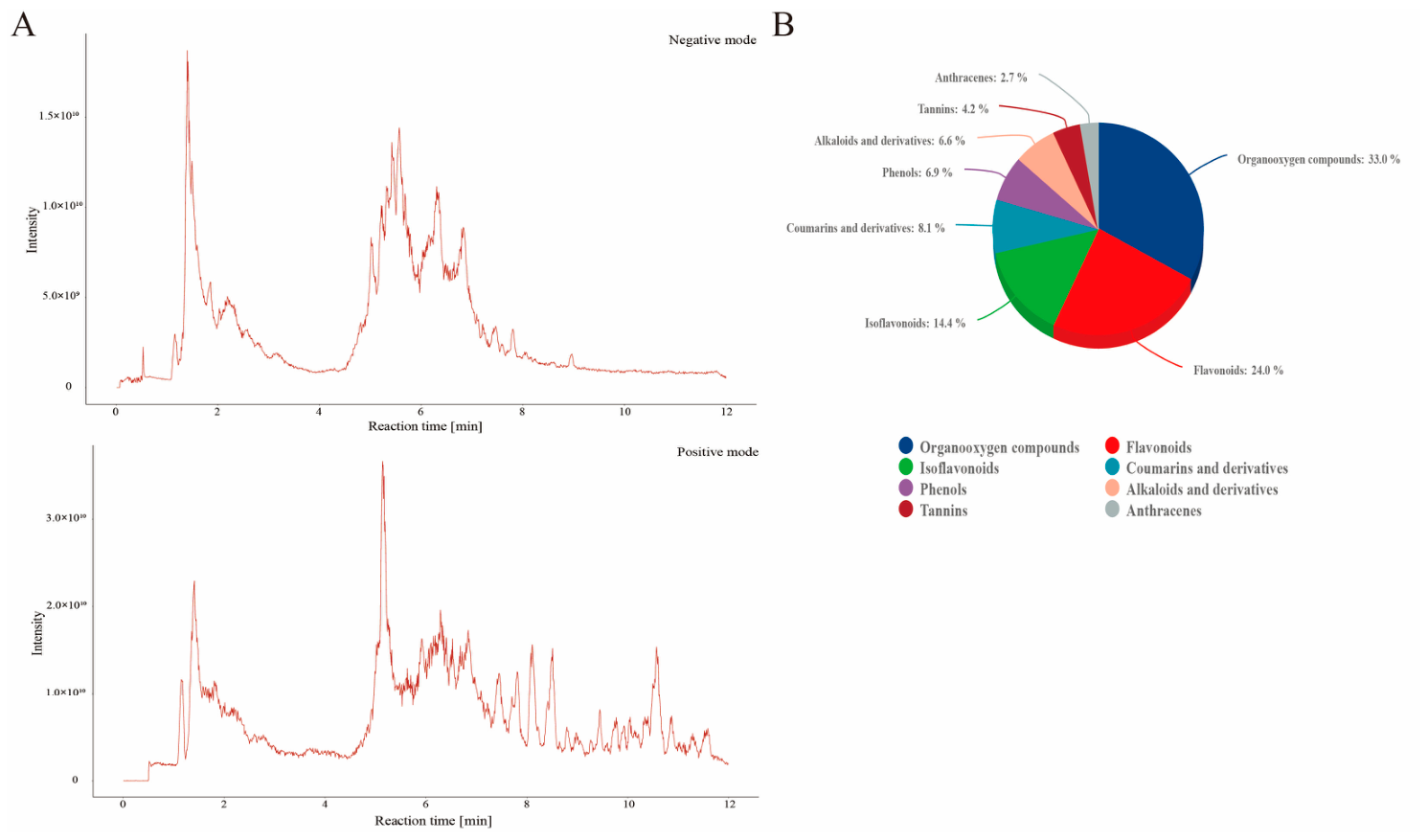
3.1. The Chemical Components of HEF
3.2. Effect of Dietary HEF on the Semen Quality of Aged Bama Boars
3.3. Effect of Dietary HEF on the Reproductive Hormones of Aged Bama Boars
3.4. Effect of Dietary HEF on the Immune-Related Indicators of Aged Bama Boars
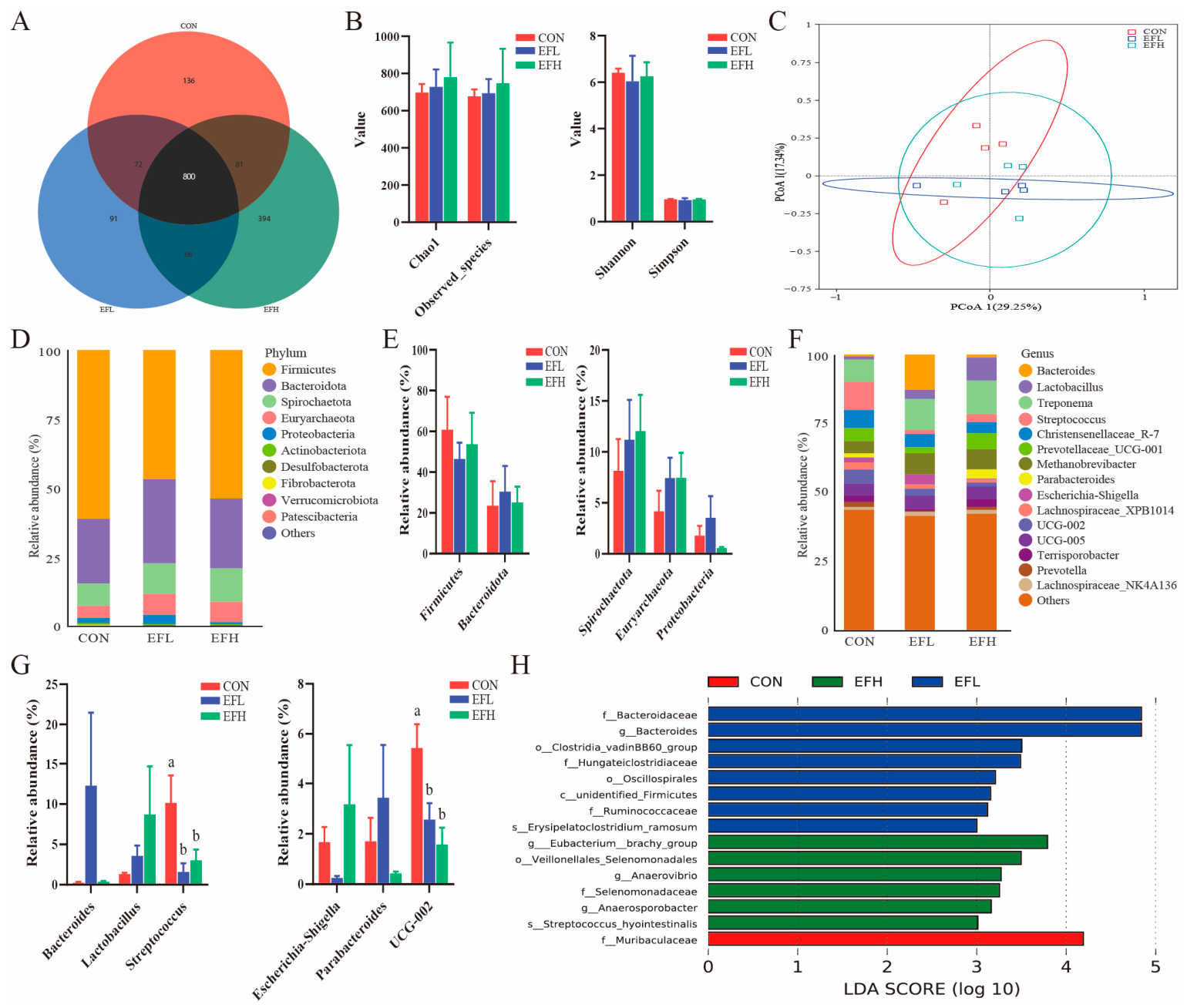
3.5. Effects of Dietary HEF on the Diversity and Composition Structure of the Intestinal Flora in Aged Bama Boars
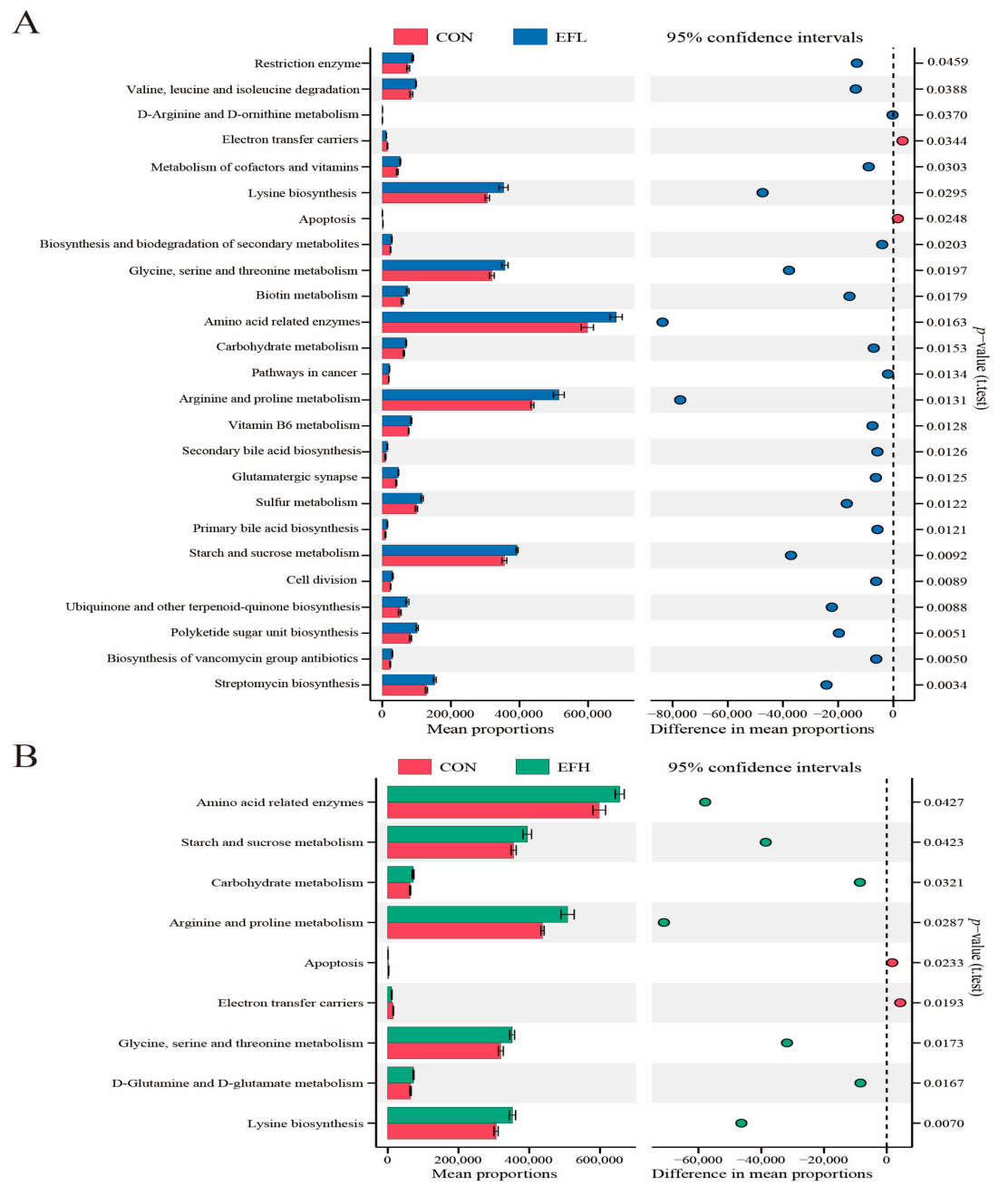
3.6. Functional Prediction of Gut Microbiota
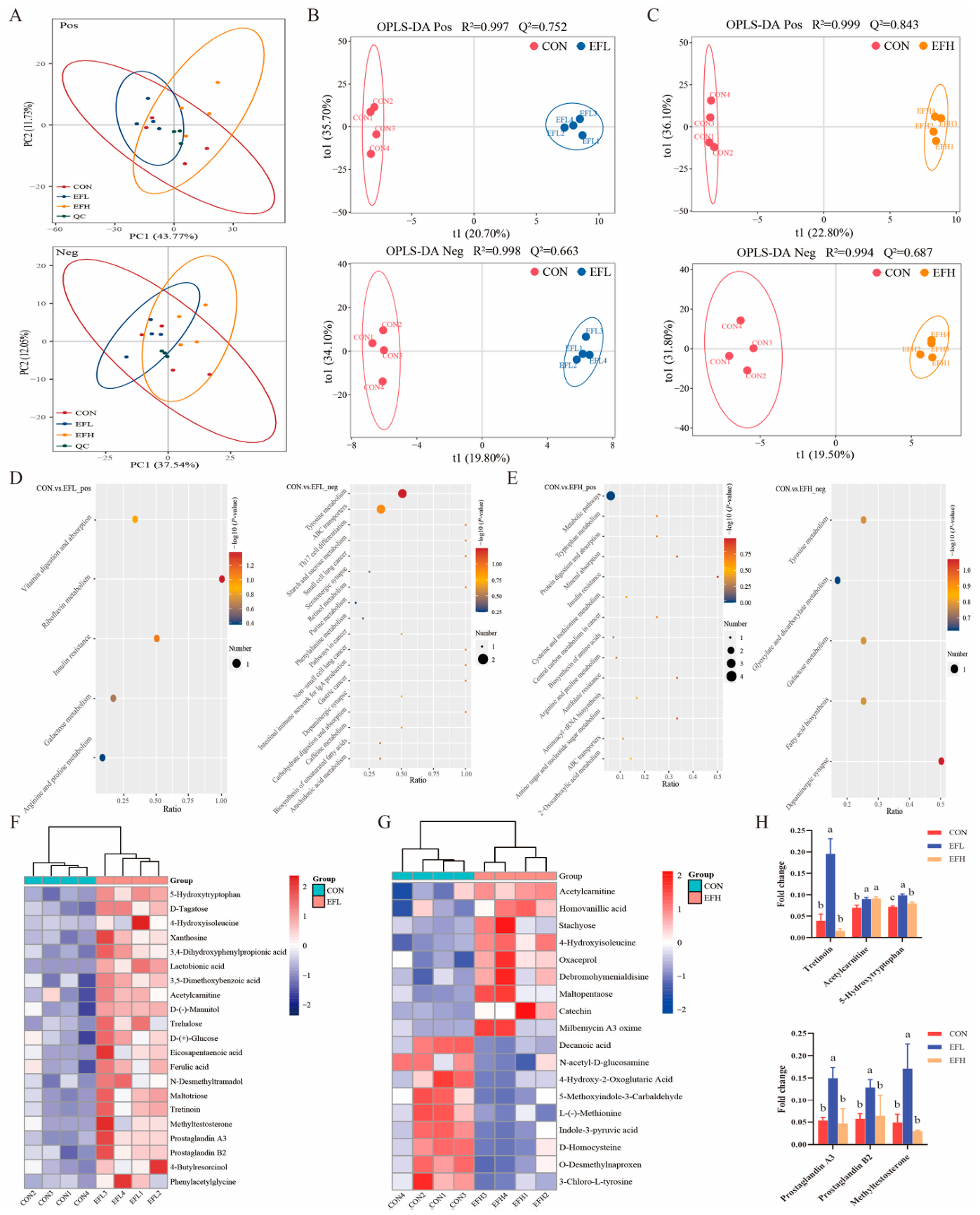
3.7. HEF Improved the Seminal Plasma Metabolites of Aging Boars
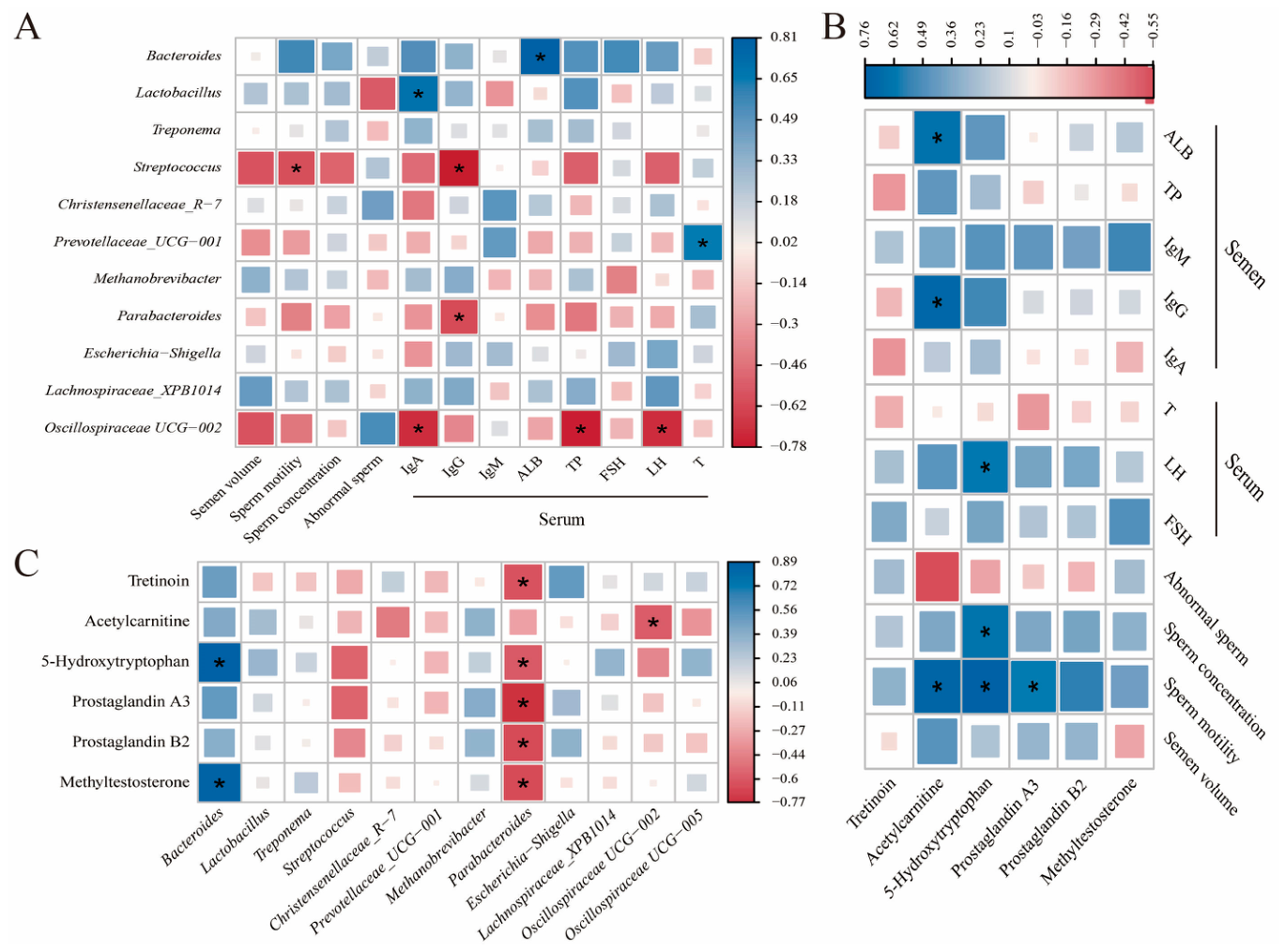
3.8. Spearman Correlation Among Fecal Microbes, Seminal Plasma Metabolites, and Different Parameters
4. Discussion
5. Conclusions
Supplementary Materials
Author Contributions
Funding
Institutional Review Board Statement
Informed Consent Statement
Data Availability Statement
Acknowledgments
Conflicts of Interest
References
- Dong, H.; Wu, D.; Xu, S.; Li, Q.; Fang, Z.; Che, L.; Wu, C.; Xu, X.; Lin, Y. Effect of dietary supplementation with amino acids on boar sperm quality and fertility. Anim. Reprod. Sci. 2016, 172, 182–189. [Google Scholar] [CrossRef]
- Jung, A.; Schuppe, H.; Schill, W. Comparison of semen quality in older and younger men attending an andrology clinic. Andrologia 2002, 34, 116–122. [Google Scholar] [CrossRef]
- Zhang, J.; Zhang, Y.; Gong, H.; Cui, L.; Huang, T.; Ai, H.; Ren, J.; Huang, L.; Yang, B. Genetic mapping using 1.4M SNP array refined loci for fatty acid composition traits in Chinese Erhualian and Bamaxiang pigs. J. Anim. Breed. Genet. 2017, 134, 472–483. [Google Scholar] [CrossRef]
- Huang, Y.; Zhou, L.; Zhang, J.; Liu, X.; Zhang, Y.; Cai, L.; Zhang, W.; Cui, L.; Yang, J.; Ji, J.; et al. A large-scale comparison of meat quality and intramuscular fatty acid composition among three Chinese indigenous pig breeds. Meat Sci. 2020, 168, 108182. [Google Scholar] [CrossRef]
- Lv, W.; Gao, X.; Zhao, H.; Cao, M.; Zhou, L.; Chai, S.; Guan, Y.; Lian, J.; Qu, Q.; Guo, S. Wu Zi Yan Zong Wan enhances sperm quality in boars by regulating spermatogenesis-related pathways and gut microbiota. Front. Vet. Sci. 2026, 13, 1748849. [Google Scholar] [CrossRef]
- Sze, S.C.W.; Tong, Y.; Ng, T.B.; Cheng, C.L.Y.; Cheung, H.P. Herba Epimedii: Anti-oxidative properties and its medical implications. Molecules 2010, 15, 7861–7870. [Google Scholar] [CrossRef]
- Ma, H.; He, X.; Yang, Y.; Li, M.; Hao, D.; Jia, Z. The genus Epimedium: An ethnopharmacological and phytochemical review. J. Ethnopharmacol. 2011, 134, 519–541. [Google Scholar] [CrossRef]
- Zhang, Z.; Yang, Q. The testosterone mimetic properties of icariin. Asian J. Androl. 2006, 8, 601–605. [Google Scholar] [CrossRef]
- Zhang, S.; Cai, W.; Huang, J.; Wu, B.; Xia, S.; Chen, X.; Zhang, X.; Shen, Z. Icariin, a natural flavonol glycoside, extends healthspan in mice. Exp. Gerontol. 2015, 69, 226–235. [Google Scholar] [CrossRef]
- Araujo, A.B.; Wittert, G.A. Endocrinology of the aging male. Best Pract. Res. Clin. Endocrinol. Metab. 2011, 25, 303–319. [Google Scholar] [CrossRef]
- Moura, A.A.; Memili, E.; Portela, A.M.R.; Viana, A.G.; Velho, A.L.C.; Bezerra, M.J.B.; Vasconselos, F.R. Seminal plasma proteins and metabolites: Effects on sperm function and potential as fertility markers. Anim. Reprod. 2018, 15, 691–702. [Google Scholar] [CrossRef]
- Chen, W.; Zou, H.; Xu, H.; Cao, R.; Zhang, H.; Zhang, Y.; Zhao, J. The potential influence and intervention measures of gut microbiota on sperm: It is time to focus on testis-gut microbiota axis. Front. Microbiol. 2024, 15, 1478082. [Google Scholar] [CrossRef]
- Wu, X.; Wei, J.; Yi, Y.; Shu, G.; He, Z.; Gong, Q.; Gao, J. Epimedium aqueous extract ameliorates cerebral Ischemia/Reperfusion injury through inhibiting ROS/NLRP3-Mediated pyroptosis. Antioxidants 2023, 12, 999. [Google Scholar] [CrossRef]
- Chen, R.; Lun, J.; Wang, T.; Ma, Y.; Huang, J.; He, S.; Zhang, Y.; Qu, Q.; Liu, M.; Sun, H.; et al. Intervention effects of Er Miao san on metabolic syndrome in Bama miniature pigs. Phytomedicine 2025, 137, 156355. [Google Scholar] [CrossRef]
- Wang, K.; Suo, Y.; Li, X.; Nagaoka, K.; Li, Y.; Li, C. Improvement of seminal quality and microbiota diversity in heat-stressed boars through dietary L-arginine supplementation. Anim. Adv. 2024, 1, e6. [Google Scholar] [CrossRef]
- Liu, M.; Zhou, J.; Li, Y.; Ding, Y.; Lian, J.; Dong, Q.; Qu, Q.; Lv, W.; Guo, S. Effects of dietary polyherbal mixtures on growth performance, antioxidant capacity, immune function and jejunal health of yellow-feathered broilers. Poult. Sci. 2023, 102, 102714. [Google Scholar] [CrossRef]
- Liu, S.; Li, Y.; Zhang, D.; Li, C.; Dai, X.; Lan, D.; Cai, J.; Zhou, H.; Song, T.; Zhao, Y.; et al. Pharmacological actions of the bioactive compounds of Epimedium on the male reproductive system: Current status and future perspective. Asian J. Androl. 2025, 27, 20–29. [Google Scholar] [CrossRef]
- Yuan, D.; Wang, H.; He, H.; Jia, L.; He, Y.; Wang, T.; Zeng, X.; Li, Y.; Li, S.; Zhang, C. Protective effects of total flavonoids from Epimedium on the male mouse reproductive system against cyclophosphamide-induced oxidative injury by up-regulating the expressions of SOD3 and GPX1. Phytother. Res. 2014, 28, 88–97. [Google Scholar] [CrossRef]
- Ma, X.; Zhu, K.; Yao, Z.; Yuan, D.; Wu, J.; Zhang, C.; Zhao, H. Icariin alleviates the injury of Sertoli cell junction function by upregulating PKR pathway via ERalpha/c-fos signaling in aged mice. J. Ethnopharmacol. 2024, 335, 118673. [Google Scholar] [CrossRef] [PubMed]
- Zhao, H.; You, X.; Chen, Q.; Yang, S.; Ma, Q.; He, Y.; Liu, C.; Dun, Y.; Wu, J.; Zhang, C.; et al. Icariin improves Age-Related testicular dysfunction by alleviating sertoli cell injury via upregulation of the ERalpha/Nrf2-Signaling pathway. Front. Pharmacol. 2020, 11, 677. [Google Scholar] [CrossRef]
- Huo, S.; Li, Y.; Guo, Y.; Zhang, S.; Li, P.; Gao, P. Improving effects of Epimedium flavonoids on the selected reproductive features in layer hens after forced molting. Poult. Sci. 2020, 99, 2757–2765. [Google Scholar] [CrossRef]
- Zhao, F.; Chen, H.; Wang, S.; Zhang, X.; Chen, N.; Chen, H.; Fu, J.; Liu, H.; Liu, J.; Liu, T. Effects of icariin as a feed additive on the reproductive function in bucks (Capra hircus). Front. Vet. Sci. 2024, 11, 1467947. [Google Scholar] [CrossRef]
- Munir, N.; Mahmood, Z.; Yameen, M.; Mustafa, G. Therapeutic response of Epimedium gandiflorum’s different doses to restore the antioxidant potential and reproductive hormones in male albino rats. Dose Response 2020, 18, 710558901. [Google Scholar] [CrossRef]
- Wang, W.; Chen, J.; Zhou, H.; Wang, L.; Ding, S.; Wang, Y.; Song, D.; Li, A. Effects of microencapsulated Lactobacillus plantarum and fructooligosaccharide on growth performance, blood immune parameters, and intestinal morphology in weaned piglets. Food Agric. Immunol. 2017, 29, 84–94. [Google Scholar] [CrossRef]
- Jin, Q.; Cheng, L.; Zhu, Y.; Zhao, X.; Zhang, W.; Gao, X.; Xiong, T.; Guo, L. Immune-related effects of compound astragalus polysaccharide and sulfated epimedium polysaccharide on newborn piglets. Anim. Biotechnol. 2023, 34, 508–519. [Google Scholar] [CrossRef]
- Fraser, L.; Strzezek, J.; Filipowicz, K.; Mogielnicka-Brzozowska, M.; Zasiadczyk, L. Age and seasonal-dependent variations in the biochemical composition of boar semen. Theriogenology 2016, 86, 806–816. [Google Scholar] [CrossRef]
- Rivero-Wendt, C.L.G.; Miranda-Vilela, A.L.; Domingues, I.; Oliveira, R.; Monteiro, M.S.; Moura-Mello, M.A.M.; Matias, R.; Soares, A.M.V.M.; Grisolia, C.K. Steroid androgen 17 alpha methyltestosterone used in fish farming induces biochemical alterations in zebrafish adults. J. Environ. Sci. Health A Tox Hazard. Subst. Environ. Eng. 2020, 55, 1321–1332. [Google Scholar] [CrossRef]
- Aghaz, F.; Vaisi-Raygani, A.; Khazaei, M.; Bakhtiari, M. Cryoprotective effect of Tretinoin-Loaded solid Lipid-Core nanocapsules during fresh and Freeze/Thaw media on NMRI mouse sperm parameters, DNA damage, and reactive oxygen species production. Biopreserv. Biobank. 2021, 19, 287–297. [Google Scholar] [CrossRef]
- Miyashita, M.; Fujinoki, M. Effects of aging and oviductal hormones on testes, epididymides, and sperm of hamster. Reprod. Med. Biol. 2022, 21, e12474. [Google Scholar] [CrossRef]
- Abdelrazik, H.; Sharma, R.; Mahfouz, R.; Agarwal, A. L-carnitine decreases DNA damage and improves the in vitro blastocyst development rate in mouse embryos. Fertil. Steril. 2009, 91, 589–596. [Google Scholar] [CrossRef]
- Matzkin, M.E.; Beguerie, C.; De Zuniga, I.; Martinez, G.; Frungieri, M.B. Impact of COVID-19 on sperm quality and the prostaglandin and polyamine systems in the seminal fluid. Andrology 2024, 12, 1078–1095. [Google Scholar] [CrossRef]
- Xie, S.; Yang, Q.; Ying, Z.; Cai, M.; Fan, W.; Gao, H.; Feng, X.; Wu, Y. Dietary supplementation with Epimedium contributes to the improvement of hormone levels, gut microbiota, and serum metabolite composition in the Chinese forest musk deer (Moschus berezovskii). Front. Vet. Sci. 2025, 11, 1497115. [Google Scholar] [CrossRef]
- Liufu, S.; Wang, K.; Chen, B.; Chen, W.; Liu, X.; Wen, S.; Li, X.; Xu, D.; Ma, H. Effect of host breeds on gut microbiome and fecal metabolome in commercial pigs. BMC Vet. Res. 2024, 20, 458. [Google Scholar] [CrossRef]
- Guerra, S.; LaRock, C. Group a Streptococcus interactions with the host across time and space. Curr. Opin. Microbiol. 2024, 77, 102420. [Google Scholar] [CrossRef]
- Zuleta-Gonzalez, M.C.; Zapata-Salazar, M.E.; Guerrero-Hurtado, L.S.; Puerta-Suarez, J.; Cardona-Maya, W.D. Klebsiella pneumoniae and Streptococcus agalactiae: Passengers in the sperm travel. Arch. Esp. Urol. 2019, 72, 939–947. [Google Scholar]
- Sugai, K.; Miyamoto, Y.; Sato, T.; Hakamata, Y.; Murakoshi, T.; Kobayashi, S.; Iwamoto, S.; Kobayashi, E. A pilot study on the effects of sweet potato petiole and leaf powder on gut microbiota and Aging-Related biomarkers in an aged microminipig model. Metabolites 2025, 15, 713. [Google Scholar] [CrossRef]
- Li, X.; Khan, I.; Xia, W.; Huang, G.; Liu, L.; Law, B.Y.K.; Yin, L.; Liao, W.; Leong, W.; Han, R.; et al. Icariin enhances youth-like features by attenuating the declined gut microbiota in the aged mice. Pharmacol. Res. 2021, 168, 105587. [Google Scholar] [CrossRef]
- Lin, Y.; Li, J.; Wang, K.; Fang, Z.; Che, L.; Xu, S.; Feng, B.; Zhuo, Y.; Li, J.; Wu, D. Effects of dietary L-leucine supplementation on testicular development and semen quality in boars. Front. Vet. Sci. 2022, 9, 904653. [Google Scholar] [CrossRef]
- Zhao, M.; Han, M.; Zhang, H.; Wang, X.; Yin, Y.; Zhang, J.; Shang, P. Multi-Omics analysis of gut microbiota and sperm quality in tibetan breeding boars. Metabolites 2025, 15, 447. [Google Scholar] [CrossRef]
- Zhao, K.; Zhang, J.; Xu, Z.; Xu, Y.; Xu, A.; Chen, W.; Miao, C.; Liu, S.; Wang, Z.; Jia, R. Metabolomic profiling of human spermatozoa in idiopathic asthenozoospermia patients using gas Chromatography-Mass spectrometry. BioMed Res. Int. 2018, 2018, 8327506. [Google Scholar] [CrossRef]
- Pan, S.; Chen, A.; Han, Z.; Wang, Y.; Lu, X.; Yang, Y. 1H NMR-based Metabonomic Study on the Effects of Epimedium on Glucocorticoid-induced Osteoporosis. J. Chromatogr. B 2016, 1038, 118–126. [Google Scholar] [CrossRef]
- Li, B.; Xiang, T.; Bindawa Isah, M.; Chen, C.; Zhang, X. In vitro simulated saliva, gastric, and intestinal digestion followed by faecal fermentation reveals a potential modulatory activity of Epimedium on human gut microbiota. J. Pharm. Biomed. Anal. 2024, 245, 116151. [Google Scholar] [CrossRef]




| Items | CON | EFL | EFH | p-Value |
|---|---|---|---|---|
| Sperm volume, mL | 158.50 ± 52.42 | 222.00 ± 43.06 | 234.75 ± 51.81 | 0.117 |
| Sperm motility, % | 78.79 ± 9.54 b | 98.48 ± 0.98 a | 97.75 ± 1.30 a | 0.001 |
| Sperm concentration, 108/mL | 2.51 ± 2.16 b | 7.02 ± 1.34 a | 6.69 ± 2.79 a | 0.030 |
| Abnormal sperm rate, % | 4.78 ± 2.28 a | 1.22 ± 0.87 b | 0.47 ± 0.32 b | 0.003 |
| Items | CON | EFL | EFH | p-Value |
|---|---|---|---|---|
| FSH (mIU/mL) | 8.89 ± 1.12 | 9.90 ± 0.80 | 9.11 ± 0.62 | 0.278 |
| LH (mIU/mL) | 10.98 ± 0.31 b | 13.90 ± 2.08 a | 12.51 ± 1.02 ab | 0.040 |
| T (pg/mL) | 9.12 ± 0.28 | 9.56 ± 2.71 | 9.85 ± 0.77 | 0.819 |
| Items | CON | EFL | EFH | p-Value |
|---|---|---|---|---|
| Serum | ||||
| IgA (μg/mL) | 7.37 ± 1.47 b | 9.15 ± 0.78 ab | 10.01 ± 1.45 a | 0.045 |
| IgG (g/L) | 16.50 ± 1.95 b | 24.85 ± 6.16 a | 18.70 ± 2.69 ab | 0.042 |
| IgM (g/L) | 26.41 ± 3.93 | 27.37 ± 2.08 | 25.20 ± 2.97 | 0.623 |
| TP (g/L) | 75.01 ± 2.66 | 83.50 ± 4.81 | 80.24 ± 6.00 | 0.083 |
| ALB (g/L) | 54.38 ± 1.68 b | 61.60 ± 4.65 a | 55.28 ± 3.80 b | 0.038 |
| Seminal plasma | ||||
| IgA (μg/mL) | 38.78 ± 6.96 b | 47.61 ± 5.82 ab | 54.47 ± 6.38 a | 0.022 |
| IgG (g/L) | 13.88 ± 5.12 b | 26.08 ± 3.03 ab | 37.05 ± 16.57 a | 0.032 |
| IgM (g/L) | 57.18 ± 3.38 | 69.54 ± 14.93 | 61.43 ± 8.63 | 0.267 |
| TP (g/L) | 1605.33 ± 93.09 b | 1724.60 ± 139.06 ab | 1957.27 ± 223.88 a | 0.036 |
| ALB (g/L) | 0.12 ± 0.05 | 0.21 ± 0.09 | 0.34 ± 0.23 | 0.155 |
Disclaimer/Publisher’s Note: The statements, opinions and data contained in all publications are solely those of the individual author(s) and contributor(s) and not of MDPI and/or the editor(s). MDPI and/or the editor(s) disclaim responsibility for any injury to people or property resulting from any ideas, methods, instructions or products referred to in the content. |
© 2026 by the authors. Licensee MDPI, Basel, Switzerland. This article is an open access article distributed under the terms and conditions of the Creative Commons Attribution (CC BY) license.
Share and Cite
Ran, B.; Luo, S.; Zhou, C.; Wen, L.; Wu, J.; Zhao, Y.; Zhu, X.; Li, Z.; Liu, M. Epimedii Folium Supplementation Improves Semen Quality, Hormonal Profile, and Immune Function by Modulating Gut Microbiota and Seminal Metabolites in Aged Boars. Animals 2026, 16, 1833. https://doi.org/10.3390/ani16121833
Ran B, Luo S, Zhou C, Wen L, Wu J, Zhao Y, Zhu X, Li Z, Liu M. Epimedii Folium Supplementation Improves Semen Quality, Hormonal Profile, and Immune Function by Modulating Gut Microbiota and Seminal Metabolites in Aged Boars. Animals. 2026; 16(12):1833. https://doi.org/10.3390/ani16121833
Chicago/Turabian StyleRan, Bin, Shengxin Luo, Chenxi Zhou, Long Wen, Junjie Wu, Yunxiang Zhao, Xiaoping Zhu, Zhili Li, and Mengjie Liu. 2026. "Epimedii Folium Supplementation Improves Semen Quality, Hormonal Profile, and Immune Function by Modulating Gut Microbiota and Seminal Metabolites in Aged Boars" Animals 16, no. 12: 1833. https://doi.org/10.3390/ani16121833
APA StyleRan, B., Luo, S., Zhou, C., Wen, L., Wu, J., Zhao, Y., Zhu, X., Li, Z., & Liu, M. (2026). Epimedii Folium Supplementation Improves Semen Quality, Hormonal Profile, and Immune Function by Modulating Gut Microbiota and Seminal Metabolites in Aged Boars. Animals, 16(12), 1833. https://doi.org/10.3390/ani16121833