Effects of Starvation on Growth Characteristics, Locomotor Performance, Foraging Behavior, and Hypoxia Tolerance in Chinese Giant Salamander (Andrias davidianus) Larvae



Laboratory of Evolutionary Physiology and Behavior, Chongqing Key Laboratory of Conservation and Utilization of Freshwater Fishes, Animal Biology Key Laboratory of Chongqing Education Commission of China, Chongqing Normal University, Chongqing 401331, China
*
Authors to whom correspondence should be addressed.
Animals 2026, 16(12), 1801; https://doi.org/10.3390/ani16121801
Submission received: 2 May 2026
/
Revised: 6 June 2026
/
Accepted: 9 June 2026
/
Published: 11 June 2026
(This article belongs to the Section Aquatic Animals)
Simple Summary
Animals adopt diverse morphological, physiological, and behavioral strategies to cope with starvation stress, which can occur at various life history stages. The Chinese giant salamander (Andrias davidianus) is the largest extant amphibian species in the world, and its wild population is declining due to habitat destruction and other factors. This study aimed to investigate the effects of starvation stress for 1–4 weeks on the growth characteristics, locomotor performance, foraging behavior, and hypoxia tolerance of A. davidianus larvae. The results showed that the locomotor performance and foraging behavior of A. davidianus larvae were not significantly affected by starvation stress, which may be beneficial for maintaining normal foraging and predator avoidance activities during starvation. However, starvation led to a significant reduction in body weight and ultimate hypoxia tolerance. Therefore, starvation tolerance time and hypoxia tolerance warrant full attention in the conservation practice and research involving A. davidianus larvae.
Abstract
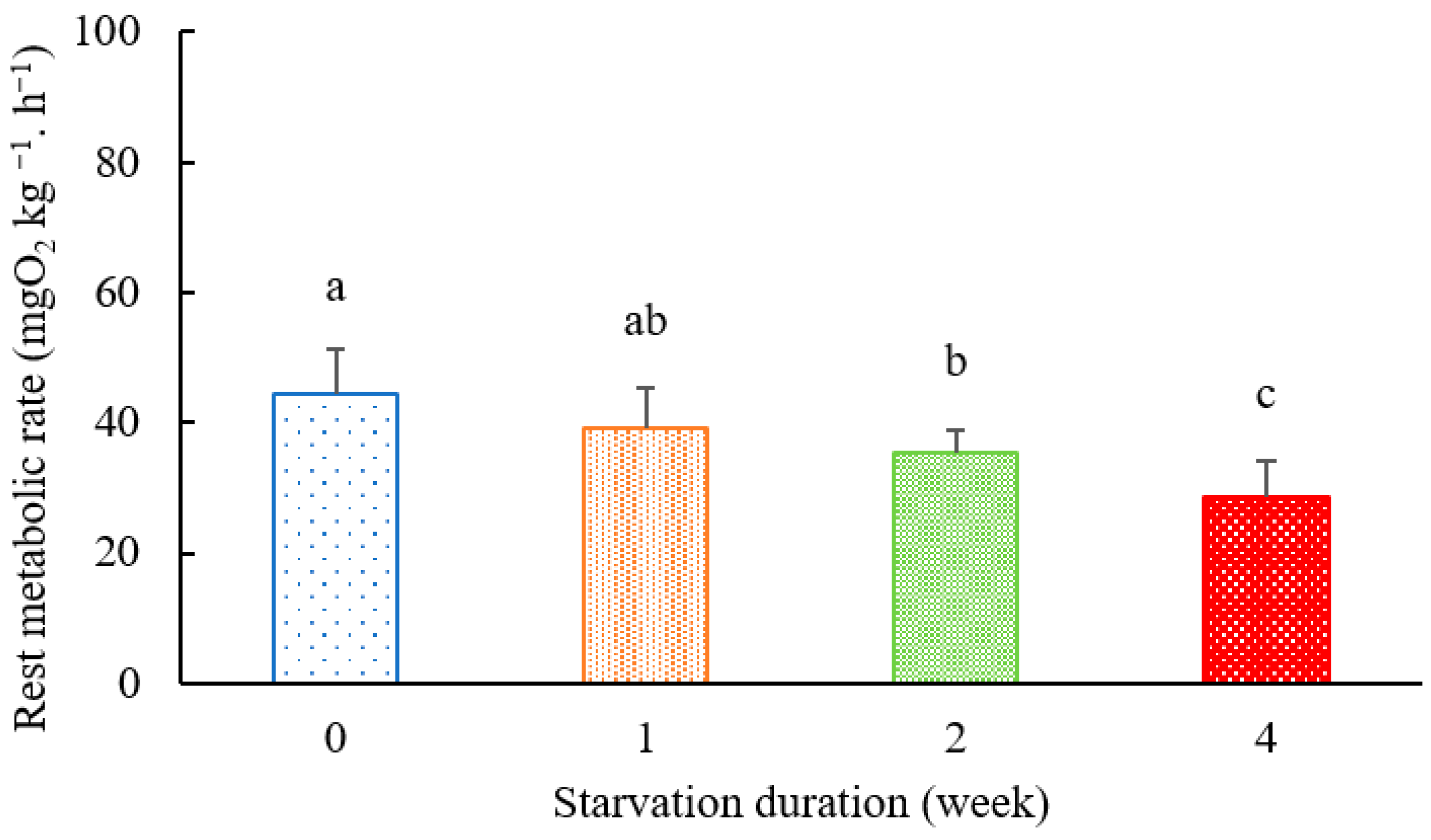
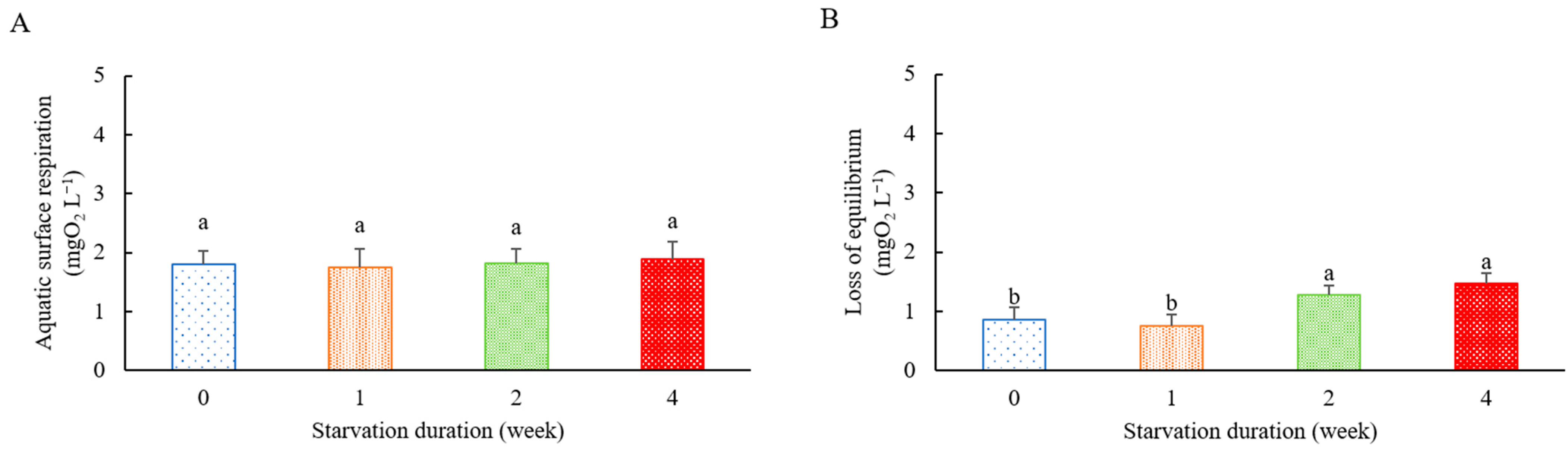
Starvation is one of the common survival stresses frequently encountered by wildlife, and the adaptive strategies of animals to starvation stress exhibit significant interspecific differences. This study investigated the effects of different starvation periods (1–4 weeks) on the growth characteristics, locomotor performance, foraging behavior, and hypoxia tolerance of Chinese giant salamander (Andrias davidianus) larvae (5.41 ± 0.06 g; 9.78 ± 0.03 cm). Our results showed that the final body weight of A. davidianus larvae decreased significantly with prolonged starvation time, with a more pronounced rate of decrease during the early starvation period. However, the final body length of A. davidianus larvae was less significantly affected by starvation stress. Starvation had no significant effects on the relative induction flow speed, relative burst swimming speed, total foraging distance, relative foraging speed, and foraging time of A. davidianus larvae. The resting metabolic rate of A. davidianus larvae decreased significantly as the starvation period lengthened. Starvation lasting 2–4 weeks significantly increased the dissolved oxygen level at which A. davidianus larvae exhibited the loss of equilibrium (ventral side facing upward). These results indicate that (1) starvation has a more significant negative impact on body mass than on body length in A. davidianus larvae; (2) starvation stress does not significantly affect the locomotor performance or foraging behavior of A. davidianus larvae, but it does lead to a significant reduction in their extreme hypoxia tolerance.