


Positive Reinforcement (R+) Horse Training in Practice: Evaluation of Online Trailer-Training Demonstrations

Simple Summary
Abstract
1. Introduction
2. Materials and Methods
2.1. General Approach
2.2. Sample of Online Demonstrations
2.3. Trainer’s Actions with Horse
2.4. Horse Behavioral Responses
2.5. Additional Observations Recorded
2.6. Analysis
3. Results
3.1. Resulting Sample
3.2. Percentage of R+ TAs
3.3. Association of R+ and Horse Response
3.4. Association of R+ with “At Liberty” Handling
3.5. Other Data Recorded
4. Discussion
5. Conclusions
Author Contributions
Funding
Institutional Review Board Statement
Informed Consent Statement
Data Availability Statement
Acknowledgments
Conflicts of Interest
References
- Hendriksen, P.; Elmgreen, K.; Ladewig, J. Trailer-loading of horses: Is there a difference between positive and negative reinforcement concerning effectiveness and stress-related signs? J. Vet. Behav. 2011, 6, 261. [Google Scholar] [CrossRef] [Scilit]
- Masebo, N.T.; Faraz, A.; Angeloni, M.G.; Saleem, F.; Buzdar, H.Q.; Padalino, B. How to apply positive-reinforcement-based training for self-loading and self-unloading in dromedary camels. Animals 2026, 16, 1103. [Google Scholar] [CrossRef] [Scilit] [PubMed]
- Murphy, E.S.; Lupfer, G.J. Basic Principles of Operant Conditioning. In The Wiley Handbook of Operant and Classical Conditioning, 1st ed.; McSweeney, F.K., Murphy, E.S., Eds.; John Wiley & Sons, Ltd.: Sussex, UK, 2014; Volume 1, pp. 165–194 (print), 236–266 (digital). [Google Scholar] [CrossRef] [Scilit]
- Hockenhull, J.; Creighton, E. Training horses: Positive reinforcement, positive punishment, and ridden behavior problems. J. Vet. Behav. 2013, 8, 245–252. [Google Scholar] [CrossRef] [Scilit]
- Henshall, C.; Padalino, B.; McGreevy, P. The radio-controlled car as herd leader? A preliminary study of escape and avoidance learning in the round-pen. Royal Dick Veterinary School. In Proceedings of the VIII International Equitation Science Conference: The Road Ahead, Edinburgh, Scotland, 18–20 July 2012. [Google Scholar]
- Hartmann, E.; Christensen, J.W.; McGreevy, P.D. Dominance and leadership: Useful concepts in human–horse interactions? J. Equine Vet. Sci. 2017, 52, 1–9. [Google Scholar] [CrossRef] [Scilit]
- Yngvesson, J.; De Boussard, E.; Larsson, M.; Lundberg, A. Loading horses (Equus caballus) onto trailers—Behaviour of horses and horse owners during loading and habituating. Appl. Anim. Behav. Sci. 2016, 184, 59–65. [Google Scholar] [CrossRef] [Scilit]
- Karrasch, S.; Karrasch, V. You Can Train Your Horse to Do Anything: On Target Training, Clicker Training, and Beyond; Trafalgar Square: North Pomfret, VT, USA, 2000. [Google Scholar]
- Ferguson, D.L.; Rosales-Ruiz, J. Loading the problem loader: The effects of target training and shaping on trailer-loading behavior of horses. J. Appl. Behav. Anal. 2001, 34, 409–423. [Google Scholar] [CrossRef] [Scilit] [PubMed]
- Feng, L.C.; Howell, T.J.; Bennett, P.C. How clicker training works: Comparing reinforcing, marking, and bridging hypotheses. Appl. Anim. Behav. Sci. 2016, 181, 34–40. [Google Scholar] [CrossRef] [Scilit]
- Sankey, C.; Richard-Yris, M.A.; Henry, S.; Fureix, C.; Nassur, F.; Hausberger, M. Reinforcement as a mediator of the perception of humans by horses (Equus caballus). Anim. Cogn. 2010, 13, 753–764. [Google Scholar] [CrossRef] [Scilit] [PubMed]
- Dai, F.; Dalla Costa, A.; Bonfanti, L.; Caucci, C.; Di Martino, G.; Lucarelli, R.; Padalino, B.; Minero, M. Positive reinforcement-based training for self-loading of horses reduces loading time and stress-related behavior. Front. Vet. Sci. 2019, 6, 350. [Google Scholar] [CrossRef] [Scilit] [PubMed]
- McLean, A.N.; Christensen, J.W. The application of learning theory in horse training. Appl. Anim. Behav. Sci. 2017, 190, 18–27. [Google Scholar] [CrossRef] [Scilit]
- Bradshaw-Wiley, E.; Henshall, C.; McLean, A.; Freire, R. Combined reinforcement: Poisoned cue or a panacea for modern equine training? A narrative review. Appl. Anim. Behav. Sci. 2025, 291, 106718. [Google Scholar] [CrossRef] [Scilit]
- Equine Ethics and Wellbeing Commission of Fédération Equestre Internationale (FEI). Opinions of equestrian stakeholders on the use of horses in sport: Survey results. In Equine Ethics and Wellbeing Commission Report; FEI: Lausanne, Switzerland, 2022; ISBN 978-1-99-117062-0. Available online: https://equinewellbeing.fei.org/assets/documents/Results%20of%20Equestrian%20Survey%20%E2%80%93%20Equine%20Ethics%20and%20Wellbeing%20Commission%20Report%202022.pdf (accessed on 26 May 2026).
- Girgis, E.; Shaw, D.J.; Heffernan, D.; Spence, H.; Pearson, G. Investigation of a potential link between UK equestrians’ understanding of learning theory, and their perception of and response to a problematic equine behaviour. Appl. Anim. Behav. Sci. 2025, 287, 106639. [Google Scholar] [CrossRef] [Scilit]
- Kydd, E.; Padalino, B.; Henshall, C.; McGreevy, P. An analysis of equine round pen training videos posted online: Differences between amateur and professional trainers. PLoS ONE 2017, 12, e0184851. [Google Scholar] [CrossRef] [Scilit] [PubMed]
- Rankins, E.; Reega, S.J.; Rudd, C.; Peters, B.C. Horse behavior and training in adaptive/therapeutic riding: A survey of instructors’ perceptions and knowledge in the United States. Appl. Anim. Behav. Sci. 2025, 282, 106490. [Google Scholar] [CrossRef] [Scilit]
- Luke, K.L.; McAdie, T.; Warren-Smith, A.K.; Rawluk, A.; Smith, B.P. Does a working knowledge of learning theory relate to improved horse welfare and rider safety? Anthrozoös 2023, 36, 703–719. [Google Scholar] [CrossRef] [Scilit]
- Warren-Smith, A.K.; McGreevy, P.D. Equestrian coaches’ understanding and application of learning theory in horse training. Anthrozoös 2008, 21, 153–162. [Google Scholar] [CrossRef] [Scilit]
- Wirth, K. Don’t shock the dog: Addressing animal welfare and consumer protection in the dog training industry. Anim. Nat. Res. Law Rev. 2005, 21, 97–122. [Google Scholar]
- Williams, J.M.; Berg, L.C.; Clayton, H.M.; Kirsch, K.; Marlin, D.; Randle, H.; Roepstroff, L.; Oldruitenborgh-Oosterbaan, M.S.V.; Weishaupt, M.A.; Munsters, C. A Delphi study to determine international and national equestrian expert opinions on domains and sub-domains essential to managing sporthorse health and welfare in the Olympic disciplines. Animals 2023, 13, 3404. [Google Scholar] [CrossRef] [Scilit] [PubMed]
- Heleski, C.R. Social license to operate–why public perception matters for horse sport–some personal reflections. J. Equine Vet. Sci. 2023, 124, 104266. [Google Scholar] [CrossRef] [Scilit] [PubMed]
- Massachusetts Department of Agricultural Resources. Licensing of Horse Riding Instructors. Code of Massachusetts Regulations. Title 330, Section 16.02. 2022. Available online: https://www.mass.gov/regulations/330-CMR-1600-horses (accessed on 26 May 2026).
- Waran, N.; McGreevy, P.; Casey, R.A. Training methods and horse welfare. In The Welfare of Horses, 1st ed.; Springer: Dordrecht, NL, USA, 2005; pp. 151–180. [Google Scholar]
- Padalino, B.; Raidal, S.L.; Hall, E.; Knight, P.; Celi, P.; Jeffcott, L.; Muscatello, G. A survey on transport management practices associated with injuries and health problems in horses. PLoS ONE 2016, 11, e0162371. [Google Scholar] [CrossRef] [Scilit] [PubMed]

| POSITIVE REINFORCEMENT ACTIONS (R+) | |
|---|---|
| Trainer Action (TA) | Description |
| Click | Generate a ‘click’ or other standard sound to mark a desired behavior |
| Feed | Offer a food treat from the hand or feed pan, as a reward |
| Present Food | Offer the horse a food treat as incentive |
| Present Target | Place the target in the horse’s field of vision |
| Stand Idle | Stand still, quietly near the horse |
| Step in Trailer | Walk into the trailer, either fully or partially with the intent to have the horse follow |
| Visual Cue | Use hand as a visual guiding stimulus or target |
| Audible Cue | Utter vocal cue as conditioned positive prompt or conditioned reinforcer |
| Walk | Walk aside or ahead of the horse with the intention of leading the horse, with or without a halter and lead, and without applying pressure |
| NEGATIVE REINFORCEMENT ACTIONS (R-) | |
| Apply Spatial Pressure | Assert spatial dominance with body movements to displace the horse without physical contact |
| Apply Tactile Pressure | Touch the horse anywhere on his body with pressure |
| Pressure on Lead | Pull on the lead and/or halter |
| POSITIVE PUNISHMENT ACTIONS (P+) | |
| Apply Whip | Touch or strike the horse with the whip |
| Wave Hand Threateningly | Raise and wave arm and/or hand as a corrective measure |
| Wave Whip | Raise and wave the whip toward the horse as a corrective measure |
| NEGATIVE PUNISHMENT ACTIONS (P-) | |
| Block Horse’s Path | Stand in front of, behind, or aside of the horse, blocking desired movement |
| OTHER TRAINER ACTIONS | |
| Adjust Trailer Component | Adjust the trailer ramp, door, divider, or other component |
| Vocalize | Make audible sounds that are not intended as cues |
| POSITIVE BEHAVIORS | |
|---|---|
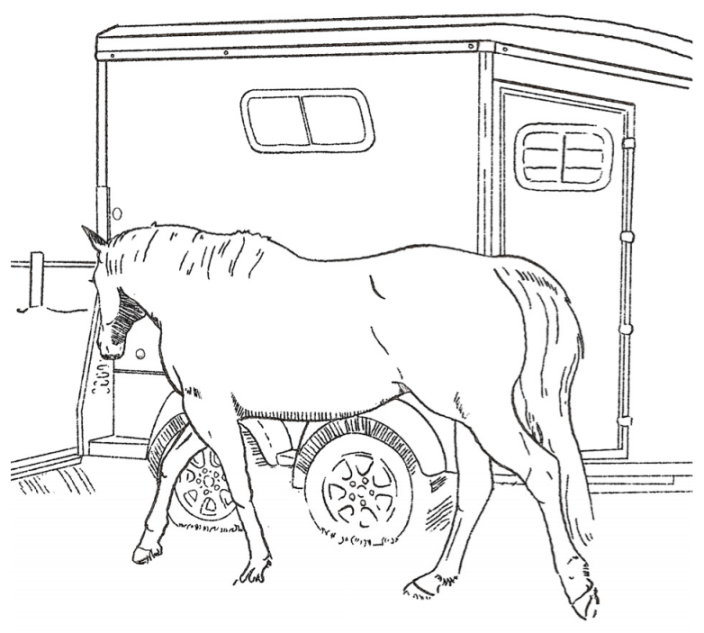 | Approach Approach the trailer voluntarily |
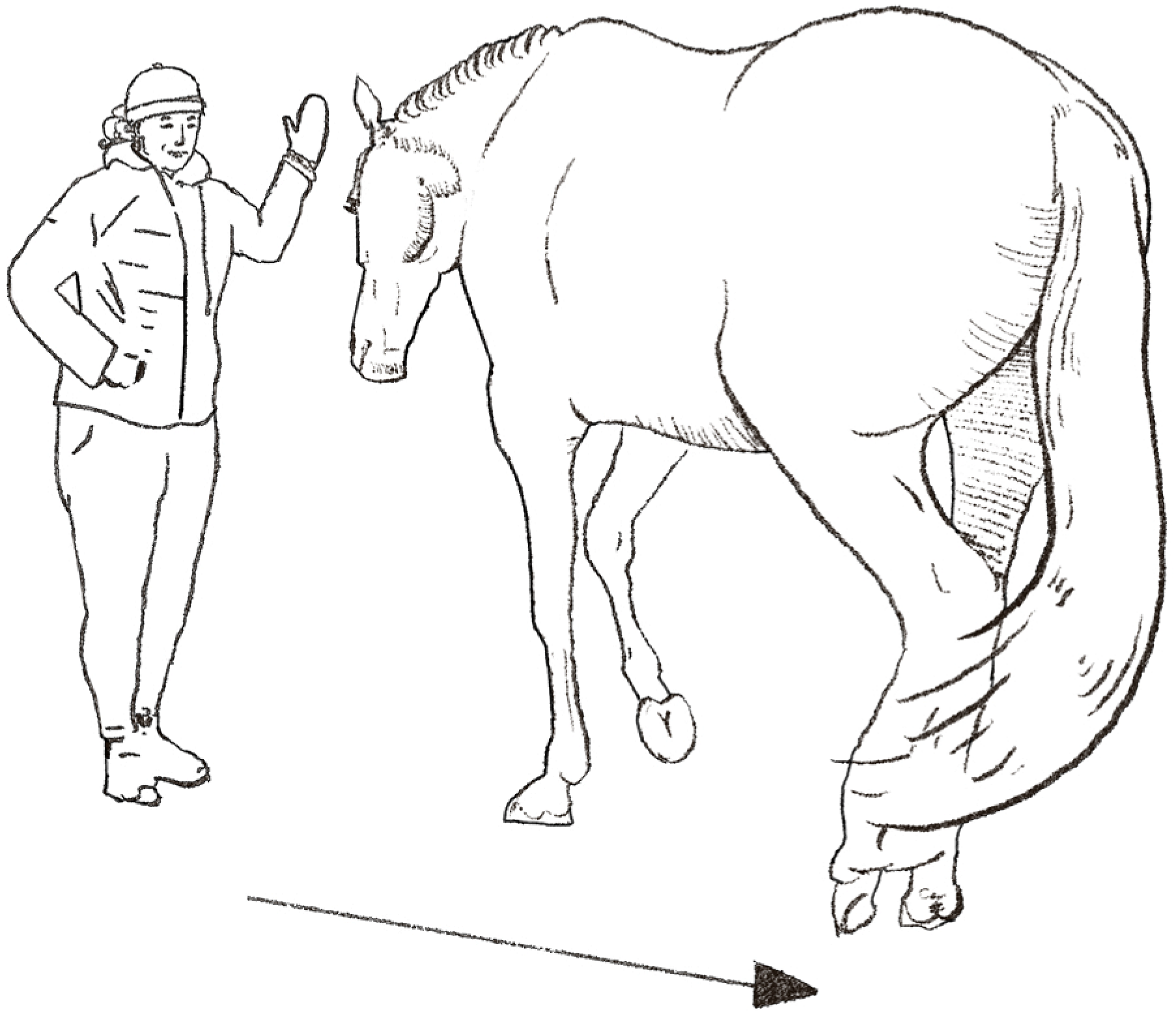 | Back Up When Directed Walk backward in response to a cue from trainer |
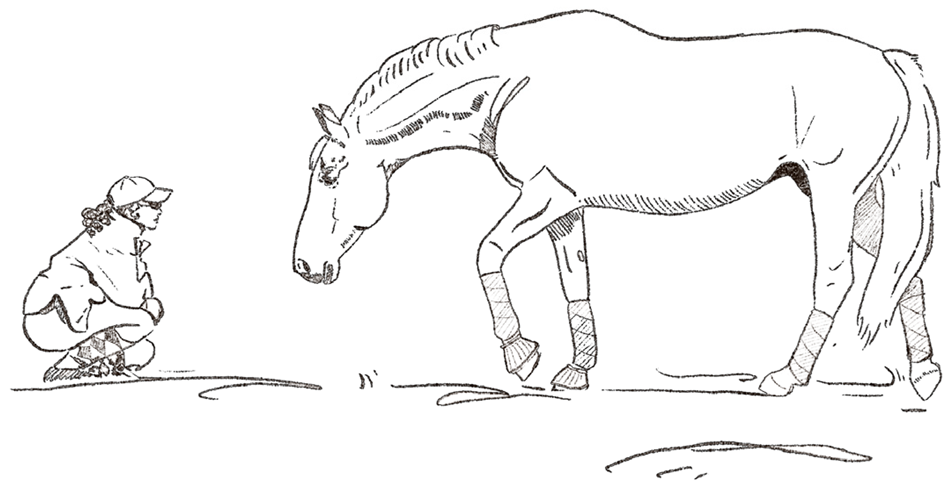 | Engage with Trainer Sniff, nuzzle, investigate, or otherwise interact with trainer |
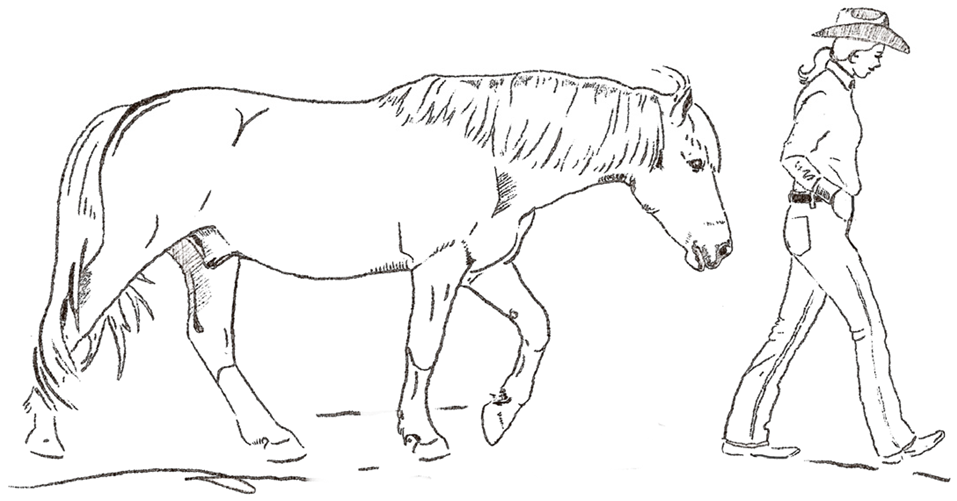 | Follow Trainer Walk close behind trainer at a similar pace |
 | Investigate Trailer Sniff, touch, or nuzzle any portion of the trailer |
 | Look in with Interest Stand at entry of the trailer, looking into the interior with apparent interest |
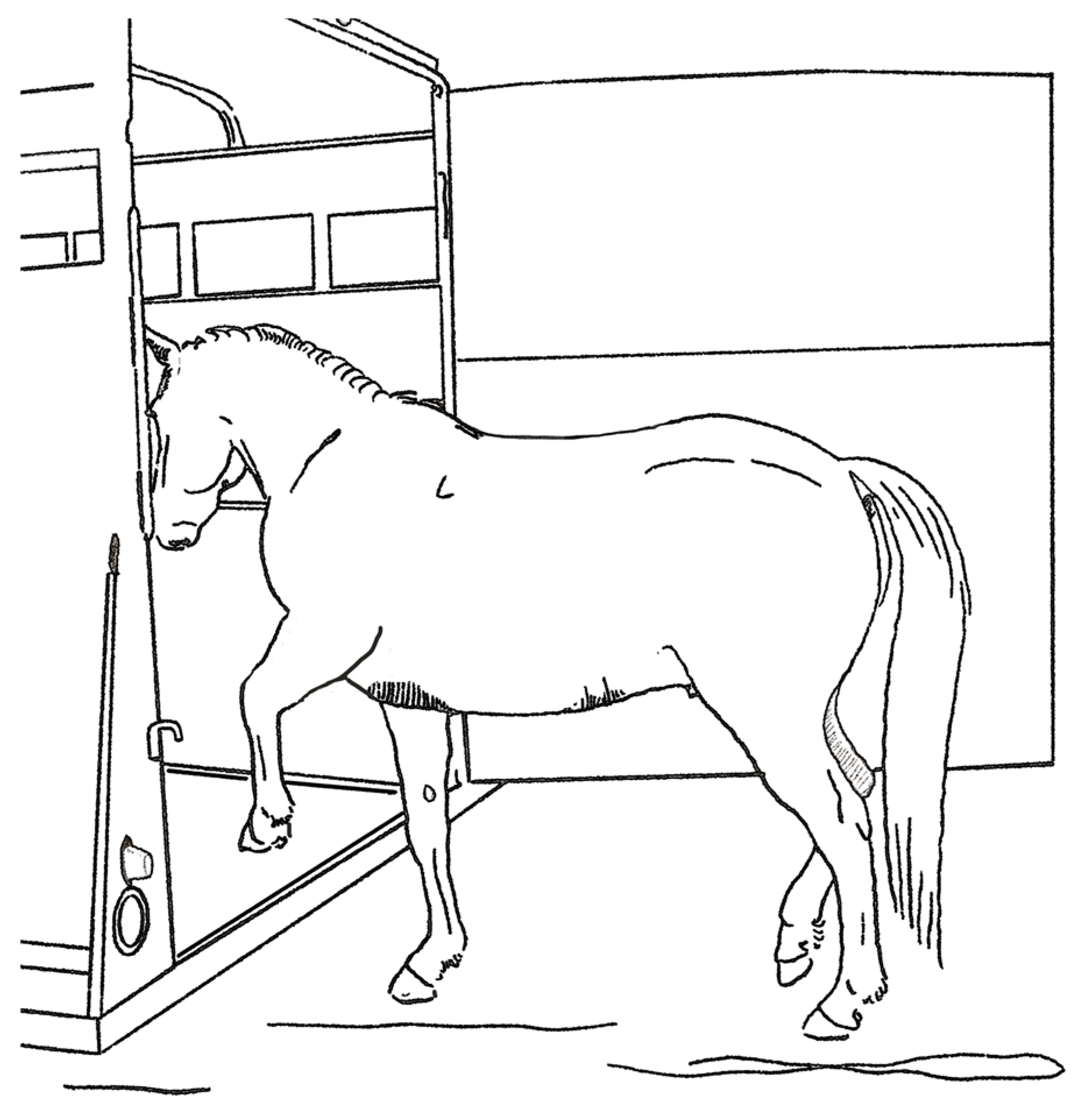 | One Foot On Place one fore foot on the ramp or upon the step |
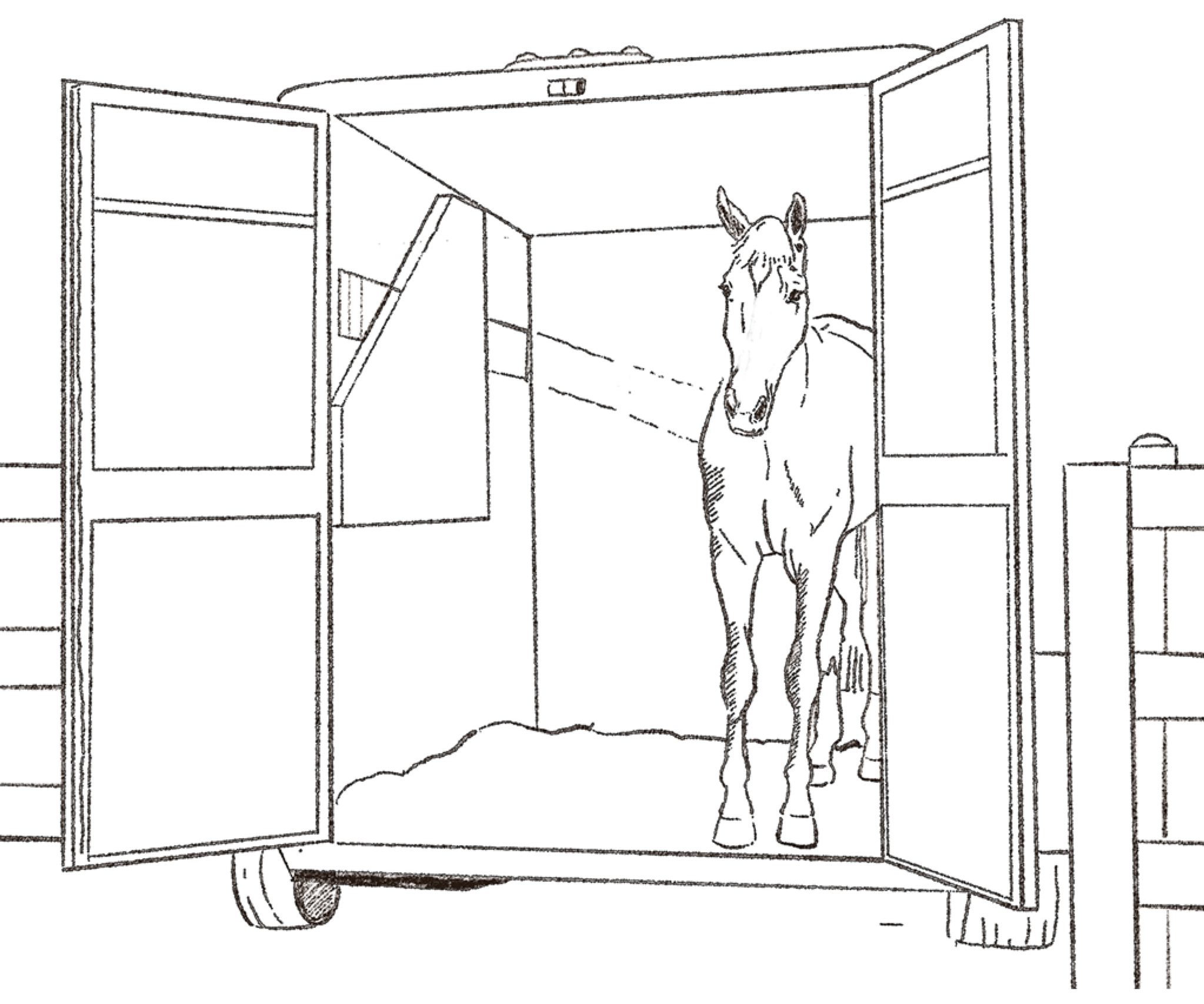 | Stand In Trailer Enter and stand inside the trailer |
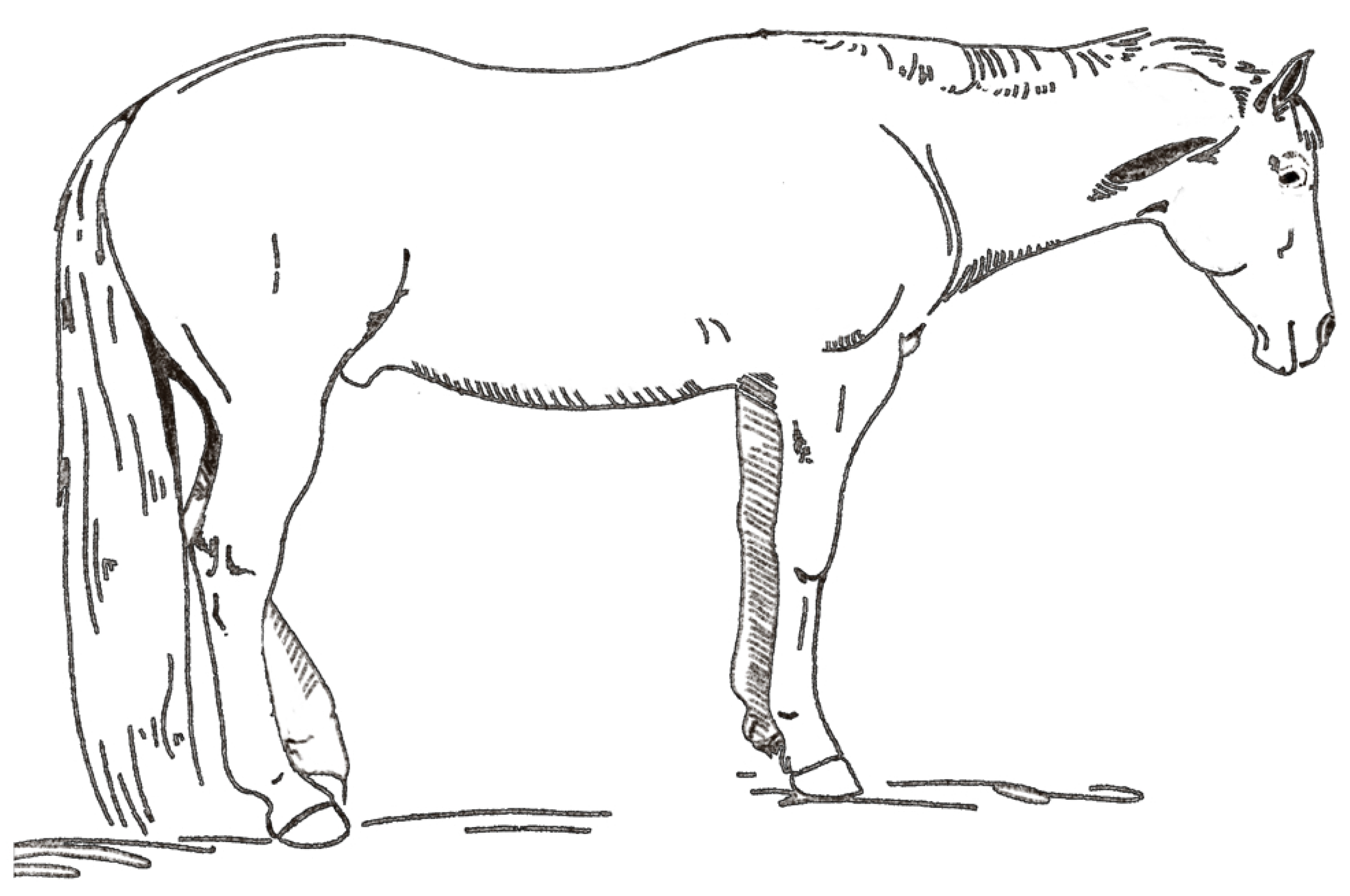 | Stand Relaxed Stand with ears rotated laterally, head at or slightly above the withers, tail hanging still and resting against perineum |
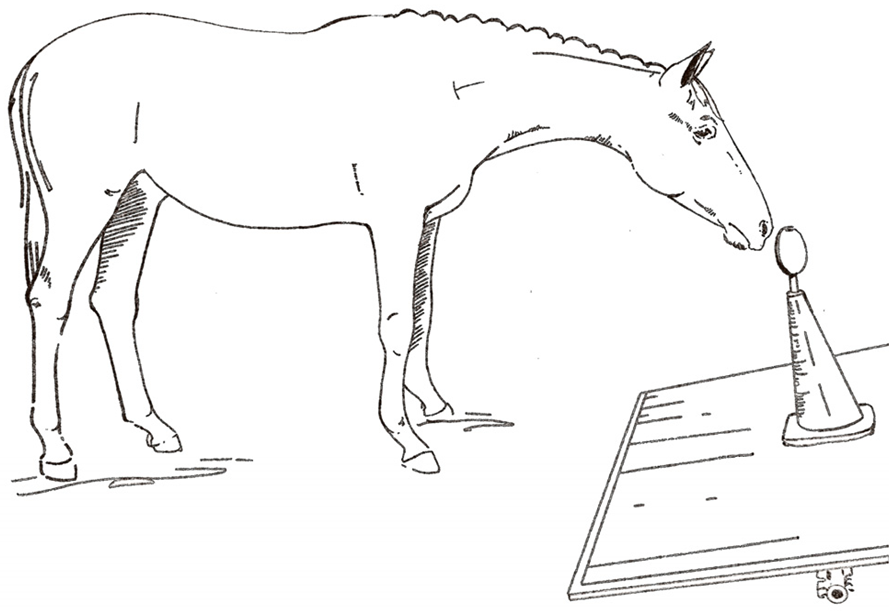 | Touch Training Target Touch a stationary or hand-held training target with muzzle |
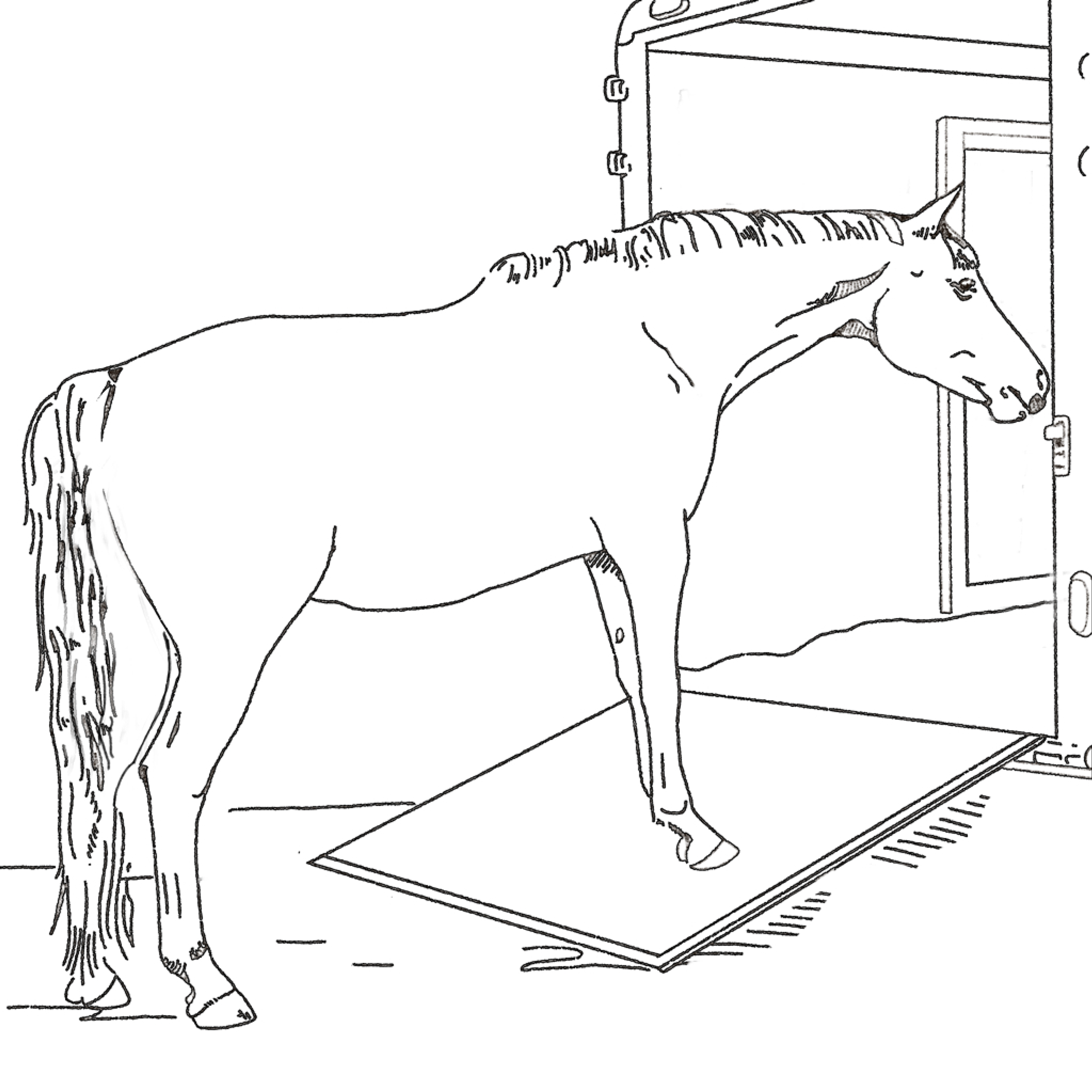 | Two Feet On Place two front feet on the trailer ramp or step, persistently, or for more than 5 s |
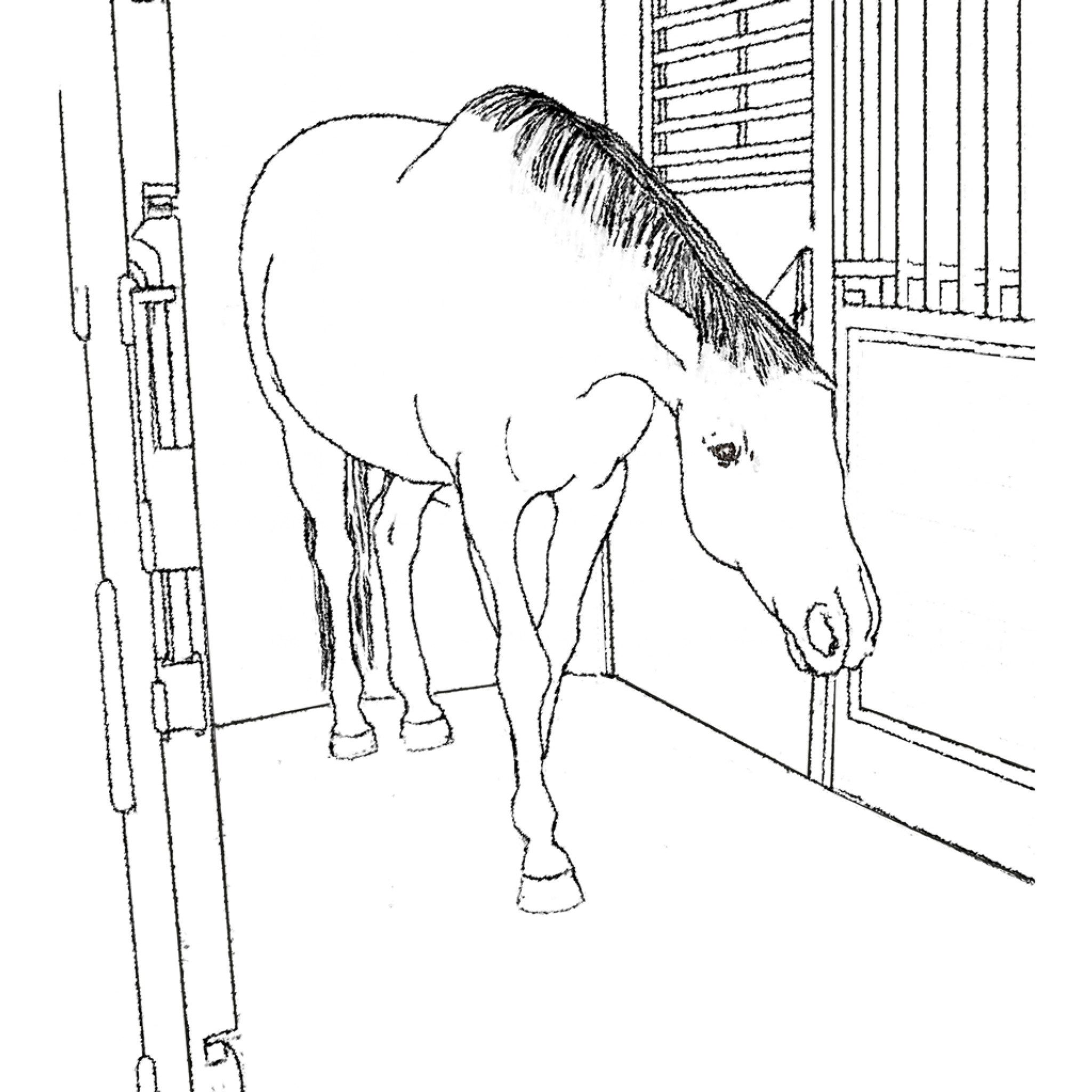 | Walk In Walk fully into the trailer |
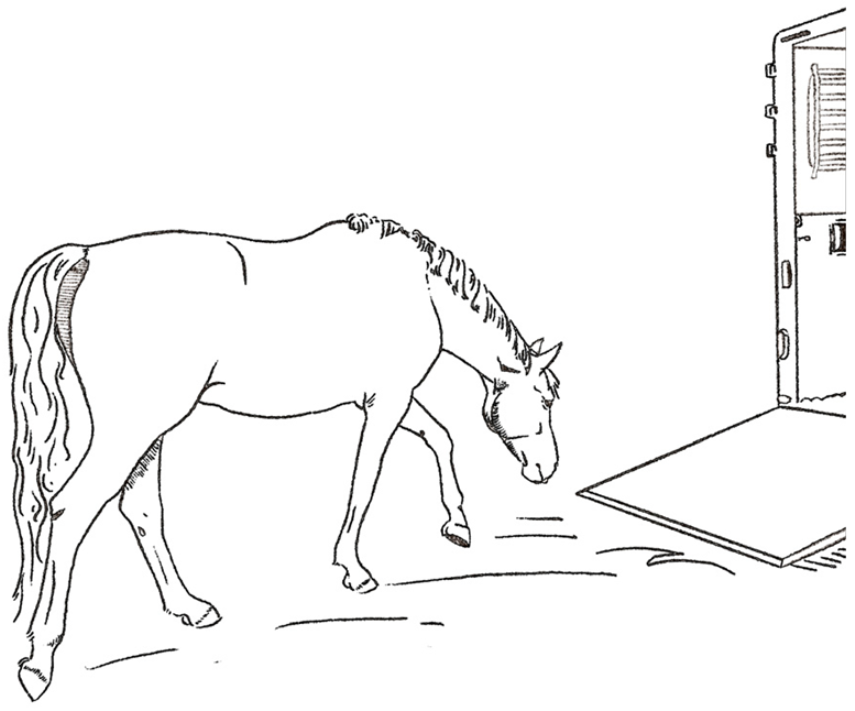 | Walk Toward Trailer Walk toward trailer as if intending to enter |
| NEUTRAL BEHAVIORS | |
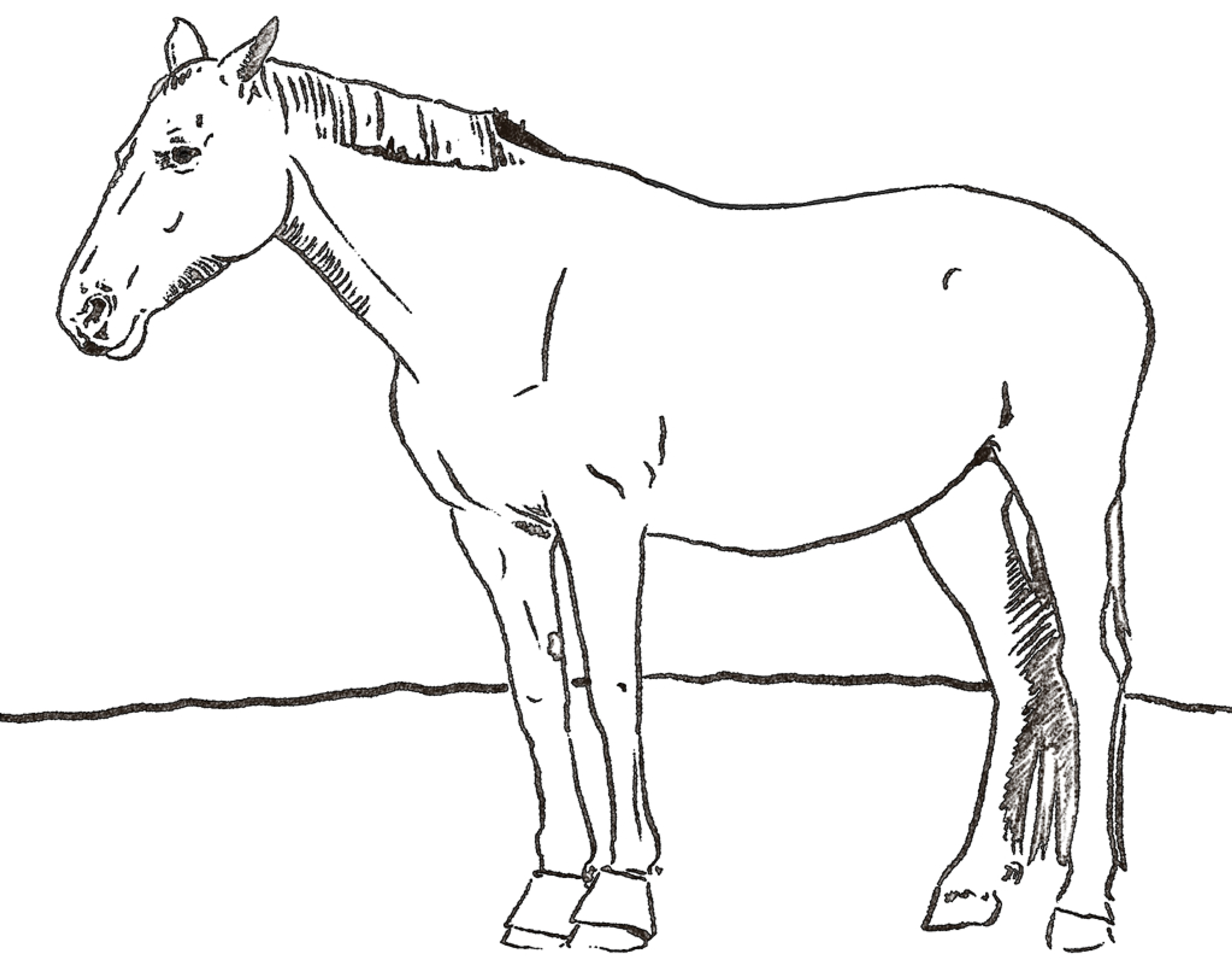 | Non-Responsive Standing, non-responsive, unengaged |
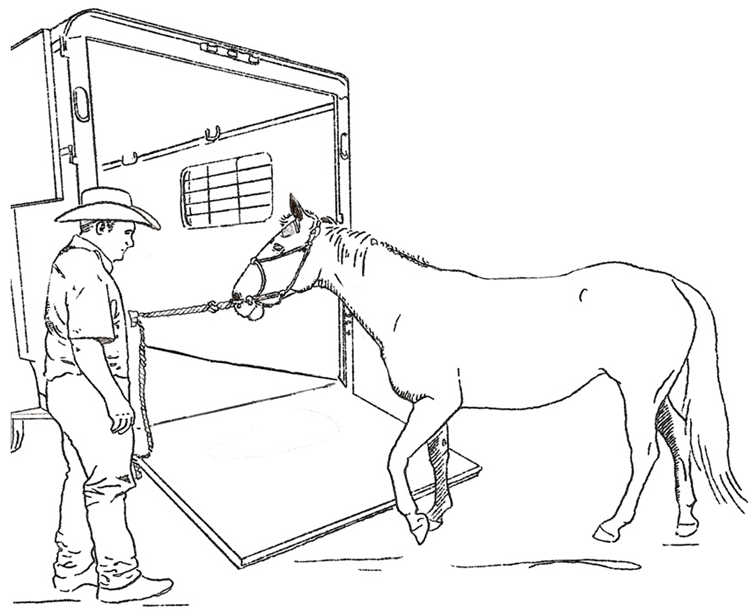 | Yield to Pressure Move in response to pressure |
| NEGATIVE BEHAVIORS | |
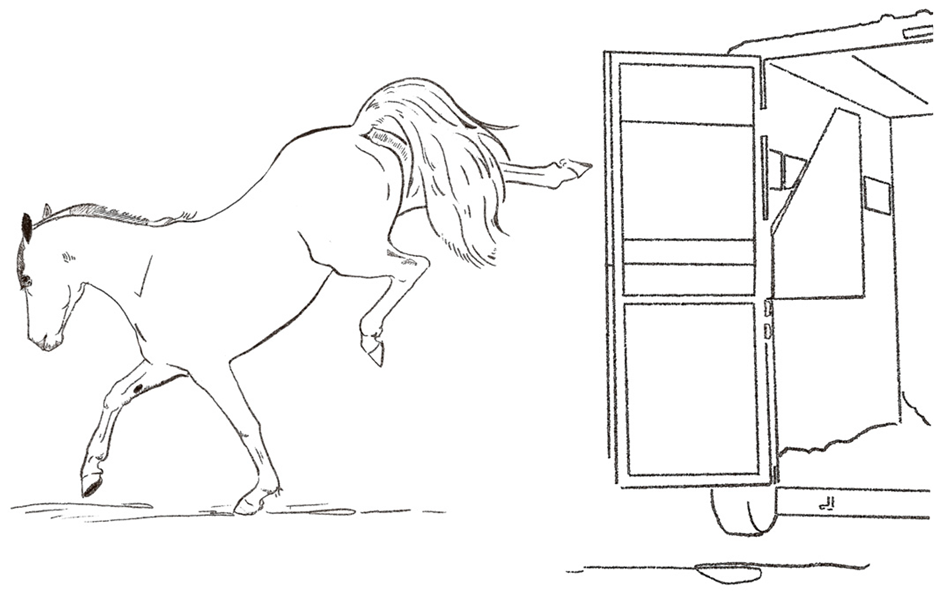 | Buck Lowering of the head and neck and with weight shifted to the forelegs, both hind legs lift off the ground with simultaneous backward extension |
 | Concerned Facial Expression Sclera visible and/or inner brow raised, tense facial muscles |
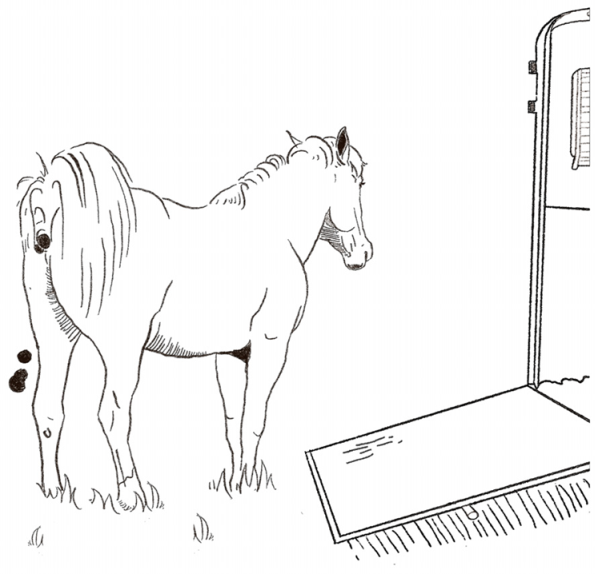 | Defecate Pass feces |
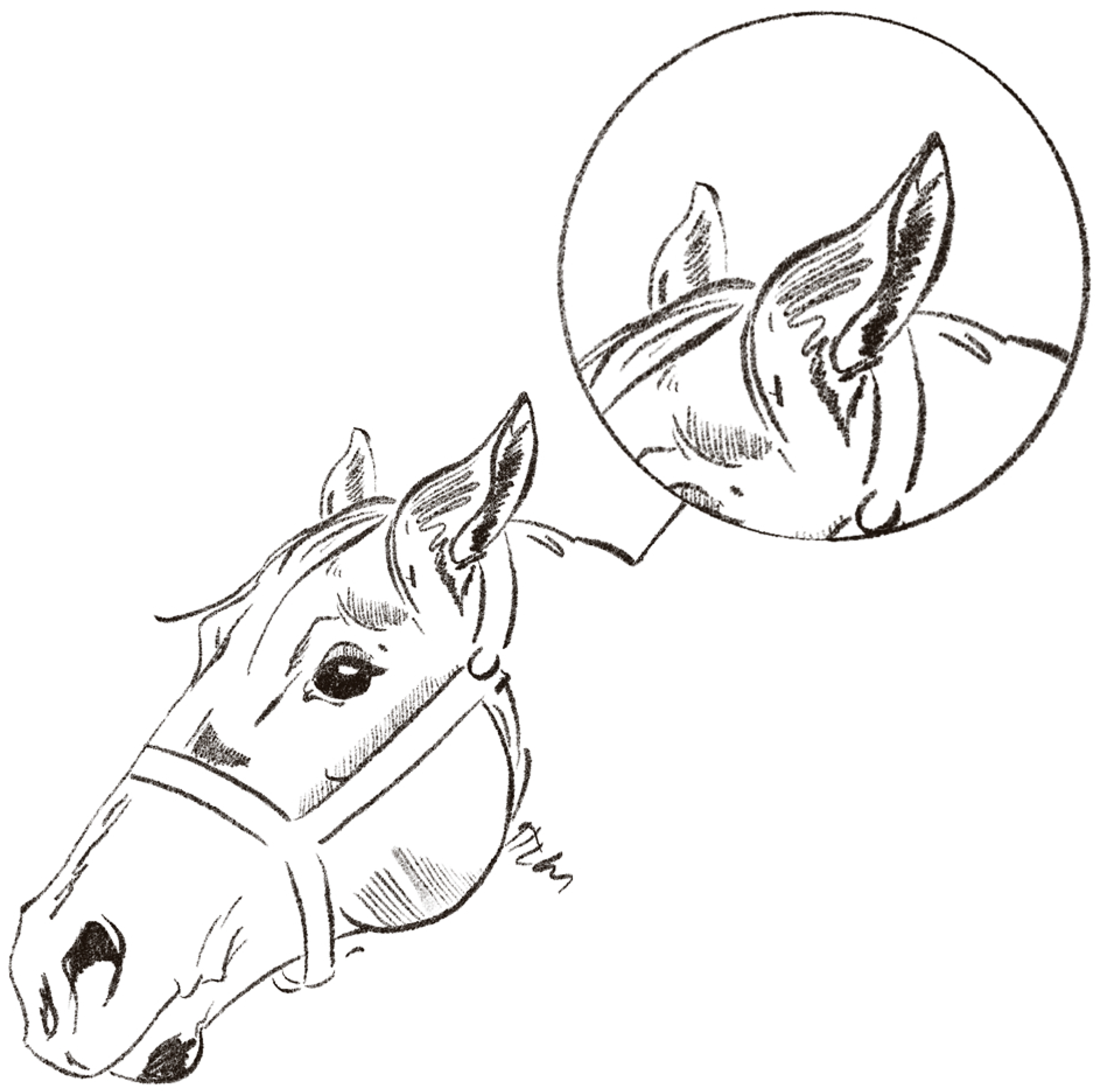 | Ears Back Both ears rotated backward |
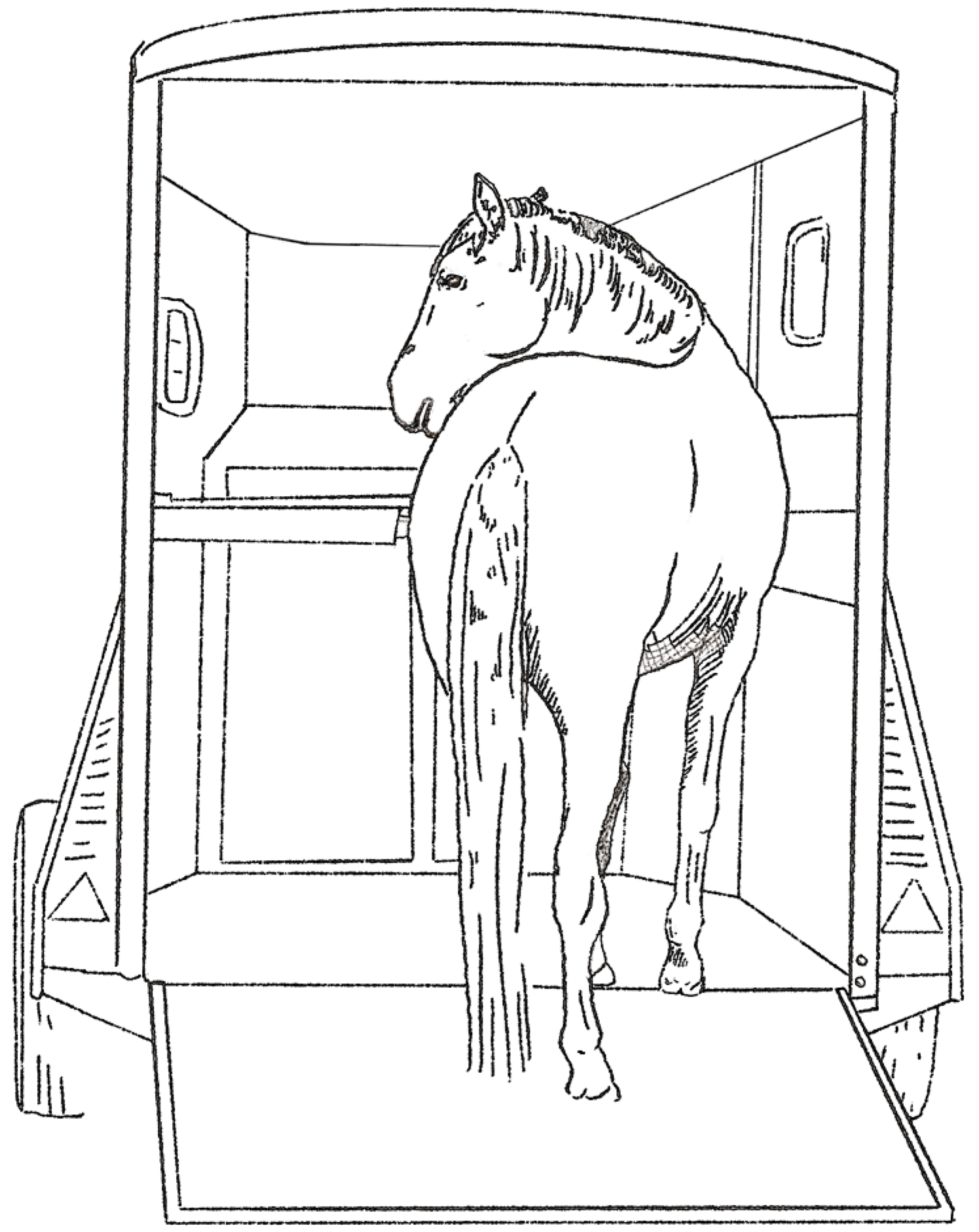 | Look Back While oriented toward the trailer, look back with expression of concern |
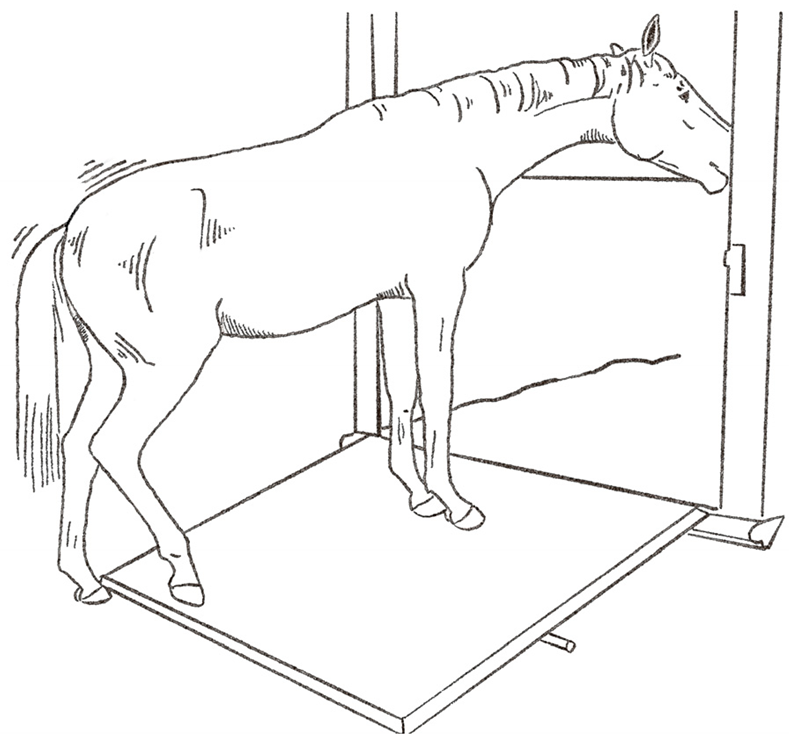 | Muscle Trembling Twitching or trembling of muscles without locomotion |
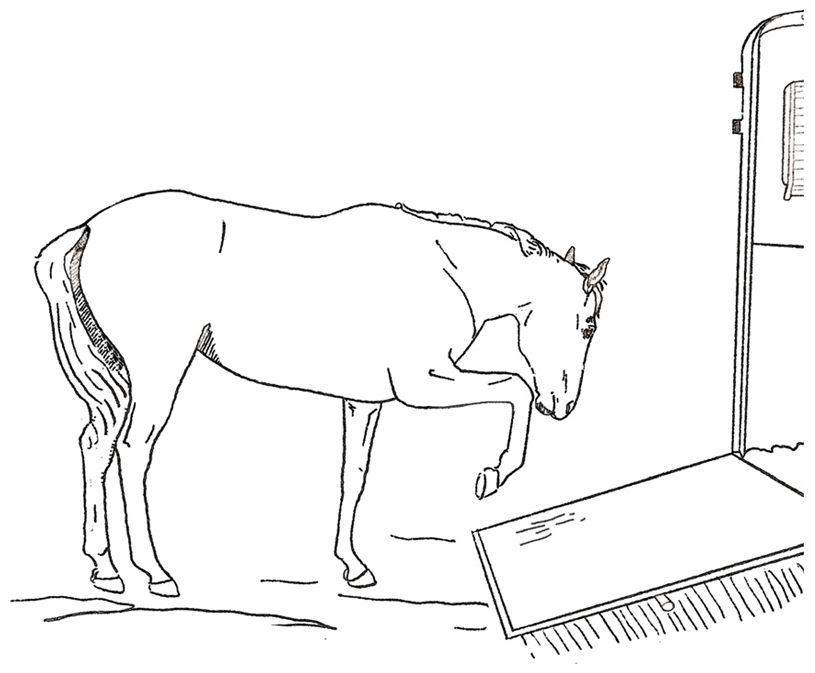 | Paw (Anxious/Frustration Form) Reach a forelimb cranially and drag the hoof along or above the substrate, while sweeping caudally, often in rhythmic series |
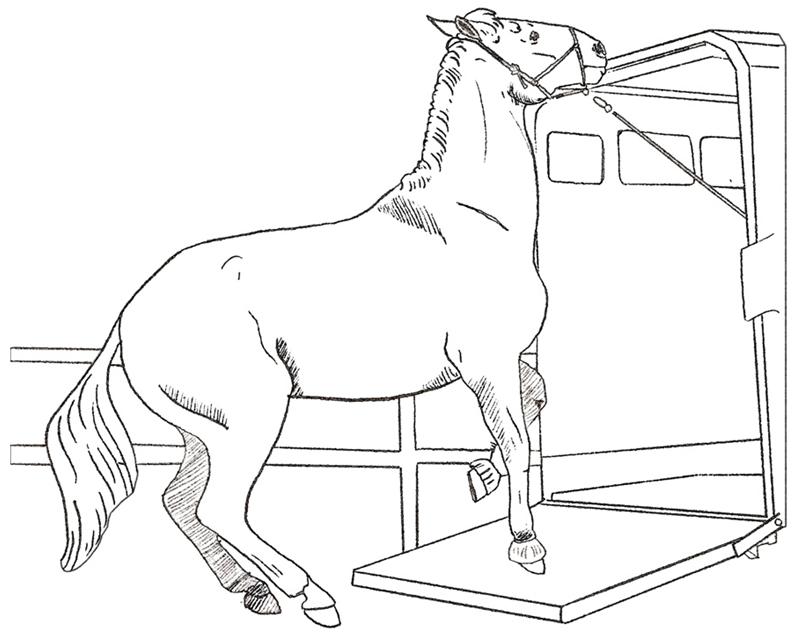 | Pull Back With head elevated, pull back on lead rope away from trailer |
 | Rear Raise forelegs into the air, supporting the body on the hind legs, resulting in a near-vertical position |
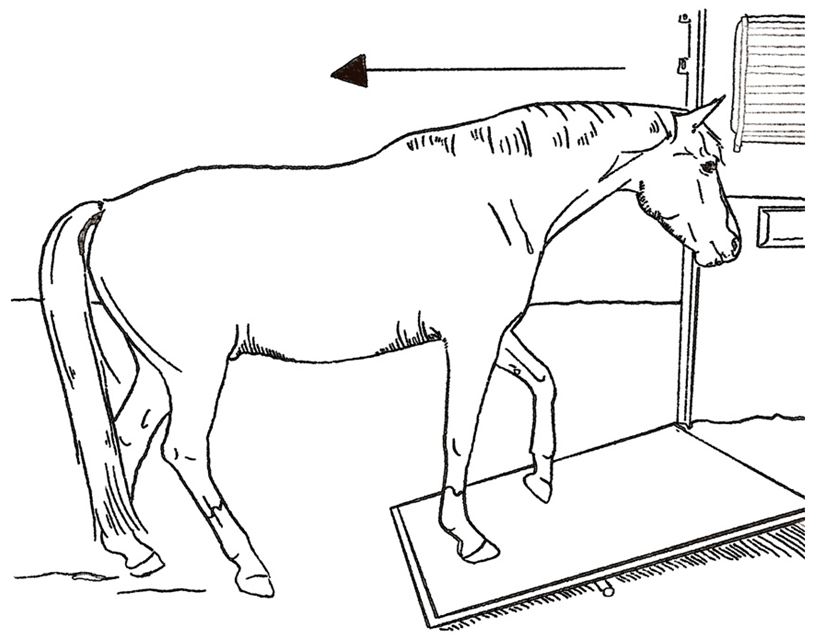 | Retreat Backward Back away from the trailer |
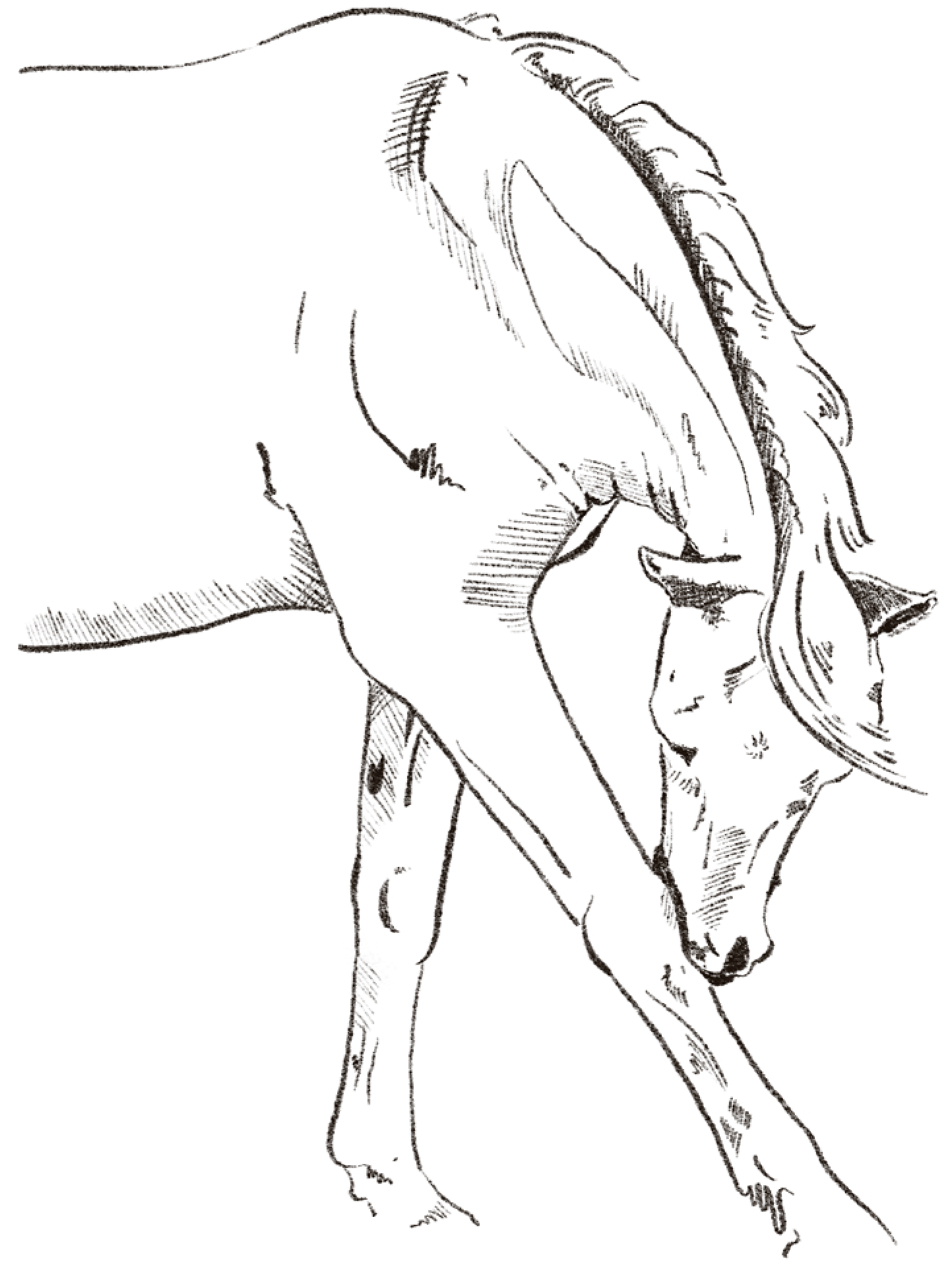 | Rub Muzzle Rub muzzle on a foreleg |
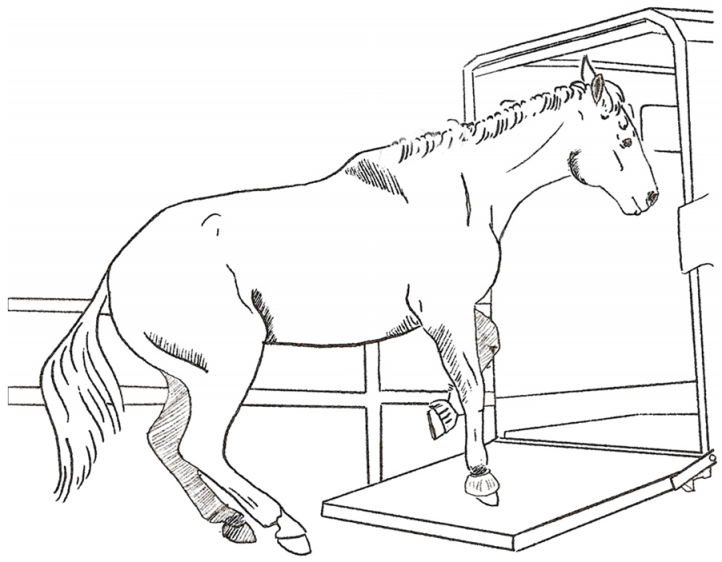 | Scramble Back Quickly move backward in a disorganized and anxious manner |
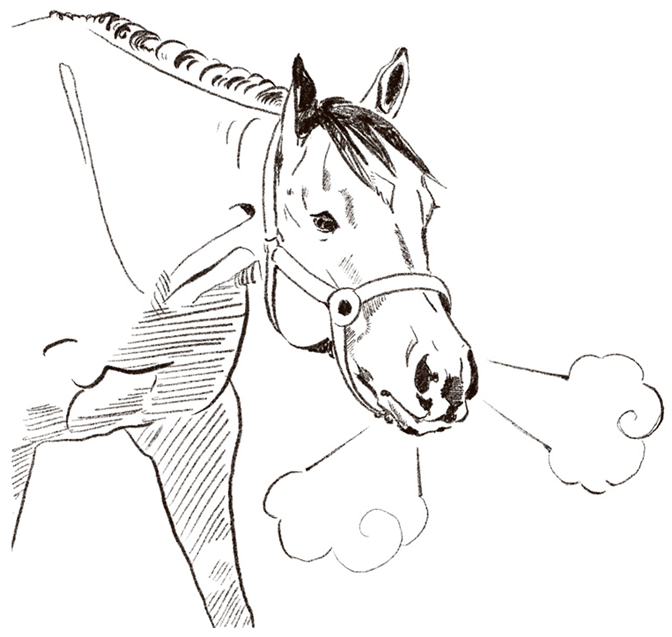 | Snort Forceful, quick exhalation through the nose |
 | Stand Alert Stand alert with head elevated above the withers, ears directed toward perceived threat, motionless, tightened muzzle, concerned facial expression |
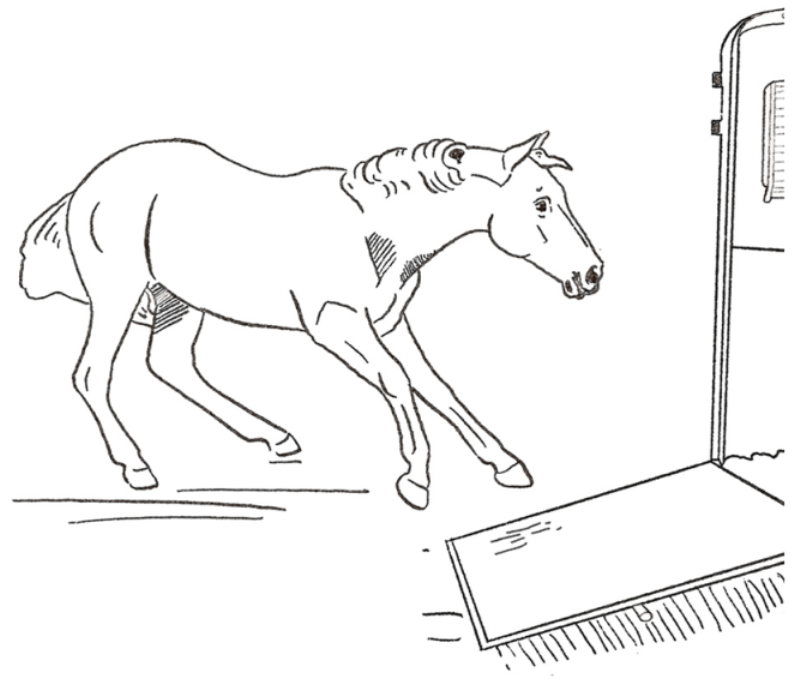 | Startle Quick movement in response to stimuli |
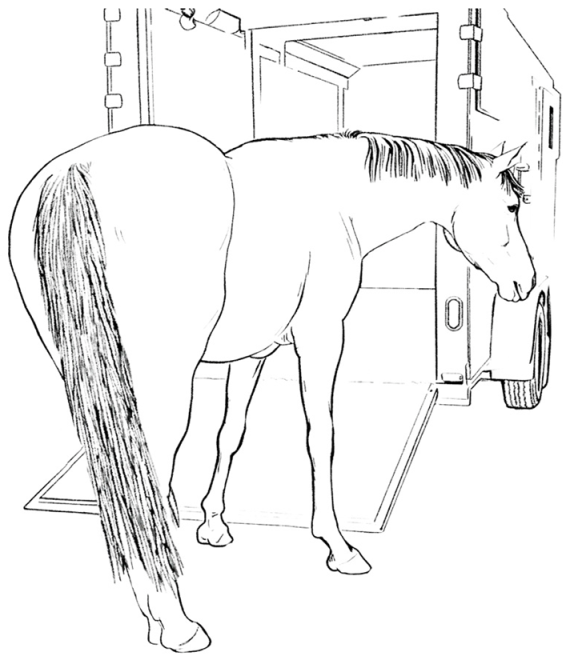 | Step to the Side Step to the left or right of the trailer entry |
 | Tail Raised Tail held off the perineum |
 | Tail Swish Tail moves quickly at least once |
 | Turn Away Turn away from the trailer |
 | Walk Away Walk away from the trailer |
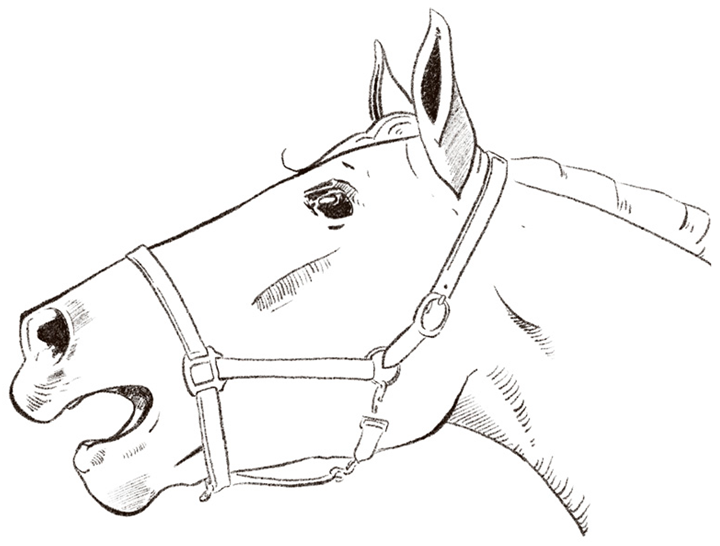 | Whinny Emit a high-pitched stress vocalization |
Disclaimer/Publisher’s Note: The statements, opinions and data contained in all publications are solely those of the individual author(s) and contributor(s) and not of MDPI and/or the editor(s). MDPI and/or the editor(s) disclaim responsibility for any injury to people or property resulting from any ideas, methods, instructions or products referred to in the content. |
© 2026 by the authors. Licensee MDPI, Basel, Switzerland. This article is an open access article distributed under the terms and conditions of the Creative Commons Attribution (CC BY) license.
Share and Cite
Harris, H.G.; McDonnell, S.M. Positive Reinforcement (R+) Horse Training in Practice: Evaluation of Online Trailer-Training Demonstrations. Animals 2026, 16, 1667. https://doi.org/10.3390/ani16111667
Harris HG, McDonnell SM. Positive Reinforcement (R+) Horse Training in Practice: Evaluation of Online Trailer-Training Demonstrations. Animals. 2026; 16(11):1667. https://doi.org/10.3390/ani16111667
Chicago/Turabian StyleHarris, Helena G., and Sue M. McDonnell. 2026. "Positive Reinforcement (R+) Horse Training in Practice: Evaluation of Online Trailer-Training Demonstrations" Animals 16, no. 11: 1667. https://doi.org/10.3390/ani16111667
APA StyleHarris, H. G., & McDonnell, S. M. (2026). Positive Reinforcement (R+) Horse Training in Practice: Evaluation of Online Trailer-Training Demonstrations. Animals, 16(11), 1667. https://doi.org/10.3390/ani16111667
