1. Introduction
ω-3 and ω-6 PUFAs are essential fatty acids that play critical roles in maintaining cell membrane integrity, regulating immune function, and supporting animal productivity. Because animals cannot synthesize these fatty acids de novo, they must be supplied exogenously, most commonly through PUFA-rich plant oils in the diet [
1,
2,
3]. Common lipid sources, including soybean oil, linseed oil, and sunflower oil, have therefore been widely used in studies of nutritional regulation in ruminants [
4,
5]. Unlike monogastric animals, ruminants must first expose dietary PUFA to the rumen, a specialized fermentative chamber, before intestinal absorption can occur. Most PUFAs entering the rumen undergo microbial biohydrogenation to saturated fatty acids, which changes both the composition and the amount of fatty acids reaching the small intestine [
6]. In addition, excessive PUFAs can exert toxic effects on rumen microorganisms, particularly fibrolytic populations, thereby reducing fiber digestibility and altering the abundance and composition of the rumen microbiota [
7]. Previous studies have mainly focused on ruminal fermentation characteristics, milk quality, and tissue fatty acid deposition [
8,
9]; relatively little is known about how specific PUFA sources influence the relationship between VFA production and rumen microbial community structure.
Linseed oil and sunflower oil are both rich in PUFAs, but their fatty acid profiles differ markedly. Linseed oil is enriched in α-linolenic acid (C18:3 ω-3), an ω-3 PUFA that has been associated with reduced oxidative stress, improved hepatic lipid metabolism, and enhanced antioxidant enzyme activity; lignans in flaxseed-derived products may also contribute to hepatoprotection [
10]. By contrast, sunflower oil is rich in linoleic acid (C18:2 ω-6), an ω-6 PUFA that may influence hepatocyte susceptibility to apoptosis through regulation of caspase-9 and caspase-3 signaling pathways [
11]. The differential effects of ω-3 and ω-6 PUFAs on rumen microorganisms may be attributed to their distinct chemical structures and biological activities. ω-3 PUFAs, particularly α-linolenic acid (C18:3), possess a higher degree of unsaturation and have been shown to exert stronger antibacterial effects against certain Gram-positive bacteria, including cellulose-digesting bacteria, thereby potentially altering the competitive dynamics within the microbial community [
7,
12]. In contrast, ω-6 PUFAs, such as linoleic acid (C18:2), are more readily incorporated into bacterial membranes and can modulate membrane fluidity and function [
6,
13]. Moreover, the biohydrogenation intermediates produced from ω-3 and ω-6 PUFAs differ, with ω-3 PUFA generating distinct conjugated linolenic acid isomers that may selectively inhibit or promote specific bacterial taxa [
13,
14]. These differences collectively shape the ruminal microbial ecosystem and its metabolic outputs. Given these structural and functional differences, we hypothesized that dietary supplementation with linseed oil (ω-3) and sunflower oil (ω-6) would differentially alter ruminal microbial community structure and metabolic pathways, leading to distinct volatile fatty acid profiles. Indeed, altering the dietary ω-6:ω-3 fatty acid ratio has been shown to change ruminal fermentation parameters and microbial populations in goats [
14]. However, it remains unclear how ω-3- and ω-6-rich oils drive distinct fermentation patterns through remodeling of the rumen microbiota. Clarifying these mechanisms is important for the precise nutritional regulation of rumen fermentation.
Hu sheep are one of the most widely raised mutton sheep breeds in China because of their early sexual maturity and high reproductive performance. The present study was designed to elucidate how rumen microorganisms respond to different dietary PUFA sources. To this end, a basal diet was supplemented with 4% rumen-bypass palmitic acid fat powder (as a saturated fatty acid source), 4% linseed oil (as an ω-3 PUFA source), or 4% sunflower oil (as an ω-6 PUFA source). We evaluated growth performance, serum biochemical indices, rumen tissue morphology, and ruminal VFAs. Furthermore, 16S rRNA high-throughput sequencing was used to characterize changes in the rumen microbial community, and PICRUSt2 was employed to predict potential functional pathways through which different PUFA sources may regulate rumen fermentation.
4. Discussion
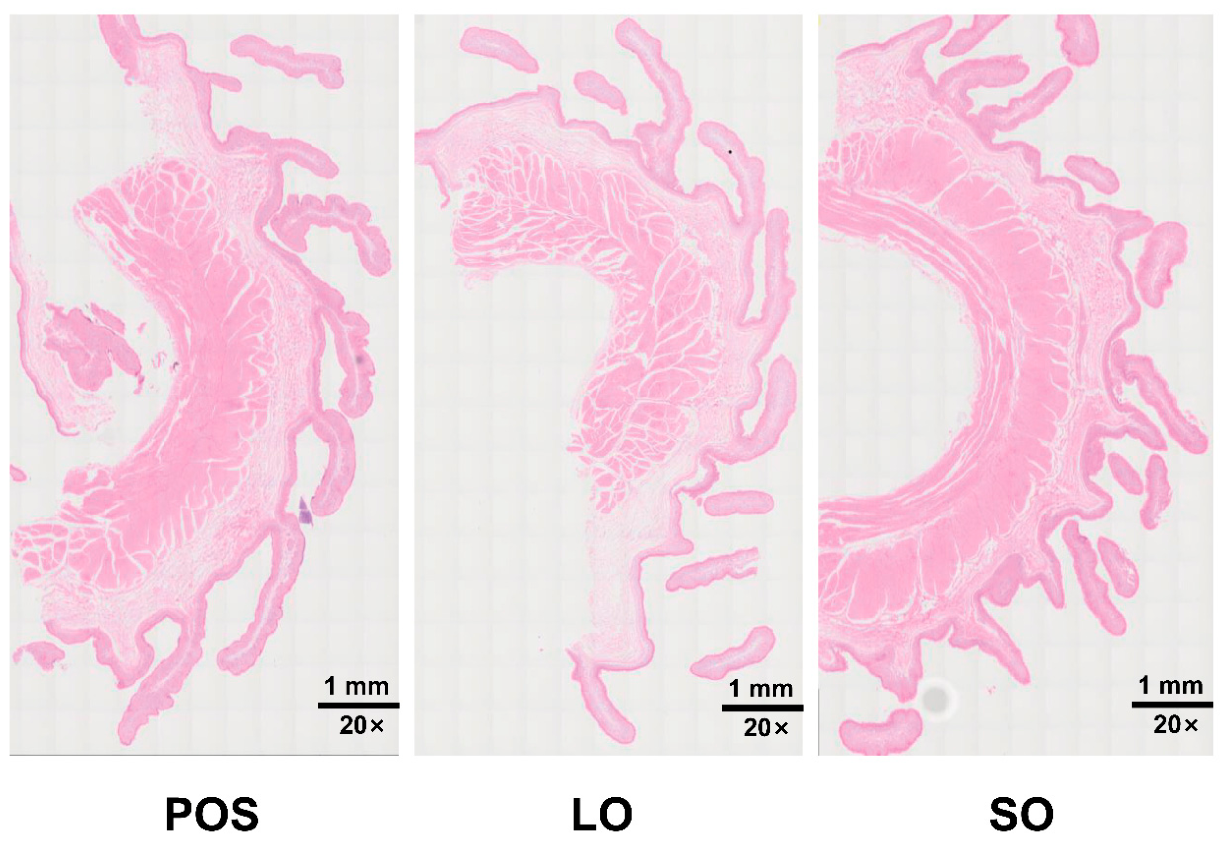
In the present study, dietary supplementation with linseed oil or sunflower oil did not affect growth performance or rumen tissue morphology in Hu sheep, consistent with previous reports [
18,
19,
20,
21,
22]. These results suggest that moderate oil supplementation does not necessarily compromise growth performance or rumen epithelial structure in ruminants. Serum biochemical indices revealed that PUFA supplementation significantly reduced creatinine, uric acid, and HDL, with AST also lower in the SO group, suggesting potential benefits for renal and hepatic metabolic status. AST is widely used as an indicator of liver cell injury because it is released into the circulation when hepatocellular membrane integrity is compromised [
23].
The changes in serum biochemical indicators are closely related to rumen fermentation, with the core being that VFAs produced by rumen microbial fermentation are absorbed by the rumen epithelium and enter the portal venous circulation, and are then taken up and metabolized by the liver. This process directly regulates the levels of multiple serum biochemical parameters. Specifically, propionate is the major precursor for gluconeogenesis [
24,
25], acetate supports peripheral energy metabolism, and butyrate may indirectly reduce hepatic burden by improving intestinal barrier function and epithelial health [
26]. For this reason, changes in rumen fermentation and microbial ecology provide important mechanistic clues for interpreting the serum responses observed here. Orthogonal contrast analysis showed that PUFA supplementation decreased acetate and propionate and increased isobutyrate, butyrate, isovalerate, and TVFAs, consistent with previous reports. Dietary unsaturated fatty acids selectively inhibit rumen microbes, reshaping microbial metabolism [
12,
13]. For example, 6% sunflower or linseed oil increased propionate and decreased butyrate and the A/P ratio, and different oils altered butyrate and propionate depending on unsaturation [
27,
28]. In our study, the concurrent rise in TVFAs and microbial diversity suggests enhanced fermentation, likely due to enrichment of polysaccharide-degrading phylum like Bacteroidota and Firmicutes. The SO (ω-6) group had higher butyrate, TVFAs, and propionate, and a lower A/P ratio than the LO (ω-3) group. Consistent with previous reports, different oil sources can differentially influence ruminal fermentation characteristics [
29]. This variation is attributed to structural differences: α-linolenic acid (C18:3, ω-3) has stronger antibacterial effects against hydrogenating bacteria than linoleic acid (C18:2, ω-6) [
12], so stronger selection in LO may suppress propionate- and butyrate-related microbes. Supporting this, lowering the ω-6:ω-3 ratio in goats reduced propionate [
14], a trend partially consistent with our findings.
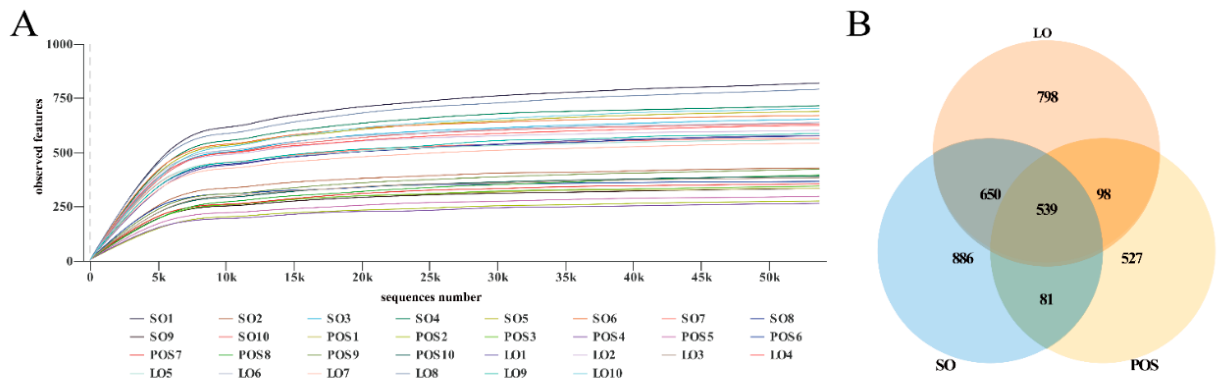
PUFA supplementation significantly increased alpha-diversity indices (Chao1, observed features, Shannon, and Pielou-e), indicating enhanced microbial richness and evenness. Greater microbial diversity is generally associated with improved ecological stability, stress resistance, and host health [
30,
31]. Higher richness and evenness typically improve fermentation efficiency and substrate utilization, thereby increasing the production of fermentation end products [
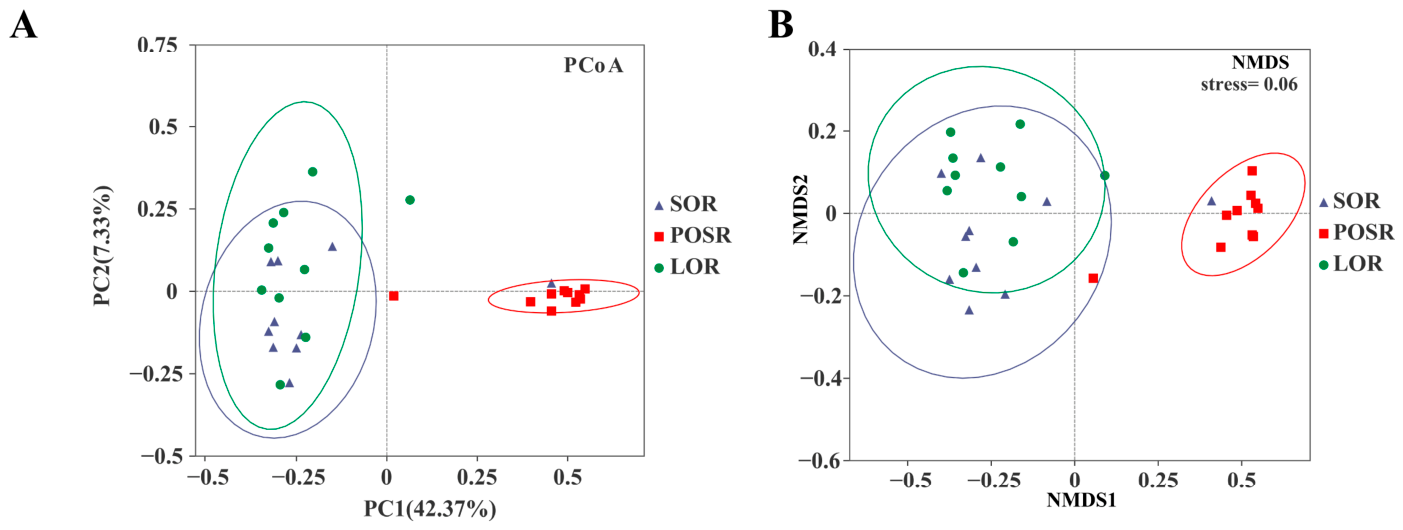
32]. Consistently, total VFA concentration was significantly elevated in both the LO and SO groups, supporting this interpretation. The PCoA and NMDS analysis clearly separated the PUFA-supplemented groups from the POS group, indicating that dietary fatty acid source substantially reshaped the rumen microbial community. Similar responses have been reported previously; for example, Sears et al. [
33] showed that palmitic, stearic, and oleic acids altered rumen fiber digestibility and microbial composition, while Petri et al. [
34] demonstrated that linseed and sunflower seed supplementation changed multiple ruminal bacterial genera and was closely associated with tissue fatty acid profiles.
At the phylum level, PUFA supplementation increased Bacteroidota and Firmicutes while decreasing Proteobacteria and Desulfobacterota. Bacteroidota and Firmicutes are major degraders of dietary polysaccharides and are closely linked to host energy metabolism [
35]. Their increased abundance in the LO and SO groups therefore suggests enhanced fermentation of complex dietary substrates. This increase may help explain the higher TVFA concentrations observed in the PUFA-fed groups. Additionally, only Desulfobacterota showed significant differences between the two sources of PUFA, indicating that most of the component changes at the phylum level were similar between LO and SO treatments. Although the number of Spirochaetota increased in the group with PUFA added, orthogonal comparative analysis was at the edge of significance (
p = 0.058). However, the known association between Spirochaetota and cellulose degradation and hydrogen metabolism [
36,
37], as well as the consistency of numerical trends between the two groups with added PUFAs, suggest a potential role worth further investigation, which can be clarified in the future through larger sample sizes or more targeted functional analysis. At the genus level, the microbial community shifted from
Prevotella_7 dominance in the POS group to
Prevotella dominance in the LO and SO groups. Although
Prevotella is associated with acetate and butyrate production [
38], acetate and propionate levels were unexpectedly lower in PUFA-fed groups. This apparent contradiction may be explained by the concurrent reduction in Succinivibrionaceae_UCG-001, a key succinate-producing taxon that supplies the precursor for propionate formation [
27]. Notably,
Prevotellaceae_UCG-001 was significantly enriched in the LO group, Wang et al. [
39] similarly reported that the abundance of
Prevotellaceae_UCG-001 was significantly higher in the treatment group with higher ruminal n-3 PUFA levels, while
Rikenellaceae_RC9_gut_group was enriched in both PUFA-supplemented groups, indicating that ω-3-rich linseed oil may select for a distinct carbohydrate-utilizing bacterial consortium.
Prevotella_7 and
Prevotella_9 possess different carbohydrate-active enzyme repertoires [
40], and their reduction may have further limited the availability of fermentation substrates for propionate formation, thereby contributing to the observed decrease in propionate levels. However, their exact metabolic roles require further investigation. In addition, the enrichment of
Rikenellaceae_RC9_gut_group in the PUFA-supplemented groups suggests enhanced fiber degradation under lipid supplementation [
41]. Biohydrogenation of unsaturated fatty acids in the rumen is mediated by specialized microbial communities and likely underlies part of the differential response to linseed and sunflower oils. Classical hydrogenating taxa, particularly members of the genus
Butyrivibrio, are known to participate in the conversion of linoleic and linolenic acids to intermediate products and ultimately to stearic acid [
42]. These unsaturated fatty acids can also inhibit biohydrogenating bacteria until detoxification proceeds, highlighting the strong selective pressure imposed by dietary lipids on the rumen ecosystem [
12]. Although such classical hydrogenating bacteria were not among the top 10 genera detected in the present study, the functional prediction results provide indirect evidence that different PUFA sources induced distinct metabolic adaptations. This interpretation is consistent with broader rumen metagenomic evidence showing that carbohydrate metabolism, amino acid metabolism, and nucleotide metabolism are core microbial functions in the ruminant gastrointestinal tract [
37].
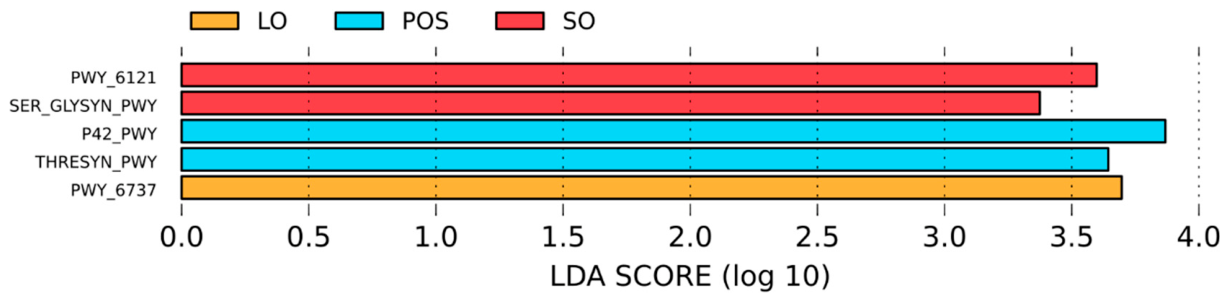
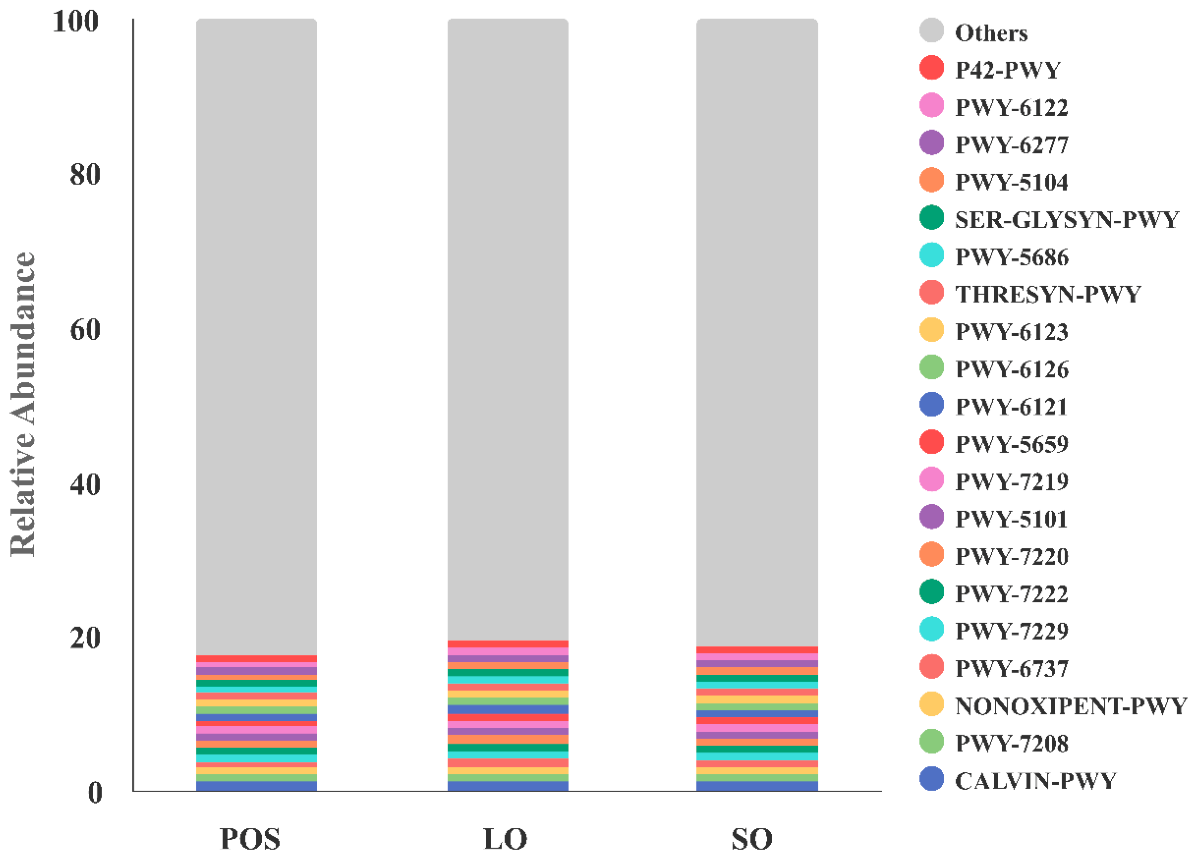
Functional prediction using PICRUSt2 revealed distinct metabolic priorities for the two PUFA sources. The LO group was enriched in carbohydrate and energy metabolism pathways, whereas the SO group was mainly enriched in nucleotide metabolism pathways. Specifically, the LO group was enriched in pentose phosphate pathway-related and starch-degradation functions, suggesting enhanced carbohydrate turnover under linseed oil supplementation. Because α-linolenic acid contains three double bonds, its transformation in the rumen is generally more complex than that of linoleic acid [
13,
43]. By contrast, the SO group was mainly enriched in nucleotide-metabolism pathways, particularly 5-aminoimidazole ribonucleotide biosynthesis I, a key step in de novo purine synthesis. Enhanced nucleotide biosynthesis is commonly associated with increased microbial proliferation and metabolic activity [
44,
45]. Thus, the simpler hydrogenation demands of linoleic acid may have allowed the SO-associated microbiota to allocate more resources toward proliferation-related functions. The functional predictions suggest that these differences may be linked to distinct metabolic priorities of the rumen microbiota under ω-3- and ω-6-rich conditions, rather than to a simple uniform effect of all unsaturated oils. Thus, linseed oil and sunflower oil remodel the ruminal microbiota and fermentation via distinct metabolic priorities—carbohydrate/energy metabolism for ω-3 and nucleotide metabolism for ω-6—without impairing growth performance. Future metagenomic and metabolomic studies are warranted to verify the underlying microbial genes and pathways involved.