1. Introduction
Diarrhea in piglets poses a significant challenge to the pig industry, adversely impacting piglet growth and development, and in severe cases, leading to life-threatening outcomes. Various factors, including pathogenic infections, physiological imbalance, and environmental changes, can cause disturbance in the intestinal health of piglets, leading to diarrhea. The peri-weaning period is widely recognized as a critical stage associated with a high risk of diarrhea [
1]. Previous studies have demonstrated that reduced gastric acid secretion in weaned piglets compromises protein digestion, leading to the accumulation of undigested nutrients in the gastrointestinal tract. These changes are associated with increased gastrointestinal pH and impaired digestive efficiency, which favor the proliferation of pathogenic microorganisms. Consequently, pathogens such as
Escherichia coli,
Salmonella enterica, and
Clostridium perfringens can colonize the intestine and contribute to the development of diarrhea [
2]. All in all, disturbances of the intestinal flora are considered to be a pivotal factor contributing to diarrhea in piglets [
3].
The intestinal microbiota plays a pivotal role in supporting the host’s normal physiological functions. Microbial colonization of the intestinal tract facilitates the production of peptide-based antimicrobial agents, thereby enhancing the host’s defense mechanisms against pathogenic incursions [
4]. The balance of intestinal flora of piglets is fragile and susceptible to various influencing factors. This microbial imbalance leads to the destabilization of the indigenous intestinal flora, culminating in the onset of diarrhea [
3]. Furthermore, the administration of oral antibiotics, alterations in daily feed composition, and environmental condition changes can significantly disrupt the microbial homeostasis within the intestines, potentially leading to imbalances in the gut microbiota of piglets [
5]. Antibiotics have been widely used to treat bacterial diarrhea in piglets. However, their overuse and misuse have caused issues such as bacterial resistance, environmental pollution, and drug residues. Additionally, improper antibiotic application disrupts the intestinal microbial balance in piglets, often leading to diarrhea [
6]. These challenges highlight the urgent need for effective alternatives to antibiotics in managing intestinal diseases.
In addition to the composition of microorganisms, the metabolites produced by intestinal microorganisms are also key regulatory factors in the interaction between the host and microorganisms. These metabolites, including amino acids, short-chain fatty acids, and other bioactive compounds, play a crucial role in regulating immune responses, maintaining the integrity of epithelial cells, and regulating inflammation [
7]. Therefore, a comprehensive analysis of the microbial community and metabolome can provide a deeper understanding of the functional consequences of microbial changes. However, it should be noted that omics-based methods can only identify candidate microbial species and related metabolites, but cannot directly determine probiotics. The classification of probiotics requires strict functional validation, safety assessment, and in vivo efficacy testing. In contrast, metabolites produced by microorganisms, such as bacteriocins and postbiotics, represent the functional output of microbial activities and may serve as promising targets for intervention strategies [
8]. Postbiotic metabolites are compounds that regulate health and are produced by probiotics during the process of digestion and fermentation of dietary fibers [
9]. Compared to active probiotics, postbiotic metabolites have advantages in safety, stability, and application convenience [
10]. Therefore, studying metabolites related to the microbial community may provide new insights for the development of strategies for preventing and managing pig diarrhea based on postbiotic metabolites.
Although there is growing interest in the gut microbiota and metabolomics, there is still a lack of systematic studies on the analysis of microbiota and metabolomics in piglets under natural disease conditions (especially during the early stages of life). Therefore, this study aimed to investigate the differences in intestinal microbiota and fecal metabolite profiles between healthy and diarrheal piglets using 16S rRNA sequencing and LC-MS-based metabolomics. The main objective of this study is to identify the microbial and metabolic characteristics of healthy piglets, with a focus on understanding the microbial factors and metabolites that play a role in intestinal health. Although metabolic differences were observed between healthy and diarrheal piglets, the core goal is to study the microbial species and metabolites that promote health in healthy individuals. By integrating these data sets, we aim to identify potential microbial and metabolic features related to intestinal health, providing a basis for future functional studies and the development of interventions targeting the microbiota.
2. Materials and Methods
Fecal samples were collected from swine farms in Jiangxi Province, China. All the samples were collected from a single breeding farm under the same management, feeding, and environmental conditions. The evaluation criteria for the health or diarrhea of the piglets were based on the Hermann-Bank test criteria [
11]. In total, 24 pre-weaning piglets (one-week-old) with the same rearing and immunization background (12 healthy piglets and 12 piglets with diarrhea) were selected from the same breeding center. The samples were collected from the rectum of the diseased or healthy piglets using cotton swabs. All of the collected samples were flash-frozen in liquid nitrogen immediately and subsequently stored at −80 °C. The sample information is shown in
Table S1.
Total bacterial genomic DNA from the samples was extracted from the samples using the Tiangen Fecal DNA Extraction Kit (Tiangen, Beijing, China). The genomic DNA was used as a template for PCR amplification of the 16S rDNA V3-V4 region by selecting bacterial universal primers 338F and 907R. PCR reaction procedures and systems were described in the literature [
12]. Nucleic acid electrophoresis was performed after PCR, and the results were observed. The DNA samples with clear and bright bands were sent to Majorbio (Shanghai Majorbio Bio-pharm Technology Co., Ltd., Shanghai, China) for sequencing analysis using the Miseq platform (Illumina, San Diego, CA, USA). Raw data were spliced according to overlap relationships, while the quality of the sequences was controlled and filtered, and the processed sequence information was used for subsequent analysis.
To further explore the relationship between the differential metabolites and their gut microbial community in healthy and diarrheic piglets, 12 samples (6 from the healthy group H and 6 from the diarrheal group D) were randomly selected from the aforementioned 24 samples for a metabolomics analysis. The LC-MS untargeted metabolomics method was employed to study the differences in intestinal microbial metabolites between the healthy and diarrheal piglets. In brief, 50 mg of fecal samples were transferred to 2 mL centrifuge tubes, a 6 mm grinding bead was added, and 400 μL of extraction solution (methanol/deionized water = 4:1, v/v) was added, including an internal standard extraction solution (l-2 chlorophenylalanine, 2 μg/mL). Then, the samples were ground for 6 min using a frozen tissue grinder (−10 °C, 50 Hz), and subsequently subjected to ultrasonic treatment in an ice-water bath (5 °C, 40 kHz). After centrifugation, the supernatant was collected in a glass bottle and dried using a vacuum concentrator at 37 °C. The dried samples were re-solubilized in 50% acetonitrile and then subjected to ultrasonic treatment and centrifugation again. A total of 75 μL of the supernatant was transferred to a new glass bottle for LC/MS analysis. The quality control (QC) samples were prepared by mixing equal amounts of the clear liquids from all the samples. The QC samples were processed and tested using the same methods as the analytical samples to represent the entire sample set, and were injected at fixed intervals to monitor the stability of the analytical process. The LC-MS/MS analysis of the samples was carried out on the Thermo UHPLC-Q Exactive HF-X system, equipped with an ACQUITY HSS T3 chromatographic column (100 × 2.1 mm inner diameter, 1.8 μm; Waters, Milford, MA, USA), completed by (Shanghai Meiji Biomedical Technology Co., Ltd., Shanghai, China). The mobile phase A was 0.1% formic acid aqueous solution:acetonitrile (95:5, v/v), and the mobile phase B was 0.1% formic acid acetonitrile:isopropanol:water (47.5:47.5:5, v/v). The flow rate was 0.40 mL/min, and the column temperature was 40 °C. The mass spectrometry (MS) analysis of the extract was conducted using the TripleTOF 6600 mass spectrometer (SCIEX, Framingham, MA, USA). The metabolites were identified by comparing with the original secondary mass spectrometry database provided by Shanghai Meiji Biomedical Technology Co., Ltd.
To clarify the physical and chemical properties and biological functions of metabolites, the online databases KEGG (
http://www.kegg.jp/) and HMDB (
http://www.hmdb.ca/) were used for primary and secondary identification and annotation of the metabolites.
The sequences were analyzed using the Uparse software (Uparse v7.0.1001,
http://drive5.com/uparse/), and accessed on 26 September 2023. Sequences with a similarity of ≥97% were classified into the same operational taxonomic units (OTUs). Representative sequences of each OTU were selected, and species classification information was annotated based on the Mothur algorithm using the Silva database (
https://www.arb-silva.de/).
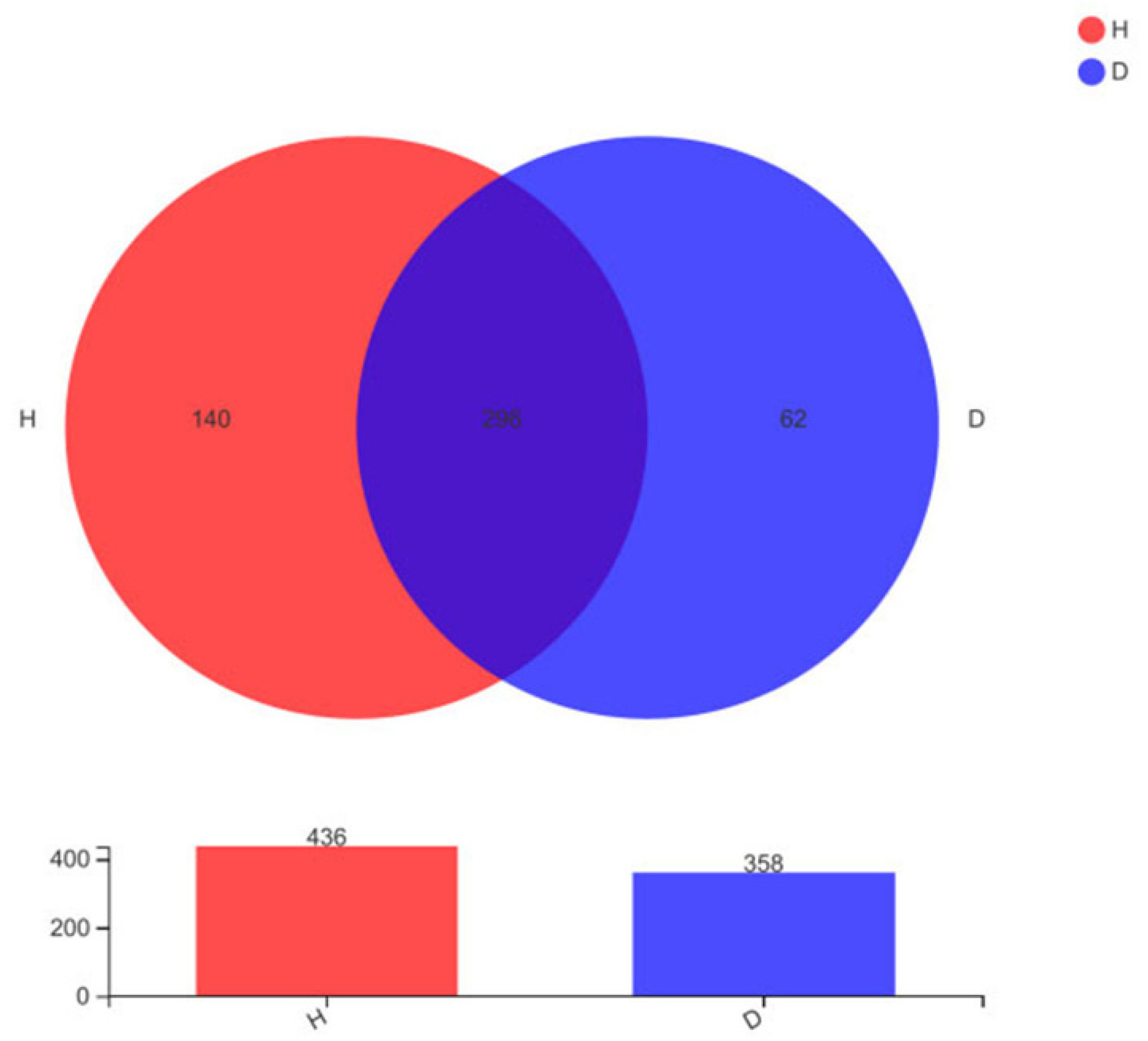
The alpha diversity of the samples was analyzed using QIIME (Version 1.7.0), and the results were presented using the R software (Version 2.15.3). The alpha diversity analysis indicators included Sobs, Shannon, Simpson, Chao1, ACE, and Coverage. The result data were statistically analyzed using SPSS 22.0. Based on the clustering results of OTUs, the Majorbio Cloud Platform was used to analyze the number of common and unique OTUs between different groups, and the results were presented in the form of a Venn diagram. Based on the species annotation results, the species with higher abundance at the phylum and genus classification levels of each group were selected, and the cumulative bar chart of species relative abundance was drawn. Subsequently, similarity analysis (ANOSIM) was used to evaluate the statistical significance of the differences between groups and within groups.
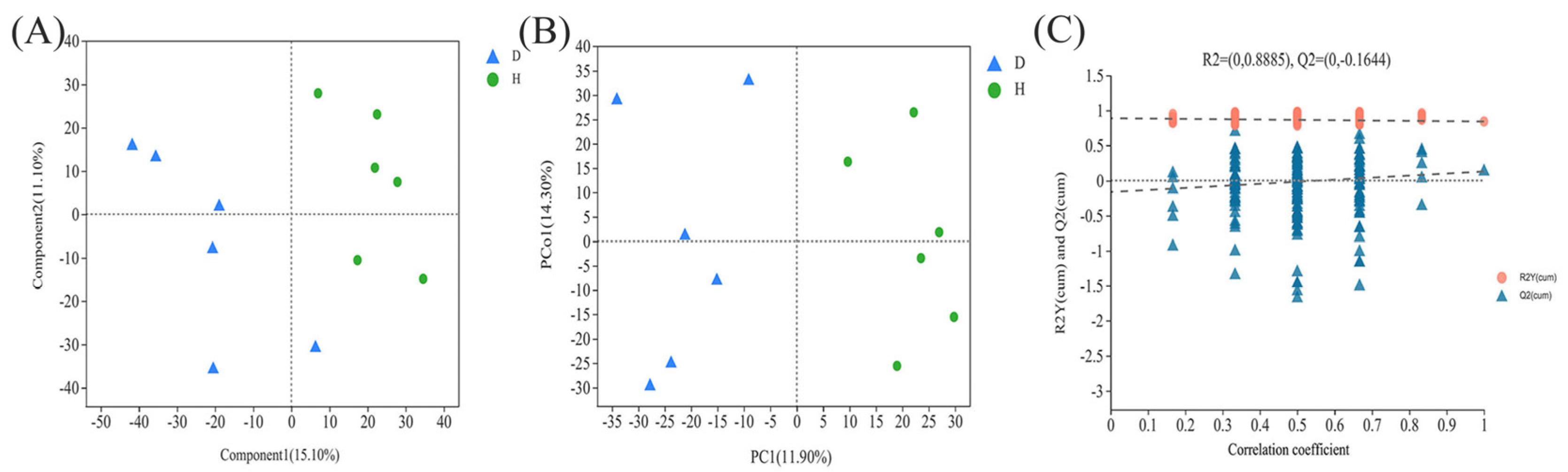
The PLS-DA and OPLS-DA analyses were employed to visually represent the metabolic differences between group H and group D, and the models were evaluated through seven-fold cross-validation and response permutation tests.
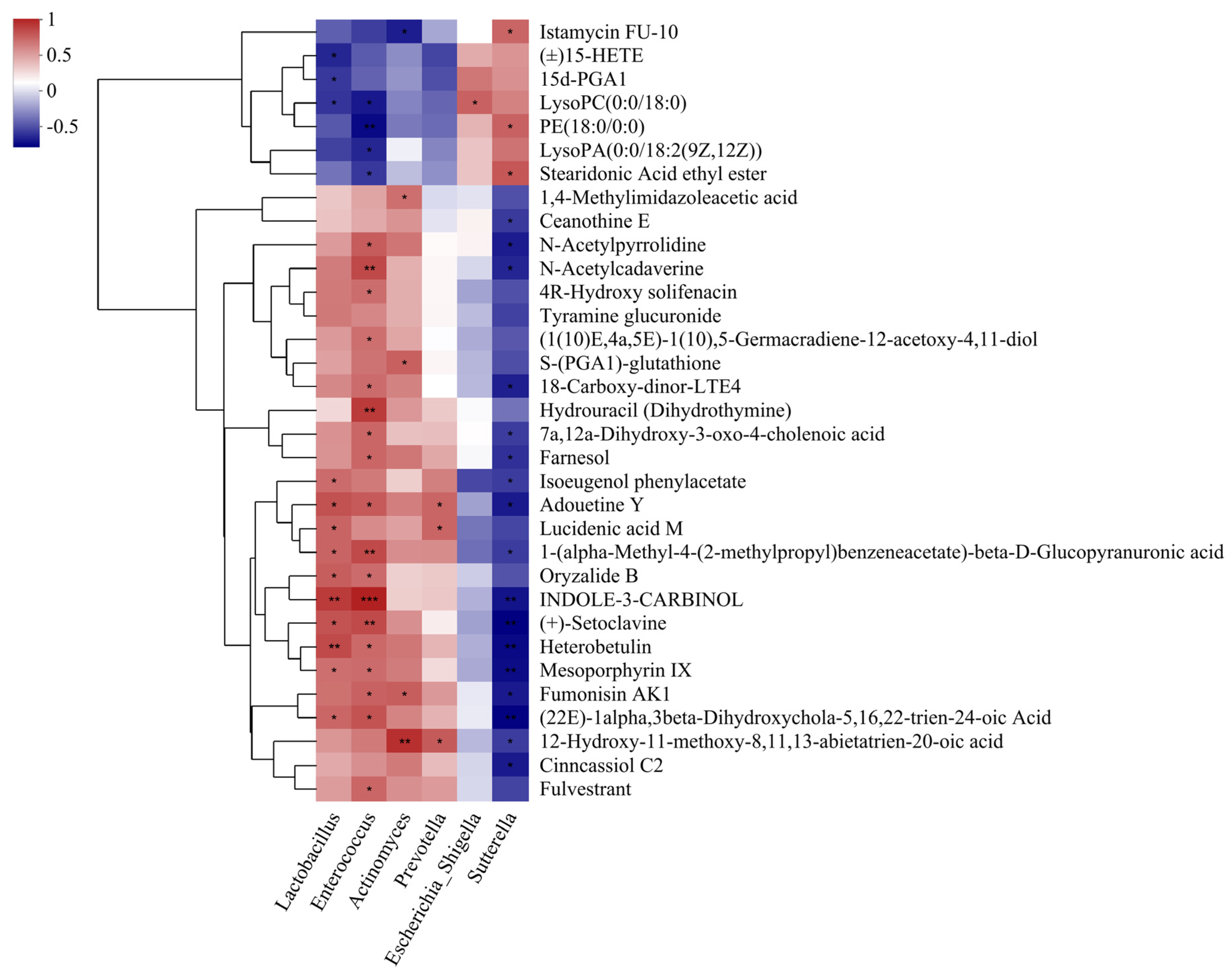
Using the psych (v 2.3.12) package in R, the Pearson correlation coefficient between microbial taxonomic units and metabolites was calculated, and the statistical significance (p < 0.05) was determined through Fisher-Z transformation. Microbiota–metabolite pairs with an absolute correlation coefficient greater than 0.05 were selected for subsequent analysis. After the correlation analysis, redundant and unannotated metabolites were removed, and only the metabolites under the KEGG A category “metabolism” pathway and their corresponding microbial taxonomic units were retained.
Statistical analysis was conducted using R v4.3.2 (R Foundation for Statistical Computing, Vienna, Austria). All graphs and visualization results were generated using the ggplot2 (v 3.5.0) and ggcor (v 0.9.7) packages in R software. Descriptive statistical results were expressed as means ± standard deviations (SD), and statistical inferences were based on a significance level of α = 0.05.
4. Discussion
Extensive research has demonstrated the critical role of the intestinal microbiota in maintaining host health and preventing pathogenic infections. Under normal physiological conditions, the intestinal tract harbors a diverse and dynamic community in a relatively stable equilibrium. Beneficial bacteria within the gut microbiota contribute to immune modulation, enhance defenses against pathogenic microorganisms, inhibit opportunistic pathogens, and support overall host health. Disruption of this microbial balance is widely recognized as a major factor contributing to diarrhea in piglets [
3]. However, the specific impact of microbiota-derived metabolites on early-life piglet health and diarrhea remains insufficiently understood.
In the present study, we observed that the intestinal flora of the healthy piglets exhibited higher richness (ACE and Chao1,
p < 0.05) compared to the diarrheal piglets, whereas no significant differences were found in diversity indices such as Sobs, Shannon and Simpson (
p > 0.05). These results suggested that microbial richness, rather than overall diversity, may play a more important role in maintaining intestinal health in early-life piglets [
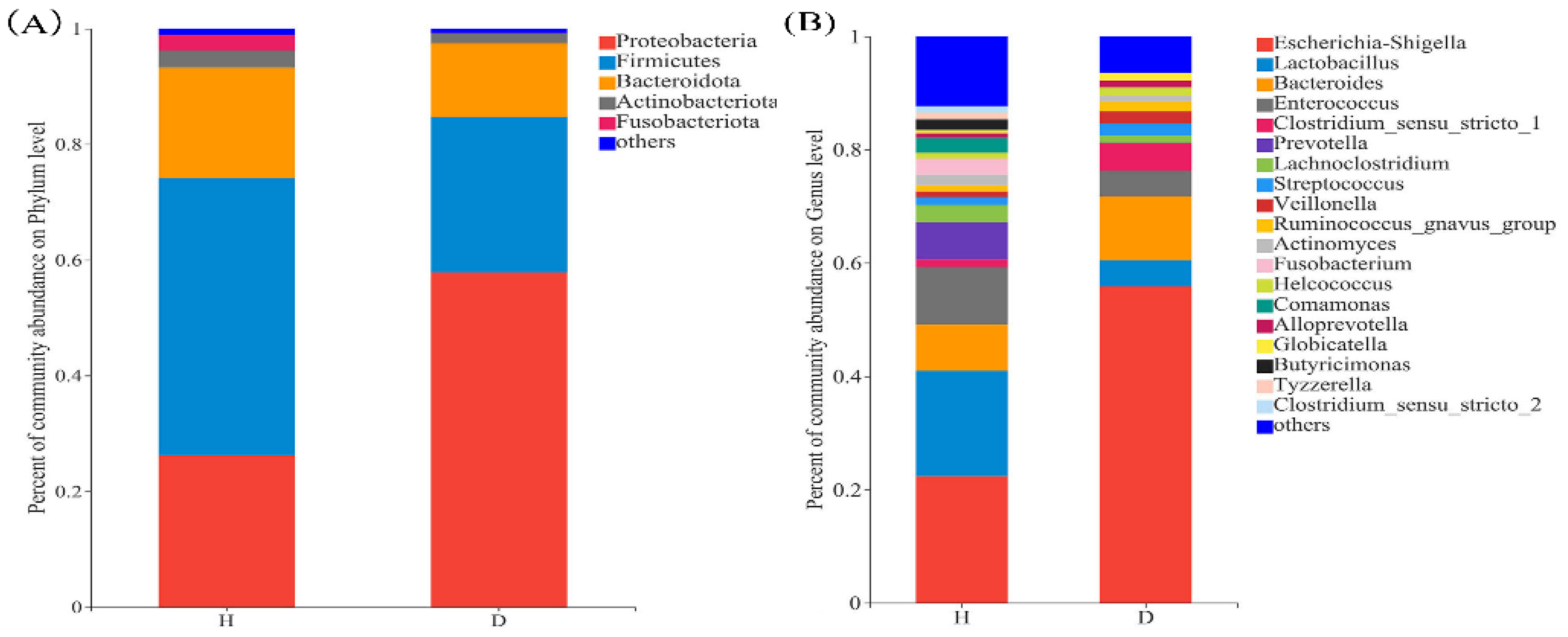
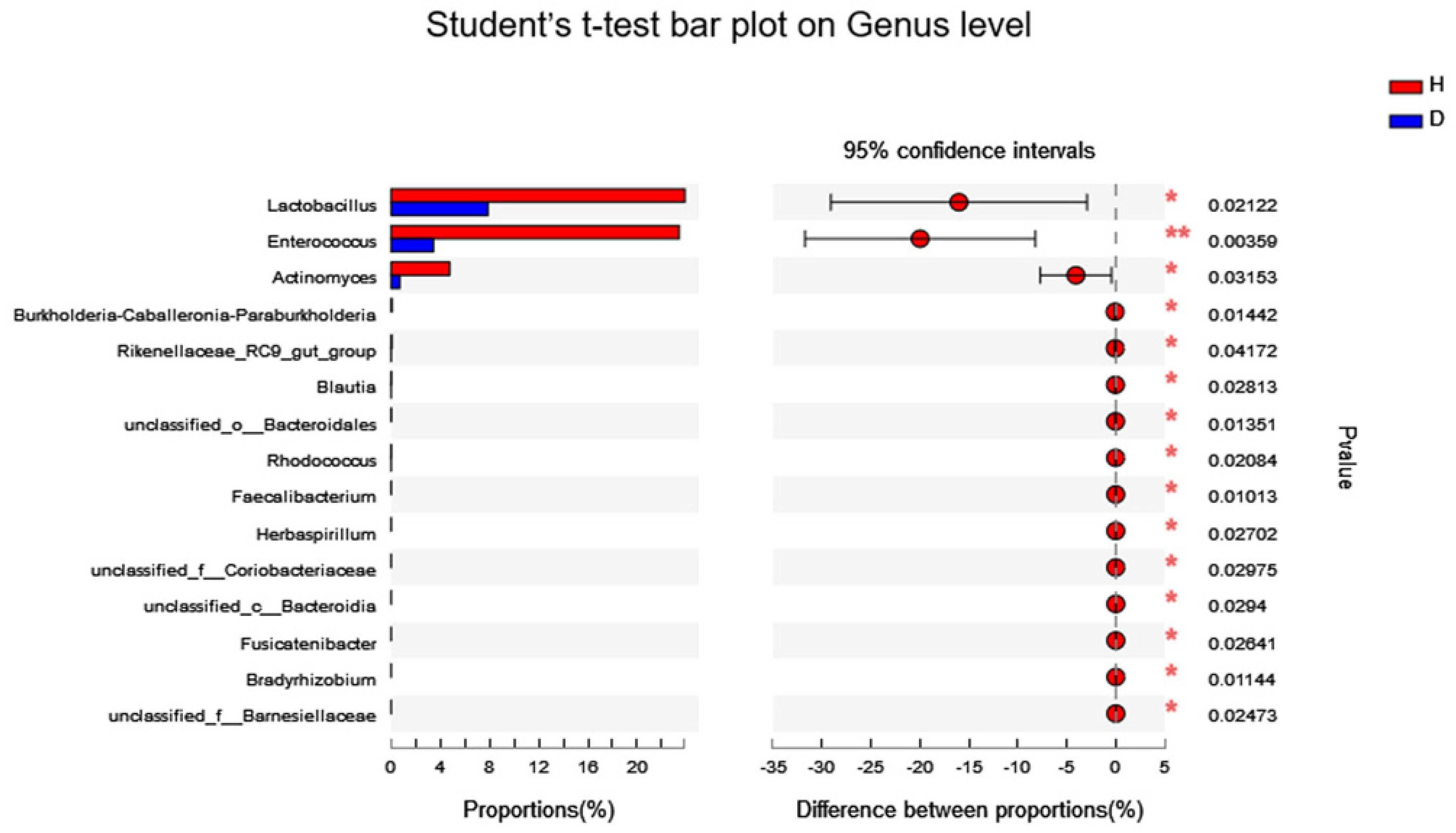
11]. A significant difference in intestinal microbial composition was observed between the healthy and diarrheal piglets. In the healthy piglets,
Lactobacillus and
Enterococcus were notably more abundant, whereas
Escherichia-Shigella and
Bacteroides were more prevalent in the diarrheal piglets. These findings indicated that diarrhea may be associated with compositional imbalance rather than a simple loss of diversity.
Probiotics are defined as “live microorganisms when administered in adequate amounts confer a health benefit on the host” [
13]. Lactic acid bacteria (LAB) are widely recognized as safe and are commonly used as probiotics to promote host health and improve intestinal function [
14]. In this study, the higher abundance of LAB, particularly
Lactobacillus and
Enterococcus, in the healthy piglets is consistent with their known roles in suppressing pathogenic bacteria and improving gut function. Previous studies have shown that
Lacticaseibacillus rhamnosus alleviates diarrhea induced by
Escherichia coli K88 by modulating the intestinal flora and immune responses [
15], while
Ligilactobacillus salivarius enhances resistance to porcine epidemic diarrhea viruses (PEDV) [
16]. Furthermore,
Lactiplantibacillus plantarum has been demonstrated to be effective as a feed additive for reducing diarrhea in weaned piglets [
17]. Similarly,
Enterococcus faecalis EC-12 has been shown to effectively prevent diarrhea induced by
E. coli [
18]. These findings support our observation that enrichment of LAB is closely associated with intestinal health.
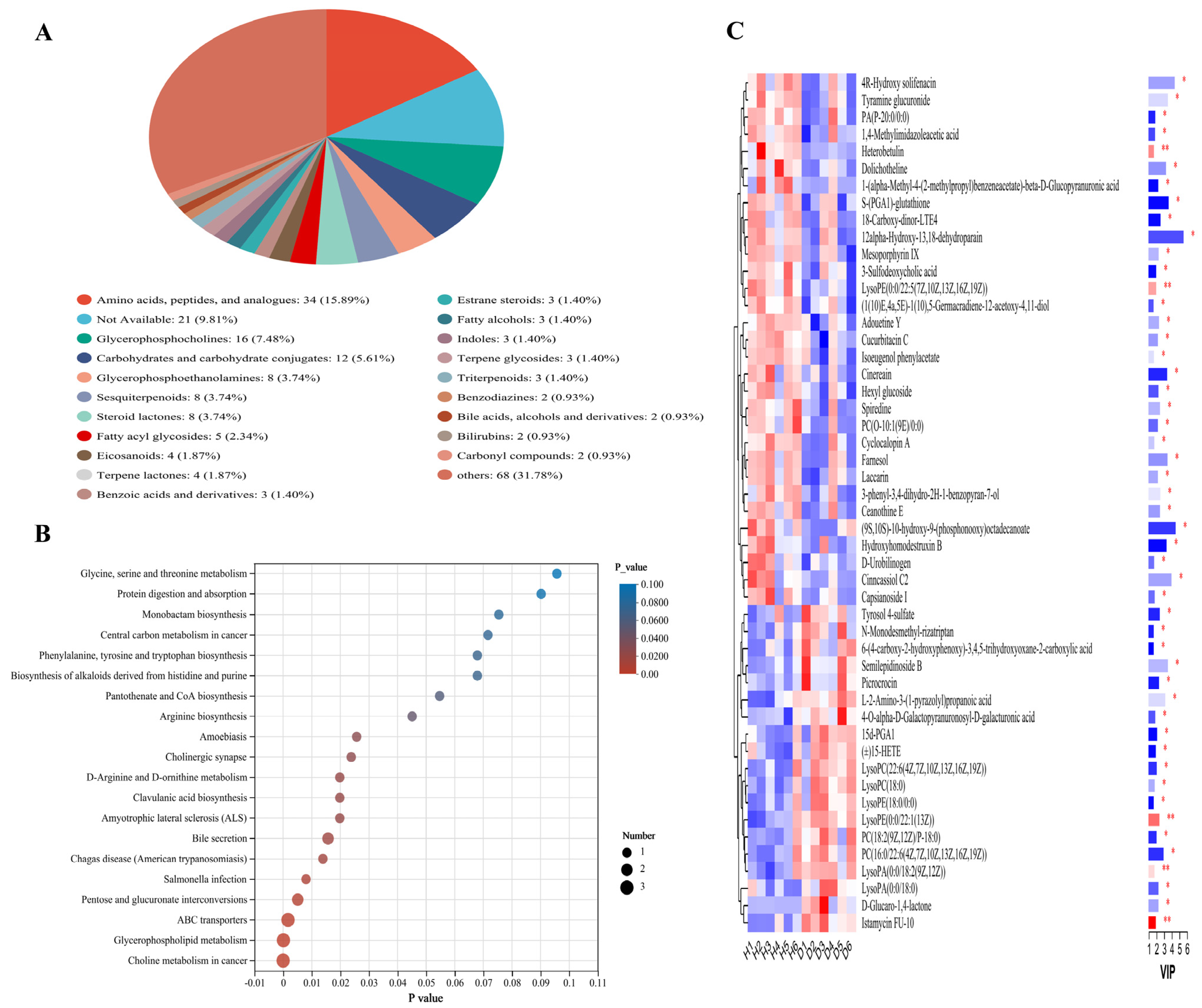
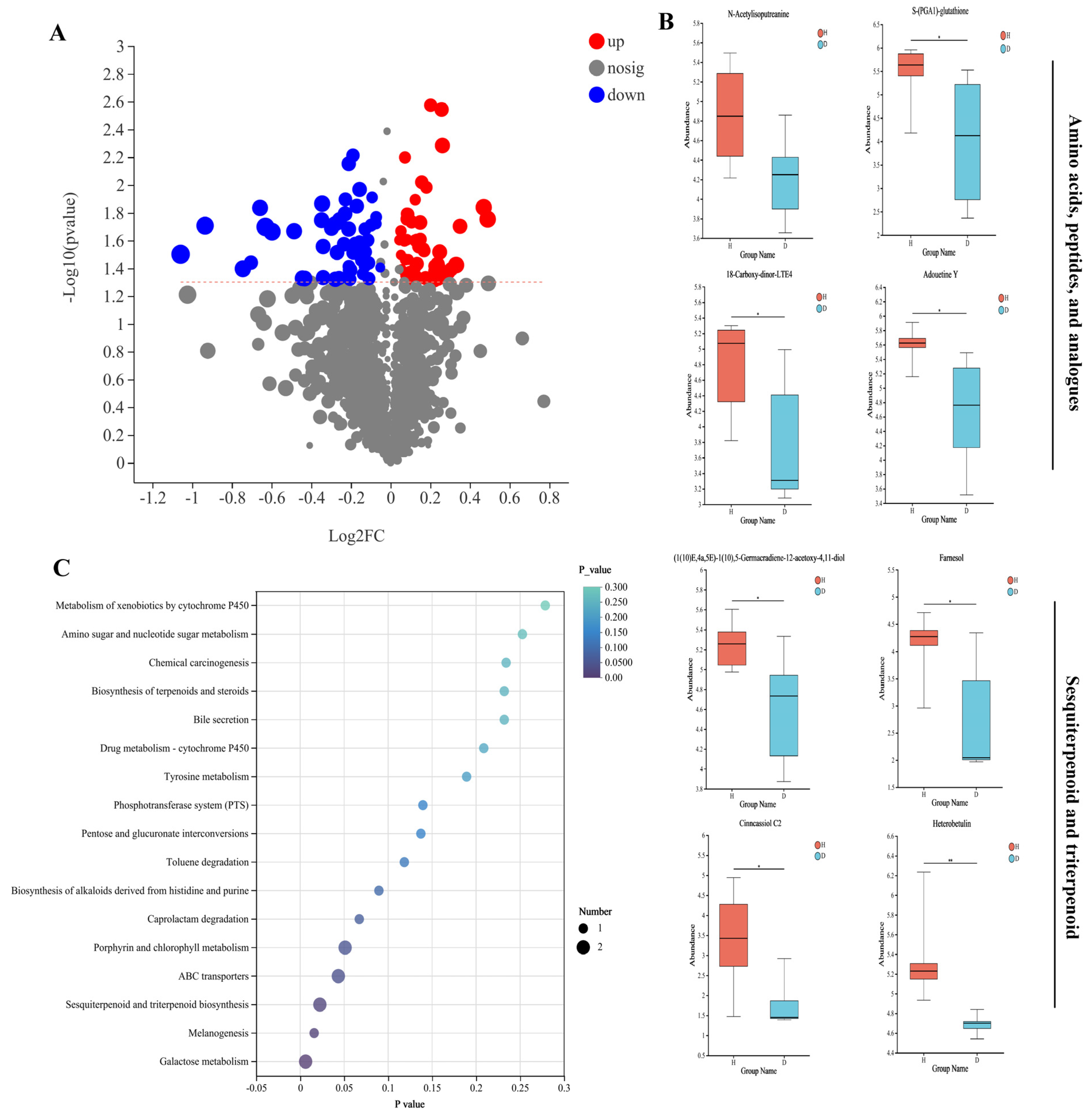
LAB contribute to host health not only through microbial interactions but also via the production of bioactive metabolites. In this study, 86 differential metabolites were identified between the two groups, among which 51 metabolites were significantly upregulated in the healthy piglets (
p < 0.05). These metabolites mainly belonged to amino acids, peptides and their analogues, as well as sesquiterpenoids and triterpenoids. The enrichment of amino acid-related metabolites in the healthy piglets suggests an active metabolic environment supporting intestinal function, which may contribute to the enhanced intestinal resilience observed in the healthy group. Amino acids play a crucial role in promoting intestinal development and facilitating the repair of mucosal barrier damage by enhancing epithelial cell proliferation and differentiation [
19]. Furthermore, functional amino acids contribute to the regulation of gene expression, translation, and signal transduction, thereby modulating inflammatory and oxidative responses as well as immune function [
20]. The amino acid classes predominantly expressed in the intestines of the healthy piglets in this study were primarily Adouetine Y and 18-Carboxy-dinor-LTE4. Notably, Adouetine Y has demonstrated the capacity to inhibit the growth of Gram-positive and Gram-negative bacteria [
21]. Sesquiterpenoids, characterized by their diverse structural frameworks and broad spectrum of biological activities, are regarded as promising candidates for the development of antibacterial and antifungal drugs. Over the past decades, numerous sesquiterpenoids with favorable antibacterial and antifungal properties have been successfully isolated from natural sources [
22]. Furthermore, sesquiterpenoids and triterpenoids possess notable anti-inflammatory and antioxidant properties, which hold significant potential for pharmaceutical and industrial applications [
23,
24]. Farnesol, an acyclic sesquiterpene alcohol, has been identified as a highly abundant metabolite in the feces of healthy piglets. This compound has been reported to exhibit potent anti-cancer and anti-inflammatory activities [
25]. The presence of such bioactive metabolites, with demonstrated antimicrobial and anti-inflammatory effects, contributes to the maintenance of a healthy intestinal microenvironment in piglets.
Importantly, correlation analysis revealed that several metabolites, including Adouetine Y, farnesol, heterobetulin, and indole-3-carbinol (I3C), were significantly positively correlated with
Lactobacillus and
Enterococcus (
p < 0.01) and negatively correlated with
Sutterella. These results suggest a potential functional link between beneficial bacteria and metabolite production. It is possible that
Lactobacillus and
Enterococcus either directly participate in or indirectly promote the production of these bioactive metabolites, thereby contributing to intestinal health. Notably, farnesol and heterobetulin are classified as triterpenoids and sesquiterpenoids, respectively. Research on the biological activity of heterobetulin is relatively limited, with the exception of its reported ability to increase urinary potassium excretion in rats [
26]. In contrast, farnesol has been more extensively studied; for example, a study investigating its effects on CNS inflammatory demyelination in mice demonstrated that farnesol reshaped the dysbiotic gut microbiome, highlighting its potential role in modulating the gut–brain axis and contributing to its clinical activity [
27]. Similarly, I3C is a bioactive phytochemical abundant in cruciferous vegetables, which possesses strong potential to prevent inflammation, cancer, and obesity [
28]. In this study, we found that amino acids, peptides, and their analogues (e.g., Adouetine Y), as well as sesquiterpenoids and triterpenoids (e.g., farnesol and heterobetulin), were highly enriched in the healthy piglets and exhibited significant positive correlations with the abundance of
Lactobacillus and
Enterococcus. Given that sesquiterpenoids and triterpenoids are predominantly derived from plants and fungi, these findings suggest that
Lactobacillus and
Enterococcus in the intestinal tract may indirectly promote or directly participate in the synthesis of sesquiterpenoids and triterpenoids. This observation suggested that
Lactobacillus and
Enterococcus may play a role in the biosynthesis or metabolic regulation of sesquiterpenoids and triterpenoids within the intestinal environment.
In summary, our findings suggest that intestinal health in piglets is associated with a coordinated pattern of beneficial microbial enrichment and metabolite production, particularly involving amino acid-related metabolites and bioactive terpenoids. These results provide a foundation for future studies exploring microbiota-derived metabolites as potential targets for postbiotic-based strategies to improve gut health and prevent diarrhea. However, the composition of the intestinal microbiota is influenced by various factors (such as living environment, feeding conditions, etc.), so we need to further pay attention to the characteristics of the intestinal microbiota composition in different living environments of piglets.