Dietary Spirulina (Arthrospira platensis) Modulates Survival, Growth, Reproductive Behavior, and Spawning Performance in Zebrafish, Danio rerio

 , , , , ,
  ,
,  ,
,  , ,
, ,  ,
,  and
and
Simple Summary
Abstract
1. Introduction
2. Materials and Methods
2.1. Animals
2.2. Experimental Design
- S0, control group: 100% SDS Diets 400;
- S100: 100% Arthrospira platensis (spirulina);
- S75: 25% SDS + 75% spirulina;
- S50: 50% SDS + 50% spirulina;
- S25: 75% SDS+ 25% spirulina;
- S5: 95% SDS + 5% spirulina.
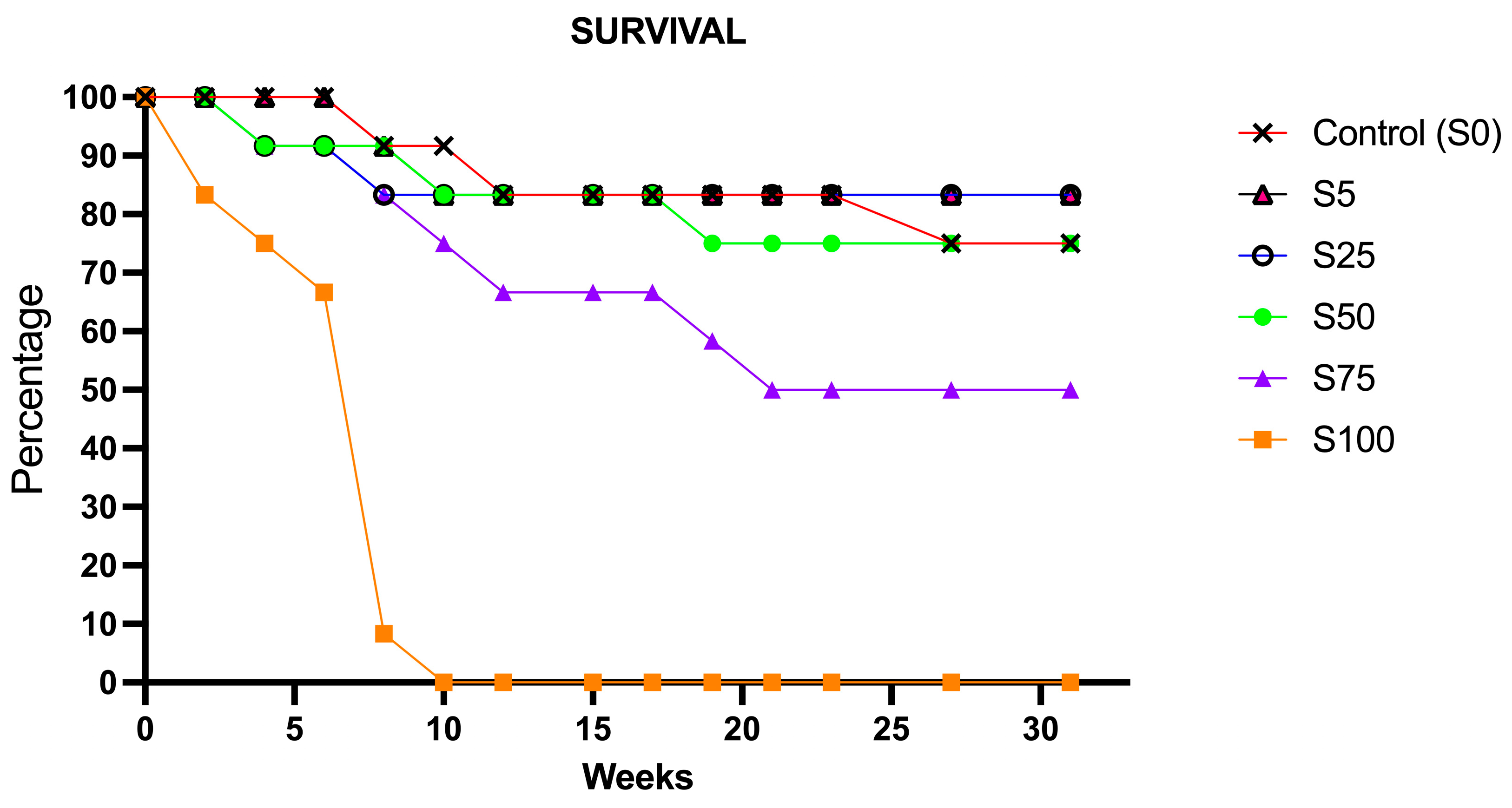
2.3. Survival Rate
2.4. Reproductive Behavior and Fitness Assessment
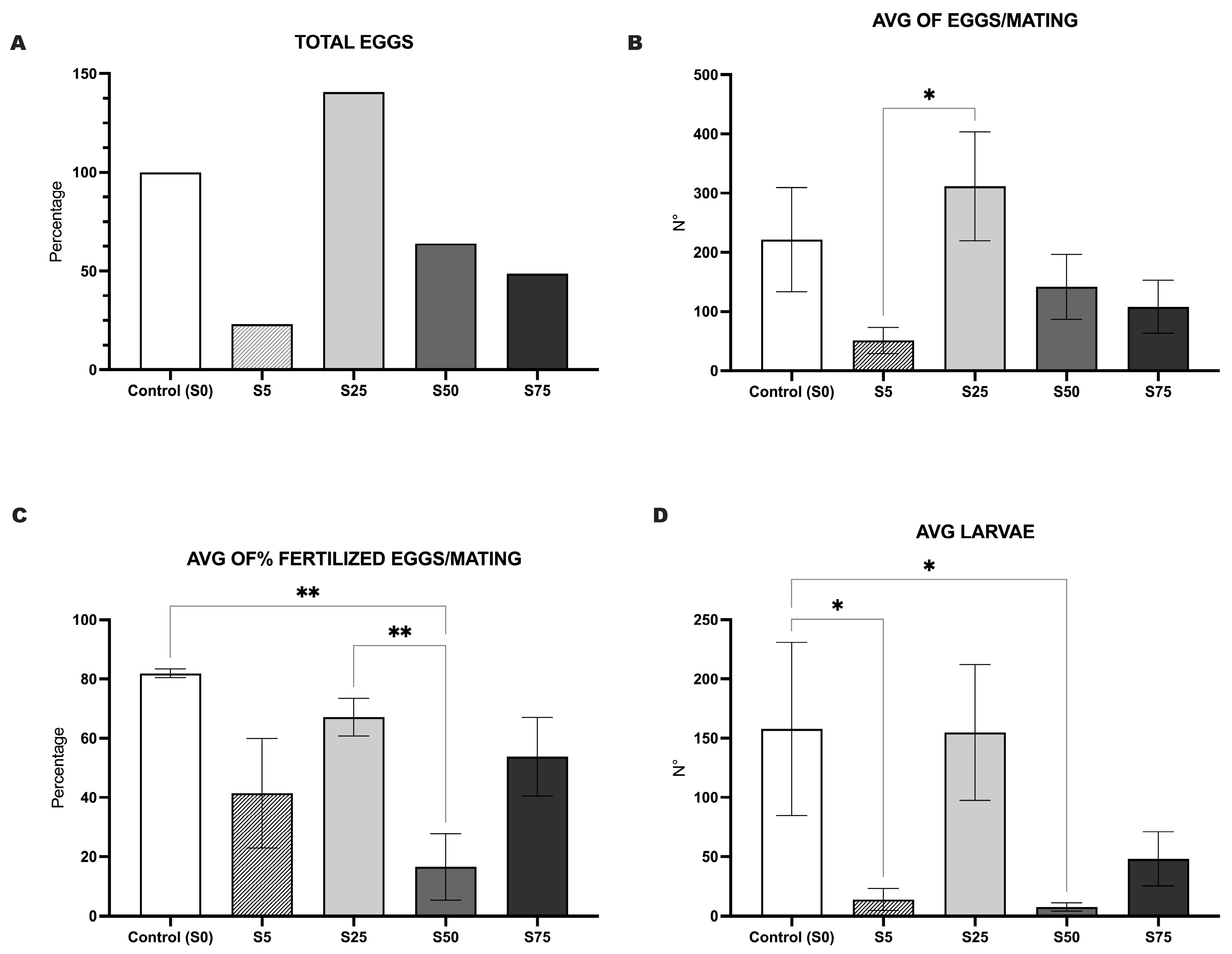
- Percentage of total spawned eggs: Relative egg production compared to S0 group over the entire experimental period;
- Average number of spawned eggs per mating;
- Percentage of fertilized eggs per mating: Proportion of successfully fertilized eggs among total spawned eggs, assessed by visual inspection 24 h post fertilization (presence of cell division and normal cleavage);
- Average number of hatched larvae per mating: mean number of viable larvae that successfully hatched (typically 48–72 h post fertilization).
2.5. Body Measurements
2.6. Morphological Analysis
2.7. Statistical Analysis
3. Results
3.1. Survival
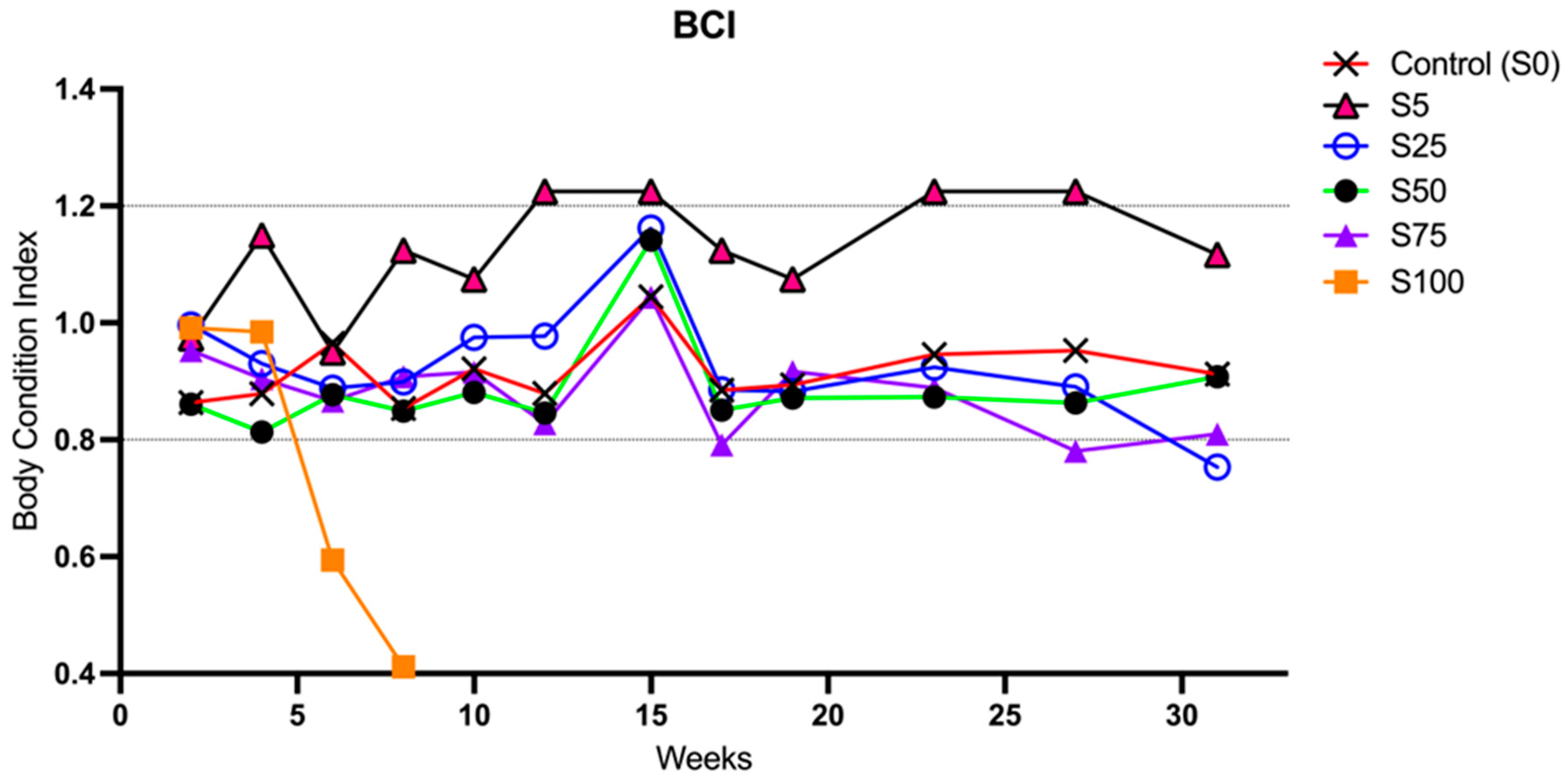
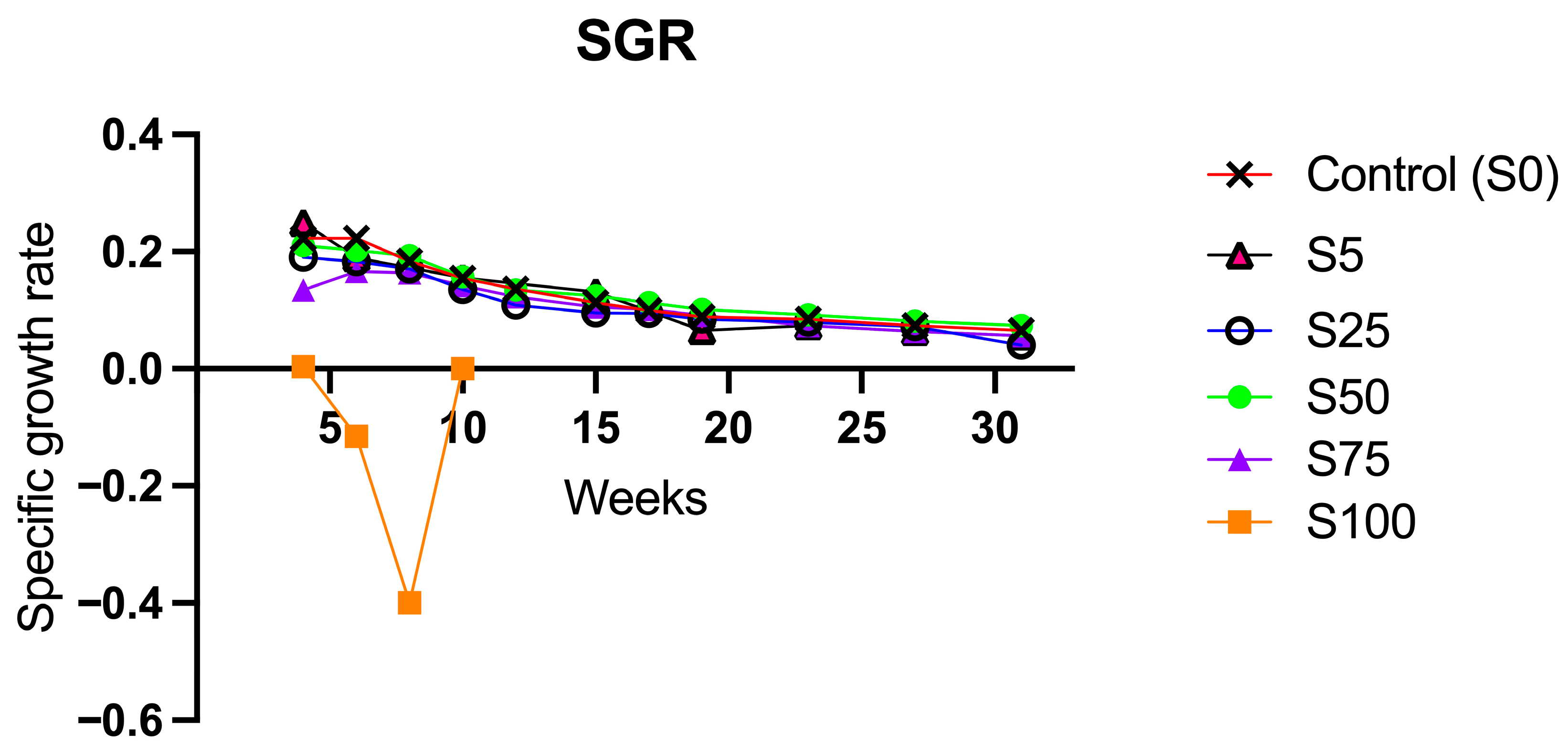
3.2. Body Measurements (Body Condition Index and Specific Growth Rate)
- <0.8: Undernutrition;
- Between 0.8 and 1.2: Good fitness.
- >1.2: Overnutrition.
3.3. Reproductive and Spawning Performance
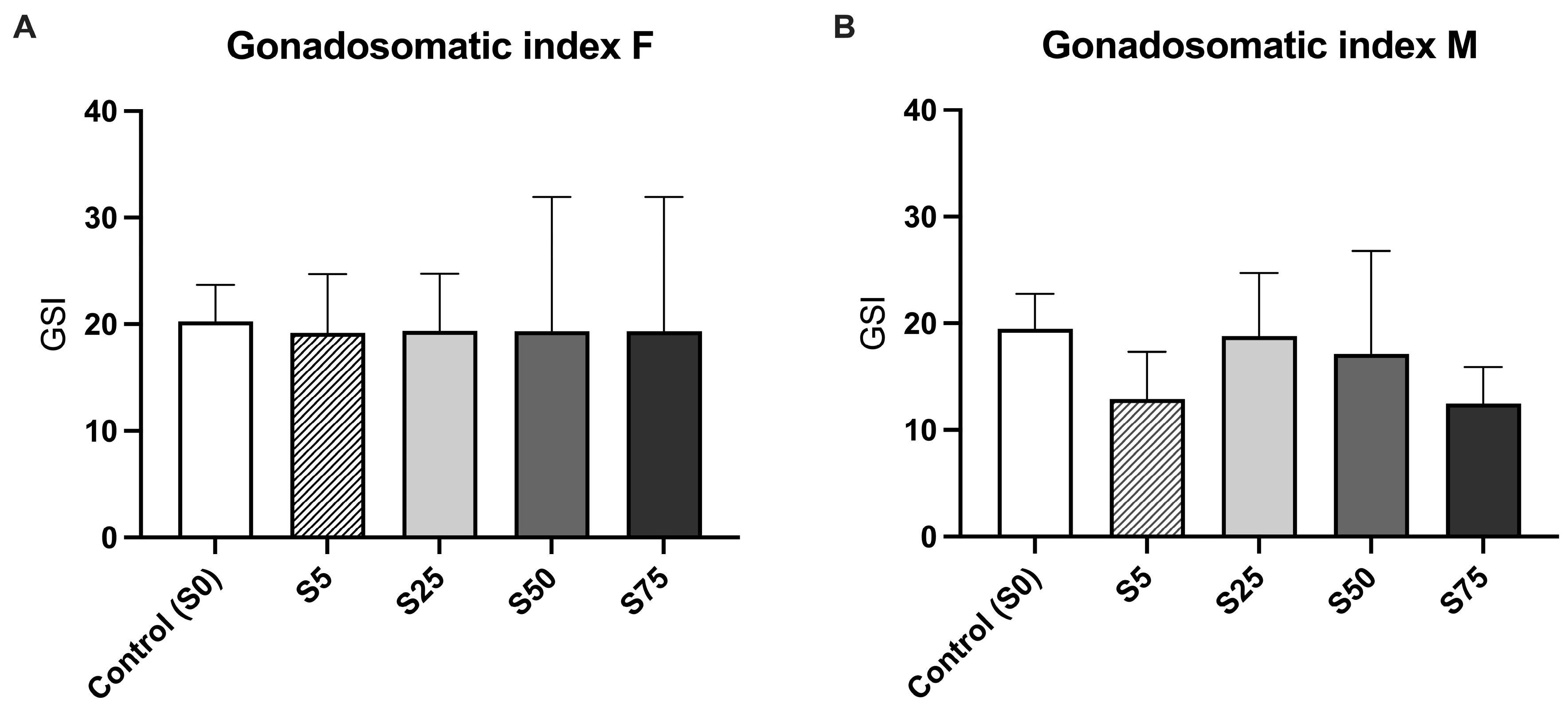
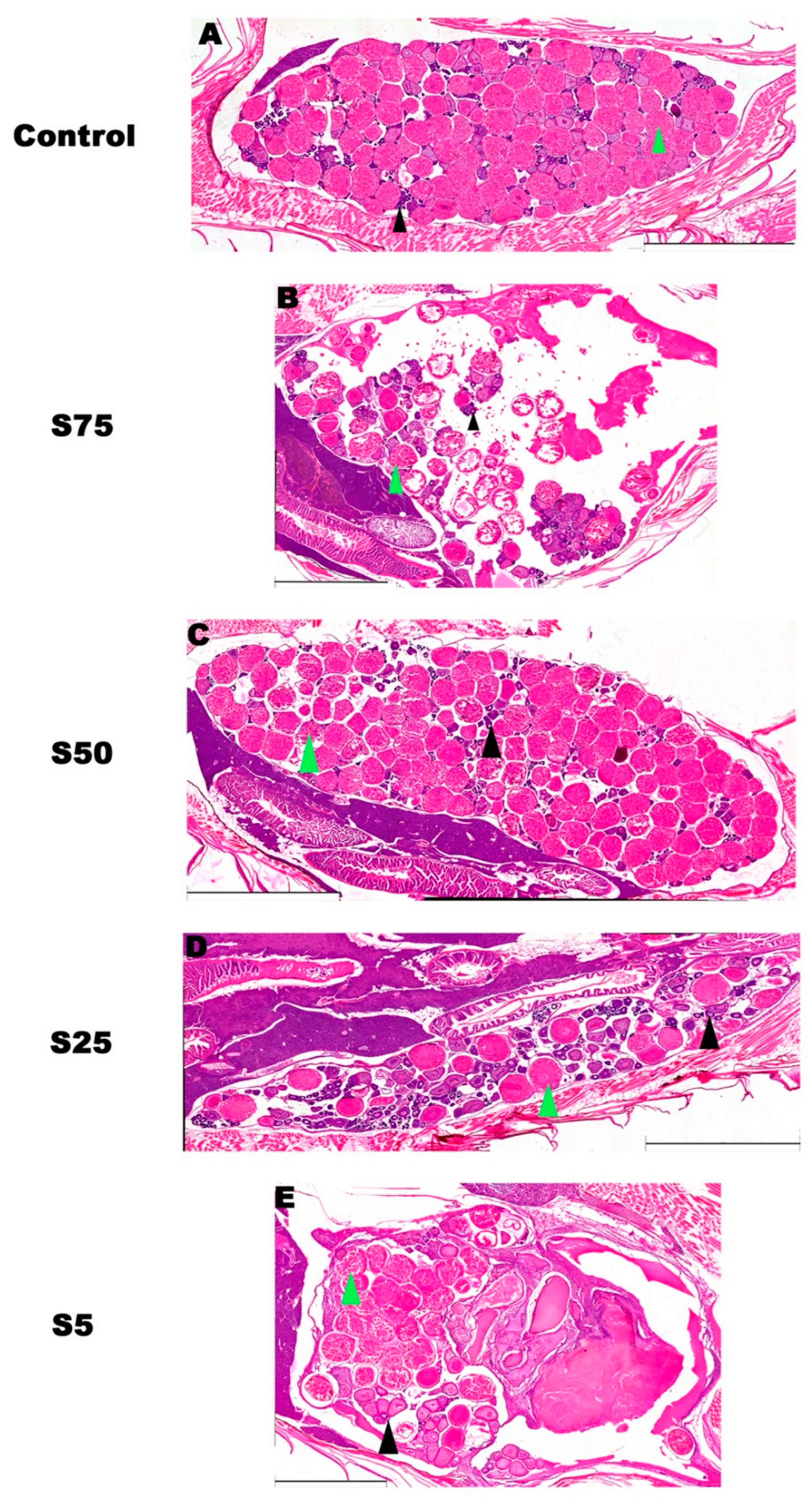
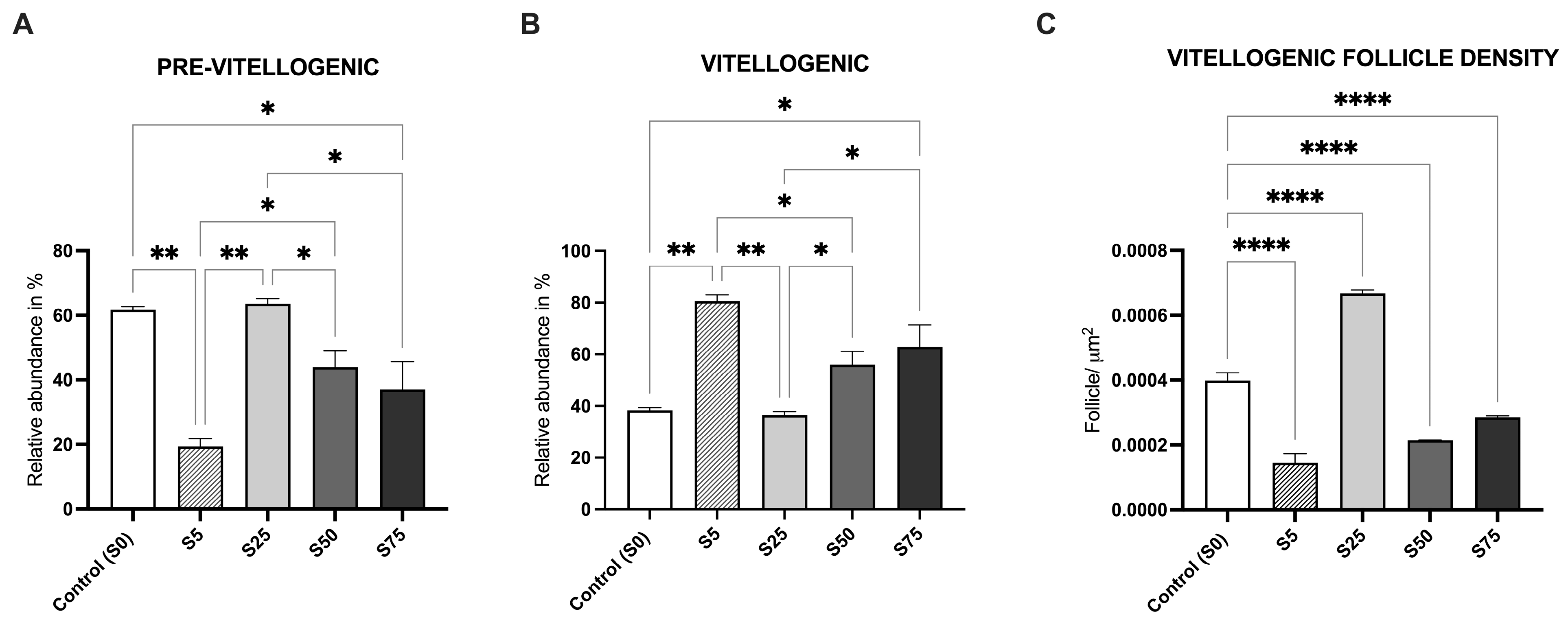
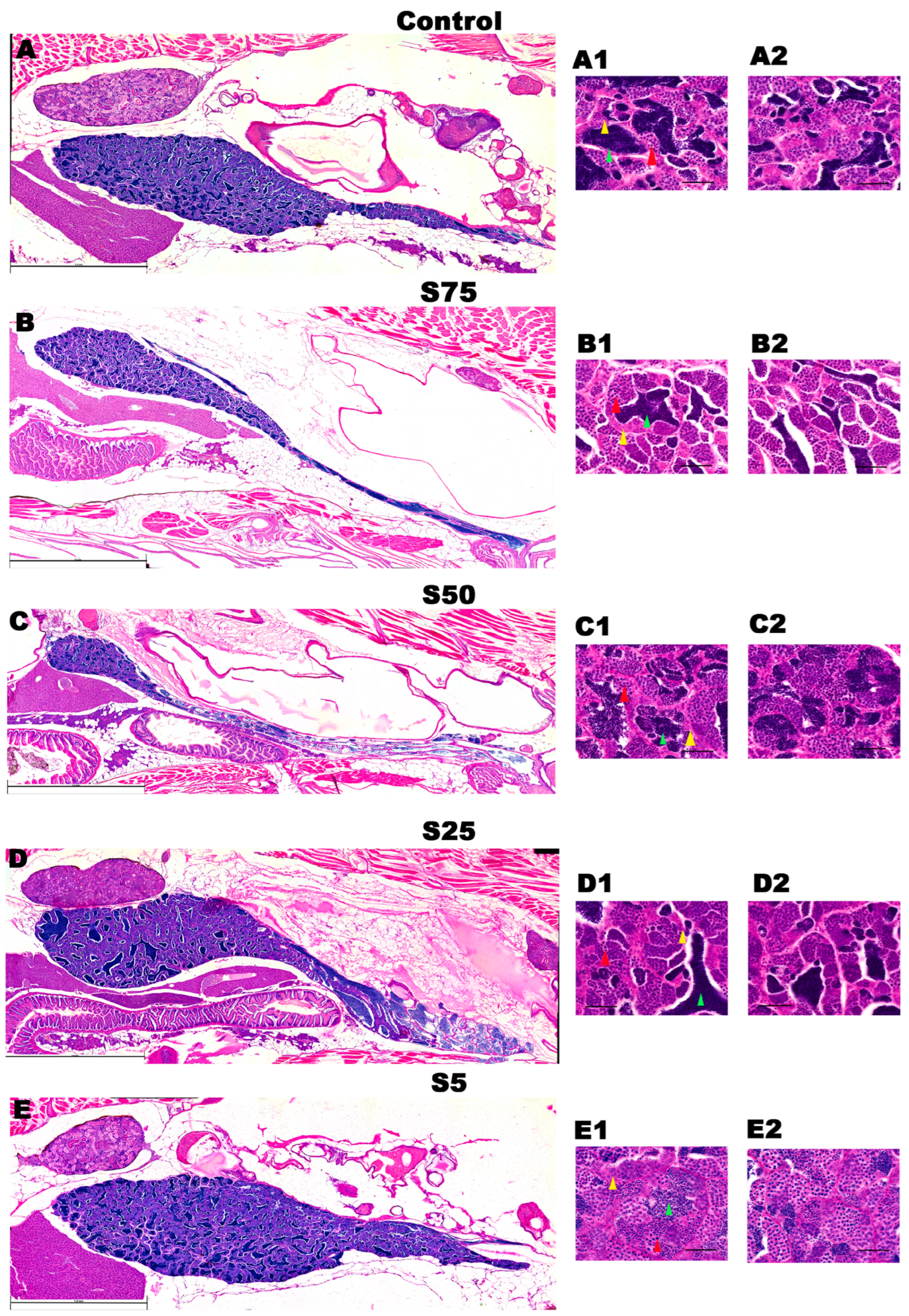
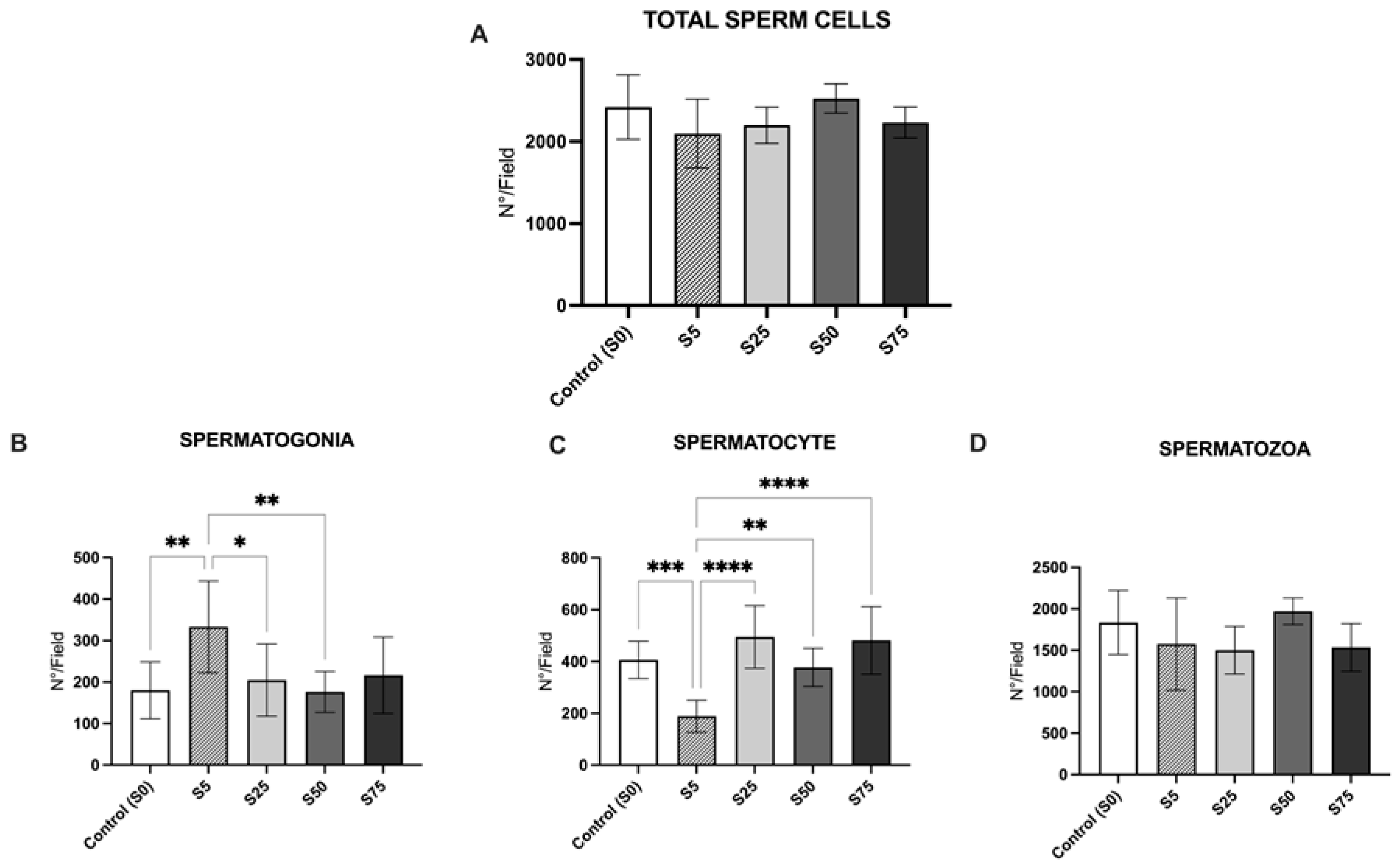
3.4. Gonadic Morphometric Analysis
4. Discussion
4.1. Effects of Spirulina on Survival and Growth Performance
4.2. Modulation of Reproduction by Dietary Spirulina
4.2.1. Spawning Performance
4.2.2. Quantitative Reproductive Outcomes
4.3. Gonadal Development and Gametogenesis
4.3.1. Female Gonadal Development
4.3.2. Male Gonadal Development
4.4. Nutritional Mechanisms Underlying Reproductive Effects
5. Conclusions
Supplementary Materials
Author Contributions
Funding
Institutional Review Board Statement
Informed Consent Statement
Data Availability Statement
Acknowledgments
Conflicts of Interest
References
- Batista, A.P.; Nunes, M.C.; Fradinho, P.; Gouveia, L.; Sousa, I.; Raymundo, A.; Franco, J.M. Novel Foods with Microalgal Ingredients—Effect of Gel Setting Conditions on the Linear Viscoelasticity of Spirulina and Haematococcus Gels. J. Food Eng. 2012, 110, 182–189. [Google Scholar] [CrossRef]
- Becker, E.W. Micro-Algae as a Source of Protein. Biotechnol. Adv. 2007, 25, 207–210. [Google Scholar] [CrossRef] [PubMed]
- Vonshak, A. Spirulina Platensis Arthrospira: Physiology, Cell-Biology and Biotechnology; Taylor and Francis: Hoboken, NJ, USA, 2014; ISBN 978-0-7484-0674-6. [Google Scholar]
- El-Moataaz, S.; Ismael, H.; Aborhyem, S. Assessment of Chemical Composition of Spirulina Platensis and Its Effect on Fasting Blood Glucose and Lipid Profile in Diabetic Rats. J. High Inst. Public Health 2019, 49, 198–209. [Google Scholar] [CrossRef]
- Parrish, C.C. Essential Fatty Acids in Aquatic Food Webs. In Lipids in Aquatic Ecosystems; Kainz, M., Brett, M.T., Arts, M.T., Eds.; Springer: New York, NY, USA, 2009; pp. 309–326. ISBN 978-0-387-89366-2. [Google Scholar]
- Masuda, K.; Chitundu, M. Multiple Micronutrient Supplementation Using Spirulina Platensis during the First 1000 Days Is Positively Associated with Development in Children under Five Years: A Follow up of a Randomized Trial in Zambia. Nutrients 2019, 11, 730. [Google Scholar] [CrossRef] [PubMed]
- Kumar, A.; Ramamoorthy, D.; Verma, D.K.; Kumar, A.; Kumar, N.; Kanak, K.R.; Marwein, B.M.; Mohan, K. Antioxidant and Phytonutrient Activities of Spirulina Platensis. Energy Nexus 2022, 6, 100070. [Google Scholar] [CrossRef]
- Athiyappan, K.D.; Routray, W.; Paramasivan, B. Phycocyanin from Spirulina: A Comprehensive Review on Cultivation, Extraction, Purification, and Its Application in Food and Allied Industries. Food Humanit. 2024, 2, 100235. [Google Scholar] [CrossRef]
- Ilieva, Y.; Zaharieva, M.M.; Najdenski, H.; Kroumov, A.D. Antimicrobial Activity of Arthrospira (Former Spirulina) and Dunaliella Related to Recognized Antimicrobial Bioactive Compounds. Int. J. Mol. Sci. 2024, 25, 5548. [Google Scholar] [CrossRef]
- Volkoff, H.; London, S. Nutrition and Reproduction in Fish. In Encyclopedia of Reproduction; Elsevier: Amsterdam, The Netherlands, 2018; pp. 743–748. ISBN 978-0-12-815145-7. [Google Scholar]
- Assan, D.; Huang, Y.; Mustapha, U.F.; Addah, M.N.; Li, G.; Chen, H. Fish Feed Intake, Feeding Behavior, and the Physiological Response of Apelin to Fasting and Refeeding. Front. Endocrinol. 2021, 12, 798903. [Google Scholar] [CrossRef]
- Li, W.; Du, R.; Xia, C.; Zhang, H.; Xie, Y.; Gao, X.; Ouyang, Y.; Yin, Z.; Hu, G. Novel Pituitary Actions of GnRH in Teleost: The Link between Reproduction and Feeding Regulation. Front. Endocrinol. 2022, 13, 982297. [Google Scholar] [CrossRef]
- Carneiro, W.F.; Navarrete-Ramírez, P.; Castro, T.F.D.; Leão, E.R.; Martínez-Chávez, C.C.; Martínez-Palacios, C.A.; Murgas, L.D.S. Replacing Fish Meal with Spirulina (Arthrospira platensis): Nutrigenomic Modulation of Growth, Reproductive Performance, and Metabolism in Zebrafish. Animals 2025, 15, 2552. [Google Scholar] [CrossRef] [PubMed]
- Jardine, D.; Litvak, M.K. Direct Yolk Sac Volume Manipulation of Zebrafish Embryos and the Relationship between Offspring Size and Yolk Sac Volume. J. Fish Biol. 2003, 63, 388–397. [Google Scholar] [CrossRef]
- Yilmaz, O.; Patinote, A.; Com, E.; Pineau, C.; Bobe, J. Knock out of Specific Maternal Vitellogenins in Zebrafish (Danio rerio) Evokes Vital Changes in Egg Proteomic Profiles That Resemble the Phenotype of Poor Quality Eggs. BMC Genom. 2021, 22, 308. [Google Scholar] [CrossRef]
- Cacialli, P.; Gueguen, M.-M.; Coumailleau, P.; D’Angelo, L.; Kah, O.; Lucini, C.; Pellegrini, E. BDNF Expression in Larval and Adult Zebrafish Brain: Distribution and Cell Identification. PLoS ONE 2016, 11, e0158057. [Google Scholar] [CrossRef] [PubMed]
- Ulloa, P.E. Zebrafish as Animal Model for Aquaculture Nutrition Research. Front. Genet. 2014, 5, 313. [Google Scholar] [CrossRef]
- Aleström, P.; D’Angelo, L.; Midtlyng, P.J.; Schorderet, D.F.; Schulte-Merker, S.; Sohm, F.; Warner, S. Zebrafish: Housing and Husbandry Recommendations. Lab. Anim. 2020, 54, 213–224. [Google Scholar] [CrossRef]
- Westerfield, M.; Book, T. A Guide for the Laboratory Use of Zebrafish Danio (Brachydanio) Rerio; University of Oregon Press: Eugene, OR, USA, 2000. [Google Scholar]
- Reading, B.J.; Andersen, L.K.; Ryu, Y.-W.; Mushirobira, Y.; Todo, T.; Hiramatsu, N. Oogenesis and Egg Quality in Finfish: Yolk Formation and Other Factors Influencing Female Fertility. Fishes 2018, 3, 45. [Google Scholar] [CrossRef]
- Benini, E.; Politis, S.N.; Nielsen, A.; Sørensen, S.R.; Tomkiewicz, J.; Engrola, S. Type of Hormonal Treatment Administered to Induce Vitellogenesis in European Eel Influences Biochemical Composition of Eggs and Yolk-Sac Larvae. Fish Physiol. Biochem. 2022, 48, 185–200. [Google Scholar] [CrossRef]
- Howe, D.G.; Bradford, Y.M.; Eagle, A.; Fashena, D.; Frazer, K.; Kalita, P.; Mani, P.; Martin, R.; Moxon, S.T.; Paddock, H.; et al. The Zebrafish Model Organism Database: New Support for Human Disease Models, Mutation Details, Gene Expression Phenotypes and Searching. Nucleic Acids Res. 2017, 45, D758–D768. [Google Scholar] [CrossRef] [PubMed]
- Lawrence, C. The Husbandry of Zebrafish (Danio rerio): A Review. Aquaculture 2007, 269, 1–20. [Google Scholar] [CrossRef]
- Abd El-Rahman, G.I. Evaluation the Efficacy of Combined Mixture of Spirulina Platensisand Cinnamon Extracts in Overweight Rats Fed on a Fatty Diet. Life Sci. J. 2018, 15, 37–46. [Google Scholar]
- Remirez, D.; González, R.; Merino, N.; Rodriguez, S.; Ancheta, O. Inhibitory Effects of Spirulina in Zymosan-induced Arthritis in Mice. Mediat. Inflamm. 2002, 11, 75–79. [Google Scholar] [CrossRef] [PubMed]
- Torres-Durán, P.V.; Ferreira-Hermosillo, A.; Ramos-Jiménez, A.; Hernández-Torres, R.P.; Juárez-Oropeza, M.A. Effect of Spirulina Maxima on Postprandial Lipemia in Young Runners: A Preliminary Report. J. Med. Food 2012, 15, 753–757. [Google Scholar] [CrossRef] [PubMed]
- Hillman, C.; Cooper, A.H.; Ram, P.; Parker, M.O. The Effect of Laboratory Diet and Feeding on Growth Parameters in Juvenile Zebrafish. Lab Anim. 2024, 53, 327–335. [Google Scholar] [CrossRef] [PubMed]
- Avdesh, A.; Chen, M.; Martin-Iverson, M.T.; Mondal, A.; Ong, D.; Rainey-Smith, S.; Taddei, K.; Lardelli, M.; Groth, D.M.; Verdile, G.; et al. Regular Care and Maintenance of a Zebrafish (Danio rerio) Laboratory: An Introduction. J. Vis. Exp. JoVE 2012, e4196. [Google Scholar] [CrossRef]
- Fowler, L.A.; Williams, M.B.; Dennis-Cornelius, L.N.; Farmer, S.; Barry, R.J.; Powell, M.L.; Watts, S.A. Influence of Commercial and Laboratory Diets on Growth, Body Composition, and Reproduction in the Zebrafish Danio rerio. Zebrafish 2019, 16, 508–521. [Google Scholar] [CrossRef]
- Brinker, A.; Reiter, R. Fish Meal Replacement by Plant Protein Substitution and Guar Gum Addition in Trout Feed, Part I: Effects on Feed Utilization and Fish Quality. Aquaculture 2011, 310, 350–360. [Google Scholar] [CrossRef]
- Clark, T.S.; Pandolfo, L.M.; Marshall, C.M.; Mitra, A.K.; Schech, J.M. Body Condition Scoring for Adult Zebrafish (Danio rerio). J. Am. Assoc. Lab. Anim. Sci. 2018, 57, 698–702. [Google Scholar] [CrossRef]
- Schiano, V.; Cutignano, A.; Maiello, D.; Carbone, M.; Ciavatta, M.; Polese, G.; Fioretto, F.; Attanasio, C.; Palladino, A.; Felline, S.; et al. An Alkaloid from a Highly Invasive Seaweed Increases the Voracity and Reproductive Output of a Model Fish Species. Mar. Drugs 2022, 20, 513. [Google Scholar] [CrossRef]
- Menke, A.L.; Spitsbergen, J.M.; Wolterbeek, A.P.M.; Woutersen, R.A. Normal Anatomy and Histology of the Adult Zebrafish. Toxicol. Pathol. 2011, 39, 759–775. [Google Scholar] [CrossRef]
- Petrovici, A.; Popovici, I.; Solcan, C. Histological Structure of the Testis in Adult Zebrafish (Danio rerio). 2017. Available online: https://repository.iuls.ro/xmlui/handle/20.500.12811/1243 (accessed on 20 December 2025).
- Altmann, B.A.; Rosenau, S. Spirulina as Animal Feed: Opportunities and Challenges. Foods 2022, 11, 965. [Google Scholar] [CrossRef]
- Lambiase, C.; Braghieri, A.; Barone, C.M.A.; Di Francia, A.; Pacelli, C.; Serrapica, F.; Lorenzo, J.M.; De Rosa, G. Use of Cyanobacterium Spirulina (Arthrospira platensis) in Buffalo Feeding: Effect on Mozzarella Cheese Quality. Foods 2023, 12, 4095. [Google Scholar] [CrossRef] [PubMed]
- Waheed, D.M.; El-Diasty, M.; Gabr, E.M. Spirulina as an Animal Feed and Its Effect on Animal Health and Productivity. J. Adv. Vet. Res. 2024, 14, 342–344. [Google Scholar]
- Rosas, V.T.; Poersch, L.H.; Romano, L.A.; Tesser, M.B. Feasibility of the Use of Spirulina in Aquaculture Diets. Rev. Aquac. 2019, 11, 1367–1378. [Google Scholar] [CrossRef]
- Belal, E.B.; Khalafalla, M.; El-Hais, A. Use of Spirulina (Arthrospira fusiformis) for Promoting Growth of Nile Tilapia Fingerlings. Afr. J. Microbiol. Res. 2012, 6, 6423–6431. [Google Scholar] [CrossRef]
- Velasquez, S.F.; Chan, M.A.; Abisado, R.G.; Traifalgar, R.F.M.; Tayamen, M.M.; Maliwat, G.C.F.; Ragaza, J.A. Dietary Spirulina (Arthrospira platensis) Replacement Enhances Performance of Juvenile Nile Tilapia (Oreochromis niloticus). J. Appl. Phycol. 2016, 28, 1023–1030. [Google Scholar] [CrossRef]
- Takeuchi, T.; Lu, J.; Yoshizaki, G.; Satoh, S. Effect on the Growth and Body Composition of Juvenile Tilapia Oreochromis Niloticus Fed Raw Spirulina. Fish. Sci. 2002, 68, 34–40. [Google Scholar] [CrossRef]
- El-Sheekh, M.; El-Shourbagy, I.; Shalaby, S.; Hosny, S. Effect of Feeding Arthrospira platensis (Spirulina) on Growth and Carcass Composition of Hybrid Red Tilapia (Oreochromis niloticus x Oreochromis mossambicus). Turk. J. Fish. Aquat. Sci. 2014, 14, 471–478. [Google Scholar] [CrossRef]
- Kamal, A.H.M.M.; Mair, G.C. Salinity Tolerance in Superior Genotypes of Tilapia, Oreochromis niloticus, Oreochromis mossambicus and Their Hybrids. Aquaculture 2005, 247, 189–201. [Google Scholar] [CrossRef]
- Nandeesha, M.; Gangadhara, B.; Manissery, J.; Venkataraman, L. Growth Performance of Two Indian Major Carps, Catla (Catlacatla) and Rohu (Labeorohita) Fed Diets Containing Different Levels of Spirulina Platensis. Bioresour. Technol. 2001, 80, 117–120. [Google Scholar] [CrossRef]
- Adel, M.; Yeganeh, S.; Dadar, M.; Sakai, M.; Dawood, M.A.O. Effects of Dietary Spirulina Platensis on Growth Performance, Humoral and Mucosal Immune Responses and Disease Resistance in Juvenile Great Sturgeon (Huso huso Linnaeus, 1754). Fish Shellfish Immunol. 2016, 56, 436–444. [Google Scholar] [CrossRef]
- James, R.; Sampath, K.; Thangarathinam, R.; Vasudevan, I. Effect of Dietary Spirulina Level on Growth, Fertility, Coloration and Leucocyte Count in Red Swordtail, Xiphophorus Helleri. Isr. J. Aquac.-Bamidgeh 2006, 58, 97–104. [Google Scholar]
- El-Sayed, A.-F.M. Evaluation of Soybean Meal, Spirulina Meal and Chicken Offal Meal as Protein Sources for Silver Seabream (Rhabdosargus sarba) Fingerlings. Aquaculture 1994, 127, 169–176. [Google Scholar] [CrossRef]
- Sayed, A.E.-D.H.; Hamed, M.; Soliman, H.A. Spirulina Platensis Alleviated the Hemotoxicity, Oxidative Damage and Histopathological Alterations of Hydroxychloroquine in Catfish (Clarias gariepinus). Front. Physiol. 2021, 12, 683669. [Google Scholar] [CrossRef]
- Sayed, A.E.-D.H.; Hamed, M.; El-Sayed, A.A.; Nunes, B.; Soliman, H.A. The Mitigating Effect of Spirulina (Arthrospira platensis) on the Hemotoxicity of Gibberellic Acid on Juvenile Tilapia (Oreochromis niloticus). Environ. Sci. Pollut. Res. 2023, 30, 25701–25711. [Google Scholar]
- Coli, A.P.; Carneiro, W.F.; Da Silva, K.C.D.; Castro, T.F.D.; De Oliveira, J.P.L.; De Martins, M.S.A.; Murgas, L.D.S. Spirulina (Arthrospira platensis) Supplementation: Impact on Growth, Metabolism, and Antioxidant Status in Zebrafish. Anim. Physiol. Nutr. 2024, 108, 1189–1202. [Google Scholar] [CrossRef] [PubMed]
- Ma, K.; Chen, S.; Wu, Y.; Ma, Y.; Qiao, H.; Fan, J.; Wu, H. Dietary Supplementation with Microalgae Enhances the Zebrafish Growth Performance by Modulating Immune Status and Gut Microbiota. Appl. Microbiol. Biotechnol. 2022, 106, 773–788. [Google Scholar] [CrossRef]
- Edirisinghe, S.L.; Dananjaya, S.H.S.; Nikapitiya, C.; Liyanage, T.D.; Lee, K.-A.; Oh, C.; Kang, D.-H.; De Zoysa, M. Novel Pectin Isolated from Spirulina Maxima Enhances the Disease Resistance and Immune Responses in Zebrafish against Edwardsiella Piscicida and Aeromonas Hydrophila. Fish Shellfish Immunol. 2019, 94, 558–565. [Google Scholar] [CrossRef] [PubMed]
- Noh, H.-J.; Son, H.-Y. Effect of Spirulina on Corneal Epithelial Wound Healing in Zebrafish. J. Prev. Veter-Med. 2020, 44, 222–227. [Google Scholar] [CrossRef]
- Brosset, P.; Averty, A.; Mathieu-Resuge, M.; Schull, Q.; Soudant, P.; Lebigre, C. Fish Morphometric Body Condition Indices Reflect Energy Reserves but Other Physiological Processes Matter. Ecol. Indic. 2023, 154, 110860. [Google Scholar] [CrossRef]
- De Felice, E.; Palladino, A.; Tardella, F.M.; Giaquinto, D.; Barone, C.M.A.; Crasto, A.; Scocco, P. A Morphological, Glycohistochemical and Ultrastructural Study on the Stomach of Adult Rainbow Trout Oncorhynchus mykiss. Eur. Zool. J. 2021, 88, 269–278. [Google Scholar] [CrossRef]
- Palladino, A.; De Felice, E.; Attanasio, C.; Barone, C.M.A.; Crasto, A.; D’Angelo, L.; Giaquinto, D.; Lambiase, C.; Scocco, P.; Serrapica, F.; et al. A Morphological and Ultrastructural Study of the Anterior Digestive Tract of Adult Nile Tilapia Oreochromis Niloticus. Animals 2023, 13, 420. [Google Scholar] [CrossRef]
- Flores, A.; Wiff, R.; Ganias, K.; Marshall, C.T. Accuracy of Gonadosomatic Index in Maturity Classification and Estimation of Maturity Ogive. Fish. Res. 2019, 210, 50–62. [Google Scholar] [CrossRef]
- Mahalingam, A.; Santhanam, P. Vitellogenesis and Reproductive Strategies in Fishes. In Vitellogenin in Fishes-Diversification, Biological Properties, and Future Perspectives; Springer: Berlin/Heidelberg, Germany, 2023; pp. 105–121. [Google Scholar]
- Mabrouk, M.M.; Ashour, M.; Younis, E.M.; Abdel-Warith, A.-W.A.; Bauomi, M.A.; Toutou, M.M.; Mansour, A.I.; Abdelaty, B.S.; Elokaby, M.A.; Davies, S.J.; et al. Arthrospira Platensis Nanoparticles Dietary Supplementation Improves Growth Performance, Steroid Hormone Balance, and Reproductive Productivity of Nile Tilapia (Oreochromis niloticus) Broodstock. PLoS ONE 2024, 19, e0299480. [Google Scholar] [CrossRef]
- Zhang, Y.; Zhou, Y.; Tang, Q.; Hu, F.; Feng, L.; Shen, J.; Huang, B. The Protective Effects of Selenium-Enriched Spirulina on the Reproductive System of Male Zebrafish (Danio rerio) Exposed to Beta-Cypermethrin. Food Funct. 2018, 9, 5791–5804. [Google Scholar] [CrossRef] [PubMed]
- Marvel, M.; Levavi-Sivan, B.; Wong, T.-T.; Zmora, N.; Zohar, Y. Gnrh2 Maintains Reproduction in Fasting Zebrafish through Dynamic Neuronal Projection Changes and Regulation of Gonadotropin Synthesis, Oogenesis, and Reproductive Behaviors. Sci. Rep. 2021, 11, 6657. [Google Scholar] [CrossRef] [PubMed]
- Jaya-Ram, A.; Kuah, M.-K.; Lim, P.-S.; Kolkovski, S.; Shu-Chien, A.C. Influence of Dietary HUFA Levels on Reproductive Performance, Tissue Fatty Acid Profile and Desaturase and Elongase mRNAs Expression in Female Zebrafish Danio rerio. Aquaculture 2008, 277, 275–281. [Google Scholar] [CrossRef]



| SDS | Spirulina | |
|---|---|---|
| Proteins | 60 g/100 g | 62 g/100 g |
| Lipid | 14.5 g/100 g | 6.3 g/100 g |
| Carbohydrate | 11 g/100 g | 10 g/100 g |
| Fiber | 3 g/100 g | 1.6 g/100 g |
| Ashes | 11.5 g/100 g | 6.8 g/100 g |
| NUTRITIONALS VALUES | |||
|---|---|---|---|
| Calories | 353 kcal/100 g | Amino acid profile | |
| Moisture | 4.14 g/100 g | Alanine | 4.45 g/100 g |
| Ashes | 6.8 g/100 g | Arginine | 3.56 g/100 g |
| Macronutrients | Aspartic acid | 5.18 g/100 g | |
| Proteins | 62 g/100 g | Glutamic acid | 7.36 g/100 g |
| Carbohydrate | 10 g/100 g | Glycine | 2.66 g/100 g |
| Sugar | 1.3 g/100 g | Histidine | 0.807 g/100 g |
| Fatty acids | 6.3 g/100 g | Hydroxyproline | 0.2 g/100 g |
| Saturated | 2.4 g/100 g | Isoleucine | 3.01 g/100 g |
| Monounsaturated | 0.7 g/100 g | Leucine | 4.73 g/100 g |
| Polynsaturated | 3.2 g/100 g | Lysine | 2.33 g/100 g |
| Omega-6 | 1.6 g/100 g | Ornithine | 0.05 g/100 g |
| Omega-3 | 1.6 g/100 g | Phenylalanine | 2.46 g/100 |
| Fiber | 1.6 g/100 g | Proline | 1.88 g/100 |
| Micronutrients | Serine | 2.76 g/100 | |
| Calcium | 124 mg/100 g | Threonine | 2.75 g/100 |
| Phosphorus | 647 mg/100 g | Tyrosine | 2.53 g/100 g |
| Magnesium | 168 mg/100 g | Valine | 3.23 g/100 g |
| Iron | 51 mg/100 g | Cystein + cystine | 0.493 g/100 g |
| Zinc | 17.6 mg/100 g | Methionine | 1.36 g/100 g |
| Manganese | 2.99 mg/100 g | Tryptophan | 0.869 g/100 g |
| Copper | 6.8 mg/100 g | ||
| Iodine | 74 mg/100 g | Phytopigments | |
| Sodium | 705 mg/100 g | Phycocyanin | 12.80% |
| Potassium | 1780 mg/100 g | C-phycocyanin | 13.00% |
| Beta carotenoid | 87.9 mg/100 g | Chlorophyll a | 2.1 mg/100 g |
| Vitamin b1 | 0.3 mg/100 g | Carotenoids | 87.4 mg/100 g |
| Vitamin b2 | 0.37 mg/100 g | N-p-k-c | |
| Vitamin b3 | 2.11 mg/100 g | N-nitrogen | 8.8 g/100 g |
| Vitamin b6 | 0.16 mg/100 g | P-phosphorous | 0.64 g/100 g |
| Vitamin b12 | 0.025 mg/100 g | K-potassium | 1.78 g/100 g |
| Vitamin a | 0.033 mg/100 g | C-carbon | 46.4 g/100 g |
| Vitamin e | 12.3 mg/100 g | Nucleic acids | |
| Vitamin h | 0.025 mg/100 g | Nucleic acids DNA | 120 mg/100 g |
Disclaimer/Publisher’s Note: The statements, opinions and data contained in all publications are solely those of the individual author(s) and contributor(s) and not of MDPI and/or the editor(s). MDPI and/or the editor(s) disclaim responsibility for any injury to people or property resulting from any ideas, methods, instructions or products referred to in the content. |
© 2025 by the authors. Licensee MDPI, Basel, Switzerland. This article is an open access article distributed under the terms and conditions of the Creative Commons Attribution (CC BY) license.
Share and Cite
Flagiello, F.; Raggio, M.; Diano, M.; Esposito, S.; Parente, M.; Attanasio, C.; De Felice, E.; Lucini, C.; Mazzoleni, S.; de Girolamo, P.; et al. Dietary Spirulina (Arthrospira platensis) Modulates Survival, Growth, Reproductive Behavior, and Spawning Performance in Zebrafish, Danio rerio. Animals 2026, 16, 98. https://doi.org/10.3390/ani16010098
Flagiello F, Raggio M, Diano M, Esposito S, Parente M, Attanasio C, De Felice E, Lucini C, Mazzoleni S, de Girolamo P, et al. Dietary Spirulina (Arthrospira platensis) Modulates Survival, Growth, Reproductive Behavior, and Spawning Performance in Zebrafish, Danio rerio. Animals. 2026; 16(1):98. https://doi.org/10.3390/ani16010098
Chicago/Turabian StyleFlagiello, Ferdinando, Maria Raggio, Marcello Diano, Serena Esposito, Maddalena Parente, Chiara Attanasio, Elena De Felice, Carla Lucini, Stefano Mazzoleni, Paolo de Girolamo, and et al. 2026. "Dietary Spirulina (Arthrospira platensis) Modulates Survival, Growth, Reproductive Behavior, and Spawning Performance in Zebrafish, Danio rerio" Animals 16, no. 1: 98. https://doi.org/10.3390/ani16010098
APA StyleFlagiello, F., Raggio, M., Diano, M., Esposito, S., Parente, M., Attanasio, C., De Felice, E., Lucini, C., Mazzoleni, S., de Girolamo, P., D’Angelo, L., & Palladino, A. (2026). Dietary Spirulina (Arthrospira platensis) Modulates Survival, Growth, Reproductive Behavior, and Spawning Performance in Zebrafish, Danio rerio. Animals, 16(1), 98. https://doi.org/10.3390/ani16010098