Long-Interval Prostaglandin F2α Combined with GnRH Improves the Estrus Synchronization and Reproductive Performance of Sheep During the Breeding Season

State Key Laboratory of Animal Biotech Breeding, College of Biological Sciences, China Agricultural University, Yuan-Ming-Yuan West Road, Haidian District, Beijing 100193, China
*
Author to whom correspondence should be addressed.
Animals 2025, 15(3), 336; https://doi.org/10.3390/ani15030336
Submission received: 17 December 2024
/
Revised: 12 January 2025
/
Accepted: 23 January 2025
/
Published: 24 January 2025
(This article belongs to the Special Issue Livestock Reproduction: Reproductive Technologies in Animal Science)
Simple Summary
Estrus synchronization is an important animal reproductive technology, but protocols still need to be refined to enhance its practical use in livestock production. The objective of this study was to improve the efficiency of prostaglandin F2α-based estrus synchronization in sheep. We found that addition of an injection of gonadotropin-releasing hormone between the two injections of prostaglandin F2α could enhance estrus synchrony and improve the reproductive performance of synchronized ewes, even achieving a comparable efficiency to the conventional progesterone-based method. This modified protocol could provide a promising strategy for estrus synchronization and timed artificial insemination in sheep as well as other domestic animal species.
Abstract
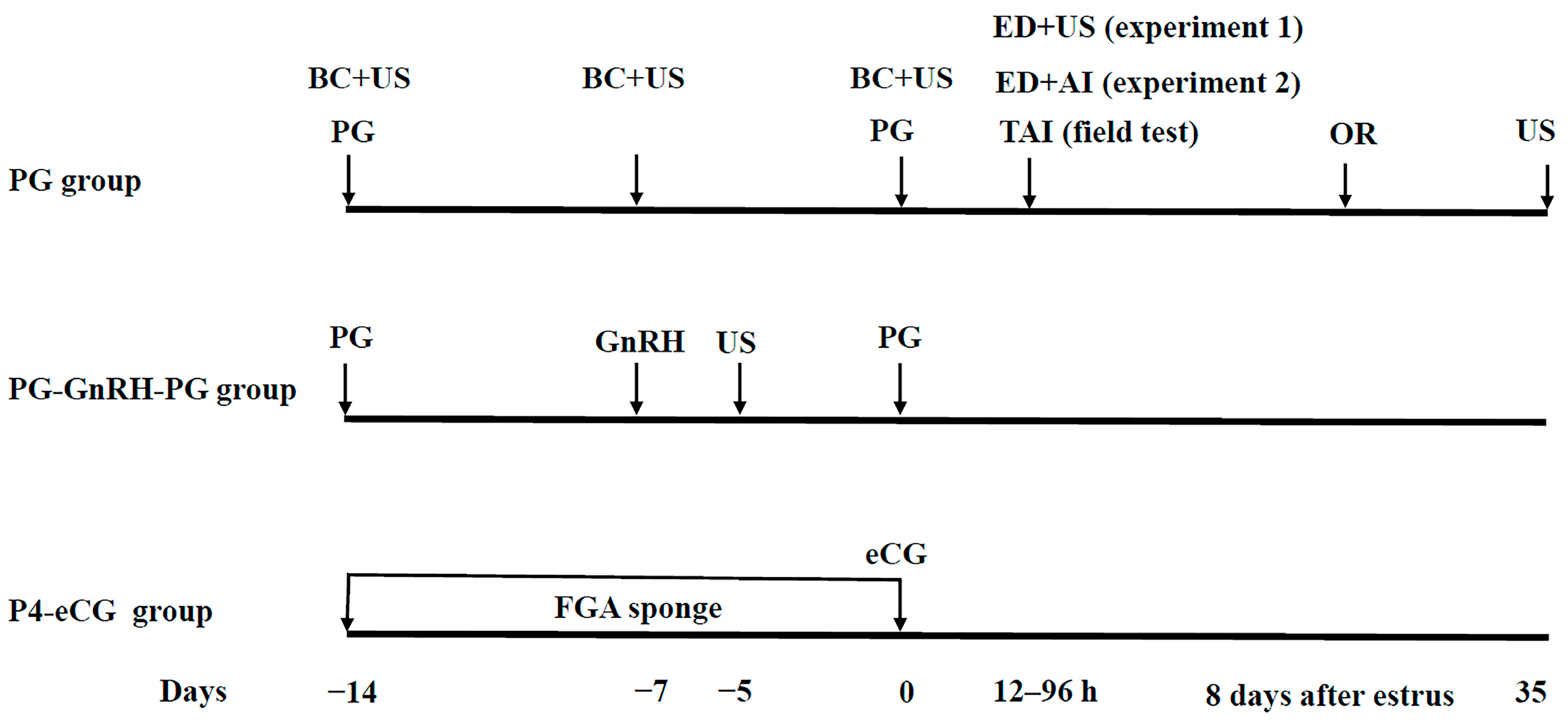
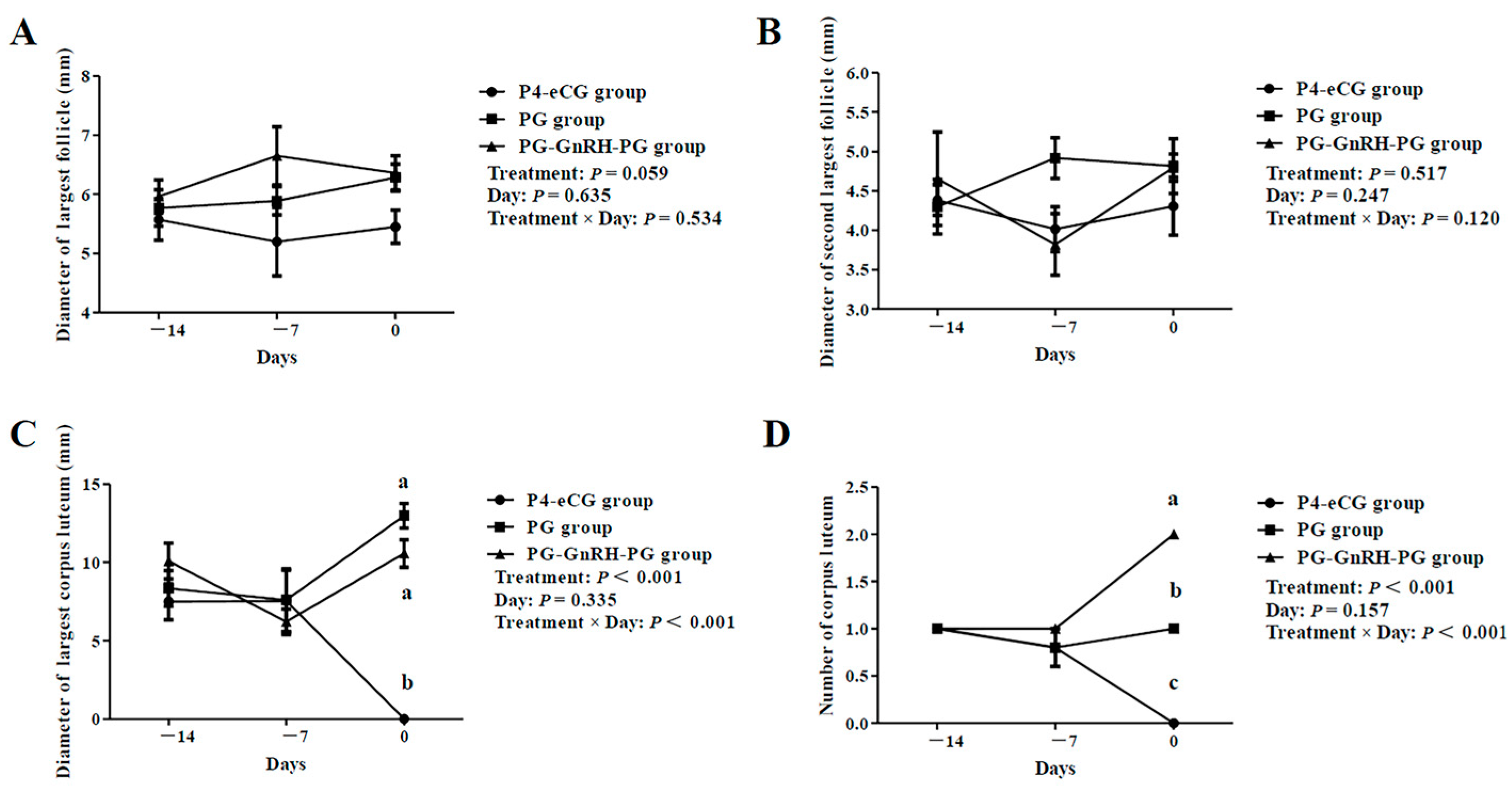
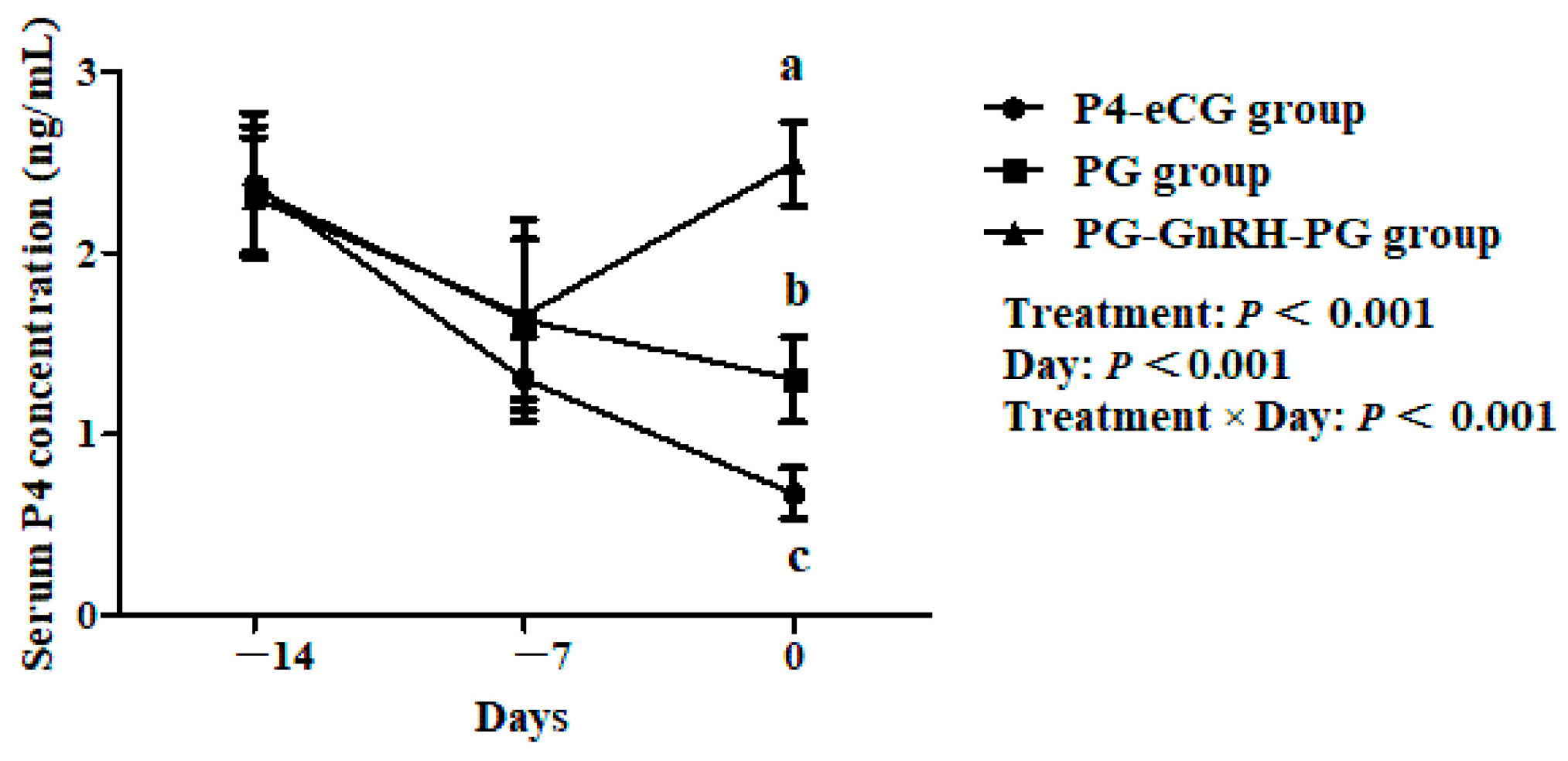
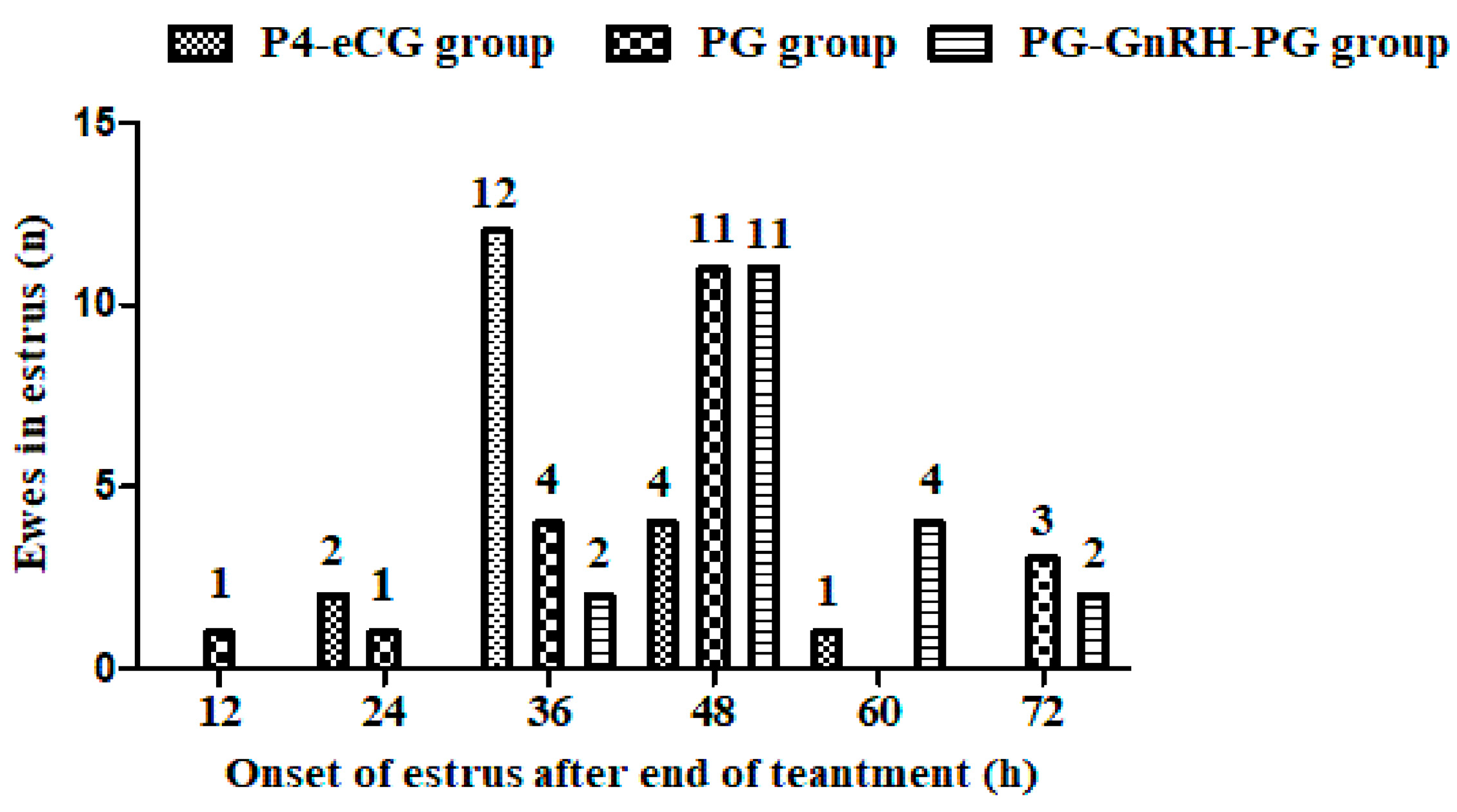
To improve the efficiency of prostaglandin F2α (PG)-based estrus synchronization in sheep, this study assessed the effect of the gonadotropin-releasing hormone (GnRH) included in the long-interval PG treatment regimen for sheep estrus synchronization during the breeding season. In experiment 1, 30 multiparous Mongolian sheep (3–4.5 years old) were randomly divided into three groups. In the progesterone (P4)–equine chorionic gonadotropin (eCG) group (P4-eCG, n = 10), the ewes were synchronized with intravaginal P4 sponges for 14 days, and received an injection of 330 IU of eCG at sponge withdrawal. In the PG group (n = 10), the ewes received two doses of 0.1 mg PG with a 14 day interval. In the PG-GnRH-PG group (n = 10), the ewes were synchronized by two doses of 0.1 mg PG with a 14 day interval like that in the PG group, but received 50 μg of GnRH 7 days after the first injection of PG. It was found that, at the end of treatment, the number of corpus luteum on the ovaries and the concentration of the serum P4 in the PG-GnRH-PG group were significantly higher than that of the PG and P4-eCG groups. In experiment 2, 59 multiparous Mongolian sheep (3–4.5 years old) were assigned to three groups, like in experiment 1 (n = 20, 20 and 19 for the P4-eCG, PG and PG-GnRH-PG groups, respectively). The estrus of ewes in the PG-GnRH-PG group was more synchronous compared to the PG group. After insemination of the estrus ewes, the pregnancy rate was numerically but not significantly higher in the PG-GnRH-PG group than that in the P4-eCG and the PG groups. In a field test, 285 multiparous Hu sheep (3–4.5 years old) were randomly assigned to a P4-eCG group (n = 142) and PG-GnRH-PG group (n = 143). Timed artificial insemination showed no significant differences in the rates of pregnancy and lambing between the PG-GnRH-PG and P4-eCG groups. We conclude that the addition of GnRH in the long-interval PG protocol may improve the efficiency of PG-based estrus synchronization, and would represent a potential alternative to the conventional P4-eCG based protocol during the breeding season in sheep.
Keywords:
estrus synchronization; prostaglandin F2α; GnRH; sheep