Complex Probiotics Suppress Inflammation by Regulating Intestinal Metabolites in Kittens

Simple Summary
Abstract
1. Introduction
2. Materials and Methods
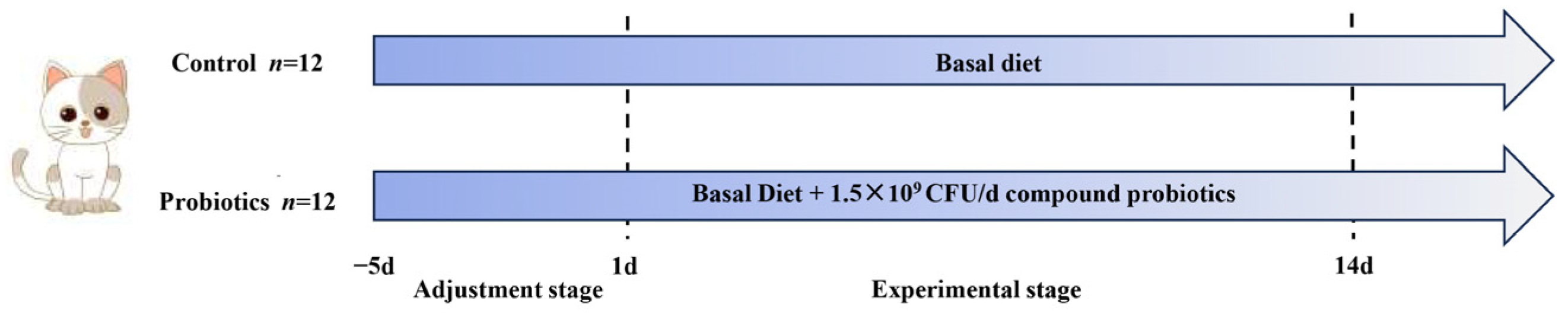
2.1. Animals and Experimental Design
2.2. Fecal Targeted Metabolomics
2.3. Fecal Untargeted Metabolomics
2.4. Statistical Analysis
3. Results
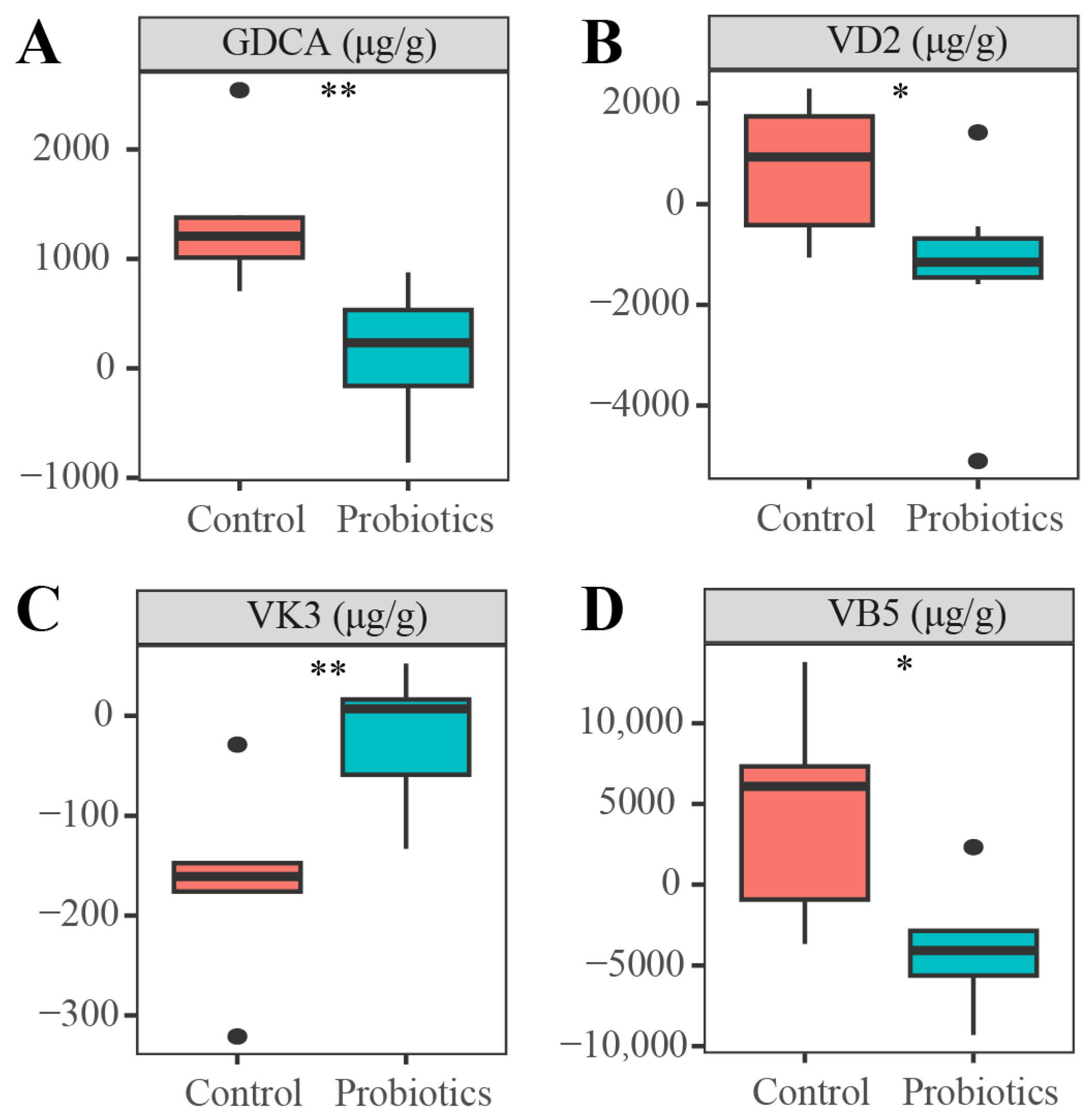
3.1. Effects of Complex Probiotics in Fecal Targeted Metabolomics
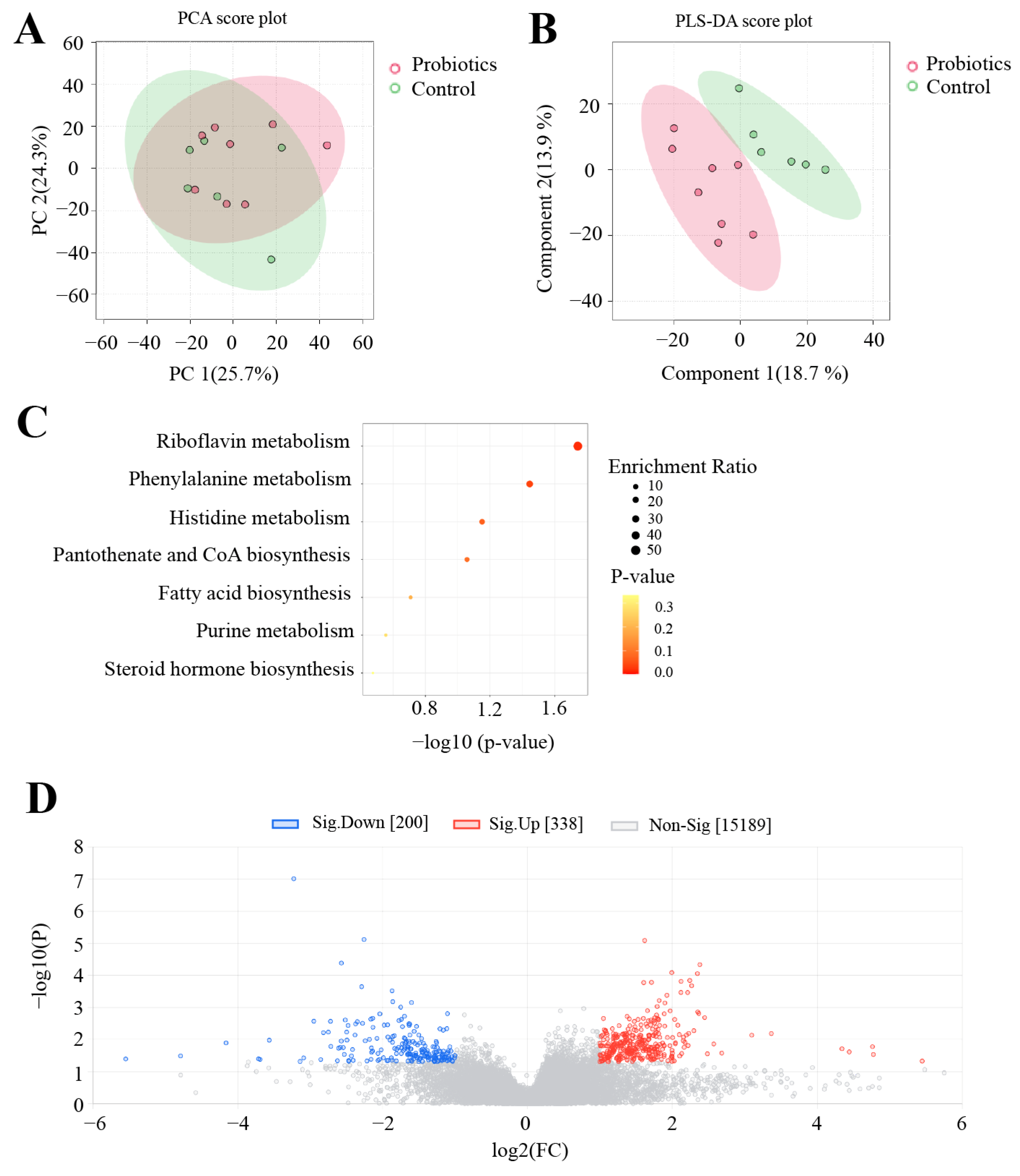
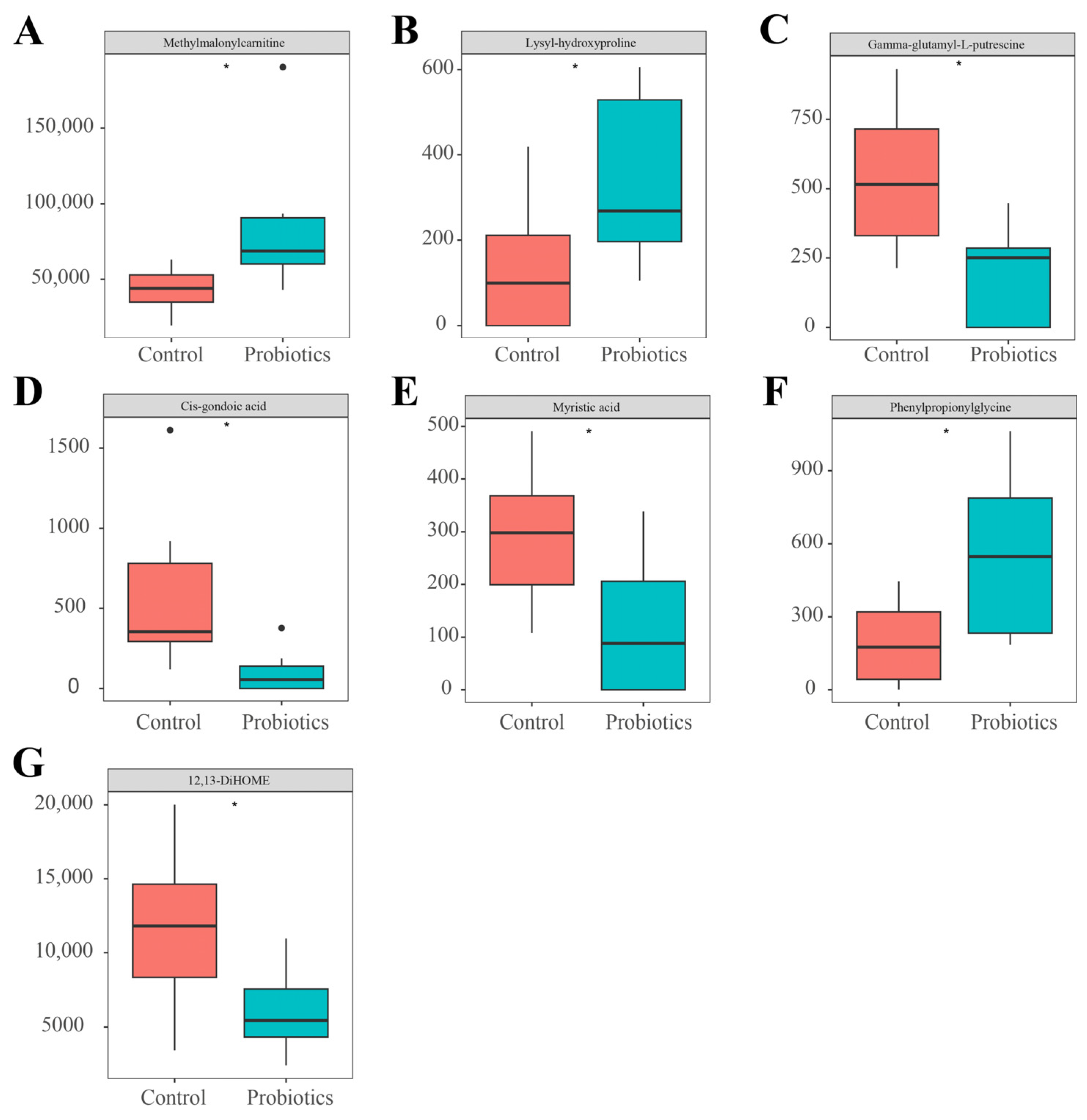
3.2. Effects of Complex Probiotics in Fecal Untargeted Metabolomics
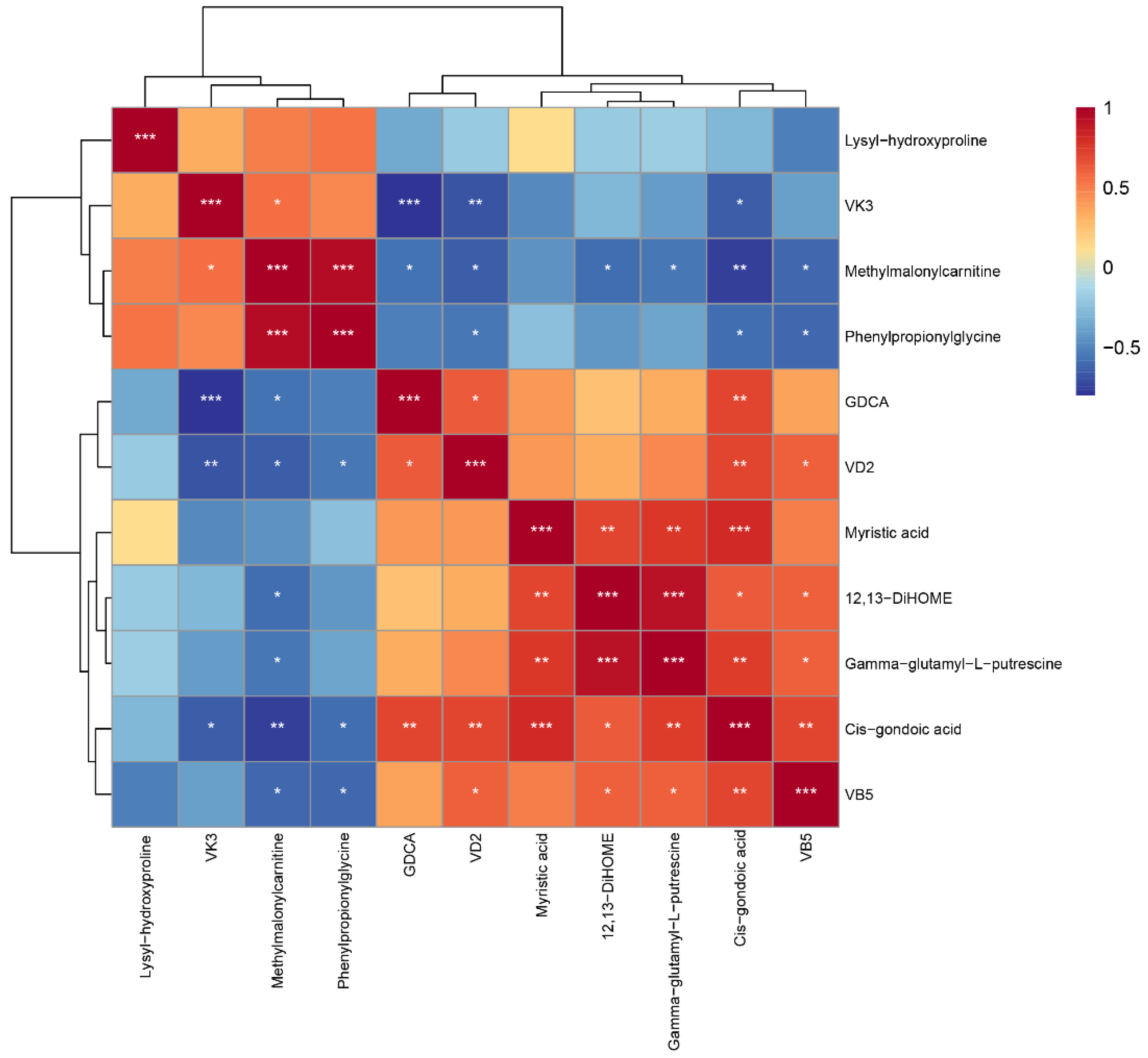
3.3. Correlation Analysis
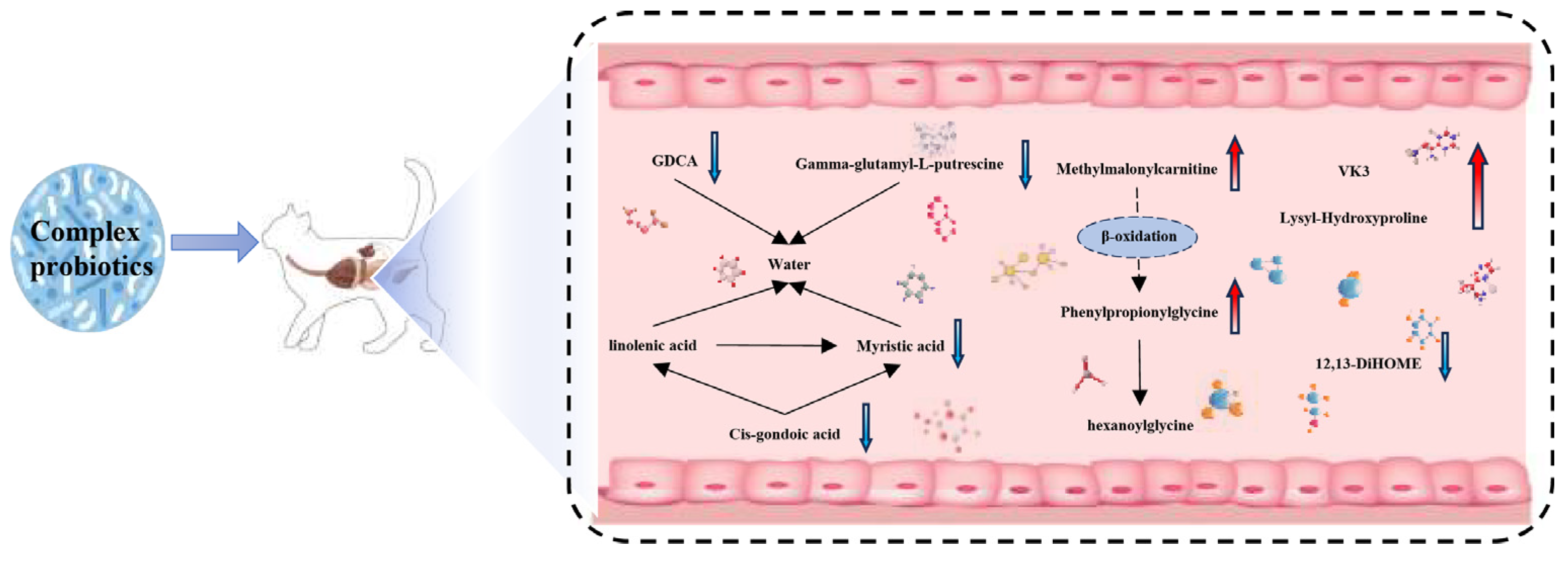
4. Discussion
5. Conclusions
Author Contributions
Funding
Institutional Review Board Statement
Informed Consent Statement
Data Availability Statement
Conflicts of Interest
References
- Wang, W.; Dong, H.; Chang, X.; Chen, Q.; Wang, L.; Chen, S.; Chen, L.; Wang, R.; Ge, S.; Wang, P.; et al. Bifidobacterium lactis and Lactobacillus plantarum Enhance Immune Function and Antioxidant Capacity in Cats through Modulation of the Gut Microbiota. Antioxidants 2024, 13, 764. [Google Scholar] [CrossRef] [PubMed]
- Fusi, E.; Rizzi, R.; Polli, M.; Cannas, S.; Giardini, A.; Bruni, N.; Marelli, S.P. Effects of Lactobacillus acidophilus D2/CSL (CECT 4529) Supplementation on Healthy Cat Performance. Vet. Rec. Open 2019, 6, e000368. [Google Scholar] [CrossRef] [PubMed]
- Yang, Q.; Wu, Z. Gut Probiotics and Health of Dogs and Cats: Benefits, Applications, and Underlying Mechanisms. Microorganisms 2023, 11, 2452. [Google Scholar] [CrossRef] [PubMed]
- Li, Y.; Ali, I.; Lei, Z.; Li, Y.; Yang, M.; Yang, C.; Li, L. Effect of a Multistrain Probiotic on Feline Gut Health through the Fecal Microbiota and Its Metabolite SCFAs. Metabolites 2023, 13, 228. [Google Scholar] [CrossRef]
- Lee, T.-W.; Chao, T.-Y.; Chang, H.-W.; Cheng, Y.-H.; Wu, C.-H.; Chang, Y.-C. The Effects of Bacillus licheniformis—Fermented Products on the Microbiota and Clinical Presentation of Cats with Chronic Diarrhea. Animals 2022, 12, 2187. [Google Scholar] [CrossRef]
- Jia, J.; Frantz, N.; Khoo, C.; Gibson, G.R.; Rastall, R.A.; McCartney, A.L. Investigation of the Faecal Microbiota of Kittens: Monitoring Bacterial Succession and Effect of Diet. FEMS Microbiol. Ecol. 2011, 78, 395–404. [Google Scholar] [CrossRef]
- Zhang, M.; Mo, R.; Li, M.; Qu, Y.; Wang, H.; Liu, T.; Liu, P.; Wu, Y. Comparison of the Effects of Enzymolysis Seaweed Powder and Saccharomyces boulardii on Intestinal Health and Microbiota Composition in Kittens. Metabolites 2023, 13, 637. [Google Scholar] [CrossRef]
- Dolan, E.D.; Doyle, E.; Tran, H.R.; Slater, M.R. Pre-Mortem Risk Factors for Mortality in Kittens Less Than 8 Weeks Old at a Dedicated Kitten Nursery. J. Feline Med. Surg. 2020, 23, 730–737. [Google Scholar] [CrossRef]
- Gore, A.M.; Satyaraj, E.; Labuda, J.; Engler, R.; Sun, P.; Kerr, W.; Conboy-Schmidt, L. Supplementation of Diets with Bovine Colostrum Influences Immune and Gut Function in Kittens. Front. Vet. Sci. 2021, 8, 675712. [Google Scholar] [CrossRef]
- Wang, F.; Mei, X.; Wang, Q.; Zhao, P.; Zhou, Y.; Tang, L.; Wang, B.; Xu, S.; Li, X.; Jin, Q.; et al. Compound Bacillus Alleviates Diarrhea by Regulating Gut Microbes, Metabolites, and Inflammatory Responses in Pet Cats. Anim. Microbiome 2023, 5, 49. [Google Scholar] [CrossRef]
- Han, B.; Liang, S.; Sun, J.; Tao, H.; Wang, Z.; Liu, B.; Wang, X.; Liu, J.; Wang, J. The Effect of Lactobacillus plantarum on the Fecal Microbiota, Short Chain Fatty Acids, Odorous Substances, and Blood Biochemical Indices of Cats. Microorganisms 2024, 12, 91. [Google Scholar] [CrossRef] [PubMed]
- Marshall-Jones, Z.V.; Baillon, M.-L.A.; Croft, J.M.; Butterwick, R.F. Effects of Lactobacillus acidophilus DSM13241 as a probiotic in Healthy Adult Cats. Am. J. Vet. Res. 2005, 67, 1005–1012. [Google Scholar] [CrossRef] [PubMed]
- Bybee, S.; Scorza, A.; Lappin, M. Effect of the Probiotic Enterococcus faecium SF68 on Presence of Diarrhea in Cats and Dogs Housed in an Animal Shelter. J. Vet. Intern. Med. 2011, 25, 856–860. [Google Scholar] [CrossRef] [PubMed]
- Torres-Henderson, C.; Summers, S.; Suchodolski, J.; Lappin, M. Effect of Enterococcus faecium Strain SF68 on Gastrointestinal Signs and Fecal Microbiome in Cats Administered Amoxicillin-Clavulanate. Top. Companion Anim. Med. 2017, 32, 104–108. [Google Scholar] [CrossRef] [PubMed]
- Chen, B.; Jiang, B.; Duan, W.; Liu, T.; Cai, X.; Xu, J.; Zhang, H. Effects of Feeding Compound Probiotics and Enzymes on Growth, Apparent Nutrient Digestiblity, Blood Routine and Fecal Flora of Pet Cats. Feed Ind. 2023, 44, 105–112. [Google Scholar] [CrossRef]
- Li, B.; Hui, F.; Yuan, Z.; Shang, Q.; Shuai, G.; Bao, Y.; Chen, Y. Untargeted Fecal Metabolomics Revealed Biochemical Mechanisms of the Blood Lipid-Lowering Effect of Koumiss Treatment in Patients with Hyperlipidemia. J. Funct. Foods 2021, 78, 104355. [Google Scholar] [CrossRef]
- Zhu, T.; Pan, Q.; Xiao, K.; Zuo, C.; Liu, Q.; Zhou, D.; Tu, K. Stilbenes-Enriched Peanut Sprouts Alleviated Physical Fatigue via Regulating Interactions of Nutrients–Microbiota–Metabolites Revealed by Multi-Omics Analysis. Food Funct. 2024, 15, 2960–2973. [Google Scholar] [CrossRef]
- Xu, J.; Verbrugghe, A.; Lourenço, M.; Janssens, G.P.J.; Liu, D.J.X.; Van de Wiele, T.; Eeckhaut, V.; Van Immerseel, F.; Van de Maele, I.; Niu, Y.; et al. Does Canine Inflammatory Bowel Disease Influence Gut Microbial Profile and Host Metabolism? BMC Vet. Res. 2016, 12, 1–10. [Google Scholar] [CrossRef]
- Ma, F.; Song, Y.; Sun, M.; Wang, A.; Jiang, S.; Mu, G.; Tuo, Y. Exopolysaccharide Produced by Lactiplantibacillus plantarum-12 Alleviates Intestinal Inflammation and Colon Cancer Symptoms by Modulating the Gut Microbiome and Metabolites of C57BL/6 Mice Treated by Azoxymethane/Dextran Sulfate Sodium Salt. Foods 2021, 10, 3060. [Google Scholar] [CrossRef]
- Liu, C.; Qi, X.; Guan, K.; Chen, H.; Li, Q.; Mao, K.; Shen, G.; Ma, Y. Paraprobiotics 5-PA and 6-PA Restore Intestinal Homeostasis by Inhibiting NF-κB/NLRP3 Signaling Pathway and Alleviating Dysbiosis in Mice with Chronic Ulcerative Colitis. J. Funct. Foods 2024, 113, 106048. [Google Scholar] [CrossRef]
- Boeckman, J.X. The Role of the Gut Microbiome in Chronic Inflammatory Diseases and Evaluation of Phage for Targeted Microbiome Engineering. Ph.D. Thesis, Texas A&M University, College Station, TX, USA, 2022. [Google Scholar]
- Guard, B.C. Microbial Characterization, Metabolomic Profiling, and Bile Acid Metabolism in Healthy Dogs and Dogs with Chronic Enteropathy. Ph.D. Thesis, Texas A&M University, College Station, TX, USA, 2017. [Google Scholar]
- Barnes, E.L.; Nestor, M.; Onyewadume, L.; de Silva, P.S.; Korzenik, J.R.; Aguilar, H.; Bailen, L.; Berman, A.; Bhaskar, S.K.; Brown, M.; et al. High Dietary Intake of Specific Fatty Acids Increases Risk of Flares in Patients with Ulcerative Colitis in Remission During Treatment with Aminosalicylates. Clin. Gastroenterol. Hepatol. 2017, 15, 1390–1396.e1391. [Google Scholar] [CrossRef] [PubMed]
- Sung, C.-H.; Pilla, R.; Marsilio, S.; Chow, B.; Zornow, K.A.; Slovak, J.E.; Lidbury, J.A.; Steiner, J.M.; Hill, S.L.; Suchodolski, J.S. Fecal Concentrations of Long-Chain Fatty Acids, Sterols, and Unconjugated Bile Acids in Cats with Chronic Enteropathy. Animals 2023, 13, 2753. [Google Scholar] [CrossRef] [PubMed]
- Lv, X.-C.; Wu, Q.; Cao, Y.-J.; Lin, Y.-C.; Guo, W.-L.; Rao, P.-F.; Zhang, Y.-Y.; Chen, Y.-T.; Ai, L.-Z.; Ni, L. Ganoderic acid A from Ganoderma lucidum Protects Against Alcoholic Liver Injury Through Ameliorating the Lipid Metabolism and Modulating the Intestinal Microbial Composition. Food Funct. 2022, 13, 5820–5837. [Google Scholar] [CrossRef] [PubMed]
- Hall, J.A.; Jewell, D.E.; Ephraim, E. Changes in the Fecal Metabolome Are Associated with Feeding Fiber Not Health Status in Cats with Chronic Kidney Disease. Metabolites 2020, 10, 281. [Google Scholar] [CrossRef]
- Jung, H.R.; Oh, Y.; Jang, D.; Shin, S.; Lee, S.-J.; Kim, J.; Lee, S.E.; Oh, J.; Jang, G.; Kwon, O.; et al. Gut Bacteria-Derived 3-Phenylpropionylglycine Mitigates Adipocyte Differentiation of 3T3-L1 Cells by Inhibiting Adiponectin-PPAR Pathway. Genes Genom. 2022, 45, 71–81. [Google Scholar] [CrossRef]
- Levan, S.R.; Stamnes, K.A.; Lin, D.L.; Panzer, A.R.; Fukui, E.; McCauley, K.; Fujimura, K.E.; McKean, M.; Ownby, D.R.; Zoratti, E.M.; et al. Elevated Faecal 12,13-diHOME Concentration in Neonates at High Risk for Asthma is Produced by Gut Bacteria and Impedes Immune Tolerance. Nat. Microbiol. 2019, 4, 1851–1861. [Google Scholar] [CrossRef]
- Lai, Y.; Masatoshi, H.; Ma, Y.; Guo, Y.; Zhang, B. Role of Vitamin K in Intestinal Health. Front. Immunol. 2022, 12, 791565. [Google Scholar] [CrossRef]
- Shiraishi, E.; Iijima, H.; Shinzaki, S.; Nakajima, S.; Inoue, T.; Hiyama, S.; Kawai, S.; Araki, M.; Yamaguchi, T.; Hayashi, Y.; et al. Vitamin K Deficiency Leads to Exacerbation of Murine Dextran Sulfate Sodium-Induced Colitis. J. Gastroenterol. 2015, 51, 346–356. [Google Scholar] [CrossRef]
- Ogawa, M.; Nakai, S.; Deguchi, A.; Nonomura, T.; Masaki, T.; Uchida, N.; Yoshiji, H.; Kuriyama, S. Vitamins K2, K3 and K5 Exert Antitumor Effects on Established Colorectal Cancer in Mice by Inducing Apoptotic Death of Tumor Cells. Int. J. Oncol. 2007, 31, 323–331. [Google Scholar] [CrossRef][Green Version]
- Li, L.; Liu, Z.; Fang, B.; Xu, J.; Dong, X.; Yang, L.; Zhang, Z.; Guo, S.; Ding, B. Effects of Vitamin A and K3 on Immune Function and Intestinal Antioxidant Capacity of Aged Laying Hens. Braz. J. Poult. Sci. 2022, 24, eRBCA-2021. [Google Scholar] [CrossRef]
- James, S.C.; Fraser, K.; Young, W.; Heenan, P.E.; Gearry, R.B.; Keenan, J.I.; Talley, N.J.; Joyce, S.A.; McNabb, W.C.; Roy, N.C. Concentrations of Fecal Bile Acids in Participants with Functional Gut Disorders and Healthy Controls. Metabolites 2021, 11, 612. [Google Scholar] [CrossRef]
- Wang, X.; Qin, Y.; Li, J.; Huang, P.; Li, Y.; Huang, J.; Wang, Q.; Yang, H. Vitamin B5 Supplementation Enhances Intestinal Development and Alters Microbes in Weaned Piglets. Anim. Biotechnol. 2024, 35, 2335340. [Google Scholar] [CrossRef] [PubMed]
- Li, L.; Zhang, L.; Zhou, L.; Jin, M.; Xu, L. Chain Length-Dependent Inulin Alleviates Diet-Induced Obesity and Metabolic Disorders in Mice. Food Sci. Nutr. 2021, 9, 3470–3482. [Google Scholar] [CrossRef] [PubMed]
- Tan, H.C.; Hsu, J.W.; Tai, E.S.; Chacko, S.; Kovalik, J.-P.; Jahoor, F. The Impact of Obesity-Associated Glycine Deficiency on the Elimination of Endogenous and Exogenous Metabolites via the Glycine Conjugation Pathway. Front. Endocrinol. 2024, 15, 1343738. [Google Scholar] [CrossRef]
- Fedry, J.; Blais, A.; Even, P.C.; Piedcoq, J.; Fromentin, G.; Gaudichon, C.; Azzout-Marniche, D.; Tomé, D. Urinary Metabolic Profile Predicts High-Fat Diet Sensitivity in the C57Bl6/J Mouse. J. Nutr. Biochem. 2016, 31, 88–97. [Google Scholar] [CrossRef]
- Gao, X.; Chang, S.; Liu, S.; Peng, L.; Xie, J.; Dong, W.; Tian, Y.; Sheng, J. Correlations Between α-Linolenic Acid-Improved Multitissue Homeostasis and Gut Microbiota in Mice Fed a High-Fat Diet. mSystems 2020, 5, 10–1128. [Google Scholar] [CrossRef] [PubMed]
- Ni, Z.; Ding, J.; Zhao, Q.; Cheng, W.; Yu, J.; Zhou, L.; Sun, S.; Yu, C. Alpha-Linolenic Acid Regulates the Gut Microbiota and the Inflammatory Environment in a Mouse Model of Endometriosis. Am. J. Reprod. Immunol. 2021, 86, e13471. [Google Scholar] [CrossRef]



| Items | Content (%) |
|---|---|
| Ingredients | |
| Beef | 20.00 |
| Salmon | 16.00 |
| Mackerel | 8.00 |
| Purple potatoes | 7.00 |
| Chicken | 7.00 |
| Duck | 5.00 |
| Chickpea | 4.00 |
| Chicken oil | 3.00 |
| Other substances 2 | 30.00 |
| Nutrient content | |
| Crude protein | 35.00 |
| Crude fat | 18.00 |
| Moisture | 10.00 |
| Ash | 8.00 |
| Crude fiber | 3.50 |
| Calcium | 1.30 |
| Phosphorus | 1.20 |
| Taurine | 0.35 |
| Omega-6 | 2.60 |
| Water-soluble chloride | 0.30 |
| Number | Metabolite Identity | Molecular Fomula | Mass-to-Charge Ratio (m/z) | Fold Change | p-Value | VIP | Retention Time |
|---|---|---|---|---|---|---|---|
| 1 | Cis-4-Decenoic acid | C10H18O2 | 170.2533 | 0.42 | 0.04 | 1.64 | 9.93 |
| 2 | Menadione | C11H8O2 | 172.0854 | 0.43 | 0.02 | 1.39 | 9.82 |
| 3 | Alprazolam | C17H13ClN4 | 308.5893 | 0.42 | 0.03 | 1.94 | 9.71 |
| 4 | Progesterone | C21H30O2 | 314.2298 | 0.18 | 0.04 | 1.75 | 8.33 |
| 5 | Monoethyl phthalate | C10H10O4 | 194.1222 | 0.32 | 0.03 | 2.03 | 8.12 |
| 6 | L-Homocysteic acid | C4H9NO5S | 169.0487 | 0.33 | 0.02 | 1.89 | 7.87 |
| 7 | Dopamine 3-O-sulfate | C8H11NO5S | 219.0321 | 0.47 | 0.04 | 1.83 | 7.87 |
| 8 | Norrubrofusarin 6-beta-gentiobioside | C26H30O15 | 582.1328 | 0.32 | 0.04 | 1.49 | 7.84 |
| 9 | Phenylacetic acid | C8H8O2 | 136.0447 | 0.34 | 0.03 | 1.97 | 7.84 |
| 10 | 6-(2-Carboxyethyl)-7-hydroxy-2,2-dimethyl-4-chromanone glucoside | C20H26O10 | 426.1406 | 0.32 | 0.02 | 2.23 | 7.83 |
| 11 | 4-Hydroxy-1H-indole-3-acetonitrile | C10H8N2O | 156.1251 | 0.32 | 0.02 | 2.33 | 7.70 |
| 12 | 4-Aminohippuric acid | C9H10N2O3 | 194.0179 | 0.28 | 0.01 | 2.45 | 7.48 |
| 13 | Pantothenic acid | C9H17NO5 | 205.1075 | 0.23 | 0.01 | 2.47 | 7.08 |
| 14 | Glutarylcarnitine | C12H21NO6 | 261.1292 | 0.21 | 0.01 | 2.66 | 7.06 |
| 15 | L-leucyl-L-proline | C11H20N2O3 | 228.1447 | 0.17 | 0.01 | 2.34 | 6.02 |
| 16 | N-Undecanoylglycine | C13H25NO3 | 229.1986 | 0.37 | 0.02 | 1.99 | 5.70 |
| 17 | Hydroxypropionylcarnitine | C10H19NO5 | 219.1186 | 0.43 | 0.02 | 1.99 | 5.66 |
| 18 | 2-Hydroxy-3-methylbutyric acid | C5H10O3 | 118.0553 | 0.20 | 0.01 | 2.67 | 5.17 |
| 19 | Riboflavin | C17H20N4O6 | 376.1065 | 2.15 | 0.01 | 2.09 | 4.77 |
| 20 | Methylmalonylcarnitine | C11H19NO6 | 247.1546 | 2.00 | 0.03 | 1.93 | 4.77 |
| 21 | Gamma-glutamyl-L-putrescine | C9H19N3O3 | 217.1278 | 0.08 | 0.04 | 2.24 | 4.77 |
| 22 | N2-Succinyl-L-ornithine | C9H16N2O5 | 232.0989 | 4.58 | 0.01 | 1.92 | 4.64 |
| 23 | Lysyl-Hydroxyproline | C11H21N3O4 | 259.1462 | 2.13 | 0.03 | 1.80 | 4.13 |
| 24 | Phenylpropionylglycine | C11H13NO3 | 193.0877 | 3.38 | 0.02 | 1.94 | 3.89 |
| 25 | Aspartyl-Histidine | C10H14N4O5 | 270.0777 | 43.71 | 0.04 | 1.56 | 2.87 |
| 26 | Guanine | C5H5N5O | 135.141 | 3.60 | 0.04 | 1.72 | 2.19 |
| 27 | N-gamma-L-Glutamyl-D-alanine | C8H14N2O5 | 218.0833 | 3.25 | 0.04 | 1.68 | 2.02 |
| 28 | Catelaidic acid | C22H42O2 | 338.3171 | 0.18 | 0.01 | 2.24 | 17.01 |
| 29 | Vaccenic acid | C18H34O2 | 282.2622 | 0.31 | 0.01 | 1.87 | 17.00 |
| 30 | Beta-Elemonic acid | C30H46O3 | 454.7252 | 0.42 | 0.02 | 1.52 | 16.33 |
| 31 | Cis-gondoic acid | C20H38O2 | 310.2857 | 0.18 | 0.01 | 2.06 | 16.16 |
| 32 | Barogenin | C27H42O4 | 430.3404 | 0.37 | 0.02 | 2.05 | 14.68 |
| 33 | 5-Nonadecyl-1,3-benzenediol | C25H44O2 | 376.2962 | 0.41 | 0.04 | 1.67 | 14.49 |
| 34 | 4,8 dimethylnonanoyl carnitine | C18H35NO4 | 315.2392 | 0.38 | 0.03 | 2.26 | 13.86 |
| 35 | 3-Hydroxy-5, 8-tetradecadiencarnitine | C21H37NO5 | 369.2602 | 0.12 | 0.04 | 1.93 | 13.16 |
| 36 | Trans-2-Dodecenoylcarnitine | C19H35NO4 | 327.2906 | 0.39 | 0.03 | 2.20 | 12.69 |
| 37 | 18-Oxocortisol | C21H28O6 | 376.1948 | 0.19 | 0.01 | 2.49 | 12.10 |
| 38 | Myristic acid | C14H28O2 | 228.2067 | 0.40 | 0.02 | 2.32 | 11.70 |
| 39 | 12,13-DiHOME | C18H34O4 | 314.2391 | 0.43 | 0.04 | 2.20 | 11.65 |
| 40 | Pelargonic acid | C9H18O2 | 158.2537 | 0.18 | 0.04 | 2.06 | 11.11 |
| 41 | 3-Hexanone | C6H12O | 84.17521 | 0.44 | 0.03 | 2.20 | 10.20 |
| 42 | 4,11,13,15-Tetrahydroridentin B | C15H24O4 | 268.0904 | 0.48 | 0.04 | 2.02 | 1.36 |
| 43 | 3-Methylhistidine | C7H11N3O2 | 169.0778 | 0.26 | 0.04 | 2.26 | 0.86 |
| 44 | 3,7,11,15-Tetramethyl-6,10,14-hexadecatrien-1-ol | C20H36O | 276.8187 | 2.48 | 0.04 | 1.78 | 0.73 |
Disclaimer/Publisher’s Note: The statements, opinions and data contained in all publications are solely those of the individual author(s) and contributor(s) and not of MDPI and/or the editor(s). MDPI and/or the editor(s) disclaim responsibility for any injury to people or property resulting from any ideas, methods, instructions or products referred to in the content. |
© 2025 by the authors. Licensee MDPI, Basel, Switzerland. This article is an open access article distributed under the terms and conditions of the Creative Commons Attribution (CC BY) license (https://creativecommons.org/licenses/by/4.0/).
Share and Cite
Zhu, S.; Zha, M.; Xia, Y. Complex Probiotics Suppress Inflammation by Regulating Intestinal Metabolites in Kittens. Animals 2025, 15, 272. https://doi.org/10.3390/ani15020272
Zhu S, Zha M, Xia Y. Complex Probiotics Suppress Inflammation by Regulating Intestinal Metabolites in Kittens. Animals. 2025; 15(2):272. https://doi.org/10.3390/ani15020272
Chicago/Turabian StyleZhu, Shimin, Musu Zha, and Yanan Xia. 2025. "Complex Probiotics Suppress Inflammation by Regulating Intestinal Metabolites in Kittens" Animals 15, no. 2: 272. https://doi.org/10.3390/ani15020272
APA StyleZhu, S., Zha, M., & Xia, Y. (2025). Complex Probiotics Suppress Inflammation by Regulating Intestinal Metabolites in Kittens. Animals, 15(2), 272. https://doi.org/10.3390/ani15020272