Effects of Early Lactation Milking Frequency in an Automated Milking System on Cow Performance


1
Department of Animal and Dairy Sciences, University of Wisconsin-Madison, Madison, WI 53706, USA
2
US Dairy Forage Research Center, USDA-ARS, Madison, WI 53706, USA
3
School of Agriculture, University of Wisconsin-Platteville, Platteville, WI 53818, USA
*
Author to whom correspondence should be addressed.
Animals 2024, 14(16), 2293; https://doi.org/10.3390/ani14162293
Submission received: 3 July 2024
/
Revised: 25 July 2024
/
Accepted: 29 July 2024
/
Published: 6 August 2024
(This article belongs to the Special Issue Improving Sustainability of Ruminant Agriculture: New Strategies and Tools)
Simple Summary
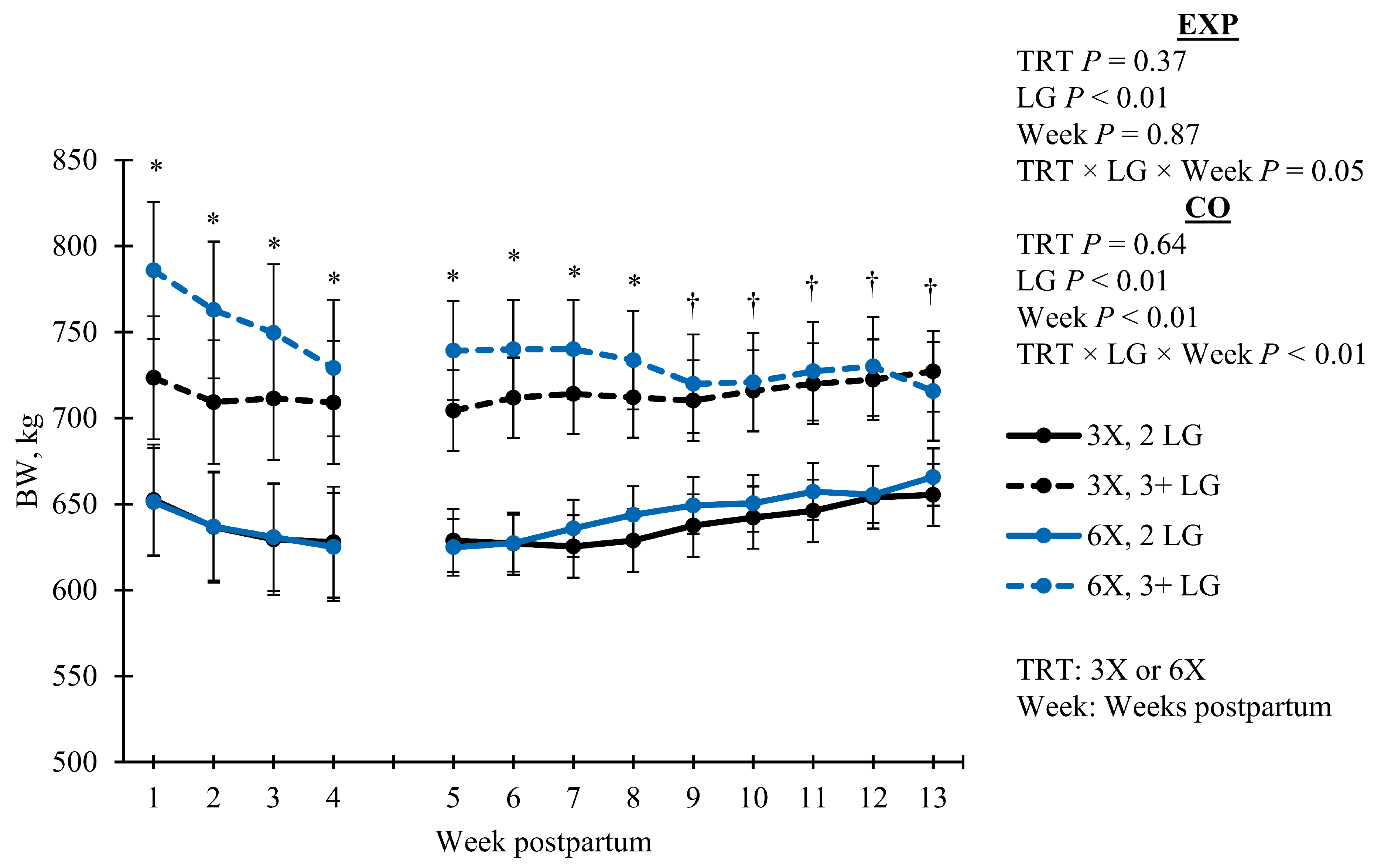
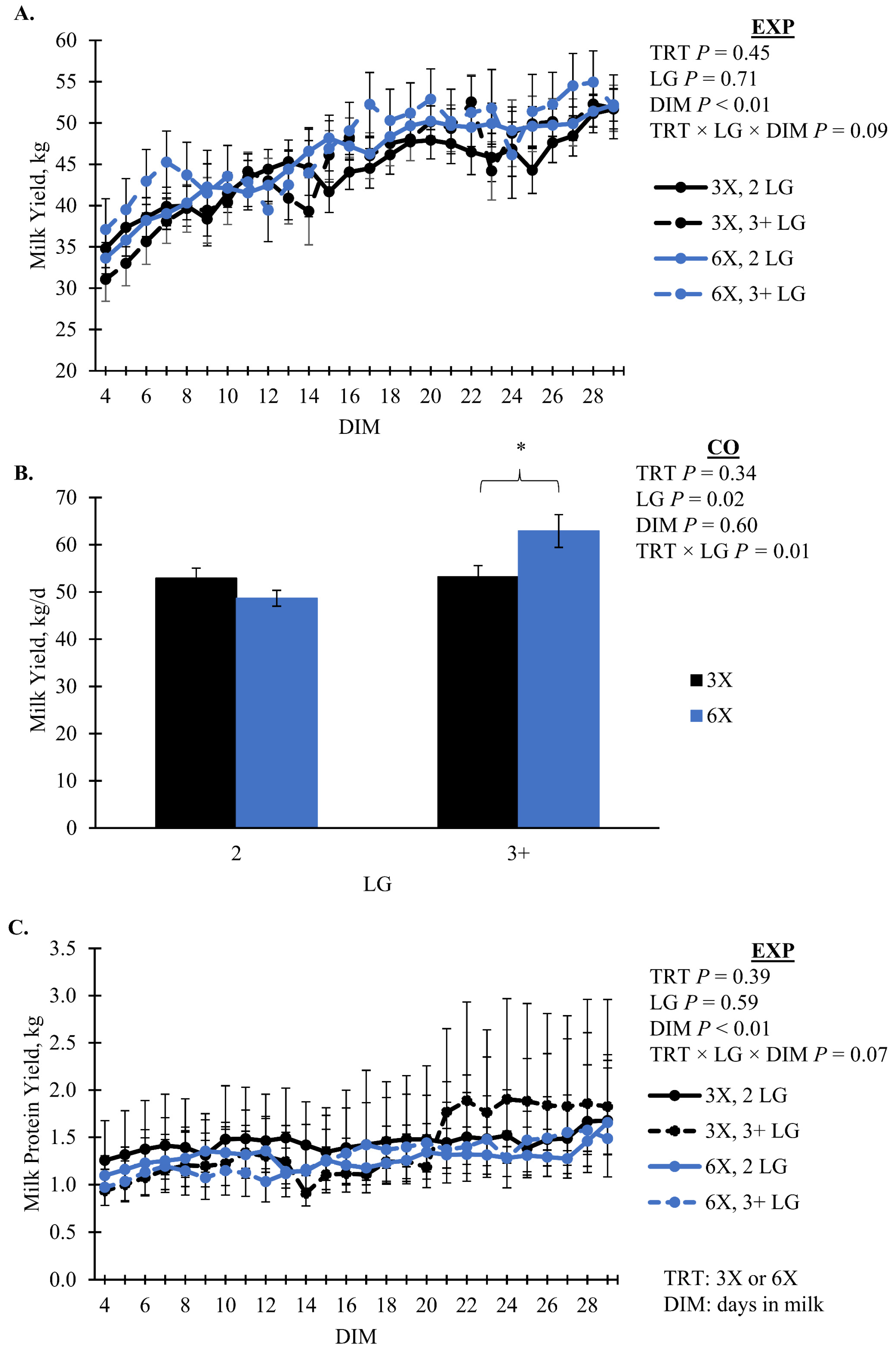
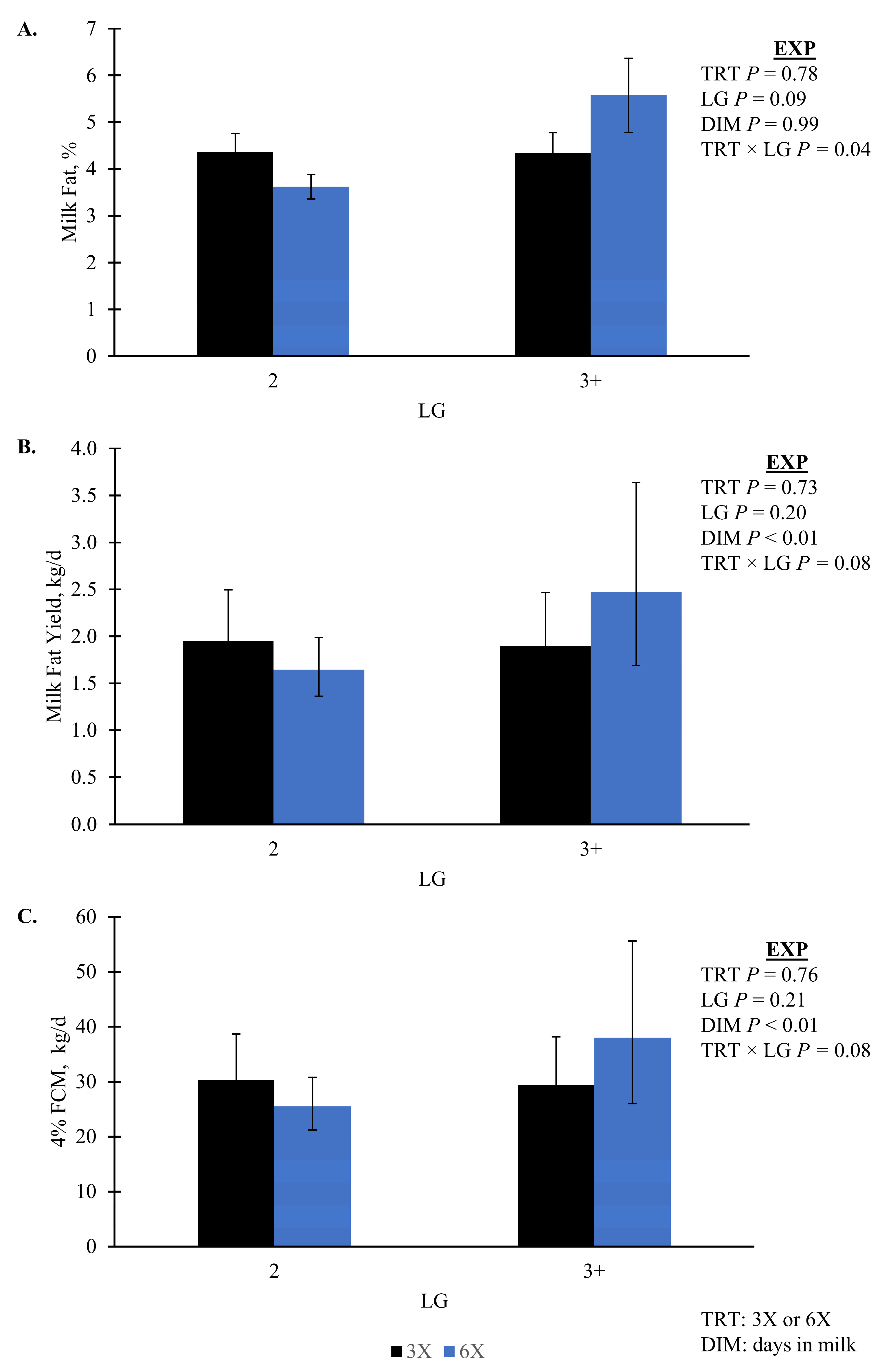
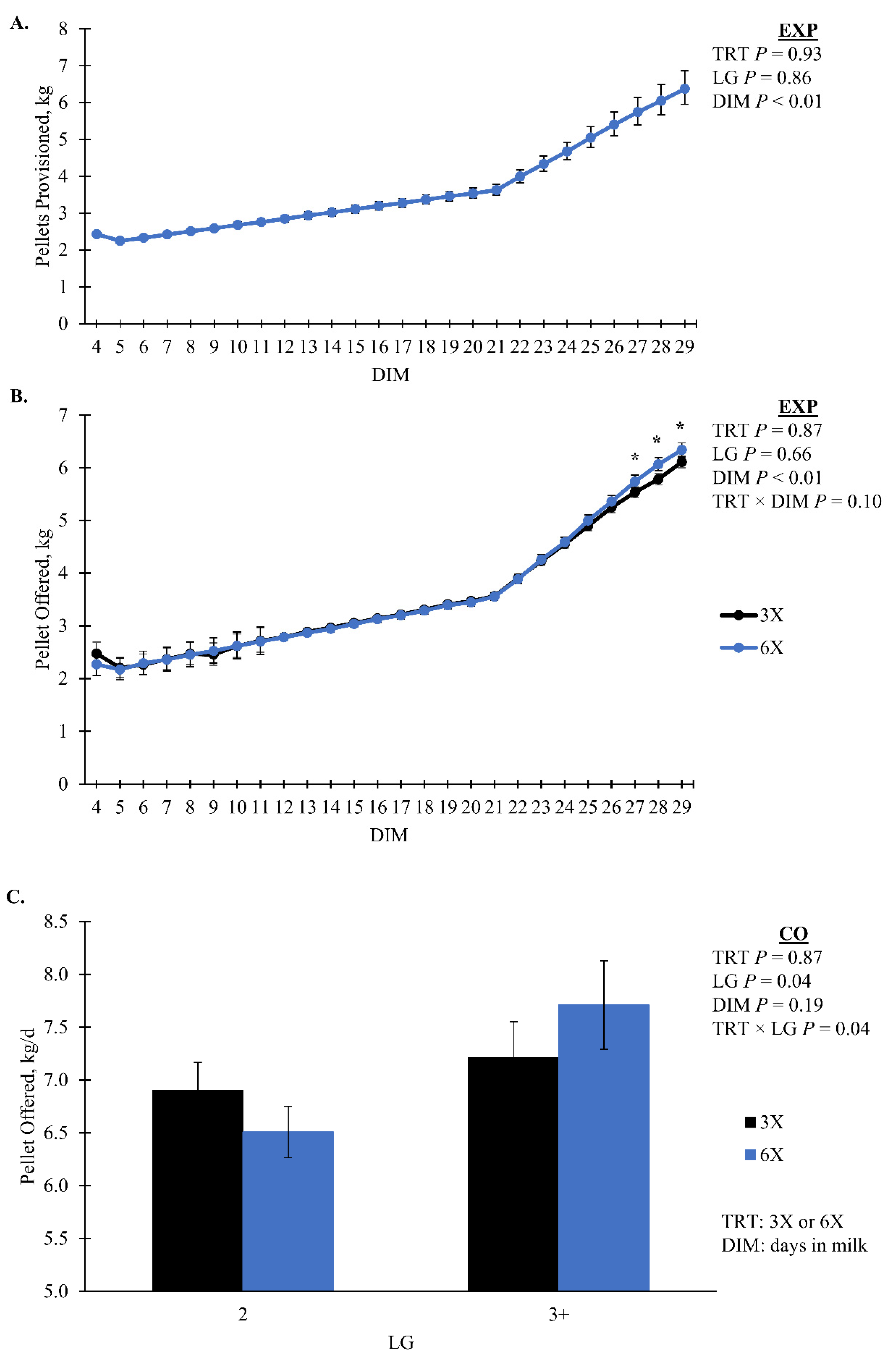
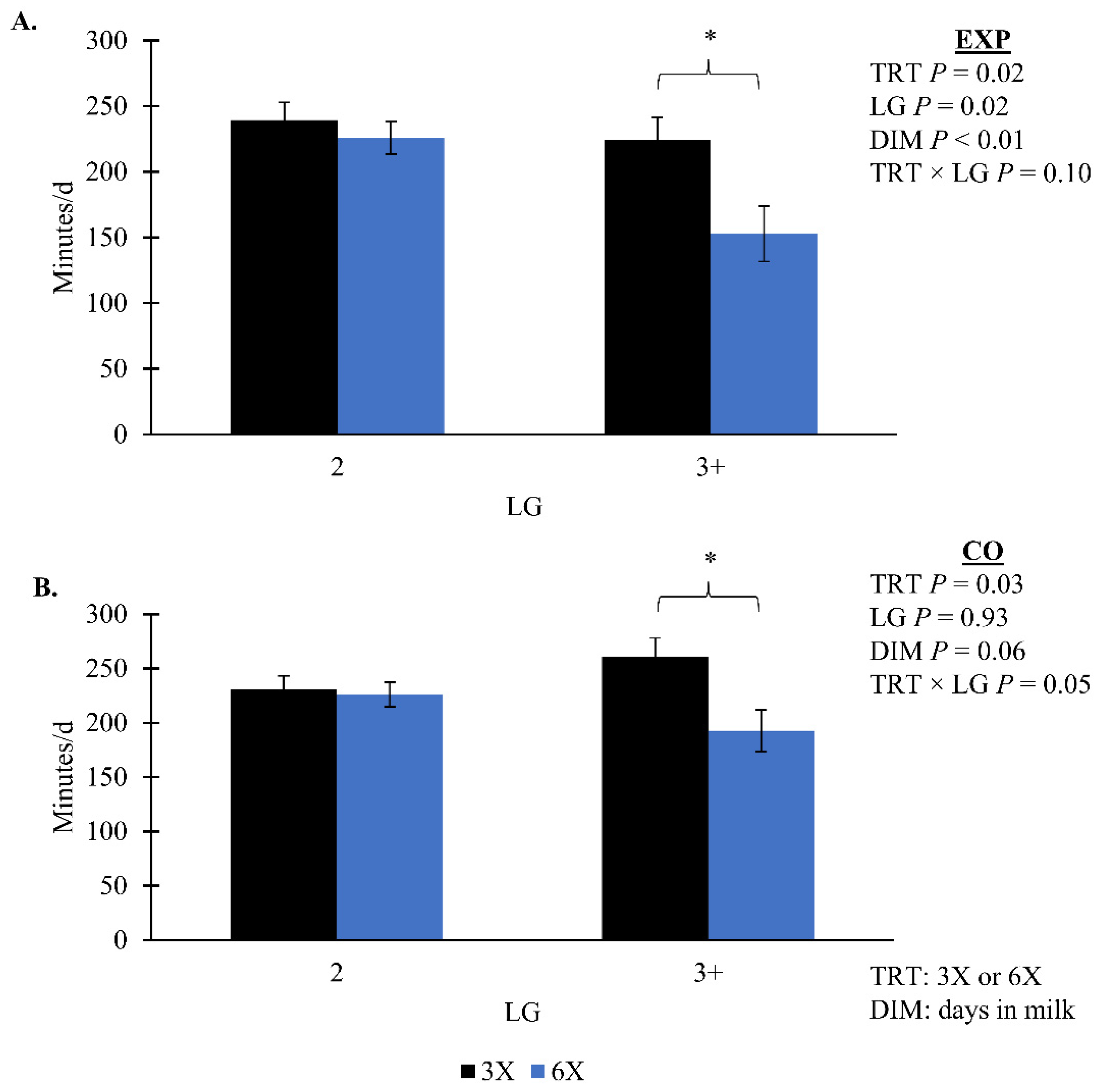
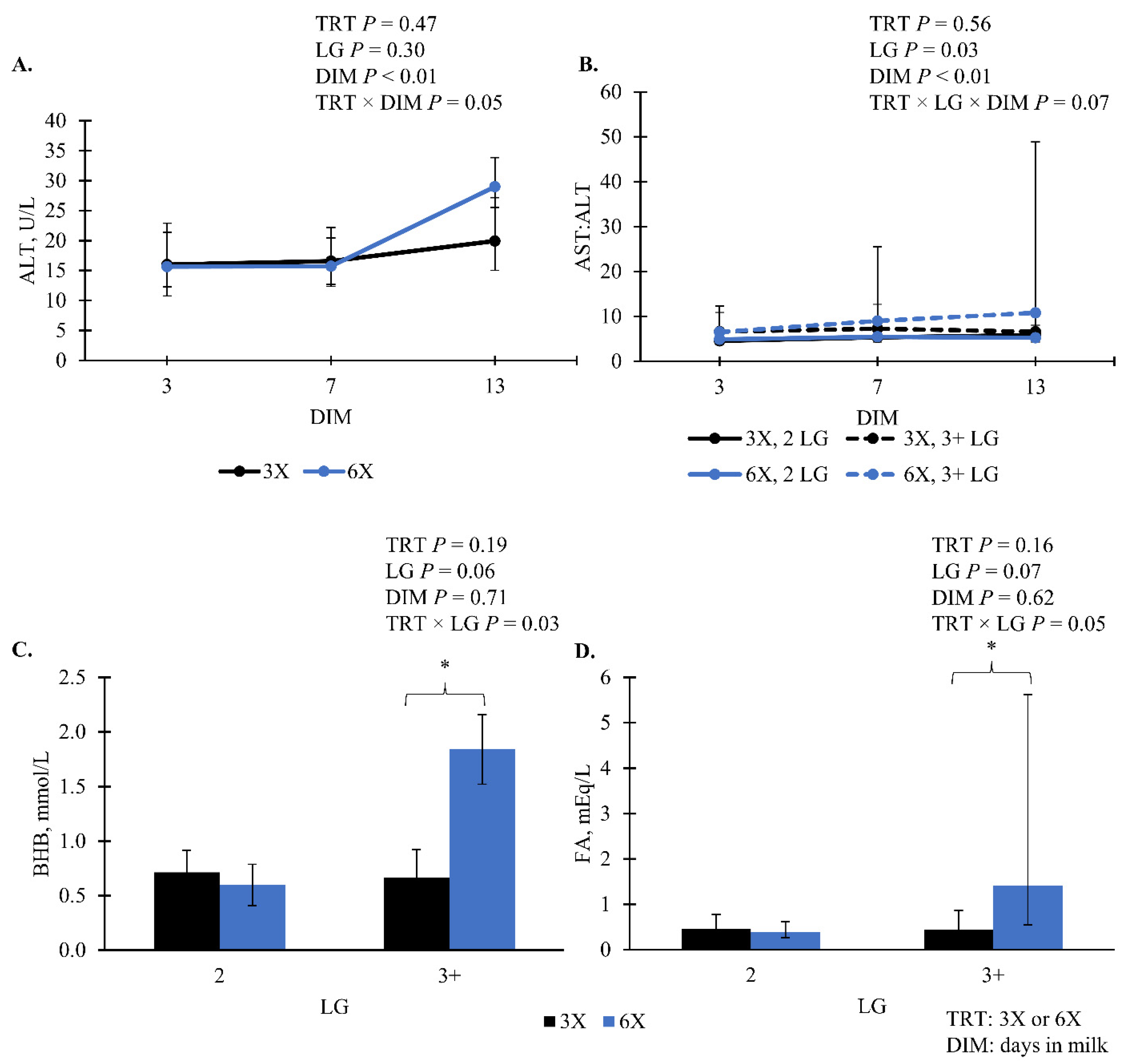
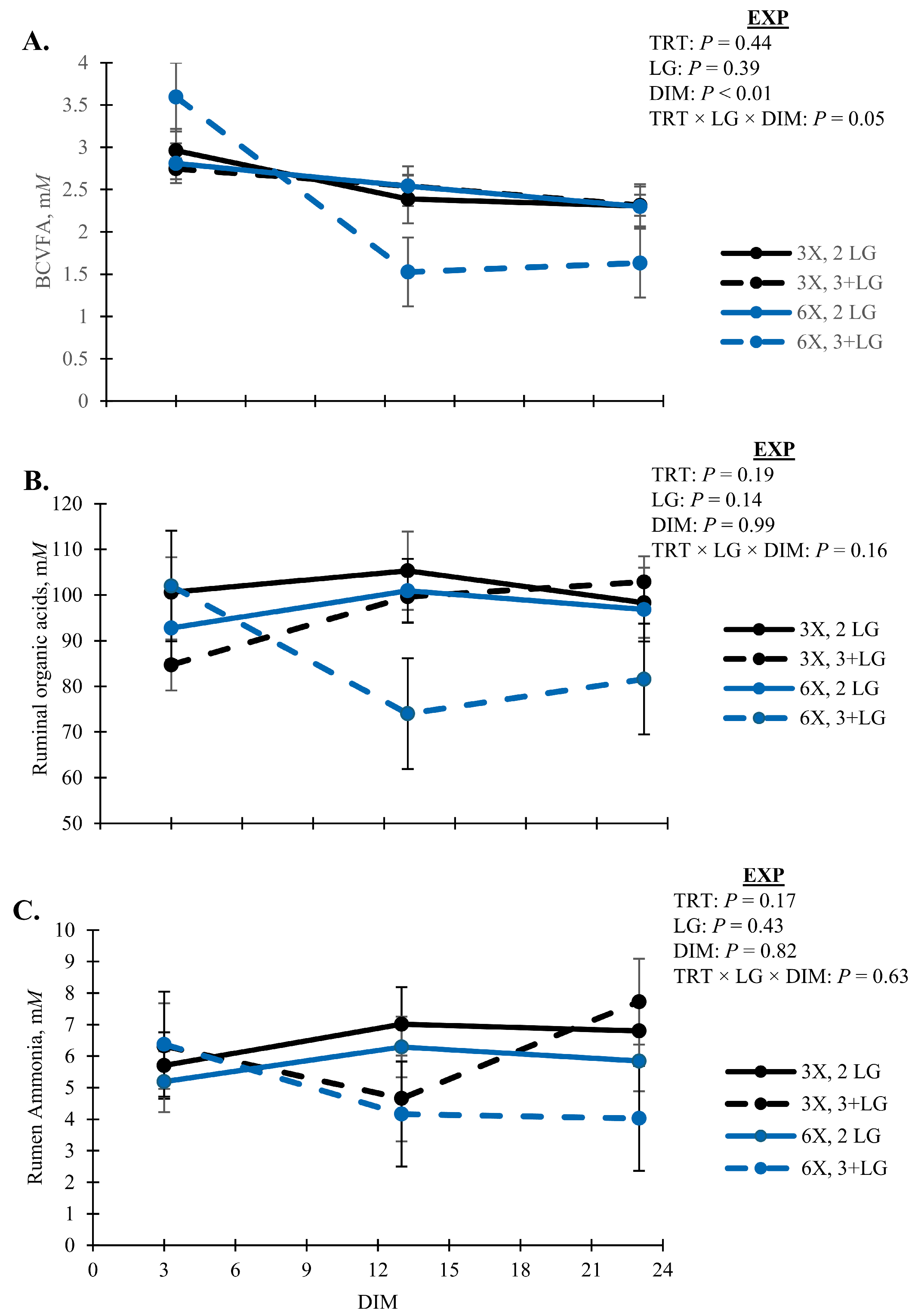
The increasing use of automated milking systems (AMS) in the dairy industry has led to the necessity for changes in management practices implemented by producers. This study investigated the productive and metabolic impact of three versus six milkings per day (MPD) during early lactation on multiparous Holstein cows managed in an AMS. Mature cows (third and greater parity) with six MPD had greater milk fat production during the experimental phase (4 to 29 days in milk; DIM) and milk production during the carryover phase (30 to 90 DIM) than mature three MPD cows. The composition of milk fatty acids differed between MPD groups with cows, with three MPD having greater short-, medium-, odd- and branched-chain fatty acids during the experimental phase compared to cows with six MPD. Based on greater blood fatty acid and β-hydroxybutyrate concentrations, the mature six MPD cows may have been in a greater postpartum nutrient deficit and at greater risk of metabolic illness. Our findings suggest a need to strategically manage the MPD or nutrition of mature, early lactation dairy cows in an AMS.
Abstract
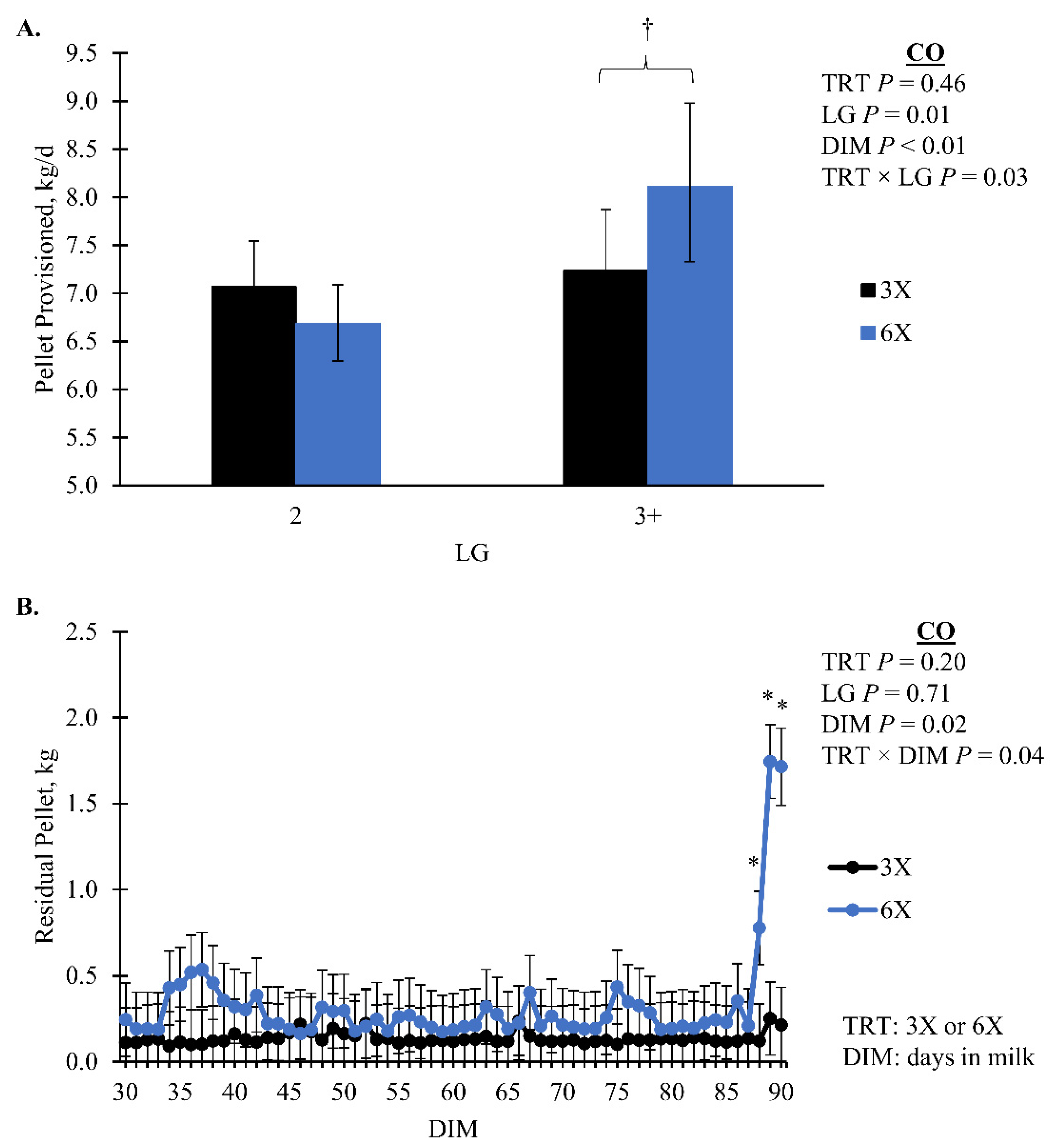
Automated milking systems (AMS) are increasingly adopted for dairy cow production, promoting individualized cow management dependent on factors like lactation stage, age, and productivity. The study objective was to investigate the effects of early lactation milking frequency on cows milked via AMS. Multiparous Holstein cows blocked by parity and due date were randomly assigned to treatments (n = 8 per treatment): three (3X) or six (6X) milkings per day (MPD). The experimental phase (EXP) was defined as 4 to 29 days in milk (DIM). The AMS settings were programed so 3X cows were limited to three MPD while 6X cows were allowed six MPD. Afterwards was the carry over phase (CO) ranging from 30 to 90 DIM; all cows were allowed up to six MPD. Measurements by the AMS included bodyweight, milk yield (MY), and pellet intake. Weekly composite milk samples were analyzed for macronutrient composition and fatty acid (FA) profile. Coccygeal blood was sampled at 3, 8 ± 1, and 13 ± 1 DIM; concentrations of blood plasma analytes were quantified. Greater MPD was achieved for 6X cows versus 3X cows during EXP, but similar during the CO. Daily MY was non-separable during the EXP while 6X cows in their third or greater lactation group (3 + LG) had greater MY than 3X cows of the same LG during the CO. Milk fat content and 4% fat-corrected MY were both greater for 6X, 3 + LG cows during the EXP compared to 3X, 3 + LG cows. Milk FA methyl esters (FAME) proportions were different between MPD groups, with 6X, 3 + LG cows having the lowest short, even-chain FA from de novo or post-absorptive origin. Differences in analytes indicated that 6X, 3 + LG cows experienced metabolic stress and incorporated greater FA from adipose tissue. Greater early lactation MPD in AMS may shift cow nutrient partitioning to support greater production in 3+ parity cows.