Influence of Different Light Spectrums on Behaviour and Welfare in Laying Hens

1
Department of Animal Environment and Health, Swedish University of Agricultural Sciences, 750 07 Uppsala, Sweden
2
Department of Anatomy, Physiology and Biochemistry, Swedish University of Agricultural Sciences, 750 07 Uppsala, Sweden
3
Department of Animal Nutrition and Management, Swedish University of Agricultural Sciences, 750 07 Uppsala, Sweden
4
Department of Crop Production Ecology, Swedish University of Agricultural Sciences, 750 07 Uppsala, Sweden
*
Author to whom correspondence should be addressed.
Animals 2021, 11(4), 924; https://doi.org/10.3390/ani11040924
Submission received: 4 February 2021
/
Revised: 12 March 2021
/
Accepted: 20 March 2021
/
Published: 24 March 2021
(This article belongs to the Section Poultry)
Simple Summary
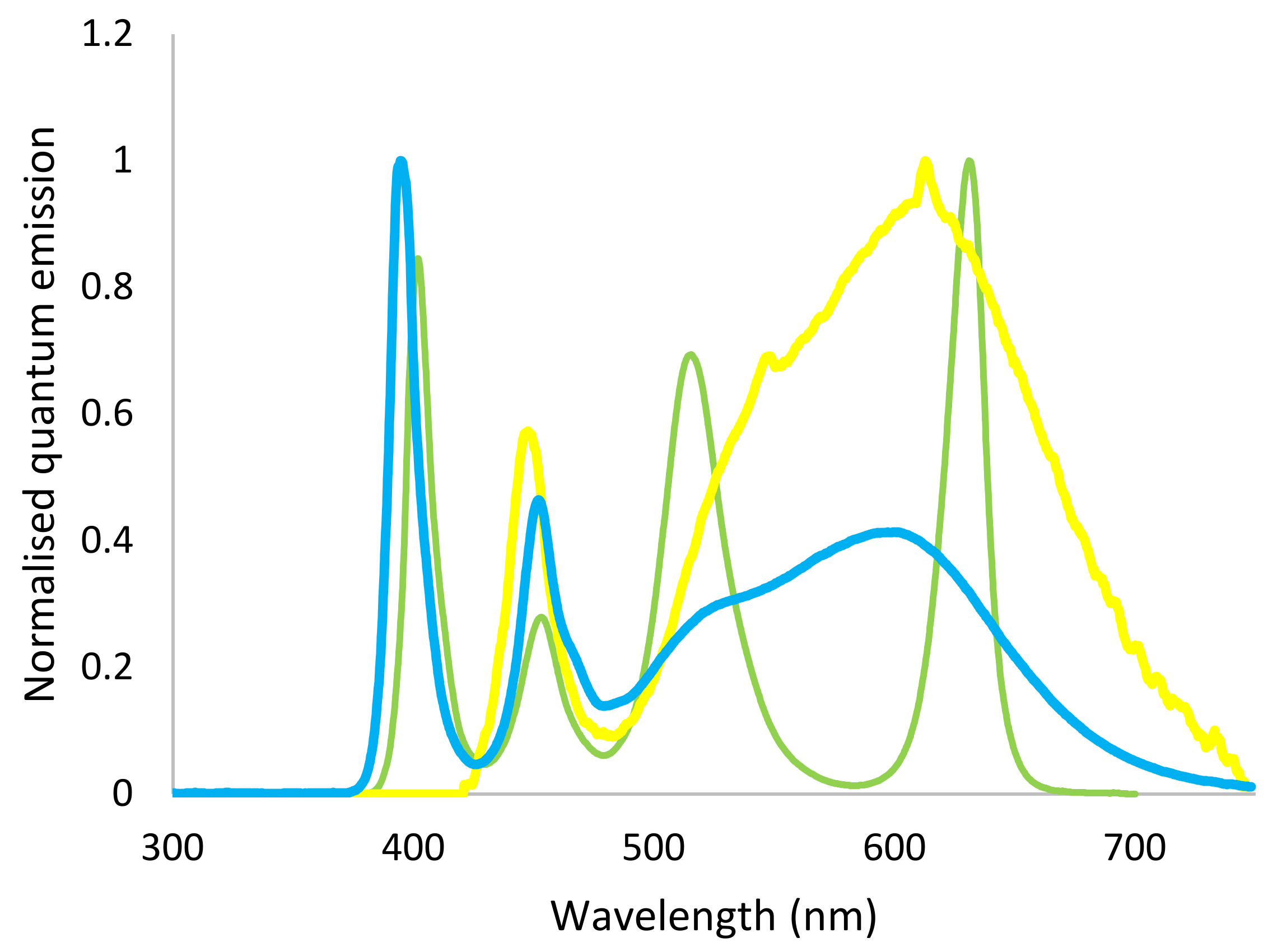
This study investigated how different types of lighting affect laying hen behaviour and welfare. Amount and quality of light are important for birds to perform their natural behaviours, e.g., find food and water, recognise conspecifics and safely navigate their environment. The lighting used in poultry production facilities differs considerably from light conditions in the natural environment in which domestic fowl have evolved, which might have negative consequences for their welfare. This study examined whether light closely resembling natural daylight and light found in forest understory in Southeast Asia (ancestral habitat of jungle fowl) affected the behaviour of laying hens. The results revealed that birds had a preference for natural lighting in some situations. It is likely that these effects were due to the presence of ultraviolet light, which is known to be important for visual performance in birds. However, the differences were rather small, indicating that sufficient light intensity and other quality factors in the housing environment are more important in maintaining high welfare than the specific spectral composition of the light. This new knowledge can be used to improve the housing environment of domestic fowl by supplying artificial spectrums replicating natural lighting.
Abstract
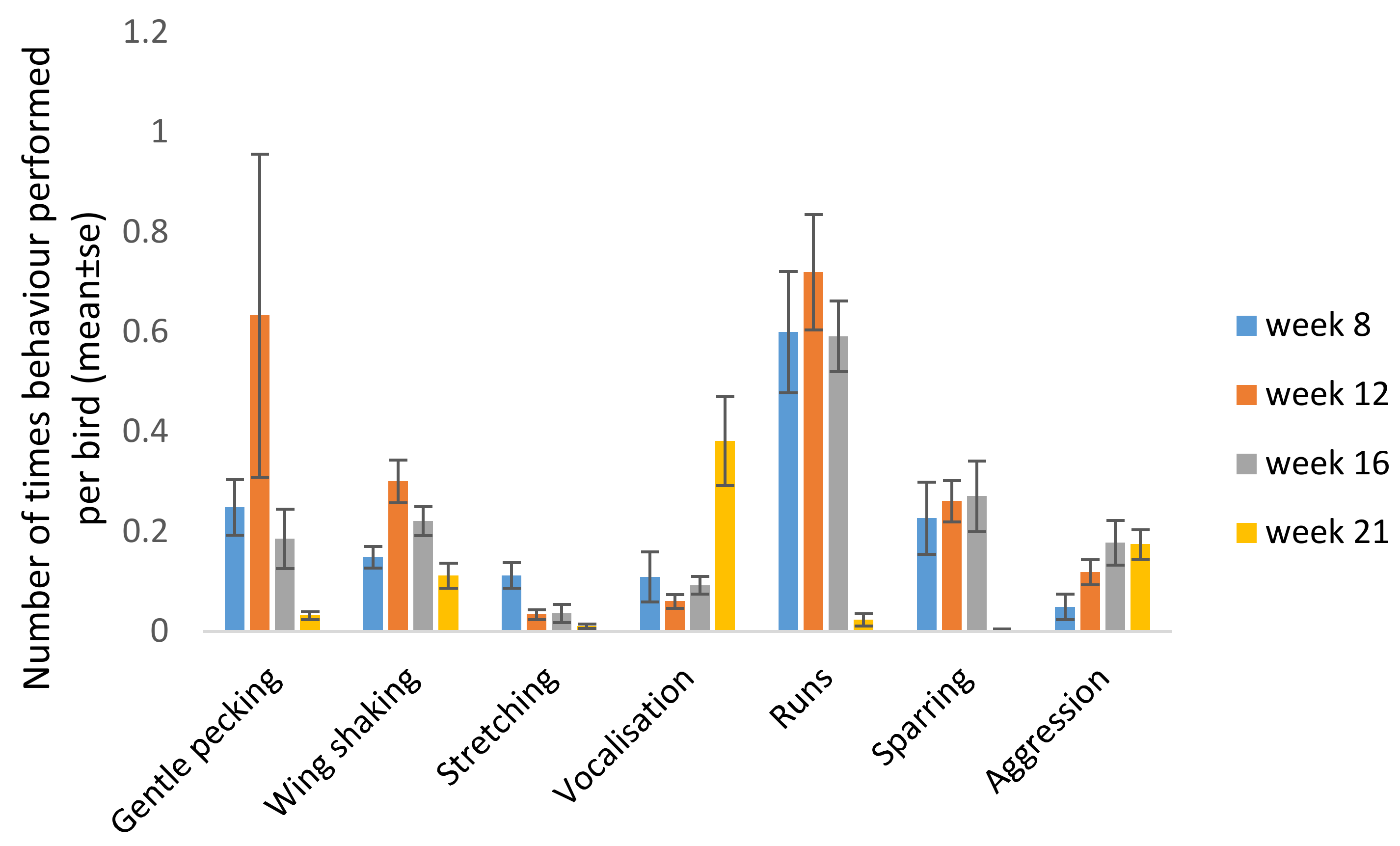
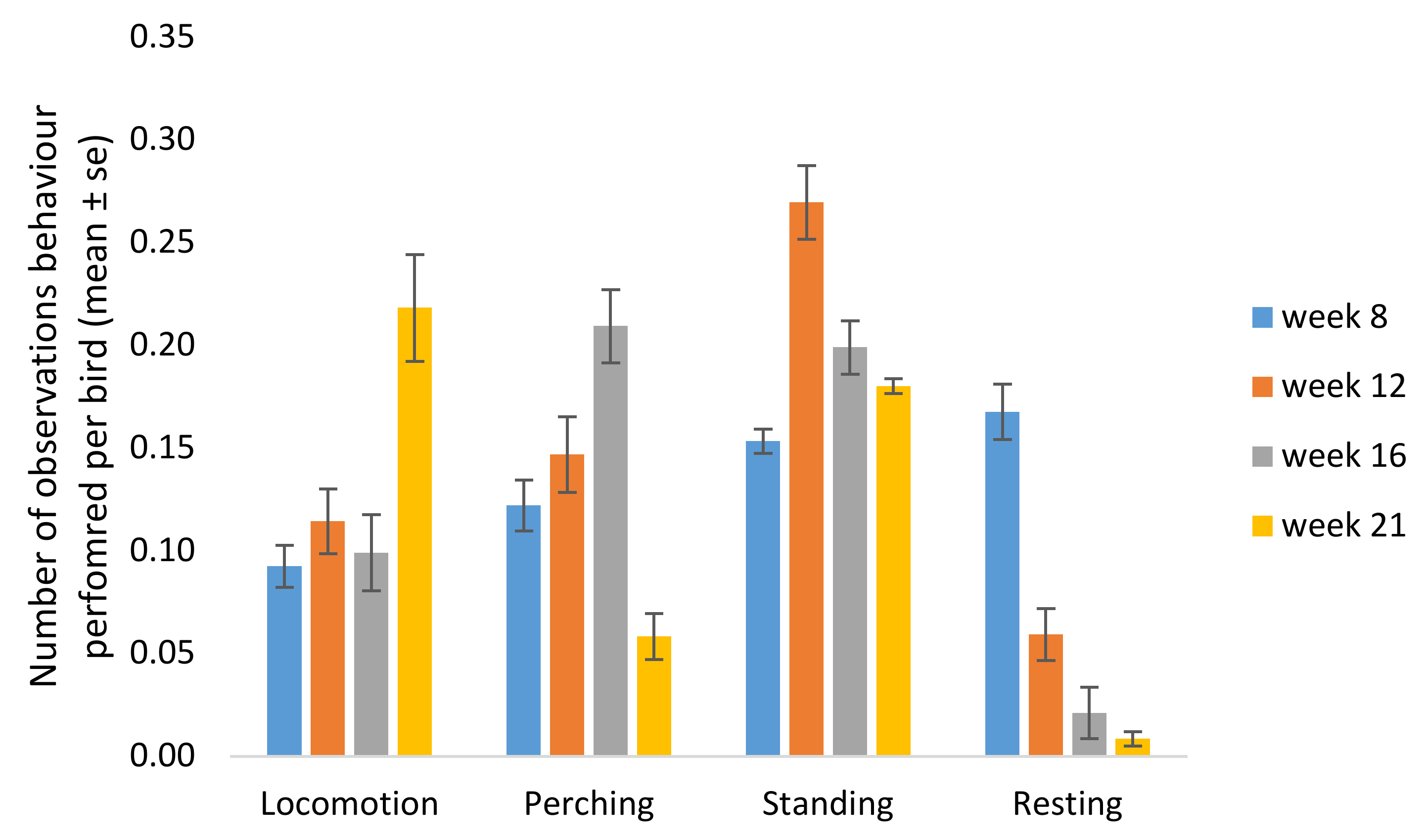
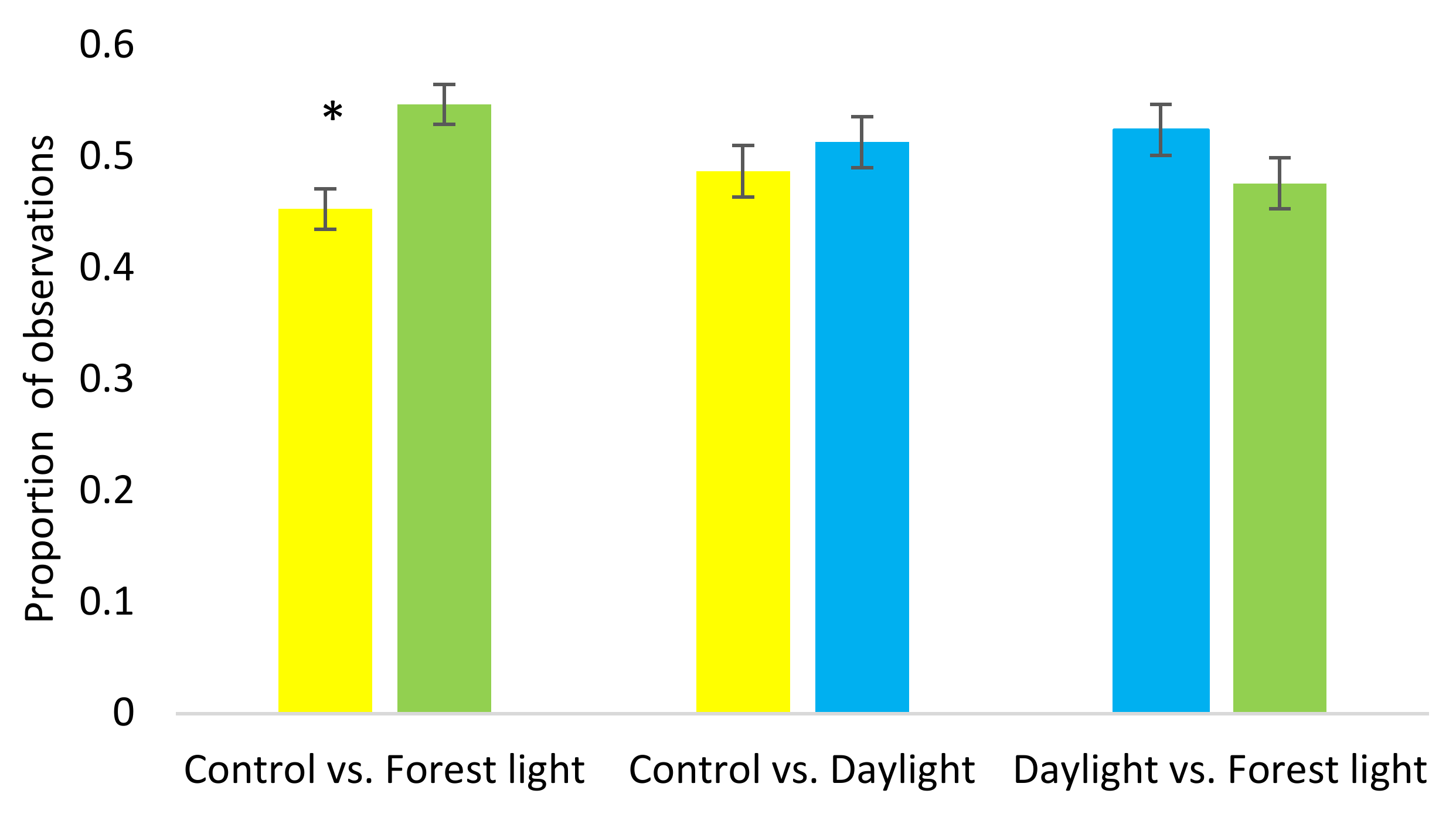
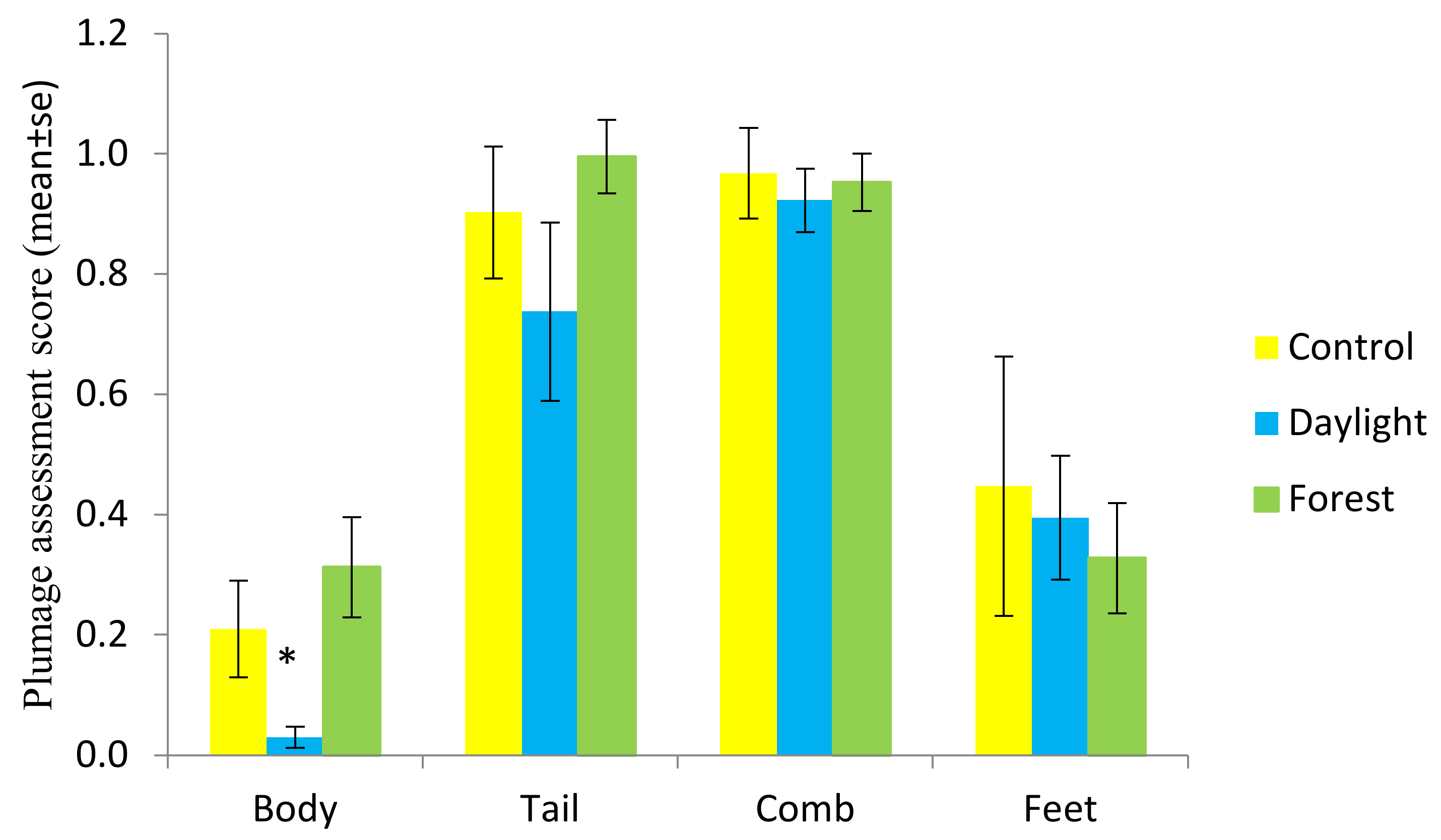
Artificial commercial lighting used in animal production facilities can have negative influences on visual abilities, behaviour and welfare of domestic fowl. This study examined the effects of natural-derived light spectrums on behaviour, production and welfare of laying hens reared from hatching into adulthood. Comparisons were made of frequency of a range of behaviours associated with activity, aggression and comfort in birds kept in control light (commercial standard), daylight (full spectrum, including ultraviolet (UV) wavelengths and forest light (forest understorey, including UV). In addition, bird preferences for different lights, feather damage and egg production were monitored. The results showed that the behavioural repertoire of birds changed with age, while the effects of light treatment were subtle. Some evidence was found that birds preferred either daylight or forest light to control light, suggesting that inclusion of UV contributed to the preference. Daylight and forest light were associated with more active behaviours, and daylight with better plumage and later start of lay. Thus natural-like light may have beneficial effects on domestic fowl, but the differences between broad-spectrum light sources are rather small.
Keywords:
poultry; light; behavior; welfare; Gallus gallus