Prevalence of Worldwide Neonatal Calf Diarrhoea Caused by Bovine Rotavirus in Combination with Bovine Coronavirus, Escherichia coli K99 and Cryptosporidium spp.: A Meta-Analysis


1
Institute of Food Safety, Food Technology and Veterinary Public Health, University of Veterinary Medicine, 1210 Vienna, Austria
2
Department of Veterinary and Animal Sciences, Faculty of Health and Medical Sciences, University of Copenhagen, 1870 Frederiksberg C, Denmark
3
Complexity Science Hub Vienna, 1080 Vienna, Austria
*
Author to whom correspondence should be addressed.
Animals 2021, 11(4), 1014; https://doi.org/10.3390/ani11041014
Submission received: 12 March 2021
/
Revised: 31 March 2021
/
Accepted: 2 April 2021
/
Published: 3 April 2021
(This article belongs to the Collection Cattle Diseases)
Simple Summary
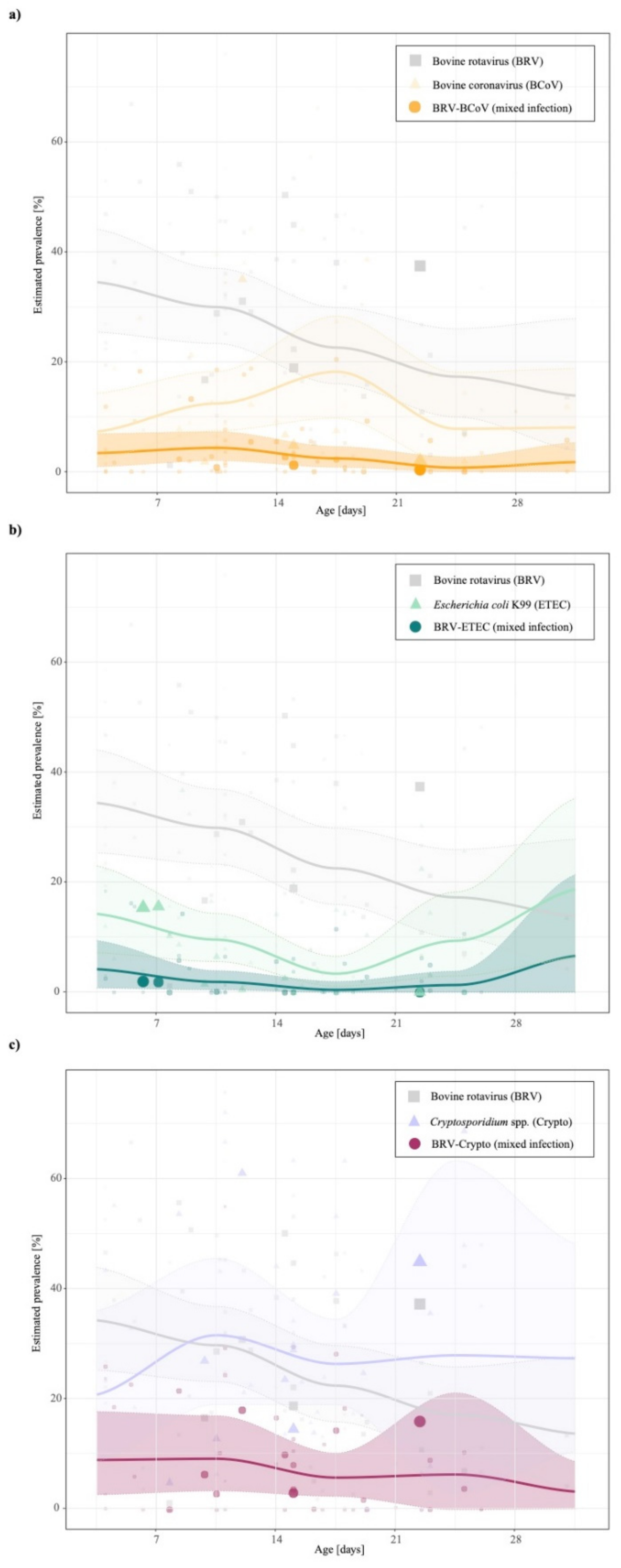
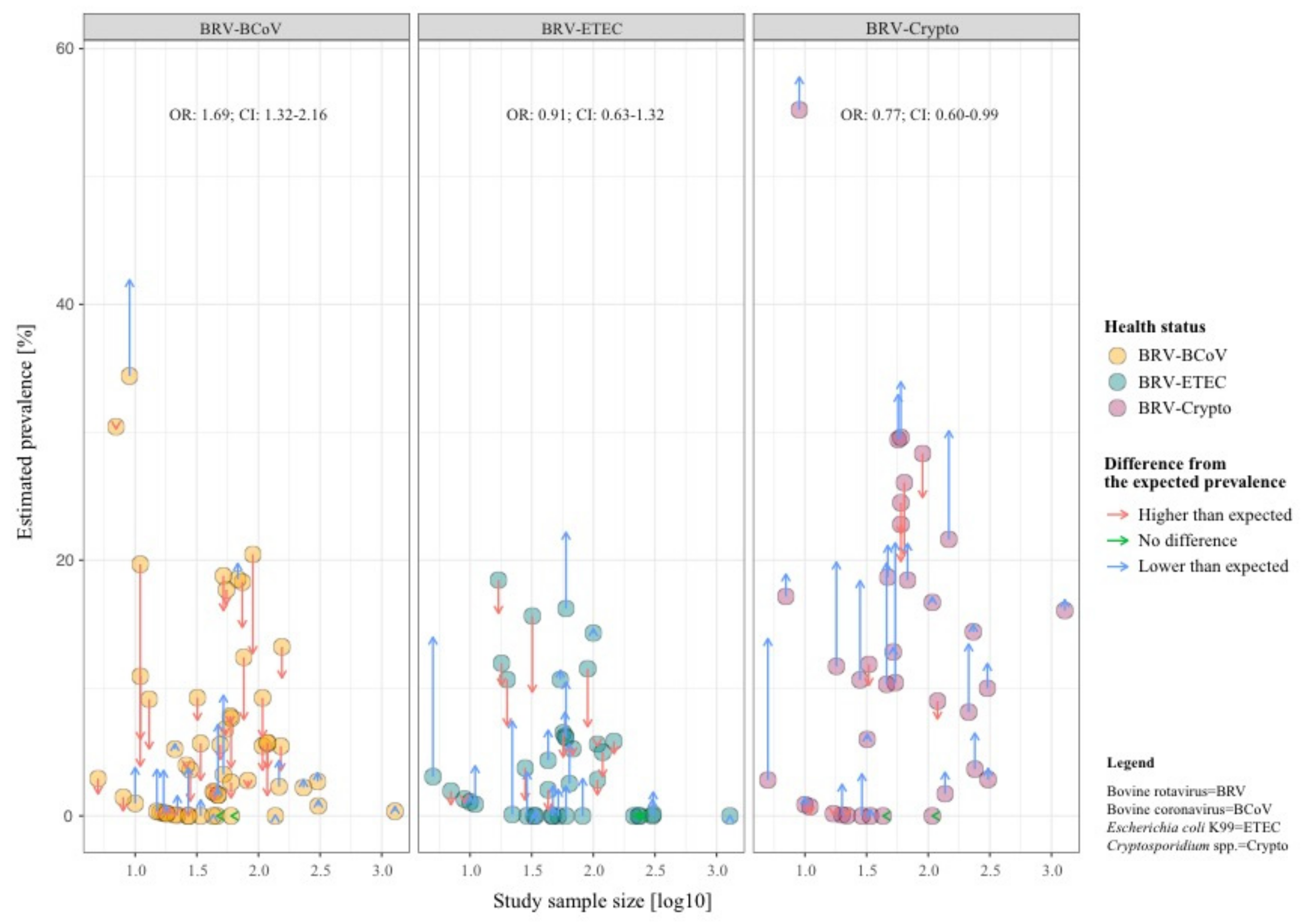
Three weighted-stratified random-effects meta-analyses were performed to estimate the worldwide neonatal calf diarrhoea prevalence of mixed infections of the causative agents bovine rotavirus (BRV), bovine coronavirus (BCoV), Escherichia coli K99 (ETEC) and Cryptosporidium spp. (Crypto). The highest worldwide mean pooled prevalence was identified for BRV-Crypto (6.69%; confidence interval (CI): 4.27–9.51), followed by BRV-BCoV (2.84%; CI: 1.78–4.08) and BRV-ETEC (1.64%; CI: 0.76–2.75). In all concurrent infections with BRV, the highest mean prevalence was identified in calves with diarrhoea, in dairy herds and in the age classes of sampled animals between 0–14 days. The prevalence of the BRV-BCoV mixed infection is higher than expected based on the ratio of the occurrence of both individual infections in calves with diarrhoea.
Abstract
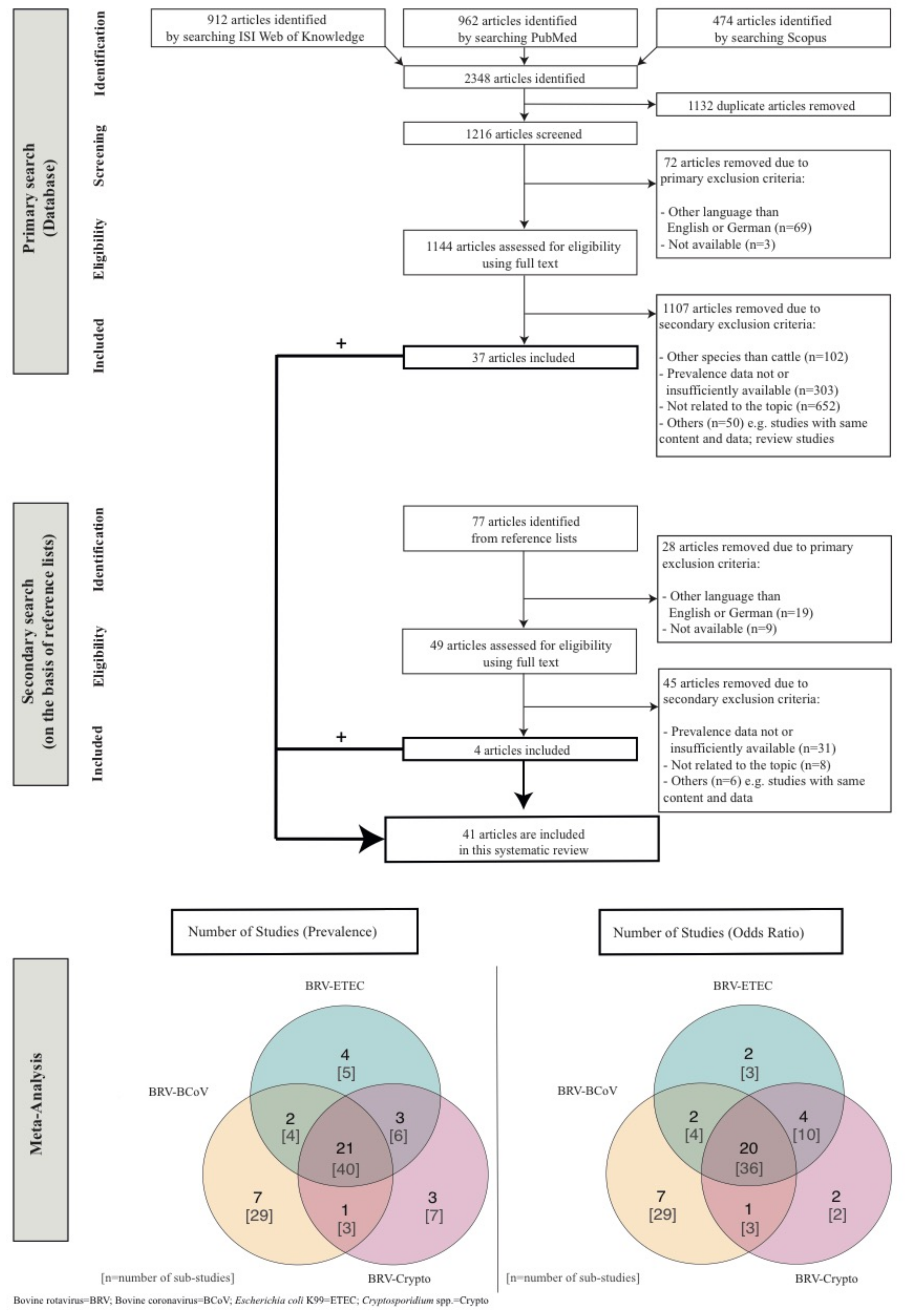
Multiple enteropathogens such as bovine rotavirus (BRV), bovine coronavirus (BCoV), Escherichia coli K99 (ETEC) and Cryptosporidium spp. (Crypto) are the most common causes of calf diarrhoea during the first 30 days of animal age. Three weighted-stratified random-effects meta-analyses were performed to calculate the worldwide prevalence of mixed infections of the causative agents (i.e., BRV-BCoV, BRV-ETEC, BRV-Crypto) and their potential influencing factors. The meta-analysis covered 41 studies (94 sub-studies) in 21 countries that determined the presence or absence of mixed infections in global calf populations. The highest worldwide estimated pooled prevalence was identified for BRV-Crypto (6.69%), followed by BRV-BCoV (2.84%), and BRV-ETEC (1.64%). The chance of detecting BCoV in calves with diarrhoea was 1.83 higher in the presence of BRV compared to calves without BRV, whereby an inhibition effect (odds ratio: 0.77) was determined between BRV and Crypto infections. The diagnostic methods were identified as a significant influencing factor in the detection of all considered mixed infections, while the other analysed factors differed in relation to their effect on prevalence. In contrast to BRV-BCoV, the prevalence of BRV-ETEC and BRV-Crypto mixed infections followed the course of individual ETEC and Crypto prevalence related to the age class of the sampled animals.