The Current Trends in Using Nanoparticles, Liposomes, and Exosomes for Semen Cryopreservation



1
Department of Animal Production, College of Food and Agricultural Sciences, King Saud University, Riyadh 11451, Saudi Arabia
2
Department of Comparative Medicine, King Faisal Specialist Hospital & Research Centre, Riyadh 11211, Saudi Arabia
3
Department of Animal Production, Faculty of Agriculture, Mansoura University, Mansoura 35516, Egypt
4
Department of Biochemistry, College of Sciences, King Saud University, Riyadh 11451, Saudi Arabia
5
Center for Reproductive Sciences, Department of Obstetrics and Gynecology, University of California San Francisco, San Francisco, CA 94143, USA
*
Authors to whom correspondence should be addressed.
Animals 2020, 10(12), 2281; https://doi.org/10.3390/ani10122281
Submission received: 19 November 2020
/
Accepted: 2 December 2020
/
Published: 3 December 2020
(This article belongs to the Special Issue The Era of Assisted Reproductive Technologies Tailored to the Specific Necessities of Species, Industry and Case Reports)
Simple Summary
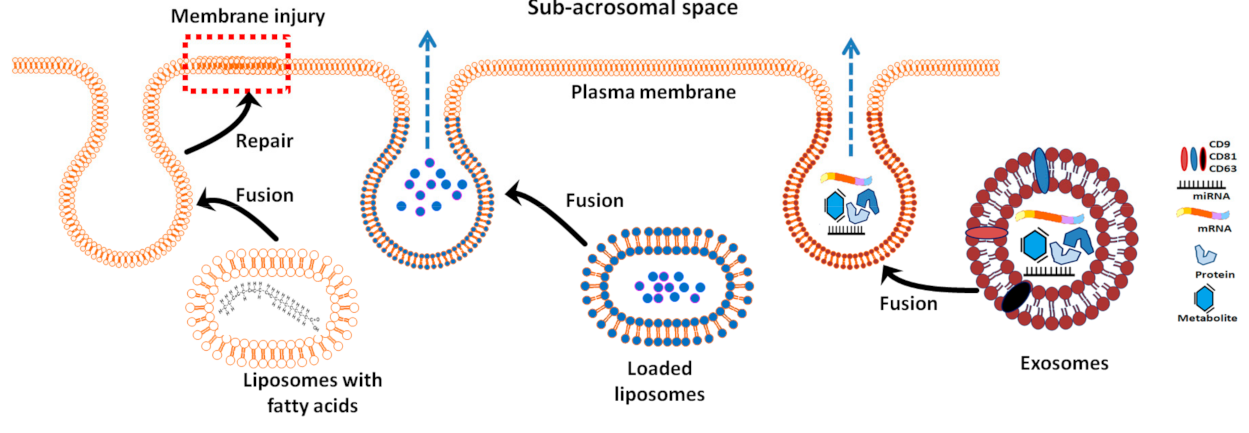
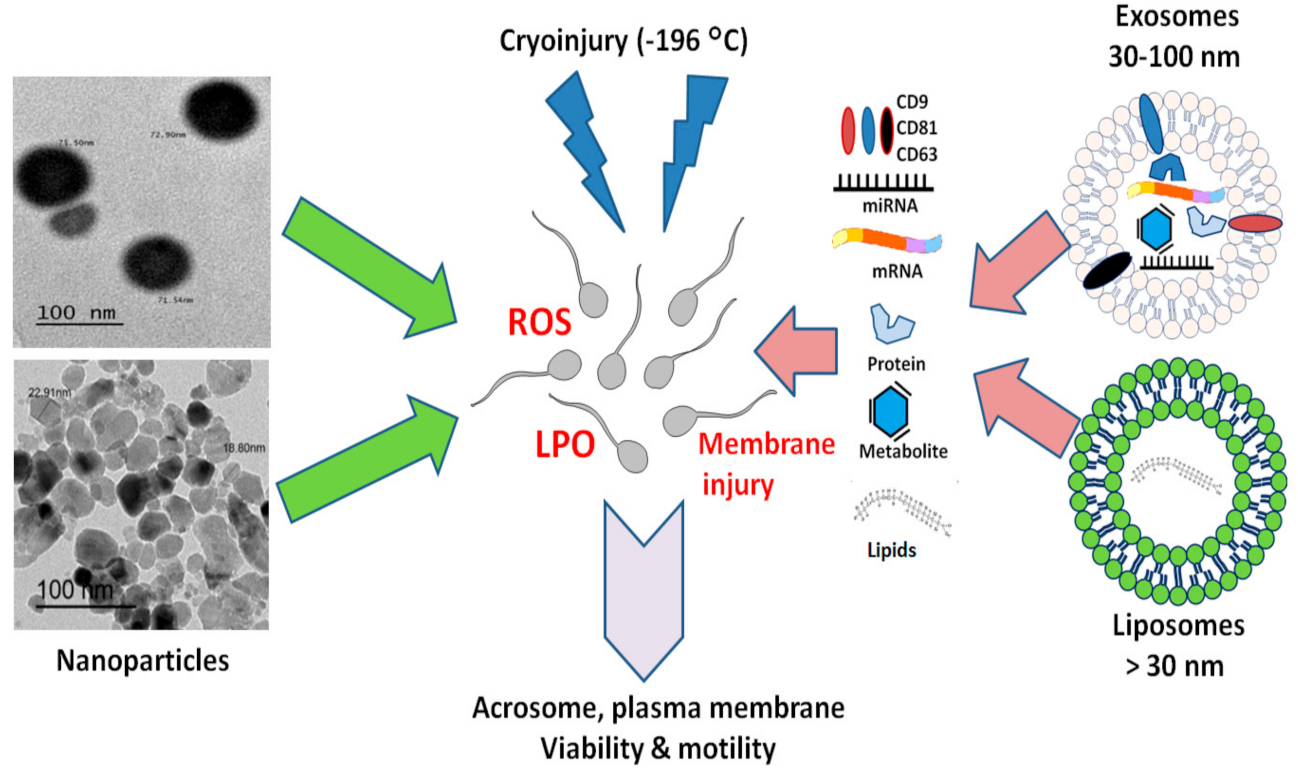
Long-term preservation of semen is a pivotal step for artificial insemination in most farm animal species, but it is associated with cellular insults at the cell membrane and cytoskeleton level as well as the generation of reactive oxygen species (ROS). We highlight the recent strategies to combat these negative effects through defending against the ROS via antioxidant nanoparticles or through repairing/regenerating the damaged sperm through using liposomes and most recently exosomes derived from the reproductive tract or stem cells.
Abstract
Cryopreservation is an essential tool to preserve sperm cells for zootechnical management and artificial insemination purposes. Cryopreservation is associated with sperm damage via different levels of plasma membrane injury and oxidative stress. Nanoparticles are often used to defend against free radicals and oxidative stress generated through the entire process of cryopreservation. Recently, artificial or natural nanovesicles including liposomes and exosomes, respectively, have shown regenerative capabilities to repair damaged sperm during the freeze–thaw process. Exosomes possess a potential pleiotropic effect because they contain antioxidants, lipids, and other bioactive molecules regulating and repairing spermatozoa. In this review, we highlight the current strategies of using nanoparticles and nanovesicles (liposomes and exosomes) to combat the cryoinjuries associated with semen cryopreservation.
Keywords:
nanoparticles; liposomes; exosomes; semen; cryopreservation; livestock production