Raising an Assistance Dog Puppy—Stakeholder Perspectives on What Helps and What Hinders



1
Anthrozoology Research Group, Department of Psychology and Counselling, School of Psychology and Public Health, La Trobe University, Flora Hill, VIC 3552, Australia
2
Centre for Service and Therapy Dogs Australia, Melbourne, VIC 3162, Australia
*
Author to whom correspondence should be addressed.
Animals 2020, 10(1), 128; https://doi.org/10.3390/ani10010128
Submission received: 6 December 2019
/
Revised: 9 January 2020
/
Accepted: 10 January 2020
/
Published: 13 January 2020
(This article belongs to the Section Companion Animals)
Simple Summary
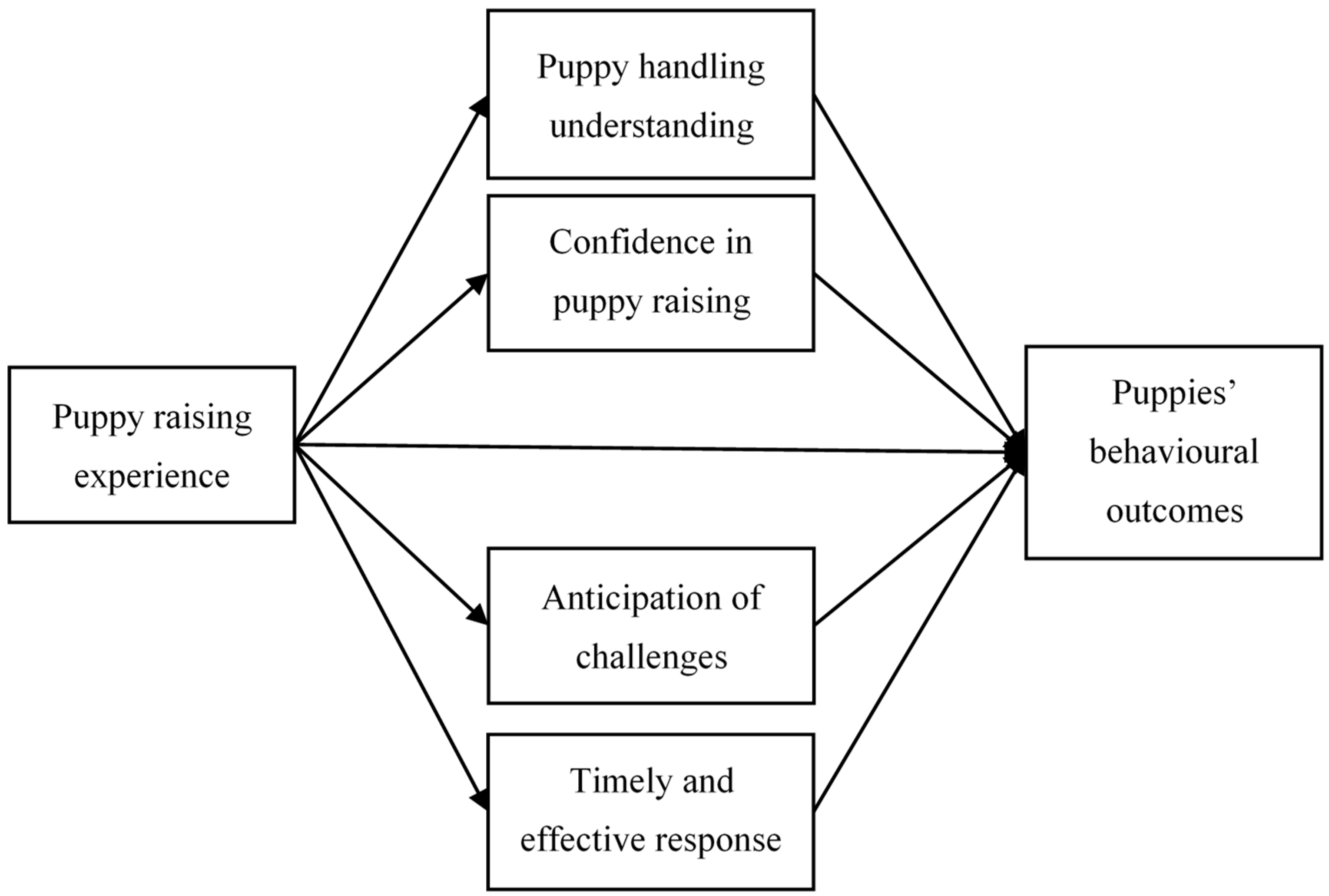
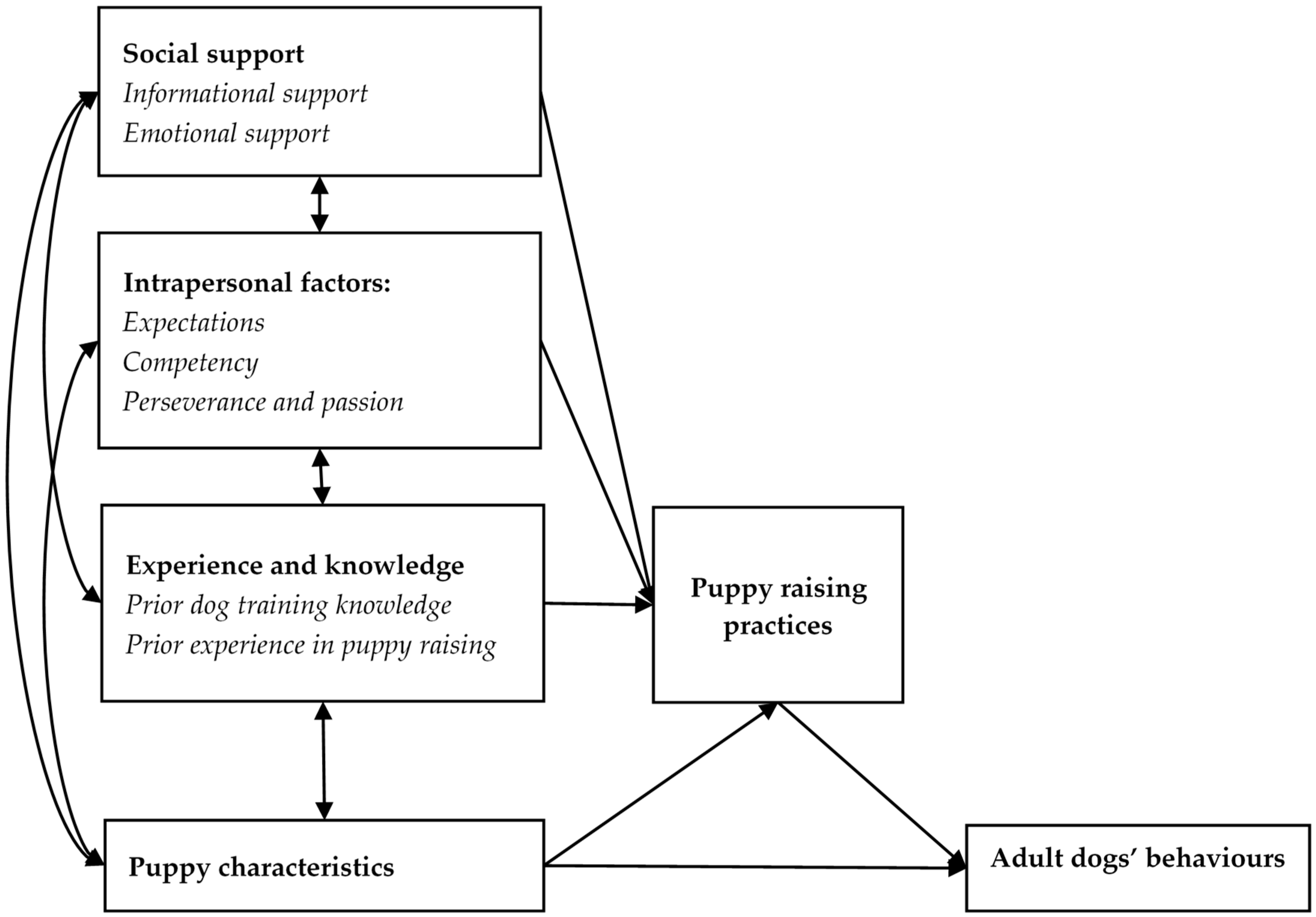
Puppy raisers (or foster families) are volunteers who care for assistance dog puppies until they are ready to learn how to help people with a disability. During this period, some puppies develop behaviours unsuitable for assistance roles and end up changing careers or being rehomed as pets, which is wasteful. Puppy raisers control the early experiences of their puppies, and they vary in their puppy-raising outcomes, but we do not know what specifically helps some puppy raisers produce puppies that are behaviourally suitable for an assistance role. In this study, we interviewed 17 people from seven countries who were either experienced puppy raisers or provider program staff, or both. Their responses suggested several individual factors (expectations, competency, perseverance and passion) and social factors (informational and emotional supports), in addition to the puppies’ characteristics, that influenced the experiences and perceived effectiveness of their puppy-raising practices. These factors are also evident in other well-established areas of research (e.g., education, volunteerism, social support, and organisational performance). We propose recommendations for assistance dog organisations based on those relevant frameworks, which focus on enhancing puppy raisers’ competency, positive experiences, and program retention.
Abstract
Assistance dog puppies live with their raisers for up to 16 months before entering advanced training and, hopefully, becoming qualified to help people with a disability. Almost half of the puppies fail to meet the behavioural standards required for assistance dogs, and some puppy raisers produce more behaviourally favourable puppies than others. It is unclear what factors influence puppy-raising practice quality. To understand this, we interviewed 17 participants, including experienced puppy raisers (n = 8), provider organisation staff (n = 4), and those who have served both as puppy raisers and staff (n = 5). Results of a thematic analysis suggest three groups of influencing factors, namely intrapersonal factors, social support, and puppy characteristics. Intrapersonal factors such as expectations, competency, perseverance and passion were reported to influence puppy raisers’ experiences, puppy-raising quality, and continuity of service. Contextual factors such as availability of social support (informational and emotional supports) and less-demanding puppies both led to positive puppy-raising experiences, while the former also contributed to puppy raisers’ perceptions of competency. Future research should quantitatively examine the interrelationships of these factors concerning puppies’ behavioural development. Meanwhile, organisations could consider these factors when developing their recruitment and puppy-raiser support programs.