Article

Diverse Genotypes and Species of Cryptosporidium in Wild Rodent Species from the West Coast of the USA and Implications for Raw Produce Safety and Microbial Water Quality
1
Western Institute for Food Safety and Security, University of California, Davis, CA 95616, USA
2
Department of Population Health and Reproduction, School of Veterinary Medicine, University of California, Davis, CA 95616, USA
*
Author to whom correspondence should be addressed.
Microorganisms 2021, 9(4), 867; https://doi.org/10.3390/microorganisms9040867

Submission received: 25 March 2021 / Revised: 14 April 2021 / Accepted: 15 April 2021 / Published: 17 April 2021

Abstract

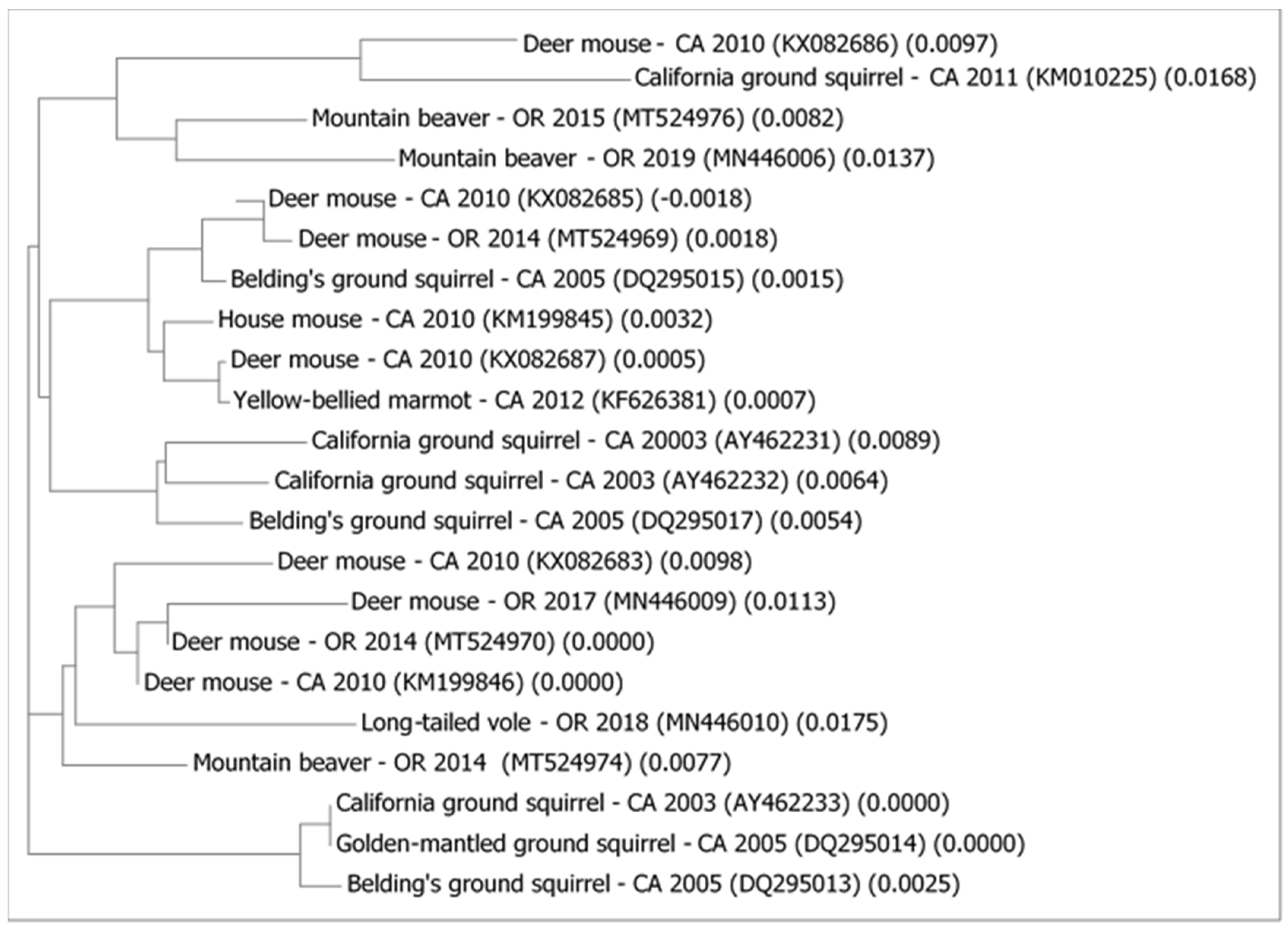
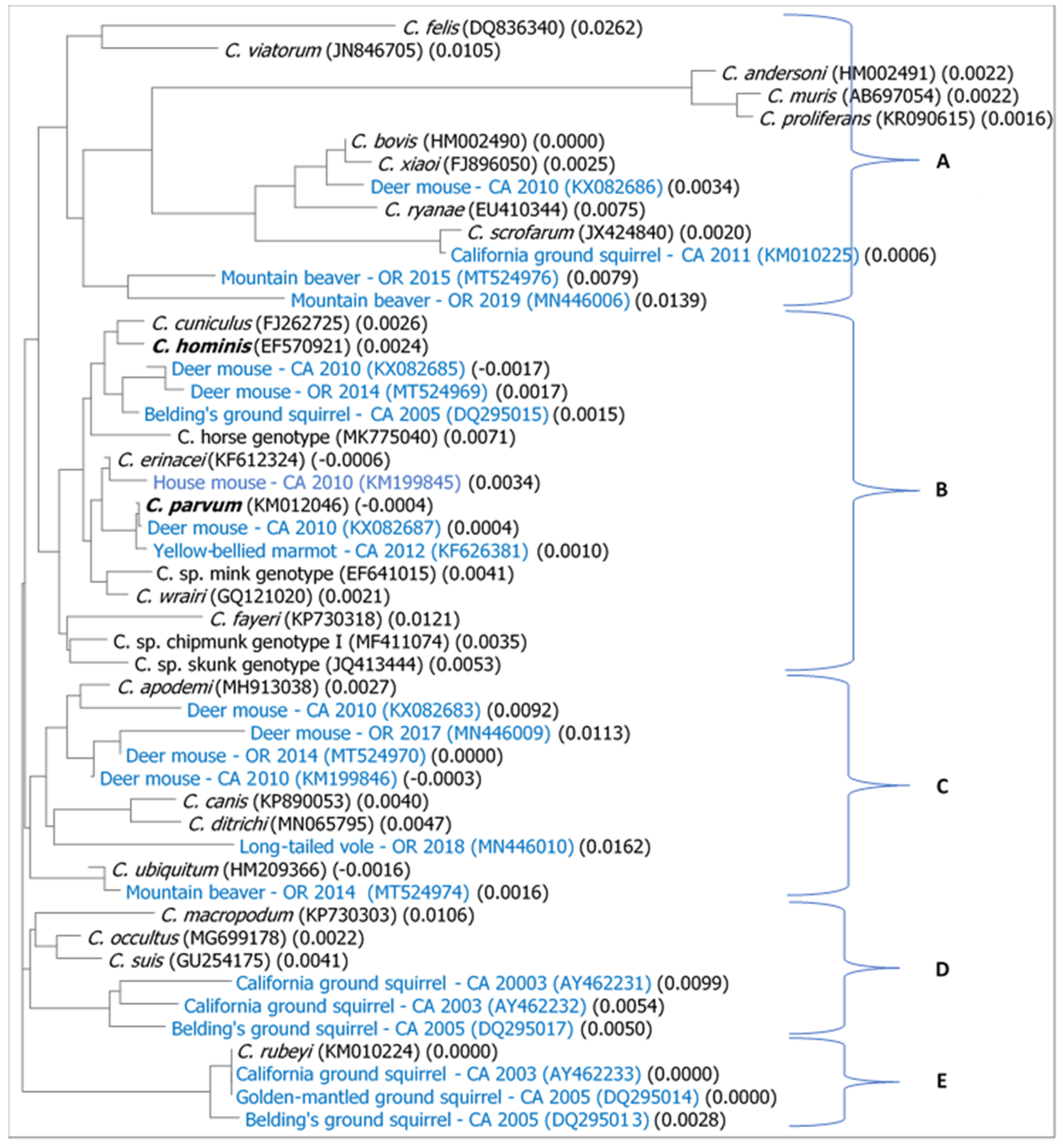
Cryptosporidium spp. are protozoan parasites that infect perhaps all vertebrate animals, with a subset of species and genotypes that function as food- and waterborne pathogens. The objective of this work was to collate the Cryptosporidium species and genotypes from common wild rodents on the west coast of the USA and update the information regarding the zoonotic potential of Cryptosporidium from these ubiquitous wild species. Representative sequences of the 18S rRNA gene for a unique set of Cryptosporidium isolates obtained from deer mice, house mice, mountain beavers, yellow-bellied marmot, long-tailed vole, California ground squirrels, Belding’s ground squirrels, and a golden-mantled ground squirrel in GenBank were selected for phylogenetic analysis. Phylogenetic and BLAST analysis indicated that 4 (18%) of the 22 unique Cryptosporidium sequences from these wild rodent species were 99.75% to 100% identical to known zoonotic species (C. parvum, C. ubiquitum, C. xiaoi), suggesting that a minority of these representative Cryptosporidium isolates could have a public health impact through food and waterborne routes of human exposure. These zoonotic isolates were shed by deer mice and a yellow-bellied marmot from California, and from a mountain beaver trapped in Oregon. In addition, the group of unique Cryptosporidium isolates from deer mice and ground dwelling squirrels exhibited considerable DNA diversity, with multiple isolates appearing to be either host-limited or distributed throughout the various clades within the phylogenetic tree representing the various Cryptosporidium species from host mammals. These results indicate that only a subset of the unique Cryptosporidium genotypes and species obtained from wild rodents on the US west coast are of public health concern; nevertheless, given the geographic ubiquity of many of these host species and often high density at critical locations like municipal watersheds or produce production fields, prudent pest control practices are warranted to minimize the risks of water- and foodborne transmission to humans.
Keywords: Cryptosporidium; species; genotypes; wildlife; rodent; zoonotic Cryptosporidium; species; genotypes; wildlife; rodent; zoonotic