Signaling Peptide SpoV Is Essential for Streptococcus pyogenes Virulence, and Prophylaxis with Anti-SpoV Decreases Disease Severity
Abstract
1. Introduction
2. Materials and Methods
2.1. Strain and Culture Conditions
2.2. DNA Manipulation
2.3. Construction of spoV Mutant
2.4. Construction of spoV Complemented Mutant
2.5. Generation of Anti-SpoV Antibodies
2.6. Ex Vivo Human Model of Virulence
2.7. Mice
2.8. Murine Model of iGAS Disease
2.9. Passive Immunotherapy with Anti-SpoV Antibodies
2.10. GAS Quantification in Mouse Tissues
2.11. Statistics
3. Results
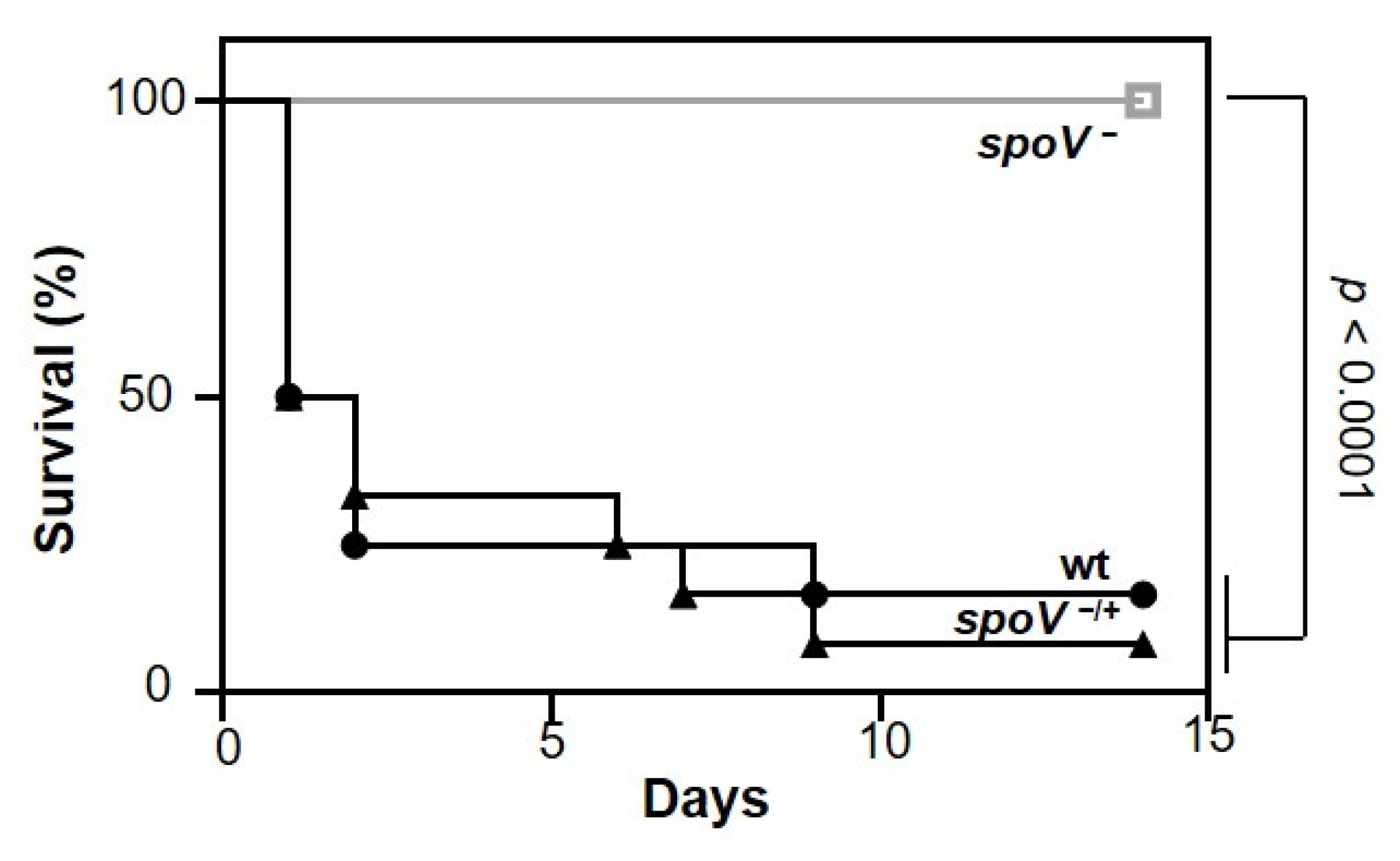
3.1. Assessment of Virulence in a Murine Model of Invasive GAS Disease
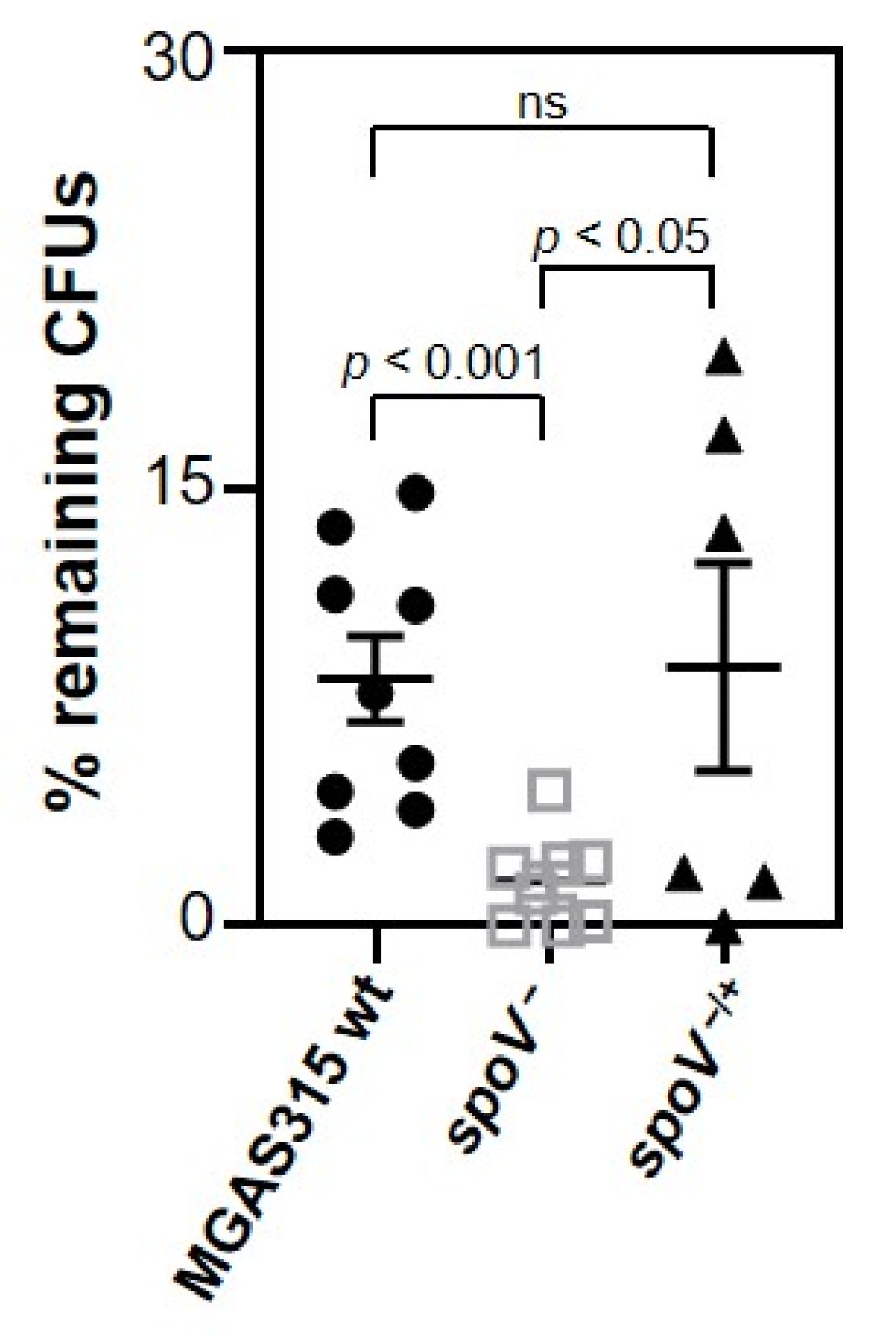
3.2. SpoV Enhanced GAS Survival in an Ex Vivo Human Model of Virulence
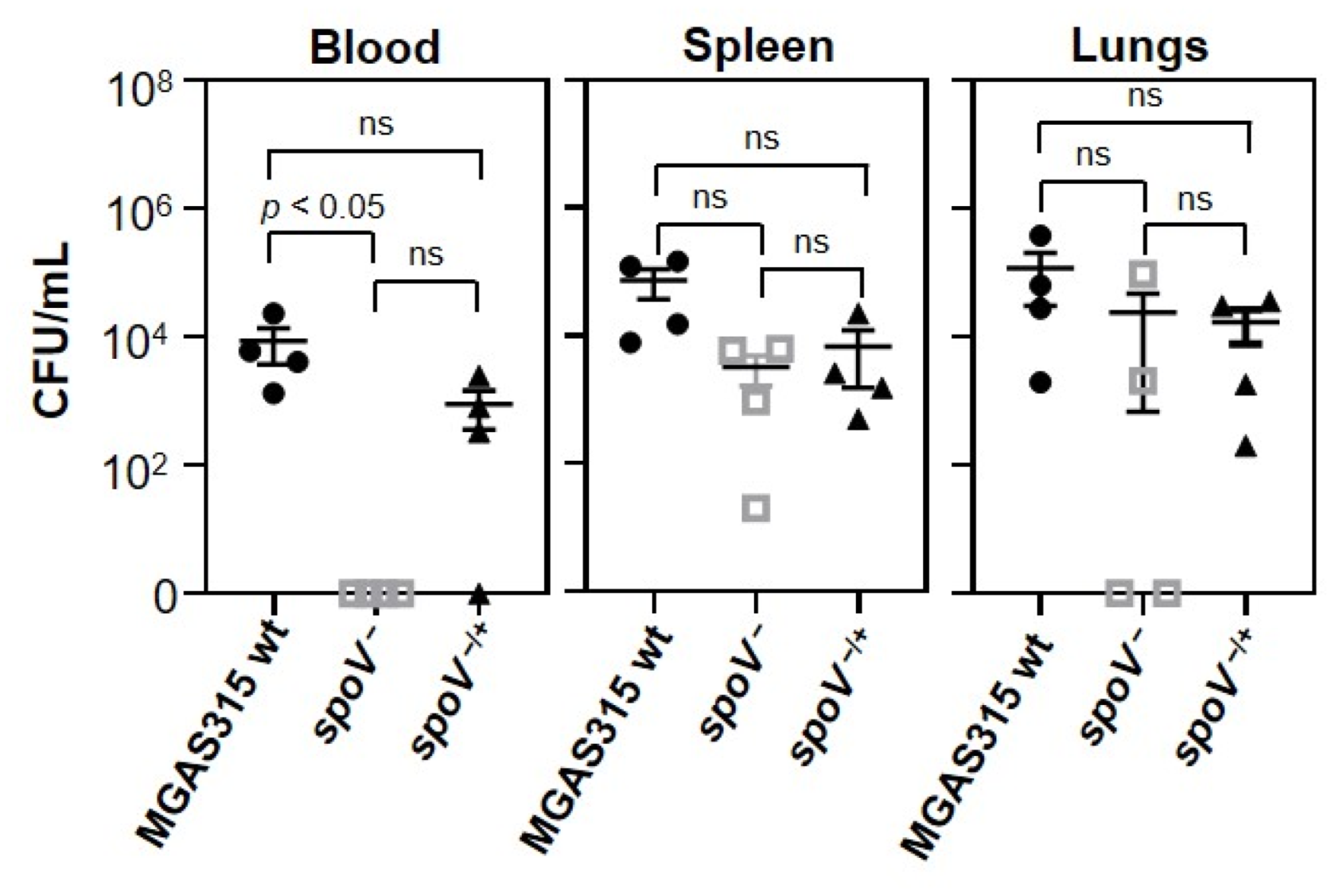
3.3. SpoV Decreased GAS Dissemination in a Mouse Model of Systemic Infection
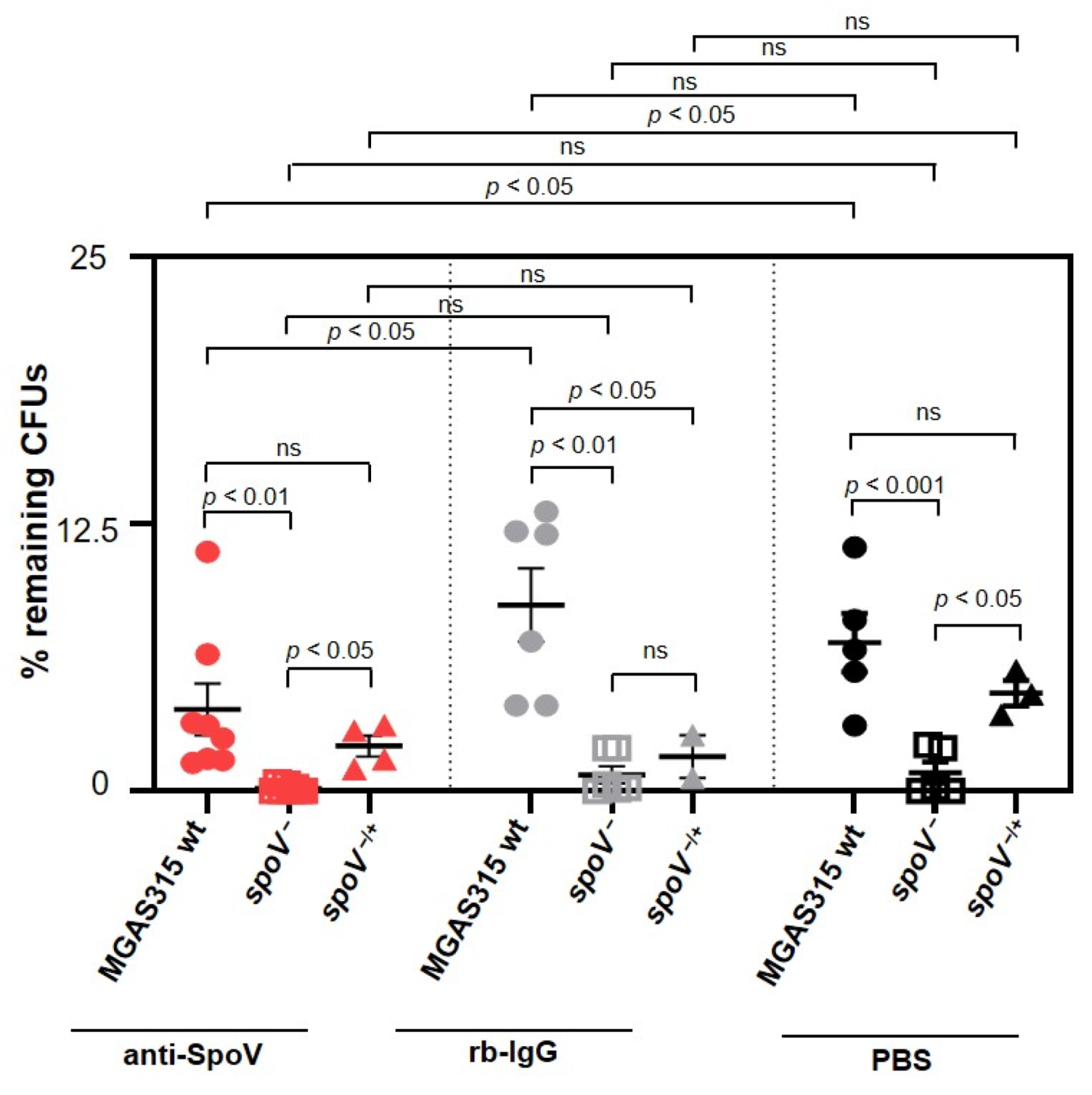
3.4. Administration of Anti-SpoV Decreased GAS Survival in an Ex Vivo Human Model of Virulence
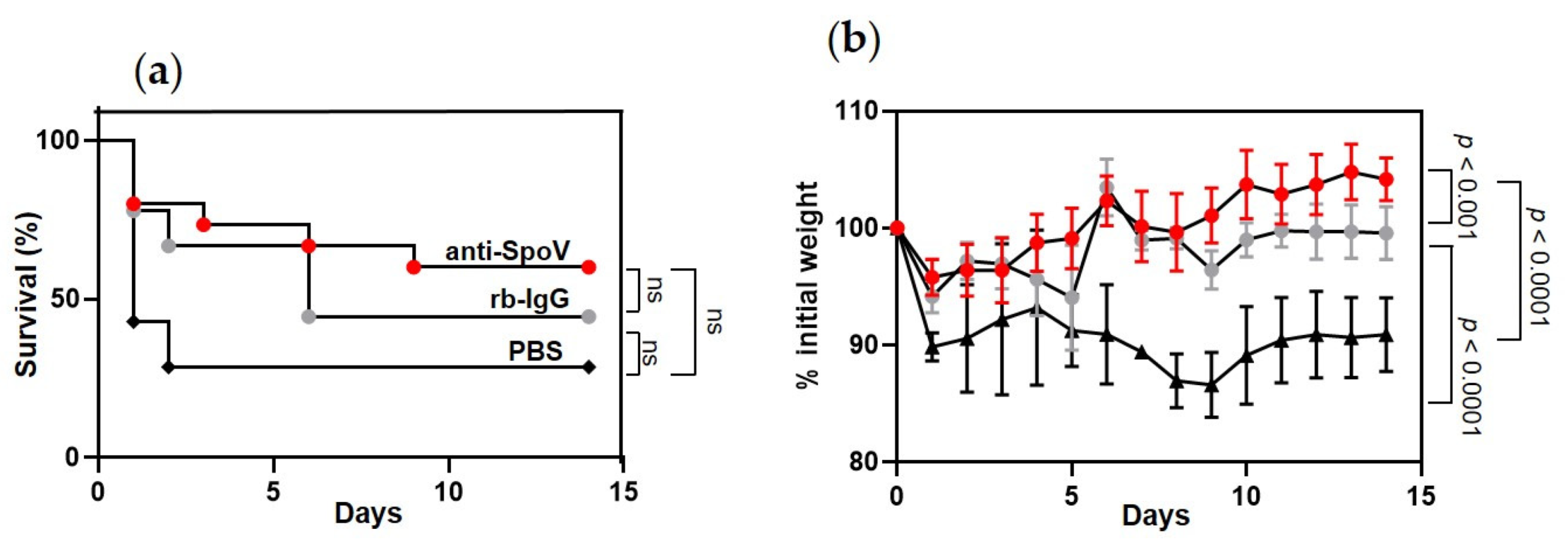
3.5. Prophylactic Protection following Addition of Anti-spoV in a Murine Model of iGAS Disease
4. Discussion
Supplementary Materials
Author Contributions
Funding
Institutional Review Board Statement
Informed Consent Statement
Data Availability Statement
Acknowledgments
Conflicts of Interest
References
- Steer, A.C.; Lamagni, T.; Curtis, N.; Carapetis, J.R. Invasive group a streptococcal disease: Epidemiology, pathogenesis and management. Drugs 2012, 72, 1213–1227. [Google Scholar] [CrossRef] [Scilit]
- Cunningham, M.W. Pathogenesis of group A streptococcal infections. Clin. Microbiol. Rev. 2000, 13, 470–511. [Google Scholar] [CrossRef]
- Musser, J.M.; Shelburne, S.A., 3rd. A decade of molecular pathogenomic analysis of group A Streptococcus. J. Clin. Investig. 2009, 119, 2455–2463. [Google Scholar] [CrossRef] [Scilit]
- Rutherford, S.T.; Bassler, B.L. Bacterial quorum sensing: Its role in virulence and possibilities for its control. Cold Spring Harb. Perspect. Med. 2012, 2, a012427. [Google Scholar] [CrossRef] [Scilit] [PubMed]
- Jimenez, J.C.; Federle, M.J. Quorum sensing in group A Streptococcus. Front. Cell. Infect. Microbiol. 2014, 4, 127. [Google Scholar] [CrossRef] [Scilit] [PubMed]
- Declerck, N.; Bouillaut, L.; Chaix, D.; Rugani, N.; Slamti, L.; Hoh, F.; Lereclus, D.; Arold, S.T. Structure of PlcR: Insights into virulence regulation and evolution of quorum sensing in Gram-positive bacteria. Proc. Natl. Acad. Sci. USA 2007, 104, 18490–18495. [Google Scholar] [CrossRef] [Scilit]
- Rocha-Estrada, J.; Aceves-Diez, A.E.; Guarneros, G.; de la Torre, M. The RNPP family of quorum-sensing proteins in Gram-positive bacteria. Appl. Microbiol. Biotechnol. 2010, 87, 913–923. [Google Scholar] [CrossRef] [Scilit]
- Bassler, B.L. How bacteria talk to each other: Regulation of gene expression by quorum sensing. Curr. Opin. Microbiol. 1999, 2, 582–587. [Google Scholar] [CrossRef] [Scilit]
- Do, H.; Makthal, N.; VanderWal, A.R.; Rettel, M.; Savitski, M.M.; Peschek, N.; Papenfort, K.; Olsen, R.J.; Musser, J.M.; Kumaraswami, M. Leaderless secreted peptide signaling molecule alters global gene expression and increases virulence of a human bacterial pathogen. Proc. Natl. Acad. Sci. USA 2017, 114, E8498–E8507. [Google Scholar] [CrossRef] [Scilit]
- Do, H.; Makthal, N.; VanderWal, A.R.; Saavedra, M.O.; Olsen, R.J.; Musser, J.M.; Kumaraswami, M. Environmental pH and peptide signaling control virulence of Streptococcus pyogenes via a quorum-sensing pathway. Nat. Commun. 2019, 10, 2586. [Google Scholar] [CrossRef] [Scilit]
- Aggarwal, C.; Jimenez, J.C.; Nanavati, D.; Federle, M.J. Multiple length peptide-pheromone variants produced by Streptococcus pyogenes directly bind Rgg proteins to confer transcriptional regulation. J. Biol. Chem. 2014, 289, 22427–22436. [Google Scholar] [CrossRef] [Scilit] [PubMed]
- Chang, J.C.; LaSarre, B.; Jimenez, J.C.; Aggarwal, C.; Federle, M.J. Two group A streptococcal peptide pheromones act through opposing Rgg regulators to control biofilm development. PLoS Pathog. 2011, 7, e1002190. [Google Scholar] [CrossRef] [Scilit]
- Ma, Y.; Bryant, A.E.; Salmi, D.B.; McIndoo, E.; Stevens, D.L. vfr, a novel locus affecting cysteine protease production in Streptococcus pyogenes. J. Bacteriol. 2009, 191, 3189–3194. [Google Scholar] [CrossRef] [Scilit] [PubMed]
- Shelburne, S.A., 3rd; Olsen, R.J.; Makthal, N.; Brown, N.G.; Sahasrabhojane, P.; Watkins, E.M.; Palzkill, T.; Musser, J.M.; Kumaraswami, M. An amino-terminal signal peptide of Vfr protein negatively influences RopB-dependent SpeB expression and attenuates virulence in Streptococcus pyogenes. Mol. Microbiol. 2011, 82, 1481–1495. [Google Scholar] [CrossRef] [Scilit] [PubMed]
- Mashburn-Warren, L.; Morrison, D.A.; Federle, M.J. The cryptic competence pathway in Streptococcus pyogenes is controlled by a peptide pheromone. J. Bacteriol. 2012, 194, 4589–4600. [Google Scholar] [CrossRef] [Scilit]
- Herrera, A.L.; Callegari, E.A.; Chaussee, M.S. The Streptococcus pyogenes signaling peptide SpoV regulates streptolysin O and enhances survival in murine blood. J. Bacteriol. 2021, 203, e00586-20. [Google Scholar] [CrossRef] [Scilit]
- Horstmann, N.; Sahasrabhojane, P.; Suber, B.; Kumaraswami, M.; Olsen, R.J.; Flores, A.; Musser, J.M.; Brennan, R.G.; Shelburne, S.A., 3rd. Distinct single amino acid replacements in the control of virulence regulator protein differentially impact streptococcal pathogenesis. PLoS Pathog. 2011, 7, e1002311. [Google Scholar] [CrossRef] [Scilit]
- Liang, Z.; Zhang, Y.; Agrahari, G.; Chandrahas, V.; Glinton, K.; Donahue, D.L.; Balsara, R.D.; Ploplis, V.A.; Castellino, F.J. A natural inactivating mutation in the CovS component of the CovRS regulatory operon in a pattern D Streptococcal pyogenes strain influences virulence-associated genes. J. Biol. Chem. 2013, 288, 6561–6573. [Google Scholar] [CrossRef] [Scilit]
- Alouf, J.E. Streptococcal toxins (streptolysin O, streptolysin S, erythrogenic toxin). Pharmacol. Ther. 1980, 11, 661–717. [Google Scholar] [CrossRef] [Scilit]
- Ginsburg, I. Mechanisms of cell and tissue injury induced by group A streptococci: Relation to poststreptococcal sequelae. J. Infect. Dis. 1972, 126, 294–340. [Google Scholar] [CrossRef] [Scilit]
- Cunningham, M.W. Pathogenesis of group A streptococcal infections and their sequelae. Adv. Exp. Med. Biol. 2008, 609, 29–42. [Google Scholar] [CrossRef] [Scilit] [PubMed]
- Hynes, W. Virulence factors of the group A streptococci and genes that regulate their expression. Front. Biosci. A J. Virtual Libr. 2004, 9, 3399–3433. [Google Scholar] [CrossRef] [Scilit]
- Raeder, R.; Woischnik, M.; Podbielski, A.; Boyle, M.D. A secreted streptococcal cysteine protease can cleave a surface-expressed M1 protein and alter the immunoglobulin binding properties. Res. Microbiol. 1998, 149, 539–548. [Google Scholar] [CrossRef] [Scilit]
- Kansal, R.G.; Nizet, V.; Jeng, A.; Chuang, W.J.; Kotb, M. Selective modulation of superantigen-induced responses by streptococcal cysteine protease. J. Infect. Dis. 2003, 187, 398–407. [Google Scholar] [CrossRef] [Scilit]
- Aziz, R.K.; Pabst, M.J.; Jeng, A.; Kansal, R.; Low, D.E.; Nizet, V.; Kotb, M. Invasive M1T1 group A Streptococcus undergoes a phase-shift in vivo to prevent proteolytic degradation of multiple virulence factors by SpeB. Mol. Microbiol. 2004, 51, 123–134. [Google Scholar] [CrossRef] [Scilit] [PubMed]
- Rezcallah, M.S.; Boyle, M.D.P.; Sledjeski, D.D. Mouse skin passage of Streptococcus pyogenes results in increased streptokinase expression and activity. Microbiology 2004, 150, 365–371. [Google Scholar] [CrossRef] [Scilit]
- Reglinski, M.; Lynskey, N.N.; Sriskandan, S. Modification of the classical Lancefield assay of group A streptococcal killing to reduce inter-donor variation. J. Microbiol. Methods 2016, 124, 69–71. [Google Scholar] [CrossRef] [Scilit] [PubMed]
- Reed LJ., M.H. A simple method of estimating fifty per cent endpoints. Am. J. Hyg. 1938, 27, 493–497. [Google Scholar]
- Chaussee, M.S.; Sandbulte, H.R.; Schuneman, M.J.; Depaula, F.P.; Addengast, L.A.; Schlenker, E.H.; Huber, V.C. Inactivated and live, attenuated influenza vaccines protect mice against influenza: Streptococcus pyogenes super-infections. Vaccine 2011, 29, 3773–3781. [Google Scholar] [CrossRef] [Scilit]
- Reglinski, M.; Gierula, M.; Lynskey, N.N.; Edwards, R.J.; Sriskandan, S. Identification of the Streptococcus pyogenes surface antigens recognised by pooled human immunoglobulin. Sci. Rep. 2015, 5, 15825. [Google Scholar] [CrossRef] [Scilit]
- Courtney, H.S.; Li, Y. Non-immune binding of human IgG to M-related proteins confers resistance to phagocytosis of group A streptococci in blood. PLoS ONE 2013, 8, e78719. [Google Scholar] [CrossRef] [Scilit]
- Stenberg, L.; O’Toole, P.; Lindahl, G. Many group A streptococcal strains express two different immunoglobulin-binding proteins, encoded by closely linked genes: Characterization of the proteins expressed by four strains of different M-type. Mol. Microbiol. 1992, 6, 1185–1194. [Google Scholar] [CrossRef] [Scilit] [PubMed]
- Mills, J.O.; Ghosh, P. Nonimmune antibody interactions of Group A Streptococcus M and M-like proteins. PLoS Pathog. 2021, 17, e1009248. [Google Scholar] [CrossRef] [Scilit] [PubMed]
- Medina, E.; Molinari, G.; Rohde, M.; Haase, B.; Chhatwal, G.S.; Guzman, C.A. Fc-mediated nonspecific binding between fibronectin-binding protein I of Streptococcus pyogenes and human immunoglobulins. J. Immunol. 1999, 163, 3396–3402. [Google Scholar] [PubMed]
- Berge, A.; Kihlberg, B.M.; Sjöholm, A.G.; Björck, L. Streptococcal protein H forms soluble complement-activating complexes with IgG, but inhibits complement activation by IgG-coated targets. J. Biol. Chem. 1997, 272, 20774–20781. [Google Scholar] [CrossRef] [Scilit] [PubMed]
- Aggarwal, C.; Jimenez, J.C.; Lee, H.; Chlipala, G.E.; Ratia, K.; Federle, M.J. Identification of Quorum-Sensing Inhibitors Disrupting Signaling between Rgg and Short Hydrophobic Peptides in Streptococci. mBio 2015, 6, e00393-15. [Google Scholar] [CrossRef] [Scilit]
- Parashar, V.; Aggarwal, C.; Federle, M.J.; Neiditch, M.B. Rgg protein structure-function and inhibition by cyclic peptide compounds. Proc. Natl. Acad. Sci. USA 2015, 112, 5177–5182. [Google Scholar] [CrossRef] [Scilit]
- George, E.A.; Muir, T.W. Molecular mechanisms of agr quorum sensing in virulent staphylococci. ChemBioChem A Eur. J. Chem. Biol. 2007, 8, 847–855. [Google Scholar] [CrossRef] [Scilit]
- Bhakdi, S.; Tranum-Jensen, J. Alpha-toxin of Staphylococcus aureus. Microbiol. Rev. 1991, 55, 733–751. [Google Scholar] [CrossRef]
- Park, J.; Jagasia, R.; Kaufmann, G.F.; Mathison, J.C.; Ruiz, D.I.; Moss, J.A.; Meijler, M.M.; Ulevitch, R.J.; Janda, K.D. Infection control by antibody disruption of bacterial quorum sensing signaling. Chem. Biol. 2007, 14, 1119–1127. [Google Scholar] [CrossRef] [Scilit]

Publisher’s Note: MDPI stays neutral with regard to jurisdictional claims in published maps and institutional affiliations. |
© 2021 by the authors. Licensee MDPI, Basel, Switzerland. This article is an open access article distributed under the terms and conditions of the Creative Commons Attribution (CC BY) license (https://creativecommons.org/licenses/by/4.0/).
Share and Cite
Herrera, A.L.; Chaussee, M.S. Signaling Peptide SpoV Is Essential for Streptococcus pyogenes Virulence, and Prophylaxis with Anti-SpoV Decreases Disease Severity. Microorganisms 2021, 9, 2321. https://doi.org/10.3390/microorganisms9112321
Herrera AL, Chaussee MS. Signaling Peptide SpoV Is Essential for Streptococcus pyogenes Virulence, and Prophylaxis with Anti-SpoV Decreases Disease Severity. Microorganisms. 2021; 9(11):2321. https://doi.org/10.3390/microorganisms9112321
Chicago/Turabian StyleHerrera, Andrea L., and Michael S. Chaussee. 2021. "Signaling Peptide SpoV Is Essential for Streptococcus pyogenes Virulence, and Prophylaxis with Anti-SpoV Decreases Disease Severity" Microorganisms 9, no. 11: 2321. https://doi.org/10.3390/microorganisms9112321
APA StyleHerrera, A. L., & Chaussee, M. S. (2021). Signaling Peptide SpoV Is Essential for Streptococcus pyogenes Virulence, and Prophylaxis with Anti-SpoV Decreases Disease Severity. Microorganisms, 9(11), 2321. https://doi.org/10.3390/microorganisms9112321