Article

Incidence of Tetracycline and Erythromycin Resistance in Meat-Associated Bacteria: Impact of Different Livestock Management Strategies
by
Cecilia Fontana
1,2,
Vania Patrone
3,
Constanza Maria Lopez
1,
Lorenzo Morelli
1,3 and
Annalisa Rebecchi
1,3,*
1
Biotechnology Research Centre (CRB), Università Cattolica del Sacro Cuore, Via Milano 24, 2610 Cremona, Italy
2
INTA EEA Famaillá, Tucumán 4172, Argentina
3
DISTAS, Università Cattolica del Sacro Cuore, Via Emilia Parmense 84, 29100 Piacenza, Italy
*
Author to whom correspondence should be addressed.
Microorganisms 2021, 9(10), 2111; https://doi.org/10.3390/microorganisms9102111

Submission received: 7 September 2021 / Revised: 23 September 2021 / Accepted: 1 October 2021 / Published: 7 October 2021
(This article belongs to the Special Issue Antimicrobial Stewardship in Food-Producing Animals)

Abstract

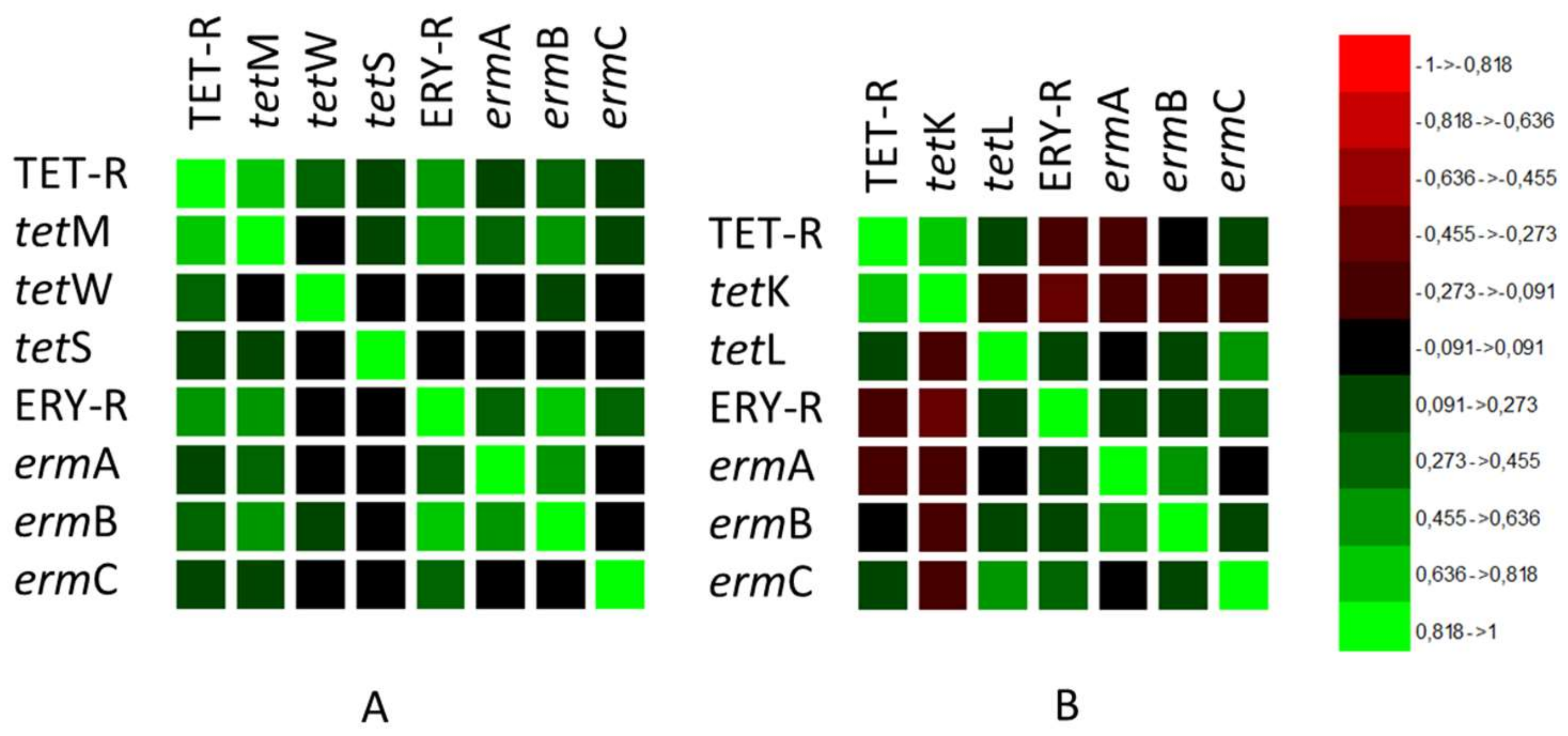
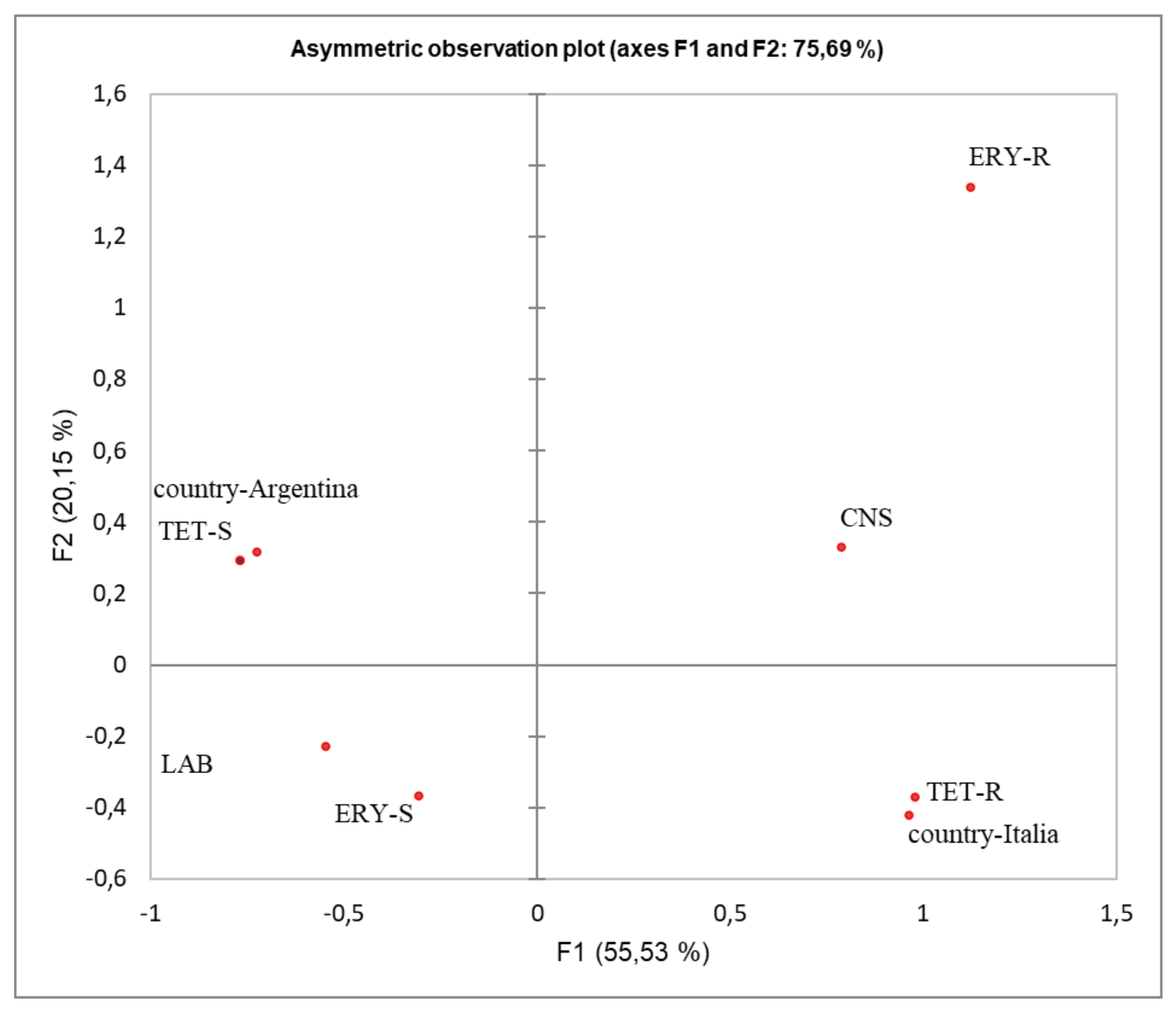
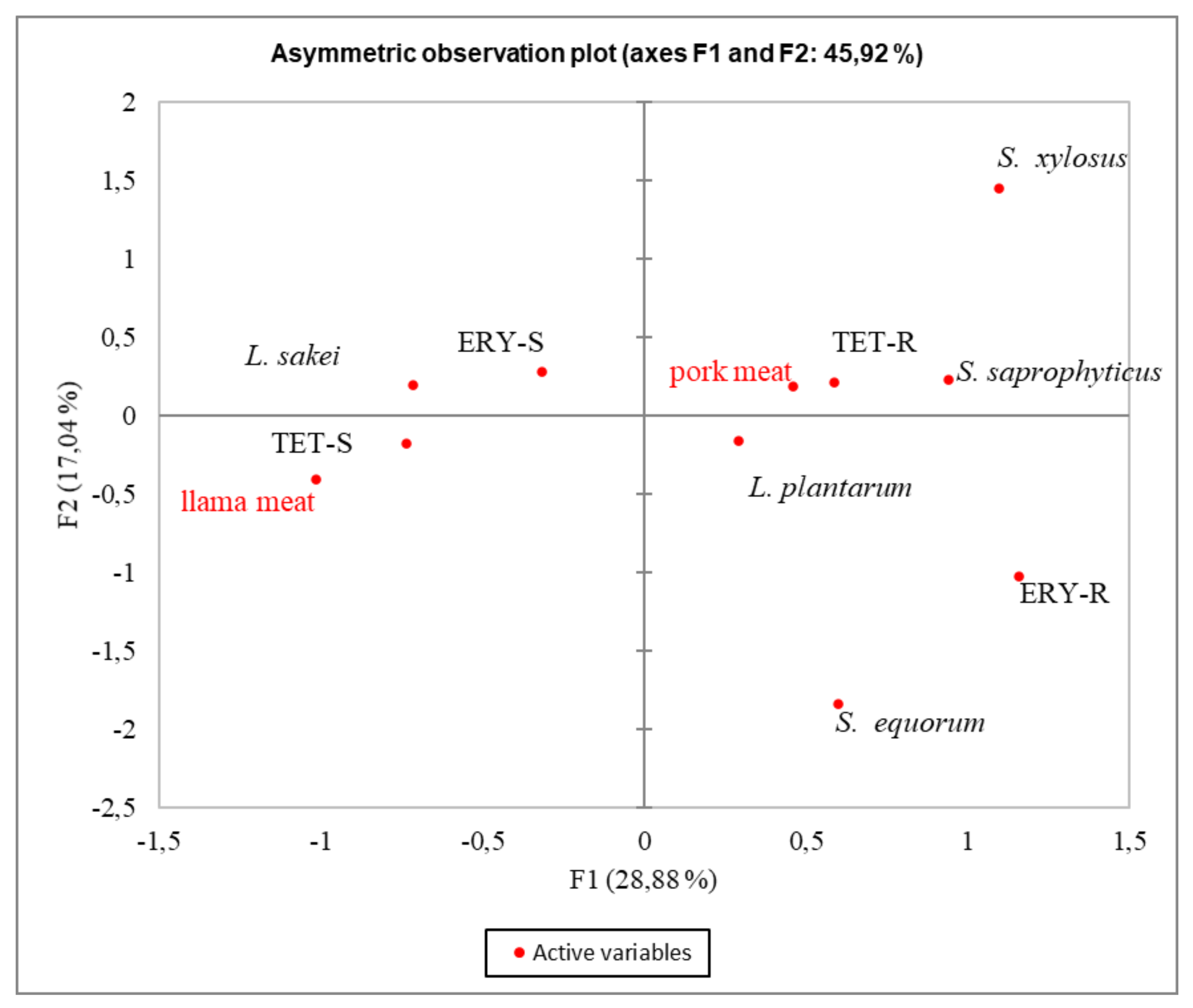
The extensive use of antibiotics as growth promoters, or their continued abusive misuse to cure or prevent the onset of bacterial infections as occurs in the intensive farming, may have played a pivotal role in the spread of reservoirs of antibiotic resistance (AR) among food-associated bacteria including pathogens representing risks to human health. The present study compares the incidence of tetracycline and erythromycin resistances in lactic acid bacteria (LAB) and coagulase negative staphylococci (CNS) from fermented products manufacturing using meat from intensive animal husbandry (industrialized manufacturing Italian salami) and from extensive farms (artisanal sausages facilities pork and llama Argentinean sausages). A higher incidence of tetracycline resistance (TET-R) compared to erythromycin resistance (ERY-R) was observed among the 205 isolates. Unlike CNS strains, the LAB showed a significant correlation between the TET-R and the ERY-R phenotypes. Genotypic assessment shows a high correlation with tetK and tetM for the TET-R strains and with ermB and ermC for the ERY-R strains. Multiple correspondence analyses have highlighted the association between AR phenotypes and CNS species isolated from Italian salami, while the susceptible phenotypes were associated with the LAB species from Argentinean sausages. Since antibiotic resistance in meat-associated bacteria is a very complex phenomenon, the assessment of bacterial resistance in different environmental contexts with diverse farming practices and food production technologies will help in monitoring the factors influencing AR emergence and spread in animal production.
Keywords: antibiotic resistance; lactic acid bacteria; coagulase negative staphylococci; animal husbandry; pork and llama meat antibiotic resistance; lactic acid bacteria; coagulase negative staphylococci; animal husbandry; pork and llama meat