Article

Occurrence of Human Enteric Viruses in Retail Mussels Marketed in Burgos, Spain

by
Mariana Alves Elois
1,2,3,
Nadine Yeramian
2,3,
Daniel Perez-Alonso
2,3,
Rafael Dorighello Cadamuro
1,2,3,
Antonio Valero-Díaz
4,
Álvaro Cañete-Reyes
2,3,
Henrique Borges da Silva
1,
Gislaine Fongaro
1 and
David Rodríguez-Lázaro
2,3,*
1
Laboratory of Applied Virology, Department of Microbiology, Immunology, and Parasitology, Federal University of Santa Catarina, Florianópolis 88035-972, Brazil
2
Laboratory of Microbiology, Department of Biotechnology and Food Science, University of Burgos, 09001 Burgos, Spain
3
Centre for Emerging Pathogens and Global Health, University of Burgos, 09001 Burgos, Spain
4
Department of Food Science and Technology, UIC Zoonosis y Enfermedades Emergentes (ENZOEM), University of Cordoba, 14014 Cordoba, Spain
*
Author to whom correspondence should be addressed.
Microorganisms 2026, 14(9), 2099; https://doi.org/10.3390/microorganisms14092099 (registering DOI)

Submission received: 13 August 2026 / Revised: 6 September 2026 / Accepted: 17 September 2026 / Published: 19 September 2026
(This article belongs to the Section Virology)

Abstract

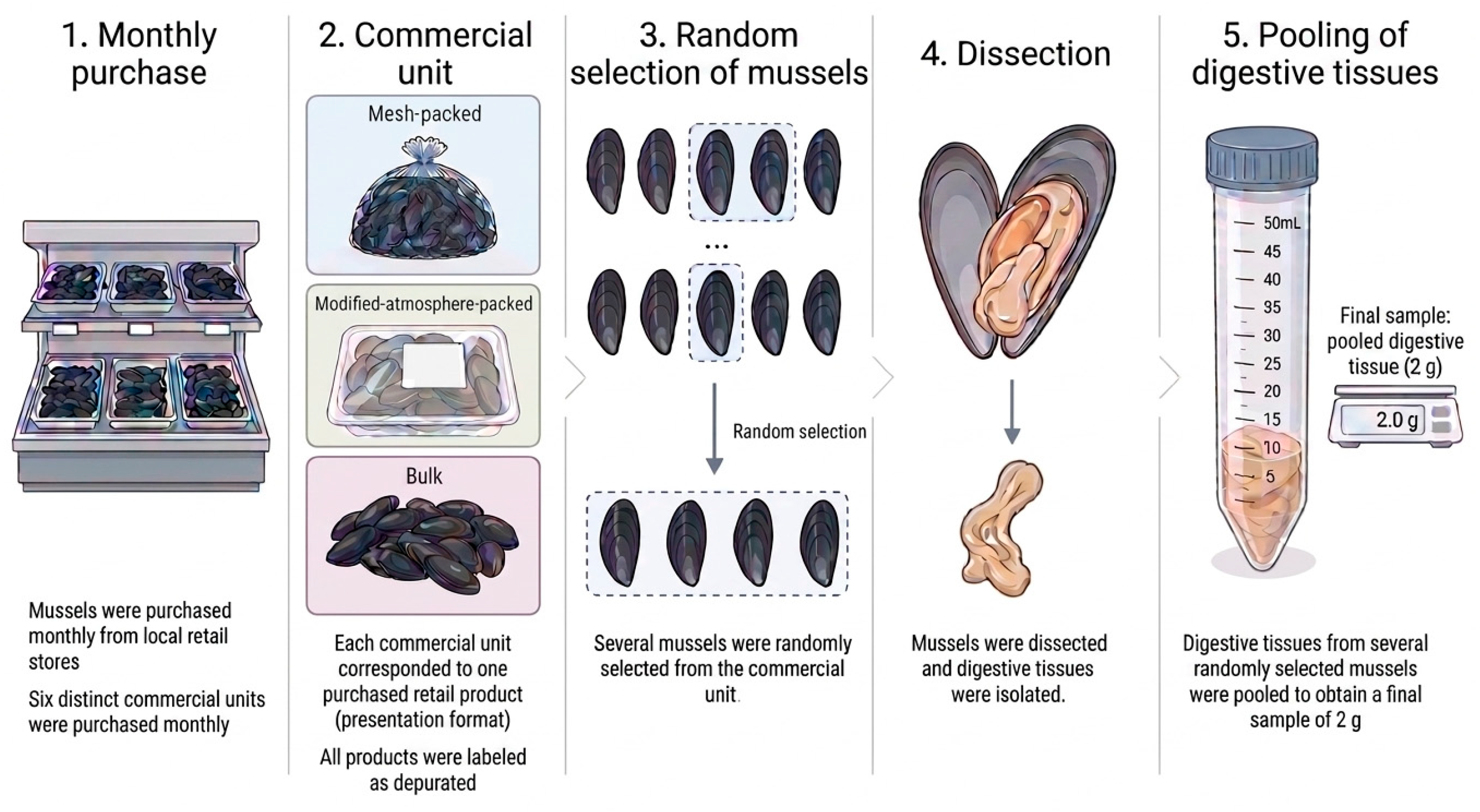
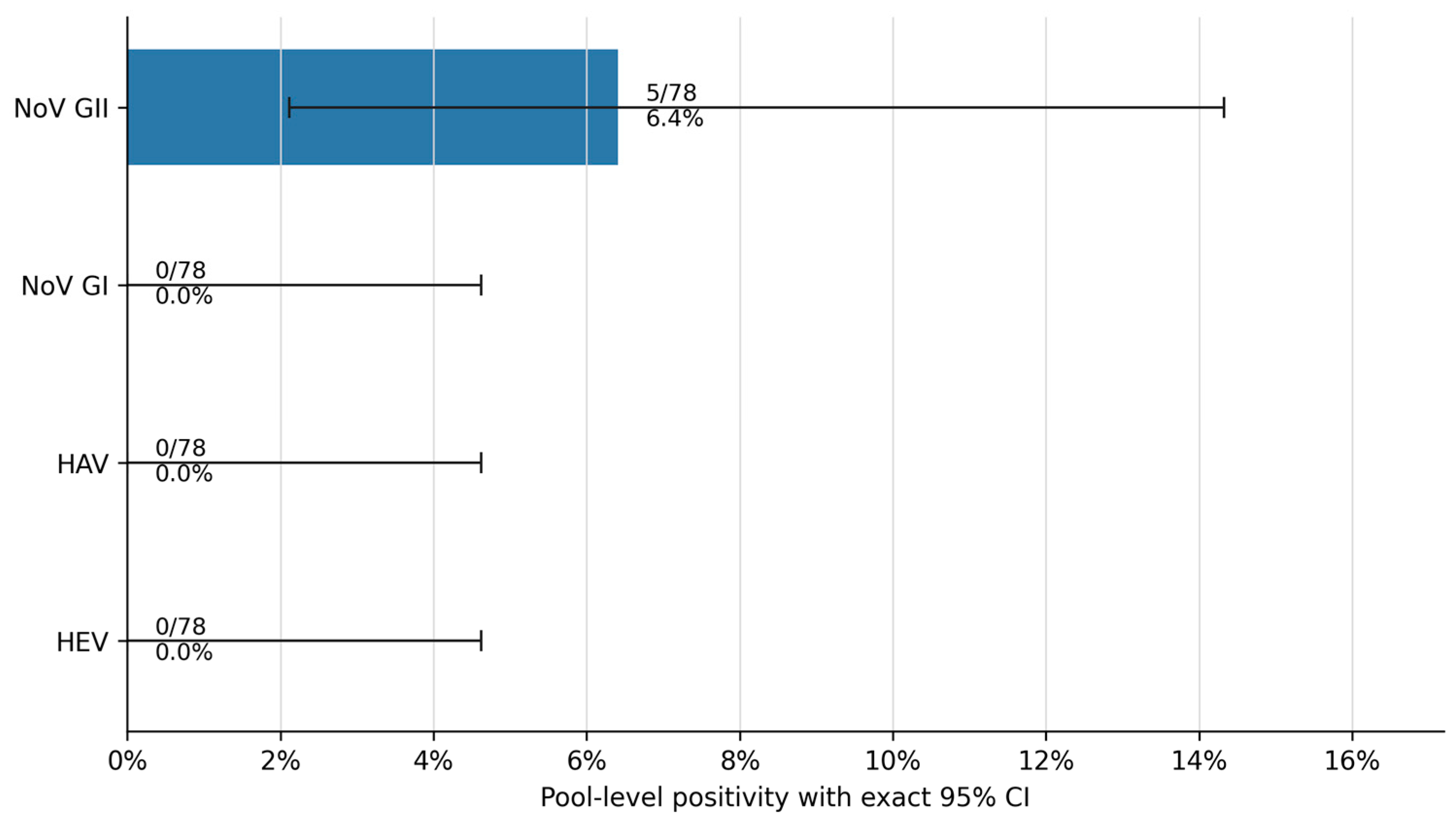
Bivalve mollusks are recognized as bioaccumulators of enteric viruses and, therefore, represent important environmental sentinels for microbiological contamination. The contamination of these organisms is primarily associated with the exposure of coastal waters to human and agricultural effluents, which introduce pathogens into the aquatic environment. Due to their filter-feeding activity, bivalves can bioaccumulate these pathogens, and because they are often consumed raw or undercooked, contaminated bivalves may pose a public health risk. Hepatitis A virus (HAV), hepatitis E virus (HEV), and norovirus genogroups I and II (NoV GI and NoV GII) are recognized by the European Food Safety Authority and the U.S. Food and Drug Administration as major etiological agents responsible for numerous foodborne outbreaks worldwide. The absence of established regulatory limits for viral contamination in food has driven the development of molecular approaches to generate scientific evidence and support risk assessment and control strategies. In this context, the present study aimed to investigate the occurrence of HAV, HEV, NoV GI, and NoV GII in commercially available mussels (Mytilus galloprovincialis). A total of 78 pooled samples, each comprising digestive tissues from four to five mussels, were collected from retail markets between February and December 2025 and during January and February 2026 and were analyzed by reverse transcription quantitative PCR (RT-qPCR). NoV GII RNA was detected in 5 pooled samples, corresponding to an overall pool-level positivity of 6.4% (5/78; exact 95% confidence interval [CI]: 2.1–14.3%), while HAV, HEV, and NoV GI were not detected (0/78; exact 95% CI: 0.0–4.6%). RNA concentrations in positive pooled samples were low, with a mean of 143.3 ± 132.4 copies/g, a median of 120.0 copies/g, and cycle threshold (Ct) values consistent with low-level RNA detection. Overall, the findings indicate a low but detectable pool-level positivity of NoV GII in commercially available depurated mussels. The detection of viral RNA in retail mussels indicates previous exposure to viral contamination and supports the importance of continued virus-specific surveillance of commercially available bivalves.
Keywords: bivalve mollusks; norovirus; hepatitis A virus; hepatitis E virus; RT-qPCR; food safety; viral surveillance bivalve mollusks; norovirus; hepatitis A virus; hepatitis E virus; RT-qPCR; food safety; viral surveillance