Virus-Dependent Relative Contributions of Citric Acid and Benzalkonium Chloride to the Virucidal Efficacy of Combination Disinfectants

 ,
, 
Abstract
1. Introduction
2. Materials and Methods
2.1. Viruses and Cell Lines
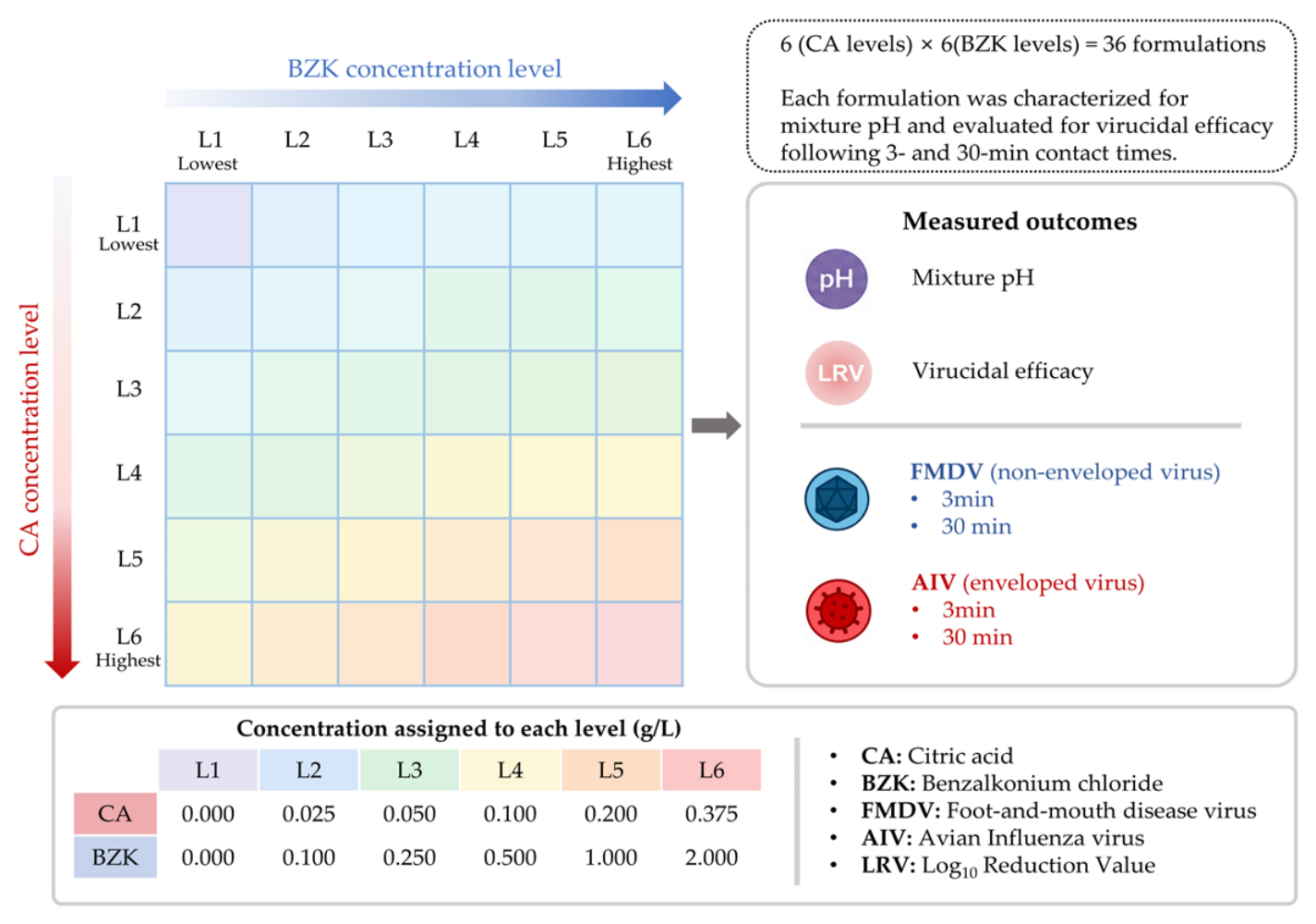
2.2. Disinfectant Preparation and Experimental Design
2.3. Virucidal Efficacy Assay
2.4. Data Analysis and Statistical Evaluation
3. Results
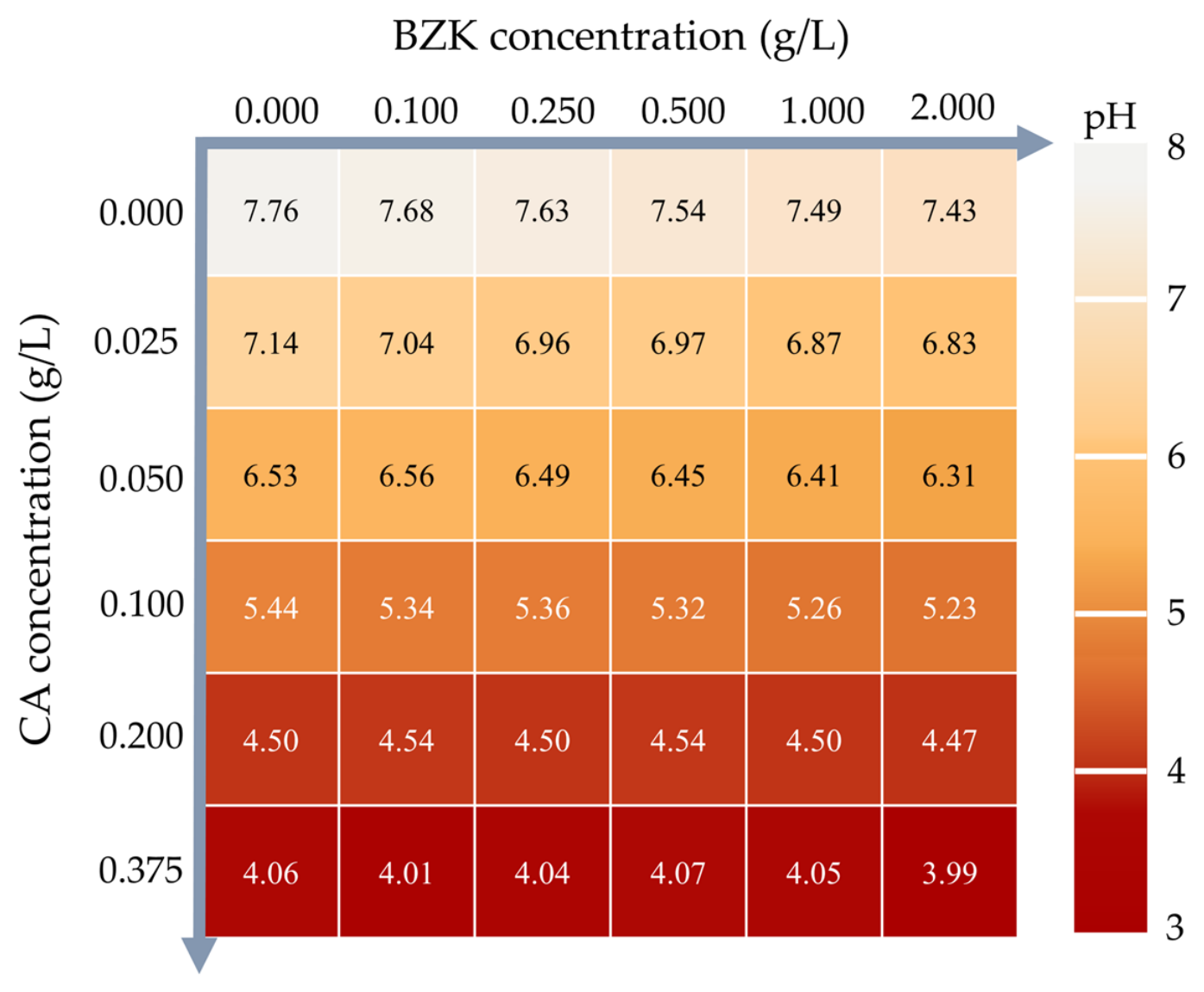
3.1. Mixture pH of CA–BZK Formulations
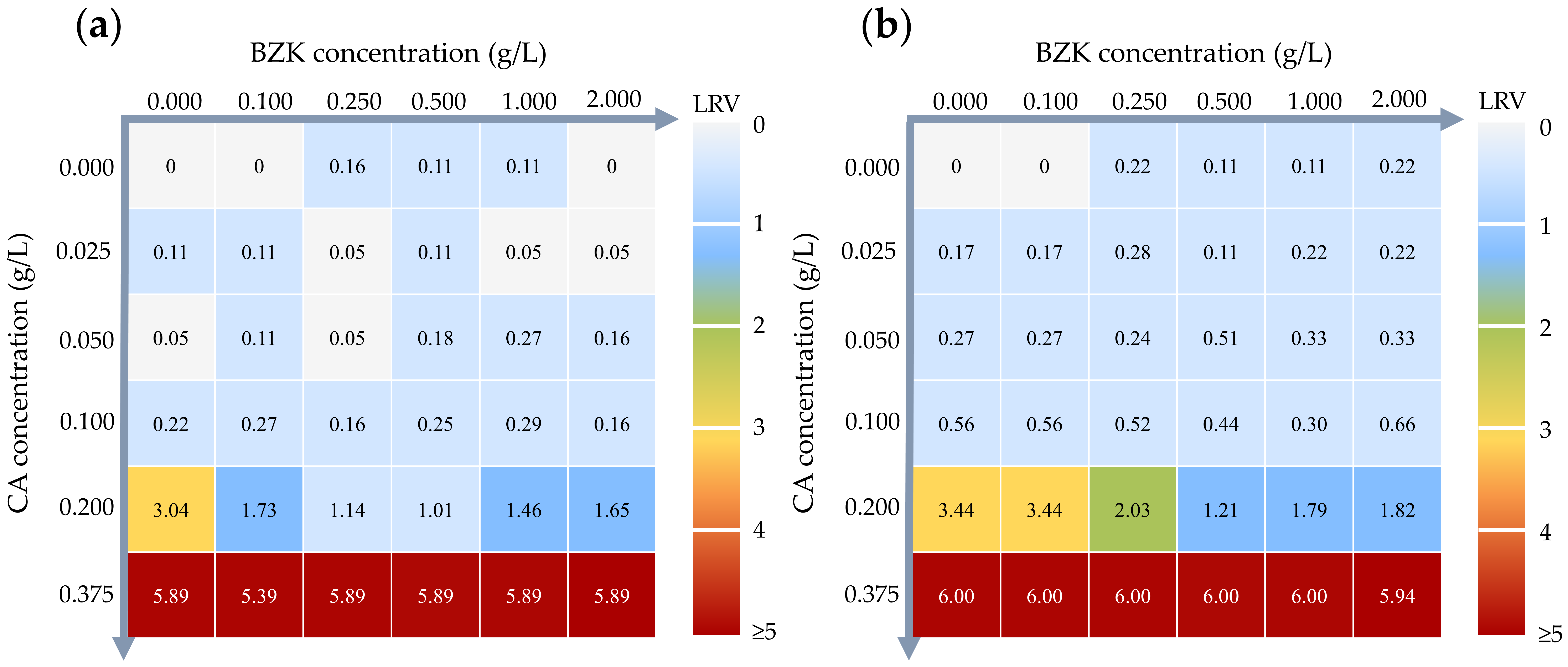
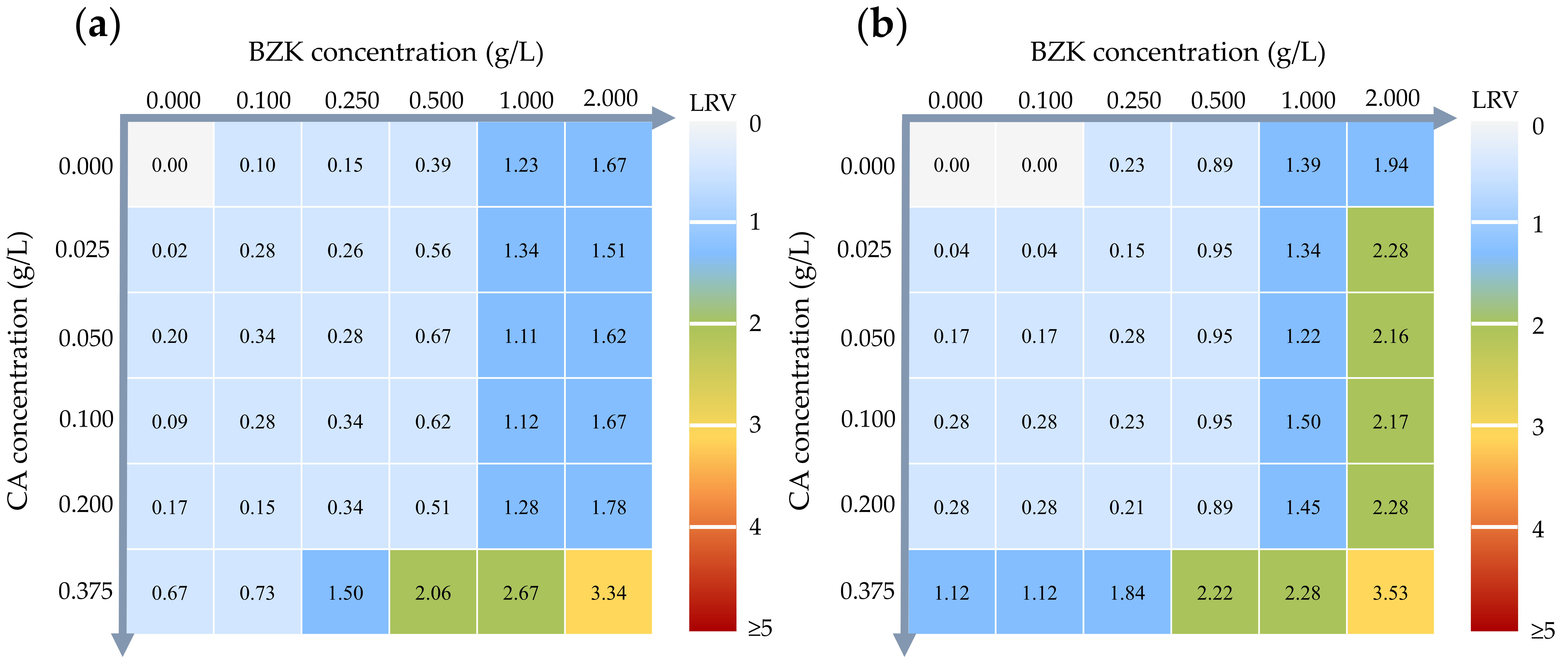
3.2. Virucidal Efficacy of CA–BZK Formulations Against FMDV
3.3. Virucidal Efficacy of CA–BZK Formulations Against AIV
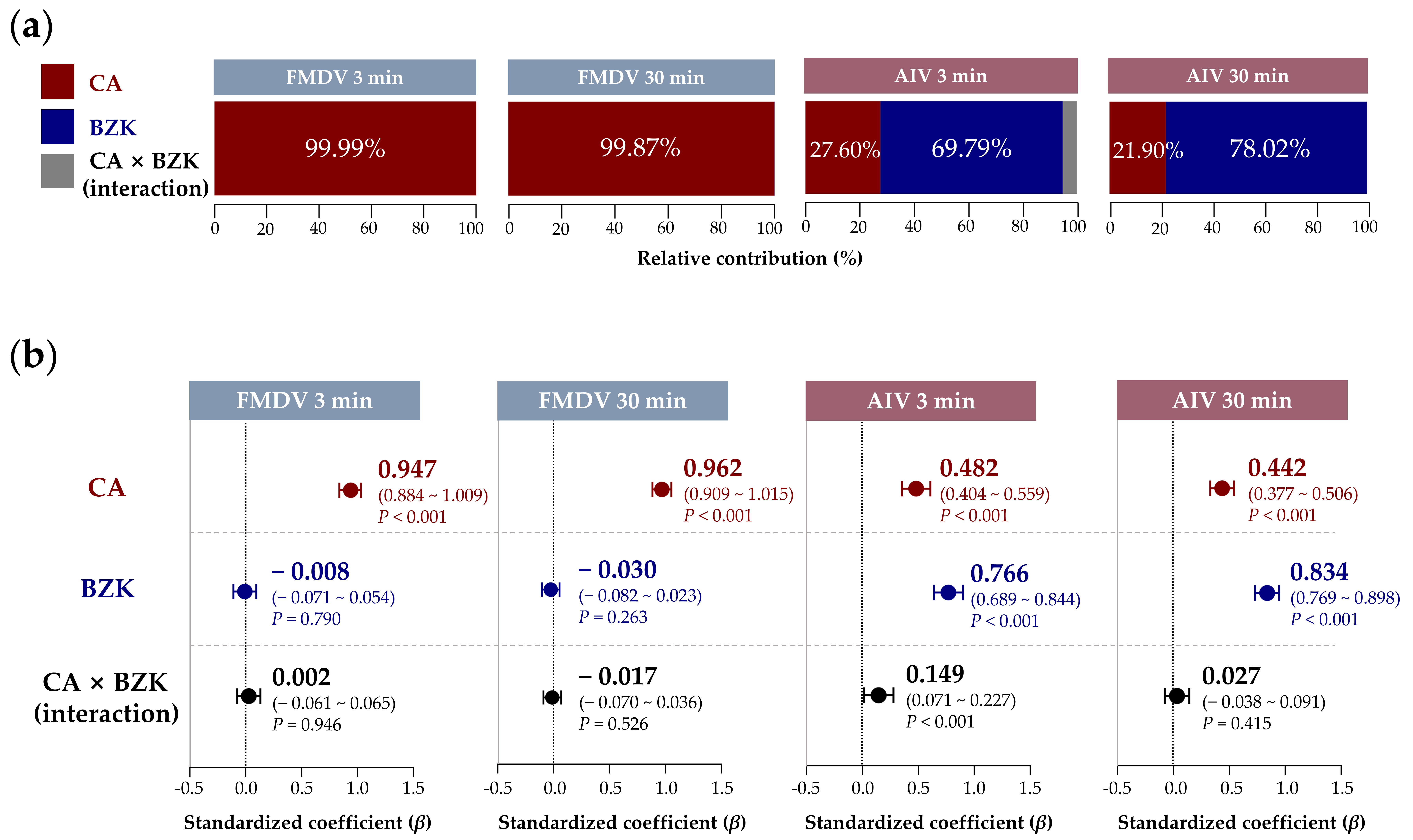
3.4. Quantitative Partitioning of CA and BZK Contributions Within Combination Formulations
4. Discussion
5. Conclusions
Author Contributions
Funding
Institutional Review Board Statement
Informed Consent Statement
Data Availability Statement
Conflicts of Interest
Abbreviations
| AIV | Avian influenza virus |
| BZK | Benzalkonium chloride |
| CA | Citric acid |
| FMDV | Foot-and-mouth disease virus |
| LRVs | Log reduction values |
| QACs | Quaternary ammonium compounds |
References
- Aslam, M.; Alkheraije, K.A. The prevalence of foot-and-mouth disease in Asia. Front. Vet. Sci. 2023, 10, 1201578. [Google Scholar] [CrossRef] [Scilit]
- Gabbert, L.R.; Neilan, J.G.; Rasmussen, M. Recovery and chemical disinfection of foot-and-mouth disease and African swine fever viruses from porous concrete surfaces. J. Appl. Microbiol. 2020, 129, 1092–1101. [Google Scholar] [CrossRef] [Scilit] [PubMed]
- Stenfeldt, C.; Eschbaumer, M.; Humphreys, J.; Medina, G.N.; Arzt, J. The pathogenesis of foot-and-mouth disease virus: Current understandings and knowledge gaps. Vet. Res. 2025, 56, 1–25. [Google Scholar] [CrossRef] [Scilit] [PubMed]
- De Benedictis, P.; Beato, M.; Capua, I. Inactivation of avian influenza viruses by chemical agents and physical conditions: A review. Zoonoses Public Health 2007, 54, 51–68. [Google Scholar] [CrossRef] [Scilit] [PubMed]
- Khalil, A.M.; Esaki, M.; Okuya, K.; Ozawa, M. Stability of the virucidal activity of commercial disinfectants against avian influenza viruses under different environmental conditions. Pathogens 2023, 12, 1382. [Google Scholar] [CrossRef] [Scilit] [PubMed]
- Gallina, L.; Scagliarini, A. Virucidal efficacy of common disinfectants against orf virus. Vet. Rec. 2010, 166, 725. [Google Scholar] [CrossRef] [Scilit] [PubMed]
- Paliy, A.; Stegniy, B.; Muzyka, D.; Gerilovych, A.; Korneykov, O. The study of the properties of the novel virucidal disinfectant. Agric. Sci. Pract. 2016, 3, 41–47. [Google Scholar] [CrossRef] [Scilit]
- Wigginton, K.R.; Pecson, B.M.; Sigstam, T.; Bosshard, F.; Kohn, T. Virus inactivation mechanisms: Impact of disinfectants on virus function and structural integrity. Environ. Sci. Technol. 2012, 46, 12069–12078. [Google Scholar] [CrossRef] [Scilit] [PubMed]
- Narula, P.; Lokshman, M.K.; Pathak, S.B.; Mukherjee, S.; Banerjee, M. Chemical inactivation of two non-enveloped viruses results in distinct thermal unfolding patterns and morphological alterations. BMC Microbiol. 2024, 24, 413. [Google Scholar] [CrossRef] [Scilit] [PubMed]
- Ruenphet, S.; Kunanusont, N.; Punyadarsaniya, D. Effectiveness of potassium peroxymonosulfate against enveloped viruses using an aqueous phase and its application on various contaminated carrier surfaces and artificially avian influenza virus-contaminated clothes. Vet. World 2024, 17, 2595. [Google Scholar] [CrossRef] [Scilit] [PubMed]
- Wanguyun, A.P.; Oishi, W.; Sano, D. Sensitivity evaluation of enveloped and non-enveloped viruses to ethanol using machine learning: A systematic review. Food Environ. Virol. 2024, 16, 1–13. [Google Scholar] [CrossRef] [Scilit] [PubMed]
- Boyce, J.M. Quaternary ammonium disinfectants and antiseptics: Tolerance, resistance and potential impact on antibiotic resistance. Antimicrob. Resist. Infect. Control 2023, 12, 32. [Google Scholar] [CrossRef] [Scilit] [PubMed]
- Sattar, S.A. Hierarchy of Susceptibility of Viruses to Environmental Surface Disinfectants: A Predictor of Activity Against New and Emerging Viral Pathogens. J. AOAC Int. 2007, 90, 1655–1658. [Google Scholar] [CrossRef] [Scilit]
- Zhou, S.S. Variability and Relative Order of Susceptibility of Non-Enveloped. In Disinfection of Viruses; Intechopen: London, UK, 2022; p. 93. [Google Scholar] [CrossRef] [Scilit]
- Caridi, F.; Canas-Arranz, R.; Vázquez-Calvo, Á.; de León, P.; Calderón, K.I.; Domingo, E.; Sobrino, F.; Martín-Acebes, M.A. Adaptive value of foot-and-mouth disease virus capsid substitutions with opposite effects on particle acid stability. Sci. Rep. 2021, 11, 23494. [Google Scholar] [CrossRef] [Scilit] [PubMed]
- Yuan, H.; Li, P.; Ma, X.; Lu, Z.; Sun, P.; Bai, X.; Zhang, J.; Bao, H.; Cao, Y.; Li, D. The pH stability of foot-and-mouth disease virus. Virol. J. 2017, 14, 233. [Google Scholar] [CrossRef] [Scilit] [PubMed]
- Hu, W.; Shimoda, H.; Tsuchiya, Y.; Kishi, M.; Hayasaka, D. PH-dependent virucidal effects of weak acids against pathogenic viruses. Trop. Med. Health 2024, 52, 9. [Google Scholar] [CrossRef] [Scilit] [PubMed]
- Igarashi, C.; Kubo, S.; Hayase, A.; Mori, T.; Nonomura, Y.; Sakai, T. Novel mechanisms of alkyldimethylbenzalkonium chloride in virucidal activity. Sci. Rep. 2025, 15, 10830. [Google Scholar] [CrossRef] [Scilit] [PubMed]
- Shirai, J.; Kanno, T.; Tsuchiya, Y.; Mitsubayashi, S.; Seki, R. Effects of Chlorine, Iodine, and Quaternary Ammonium Compound Disinfectants on Several Exotic Disease Viruses. J. Vet. Med. Sci. 2000, 62, 85–92. [Google Scholar] [CrossRef] [Scilit] [PubMed]
- Takada, I.; Miyazaki, A.; Igarashi, C.; Yamawaki, Y.; Hayase, A.; Mori, T.; Sakai, T. Study on the relationship between viral inactivation and alkyl chain length of benzalkonium chloride. PLoS ONE 2025, 20, e0325981. [Google Scholar] [CrossRef] [Scilit] [PubMed]
- Song, S.; Park, S.-H.; Shin, K.-S.; Ku, H.-O.; Jeong, W. Concentration- and Time-Dependent Virucidal Responses of Major Transboundary Animal Disease Viruses to Disinfectants. Viruses 2026, 18, 225. [Google Scholar] [CrossRef] [Scilit] [PubMed]
- McDonnell, G.A. Russell, Antiseptics and Disinfectants: Activity, Action, and Resistance. Clin. Microbiol. Rev. 1999, 12, 147–179. [Google Scholar] [CrossRef] [Scilit] [PubMed]
- Fraise, A. Russell, Hugo & Ayliffe’s: Principles and Practice of Disinfection, Preservation and Sterilization, 5th ed.; John Wiley & Sons: Hoboken, NJ, USA, 2012; pp. 1–4. [Google Scholar]
- Kärber, G. Beitrag zur kollektiven Behandlung pharmakologischer Reihenversuche. Naunyn-Schmiedebergs Arch. Exp. Pathol. Pharmakol. 1931, 162, 480–483. [Google Scholar] [CrossRef] [Scilit]
- BS EN 14675; Chemical Disinfectants and Antiseptics—Quantitative Suspension Test for the Evaluation of Virucidal Activity of Chemical Disinfectants and Antiseptics Used in the Veterinary Area—Test Method and Requirements (Phase 2, Step 1). British Standards Institution (BSI): London, UK, 2015.
- ASTM E1052-20; Standard Practice to Assess the Activity of Microbicides Against Viruses in Suspension. ASTM International: West Conshohocken, PA, USA, 2020. [CrossRef] [Scilit]
- Animal and Plant Health Agency. Requirements for the Approval of Disinfectants Under the Diseases of Animals (Approved Disinfectants) Order; Animal and Plant Health Agency: Weybridge, UK, 2025.
- Rhee, C.; Kang, Y.; Han, B.; Kim, Y.-W.; Her, M.; Jeong, W.; Kim, S. Virucidal efficacy of seven active substances in commercial disinfectants used against H9N2 low pathogenic avian influenza virus. J. Appl. Poult. Res. 2021, 30, 100198. [Google Scholar] [CrossRef] [Scilit]
- Figueroa, A.; Hauck, R.; Saldias-Rodriguez, J.; Gallardo, R.A. Combination of quaternary ammonia and glutaraldehyde as a disinfectant against enveloped and non-enveloped viruses. J. Appl. Poult. Res. 2017, 26, 491–497. [Google Scholar] [CrossRef] [Scilit]
- Marzouk, E.; Abd El-Hamid, H.S.; Awad, A.M.; Zessin, K.-H.; Abdelwhab, E.; Hafez, H.M. In vitro inactivation of two Egyptian A/H5N1 viruses by four commercial chemical disinfectants. Avian Dis. 2014, 58, 462–467. [Google Scholar] [CrossRef] [Scilit] [PubMed]
- Sobhy, N.M.; Quinonez-Munoz, A.; Aboubakr, H.A.; Youssef, C.R.; Ojeda-Barría, G.; Mendoza-Fernández, J.; Goyal, S.M. In vitro virucidal activity of a commercial disinfectant against viruses of domestic animals and poultry. Front. Vet. Sci. 2024, 10, 1276031. [Google Scholar] [CrossRef] [Scilit] [PubMed]
- Grubman, M.J.; Baxt, B. Foot-and-mouth disease. Clin. Microbiol. Rev. 2004, 17, 465–493. [Google Scholar] [CrossRef] [Scilit] [PubMed]
- Caridi, F.; Cañas-Arranz, R.; Vázquez-Calvo, A.; Sobrino, F.; Martín-Acebes, M.A. Equine Rhinitis A virus mutants with altered acid resistance unveil a key role of VP3 and intrasubunit interactions in the control of the pH stability of the aphthovirus capsid. J. Virol. 2016, 90, 9725–9732. [Google Scholar] [CrossRef] [Scilit] [PubMed]
- Curry, S.; Abrams, C.C.; Fry, E.; Crowther, J.C.; Belsham, G.J.; Stuart, D.I.; King, A. Viral RNA modulates the acid sensitivity of foot-and-mouth disease virus capsids. J. Virol. 1995, 69, 430–438. [Google Scholar] [CrossRef] [Scilit] [PubMed]
- van Vlijmen, H.W.; Curry, S.; Schaefer, M.; Karplus, M. Titration calculations of foot-and-mouth disease virus capsids and their stabilities as a function of pH. J. Mol. Biol. 1998, 275, 295–308. [Google Scholar] [CrossRef] [Scilit] [PubMed]
- Martín-Acebes, M.A.; Vázquez-Calvo, Á.; Rincón, V.; Mateu, M.G.; Sobrino, F. A Single Amino Acid Substitution in the Capsid of Foot-and-Mouth Disease Virus Can Increase Acid Resistance. J. Virol. 2011, 85, 2733–2740. [Google Scholar] [CrossRef] [Scilit] [PubMed]
- Gerba, C.P.; Boone, S.; Nims, R.W.; Maillard, J.-Y.; Sattar, S.A.; Rubino, J.R.; McKinney, J.; Ijaz, M.K. Mechanisms of action of microbicides commonly used in infection prevention and control. Microbiol. Mol. Biol. Rev. 2024, 88, e00205-22. [Google Scholar] [CrossRef] [Scilit] [PubMed]
- Gerba, C.P. Quaternary ammonium biocides: Efficacy in application. Appl. Environ. Microbiol. 2015, 81, 464–469. [Google Scholar] [CrossRef] [Scilit] [PubMed]



Disclaimer/Publisher’s Note: The statements, opinions and data contained in all publications are solely those of the individual author(s) and contributor(s) and not of MDPI and/or the editor(s). MDPI and/or the editor(s) disclaim responsibility for any injury to people or property resulting from any ideas, methods, instructions or products referred to in the content. |
© 2026 by the authors. Licensee MDPI, Basel, Switzerland. This article is an open access article distributed under the terms and conditions of the Creative Commons Attribution (CC BY) license.
Share and Cite
Song, S.; Shin, K.-S.; Park, S.-H.; Joo, Y.Y.; Lee, C.-Y.; Ku, H.-O.; Jeong, W. Virus-Dependent Relative Contributions of Citric Acid and Benzalkonium Chloride to the Virucidal Efficacy of Combination Disinfectants. Microorganisms 2026, 14, 1873. https://doi.org/10.3390/microorganisms14091873
Song S, Shin K-S, Park S-H, Joo YY, Lee C-Y, Ku H-O, Jeong W. Virus-Dependent Relative Contributions of Citric Acid and Benzalkonium Chloride to the Virucidal Efficacy of Combination Disinfectants. Microorganisms. 2026; 14(9):1873. https://doi.org/10.3390/microorganisms14091873
Chicago/Turabian StyleSong, Sok, Kyu-Sik Shin, So-Hee Park, Yong Yi Joo, Cho-Yeon Lee, Hyun-Ok Ku, and Wooseog Jeong. 2026. "Virus-Dependent Relative Contributions of Citric Acid and Benzalkonium Chloride to the Virucidal Efficacy of Combination Disinfectants" Microorganisms 14, no. 9: 1873. https://doi.org/10.3390/microorganisms14091873
APA StyleSong, S., Shin, K.-S., Park, S.-H., Joo, Y. Y., Lee, C.-Y., Ku, H.-O., & Jeong, W. (2026). Virus-Dependent Relative Contributions of Citric Acid and Benzalkonium Chloride to the Virucidal Efficacy of Combination Disinfectants. Microorganisms, 14(9), 1873. https://doi.org/10.3390/microorganisms14091873