Timing-Dependent Effects of Prebiotic–Probiotic Supplementation on High-Fat-Diet-Induced Testicular Dysfunction and Gut Microbiota Alterations in Rats

 , , , , , , and
Abstract
1. Introduction
2. Material and Method
2.1. Experimental Animals and Study Design
- Normal Diet (ND) group: Rats were fed a standard control diet for 10 weeks.
- High-Fat Diet (HFD) group: Rats were fed a high-fat diet for 10 weeks.
- High-Fat Diet with concurrent Prebiotic–Probiotic supplementation (P-HFD) group: Rats were fed a high-fat diet and simultaneously administered a prebiotic–probiotic combination (1.03 × 10⁹ CFU/kg/day of freeze-dried bacterial strains and 31 mg/kg/day of inulin) via oral gavage for 10 weeks.
- High-Fat Diet followed by Prebiotic–Probiotic (HFD-P) group: Rats were fed a high-fat diet for the first five weeks, followed by an additional five weeks of high-fat feeding combined with daily administration of the prebiotic–probiotic combination at the same dose described above.
2.2. Sample Collection Procedures
2.2.1. Blood Collection and Plasma Preparation
2.2.2. Testis and Epididymis Dissection
2.3. Sperm Parameters Analysis
2.4. Biochemical and Hormonal Analyses
2.4.1. Hormonal Biomarkers
2.4.2. Oxidative Stress Biomarkers
2.4.3. Inflammatory Biomarkers
2.5. Gut Microbiota Analysis
16S rRNA Gene Amplification and Library Preparation
2.6. Statistical Analysis
2.6.1. Statistical Analysis for Sperm, Biochemical, and Hormonal Data
2.6.2. Bioinformatics and Statistical Analysis for Microbiome Data
3. Results
3.1. Evaluation of Body Weights and Relative Organ Weights
3.2. Evaluation of Sperm Parameters
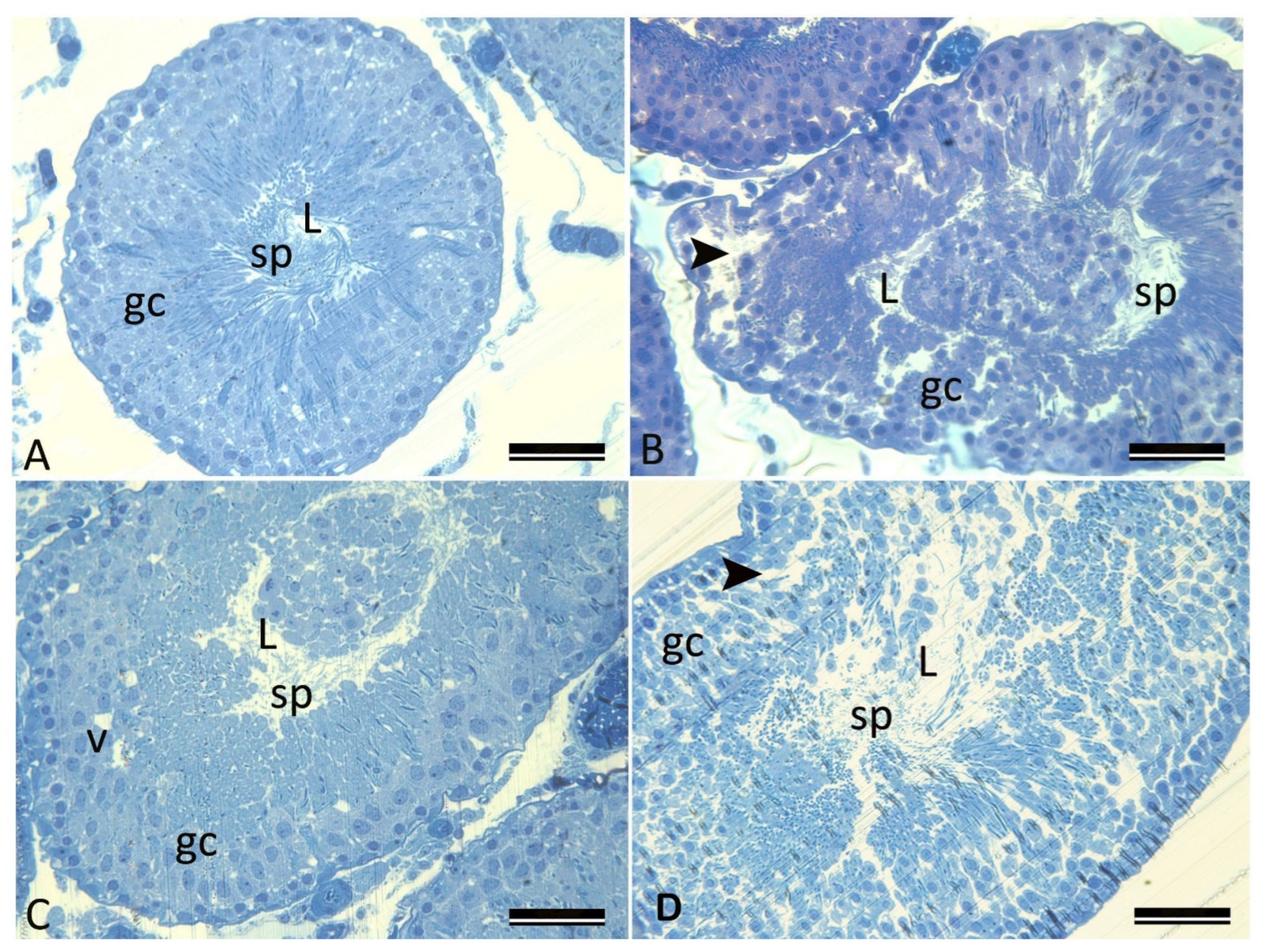
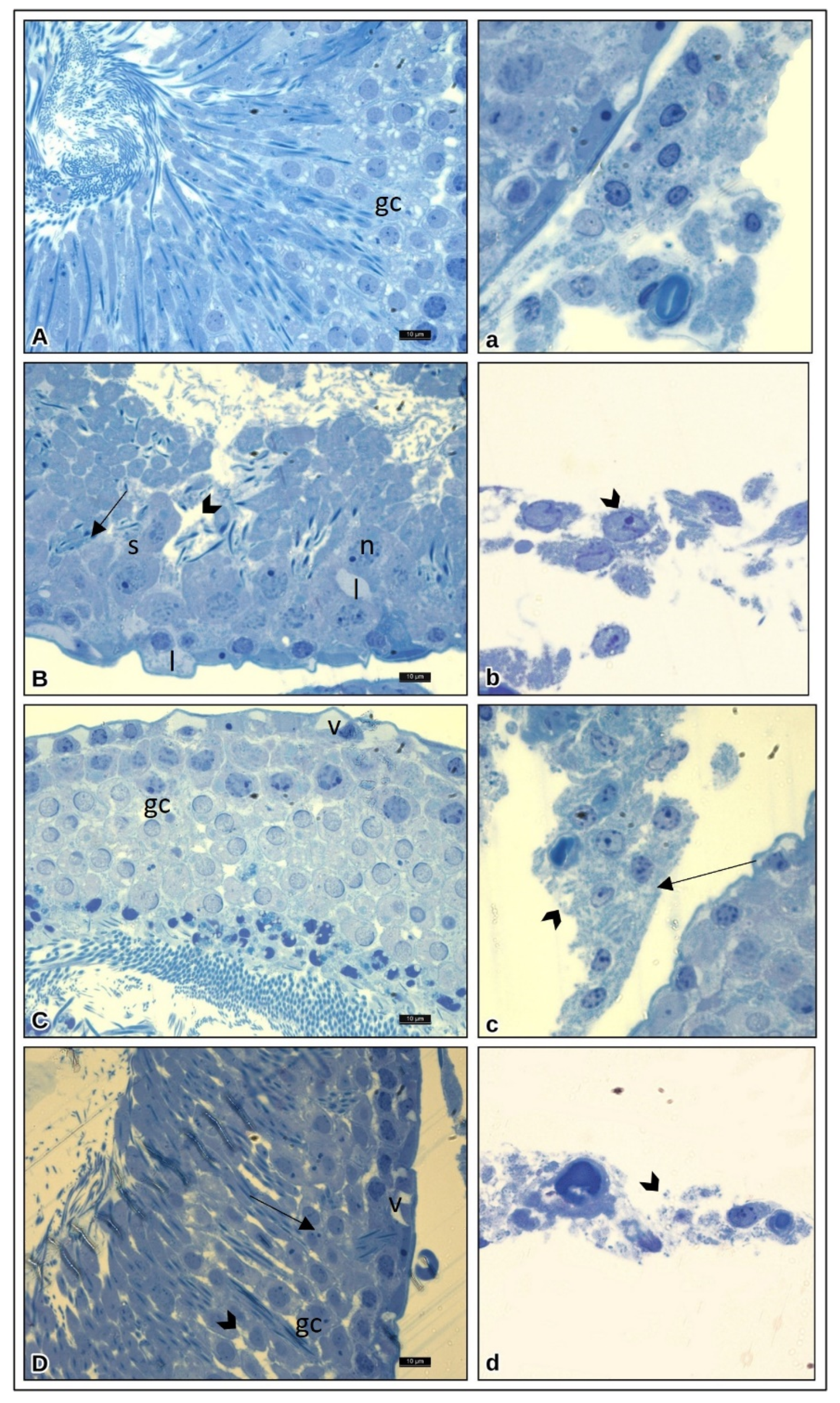
3.3. Histological Examination of Testicular Tissue


3.4. Evaluation of Serum Reproductive Hormone Levels
3.5. Evaluation of Testicular Oxidative Stress Biomarkers
3.6. Evaluation of Testicular Inflammatory Cytokine Levels
3.7. Evaluation of Gut Microbiome
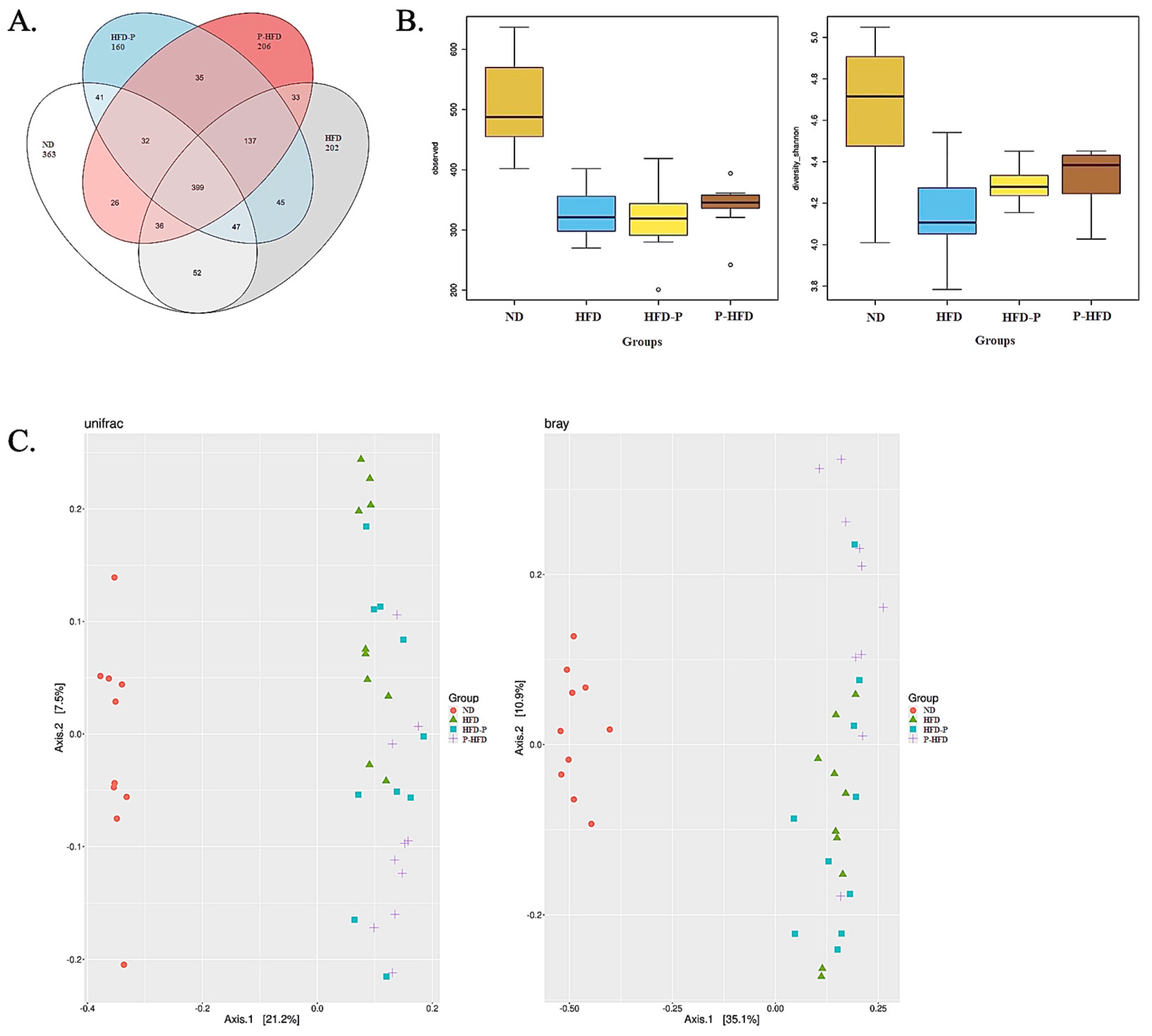
3.7.1. Sequencing Statistics and Amplicon Sequence Variants (ASVs)
3.7.2. Microbial Diversity Across Groups

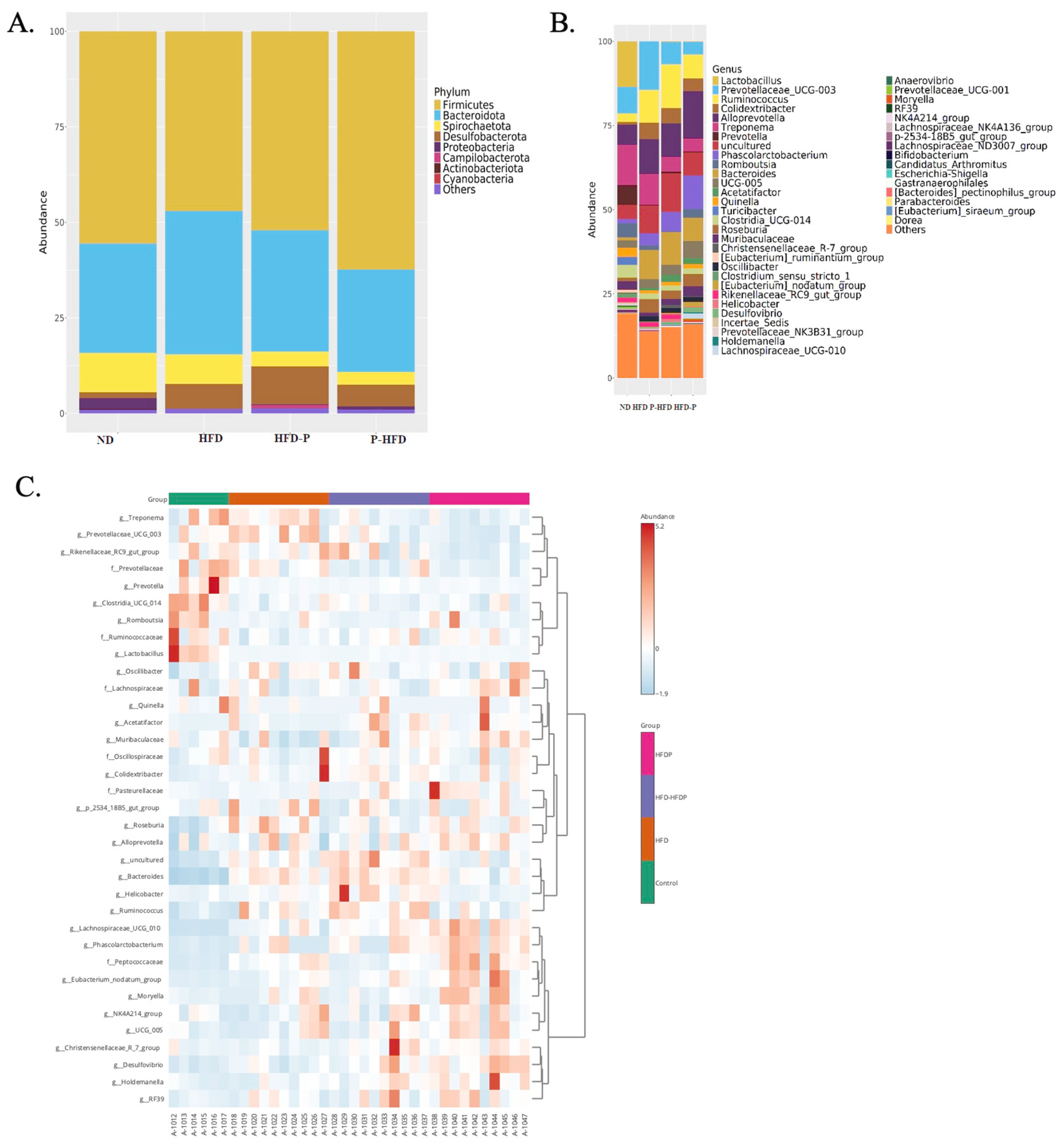
3.7.3. Relative Taxonomic Abundance Among Groups

3.7.4. Identification of Differentially Abundant Taxa
4. Discussion
5. Conclusions
Supplementary Materials
Author Contributions
Funding
Institutional Review Board Statement
Informed Consent Statement
Data Availability Statement
Conflicts of Interest
References
- Cheng, Z.; Zhang, L.; Yang, L.; Chu, H. The critical role of gut microbiota in obesity. Front. Endocrinol. 2022, 13, 1025706. [Google Scholar] [CrossRef] [Scilit]
- World Health Organization. Obesity and Overweight. March 2024. Available online: https://www.who.int/en/news-room/fact-sheets/detail/obesity-and-overweight (accessed on 16 September 2024).
- Lasker, S.; Rahman, M.M.; Parvez, F.; Zamila, M.; Miah, P.; Nahar, K.; Kabir, F.; Sharmin, S.B.; Subhan, N.; Ahsan, G.U.; et al. High-fat diet-induced metabolic syndrome and oxidative stress in obese rats are ameliorated by yogurt supplementation. Sci. Rep. 2019, 9, 20026. [Google Scholar] [CrossRef] [Scilit] [PubMed]
- Jing, J.; Peng, Y.; Fan, W.; Han, S.; Peng, Q.; Xue, C.; Qin, X.; Liu, Y.; Ding, Z. Obesity-induced oxidative stress and mitochondrial dysfunction negatively affect sperm quality. FEBS Open Biol. 2023, 13, 763–778. [Google Scholar] [CrossRef] [Scilit]
- Xia, Y.; Tian, Y.; Zhou, D.; Zhang, L.; Cai, Y.; Fu, S.; Zhang, X.; Gao, Y.; Chen, Q.; Gao, P. Gut microbiota involved in spermatogenic function of Sancai Lianmei granules in obese mice. Naunyn Schmiedebergs Arch. Pharmacol. 2023, 396, 83–97. [Google Scholar] [PubMed]
- Heydari, H.; Ghiasi, R.; Hamidian, G.; Ghaderpour, S.; Keyhanmanesh, R. Voluntary exercise improves sperm parameters in high fat diet receiving rats through alteration in testicular oxidative stress, mir-34a/SIRT1/p53 and apoptosis. Horm. Mol. Biol. Clin. Investig. 2021, 42, 253–263. [Google Scholar] [CrossRef] [Scilit] [PubMed]
- Uddandrao, V.V.S.; Eraniappan, S.; Balakrishnan Ramajayam, A.; Singaravel, S.; Roy, A.; Parim, B.N.; Ponnusamy, C.; Ganapathy, S.; Ponnusamy, P.; Sasikumar, V. Hydroxycitric acid and capsaicin combination alleviates obesity-induced testicular apoptosis, oxidative stress and inflammation. Syst. Biol. Reprod. Med. 2024, 70, 20–37. [Google Scholar] [CrossRef] [Scilit] [PubMed]
- Elmorsy, E.H.; Aly, R.G.; Badae, N.M.; Aboghazala, M.M.; Omar, S.S. Zinc alleviates high fat diet-induced spermatogenic dysfunction in Wistar rats: Role of oxidative stress, HMGB1 and inflammasome. Rev. Int. Androl. 2024, 22, 44–52. [Google Scholar] [CrossRef] [Scilit] [PubMed]
- Baker, J.S.; Supriya, R.; Dutheil, F.; Gao, Y. Obesity: Treatments, Conceptualizations, and Future Directions for a Growing Problem. Biology 2022, 11, 160. [Google Scholar] [CrossRef] [Scilit] [PubMed]
- Panuganti, K.K.; Nguyen, M.; Kshirsagar, R.K.; Doerr, C. Obesity (Nursing). In StatPearls [Internet]; StatPearls Publishing: Treasure Island, FL, USA, 2025. Available online: https://www.ncbi.nlm.nih.gov/books/NBK568702/ (accessed on 21 October 2024).
- León, S.C.; Vergara, P.C.; Neira, A.C.; Maldonado, R.M.; Araneda, C.D.; Zuñiga, M.R. Gut microbiota and obesity: Prebiotic and probiotic effects. In Oral Health by Using Probiotic Products; IntechOpen: London, UK, 2019. [Google Scholar]
- Acevedo-Román, A.; Pagán-Zayas, N.; Velázquez-Rivera, L.I.; Torres-Ventura, A.C.; Godoy-Vitorino, F. Insights into gut dysbiosis: Inflammatory diseases, obesity, and restoration approaches. Int. J. Mol. Sci. 2024, 25, 9715. [Google Scholar] [CrossRef] [Scilit] [PubMed]
- Selma, M.V.; Romo-Vaquero, M.; García-Villalba, R.; González-Sarrías, A.; Tomás-Barberán, F.A.; Espín, J.C. The human gut microbial ecology associated with overweight and obesity determines ellagic acid metabolism. Food Funct. 2016, 7, 1769–1774. [Google Scholar] [CrossRef] [Scilit] [PubMed]
- Koliada, A.; Syzenko, G.; Moseiko, V.; Budovska, L.; Puchkov, K.; Perederiy, V.; Gavalko, Y.; Dorofeyev, A.; Romanenko, M.; Tkach, S.; et al. Association between body mass index and Firmicutes/Bacteroidetes ratio in an adult Ukrainian population. BMC Microbiol. 2017, 17, 120. [Google Scholar] [CrossRef] [Scilit] [PubMed]
- Yun, Y.; Kim, H.N.; Kim, S.E.; Heo, S.G.; Chang, Y.; Ryu, S.; Shin, H.; Kim, H.L. Comparative analysis of gut microbiota associated with body mass index in a large Korean cohort. BMC Microbiol. 2017, 17, 151. [Google Scholar] [CrossRef] [Scilit] [PubMed]
- Plovier, H.; Everard, A.; Druart, C.; Depommier, C.; Van Hul, M.; Geurts, L.; Chilloux, J.; Ottman, N.; Duparc, T.; Lichtenstein, L.; et al. A purified membrane protein from Akkermansia muciniphila or the pasteurized bacterium improves metabolism in obese and diabetic mice. Nat. Med. 2017, 23, 107–113. [Google Scholar] [PubMed]
- Cerdó, T.; García-Santos, J.A.; Bermúdez, M.G.; Campoy, C. The Role of Probiotics and Prebiotics in the Prevention and Treatment of Obesity. Nutrients 2019, 11, 635. [Google Scholar] [CrossRef] [Scilit] [PubMed]
- Rahayu, E.S.; Mariyatun, M.; Putri Manurung, N.E.; Hasan, P.N.; Therdtatha, P.; Mishima, R.; Komalasari, H.; Mahfuzah, N.A.; Pamungkaningtyas, F.H.; Yoga, W.K.; et al. Effect of probiotic Lactobacillus plantarum Dad-13 powder consumption on the gut microbiota and intestinal health of overweight adults. World J. Gastroenterol. 2021, 27, 107–128, Erratum in World J. Gastroenterol. 2021, 27, 6511–6512. [Google Scholar] [CrossRef] [Scilit] [PubMed]
- Shirvani-Rad, S.; Tabatabaei-Malazy, O.; Mohseni, S.; Hasani-Ranjbar, S.; Soroush, A.R.; Hoseini-Tavassol, Z.; Ejtahed, H.S.; Larijani, B. Probiotics as a Complementary Therapy for Management of Obesity: A Systematic Review. Evid. Based Complement. Altern. Med. 2021, 2021, 6688450. [Google Scholar] [CrossRef] [Scilit]
- Manan, M.A. The role of probiotics in personalized therapeutics: Advances in gut microbe-driven interventions. Microbe 2025, 8, 100497. [Google Scholar] [CrossRef] [Scilit]
- Wang, Y.; Tian, L.; Fabi, J.P.; de Vos, P. The potential of prebiotics, probiotics, and synbiotics for ameliorating intestinal barrier dysfunction and modulating inflammatory responses as dietary supplements in diabetes mellitus management. Food Biosci. 2025, 72, 107539. [Google Scholar] [CrossRef] [Scilit]
- Sabico, S.; Al-Mashharawi, A.; Al-Daghri, N.M.; Wani, K.; Amer, O.E.; Hussain, D.S.; Ahmed Ansari, M.G.; Masoud, M.S.; Alokail, M.S.; McTernan, P.G. Effects of multi-strain probiotics on endotoxin levels and cardiometabolic profiles in T2DM. J. Transl. Med. 2017, 15, 249. [Google Scholar] [CrossRef] [Scilit] [PubMed]
- Pontes, K.S.D.S.; Guedes, M.R.; Souza, P.G.; Neves, M.F.T.; Klein, M.R.S.T. Effects of multi-strain probiotic supplementation on adiposity and metabolic profile in hypertensive overweight adults. Clin. Nutr. 2025, 50, 117–127. [Google Scholar] [CrossRef] [Scilit] [PubMed]
- Rajkumar, H.; Mahmood, N.; Kumar, M.; Varikuti, S.R.; Challa, H.R.; Myakala, S.P. Effect of probiotic (VSL#3) and omega-3 on lipid profile, insulin sensitivity and gut flora in overweight adults: A randomized clinical trial. Mediat. Inflamm. 2014, 2014, 348959. [Google Scholar]
- Chen, A.C.; Fang, T.J.; Ho, H.H.; Chen, J.F.; Kuo, Y.W.; Huang, Y.Y.; Tsai, S.Y.; Wu, S.F.; Lin, H.C.; Yeh, Y.T. A multi-strain probiotic blend reshaped obesity-related gut dysbiosis and improved lipid metabolism in obese children. Front. Nutr. 2022, 9, 922993. [Google Scholar] [CrossRef] [Scilit] [PubMed]
- Fabersani, E.; Marquez, A.; Russo, M.; Ross, R.; Torres, S.; Fontana, C.; Puglisi, E.; Medina, R.; Gauffin-Cano, P. Lactic Acid Bacteria Strains Differently Modulate Gut Microbiota and Metabolic and Immunological Parameters in High-Fat Diet-Fed Mice. Front. Nutr. 2021, 8, 718564. [Google Scholar] [CrossRef] [Scilit] [PubMed]
- Kang, Y.; Kang, X.; Yang, H.; Liu, H.; Yang, X.; Liu, Q.; Tian, H.; Xue, Y.; Ren, P.; Kuang, X.; et al. Lactobacillus acidophilus ameliorates obesity in mice through modulation of gut microbiota dysbiosis and intestinal permeability. Pharmacol. Res. 2022, 175, 106020. [Google Scholar] [CrossRef] [Scilit] [PubMed]
- Abdulqadir, R.; Engers, J.; Al-Sadi, R. Role of Bifidobacterium in Modulating the Intestinal Epithelial Tight Junction Barrier: Current Knowledge and Perspectives. Curr. Dev. Nutr. 2023, 7, 102026. [Google Scholar] [CrossRef] [Scilit] [PubMed]
- Poutahidis, T.; Springer, A.; Levkovich, T.; Qi, P.; Varian, B.J.; Lakritz, J.R.; Ibrahim, Y.M.; Chatzigiagkos, A.; Alm, E.J.; Erdman, S.E. Probiotic microbes sustain youthful serum testosterone levels and testicular size in aging mice. PLoS ONE 2014, 9, e84877. [Google Scholar] [CrossRef] [Scilit] [PubMed]
- Lv, S.; Huang, J.; Luo, Y.; Wen, Y.; Chen, B.; Qiu, H.; Chen, H.; Yue, T.; He, L.; Feng, B.; et al. Gut microbiota is involved in male reproductive function: A review. Front. Microbiol. 2024, 15, 1371667. [Google Scholar] [CrossRef] [Scilit] [PubMed]
- de Moura E Dias, M.; Dos Reis, S.A.; da Conceição, L.L.; Sediyama, C.M.N.O.; Pereira, S.S.; de Oliveira, L.L.; Gouveia Peluzio, M.D.C.; Martinez, J.A.; Milagro, F.I. Diet-induced obesity in animal models: Points to consider and influence on metabolic markers. Diabetol. Metab. Syndr. 2021, 13, 32. [Google Scholar] [CrossRef] [Scilit] [PubMed]
- Heo, M.G.; Choung, S.Y. Anti-obesity effects of Spirulina maxima in high fat diet induced obese rats via the activation of AMPK pathway and SIRT1. Food Funct. 2018, 9, 4906–4915. [Google Scholar] [CrossRef] [Scilit] [PubMed]
- Shin, J.H.; Nam, M.H.; Lee, H.; Lee, J.S.; Kim, H.; Chung, M.J.; Seo, J.G. Amelioration of obesity-related characteristics by a probiotic formulation in a high-fat diet-induced obese rat model. Eur. J. Nutr. 2018, 57, 2081–2090. [Google Scholar] [PubMed]
- Won, S.M.; Chen, S.; Lee, S.Y.; Lee, K.E.; Park, K.W.; Yoon, J.H. Lactobacillus sakei ADM14 Induces Anti-Obesity Effects and Changes in Gut Microbiome in High-Fat Diet-Induced Obese Mice. Nutrients 2020, 12, 3703. [Google Scholar] [CrossRef] [Scilit] [PubMed]
- OECD. Test No. 416: Two-Generation Reproduction Toxicity Study. In OECD Guidelines for the Testing of Chemicals; Section 4; Organisation for Economic Co-operation and Development: Paris, France, 2001; Available online: https://www.oecd.org/en/publications/test-no-416-two-generation-reproduction-toxicity_9789264070868-en.html (accessed on 11 March 2024).
- van der Waaij, D.; Nord, C.E. Development and persistence of multi-resistance to antibiotics in bacteria; an analysis and a new approach to this urgent problem. Int. J. Antimicrob. Agents 2000, 16, 191–197. [Google Scholar] [CrossRef] [Scilit] [PubMed]
- Nair, A.B.; Jacob, S. A simple practice guide for dose conversion between animals and human. J. Basic. Clin. Pharm. 2016, 7, 27–31. [Google Scholar] [CrossRef] [Scilit] [PubMed]
- Karaduman, A.B.; Kilic, V.; Atli-Eklioglu, O.; Baysal, M.; Aydogan-Kılıc, G.; Ucarcan, S.; Ilgin, S. Reproductive toxic effects and possible mechanisms of zonisamide in male rats. Hum. Exp. Toxicol. 2019, 38, 1384–1396. [Google Scholar] [CrossRef] [Scilit] [PubMed]
- Görmüş, G.; Ilgın, S.; Baysal, M.; Karaduman, A.B.; Kılıç, V.; Aydoğan-Kılıç, G.; Karagöz, O.; Atlı-Eklioğlu, Ö. Risperidone induced reproductive toxicity in male rats targeting leydig cells and hypothalamic-pituitary-gonadal axis by inducing oxidative stress. Andrologia 2021, 53, e13813. [Google Scholar] [PubMed]
- Ardıç, C.M.; Ilgın, S.; Baysal, M.; Karaduman, A.B.; Kılıç, V.; Aydoğan-Kılıç, G.; Uçarcan, Ş.; Atlı-Eklioğlu, Ö. Olanzapine induced reproductive toxicity in male rats. Sci. Rep. 2021, 11, 4739. [Google Scholar] [CrossRef] [Scilit] [PubMed]
- Korkut Celikates, B.; Kilic, V.; Atli-Eklioglu, O.; Baysal, M.; Aydogan-Kılıc, G.; Ucarcan, S.; Ilgin, S. Effects of quetiapine administration on sperm quality and testicular histology. Drug Chem. Toxicol. 2022, 45, 2379–2387. [Google Scholar] [PubMed]
- Shin, J.; Lee, S.; Go, M.J.; Lee, S.Y.; Kim, S.C.; Lee, C.H.; Cho, B.K. Analysis of mouse gut microbiome using full-length 16S rRNA sequencing. Sci. Rep. 2016, 6, 29681. [Google Scholar] [CrossRef] [Scilit] [PubMed]
- Caporaso, J.G.; Kuczynski, J.; Stombaugh, J.; Bittinger, K.; Bushman, F.D.; Costello, E.K.; Fierer, N.; Peña, A.G.; Goodrich, J.K.; Gordon, J.I.; et al. QIIME allows analysis of high-throughput community sequencing data. Nat. Methods 2010, 7, 335–336. [Google Scholar] [CrossRef] [Scilit] [PubMed]
- Segata, N.; Izard, J.; Waldron, L.; Gevers, D.; Miropolsky, L.; Garrett, W.S.; Huttenhower, C. Metagenomic biomarker discovery and explanation. Genome Biol. 2011, 12, R60. [Google Scholar] [CrossRef] [Scilit] [PubMed]
- Nearing, J.T.; Douglas, G.M.; Hayes, M.G.; MacDonald, J.; Desai, D.K.; Allward, N.; Jones, C.M.A.; Wright, R.J.; Dhanani, A.S.; Comeau, A.M.; et al. Microbiome differential abundance methods produce different results across 38 datasets. Nat. Commun. 2022, 13, 342, Erratum in Nat. Commun. 2022, 13, 777. [Google Scholar] [CrossRef] [Scilit] [PubMed]
- Callahan, B.J.; McMurdie, P.J.; Rosen, M.J.; Han, A.W.; Johnson, A.J.; Holmes, S.P. DADA2: High-resolution sample inference from Illumina amplicon data. Nat. Methods 2016, 13, 581–583. [Google Scholar] [CrossRef] [Scilit] [PubMed]
- Aitken, R.J.; Bromfield, E.G.; Gibb, Z. Oxidative stress and reproductive function. The impact of oxidative stress on reproduction: A focus on gametogenesis and fertilization. Reproduction 2022, 164, F79–F94. [Google Scholar] [CrossRef] [Scilit] [PubMed]
- Walke, G.; Gaurkar, S.S.; Prasad, R.; Lohakare, T.; Wanjari, M. The Impact of Oxidative Stress on Male Reproductive Function: Exploring the Role of Antioxidant Supplementation. Cureus 2023, 15, e42583. [Google Scholar] [CrossRef] [Scilit] [PubMed]
- Billah, M.M.; Khatiwada, S.; Lecomte, V.; Morris, M.J.; Maloney, C.A. Ameliorating high-fat diet-induced sperm and testicular oxidative damage by micronutrient-based antioxidant intervention in rats. Eur. J. Nutr. 2022, 61, 3741–3753. [Google Scholar] [CrossRef] [Scilit] [PubMed]
- Savini, I.; Catani, M.V.; Evangelista, D.; Gasperi, V.; Avigliano, L. Obesity-associated oxidative stress: Strategies finalized to improve redox state. Int. J. Mol. Sci. 2013, 14, 10497–10538. [Google Scholar] [CrossRef] [Scilit] [PubMed]
- Balan, A.I.; Halațiu, V.B.; Scridon, A. Oxidative Stress, Inflammation, and Mitochondrial Dysfunction: A Link between Obesity and Atrial Fibrillation. Antioxidants 2024, 13, 117. [Google Scholar] [CrossRef] [Scilit] [PubMed]
- Corradi, P.F.; Corradi, R.B.; Greene, L.W. Physiology of the Hypothalamic Pituitary Gonadal Axis in the Male. Urol. Clin. N. Am. 2016, 43, 151–162. [Google Scholar] [CrossRef] [Scilit]
- Zhang, Y.; Luo, C.; Huang, P.; Chen, L.; Ma, Y.; Ding, H. Effects of chronic exposure to a high fat diet, nutritive or non-nutritive sweeteners on hypothalamic-pituitary-adrenal (HPA) and -gonadal (HPG) axes of male Sprague-Dawley rats. Eur. J. Nutr. 2024, 63, 2209–2220. [Google Scholar] [CrossRef] [Scilit] [PubMed]
- Hofstra, J.; Loves, S.; van Wageningen, B.; Ruinemans-Koerts, J.; Jansen, I.; de Boer, H. High prevalence of hypogonadotropic hypogonadism in men referred for obesity treatment. Neth. J. Med. 2008, 66, 103–109. [Google Scholar] [PubMed]
- Pivonello, R.; Menafra, D.; Riccio, E.; Garifalos, F.; Mazzella, M.; de Angelis, C.; Colao, A. Metabolic Disorders and Male Hypogonadotropic Hypogonadism. Front. Endocrinol. 2019, 10, 345. [Google Scholar] [CrossRef] [Scilit]
- Fernandez, C.J.; Chacko, E.C.; Pappachan, J.M. Male Obesity-related Secondary Hypogonadism—Pathophysiology, Clinical Implications and Management. Eur. Endocrinol. 2019, 15, 83–90. [Google Scholar] [CrossRef] [Scilit] [PubMed]
- Palmer, N.O.; Bakos, H.W.; Fullston, T.; Lane, M. Impact of obesity on male fertility, sperm function and molecular composition. Spermatogenesis 2012, 2, 253–263. [Google Scholar] [CrossRef] [Scilit] [PubMed]
- Maghsoumi-Norouzabad, L.; Zare Javid, A.; Aiiashi, S.; Hosseini, S.A.; Dadfar, M.; Bazyar, H.; Dastoorpur, M. The Impact of Obesity on Various Semen Parameters and Sex Hormones in Iranian Men with Infertility: A Cross-Sectional Study. Res. Rep. Urol. 2020, 12, 357–365. [Google Scholar] [CrossRef] [Scilit] [PubMed]
- Leisegang, K.; Sengupta, P.; Agarwal, A.; Henkel, R. Obesity and male infertility: Mechanisms and management. Andrologia 2021, 53, e13617. [Google Scholar] [PubMed]
- Coviello, A.D.; Bremner, W.J.; Matsumoto, A.M.; Herbst, K.L.; Amory, J.K.; Anawalt, B.D.; Yan, X.; Brown, T.R.; Wright, W.W.; Zirkin, B.R.; et al. Intratesticular testosterone concentrations comparable with serum levels are not sufficient to maintain normal sperm production in men receiving a hormonal contraceptive regimen. J. Androl. 2004, 25, 931–938. [Google Scholar] [CrossRef] [Scilit] [PubMed]
- Roth, M.Y.; Lin, K.; Amory, J.K.; Matsumoto, A.M.; Anawalt, B.D.; Snyder, C.N.; Kalhorn, T.F.; Bremner, W.J.; Page, S.T. Serum LH correlates highly with intratesticular steroid levels in normal men. J. Androl. 2010, 31, 138–145. [Google Scholar] [CrossRef] [Scilit] [PubMed]
- Hong, C.Y.; Park, J.H.; Ahn, R.S.; Im, S.Y.; Choi, H.S.; Soh, J.; Mellon, S.H.; Lee, K. Molecular mechanism of suppression of testicular steroidogenesis by proinflammatory cytokine tumor necrosis factor alpha. Mol. Cell. Biol. 2004, 24, 2593–2604. [Google Scholar] [CrossRef] [Scilit] [PubMed]
- Suh, J.H.; Gong, E.Y.; Hong, C.Y.; Park, E.; Ahn, R.S.; Park, K.S.; Lee, K. Reduced testicular steroidogenesis in tumor necrosis factor-alpha knockout mice. J. Steroid Biochem. Mol. Biol. 2008, 112, 117–121. [Google Scholar] [CrossRef] [Scilit] [PubMed]
- Grabarek, B.; Cholewa, K.; Lodowska, J. The influence of TNF-α on the expression profile of key enzymes of steroidogenesis in H295R cells. Adv. Dermatol. Allergol. 2021, 38, 404–411. [Google Scholar] [CrossRef] [Scilit]
- Gu, X.; Li, S.Y.; Matsuyama, S.; DeFalco, T. Immune Cells as Critical Regulators of Steroidogenesis in the Testis and Beyond. Front. Endocrinol. 2022, 13, 894437. [Google Scholar] [CrossRef] [Scilit]
- Alshahrani, S.; Ahmed, A.F.; Gabr, A.H.; Abalhassan, M.; Ahmad, G. The impact of body mass index on semen parameters in infertile men. Andrologia 2016, 48, 1125–1129. [Google Scholar] [CrossRef] [Scilit] [PubMed]
- Keszthelyi, M.; Gyarmathy, V.A.; Kaposi, A.; Kopa, Z. The potential role of central obesity in male infertility: Body mass index versus waist to hip ratio as they relate to selected semen parameters. BMC Public Health 2020, 20, 307. [Google Scholar] [CrossRef] [Scilit] [PubMed]
- Kozopas, N.M.; Chornenka, O.I.; Vorobets, M.Z.; Lapovets, L.Y.; Maksymyuk, H.V. Body Mass Index and Sperm Quality: Is there a Relationship? J. Hum. Reprod. Sci. 2020, 13, 110–113. [Google Scholar] [CrossRef] [Scilit] [PubMed]
- Coskunlu, B.; Koroglu, M.K.; Hersek, I.; Ertas, B.; Sen, A.; Sener, G.; Ercan, F. Ameliorative effects of Myrtus communis L. extract involving the inhibition of oxidative stress on high-fat diet-induced testis damage in rats. Biotech. Histochem. 2024, 99, 157–173. [Google Scholar] [CrossRef] [Scilit] [PubMed]
- Liu, C.Y.; Chen, C.C.; Chiang, L.H.; Yang, B.H.; Chang, T.C.; Tsao, C.W. Hirsutella sinensis intensifies testicular function and spermatogenesis in male mice with high-fat diet-induced obesity. J. Chin. Med. Assoc. 2024, 87, 765–773. [Google Scholar] [CrossRef] [Scilit] [PubMed]
- Liu, Y.; Zhao, W.; Gu, G.; Lu, L.; Feng, J.; Guo, Q.; Ding, Z. Palmitoyl-protein thioesterase 1 (PPT1): An obesity-induced rat testicular marker of reduced fertility. Mol. Reprod. Dev. 2014, 81, 55–65. [Google Scholar] [PubMed]
- Ibáñez, C.A.; Erthal, R.P.; Ogo, F.M.; Peres, M.N.C.; Vieira, H.R.; Conejo, C.; Tófolo, L.P.; Francisco, F.A.; da Silva Silveira, S.; Malta, A.; et al. A High Fat Diet during Adolescence in Male Rats Negatively Programs Reproductive and Metabolic Function Which Is Partially Ameliorated by Exercise. Front. Physiol. 2017, 8, 807. [Google Scholar] [CrossRef] [Scilit] [PubMed]
- Huang, X.; Gao, Y.; Zhang, Y.; Wang, J.; Zheng, N. Strontium Chloride Improves Reproductive Function and Alters Gut Microbiota in Male Rats. Int. J. Mol. Sci. 2023, 24, 13922. [Google Scholar] [CrossRef] [Scilit] [PubMed]
- Liu, C.Y.; Chen, Y.W.; Tsai, T.Y.; Liu, T.H.; Chang, T.C.; Tsao, C.W. Lactiplantibacillus plantarum 1008 Enhances Testicular Function and Spermatogenesis via the Modulation of Gut Microbiota in Male Mice with High-Fat-Diet-Induced Obesity. Biology 2024, 13, 890. [Google Scholar] [CrossRef] [Scilit] [PubMed]
- Ma, Z.; Chang, J.; Li, J.; Wan, B.; Wang, H. Mechanistic Insight into the Reproductive Toxicity of Trifloxystrobin in Male Sprague-Dawley Rats. Environ. Sci. Technol. 2024, 58, 22014–22026. [Google Scholar] [CrossRef] [Scilit] [PubMed]
- Liu, D.; Han, X.; Zou, W.; Yang, Z.; Peng, J.; Li, Y.; Liu, Y.; Jia, M.; Liu, W.; Li, H.; et al. Probiotics Combined with Metformin Improves Sperm Parameters in Obese Male Mice through Modulation of Intestinal Microbiota Equilibrium. Reprod. Sci. 2025, 32, 116–130. [Google Scholar] [PubMed]
- Zhu, Y.T.; Wang, X.J.; Liu, S.L.; Lai, J.H.; Li, J.L.; Li, Q.; Hu, K.D.; Liu, A.P.; Yang, Y.; He, L.; et al. Lactiplantibacillus plantarum RS20D Alleviates Male Reproductive Toxicity Induced by Pubertal Exposure to Di-n-butyl Phthalate and Mono-n-butyl Phthalate. Probiot. Antimicrob. Proteins 2025, 17, 3120–3133. [Google Scholar]
- Zhu, B.; Zhang, Z.; Xie, Y.; Huang, M.; Chen, Y.; Yang, Y.; Shi, X.; Han, J.; Yang, L.; Zhao, M. Effects of environmental bisphenol S exposure on male rat reproductive health and gut-blood-testicular axis integrity. Ecotoxicol. Environ. Saf. 2025, 289, 117646. [Google Scholar] [CrossRef] [Scilit] [PubMed]
- Qiao, F.; Tan, F.; Li, L.Y.; Lv, H.B.; Chen, L.; Du, Z.Y.; Zhang, M.L. Alteration and function of intestinal microbiota in high-fat-diet– or genetics-induced lipid accumulation. Front. Microbiol. 2021, 12, 741616. [Google Scholar] [CrossRef] [Scilit] [PubMed]
- Tang, W.; Pan, L.; Cheng, J.; Wang, X.; Zheng, L.; Wang, S.; Zhou, Y.; Wang, H. High-fat-diet-induced gut microbiome changes in mice. Stress Brain 2022, 2, 17–30. [Google Scholar] [CrossRef] [Scilit]
- Lee, H.K.; Kim, N.E.; Shin, C.M.; Oh, T.J.; Yoon, H.; Park, Y.S.; Kim, N.; Won, S.; Lee, D.H. Gut microbiome signature of metabolically healthy obese individuals according to anthropometric, metabolic, and inflammatory parameters. Sci. Rep. 2024, 14, 3449. [Google Scholar] [CrossRef] [Scilit] [PubMed]
- Yi, L.; Li, Z.; Xu, H.; Shi, D.; Huang, Y.; Pan, H.; Zhao, Y.; Zhao, H.; Yang, M.; Wei, H.; et al. Microbiota-based intervention alleviates high-fat diet consequences through host–microbe environment remodeling. Nutrients 2025, 17, 1402. [Google Scholar] [CrossRef] [Scilit] [PubMed]
- Zhu, K.; Tan, F.; Mu, J.; Yi, R.; Zhou, X.; Zhao, X. Anti-Obesity Effects of Lactobacillus fermentum CQPC05 Isolated from Sichuan Pickle in High-Fat Diet-Induced Obese Mice through PPAR-α Signaling Pathway. Microorganisms 2019, 7, 194. [Google Scholar] [CrossRef] [Scilit] [PubMed]
- Rahman, M.S.; Kang, I.; Lee, Y.; Habib, M.A.; Choi, B.J.; Kang, J.S.; Park, D.S.; Kim, Y.S. Bifidobacterium longum subsp. infantis YB0411 Inhibits Adipogenesis in 3T3-L1 Pre-adipocytes and Reduces High-Fat-Diet-Induced Obesity in Mice. J. Agric. Food Chem. 2021, 69, 6032–6042. [Google Scholar] [CrossRef] [Scilit] [PubMed]
- Ondee, T.; Pongpirul, K.; Janchot, K.; Kanacharoen, S.; Lertmongkolaksorn, T.; Wongsaroj, L.; Somboonna, N.; Ngamwongsatit, N.; Leelahavanichkul, A. Lactiplantibacillus plantarum dfa1 Outperforms Enterococcus faecium dfa1 on Anti-Obesity in High Fat-Induced Obesity Mice Possibly through the Differences in Gut Dysbiosis Attenuation, despite the Similar Anti-Inflammatory Properties. Nutrients 2021, 14, 80. [Google Scholar] [CrossRef] [Scilit] [PubMed]
- Hammami, I.; Ben Ali, R.; Nahdi, A.; Boussada, M.; Mahjoub, R.; Bibi, A.; El May, M.V. Kefir milk consumption decreases sperm alterations due to the high-fat diet in adult male rats. Andrologia 2022, 54, 1631–1642. [Google Scholar] [CrossRef] [Scilit] [PubMed]
- Netto Candido, T.L.; Bressan, J.; Alfenas, R.C.G. Dysbiosis and metabolic endotoxemia induced by a high-fat diet. Nutr. Hosp. 2018, 35, 1432–1440. [Google Scholar] [CrossRef] [Scilit] [PubMed]
- Kong, C.; Gao, R.; Yan, X.; Huang, L.; Qin, H. Probiotics improve gut microbiota dysbiosis in obese mice fed a high-fat or high-sucrose diet. Nutrition 2019, 60, 175–184. [Google Scholar] [CrossRef] [Scilit] [PubMed]
- Green, M.; Arora, K.; Prakash, S. Microbial Medicine: Prebiotic and Probiotic Functional Foods to Target Obesity and Metabolic Syndrome. Int. J. Mol. Sci. 2020, 21, 2890. [Google Scholar] [CrossRef] [Scilit] [PubMed]
- Czarzasta, K.; Dubinski, P.; Sztechman, D.; Puhalska, L.; Cudnoch-Jedrzejewska, A. The influence of a high-fat diet on gut dysbiosis and myocardial function. Kardiol. Pol. 2022, 80, 83–86. [Google Scholar] [CrossRef] [Scilit] [PubMed]
- Kang, Y.; Ren, P.; Shen, X.; Kuang, X.; Yang, X.; Liu, H.; Yan, H.; Yang, H.; Kang, X.; Ding, Z.; et al. A Newly Synbiotic Combination Alleviates Obesity by Modulating the Gut Microbiota-Fat Axis and Inhibiting the Hepatic TLR4/NF-κB Signaling Pathway. Mol. Nutr. Food Res. 2023, 67, e2300141. [Google Scholar] [CrossRef] [Scilit] [PubMed]
- Li, M.W.; Xia, W.; Mruk, D.D.; Wang, C.Q.; Yan, H.H.; Siu, M.K.; Lui, W.Y.; Lee, W.M.; Cheng, C.Y. Tumor necrosis factor α reversibly disrupts the blood-testis barrier and impairs Sertoli-germ cell adhesion in the seminiferous epithelium of adult rat testes. J. Endocrinol. 2006, 190, 313–329. [Google Scholar] [CrossRef] [Scilit] [PubMed]
- Van de Guchte, M.; Burz, S.D.; Cadiou, J.; Wu, J.; Mondot, S.; Blottière, H.M.; Doré, J. Alternative stable states in the intestinal ecosystem: Proof of concept in a rat model. Microbiome 2020, 8, 153. [Google Scholar] [CrossRef] [Scilit] [PubMed]
- Naumova, N.; Alikina, T.; Tupikin, A.; Kalmykova, A.; Soldatova, G.; Vlassov, V.; Kabilov, M. Human gut microbiome response to short-term Bifidobacterium-based probiotic treatment. Indian J. Microbiol. 2020, 60, 451–457. [Google Scholar] [CrossRef] [Scilit] [PubMed]
- Liu, Y.; Chen, L.; Liu, L.; Zhao, S.S.; You, J.Q.; Zhao, X.J.; Liu, H.X.; Xu, G.W.; Wen, D.L. Interplay between dietary intake, gut microbiota, and metabolic profile in obese adolescents: Sex-dependent differential patterns. Clin. Nutr. 2022, 41, 2706–2719. [Google Scholar] [CrossRef] [Scilit] [PubMed]
- Sriwichaiin, S.; Kittichotirat, W.; Chunchai, T.; Chattipakorn, N.; Chattipakorn, S.C. Gut microbiota profiles in obese insulin-resistant rats treated with biotics. Eur. J. Nutr. 2022, 61, 2493–2505. [Google Scholar] [CrossRef] [Scilit] [PubMed]
- Qiao, Y.; Zhang, Z.; Zhai, Y.; Yan, X.; Zhou, W.; Liu, H.; Guan, L.; Peng, L. Apigenin alleviates obesity-associated metabolic syndrome by regulating gut microbiome composition. Front. Microbiol. 2022, 12, 805827. [Google Scholar] [CrossRef] [Scilit] [PubMed]
- Portela, N.D.; Galván, C.; Sanmarco, L.M.; Bergero, G.; Aoki, M.P.; Cano, R.C.; Pesoa, S.A. Omega-3-supplemented fat diet drives immune–metabolic response by modulating gut microbiota in obesity. Nutrients 2023, 15, 1404. [Google Scholar] [CrossRef] [Scilit] [PubMed]
- Tang, M.; Li, X.; Ren, J.; Yao, C.; Liu, L.; Li, X.; Yuan, X.; Zhao, J.; Liu, B.; Qiao, W.; et al. Limosilactobacillus reuteri HM108 alleviates obesity by modulating gut microbiota and inhibiting JAK-STAT signaling. Front. Nutr. 2025, 12, 1597334. [Google Scholar] [CrossRef] [Scilit] [PubMed]

| Groups | Body Weight (g) | Relative Testis Weight (g/100 g Body Weight) | Relative Epididymis Weight (g/100 g Body Weight) |
|---|---|---|---|
| ND | 362.90 ± 10.63 | 0.38 ± 0.008 | 0.16 ± 0.004 |
| HFD | 443.50 ± 10.61 (*) | 0.31 ± 0.008 (*) | 0.13 ± 0.003 (*) |
| P-HFD | 390.40 ± 16.73 (*, +) | 0.32 ± 0.01 (*) | 0.14 ± 0.007 (*) |
| HFD-P | 384.40 ± 6.70 (*, +) | 0.33 ± 0.006 (*) | 0.14 ± 0.004 (*) |
| Groups | Sperm Concentration (106/mL) | Sperm Motility (%) | Abnormal Sperm Morphology (%) |
|---|---|---|---|
| ND | 3.27 ± 0.28 | 90.43 ± 2.00 | 19.69 ± 1.30 |
| HFD | 1.97 ± 0.15 (*) | 80.74 ± 4.21 | 33.06 ± 2.40 (*) |
| P-HFD | 1.99 ± 0.32 (*) | 87.87 ± 2.60 | 34.31 ± 2.58 (*) |
| HFD-P | 2.17 ± 0.41 (*) | 85.37 ± 2.66 | 35.44 ± 2.21 (*) |
| Groups | FSH (ng/mL) | LH (mIU/mL) | Testosterone (ng/mL) |
|---|---|---|---|
| ND | 0.51 ± 0.08 | 1.32 ± 0.20 | 7.4 ± 0.67 |
| HFD | 0.47 ± 0.05 | 0.55 ± 0.12 (*) | 9.97 ± 0.67 (*) |
| P-HFD | 0.45 ± 0.07 | 0.64 ± 0.09 (*) | 9.11 ± 0.33 |
| HFD-P | 0.47 ± 0.07 | 0.61 ± 0.09 (*) | 10.32 ± 0.67 (*) |
| Groups | GSH (µM) | MDA (mcg/mL) |
|---|---|---|
| ND | 27.03 ± 2.37 | 20.79 ± 0.86 |
| HFD | 24.14 ± 1.13 | 19.73 ± 0.56 |
| P-HFD | 26.97 ± 1.20 | 21.50 ± 0.55 |
| HFD-P | 25.40 ± 1.18 | 20.30 ± 0.46 |
| Groups | TNF-α (pg/mL) | IL-6 (pg/mL) |
|---|---|---|
| ND | 37.85 ± 2.31 | 13.13 ± 0.99 |
| HFD | 45.52 ± 2.53 (*) | 16.9 ± 1.39 |
| P-HFD | 39 ± 1.64 (+) | 14.01 ± 1.07 |
| HFD-P | 52.24 ± 3.63 (*, !) | 15.36 ± 1.15 |
Disclaimer/Publisher’s Note: The statements, opinions and data contained in all publications are solely those of the individual author(s) and contributor(s) and not of MDPI and/or the editor(s). MDPI and/or the editor(s) disclaim responsibility for any injury to people or property resulting from any ideas, methods, instructions or products referred to in the content. |
© 2026 by the authors. Licensee MDPI, Basel, Switzerland. This article is an open access article distributed under the terms and conditions of the Creative Commons Attribution (CC BY) license.
Share and Cite
Harati, R.; Karaduman, A.B.; Karaca, H.; Korkut-Celikates, B.; Guven, M.; Baysal, M.; Aydogan-Kilic, G.; Kilic, V.; Atli-Eklioglu, O.; Ozkul, C.; et al. Timing-Dependent Effects of Prebiotic–Probiotic Supplementation on High-Fat-Diet-Induced Testicular Dysfunction and Gut Microbiota Alterations in Rats. Microorganisms 2026, 14, 1566. https://doi.org/10.3390/microorganisms14071566
Harati R, Karaduman AB, Karaca H, Korkut-Celikates B, Guven M, Baysal M, Aydogan-Kilic G, Kilic V, Atli-Eklioglu O, Ozkul C, et al. Timing-Dependent Effects of Prebiotic–Probiotic Supplementation on High-Fat-Diet-Induced Testicular Dysfunction and Gut Microbiota Alterations in Rats. Microorganisms. 2026; 14(7):1566. https://doi.org/10.3390/microorganisms14071566
Chicago/Turabian StyleHarati, Ramtin, Abdullah Burak Karaduman, Hulya Karaca, Busra Korkut-Celikates, Merve Guven, Merve Baysal, Gozde Aydogan-Kilic, Volkan Kilic, Ozlem Atli-Eklioglu, Ceren Ozkul, and et al. 2026. "Timing-Dependent Effects of Prebiotic–Probiotic Supplementation on High-Fat-Diet-Induced Testicular Dysfunction and Gut Microbiota Alterations in Rats" Microorganisms 14, no. 7: 1566. https://doi.org/10.3390/microorganisms14071566
APA StyleHarati, R., Karaduman, A. B., Karaca, H., Korkut-Celikates, B., Guven, M., Baysal, M., Aydogan-Kilic, G., Kilic, V., Atli-Eklioglu, O., Ozkul, C., & Ilgin, S. (2026). Timing-Dependent Effects of Prebiotic–Probiotic Supplementation on High-Fat-Diet-Induced Testicular Dysfunction and Gut Microbiota Alterations in Rats. Microorganisms, 14(7), 1566. https://doi.org/10.3390/microorganisms14071566