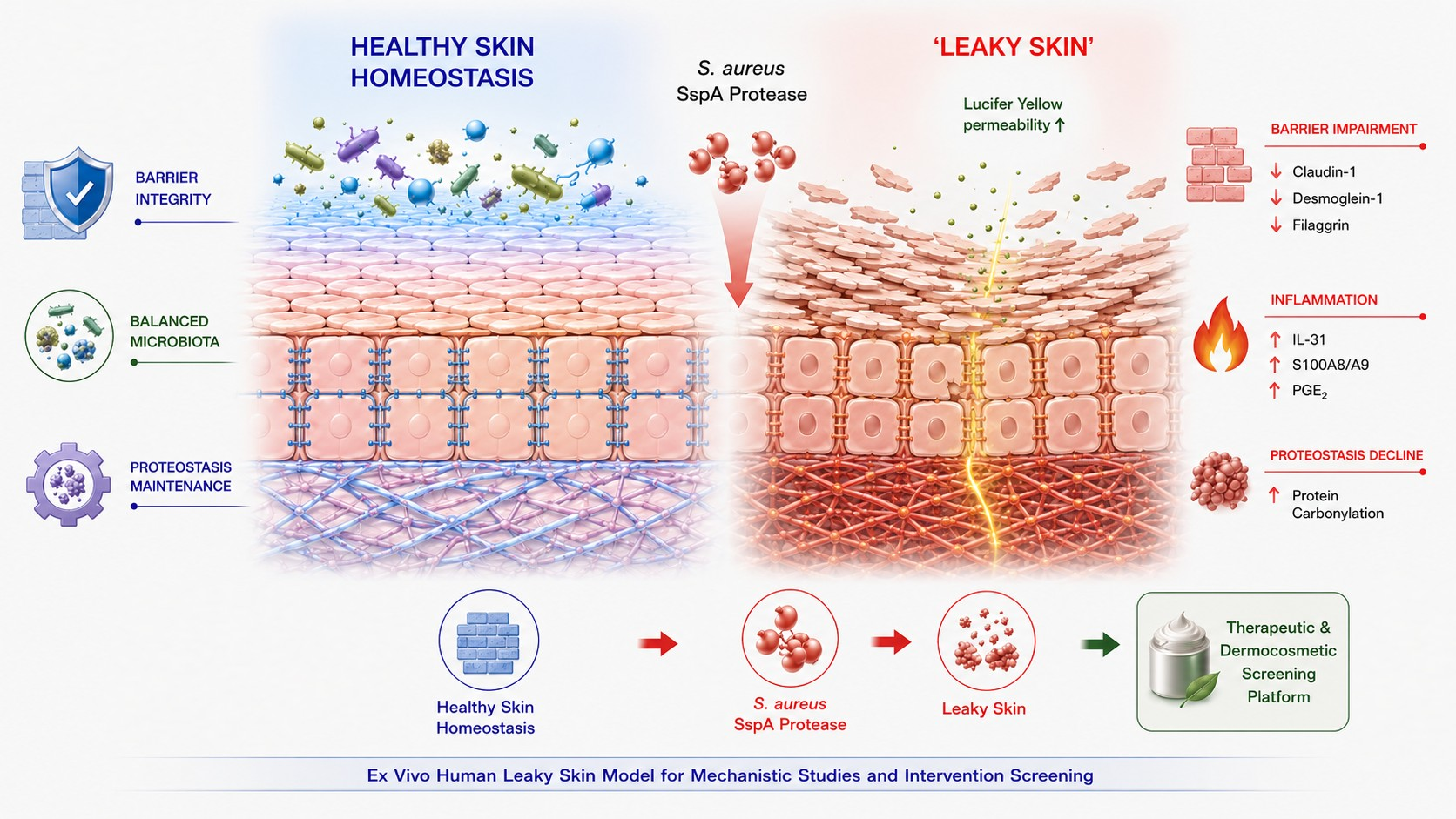
_Di_Marco.png)
An Ex Vivo ‘Leaky Skin’ Model to Study Early Events Induced by Staphylococcus aureus Protease


Abstract
1. Introduction
2. Materials and Methods
2.1. Ex Vivo 3D Models of Skin
2.2. Detection, Visualization, and Quantification of Biomarkers on Skin Sections
2.3. ELISA Assays
2.4. Data Integration and Statistics
3. Results
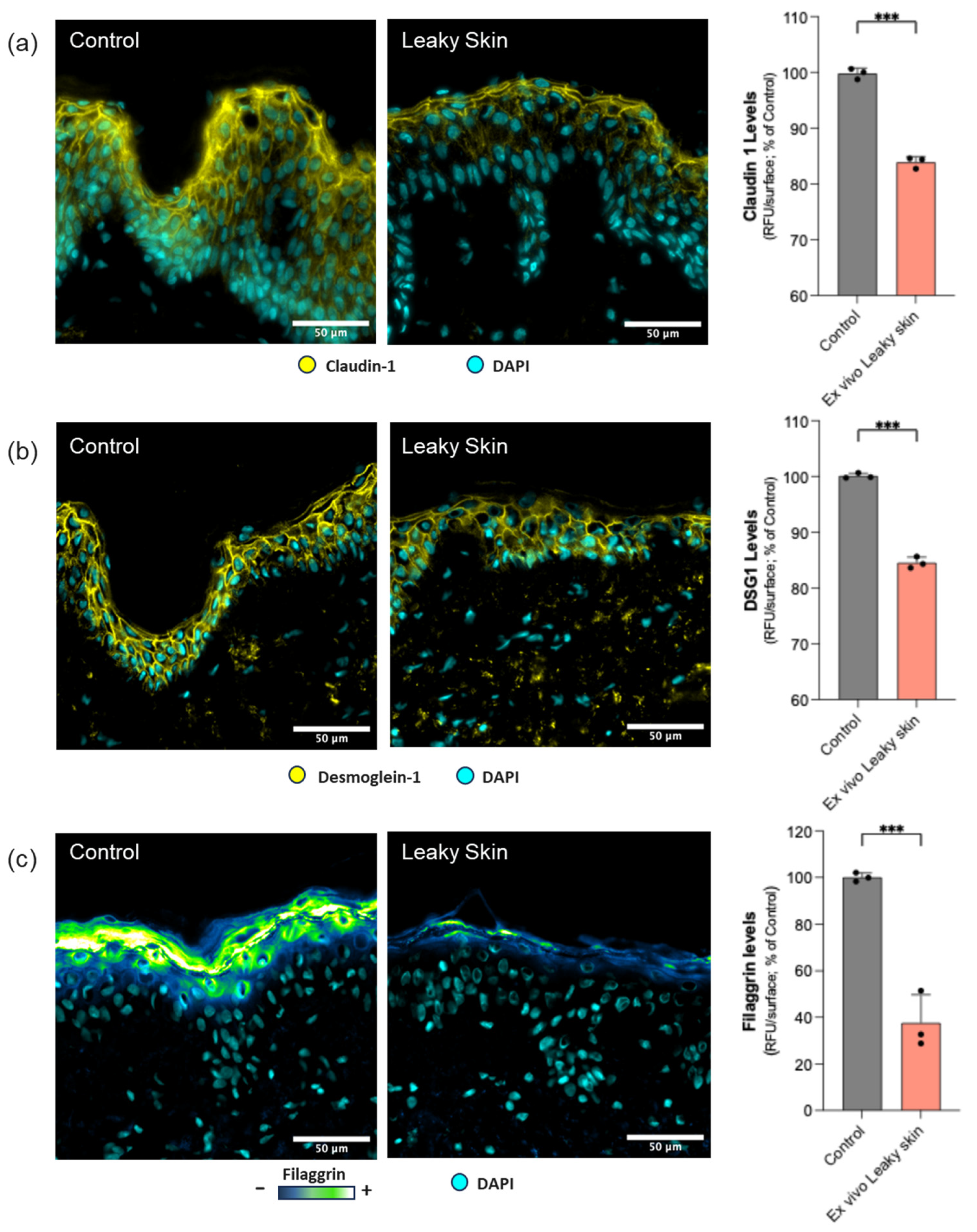
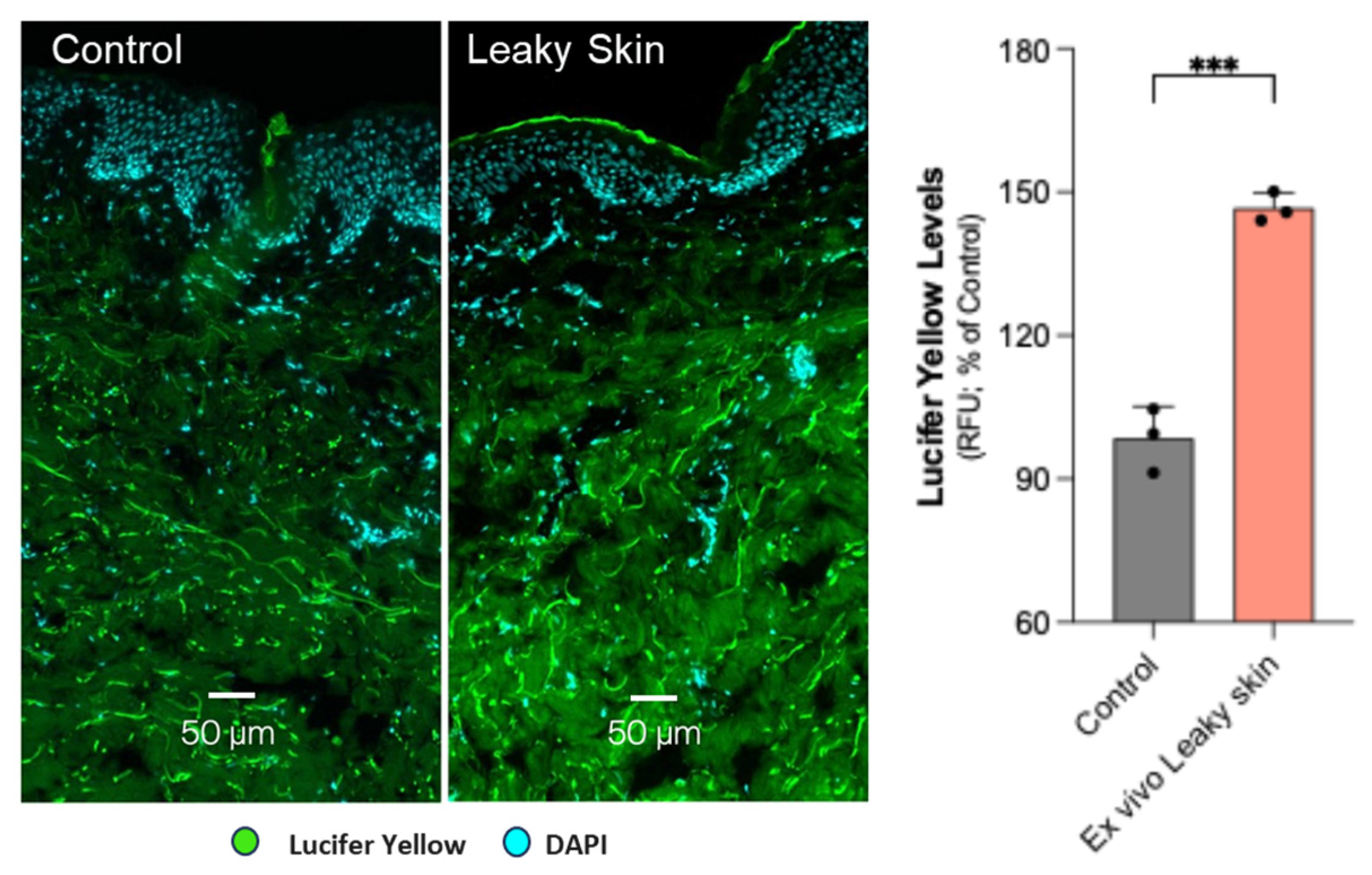
3.1. Functional Impairment of Skin Barrier
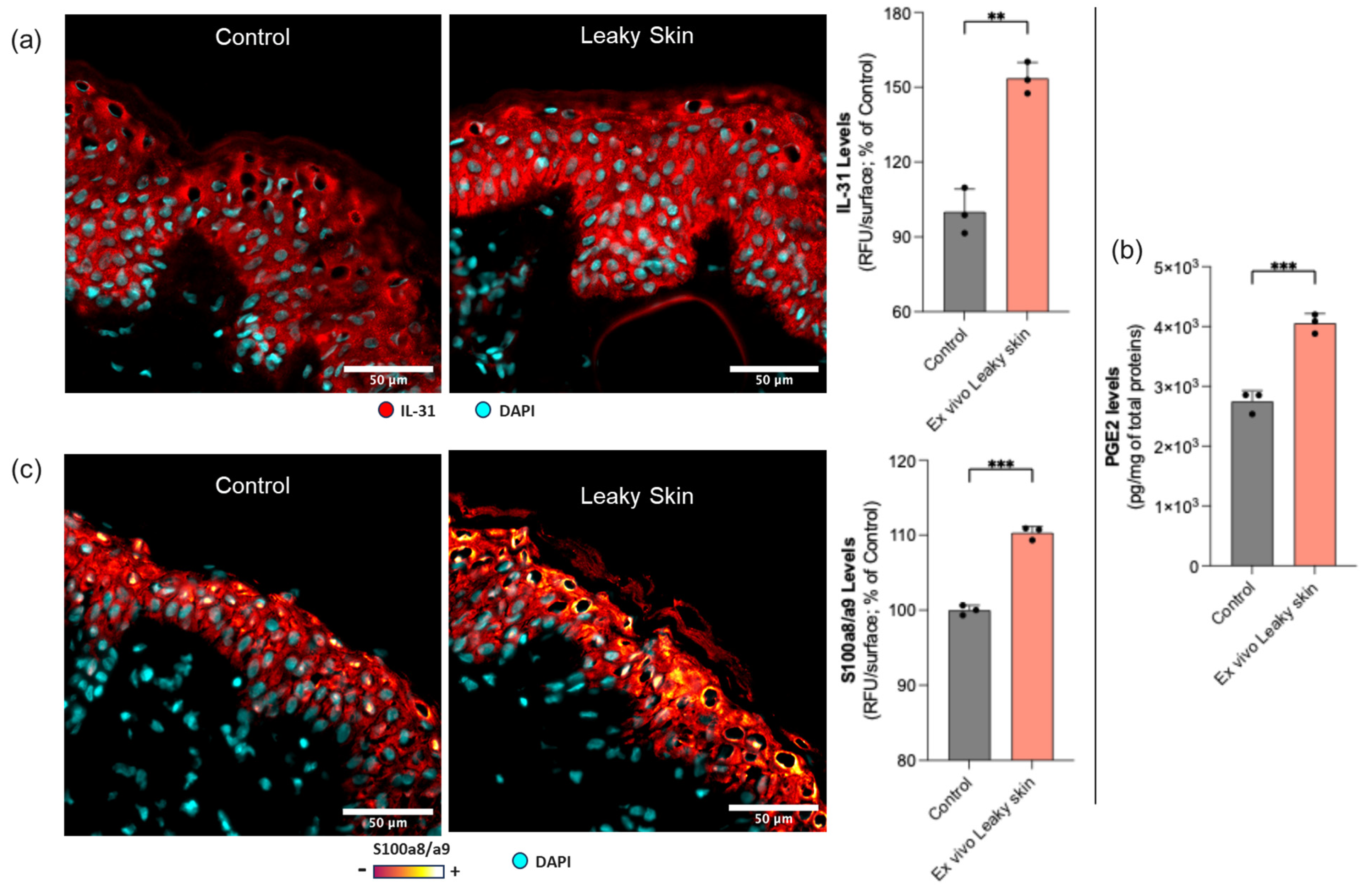
3.2. Inflammatory Response
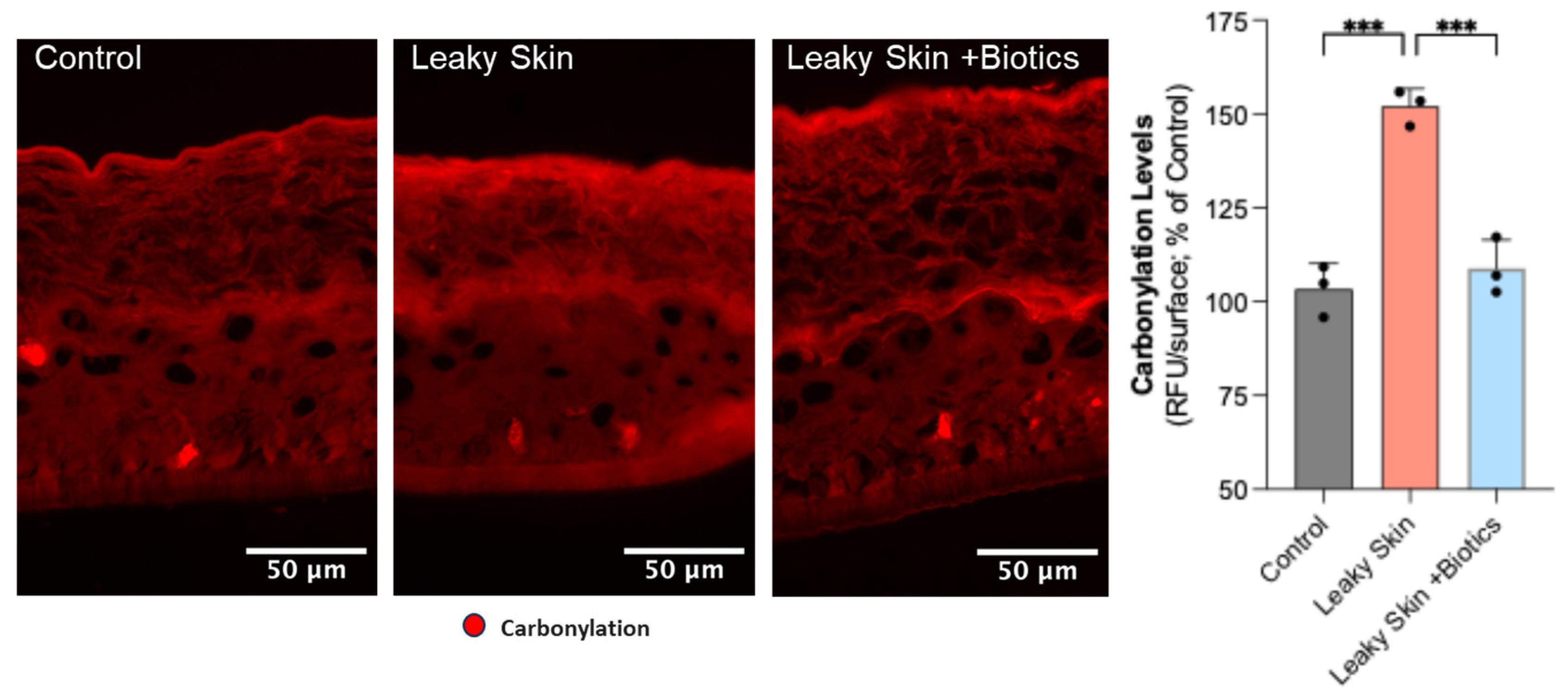
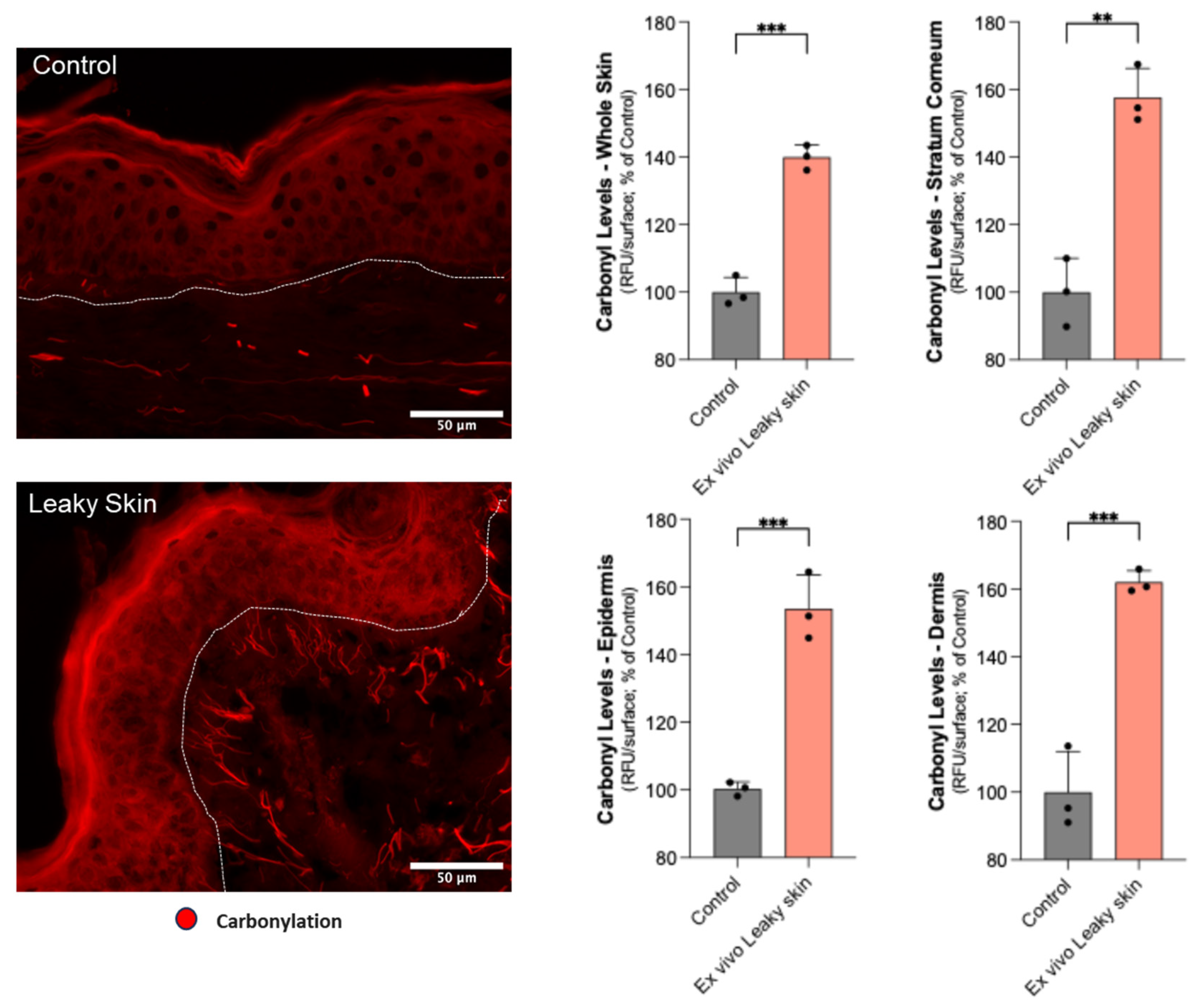
3.3. Oxidative Stress and Proteostasis Impairment
3.4. Effect of B. adolescentis Culture Filtrate on Protein Carbonylation
4. Discussion
5. Conclusions
Supplementary Materials
Author Contributions
Funding
Institutional Review Board Statement
Informed Consent Statement
Data Availability Statement
Acknowledgments
Conflicts of Interest
References
- Byrd, A.L.; Belkaid, Y.; Segre, J.A. The human skin microbiome. Nat. Rev. Microbiol. 2018, 16, 143–155. [Google Scholar] [CrossRef] [Scilit] [PubMed]
- Sanford, J.A.; Gallo, R.L. Functions of the skin microbiota in health and disease. Semin. Immunol. 2013, 25, 370–377. [Google Scholar] [CrossRef] [Scilit]
- Demessant-Flavigny, A.L.; Codogno, I.; Michon, C.; Andriessen, A.; Aubert, H.; Barbarot, S.; Berard, E.; Boralevi, F. Skin microbiome dysbiosis and the role of Staphylococcus aureus in atopic dermatitis in adults and children: A narrative review. J. Eur. Acad. Dermatol. Venereol. 2023, 37, 3–14. [Google Scholar] [CrossRef] [Scilit]
- Proksch, E.; Brandner, J.M.; Jensen, J.M. The skin: An indispensable barrier. Exp. Dermatol. 2008, 17, 1063–1072. [Google Scholar] [CrossRef] [Scilit]
- Egert, M.; Simmering, R.; Riedel, C.U. The association of the skin microbiota with health, immunity, and disease. Clin. Pharmacol. Ther. 2017, 102, 62–69. [Google Scholar] [CrossRef] [Scilit] [PubMed]
- Maarouf, M.; Maarouf, C.L.; Yosipovitch, G.; Shi, V.Y. The impact of stress on epidermal barrier function: An evidence-based review. Br. J. Dermatol. 2019, 181, 1129–1137. [Google Scholar] [CrossRef] [Scilit]
- Chen, J.; Shi, Q.; Xu, Z.; Hou, L.; Liu, Y.; Ma, Z. Role of stress in skin diseases: A neuroendocrine-immune interaction view. Brain Behav. Immun. 2024, 116, 272–284. [Google Scholar]
- Belkaid, Y.; Segre, J.A. Dialogue between skin microbiota and immunity. Science 2014, 346, 954–959. [Google Scholar] [CrossRef] [Scilit]
- Totte, J.E.E.; van der Feltz, W.T.; Hennekam, M.; van Belkum, A.; van Zuuren, E.J.; Pasmans, S.G.M.A. Prevalence and odds of Staphylococcus aureus carriage in atopic dermatitis: A systematic review and meta-analysis. Br. J. Dermatol. 2016, 175, 687–695. [Google Scholar] [CrossRef] [Scilit] [PubMed]
- Luo, J.; Wang, Y.; Zhang, Y.; Lian, Z.; Zheng, Y. The role of skin dysbiosis and quorum sensing in atopic dermatitis. Front. Cell. Infect. Microbiol. 2025, 15, 1538060. [Google Scholar]
- Totte, J.E.E.; van der Feltz, W.T.; Bode, L.G.M.; van Belkum, A.; van Zuuren, E.J.; Pasmans, S.G.M.A. A systematic review and meta-analysis on Staphylococcus aureus carriage in psoriasis, acne and rosacea. Eur. J. Clin. Microbiol. Infect. Dis. 2016, 35, 1069–1077. [Google Scholar] [CrossRef] [Scilit]
- Brandwein, M.; Steinberg, D.; Meshner, S. Microbial biofilms and the human skin microbiome. npj Biofilms Microbiomes 2016, 2, 15031. [Google Scholar] [CrossRef] [Scilit]
- Nakagawa, S.; Matsumoto, M.; Katayama, Y.; Toga, T.; Aoki, R.; Nakamura, Y.; Toyama, S.; Nakamura, Y.; Ogawa, H.; Ikeda, S.; et al. Pathogenic role of the staphylococcal accessory gene regulator quorum sensing system in atopic dermatitis. Front. Cell. Infect. Microbiol. 2023, 13, 1178650. [Google Scholar] [CrossRef] [Scilit]
- Kline, K.A.; Park, J.; Todd, O.A.; Gallo, R.L.; Bhattacharya, S.K. Staphylococcus aureus proteases: Orchestrators of skin inflammation. Front. Cell. Infect. Microbiol. 2024, 14, 1507578. [Google Scholar] [CrossRef] [Scilit] [PubMed]
- Koziel, J.; Potempa, J. Protease-armed bacteria in the skin. Cell Tissue Res. 2013, 351, 325–337. [Google Scholar] [CrossRef] [Scilit] [PubMed]
- O’Neill, C.A.; Monteleone, G.; McLaughlin, J.T.; Paus, R. The gut–skin axis in health and disease: A paradigm with therapeutic implications. BioEssays 2016, 38, 1167–1176. [Google Scholar] [CrossRef] [Scilit]
- De Pessemier, B.; Grine, L.; Debaere, M.; Maes, A.; Paetzold, B.; Callewaert, C. Gut–skin axis: Current knowledge of the interrelationship between microbial dysbiosis and skin conditions. Microorganisms 2021, 9, 353. [Google Scholar] [CrossRef] [Scilit]
- Rice, K.; Peralta, R.; Bast, D.; de Azavedo, J.; McGavin, M.J. Description of staphylococcus serine protease (ssp) operon in Staphylococcus aureus and nonpolar inactivation of sspA-encoded serine protease. Infect. Immun. 2001, 69, 159–169. [Google Scholar] [CrossRef] [Scilit]
- Drapeau, G.R.; Boily, Y.; Houmard, J. Purification and properties of an extracellular protease of Staphylococcus aureus. J. Biol. Chem. 1972, 247, 6720–6726. [Google Scholar] [CrossRef] [Scilit]
- Nakatsuji, T.; Chen, T.H.; Two, A.M.; Chun, K.A.; Narala, S.; Geha, R.S.; Hata, T.R.; Gallo, R.L. Staphylococcus aureus exploits epidermal barrier defects in atopic dermatitis to trigger cytokine expression. J. Investig. Dermatol. 2016, 136, 2192–2200. [Google Scholar] [CrossRef] [Scilit] [PubMed]
- Stoll, S.; Schwarz, T. Inflammatory response against Staphylococcus aureus via intracellular sensing of nucleic acids in keratinocytes. Front. Immunol. 2022, 13, 828626. [Google Scholar] [CrossRef] [Scilit]
- Eisenbeis, J.; Sommer, S.; Hilser, P.; Dietz, B.; Möller, N.; Braun, C.; Kretschmer, D.; Heuschen, R.; Götz, F.; Wolz, C.; et al. Crosstalk between keratinocytes and neutrophils shapes skin immunity against S. aureus infection. Front. Immunol. 2024, 15, 1275153. [Google Scholar] [CrossRef] [Scilit] [PubMed]
- Abtin, A.; Eckhart, L.; Gläser, R.; Gmeiner, R.; Mildner, M.; Tschachler, E. The antimicrobial heterodimer S100A8/S100A9 (calprotectin) is upregulated by bacterial flagellin in human epidermal keratinocytes. J. Investig. Dermatol. 2010, 130, 2423–2430. [Google Scholar] [CrossRef] [Scilit]
- Foell, D.; Wittkowski, H.; Vogl, T.; Roth, J. S100 proteins expressed in phagocytes: A novel group of damage-associated molecular pattern molecules. J. Leukoc. Biol. 2007, 81, 28–37. [Google Scholar] [CrossRef] [Scilit]
- Gonzalez, M.E.; Robin, A.L.; Kashetsky, N.; Atashrazm, F.; Elsner, P. Blockage of the IL-31 pathway as a potential target therapy for atopic dermatitis. Dermatology 2023, 239, 211–222. [Google Scholar]
- Deng, L.; Costa, F.; Blake, K.J.; Choi, S.; Chandrabalan, A.; Yousuf, M.S.; Shiers, S.; Dubreuil, D.; Vega-Mendoza, D.; Rolland, C.; et al. S. aureus drives itch and scratch-induced skin damage through a V8 protease–PAR1 axis. Cell 2023, 186, 5375–5393. [Google Scholar] [CrossRef] [Scilit] [PubMed]
- Hirasawa, Y.; Takai, T.; Nakamura, T.; Mitsuishi, K.; Gunawan, H.; Suto, H.; Ogawa, T.; Wang, X.L.; Ikeda, S.; Okumura, K.; et al. Staphylococcus aureus extracellular protease causes epidermal barrier dysfunction. J. Investig. Dermatol. 2010, 130, 614–617. [Google Scholar] [CrossRef] [Scilit]
- Ohnemus, U.; Kohrmeyer, K.; Houdek, P.; Rohde, H.; Wladykowski, E.; Vidal, S.; Horstkotte, M.A.; Aepfelbacher, M.; Kirschner, N.; Behne, M.J.; et al. Regulation of epidermal tight-junctions (TJ) during infection with exfoliative toxin-negative Staphylococcus strains. J. Investig. Dermatol. 2008, 128, 906–916. [Google Scholar] [CrossRef] [Scilit]
- Kline, K.A.; Park, J.; Todd, O.A.; Gallo, R.L.; Bhattacharya, S.K. Staphylococcus aureus SspA (V8 protease): New skin pathogenesis insights into an old enzyme. PLoS Pathog. 2025, 21, e1013048. [Google Scholar]
- Wang, B.; McHugh, B.J.; Qureshi, A.; Campopiano, D.J.; Clarke, D.J.; Fitzgerald, J.R.; Dorin, J.R.; Weller, R.; Davidson, D.J. IL-1β–induced protection of keratinocytes against Staphylococcus aureus-secreted proteases is mediated by human β-defensin 2. J. Investig. Dermatol. 2017, 137, 95–105. [Google Scholar] [CrossRef] [Scilit]
- Sugawara, T.; Iwamoto, N.; Akashi, M.; Kojima, T.; Hisatsune, J.; Sugai, M.; Furuse, M. Tight junction dysfunction in the stratum granulosum leads to aberrant stratum corneum barrier function in claudin-1-deficient mice. J. Dermatol. Sci. 2013, 70, 12–18. [Google Scholar] [CrossRef] [Scilit]
- Williams, M.R.; Nakatsuji, T.; Sanford, J.A.; Vrbanac, A.F.; Gallo, R.L. Staphylococcus aureus induces increased serine protease activity in keratinocytes. J. Investig. Dermatol. 2017, 137, 377–384. [Google Scholar] [CrossRef] [Scilit]
- Irvine, A.D.; McLean, W.H.I.; Leung, D.Y.M. Filaggrin mutations associated with skin and allergic diseases. N. Engl. J. Med. 2011, 365, 1315–1327. [Google Scholar]
- Miajlovic, H.; Fallon, P.G.; Irvine, A.D.; Foster, T.J. Effect of filaggrin breakdown products on growth of and protein expression by Staphylococcus aureus. J. Allergy Clin. Immunol. 2010, 126, 1184–1190. [Google Scholar] [CrossRef] [Scilit]
- Baraibar, M.; Ladouce, R.; Friguet, B. Oxi-DIGE: A novel proteomic approach for detecting and quantifying carbonylated proteins. Free Radic. Biol. Med. 2014, 75, S23. [Google Scholar] [CrossRef] [Scilit] [PubMed]
- Baraibar, M.A.; Ladouce, R.; Friguet, B. A, Proteomic quantification and identification of carbonylated proteins upon oxidative stress and during cellular aging. J. Proteom. 2013, 92, 63–70. [Google Scholar] [CrossRef] [Scilit] [PubMed]
- Baraibar, M.A.; Friguet, B. A proteome-centric view of ageing, including that of the skin and age-related diseases: Considerations of a common cause and common preventative and curative interventions. Clin. Cosmet. Investig. Dermatol. 2023, 16, 69–83. [Google Scholar]
- Yan, J.; Liang, Q.; Wang, Y.; Chen, P.; Zhao, X.; Zhang, Z. Interaction between the microbiota and the skin barrier in aging skin: A comprehensive review. Front. Physiol. 2024, 15, 1322205. [Google Scholar] [CrossRef] [Scilit] [PubMed]
- López-Otín, C.; Blasco, M.A.; Partridge, L.; Serrano, M.; Kroemer, G. Hallmarks of aging: An expanding universe. Cell 2023, 186, 243–278. [Google Scholar] [CrossRef] [Scilit]
- Neil, J.E.; Brown, M.B.; Williams, A.C. Human skin explant model for the investigation of topical therapeutics. Sci. Rep. 2020, 10, 21192. [Google Scholar] [CrossRef] [Scilit]
- Cavagnino, A.; Bobier, A.; Baraibar, M. The skin oxi-proteome as a molecular signature of exposome stress. Househ. Pers. Care Today 2019, 15, 28–32. [Google Scholar]
- Cavagnino, A.; Azadiguian, G.; Breton, L.; Baraibar, M.; Black, A.F. Modulating Skin Aging Molecular Targets and Longevity Drivers Through a Novel Natural Product: Rose-Derived Polydeoxyribonucleotide (Rose PDRN). Curr. Issues Mol. Biol. 2025, 47, 971. [Google Scholar] [CrossRef] [Scilit]
- Cadau, S.; Gault, M.; Berthelemy, N.; Hsu, C.-Y.; Danoux, L.; Pelletier, N.; Goudounèche, D.; Pons, C.; Leprince, C.; André-Frei, V.; et al. An inflamed and infected reconstructed human epidermis to study atopic dermatitis and skin care ingredients. Int. J. Mol. Sci. 2022, 23, 12880. [Google Scholar] [CrossRef] [Scilit] [PubMed]
- Holland, D.B.; Bojar, R.A.; Farrar, M.D.; Holland, K.T. Differential innate immune responses of a living skin equivalent model colonized by Staphylococcus epidermidis or Staphylococcus aureus. FEMS Microbiol. Lett. 2009, 290, 149–155. [Google Scholar] [PubMed]
- Huang, H.C.; Chang, T.M. Antioxidative properties and inhibitory effect of Bifidobacterium adolescentis on melanogenesis. World J. Microbiol. Biotechnol. 2012, 28, 2903–2912. [Google Scholar] [CrossRef] [Scilit]
- Kikukawa, H.; Nagao, T.; Ota, M.; Takashima, S.; Kitaguchi, K.; Yanase, E.; Maeda, S.; Hara, K.Y. Production of a selective antibacterial fatty acid against Staphylococcus aureus by Bifidobacterium strains. Microbiome Res. Rep. 2023, 2, 4. [Google Scholar] [CrossRef] [Scilit] [PubMed]



| Description | Target and Reference |
|---|---|
| Claudin-1 (Santa Cruz Biotechnology 1, sc-81796) | |
| Desmoglein-1 (Invitrogen, 32-6000) | |
| Primary antibodies | Filaggrin (Santa Cruz Biotechnology, sc-66192) |
| Biotin Labeled IL-31 (BioLegend 2, 530004) | |
| S100A8/A9 (Abcam 3, ab22506) | |
| Secondary antibody | Anti-Mouse Alexafluor 647 (Invitrogen A21235) |
Disclaimer/Publisher’s Note: The statements, opinions and data contained in all publications are solely those of the individual author(s) and contributor(s) and not of MDPI and/or the editor(s). MDPI and/or the editor(s) disclaim responsibility for any injury to people or property resulting from any ideas, methods, instructions or products referred to in the content. |
© 2026 by the authors. Licensee MDPI, Basel, Switzerland. This article is an open access article distributed under the terms and conditions of the Creative Commons Attribution (CC BY) license.
Share and Cite
Cavagnino, A.; Gouin, O.; Breton, L.; Baraibar, M. An Ex Vivo ‘Leaky Skin’ Model to Study Early Events Induced by Staphylococcus aureus Protease. Microorganisms 2026, 14, 1244. https://doi.org/10.3390/microorganisms14061244
Cavagnino A, Gouin O, Breton L, Baraibar M. An Ex Vivo ‘Leaky Skin’ Model to Study Early Events Induced by Staphylococcus aureus Protease. Microorganisms. 2026; 14(6):1244. https://doi.org/10.3390/microorganisms14061244
Chicago/Turabian StyleCavagnino, Andrea, Olivier Gouin, Lionel Breton, and Martin Baraibar. 2026. "An Ex Vivo ‘Leaky Skin’ Model to Study Early Events Induced by Staphylococcus aureus Protease" Microorganisms 14, no. 6: 1244. https://doi.org/10.3390/microorganisms14061244
APA StyleCavagnino, A., Gouin, O., Breton, L., & Baraibar, M. (2026). An Ex Vivo ‘Leaky Skin’ Model to Study Early Events Induced by Staphylococcus aureus Protease. Microorganisms, 14(6), 1244. https://doi.org/10.3390/microorganisms14061244