Type VI Secretion Systems in Salmonella Encode New Effectors with Putative Antibacterial and Anti-Eukaryotic Activities
 , , ,
, , ,  ,
,  , and
, and
Abstract
1. Introduction
2. Materials and Methods
2.1. Identification of T6SS Gene Clusters
2.2. Identification of Candidate T6SS Effectors
2.3. Computational Structural Characterization and Homology Modeling of Candidate T6SS Effector Proteins
2.4. Sequence and Phylogenetic Analyses
3. Results
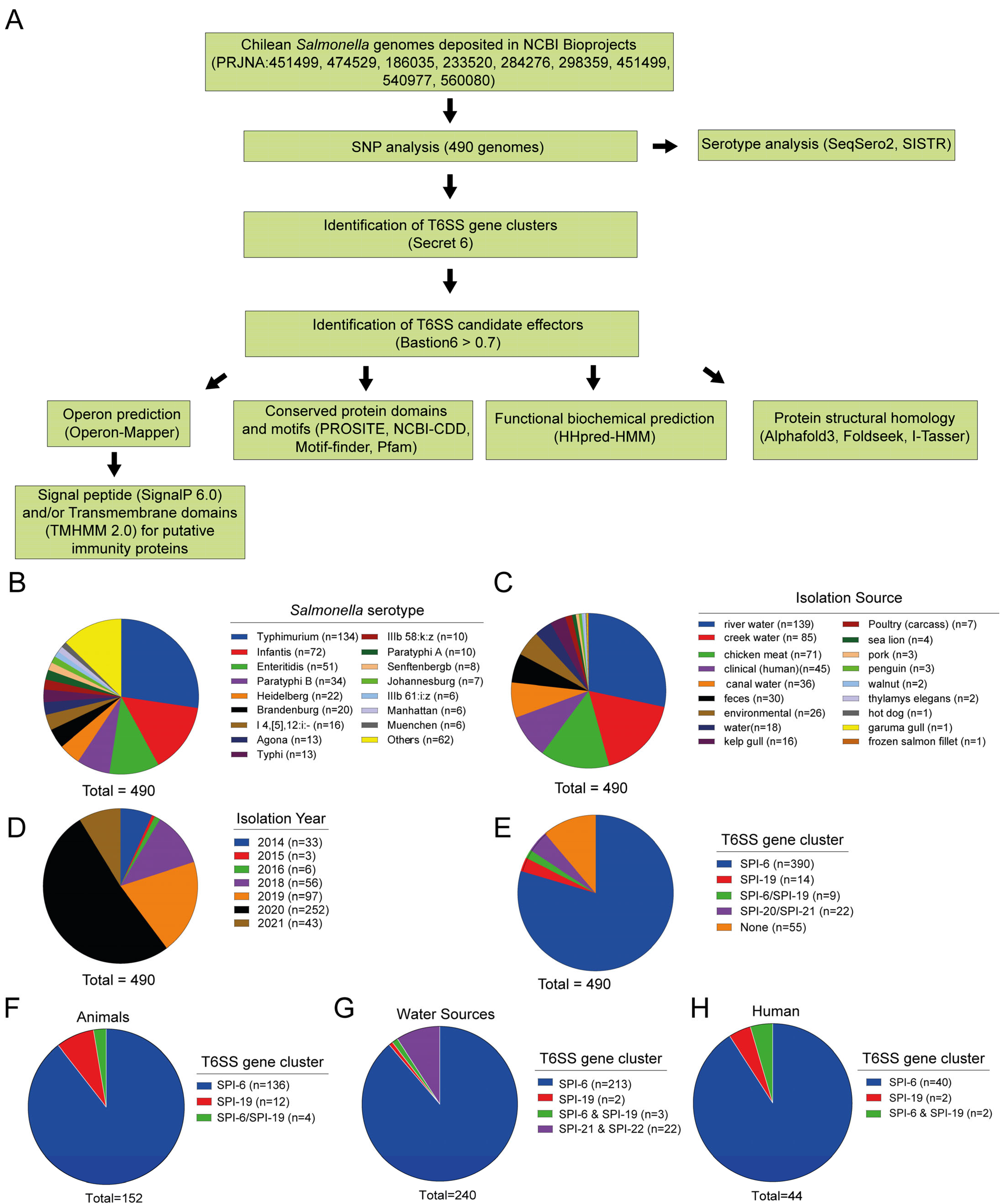
3.1. Distribution of Salmonella T6SS Gene Clusters
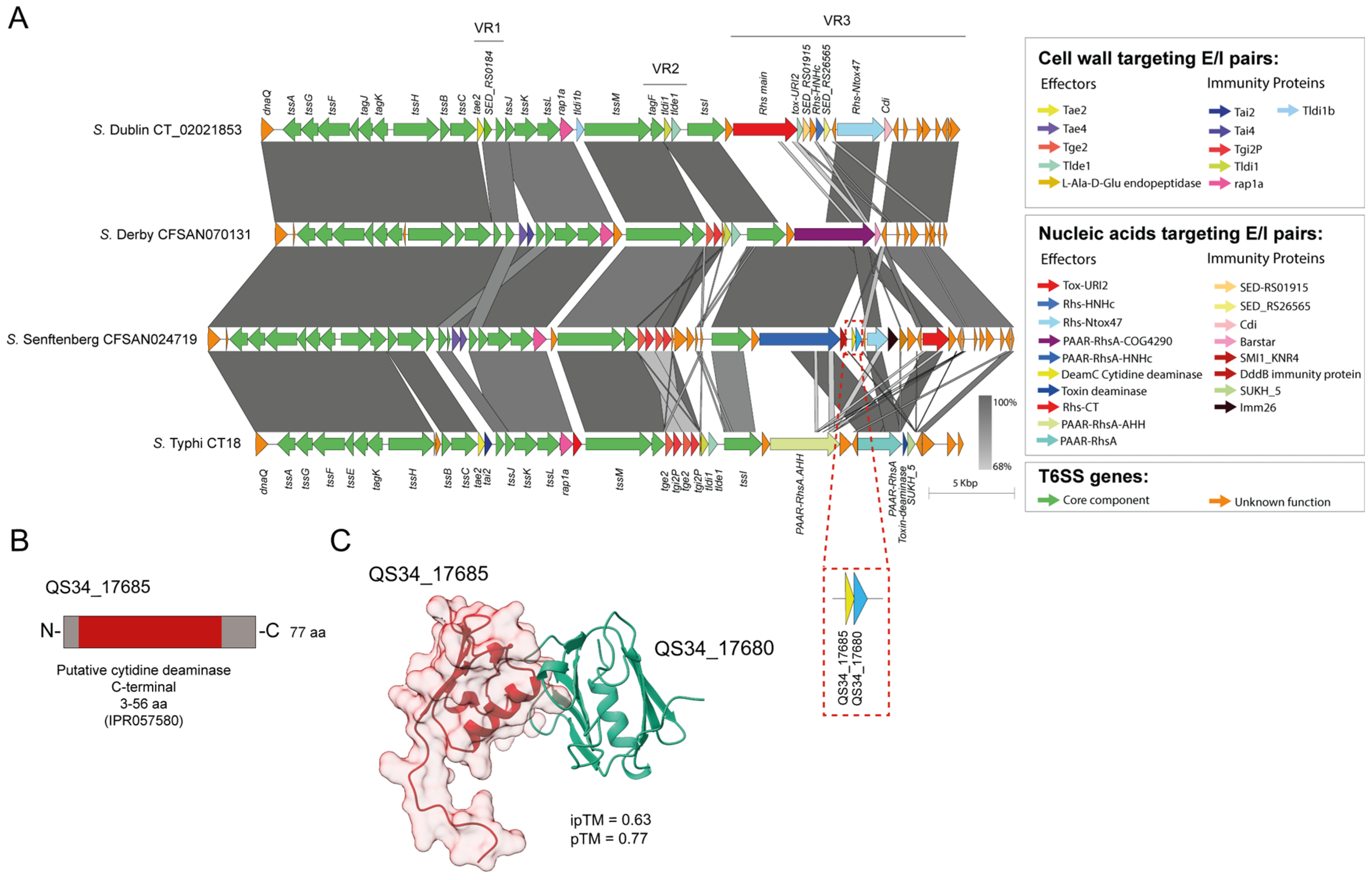
3.2. Identification of a Novel SPI-6-Encoded Effector/Immunity Module with Predicted Nuclease Activity
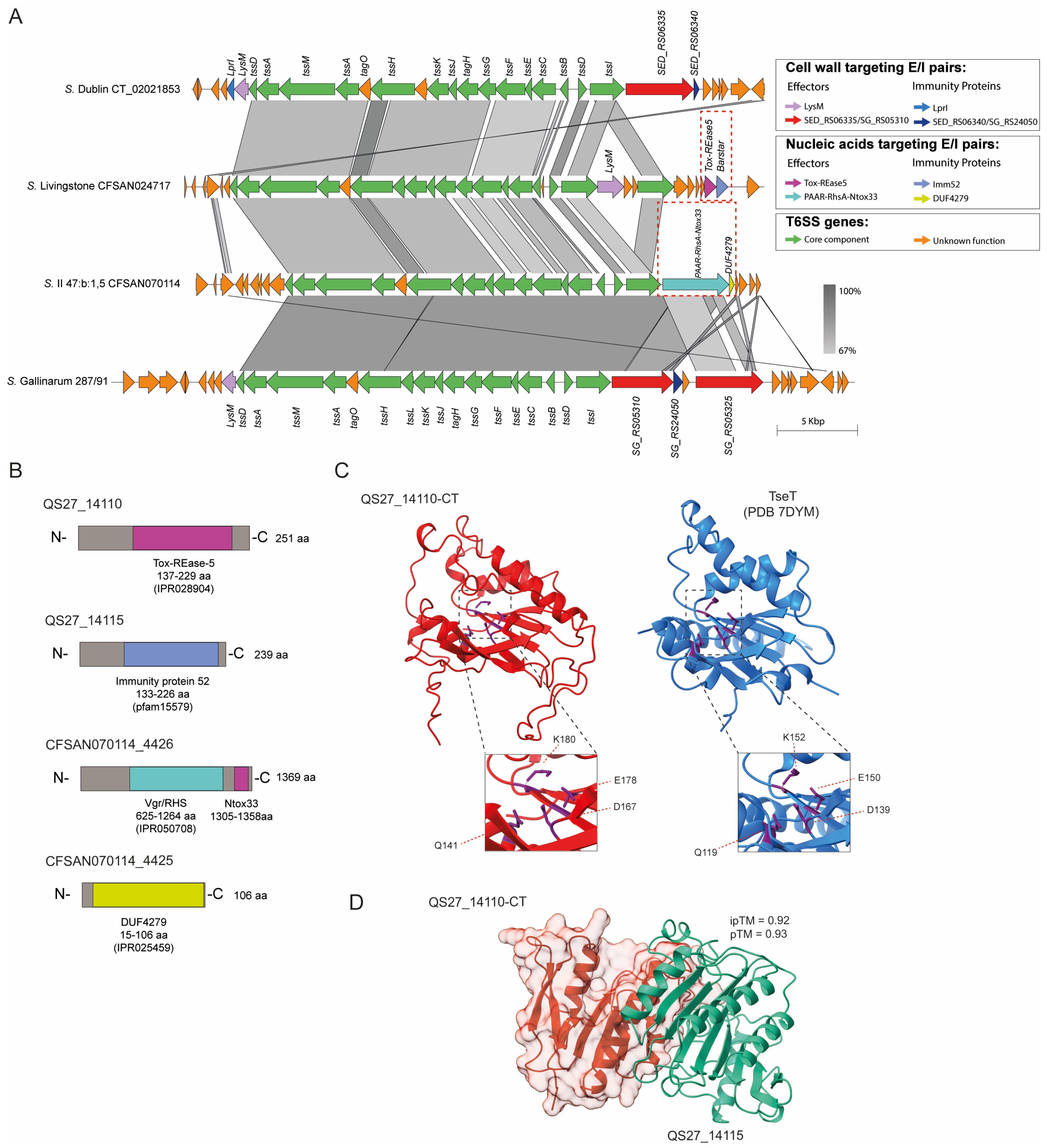
3.3. SPI-19 T6SS Gene Cluster Encodes Two Novel Effector/Immunity Modules with Predicted DNase Activity
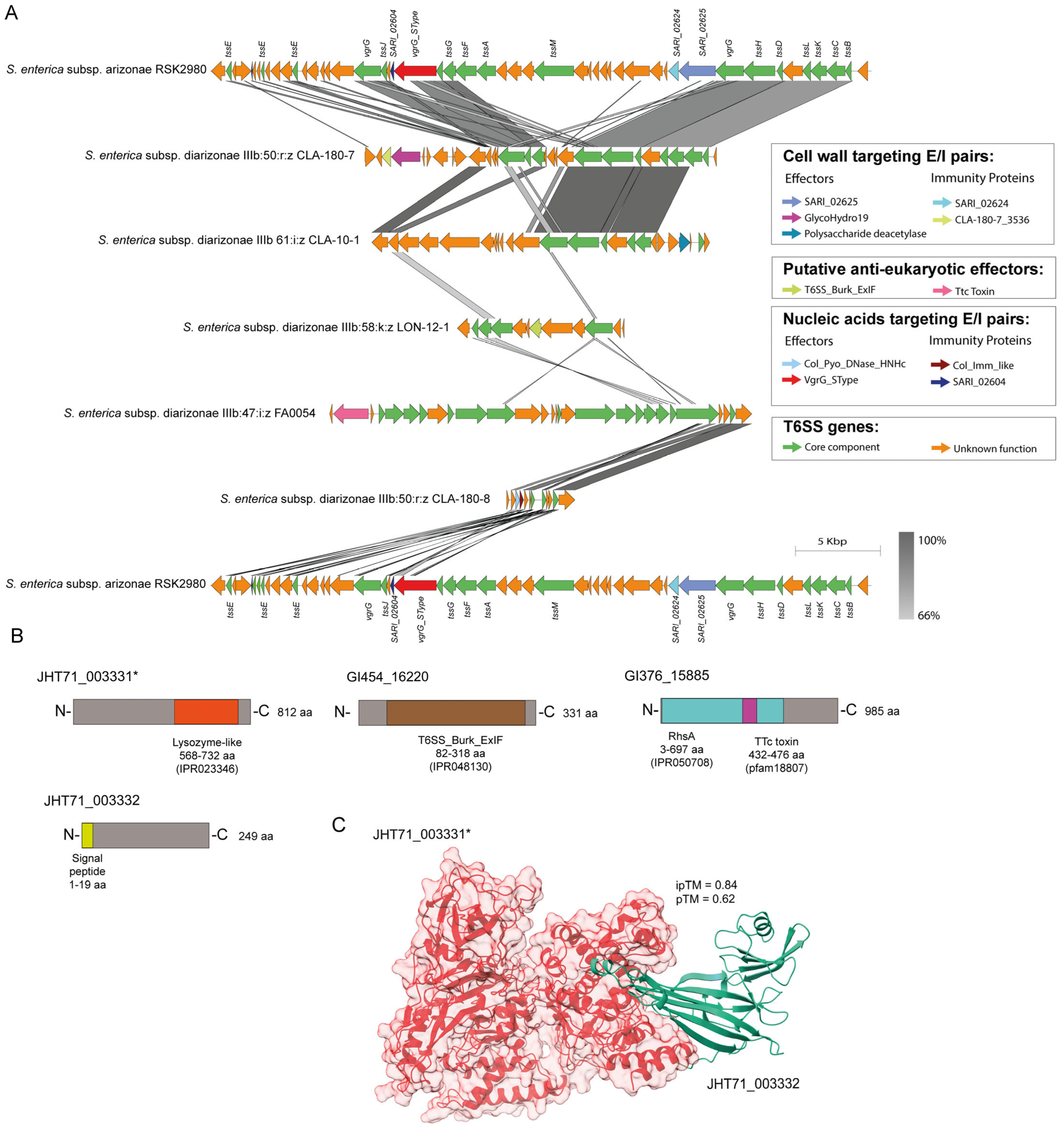
3.4. SPI-21 T6SS Gene Cluster Encodes Two Antibacterial and Two Anti-Eukaryotic Candidate Effectors
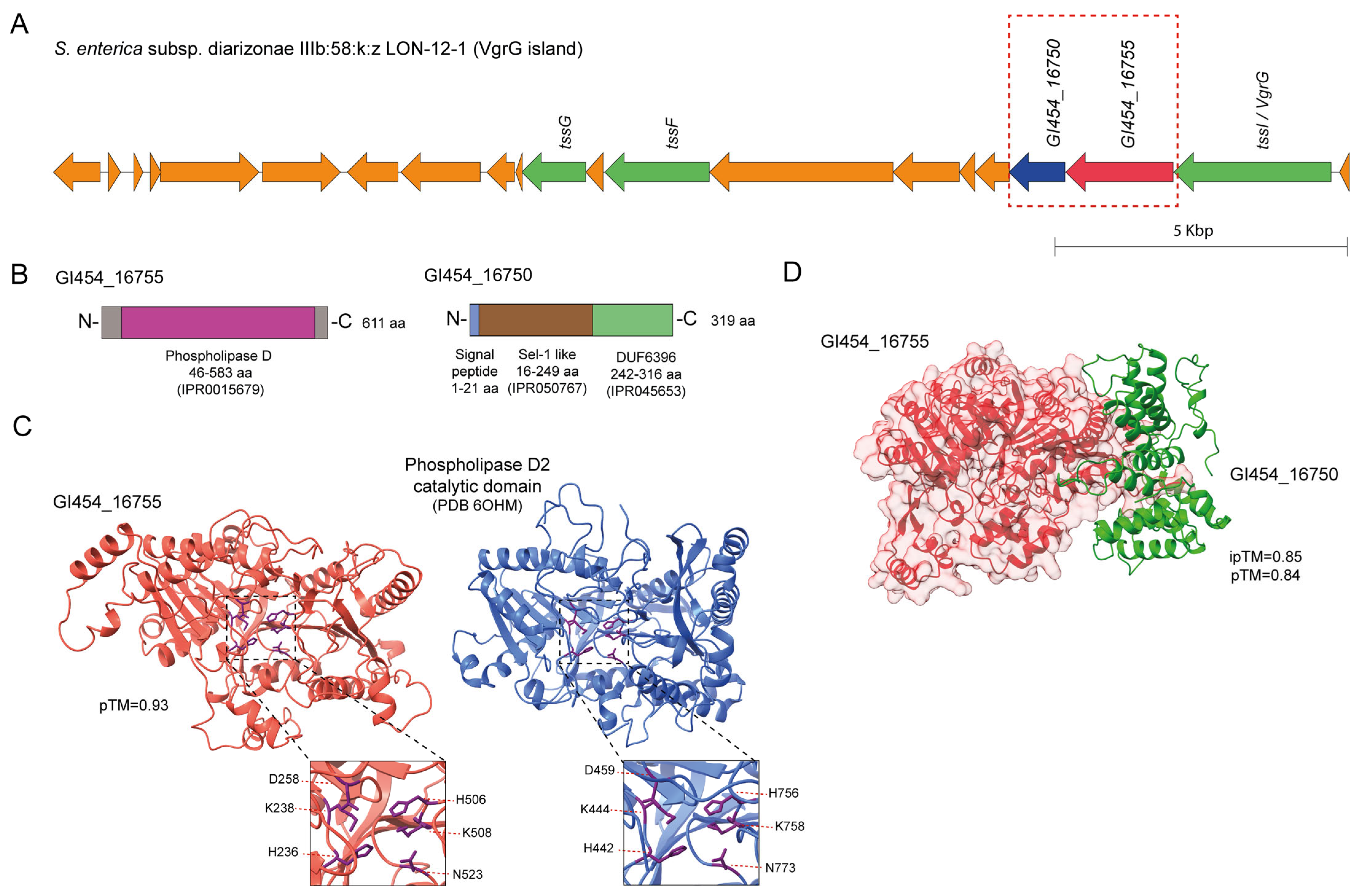
3.5. Identification of a Novel VgrG-Associated Island Encoding a Phospholipase Effector
3.6. Distribution of Newly Identified T6SS Effectors Across Salmonella
4. Discussion
5. Conclusions
Supplementary Materials
Author Contributions
Funding
Institutional Review Board Statement
Informed Consent Statement
Data Availability Statement
Conflicts of Interest
References
- Coulthurst, S. The Type VI secretion system: A versatile bacterial weapon. Microbiology 2019, 165, 503–515. [Google Scholar] [CrossRef]
- Russell, A.B.; Singh, P.; Brittnacher, M.; Bui, N.K.; Hood, R.D.; Carl, M.A.; Agnello, D.M.; Schwarz, S.; Goodlett, D.R.; Vollmer, W.; et al. A Widespread Bacterial Type VI Secretion Effector Superfamily Identified Using a Heuristic Approach. Cell Host Microbe 2012, 11, 538–549. [Google Scholar] [CrossRef]
- Monjarás Feria, J.; Valvano, M.A. An Overview of Anti-Eukaryotic T6SS Effectors. Front. Cell. Infect. Microbiol. 2020, 10, 584751. [Google Scholar] [CrossRef]
- Whitney, J.C.; Chou, S.; Russell, A.B.; Biboy, J.; Gardiner, T.E.; Ferrin, M.A.; Brittnacher, M.; Vollmer, W.; Mougous, J.D. Identification, Structure, and Function of a Novel Type VI Secretion Peptidoglycan Glycoside Hydrolase Effector-Immunity Pair. J. Biol. Chem. 2013, 288, 26616–26624. [Google Scholar] [CrossRef] [PubMed]
- Berni, B.; Soscia, C.; Djermoun, S.; Ize, B.; Bleves, S. A Type VI Secretion System Trans-Kingdom Effector Is Required for the Delivery of a Novel Antibacterial Toxin in Pseudomonas aeruginosa. Front. Microbiol. 2019, 10, 1218. [Google Scholar] [CrossRef]
- Wood, T.E.; Howard, S.A.; Förster, A.; Nolan, L.M.; Manoli, E.; Bullen, N.P.; Yau, H.C.; Hachani, A.; Hayward, R.D.; Whitney, J.C.; et al. The Pseudomonas aeruginosa T6SS Delivers a Periplasmic Toxin that Disrupts Bacterial Cell Morphology. Cell Rep. 2019, 29, 187–201.e7. [Google Scholar] [CrossRef] [PubMed]
- Ting, S.-Y.; Bosch, D.E.; Mangiameli, S.M.; Radey, M.C.; Huang, S.; Park, Y.-J.; Kelly, K.A.; Filip, S.K.; Goo, Y.A.; Eng, J.K.; et al. Bifunctional Immunity Proteins Protect Bacteria against FtsZ-Targeting ADP-Ribosylating Toxins. Cell 2018, 175, 1380–1392.e14. [Google Scholar] [CrossRef] [PubMed]
- Whitney, J.C.; Quentin, D.; Sawai, S.; LeRoux, M.; Harding, B.N.; Ledvina, H.E.; Tran, B.Q.; Robinson, H.; Goo, Y.A.; Goodlett, D.R.; et al. An Interbacterial NAD(P)+ Glycohydrolase Toxin Requires Elongation Factor Tu for Delivery to Target Cells. Cell 2015, 163, 607–619. [Google Scholar] [CrossRef]
- Tang, J.Y.; Bullen, N.P.; Ahmad, S.; Whitney, J.C. Diverse NADase effector families mediate interbacterial antagonism via the type VI secretion system. J. Biol. Chem. 2018, 293, 1504–1514. [Google Scholar] [CrossRef]
- Ahmad, S.; Wang, B.; Walker, M.D.; Tran, H.-K.R.; Stogios, P.J.; Savchenko, A.; Grant, R.A.; McArthur, A.G.; Laub, M.T.; Whitney, J.C. An interbacterial toxin inhibits target cell growth by synthesizing (p)ppApp. Nature 2019, 575, 674–678. [Google Scholar] [CrossRef]
- Blondel, C.J.; Jiménez, J.C.; Contreras, I.; Santiviago, C.A. Comparative genomic analysis uncovers 3 novel loci encoding type six secretion systems differentially distributed in Salmonella serotypes. BMC Genom. 2009, 10, 354. [Google Scholar] [CrossRef]
- Fookes, M.; Schroeder, G.N.; Langridge, G.C.; Blondel, C.J.; Mammina, C.; Connor, T.R.; Seth-Smith, H.; Vernikos, G.S.; Robinson, K.S.; Sanders, M.; et al. Salmonella bongori provides insights into the evolution of the Salmonellae. PLoS Pathog. 2011, 7, e1002191. [Google Scholar] [CrossRef]
- Pezoa, D.; Yang, H.-J.; Blondel, C.J.; Santiviago, C.A.; Andrews-Polymenis, H.L.; Contreras, I. The type VI secretion system encoded in SPI-6 plays a role in gastrointestinal colonization and systemic spread of Salmonella enterica serovar Typhimurium in the chicken. PLoS ONE 2013, 8, e63917. [Google Scholar] [CrossRef] [PubMed]
- Pezoa, D.; Blondel, C.J.; Silva, C.A.; Yang, H.-J.; Andrews-Polymenis, H.; Santiviago, C.A.; Contreras, I. Only one of the two type VI secretion systems encoded in the Salmonella enterica serotype Dublin genome is involved in colonization of the avian and murine hosts. Vet. Res. 2014, 45, 2. [Google Scholar] [CrossRef] [PubMed]
- Sana, T.G.; Flaugnatti, N.; Lugo, K.A.; Lam, L.H.; Jacobson, A.; Baylot, V.; Durand, E.; Journet, L.; Cascales, E.; Monack, D.M. Salmonella Typhimurium utilizes a T6SS-mediated antibacterial weapon to establish in the host gut. Proc. Natl. Acad. Sci. USA 2016, 113, E5044–E5051. [Google Scholar] [CrossRef] [PubMed]
- Sibinelli-Sousa, S.; de Araújo-Silva, A.L.; Hespanhol, J.T.; Bayer-Santos, E. Revisiting the steps of Salmonella gut infection with a focus on antagonistic interbacterial interactions. FEBS J. 2022, 289, 4192–4211. [Google Scholar] [CrossRef]
- Blondel, C.J.; Yang, H.-J.; Castro, B.; Chiang, S.; Toro, C.S.; Zaldívar, M.; Contreras, I.; Andrews-Polymenis, H.L.; Santiviago, C.A. Contribution of the type VI secretion system encoded in SPI-19 to chicken colonization by Salmonella enterica serotypes Gallinarum and Enteritidis. PLoS ONE 2010, 5, e11724. [Google Scholar] [CrossRef]
- Hespanhol, J.T.; Sanchez-Limache, D.E.; Nicastro, G.G.; Mead, L.; Llontop, E.E.; Chagas-Santos, G.; Farah, C.S.; de Souza, R.F.; Galhardo, R.d.S.; Lovering, A.L.; et al. Antibacterial T6SS effectors with a VRR-Nuc domain are structure-specific nucleases. eLife 2022, 11, e82437. [Google Scholar] [CrossRef]
- Blondel, C.J.; Amaya, F.A.; Reyes-Méndez, F.; Soriano-Mora, V.; Vargas, C.; Parra, A.; Opazo, M.C.; Toledo, V.; Barros-Infante, M.F.; Santiviago, C.A.; et al. Deciphering the Salmonella T6SS toolkit: Two decades of research decoding a versatile bacterial weapon. J. Bacteriol. 2025, 207, e0018825. [Google Scholar] [CrossRef]
- Nicastro, G.G.; Sibinelli-Sousa, S.; Hespanhol, J.T.; Santos, T.W.C.; Munoz, J.P.; Santos, R.S.; Perez-Sepulveda, B.M.; Miyamoto, S.; Aravind, L.; de Souza, R.F.; et al. Systematic identification of Salmonella T6SS effectors uncovers diverse new families and lipid-targeting activities. PLoS Biol. 2026, 24, e3003680. [Google Scholar] [CrossRef]
- Mulder, D.T.; Cooper, C.A.; Coombes, B.K. Type VI Secretion System-Associated Gene Clusters Contribute to Pathogenesis of Salmonella enterica Serovar Typhimurium. Infect. Immun. 2012, 80, 1996–2007. [Google Scholar] [CrossRef]
- Amaya, F.A.; Blondel, C.J.; Reyes-Méndez, F.; Rivera, D.; Moreno-Switt, A.; Toro, M.; Badilla, C.; Santiviago, C.A.; Pezoa, D. Genomic analysis of Salmonella isolated from surface water and animal sources in Chile reveals new T6SS effector protein candidates. Front. Microbiol. 2024, 15, 1496223. [Google Scholar] [CrossRef] [PubMed]
- Zhang, S.; Yin, Y.; Jones, M.B.; Zhang, Z.; Deatherage Kaiser, B.L.; Dinsmore, B.A.; Fitzgerald, C.; Fields, P.I.; Deng, X. Salmonella serotype determination utilizing high-throughput genome sequencing data. J. Clin. Microbiol. 2015, 53, 1685–1692. [Google Scholar] [CrossRef] [PubMed]
- Yoshida, C.E.; Kruczkiewicz, P.; Laing, C.R.; Lingohr, E.J.; Gannon, V.P.; Nash, J.H.; Taboada, E.N. The Salmonella in silico typing resource (SISTR): An open web-accessible tool for rapidly typing and subtyping draft Salmonella genome assemblies. PLoS ONE 2016, 11, e0147101. [Google Scholar] [CrossRef]
- Pightling, A.W.; Pettengill, J.B.; Luo, Y.; Baugher, J.D.; Rand, H.; Strain, E. Interpreting whole-genome sequence analyses of foodborne bacteria for regulatory applications and outbreak investigations. Front. Microbiol. 2018, 9, 1482. [Google Scholar] [CrossRef]
- Zhang, J.; Guan, J.; Wang, M.; Li, G.; Djordjevic, M.; Tai, C.; Wang, H.; Deng, Z.; Chen, Z.; Ou, H.-Y. SecReT6 update: A comprehensive resource of bacterial Type VI Secretion Systems. Sci. China Life Sci. 2023, 66, 626–634. [Google Scholar] [CrossRef]
- Amaya, F.A.; Blondel, C.J.; Barros-Infante, M.F.; Rivera, D.; Moreno-Switt, A.I.; Santiviago, C.A.; Pezoa, D. Identification of Type VI Secretion Systems Effector Proteins That Contribute to Interbacterial Competition in Salmonella Dublin. Front. Microbiol. 2022, 13, 811932. [Google Scholar] [CrossRef]
- Blondel, C.J.; Amaya, F.A.; Bustamante, P.; Santiviago, C.A.; Pezoa, D. Identification and distribution of new candidate T6SS effectors encoded in Salmonella Pathogenicity Island 6. Front. Microbiol. 2023, 14, 1252344. [Google Scholar] [CrossRef] [PubMed]
- Wang, J.; Yang, B.; Leier, A.; Marquez-Lago, T.T.; Hayashida, M.; Rocker, A.; Zhang, Y.; Akutsu, T.; Chou, K.-C.; Strugnell, R.A.; et al. Bastion6: A bioinformatics approach for accurate prediction of type VI secreted effectors. Bioinformatics 2018, 34, 2546–2555. [Google Scholar] [CrossRef]
- Taboada, B.; Estrada, K.; Ciria, R.; Merino, E. Operon-mapper: A web server for precise operon identification in bacterial and archaeal genomes. Bioinformatics 2018, 34, 4118–4120. [Google Scholar] [CrossRef] [PubMed]
- Kanehisa, M.; Goto, S.; Kawashima, S.; Nakaya, A. The KEGG databases at GenomeNet. Nucleic Acids Res. 2002, 30, 42–46. [Google Scholar] [CrossRef]
- Sigrist, C.J.A.; de Castro, E.; Cerutti, L.; Cuche, B.A.; Hulo, N.; Bridge, A.; Bougueleret, L.; Xenarios, I. New and continuing developments at PROSITE. Nucleic Acids Res. 2013, 41, D344–D347. [Google Scholar] [CrossRef]
- Finn, R.D.; Bateman, A.; Clements, J.; Coggill, P.; Eberhardt, R.Y.; Eddy, S.R.; Heger, A.; Hetherington, K.; Holm, L.; Mistry, J.; et al. Pfam: The protein families database. Nucleic Acids Res. 2014, 42, D222–D230. [Google Scholar] [CrossRef]
- Lu, S.; Wang, J.; Chitsaz, F.; Derbyshire, M.K.; Geer, R.C.; Gonzales, N.R.; Gwadz, M.; I Hurwitz, D.; Marchler, G.H.; Song, J.S.; et al. CDD/SPARCLE: The conserved domain database in 2020. Nucleic Acids Res. 2019, 48, D265–D268. [Google Scholar] [CrossRef]
- Zimmermann, L.; Stephens, A.; Nam, S.-Z.; Rau, D.; Kübler, J.; Lozajic, M.; Gabler, F.; Söding, J.; Lupas, A.N.; Alva, V. A completely reimplemented MPI bioinformatics toolkit with a new HHpred server at its core. J. Mol. Biol. 2017, 430, 2237–2243. [Google Scholar] [CrossRef] [PubMed]
- Abramson, J.; Adler, J.; Dunger, J.; Evans, R.; Green, T.; Pritzel, A.; Ronneberger, O.; Willmore, L.; Ballard, A.J.; Bambrick, J.; et al. Accurate structure prediction of biomolecular interactions with AlphaFold 3. Nature 2024, 630, 493–500. [Google Scholar] [CrossRef]
- van Kempen, M.; Kim, S.S.; Tumescheit, C.; Mirdita, M.; Lee, J.; Gilchrist, C.L.M.; Söding, J.; Steinegger, M. Fast and accurate protein structure search with Foldseek. Nat. Biotechnol. 2024, 42, 243–246. [Google Scholar] [CrossRef]
- Pettersen, E.F.; Goddard, T.D.; Huang, C.C.; Meng, E.C.; Couch, G.S.; Croll, T.I.; Morris, J.H.; Ferrin, T.E. UCSF ChimeraX: Structure visualization for researchers, educators, and developers. Protein Sci. 2021, 30, 70–82. [Google Scholar] [CrossRef]
- Notredame, C.; Higgins, D.G.; Heringa, J. T-coffee: A novel method for fast and accurate multiple sequence alignment. J. Mol. Biol. 2000, 302, 205–217. [Google Scholar] [CrossRef]
- Katoh, K.; Rozewicki, J.; Yamada, K.D. MAFFT online service: Multiple sequence alignment, interactive sequence choice and visualization. Brief. Bioinform. 2017, 20, 1160–1166. [Google Scholar] [CrossRef] [PubMed]
- Robert, X.; Gouet, P. Deciphering key features in protein structures with the new ENDscript server. Nucleic Acids Res. 2014, 42, W320–W324. [Google Scholar] [CrossRef]
- Darling, A.C.E.; Mau, B.; Blattner, F.R.; Perna, N.T. Mauve: Multiple alignment of conserved genomic sequence with rearrangements. Genome Res. 2004, 14, 1394–1403. [Google Scholar] [CrossRef] [PubMed]
- Sullivan, M.J.; Petty, N.K.; Beatson, S.A. Easyfig: A genome comparison visualizer. Bioinformatics 2011, 27, 1009–1010. [Google Scholar] [CrossRef]
- Rutherford, K.; Parkhill, J.; Crook, J.; Horsnell, T.; Rice, P.; Rajandream, M.-A.; Barrell, B. Artemis: Sequence visualization and annotation. Bioinformatics 2000, 16, 944–945. [Google Scholar] [CrossRef] [PubMed]
- Wen, H.; Liu, G.; Geng, Z.; Zhang, H.; Li, Y.; She, Z.; Dong, Y. Structure and SAXS studies unveiled a novel inhibition mechanism of the Pseudomonas aeruginosa T6SS TseT-TsiT complex. Int. J. Biol. Macromol. 2021, 188, 450–459. [Google Scholar] [CrossRef]
- Zhang, D.; Souza, R.F.; de Anantharaman, V.; Iyer, L.M.; Aravind, L. Polymorphic toxin systems: Comprehensive characterization of trafficking modes, processing, mechanisms of action, immunity and ecology using comparative genomics. Biol. Direct. 2012, 7, 18. [Google Scholar] [CrossRef]
- Li, H.; Tan, Y.; Zhang, D. Genomic discovery and structural dissection of a novel type of polymorphic toxin system in gram-positive bacteria. Comput. Struct. Biotechnol. J. 2022, 20, 4517–4531. [Google Scholar] [CrossRef]
- Zhao, J.; Beyrakhova, K.; Liu, Y.; Alvarez, C.P.; Bueler, S.A.; Xu, L.; Xu, C.; Boniecki, M.T.; Kanelis, V.; Luo, Z.-Q.; et al. Molecular basis for the binding and modulation of V-ATPase by a bacterial effector protein. PLoS Pathog. 2017, 13, e1006394. [Google Scholar] [CrossRef]
- Meusch, D.; Gatsogiannis, C.; Efremov, R.G.; Lang, A.E.; Hofnagel, O.; Vetter, I.R.; Aktories, K.; Raunser, S. Mechanism of Tc toxin action revealed in molecular detail. Nature 2014, 508, 61–65. [Google Scholar] [CrossRef]
- Bao, H.; Zhao, J.-H.; Zhu, S.; Wang, S.; Zhang, J.; Wang, X.-Y.; Hua, B.; Liu, C.; Liu, H.; Liu, S.-L. Genetic diversity and evolutionary features of type VI secretion systems in Salmonella. Future Microbiol. 2019, 14, 139–154. [Google Scholar] [CrossRef]
- Navaratnam, N.; Sarwar, R. An overview of cytidine deaminases. Int. J. Hematol. 2006, 83, 195–200. [Google Scholar] [CrossRef] [PubMed]
- Iyer, L.M.; Zhang, D.; Rogozin, I.B.; Aravind, L. Evolution of the deaminase fold and multiple origins of eukaryotic editing and mutagenic nucleic acid deaminases from bacterial toxin systems. Nucleic Acids Res. 2011, 39, 9473–9497. [Google Scholar] [CrossRef] [PubMed]
- Donato, S.L.; Beck, C.M.; Garza-Sánchez, F.; Jensen, S.J.; Ruhe, Z.C.; Cunningham, D.A.; Singleton, I.; Low, D.A.; Hayes, C.S. The β-encapsulation cage of rearrangement hotspot (Rhs) effectors is required for type VI secretion. Proc. Natl. Acad. Sci. USA 2020, 117, 33540–33548. [Google Scholar] [CrossRef] [PubMed]
- Günther, P.; Quentin, D.; Ahmad, S.; Sachar, K.; Gatsogiannis, C.; Whitney, J.C.; Raunser, S. Structure of a bacterial Rhs effector exported by the type VI secretion system. PLoS Pathog. 2022, 5, e1010182. [Google Scholar] [CrossRef]
- Parra-Calisto, A.; Blondel, C.J.; Vargas-Del Río, C.; Fernández-Castillo, E.; Reyes-Méndez, F.; Soriano-Mora, V.; Avilés, A.; Toledo, V.; Salazar-Salas, F.; Espinoza-Jara, P.; et al. The SPI-20 and SPI-21 T6SS gene clusters from Salmonella enterica subspecies arizonae encode effector proteins that display antibacterial activity. Front. Microbiol. 2026, 17, 1770997. [Google Scholar] [CrossRef]



| Gene-Encoding T6SS Effector | Gene-Encoding Immunity Protein | |||||
|---|---|---|---|---|---|---|
| Gene(s) | Number of aa | Serotype-Isolate | VR | Molecular Target/Domain | Gene(s) | Transmembrane or Signal Peptide/Domain a |
| Effector That Target Nucleic Acids | ||||||
| QS34_17685 | 77 | S. Senftenberg CFSAN024719 | 3 | DNA/DeamC_Cytidine_deaminase | QS34_17680 | No/DdB IP |
| Genes-Encoding T6SS Effectors | Genes-Encoding Immunity Proteins | |||||
|---|---|---|---|---|---|---|
| Gene(s) | Number of aa | Serotype-Isolate | VR | Molecular Target/Domain | Gene(s) | Transmembrane or Signal Peptide/Domain a |
| Effectors That Target Nucleic Acids | ||||||
| QS27_14110 | 251 | S. Livingstone CFSAN024717 | 1 | DNA/Tox-REase5 | QS27_14115 | No/Barstar |
| CFSAN070114_4426 | 1369 | S. II 47:b:1,5 CFSAN070114 | 1 | RNA/PAAR-RhsA-Ntox33 | CFSAN070114_4425 | No/DUF4279 |
| Genes-Encoding T6SS Effectors | Genes-Encoding Immunity Proteins | |||||
|---|---|---|---|---|---|---|
| Gene(s) | Number of aa | Serotype-Isolate | VR | Molecular Target/Domain | Gene(s) | Transmembrane or Signal Peptide/Domain a |
| Effectors That Peptidoglycan | ||||||
| JHT71_003331 * | 812 | S. IIIb 50:r:z CLA-180-7 | 3 | Peptidoglycan/Lysozyme-like | JHT71_003332 | Signal Peptide (Sec/SPI)/No |
| CLA-10-1_4787 | 307 | S. IIIb 61:i:z CLA-10-1 | 1 | Peptidoglycan/Pgd-like | No | No/No |
| Effectors That Target Inner Membrane | ||||||
| GI454_16755 | 611 | S. IIIb 58:k:z LON-12-1 | VgrG island | Phospholipids/Phospholipase D2 | GI454_16750 | Signal Peptide (Sec/SPII)/TPR_ DUF6396 |
| Gene(s) | Number of aa | Serotype-Isolate | Molecular Target/Domain |
|---|---|---|---|
| GI454_16220 | 331 | S. IIIb 58:k:z LON-12-1 | Eukaryotic V-ATPase/T6SS_Burk_ExIF |
| GI376_15885 | 985 | S. IIIb 47:i:z FA0054 | Membrane/Ttc toxin |
Disclaimer/Publisher’s Note: The statements, opinions and data contained in all publications are solely those of the individual author(s) and contributor(s) and not of MDPI and/or the editor(s). MDPI and/or the editor(s) disclaim responsibility for any injury to people or property resulting from any ideas, methods, instructions or products referred to in the content. |
© 2026 by the authors. Licensee MDPI, Basel, Switzerland. This article is an open access article distributed under the terms and conditions of the Creative Commons Attribution (CC BY) license.
Share and Cite
Parra-Calisto, A.; Santiviago, C.A.; Blondel, C.J.; Vargas-del Río, C.; Briceño, V.; Avilés, A.; Salazar-Salas, F.; Espinoza-Jara, P.; Faúndez, M.J.; Rivera, D.; et al. Type VI Secretion Systems in Salmonella Encode New Effectors with Putative Antibacterial and Anti-Eukaryotic Activities. Microorganisms 2026, 14, 1232. https://doi.org/10.3390/microorganisms14061232
Parra-Calisto A, Santiviago CA, Blondel CJ, Vargas-del Río C, Briceño V, Avilés A, Salazar-Salas F, Espinoza-Jara P, Faúndez MJ, Rivera D, et al. Type VI Secretion Systems in Salmonella Encode New Effectors with Putative Antibacterial and Anti-Eukaryotic Activities. Microorganisms. 2026; 14(6):1232. https://doi.org/10.3390/microorganisms14061232
Chicago/Turabian StyleParra-Calisto, Ayleen, Carlos A. Santiviago, Carlos J. Blondel, Carla Vargas-del Río, Valentina Briceño, Andrea Avilés, Fernanda Salazar-Salas, Patricio Espinoza-Jara, María J. Faúndez, Dácil Rivera, and et al. 2026. "Type VI Secretion Systems in Salmonella Encode New Effectors with Putative Antibacterial and Anti-Eukaryotic Activities" Microorganisms 14, no. 6: 1232. https://doi.org/10.3390/microorganisms14061232
APA StyleParra-Calisto, A., Santiviago, C. A., Blondel, C. J., Vargas-del Río, C., Briceño, V., Avilés, A., Salazar-Salas, F., Espinoza-Jara, P., Faúndez, M. J., Rivera, D., Moreno-Switt, A., Amaya, F. A., Pavez, L., & Pezoa, D. (2026). Type VI Secretion Systems in Salmonella Encode New Effectors with Putative Antibacterial and Anti-Eukaryotic Activities. Microorganisms, 14(6), 1232. https://doi.org/10.3390/microorganisms14061232