


Clinical and Economic Value of Rapid Microbiological Diagnostics in Bloodstream Infections: A State-of-the-Art Evidence Review with Emphasis on PCR and MALDI-TOF


Abstract
1. Introduction
1.1. Global Burden of Bloodstream Infections (BSIs)
1.2. Limitations of Traditional Microbiological Diagnostics (Time-to-Result Delays)
1.3. Emergence of Rapid Microbiological Identification (e.g., PCR, MALDI-TOF, Multiplex Panels)
1.4. Rationale for Economic Evaluation: Improving Clinical Outcomes and Reducing Costs
2. Materials and Methods
2.1. Search Strategy
2.2. Inclusion and Exclusion Criteria
2.3. Screening and Data Extraction
2.4. Appraisal of Included Studies
- Justification of study perspective and comparators;
- Appropriateness and transparency of analytical framework or model structure;
- Time horizon and discounting assumptions;
- Sources and relevance of cost and outcome data;
- Handling of uncertainty (deterministic and/or probabilistic sensitivity analyses);
- Consideration of antimicrobial stewardship and contextual health system factors;
- Validation or calibration of models, where applicable;
- Overall reporting quality and clarity.
- Given the narrative design, no formal scoring or exclusion based on quality thresholds was applied. Instead, methodological strengths and limitations were considered during synthesis and are reflected in the interpretation of results.
2.5. Evidence Synthesis
3. Results

| Determinant | Direction of Effect on Value | Evidence Synthesis (Results-Level) | Key References |
|---|---|---|---|
| Diagnostic modality (PCR panels, MALDI-TOF, rapid AST) | Positive, modality-dependent | All major rapid modalities demonstrate potential economic value relative to conventional workflows when embedded in optimized systems | [1,6,14] |
| Reduction in time to targeted therapy | Strong positive | Earlier organism identification and susceptibility information consistently underpins downstream clinical and economic benefits | [2,3,17] |
| Integration with antimicrobial stewardship | Critical positive modifier | Stewardship determines whether diagnostic gains translate into therapeutic optimization and resource savings | [1,19,20] |
| Laboratory workflow and operating hours | Context-dependent | Limited laboratory availability attenuates the time-to-result advantage and reduces economic benefit | [21,22] |
| Disease severity/ICU case mix | Amplifying | Greater economic value observed in severe sepsis and high-acuity populations due to higher avoidable costs | [23,24] |
| Baseline antimicrobial resistance prevalence | Amplifying | Higher resistance increases value of early optimization and avoidance of inappropriate therapy | [2,25] |
| Test cost and reimbursement context | Constraining | High assay costs or lack of reimbursement reduce probability of cost-effectiveness despite clinical benefit | [6,26] |
| Health system resources (LMIC settings) | Variable/limiting | Infrastructure and stewardship capacity constrain economic value despite potential clinical benefit | [27,28] |
3.1. Indicators of Performance: Time-to-Identification, Sensitivity, Specificity
3.2. Economic Evidence and Evaluation Approaches
4. Discussion
4.1. Diagnostic Modalities and Comparative Performance (PCR Panels vs. MALDI-TOF vs. Combined Workflows)
4.2. Role of Antimicrobial Stewardship Integration (ASPs)
4.3. Contextual Factors and Healthcare Settings: High-Income vs. Resource-Limited Contexts
4.4. Direct vs. Indirect Costs Considered
4.5. Determinants of Clinical and Economic Outcomes
4.6. Implementation Barriers and Contextual Factors
4.7. Laboratory Workflow Integration
4.8. ASP Capacity and Multidisciplinary Coordination
4.9. Clinical Adoption Challenges and Training Requirements
4.10. Health System Heterogeneity (Reimbursement, Pricing, Regional Priorities)
4.11. Policy and Practice Implications
4.11.1. Decision-Making Perspectives (Payer, Hospital, Societal)
4.11.2. Value-Based Diagnostics
4.12. Recommendations for Wider Adoption
4.13. Integration into National Antimicrobial Resistance Strategies
4.14. Limitations of the Current Evidence Base
4.15. Future Research Directions
5. Conclusions
Author Contributions
Funding
Institutional Review Board Statement
Informed Consent Statement
Data Availability Statement
Conflicts of Interest
Abbreviations
| AMR | Antimicrobial resistance |
| ASP | Antimicrobial stewardship program |
| AST | Antimicrobial susceptibility testing |
| BC | Blood culture |
| BCID | Blood Culture Identification |
| BIA | Budget impact analysis |
| BSI | Bloodstream infection |
| CEA | Cost-effectiveness analysis |
| CHEERS | Consolidated Health Economic Evaluation Reporting Standards |
| CUA | Cost–utility analysis |
| dRAST | Direct Rapid Antimicrobial Susceptibility Test |
| DNA | Deoxyribonucleic acid |
| FLAT MS | Fast Lipid Analysis Technique Mass Spectrometry |
| ICER | Incremental cost-effectiveness ratio |
| ICU | Intensive care unit |
| ID | Identification |
| IDSA | Infectious Diseases Society of America |
| LAMP | Loop-mediated isothermal amplification |
| LMIC | Low- and middle-income country |
| LOS | Length of stay |
| MALDI-TOF | Matrix-assisted laser desorption/ionization time-of-flight |
| MEDLINE | Medical Literature Analysis and Retrieval System Online |
| PCR | Polymerase chain reaction |
| PRISMA | Preferred Reporting Items for Systematic Reviews and Meta-Analyses |
| QALY | Quality-adjusted life year |
| RDT | Rapid diagnostic test |
| RNA | Ribonucleic acid |
| SHEA | Society for Healthcare Epidemiology of America |
| T2MR | T2 Magnetic Resonance |
Appendix A
Appendix A.1. Database Search Strategies
| Database | Search Strategy |
|---|---|
| PubMed (MEDLINE) with MeSH | (“bloodstream infections” [MeSH Terms] OR “sepsis” [MeSH Terms] OR “bacteremia” [MeSH Terms] OR “bloodstream infection” [tiab] OR “bacteremia” [tiab] OR “bacteraemia” [tiab]) AND (“diagnostic techniques and procedures” [MeSH Terms] OR “microbiological techniques” [MeSH Terms] OR “mass spectrometry” [MeSH Terms] OR “nucleic acid amplification techniques” [MeSH Terms] OR “rapid diagnostic” [tiab] OR “rapid identification” [tiab] OR “MALDI-TOF” [tiab] OR “multiplex PCR” [tiab] OR “rapid AST” [tiab]) AND (“cost-benefit analysis” [MeSH Terms] OR “economics” [MeSH Terms] OR “healthcare costs” [MeSH Terms] OR “economic evaluation” [tiab] OR “cost-effectiveness” [tiab] OR “cost-benefit” [tiab] OR “cost-utility” [tiab] OR “budget impact” [tiab] OR “healthcare costs” [tiab]) |
| Scopus | TITLE-ABS-KEY (“bloodstream infection” OR bacteremia OR bacteraemia) AND TITLE-ABS-KEY (“rapid diagnostic” OR “rapid identification” OR “MALDI-TOF” OR “multiplex PCR” OR “rapid AST”) AND TITLE-ABS-KEY (“economic evaluation” OR “cost-effectiveness” OR “cost-benefit” OR “cost-utility” OR “budget impact” OR “healthcare costs”) |
| Web of Science | TS = (“bloodstream infection” OR bacteremia OR bacteraemia) AND TS = (“rapid diagnostic” OR “rapid identification” OR “MALDI-TOF” OR “multiplex PCR” OR “rapid AST”) AND TS = (“economic evaluation” OR “cost-effectiveness” OR “cost-benefit” OR “cost-utility” OR “budget impact” OR “healthcare costs”) |
| EconLit | AB(“bloodstream infection” OR bacteremia OR bacteraemia) AND AB(“rapid diagnostic” OR “MALDI-TOF” OR “multiplex PCR”) AND AB(“economic evaluation” OR “cost-effectiveness” OR “budget impact”) |
| Google Scholar | “bloodstream infection” “rapid diagnostics” “economic evaluation” |
| Additional filters for all databases: | |
| Language: | English |
| Timespan: | Last 15 years |
| Categories: | “Health Policy & Services,” “Microbiology,” “Medical Laboratory Technology,” “Pharmacoeconomics & Health Economics” |
Appendix A.2. PRISMA 2020 Checklist
| Section and Topic | Item # | Checklist Item | Location Where Item is Reported |
| TITLE | |||
| Title | 1 | Identify the report as a systematic review. | N/A State-of-the-Art Evidence Review |
| ABSTRACT | |||
| Abstract | 2 | See the PRISMA 2020 for Abstracts checklist. | p. 1 |
| INTRODUCTION | |||
| Rationale | 3 | Describe the rationale for the review in the context of existing knowledge. | Introduction, Section 1.4; p. 3 |
| Objectives | 4 | Provide an explicit statement of the objective(s) or question(s) the review addresses. | Introduction, Section 1.4; p. 4 |
| METHODS | |||
| Eligibility criteria | 5 | Specify the inclusion and exclusion criteria for the review and how studies were grouped for the syntheses. | Materials and Methods, Section 2.2.; p. 5 |
| Information sources | 6 | Specify all databases, registers, websites, organizations, reference lists and other sources searched or consulted to identify studies. Specify the date when each source was last searched or consulted. | Materials and Methods, Section 2.1.; p. 6 |
| Search strategy | 7 | Present the full search strategies for all databases, registers and websites, including any filters and limits used. | Appendix A.1., Table 1; pp. 22–23 |
| Selection process | 8 | Specify the methods used to decide whether a study met the inclusion criteria of the review, including how many reviewers screened each record and each report retrieved, whether they worked independently, and if applicable, details of automation tools used in the process. | Materials and Methods, Section 2.3 and Section 2.4; pp. 5–6 |
| Data collection process | 9 | Specify the methods used to collect data from reports, including how many reviewers collected data from each report, whether they worked independently, any processes for obtaining or confirming data from study investigators, and if applicable, details of automation tools used in the process. | Materials and Methods, Section 2.3 and Section 2.4; pp. 5–6 |
| Data items | 10a | List and define all outcomes for which data were sought. Specify whether all results that were compatible with each outcome domain in each study were sought (e.g., for all measures, time points, analyses), and if not, the methods used to decide which results to collect. | Materials and Methods, Section 2.2 and Section 2.3; p. 5 |
| 10b | List and define all other variables for which data were sought (e.g., participant and intervention characteristics, funding sources). Describe any assumptions made about any missing or unclear information. | Materials and Methods, Section 2.3; p. 5 | |
| Study risk of bias assessment | 11 | Specify the methods used to assess risk of bias in the included studies, including details of the tool(s) used, how many reviewers assessed each study and whether they worked independently, and if applicable, details of automation tools used in the process. | Not applicable (narrative synthesis with qualitative appraisal; see Section 2.4, p. 6) |
| Effect measures | 12 | Specify for each outcome the effect measure(s) (e.g., risk ratio, mean difference) used in the synthesis or presentation of results. | Not applicable (no quantitative synthesis performed) |
| Synthesis methods | 13a | Describe the processes used to decide which studies were eligible for each synthesis (e.g., tabulating the study intervention characteristics and comparing against the planned groups for each synthesis (item #5)). | Materials and Methods, Section 2.5; p. 6 |
| 13b | Describe any methods required to prepare the data for presentation or synthesis, such as handling of missing summary statistics, or data conversions. | Not applicable (no data transformation required) | |
| 13c | Describe any methods used to tabulate or visually display results of individual studies and syntheses. | Table 1, p. 8 and Table 2; p. 11 Narrative synthesis (Results and Discussion), pp. 7–21 | |
| 13d | Describe any methods used to synthesize results and provide a rationale for the choice(s). If meta-analysis was performed, describe the model(s), method(s) to identify the presence and extent of statistical heterogeneity, and software package(s) used. | Materials and Methods, Section 2.5.; p. 6 | |
| 13e | Describe any methods used to explore possible causes of heterogeneity among study results (e.g., subgroup analysis, meta-regression). | Not applicable (no formal heterogeneity analysis) | |
| 13f | Describe any sensitivity analyses conducted to assess robustness of the synthesized results. | Not applicable (no sensitivity analysis performed) | |
| Reporting bias assessment | 14 | Describe any methods used to assess risk of bias due to missing results in a synthesis (arising from reporting biases). | Not applicable |
| Certainty assessment | 15 | Describe any methods used to assess certainty (or confidence) in the body of evidence for an outcome. | Not applicable |
| RESULTS | |||
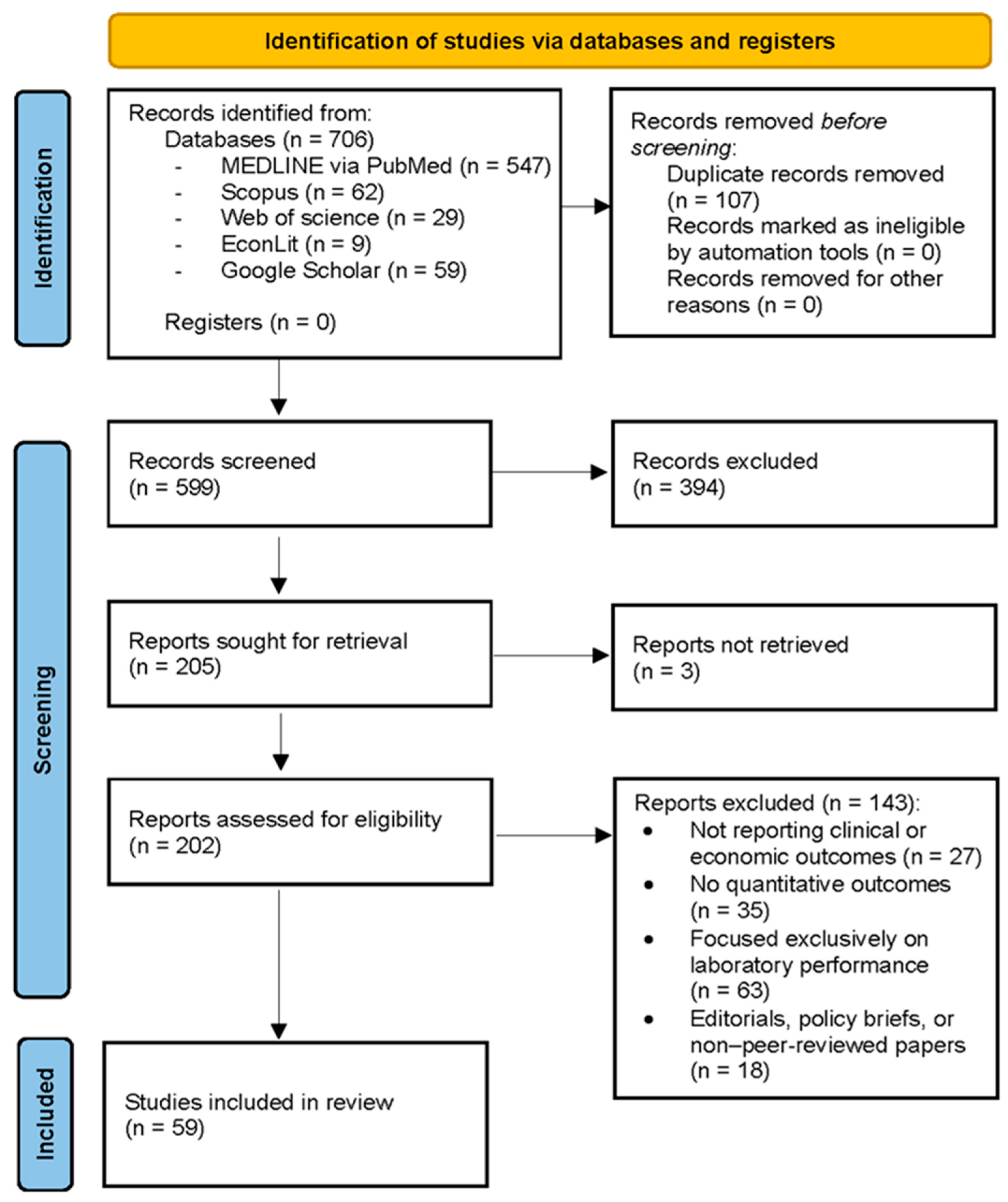
| Study selection | 16a | Describe the results of the search and selection process, from the number of records identified in the search to the number of studies included in the review, ideally using a flow diagram. | Results, pp. 7–12 Figure 1 (PRISMA diagram), p. 8 |
| 16b | Cite studies that might appear to meet the inclusion criteria but were excluded, and explain why they were excluded. | Results (reasons for exclusion described), pp. 7 | |
| Study characteristics | 17 | Cite each included study and present its characteristics. | Results, pp. 7–12 Table 1, p. 8 and Table 2, p. 11 |
| Risk of bias in studies | 18 | Present assessments of risk of bias for each included study. | Not applicable (qualitative appraisal only; see Section 2.4, p. 6) |
| Results of individual studies | 19 | For all outcomes, present, for each study, (a) summary statistics for each group (where appropriate) and (b) an effect estimate and its precision (e.g., confidence/credible interval), ideally using structured tables or plots. | Narrative synthesis (Results, pp. 7–12) |
| Results of syntheses | 20a | For each synthesis, briefly summarize the characteristics and risk of bias among contributing studies. | Narrative synthesis (Results and Discussion), pp. 7–21 |
| 20b | Present results of all statistical syntheses conducted. If meta-analysis was done, present for each the summary estimate and its precision (e.g., confidence/credible interval) and measures of statistical heterogeneity. If comparing groups, describe the direction of the effect. | Not applicable (no meta-analysis) | |
| 20c | Present results of all investigations of possible causes of heterogeneity among study results. | Narrative discussion of heterogeneity (Results, pp. 7–12) | |
| 20d | Present results of all sensitivity analyses conducted to assess the robustness of the synthesized results. | Not applicable | |
| Reporting biases | 21 | Present assessments of risk of bias due to missing results (arising from reporting biases) for each synthesis assessed. | Not applicable (no formal assessment of reporting bias due to missing results was conducted because no quantitative synthesis or meta-analysis was performed) |
| Certainty of evidence | 22 | Present assessments of certainty (or confidence) in the body of evidence for each outcome assessed. | Not applicable (no formal certainty/confidence assessment framework, such as GRADE, was applied due to the narrative design and absence of pooled outcome estimates) |
| DISCUSSION | |||
| Discussion | 23a | Provide a general interpretation of the results in the context of other evidence. | Discussion, pp. 12–21 |
| 23b | Discuss any limitations of the evidence included in the review. | Discussion, Section 4.14; pp. 19–20 | |
| 23c | Discuss any limitations of the review processes used. | Discussion, Section 4.14; pp. 19–20 | |
| 23d | Discuss implications of the results for practice, policy, and future research. | Discussion, Section 4.11, Section 4.12 and Section 4.13; pp. 18–19 | |
| OTHER INFORMATION | |||
| Registration and protocol | 24a | Provide registration information for the review, including register name and registration number, or state that the review was not registered. | Not registered |
| 24b | Indicate where the review protocol can be accessed, or state that a protocol was not prepared. | No protocol prepared | |
| 24c | Describe and explain any amendments to information provided at registration or in the protocol. | Not applicable | |
| Support | 25 | Describe sources of financial or non-financial support for the review, and the role of the funders or sponsors in the review. | This study is financed by the European Union—NextGenerationEU, through the National Recovery and Resilience Plan of the Republic of Bulgaria (project No. BG-RRP-2.004-0007-C01). The funder had no role in the design of the study, data collection, analysis, interpretation of data, or writing of the manuscript. |
| Competing interests | 26 | Declare any competing interests of review authors. | The authors declare no conflicts of interest. |
| Availability of data, code and other materials | 27 | Report which of the following are publicly available and where they can be found: template data collection forms; data extracted from included studies; data used for all analyses; analytic code; any other materials used in the review. | Research data can be obtained upon request. |
References
- Pliakos, E.E.; Andreatos, N.; Shehadeh, F.; Ziakas, P.D.; Mylonakis, E. The Cost-Effectiveness of Rapid Diagnostic Testing for the Diagnosis of Bloodstream Infections with or without Antimicrobial Stewardship. Clin. Microbiol. Rev. 2018, 31, e00095-17. [Google Scholar] [CrossRef]
- Peri, A.M.; Chatfield, M.D.; Ling, W.; Furuya-Kanamori, L.; Harris, P.N.A.; Paterson, D.L. Rapid Diagnostic Tests and Antimicrobial Stewardship Programs for the Management of Bloodstream Infection: What Is Their Relative Contribution to Improving Clinical Outcomes? A Systematic Review and Network Meta-Analysis. Clin. Infect. Dis. 2024, 79, 502–515. [Google Scholar] [CrossRef]
- Buehler, S.S.; Madison, B.; Snyder, S.R.; Derzon, J.H.; Cornish, N.E.; Saubolle, M.A.; Weissfeld, A.S.; Weinstein, M.P.; Liebow, E.B.; Wolk, D.M. Effectiveness of Practices to Increase Timeliness of Providing Targeted Therapy for Inpatients with Bloodstream Infections: A Laboratory Medicine Best Practices Systematic Review and Meta-Analysis. Clin. Microbiol. Rev. 2016, 29, 59–103. [Google Scholar] [CrossRef]
- Dunbar, S.A.; Gardner, C.; Das, S. Diagnosis and Management of Bloodstream Infections with Rapid, Multiplexed Molecular Assays. Front. Cell. Infect. Microbiol. 2022, 12, 859935. [Google Scholar] [CrossRef]
- Lamy, B.; Sundqvist, M.; Idelevich, E.A. Bloodstream Infections—Standard and Progress in Pathogen Diagnostics. Clin. Microbiol. Infect. 2020, 26, 142–150. [Google Scholar] [CrossRef] [PubMed]
- Dixon, P.; Hollingworth, W.; Pike, K.; Reynolds, R.; Stoddart, M.; MacGowan, A. Cost-Effectiveness of Rapid Laboratory-Based Mass-Spectrometry Diagnosis of Bloodstream Infection: Evidence from the RAPIDO Randomised Controlled Trial. BMJ Open 2021, 11, e044623. [Google Scholar] [CrossRef] [PubMed]
- Iyer, V.; Castro, D.; Malla, B.; Panda, B.; Rabson, A.R.; Horowitz, G.; Heger, N.; Gupta, K.; Singer, A.; Norwitz, E.R. Culture-Independent Identification of Bloodstream Infections from Whole Blood: Prospective Evaluation in Specimens of Known Infection Status. J. Clin. Microbiol. 2024, 62, e01498-23. [Google Scholar] [CrossRef]
- Costa, S.P.; Carvalho, C.M. Burden of Bacterial Bloodstream Infections and Recent Advances for Diagnosis. Pathog. Dis. 2022, 80, ftac027. [Google Scholar] [CrossRef]
- Peri, A.M.; Harris, P.N.; Paterson, D.L. Culture-Independent Detection Systems for Bloodstream Infection. Clin. Microbiol. Infect. 2022, 28, 195–201. [Google Scholar] [CrossRef] [PubMed]
- Lucignano, B.; Cento, V.; Agosta, M.; Ambrogi, F.; Albitar-Nehme, S.; Mancinelli, L.; Mattana, G.; Onori, M.; Galaverna, F.; Di Chiara, L. Effective Rapid Diagnosis of Bacterial and Fungal Bloodstream Infections by T2 Magnetic Resonance Technology in the Pediatric Population. J. Clin. Microbiol. 2022, 60, e00292-22. [Google Scholar] [CrossRef]
- Eubank, T.A.; Long, S.W.; Perez, K.K. Role of Rapid Diagnostics in Diagnosis and Management of Patients with Sepsis. J. Infect. Dis. 2020, 222, S103–S109. [Google Scholar] [CrossRef]
- Wolk, D.M.; Parrott, J.S.; Babady, N.E.; Mochon, A.B.; Tom, R.; Diel, C.; Dien Bard, J.; Harrington, A.; Hata, D.J.; Roberts, A.L. The American Society for Microbiology’s Evidence-Based Laboratory Medicine Practice Guidelines for the Diagnosis of Bloodstream Infections Using Rapid Tests: A Systematic Review and Meta-Analysis. Clin. Microbiol. Rev. 2025, 38, e00137-24. [Google Scholar] [CrossRef]
- Caspar, Y.; Deves, A.; Richarme, C.; Le Marechal, M.; Ponderand, L.; Mounayar, A.L.; Lejeune, S.; Arata-Bardet, J.; Gallouche, M.; Recule, C. Clinical Impact and Cost-Consequence Analysis of ePlex® Blood Culture Identification Panels for the Rapid Diagnosis of Bloodstream Infections: A Single-Center Randomized Controlled Trial. Eur. J. Clin. Microbiol. Infect. Dis. 2024, 43, 1193–1203, Erratum in Eur. J. Clin. Microbiol. Infect. Dis. 2024, 43, 2245–2246. [Google Scholar] [CrossRef]
- Mponponsuo, K.; Leal, J.; Spackman, E.; Somayaji, R.; Gregson, D.; Rennert-May, E. Mathematical Model of the Cost-Effectiveness of the BioFire FilmArray Blood Culture Identification (BCID) Panel Molecular Rapid Diagnostic Test Compared with Conventional Methods for Identification of Escherichia coli Bloodstream Infections. J. Antimicrob. Chemother. 2022, 77, 507–516. [Google Scholar] [CrossRef]
- Yo, C.H.; Shen, Y.H.; Hsu, W.T.; Mekary, R.A.; Chen, Z.R.; Lee, W.J.; Chen, S.C.; Lee, C.C. MALDI-TOF Mass Spectrometry Rapid Pathogen Identification and Outcomes of Patients with Bloodstream Infection: A Systematic Review and Meta-Analysis. Microb. Biotechnol. 2022, 15, 2667–2682. [Google Scholar] [CrossRef] [PubMed]
- Yang, M.; Tao, C. Diagnostic Efficiency of the FilmArray Blood Culture Identification (BCID) Panel: A Systematic Review and Meta-Analysis. J. Med. Microbiol. 2023, 72, 001608. [Google Scholar] [CrossRef] [PubMed]
- Timbrook, T.T.; Morton, J.B.; McConeghy, K.W.; Caffrey, A.R.; Mylonakis, E.; LaPlante, K.L. The Effect of Molecular Rapid Diagnostic Testing on Clinical Outcomes in Bloodstream Infections: A Systematic Review and Meta-Analysis. Clin. Infect. Dis. 2017, 64, 15–23. [Google Scholar] [CrossRef]
- Patel, T.S.; Kaakeh, R.; Nagel, J.L.; Newton, D.W.; Stevenson, J.G. Cost Analysis of Implementing Matrix-Assisted Laser Desorption Ionization–Time of Flight Mass Spectrometry plus Real-Time Antimicrobial Stewardship Intervention for Bloodstream Infections. J. Clin. Microbiol. 2017, 55, 60–67. [Google Scholar] [CrossRef]
- Bookstaver, P.B.; Nimmich, E.B.; Smith, T.J., 3rd; Justo, J.A.; Kohn, J.; Hammer, K.L.; Troficanto, C.; Albrecht, H.A.; Al-Hasan, M.N. Cumulative Effect of an Antimicrobial Stewardship and Rapid Diagnostic Testing Bundle on Early Streamlining of Antimicrobial Therapy in Gram-Negative Bloodstream Infections. Antimicrob. Agents Chemother. 2017, 61, e00189-17. [Google Scholar] [CrossRef]
- MacVane, S.H.; Nolte, F.S. Benefits of Adding a Rapid PCR-Based Blood Culture Identification Panel to an Established Antimicrobial Stewardship Program. J. Clin. Microbiol. 2016, 54, 2455–2463. [Google Scholar] [CrossRef] [PubMed]
- Florio, W.; Morici, P.; Ghelardi, E.; Barnini, S.; Lupetti, A. Recent Advances in the Microbiological Diagnosis of Bloodstream Infections. Crit. Rev. Microbiol. 2018, 44, 351–370. [Google Scholar] [CrossRef]
- Idelevich, E.A.; Seifert, H.; Sundqvist, M.; Scudeller, L.; Amit, S.; Balode, A.; Bilozor, A.; Drevinek, P.; Kocak Tufan, Z.; Koraqi, A. Microbiological Diagnostics of Bloodstream Infections in Europe—An ESGBIES Survey. Clin. Microbiol. Infect. 2019, 25, 1399–1407. [Google Scholar] [CrossRef]
- Zacharioudakis, I.M.; Zervou, F.N.; Shehadeh, F.; Mylonakis, E. Cost-Effectiveness of Molecular Diagnostic Assays for the Therapy of Severe Sepsis and Septic Shock in the Emergency Department. PLoS ONE 2019, 14, e0217508. [Google Scholar] [CrossRef]
- Shehadeh, F.; Zacharioudakis, I.M.; Zervou, F.N.; Mylonakis, E. Cost-Effectiveness of Rapid Diagnostic Assays That Perform Directly on Blood Samples for the Diagnosis of Septic Shock. Diagn. Microbiol. Infect. Dis. 2019, 94, 378–384. [Google Scholar] [CrossRef] [PubMed]
- Giacobbe, D.R.; Giani, T.; Bassetti, M.; Marchese, A.; Viscoli, C.; Rossolini, G.M. Rapid Microbiological Tests for Bloodstream Infections Due to Multidrug Resistant Gram-Negative Bacteria: Therapeutic Implications. Clin. Microbiol. Infect. 2020, 26, 713–722. [Google Scholar] [CrossRef] [PubMed]
- Stevenson, M.; Pandor, A.; Martyn-St James, M.; Rafia, R.; Uttley, L.; Stevens, J.; Sanderson, J.; Wong, R.; Perkins, G.D.; McMullan, R. Sepsis: The LightCycler SeptiFast Test MGRADE®, SepsiTest™ and IRIDICA BAC BSI Assay for Rapidly Identifying Bloodstream Bacteria and Fungi—A Systematic Review and Economic Evaluation. Health Technol. Assess. 2016, 20, 1–246. [Google Scholar] [CrossRef] [PubMed]
- Chevalier, J.M.; Hansen, M.A.; Blumel, B.; Chuchu, V.; Gleeson, B.; Ferreyra, C.; Khan, S.; Nichols, B.E.; Grantz, K.H. Modeling the Impact and Cost of a Culture-Dependent Molecular Test for Antimicrobial Resistance in Resource-Limited Settings. Clin. Infect. Dis. 2025, 82, 25–32. [Google Scholar] [CrossRef]
- Eid, R.; Zahar, J.R.; Ait Ali, C.; Mizrahi, A.; Ibrahim, R.; Banh, E.; Halouani, H.; Jauréguy, F.; Pilmis, B.; Saliba, R. Bloodstream Infections: Comparison of Diagnostic Methods and Therapeutic Consequences between a Hospital in a Resource-Limited Setting and Two French Hospitals. Microorganisms 2023, 11, 2136. [Google Scholar] [CrossRef]
- Liborio, M.P.; Harris, P.N.A.; Ravi, C.; Irwin, A.D. Getting Up to Speed: Rapid Pathogen and Antimicrobial Resistance Diagnostics in Sepsis. Microorganisms 2024, 12, 1824. [Google Scholar] [CrossRef]
- Park, S.; Kim, D.; Ryoo, N. Comparative Assessment of Rapid Identification and Antimicrobial Susceptibility Testing Methods for Bloodstream Infections in a Non-24/7 Clinical Microbiology Laboratory. Microorganisms 2025, 13, 1041. [Google Scholar] [CrossRef]
- Wang, Y.; Lindsley, K.; Bleak, T.C.; Jiudice, S.; Uyei, J.; Gu, Y.; Wang, Y.; Timbrook, T.T.; Balada-Llasat, J.M. Performance of Molecular Tests for Diagnosis of Bloodstream Infections in the Clinical Setting: A Systematic Literature Review and Meta-Analysis. Clin. Microbiol. Infect. 2025, 31, 360–372. [Google Scholar] [CrossRef]
- Smith, R.D.; Zhan, M.; Zhang, S.; Leekha, S.; Harris, A.; Doi, Y.; Evans, S.; Johnson, J.K.; Ernst, R.K. Comparison of Three Rapid Diagnostic Tests for Bloodstream Infections Using Benefit-Risk Evaluation Framework (BED-FRAME). J. Clin. Microbiol. 2024, 62, e01096-23. [Google Scholar] [CrossRef]
- Martinez, R.M.; Bauerle, E.R.; Fang, F.C.; Butler-Wu, S.M. Evaluation of Three Rapid Diagnostic Methods for Direct Identification of Microorganisms in Positive Blood Cultures. J. Clin. Microbiol. 2014, 52, 2521–2529. [Google Scholar] [CrossRef]
- Miller, J.M.; Binnicker, M.J.; Campbell, S.; Carroll, K.C.; Chapin, K.C.; Gonzalez, M.D.; Harrington, A.; Jerris, R.C.; Kehl, S.C.; Leal, S.M., Jr. Guide to Utilization of the Microbiology Laboratory for Diagnosis of Infectious Diseases: 2024 Update by the Infectious Diseases Society of America (IDSA) and the American Society for Microbiology (ASM). Clin. Infect. Dis. 2024, 104, ciae104. [Google Scholar] [CrossRef]
- Nguyen, M.H.; Clancy, C.J.; Pasculle, A.W.; Pappas, P.G.; Alangaden, G.; Pankey, G.A.; Schmitt, B.H.; Rasool, A.; Weinstein, M.P.; Widen, R. Performance of the T2Bacteria Panel for Diagnosing Bloodstream Infections: A Diagnostic Accuracy Study. Ann. Intern. Med. 2019, 170, 845–852. [Google Scholar] [CrossRef] [PubMed]
- Simms, L.A.; Davies, C.; Jayasundara, N.; Sandhu, S.; Pintara, A.; Pretorius, A.; Nimmo, G.R.; Harper, J.; Hiskens, M.; Smith, K. Performance Evaluation of InfectID-BSI: A Rapid Quantitative PCR Assay for Detecting Sepsis-Associated Organisms Directly from Whole Blood. J. Microbiol. Methods 2023, 211, 106783. [Google Scholar] [CrossRef]
- Oberhettinger, P.; Zieger, J.; Autenrieth, I.; Marschal, M.; Peter, S. Evaluation of Two Rapid Molecular Test Systems to Establish an Algorithm for Fast Identification of Bacterial Pathogens from Positive Blood Cultures. Eur. J. Clin. Microbiol. Infect. Dis. 2020, 39, 1147–1157. [Google Scholar] [CrossRef]
- Tassinari, M.; Zannoli, S.; Farabegoli, P.; Pedna, M.F.; Pierro, A.; Mastroianni, A.; Fontan, R.; Luongo, L.; Sarnataro, G.; Menegatti, E. Rapid Diagnosis of Bloodstream Infections in the Critically Ill: Evaluation of the Broad-Range PCR/ESI-MS Technology. PLoS ONE 2018, 13, e0197436. [Google Scholar] [CrossRef] [PubMed]
- Jordana-Lluch, E.; Giménez, M.; Quesada, M.D.; Rivaya, B.; Marcó, C.; Domínguez, M.J.; Arméstar, F.; Martró, E.; Ausina, V. Evaluation of the Broad-Range PCR/ESI-MS Technology in Blood Specimens for the Molecular Diagnosis of Bloodstream Infections. PLoS ONE 2015, 10, e0140865. [Google Scholar] [CrossRef] [PubMed]
- Banerjee, R.; Komarow, L.; Virk, A.; Rajapakse, N.; Schuetz, A.N.; Dylla, B.; Earley, M.; Lok, J.; Kohner, P.; Ihde, S. Randomized Trial Evaluating Clinical Impact of RAPid IDentification and Susceptibility Testing for Gram-Negative Bacteremia: RAPIDS-GN. Clin. Infect. Dis. 2021, 73, e39–e46. [Google Scholar] [CrossRef]
- Verroken, A.; Despas, N.; Rodriguez-Villalobos, H.; Laterre, P.F. The Impact of a Rapid Molecular Identification Test on Positive Blood Cultures from Critically Ill with Bacteremia: A Pre–Post Intervention Study. PLoS ONE 2019, 14, e0223122. [Google Scholar] [CrossRef]
- Oudiane, L.; Benyahia, M.; Salipante, F.; Dubois, A.; Muller, L.; Lavigne, J.P.; Pantel, A.; Roger, C. Clinical Impact of the BCID2 and Rapid AST VITEK® REVEAL™ on Antibiotic Optimisation in Critically Ill Patients with Gram-Negative Bloodstream Infections: A Quasi-Experimental Pre/Post Interventional Study. J. Antimicrob. Chemother. 2025, 80, 2665–2675. [Google Scholar] [CrossRef]
- Ehren, K.; Meißner, A.; Jazmati, N.; Wille, J.; Jung, N.; Vehreschild, J.J.; Hellmich, M.; Seifert, H. Clinical Impact of Rapid Species Identification from Positive Blood Cultures with Same-Day Phenotypic Antimicrobial Susceptibility Testing on the Management and Outcome of Bloodstream Infections. Clin. Infect. Dis. 2020, 70, 1285–1293. [Google Scholar] [CrossRef]
- Babowicz, F.; LaPlante, R.; Mitchell, C.; O’Donnell, J.N.; Tobin, E.; George, M.; Carreno, J.J. Impact of Accelerate Pheno and BacT/ALERT Virtuo on Clinical Processes and Outcomes in Patients with Sepsis and Concurrent Gram-Negative Bacteremia. Antimicrob. Agents Chemother. 2021, 65, e02364-20. [Google Scholar] [CrossRef]
- Dare, R.K.; Lusardi, K.; Pearson, C.; McCain, K.D.; Daniels, K.B.; Van, S.; Rico, J.C.; Painter, J.; Lakkad, M.; Rosenbaum, E.R. Clinical Impact of Accelerate Pheno Rapid Blood Culture Detection System in Bacteremic Patients. Clin. Infect. Dis. 2021, 73, e4616–e4626. [Google Scholar] [CrossRef] [PubMed]
- Anton-Vazquez, V.; Hine, P.; Krishna, S.; Chaplin, M.; Planche, T. Rapid versus Standard Antimicrobial Susceptibility Testing to Guide Treatment of Bloodstream Infection. Cochrane Database Syst. Rev. 2021, 5, CD013235. [Google Scholar] [CrossRef] [PubMed]
- Barlam, T.F.; Cosgrove, S.E.; Abbo, L.M.; MacDougall, C.; Schuetz, A.N.; Septimus, E.J.; Srinivasan, A.; Dellit, T.H.; Falck-Ytter, Y.T.; Fishman, N.O. Implementing an Antibiotic Stewardship Program: Guidelines by the Infectious Diseases Society of America and the Society for Healthcare Epidemiology of America. Clin. Infect. Dis. 2016, 62, e51–e77. [Google Scholar] [CrossRef] [PubMed]
- Cambau, E.; Durand-Zaleski, I.; Bretagne, S.; Brun-Buisson, C.; Cordonnier, C.; Duval, X.; Herwegh, S.; Pottecher, J.; Courcol, R.; Bastuji-Garin, S. Performance and Economic Evaluation of the Molecular Detection of Pathogens for Patients with Severe Infections: The EVAMICA Open-Label, Cluster-Randomised, Interventional Crossover Trial. Intensive Care Med. 2017, 43, 1613–1625. [Google Scholar] [CrossRef]
- Kunz Coyne, A.J.; Casapao, A.M.; Isache, C.; Morales, J.; McCarter, Y.S.; Jankowski, C.A. Influence of Antimicrobial Stewardship and Molecular Rapid Diagnostic Tests on Antimicrobial Prescribing for Extended-Spectrum Beta-Lactamase- and Carbapenemase-Producing Escherichia coli and Klebsiella pneumoniae in Bloodstream Infection. Microbiol. Spectr. 2021, 9, e00464-21. [Google Scholar] [CrossRef]
- Evans, L.; Rhodes, A.; Alhazzani, W.; Antonelli, M.; Coopersmith, C.M.; French, C.; Machado, F.R.; McIntyre, L.; Ostermann, M.; Prescott, H.C. Surviving Sepsis Campaign: International Guidelines for Management of Sepsis and Septic Shock 2021. Crit. Care Med. 2021, 49, e1063–e1143. [Google Scholar] [CrossRef]
- Robinson, E.D.; Stilwell, A.M.; Attai, A.E.; Donohue, L.E.; Shah, M.D.; Hill, B.K.; Elliott, Z.S.; Poulter, M.; Brewster, F.; Cox, H.L. Implementation of a Rapid Phenotypic Susceptibility Platform for Gram-Negative Bloodstream Infections with Paired Antimicrobial Stewardship Intervention: Is the Juice Worth the Squeeze? Clin. Infect. Dis. 2021, 73, 783–792. [Google Scholar] [CrossRef] [PubMed]
- Lapin, J.S.; Smith, R.D.; Hornback, K.M.; Johnson, J.K.; Claeys, K.C. From Bottle to Bedside: Implementation Considerations and Antimicrobial Stewardship Considerations for Bloodstream Infection Rapid Diagnostic Testing. Pharmacotherapy 2023, 43, 847–863. [Google Scholar] [CrossRef] [PubMed]
- Dubourg, G.; Lamy, B.; Ruimy, R. Rapid Phenotypic Methods to Improve the Diagnosis of Bacterial Bloodstream Infections: Meeting the Challenge to Reduce the Time to Result. Clin. Microbiol. Infect. 2018, 24, 935–943. [Google Scholar] [CrossRef] [PubMed]
- Wenzler, E.; Timbrook, T.T.; Wong, J.R.; Hurst, J.M.; MacVane, S.H. Implementation and Optimization of Molecular Rapid Diagnostic Tests for Bloodstream Infections. Am. J. Health-Syst. Pharm. 2018, 75, 1191–1202. [Google Scholar] [CrossRef]
- Morency-Potvin, P.; Schwartz, D.N.; Weinstein, R.A. Antimicrobial Stewardship: How the Microbiology Laboratory Can Right the Ship. Clin. Microbiol. Rev. 2017, 30, 381–407. [Google Scholar] [CrossRef]
- Wagner, J.L.; Markovich, K.C.; Barber, K.E.; Stover, K.R.; Biehle, L.R. Optimizing Rapid Diagnostics and Diagnostic Stewardship in Gram-Negative Bacteremia. Pharmacotherapy 2021, 41, 676–685. [Google Scholar] [CrossRef]
- Wu, S.; Huang, G.; de St Maurice, A.; Lehman, D.; Graber, C.J.; Goetz, M.B.; Haake, D.A. The Impact of Rapid Species Identification on Management of Bloodstream Infections: What’s in a Name? Mayo Clin. Proc. 2020, 95, 2509–2524. [Google Scholar] [CrossRef]
- Briggs, N.; Campbell, S.; Gupta, S. Advances in Rapid Diagnostics for Bloodstream Infections. Diagn. Microbiol. Infect. Dis. 2021, 99, 115219. [Google Scholar] [CrossRef]
- Laxminarayan, R.; Impalli, I.; Rangarajan, R.; Cohn, J.; Ramjeet, K.; Trainor, B.W.; Strathdee, S.; Sumpradit, N.; Berman, D.; Wertheim, H. Expanding Antibiotic, Vaccine, and Diagnostics Development and Access to Tackle Antimicrobial Resistance. Lancet 2024, 403, 2534–2550. [Google Scholar] [CrossRef]
| Diagnostic Modality | Typical Turnaround Time | Economic Evaluation Types | Key Economic Outcomes Reported | Cost-Effectiveness Conclusion | Key Modifiers of Value |
|---|---|---|---|---|---|
| MALDI-TOF (±ASP) | 30–60 min after BC positivity | CEA, CUA, cost-consequence | Cost per QALY gained; cost per life saved; reduced LOS; avoided ICU days | Cost-effective/cost-saving when combined with ASP; inconsistent value without ASP | ASP integration; laboratory operating hours; LOS reduction magnitude |
| Multiplex PCR panels (e.g., BCID) | 1–4 h | CEA, CUA, BIA | Favorable ICERs; reduced total hospital costs; avoided antimicrobial costs | Cost-effective, often cost-saving despite higher assay costs | Test price; speed of result communication; stewardship response |
| Direct-from-blood molecular assays | 1–4 h (no culture delay) | CEA, modeling studies | Cost per death averted; reduced ICU utilization | Cost-effective in high-severity settings | Disease severity; prevalence of resistance; assay cost |
| Rapid phenotypic AST platforms | 4–8 h after BC positivity | CEA, cost-consequence | Reduced LOS; ICU cost avoidance | Context-dependent; strongest with ASP | Workflow integration; timing vs. standard AST |
| Combined diagnostic workflows (RDT + ASP + communication) | Same-day actionable results | CEA, CUA, BIA | Consistently favorable ICERs; net cost savings | Highest economic value across settings | Stewardship capacity; staffing; real-time reporting |
| Conventional blood culture workflows | 16–72 h | Comparator | Higher LOS; higher mortality-related costs | Reference strategy | — |
Disclaimer/Publisher’s Note: The statements, opinions and data contained in all publications are solely those of the individual author(s) and contributor(s) and not of MDPI and/or the editor(s). MDPI and/or the editor(s) disclaim responsibility for any injury to people or property resulting from any ideas, methods, instructions or products referred to in the content. |
© 2026 by the authors. Licensee MDPI, Basel, Switzerland. This article is an open access article distributed under the terms and conditions of the Creative Commons Attribution (CC BY) license.
Share and Cite
Raycheva, R.; Lengerova, G.; Petrov, M.; Kantardjiev, T. Clinical and Economic Value of Rapid Microbiological Diagnostics in Bloodstream Infections: A State-of-the-Art Evidence Review with Emphasis on PCR and MALDI-TOF. Microorganisms 2026, 14, 994. https://doi.org/10.3390/microorganisms14050994
Raycheva R, Lengerova G, Petrov M, Kantardjiev T. Clinical and Economic Value of Rapid Microbiological Diagnostics in Bloodstream Infections: A State-of-the-Art Evidence Review with Emphasis on PCR and MALDI-TOF. Microorganisms. 2026; 14(5):994. https://doi.org/10.3390/microorganisms14050994
Chicago/Turabian StyleRaycheva, Ralitsa, Gergana Lengerova, Michael Petrov, and Todor Kantardjiev. 2026. "Clinical and Economic Value of Rapid Microbiological Diagnostics in Bloodstream Infections: A State-of-the-Art Evidence Review with Emphasis on PCR and MALDI-TOF" Microorganisms 14, no. 5: 994. https://doi.org/10.3390/microorganisms14050994
APA StyleRaycheva, R., Lengerova, G., Petrov, M., & Kantardjiev, T. (2026). Clinical and Economic Value of Rapid Microbiological Diagnostics in Bloodstream Infections: A State-of-the-Art Evidence Review with Emphasis on PCR and MALDI-TOF. Microorganisms, 14(5), 994. https://doi.org/10.3390/microorganisms14050994

